1.The chain is half the belt
On a chain-driven belt the chain decides fit on the sprockets and guides. It was measured as closely as the mesh.
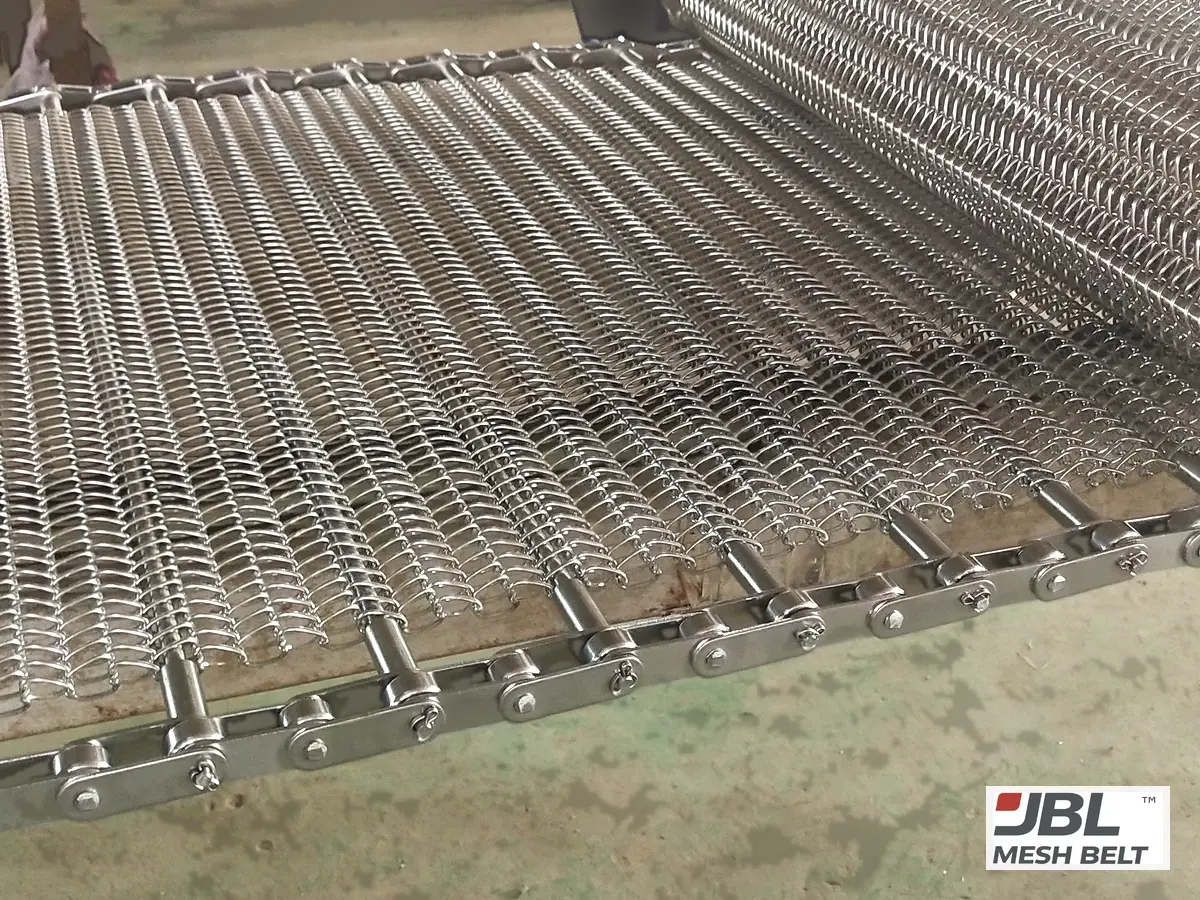
A customer in Australia needed a new chain-driven belt for a steam oven tunnel. They sent a sample of the original belt. We measured the chain and the mesh, made a trial chain with the same rollers and guide rollers, then produced about 33 m of belt with every part in 316 stainless steel, chosen for steam and acid or alkaline cleaning.
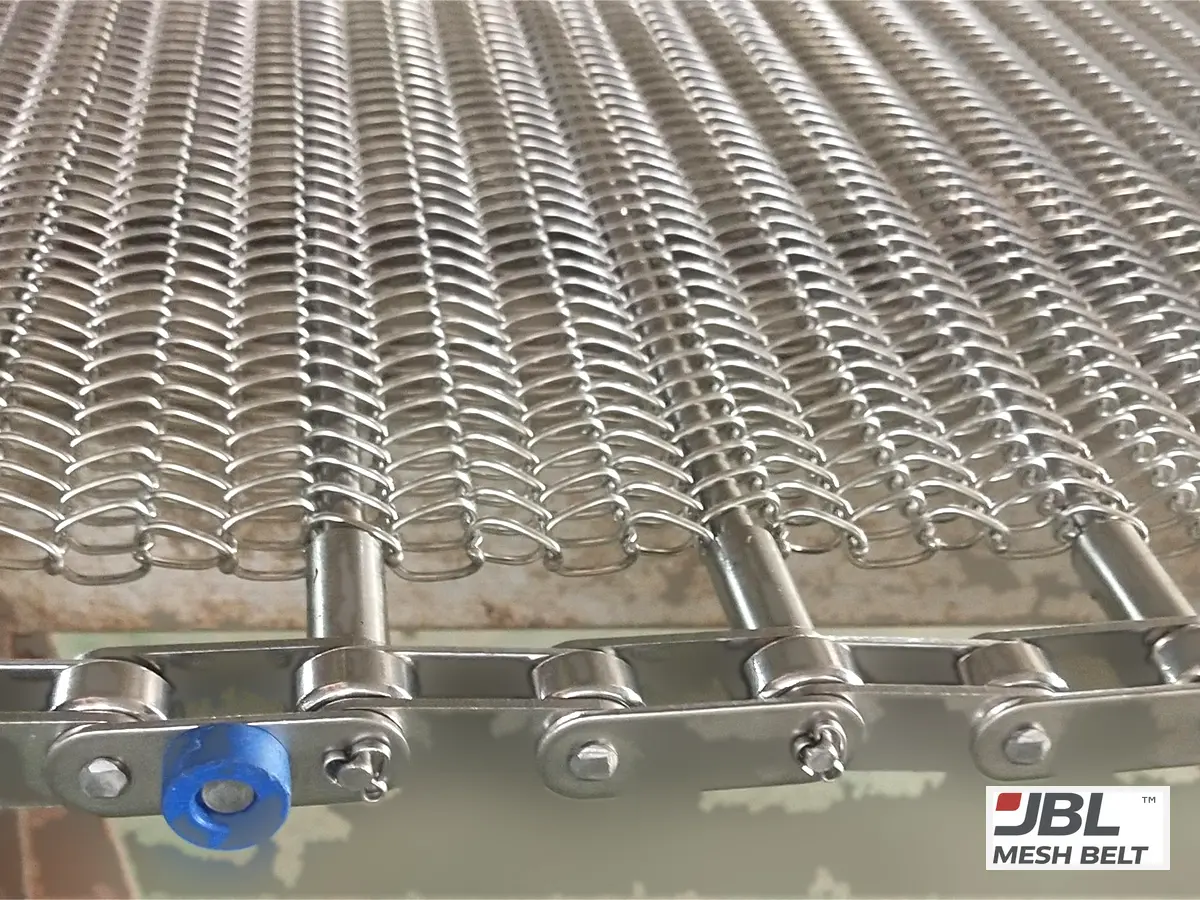
The belt runs through a steam oven tunnel, so it is hot, wet and cleaned with acid and alkaline agents. The original belt was carried on a side chain with blue guide rollers. The customer sent a sample of the belt and chain so the new belt would fit the same oven.
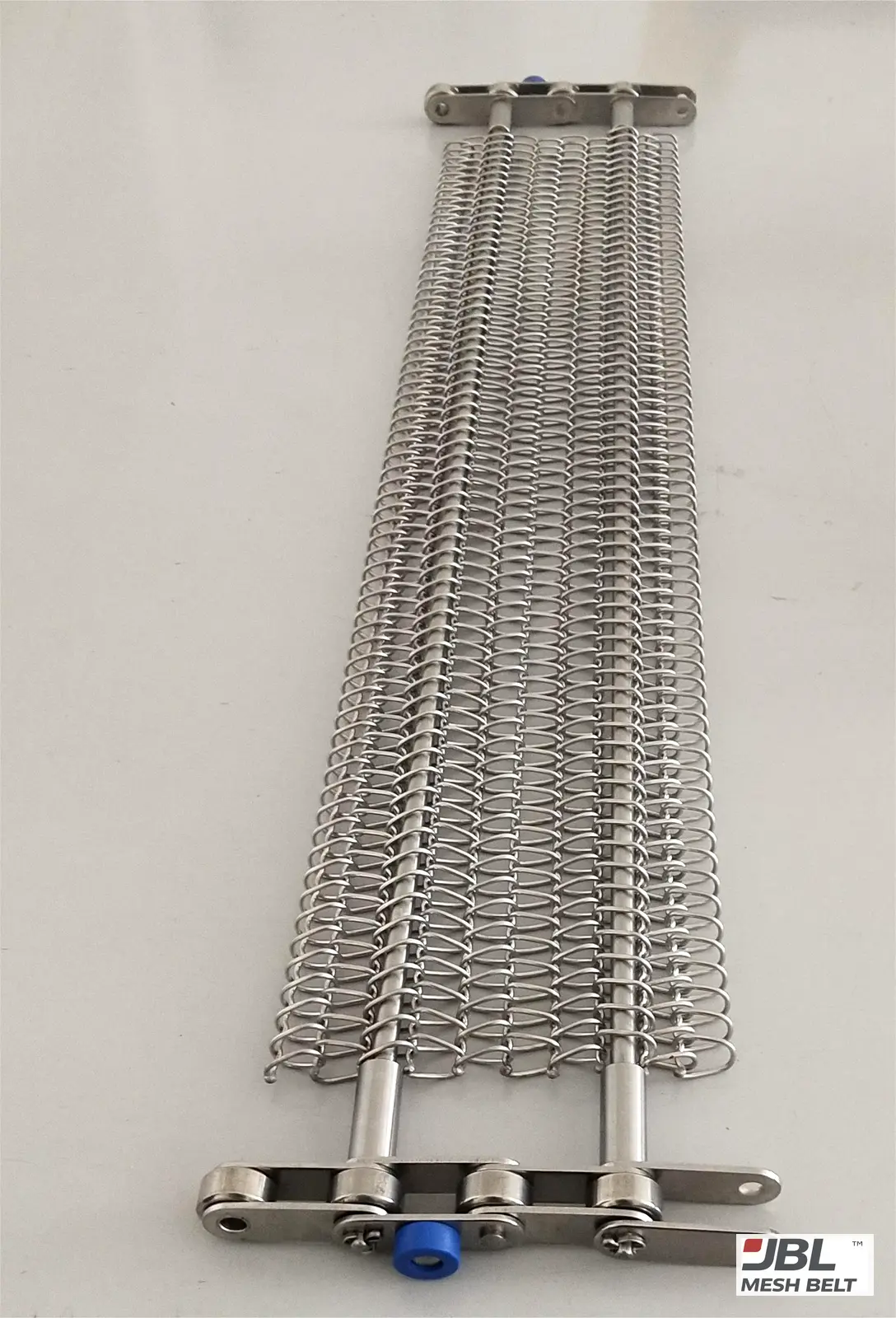
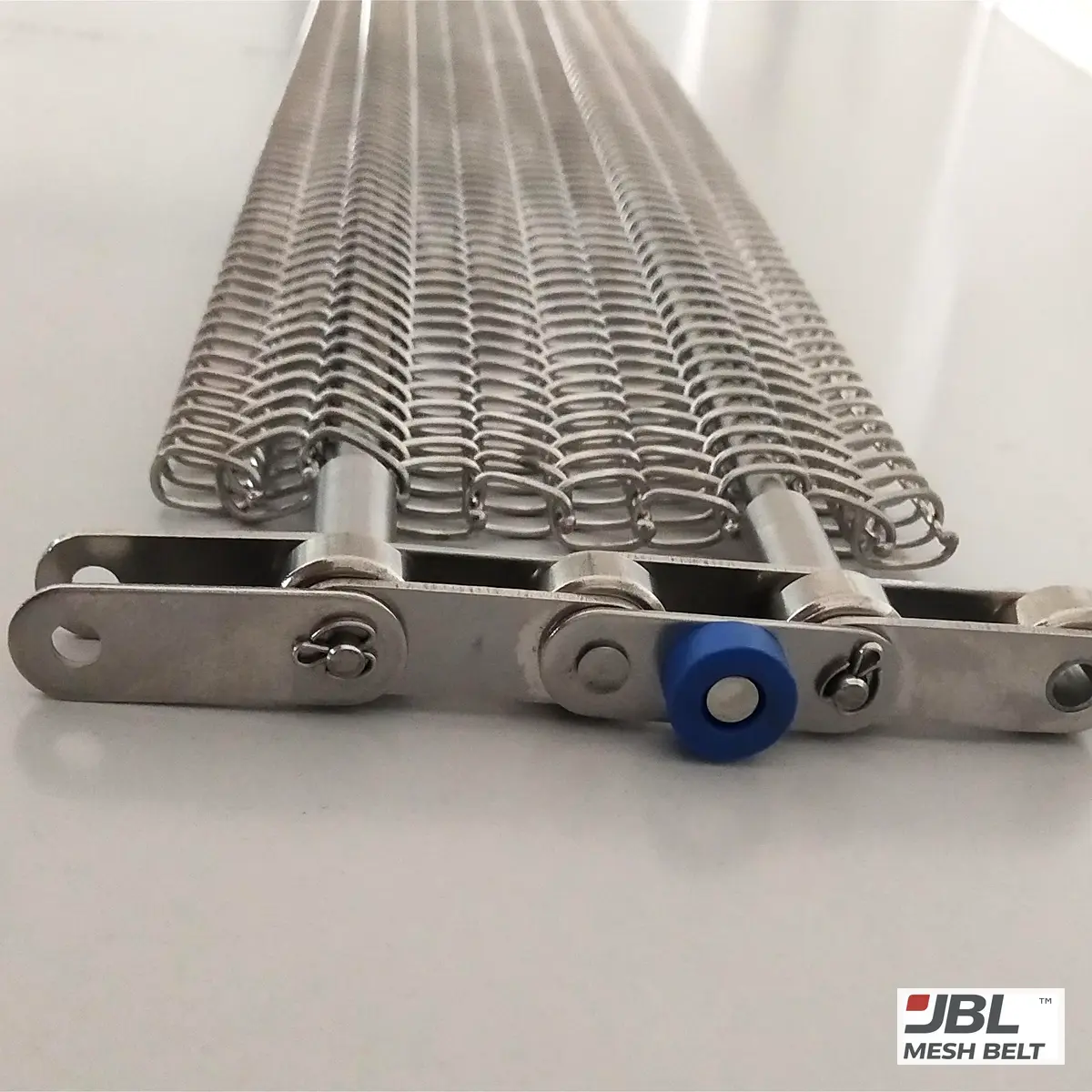
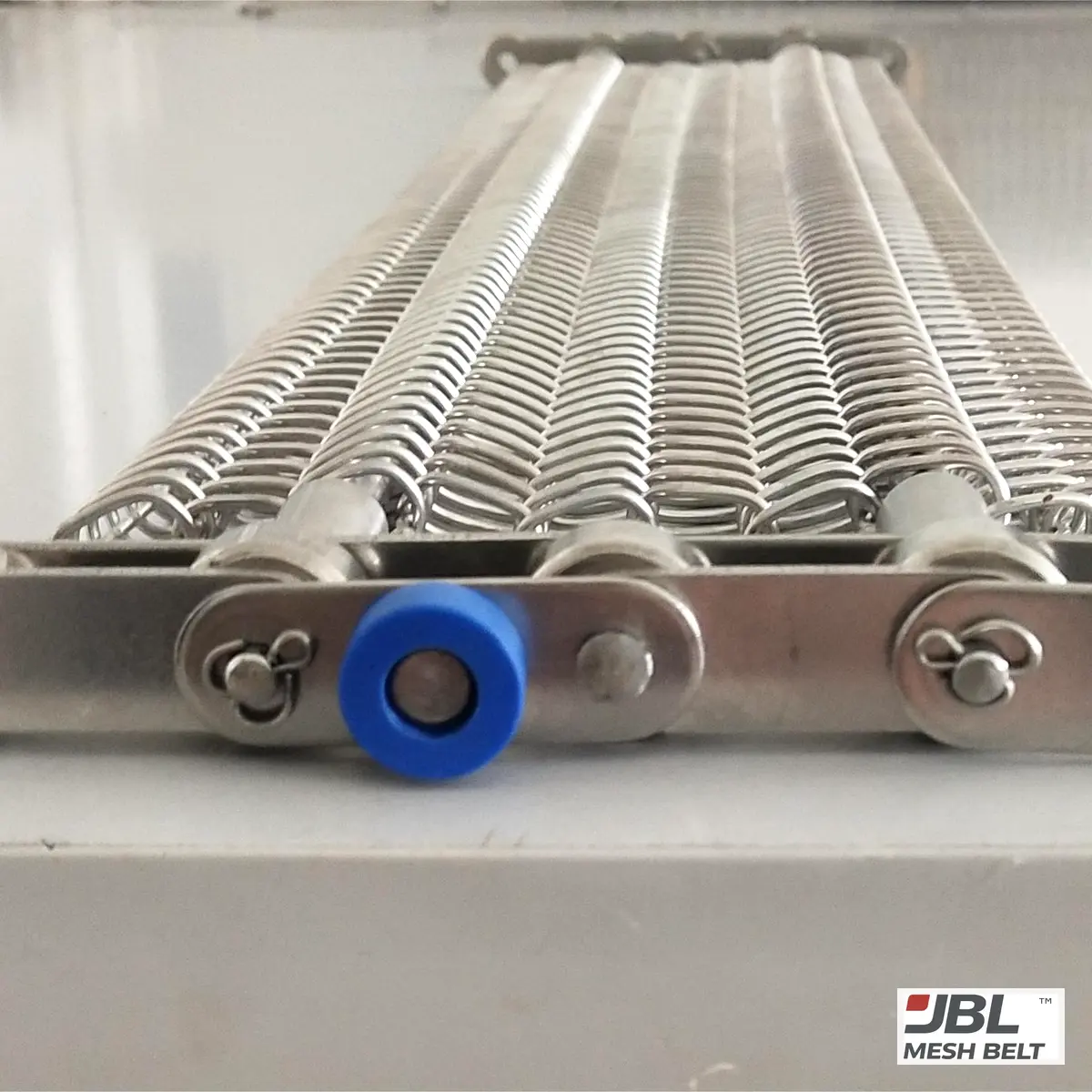
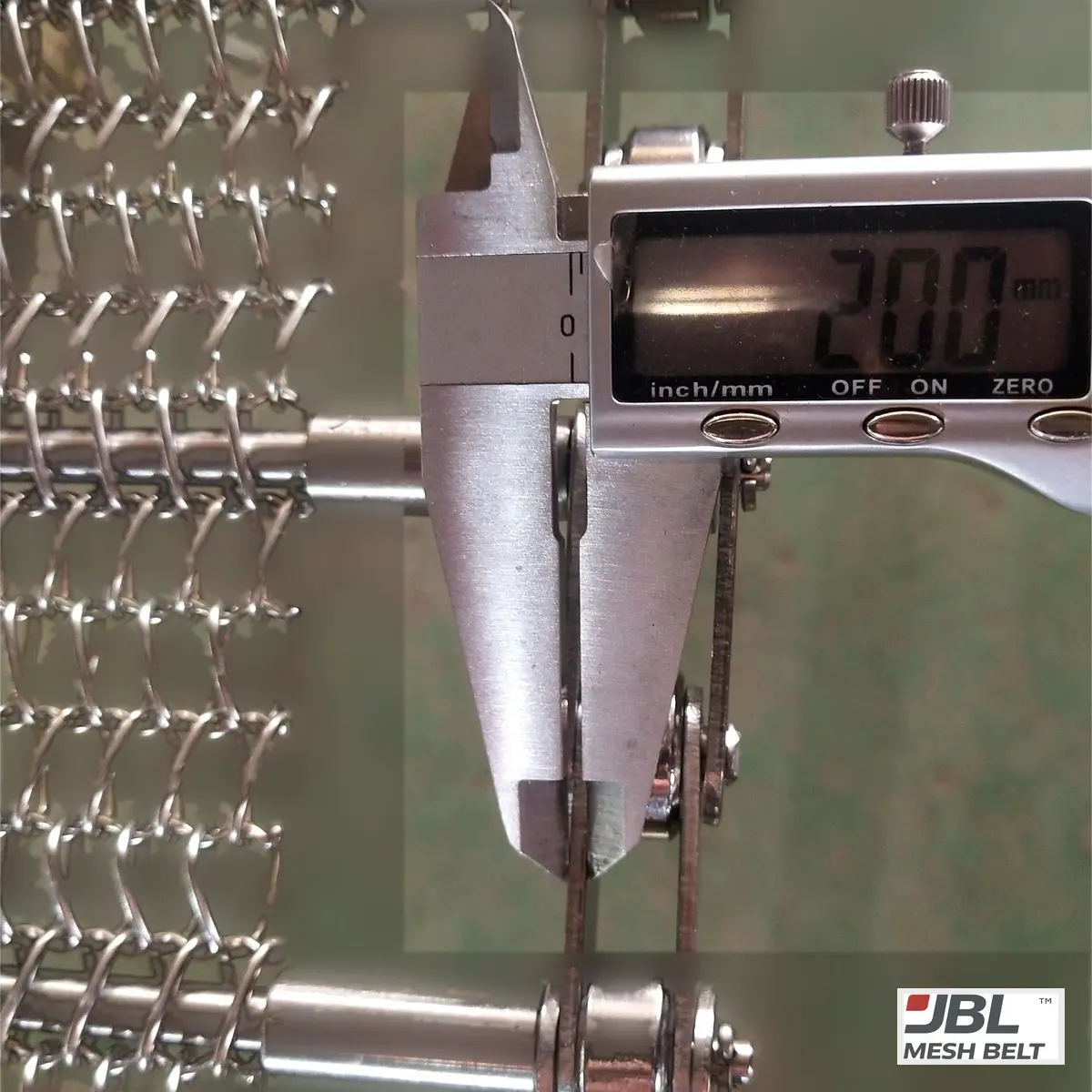
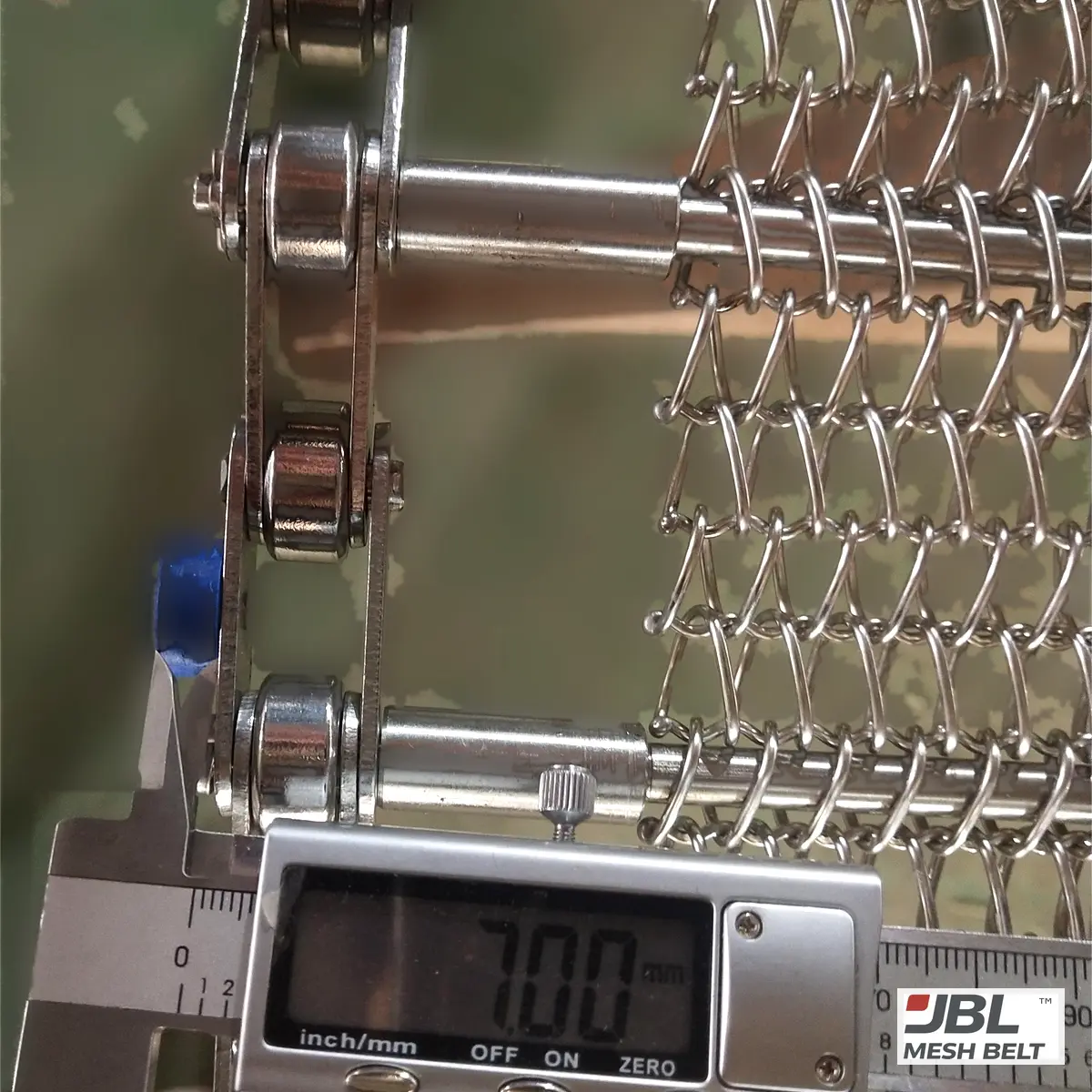
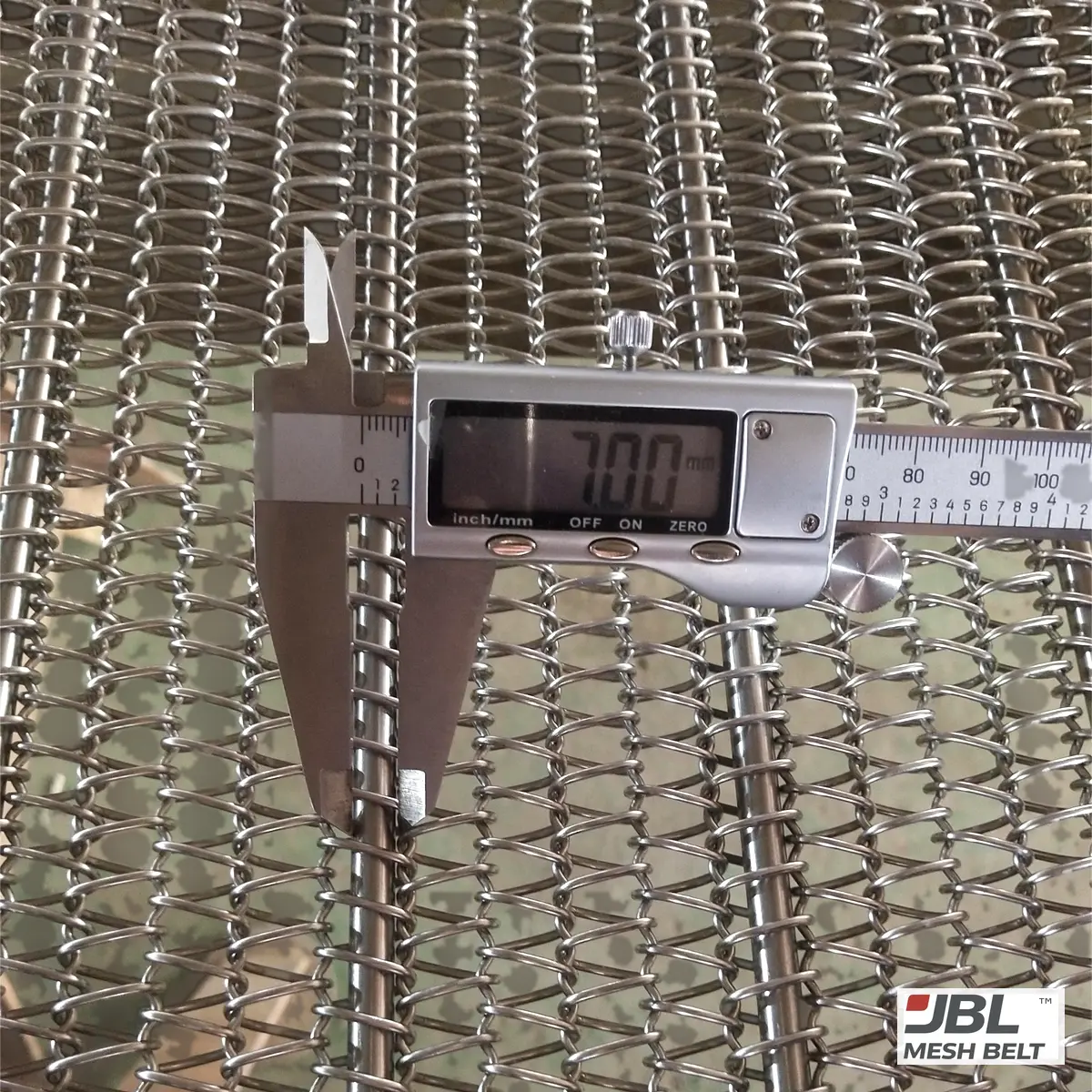
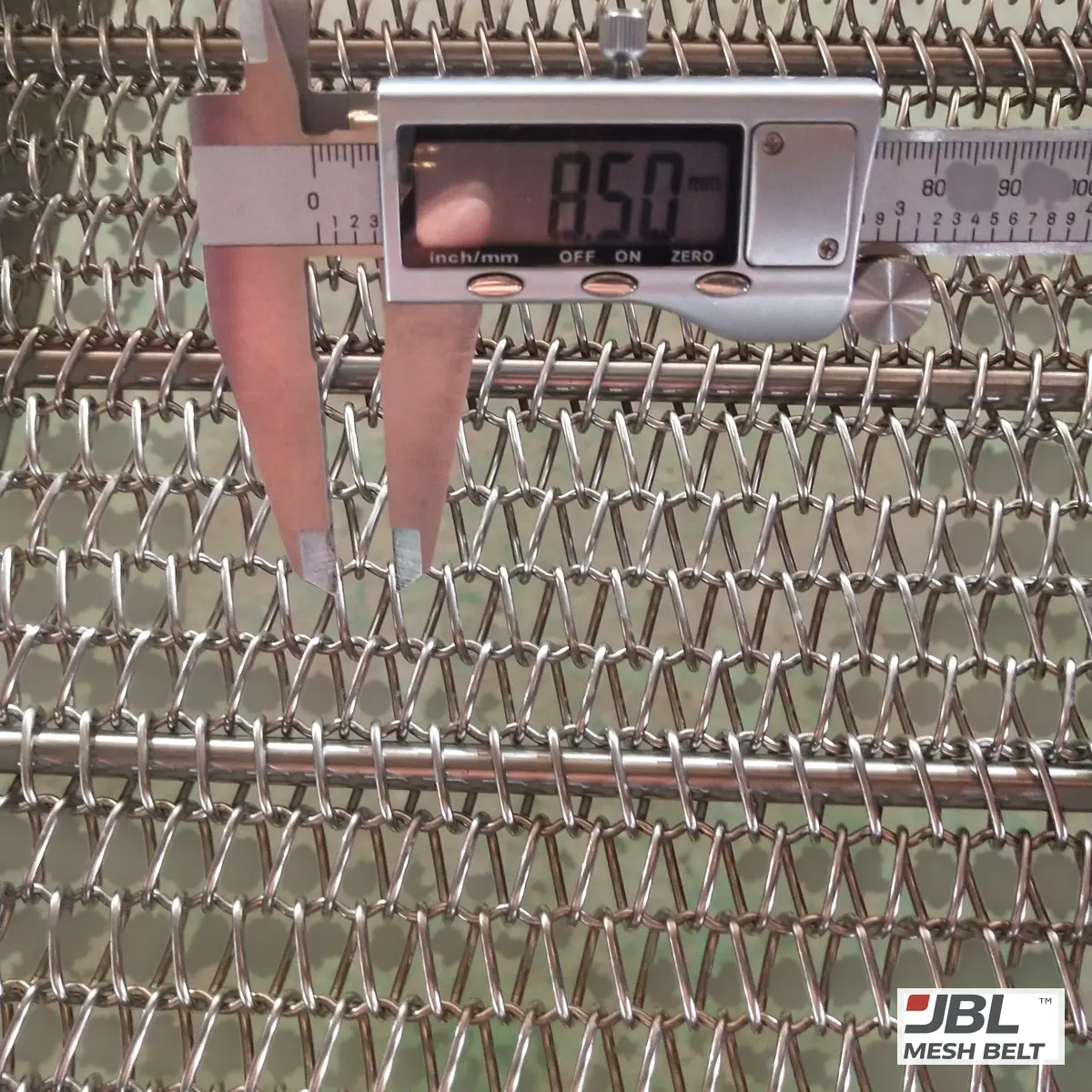
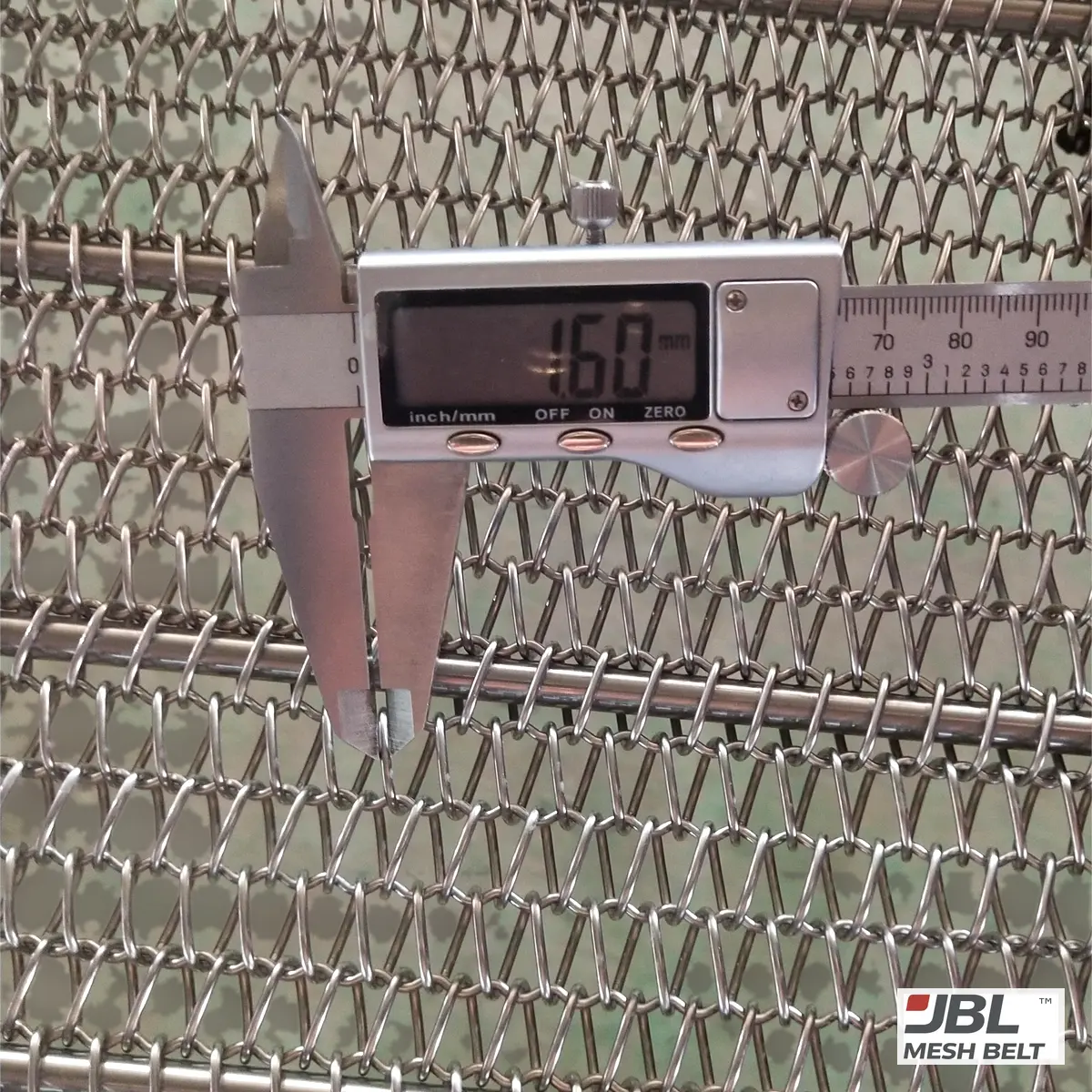
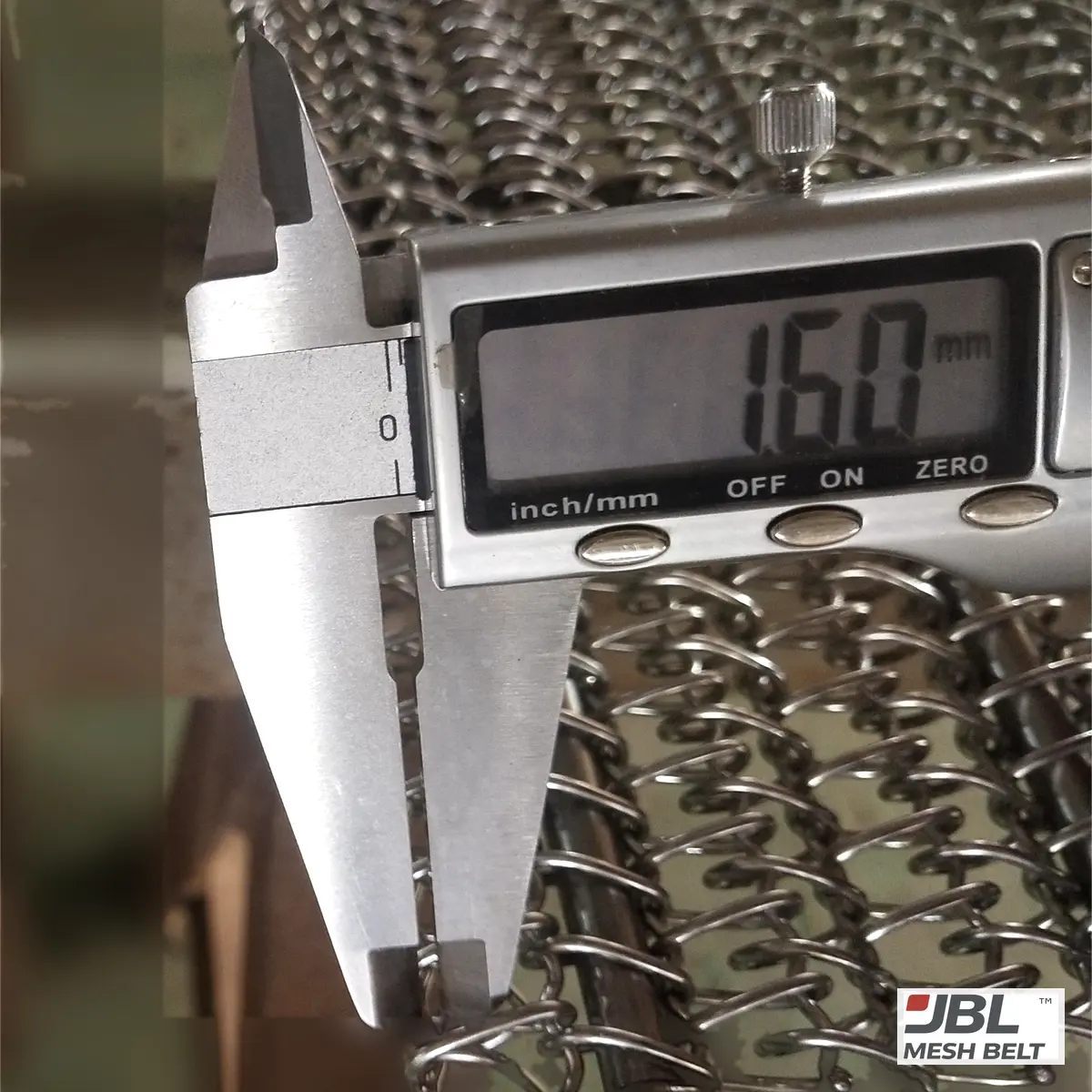
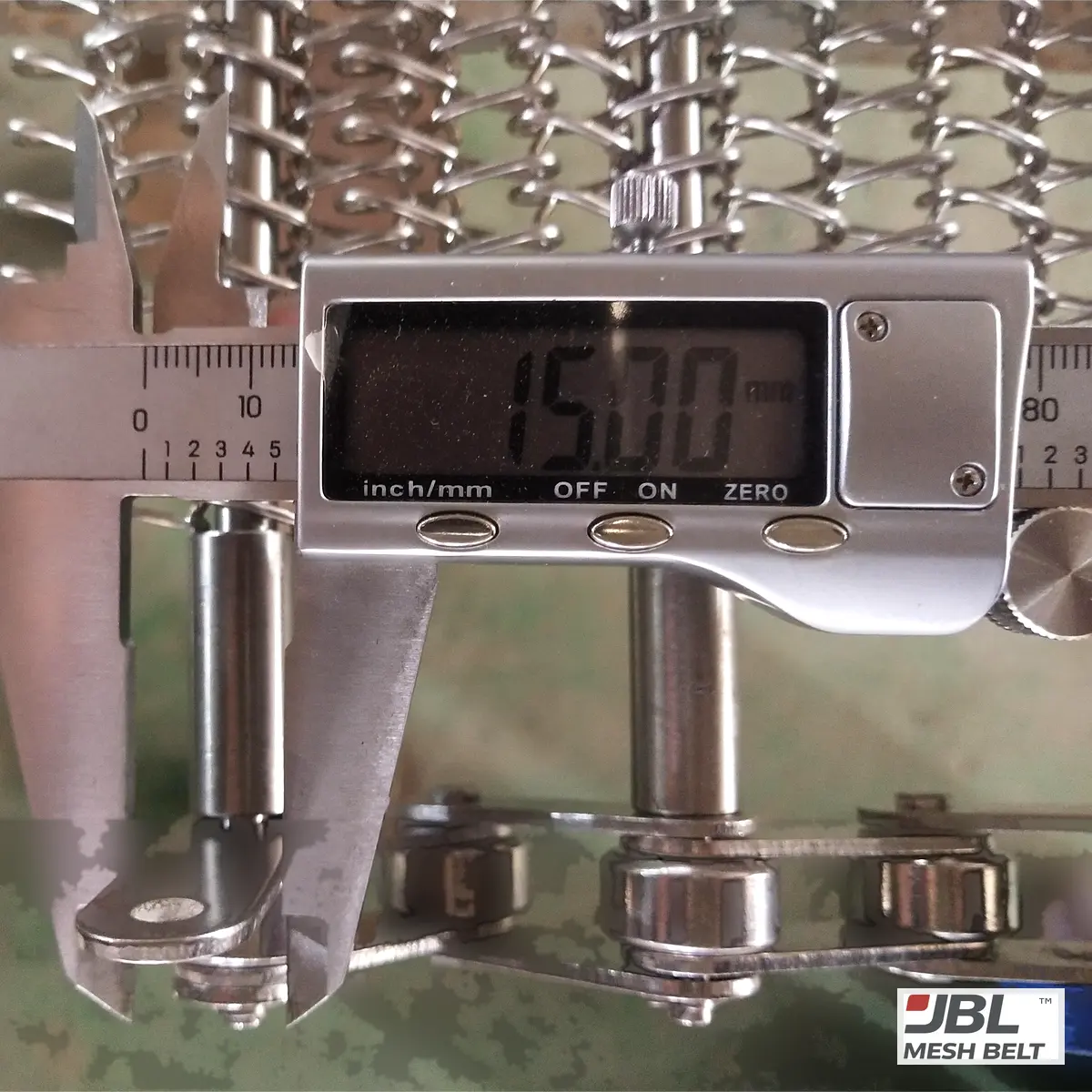
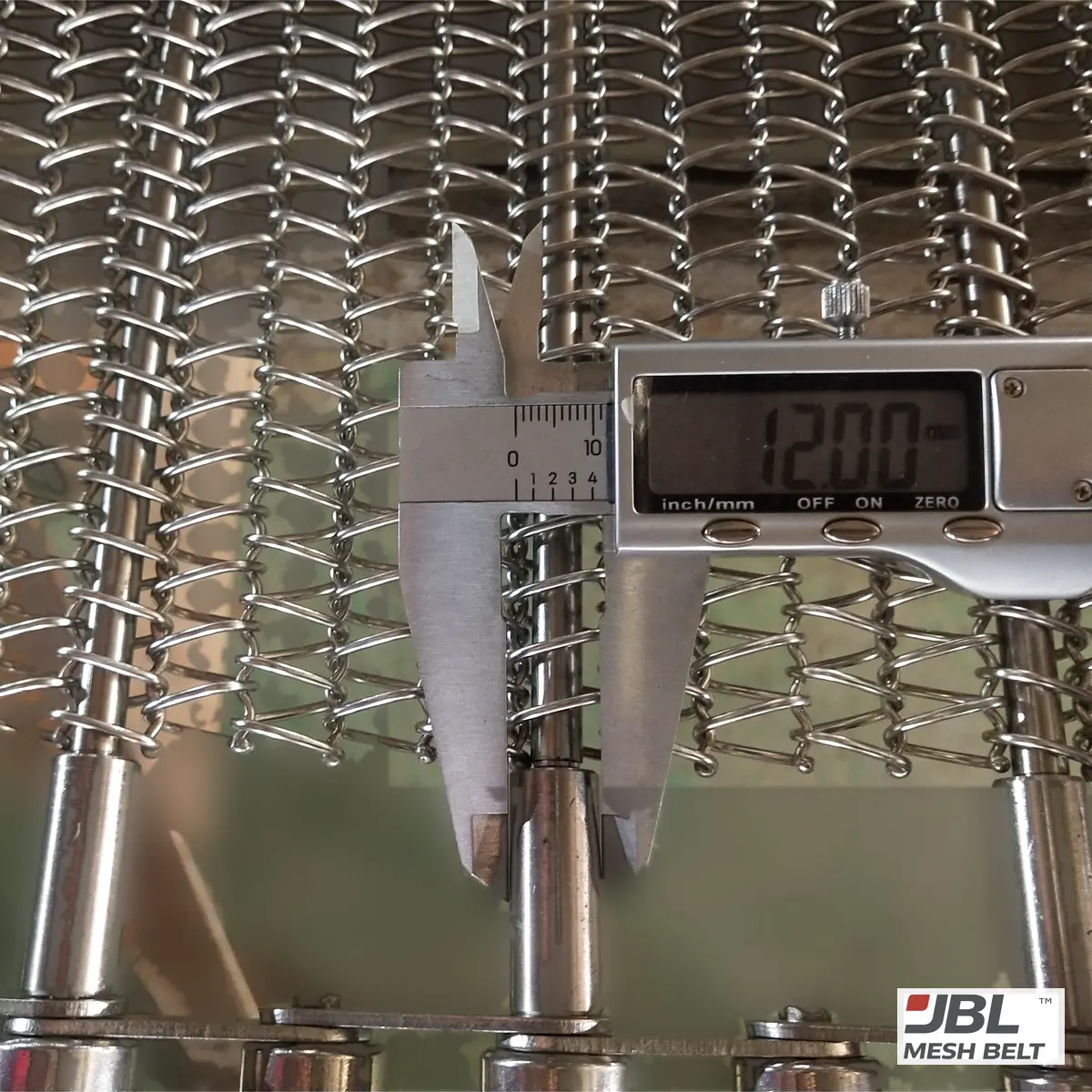
Chain pitch, roller, chain plate, rod, guide roller and mesh pitch were read with a caliper on the customer's sample.
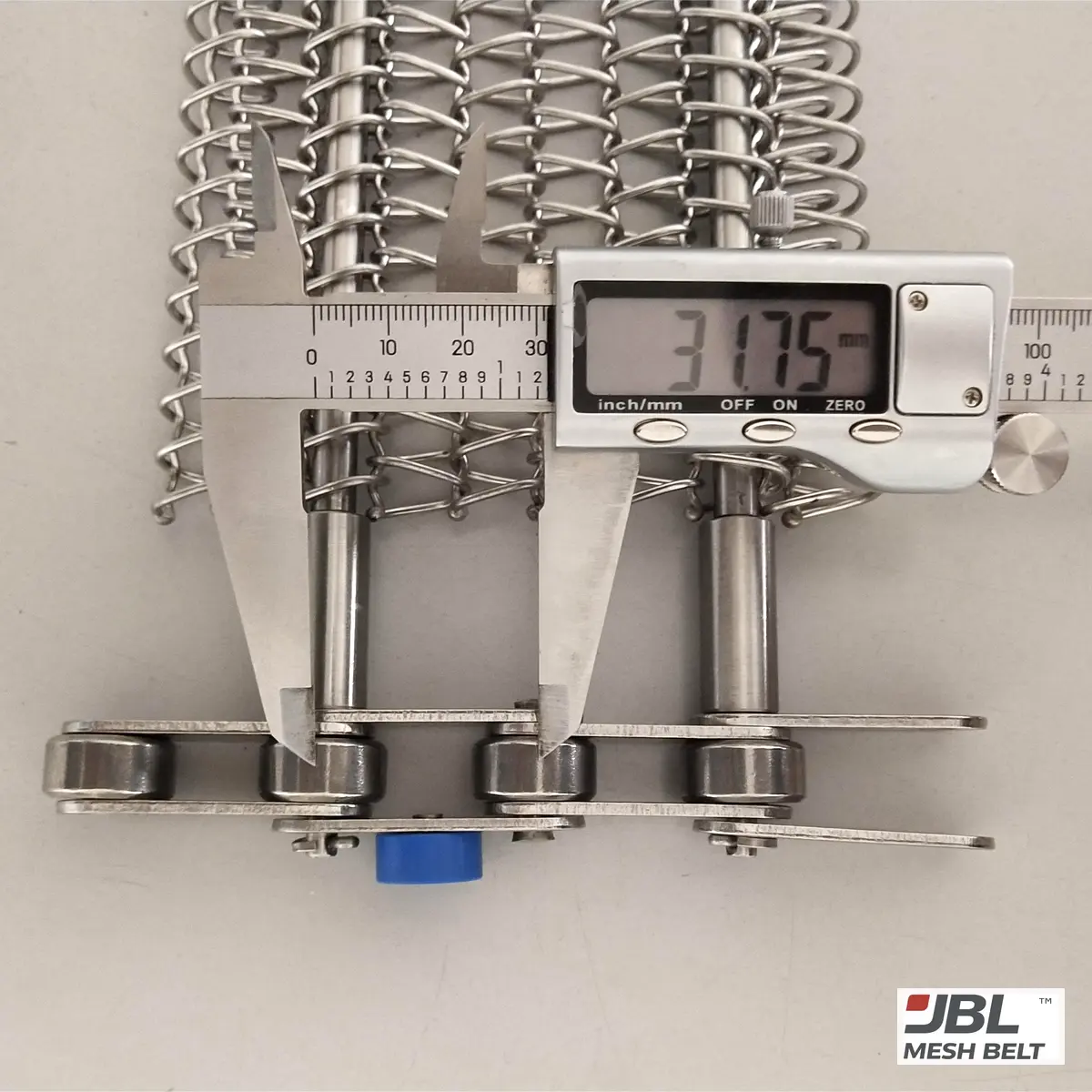
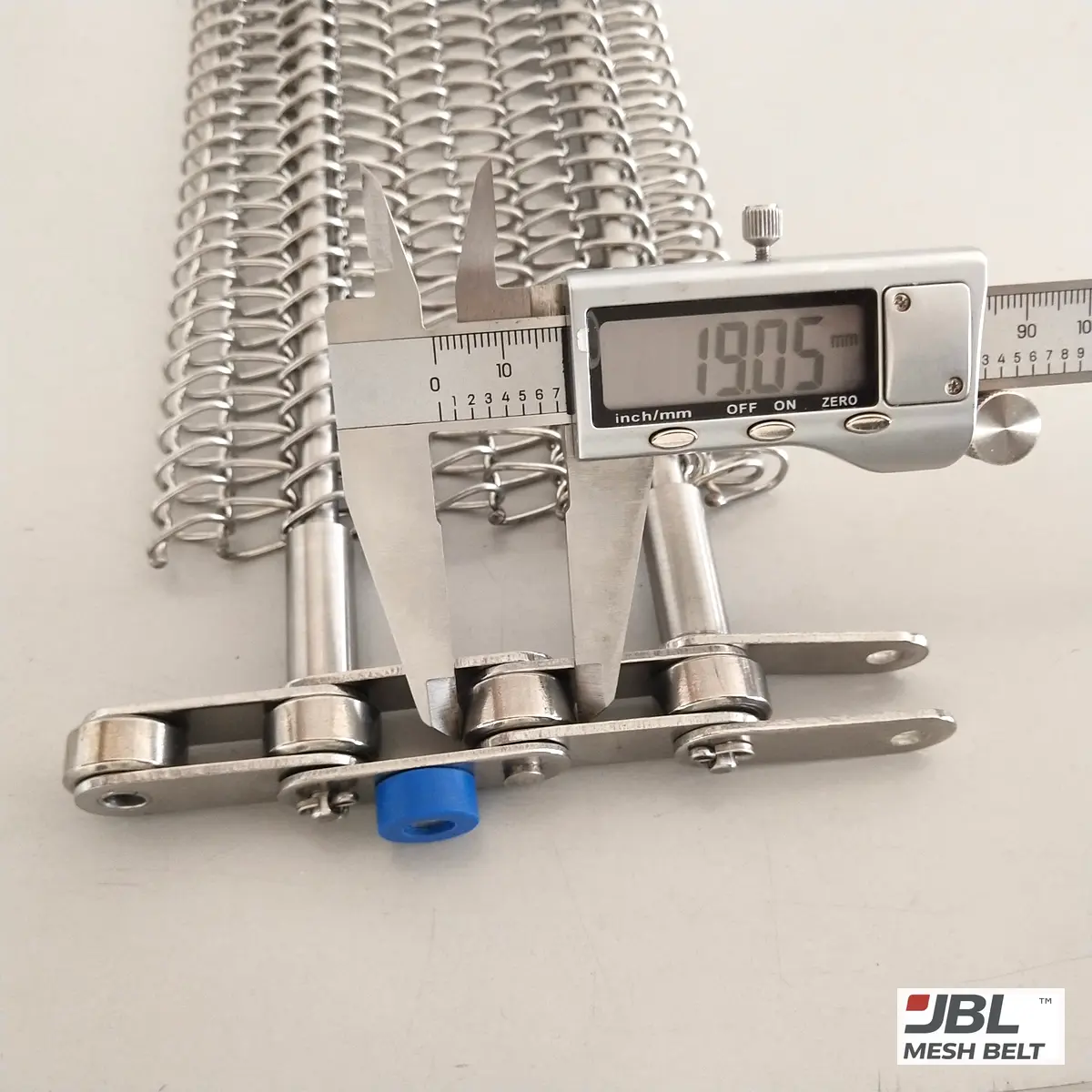
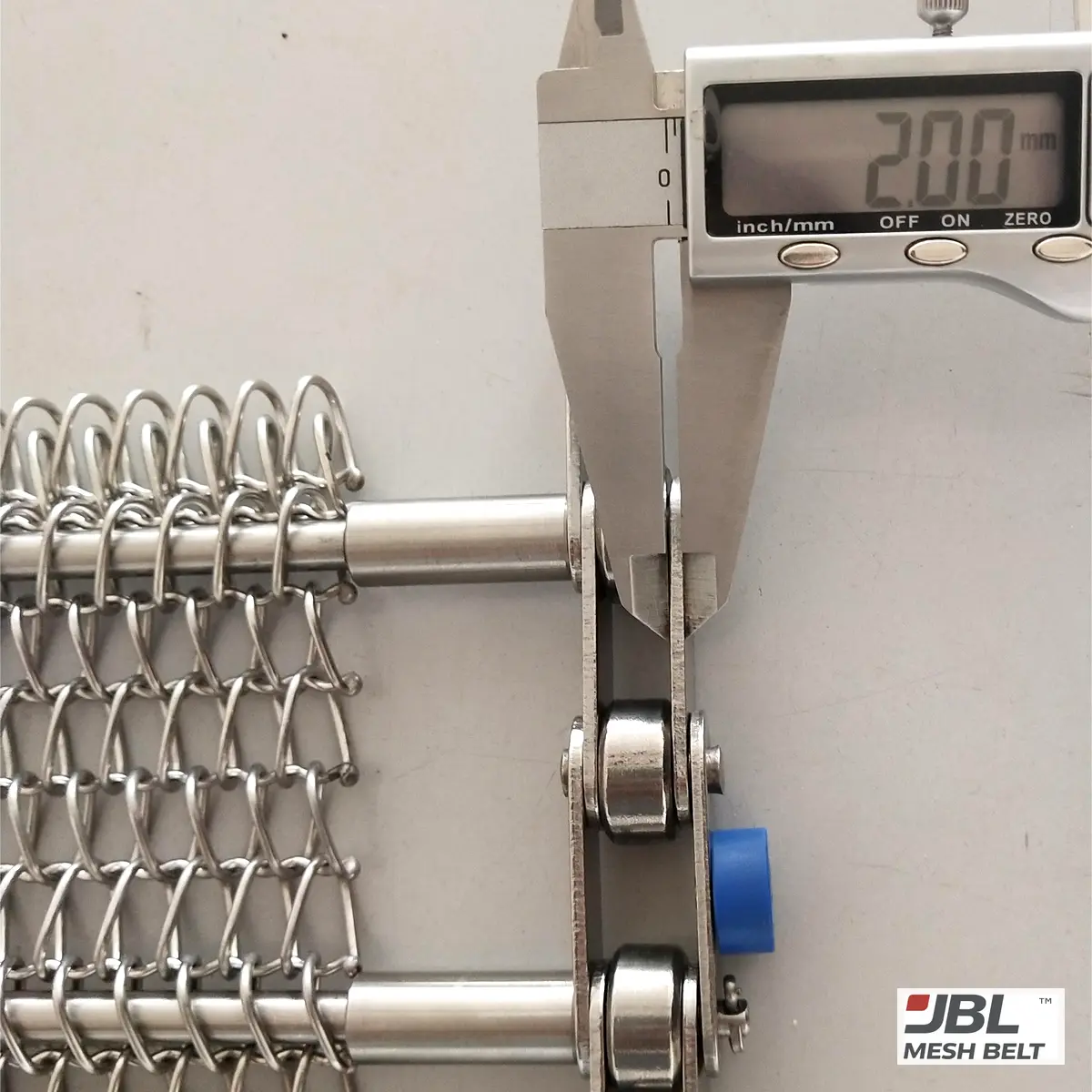
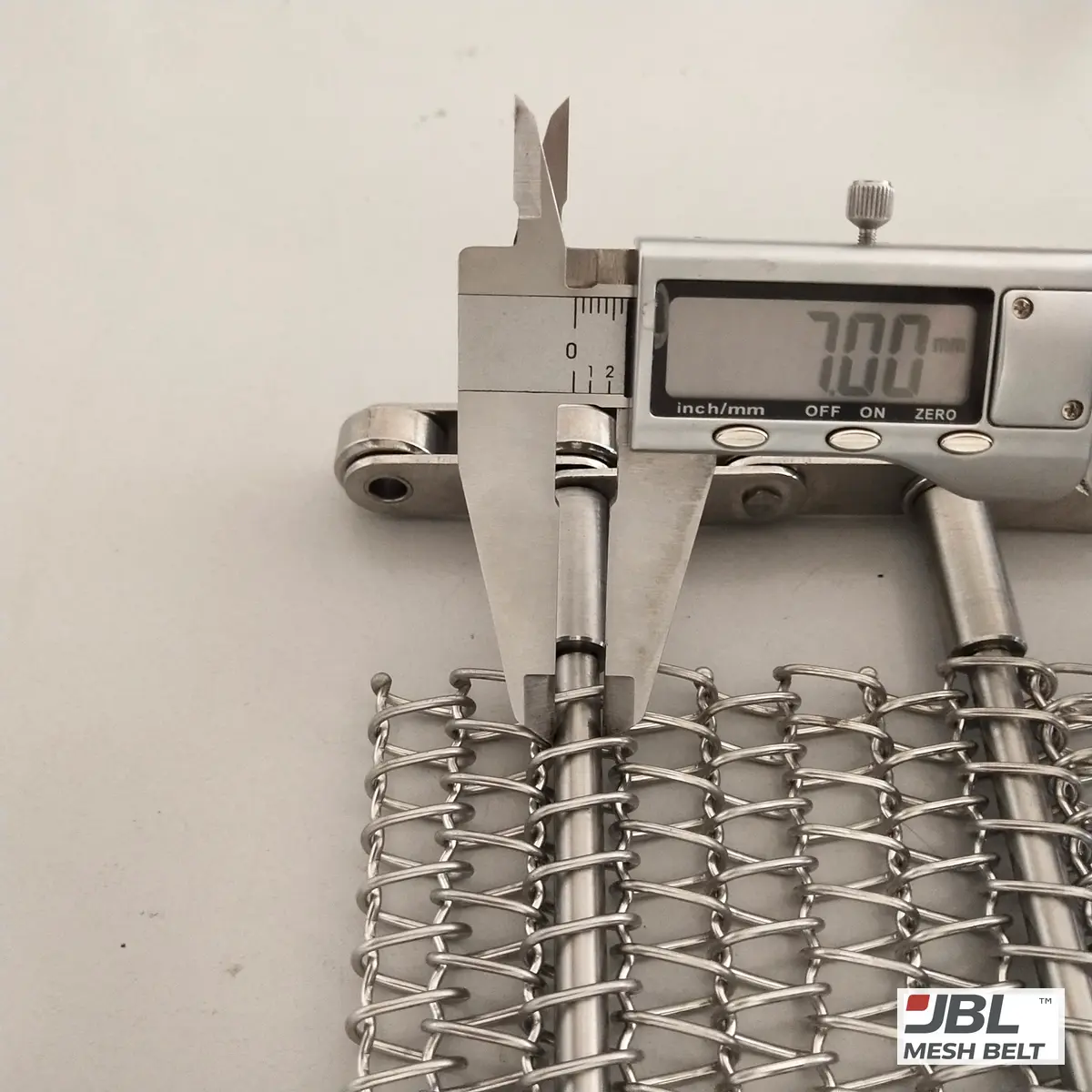
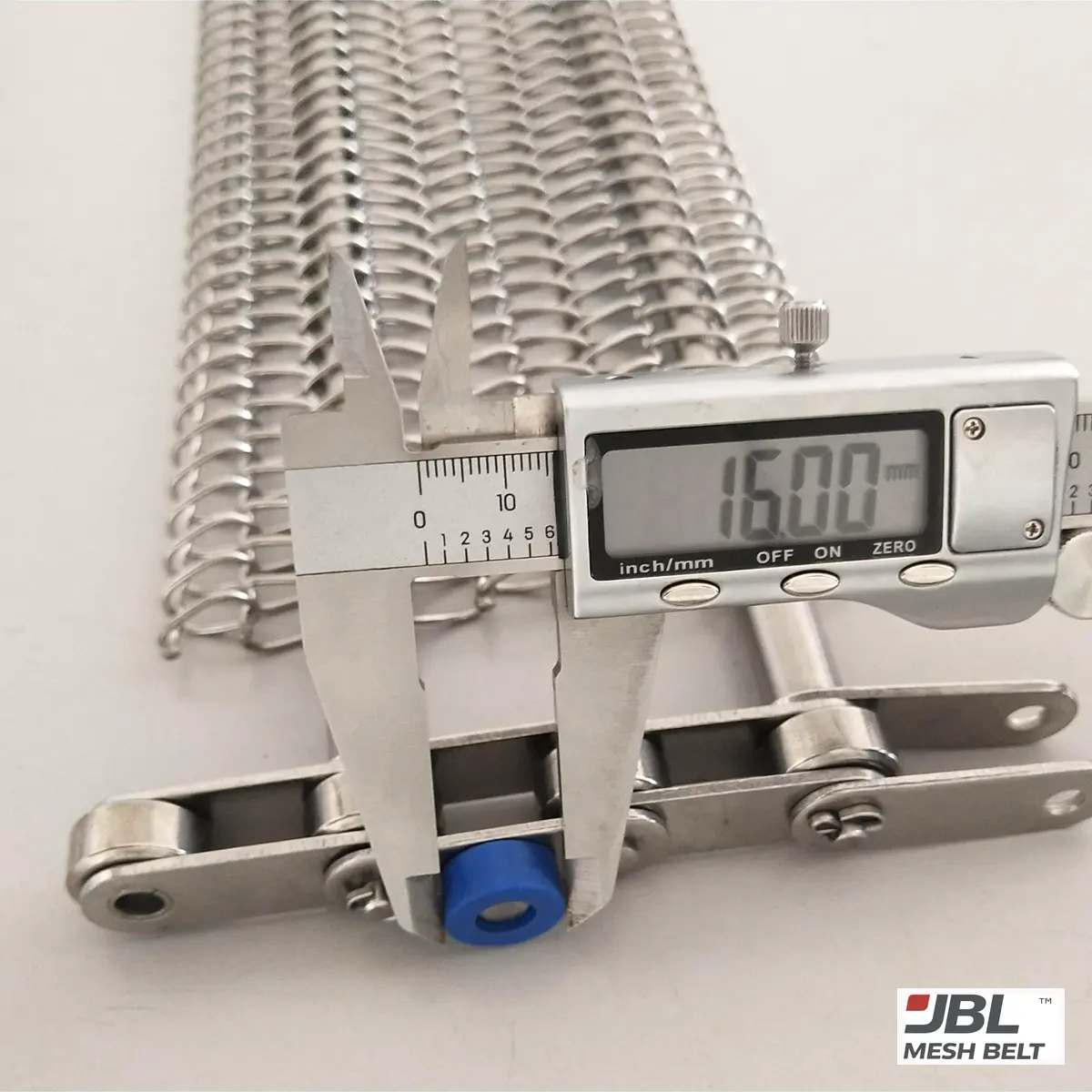
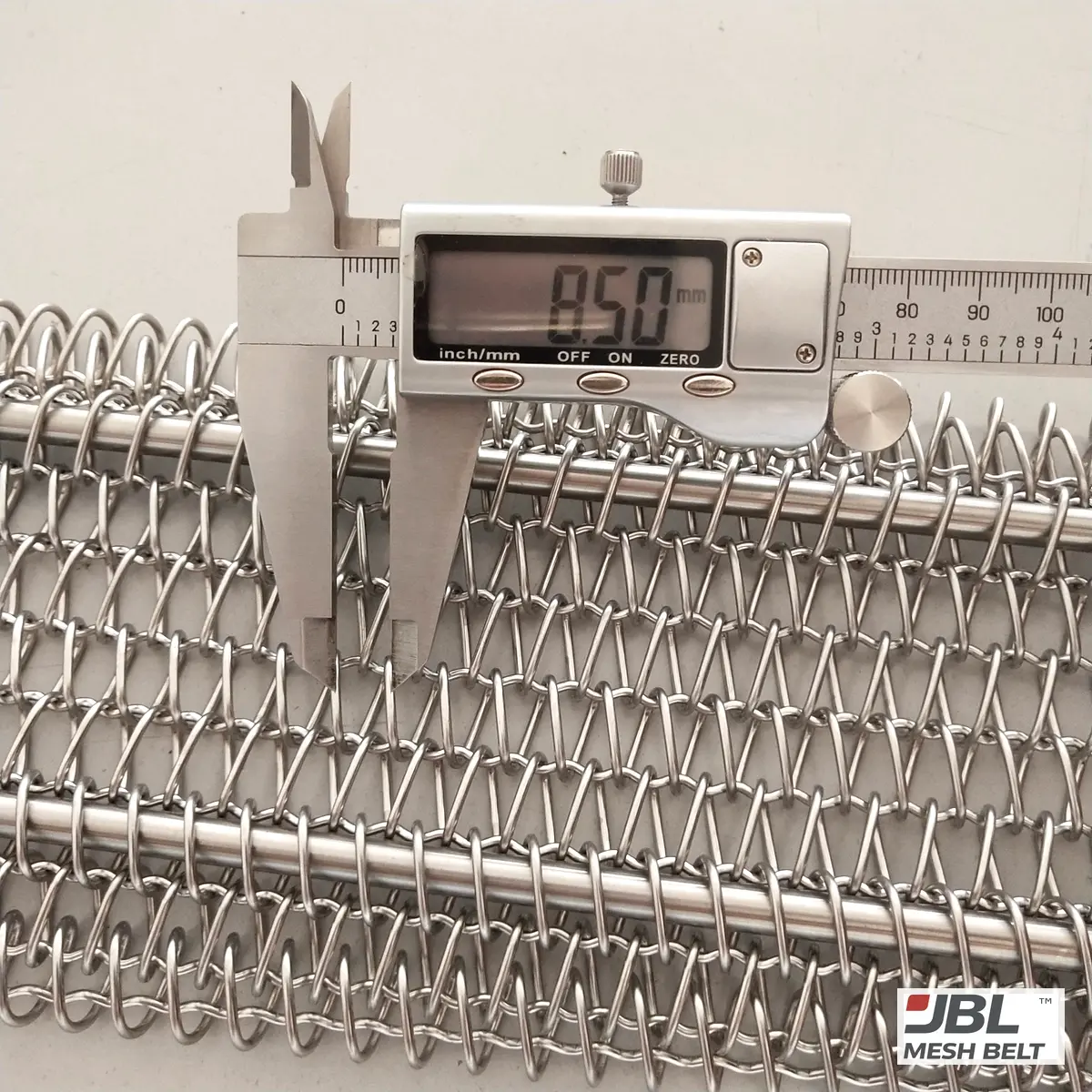
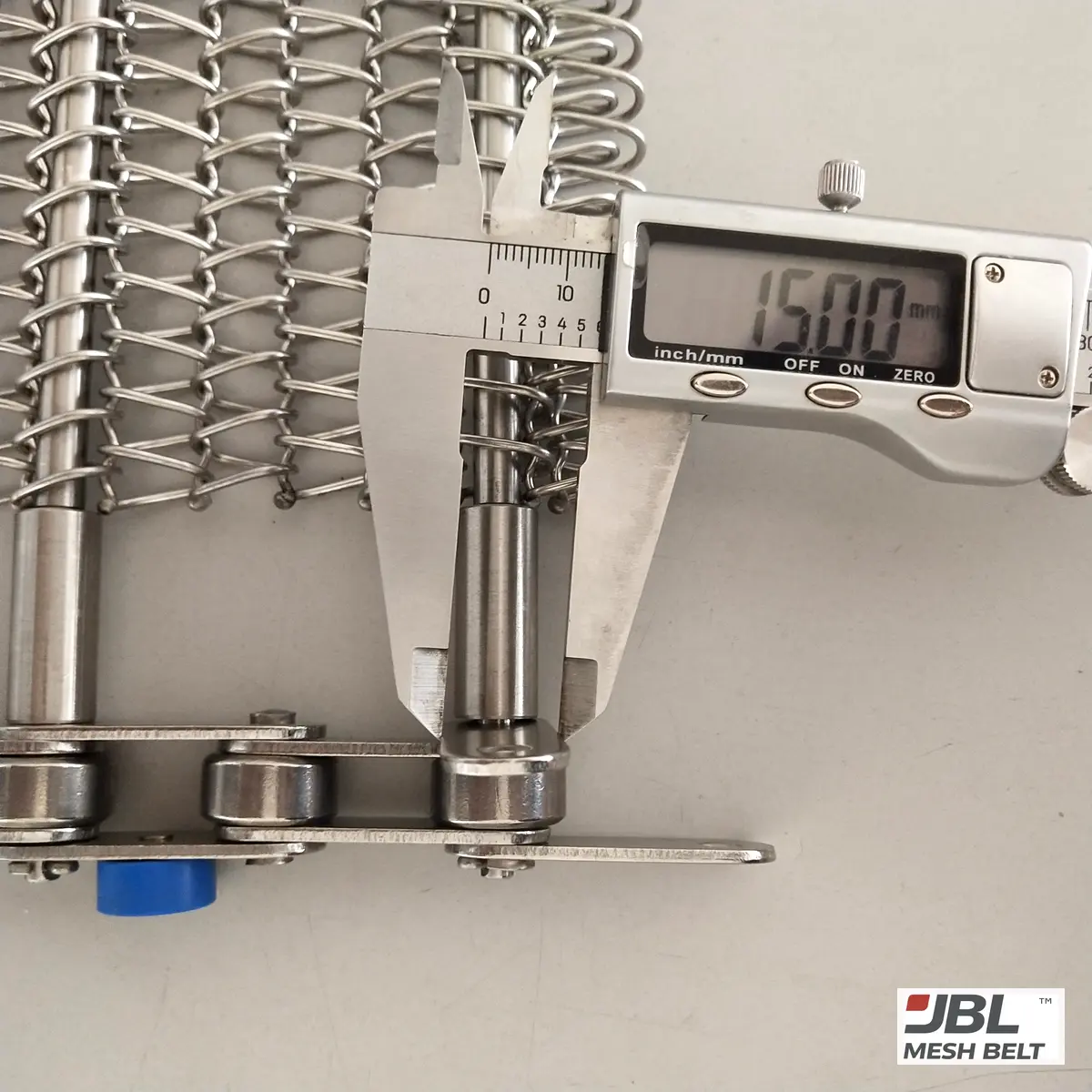
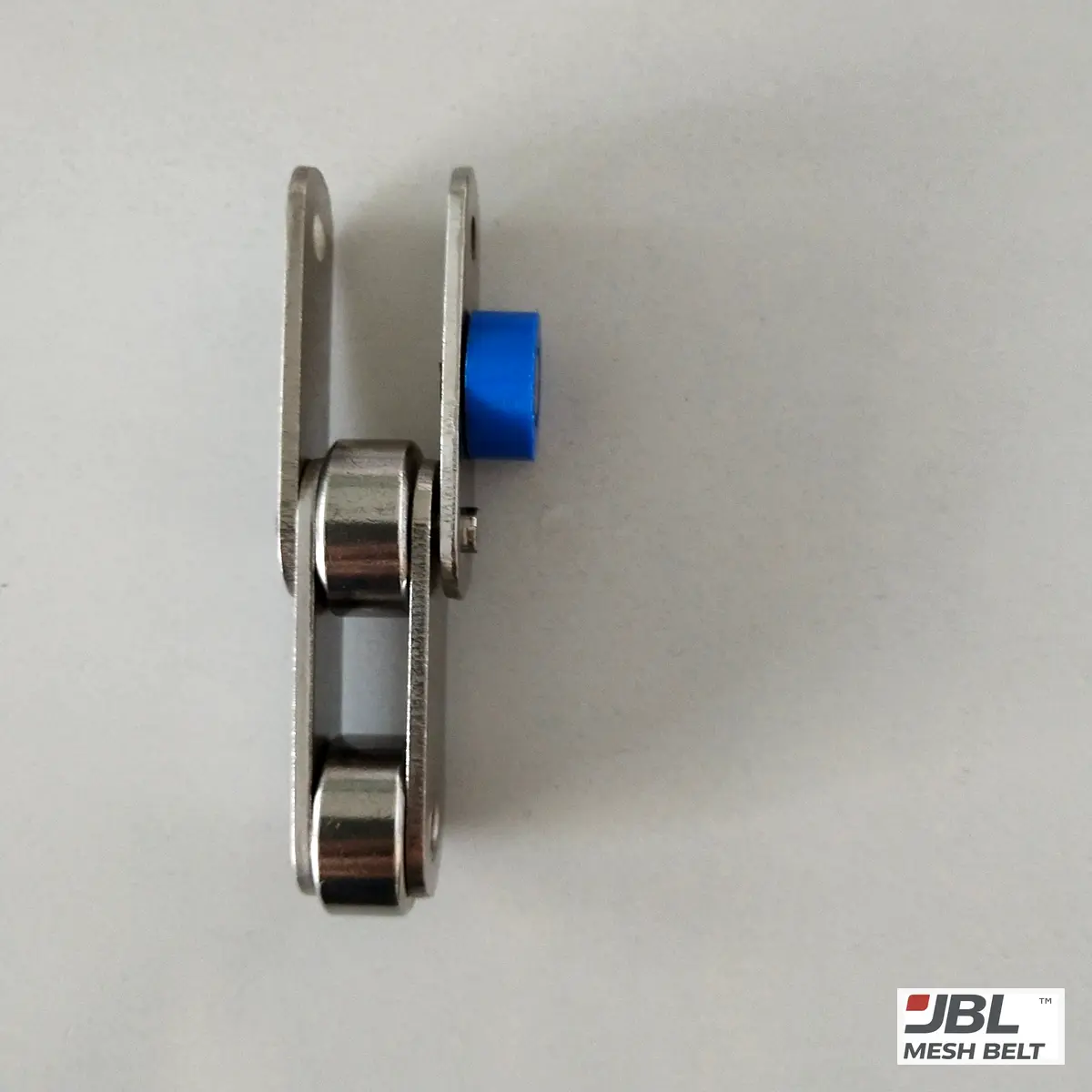
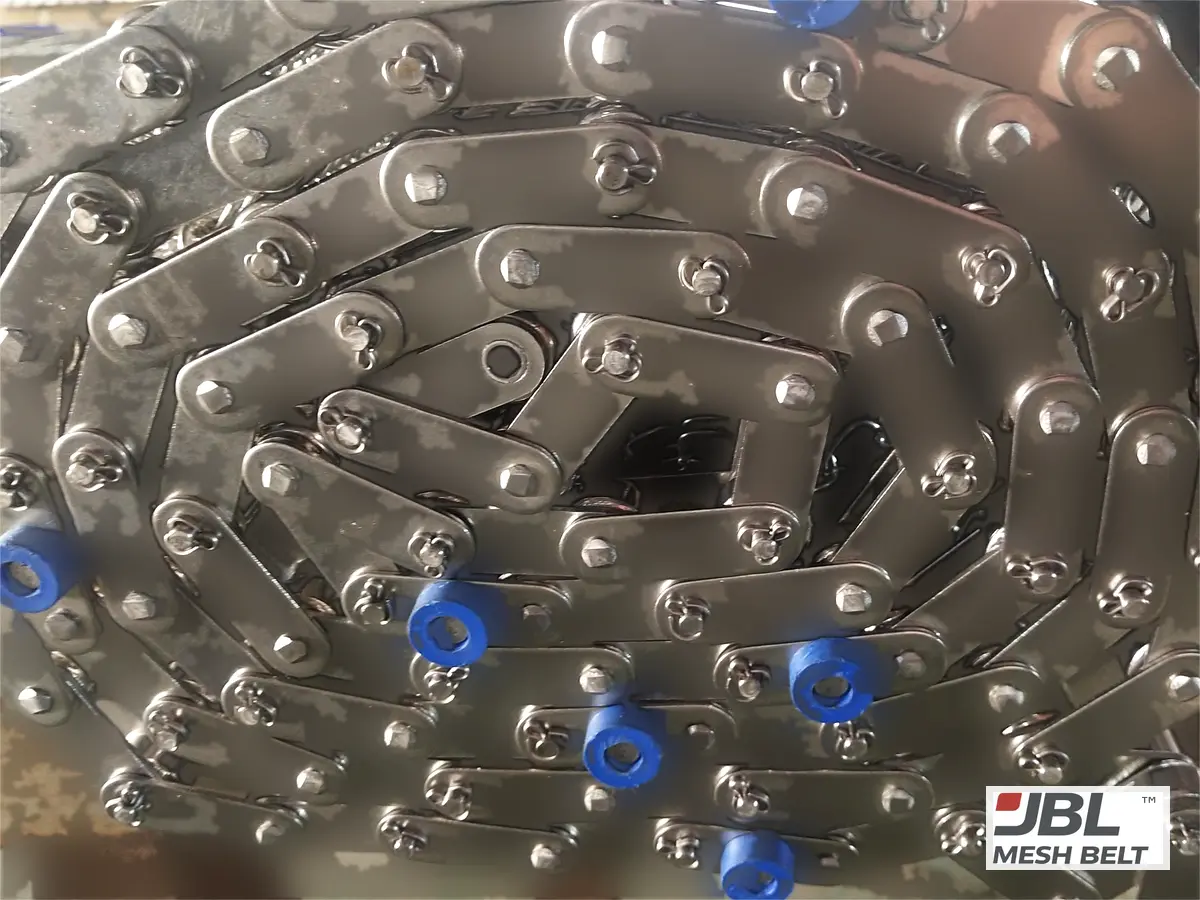
The chain was not an off-the-shelf part, so a trial chain was made first with the same plates, rollers and blue guide rollers, and checked against the sample. The belt was then produced with the chain, mesh and rods all in 316.
| Checked | Customer's sample | New belt |
|---|---|---|
| Chain pitch | 31.75 mm | 31.75 mm |
| Chain roller | 19.05 mm | 19.05 mm (spec) |
| Chain plate | 2.00 mm | 2.00 mm |
| Guide roller | 16.00 mm | 16.00 mm (trial chain) |
| Rod | 7.00 mm | 7.00 mm |
| Mesh pitch | 8.50 mm | 8.50 mm |
| Wire | — | 1.60 mm |
| Material | Stainless steel | 316 throughout |
Readings from the photos on this page and the shipping specification. Belt width and order details are withheld.
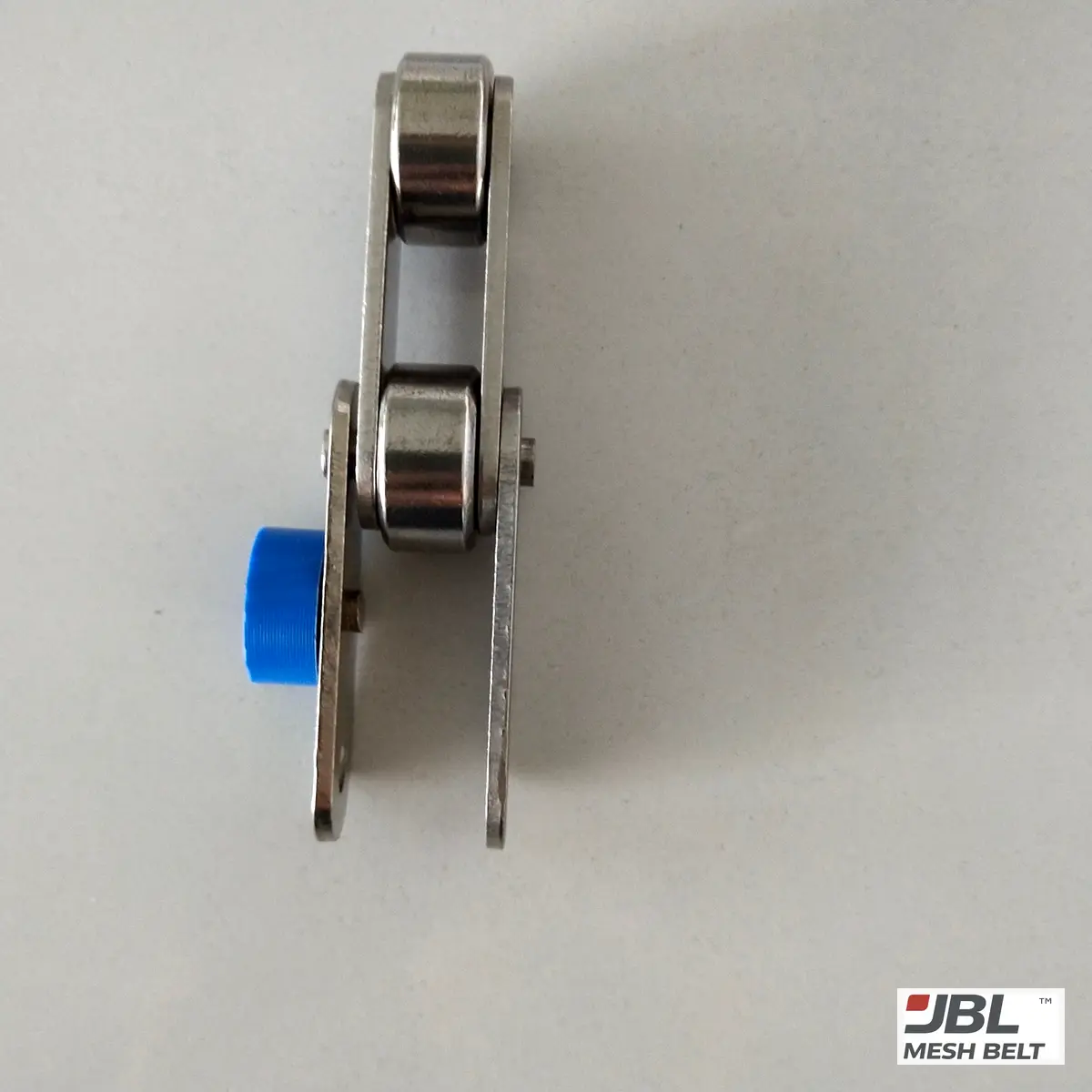
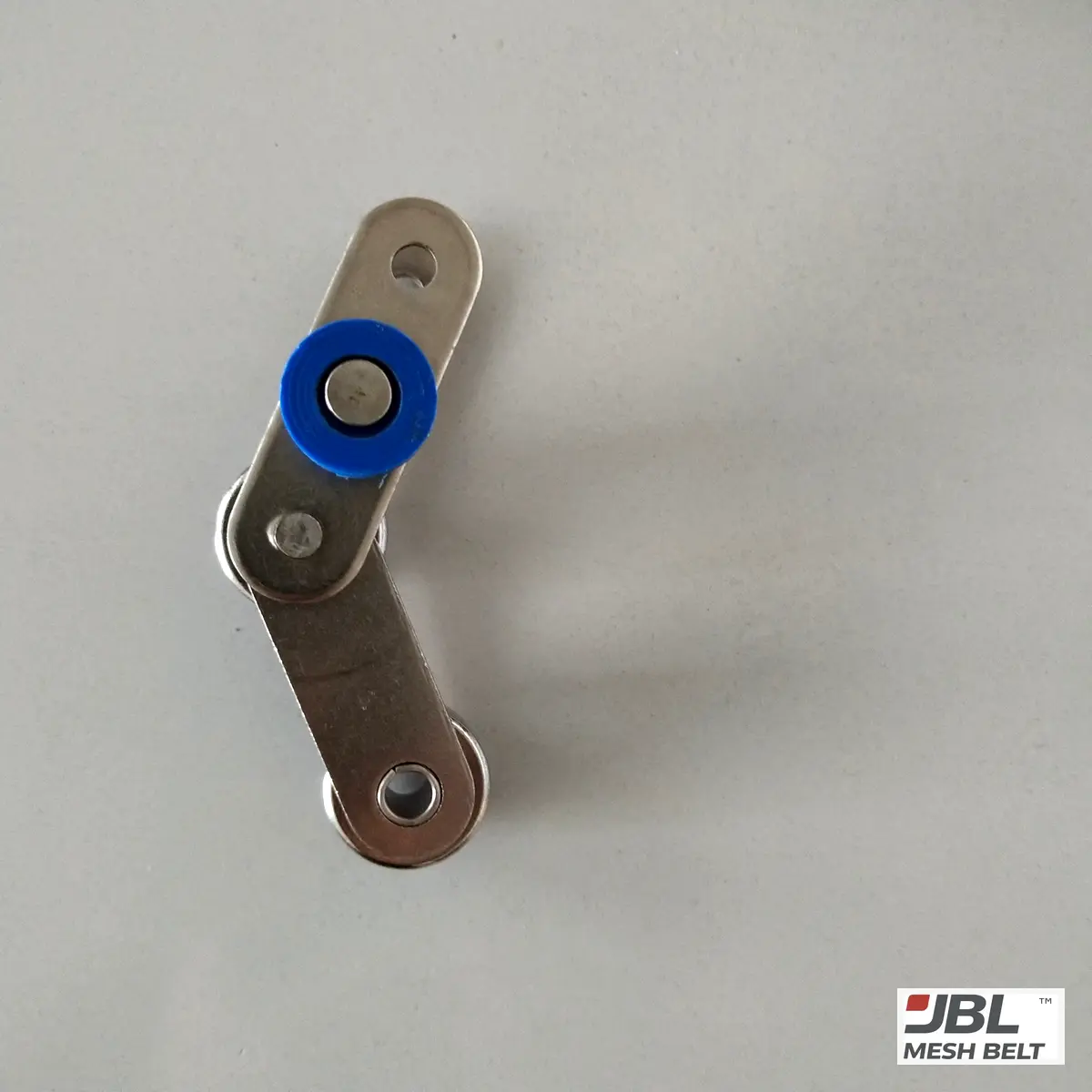
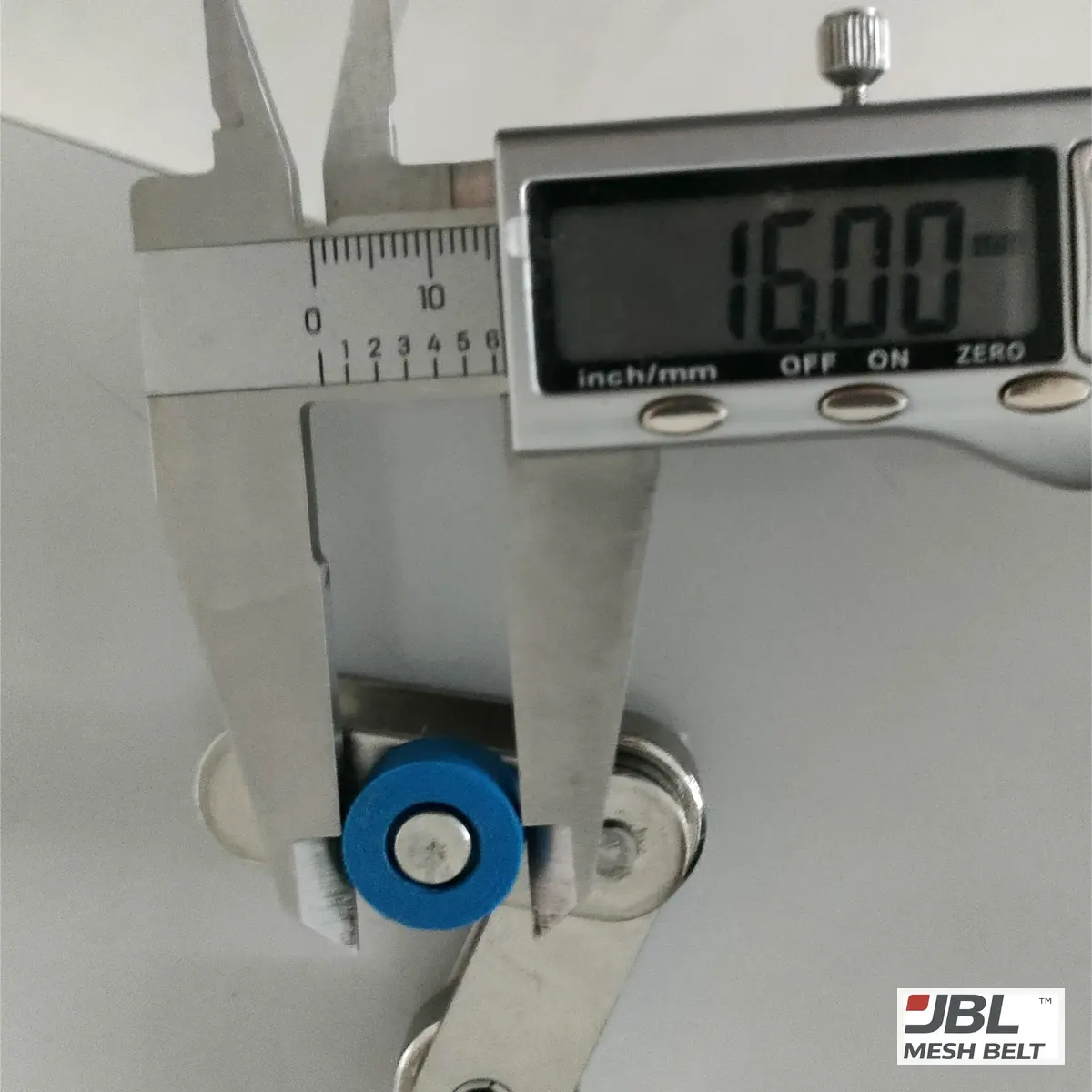
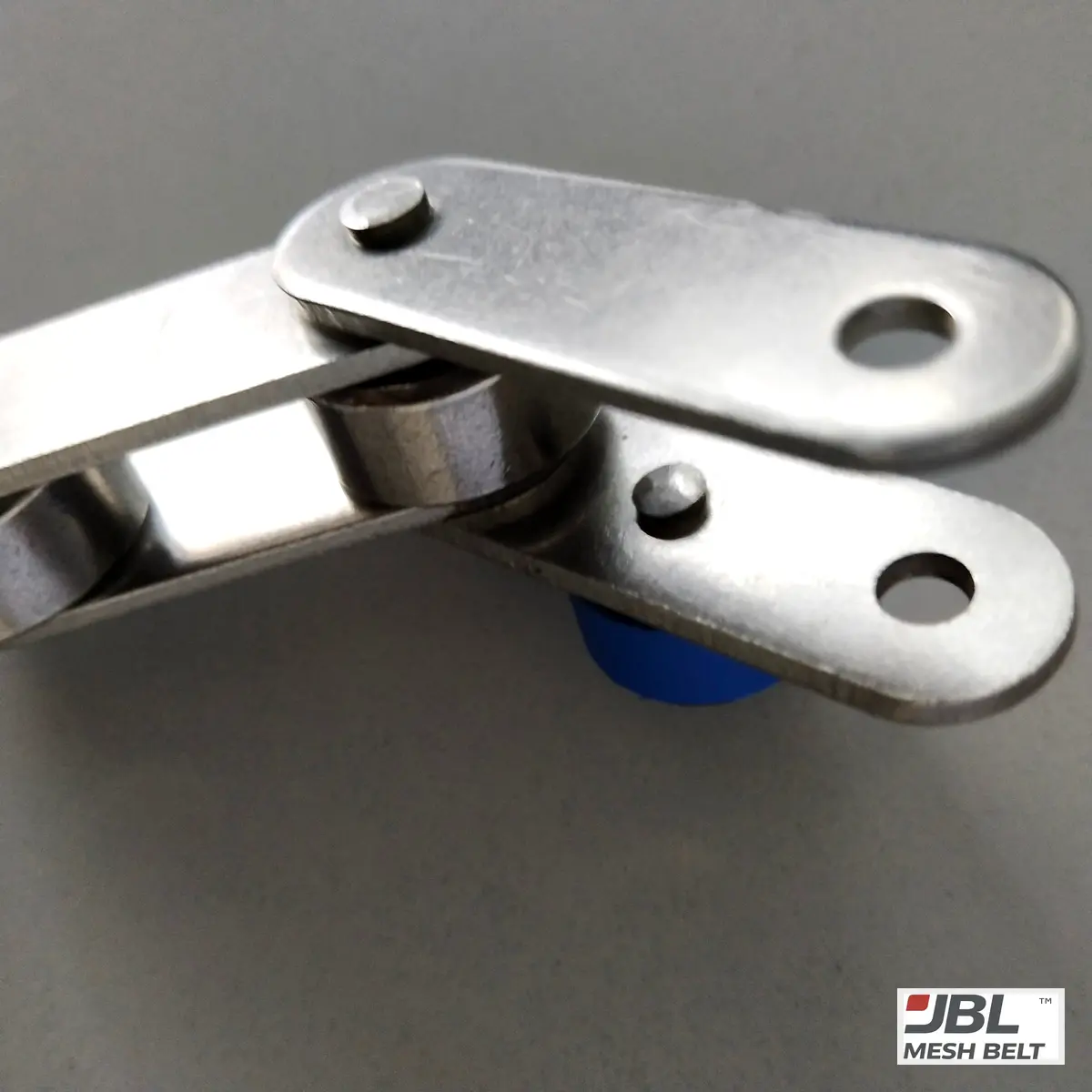
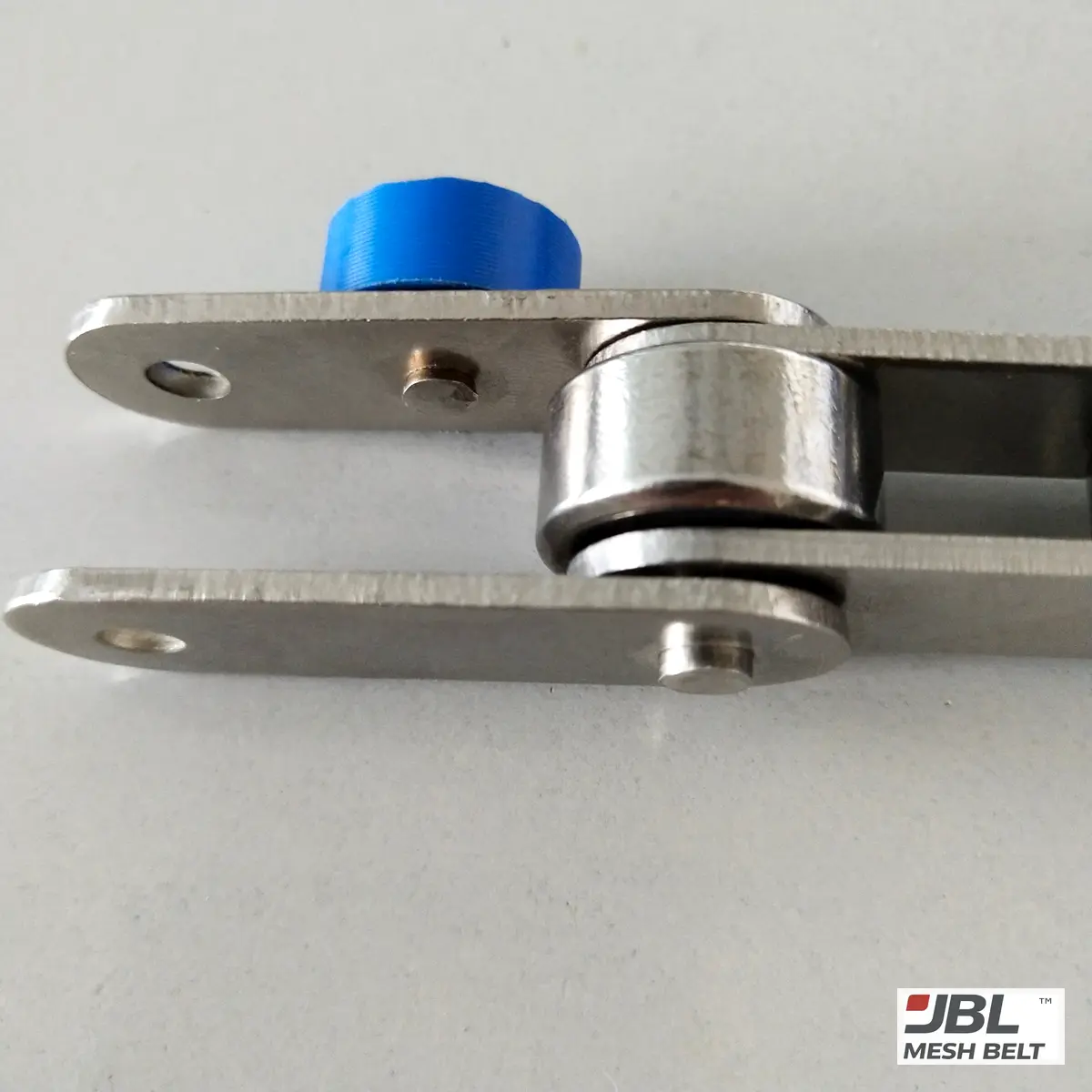
The finished belt was read with the same caliper before it was packed: chain plate, rod, mesh pitch and wire.
| Location · year | Australia · November 2023 |
|---|---|
| Industry · equipment | Food processing · steam oven tunnel |
| Starting point | Sample of the customer's original belt and chain |
| Before bulk | Custom chain reverse-engineered; trial chain made and checked |
| Belt supplied | Chain-driven belt, 316 throughout; chain pitch 31.75 mm, roller 19.05 mm, plate 2 mm, cotter-pin edge, blue guide rollers; mesh pitch 8.5 mm, wire 1.6 mm, rod 7 mm; mill finish |
| Quantity | About 33 m, crated and shipped by air |
1.The chain is half the belt
On a chain-driven belt the chain decides fit on the sprockets and guides. It was measured as closely as the mesh.
2.Make the chain first
The chain was custom, so a trial chain with rollers and guide rollers was made before the belt.
3.Pick the steel for steam and cleaning
Mesh, rods and chain were all made in 316 for steam and acid or alkaline cleaning.
4.Inch pitches hide in the readings
31.75 mm is 1¼ in and 19.05 mm is ¾ in. Recognising them keeps the chain on standard sizes.
✓ Evidence on this page: photos and caliper readings of the customer's sample, the trial chain and the bulk belt. Customer name, order numbers, belt width and the original belt brand are withheld.
Replacing a chain-driven belt?
Send a short section of the old belt, or photos with a caliper in the picture — usually a reply within 8 hours.
Yes. Chain pitch, roller, plate, rod and mesh are measured on the sample; a custom chain can be made and checked as a trial first.
The belt runs in steam and is cleaned with acid and alkaline agents, so mesh, rods and chain were all made in 316.
Guide rollers fitted on the chain, measured at 16.00 mm on the sample and copied on the trial chain.
No. Cases show country and year only; the customer, order numbers and the original belt brand are not published.