Eye Link Belt · Stainless Steel or Mild Steel

Replacing an Eye Link Belt: What to Measure and Check

An eye link belt is a metal conveyor belt of wire links joined by cross rods, used for continuous conveying in seafood processing, frying, drying, cooling and freezing lines. It runs straight on sprockets, so eye-link pitch, rod pitch and edge must match the drive.

Replacing an eye link belt, re-ordering, or fitting out a new line? Before quoting, your eye-link pitch, rod pitch, edge type and sprockets are checked. Repeat orders are matched to your previous record, the mesh is cleaned for food lines, and the belt is run on its sprockets before it ships.

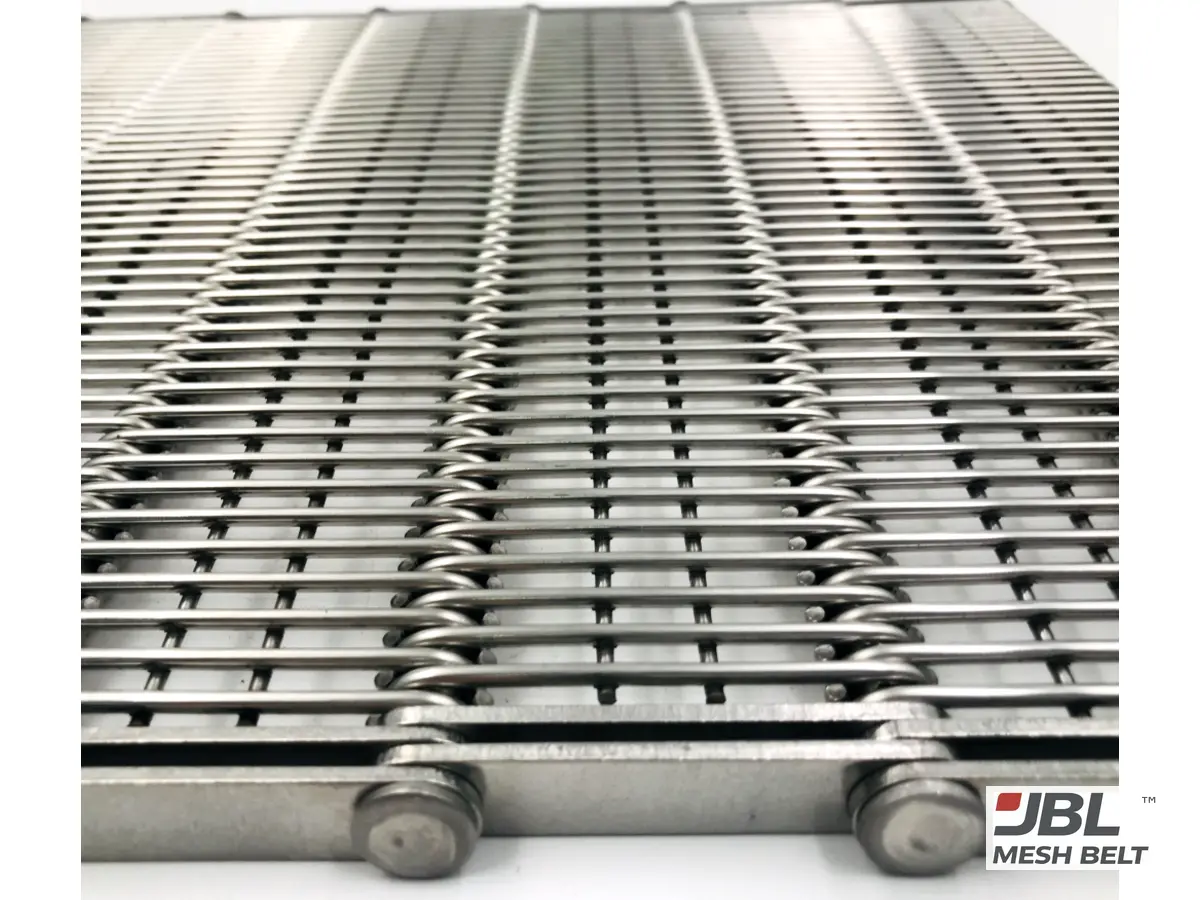
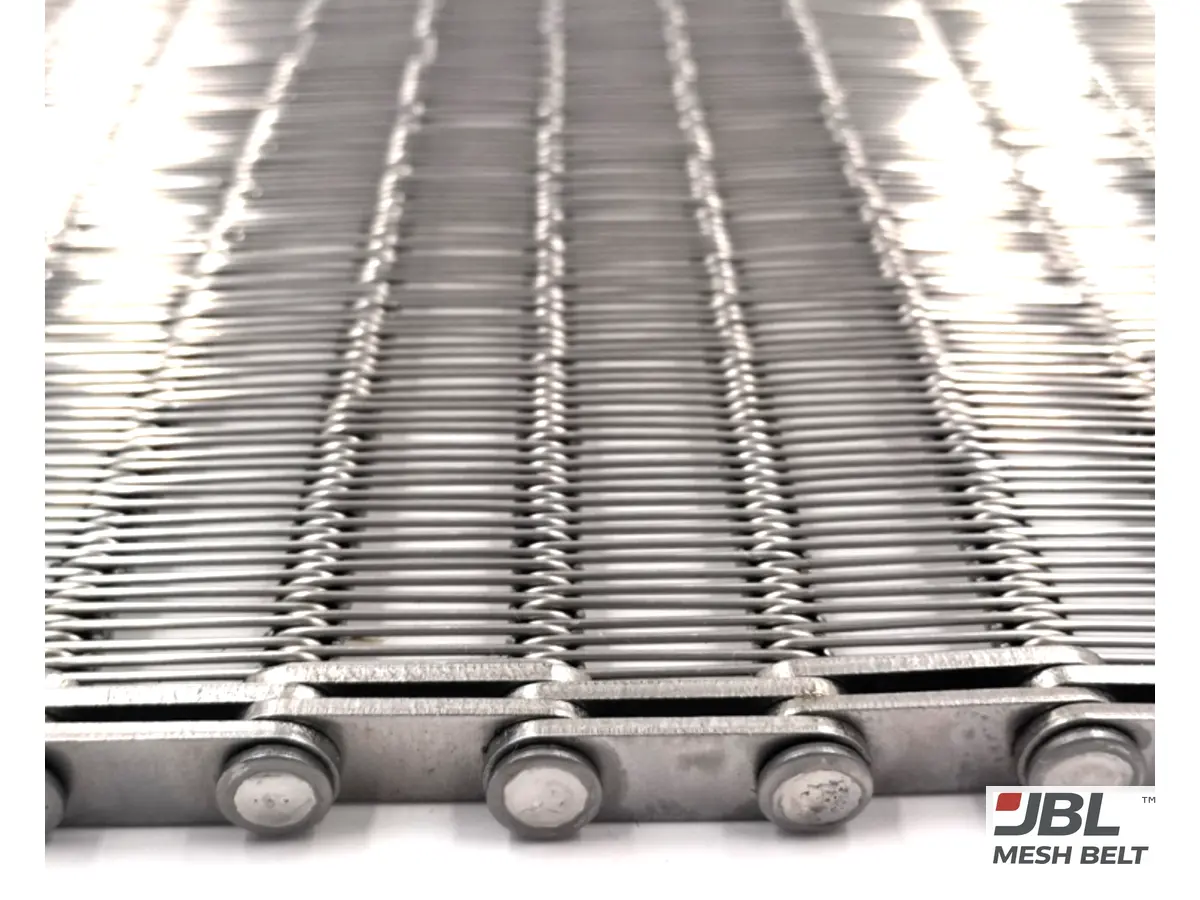
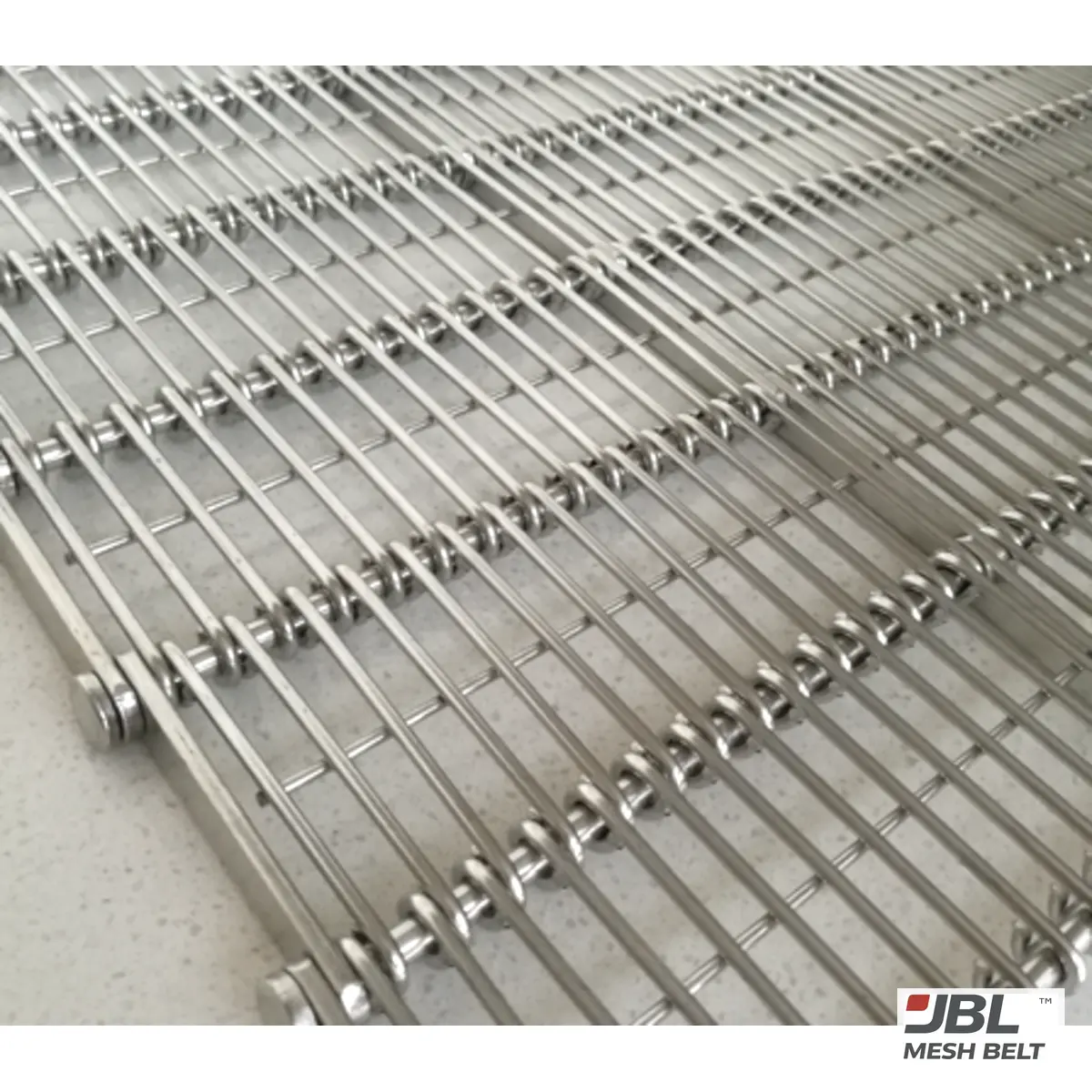
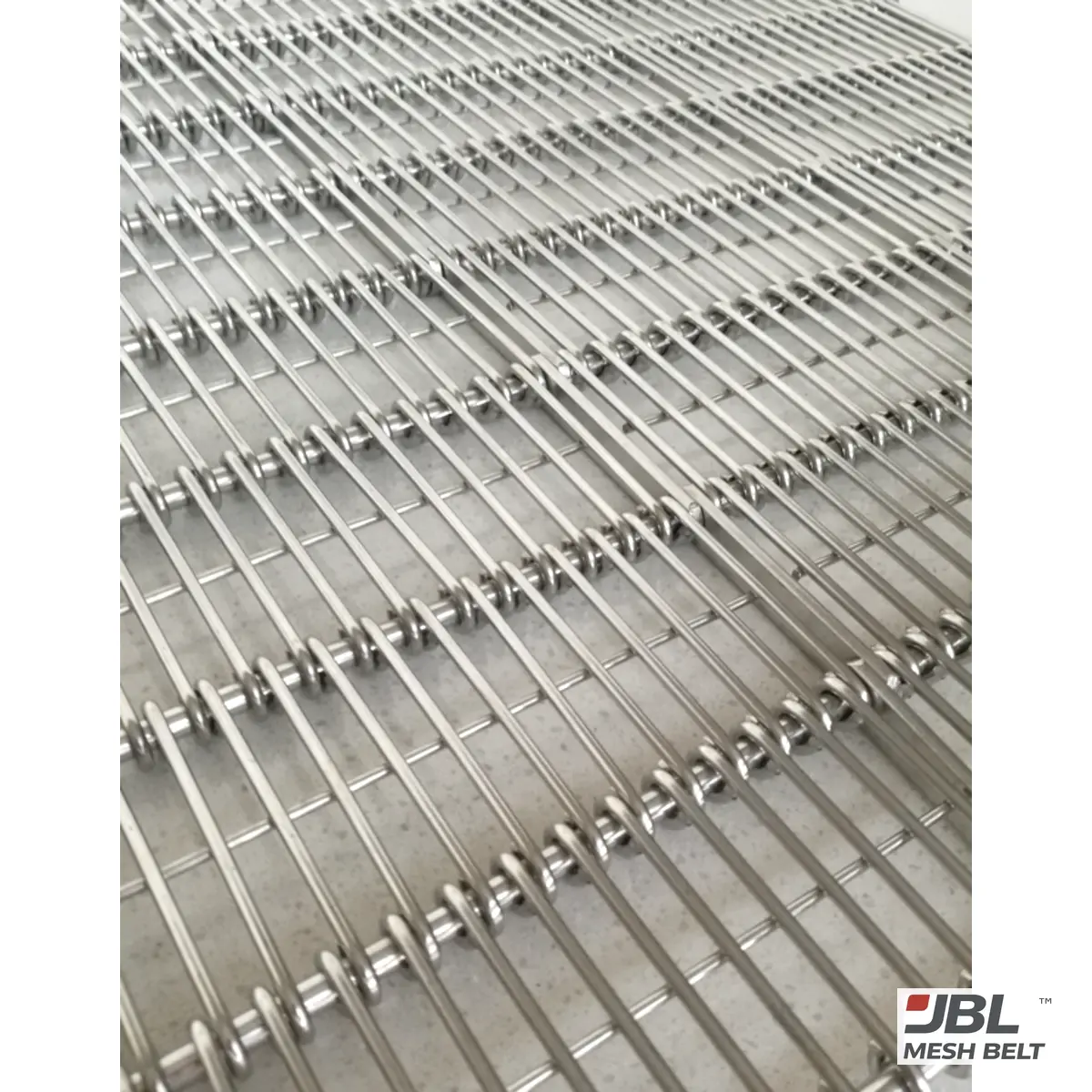
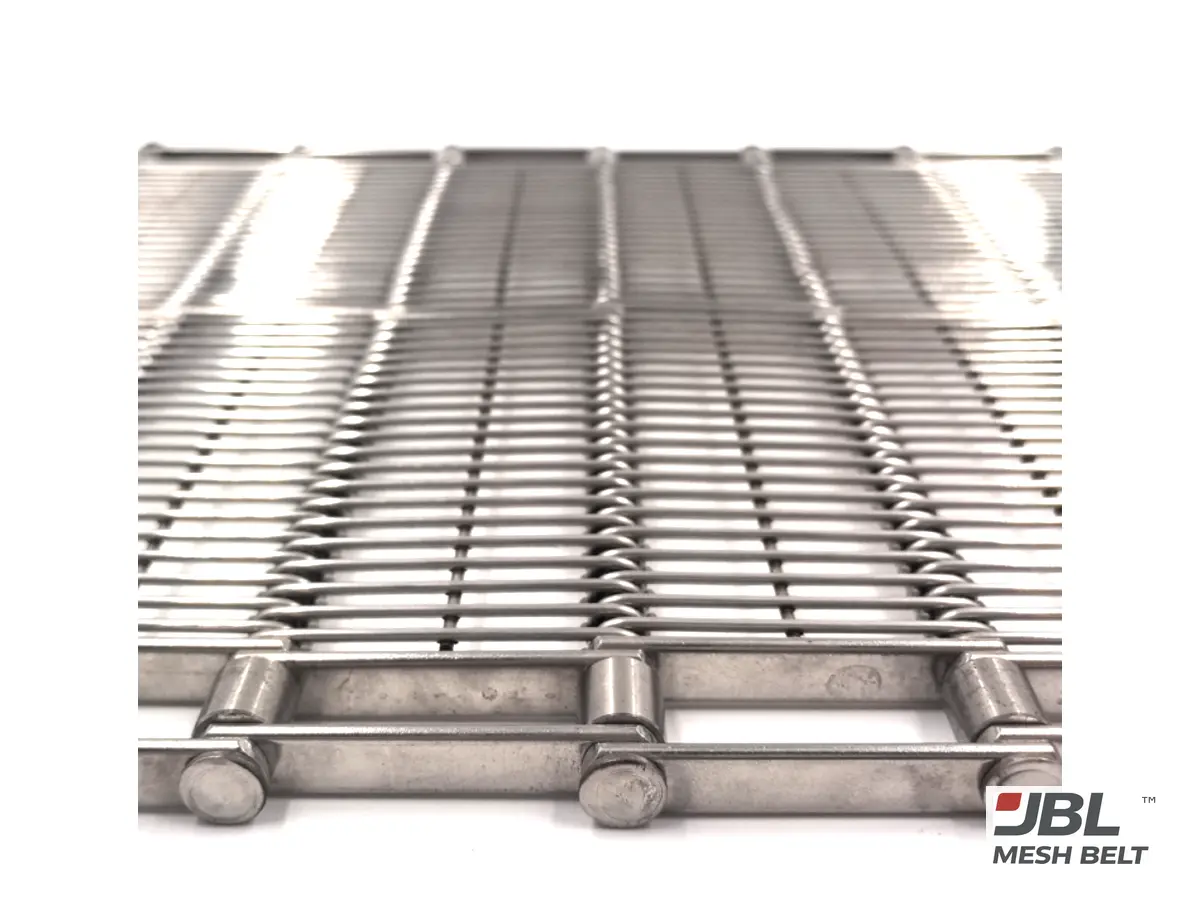
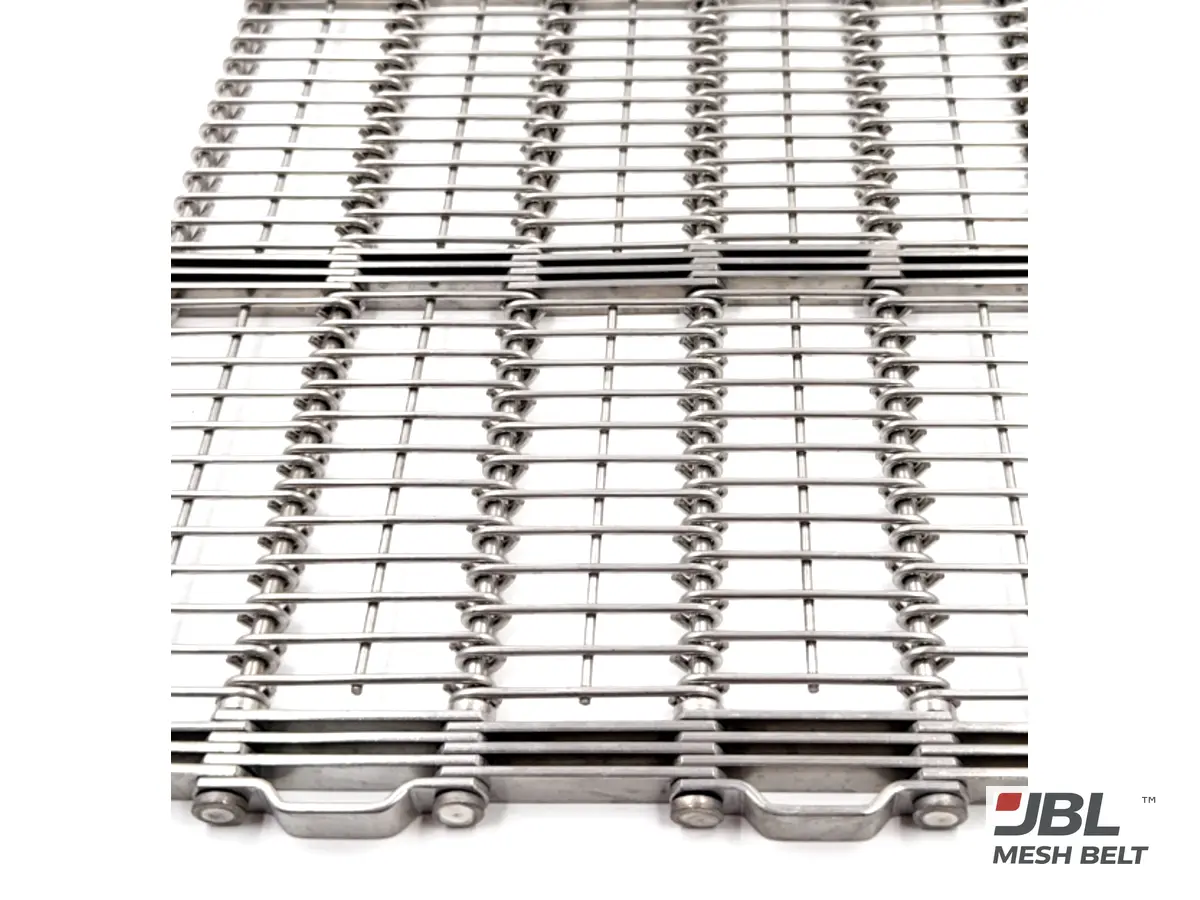
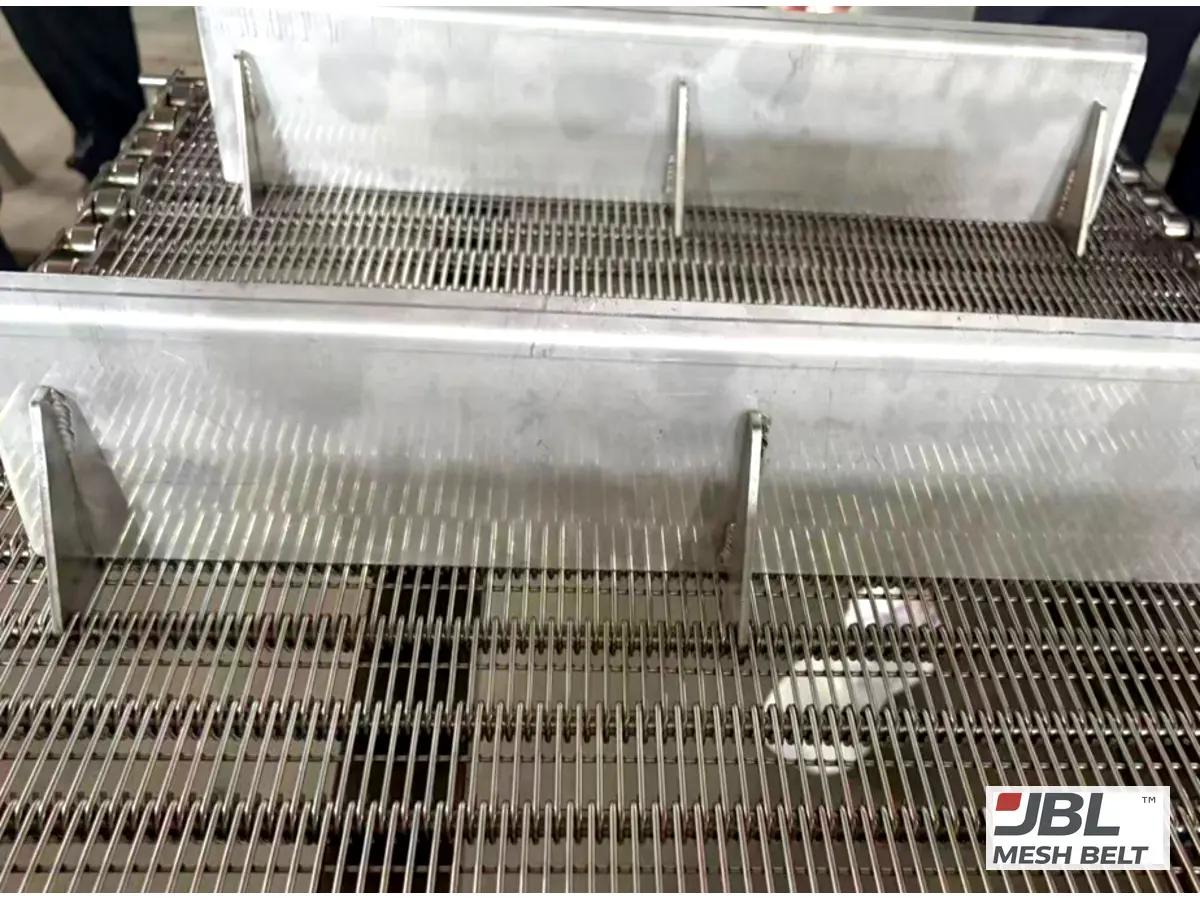
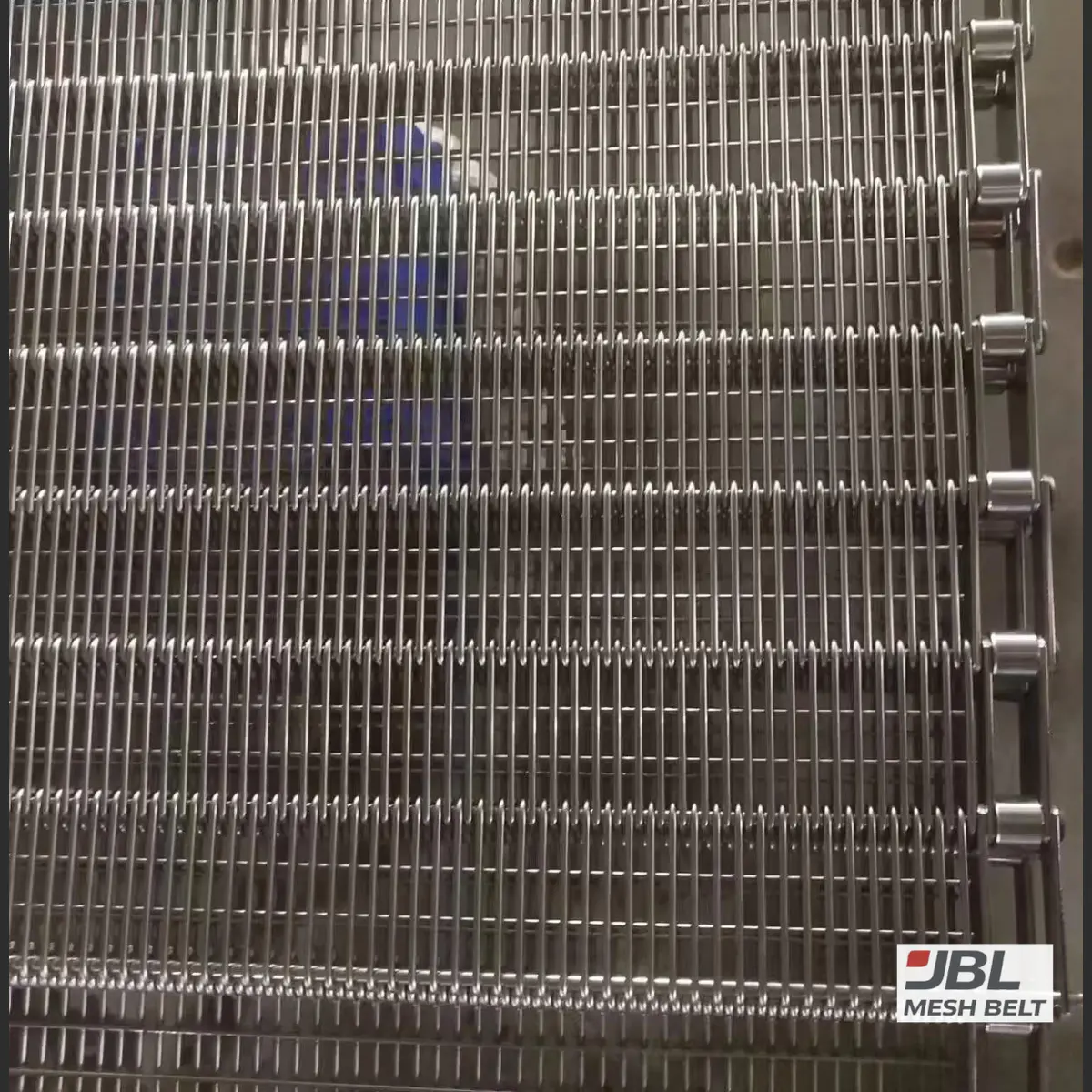
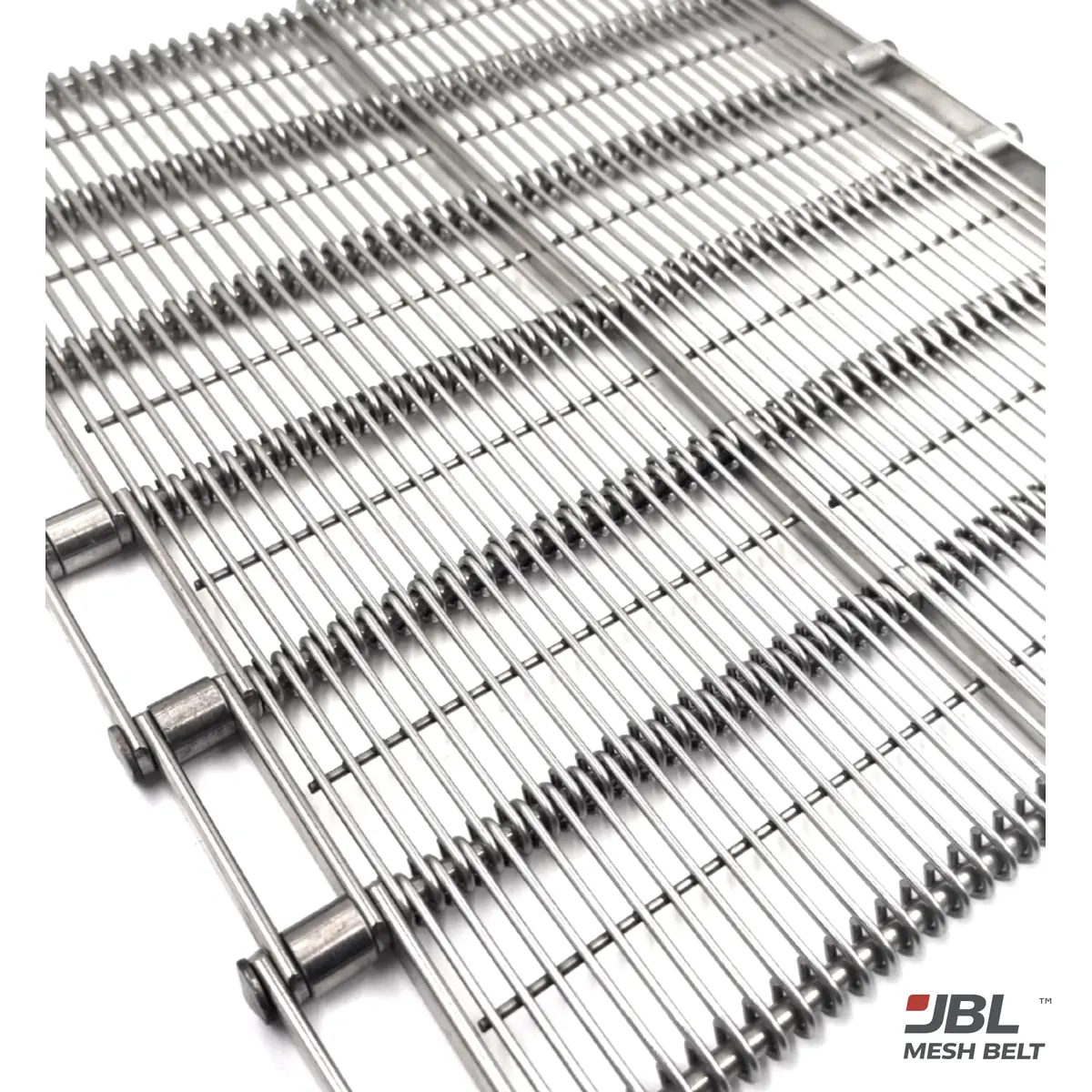
Stainless steel eye link belt with roller chain edge, angled view
Eye-link pitch
3.6–12 mm (0.142–0.472 in)
Rod pitch
25.4–76.2 mm (1.000–3.000 in)
Belt width
300–3000 mm (11.81–118.11 in)
Edge
Roller chain or reinforced plate
01
Two edge types

Roller Chain or Reinforced Plate Edge: Which Eye Link Belt Does Your Line Need?

Your drive decides it. A roller chain edge is driven by sprockets at the sides; a reinforced plate edge gives a closed, flat edge. Used in seafood, frying, drying, cooling and freezing lines.

Roller chain edge

Chain

side drive

25.4–76.2

rod pitch, mm

Welded

washers where specified

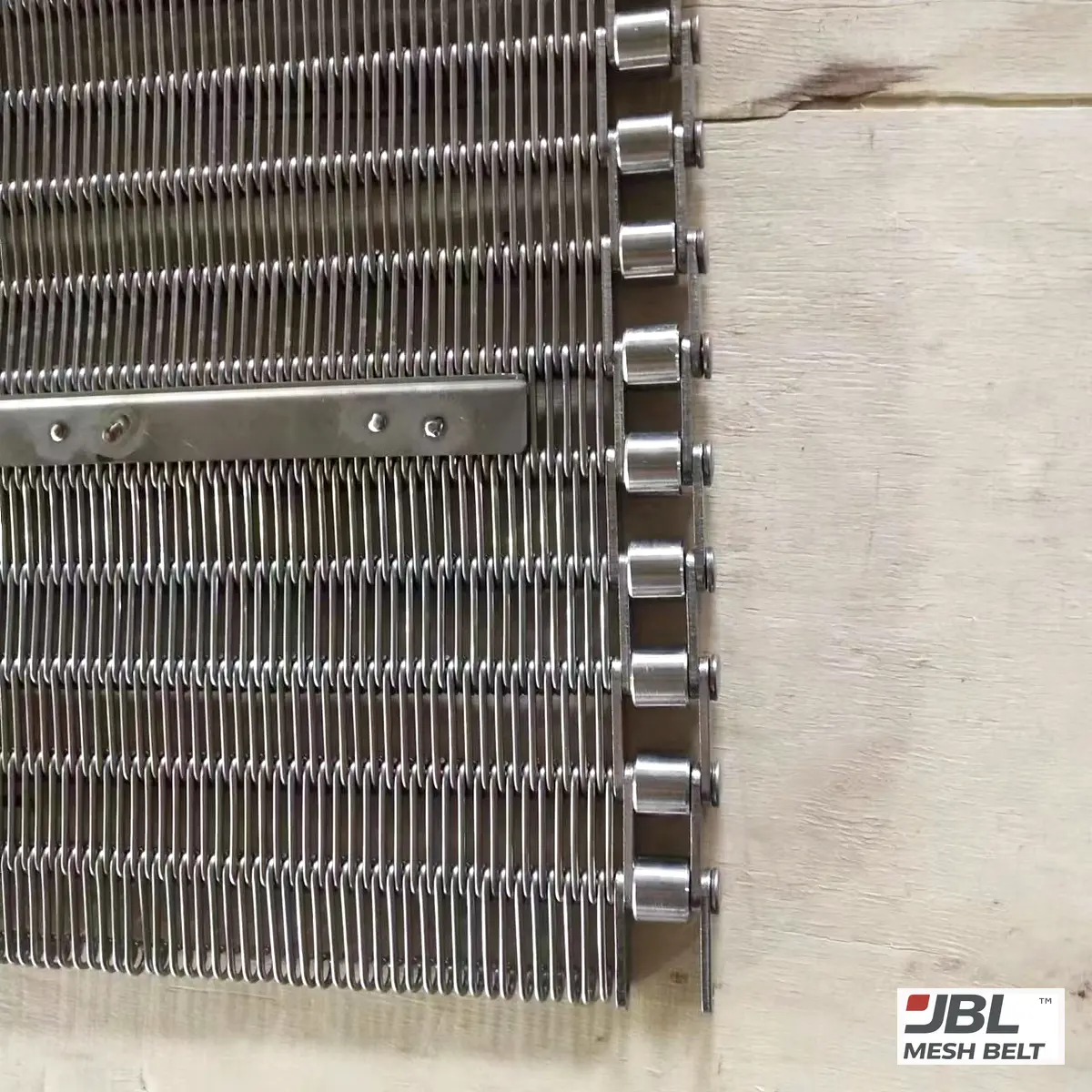
Eye link belt: angled view
Angled view
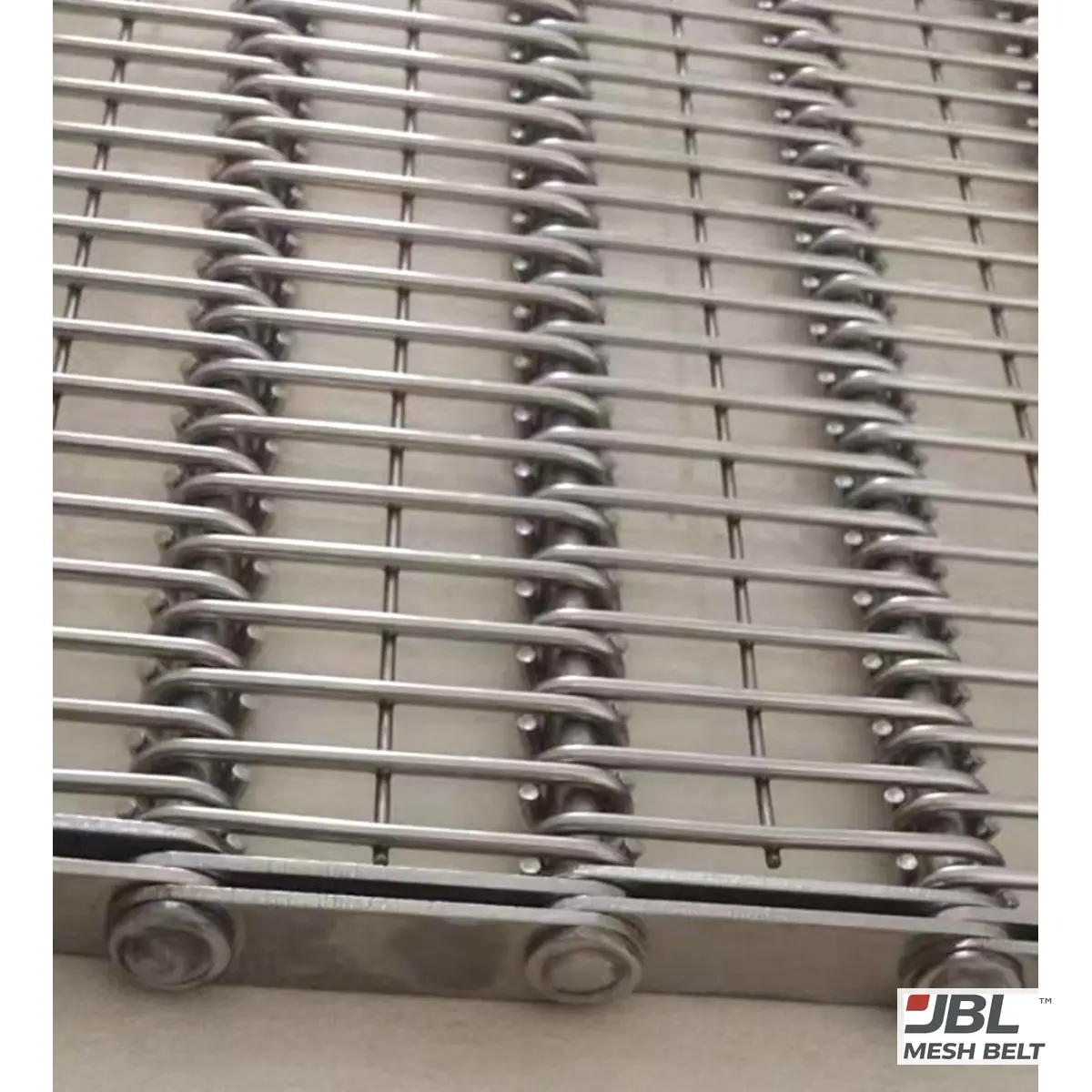
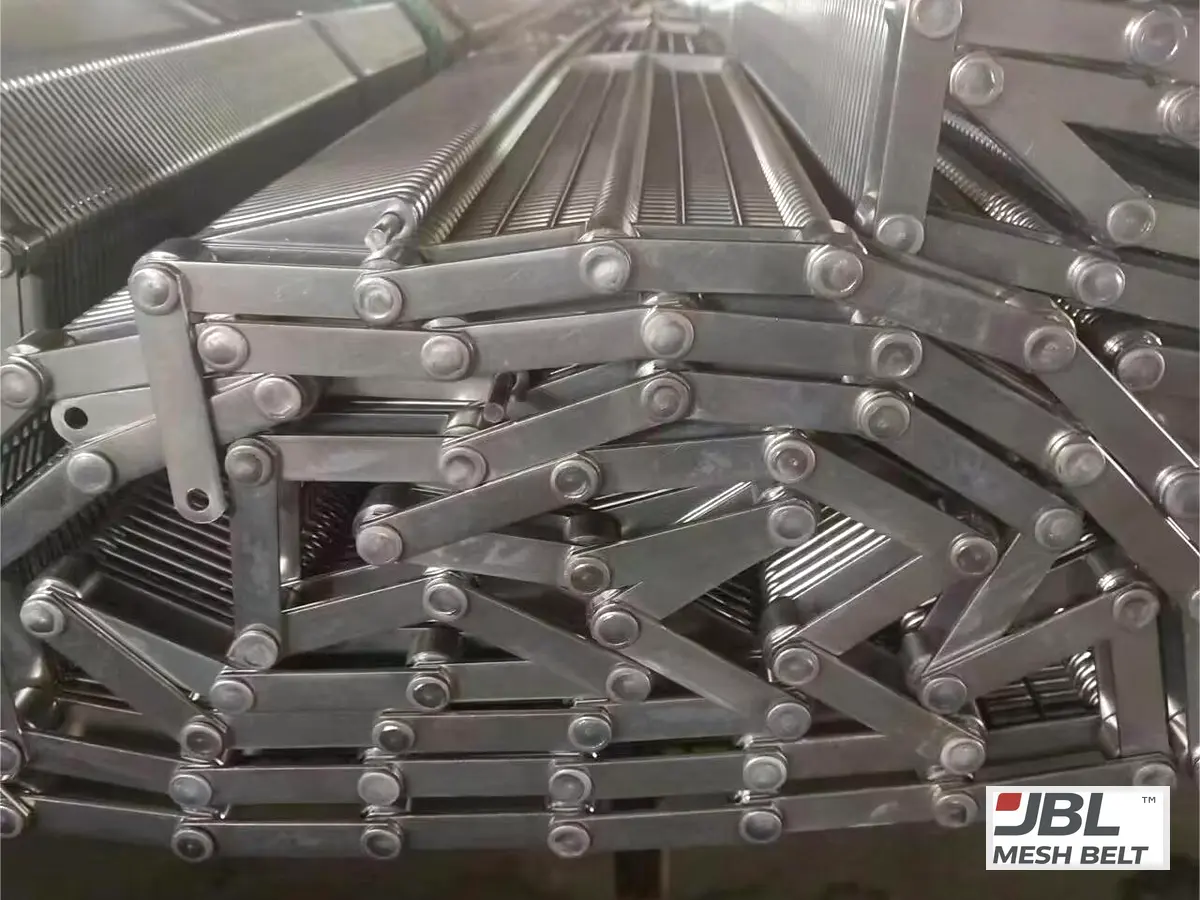
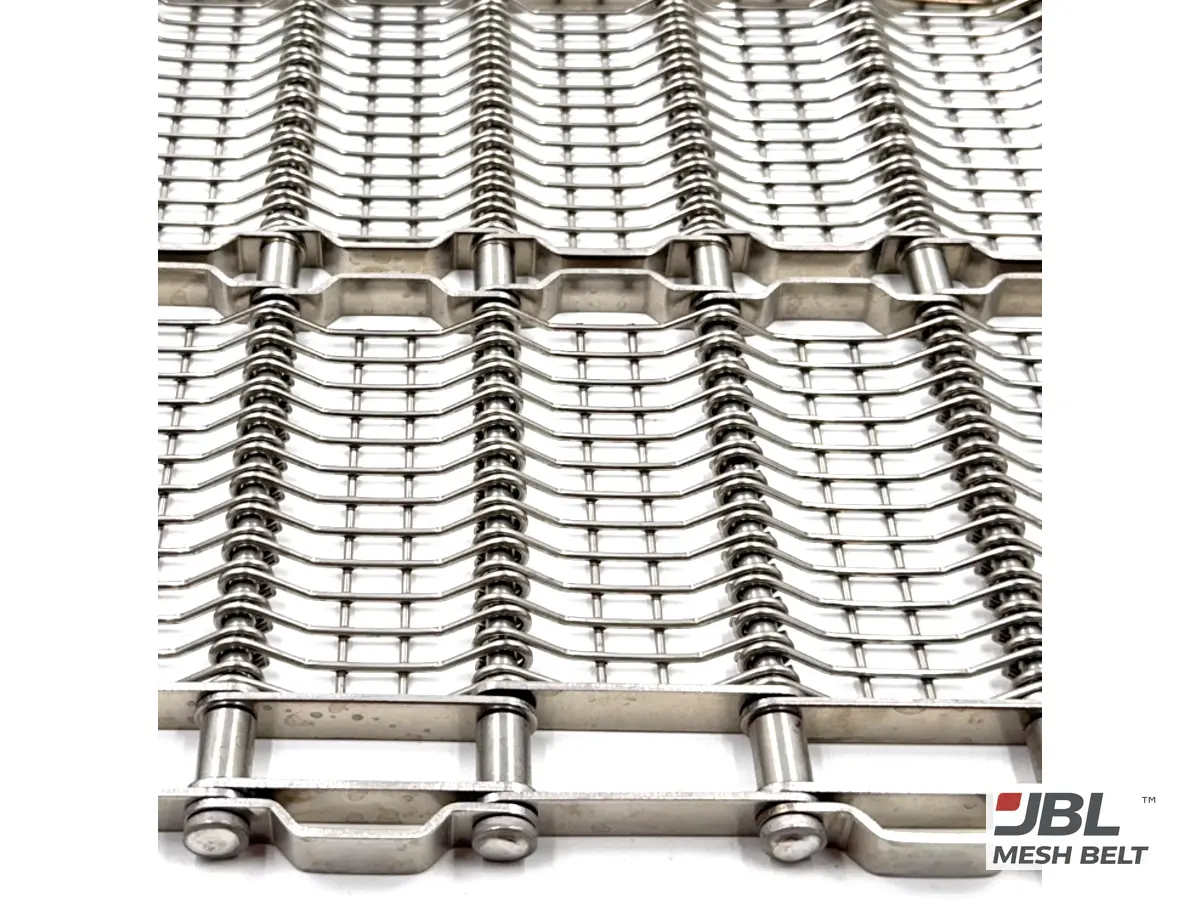
Eye link belt: chain edge with plate
Chain edge with plate
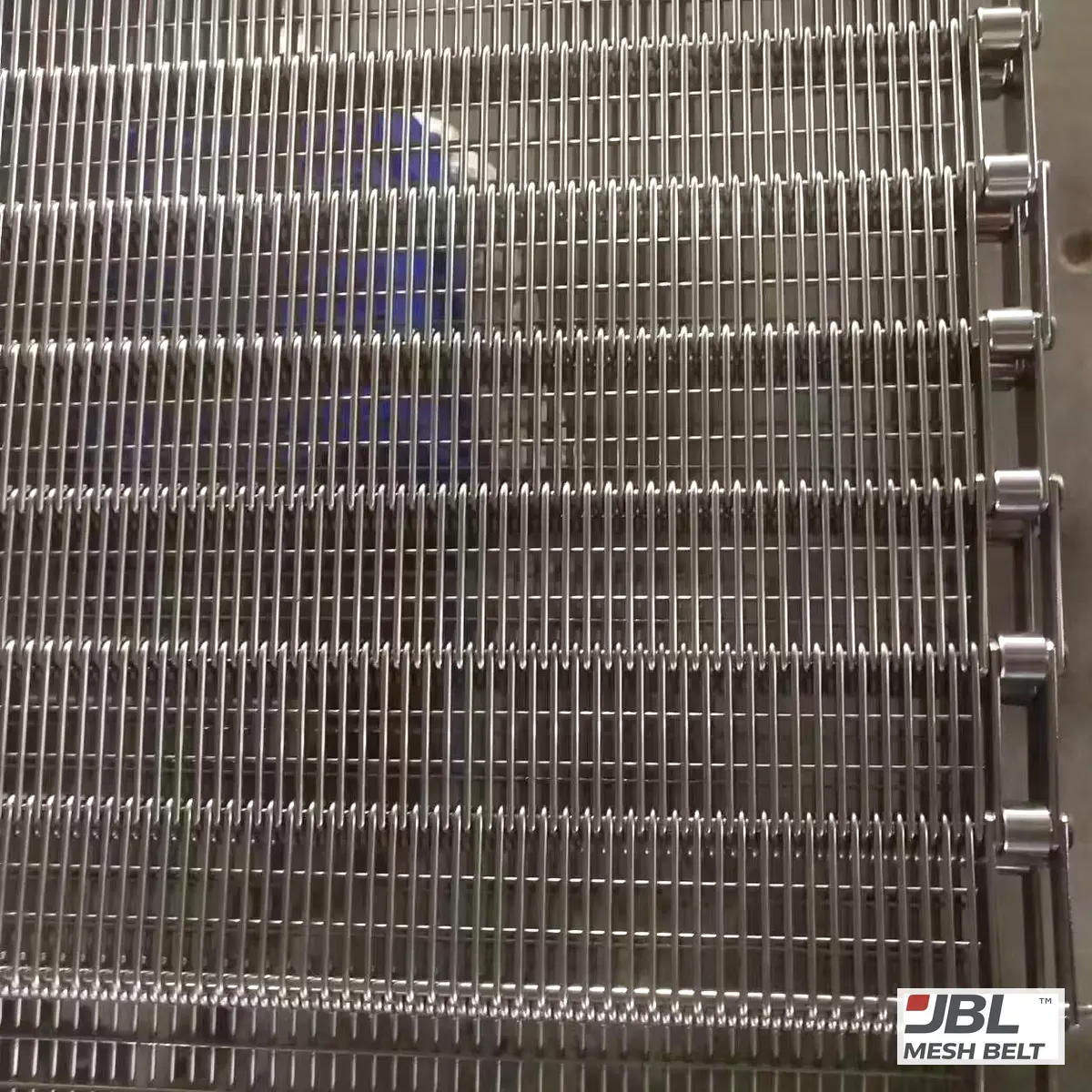
Eye link belt: chain edge, front view
Chain edge, front view

Reinforced plate edge

Plate

closed, flat edge

300–3000

width, mm

Per drawing

plate size

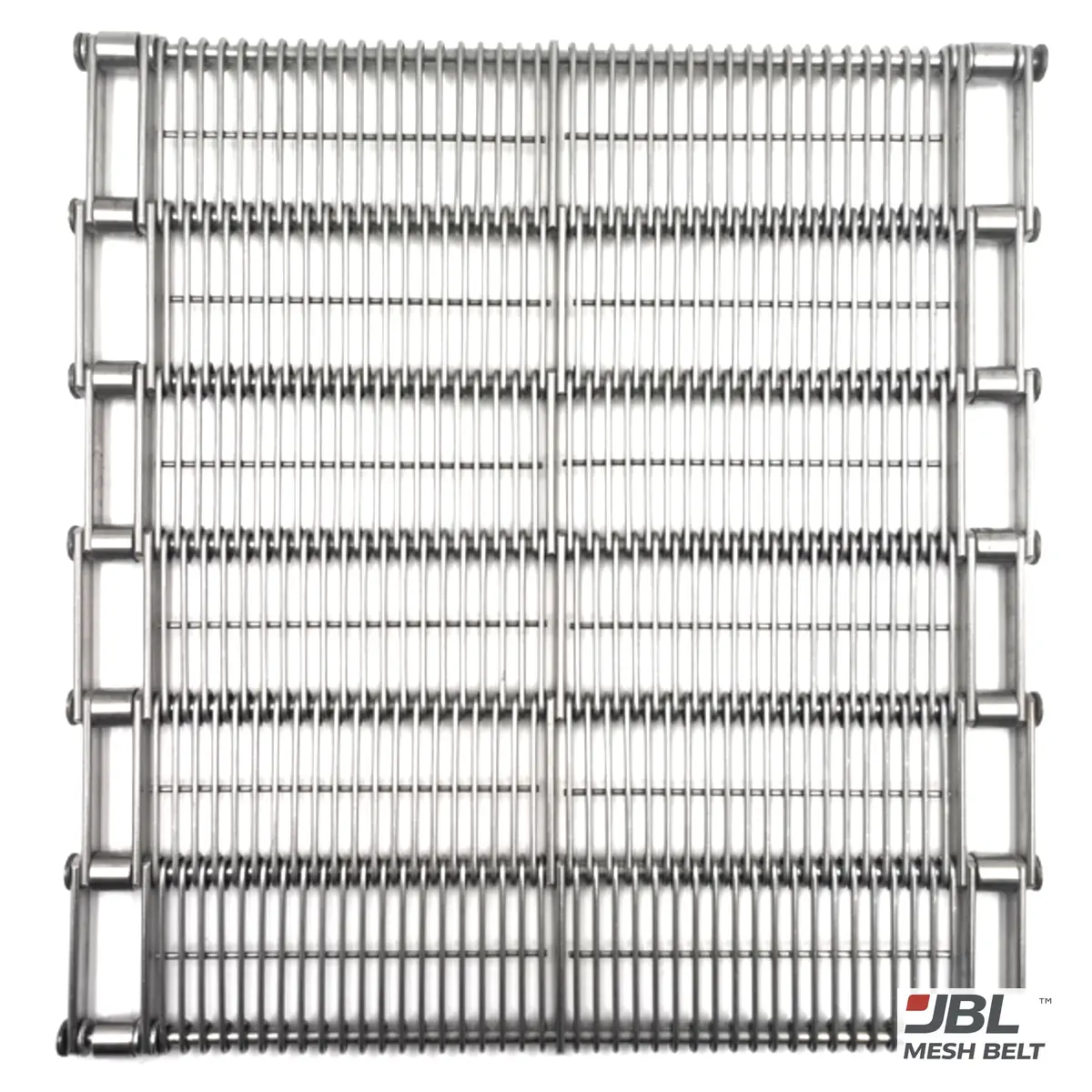
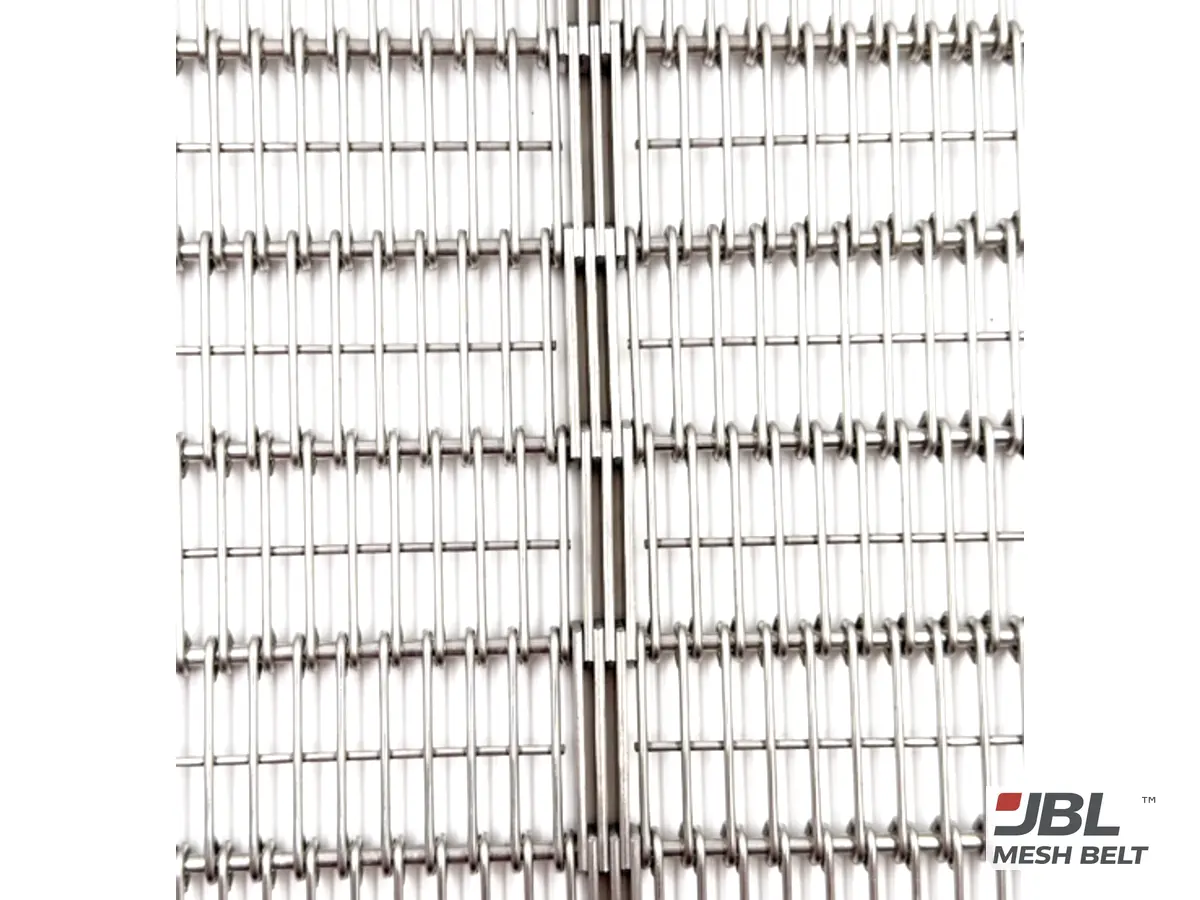
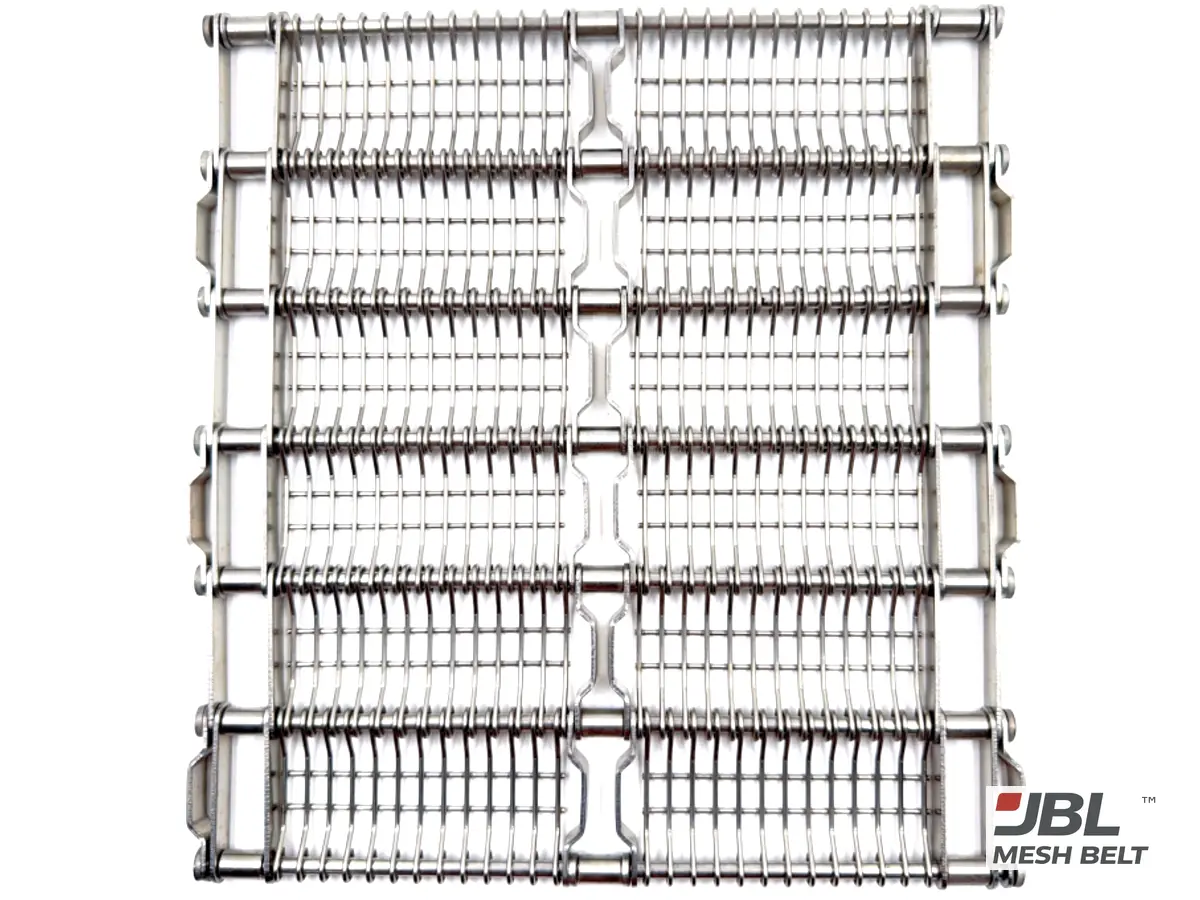
Eye link belt: front view
Front view
Eye link belt: plate edge
Plate edge
Eye link belt: plate edge, close-up
Plate edge, close-up
02
Specifications & options

Eye Link Belt Specifications: Eye-Link Pitch, Rod Pitch, Wire and Edge

Compare your old belt with this drawing. Eye-link pitch, rod pitch and belt width are enough to start — every value in mm and inches, confirmed on your project drawing.

Eye-link pitch

3.6–12 mm

0.142–0.472 in

Rod pitch

25.4–76.2 mm

1.000–3.000 in

Wire diameter

1.6 / 2.0 / 2.5 mm

0.063 / 0.079 / 0.098 in

Belt width

300–3000 mm

11.81–118.11 in

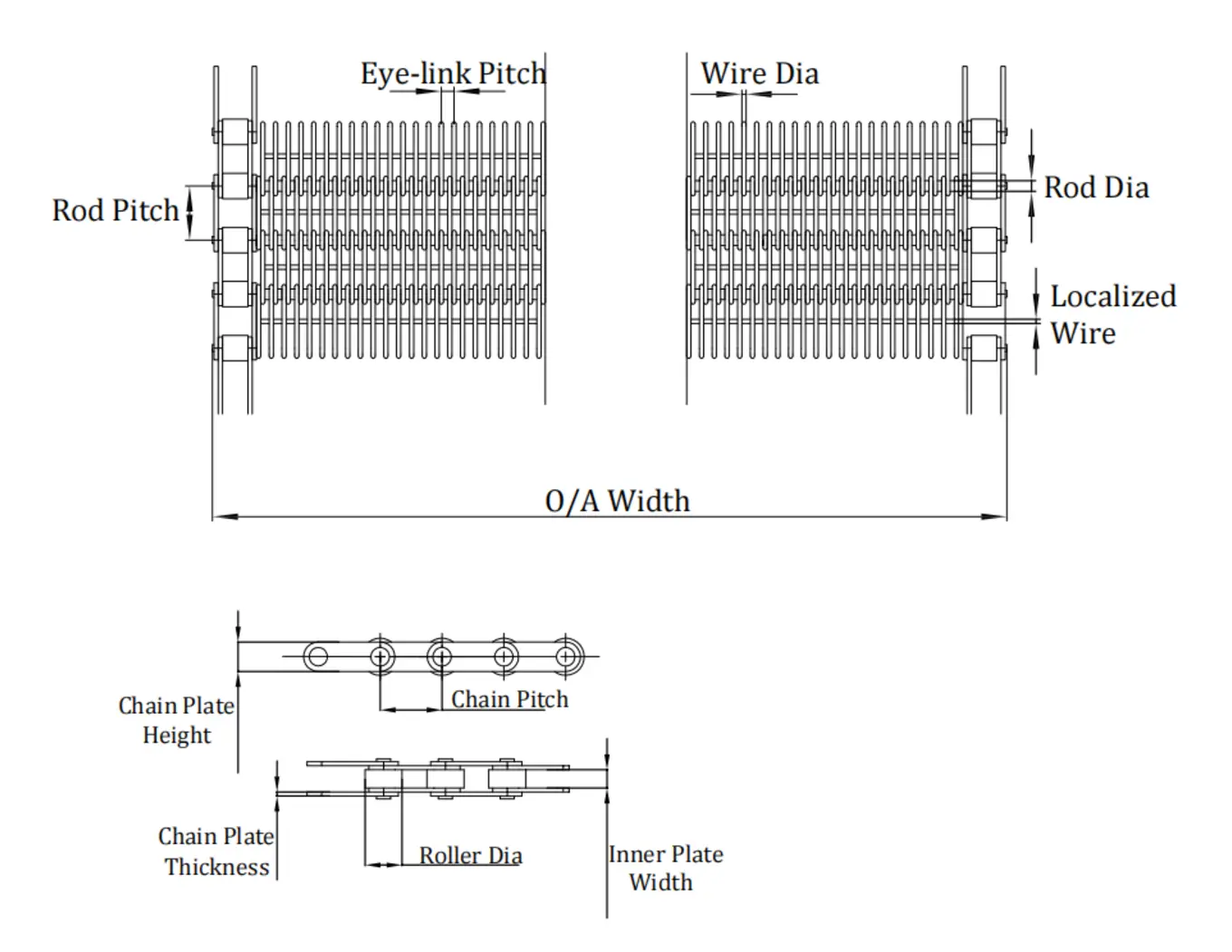
Dimension drawing and table

Eye link belt
Eye link belt dimension drawing: eye-link pitch, wire diameter, rod pitch, rod diameter, localized wire, overall width; roller chain plate height, thickness, chain pitch and roller diameter
Drawing labelReference (mm / in)
MaterialMild steel / SUS304 / SUS316
Eye-link pitch3.6 / 5 / 6 / 8 / 10.5 / 12 mm (0.142–0.472 in)
Rod pitch25.4 / 50 / 50.8 / 76.2 mm (1.000 / 1.969 / 2.000 / 3.000 in), or custom
Wire diameter1.6 / 2.0 / 2.5 mm (0.063 / 0.079 / 0.098 in)
Reinforcement wire2.0 / 2.5 mm, single or double
Cross rod diameter5.0 / 6.0 / 8.0 mm (0.197 / 0.236 / 0.315 in), or custom
Belt width300–3000 mm (11.81–118.11 in), custom widths
EdgeRoller chain / reinforced plate
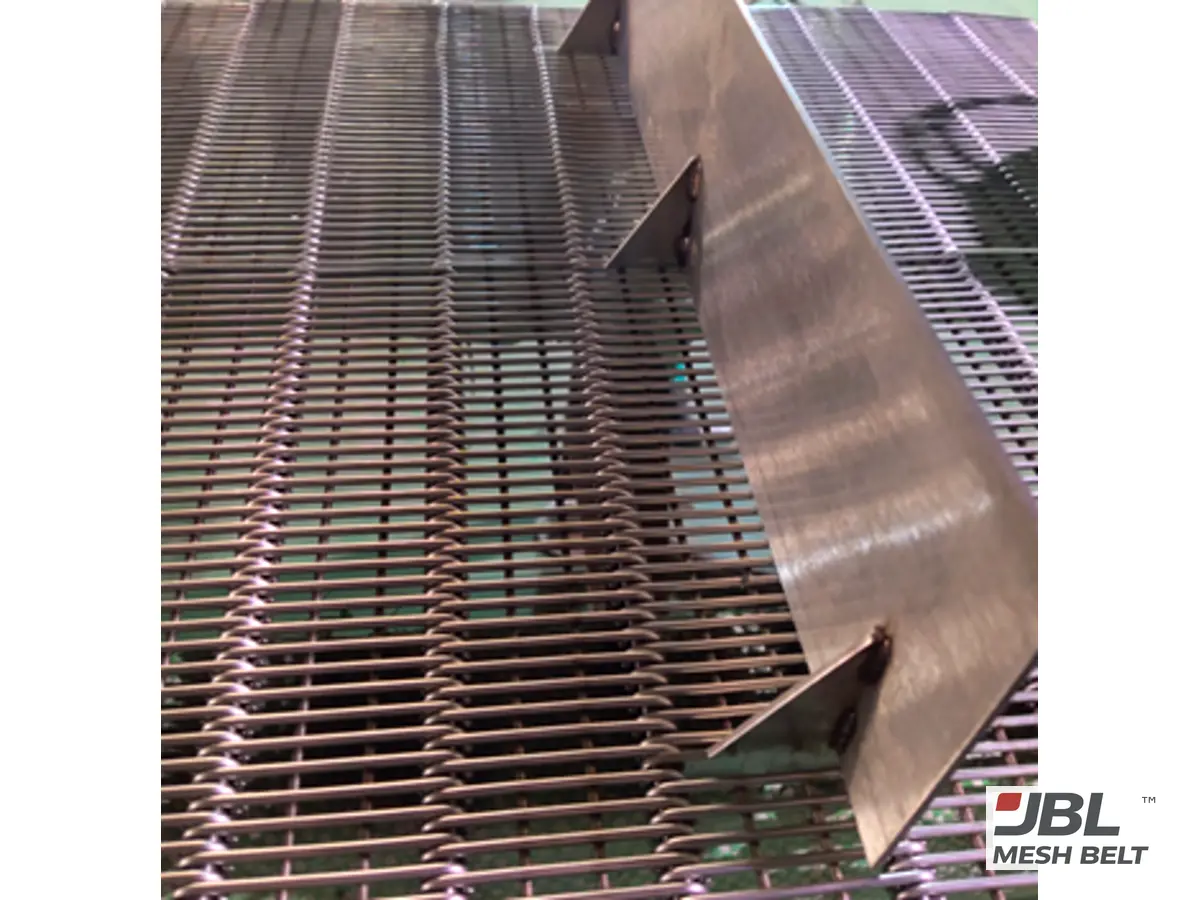
AccessoriesReinforced plate, groove-type structure, flights
SurfacePickling

Use the drawing to tell us which dimensions you can measure. Final values follow the confirmed project drawing.

Choose your options

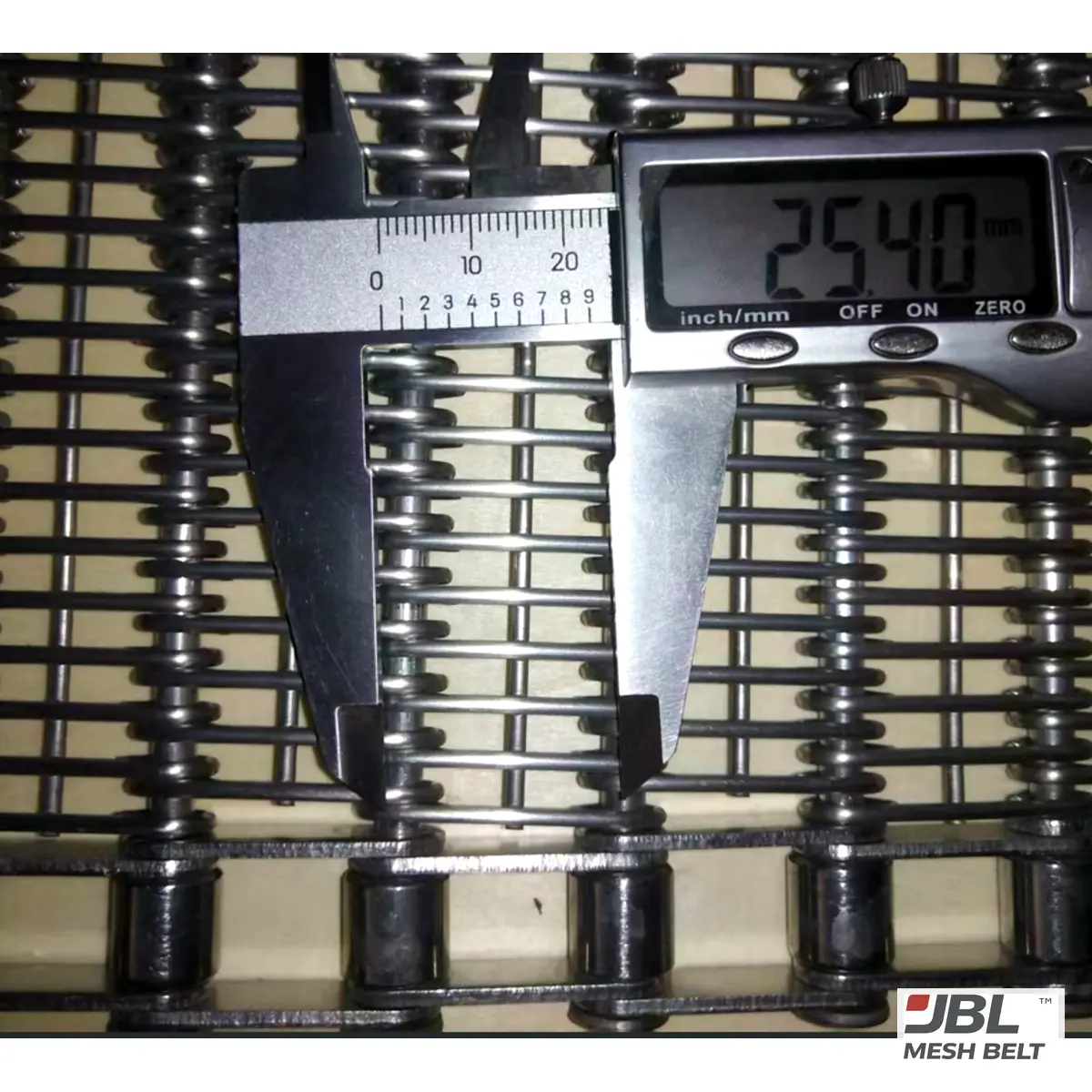
25.4 mm (1.000 in)
25.4 mm (1.000 in)
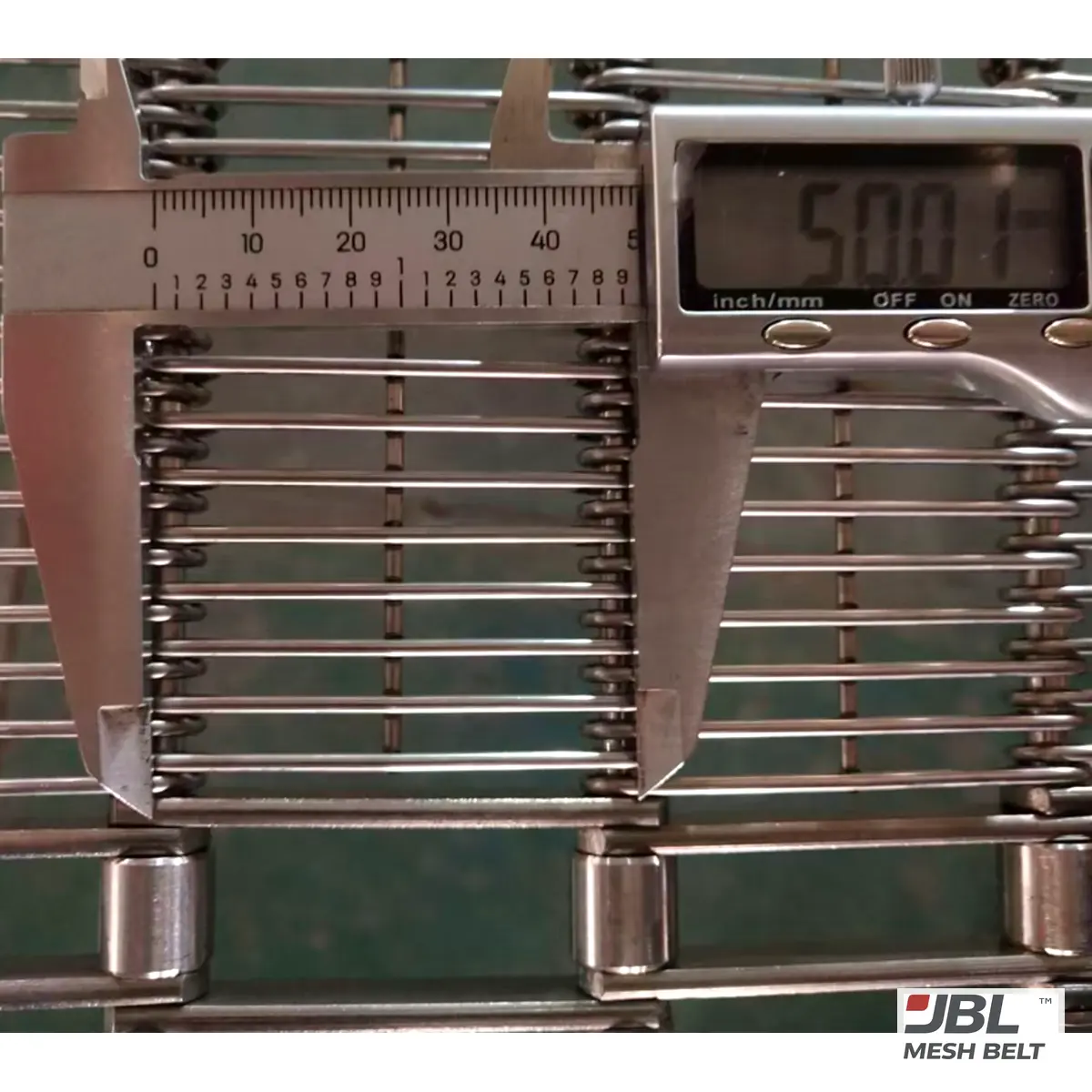
50 mm (1.969 in)
50 mm (1.969 in)
50.8 mm (2.000 in)
50.8 mm (2.000 in)
76.2 mm (3.000 in)
76.2 mm (3.000 in)

Measured a few dimensions? Send them for a eye link belt review.

03
Fit check · pitch and edge first

Will the New Belt Fit Your Line and Your Sprockets?

Looking the same is not enough. Eye-link pitch, rod pitch, edge type and sprockets decide whether the belt runs straight on your line — they are checked first, before you get a quotation.

Replacement & repeat order

Replacing or re-ordering a belt on your line

You send
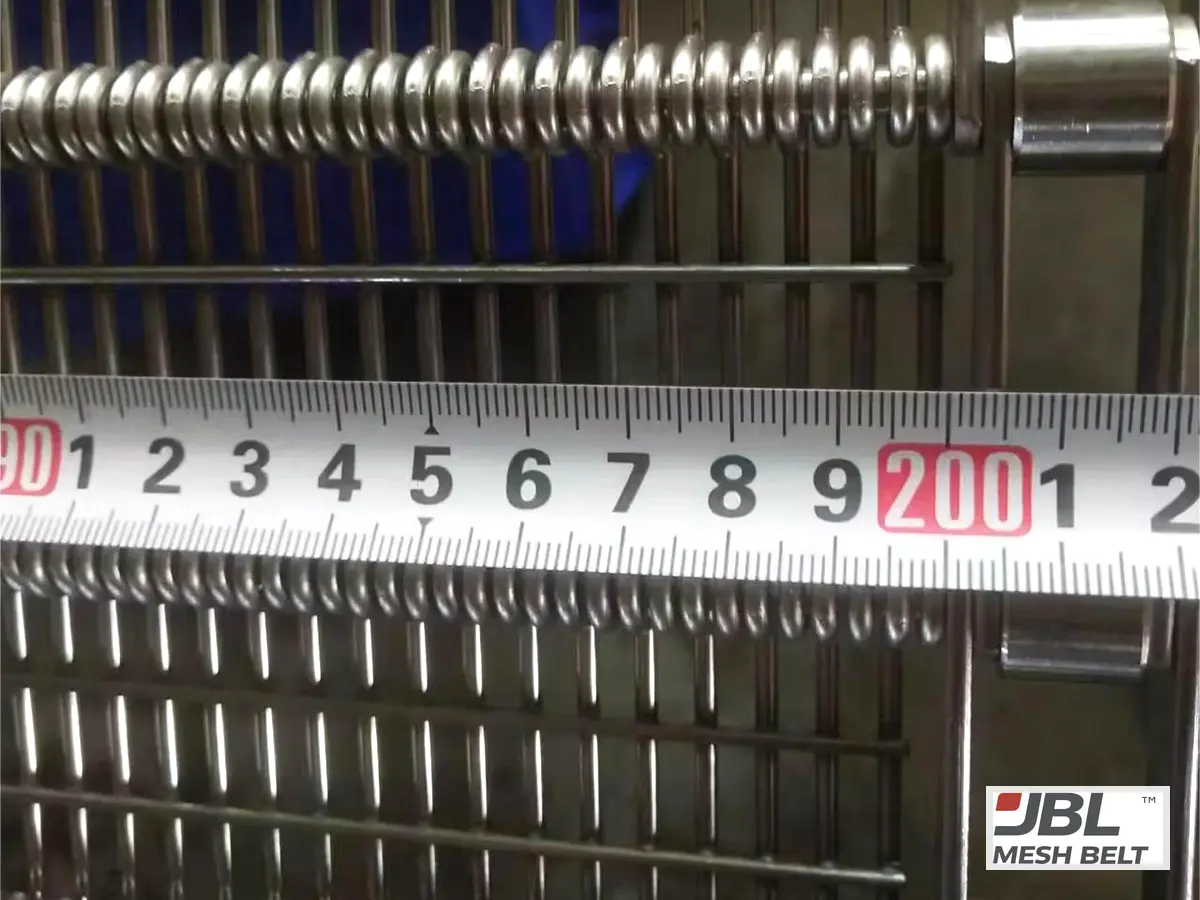
Photos of the old belt with a tape over 10 pitches, a short section if possible, or your last order details.
We check first
Eye-link pitch, rod pitch, coil count, reinforcement wire and edge type — measured on your belt or checked against your previous order.
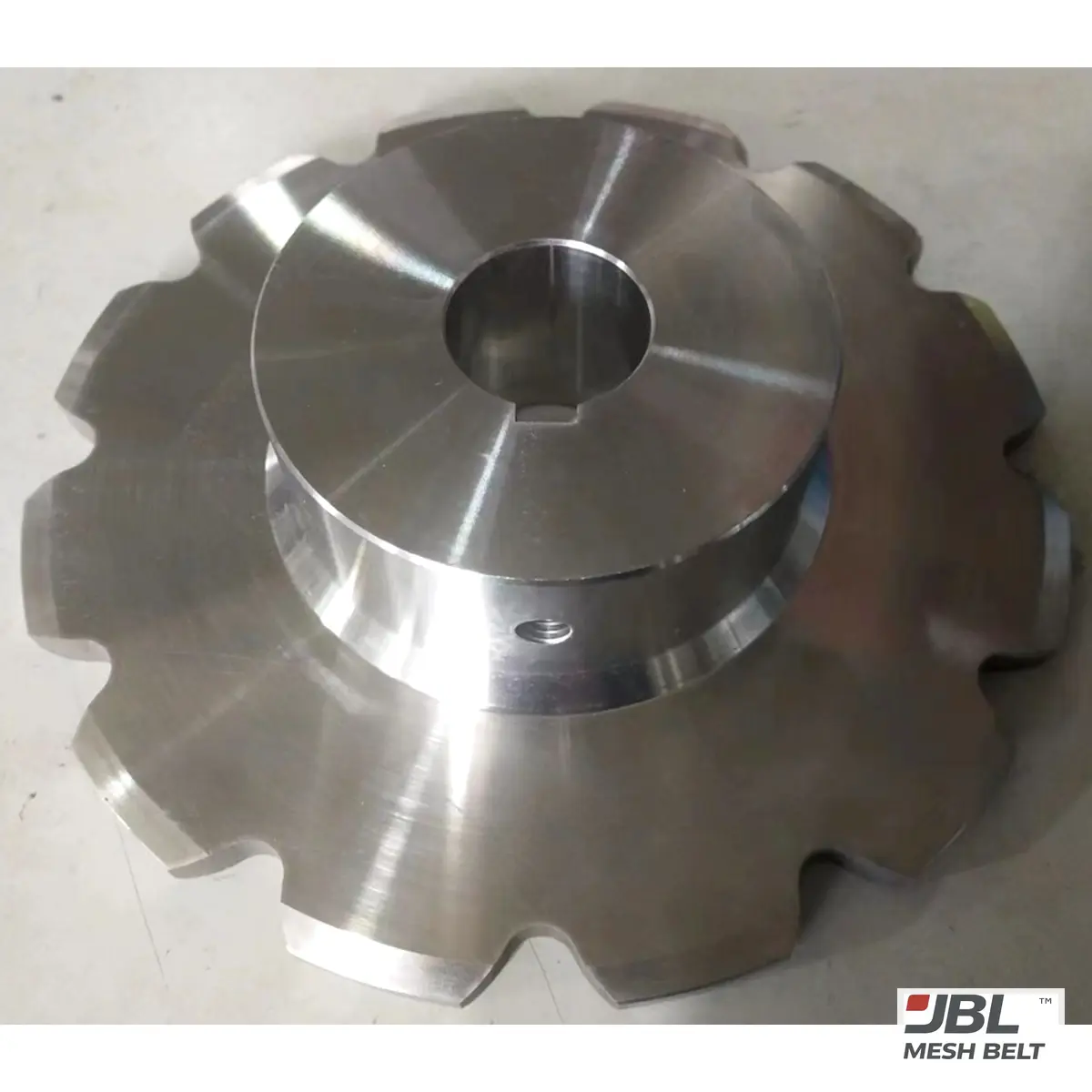
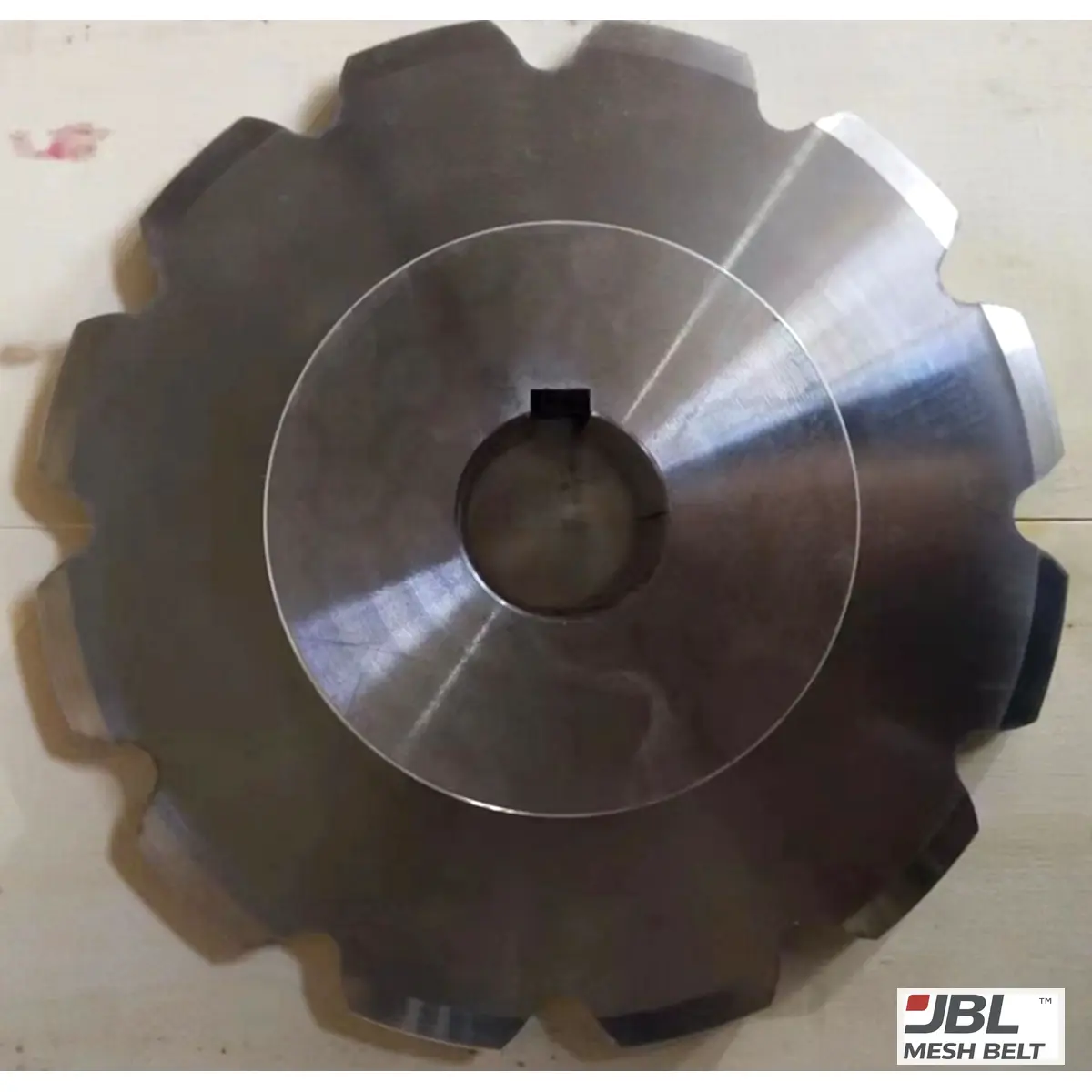
Your sprockets
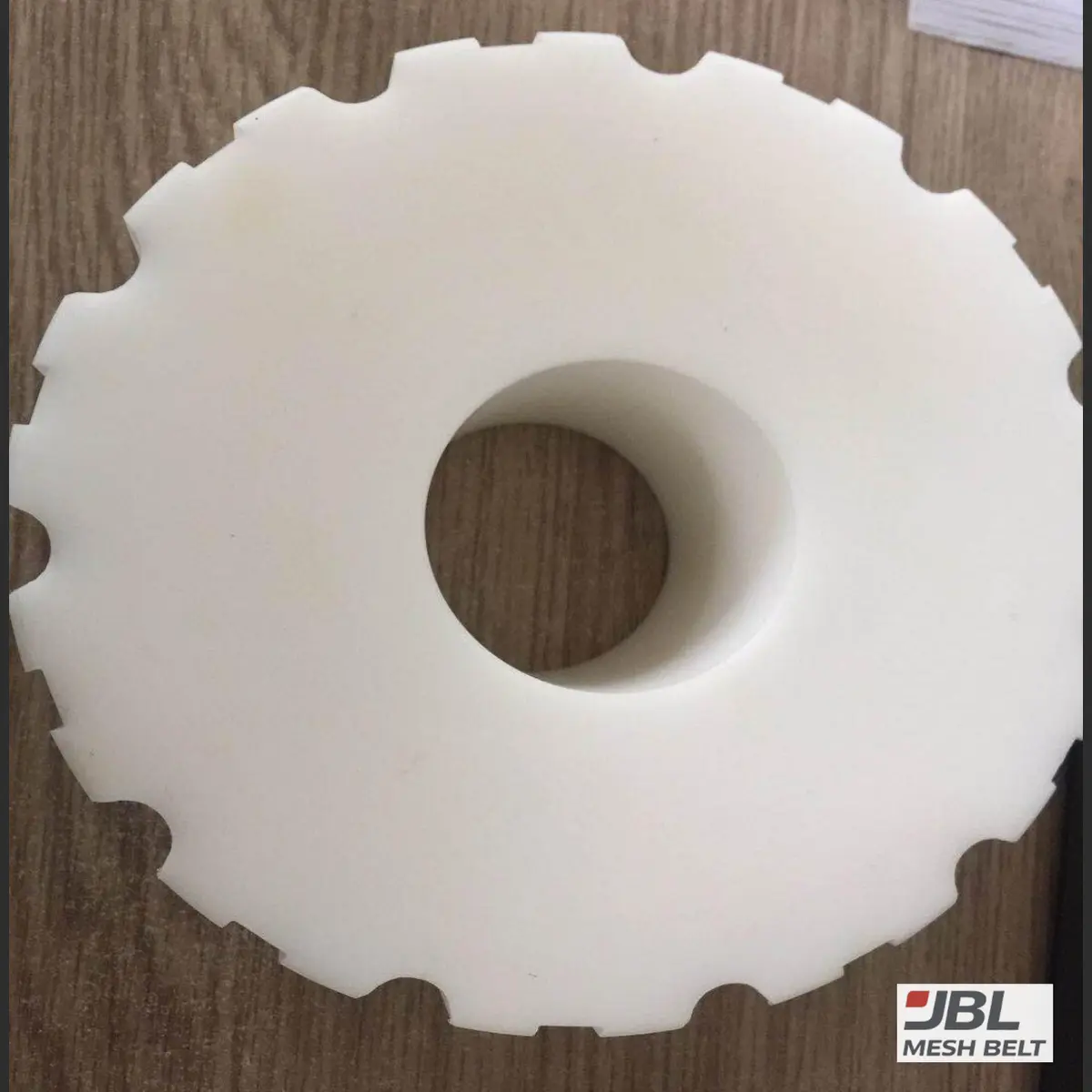
Chain pitch, tooth count and wear checked. If they need replacing, sprockets are matched and run with the new belt.
You get
Before quoting: will it fit your line and sprockets as it is — and a re-order that matches the last one.
New line

Supplying a new frying, drying or cooling line

You send
Product, temperature, belt width and length, load and drive layout.
We check first
Eye-link and rod pitch for your product, material for your temperature, edge type and accessories.
Your sprockets
Supplied with the belt; pitch, tooth count, bore and keyway confirmed on the drawing.
You get
A confirmed drawing, and a first-article check before bulk production.
04
Project QC gates

How Is an Eye Link Belt Verified Before Shipment?

Four checks that matter to you: pitch and parts measured, edges and structure checked, a clean surface for your food line, and a run on its sprockets. You see photos and video before it ships.

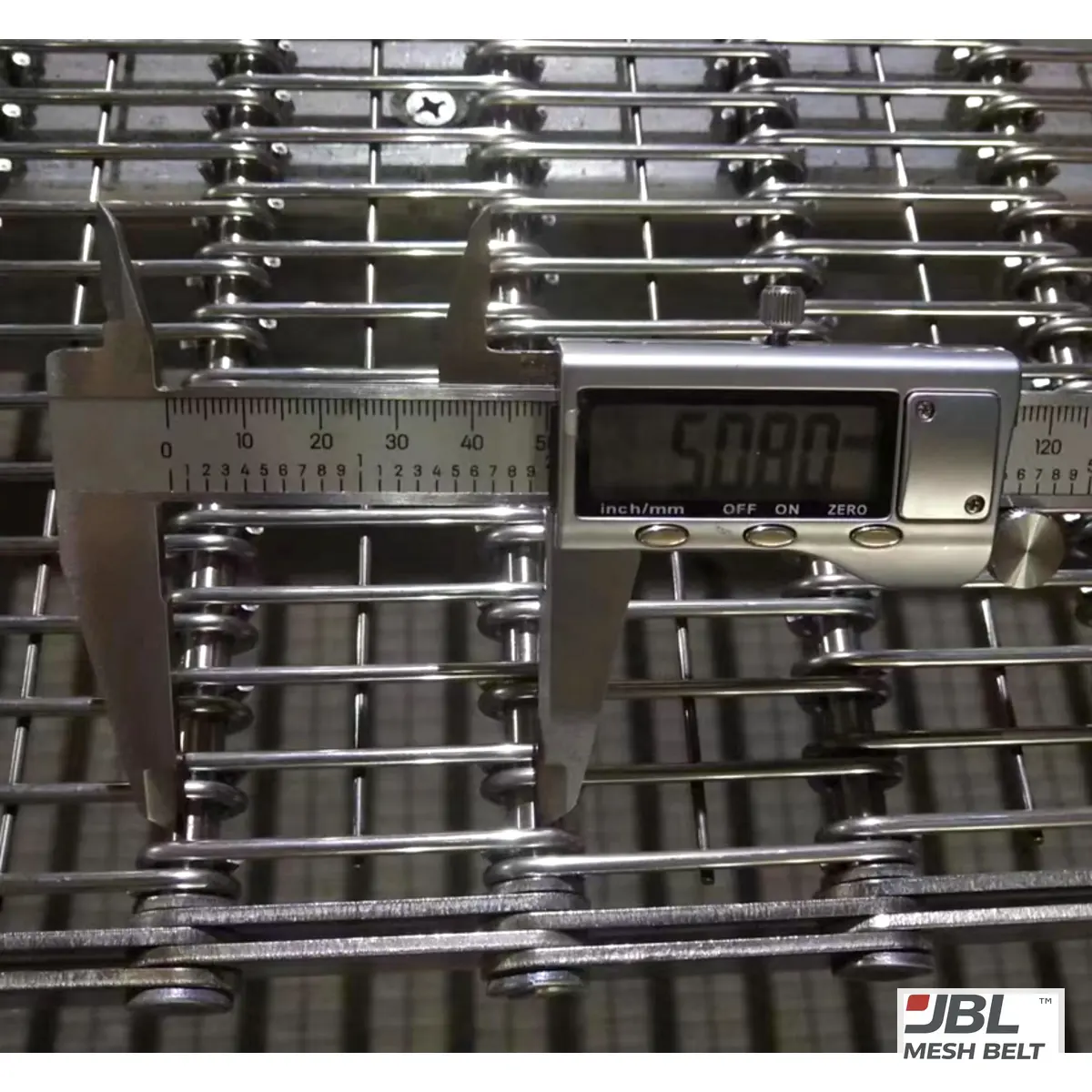
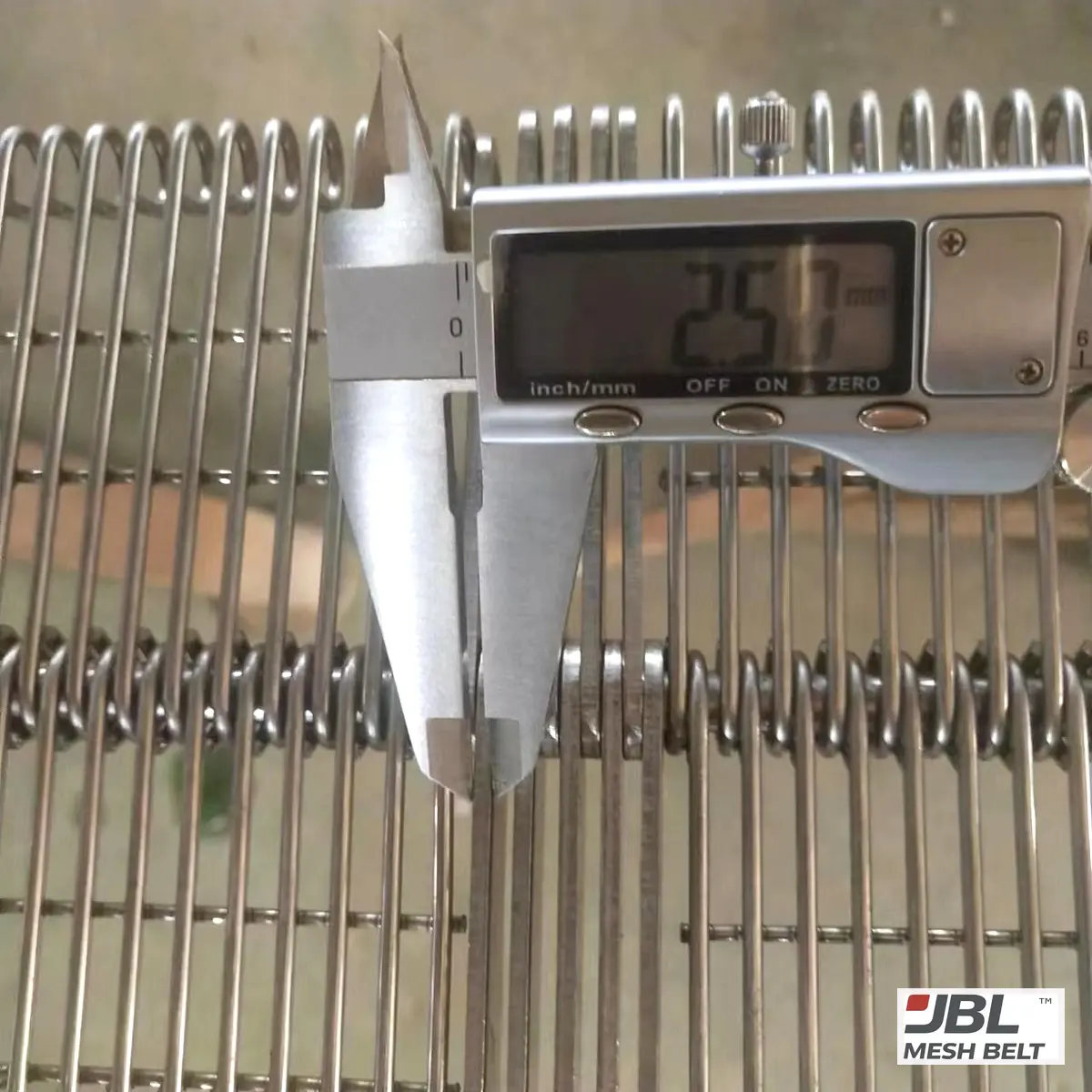
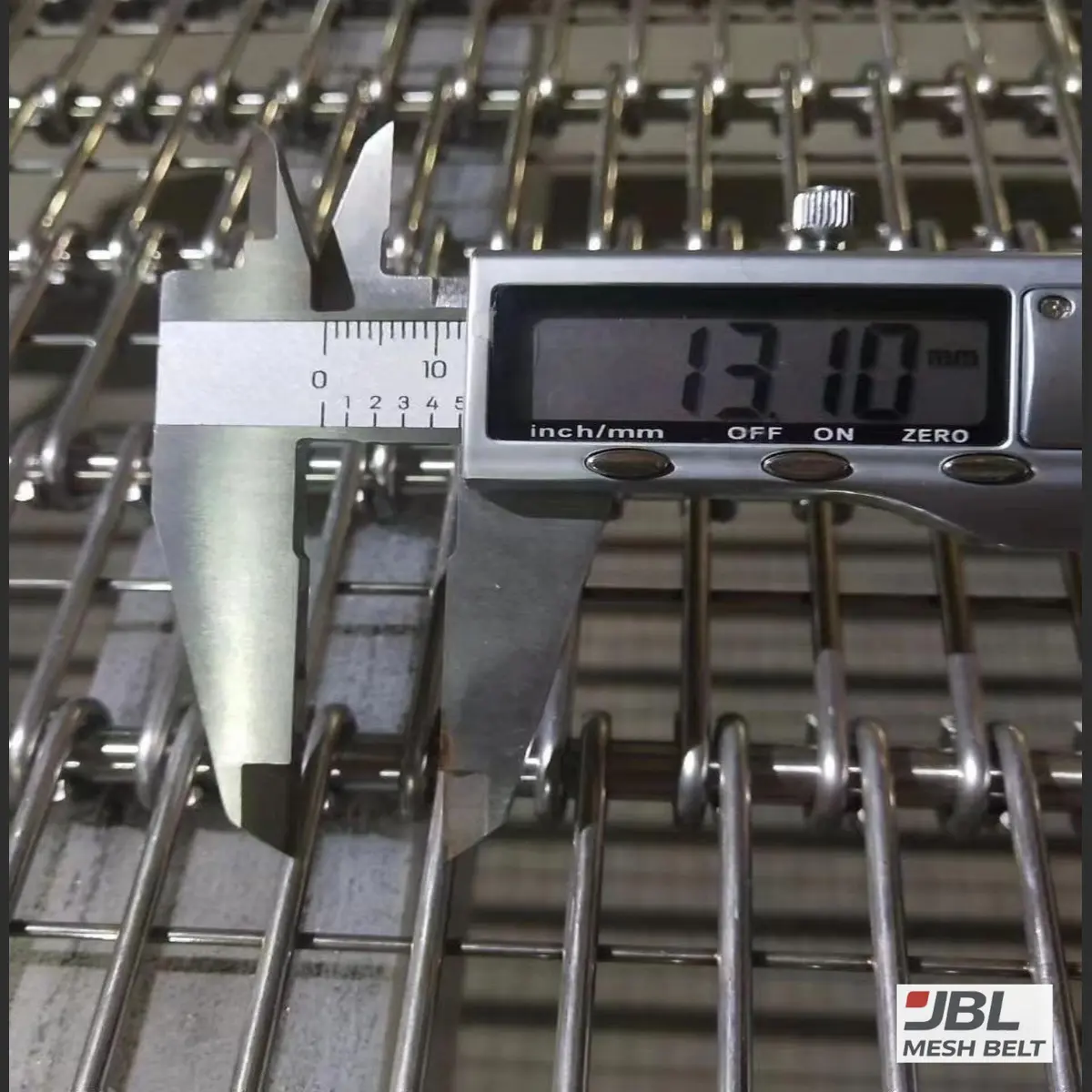
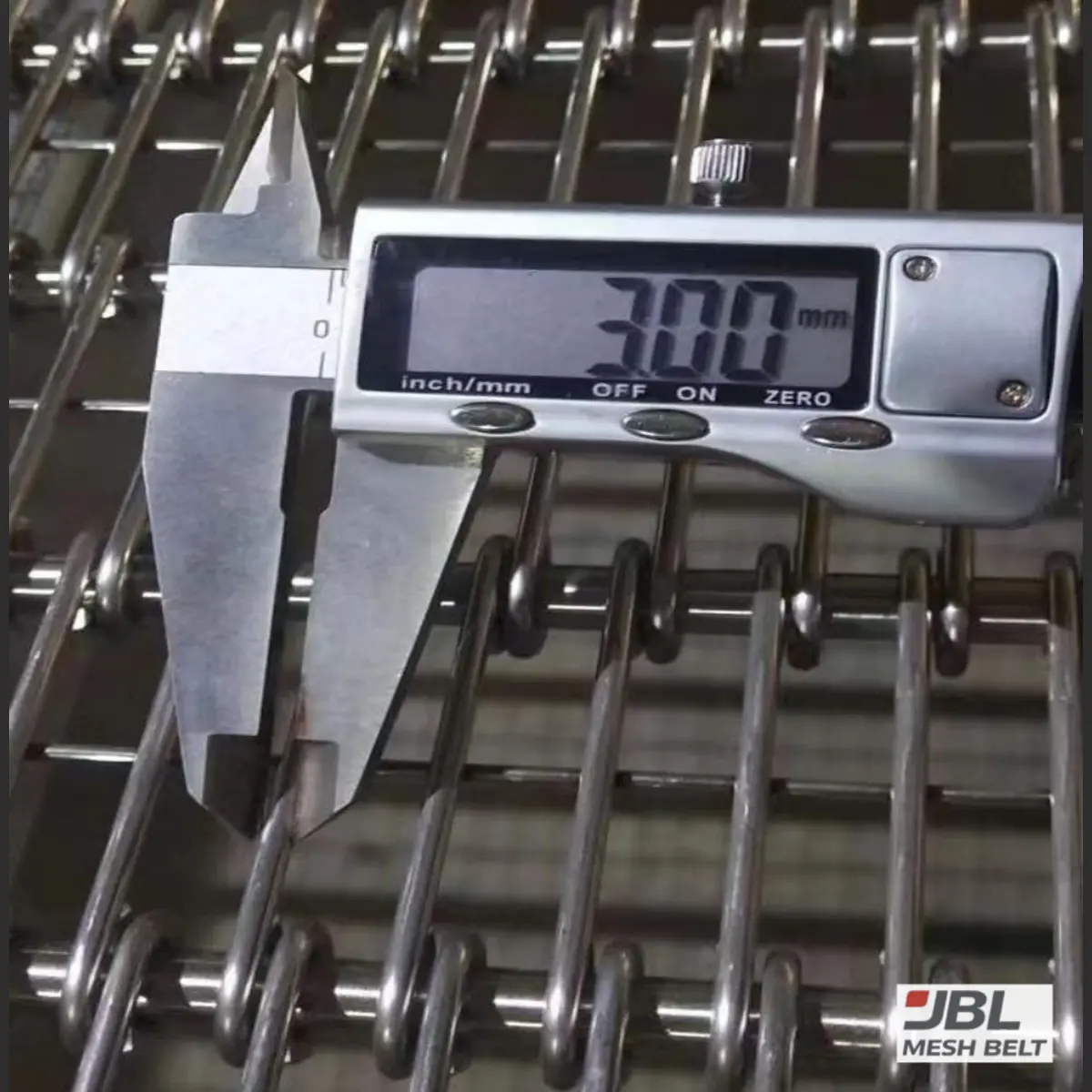
  1. Eye link belt check: eye-link pitch 13.10 mm measured with a caliper
    01

    Pitch and parts measured

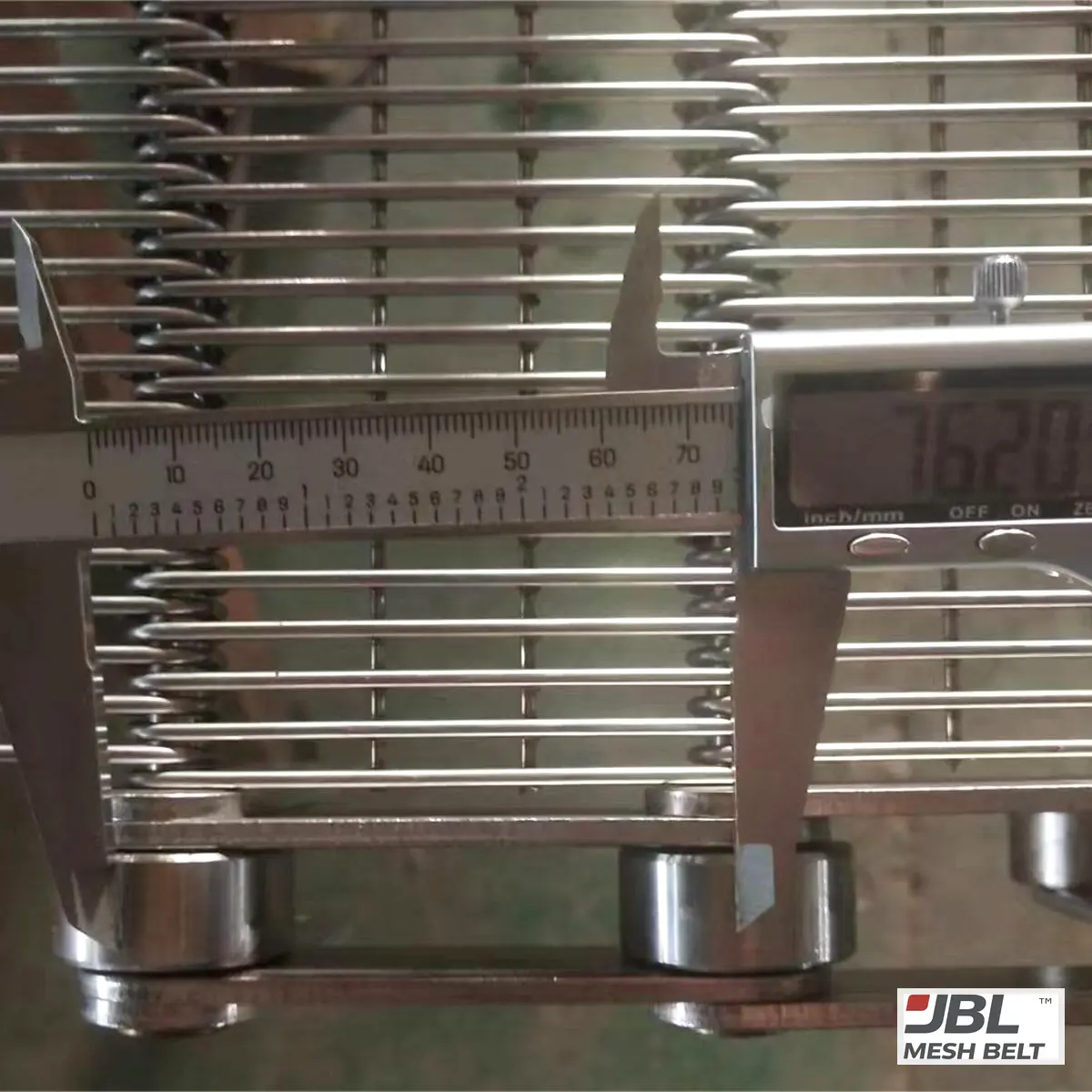
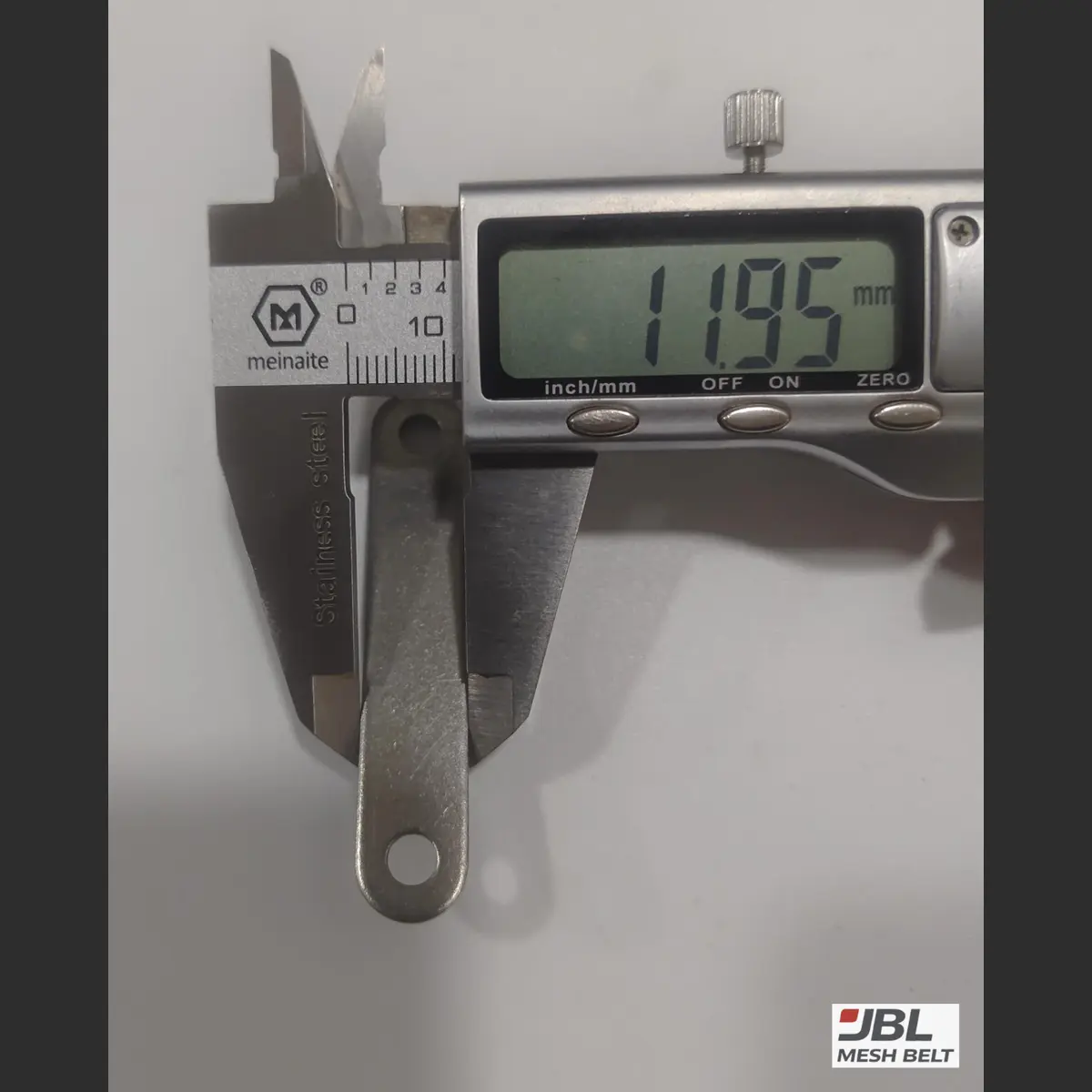
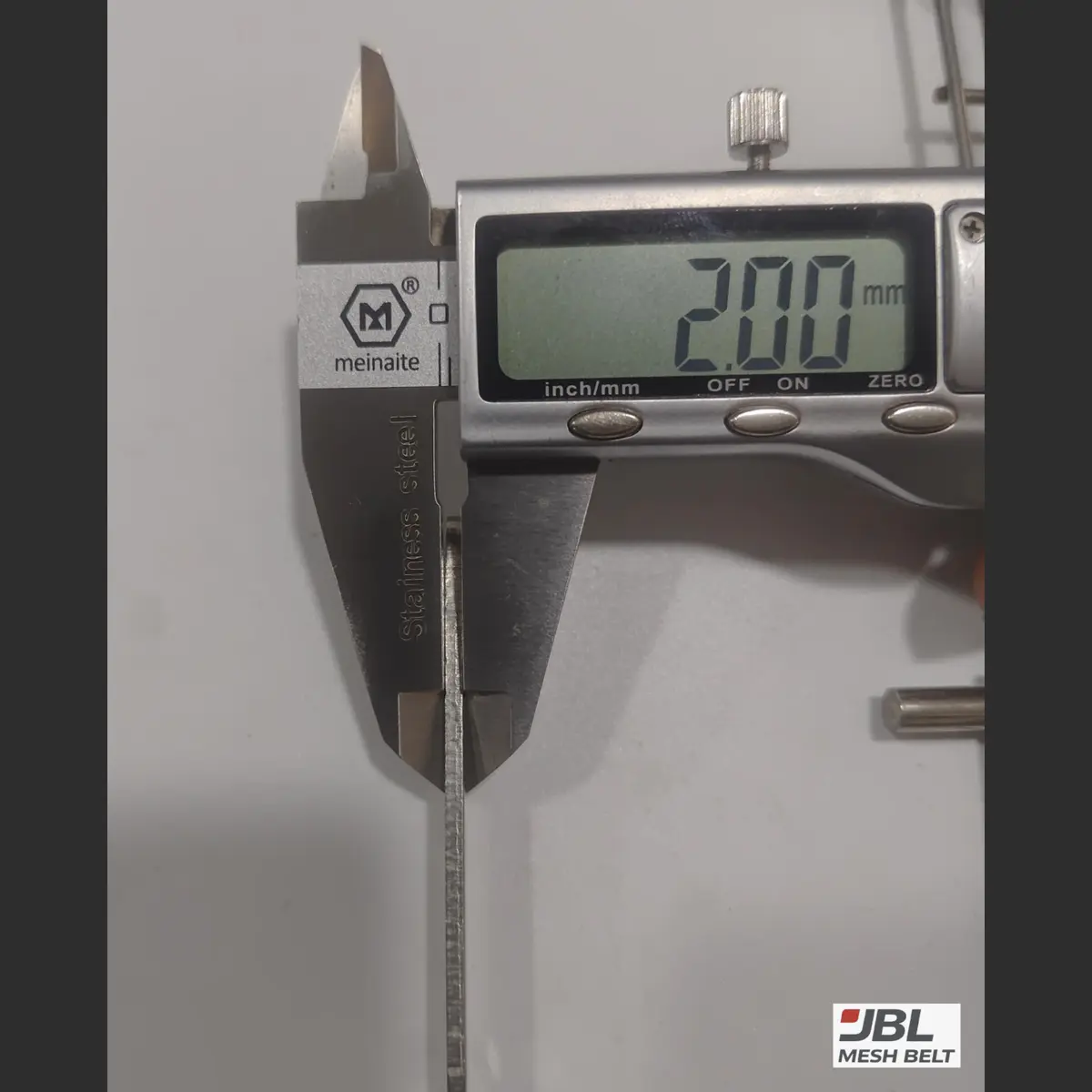
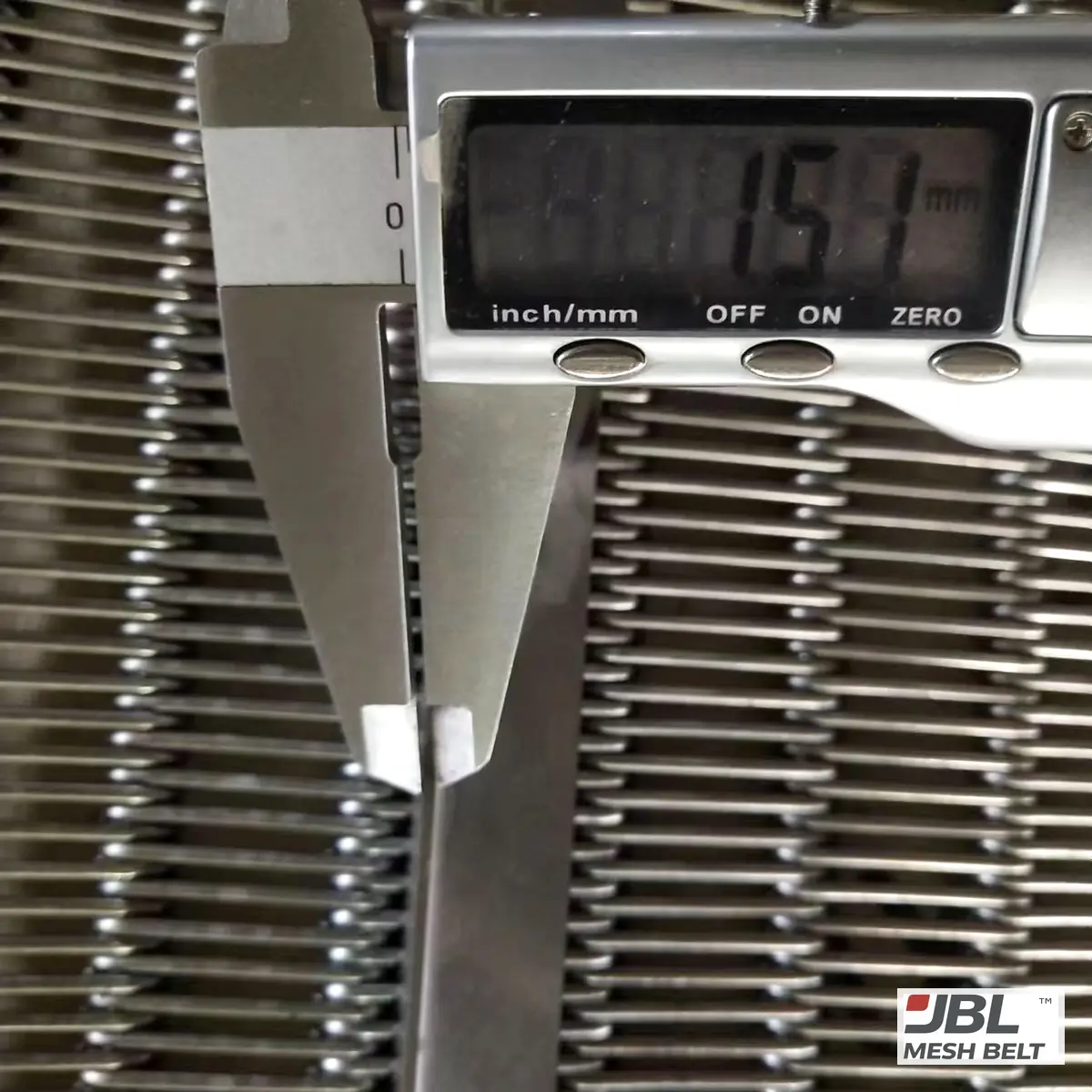
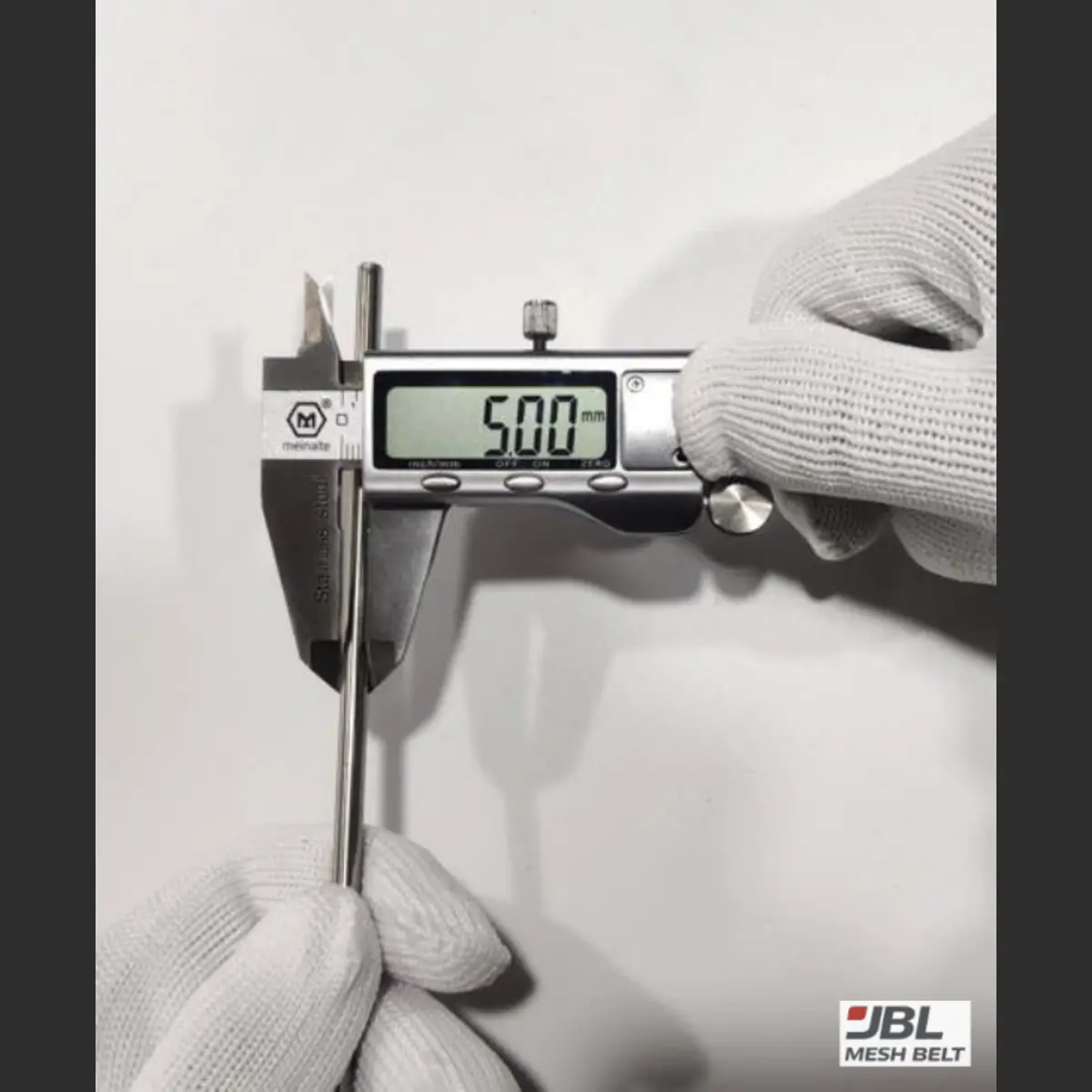
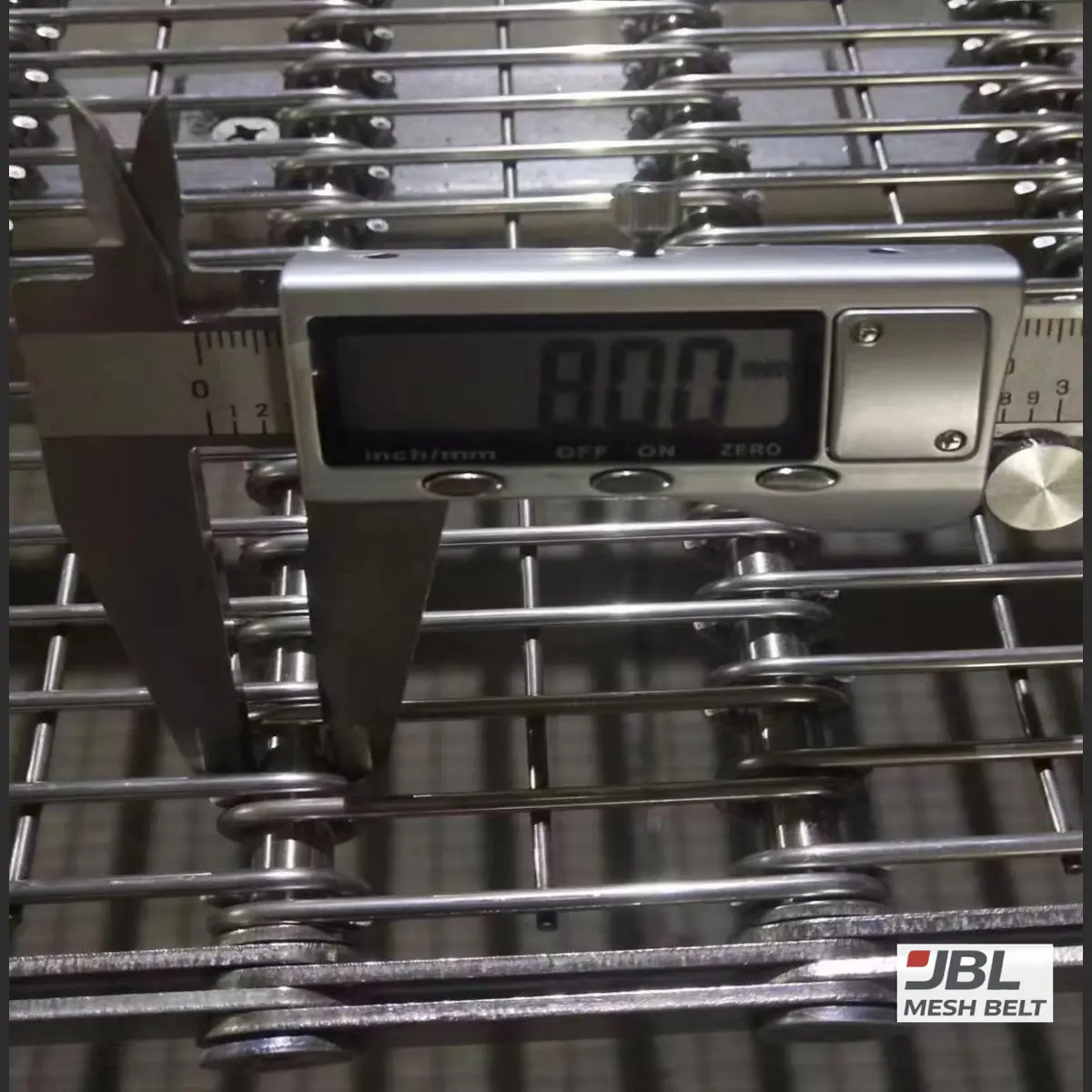
    Eye-link pitch, link width, wire, rod and bar-link thickness measured against your drawing.

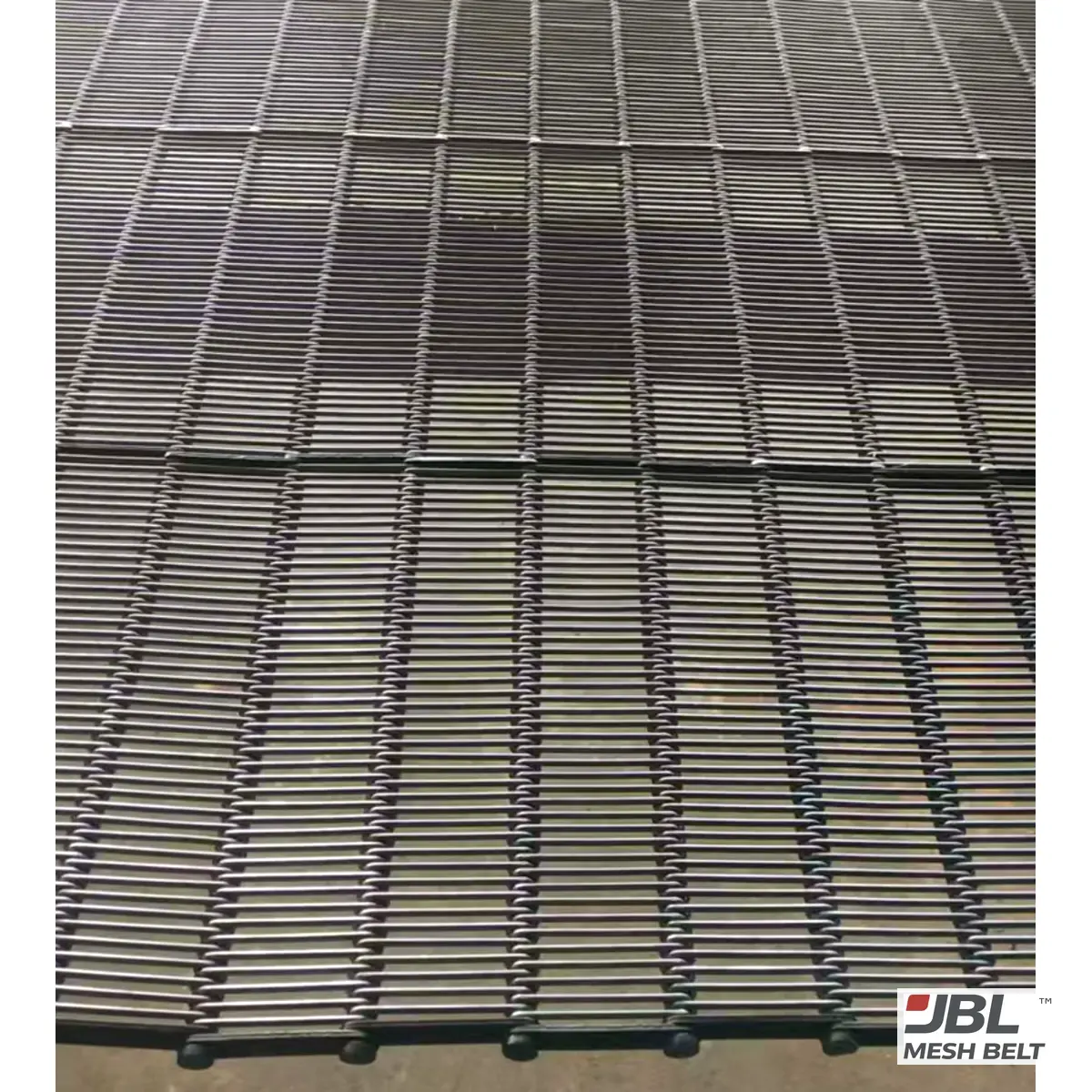
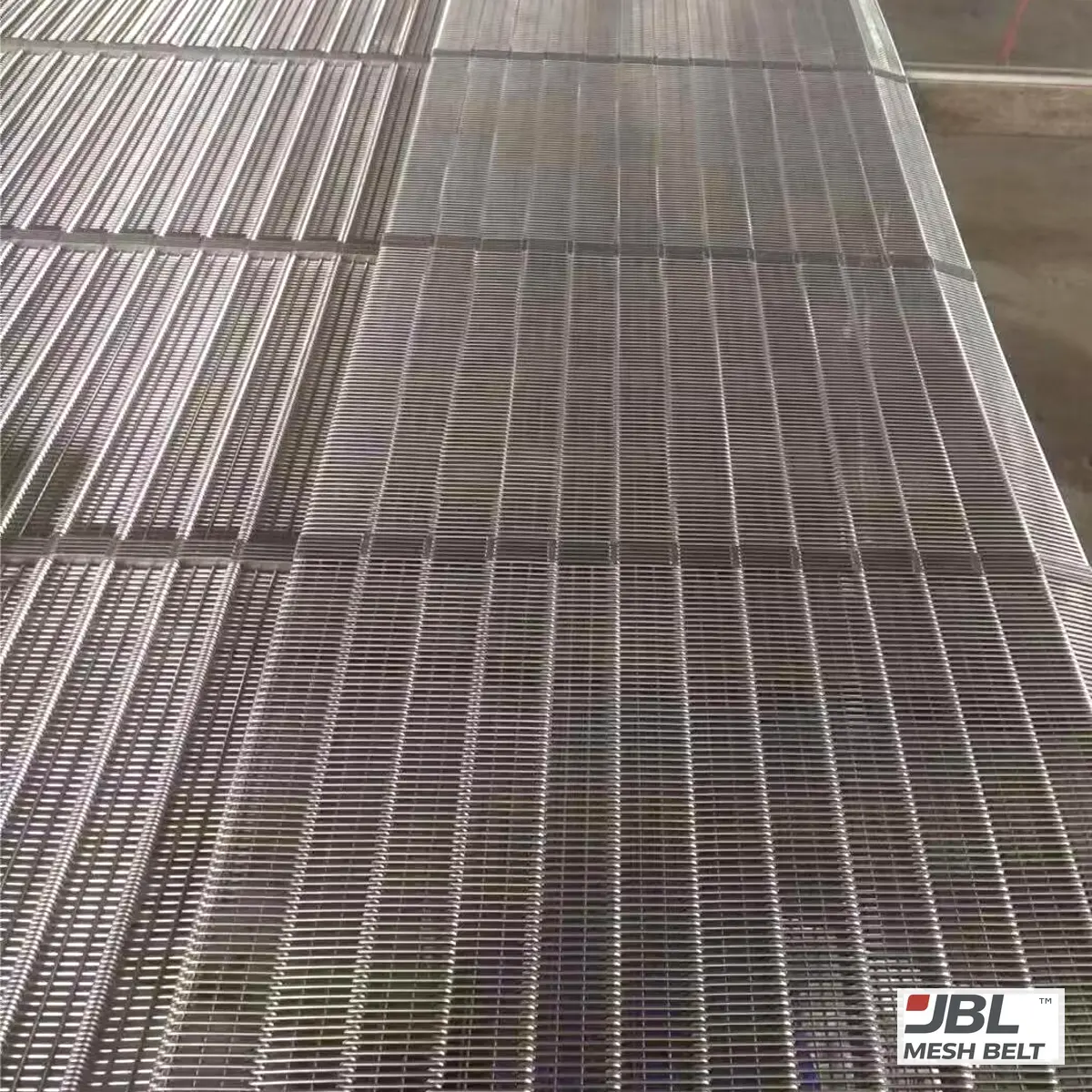
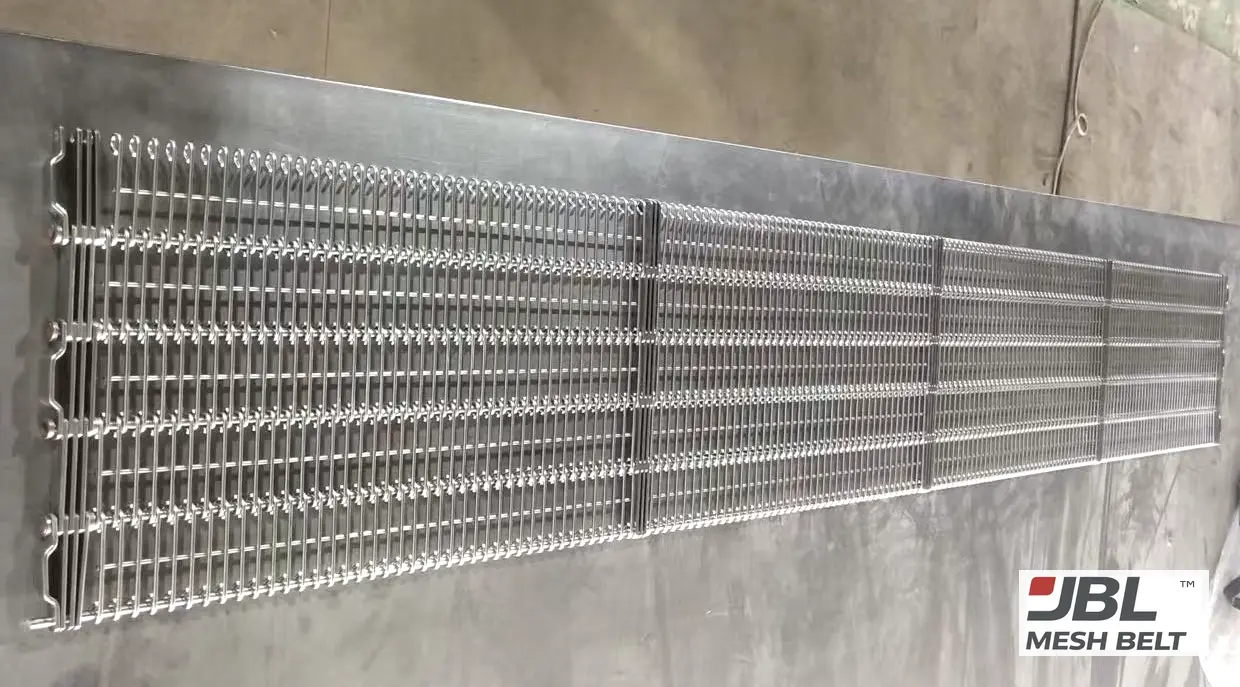
  2. Eye link belt check: full eye link belt laid out and checked before shipment
    02

    Edges and structure checked

    Edge finish, reinforcement, groove-type structure, wear plates and flights checked against your drawing.

  3. Eye link belt check: surface finish check on an eye link belt
    03

    Clean surface

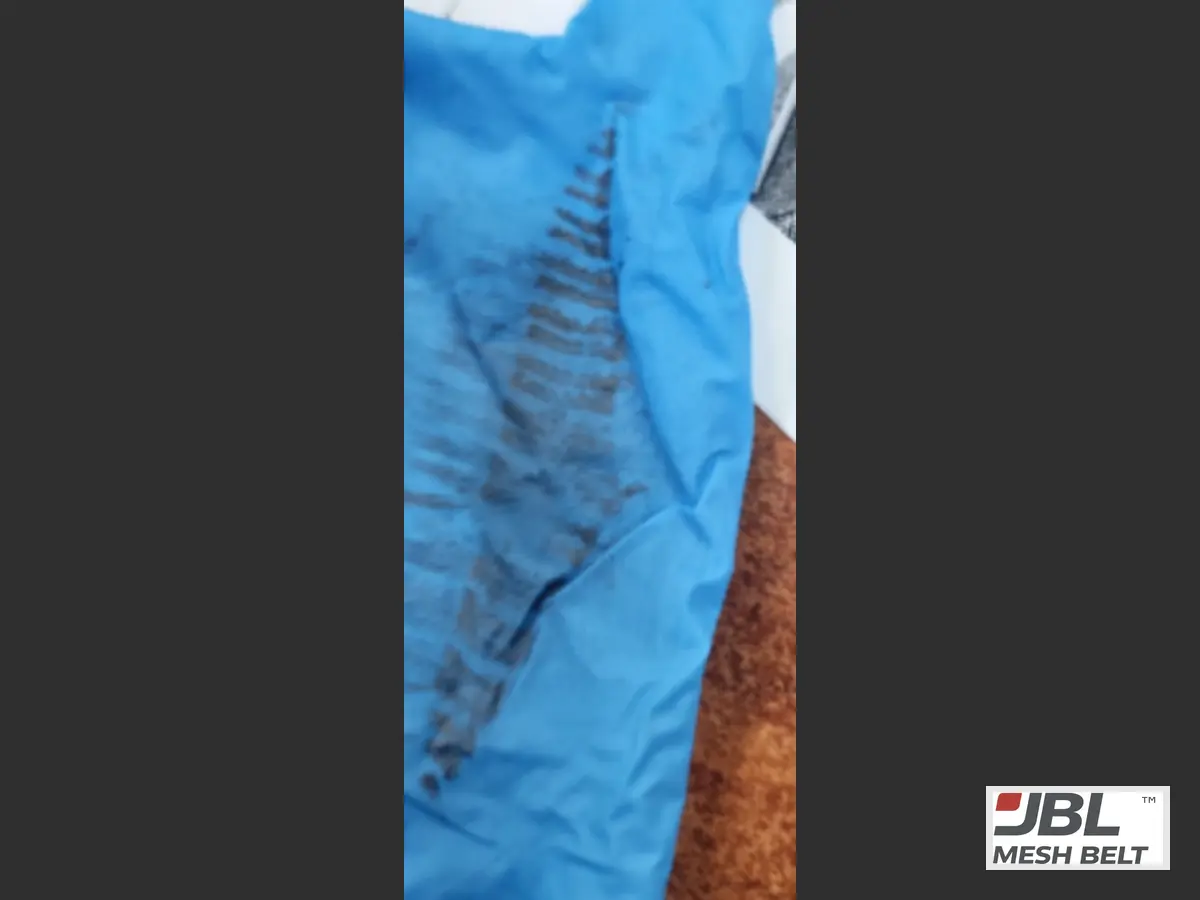
    Pickled as a whole, then wiped with a white glove — no black residue or oil on a food line.

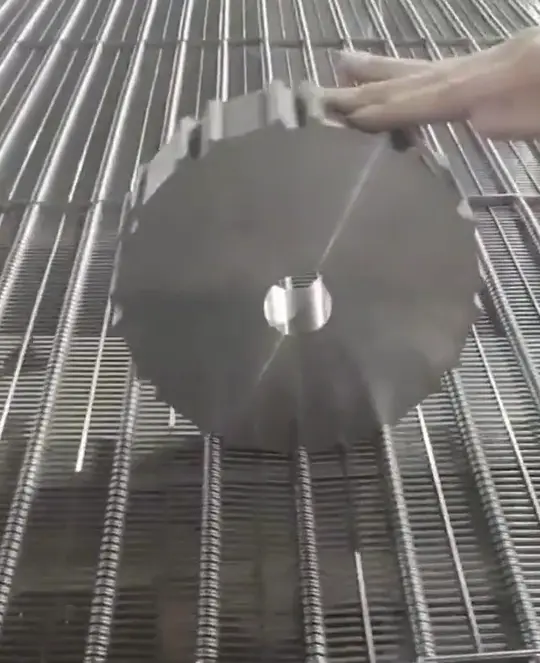
  4. Eye link belt check: eye link belt running on its sprockets
    04

    Run on its sprockets

    Sprockets checked and the belt run on them before packing; rollers turn smoothly.

Also checked: material confirmed against your order · reinforcement wire straight · coil count as specified · repeat orders checked against your previous record.

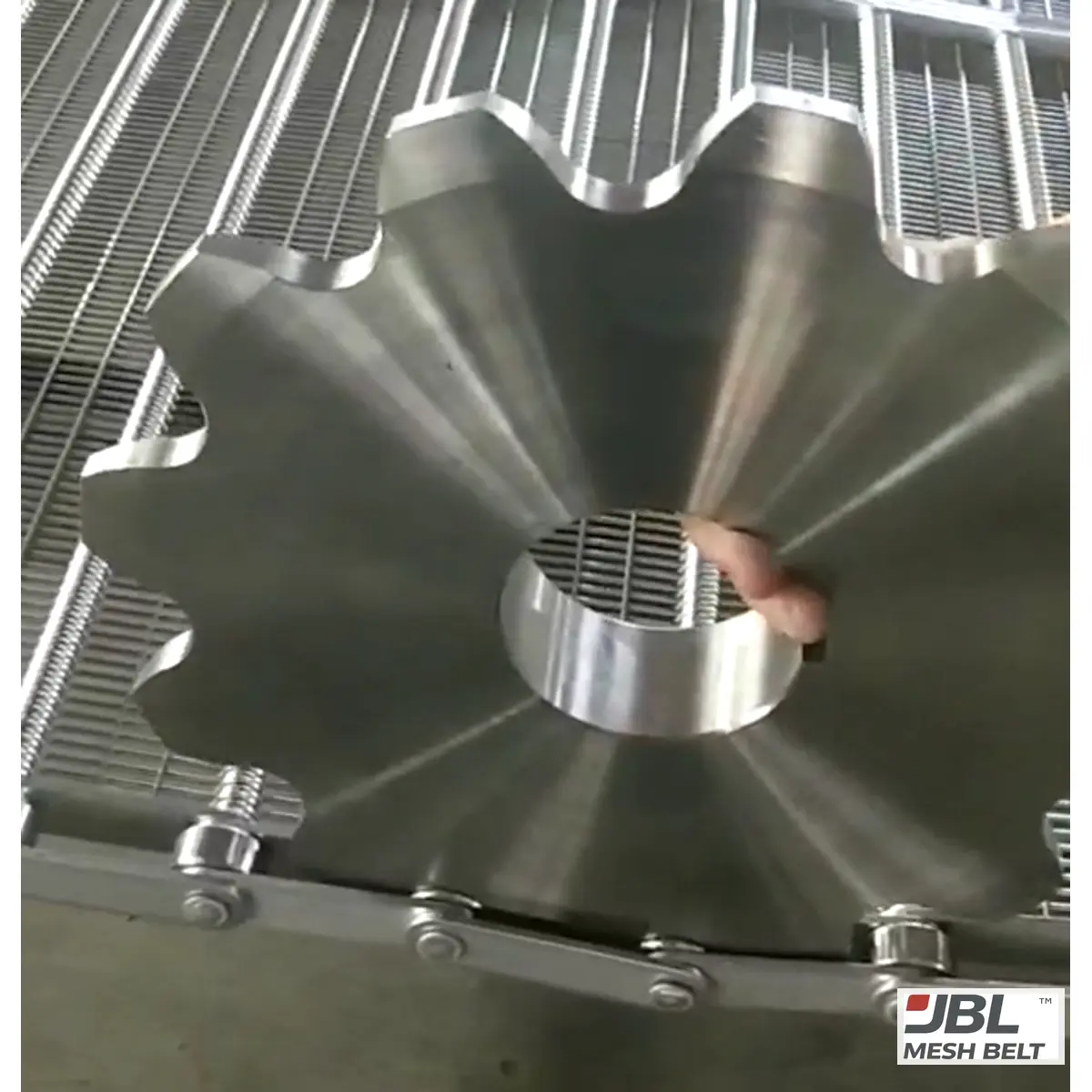
Sprocket engagement — real footage
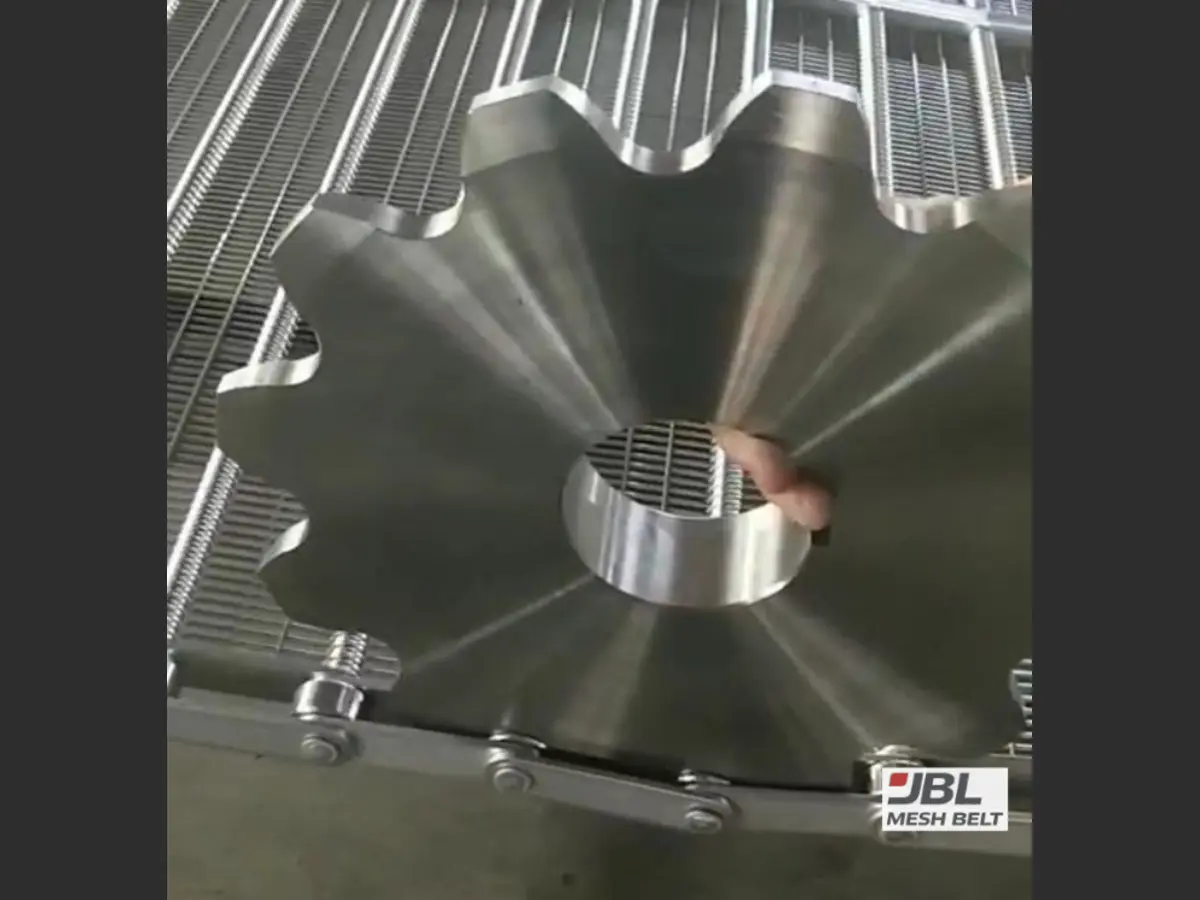
Belt running on its sprocket

See it run before it ships

The belt is run on its sprockets so you can see the chain engage tooth by tooth. The video for your order is sent before the crate is closed.

05
Engineering experience

Problems You May See on an Eye Link Belt — and How They Are Prevented

Black residue or oil on a food line, rough rollers or a pitch that does not fit means a rejected batch and downtime on your line. Each one has a check before your belt ships.

Eye link belt problem: black residue on the meshProblem

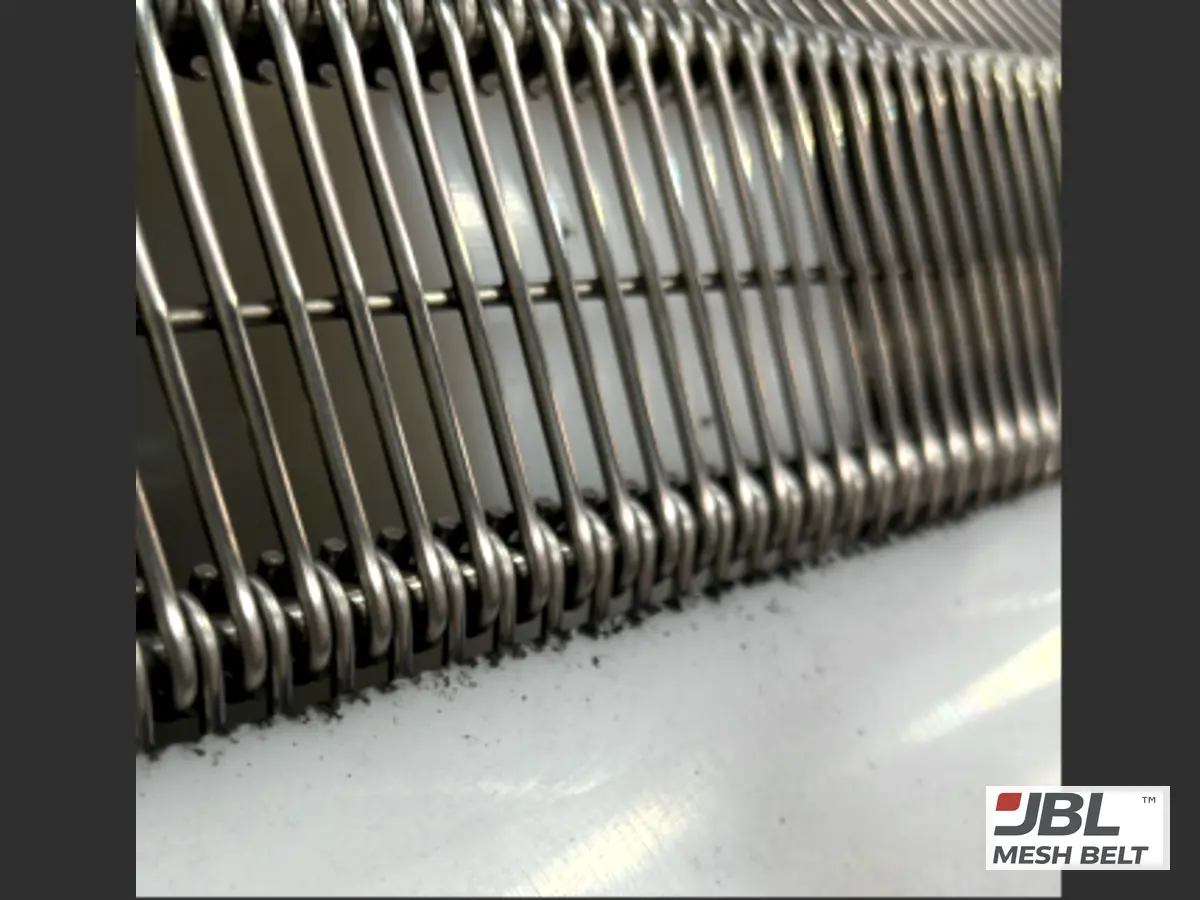
Black residue on the mesh

Black powder left after cleaning — it shows on a white glove and on your product.

✓ Whole-belt pickling; belt wiped with a white glove before packing.

Seeing this on your belt? Send a photo →
Eye link belt problem: oil trapped in the meshProblem

Oil trapped in the mesh

Oil collected between the links where cleaning did not reach.

✓ Mesh and rod crossings checked; residue cleaned and the belt re-checked before shipment.

Seeing this on your belt? Send a photo →
Eye link belt problem: rough rollersProblem

Rough rollers

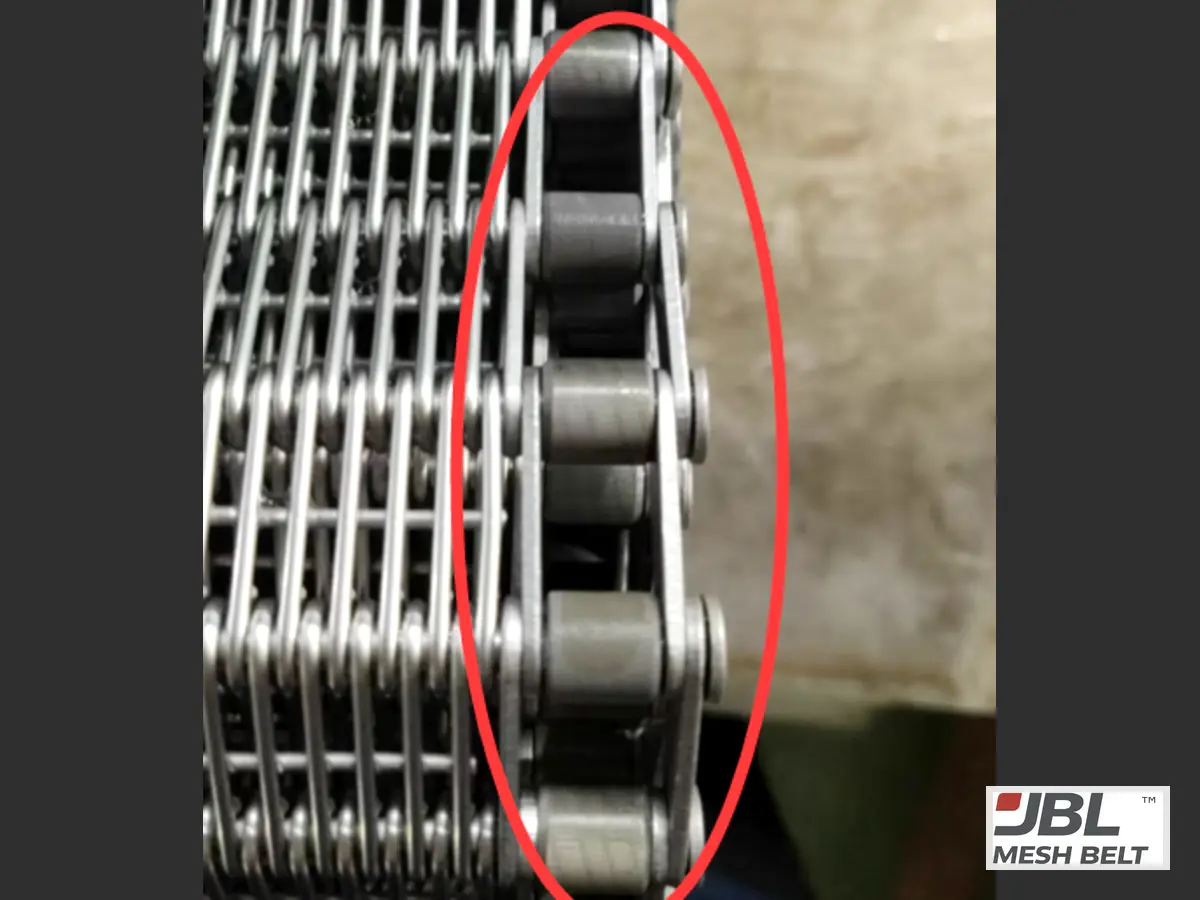
Rough or burred rollers (circled) wear your guides, make noise at speed and can mark product.

✓ Each roller checked by hand for a smooth surface and free turning.

Seeing this on your belt? Send a photo →
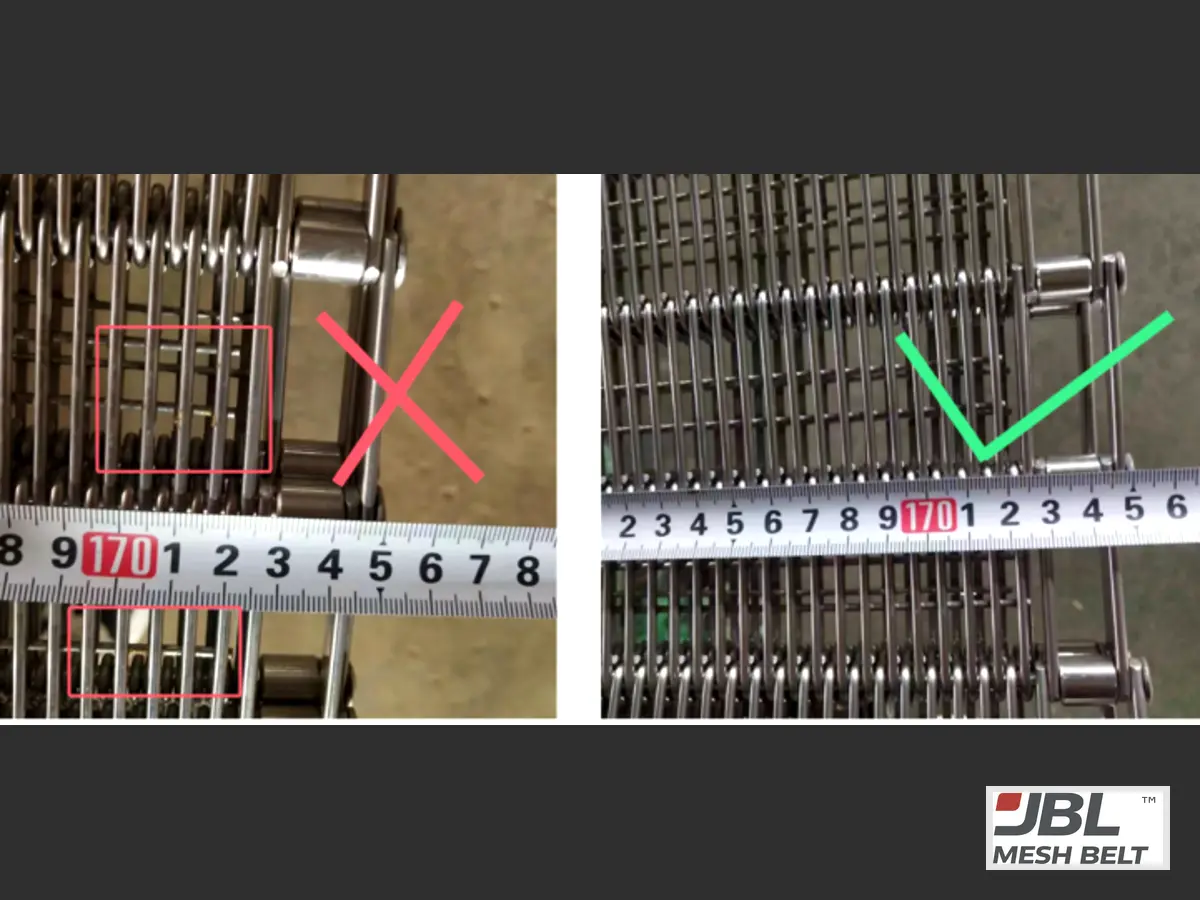
Eye link belt problem: pitch measured the wrong wayProblem

Pitch measured the wrong way

A single-pitch reading (left) misses the error; the belt does not fit when it arrives. Correct: tape over 10 pitches (right).

✓ Pitch measured over 10 pitches and averaged, at several points along the belt.

Seeing this on your belt? Send a photo →
06
Shipment records

What Arrives at Your Plant

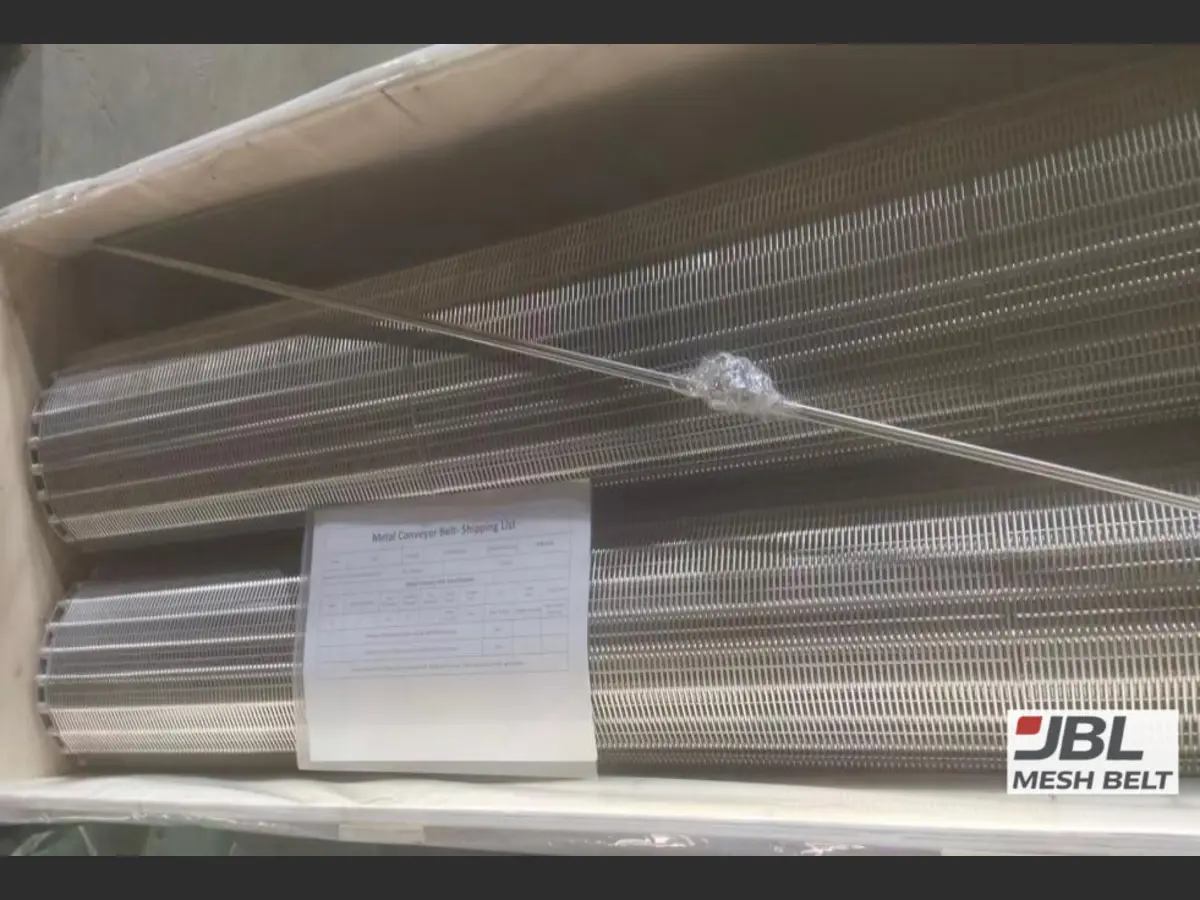
Your belt arrives rolled or laid flat, with sprockets packed in the same crate and a shipping list for checking on arrival. Real shipments; order numbers hidden.

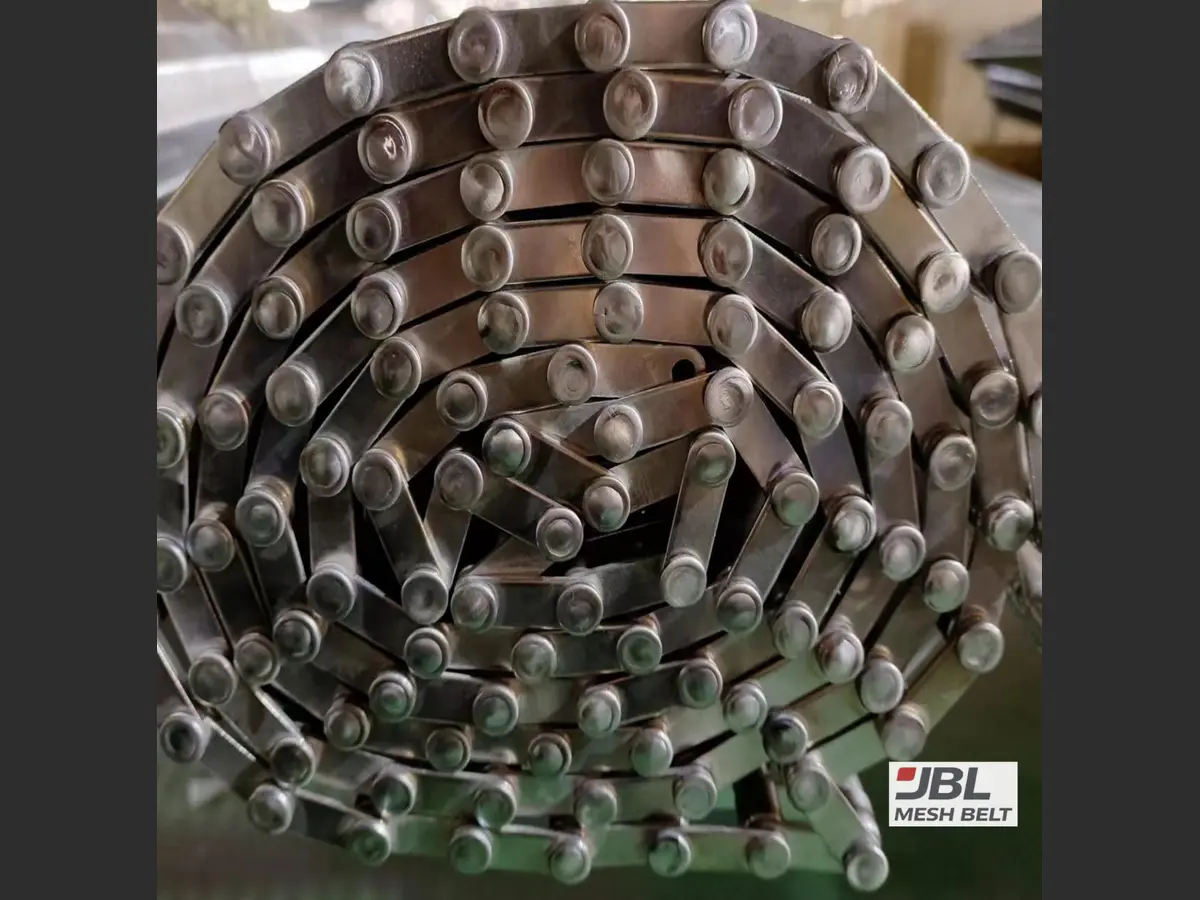
Eye link belt shipment: rolled with its chain edge

Rolled with its chain edge

Rolled so the chain edge is protected.

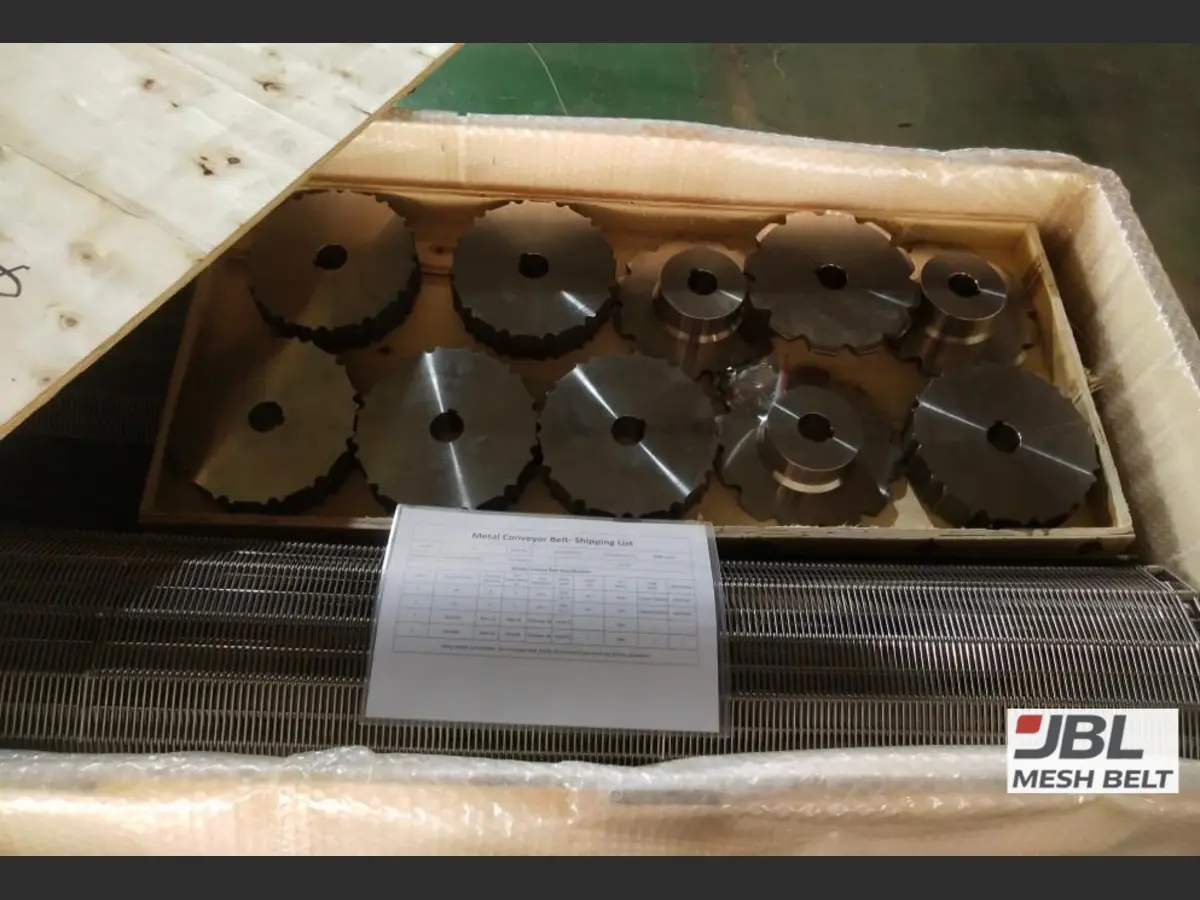
Eye link belt shipment: belt and sprockets together

Belt and sprockets together

Sprockets packed with the belt they were run on.

Eye link belt shipment: shipping list in the crate

Shipping list in the crate

Specification and quantity, for checking on arrival.

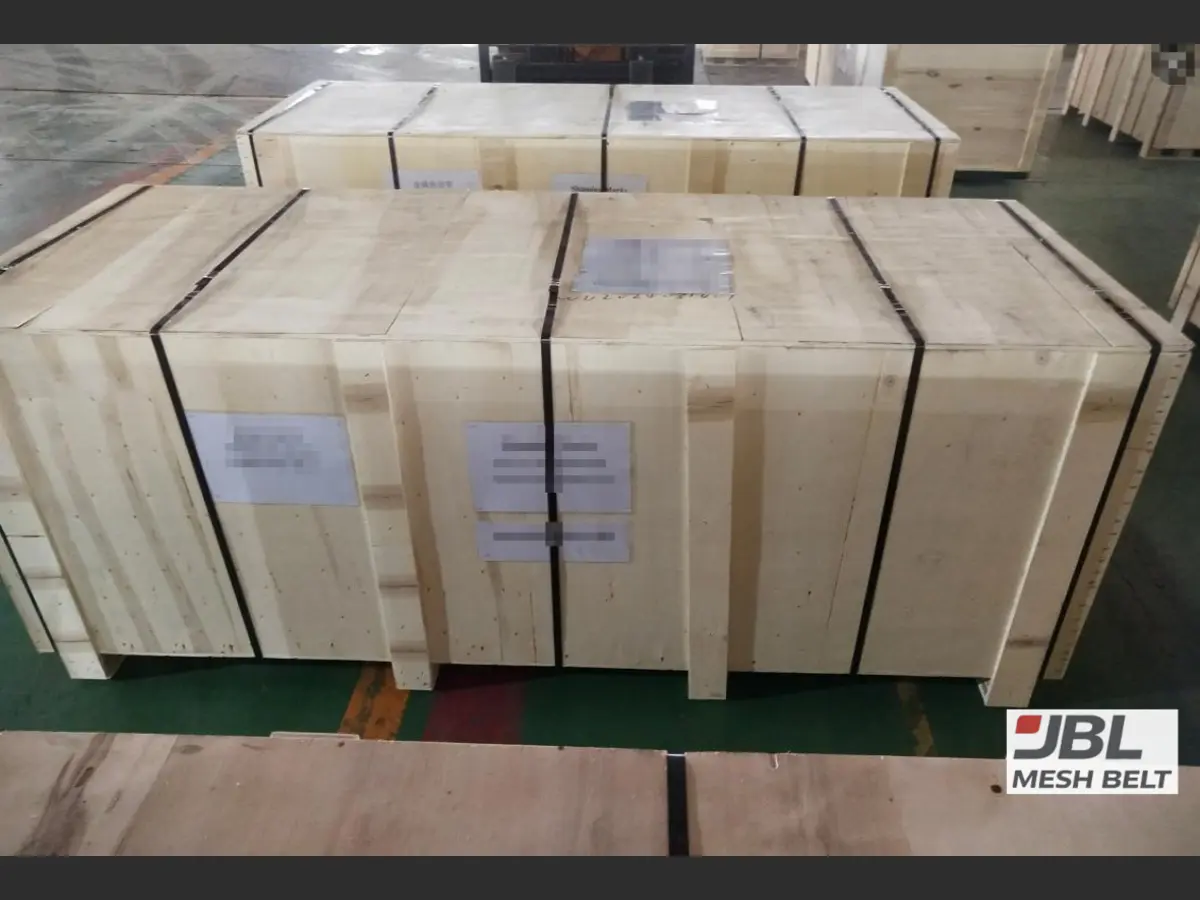
Eye link belt shipment: export crates

Export crates

Strapped, labelled and closed after you have seen the photos.

Need a different pitch, width, edge, accessory or sprocket?

Custom eye link belts are welcome — built to your line and application, with feasibility confirmed for your project. Send your old belt photos or drawing.

Contact an Engineer →
07
FAQ

Questions Buyers Ask Before Ordering an Eye Link Belt

Q1What should I check before an eye link belt replacement?

For an eye link belt replacement, measure the rod pitch over 10 pitches, the eye link belt opening, the wire and rod diameter, and the edge. Send the eye link sprocket or a photo of it, so the drive is checked with the belt.

Q2Where is an eye link belt used?

Continuous conveying in seafood processing, frying (for example French fries), drying, cooling, freezing and general food processing. The open structure lets air, oil and water pass through the belt.

Q3Roller chain edge or reinforced plate edge?

A roller chain edge is used where the belt is driven by chain and sprockets at the sides; a reinforced plate edge gives a closed, flat edge. Matching your existing edge is the usual starting point for a replacement.

Q4How do I measure the pitch of my old belt?

Lay a tape tight along the belt over 10 pitches and divide by 10 — do not measure a single pitch. Send that reading with the eye-link pitch, wire diameter, rod diameter and overall width.

Q5Can you match my repeat order exactly?

Yes. Each order's pitch, coil count, reinforcement, edge, surface and packing are recorded, and a repeat order is checked against that record before production.

Q6Do I need reinforcement wire?

It depends on product load and belt width. Single or double reinforcement wire (2.0 or 2.5 mm) can be added; it must be straight, and the type is confirmed before production.

Q7Which material for frying, drying or freezing?

Mild steel, SUS304 or SUS316, chosen for your temperature, corrosion, hygiene, cleaning method and product load. The material is confirmed per project.

Q8Can you supply sprockets with the belt?

Yes. SUS304 or plastic sprockets are matched to the belt and chain pitch — tooth count, bore, keyway and mounting per drawing — and run with the belt before shipment.

Q9How is the belt kept clean for a food line?

Whole-belt pickling is recommended. Before shipment the mesh is wiped with a white glove; any black residue or oil is cleaned and re-checked before the belt is packed.

Q10What should I send for a quotation?

Application and product, temperature, eye-link pitch, rod pitch, wire / reinforcement / rod diameter, belt width, edge type, accessories, drive and sprocket details, plus photos or a sample of the old belt.

Q11How are commercial terms confirmed?

They depend on the belt and the project, and are confirmed in writing in the quotation.
Evidence

Real Projects and Videos for This Belt

Real JBL projects with this belt type — measured, sampled, tested and shipped — and videos of the belts running or checked before shipment.