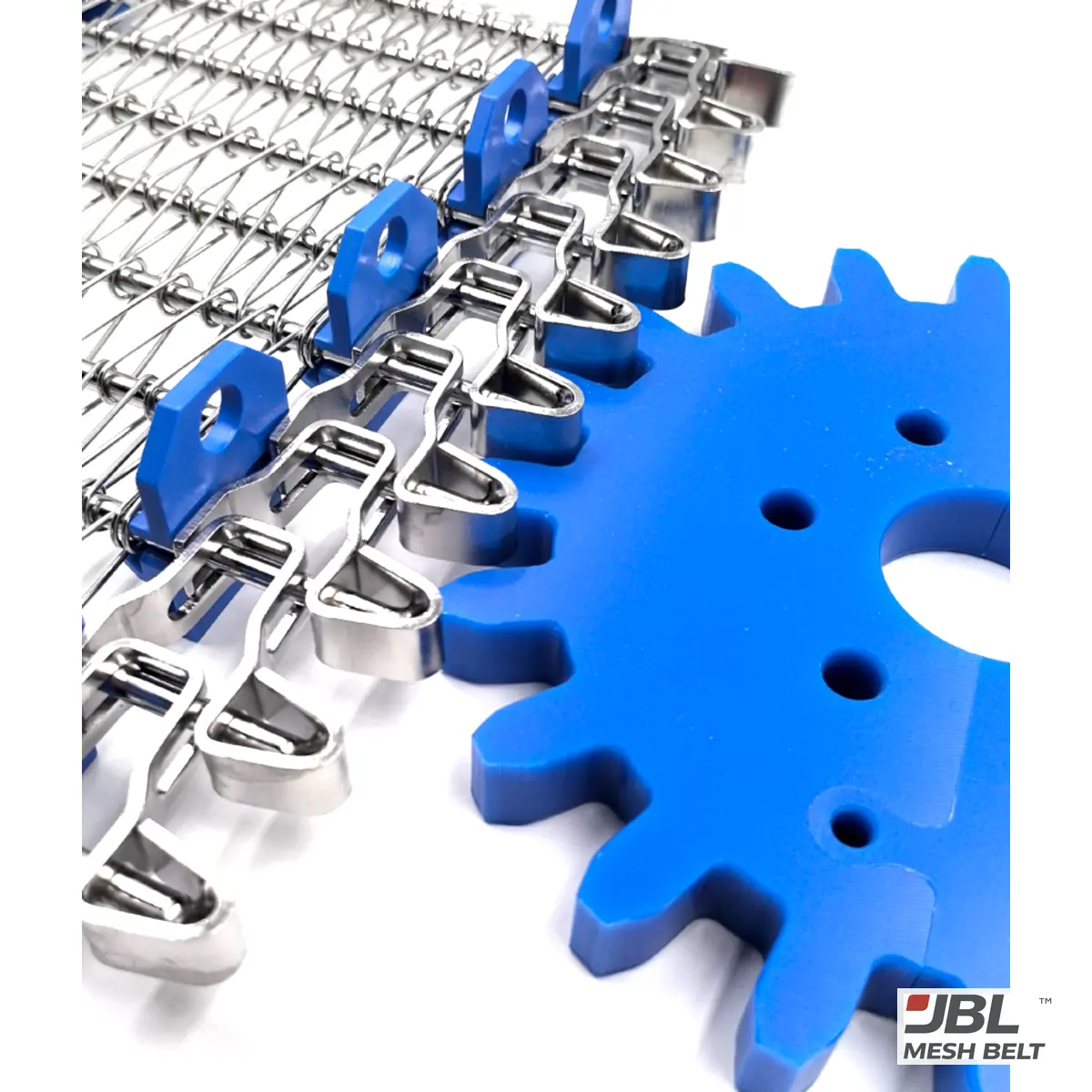
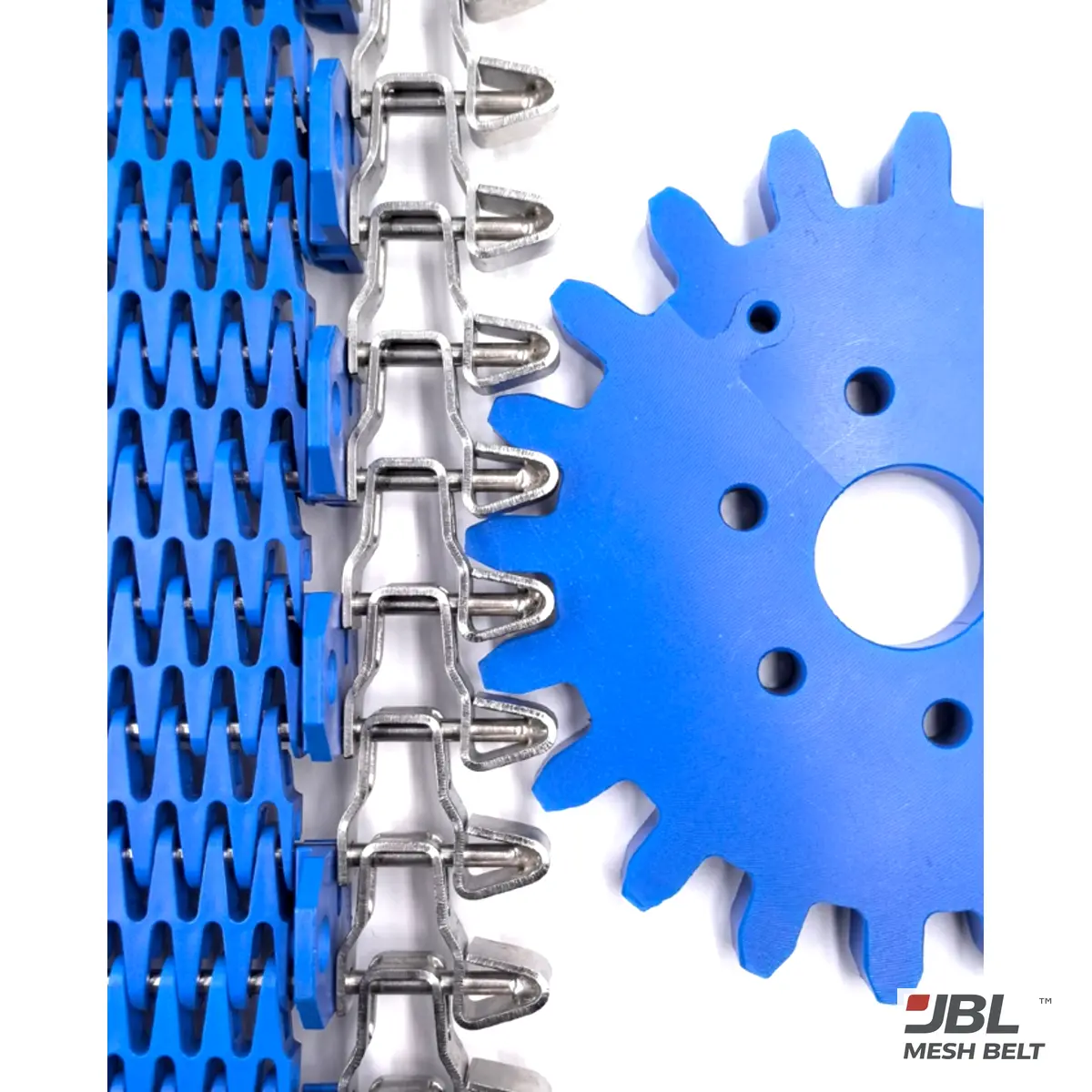
Side-Driven Belt · Stainless Steel or POM Mesh

Side-Driven Belt for Side-Drive Spiral Freezers and Coolers: Replacement and New Projects

A side-driven belt is a metal spiral conveyor belt for side-drive spiral freezers and coolers. The drive engages the belt at its side, so rod pitch, turn ratio and sprockets are checked against your drum, and the belt suits the existing system before it ships.

Replacing a side-driven belt, or supplying a new side-drive spiral? Before quoting, your rod pitch (31.75 or 34 mm), turn ratio and sprockets are checked against your drum. The belt is turned on a test drum matched to your drum diameter and run on its sprockets before it ships.

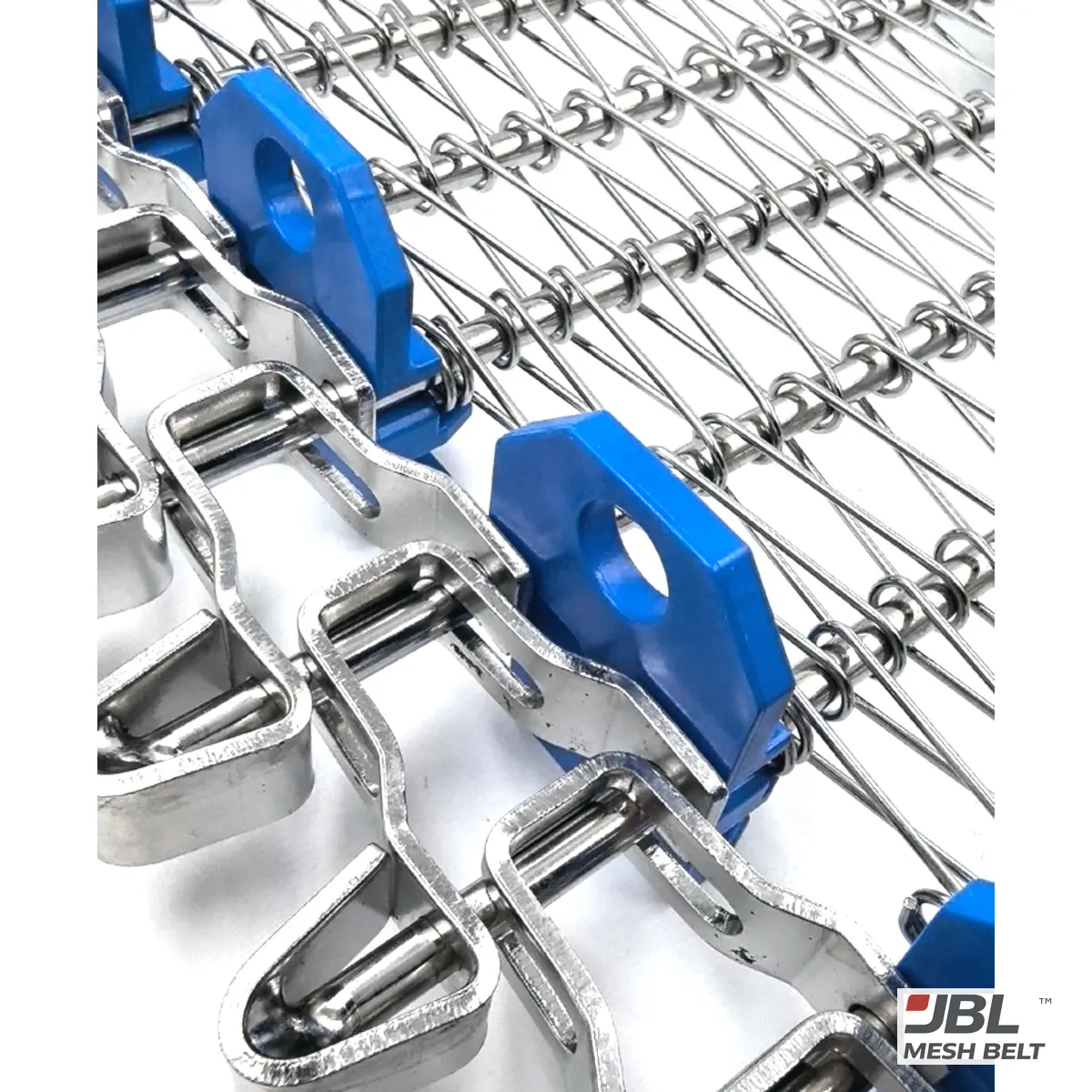
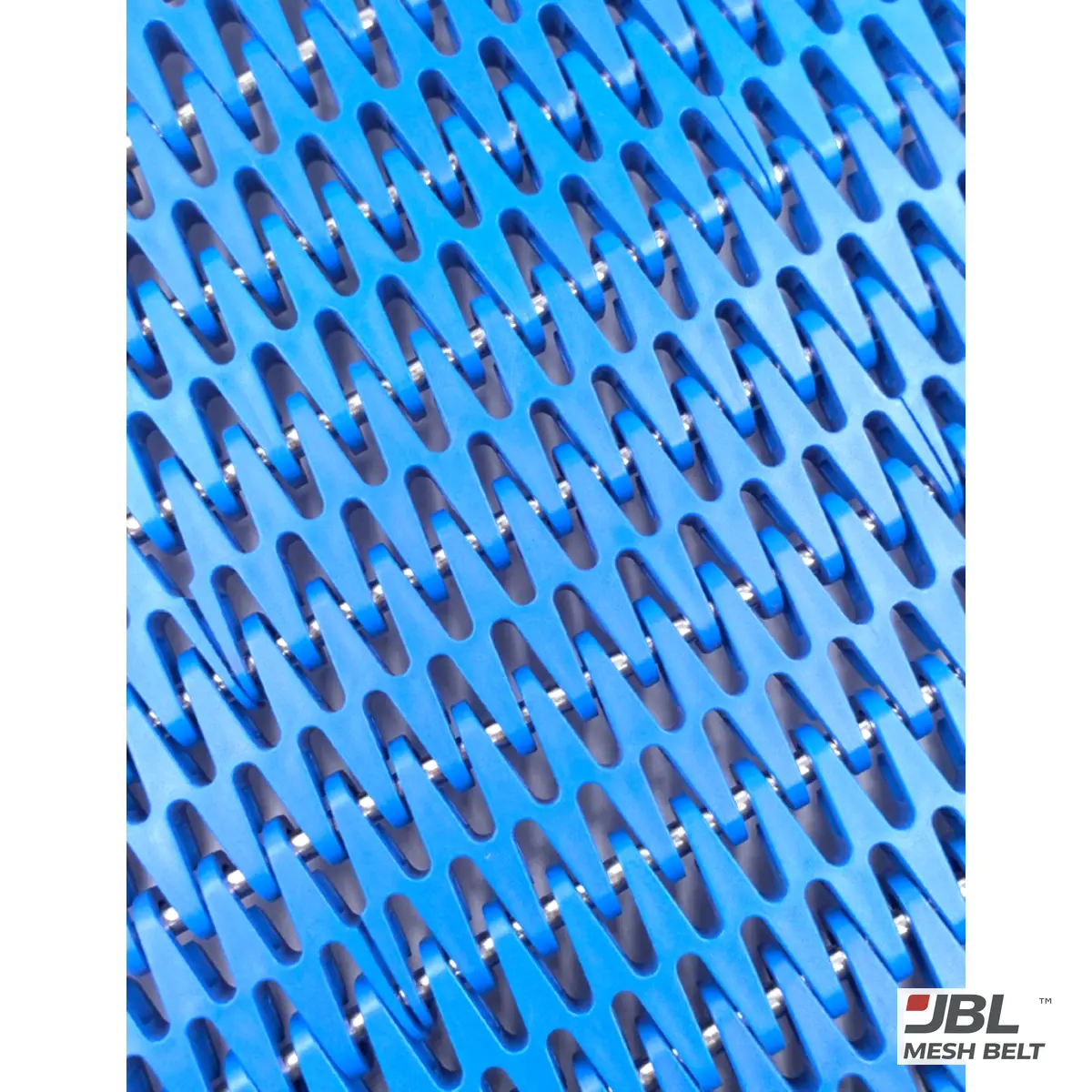
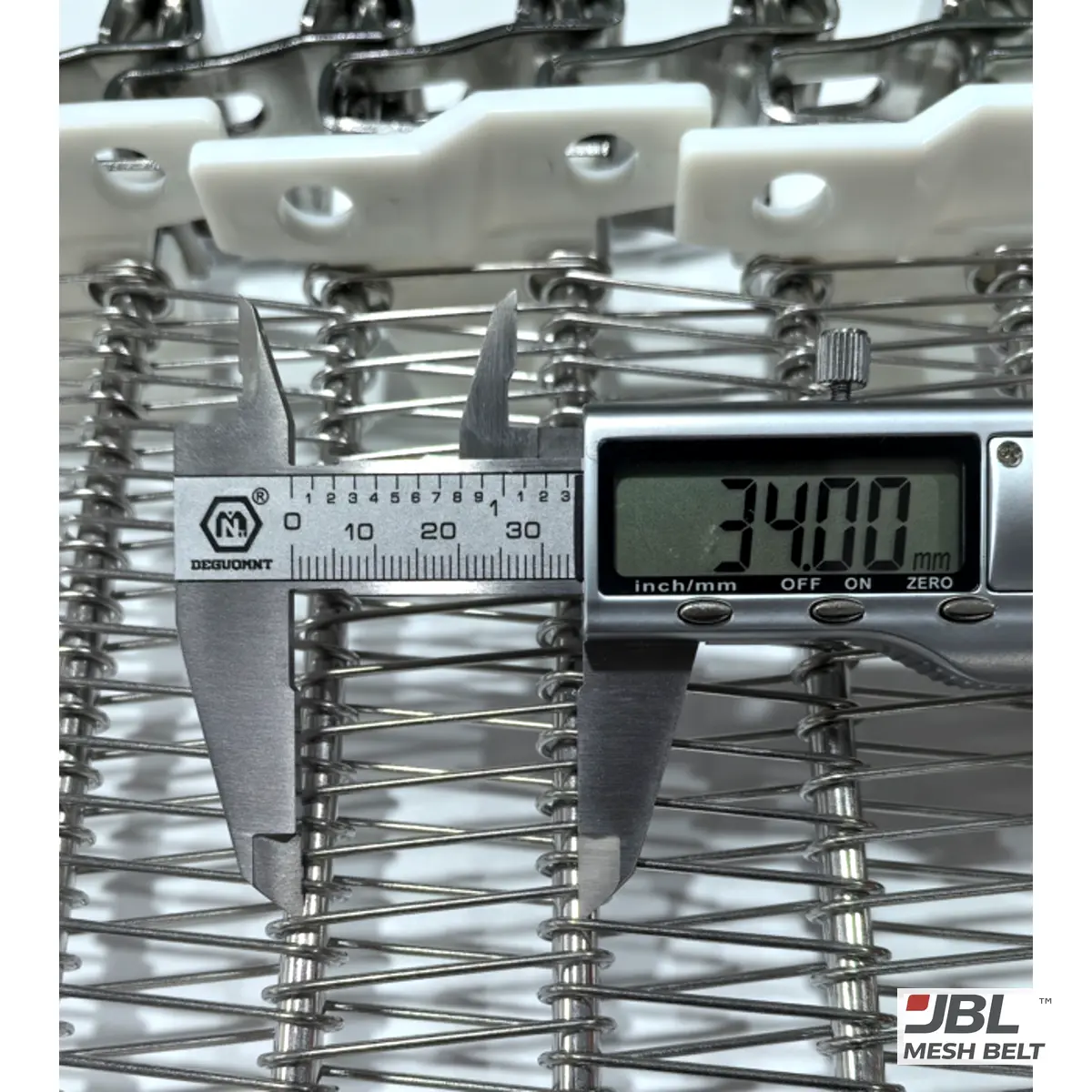
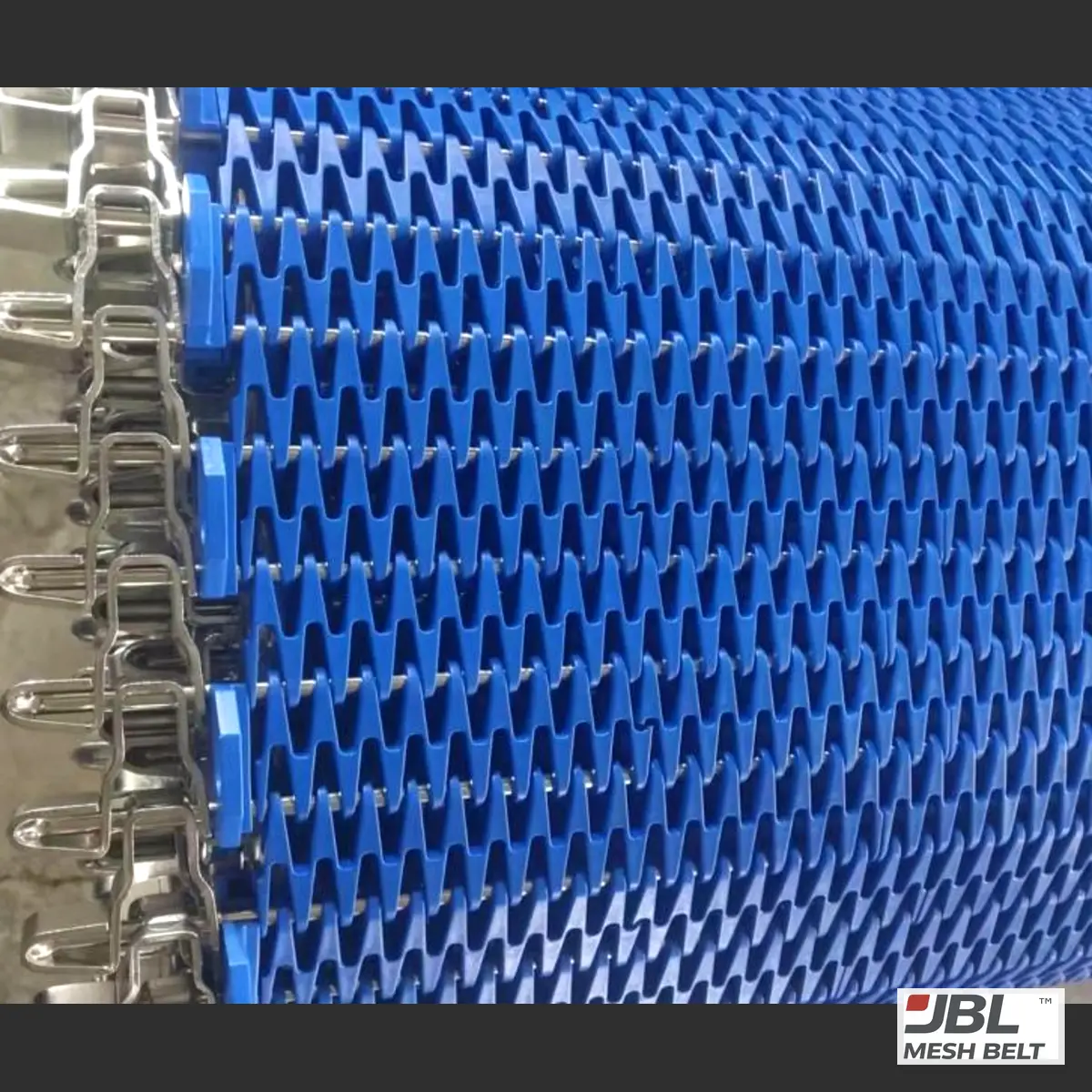
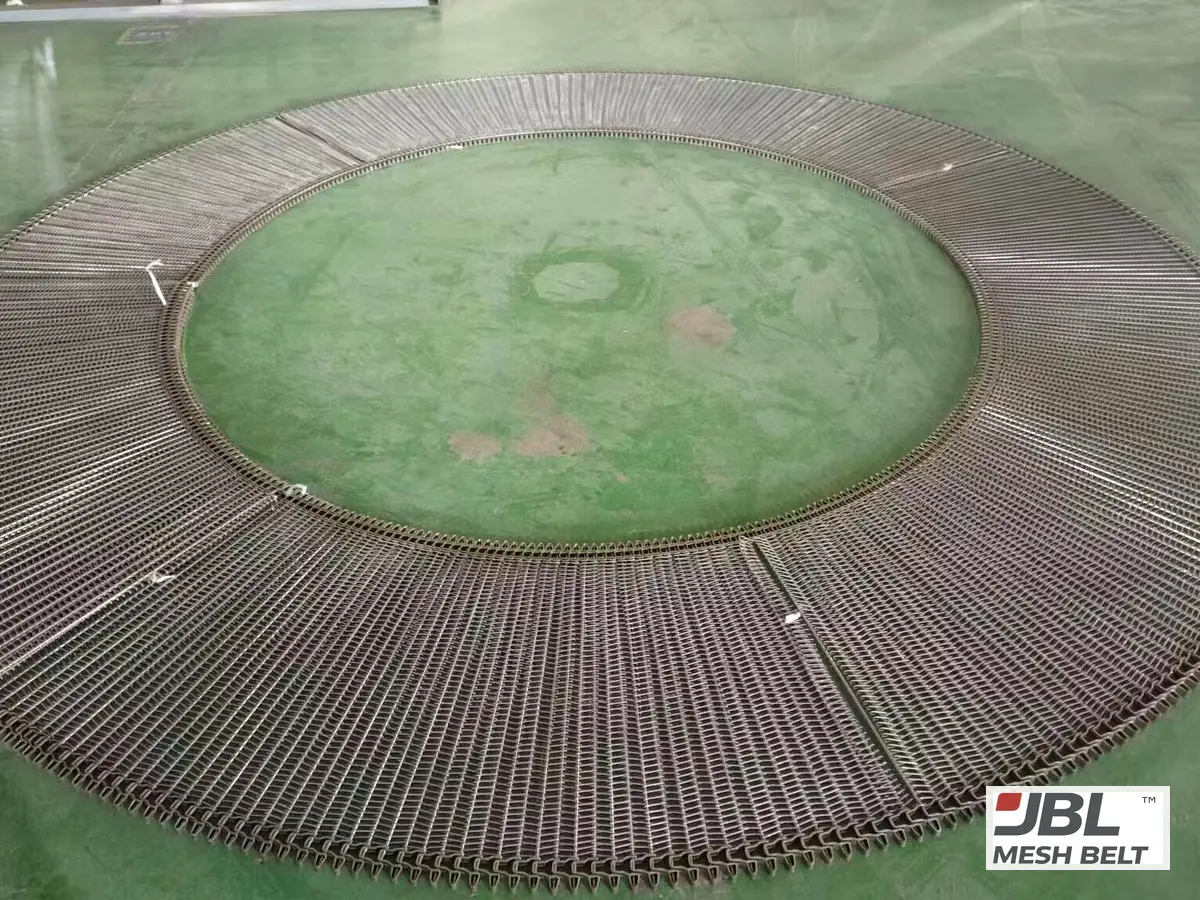
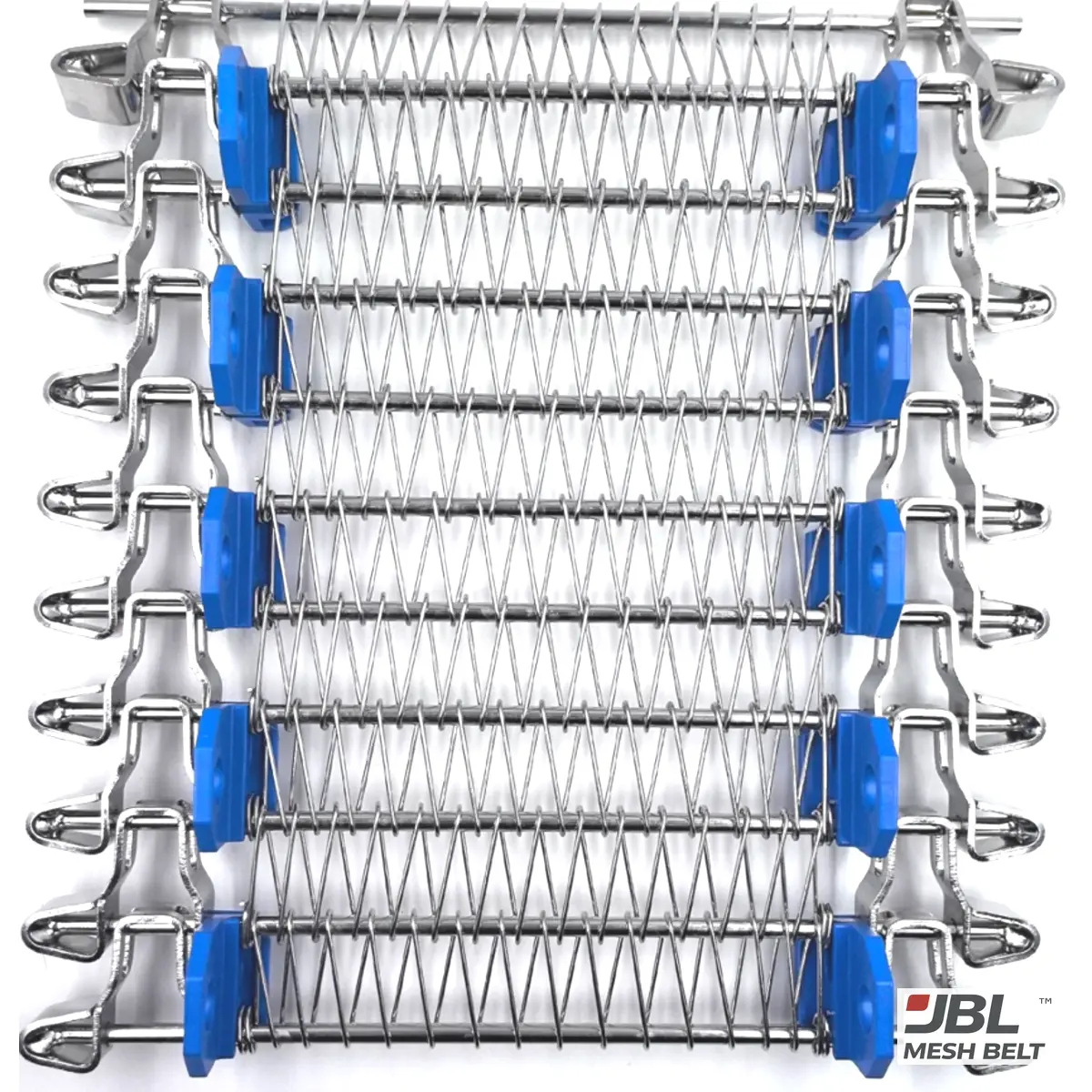
Side-driven belt with stainless steel spiral mesh and side links, front view
Rod pitch
31.75 / 34 mm (1.250 / 1.339 in)
Rod diameter
6.0 mm (0.236 in)
Belt width
300–1100 mm (11.81–43.31 in)
Mesh
SUS304 / SUS316 or POM
01
Two mesh options

Stainless Steel or POM Mesh: Which Side-Driven Belt Does Your Spiral Need?

Both run on the same 6.0 mm rods and side links at 31.75 or 34 mm pitch. Stainless spiral mesh is the usual choice; POM mesh is used where a plastic surface is needed — in the grade your temperature allows.

Stainless steel mesh

SUS304 / 316

mesh material

5–23 mm

spiral pitch

1.2–1.8 mm

wire diameter

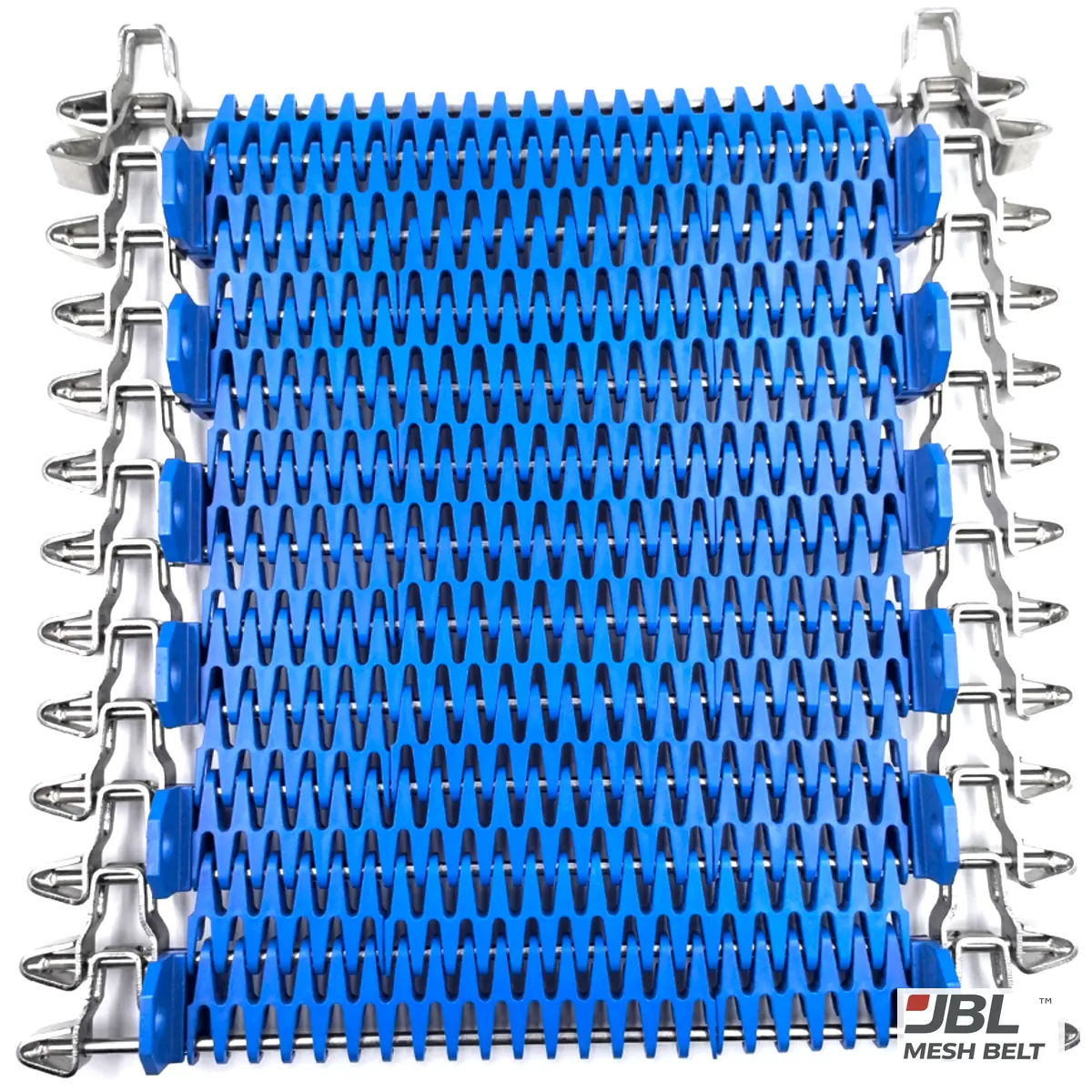
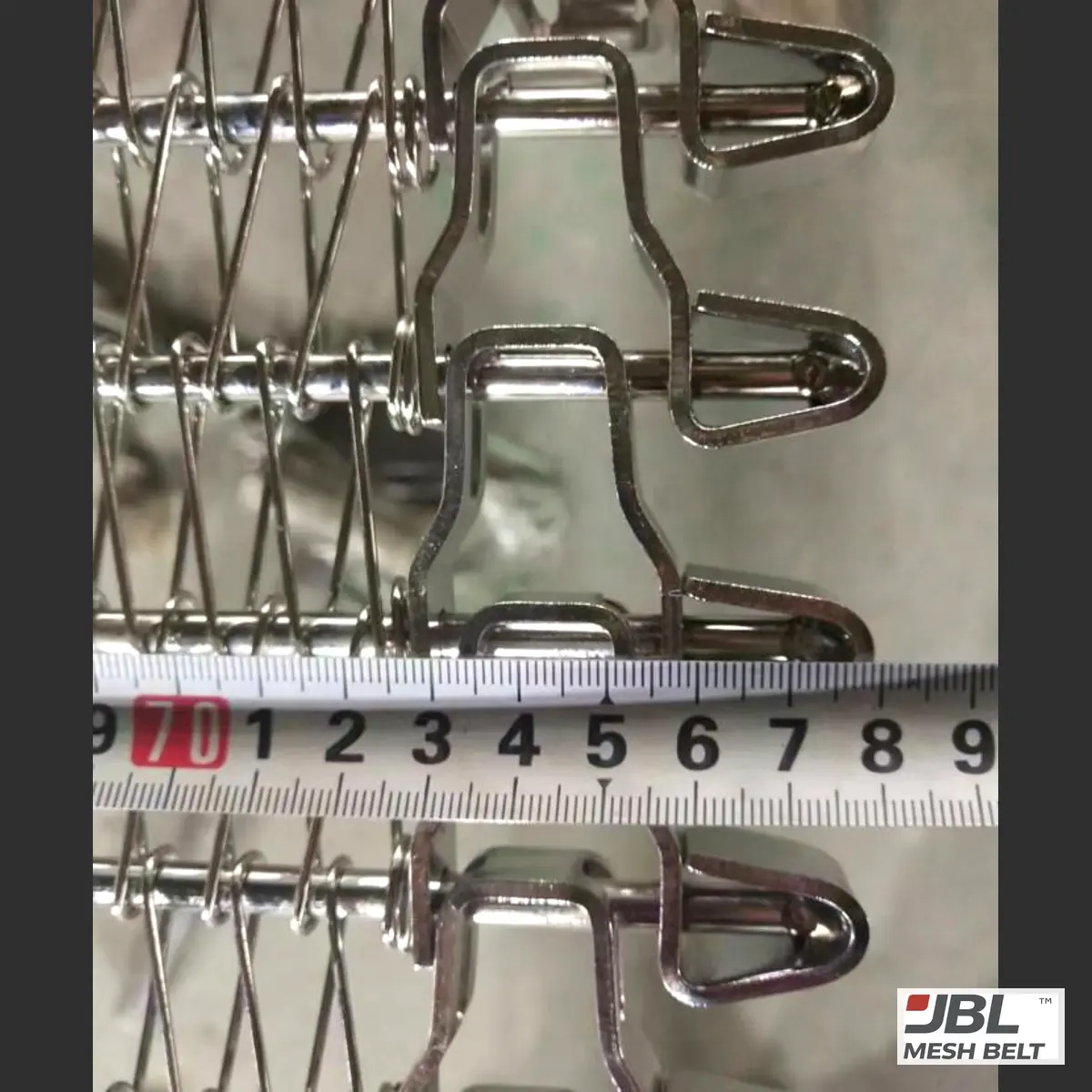
Side-driven belt: front view
Front view
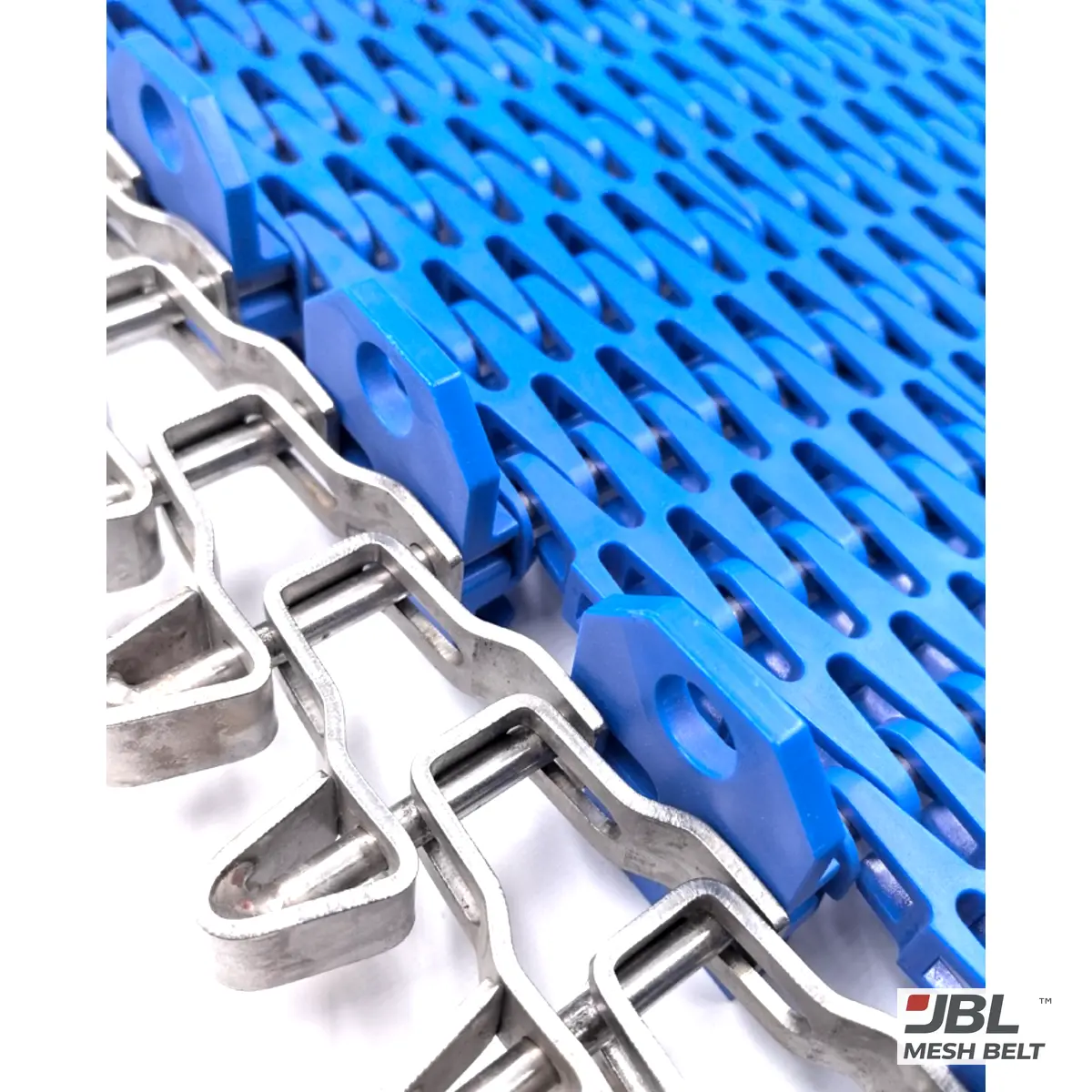
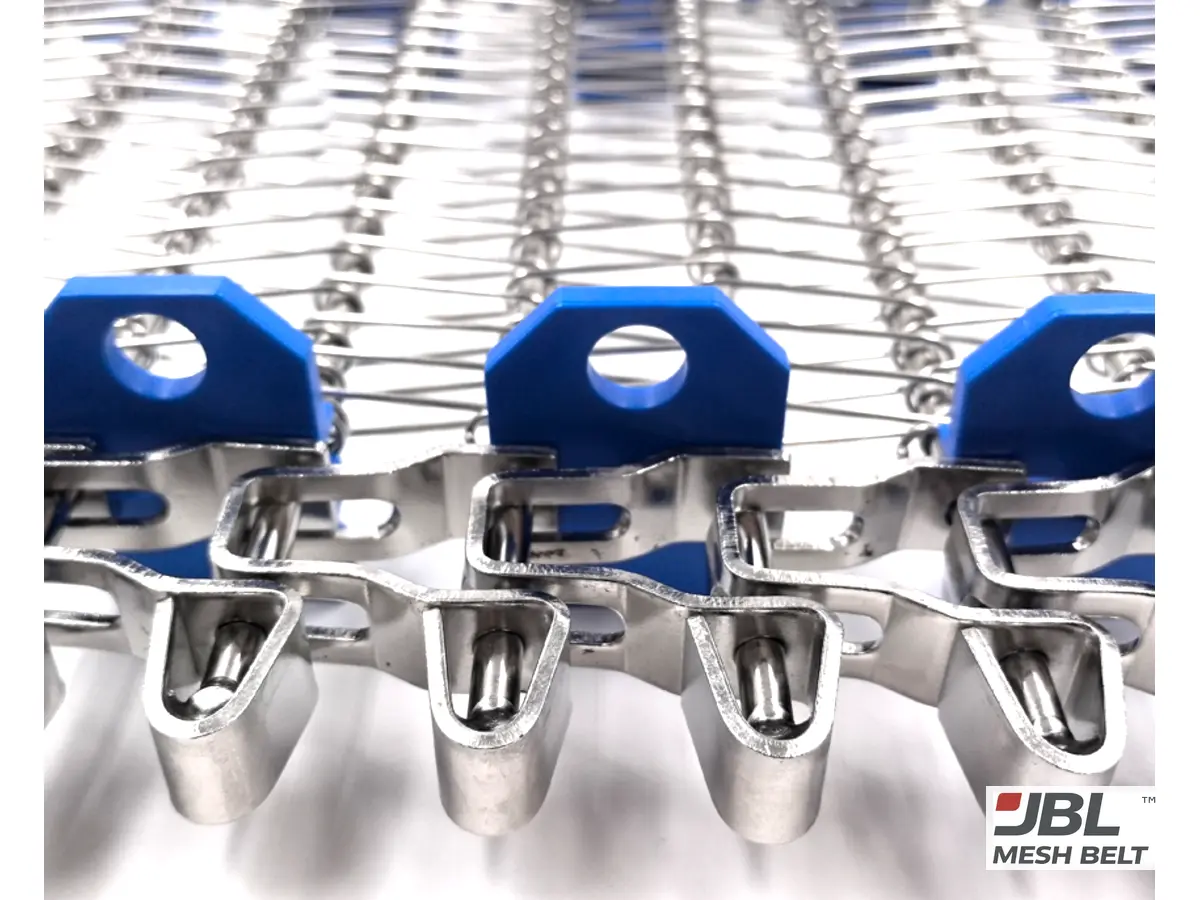
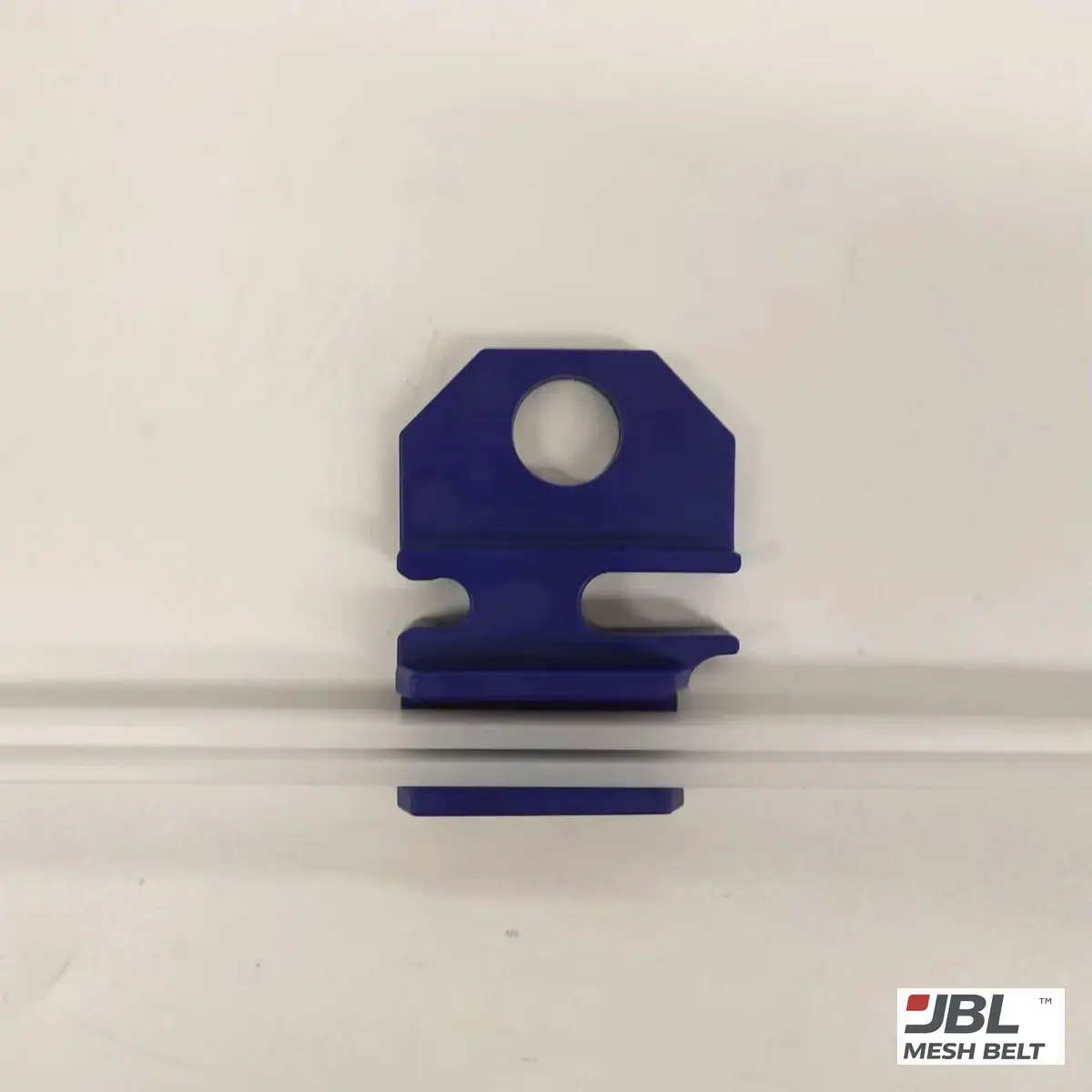
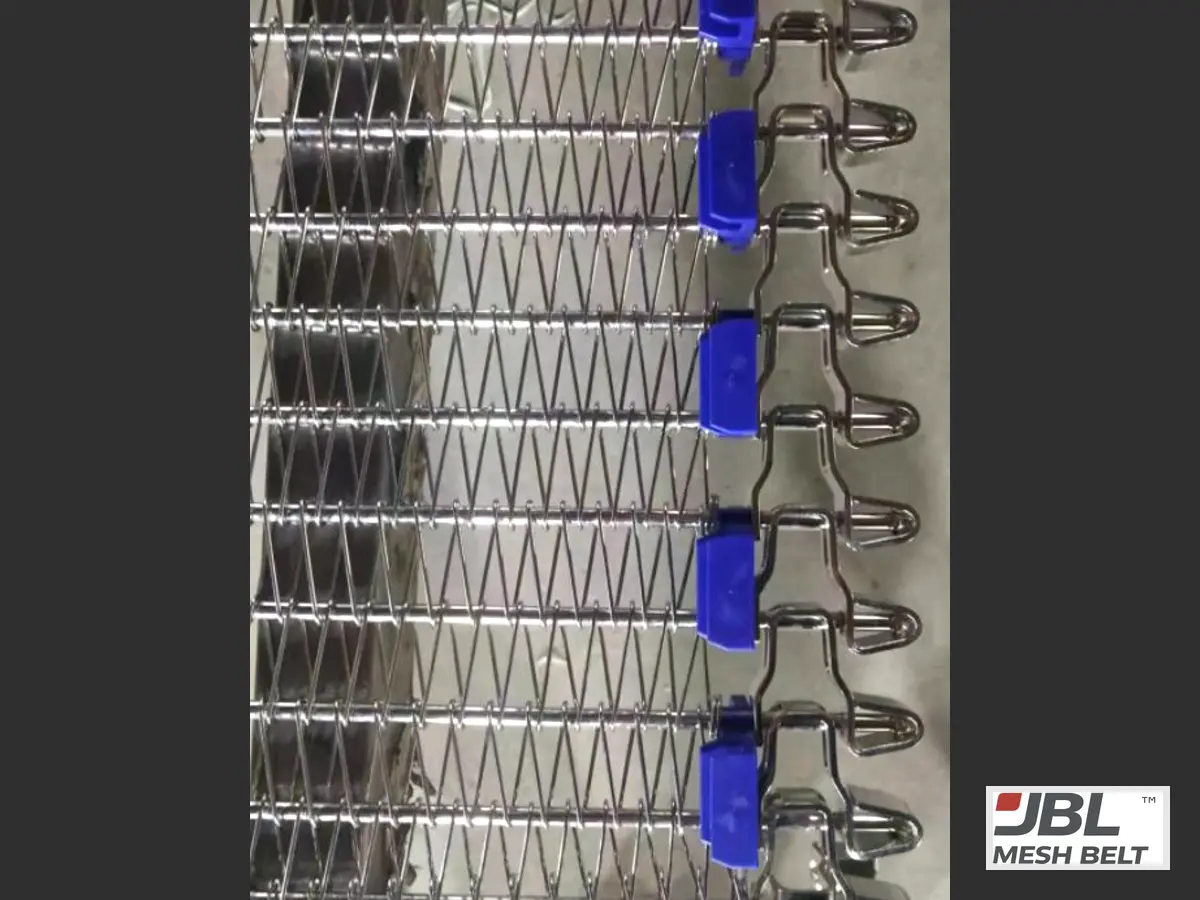
Side-driven belt: side link and wear strip
Side link and wear strip
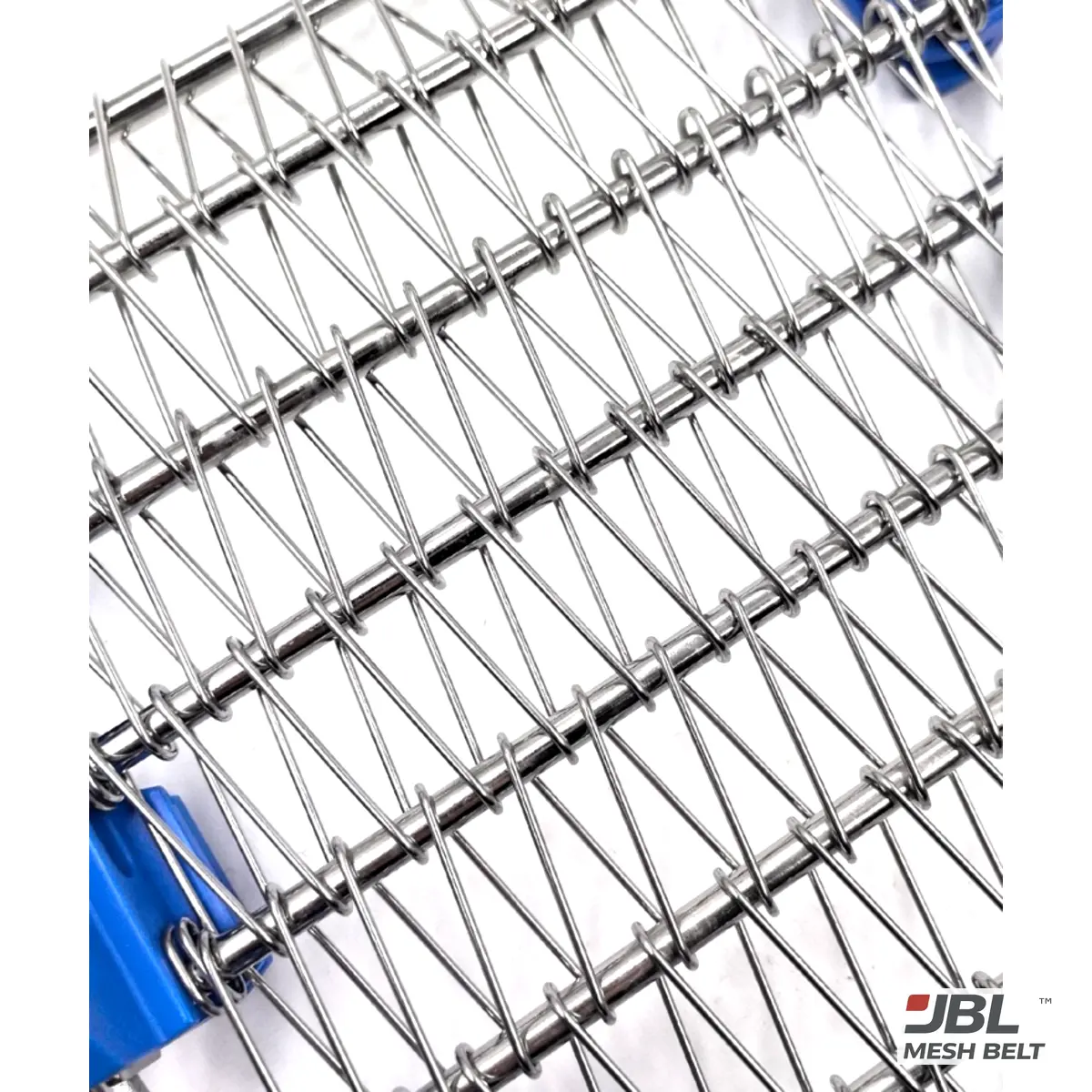
Side-driven belt: mesh surface
Mesh surface

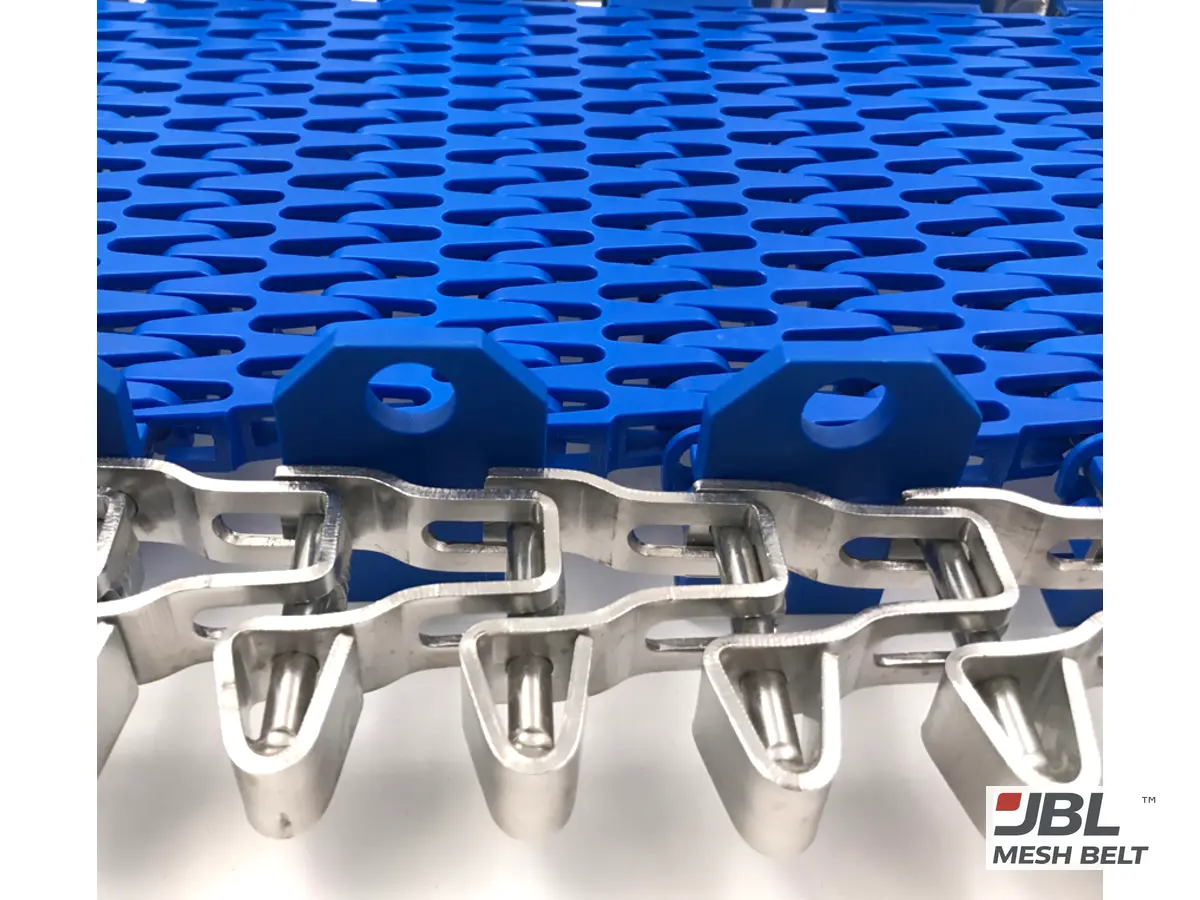
POM mesh

POM

grade for your temperature

31.75 / 34

rod pitch, mm

300–1100

width, mm

Side-driven belt: front view
Front view
Side-driven belt: side link and wear strip
Side link and wear strip
Side-driven belt: mesh surface
Mesh surface
02
Specifications & options

Side-Driven Belt Specifications: Rod Pitch 31.75 / 34 mm, Rod 6.0 mm

Compare your old belt with these drawings. Rod pitch, belt width and mesh type are enough to start — every value in mm and inches, confirmed on your project drawing.

Rod pitch

31.75 / 34 mm

1.250 / 1.339 in

Rod diameter

6.0 mm

0.236 in

Spiral pitch

5–23 mm

0.197–0.906 in

Belt width

300–1100 mm

11.81–43.31 in

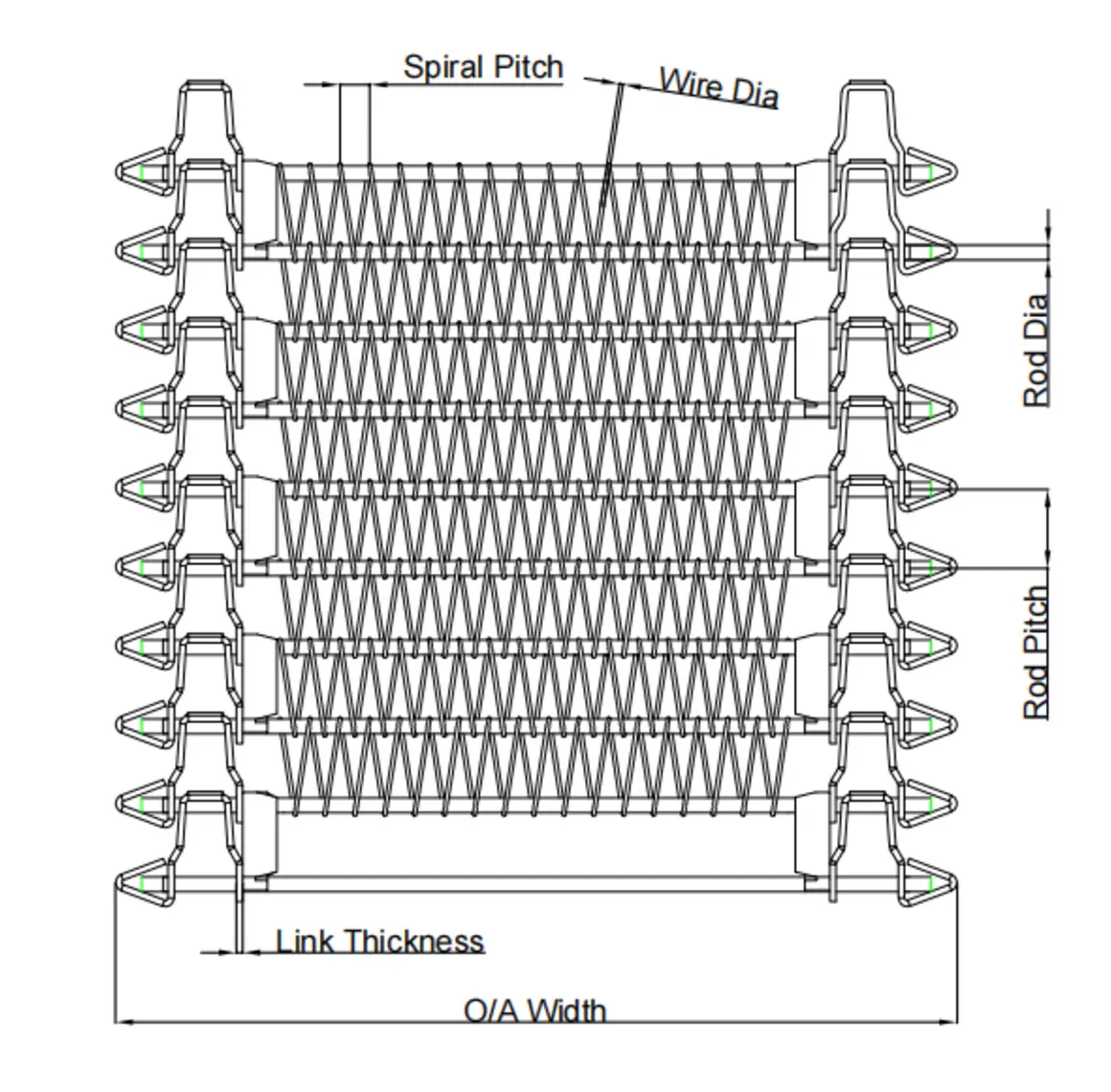
Dimension drawing and table

Side-driven belt · stainless steel mesh
Side-driven belt with stainless steel mesh, dimension drawing: spiral pitch, wire diameter, rod diameter, rod pitch, link thickness and overall width
Drawing labelReference (mm / in)
Mesh materialSUS304 / SUS316
Spiral pitch5–23 mm (0.197–0.906 in)
Wire diameter1.2 / 1.4 / 1.5 / 1.6 / 1.7 / 1.8 mm (0.047–0.071 in)
Rod pitch31.75 / 34 mm (1.250 / 1.339 in)
Rod diameter6.0 mm (0.236 in)
O/A width300–1100 mm (11.81–43.31 in), custom widths
Turn ratioConfirmed per project against your drum
SurfaceElectropolishing
EdgeWelded

Use the drawing to tell us which dimensions you can measure. Final values follow the confirmed project drawing.

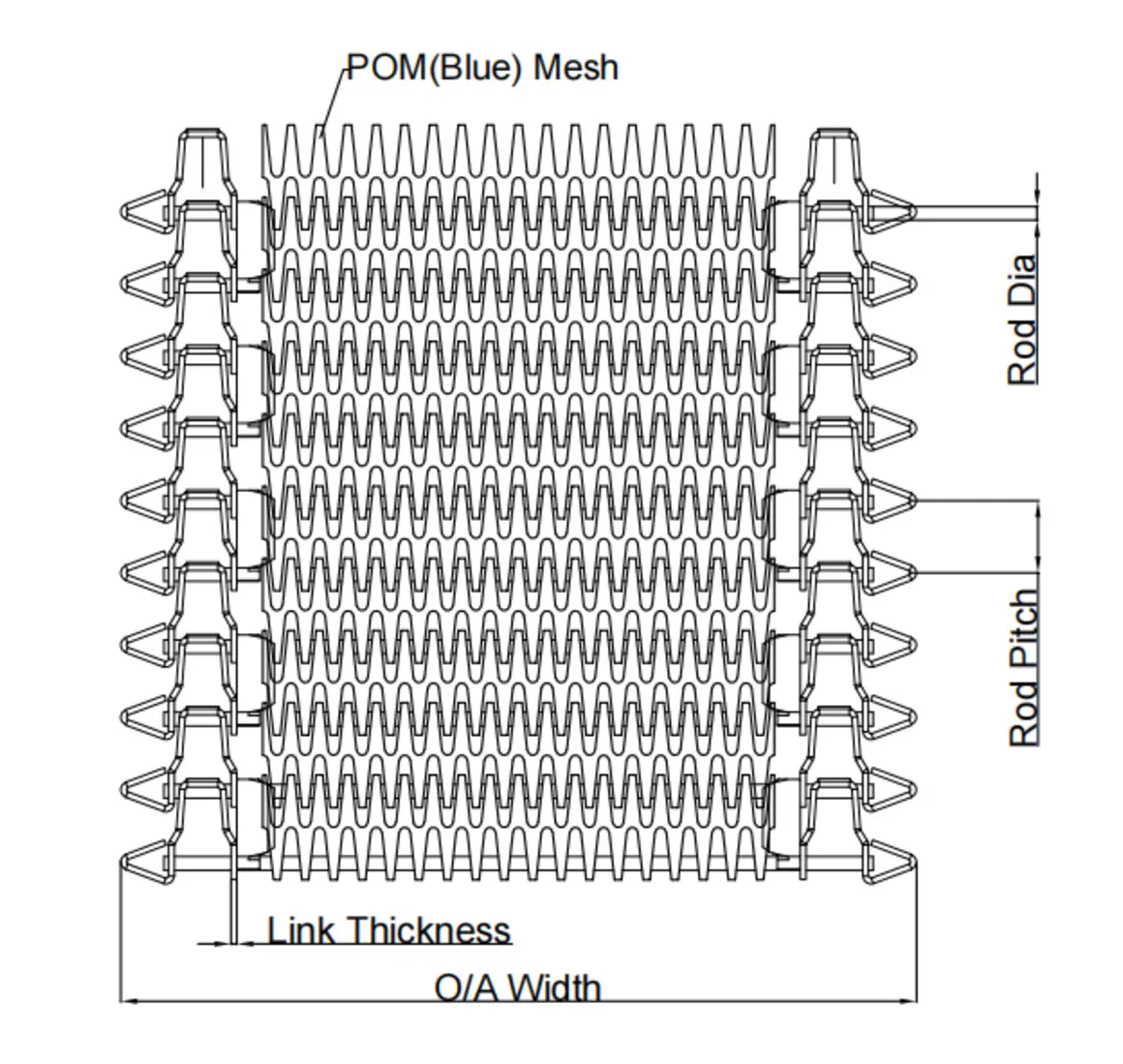
Side-driven belt · POM mesh
Side-driven belt with POM mesh, dimension drawing: rod diameter, rod pitch, link thickness and overall width
Drawing labelReference (mm / in)
Mesh materialPOM, grade confirmed for your temperature
Spiral pitch / wireNot applicable
Rod pitch31.75 / 34 mm (1.250 / 1.339 in)
Rod diameter6.0 mm (0.236 in)
O/A width300–1100 mm (11.81–43.31 in), custom widths
Turn ratioConfirmed per project against your drum
Metal partsSurface and welding confirmed per drawing

Use the drawing to tell us which dimensions you can measure. Final values follow the confirmed project drawing.

Choose your options

31.75 mm (1.250 in)
31.75 mm (1.250 in)
34 mm (1.339 in)
34 mm (1.339 in)

The pitch must match your sprockets — it is measured on your old belt first.

Measured a few dimensions? Send them for a side-driven belt review.

03
Fit check · turn ratio and pitch first

Will the New Belt Engage Your Sprockets and Turn on Your Drum?

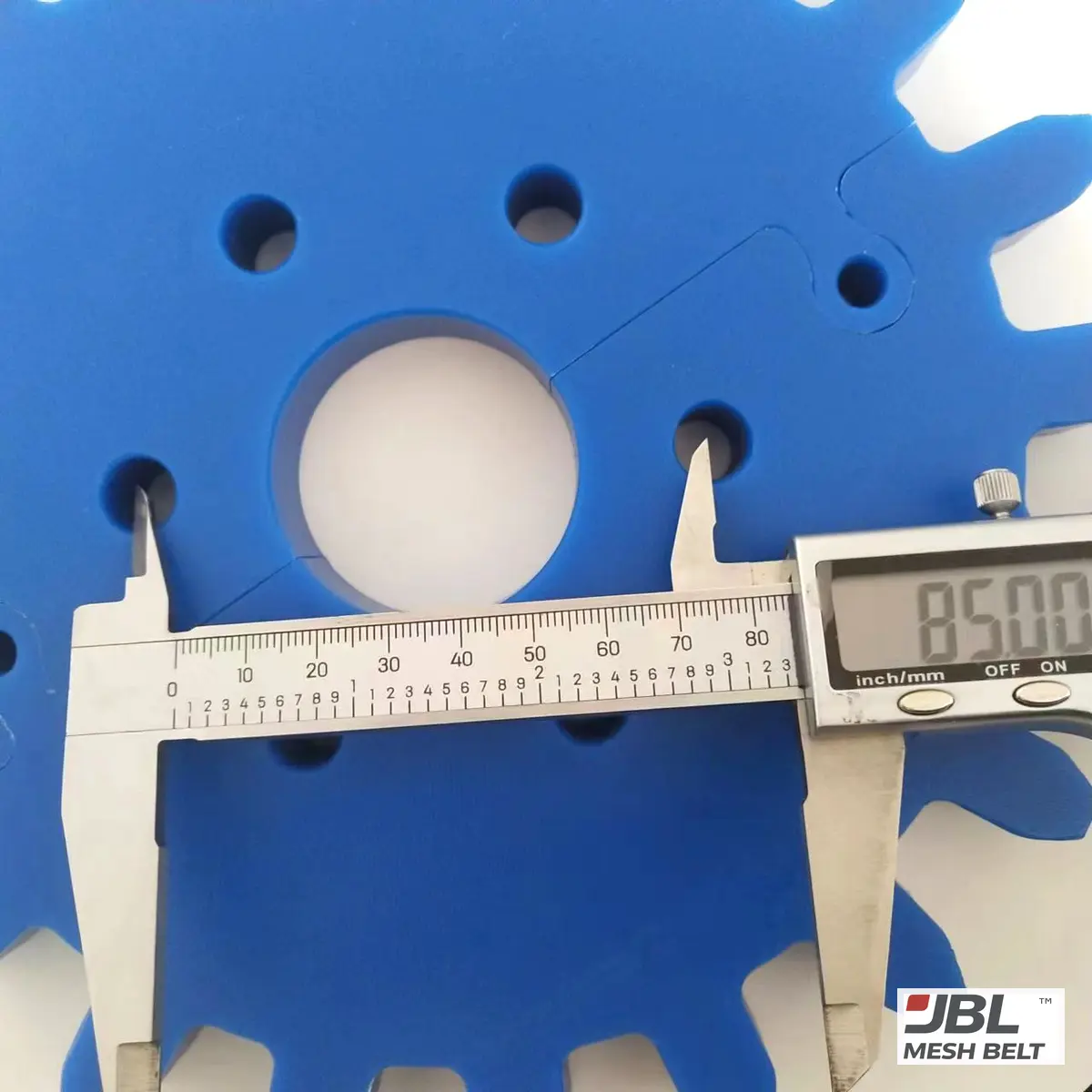
Same width is not enough. A side-driven belt is pulled by sprockets and turns around your drum, so rod pitch, turn ratio, drum diameter and sprockets are checked first — before you get a quotation.

Replacement

Replacing the belt on an existing side-drive spiral

You send
Photos of the old belt with a ruler, a sample section if possible, freezer model, drum diameter and operating temperature.
We check first
Rod pitch (31.75 or 34 mm), turn ratio against your drum diameter, side link and clip connection — measured on your old belt.
Your sprockets
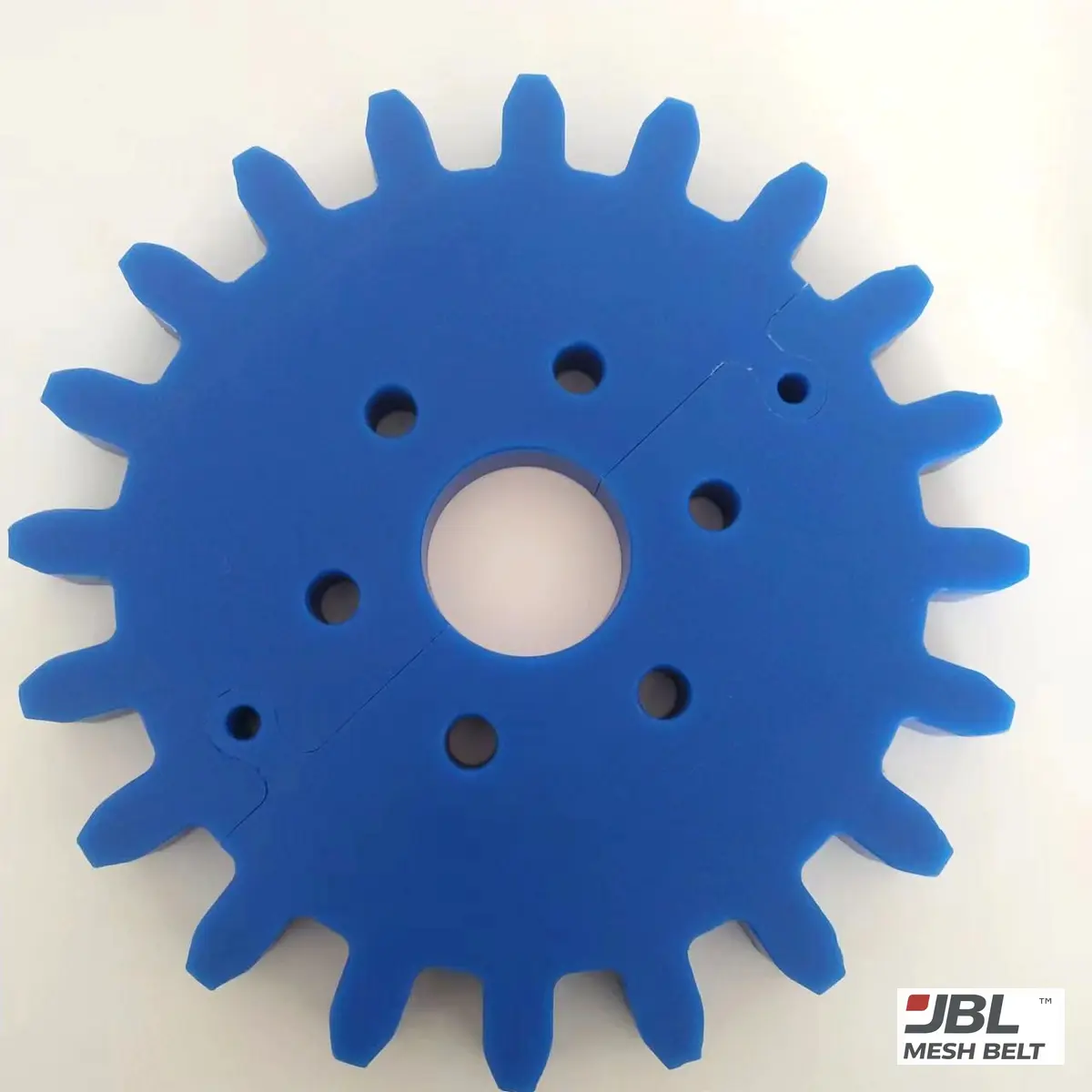
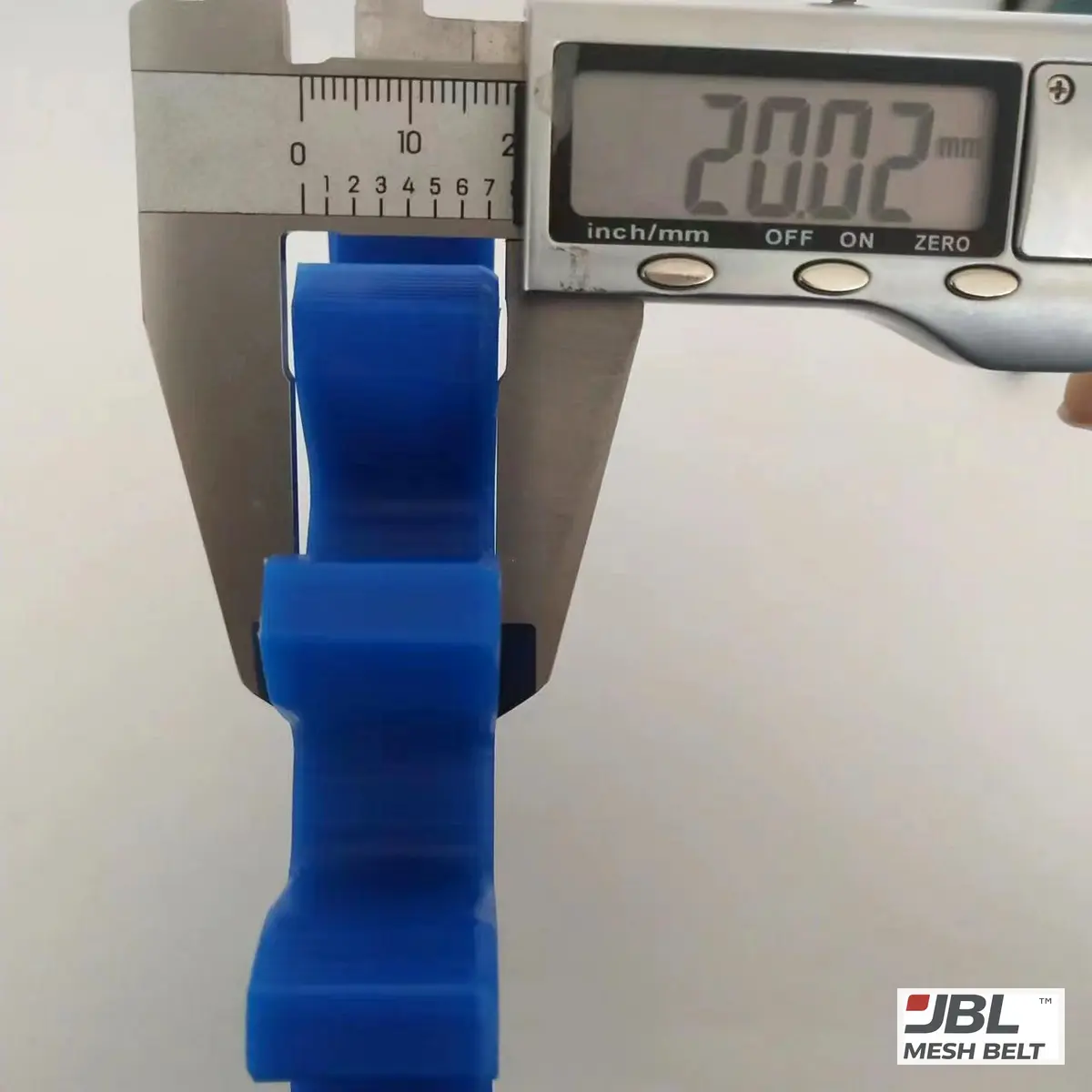
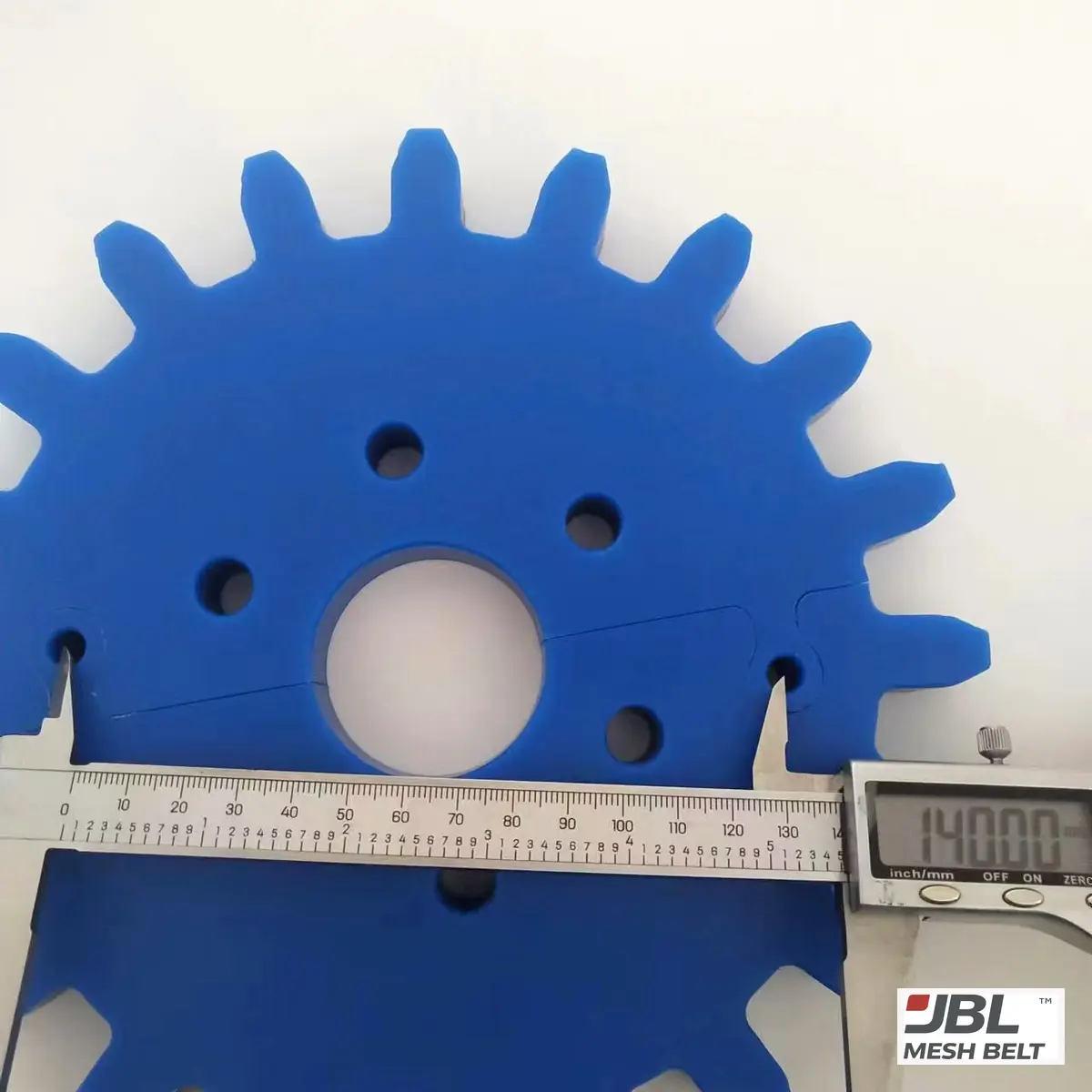
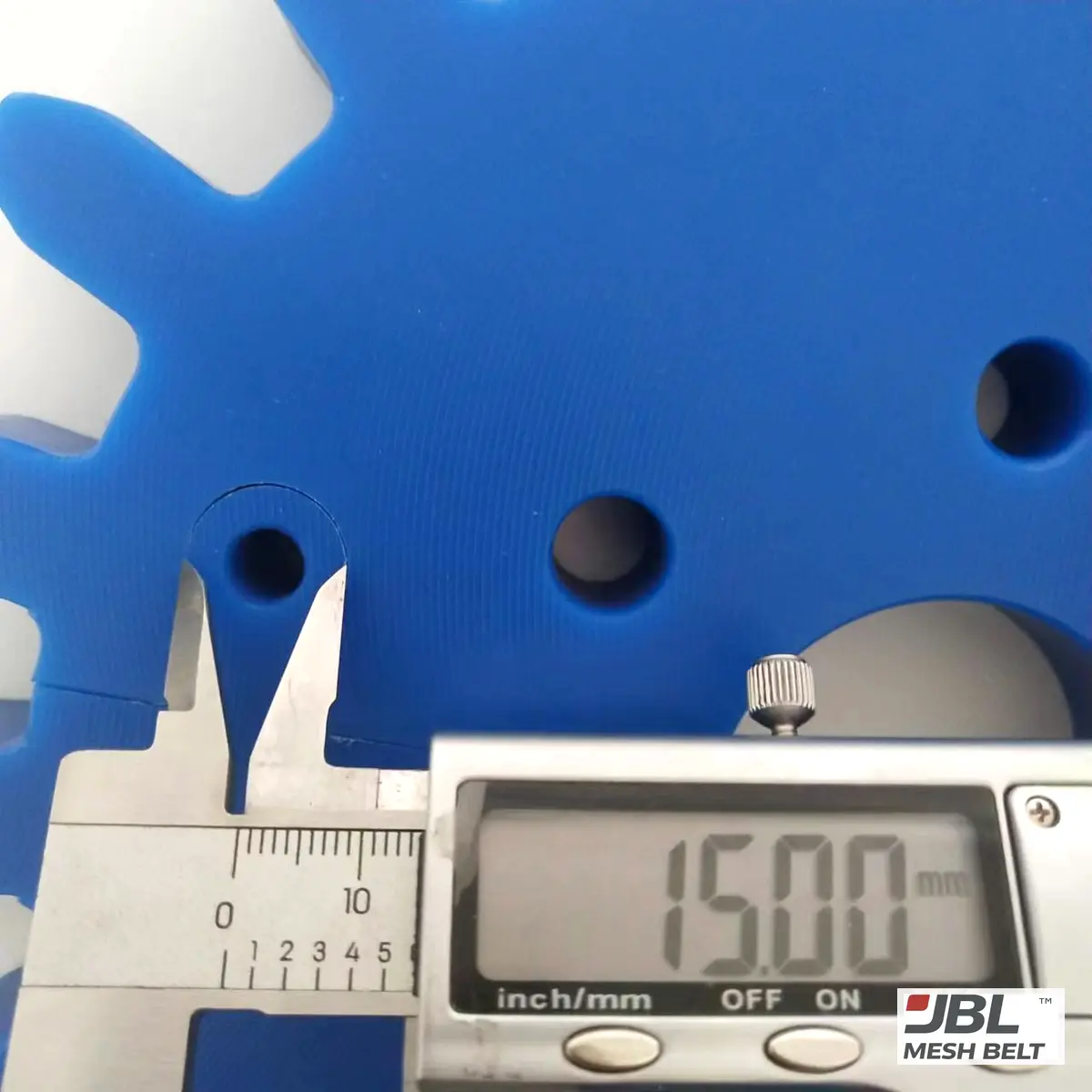
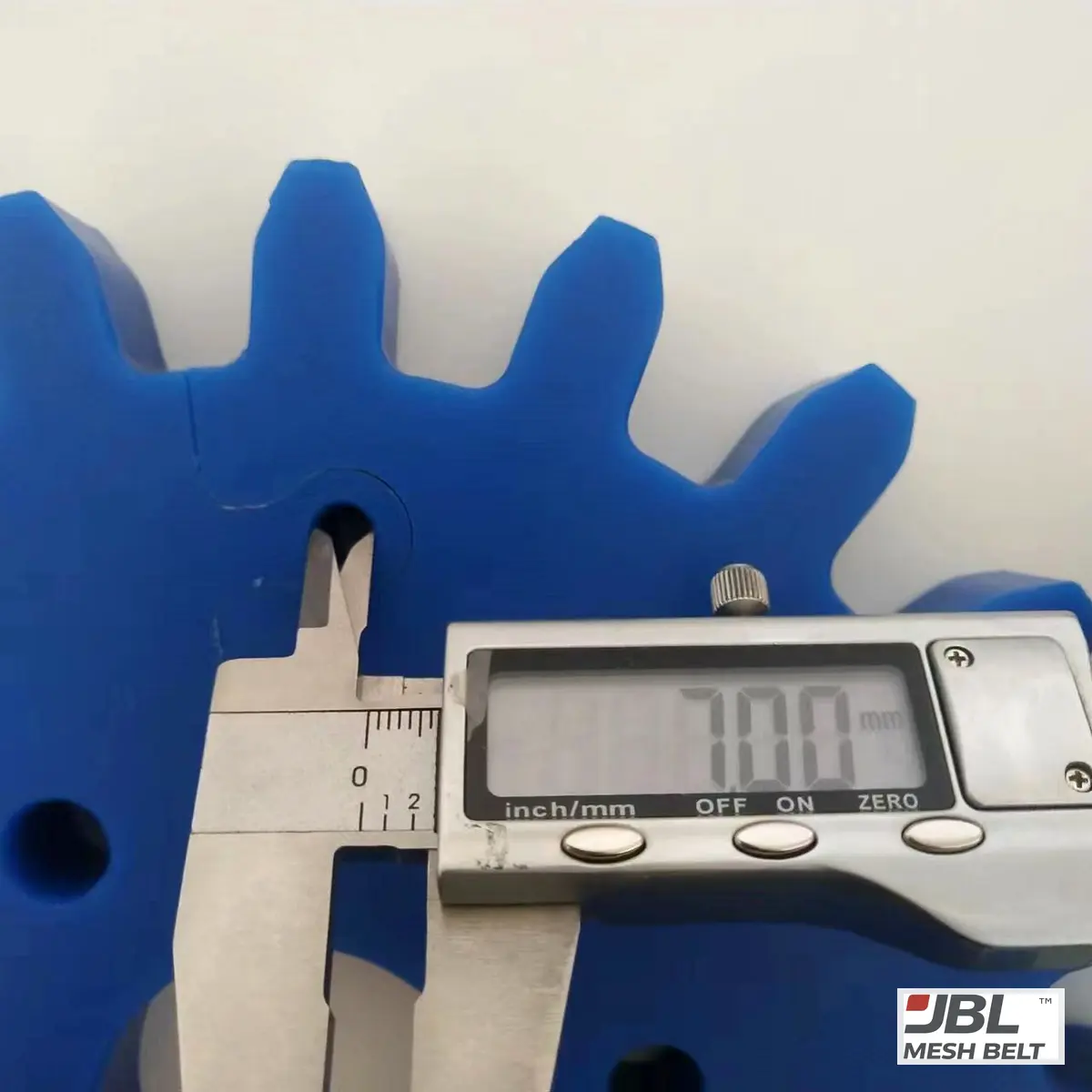
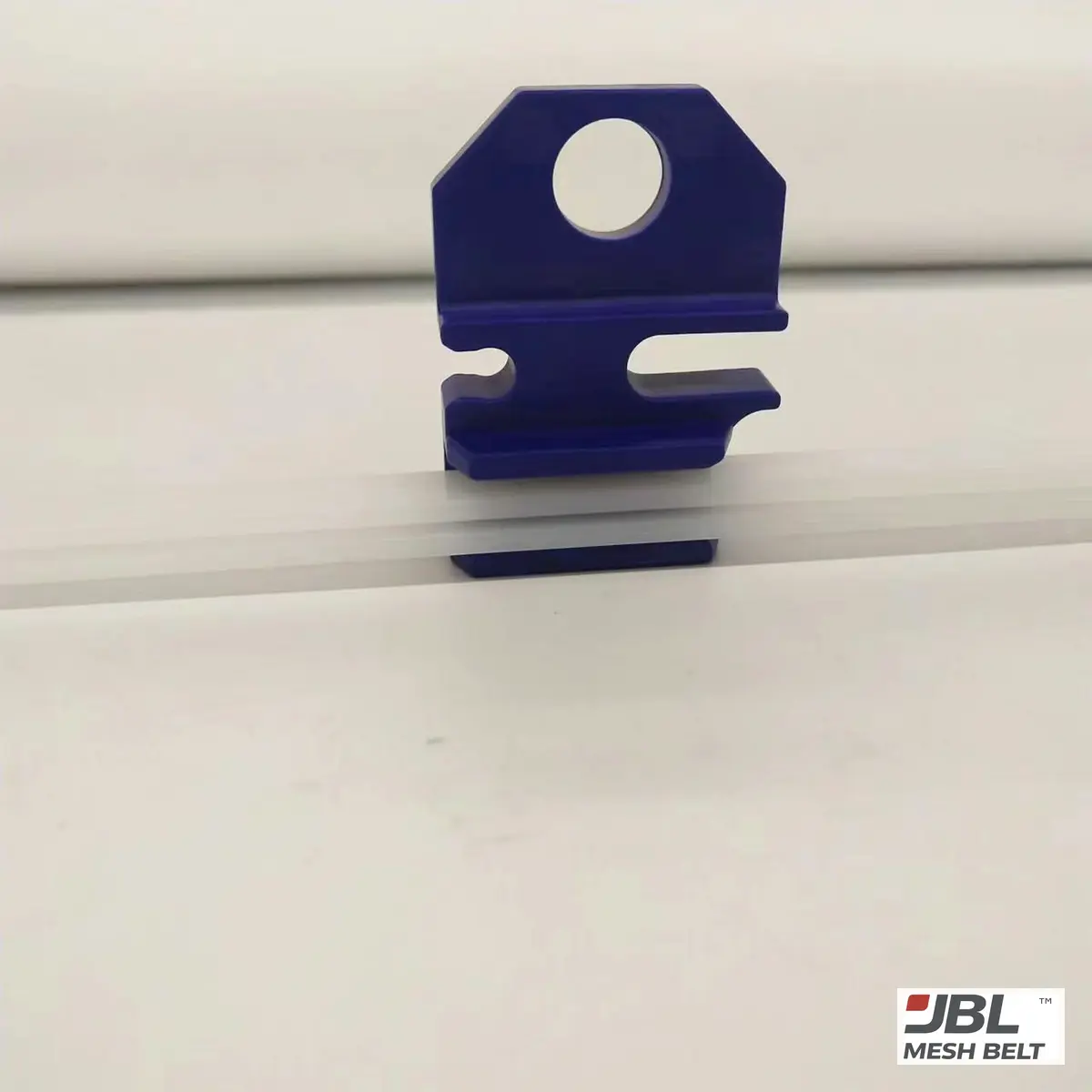
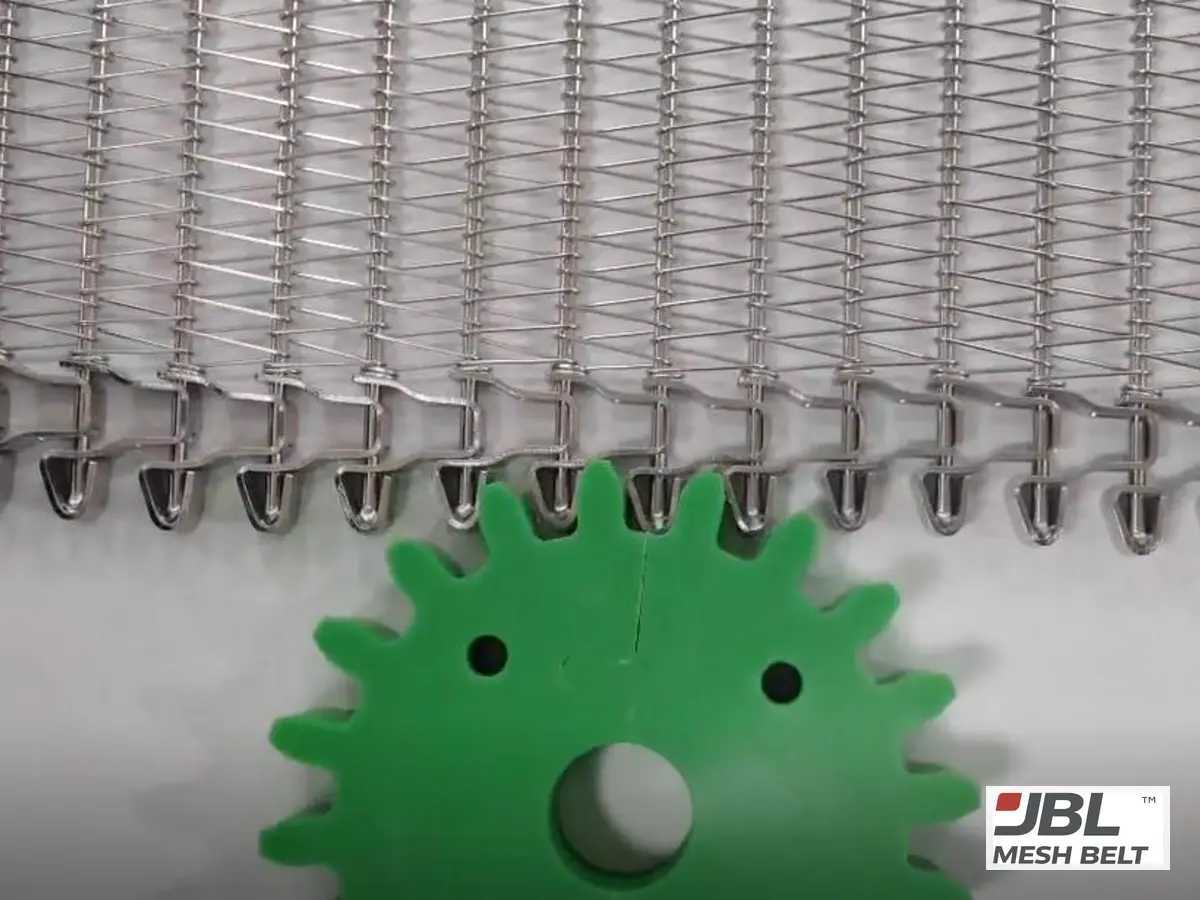
Pitch, tooth profile and wear checked. If they need replacing, UHMWPE sprockets are matched and run with the new belt.
You get
Before quoting: will it engage your sprockets and turn on your drum as it is, or does anything else need to change.
New project

Supplying a new side-drive spiral

You send
Drum diameter, belt width, turn radius, product, temperature and mesh preference.
We check first
Turn ratio for your drum and width, rod pitch, and stainless or POM mesh for your temperature.
Your sprockets
Supplied with the belt; pitch, tooth count, bore and keyway confirmed on the drawing.
You get
A confirmed drawing and a trial run you approve before production.
04
Project QC gates

How Is a Side-Driven Belt Verified Before Shipment?

Four checks that matter to you: pitch measured, tested on your drum diameter and turn ratio, run on its sprockets, and a sample kept for your re-order. You see photos and video before it ships.

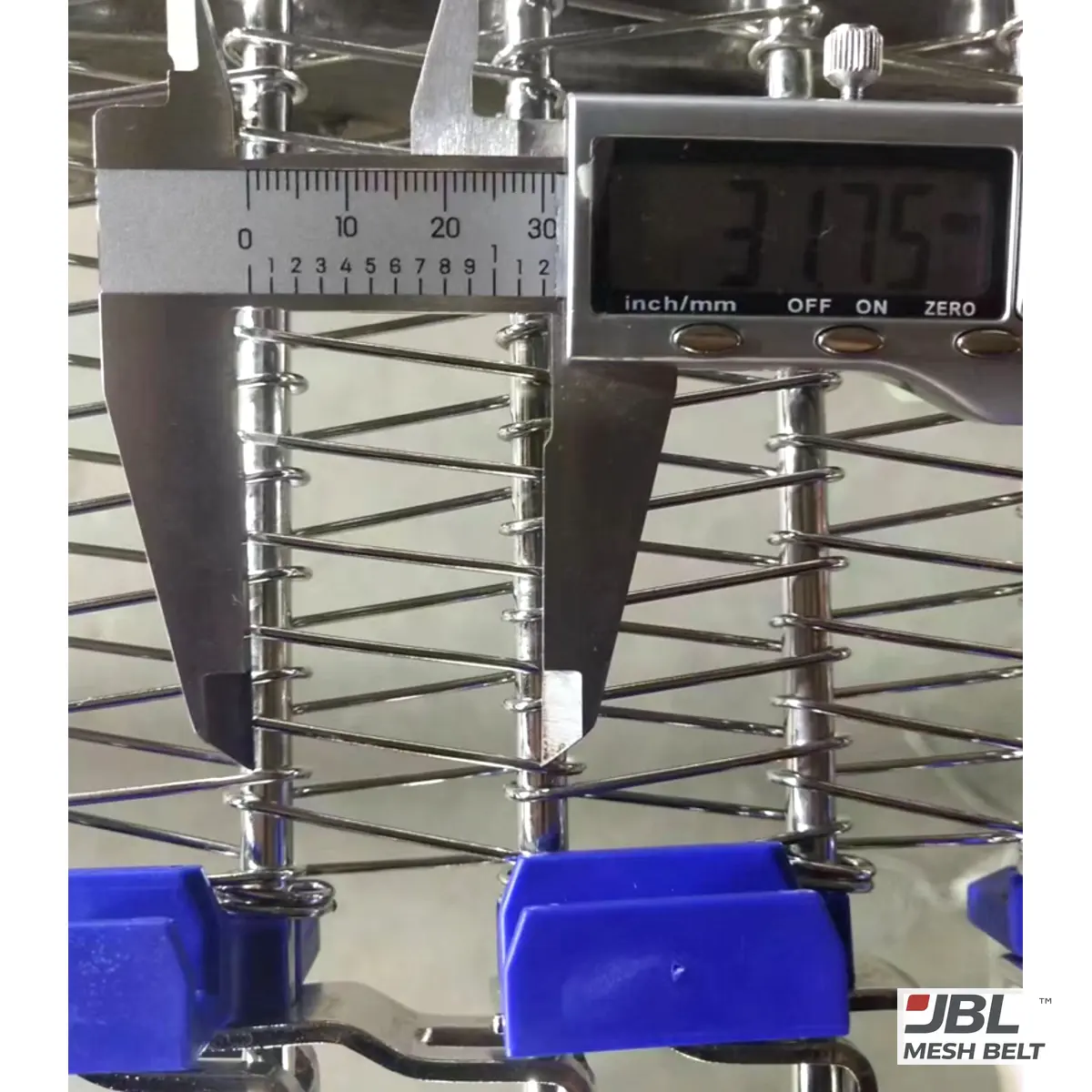
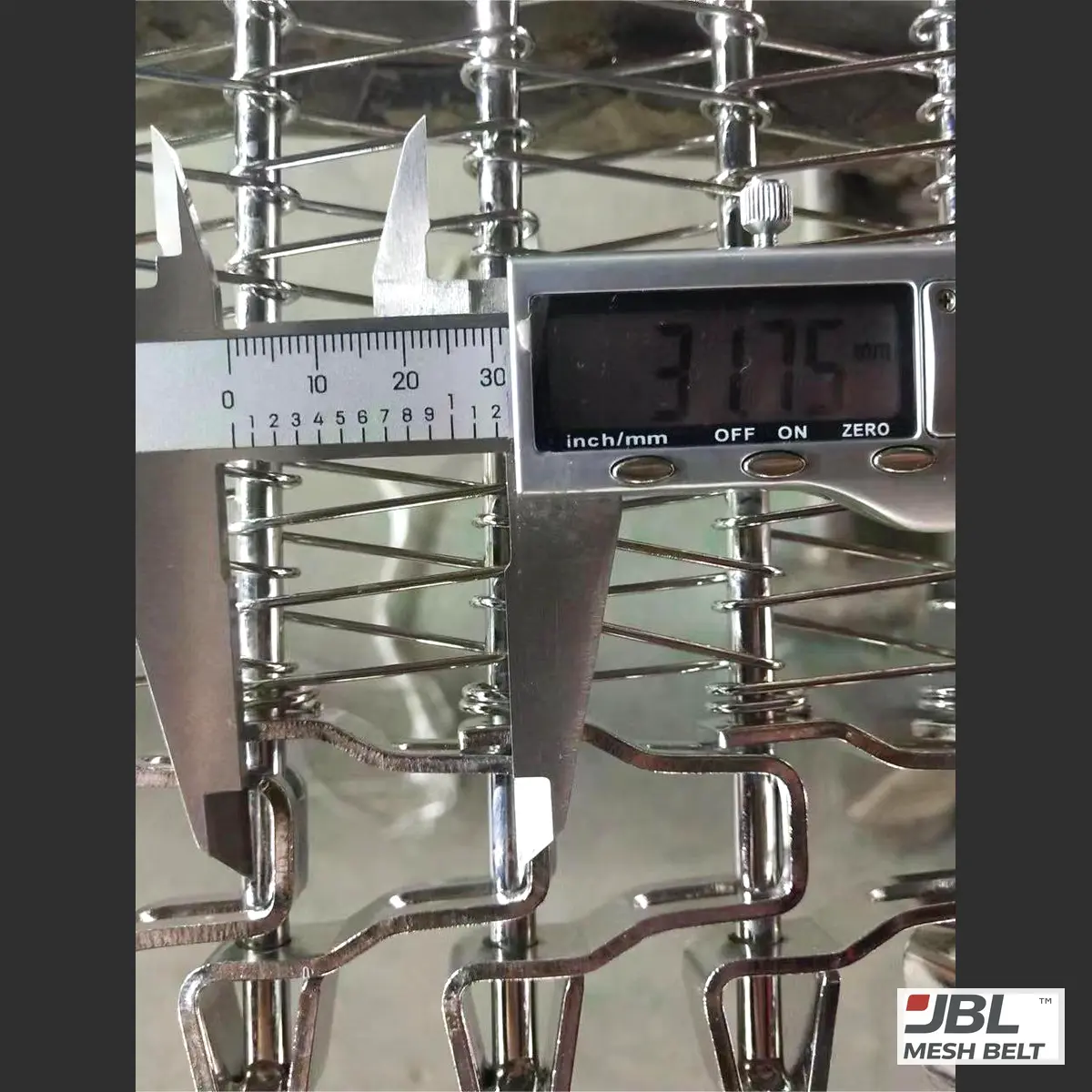
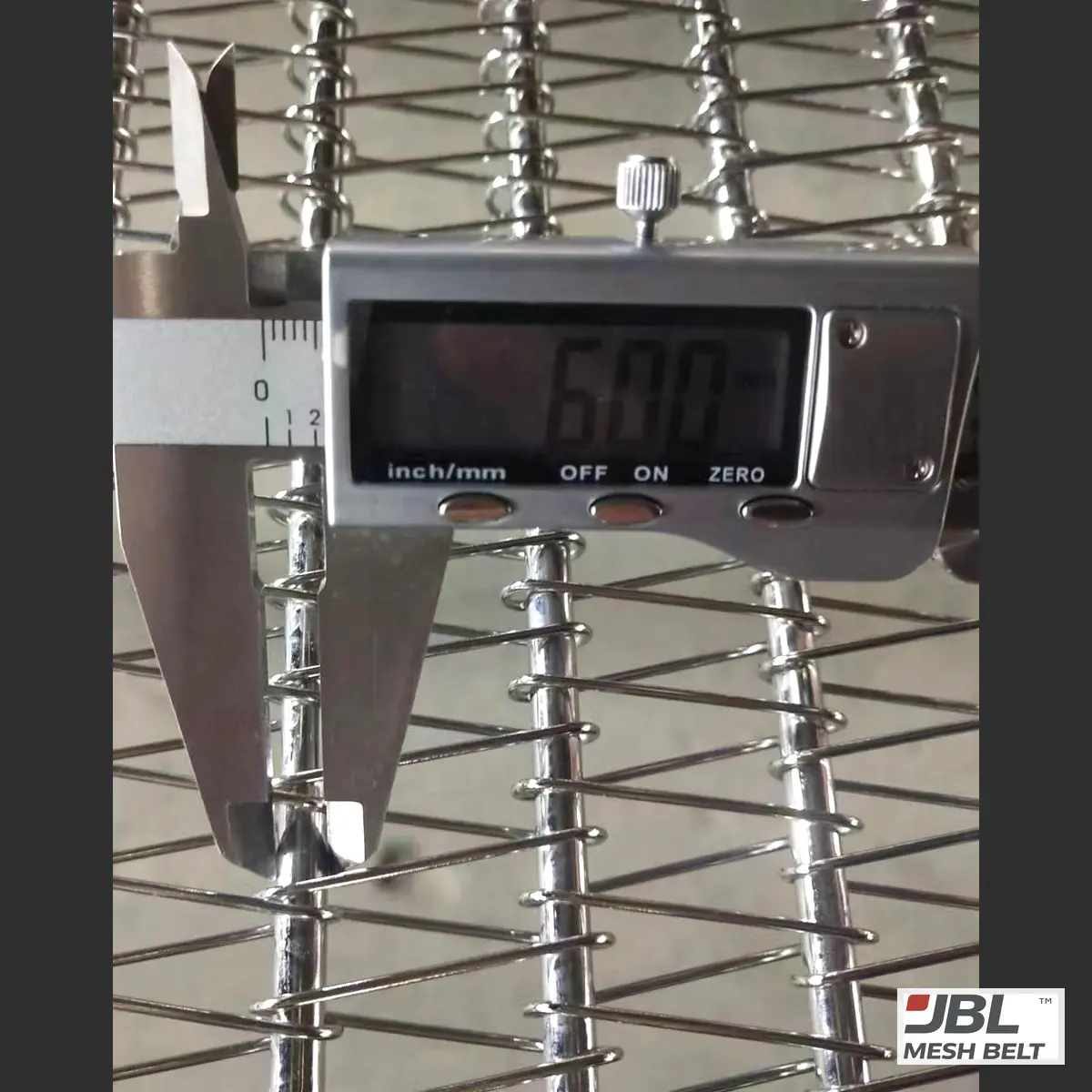
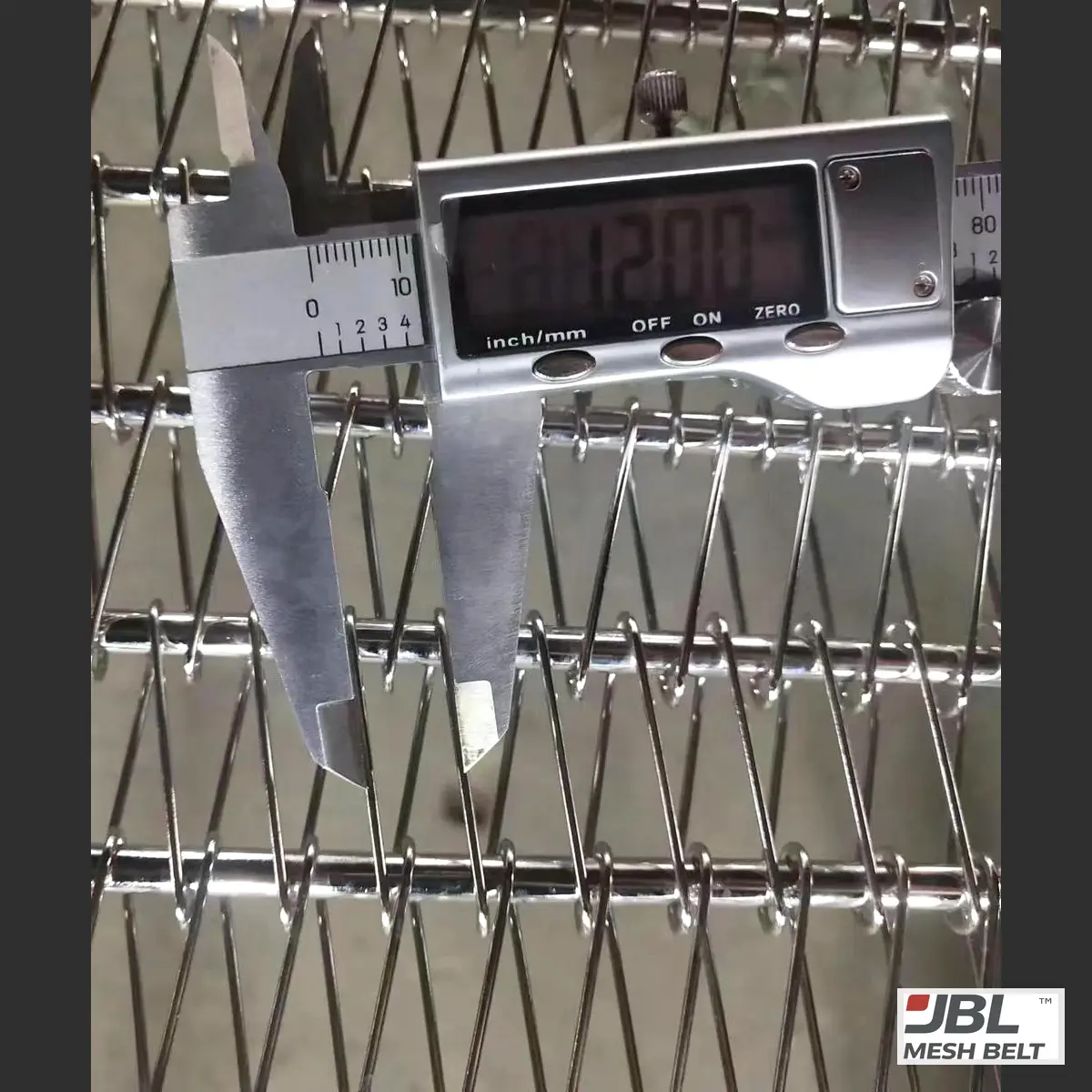
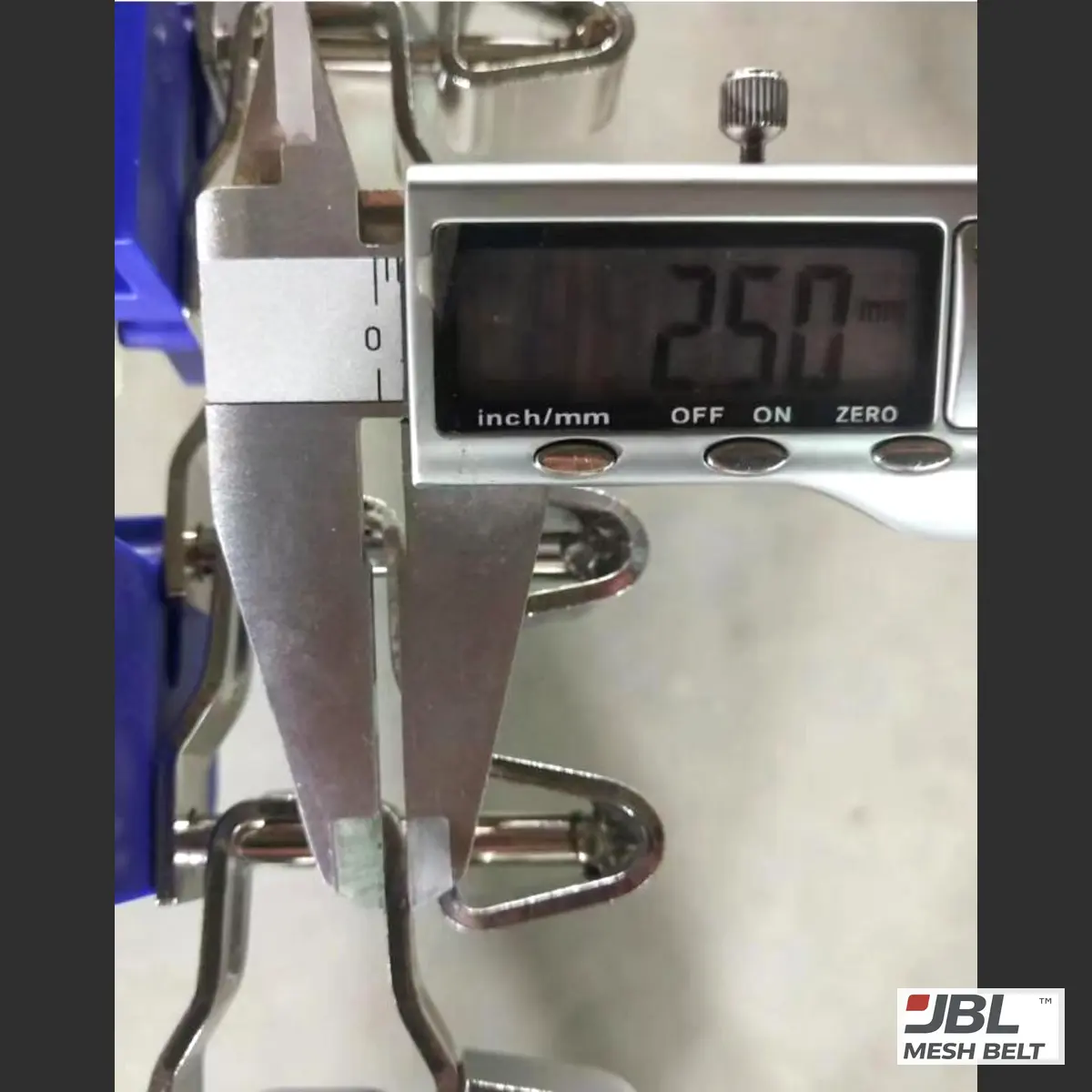
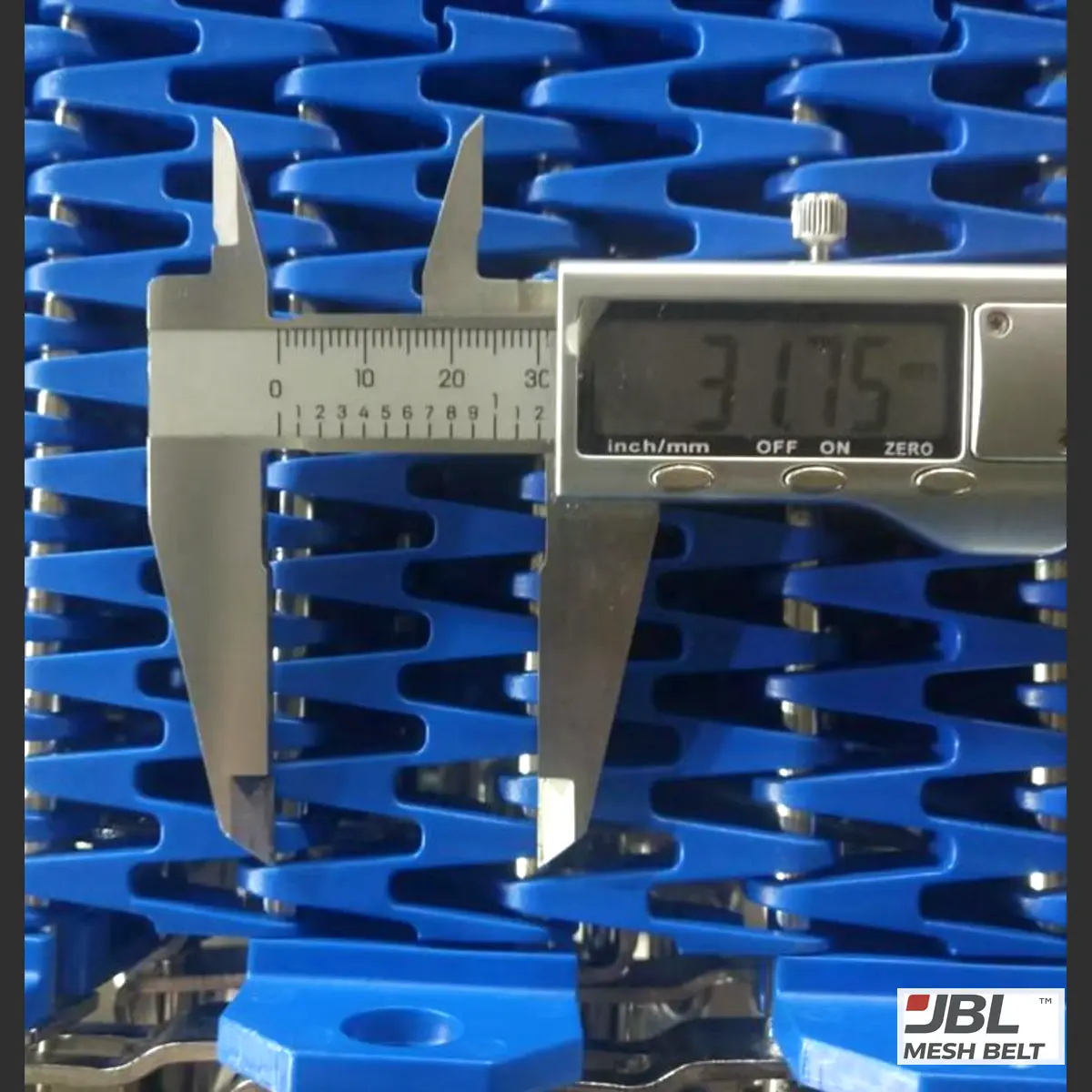
  1. Side-driven belt check: rod pitch 31.75 mm measured with a caliper
    01

    Pitch measured

    Rod pitch, rod diameter, spiral pitch, link thickness and width measured against your drawing.

  2. Side-driven belt check: drum diameter test, belt turned on a test drum
    02

    Drum and turn ratio tested

    The belt turns on a test drum matched to your drum diameter and turn ratio.

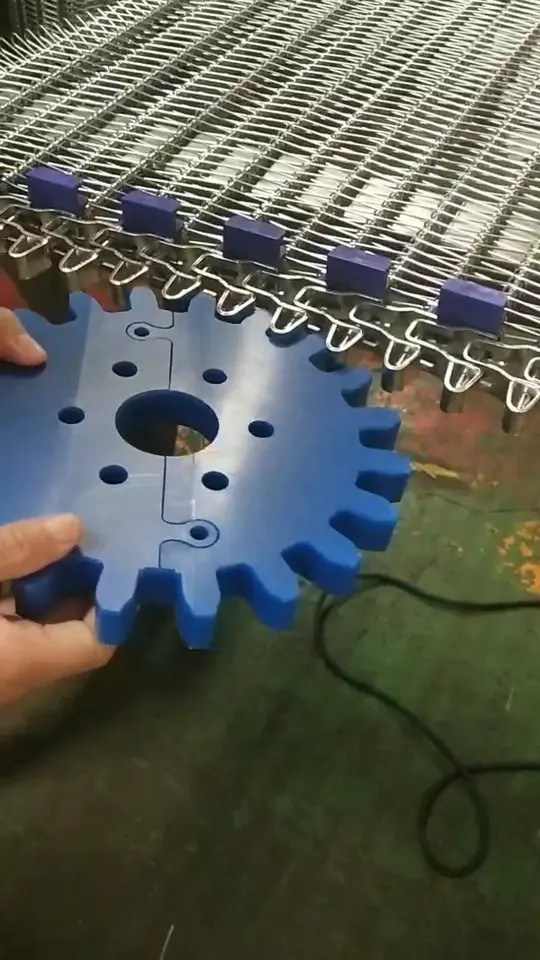
  3. Side-driven belt check: sprocket running test with the belt
    03

    Run on its sprockets

    The belt is run on sprockets to check engagement before packing.

  4. Side-driven belt check: sample section retained for the order
    04

    Sample kept, batch verified

    A sample is retained and the batch verified, so a re-order matches this one.

Also checked: material confirmed against your order · welds cleaned without arc residue · clip connections turn freely · photos and video sent before the crate is closed.

Belt and sprockets running test — real footage

See it run before it ships

Your belt is run on its sprockets so you can see the side links engage tooth by tooth. The video for your order is sent before the crate is closed.

05
Engineering experience

Problems You May See on a Side-Driven Belt — and How They Are Prevented

Arc residue that scratches your equipment, uneven polishing, broken clips or a wrong pitch means a stopped spiral and downtime on your line. Each one has a check before your belt ships.

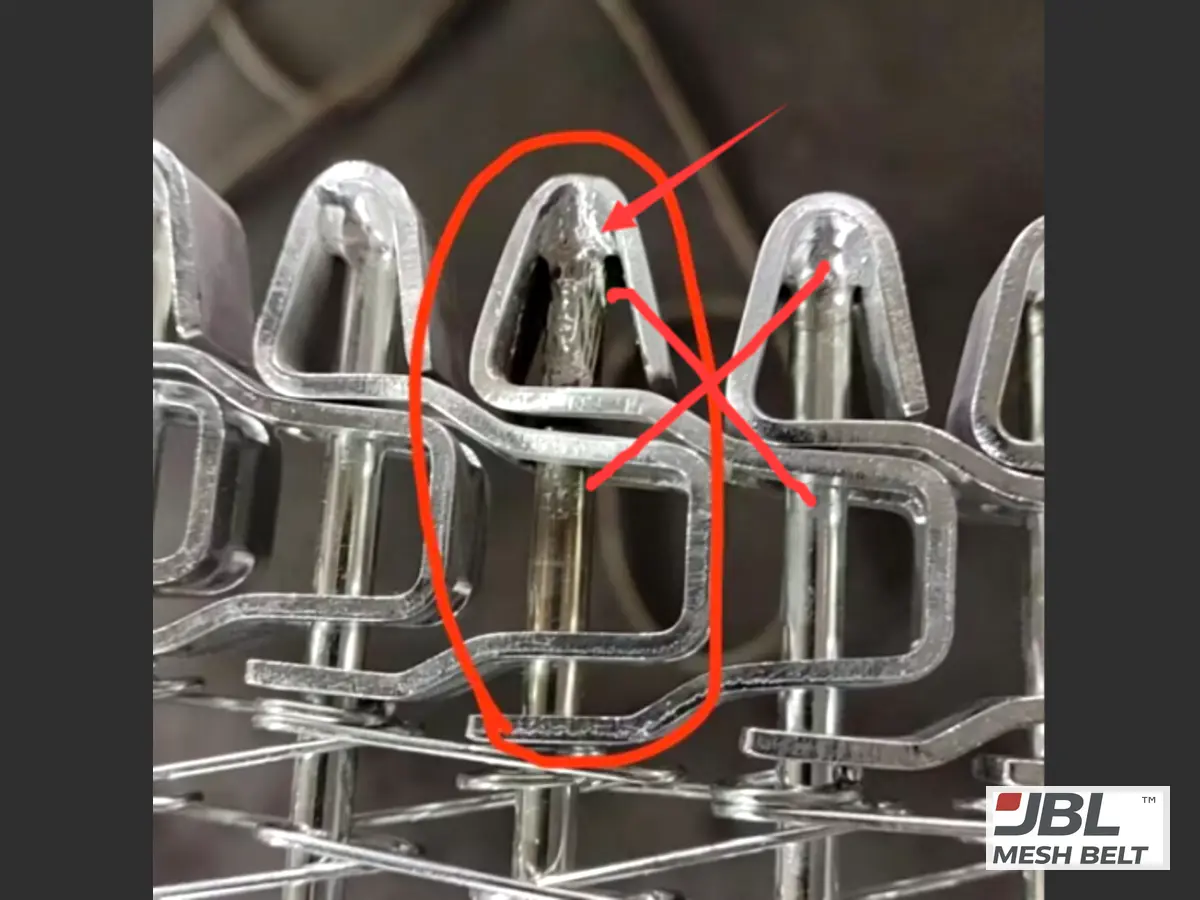
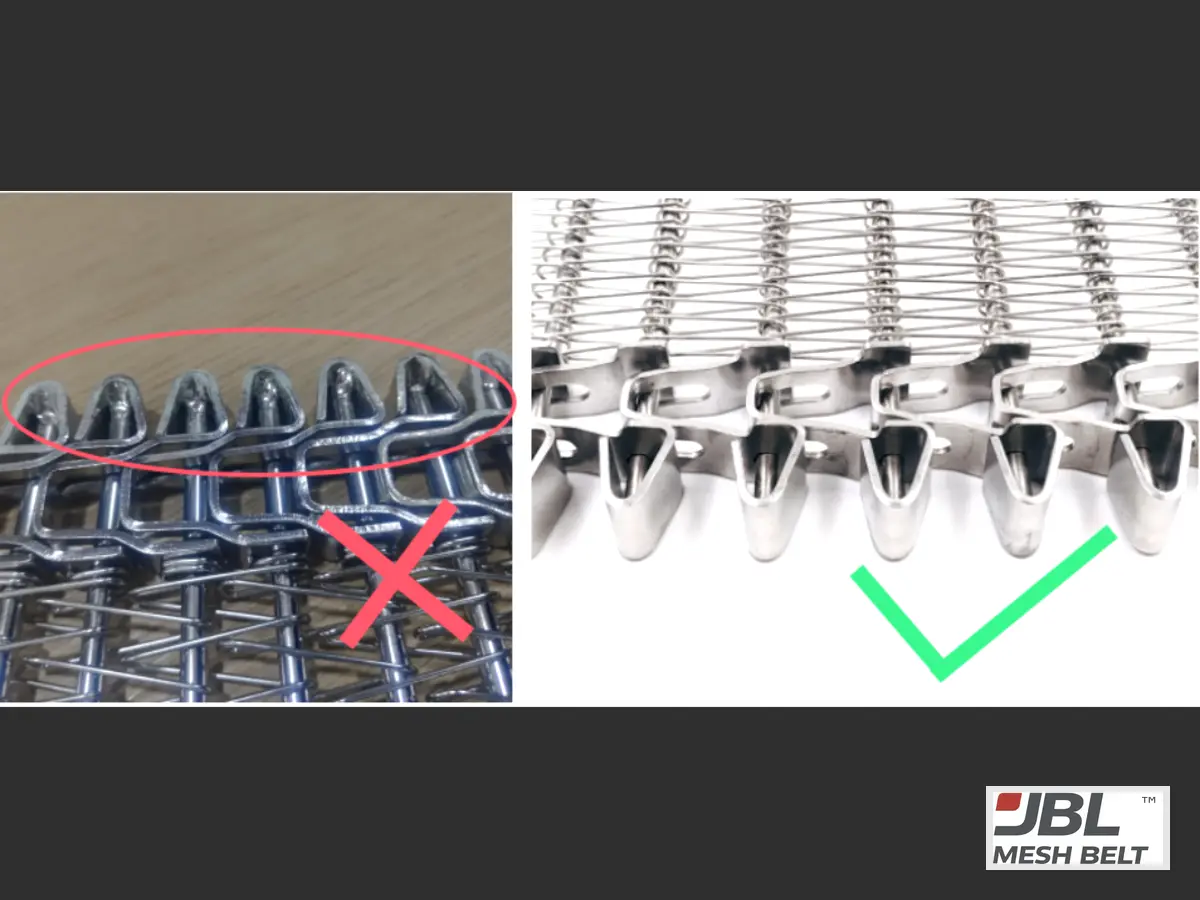
Side-driven belt: arc residue at the weldProblem

Arc residue at the weld

Sharp arc residue left where the side link is welded (circled) — it scratches the equipment and product as the belt runs.

✓ Welds cleaned with a weld-cleaning machine, never ground with a drill; each weld point checked by eye and hand.

Seeing this on your belt? Send a photo →
Side-driven belt: green marks after electropolishingProblem

Green marks after electropolishing

Uneven polishing leaves green marks along the edge (left). A correct finish is even, with no marks (right).

✓ Edges and surface checked section by section in daylight; marked sections are re-polished before shipment.

Seeing this on your belt? Send a photo →
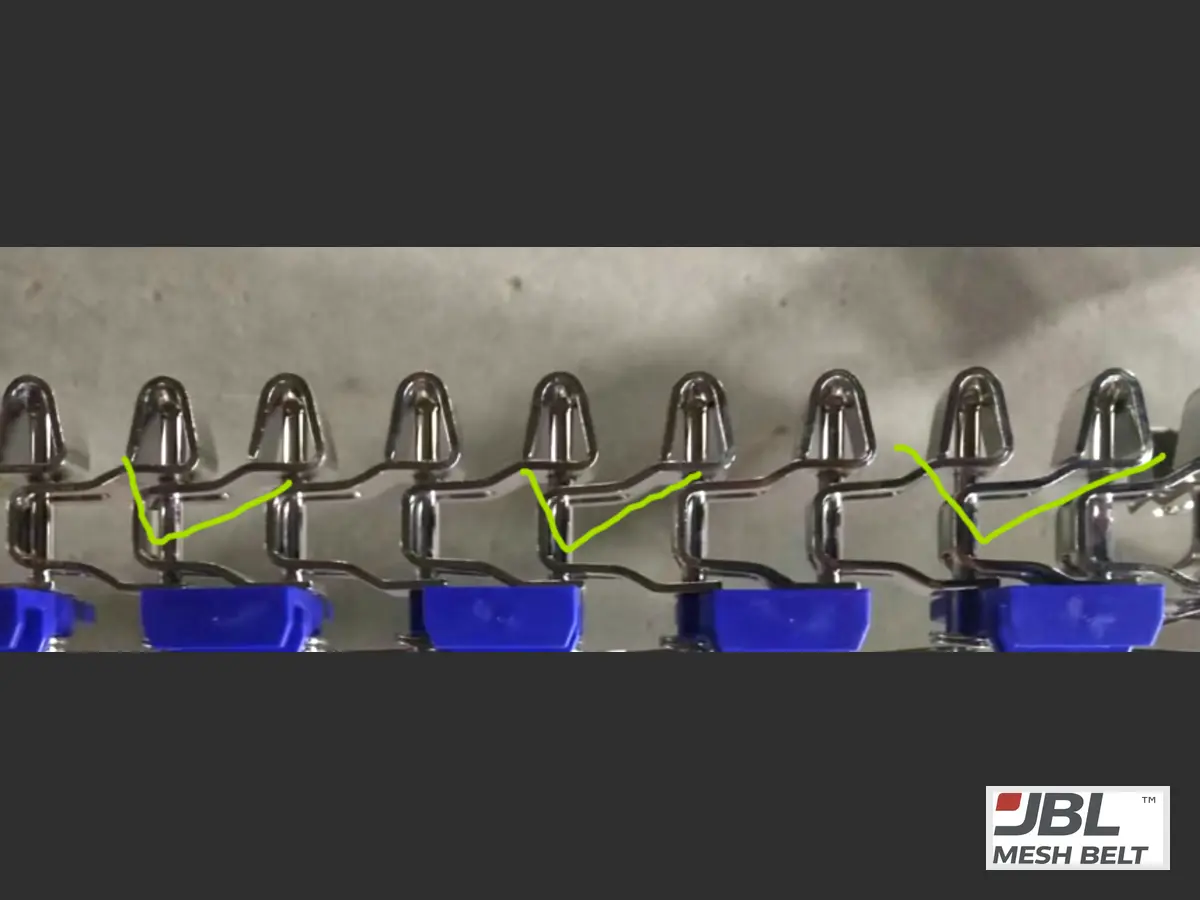
Side-driven belt: clips broken in transitReference

Clips broken in transit

Belts with clip connections packed flat can break clips on the way. Correct: clips fully seated, no play (marked).

✓ Clip connections checked for fit and free movement; clip belts are rolled, not laid flat.

Seeing this on your belt? Send a photo →
Problem

Wrong pitch or turn ratio

31.75 and 34 mm look alike, and the same width can have a different turn ratio — the sprockets do not engage, or the belt rides up on the drum.

✓ Pitch measured on your old belt; turn ratio checked against your drum diameter; drum and sprocket tests before shipment.

Seeing this on your belt? Send a photo →
06
Shipment records

What Arrives at Your Plant

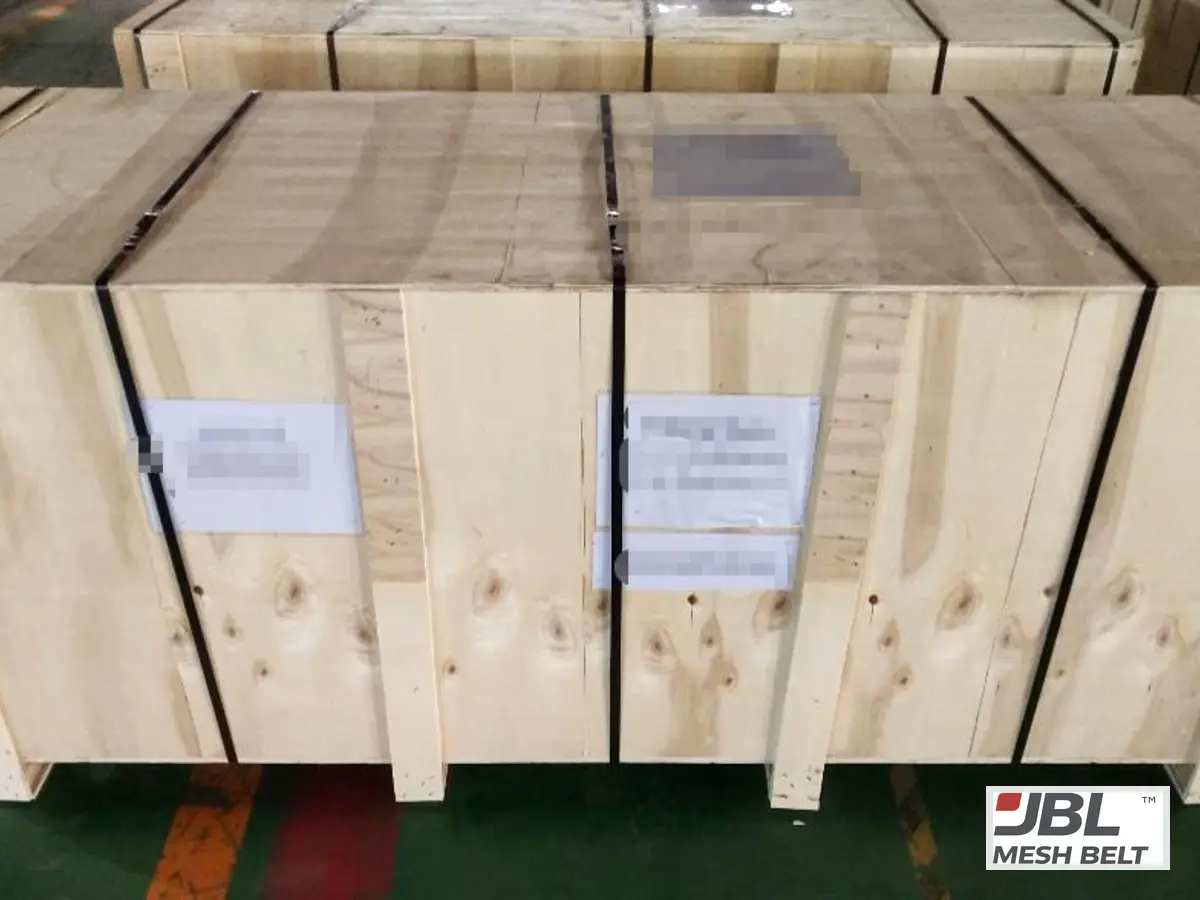
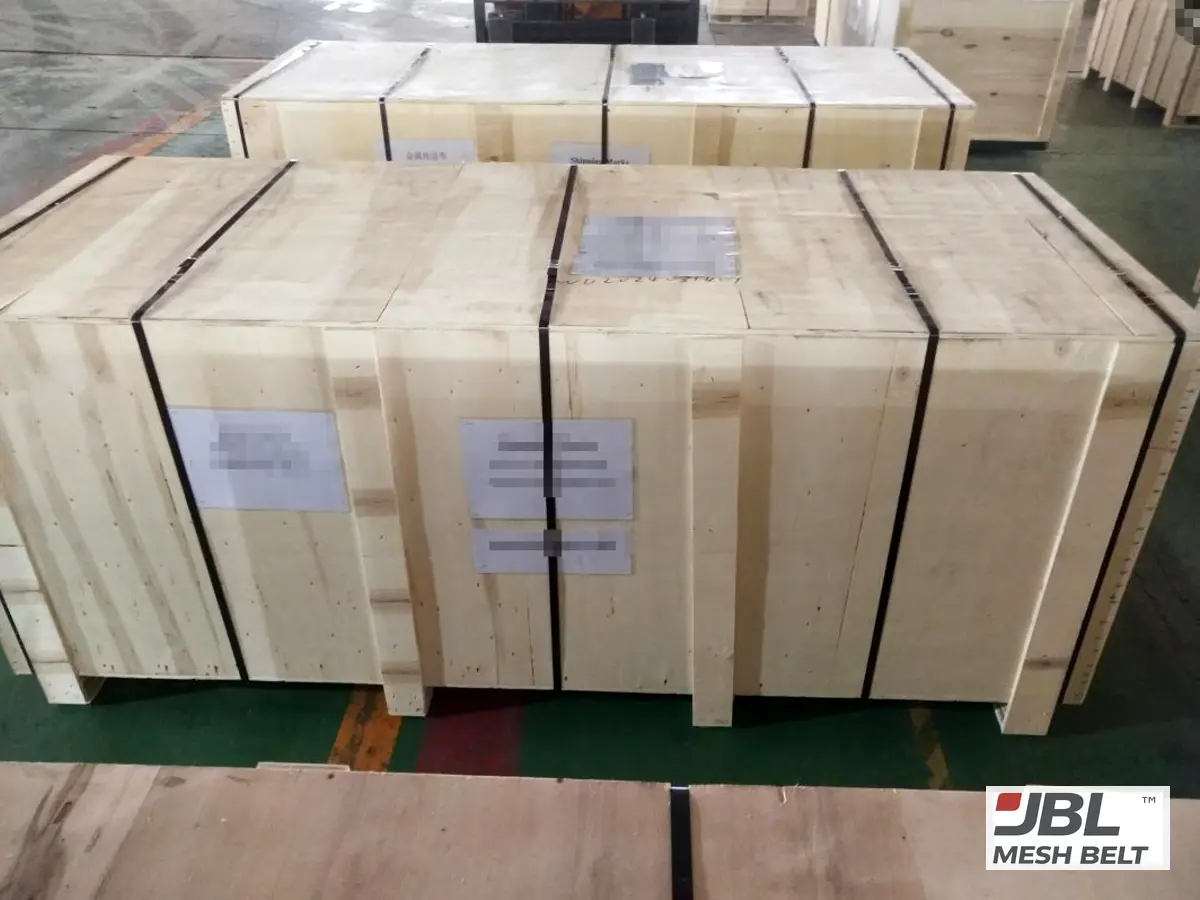
Belts with clip connections arrive rolled, others laid flat — in strapped, labelled export crates, closed after you have seen the photos and video. Real shipments; order numbers hidden.

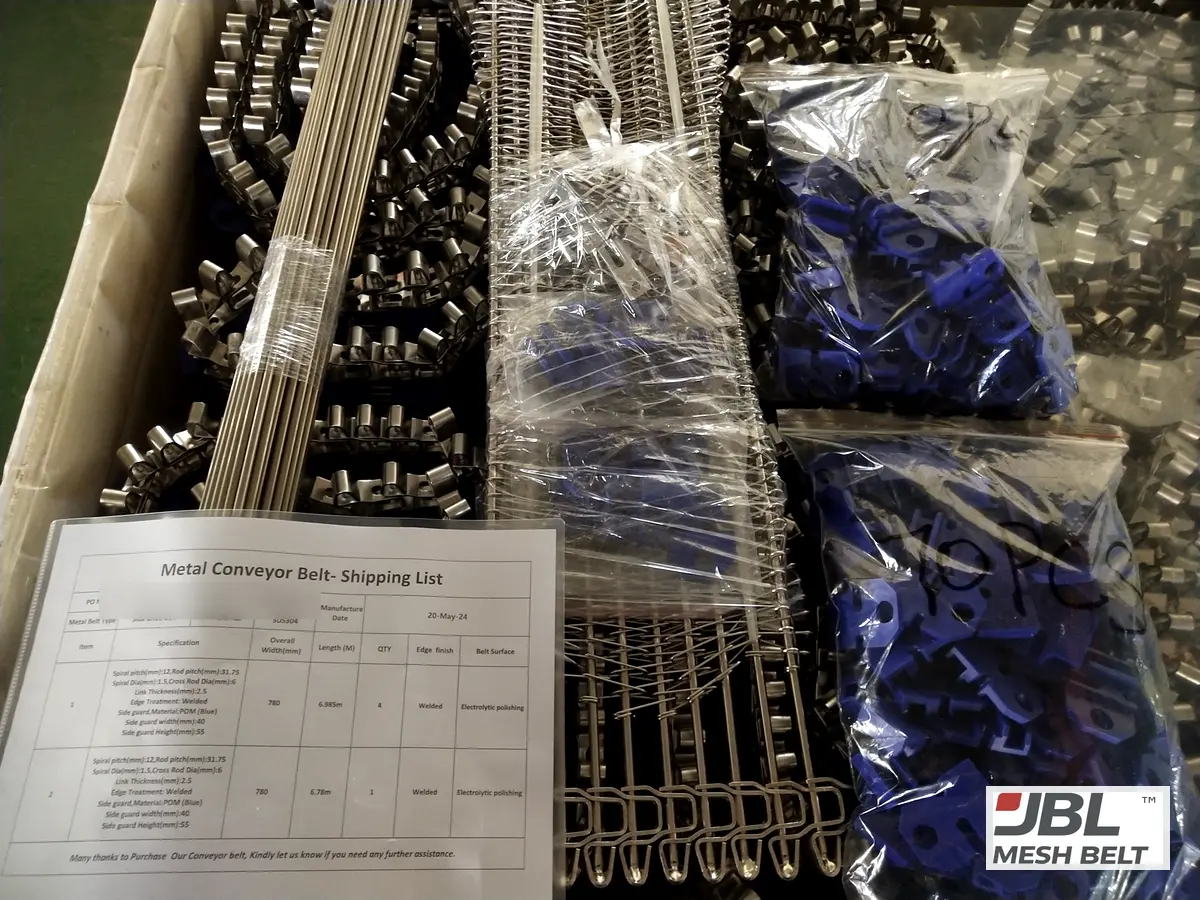
Side-driven belt shipment: shipping list in the crate

Shipping list in the crate

Pitch, wire, rod, width, length and surface — wear strips and spare rods packed and counted.

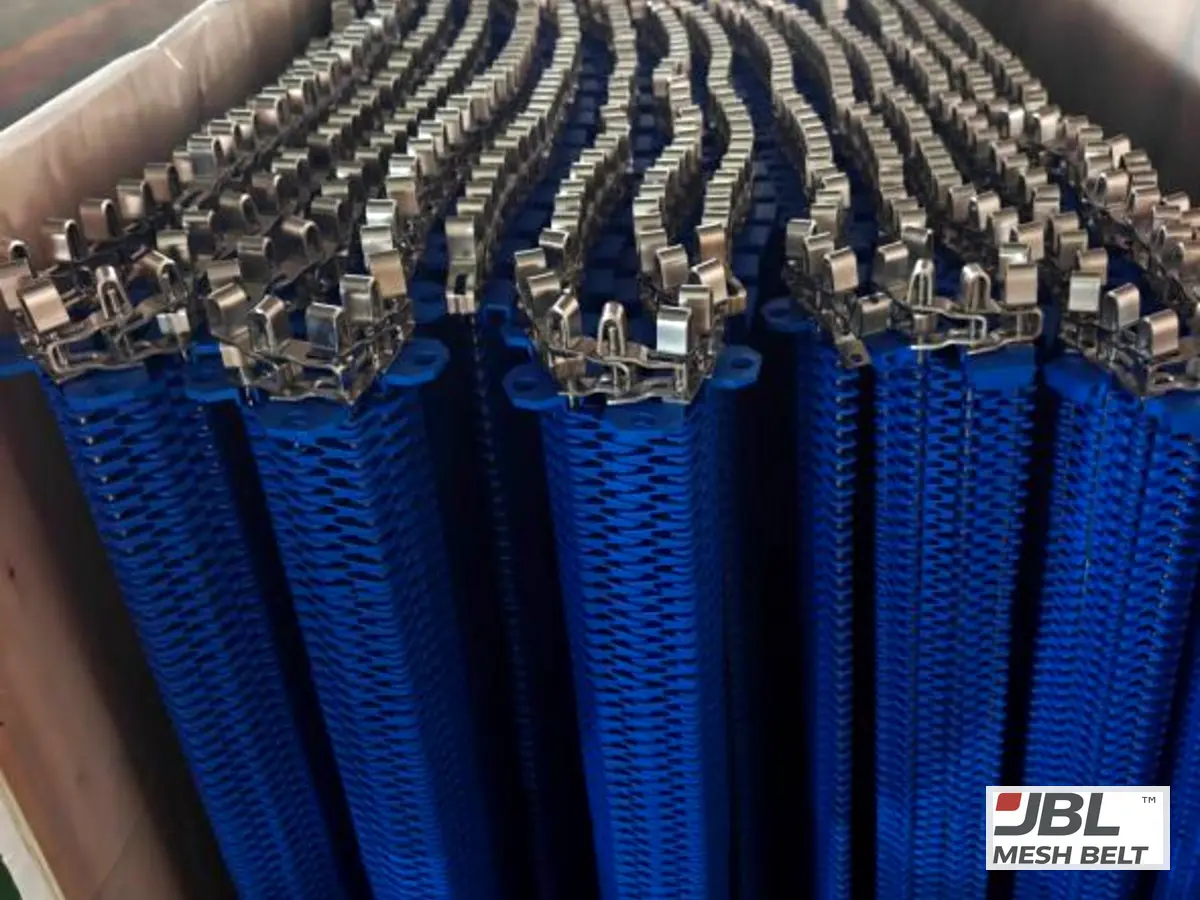
Side-driven belt shipment: rolled for packing

Rolled for packing

Belts with clip connections are rolled.

Side-driven belt shipment: export crates

Export crates

Strapped and labelled for checking on arrival.

Side-driven belt shipment: ready to ship

Ready to ship

Closed after you have seen the photos and video.

Need a different width, pitch, mesh or sprocket?

Custom side-driven belts are welcome — built to your spiral and application, with feasibility confirmed for your project. Send your old belt photos or drawing.

Contact an Engineer →
07
FAQ

Questions Buyers Ask Before Ordering a Side-Driven Belt

Q1What is a side-driven belt?

A spiral belt driven from its side links by sprockets, used in side-drive spiral freezers and coolers. The mesh can be stainless steel spiral wire or POM, on 6.0 mm rods at a 31.75 or 34 mm rod pitch.

Q231.75 mm or 34 mm pitch — why must it match?

The rod pitch must match your sprockets. With the wrong pitch the sprocket teeth do not engage the belt. Your existing pitch is measured first and confirmed on the drawing.

Q3What is turn ratio, and why must a new belt match it?

Turn ratio describes how tightly the belt turns around the drum relative to its width. If it does not match your system, the belt will not turn correctly on your drum. It is confirmed per project against your drum diameter and belt width.

Q4Stainless steel or POM mesh?

Stainless steel spiral mesh (SUS304 / SUS316) is the usual choice; POM mesh is used where the project calls for a plastic surface. Both run on the same stainless side links and 6.0 mm rods.

Q5Can POM mesh be used in a freezer?

Only with a POM grade suited to your operating temperature. Standard POM is not suitable for freezing; a low-temperature grade is selected and confirmed in writing for your project.

Q6Can you replace a side-driven belt without the original drawing?

Yes. Photos and basic dimensions support an initial review and indicative quotation; the formal specification is confirmed on a sample of your old belt, together with your drum diameter and sprocket details.

Q7Do I need new sprockets?

Not always. Your existing sprockets are checked first for pitch, tooth profile and wear. UHMWPE sprockets can be supplied with the belt — tooth count, bore, keyway and mounting confirmed per drawing — and are run with the belt before shipment.

Q8How is the belt checked before it ships?

Rod pitch, rod diameter, spiral pitch, link thickness and width are measured; the belt is turned on a test drum matched to your drum diameter and run on its sprockets; a sample is retained and the batch verified. Photos and video are shared before shipment.

Q9How is a side-driven belt packed?

Belts with clip connections are rolled; others are laid flat. Both are packed in strapped, labelled export crates, closed after you have seen the photos and video.

Q10How are commercial terms confirmed?

They depend on the belt and the project, and are confirmed in writing in the quotation.
Evidence

Real Projects and Videos for This Belt

Real JBL projects with this belt type — measured, sampled, tested and shipped — and videos of the belts running or checked before shipment.