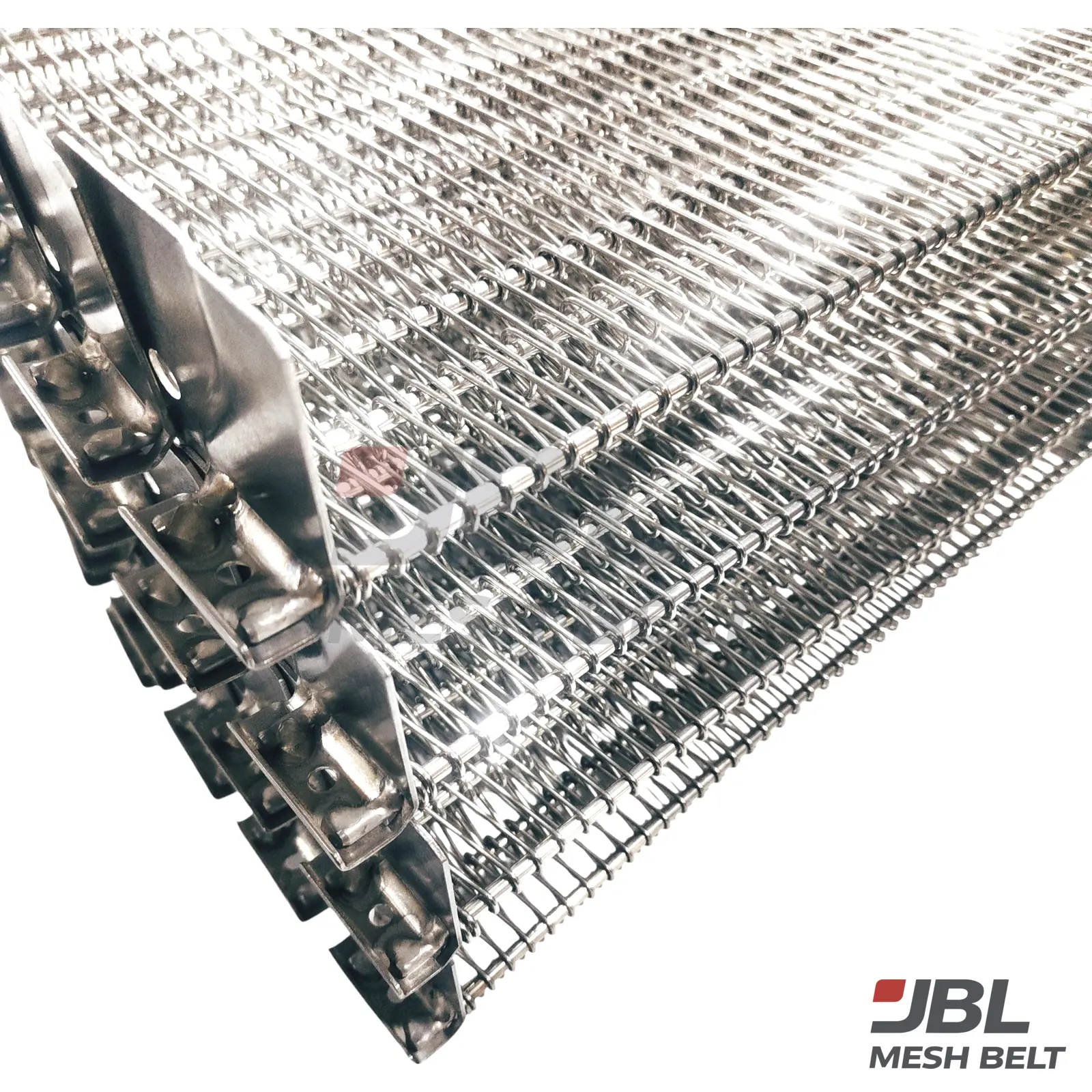
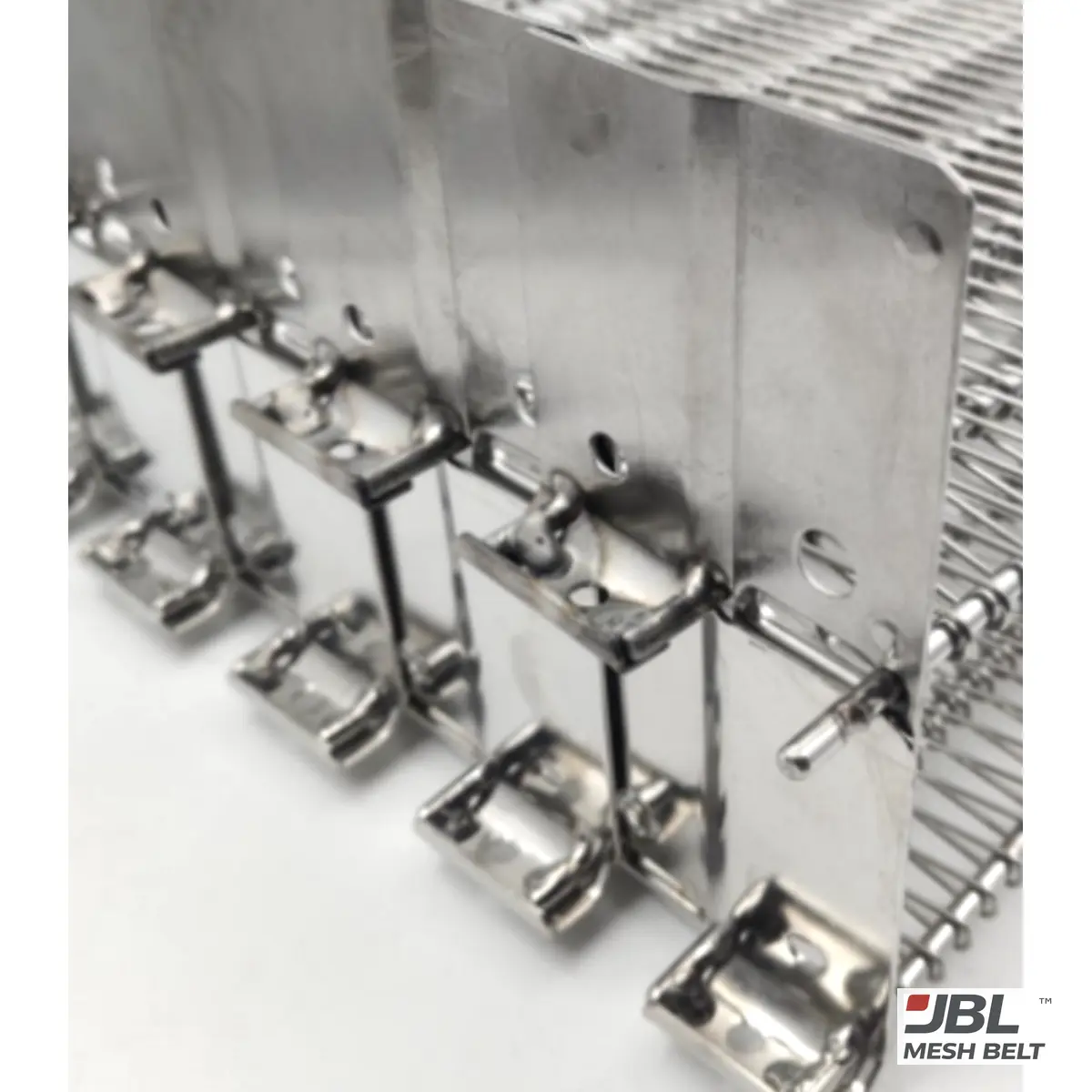
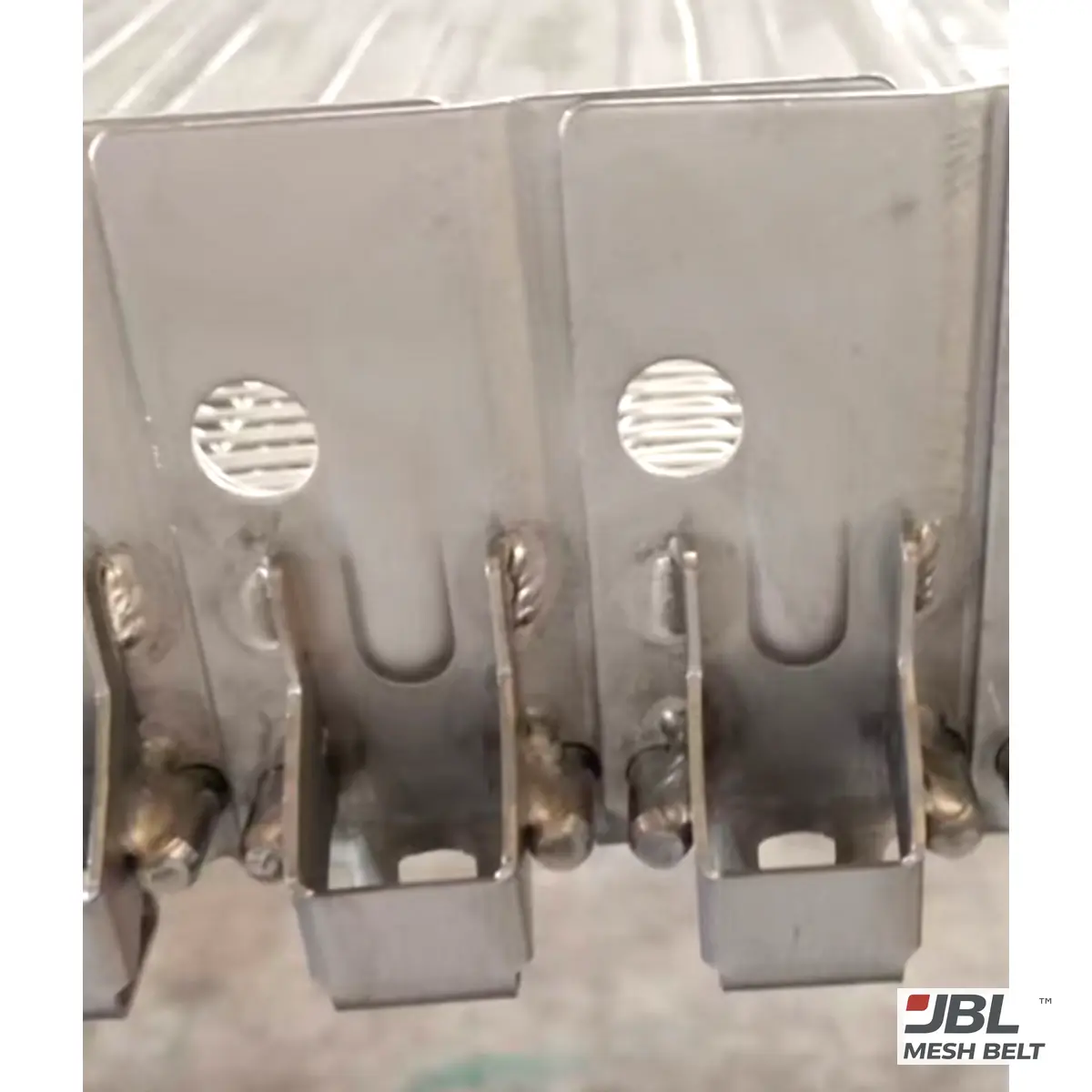
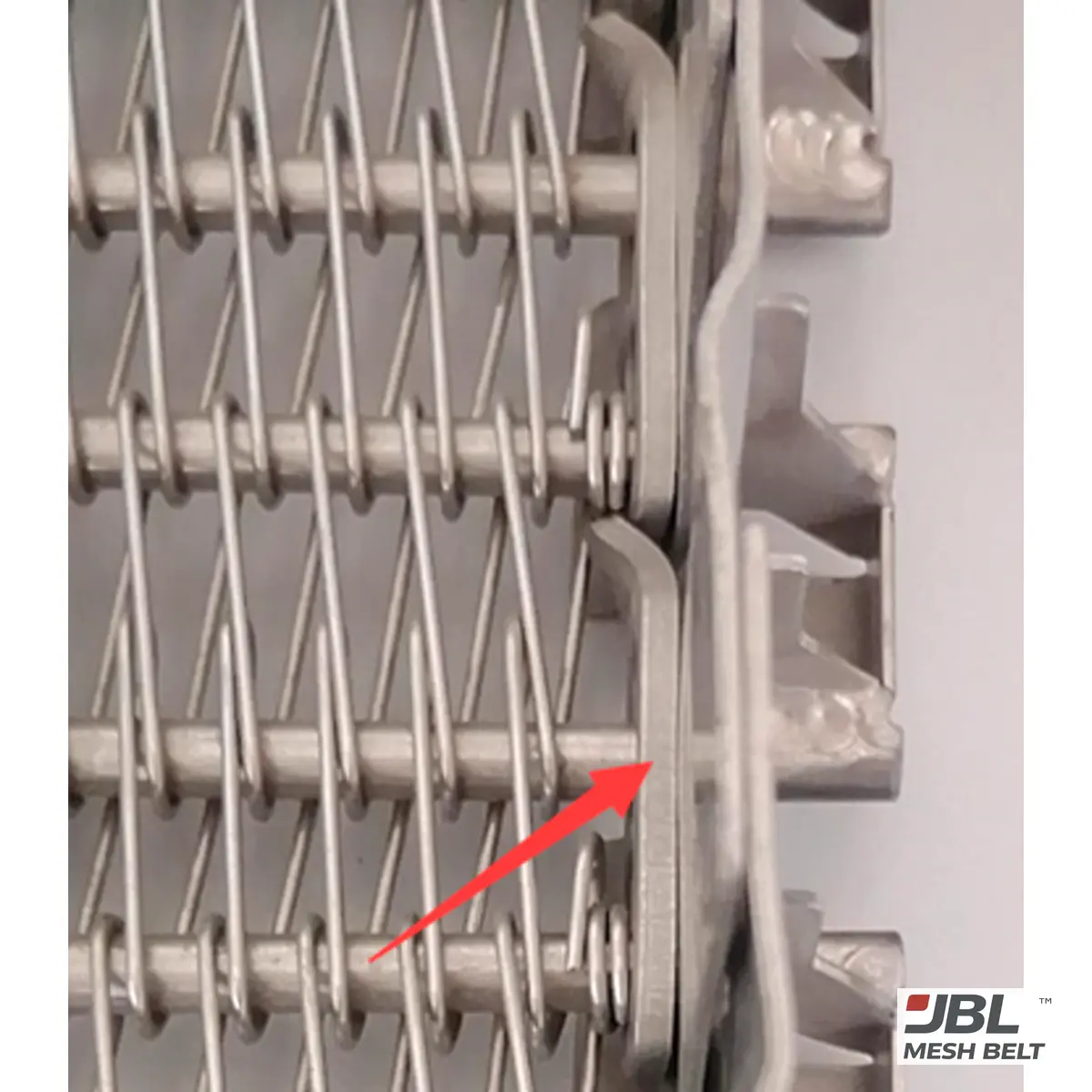
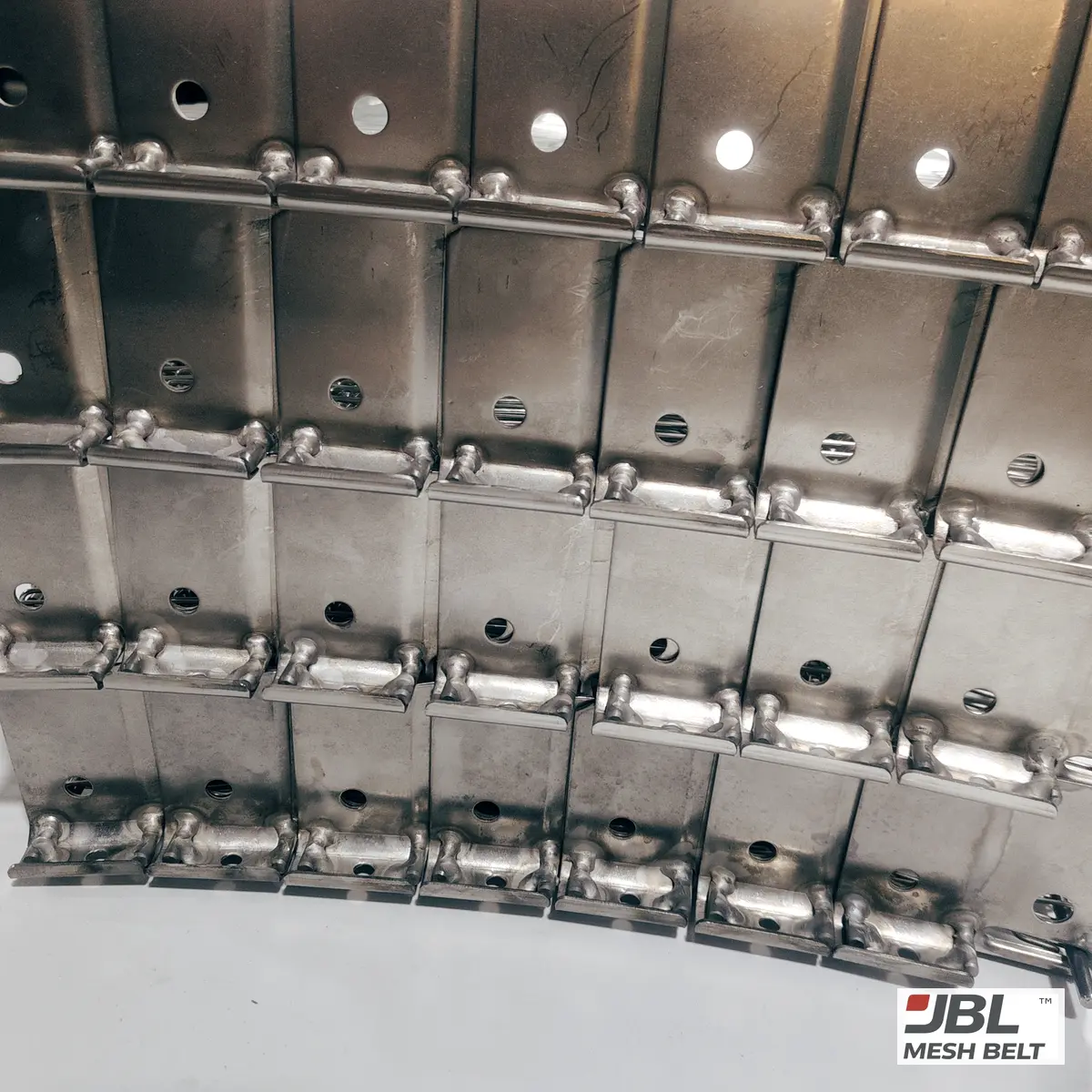
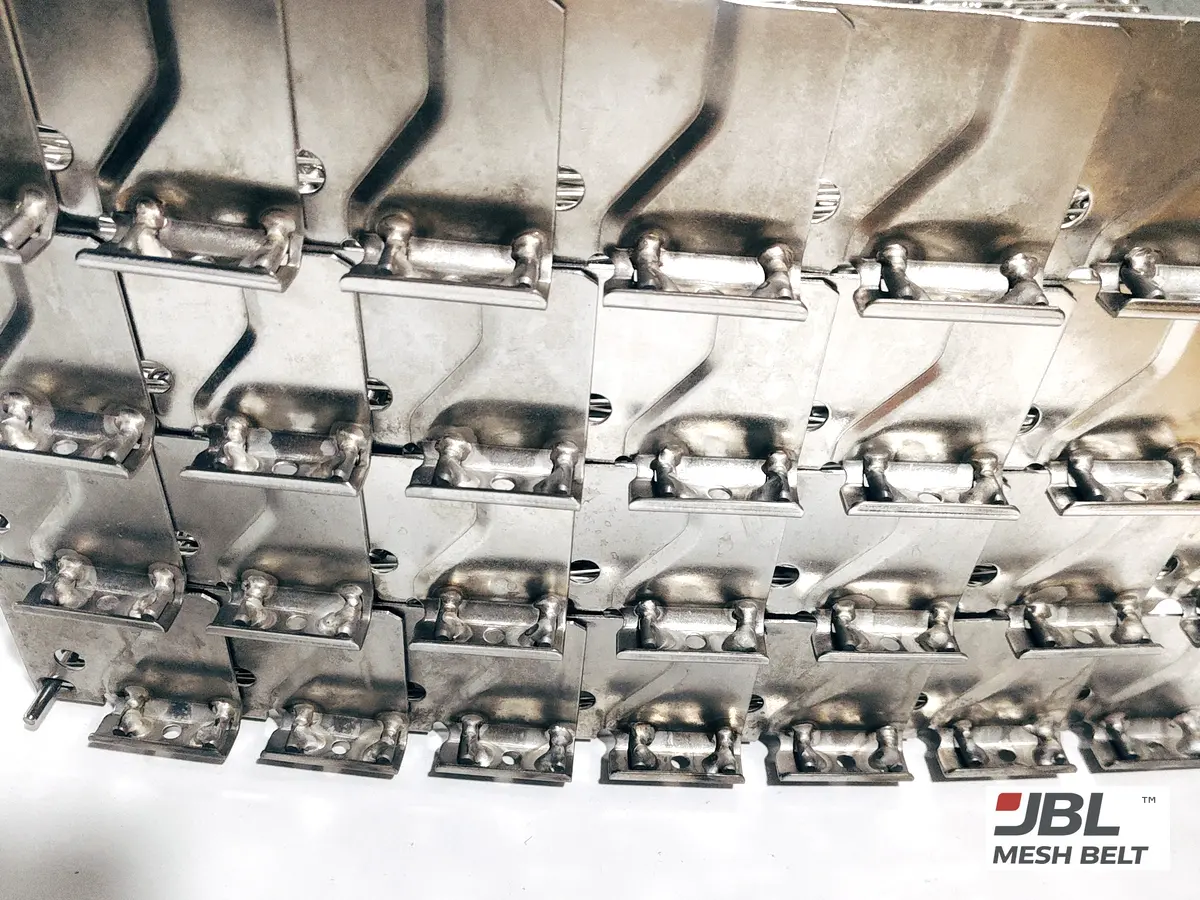
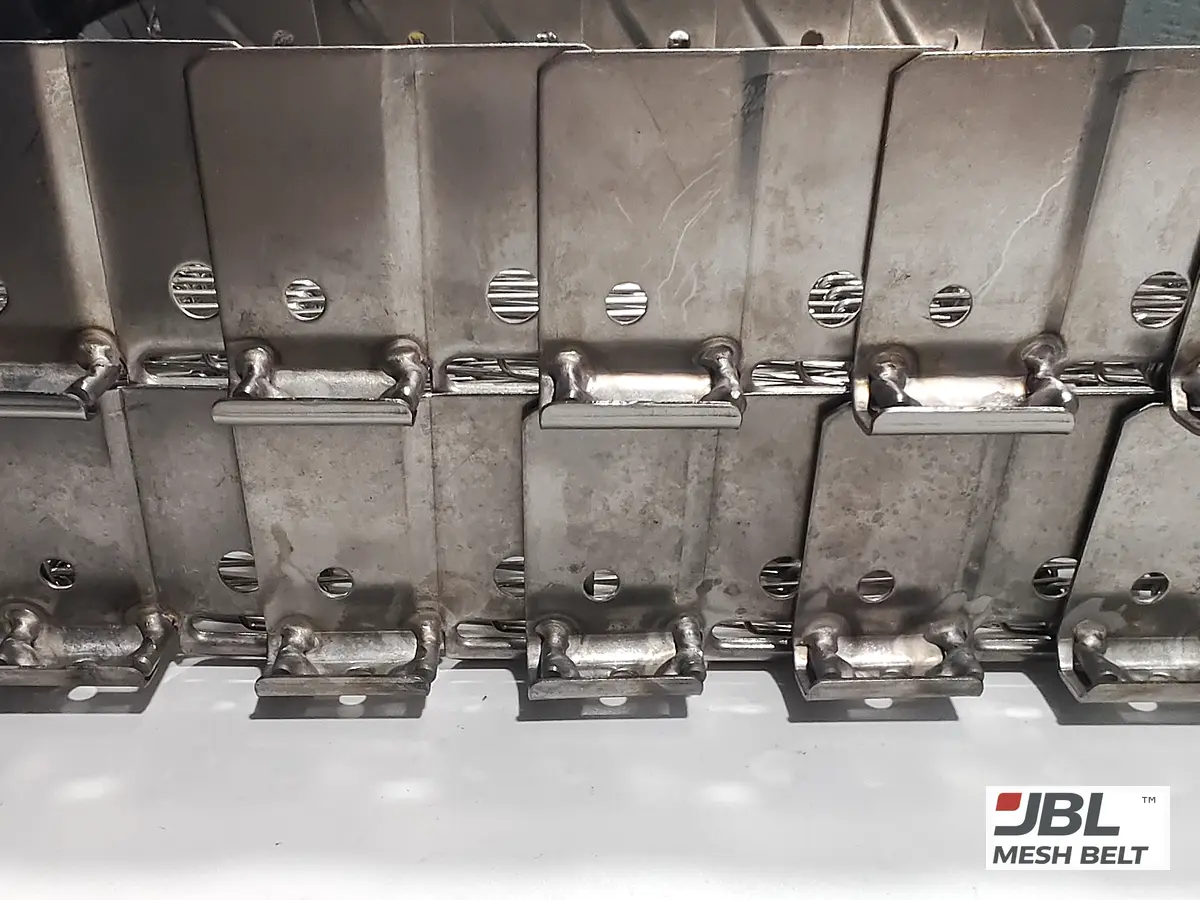
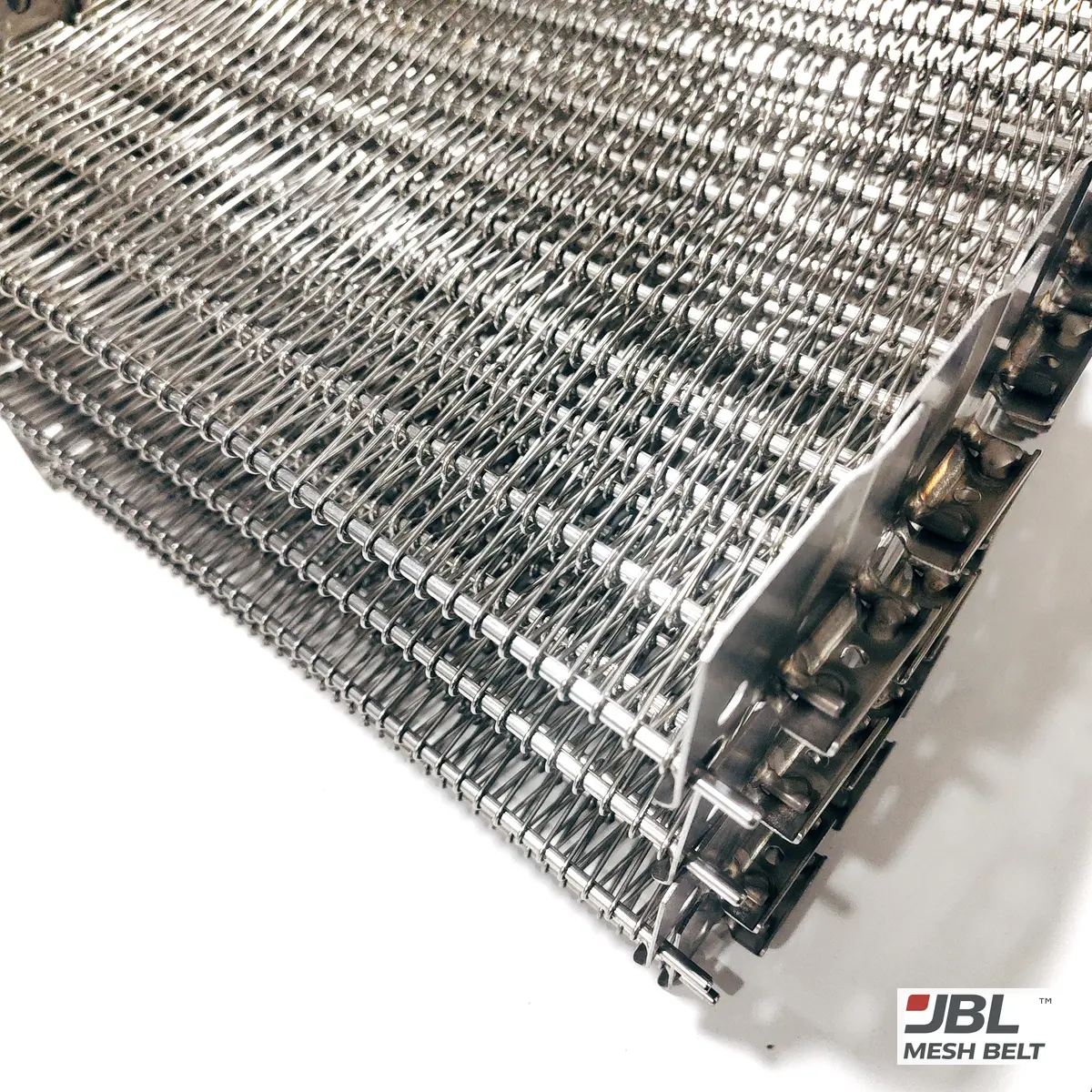
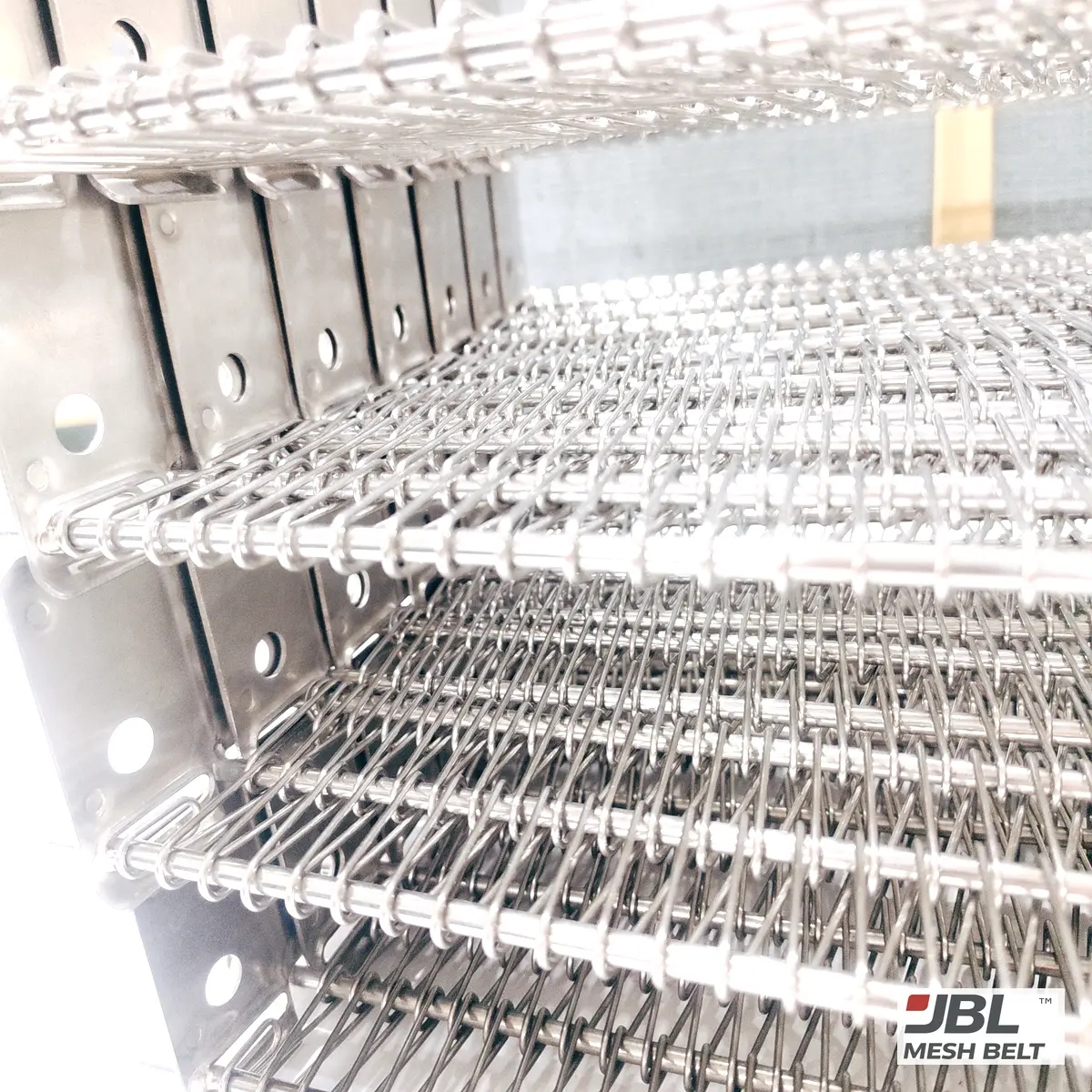
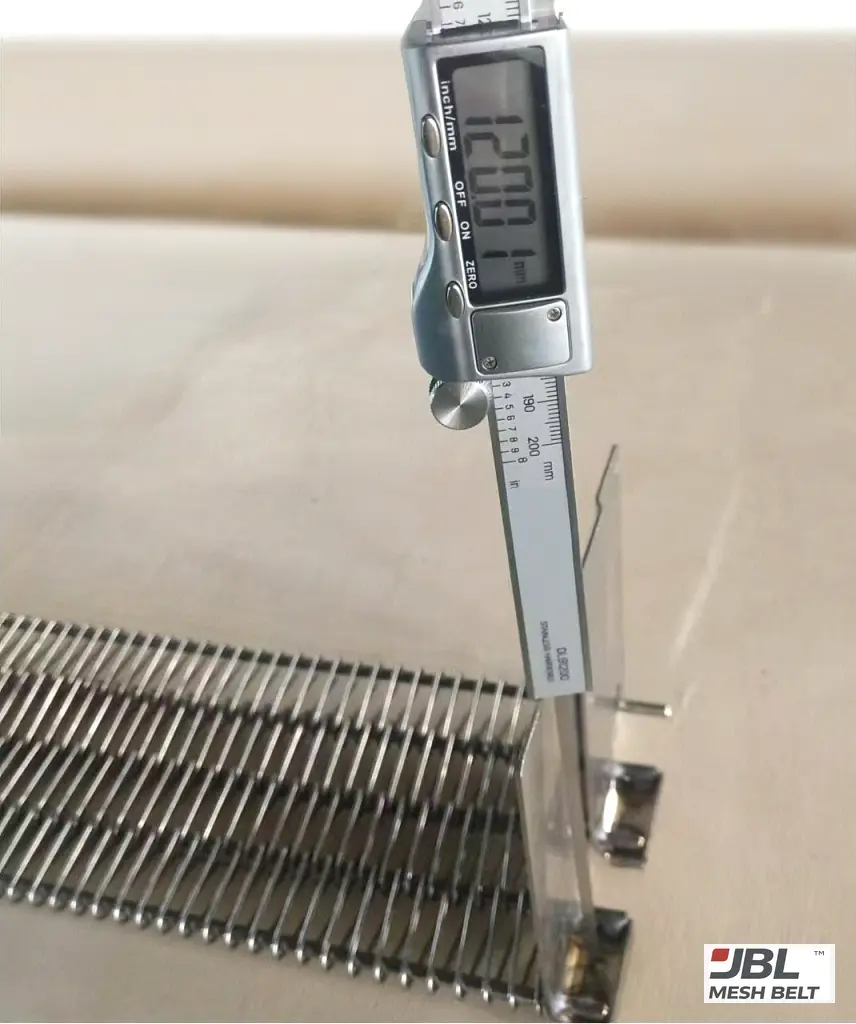
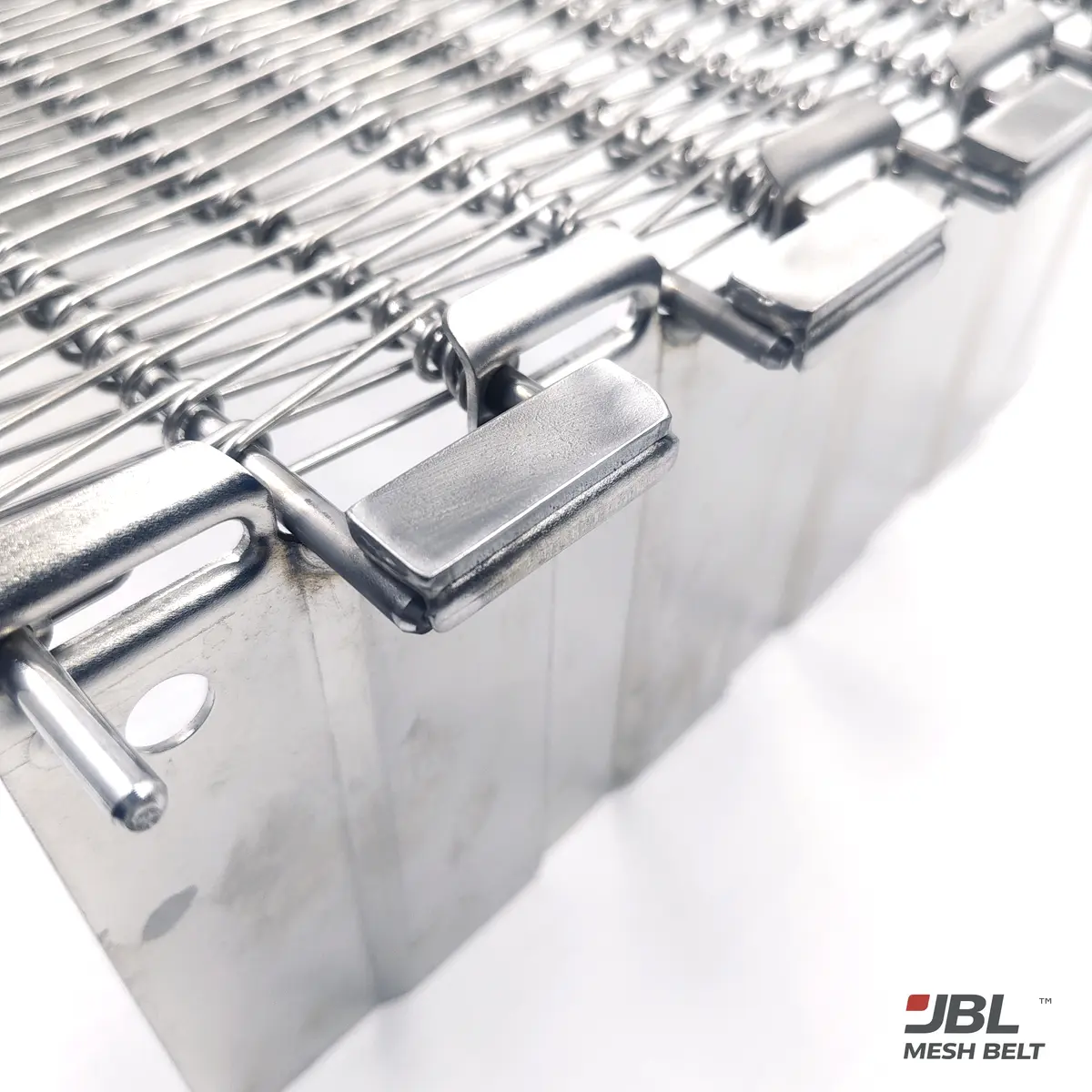
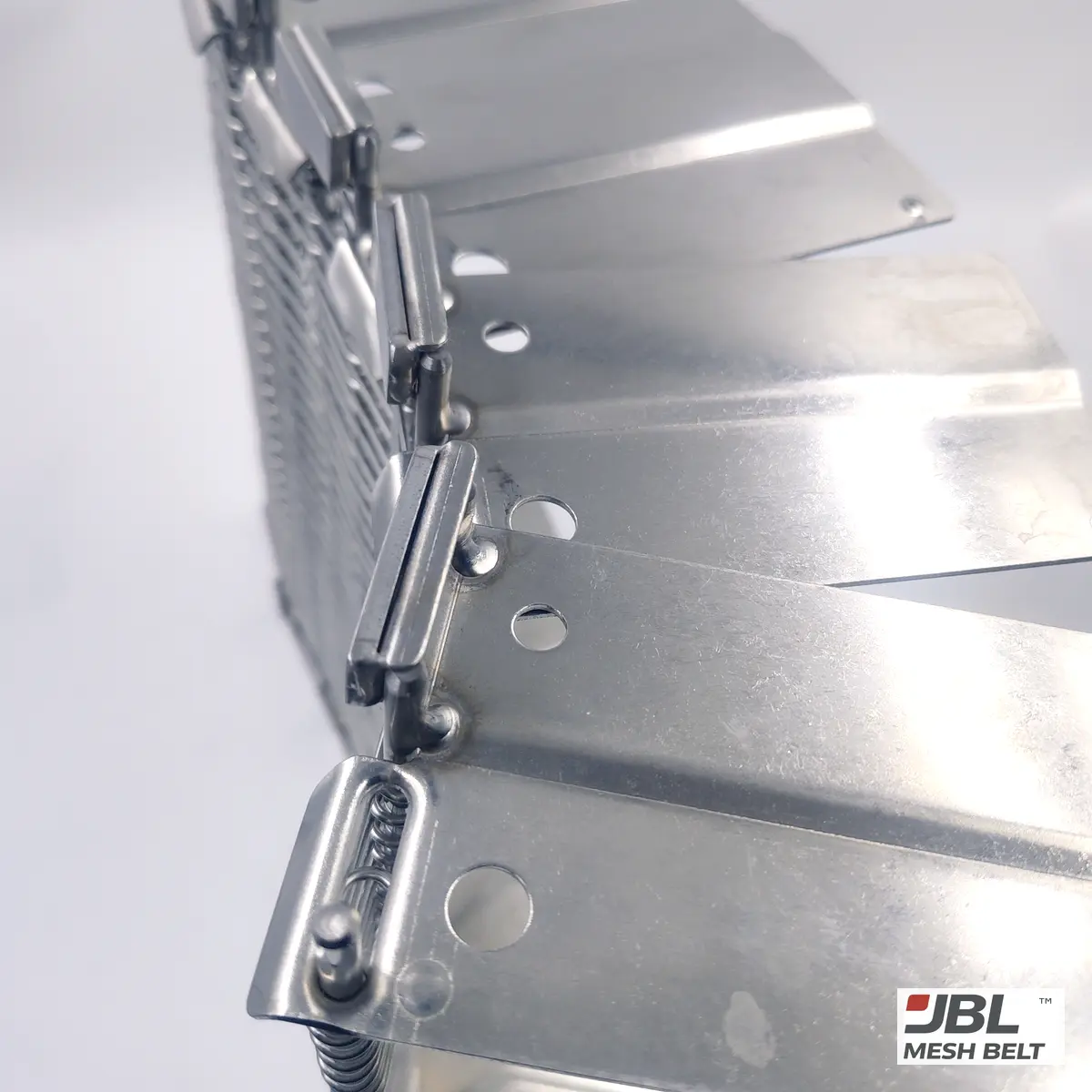
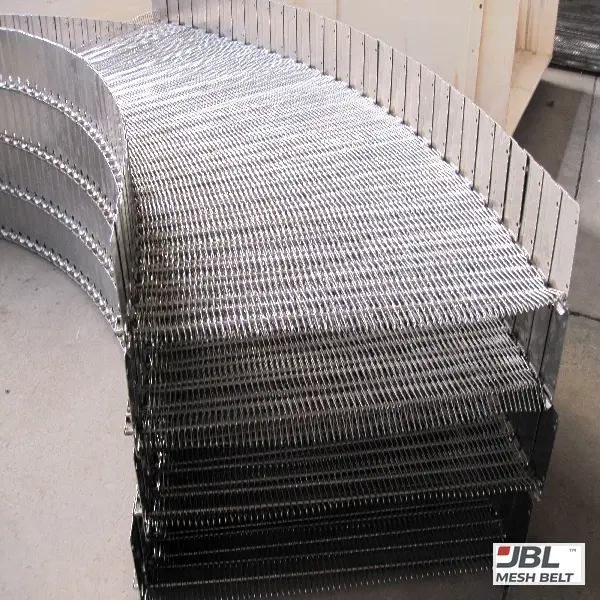
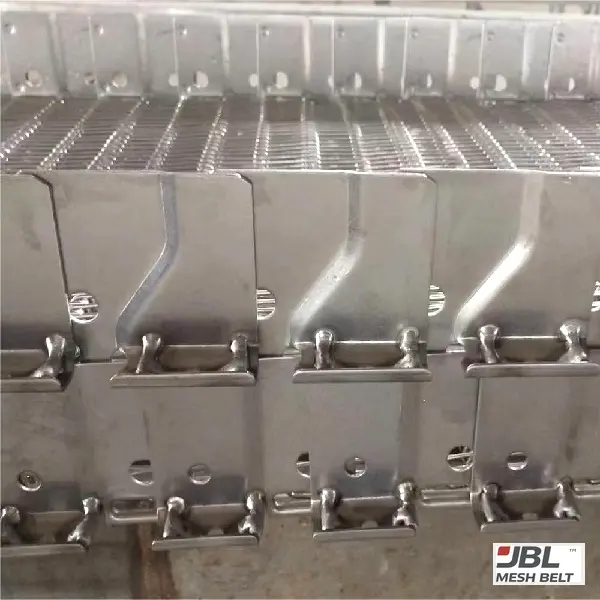
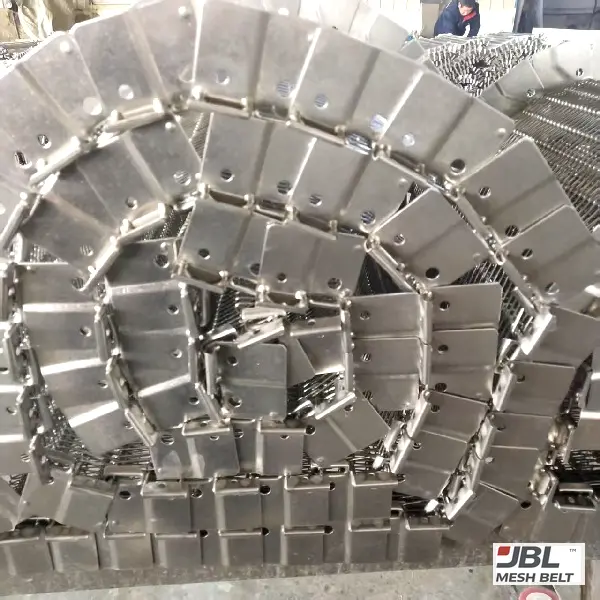
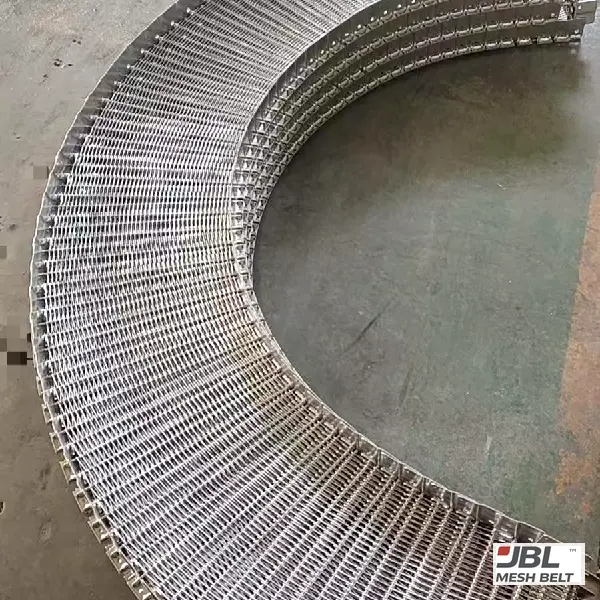
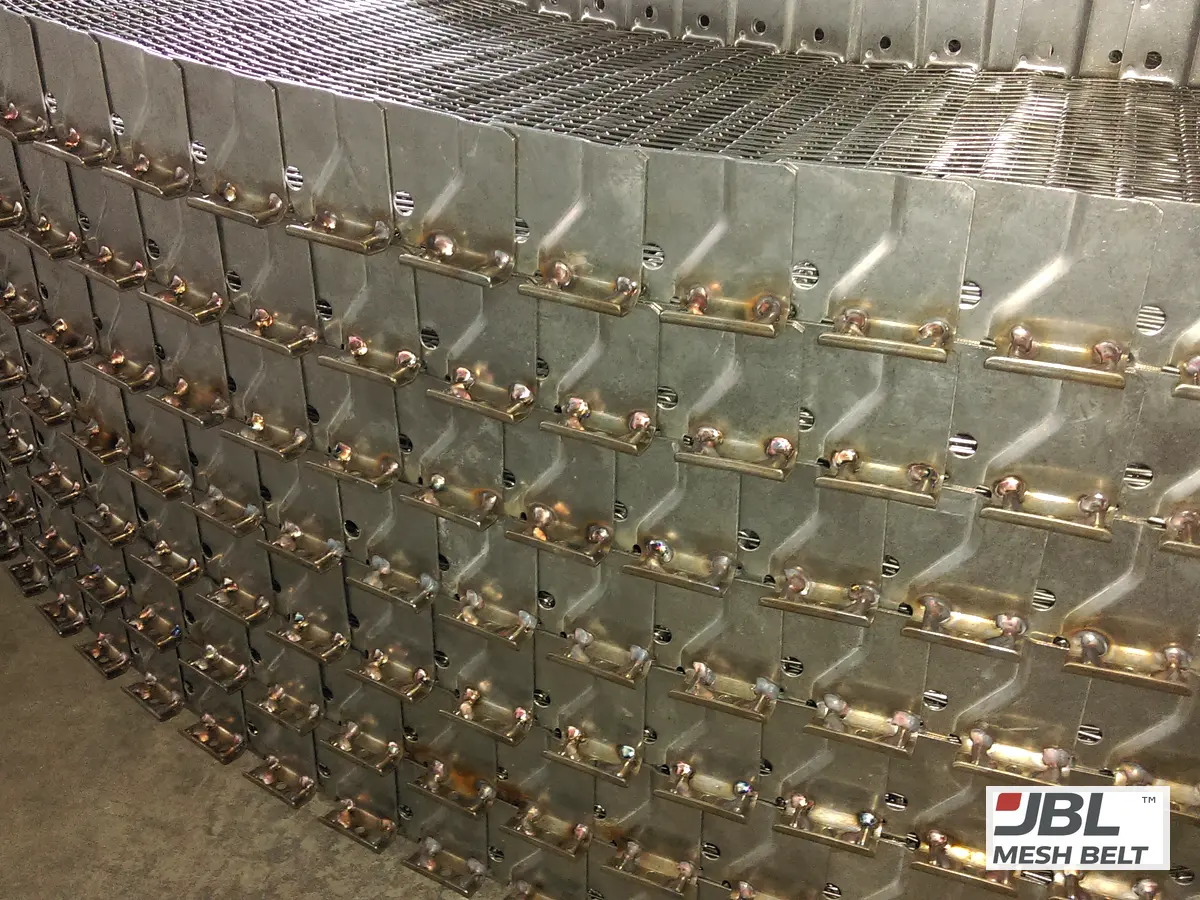
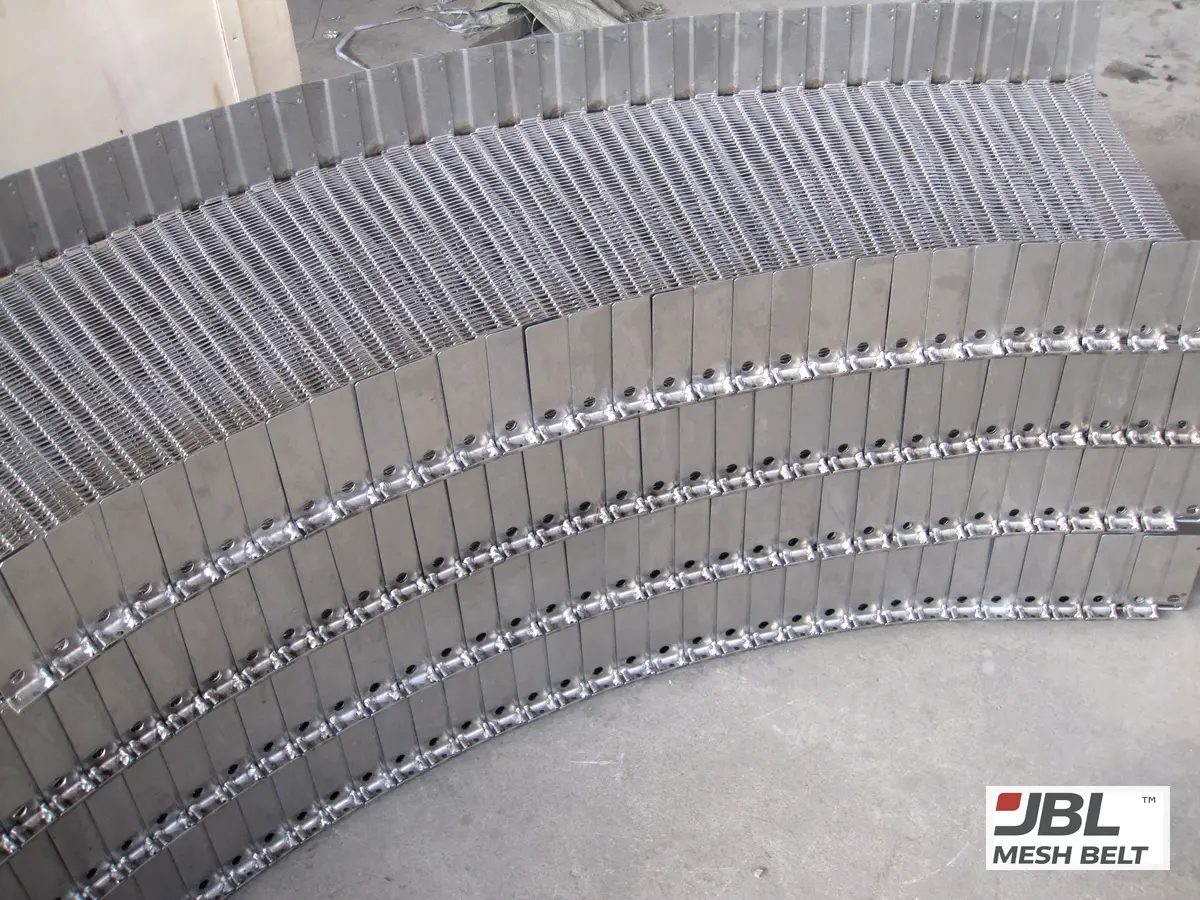
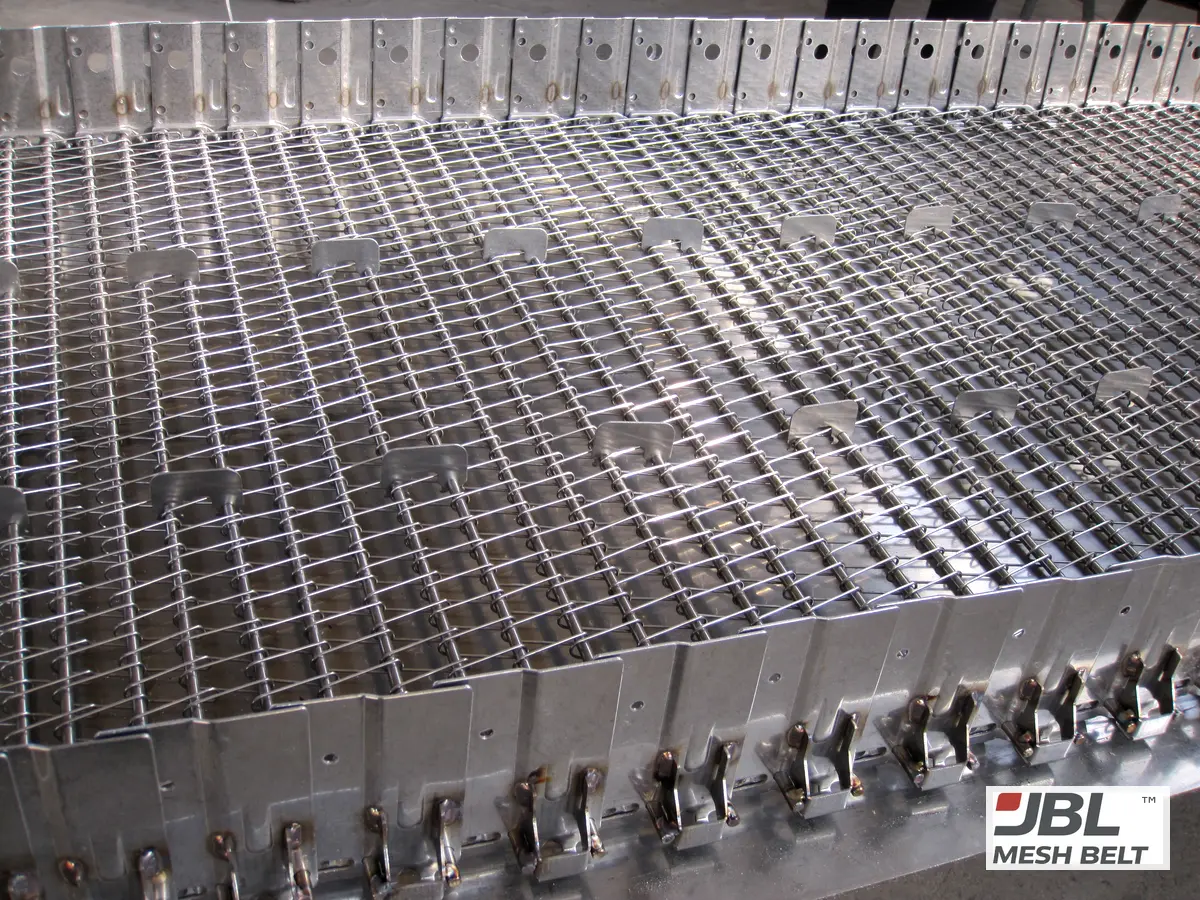
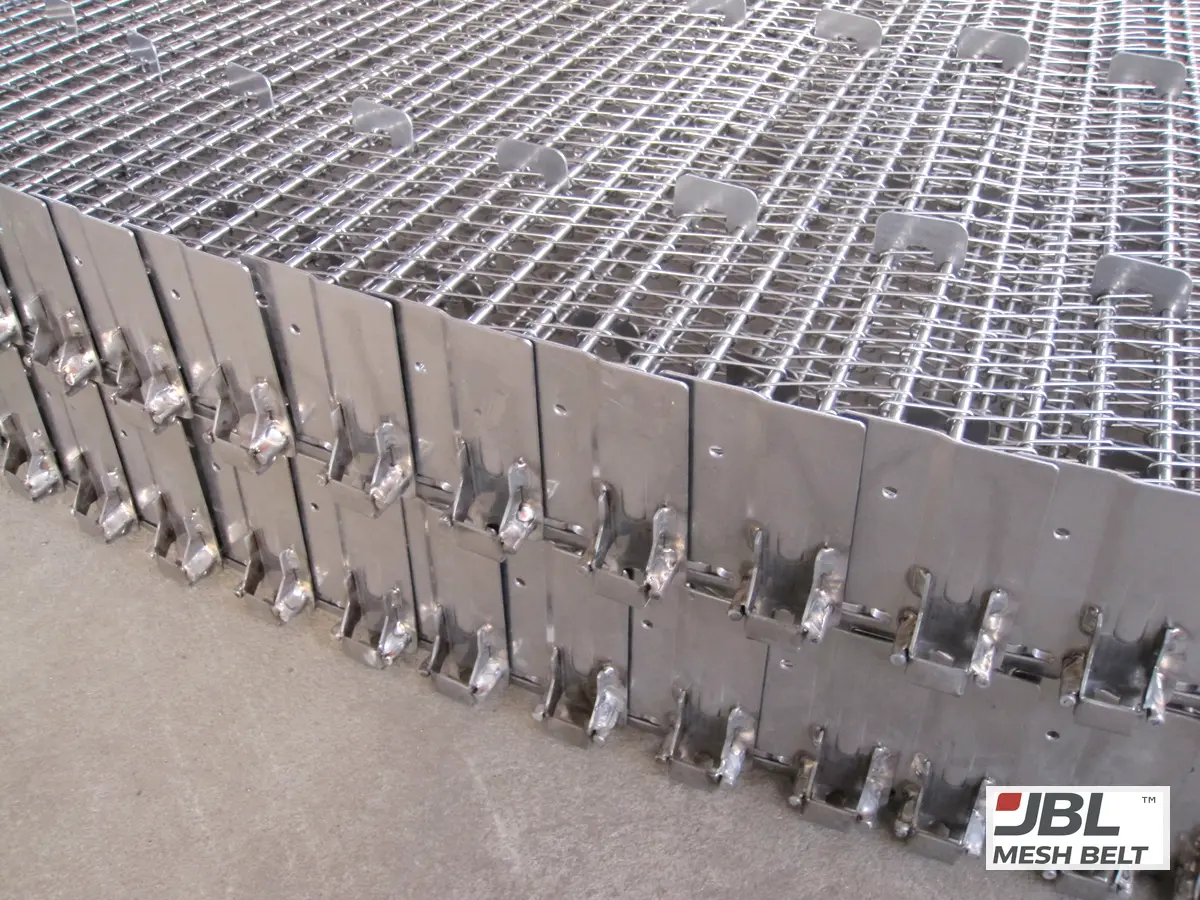
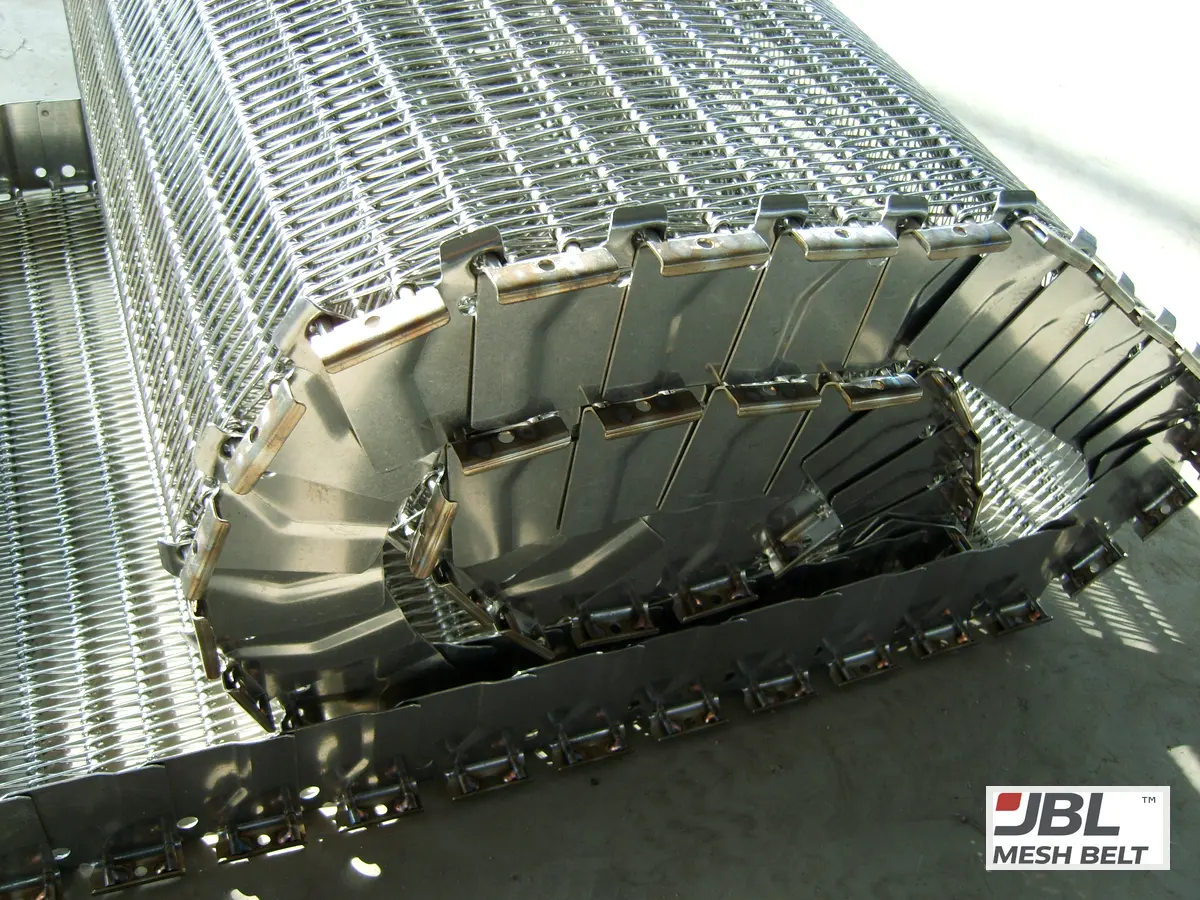
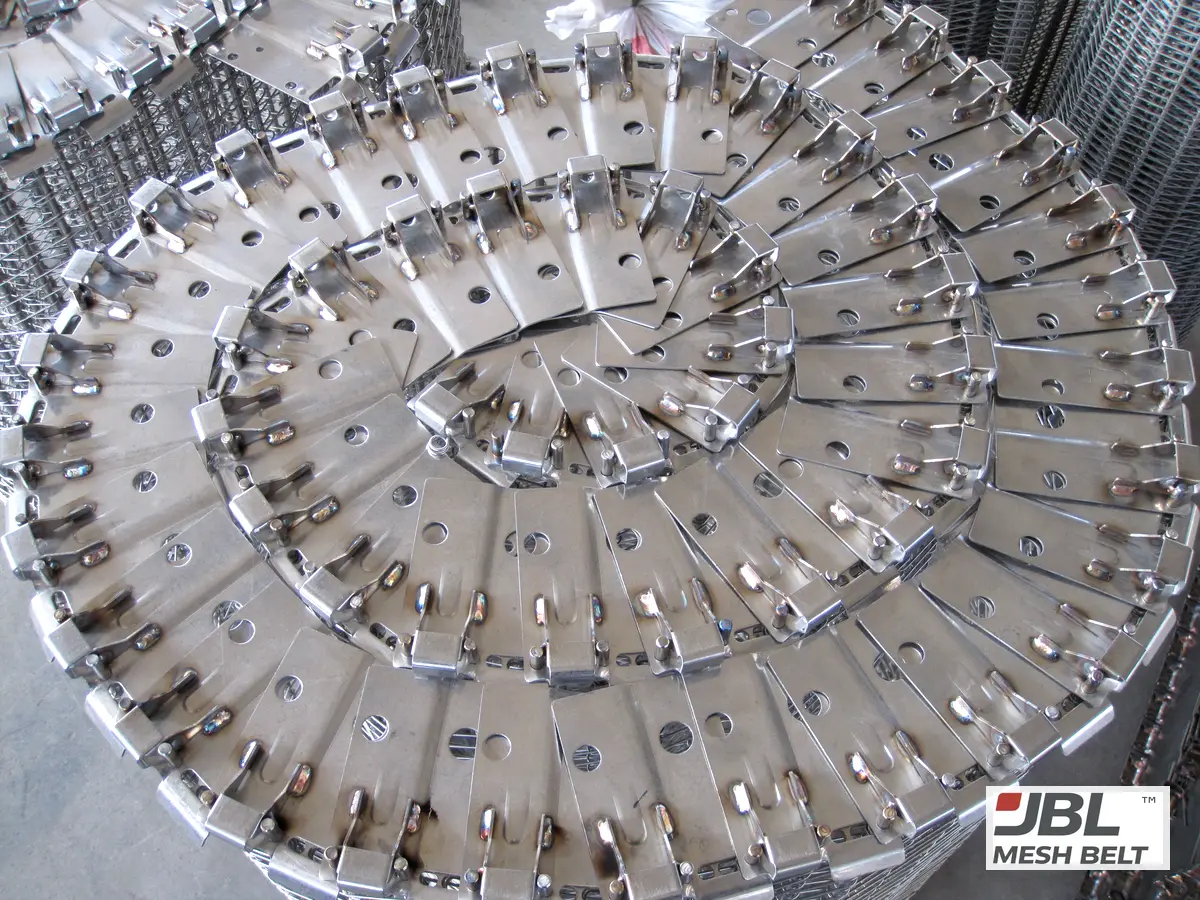
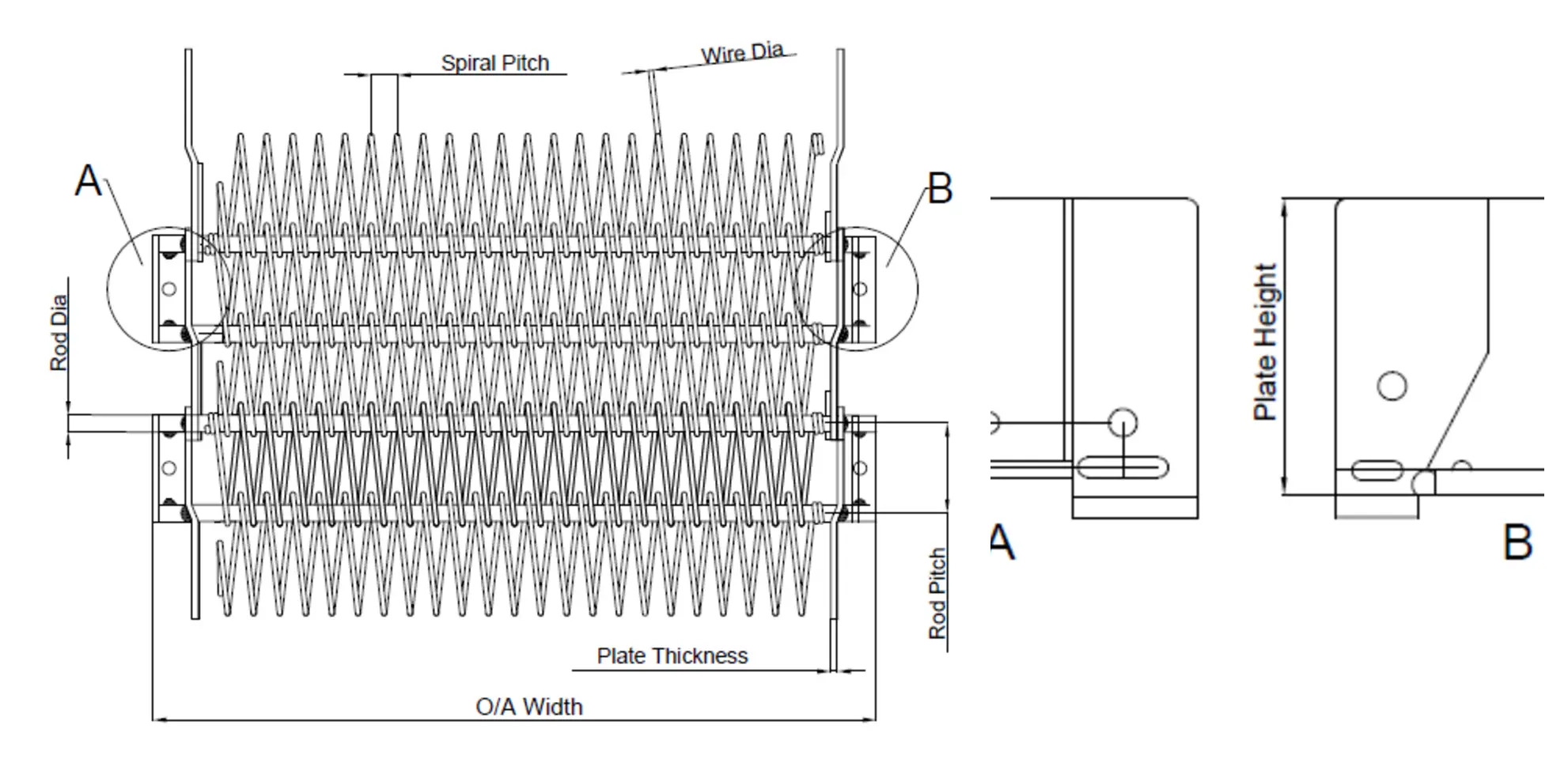
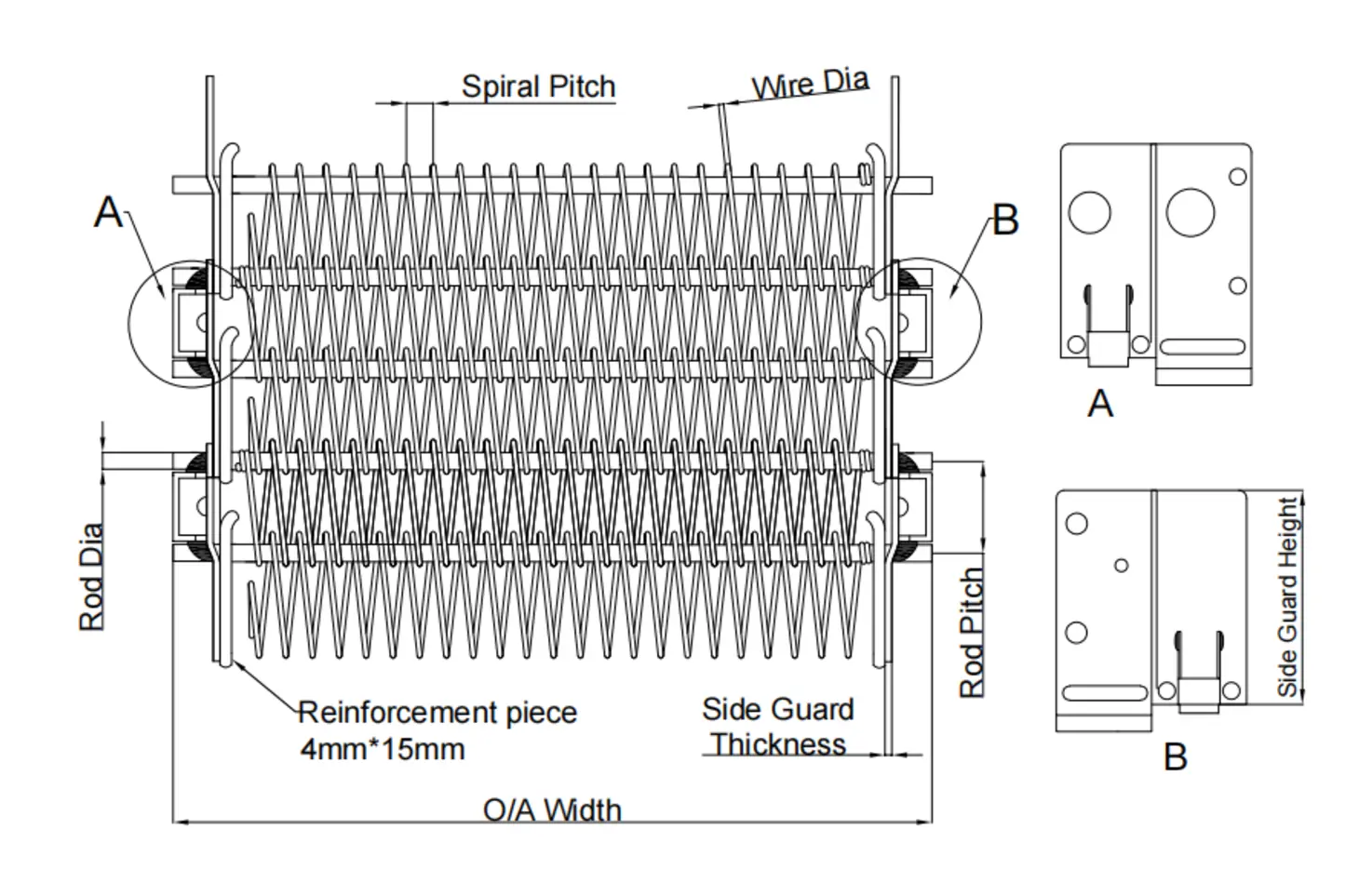
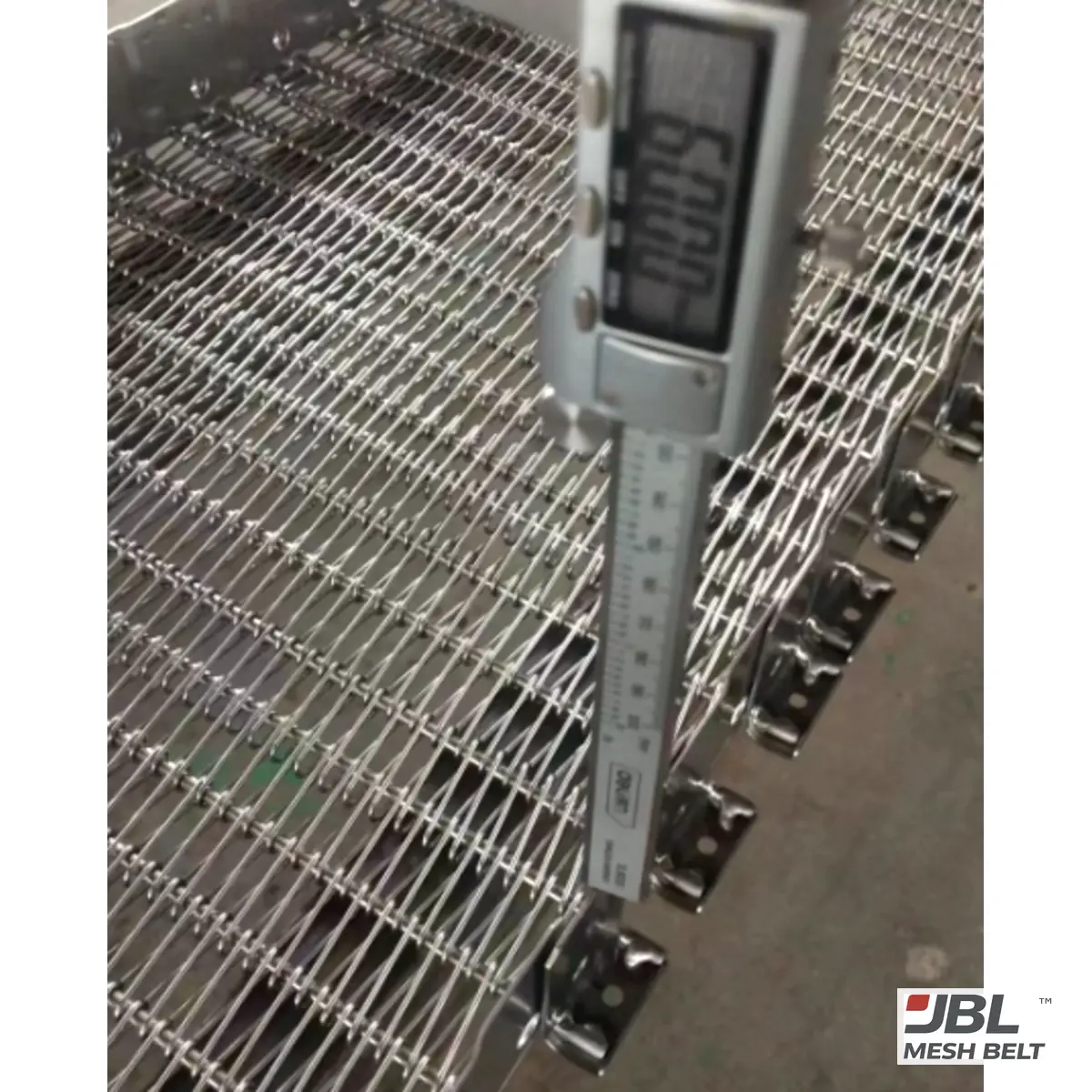
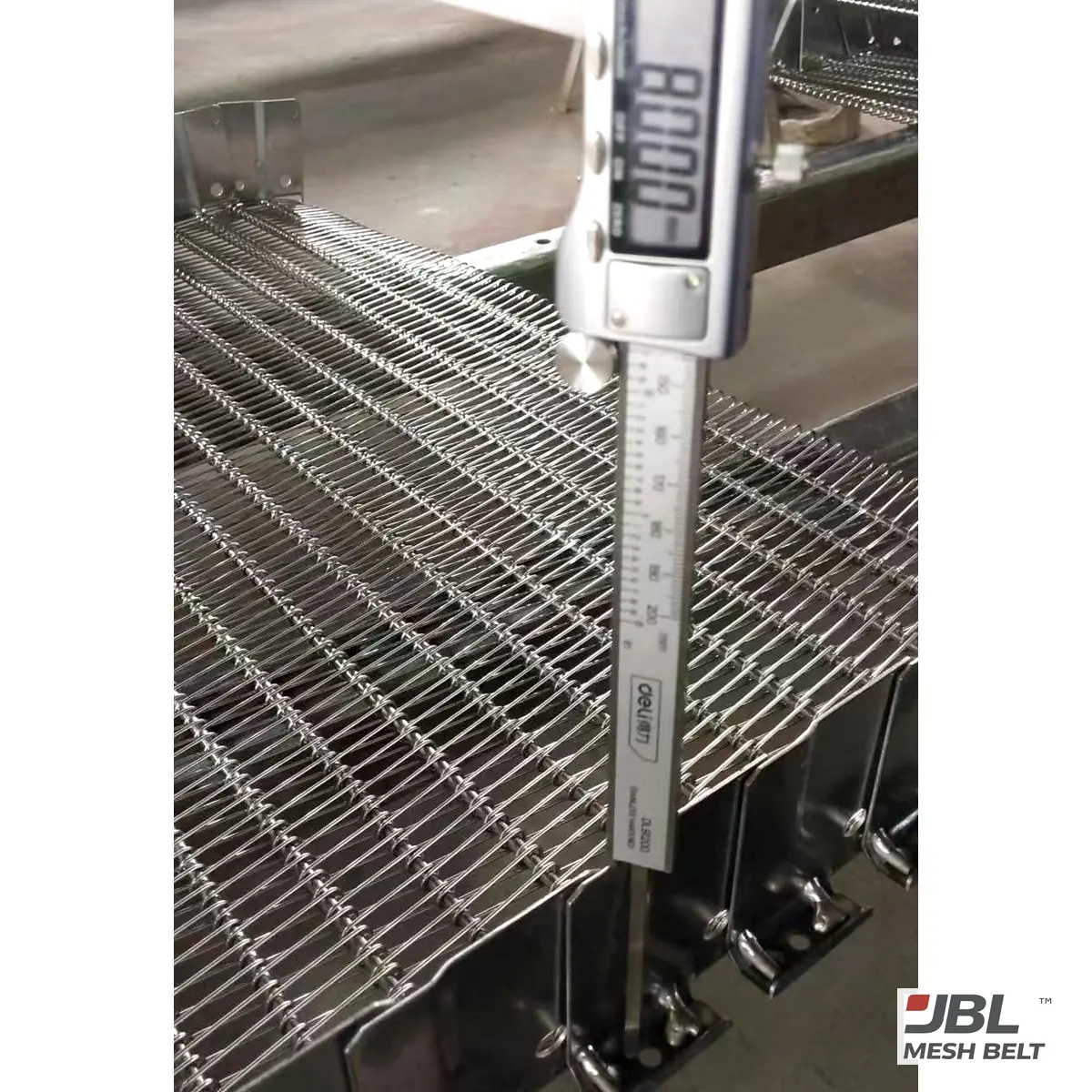
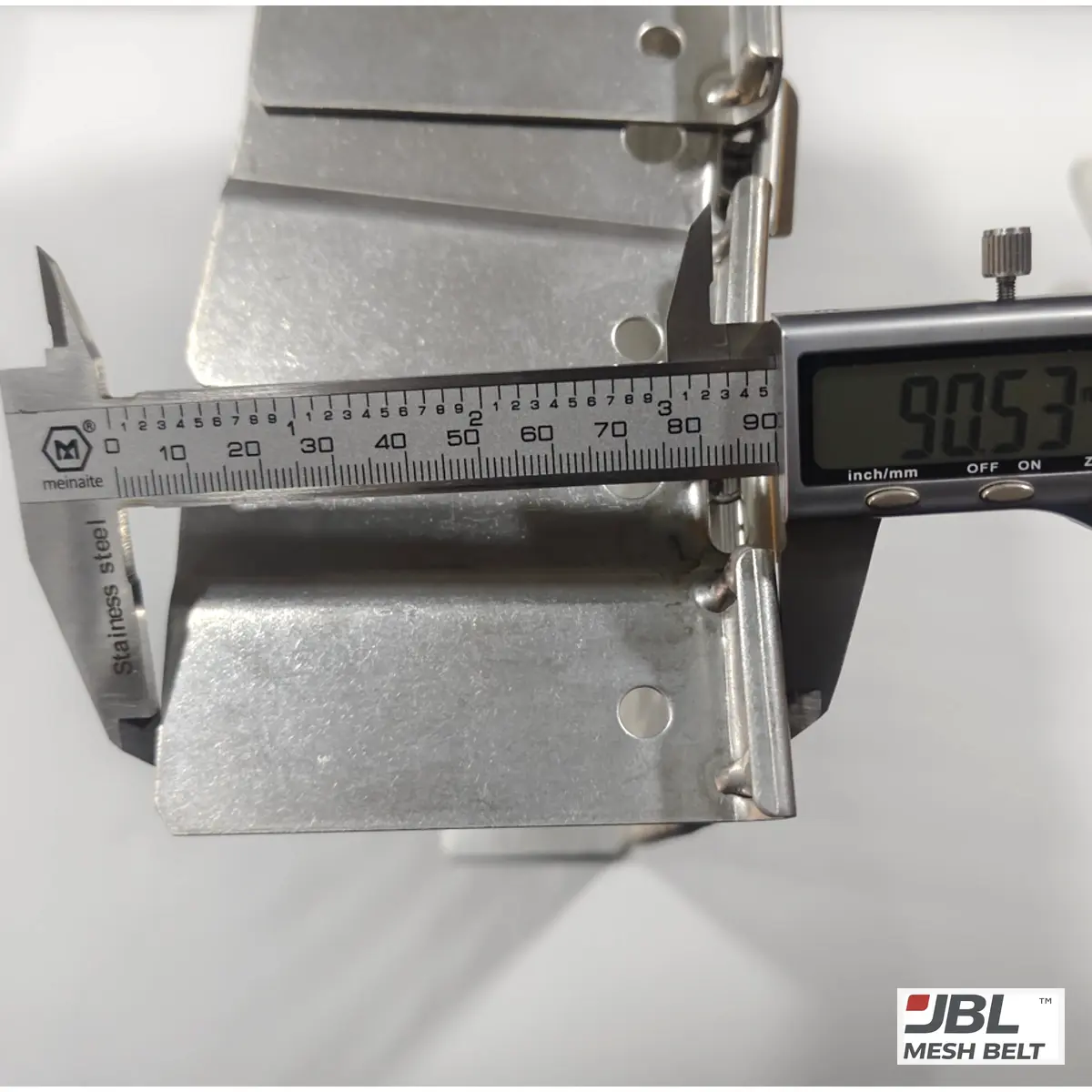
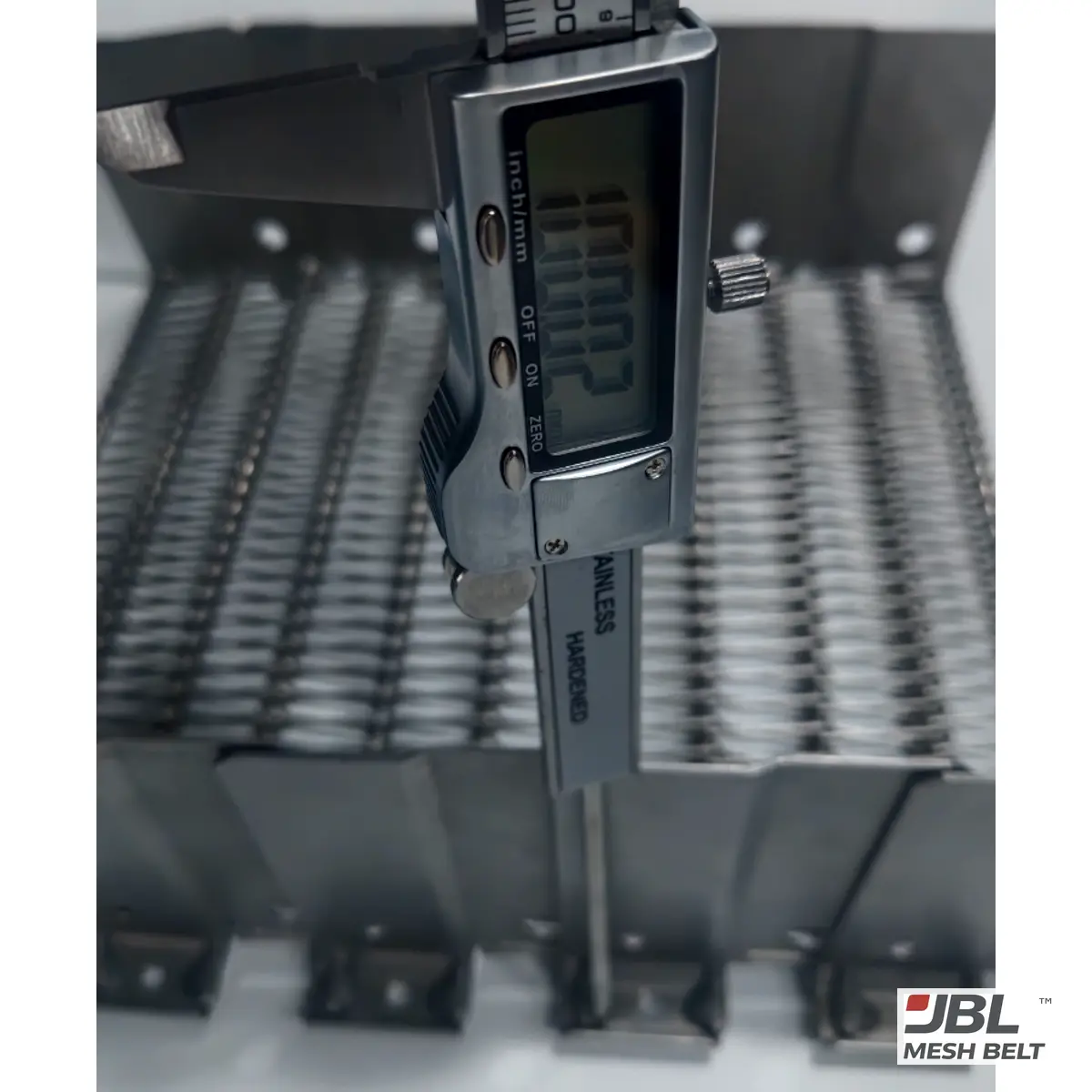
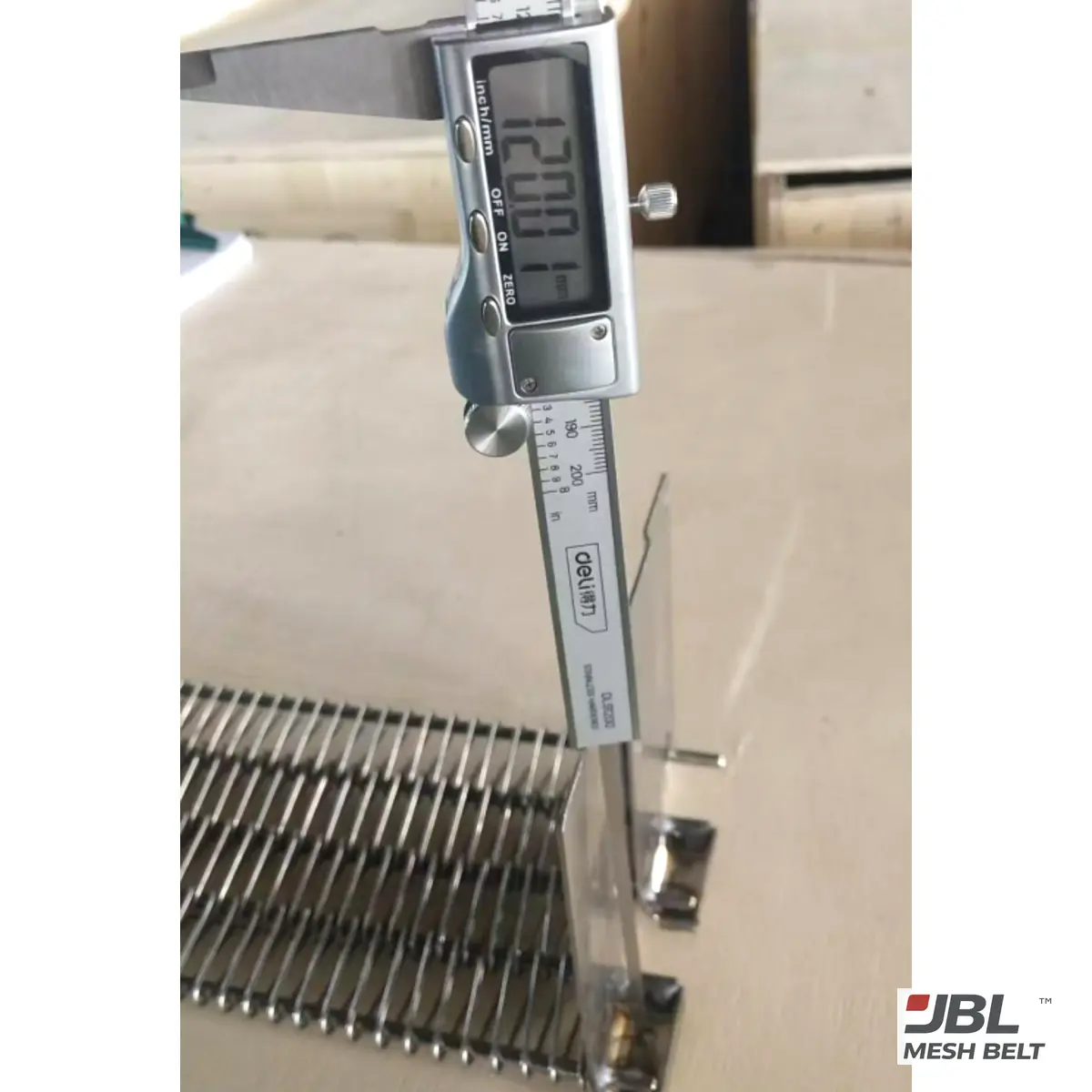
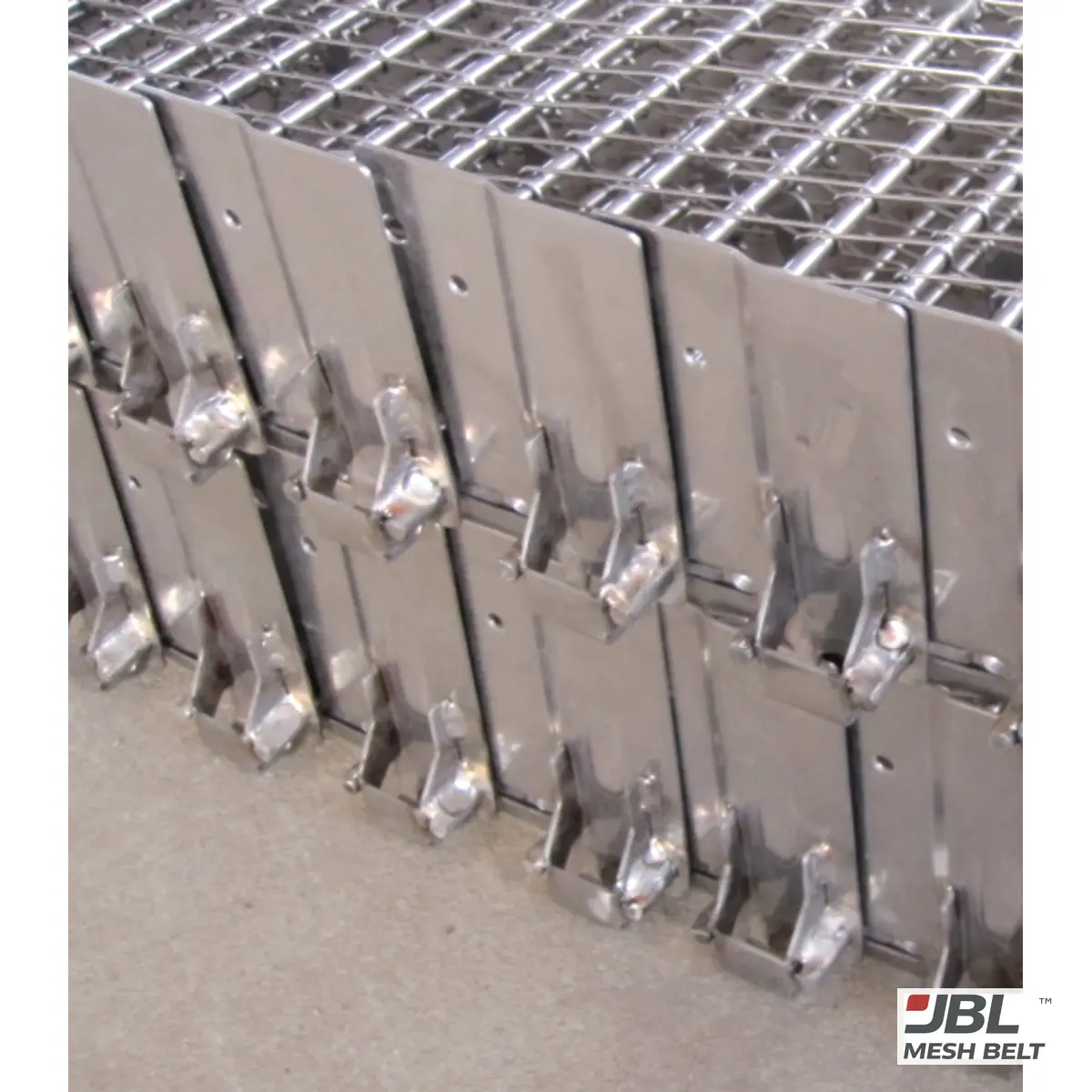
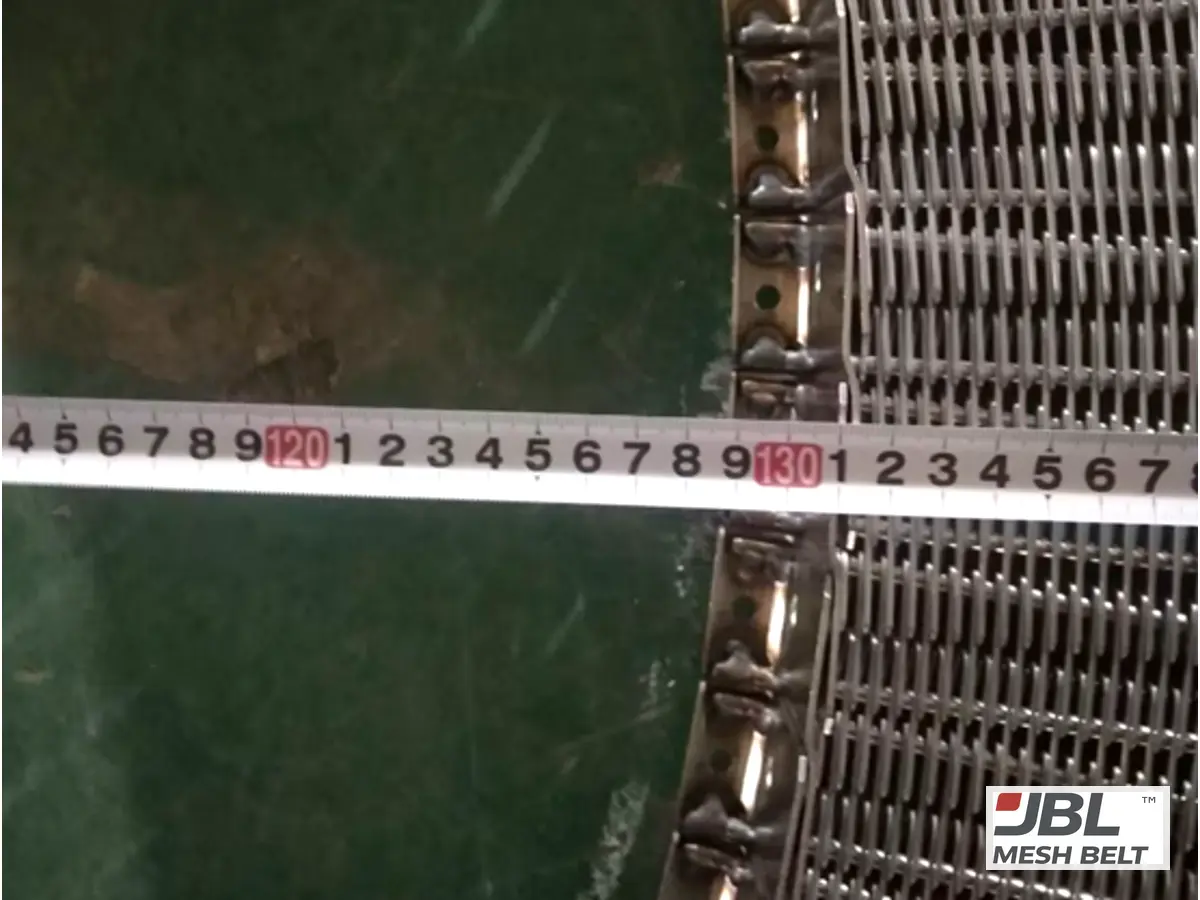
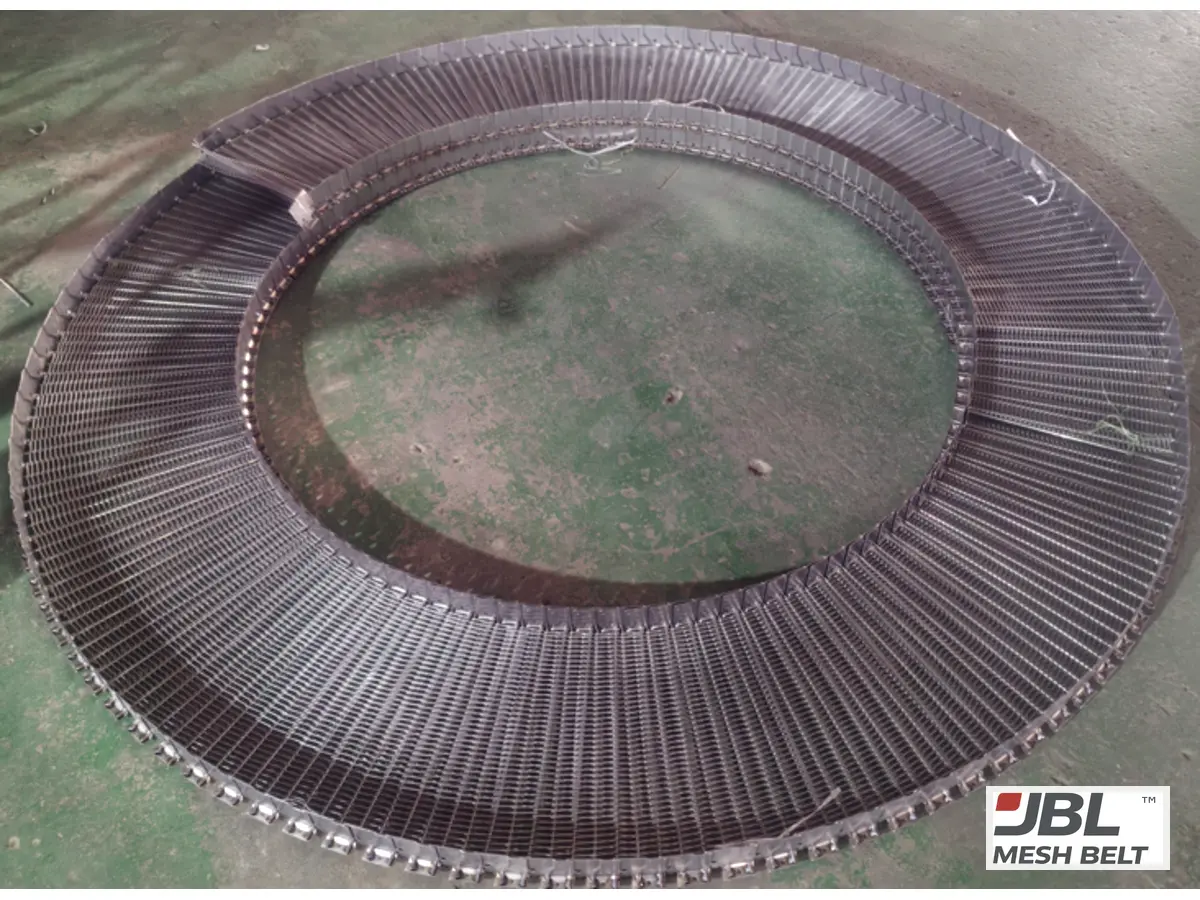
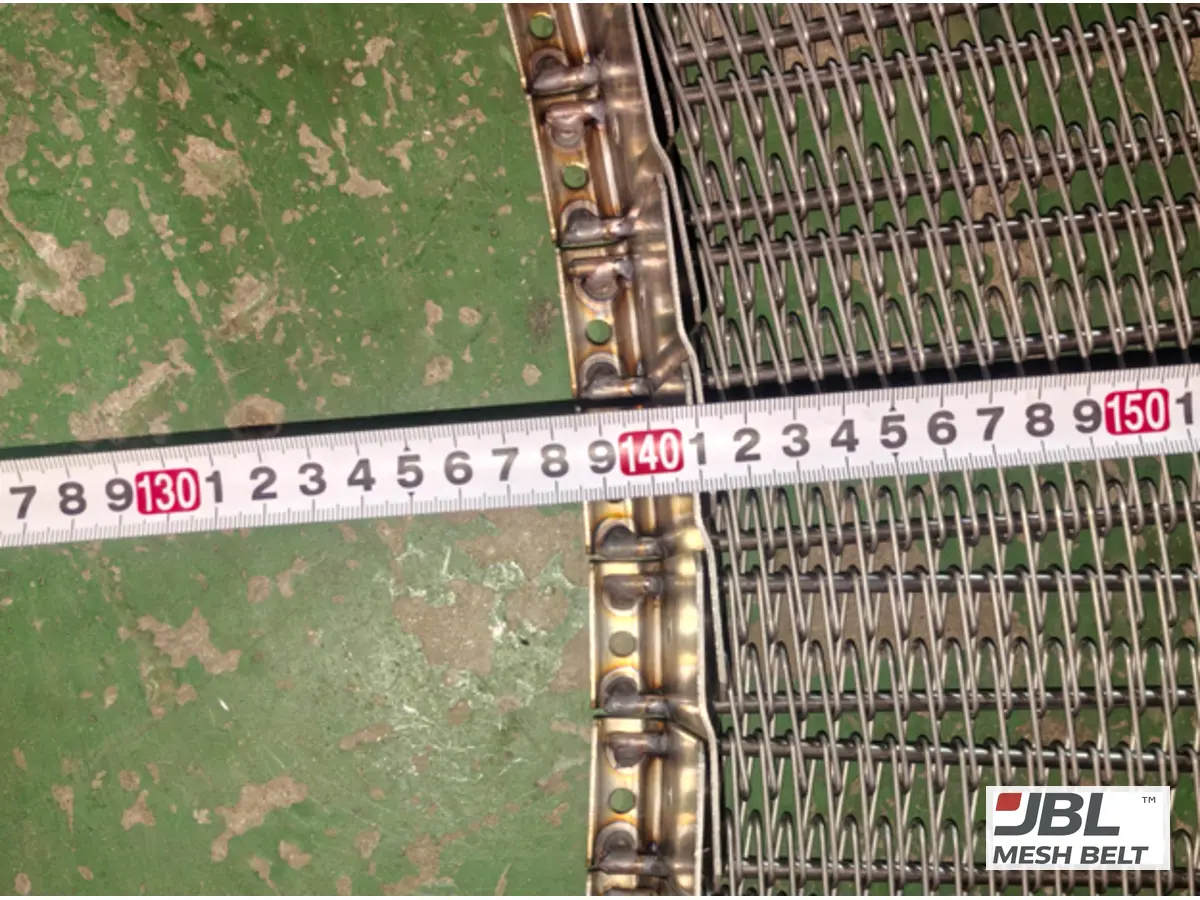
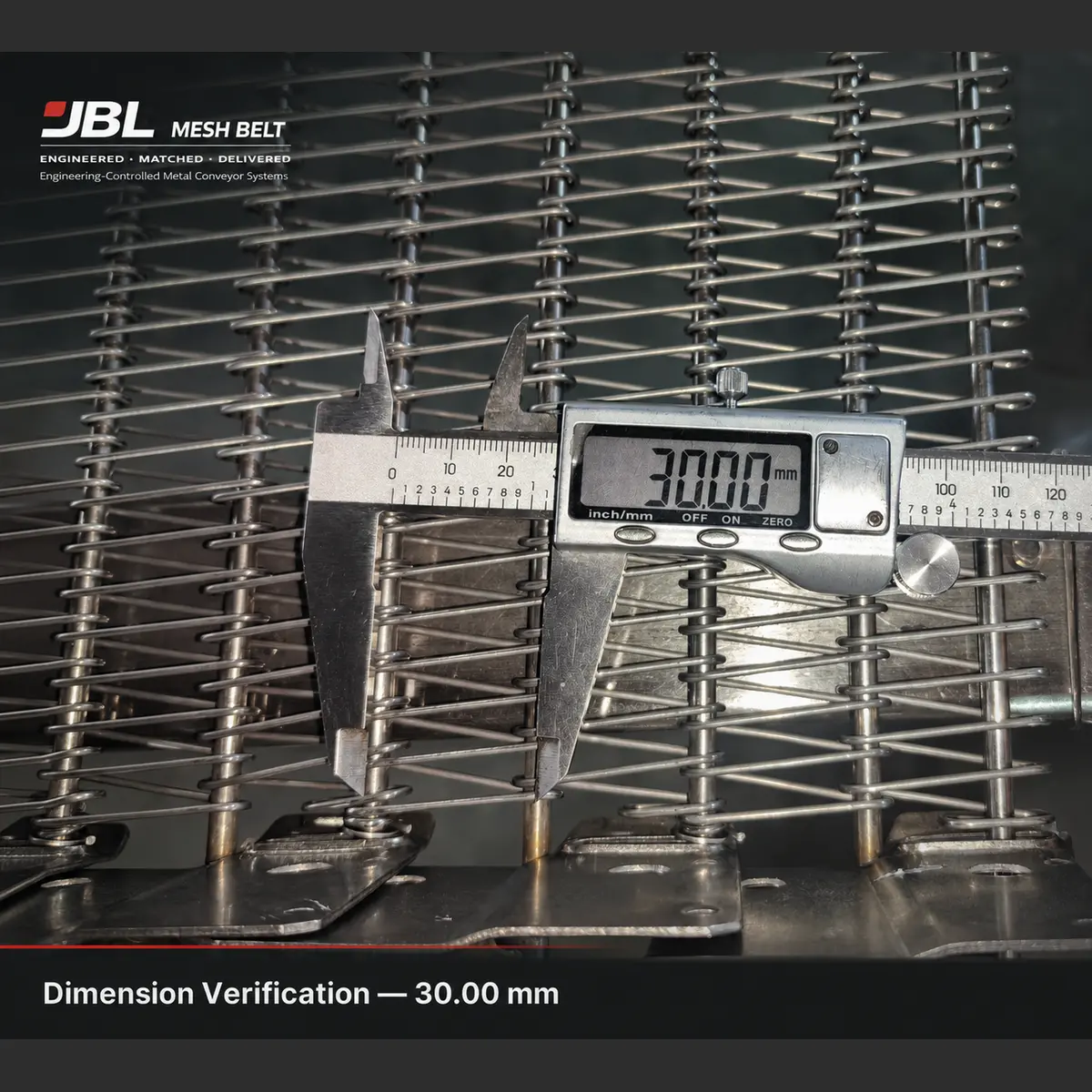
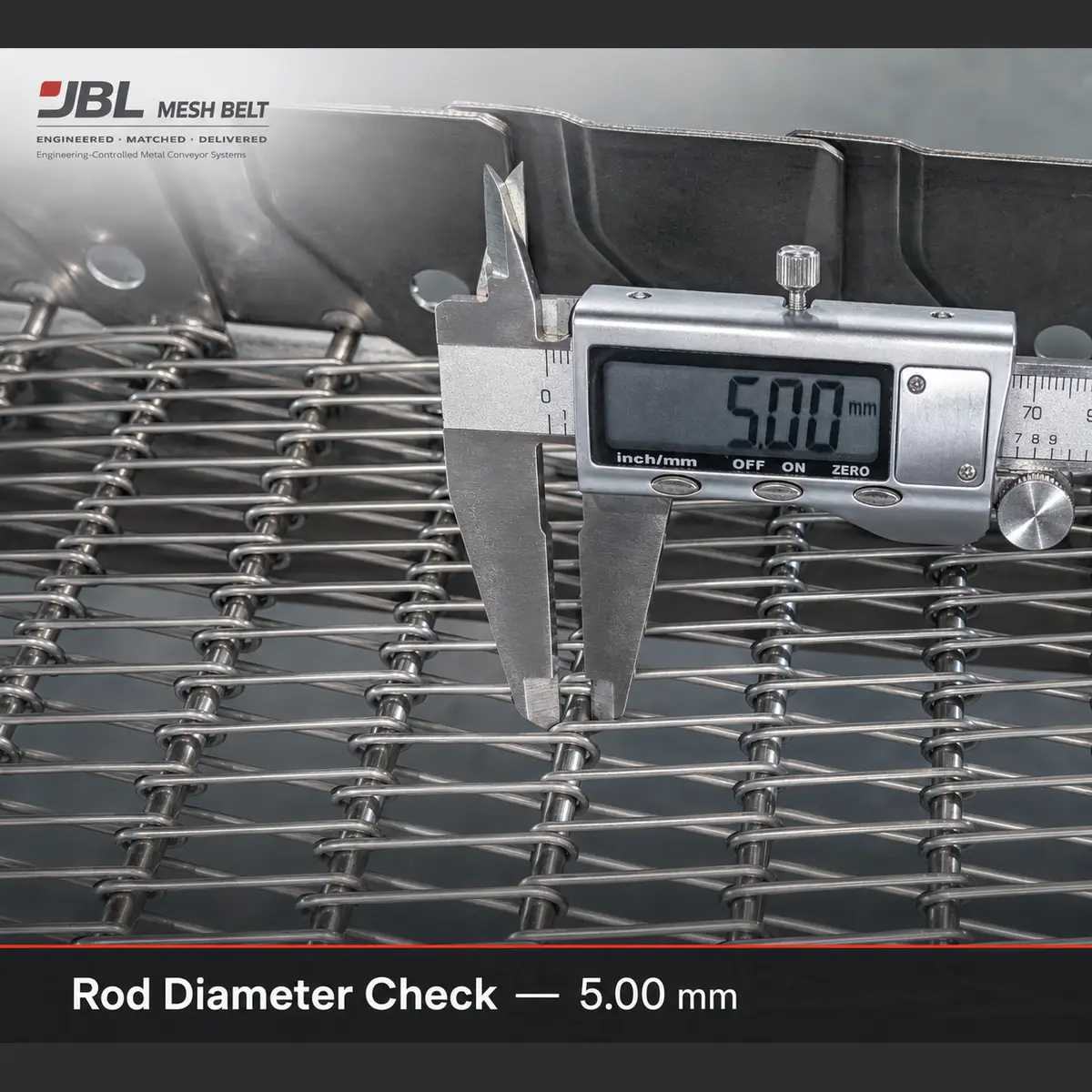
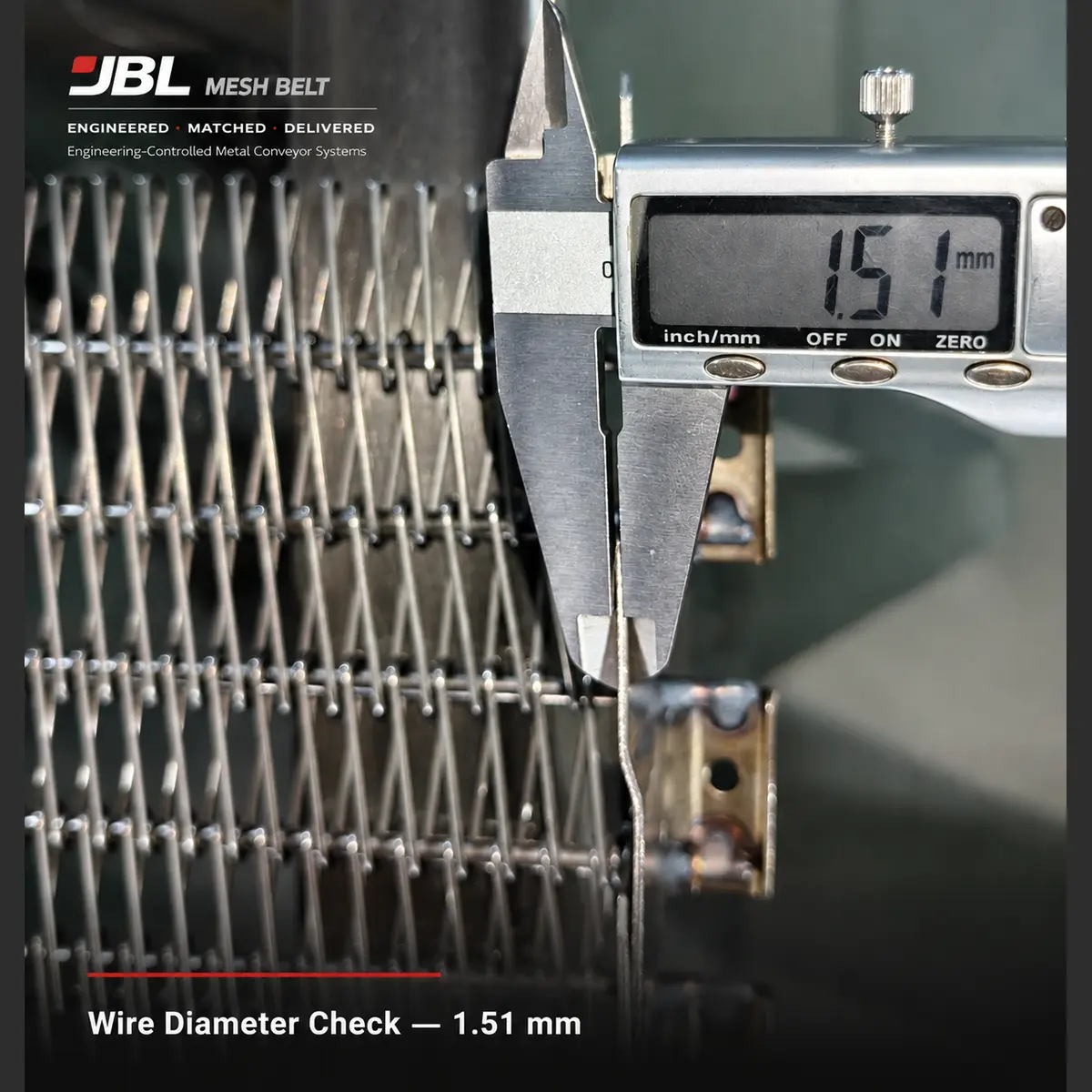
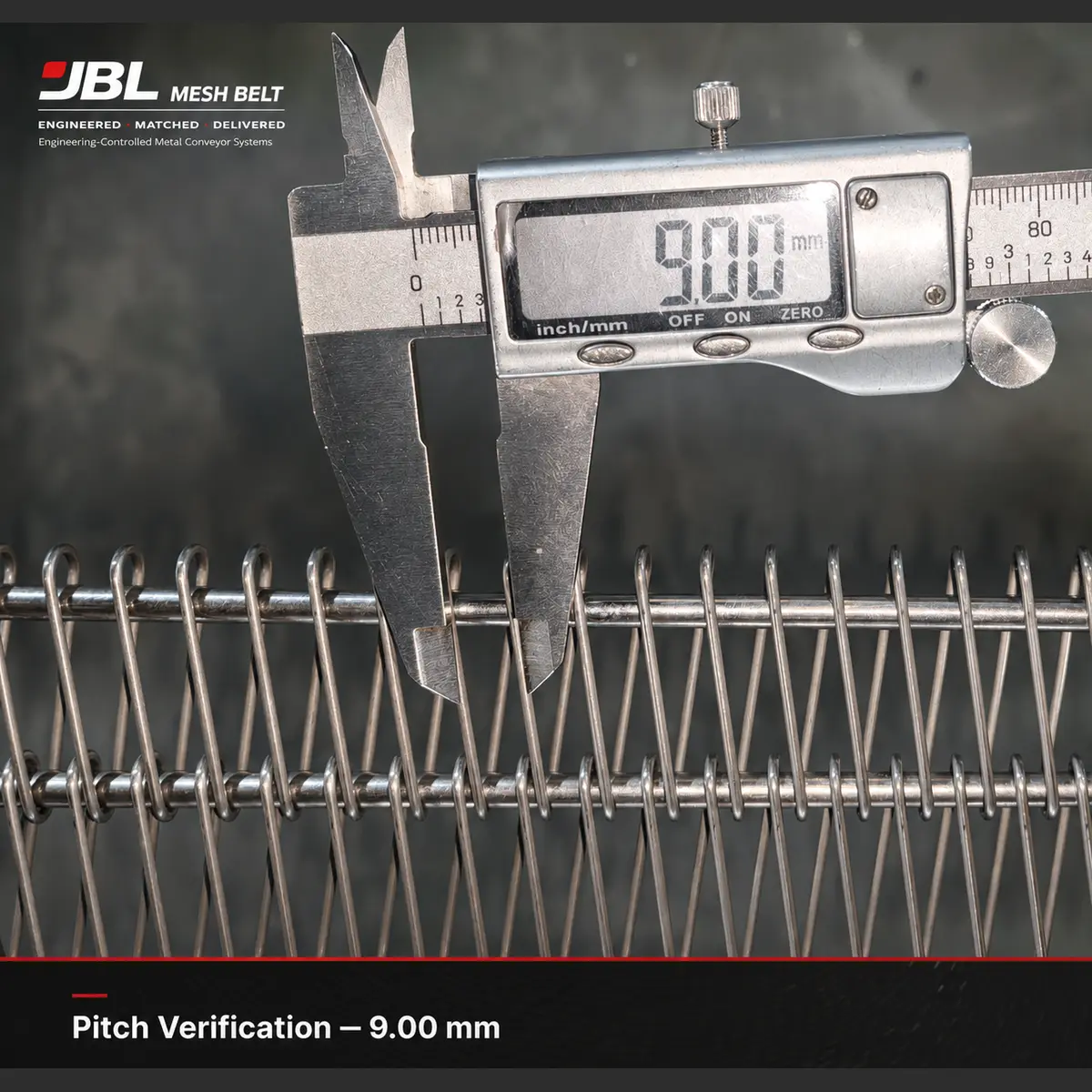
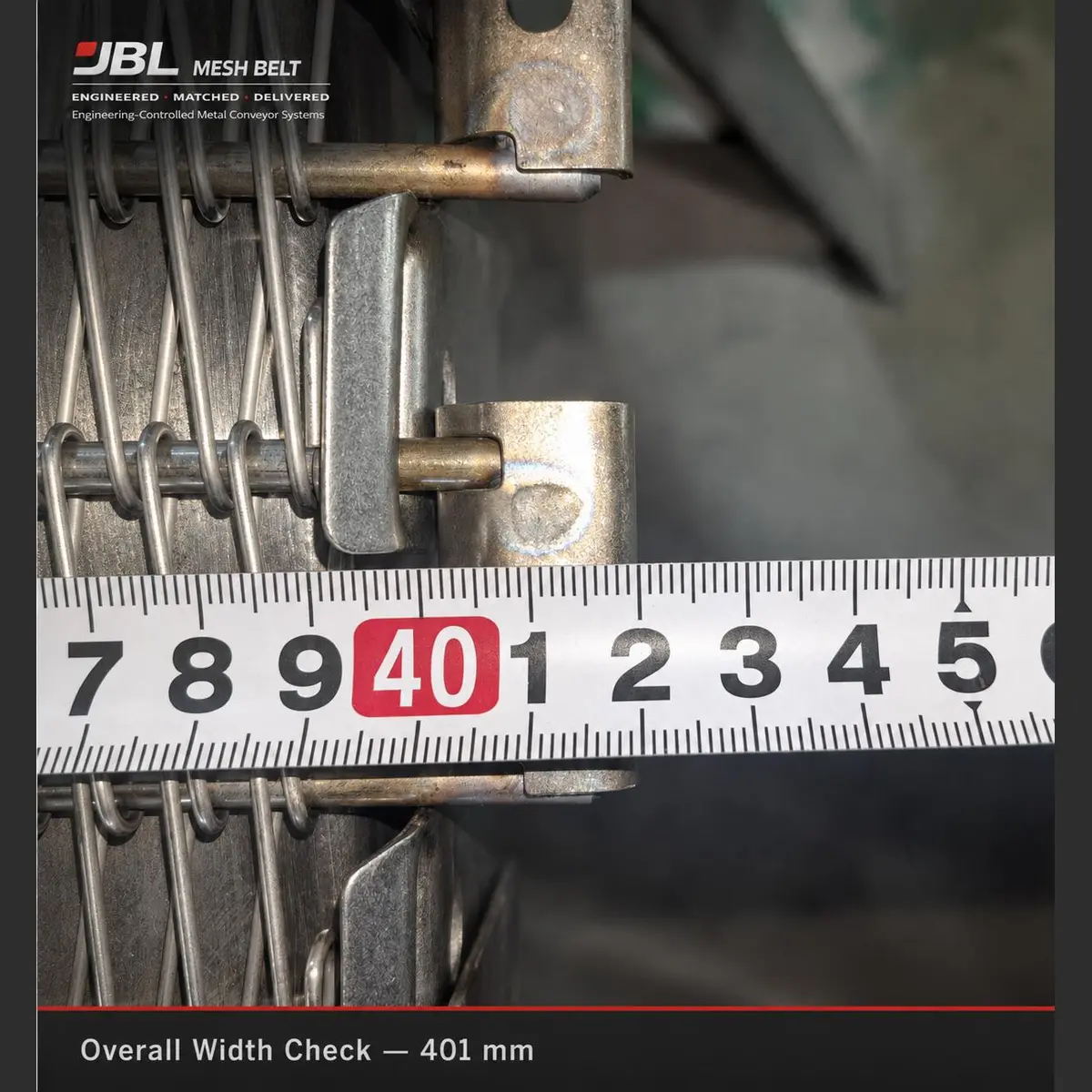
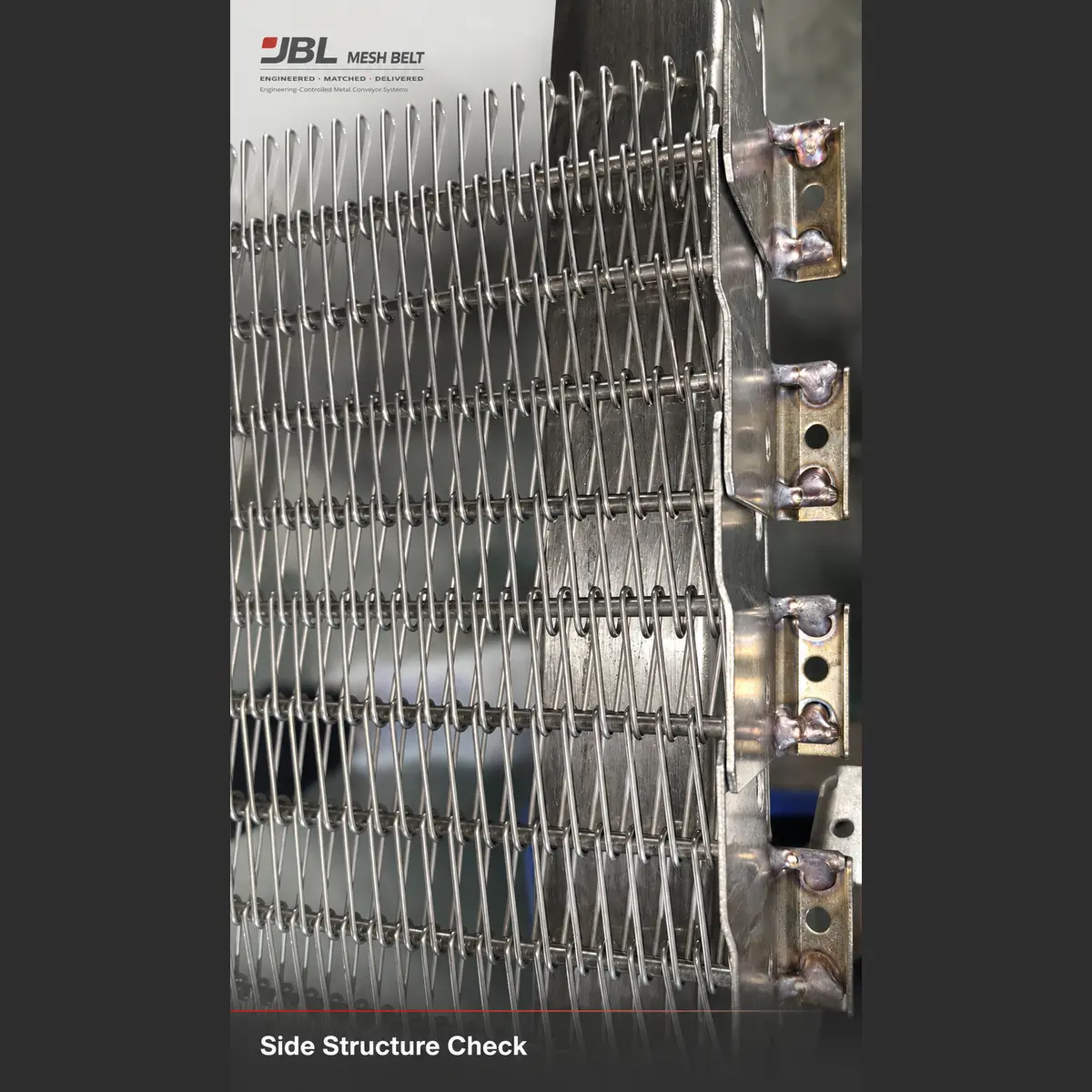
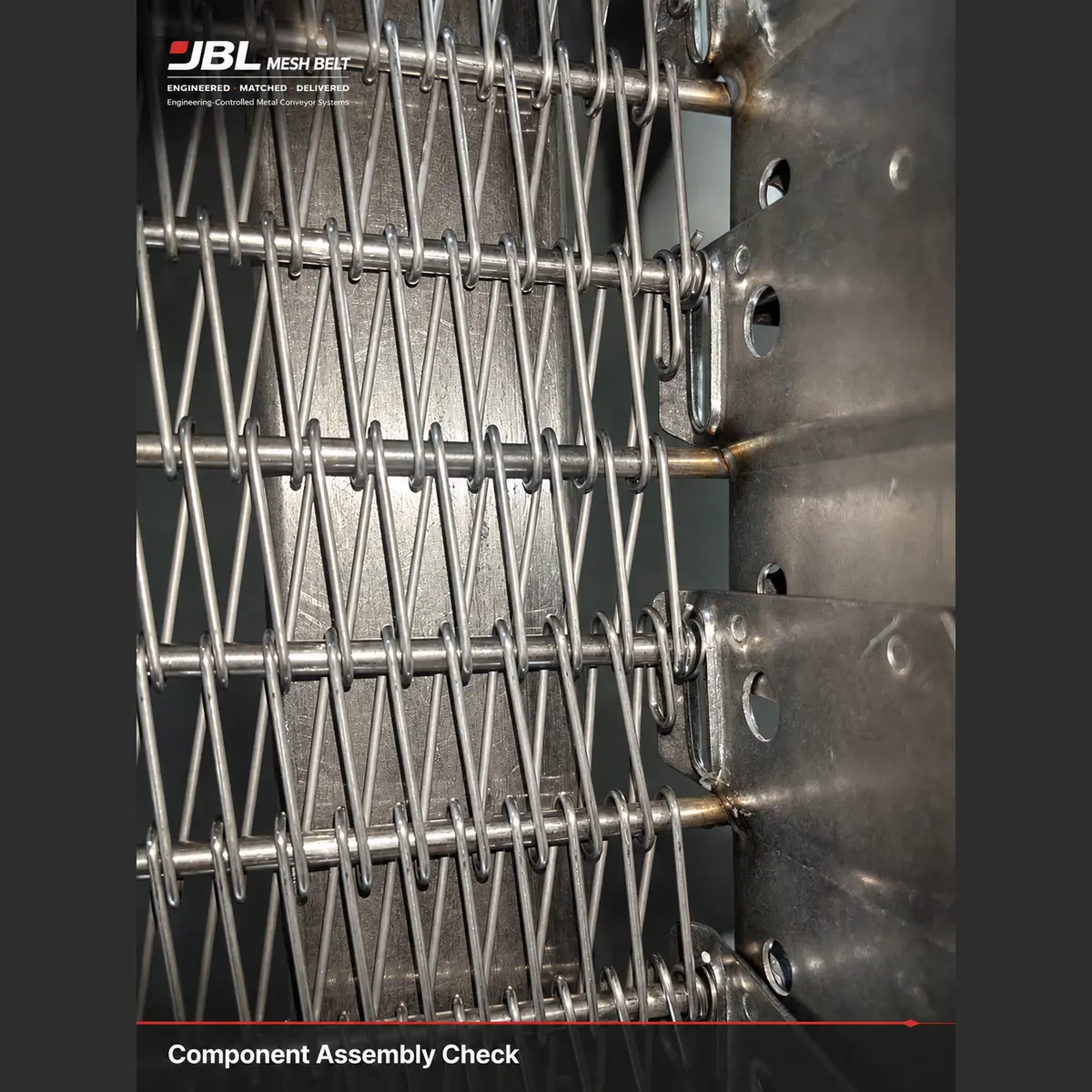
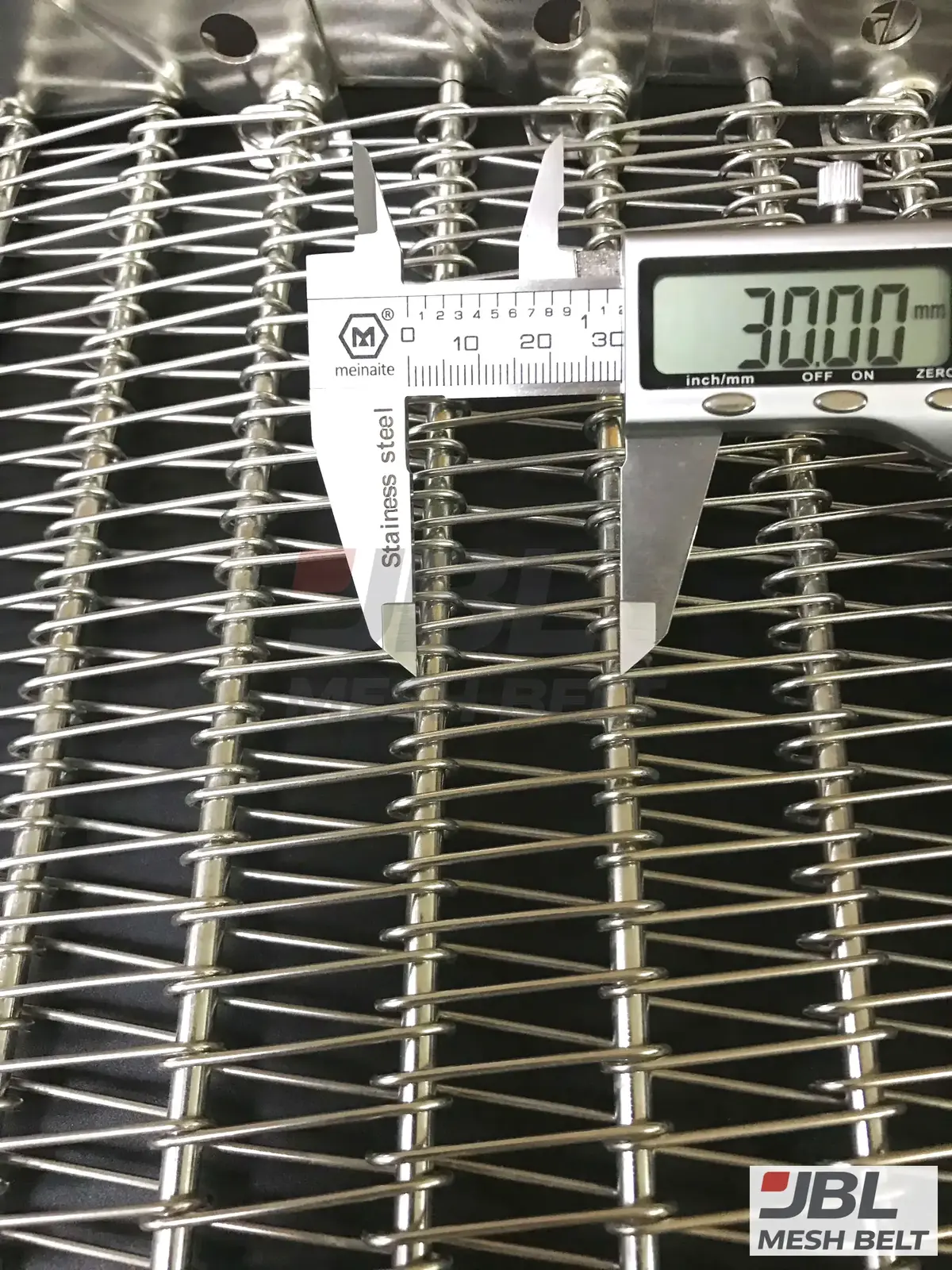
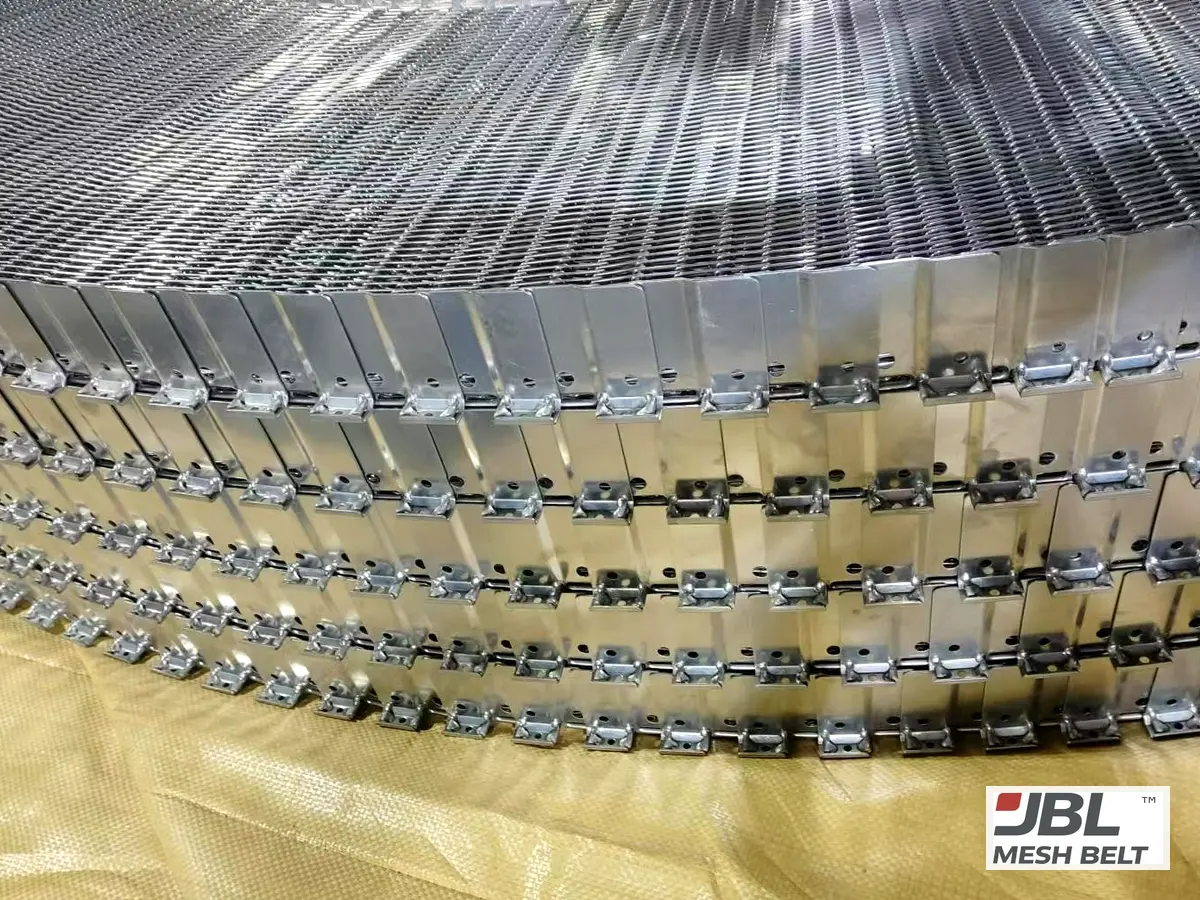
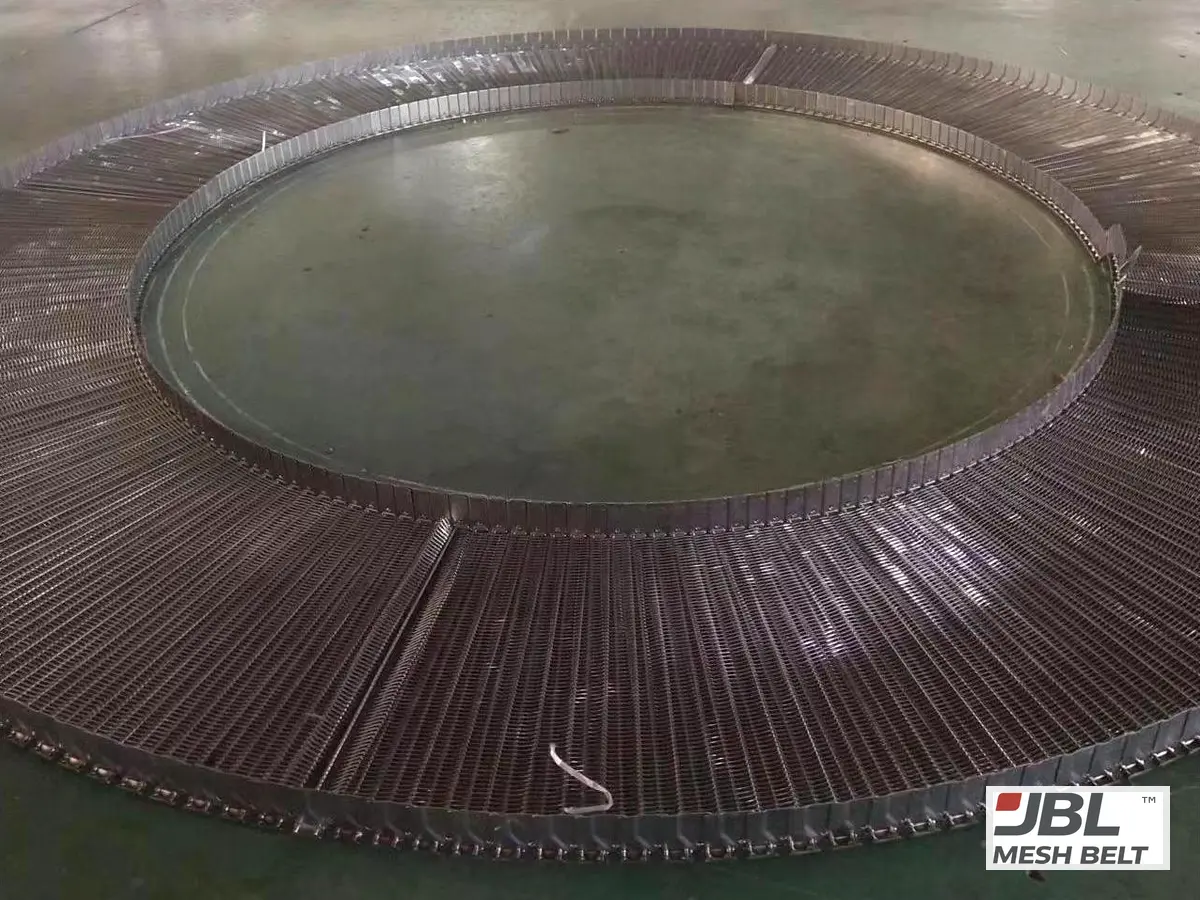
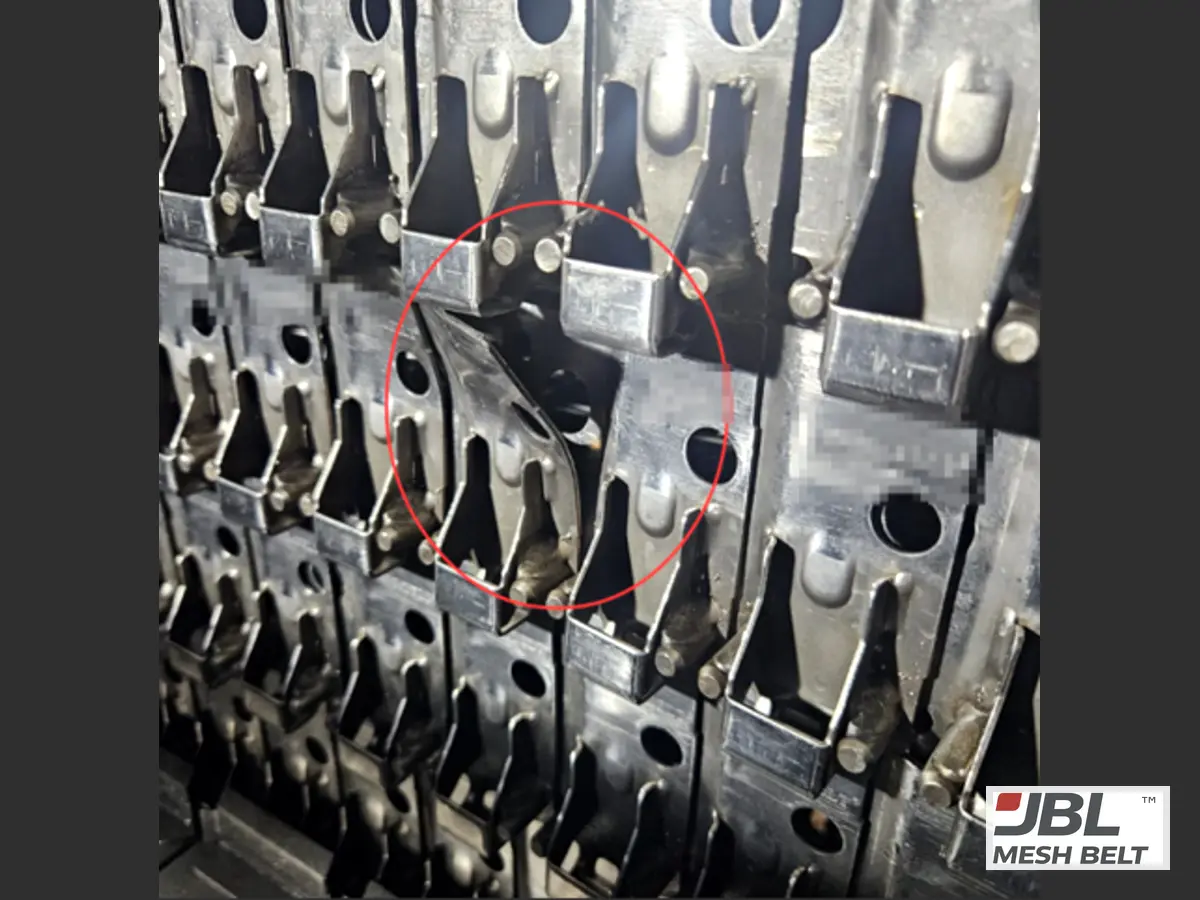
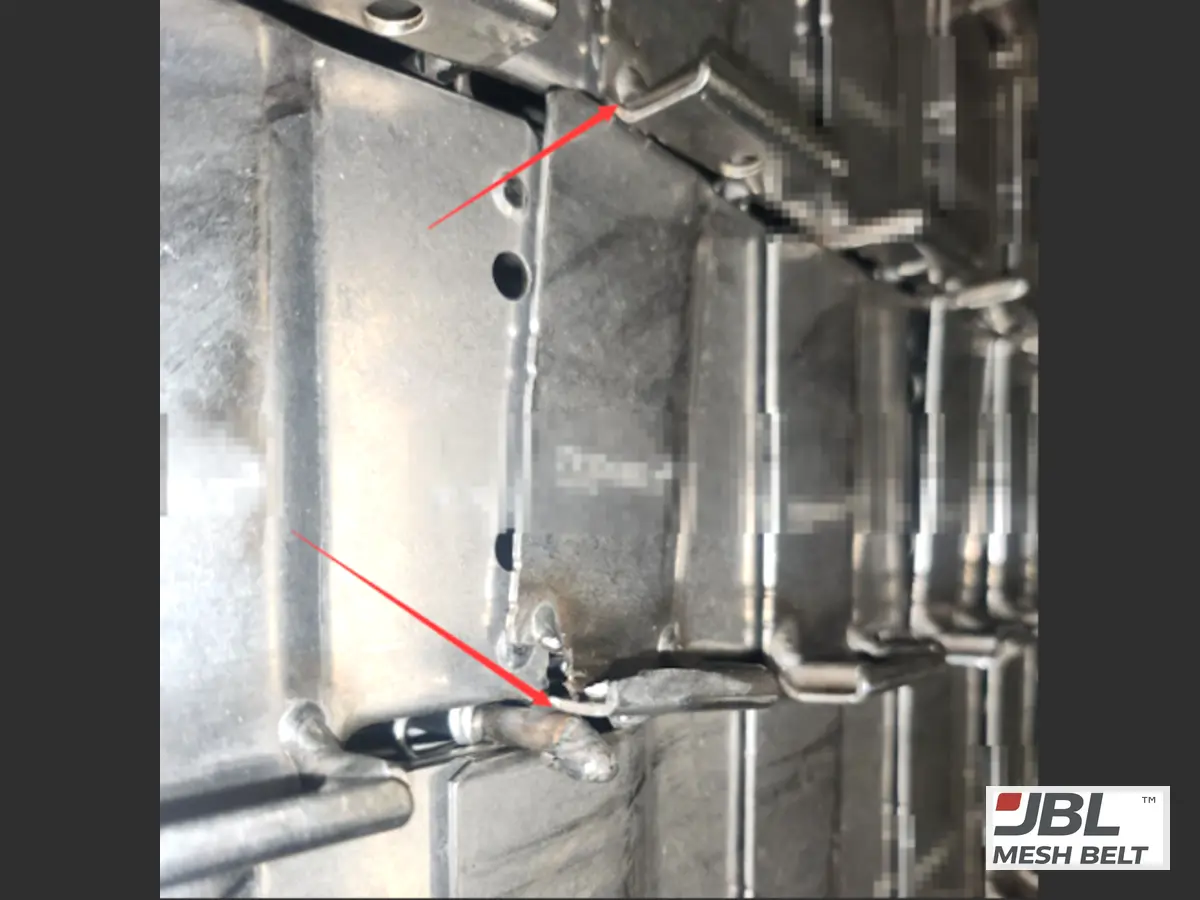
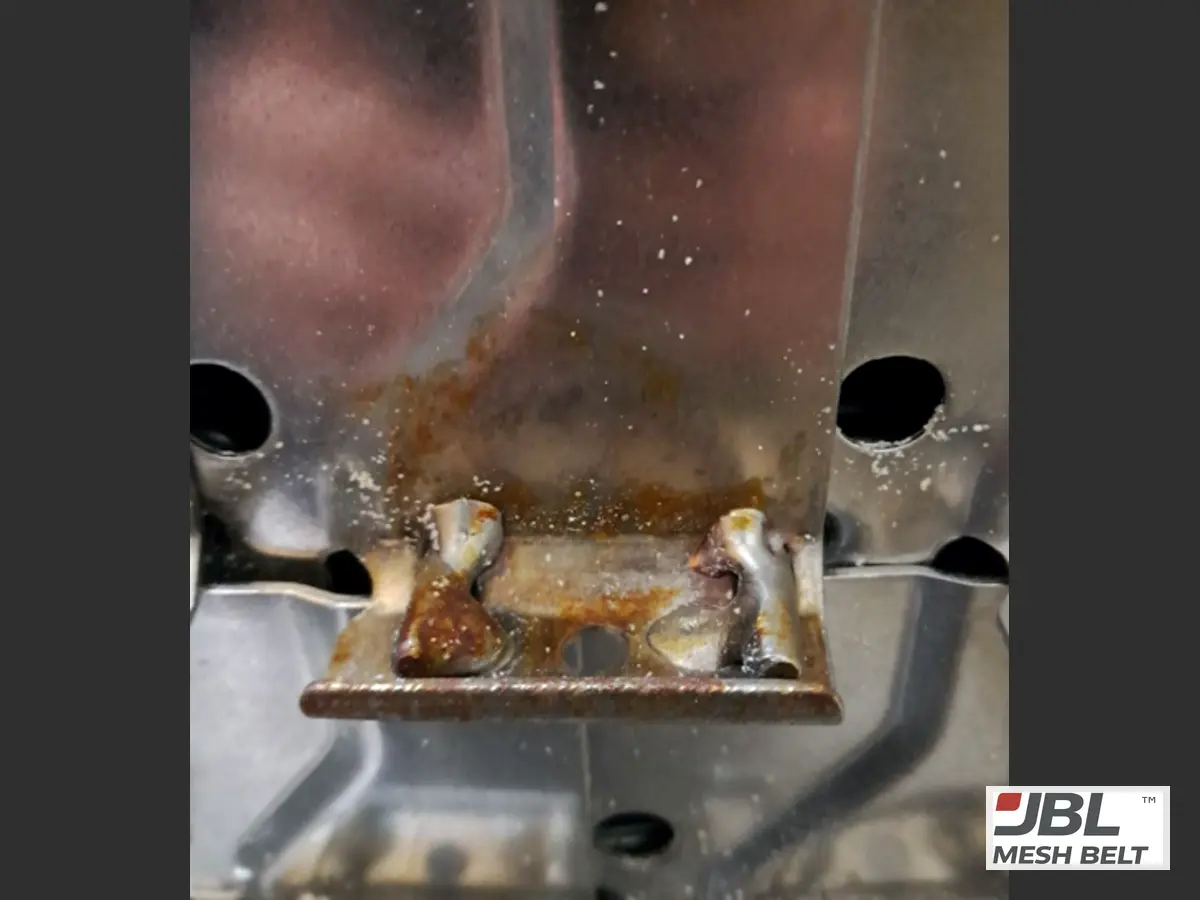
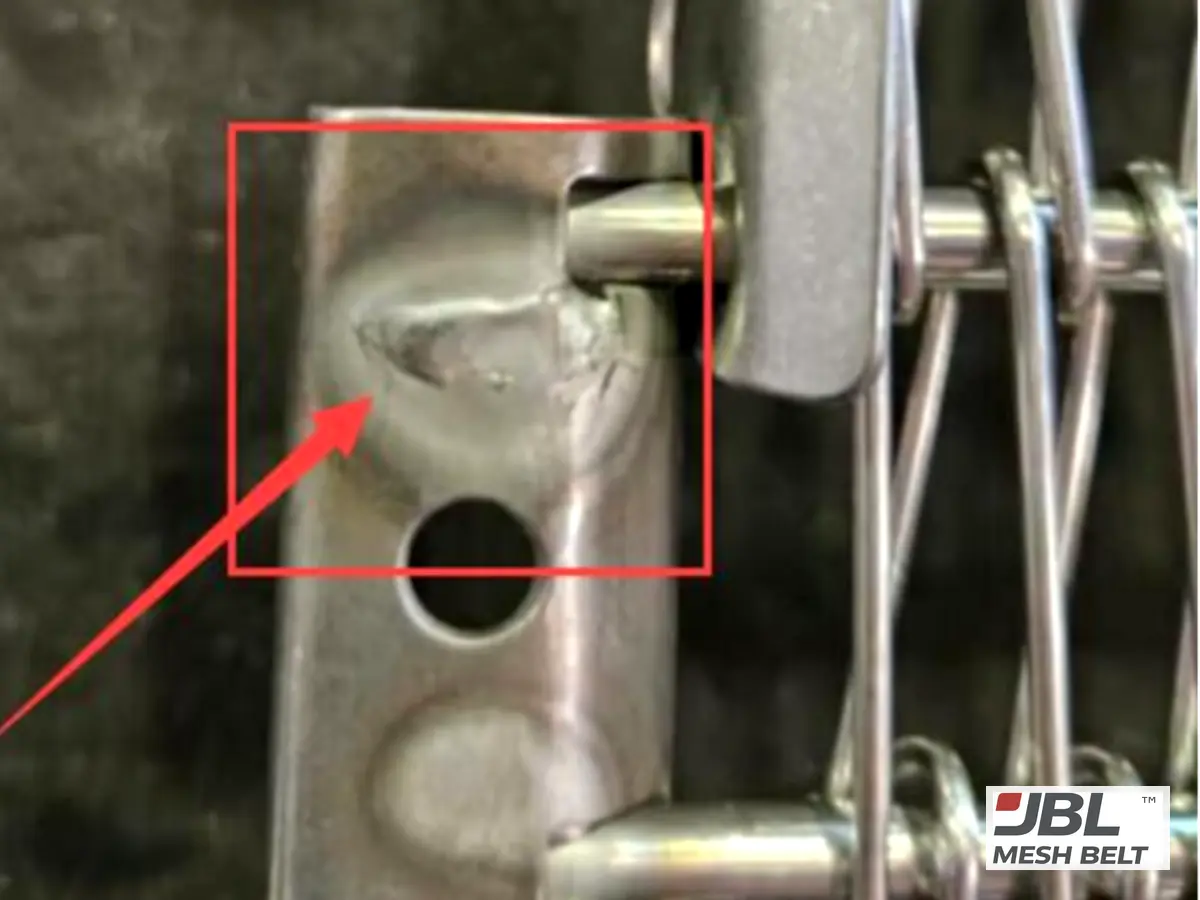
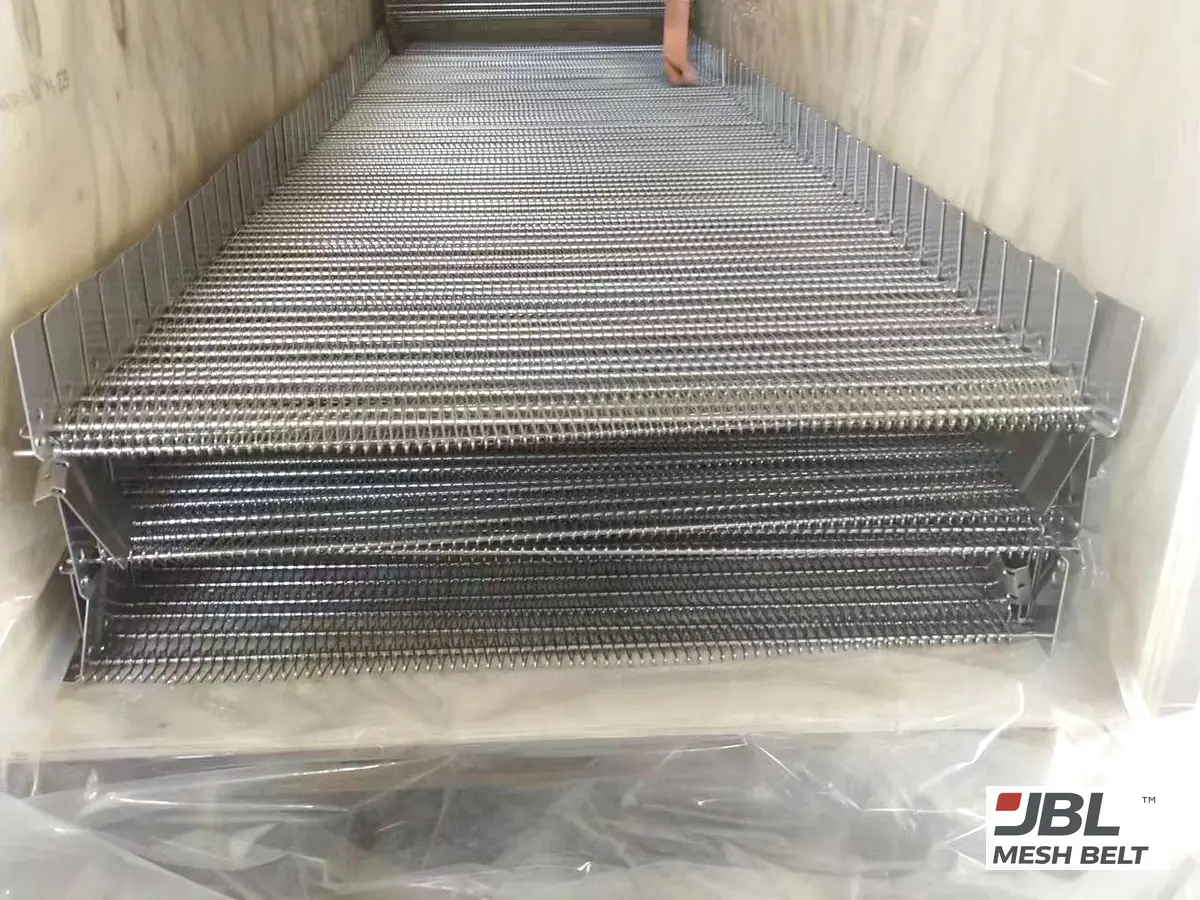
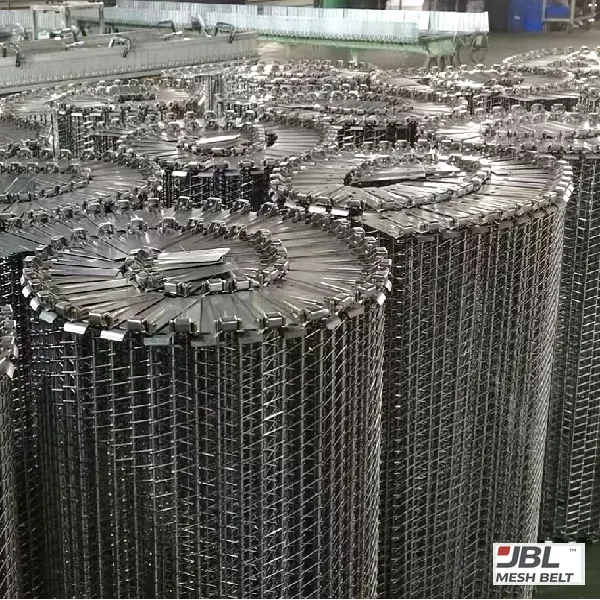
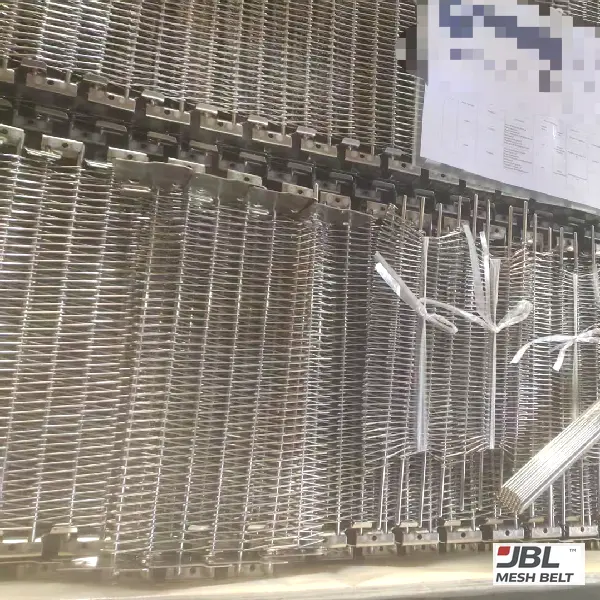
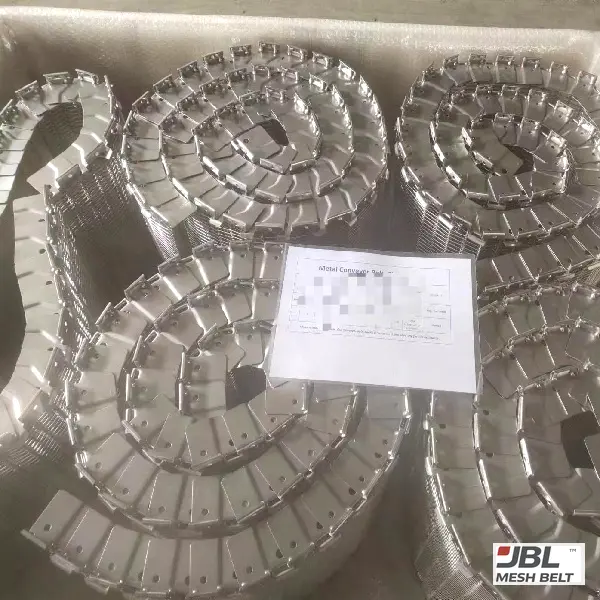
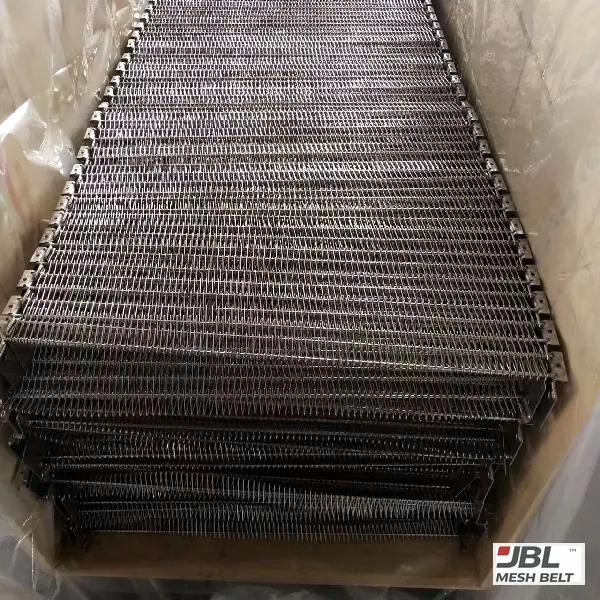
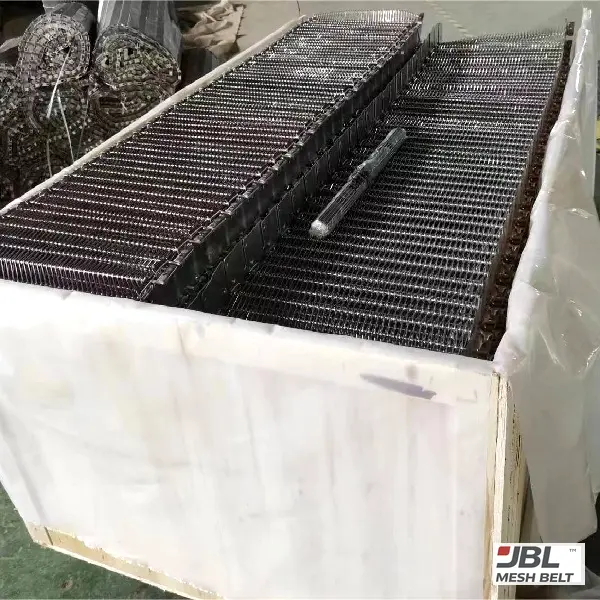
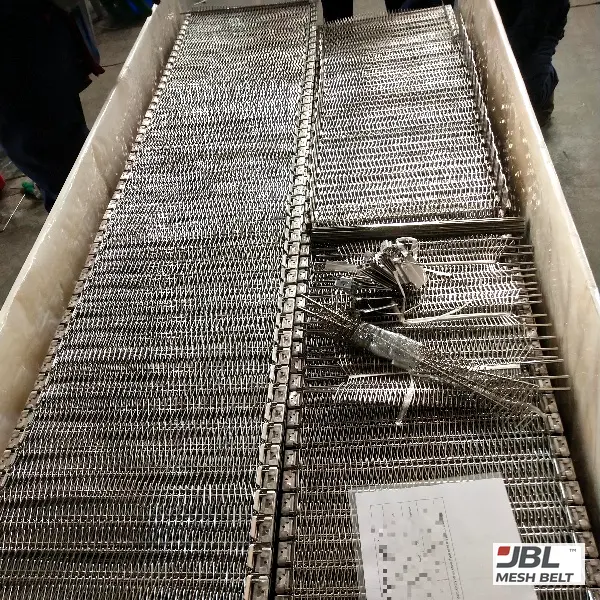
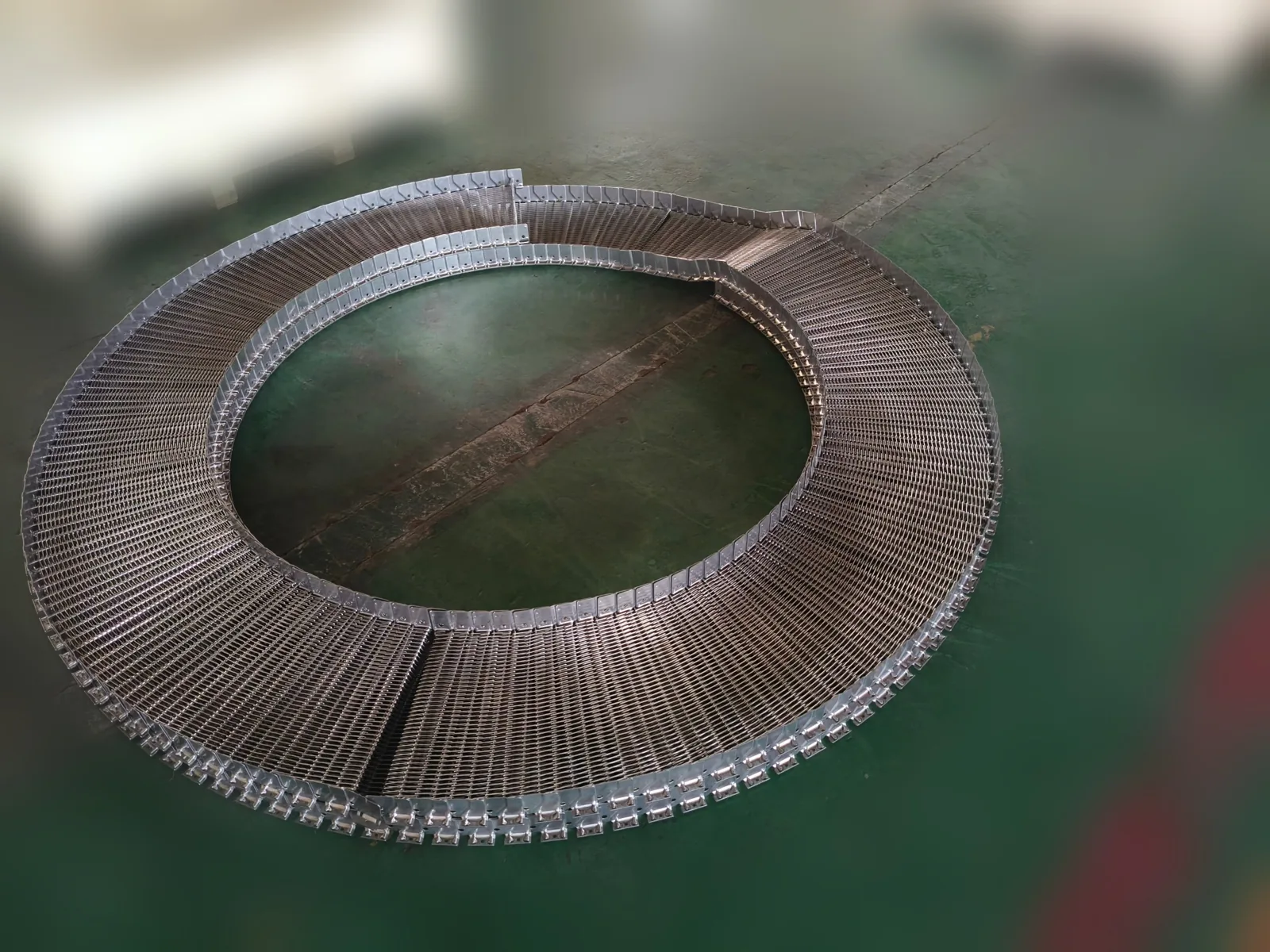
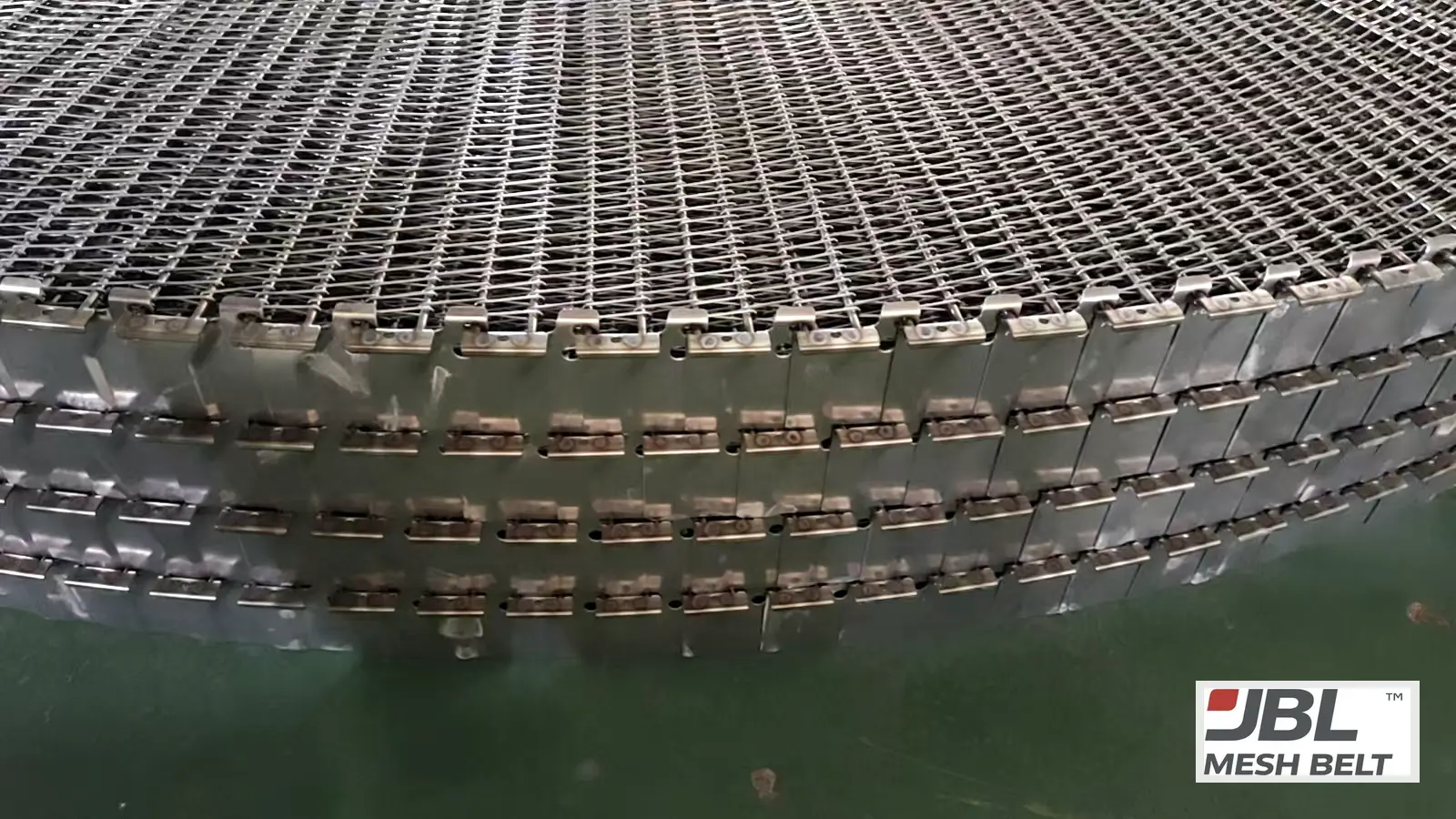
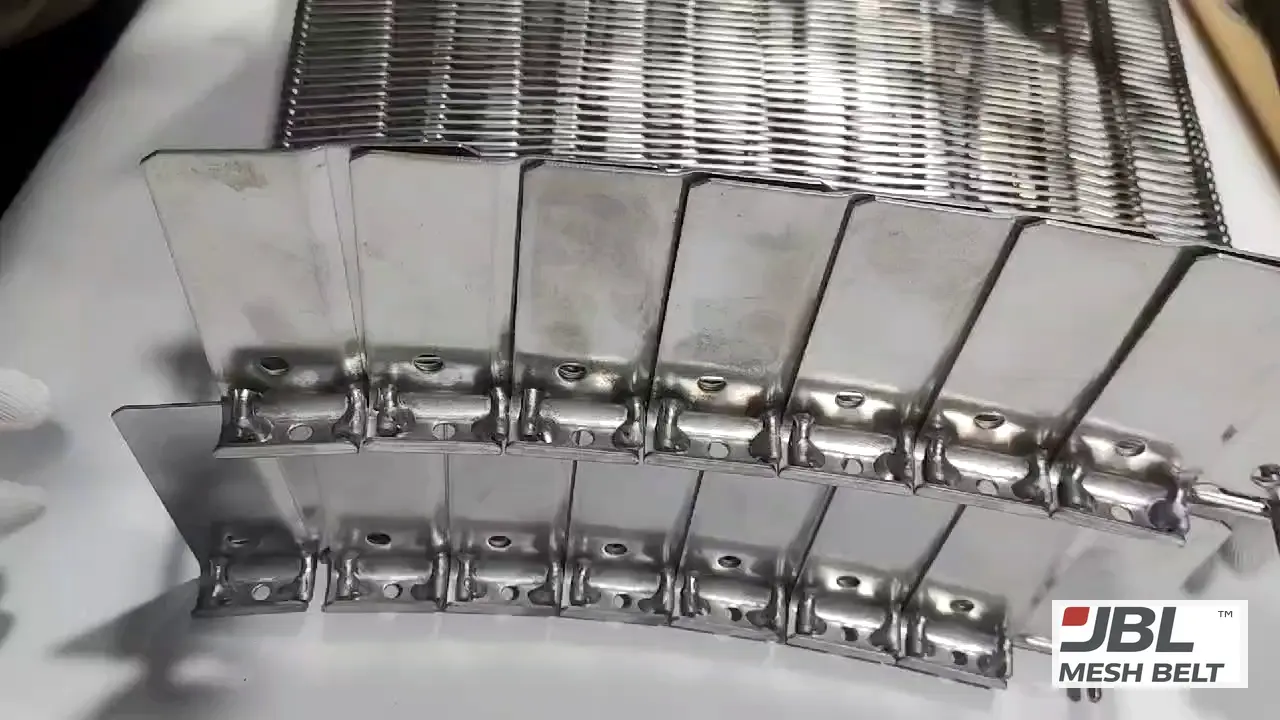
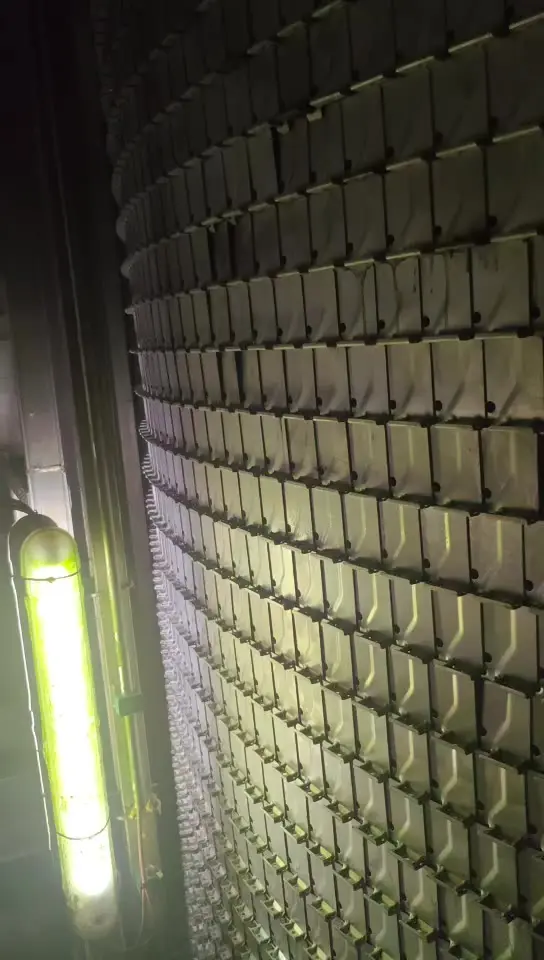
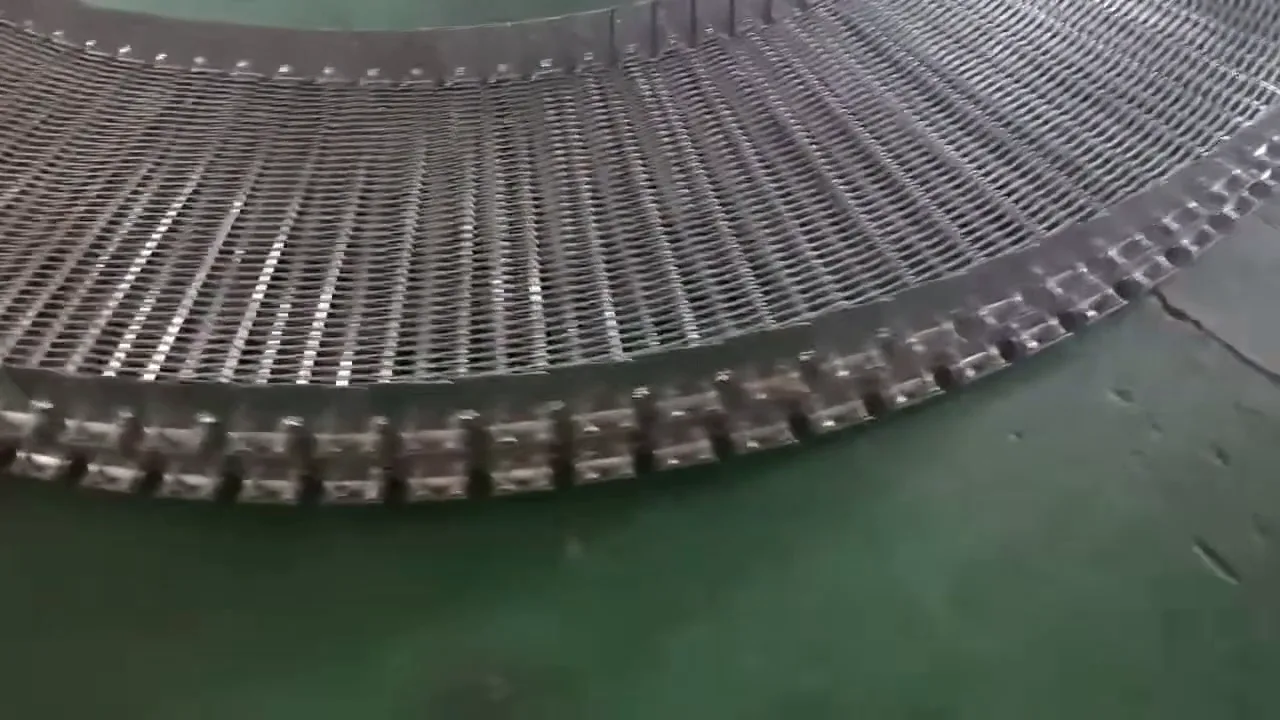
What to measure on a self-stacking belt: the width, rod diameter and pitch, link pitch and height, side plate height and running direction. Side plate height sets the tier height, and usable tier height is the tier height minus the belt clearance.
A self-stacking belt is built for one direction. A belt made for the wrong direction will not stack or run correctly, so clockwise or counter-clockwise is confirmed at inquiry and marked on the drawing.
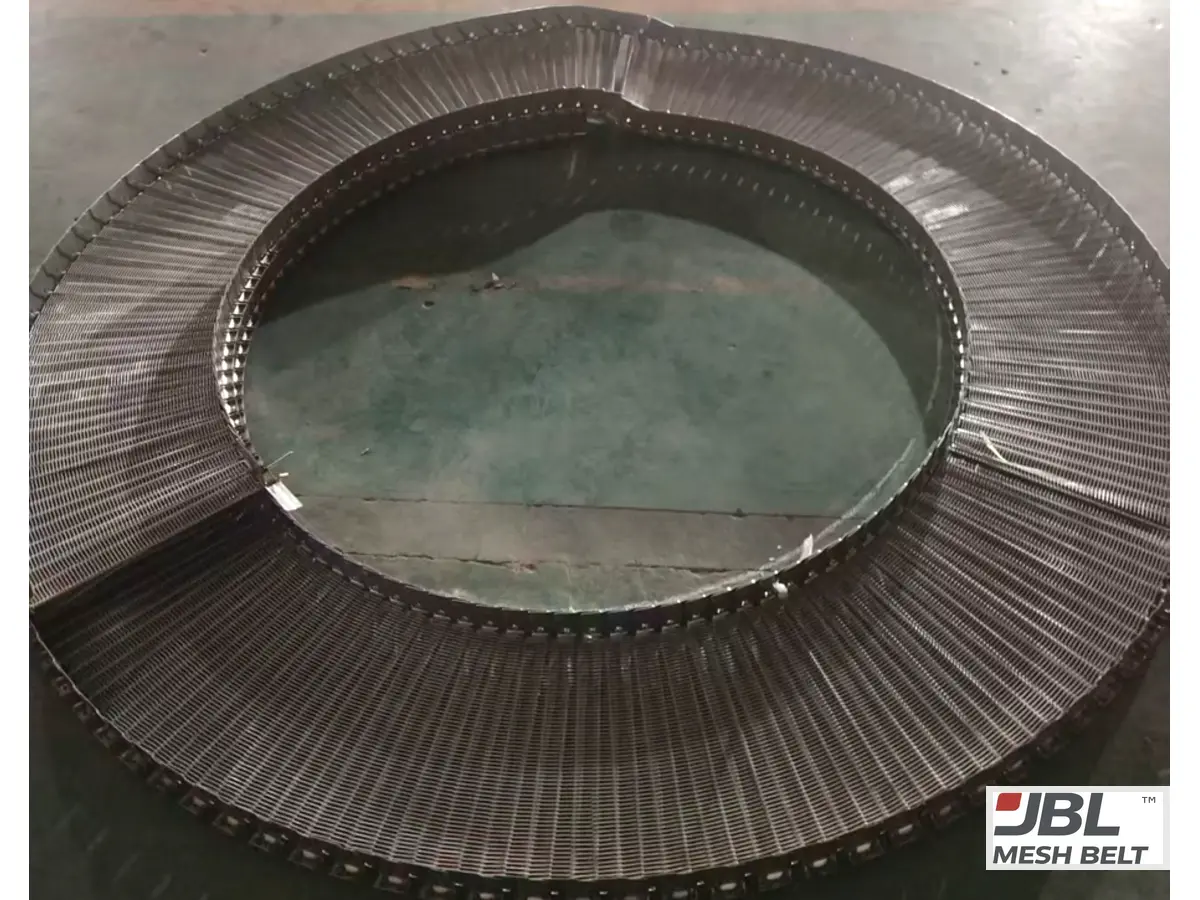
Turn ratio describes how tightly the belt turns around the drum relative to its width. If it does not match your freezer, the tiers will not sit and turn correctly. Reference standard belts use 1.6 or 1.7; heavy duty belts are confirmed per project.
Tier height (vertical pitch) is the height of one tier, set by the side plate. Maximum product clearance is the tier height minus the belt clearance, and decides the tallest product the belt can carry.
For a formal replacement, yes. Photos and basic dimensions support an initial review and indicative quotation, but stacking engagement and side-plate fit are confirmed on the physical sample.
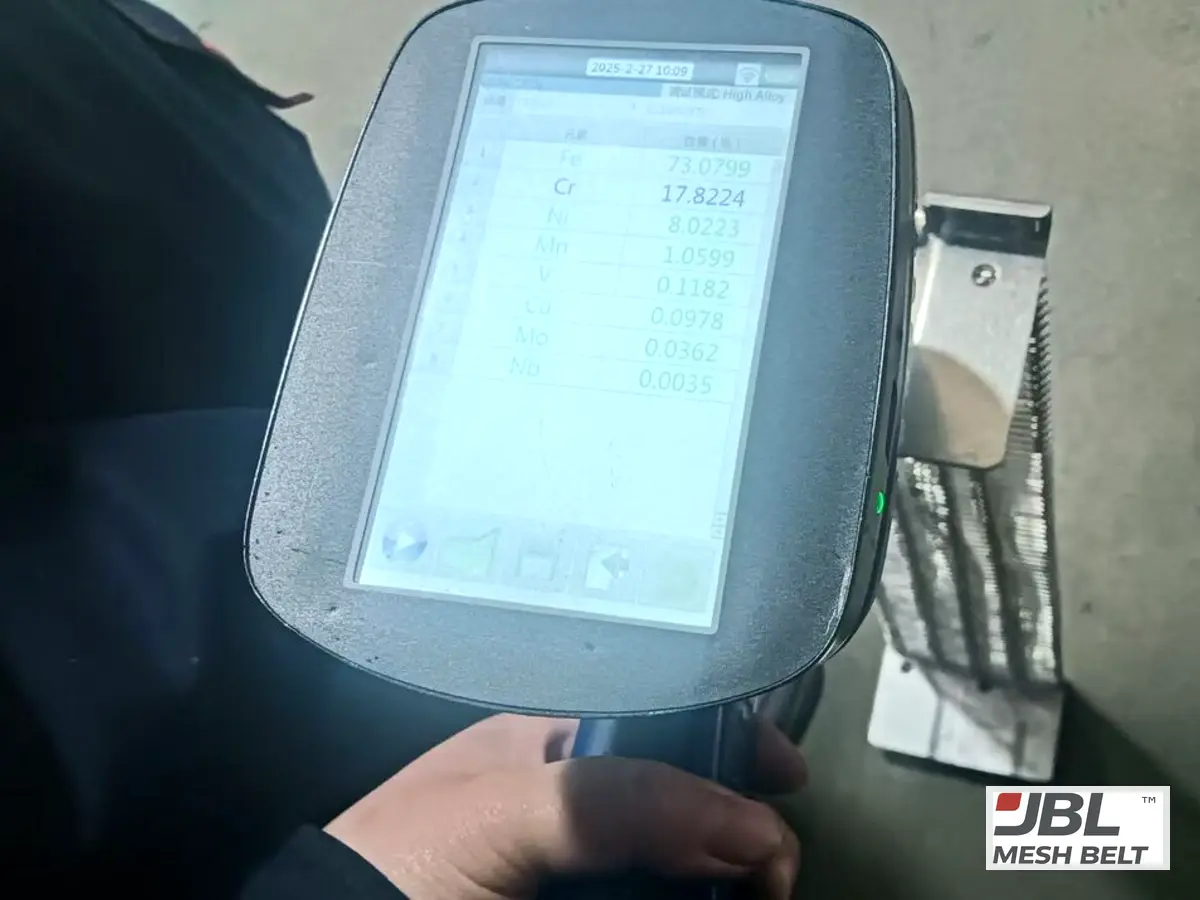
A trial sample is made and compared with your original for structure, dimensions and material. Bulk production starts only after you approve it.
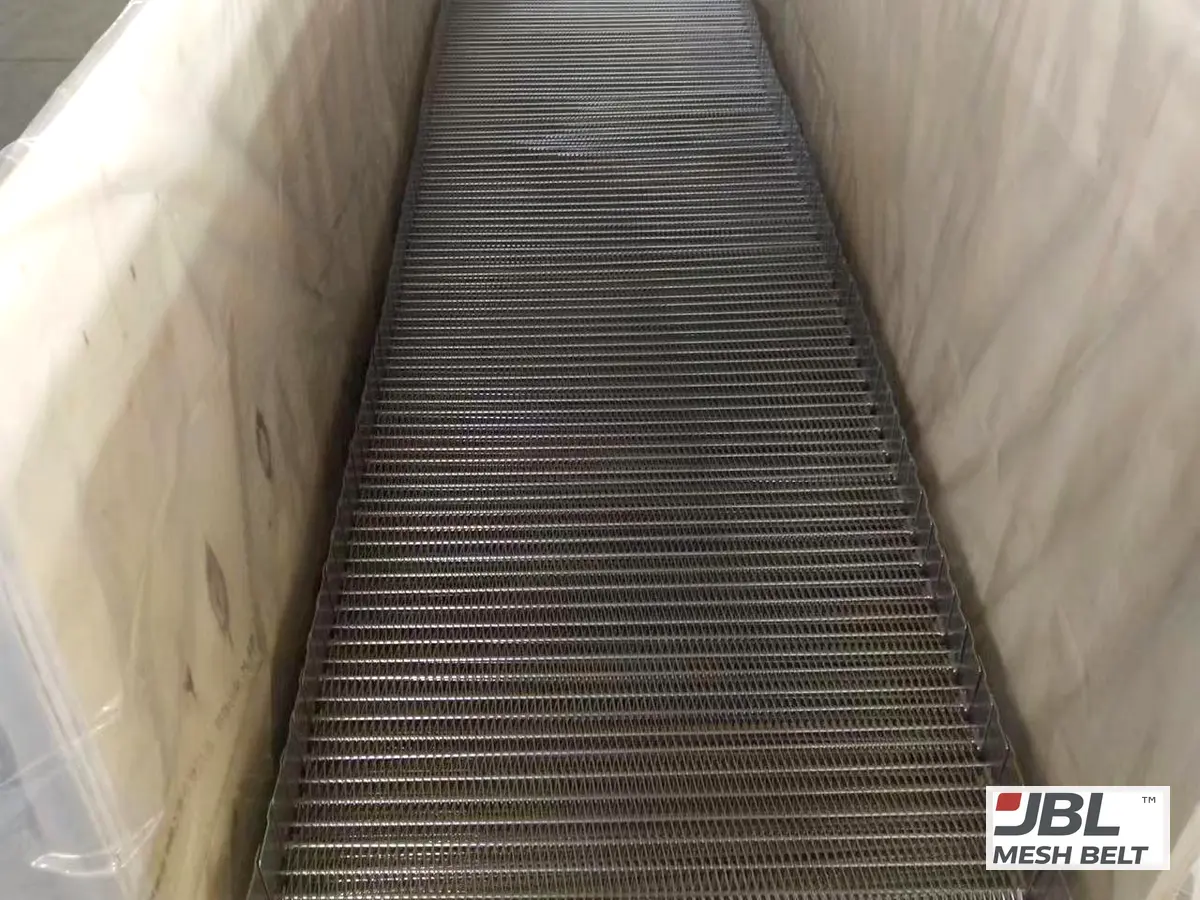
Stacking tests are performed for self-stacking belt orders: tiers are stacked and run, straightness is checked, and the belt is turned on a test drum matched to your drum diameter and turn ratio. Photos and video are shared before shipment.
Heavy duty uses 6.0 or 7.0 mm rods, taller side plate options and reinforcement pieces where specified. The choice depends on product load and your freezer, and is confirmed per project.
Reference projects use 60, 80, 90, 100 and 120 mm for standard belts, and 80, 100 and 150 mm for heavy duty belts, with 1.5 mm side plate thickness.
Not if the new belt matches your existing drum, direction and drive — this is checked first. Where your freezer uses sprockets, they are checked together with the new belt; if anything needs to change, you are told before quoting.
Both side plates close up, the belt from above with a caliper across the rod pitch, caliper readings of side plate height and thickness, rod and wire diameter, and a photo of the freezer tower showing which way the belt turns. A nameplate photo helps. These support a first review; stacking fit is confirmed on a sample.
An engineer checks turn ratio, running direction, tier height and side plates, and replies with what fits, what is missing and the next step. A trial sample is then made and compared with your original, and bulk production starts only after you approve it.
They depend on the belt and the project, and are confirmed in writing in the quotation.