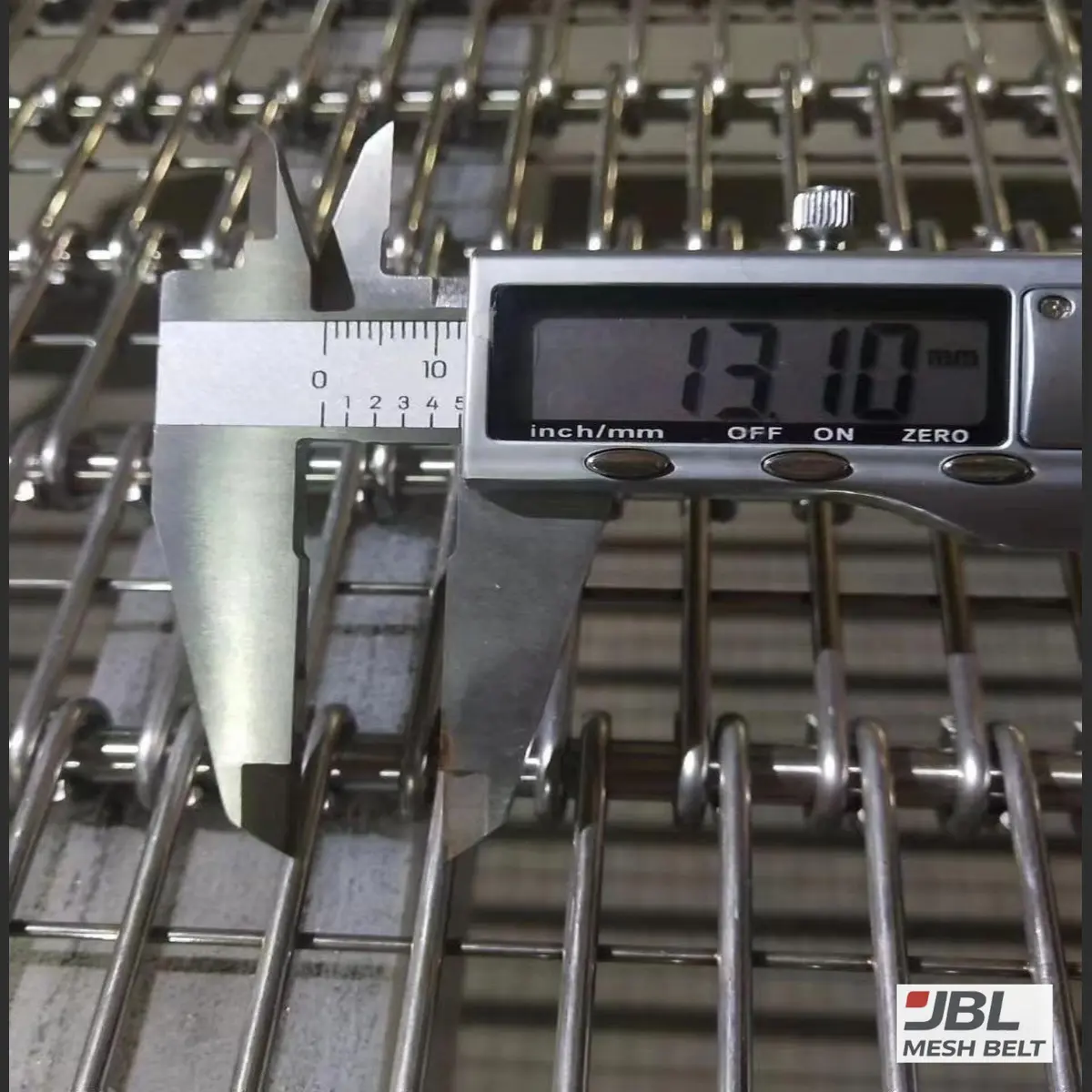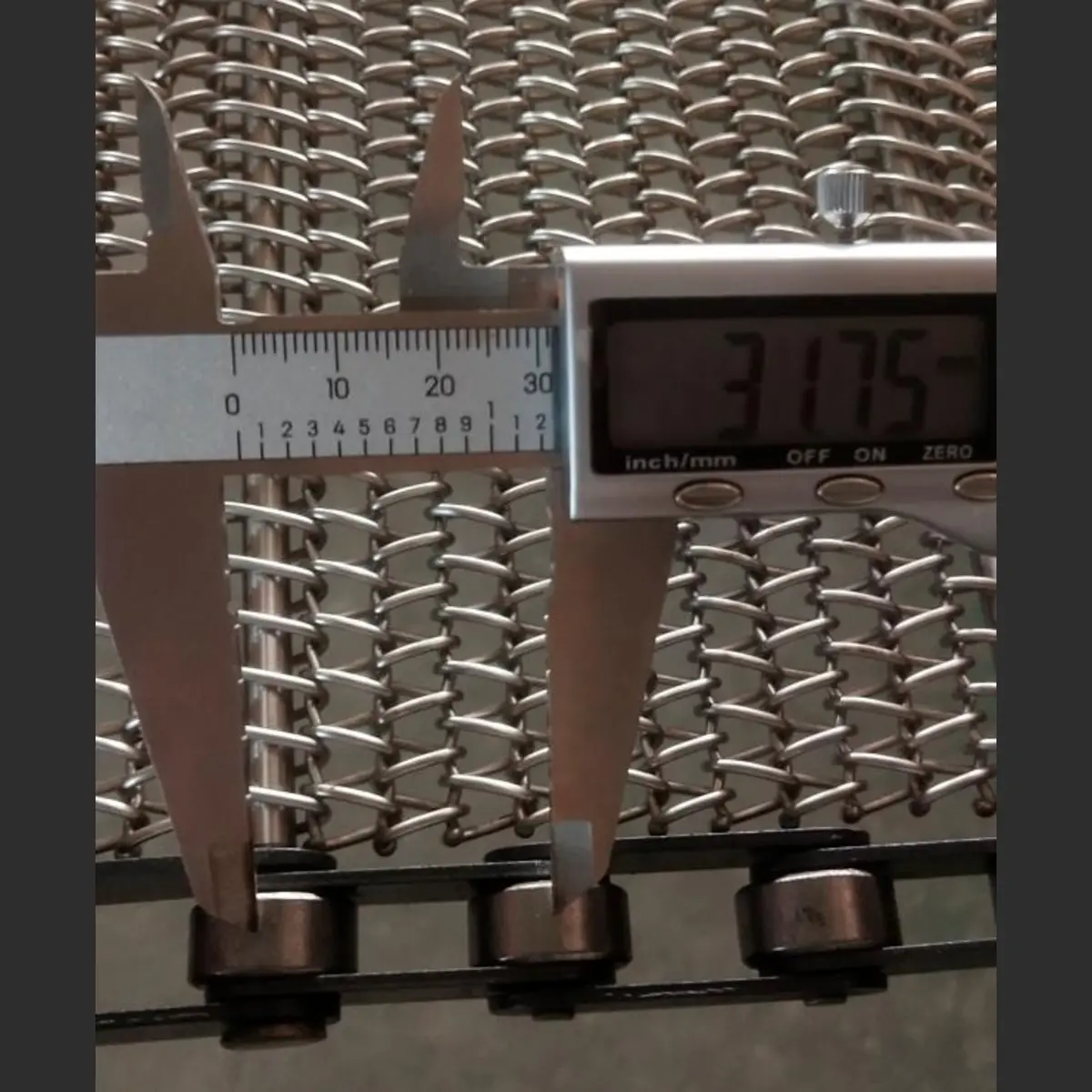
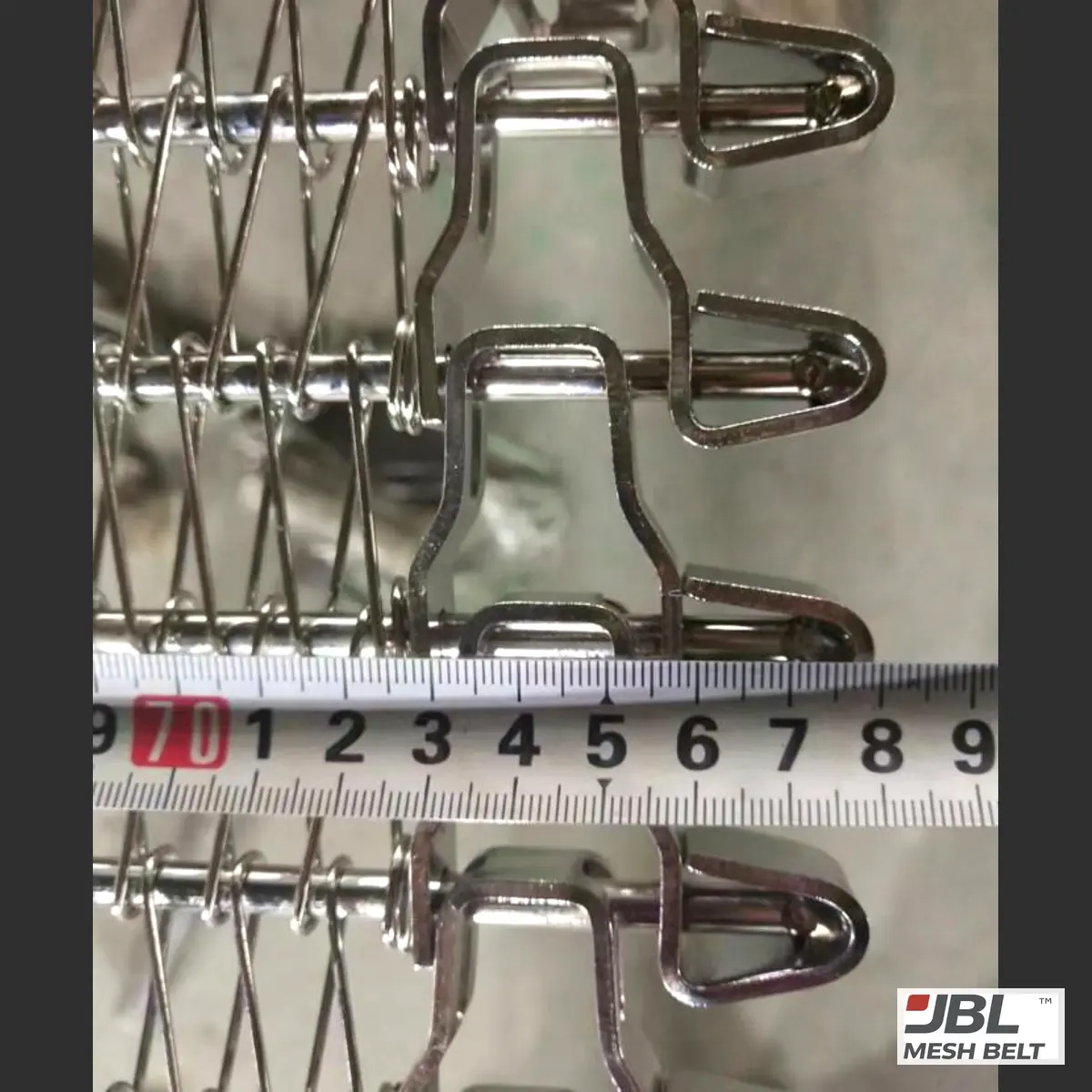
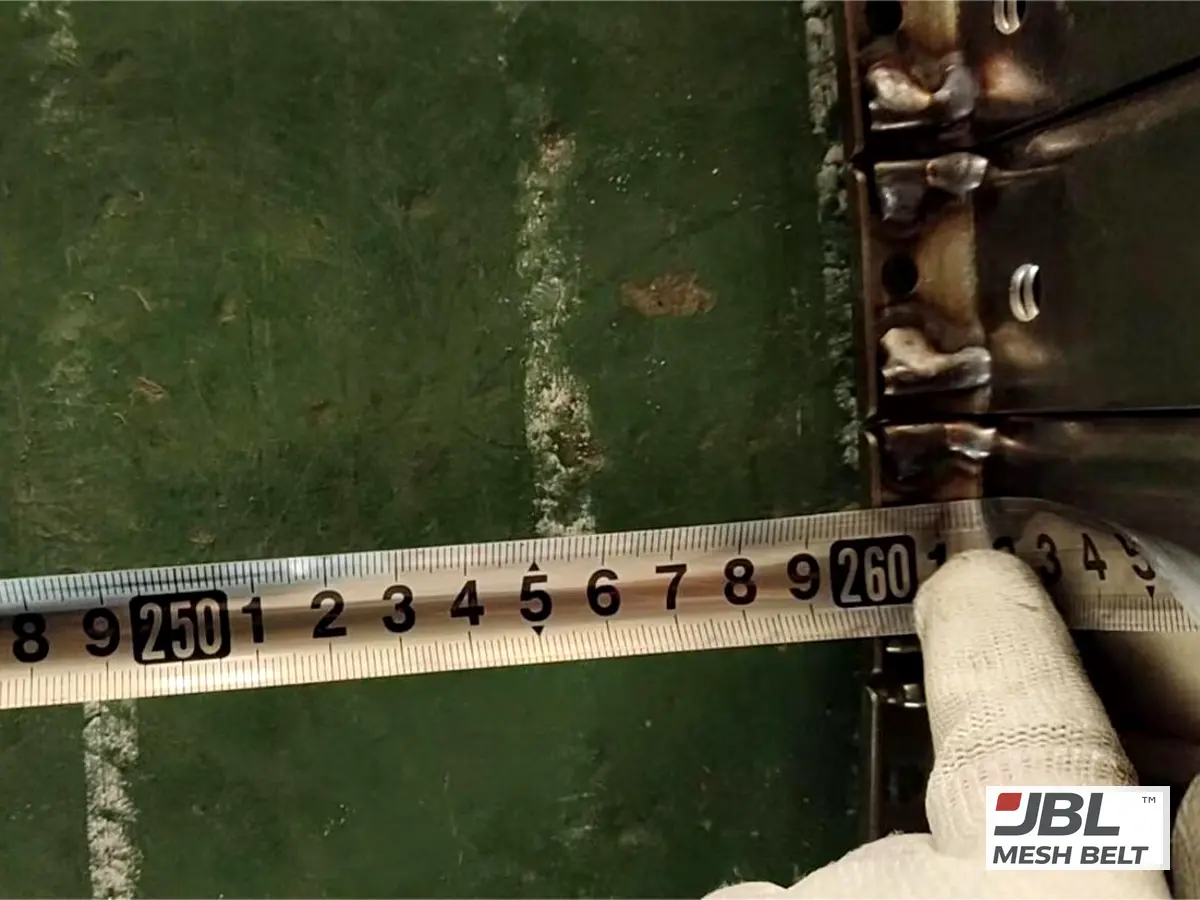
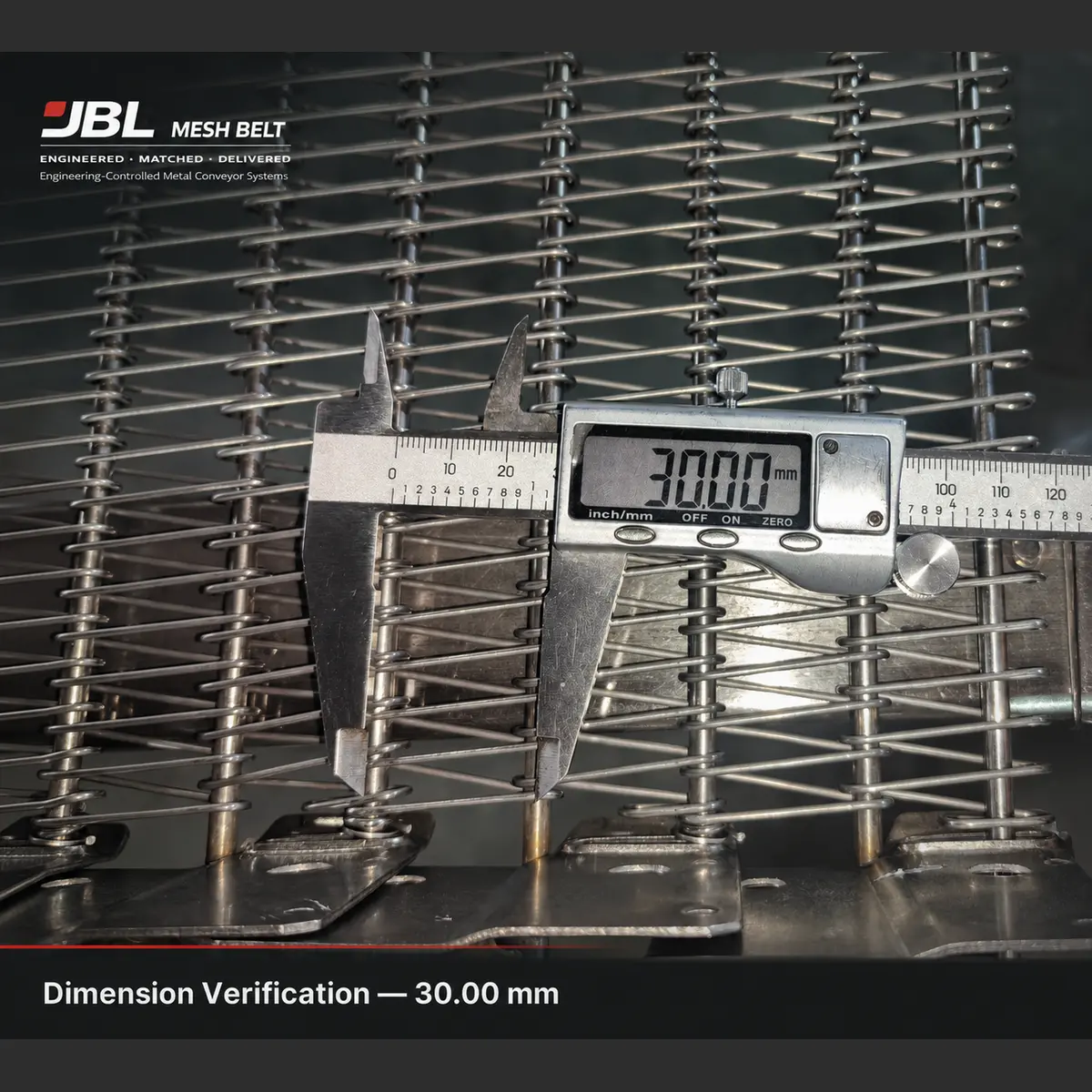
- ✓Width
- ✓Rod diameter and pitch
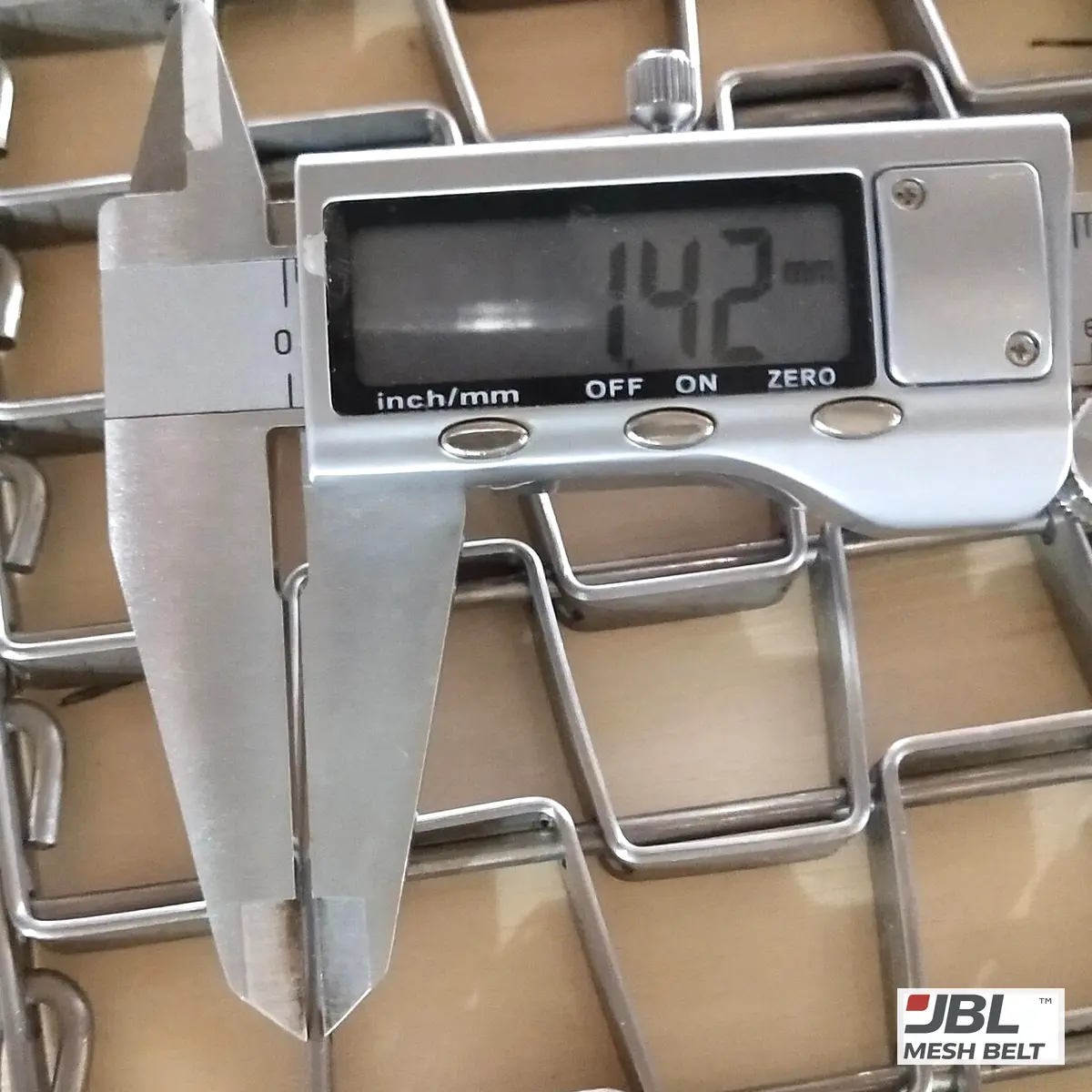
- ✓Link pitch and height
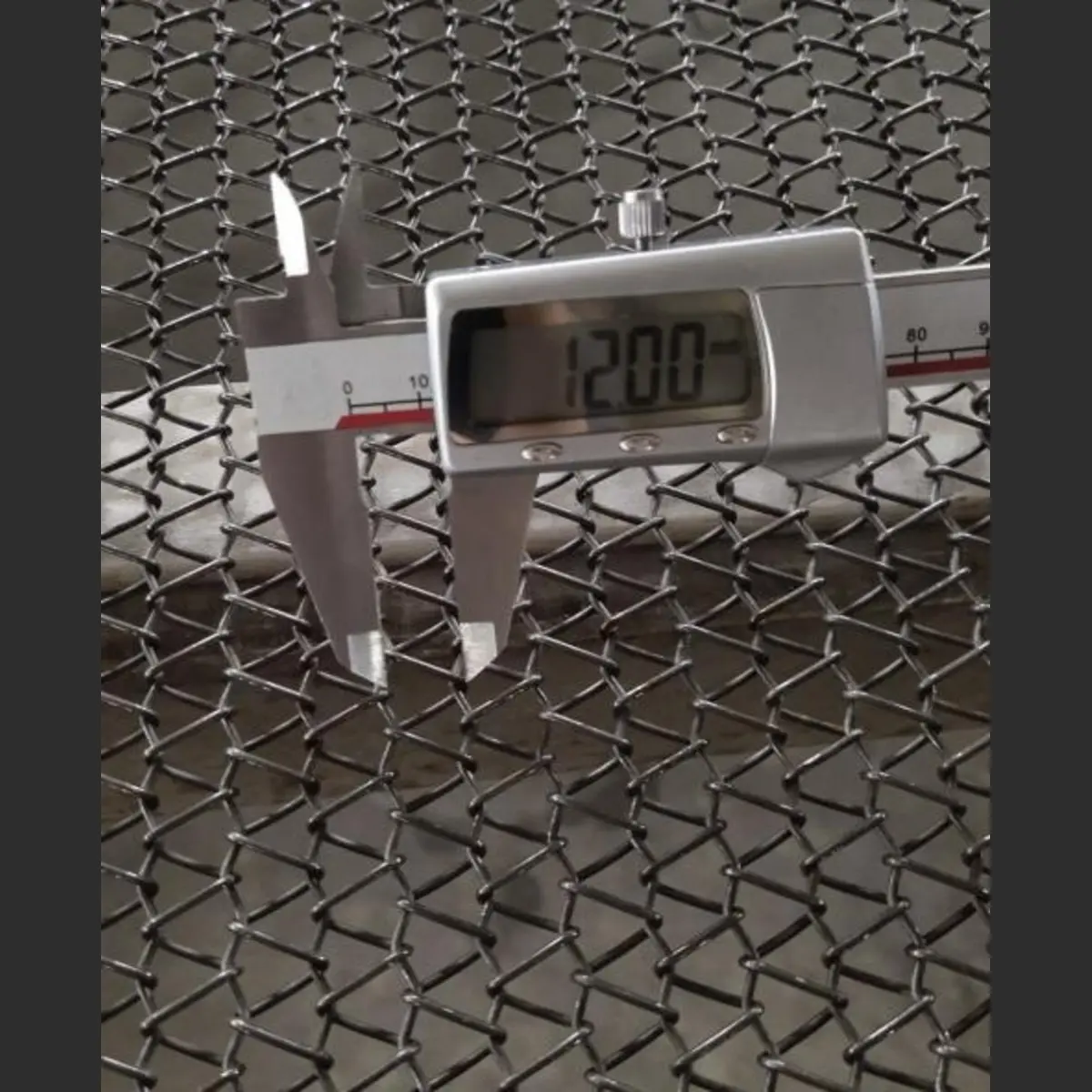
- ✓Turn ratio and drum diameter
- ✓Tier height and CW / CCW (self-stacking)
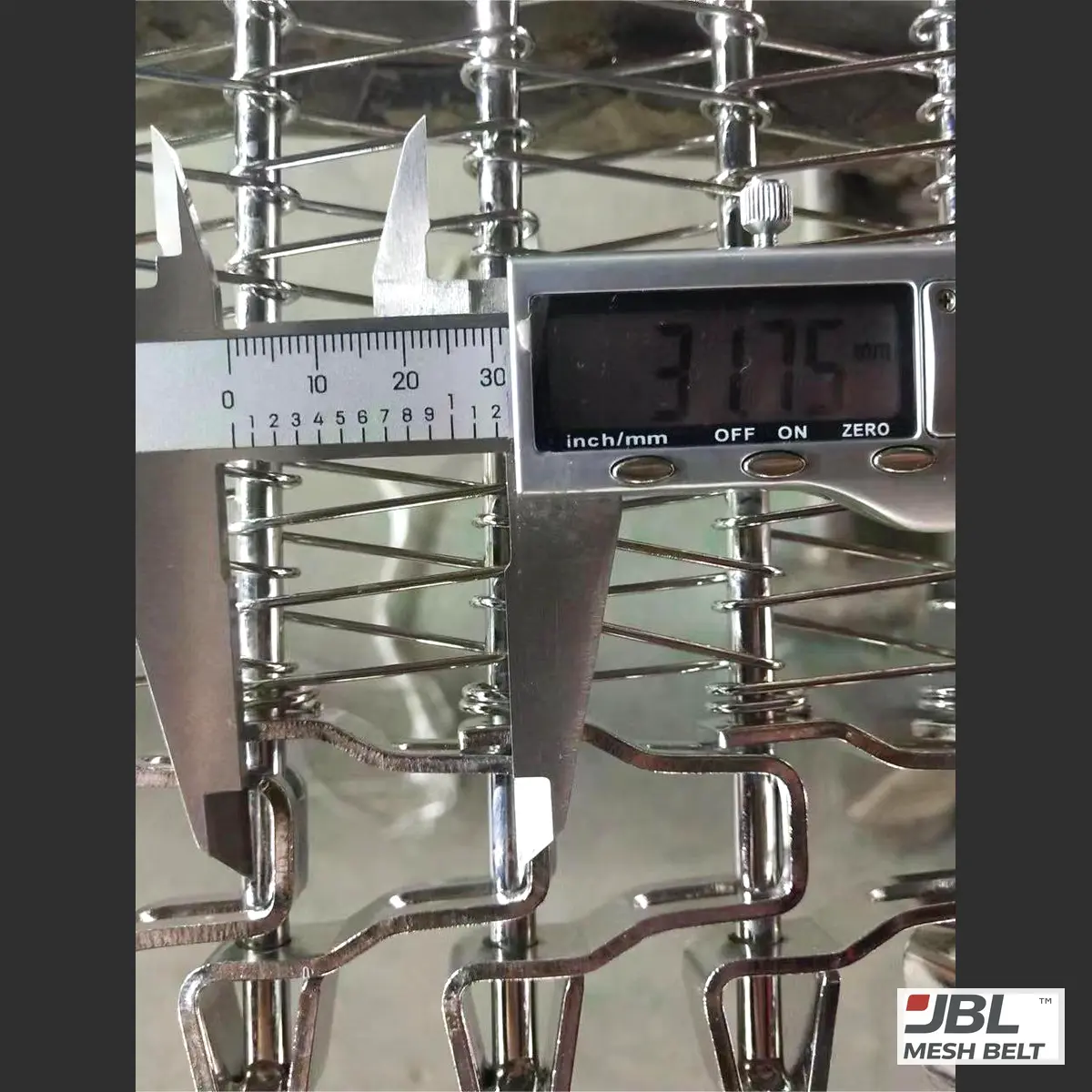
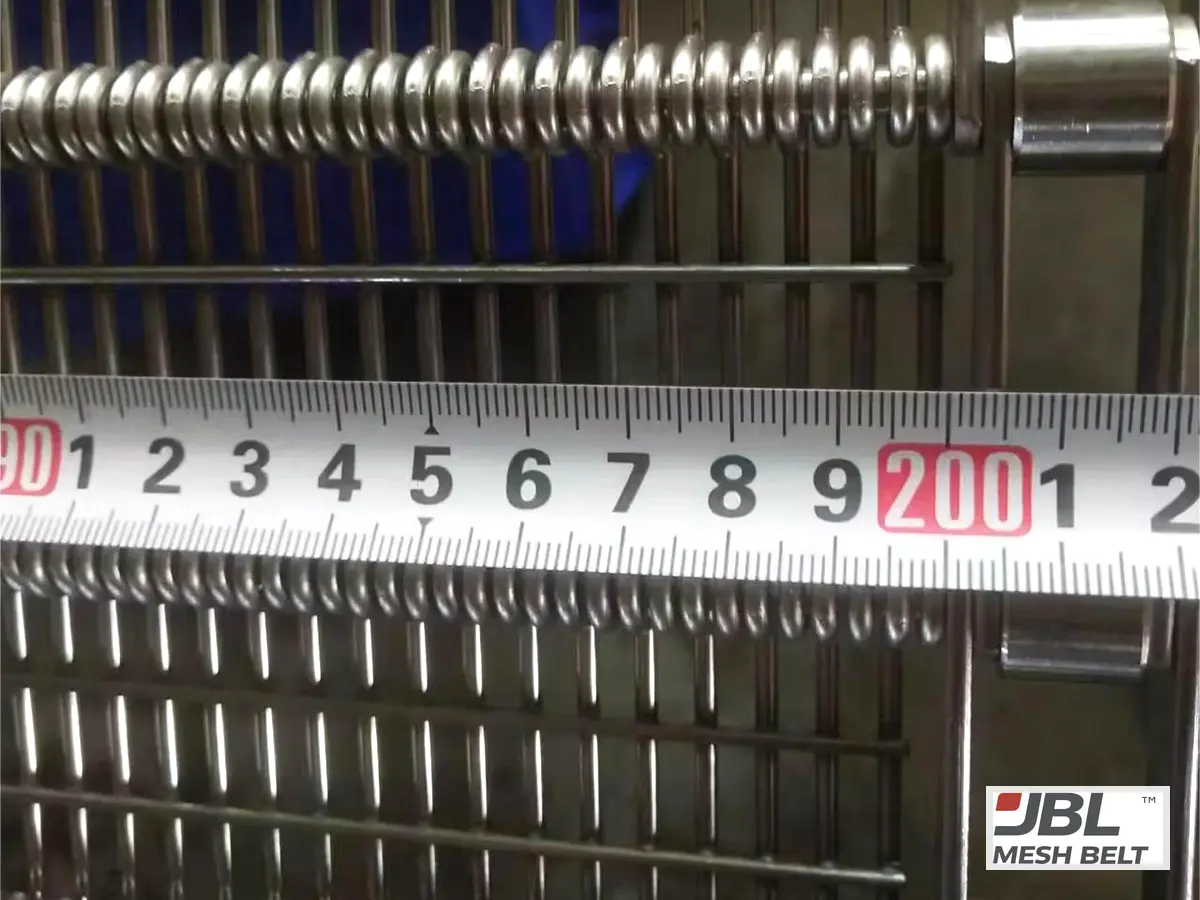
Six photos and a few measurements are enough to identify most belts and give an indicative quotation: the whole belt, both edges, pitch over 10 pitches with a tape, wire and rod with a caliper, the overall width, and the sprockets or drum.

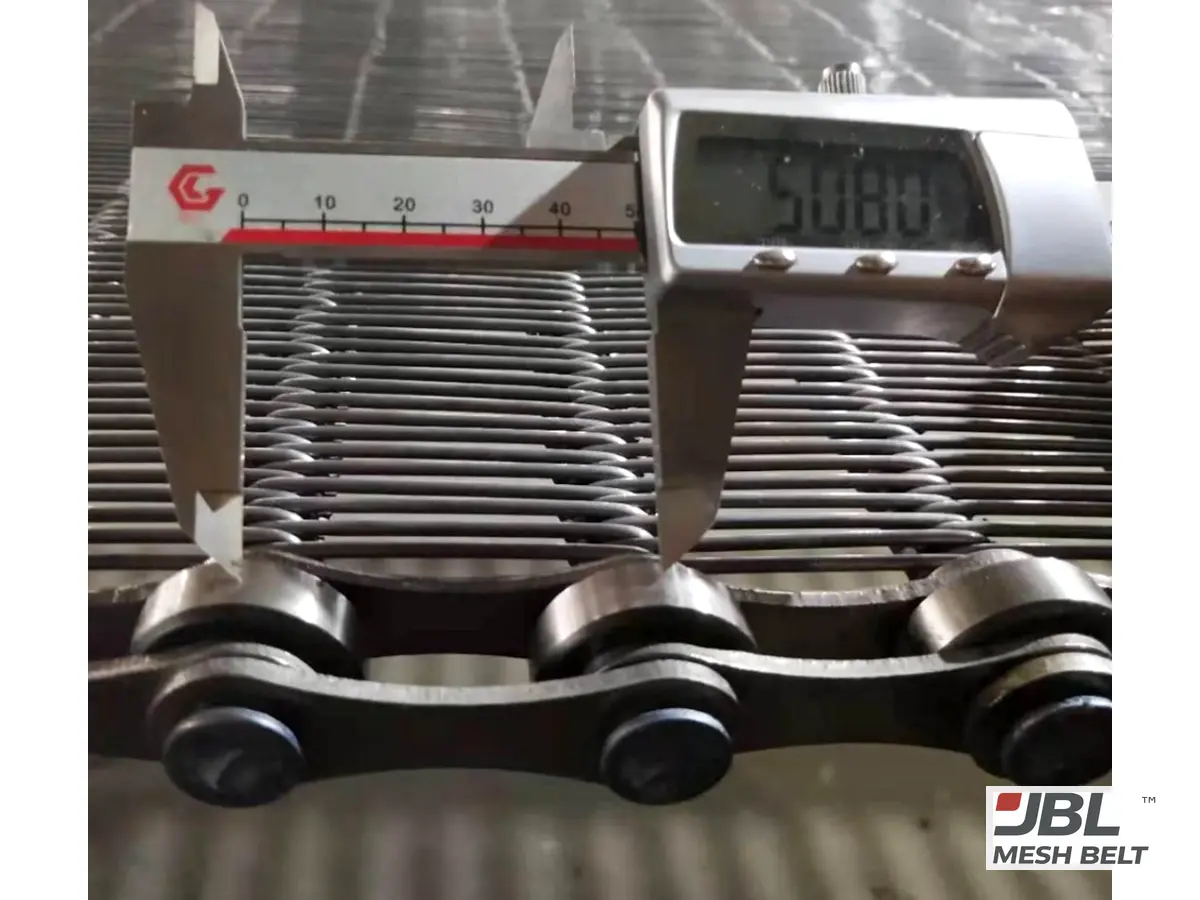
Keep the tape or caliper reading in the picture. These are real examples from belts we have measured.

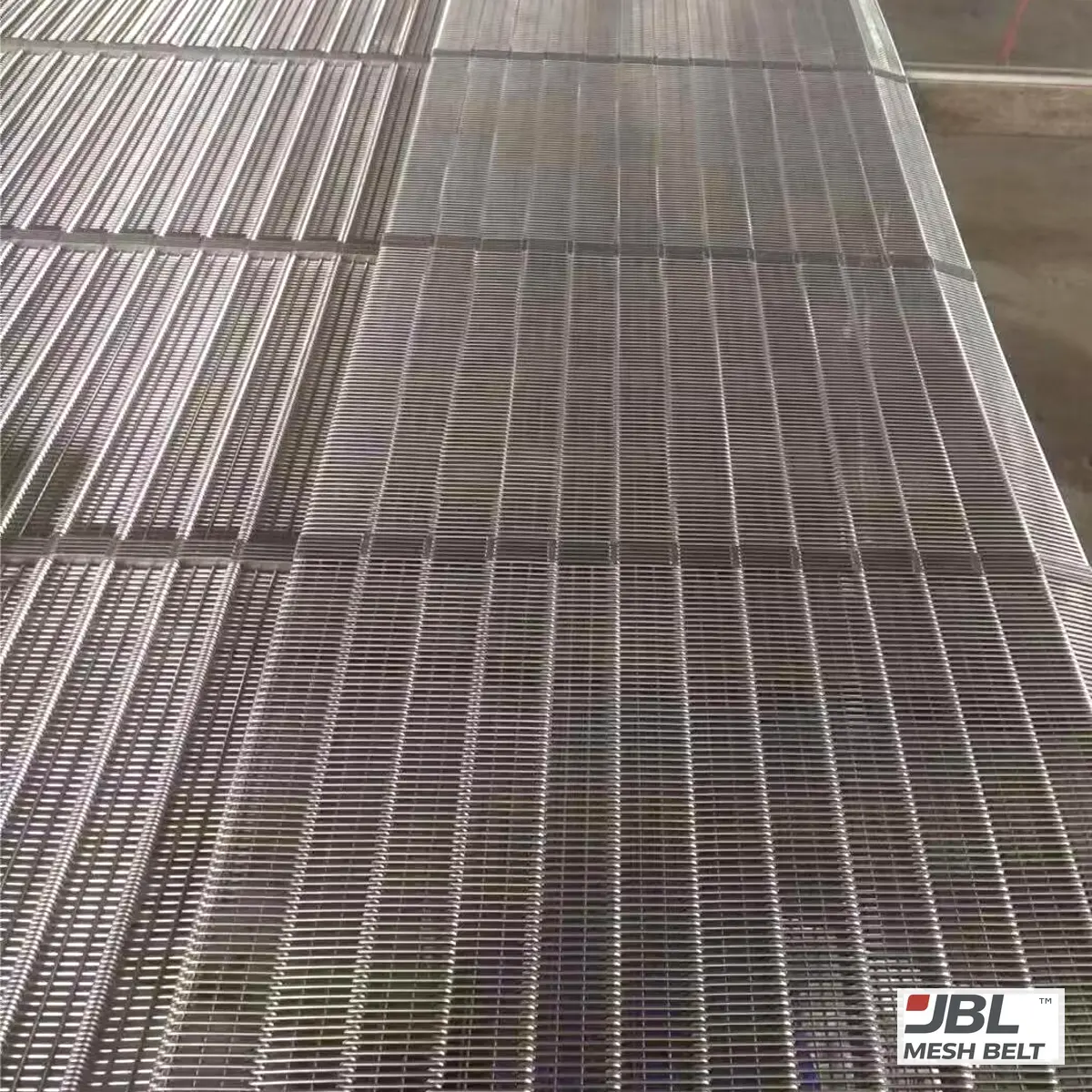
The whole belt
One view of the belt laid flat or rolled, so the overall structure is clear.

Both edges
Chain, side plates, welds or loops — the edge often decides the drive.

Pitch with a tape
A tape across 10 pitches, not one — small errors add up.

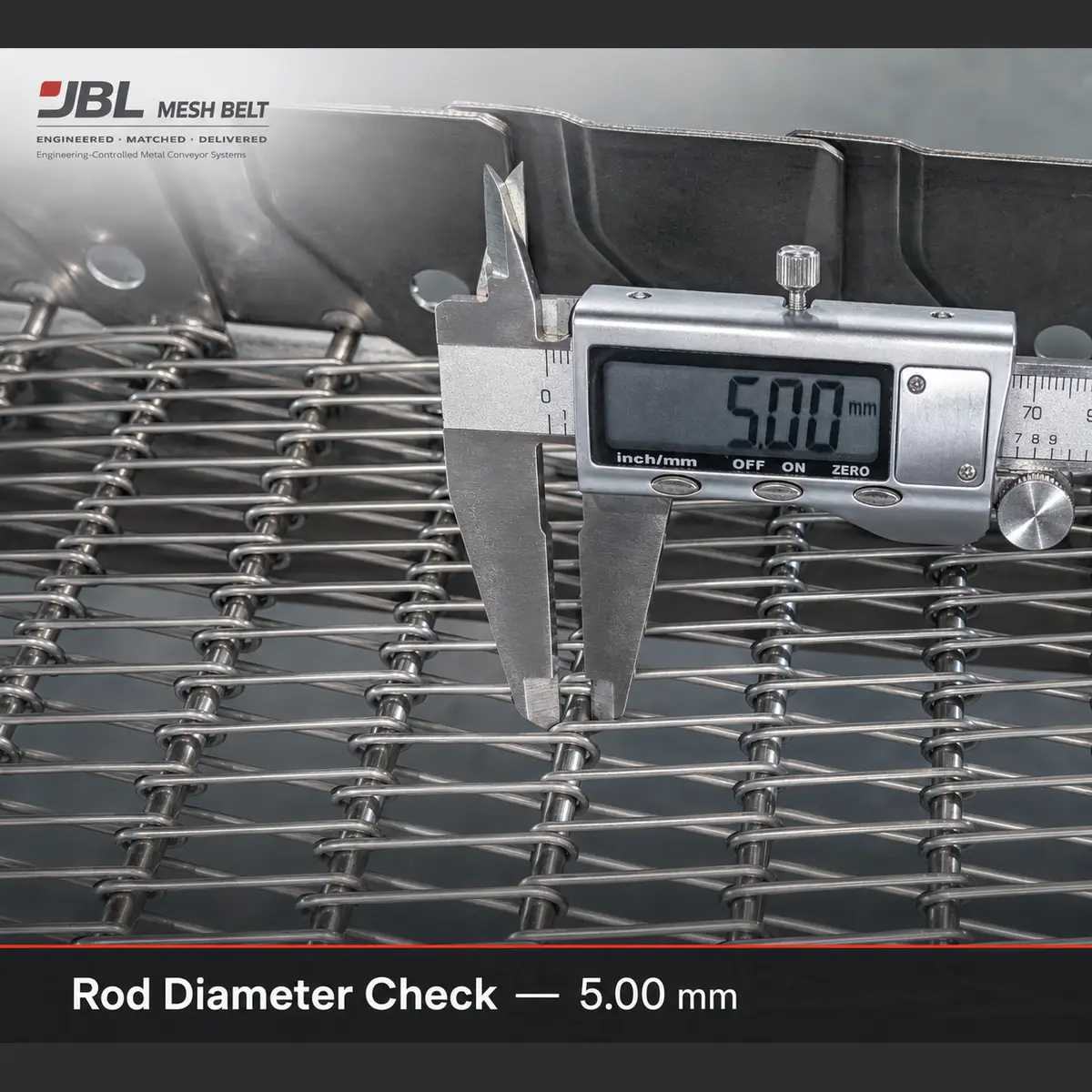
Wire and rod with a caliper
Caliper on each wire and rod, reading in the picture.

Overall width
Tape across the full width, at more than one point.

Sprockets and drum
Teeth, bore and wear on the sprocket; drum diameter for spirals.


Record the width, rod diameter, rod pitch over 10 pitches, link pitch and height, spiral wire diameter, drum diameter and running direction.
| Measurement | How to take it | Common mistake |
|---|---|---|
| Overall width | Tape across the full width, at more than one point. | One reading taken at a worn edge. |
| Rod diameter | Caliper on the rod, with the reading in the picture. | Measuring only a worn contact point. |
| Rod pitch | Tape across 10 pitches, then divide by 10. | Measuring a single pitch. |
| Link pitch and height | Caliper on the edge link. | Treating link pitch as rod pitch. |
| Spiral wire diameter | Caliper on the spiral wire, not the rod. | Sending the rod diameter as the wire size. |
| Drum diameter | Measure the drum itself where you can reach it. | Estimating it from an old layout. |
| Direction | Note the running direction and whether the turn is clockwise or counter-clockwise. | Leaving the direction out. |
These are raw readings, and a worn spiral belt vs original size can differ, so tell us if the belt is worn. Send them with your equipment details, and we review the turn ratio and drum fit before a belt is confirmed. See turn ratio and drum review and what to send for a spiral belt quote.
Only a close-up
Without a full-belt view the structure cannot be identified.
No tool in the picture
A pitch or diameter without a visible tape or caliper reading cannot be checked.
One pitch, not ten
One pitch hides wear and rounding; ten pitches show the real size.
No edge photos
The edge decides the drive — chain, plate, weld or loop.
Worn belt measured as new
Stretched pitch is not the original size; tell us the belt is worn.
Damage without context
Show where the damage is on the belt, not only the broken wire.
Not sure what you have?
Send what you can — we tell you what is missing.
Record the overall width, rod diameter, rod pitch over 10 pitches, link pitch and height, spiral wire diameter, drum diameter and running direction. Send the raw readings with photos, and tell us if the belt is worn.
A caliper is best for wire and rod diameters; a tape measure is enough for width and pitch over 10 pitches.
Yes — as long as the tape or caliper reading is sharp and in the same picture.
If you can, a short section of the old belt is the most accurate start. Photos are enough for identification and an indicative quotation.
Yes, and tell us it is worn. Worn pitch is identified and the new belt is made to the original size, confirmed with you.
Use the inquiry form below or WhatsApp +86 138 1487 2506.