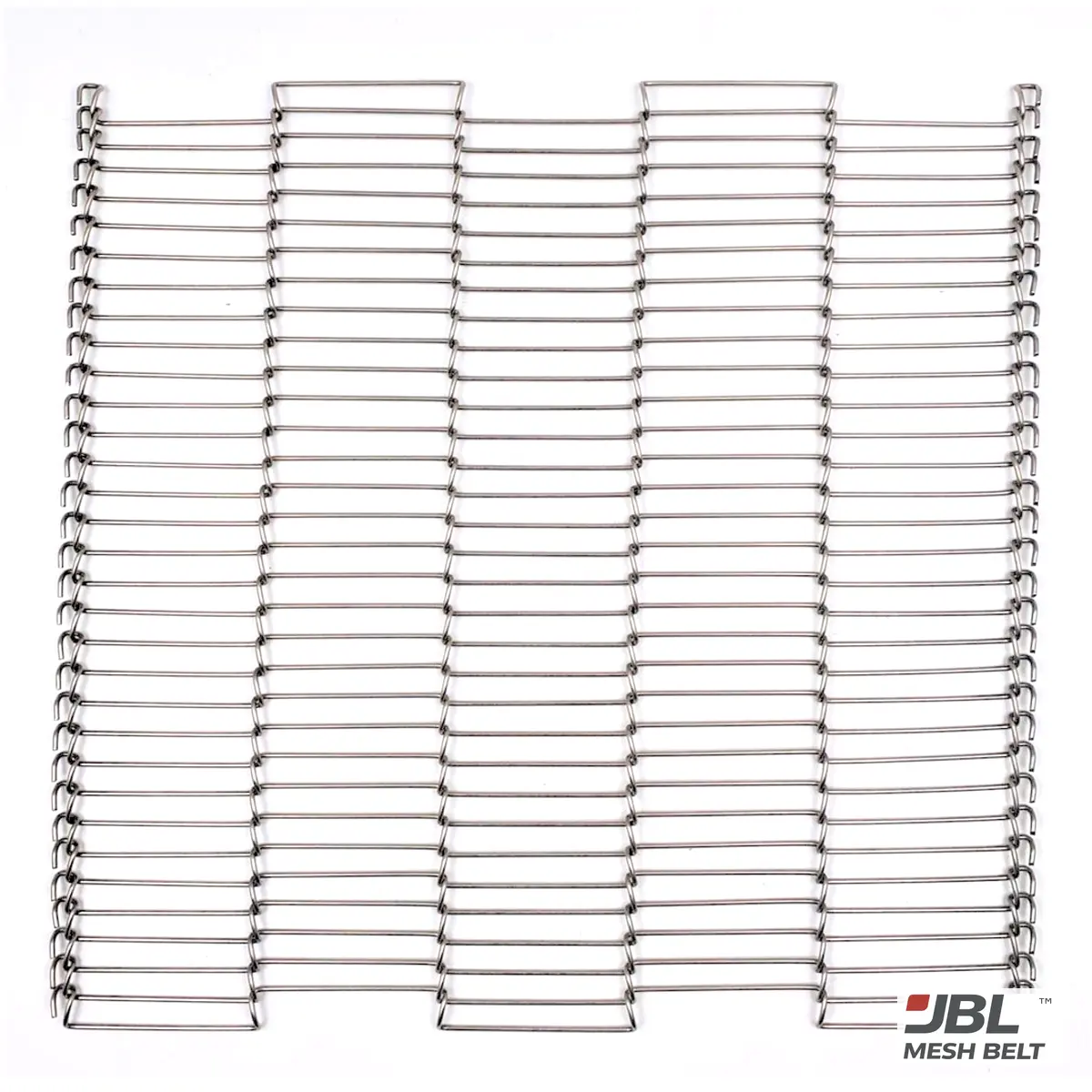
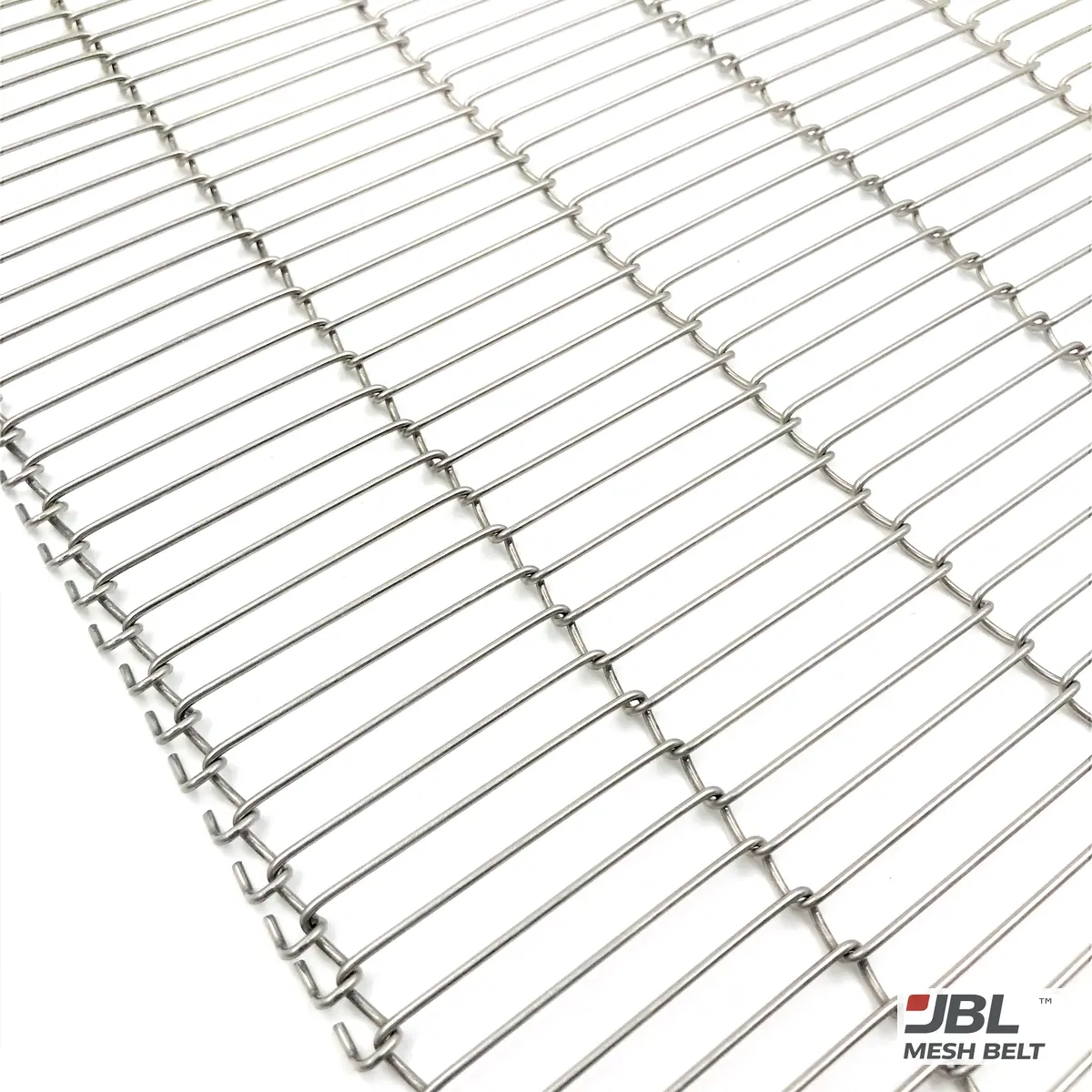
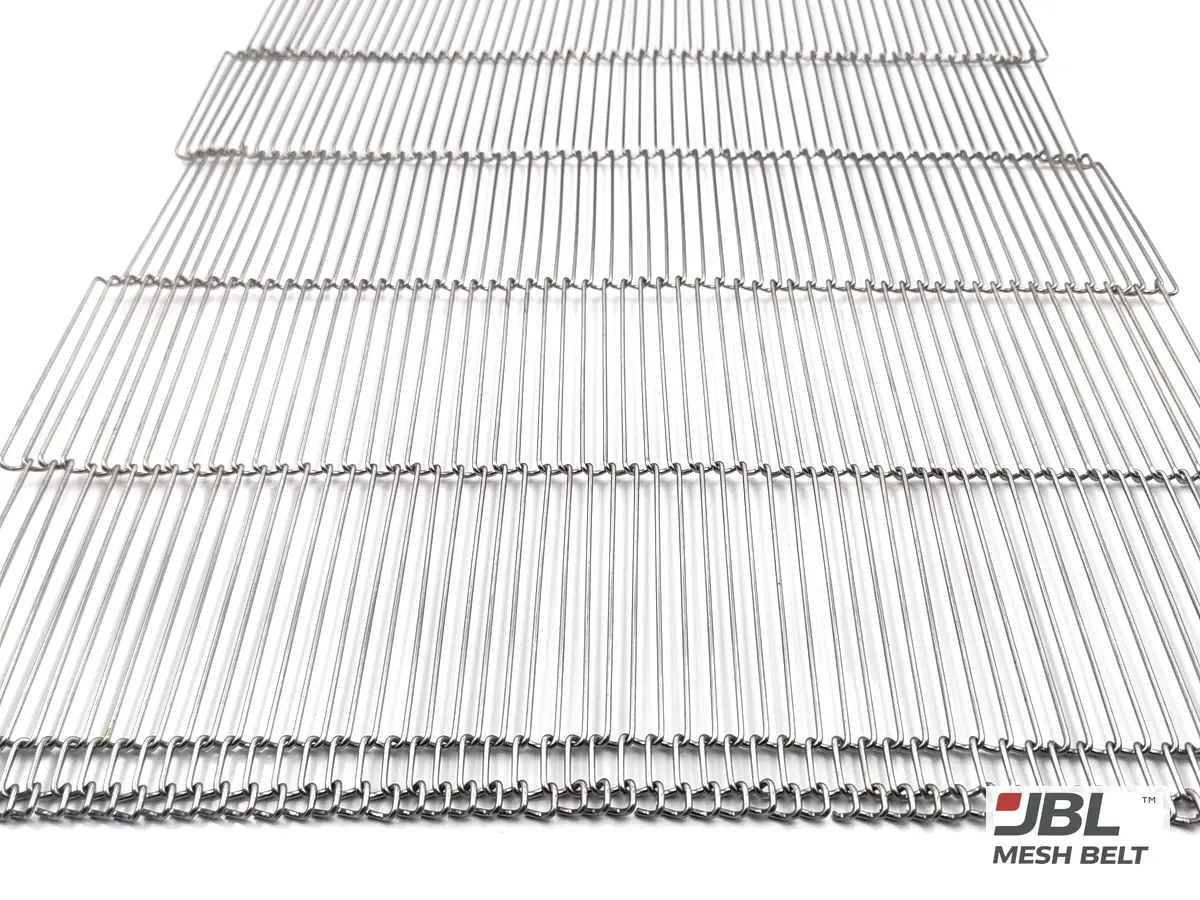
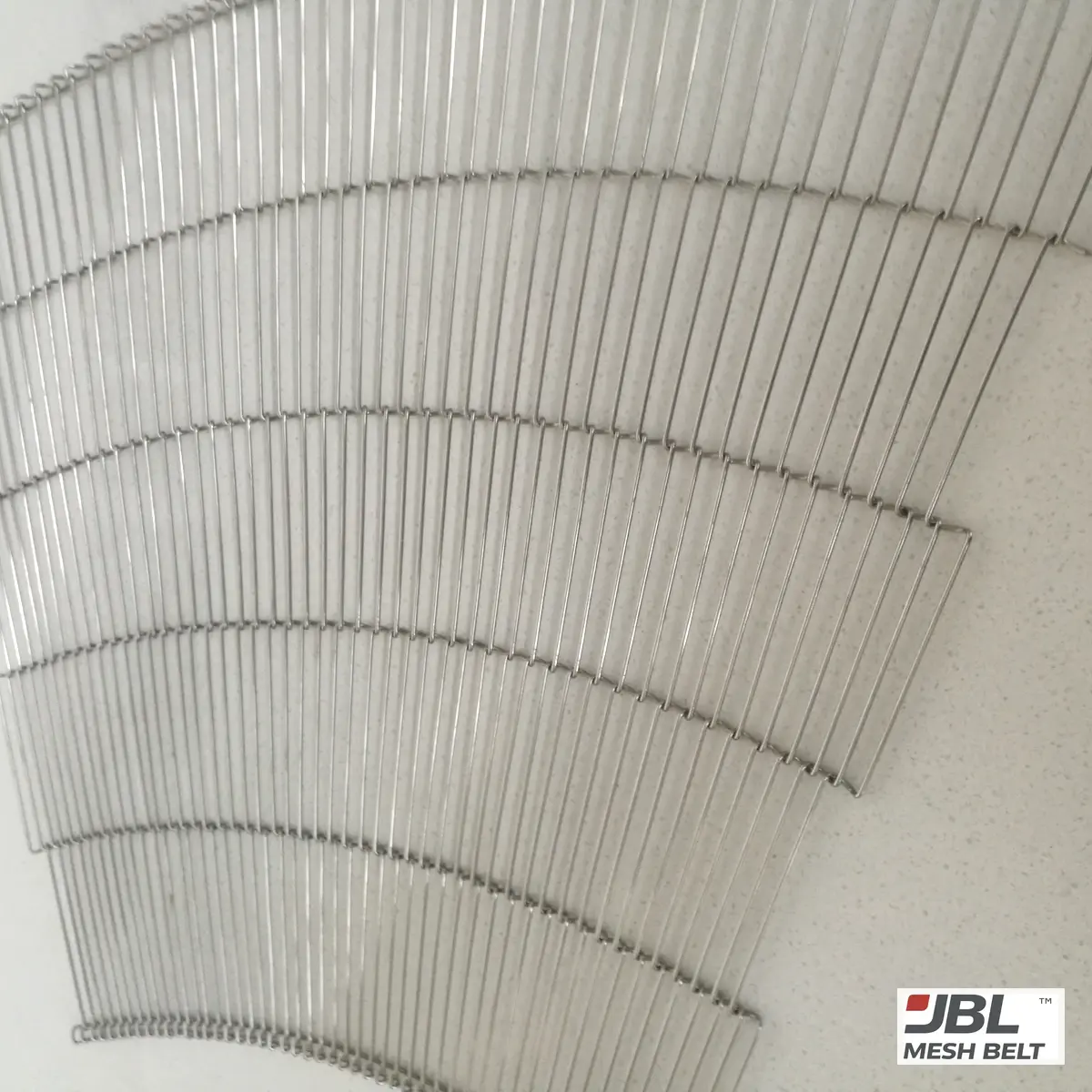
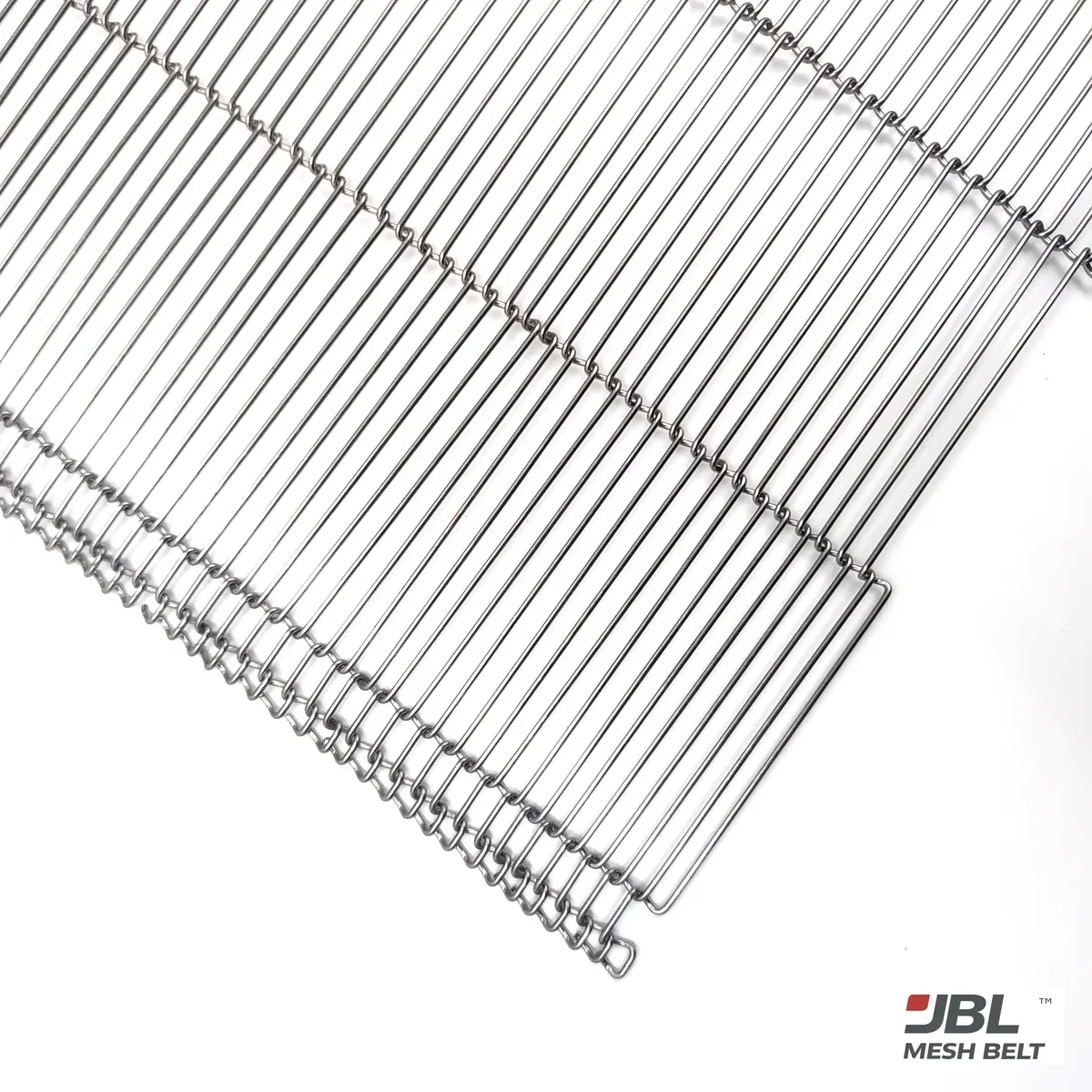
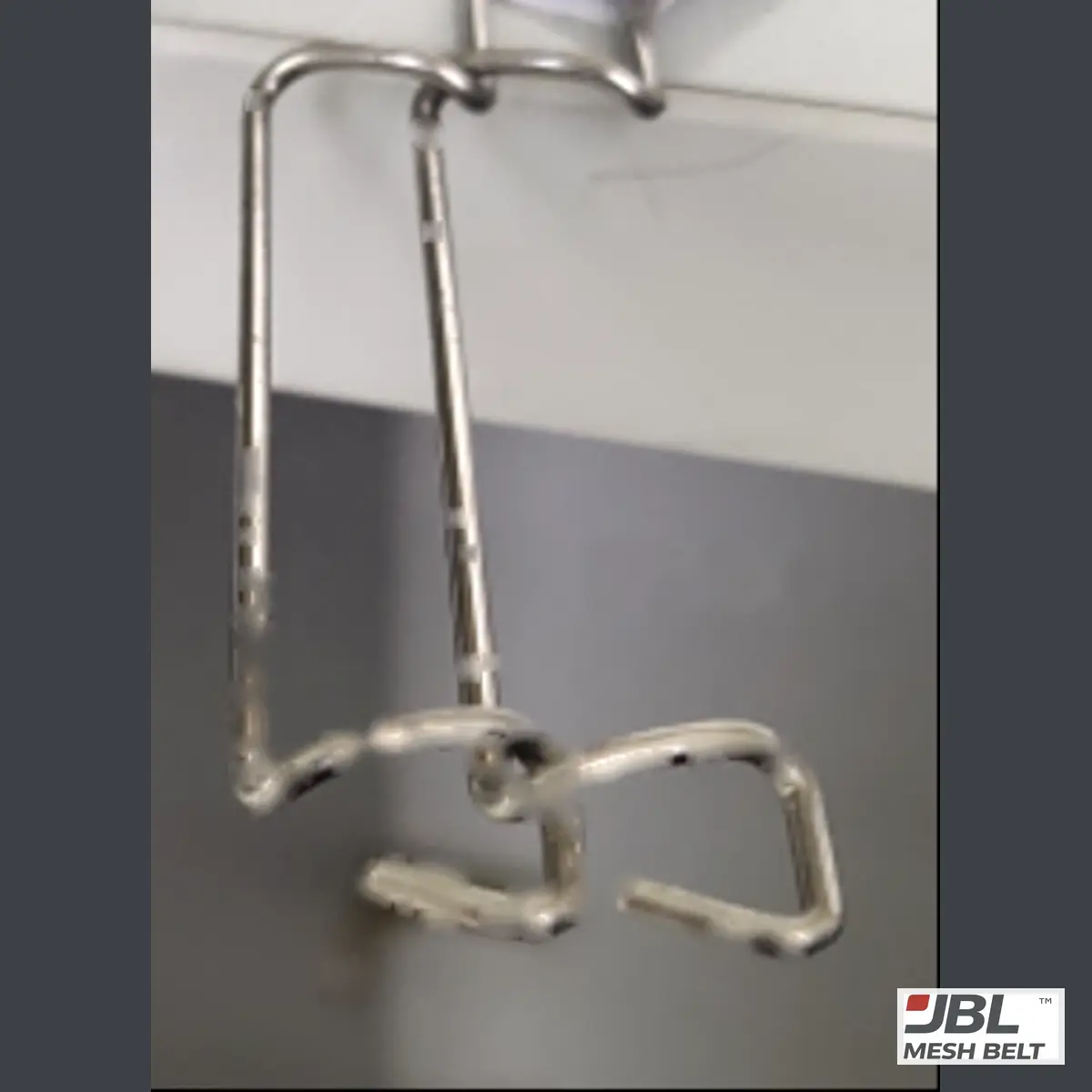
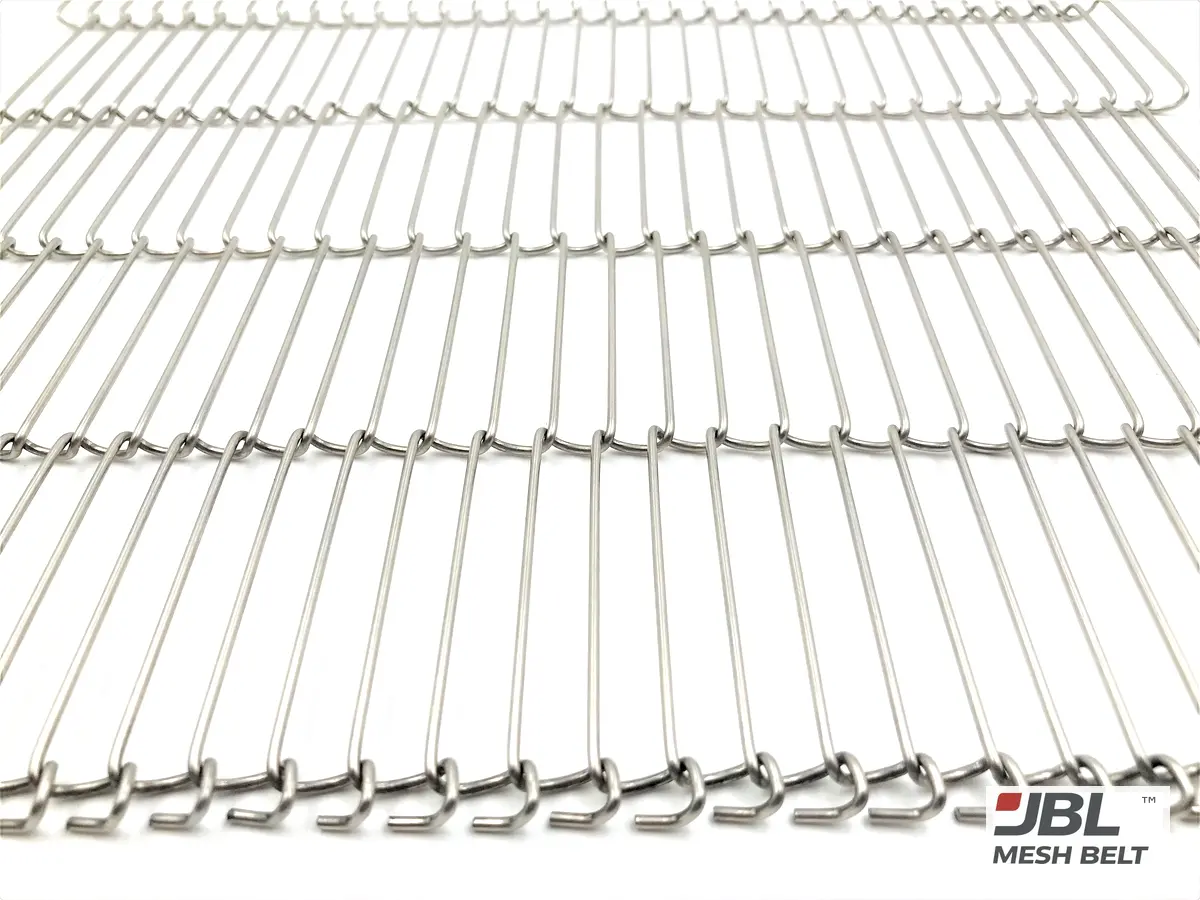
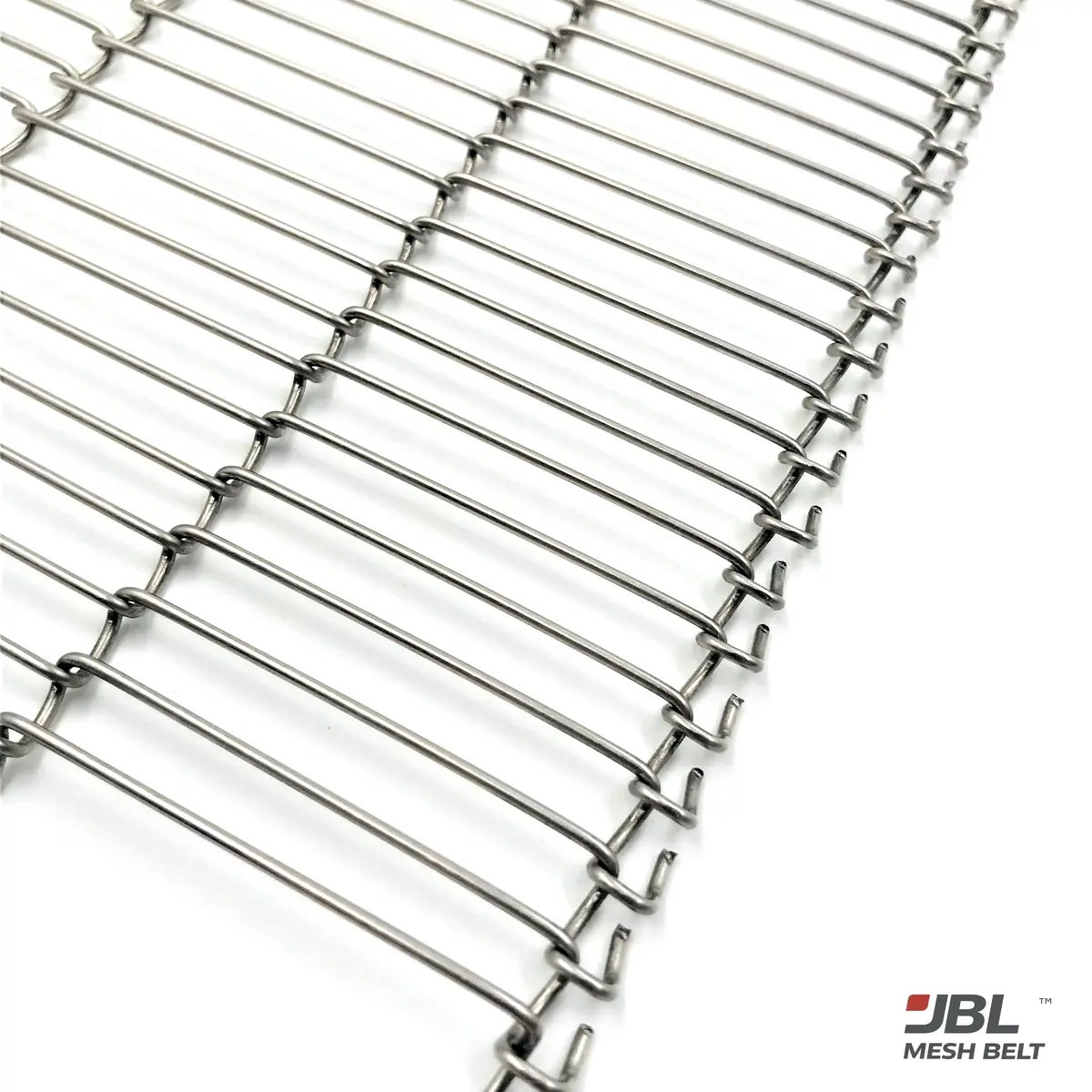
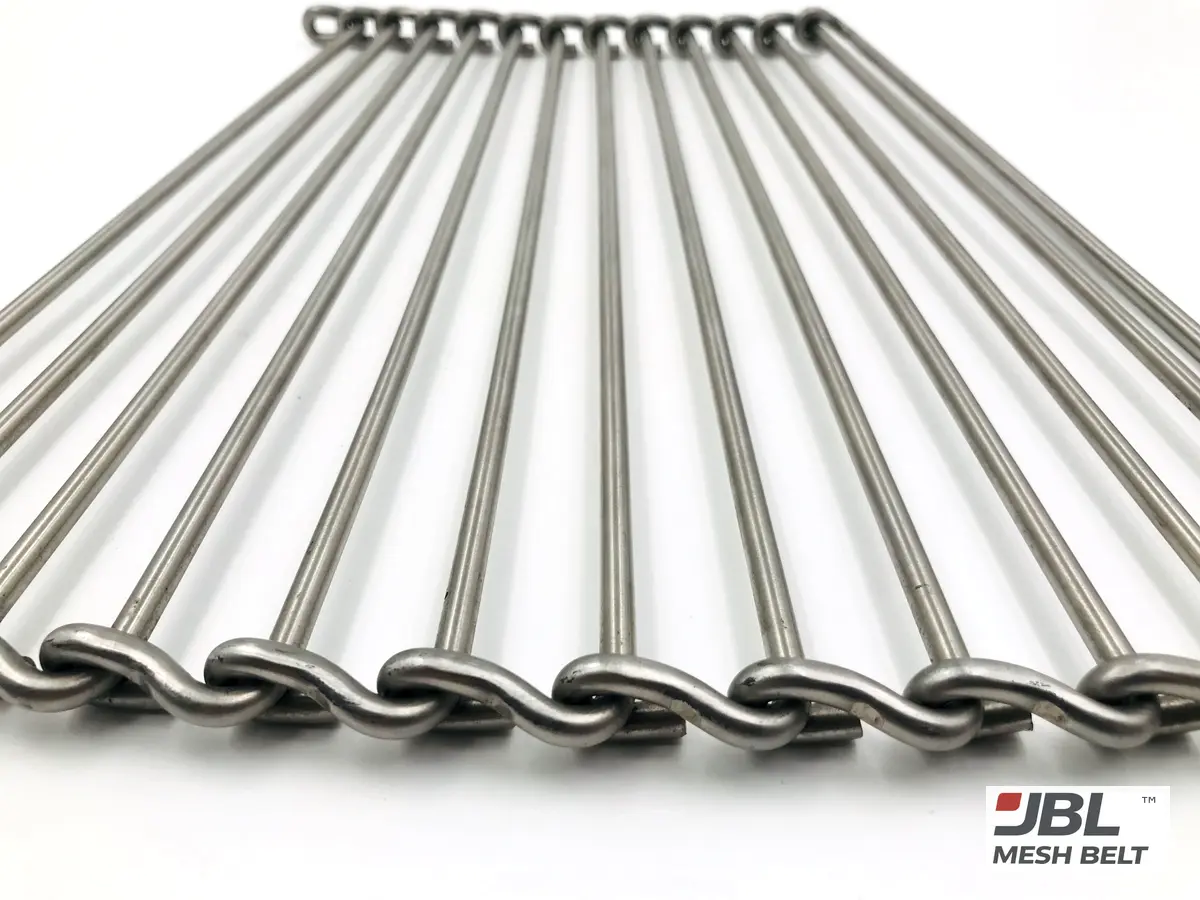
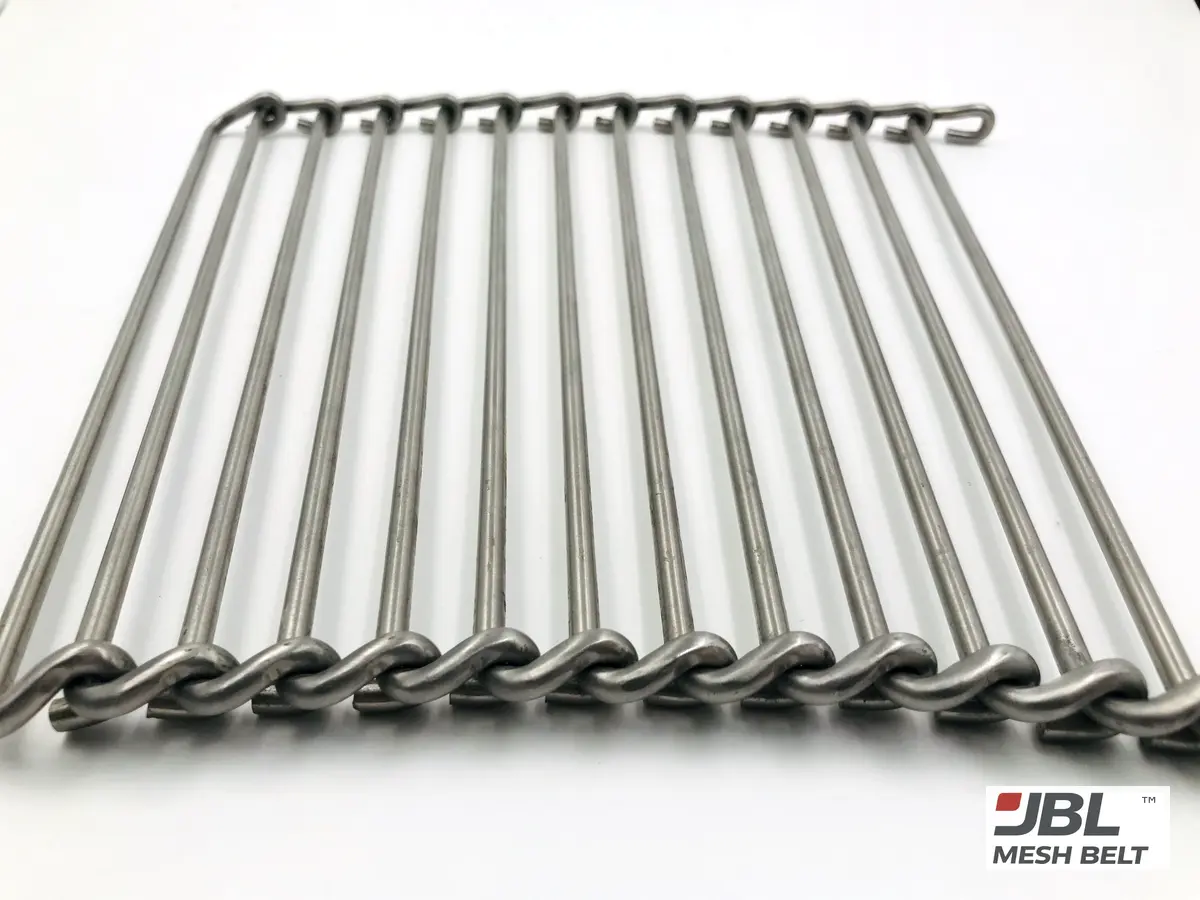
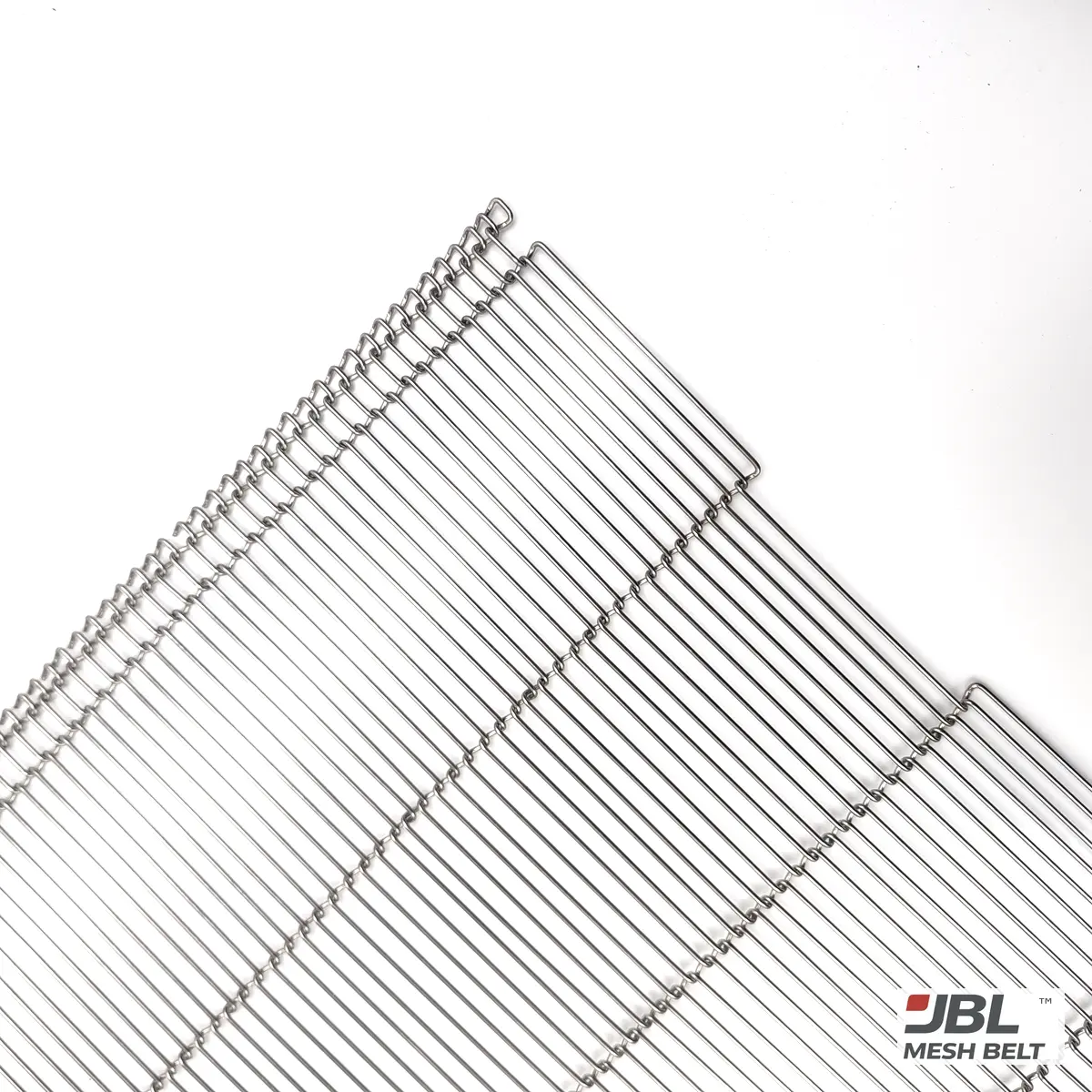
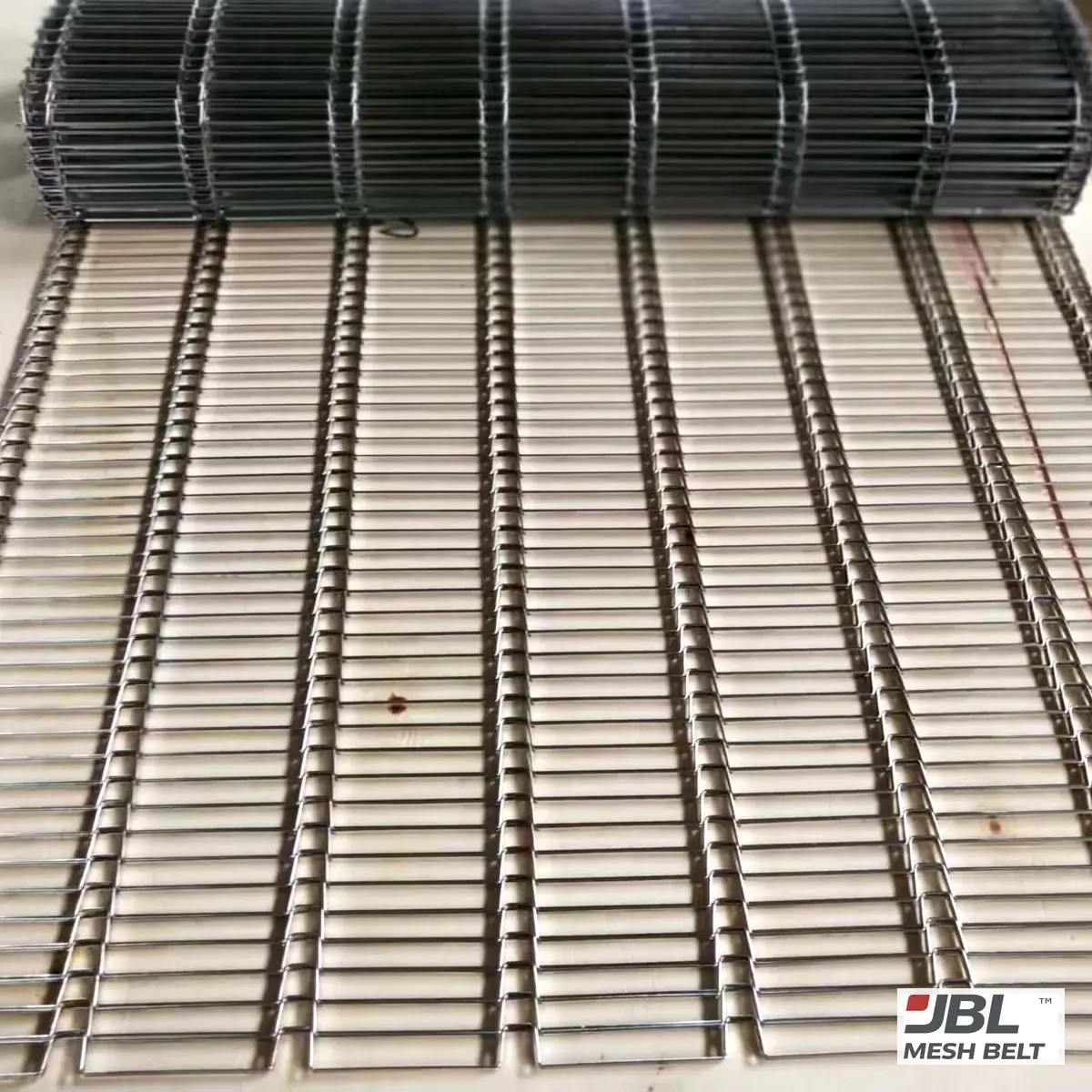
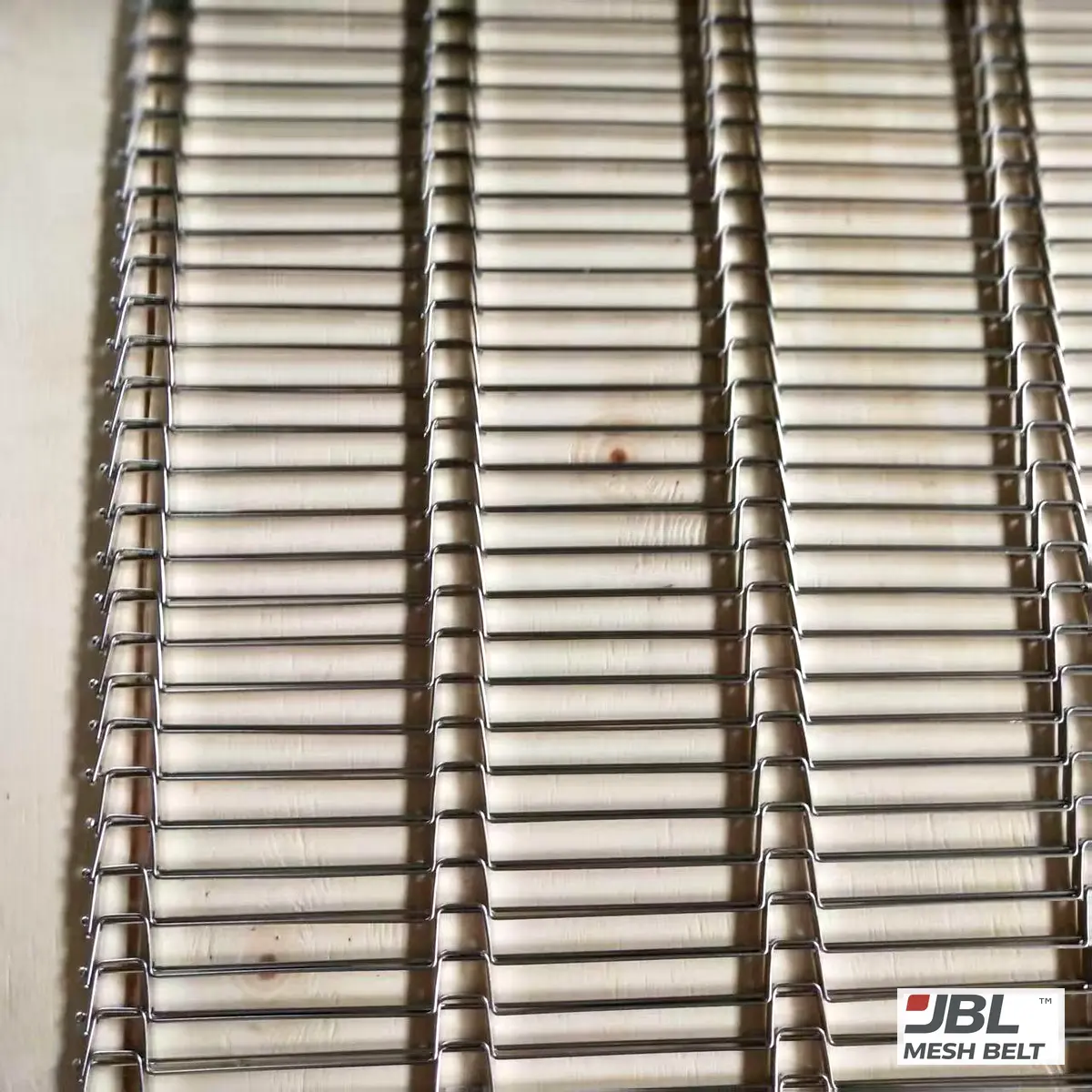
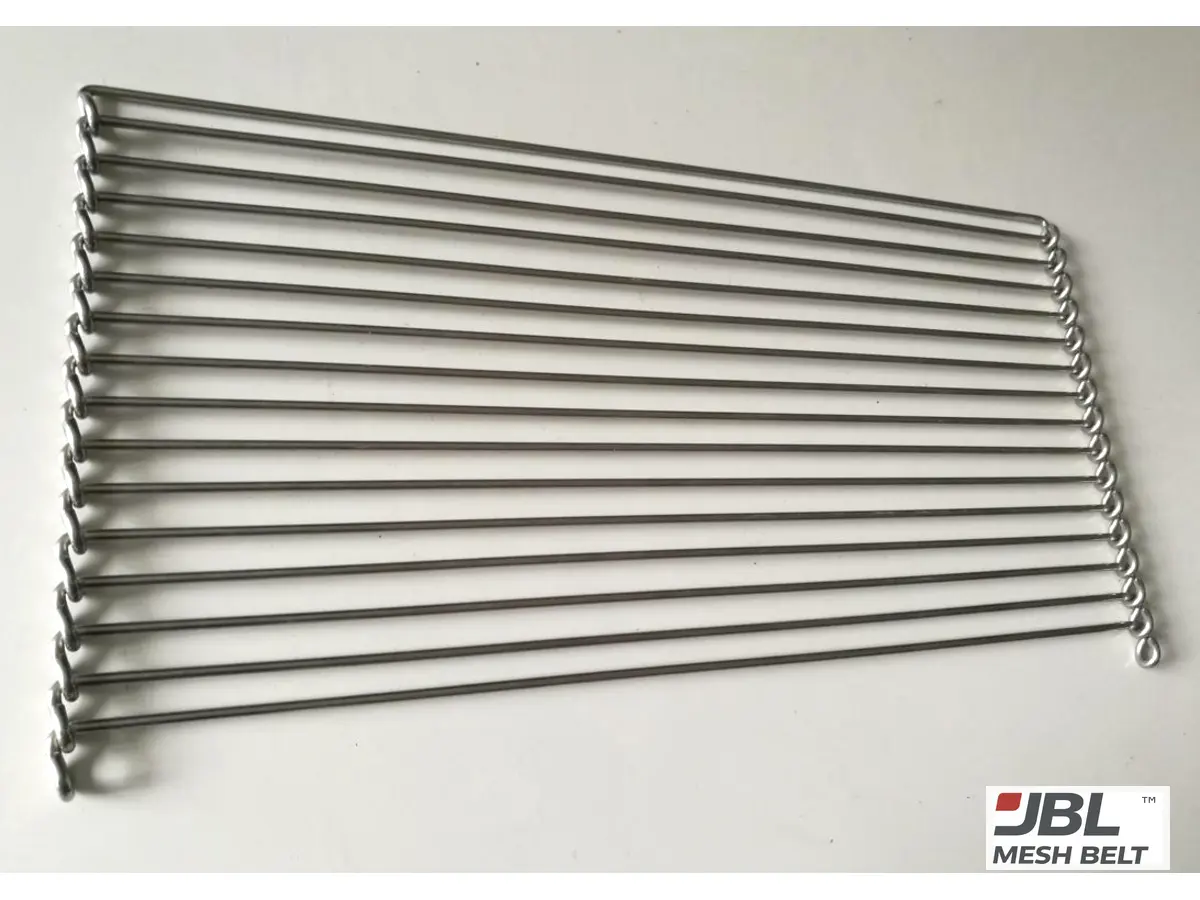
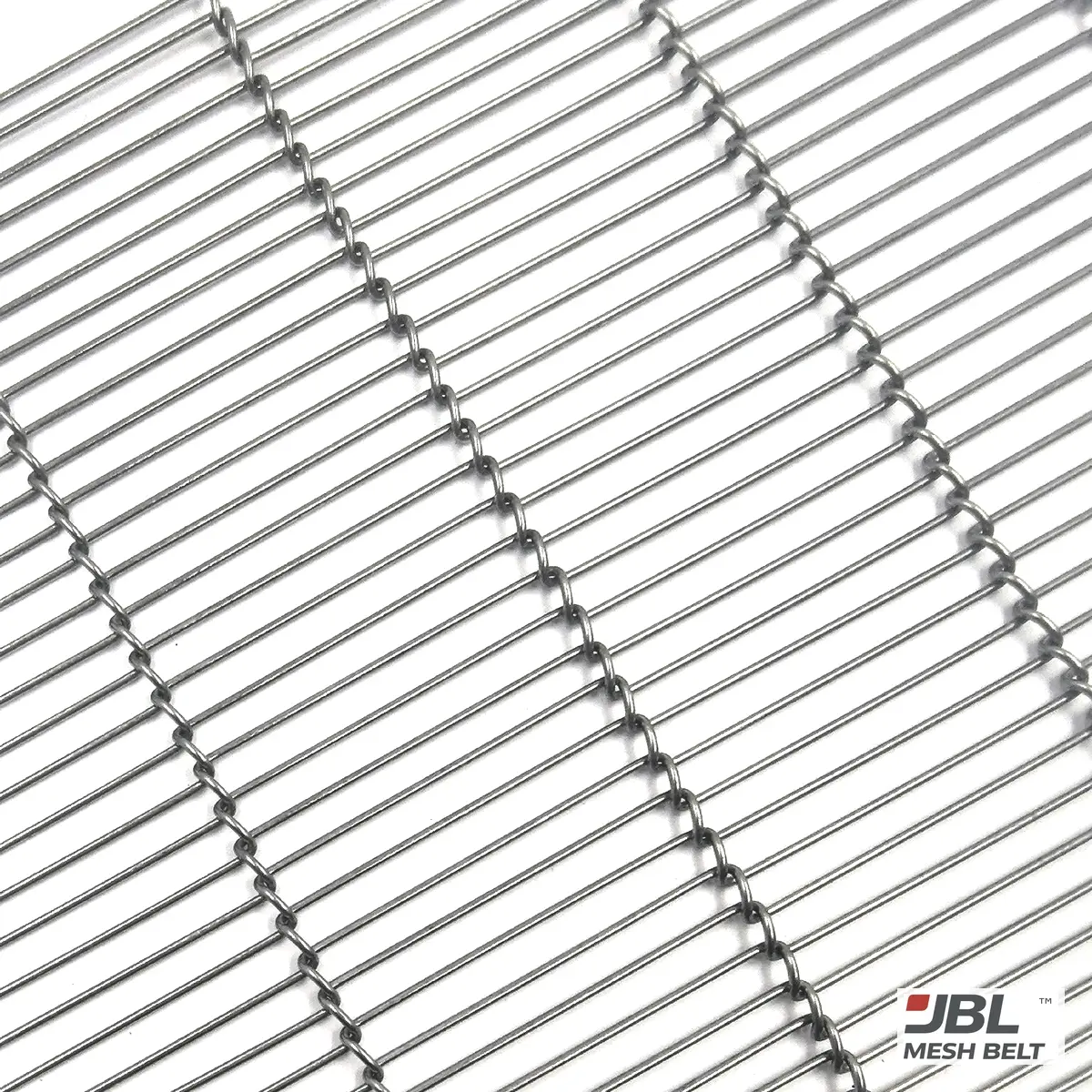
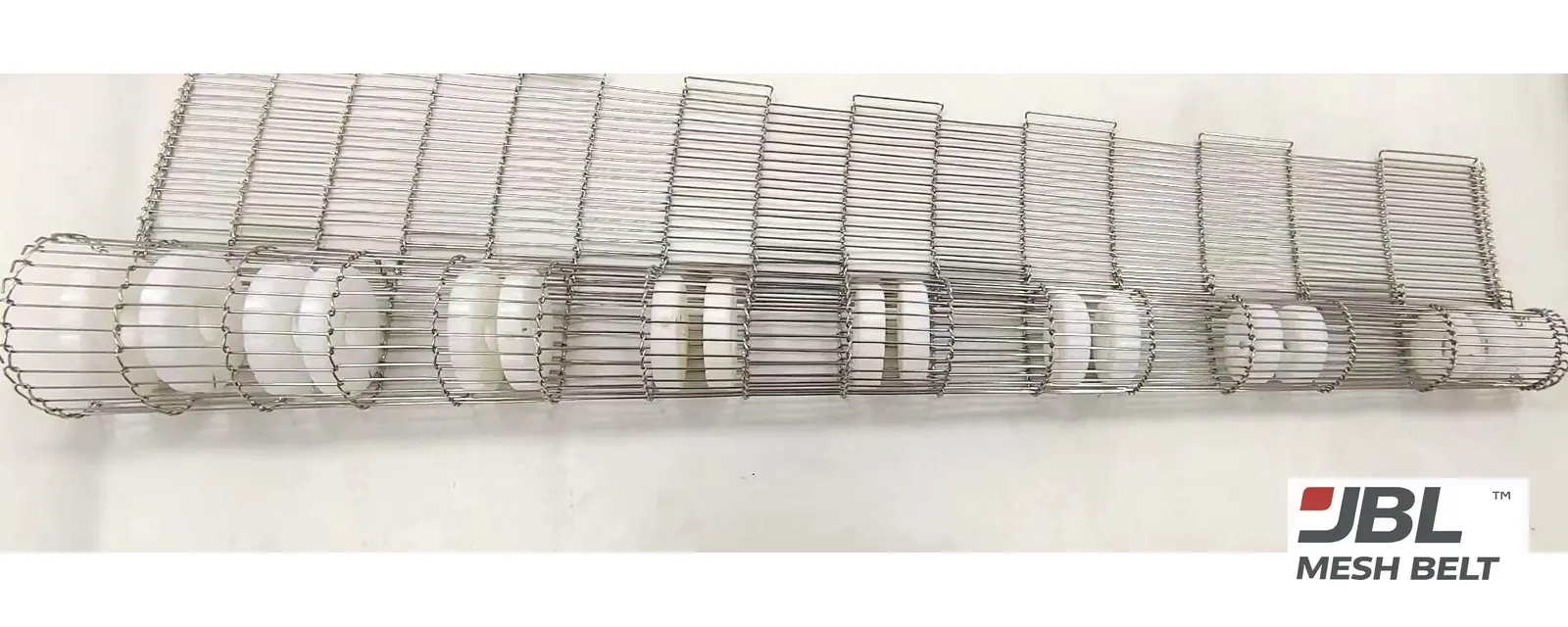
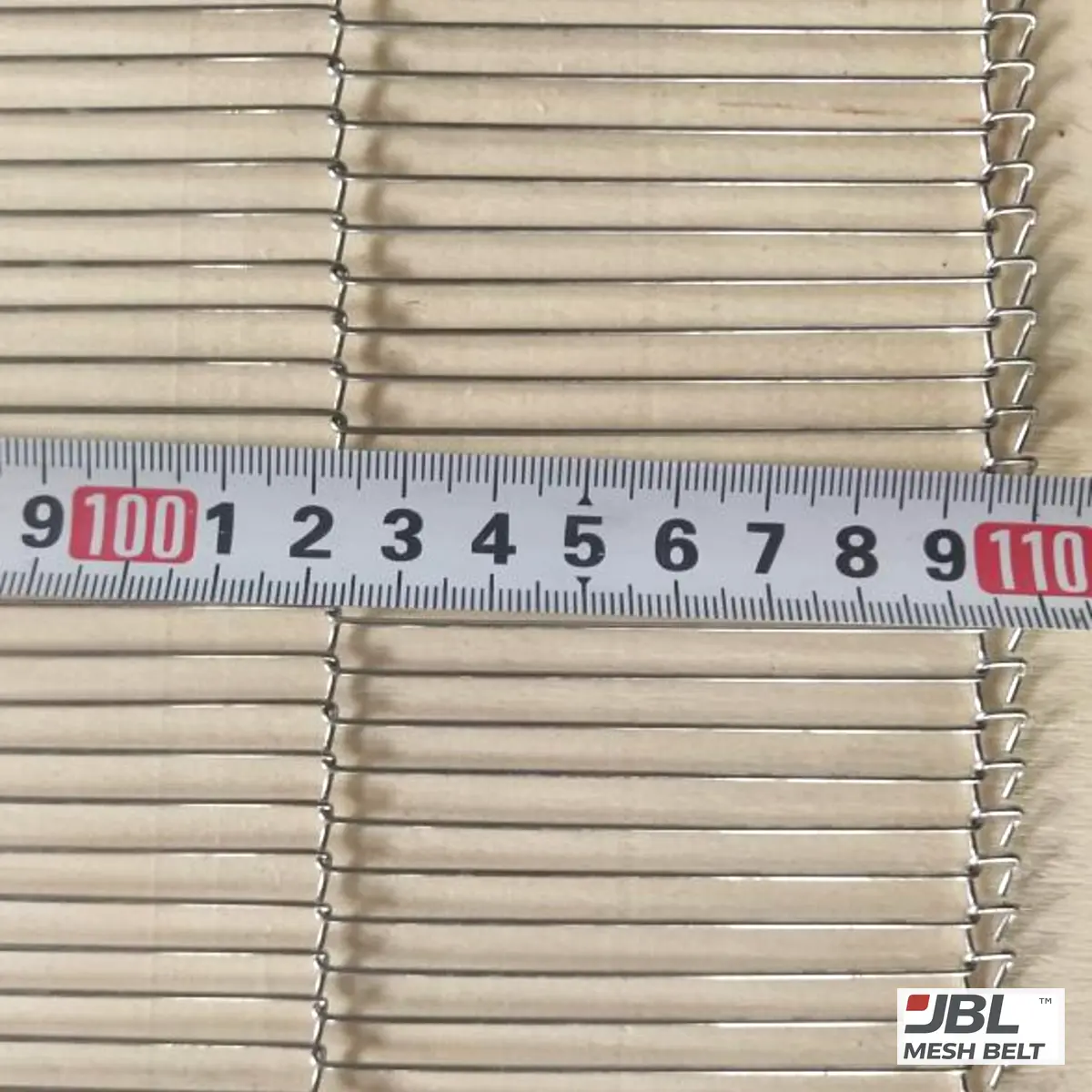
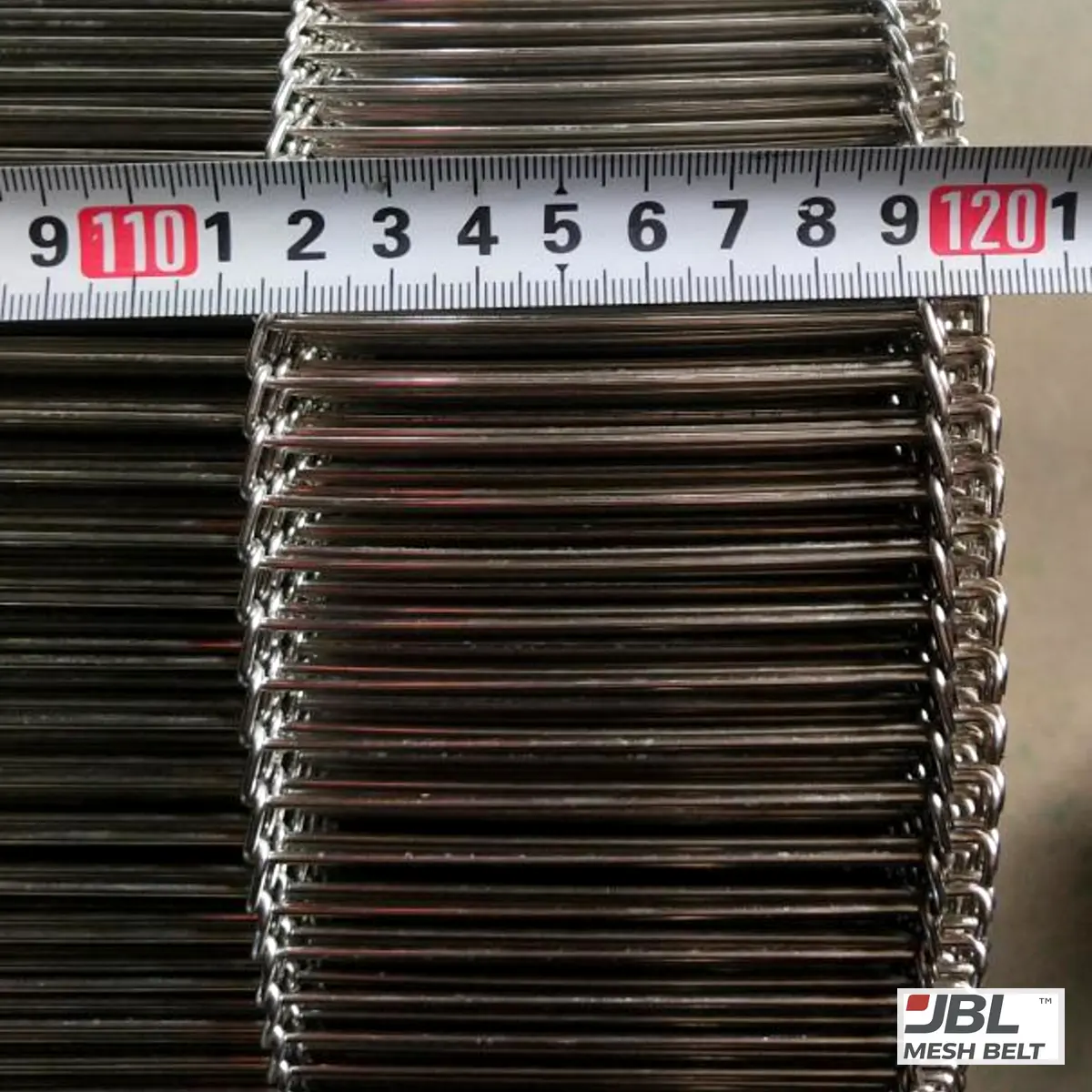
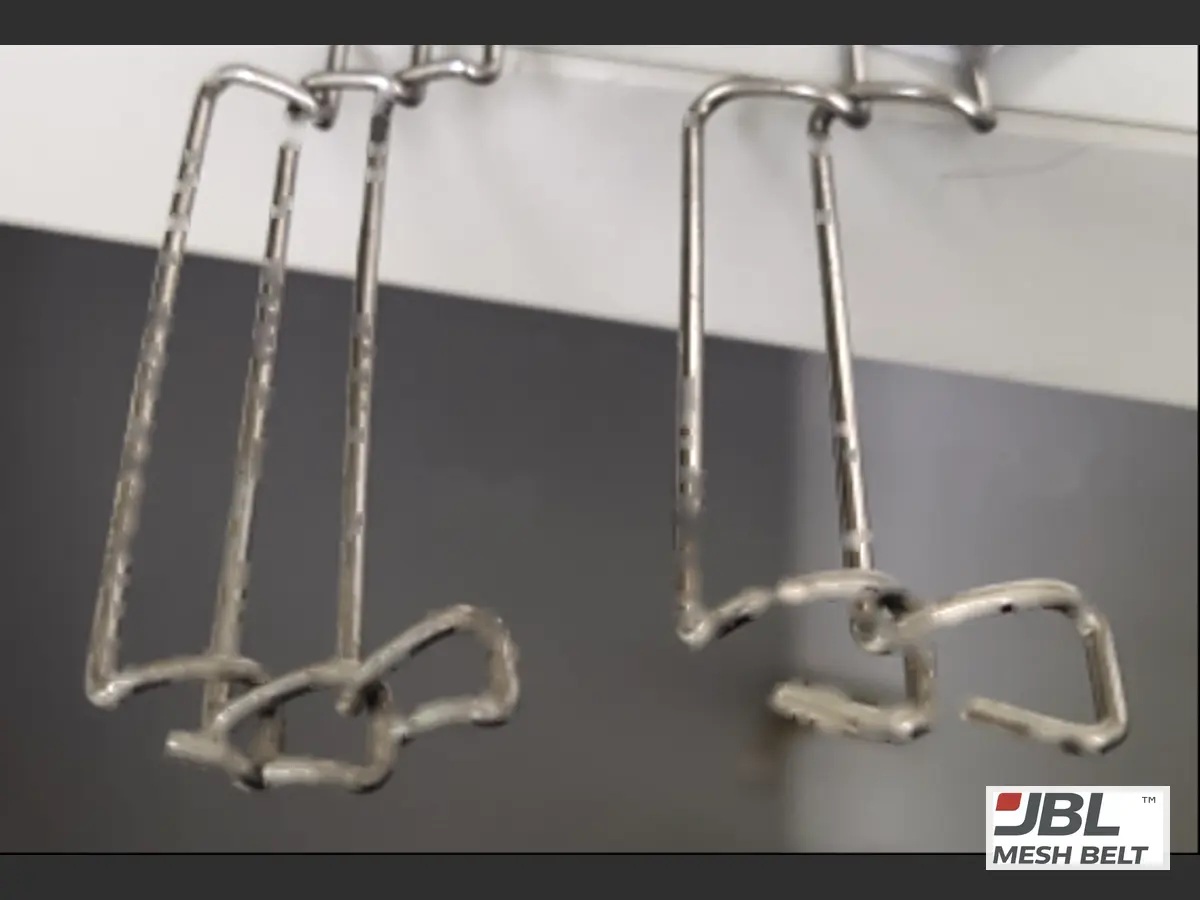
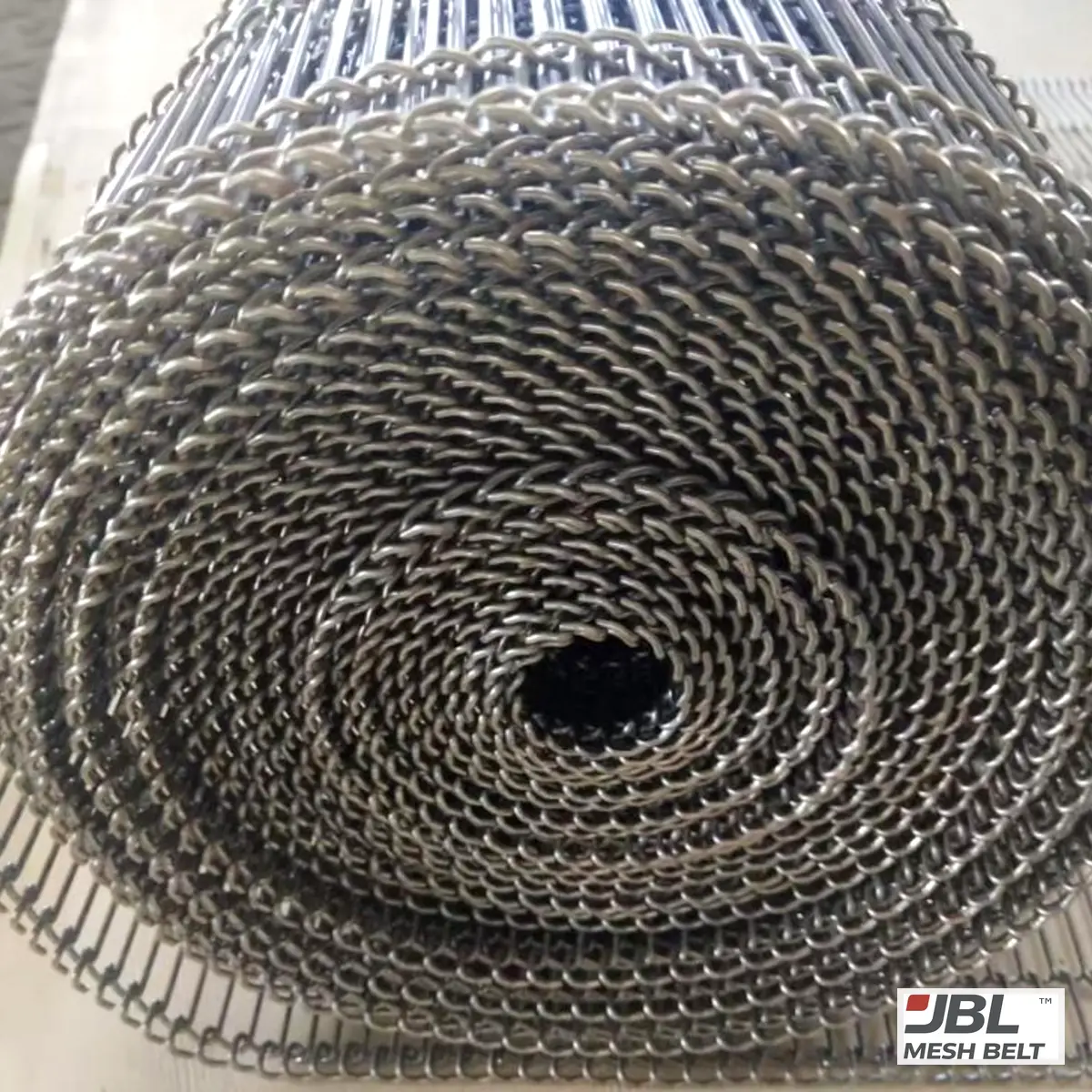
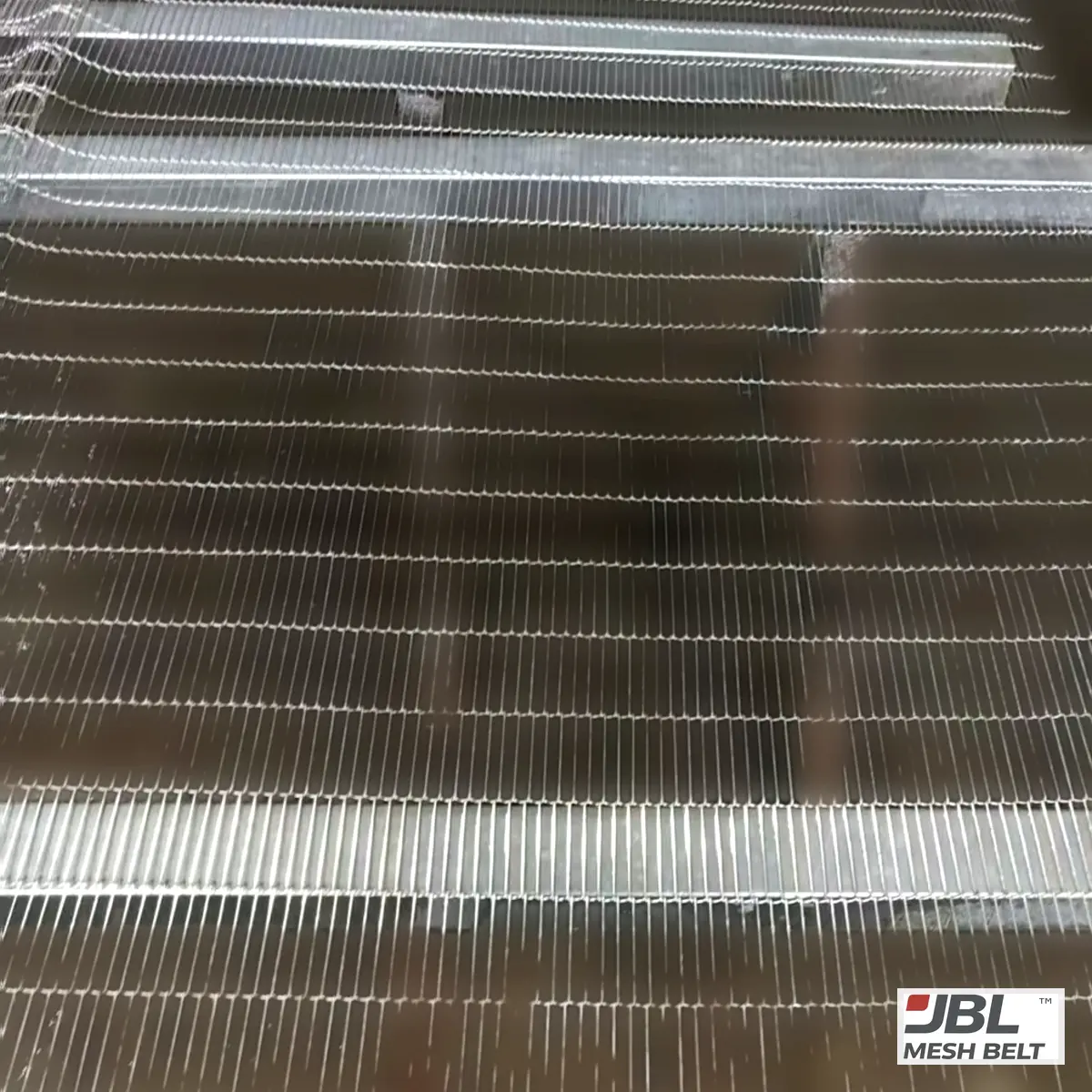
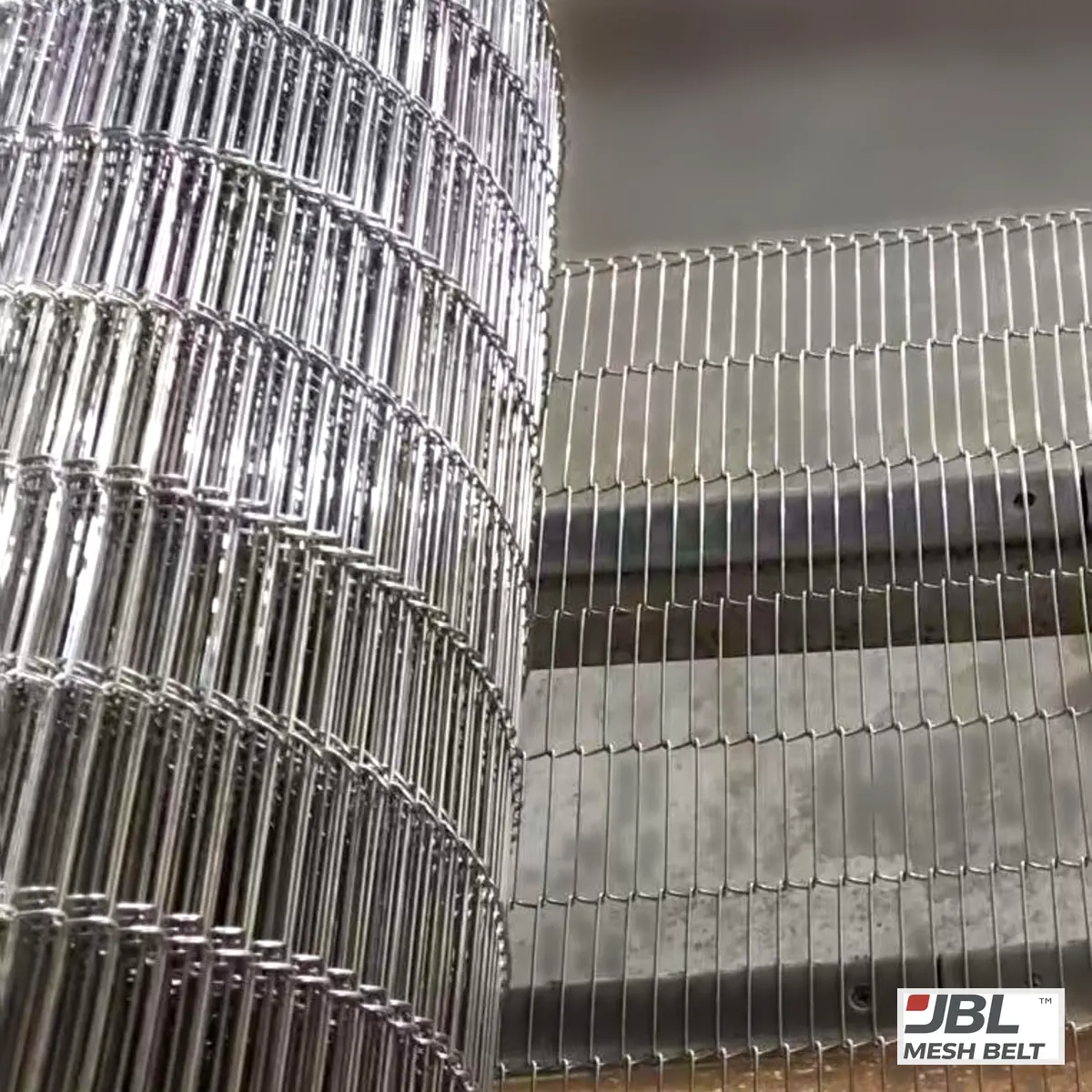
An open metal belt made of Z-formed wires hooked into each other at the edges, forming a ladder of open spaces. It suits open conveying, light products and stable product handling in food processing and industrial lines.
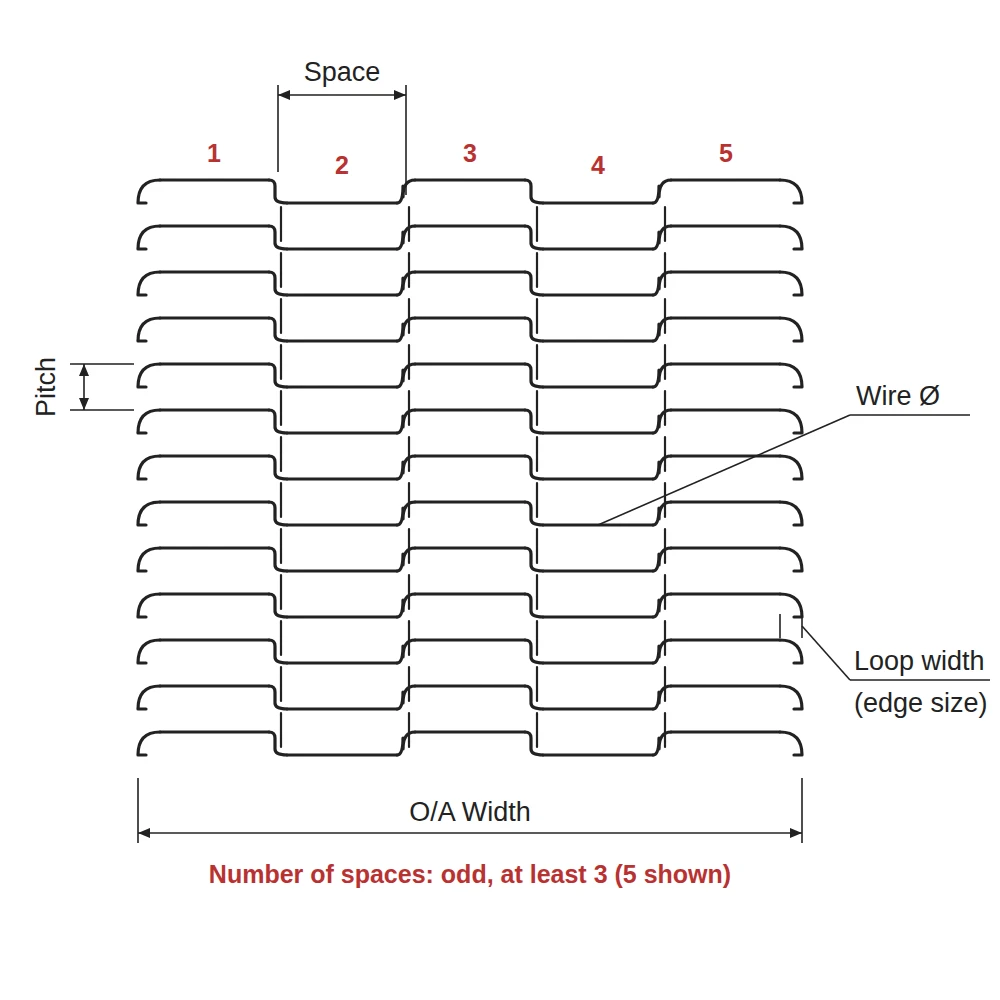
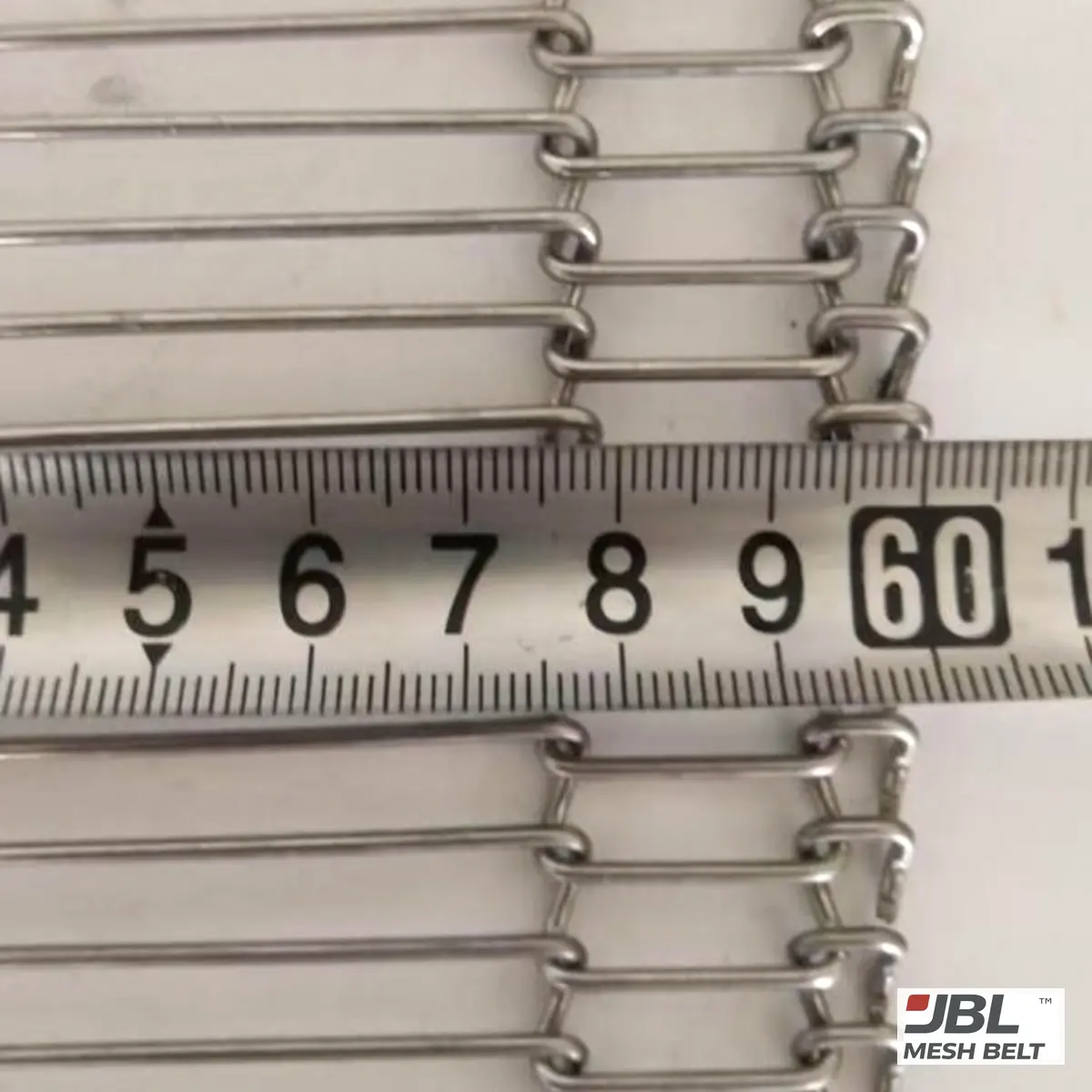
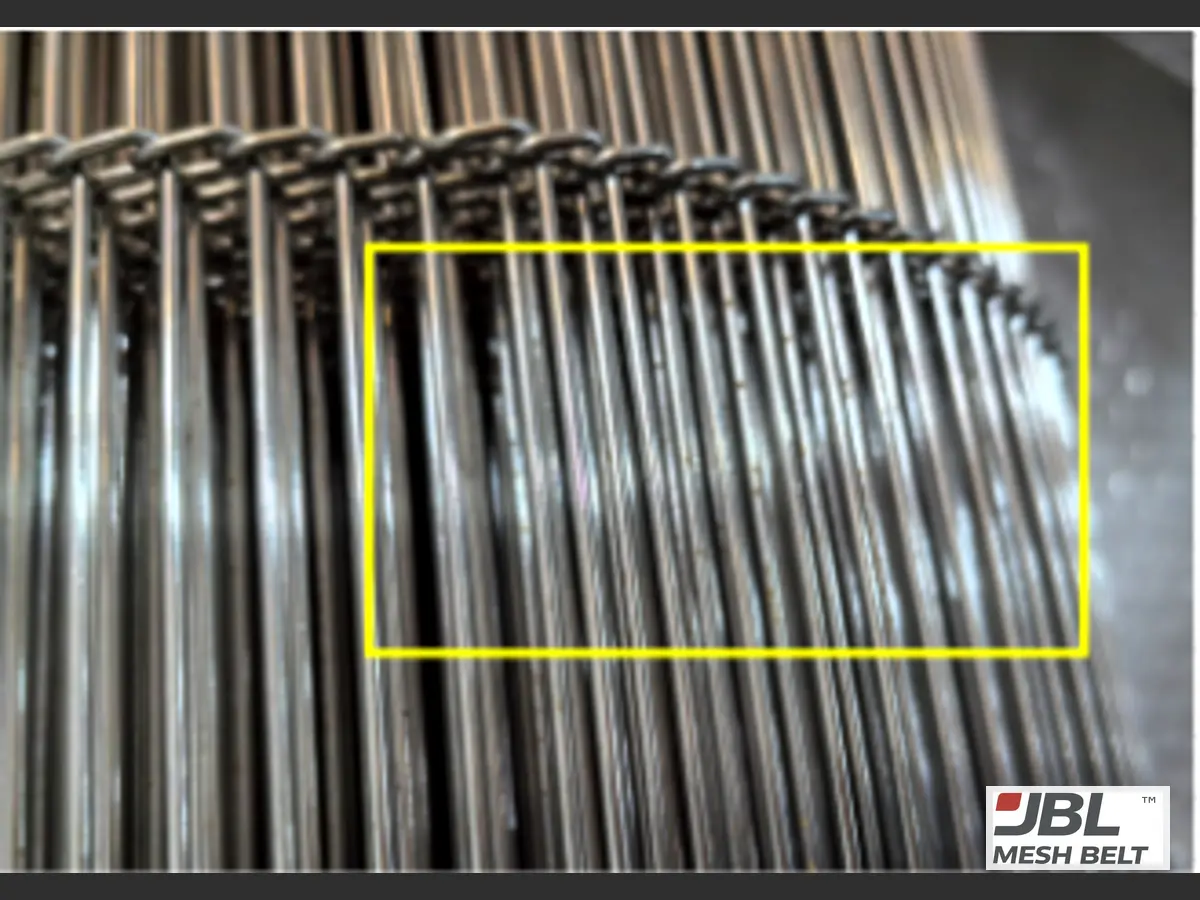
With an even number of spaces the structure is unbalanced and the belt drifts to one side while running. The number of spaces is at least 3 and always odd — confirmed before quoting, because it cannot be changed after production.
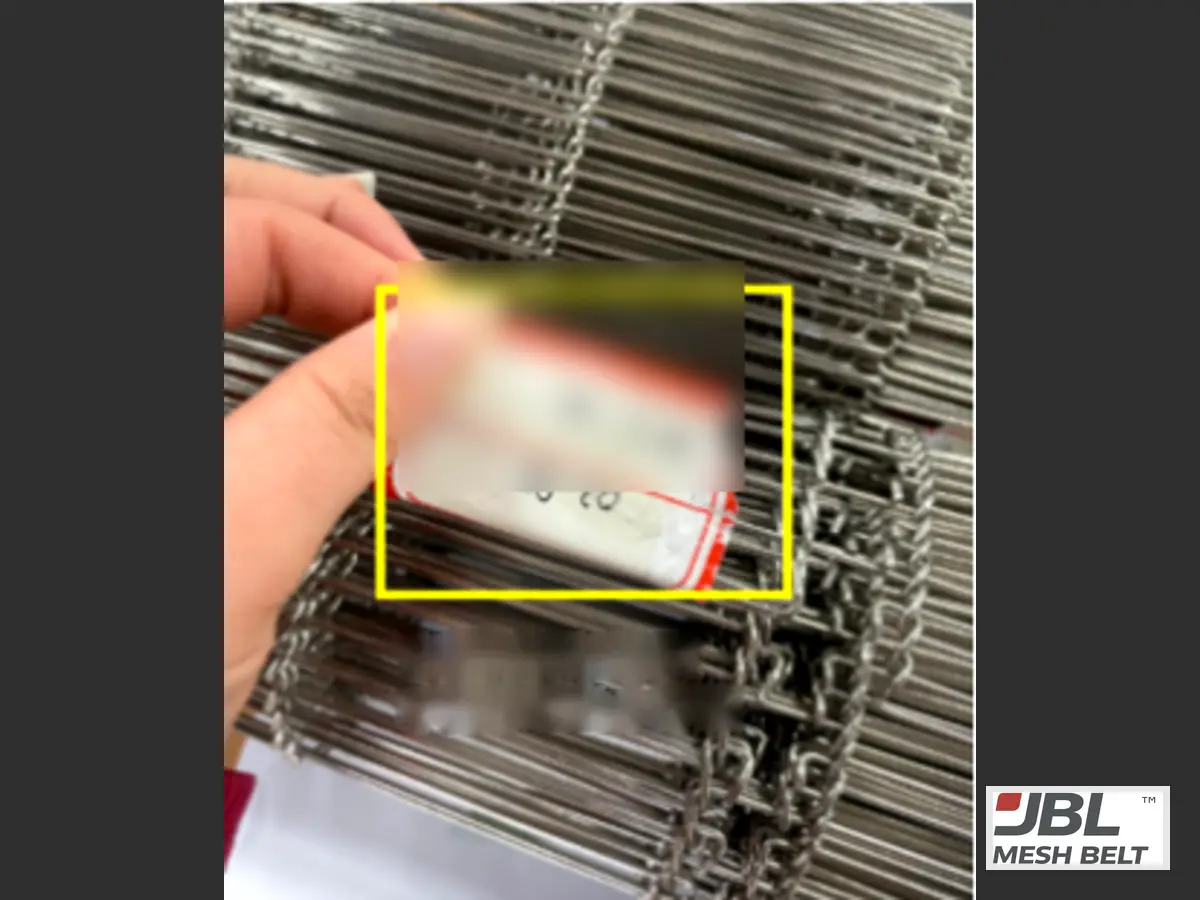
The edge loops are either crimped (bent back and pressed flat) or left as formed. They look and install differently, so the edge is confirmed from photos of your old belt, not from a verbal description.
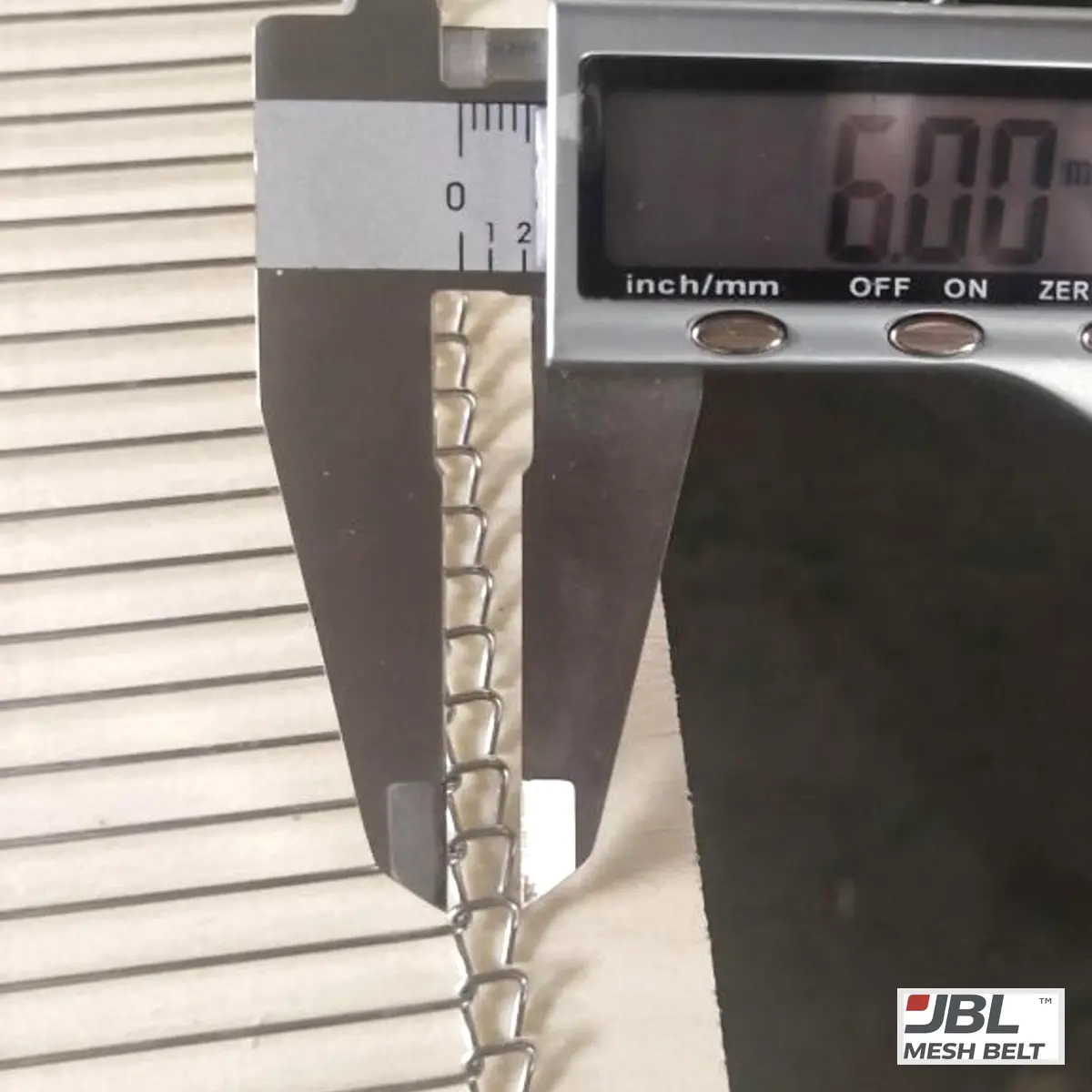
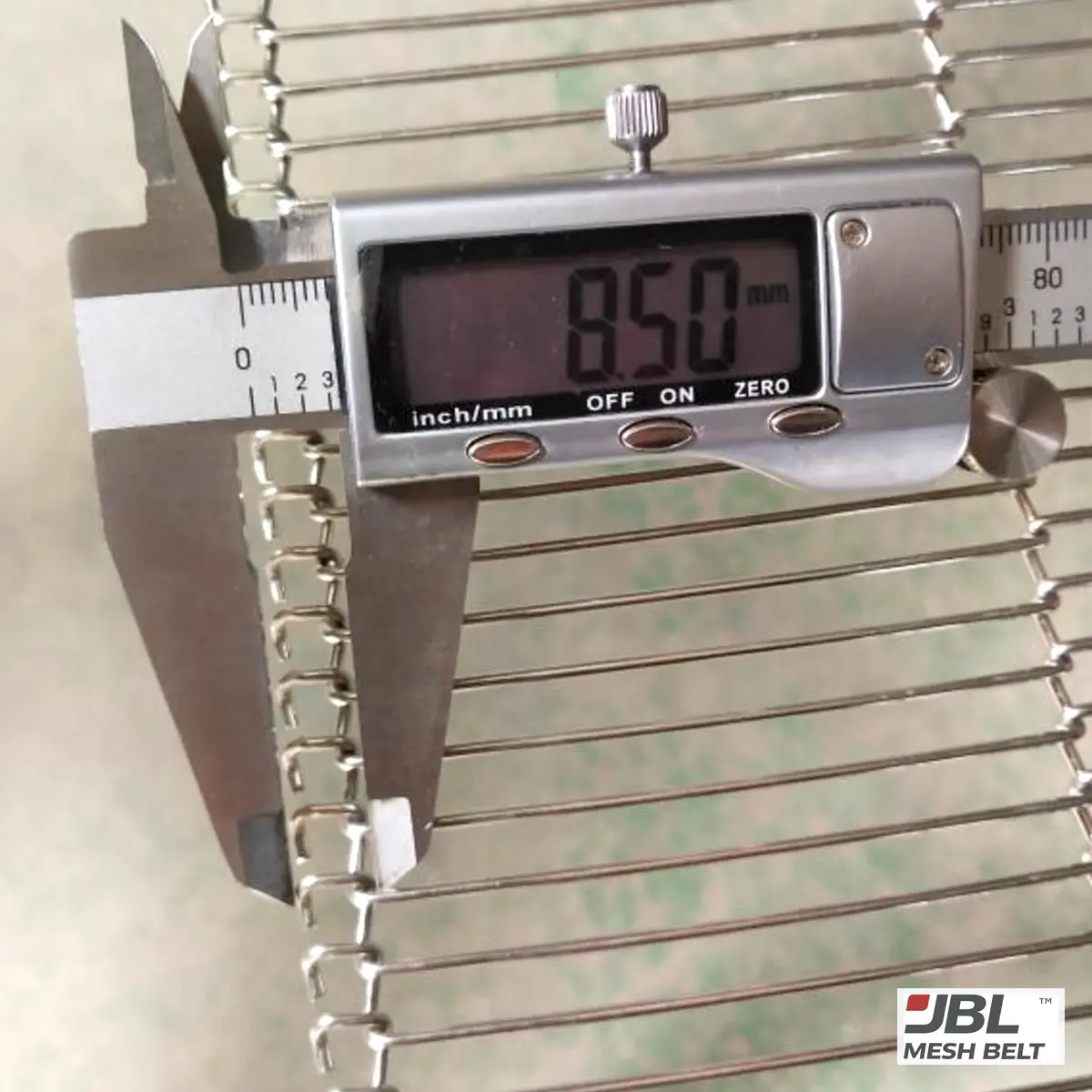
The width of the edge loop. If you do not give it, it is set at about 5 times the wire diameter (special projects excepted) and stated in the quotation so you can check it against your conveyor.
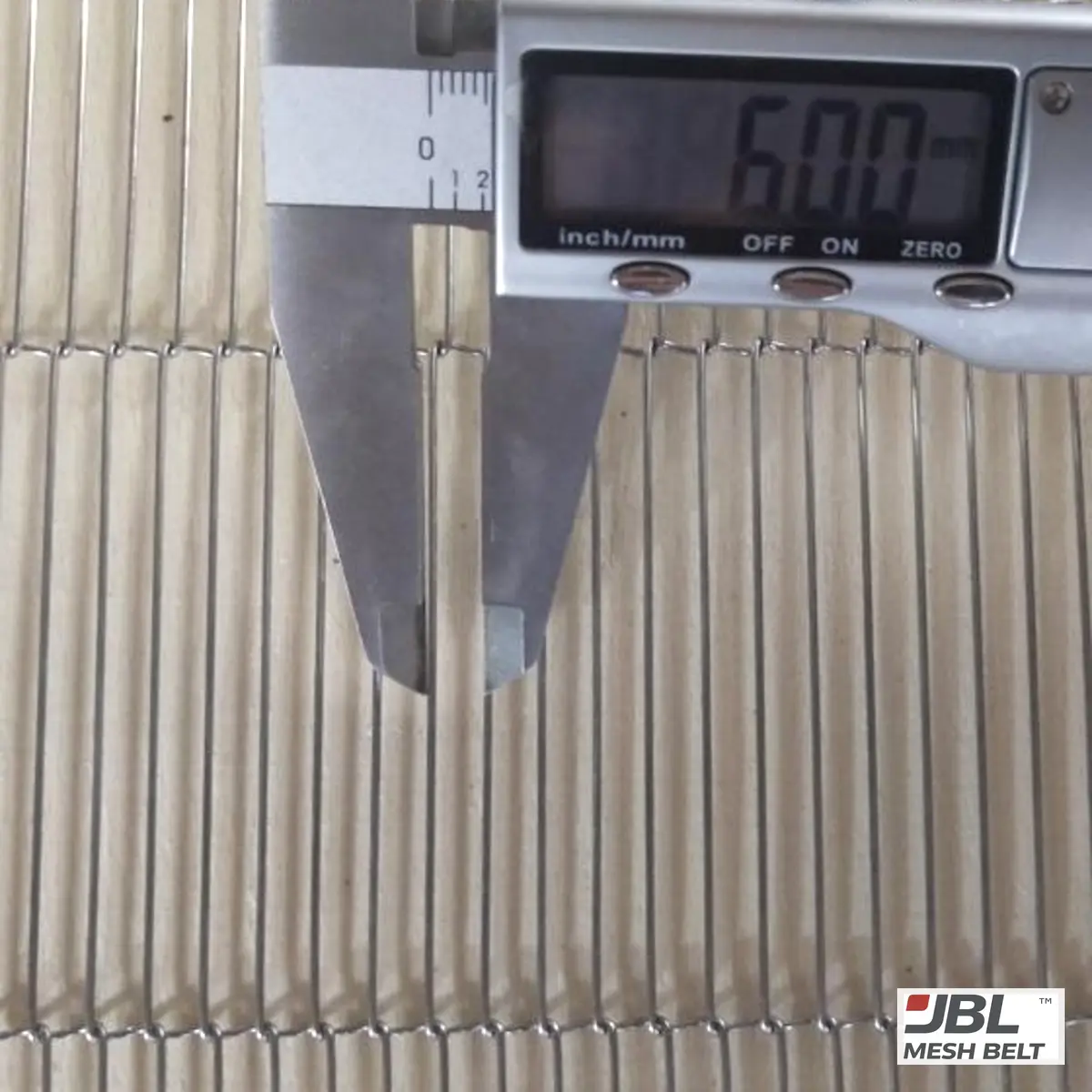
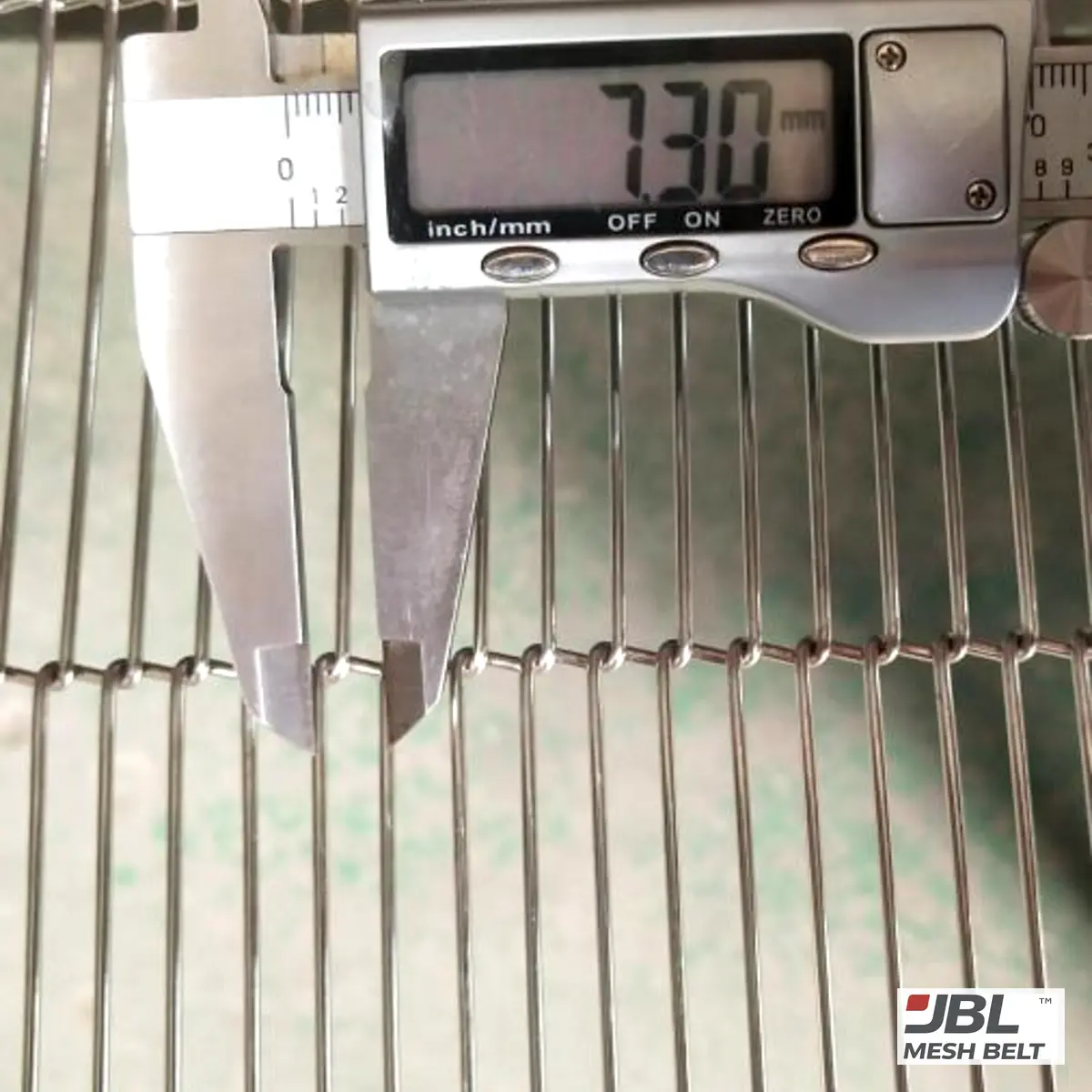
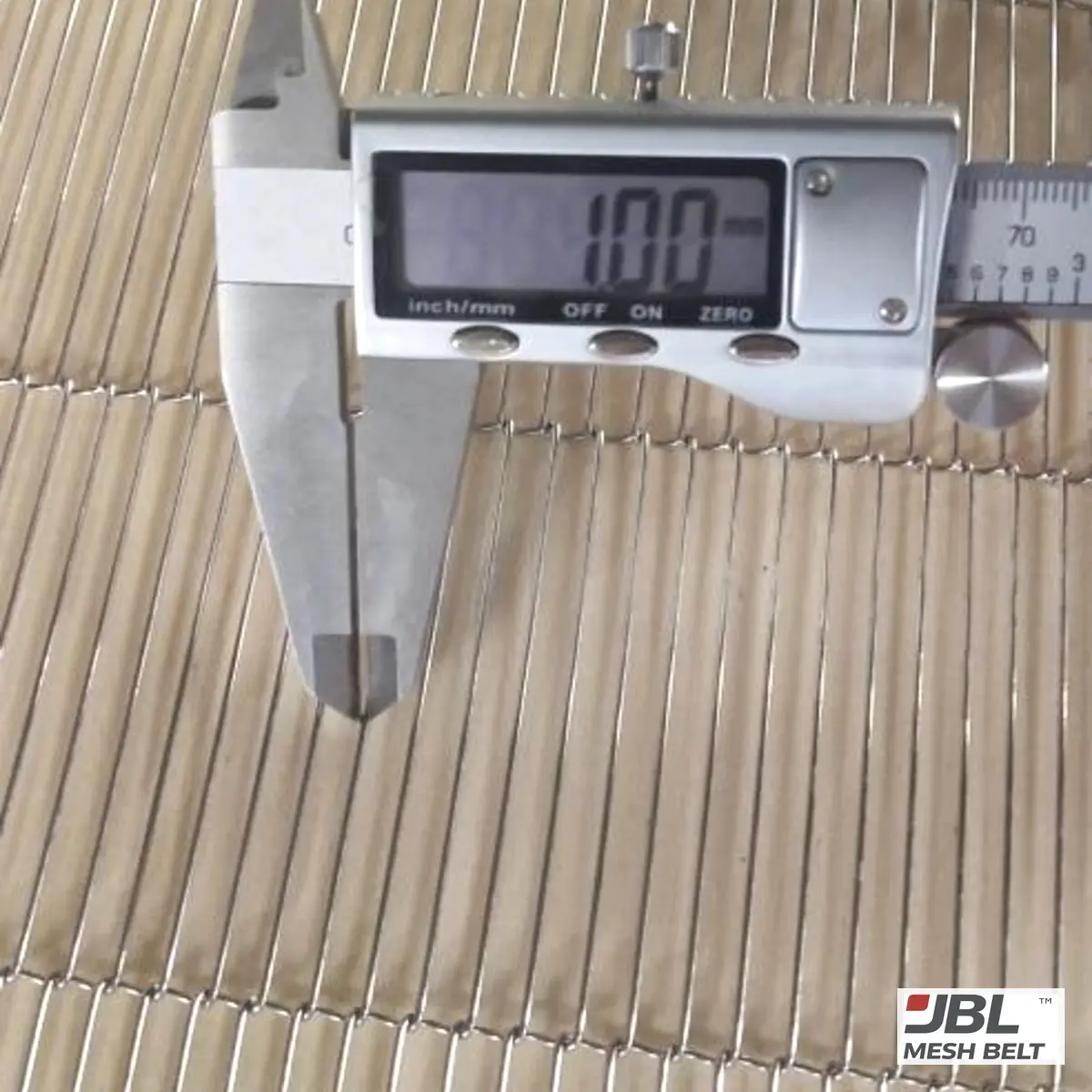
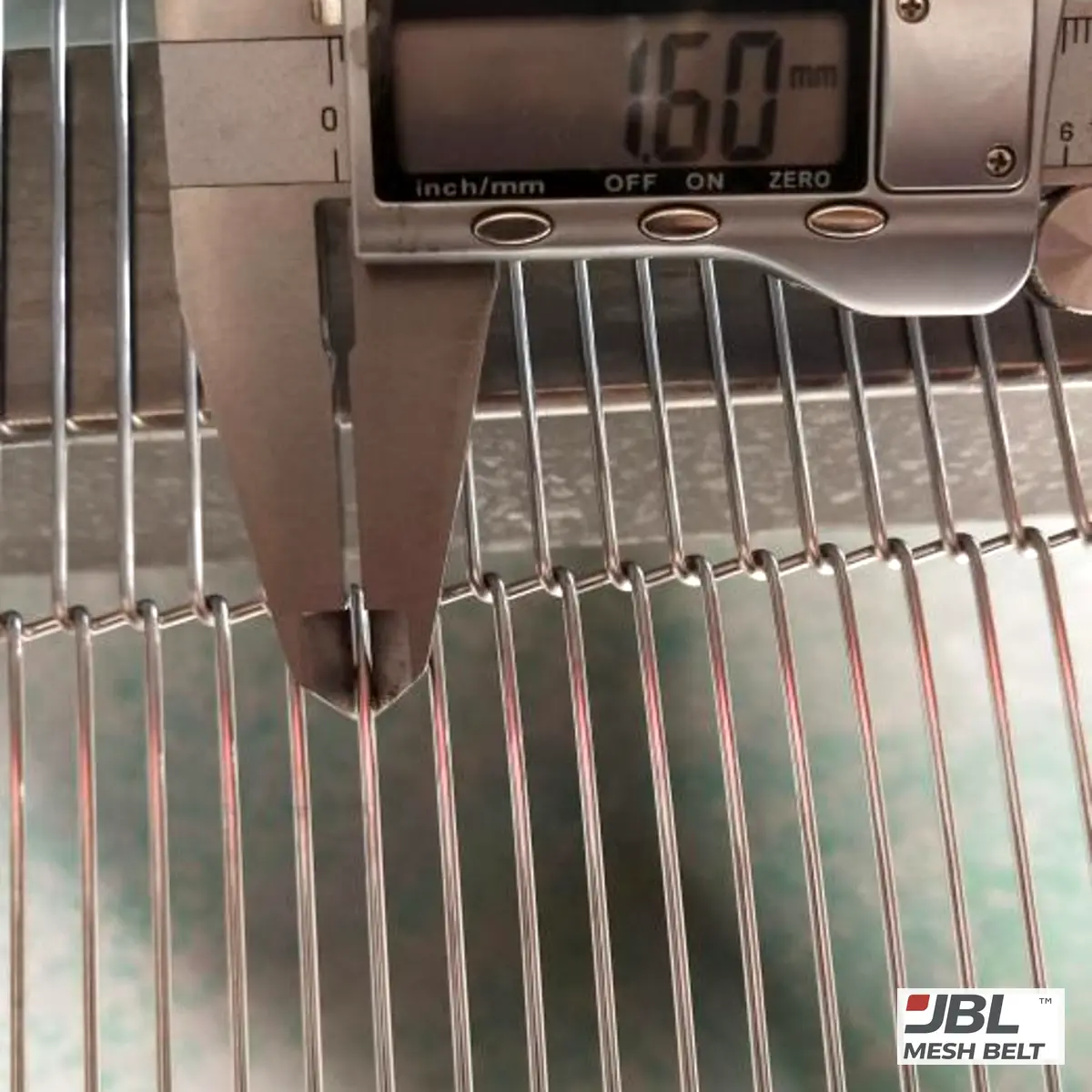
Round wire 1.0–2.8 mm and pitch 4–23.8 mm. Common pairs are 1.2 mm wire at 6.4 mm pitch up to 2.5 mm wire at 12.7 mm pitch; other pitches are confirmed per project.
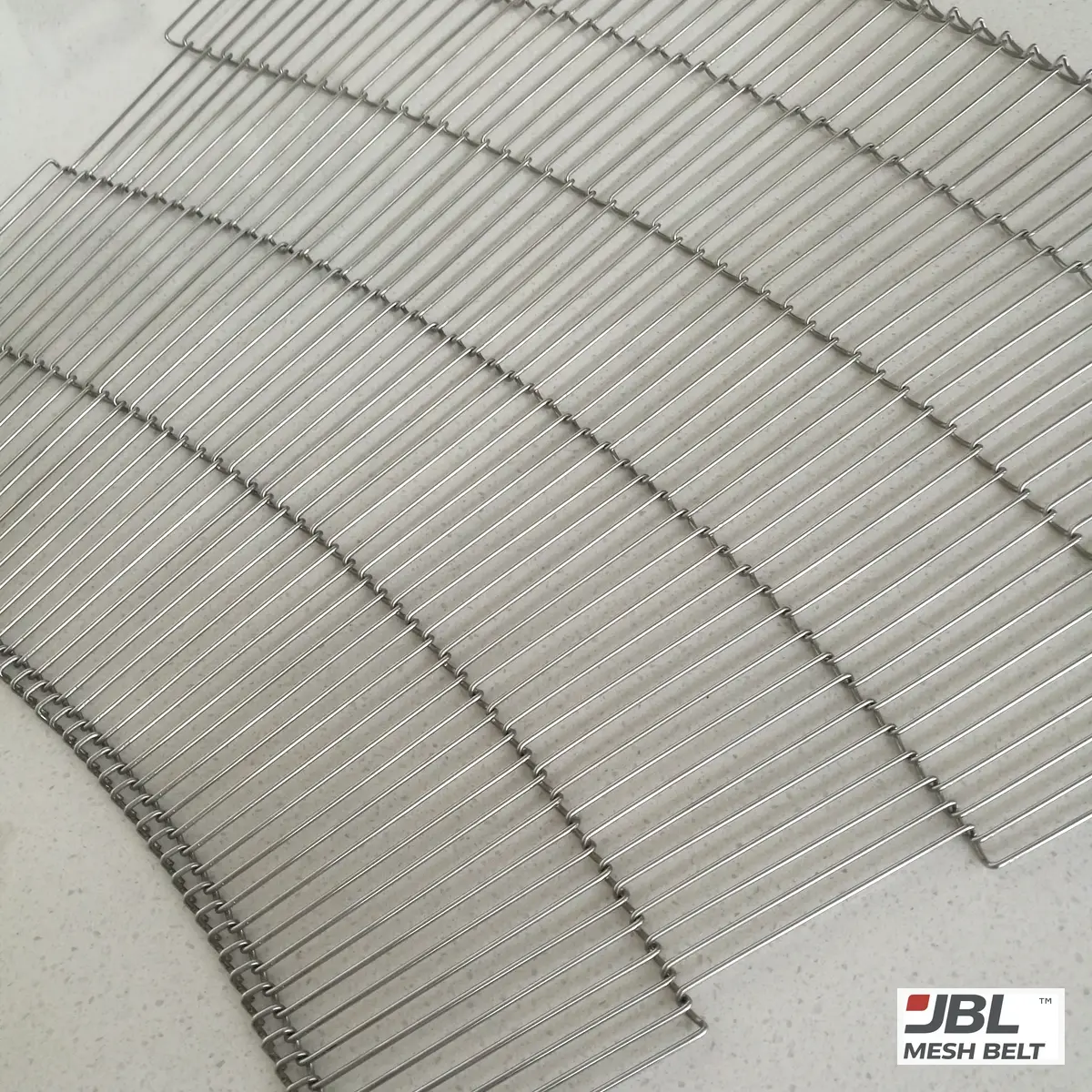
Yes — flat wire, curved belts, raised surfaces and special wire styles are made per drawing. For a curved belt, direction, angle, inner radius, inner and outer pitch and the drive are confirmed before quoting.
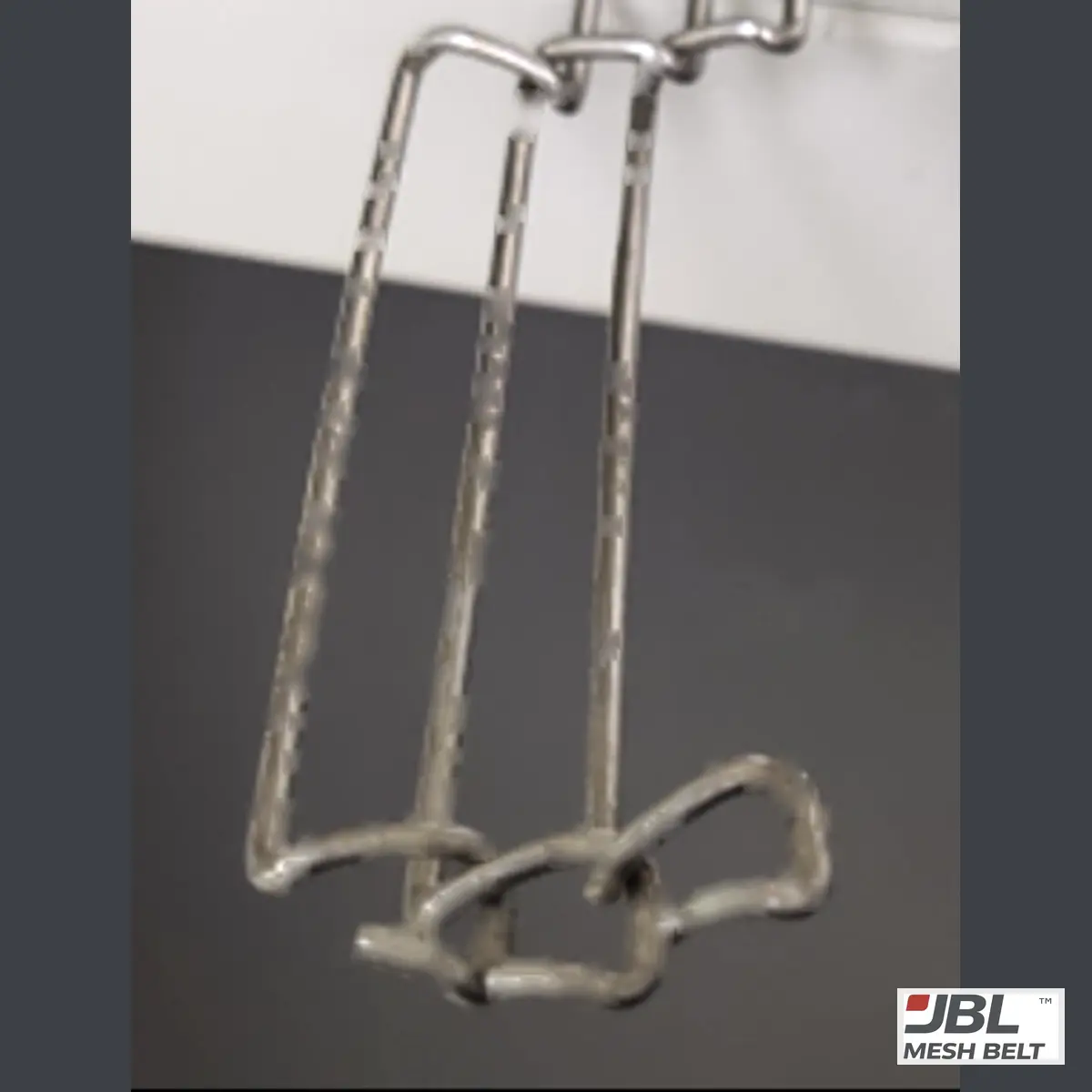
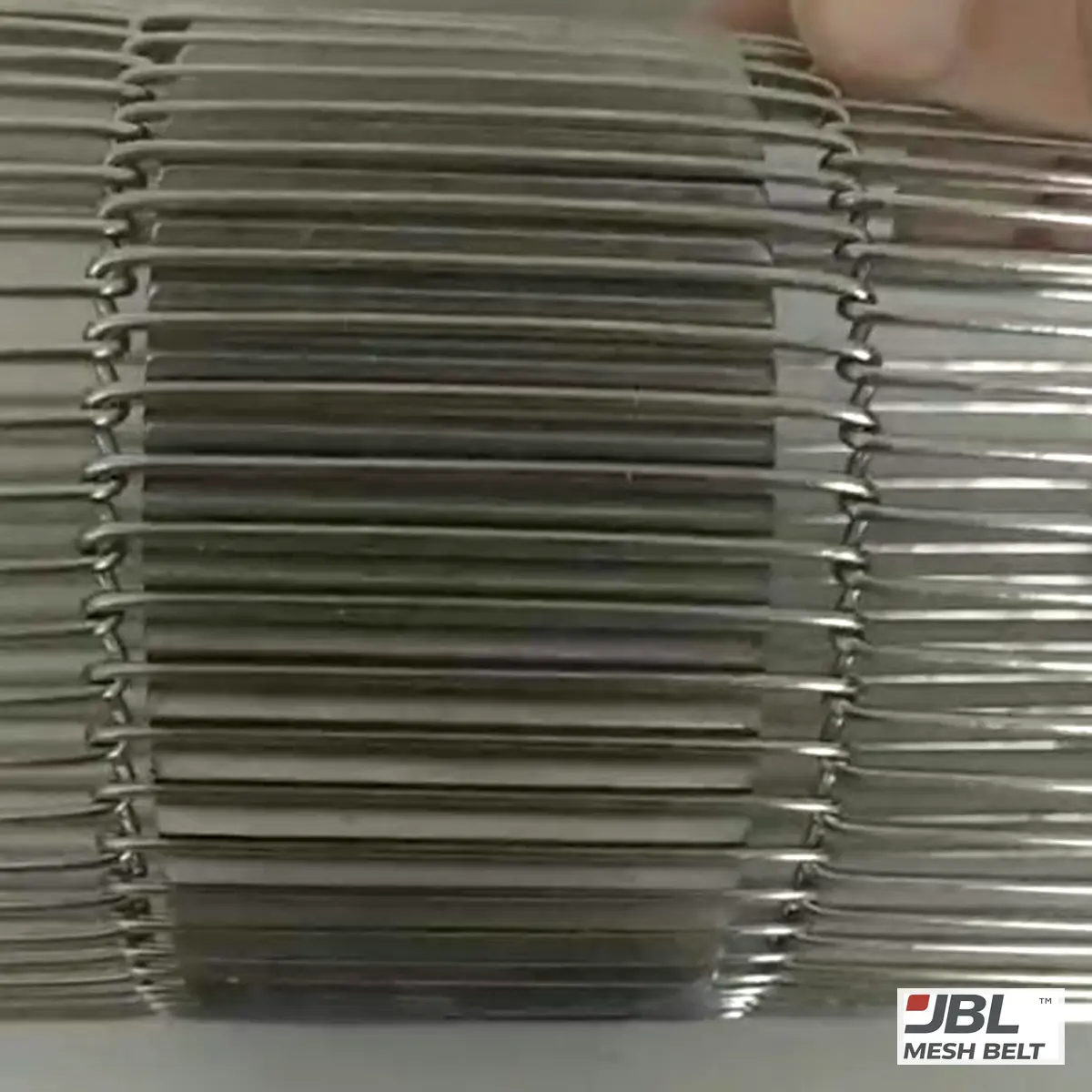
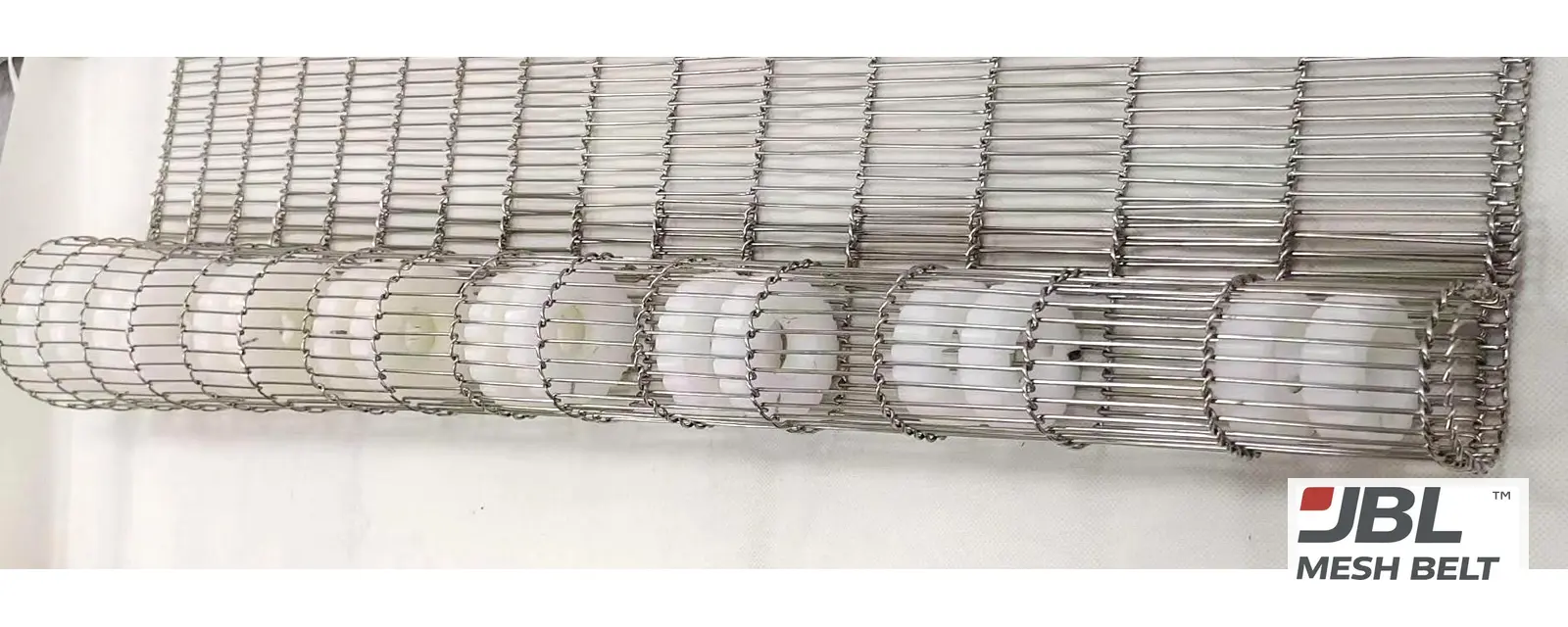
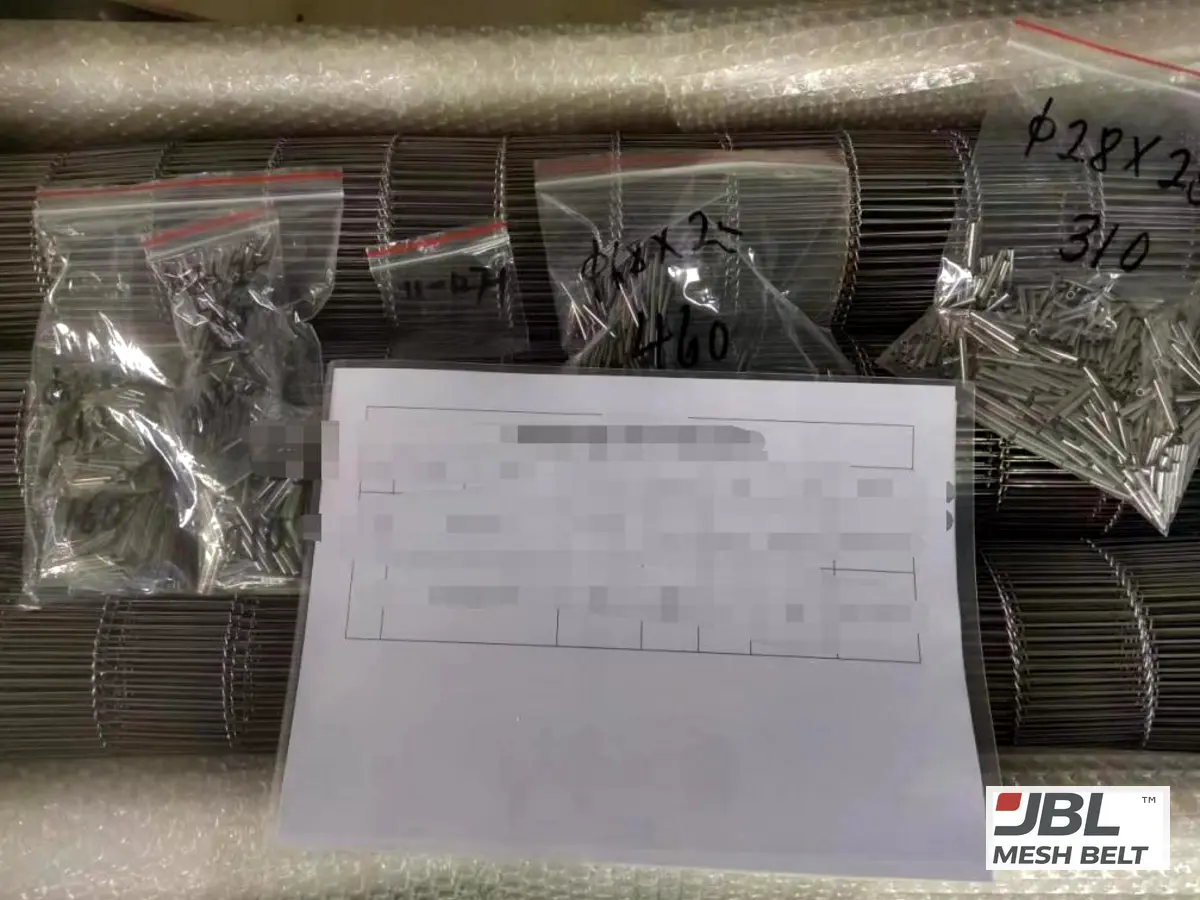
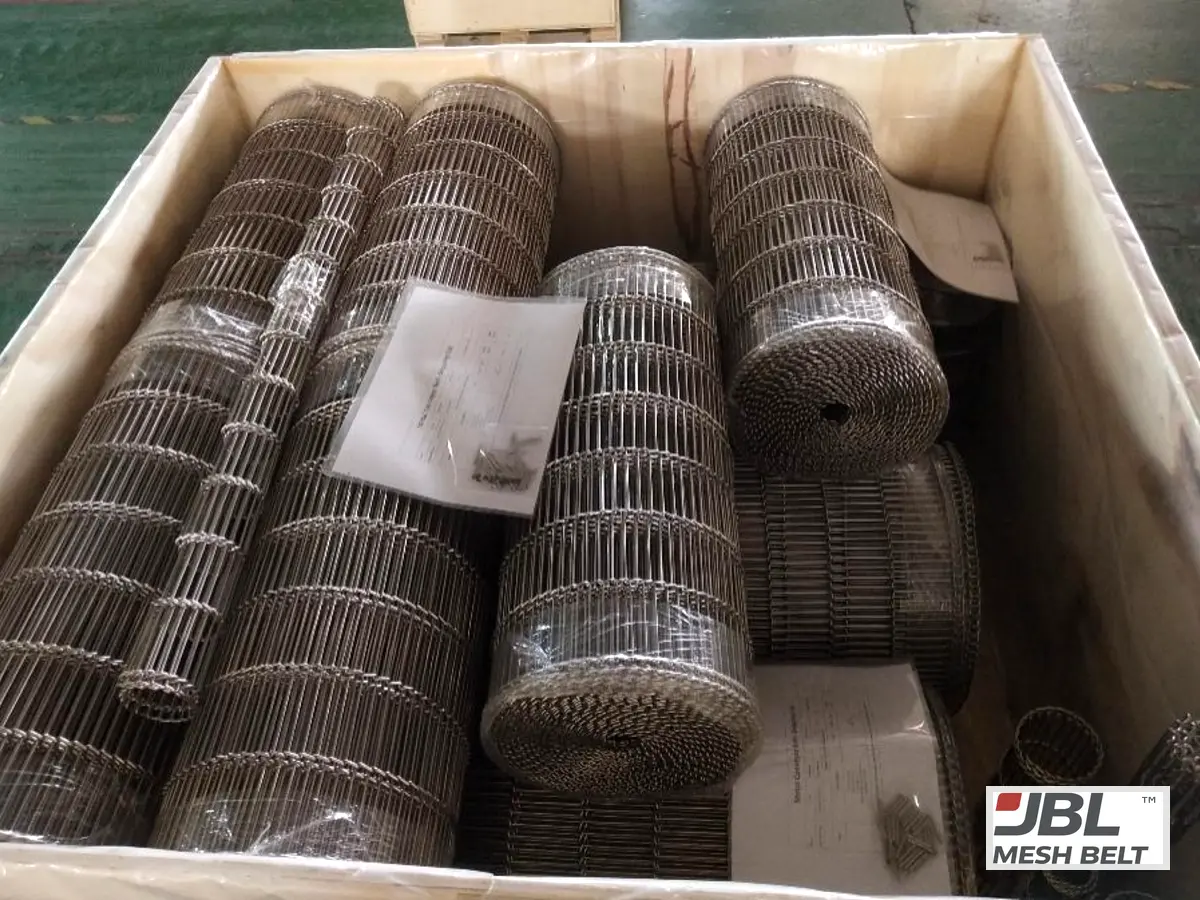
Sprockets in SUS304 / SUS316 or plastic (UHMWPE, nylon, POM) are matched to the belt pitch and run with it before shipment. Spare connecting sleeves are packed with the belt for installation.
SUS304 or SUS316 stainless steel.
Photos of the old belt edge, wire diameter, pitch, number of spaces, loop width, belt width and length, material, and any curve, flat wire or accessory requirements.
They depend on the belt and the project, and are confirmed in writing in the quotation.