1.A sample is enough
No drawing was available. Pitch, rod and strip were all read on the customer's section.
A customer in Australia needed a replacement flat wire belt for a can washing line. There was no drawing: the customer sent a section of the original belt. We measured pitch, rod and flat strip, matched the clenched edge, and made about 61 m in SUS316L, delivered in two rolls in 2022.
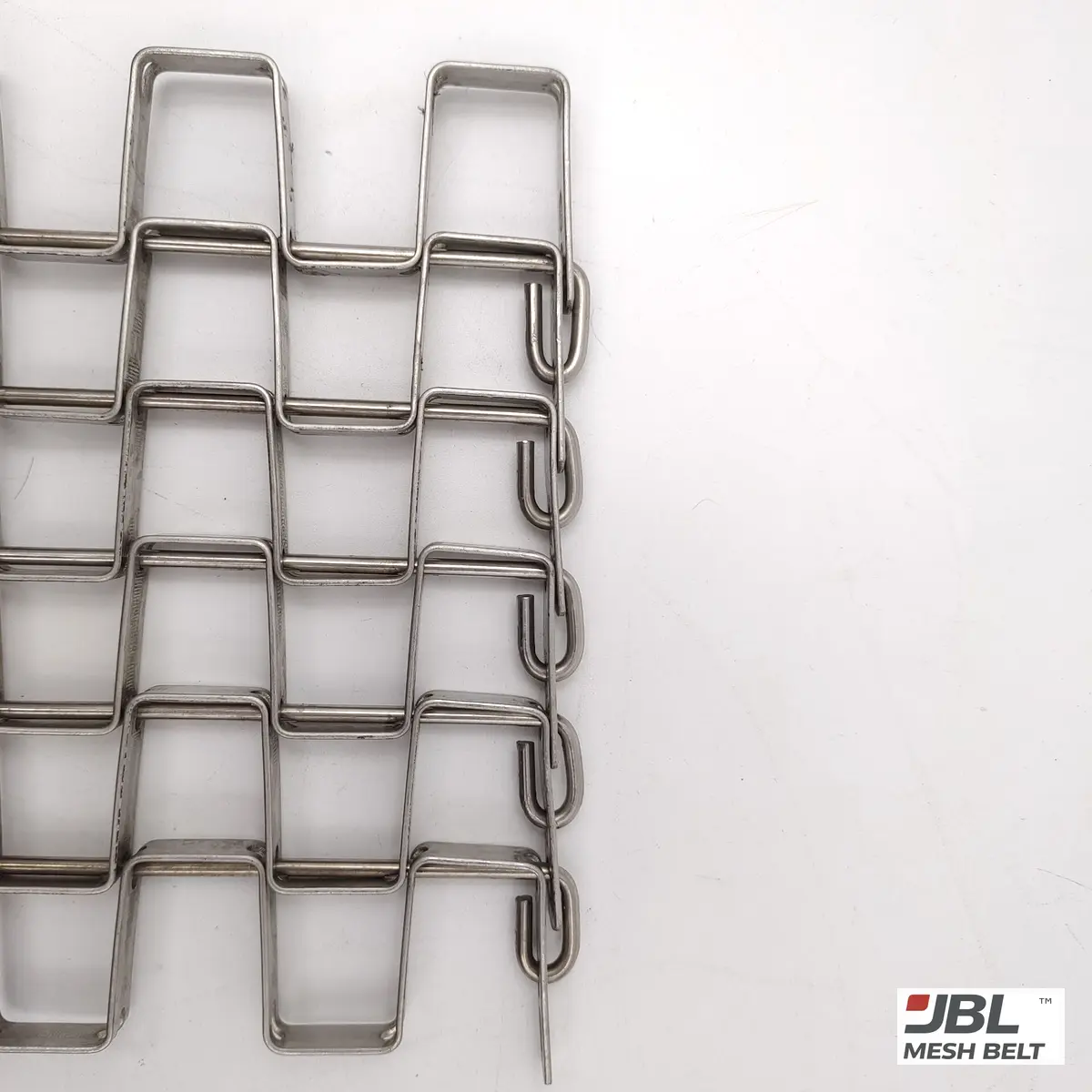
The belt carries cans through a washing line, so it runs wet all day. The customer had no drawing, only the original belt. They sent a section and asked for a belt that fits the existing line.
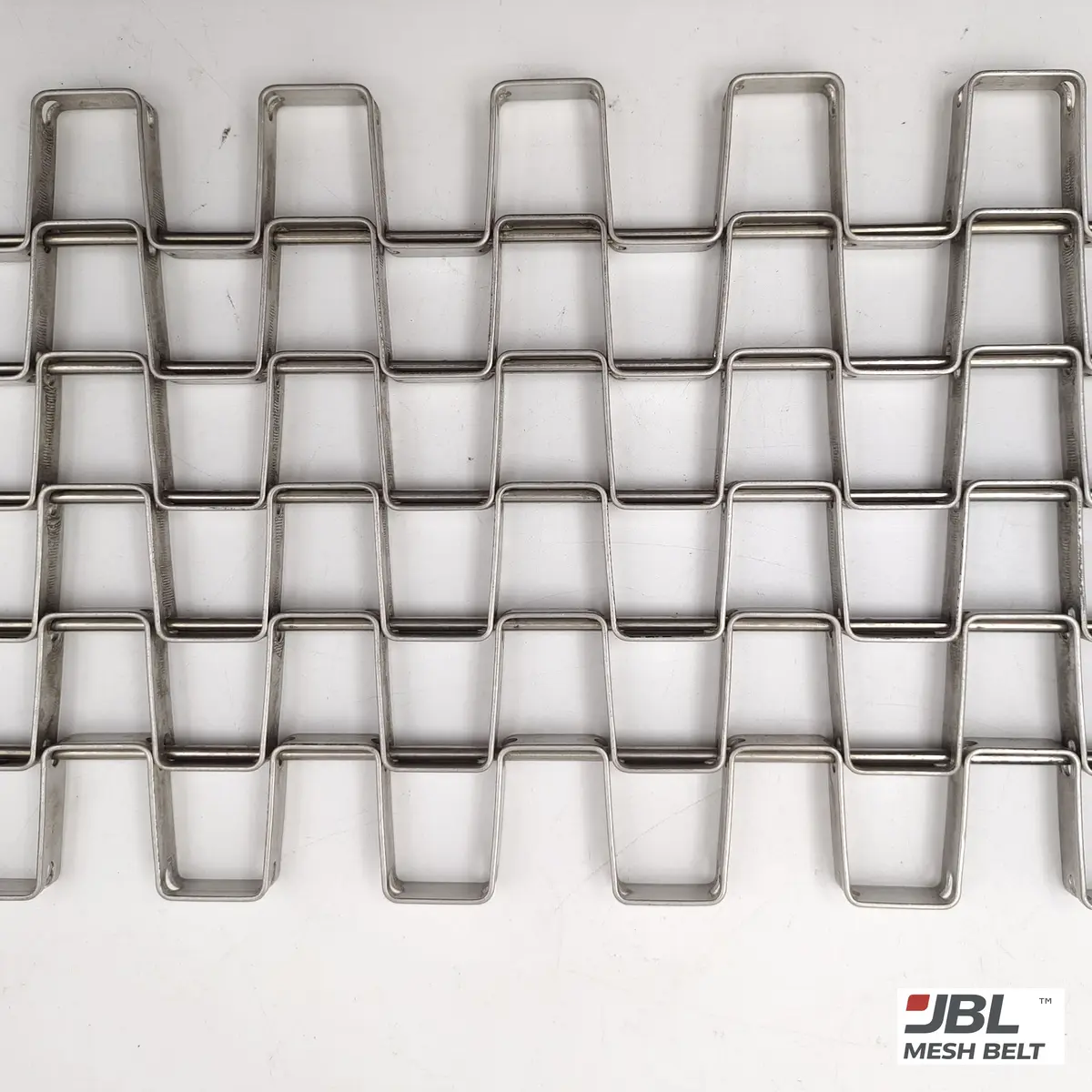
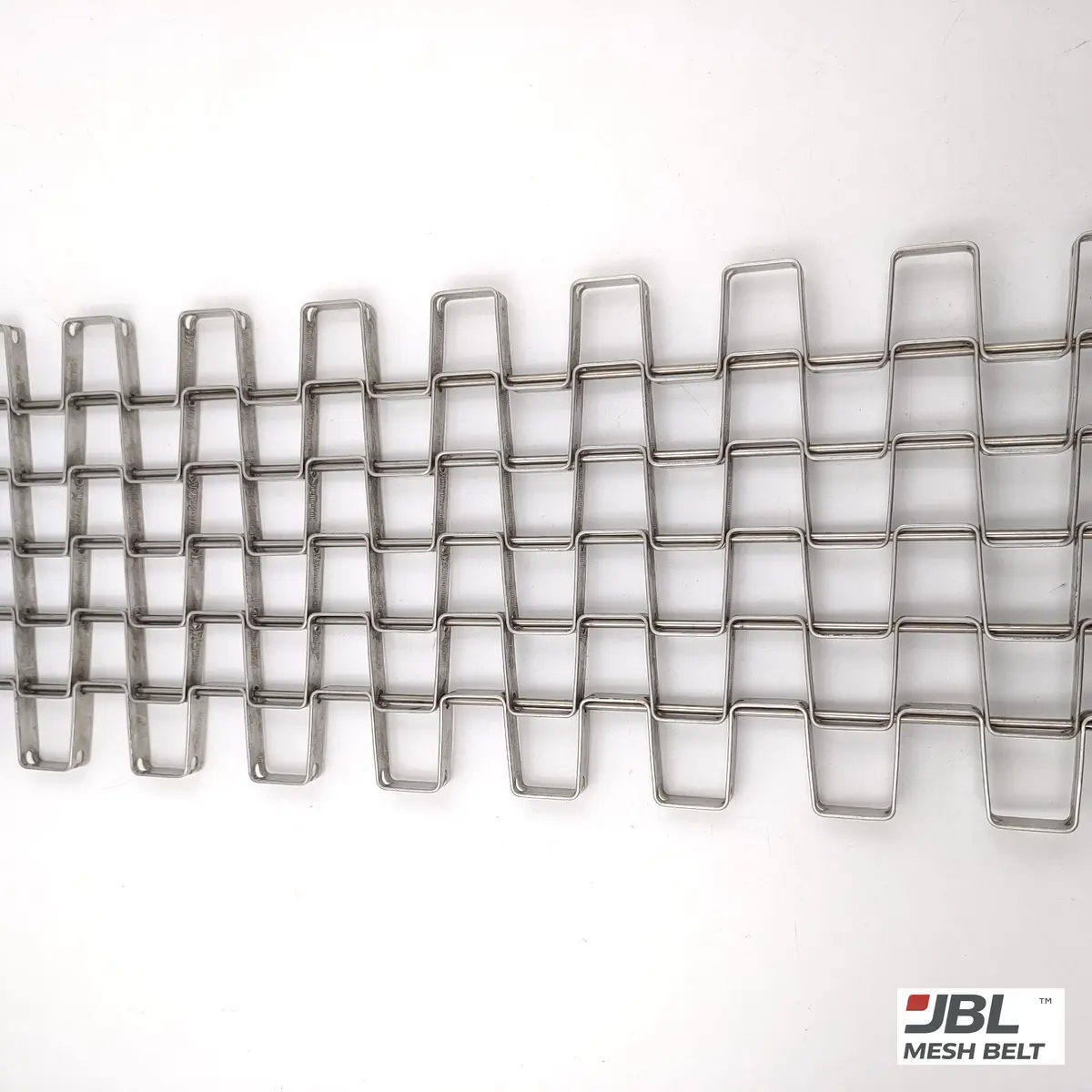
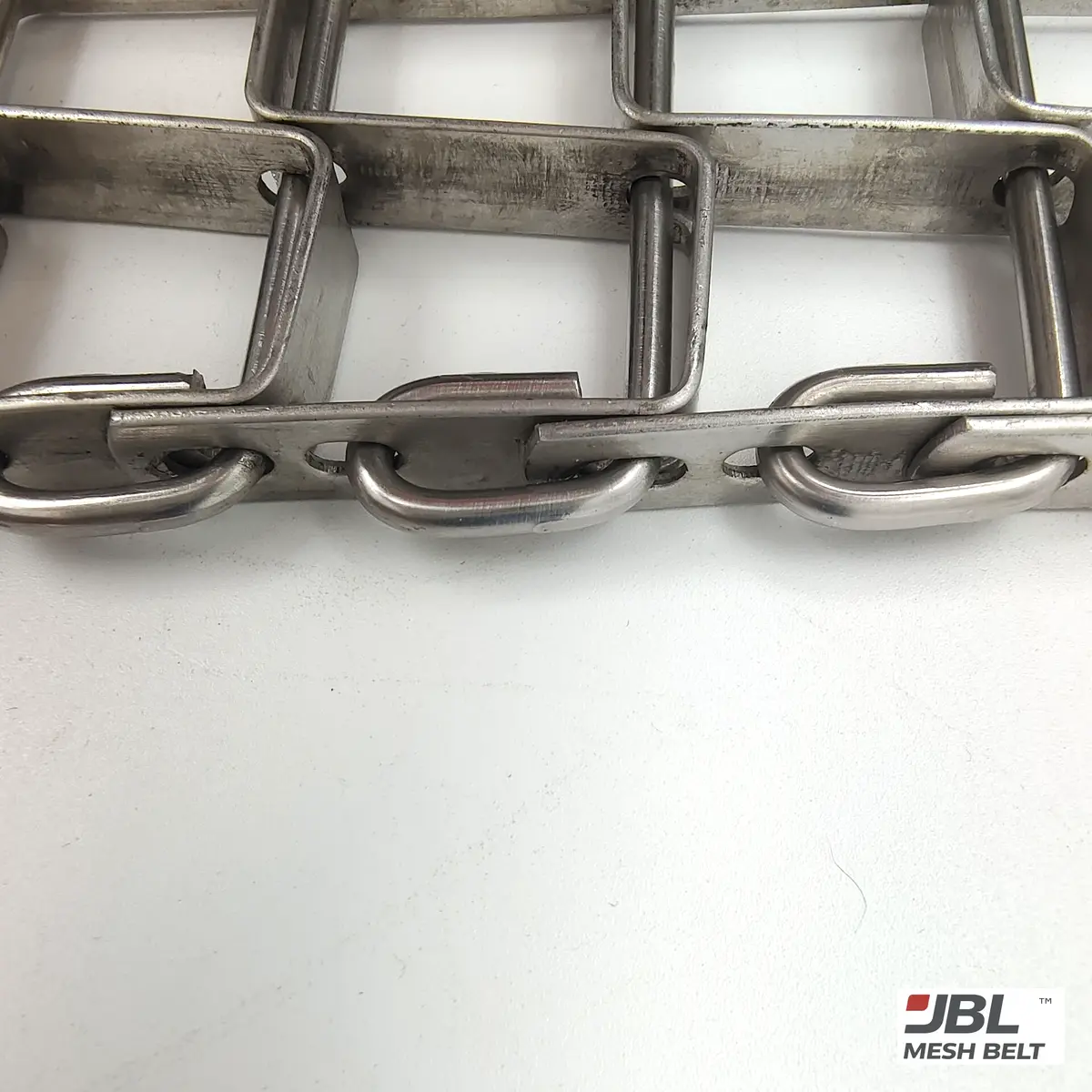
Every dimension that decides fit was read on the customer's sample with a caliper: pitch, cross rod, flat strip thickness and height, and the opening.
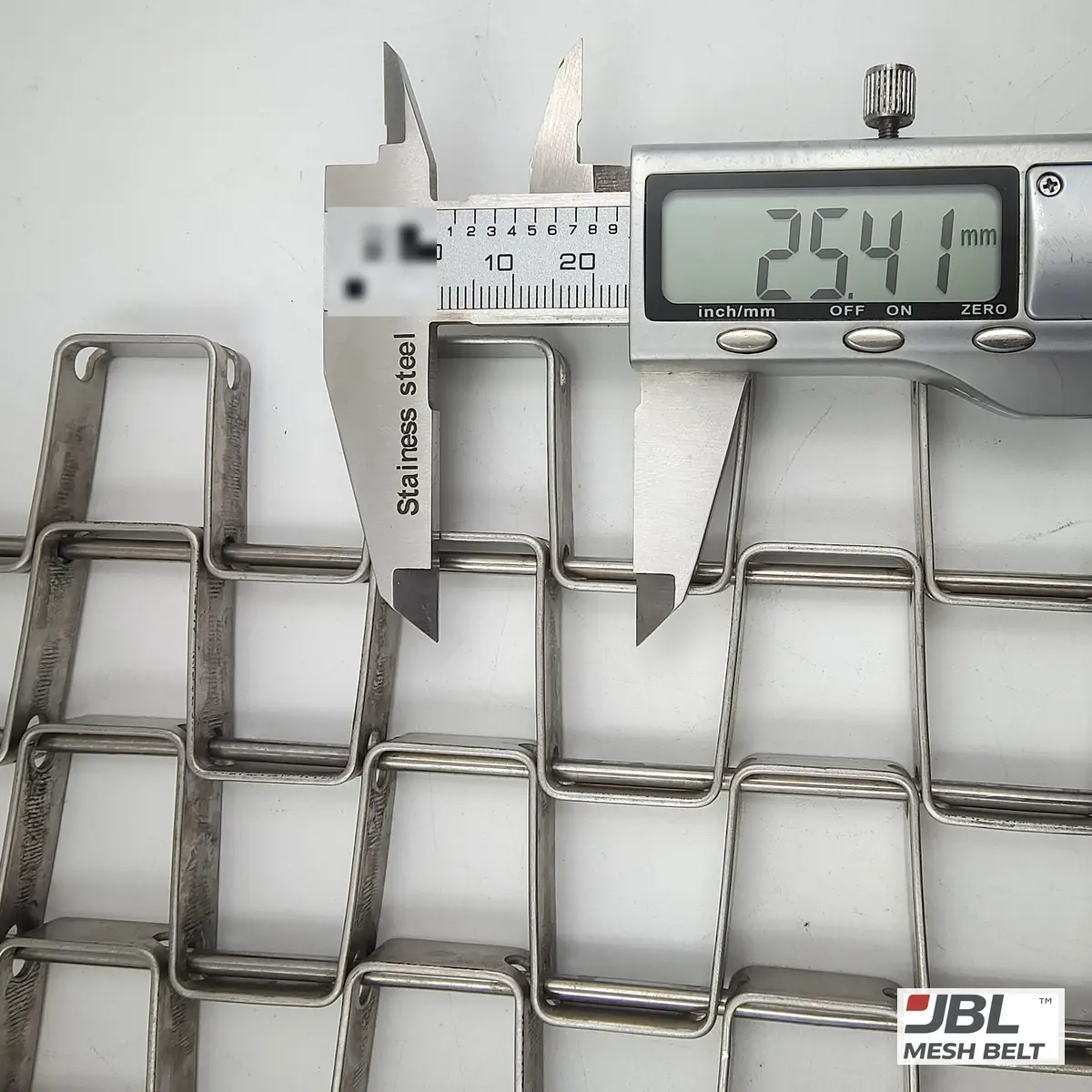
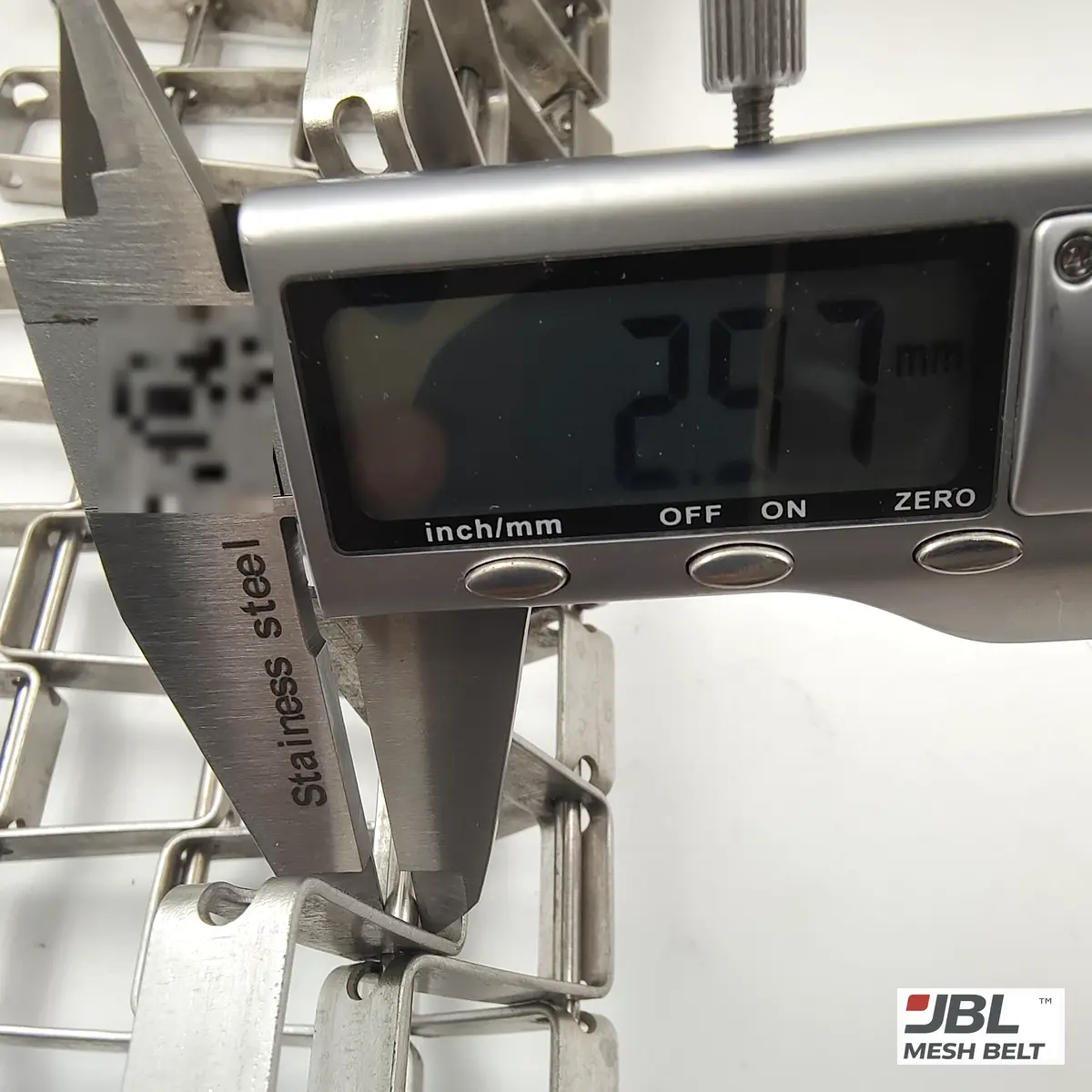
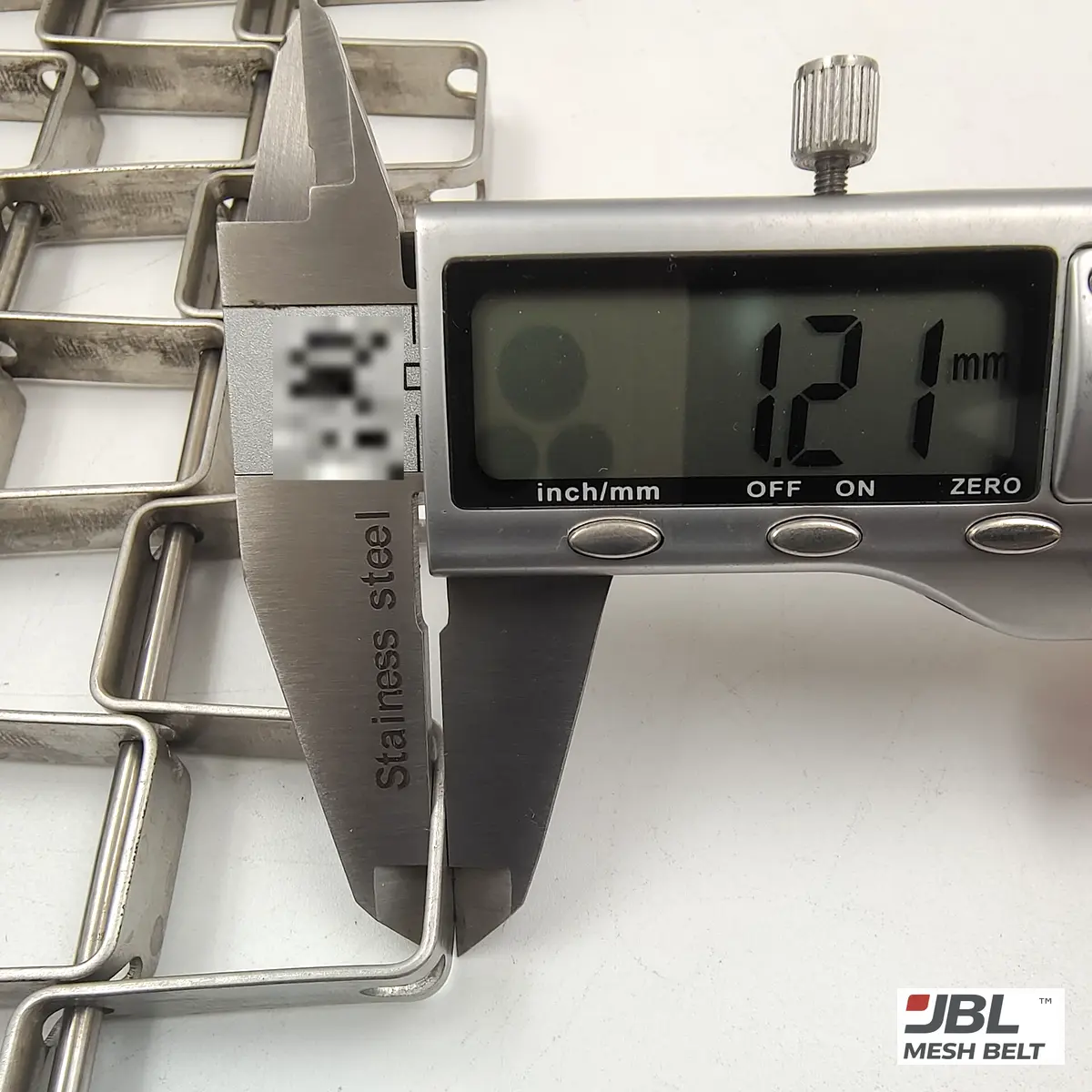
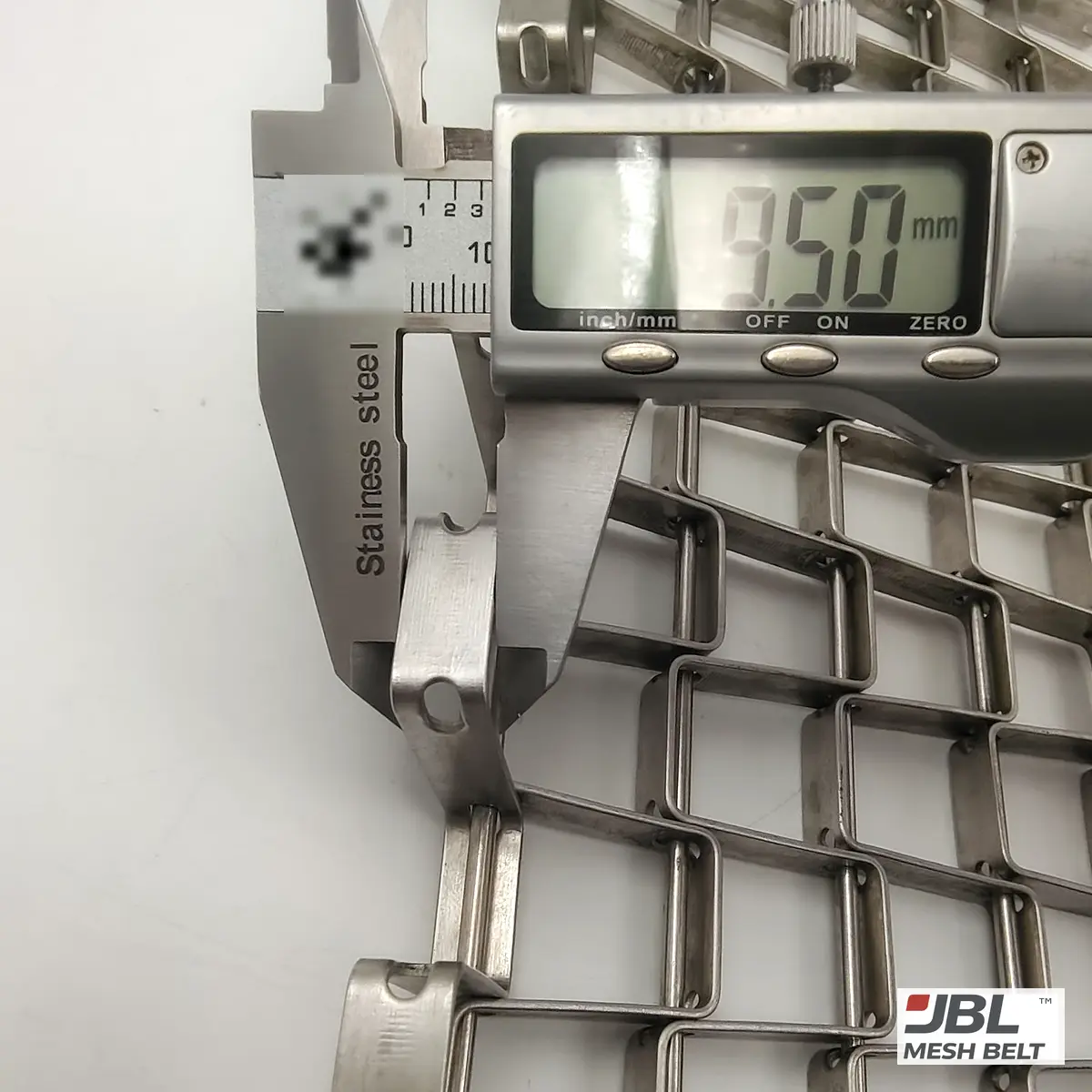
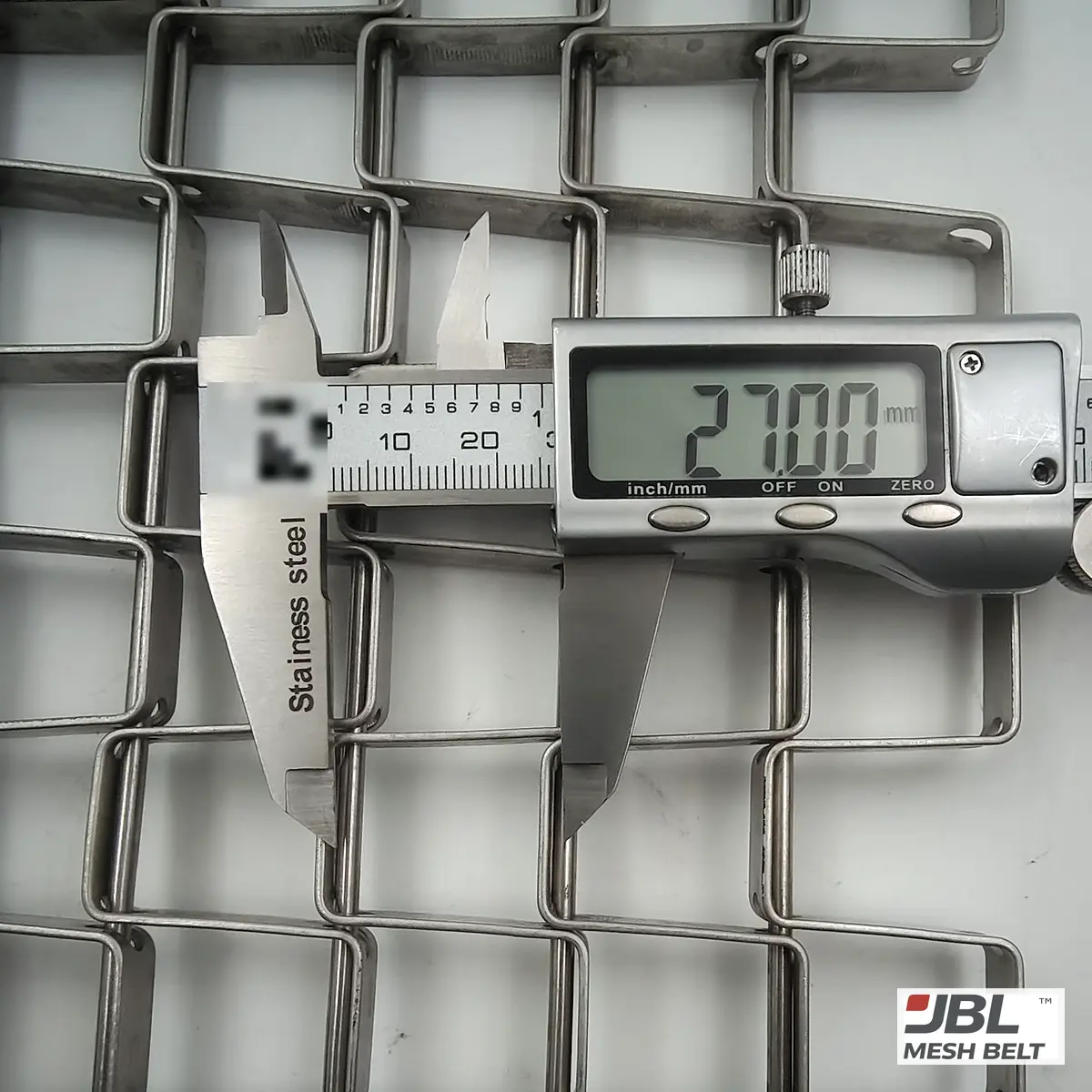
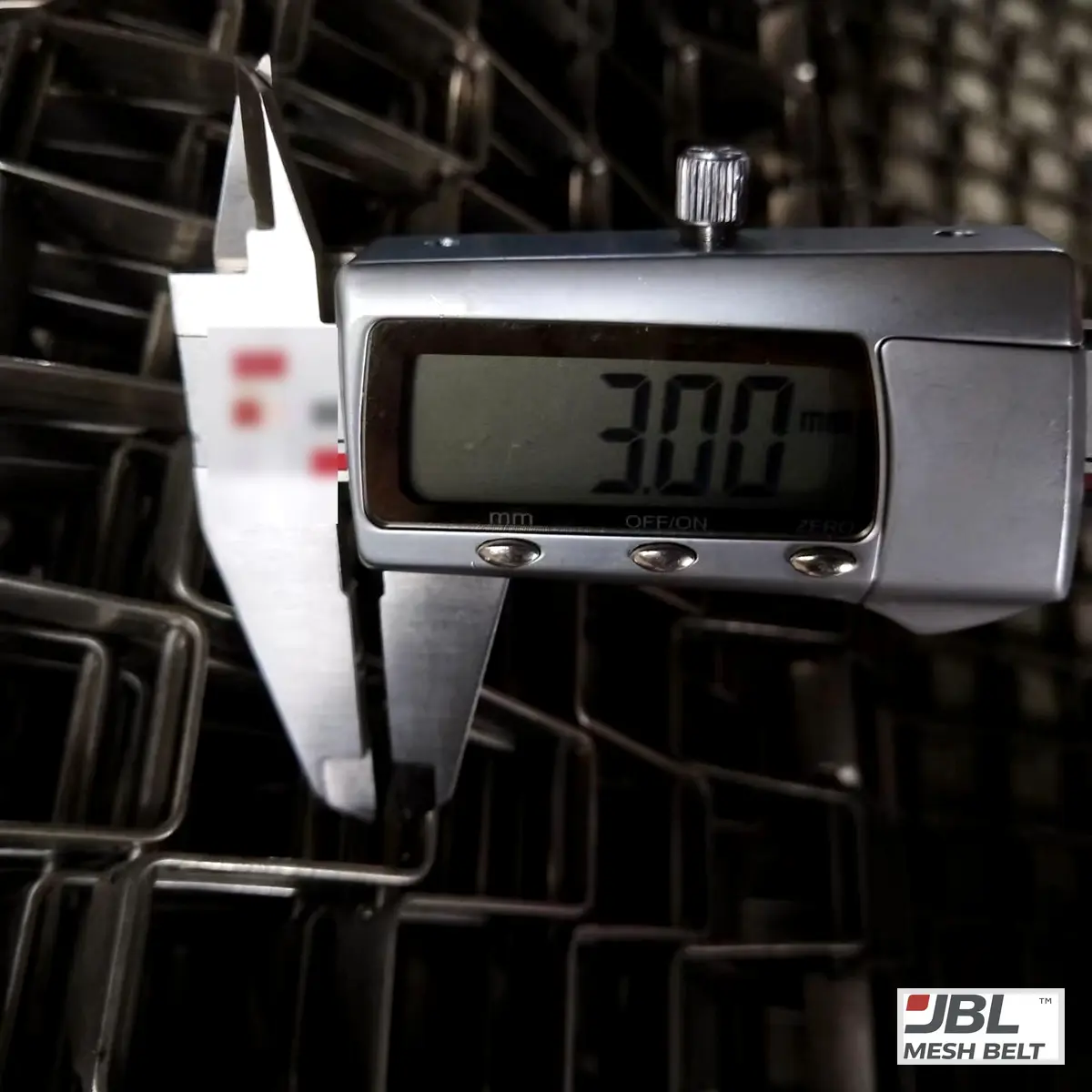
The readings were turned into a specification — pitch 25.4 mm, rod 3.0 mm, strip 1.2 × 9.5 mm — with a clenched edge like the original, in SUS316L. The rod was read again on the bulk belt.
| Checked | Customer's sample | Bulk belt |
|---|---|---|
| Pitch | 25.41 mm | 25.4 mm (spec) |
| Cross rod | 2.97 mm | 3.00 mm |
| Flat strip | 1.21 × 9.50 mm | 1.2 × 9.5 mm (spec) |
| Edge | Clenched | Clenched |
| Material | Stainless steel | SUS316L |
Readings from the photos on this page. Belt width and order details are withheld.
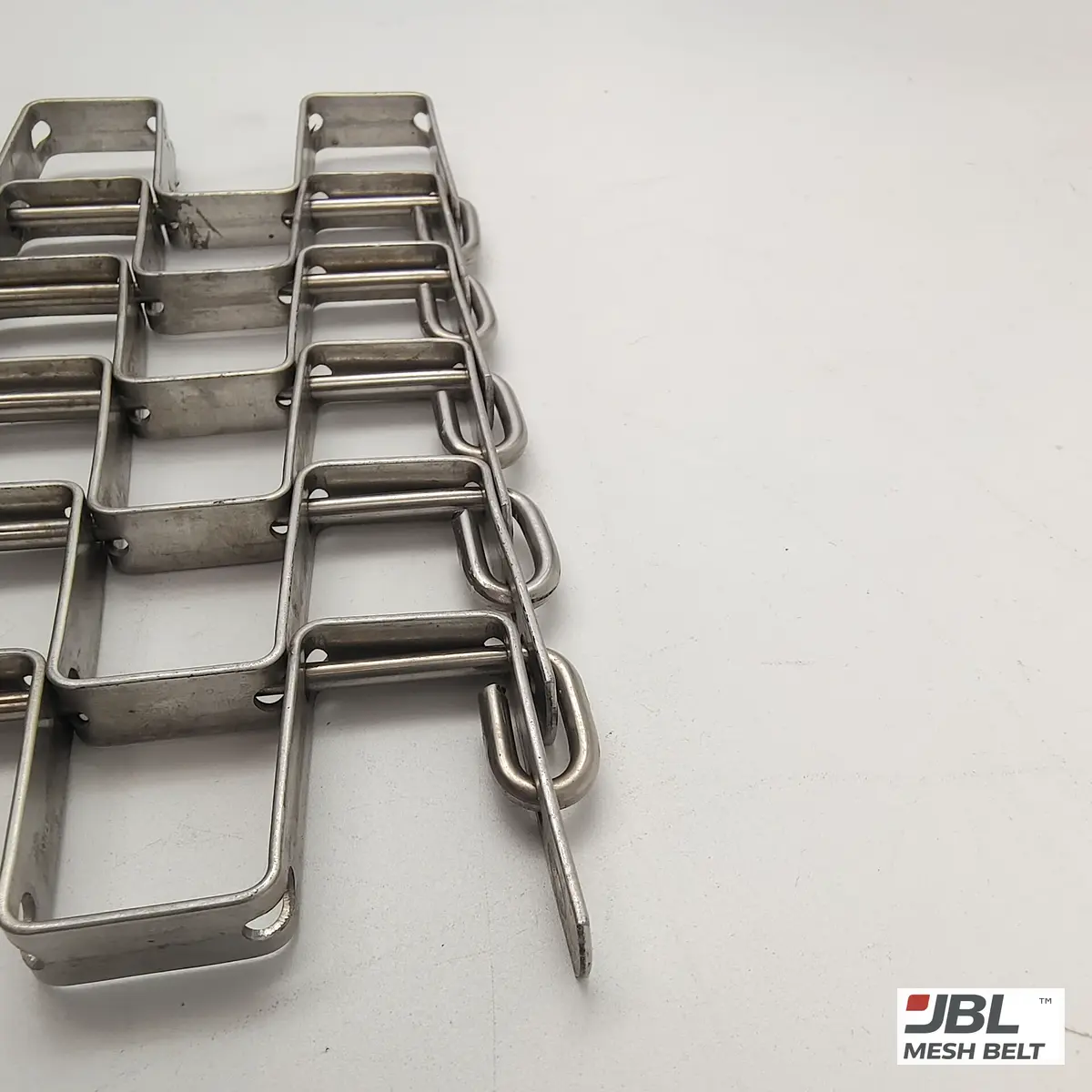
| Location · year | Australia · 2022 |
|---|---|
| Industry · equipment | Can making · can washing line |
| Starting point | Section of the customer's original belt — no drawing |
| Measured | Pitch, rod, flat strip thickness and height, opening |
| Belt supplied | Flat wire belt, SUS316L, pitch 25.4 mm, rod 3.0 mm, strip 1.2 × 9.5 mm, clenched edge, mill finish |
| Quantity | About 61 m in two rolls, shipped by sea in plywood crates |
1.A sample is enough
No drawing was available. Pitch, rod and strip were all read on the customer's section.
2.Inch sizes hide in the readings
25.41 mm is 1 inch. Recognising the design unit keeps the new belt on the original pitch.
3.Match the edge, not only the mesh
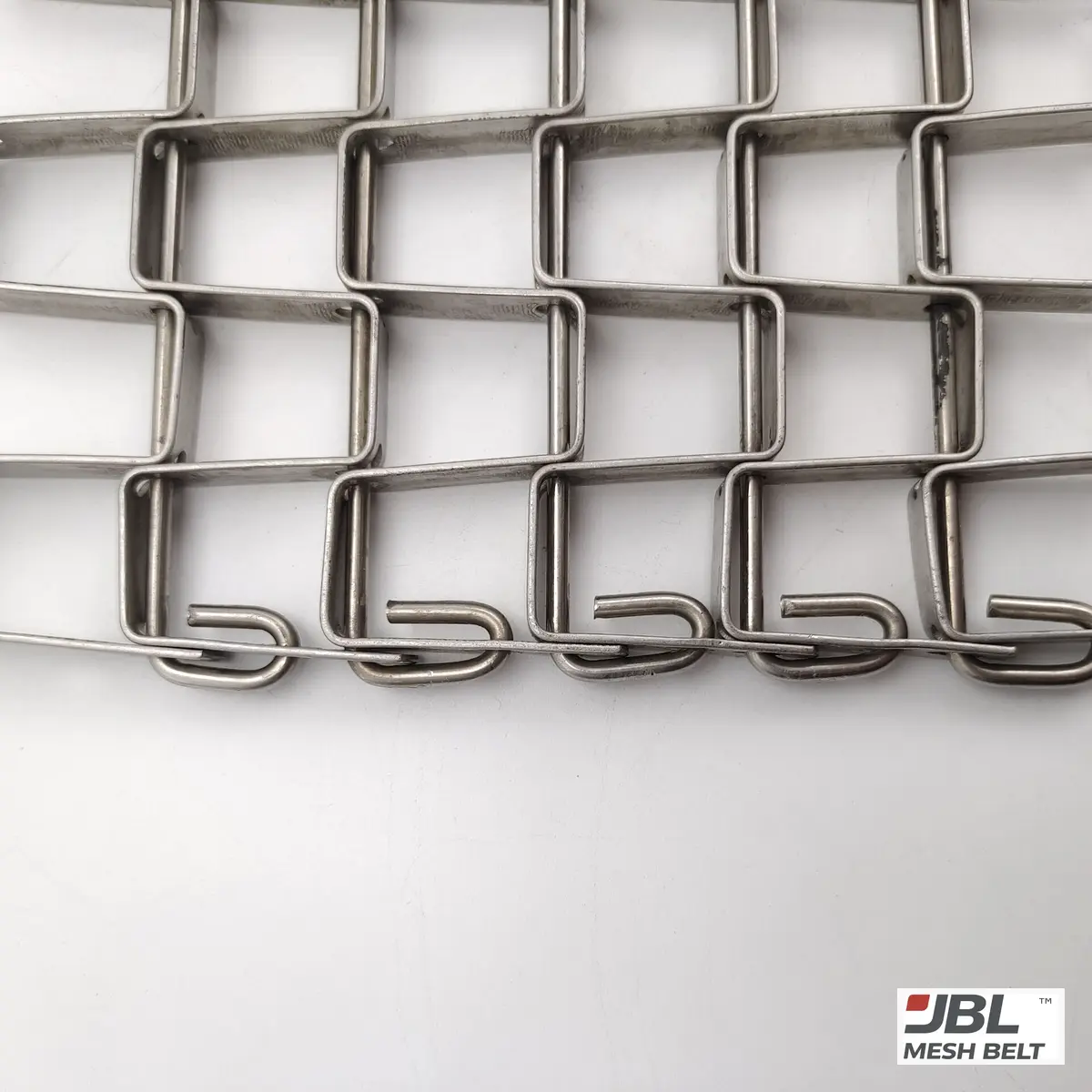
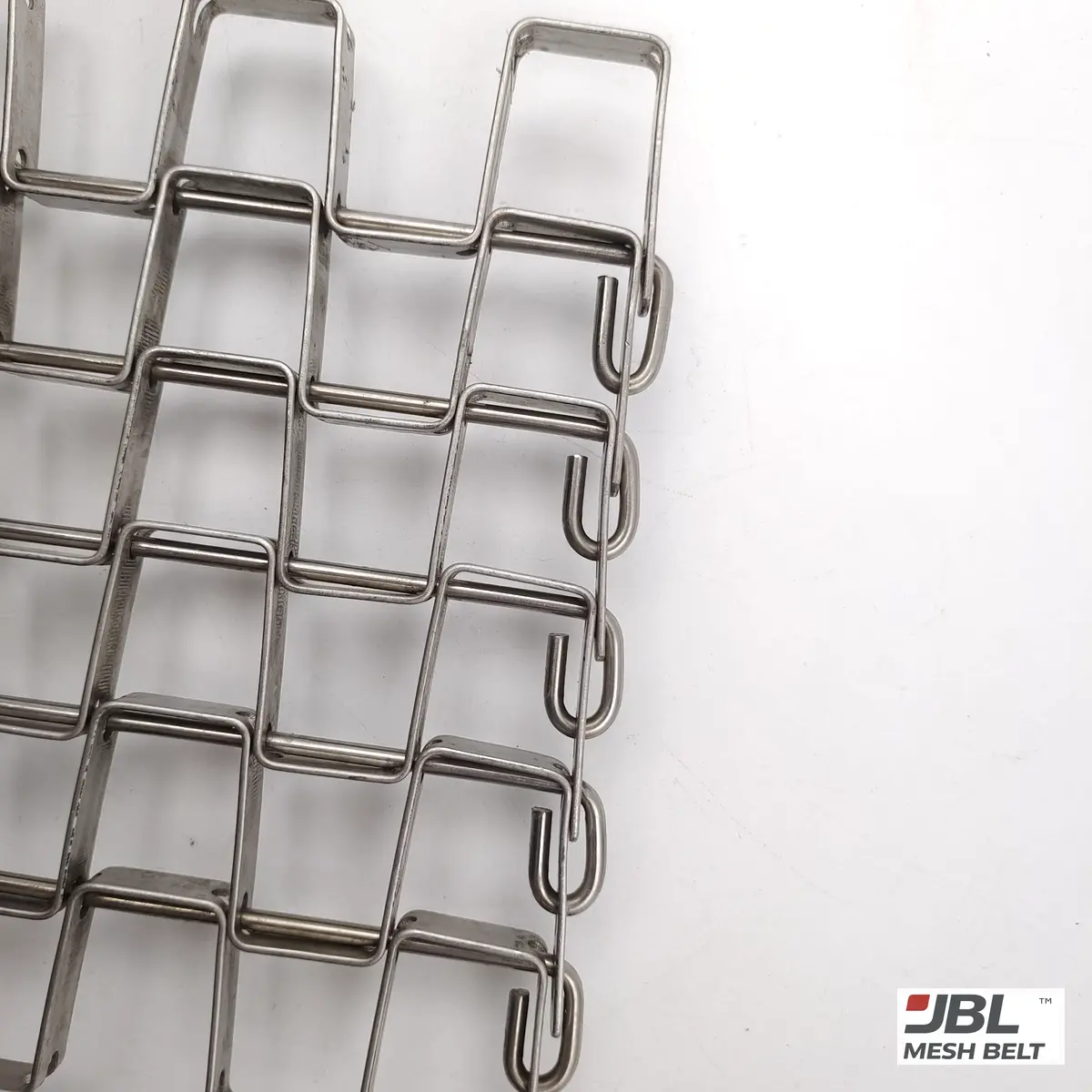
The clenched edge was copied from the original so the belt runs the same way on the line.
4.Pick the steel for the washing line
The belt was made in SUS316L for a line that runs wet all day.
✓ Evidence on this page: photos and caliper readings of the customer's sample and a rod reading on the bulk belt. Customer name, order numbers, belt width and the original belt brand are withheld.
Replacing a belt on a washing line?
Send a short section of the old belt, or photos with a caliper in the picture — usually a reply within 8 hours.
Yes. Pitch, rod, flat strip and edge are measured on the sample and turned into a specification before production.
SUS316L stainless steel.
The rod ends are bent into a hook around the edge strip instead of welded. It was copied from the customer's original belt.
No. Cases show country and year only; the customer, order numbers and the original belt brand are not published.