Chain Pitch and Sprocket Mismatch: Why a New Belt Jumps, Climbs or Wears Fast
Short answer
If a new belt jumps, climbs the teeth, runs to one side or wears fast, check the drive before the mesh: chain or belt pitch against the sprocket, worn tooth profiles, edge alignment and chain centre distance. A pitch that is nearly right is still wrong.
01Warning signs
- ✓The belt does not seat smoothly in the teeth
- ✓It runs to one edge although the width is right
- ✓Noise, shock or a visible jump at the sprocket
- ✓Unusually fast wear on a new belt
02What a mismatch looks like
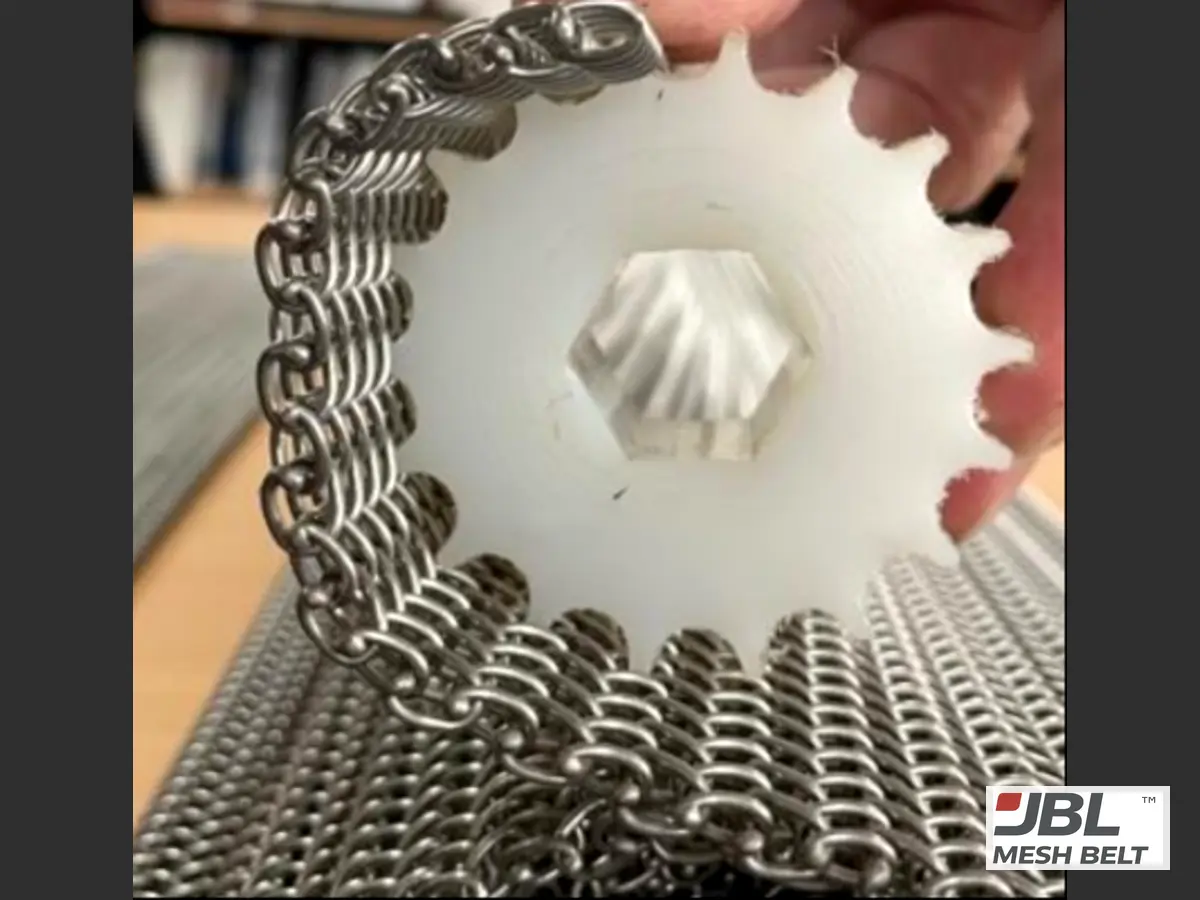
Here the belt pitch does not match the sprocket: the wires ride on the tooth tips instead of seating between them.
03What to check
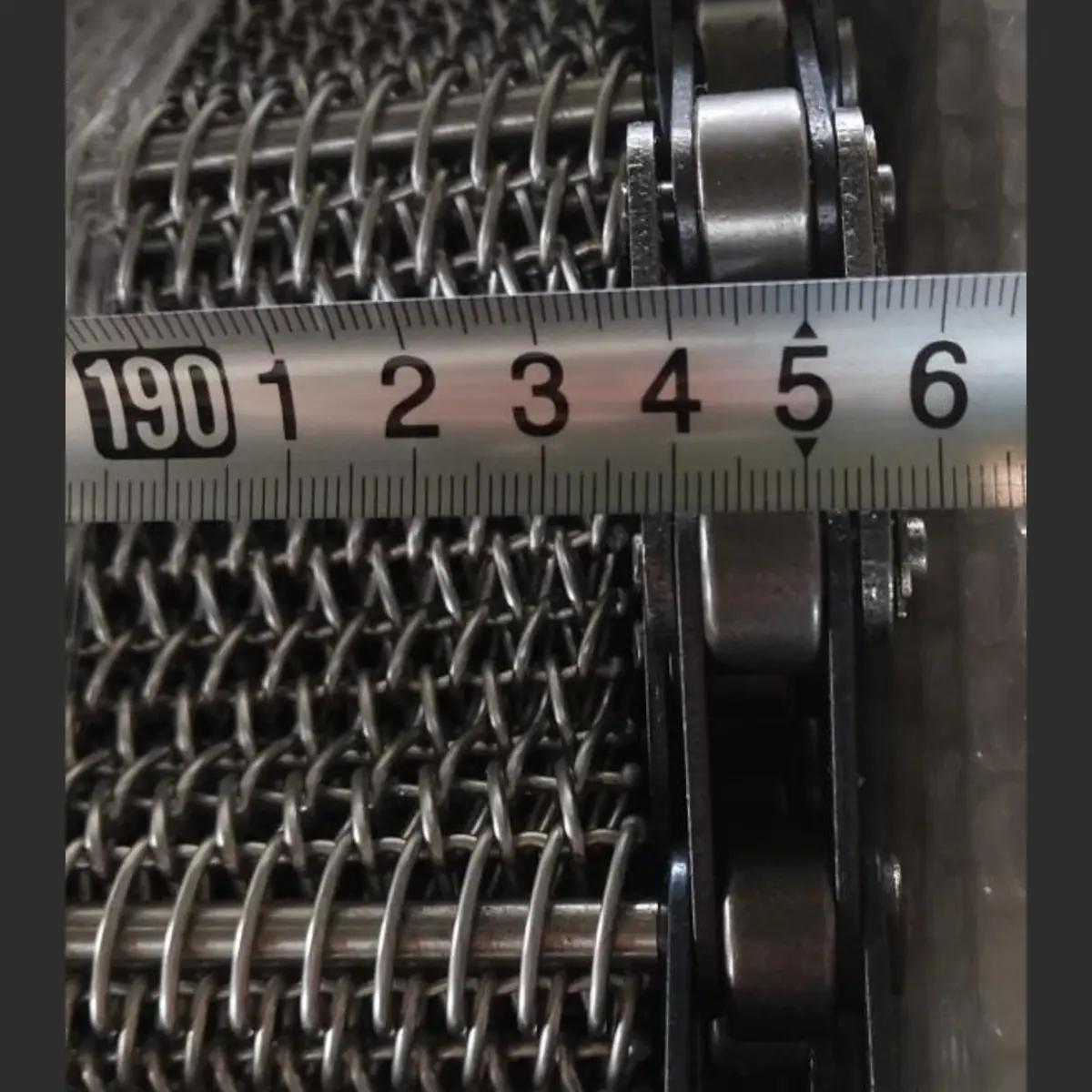
- ✓Chain pitch measured on the actual chain
- ✓Sprocket tooth profile, count, bore, keyway and wear
- ✓Rod position and how the mesh joins the chain
- ✓Left and right edge alignment and chain centre distance
04How it is prevented
Belt and sprockets are matched to the same pitch at quotation and, where both are supplied, run together before shipment.
05Symptom to check
| Symptom | Most likely cause | Check |
|---|---|---|
| Belt climbs the teeth | Belt pitch longer than the sprocket | Measure pitch over several pitches |
| Visible jump at the sprocket | Worn or hooked teeth | Tooth photos from the side |
| Belt runs to one edge | Edge alignment or chain centre distance | Measure both edges |
| Fast wear on a new belt | Old sprockets kept on a new belt | Compare old and new tooth profiles |
Want this checked on your belt?
Send photos with a tape in the picture, a drawing or an old belt section.
Questions Buyers Ask
Q1Can worn sprockets damage a new belt?
Yes. Hooked or thinned teeth do not seat a new belt properly; replace them with the belt.
Q2Can you match sprockets from photos?
Not from appearance alone — the pitch of the belt or chain they drive is needed.
Q3Can I measure pitch on a worn belt?
Yes, over several pitches and on a section that is not stretched; tell us where the reading was taken.
Q4Are new sprockets matched to the new belt?
Yes. Belt and sprockets are matched to the same pitch at quotation and, where both are supplied, run together before shipment.