Self-Stacking Belt Quality Control: What Is Checked Before It Stacks in Your Freezer
Short answer
A self-stacking belt must stack, not just run. Before shipment, check rod pitch and diameter, side plate height and straightness, rod-end welds, running direction (CW / CCW), and a stacking test on a curve — plus a material check against the original for replacements.
01Rod pitch, rod and wire
Rod pitch is measured over the belt (30 mm on standard self-stacking belts), with rod and wire diameters checked by caliper.
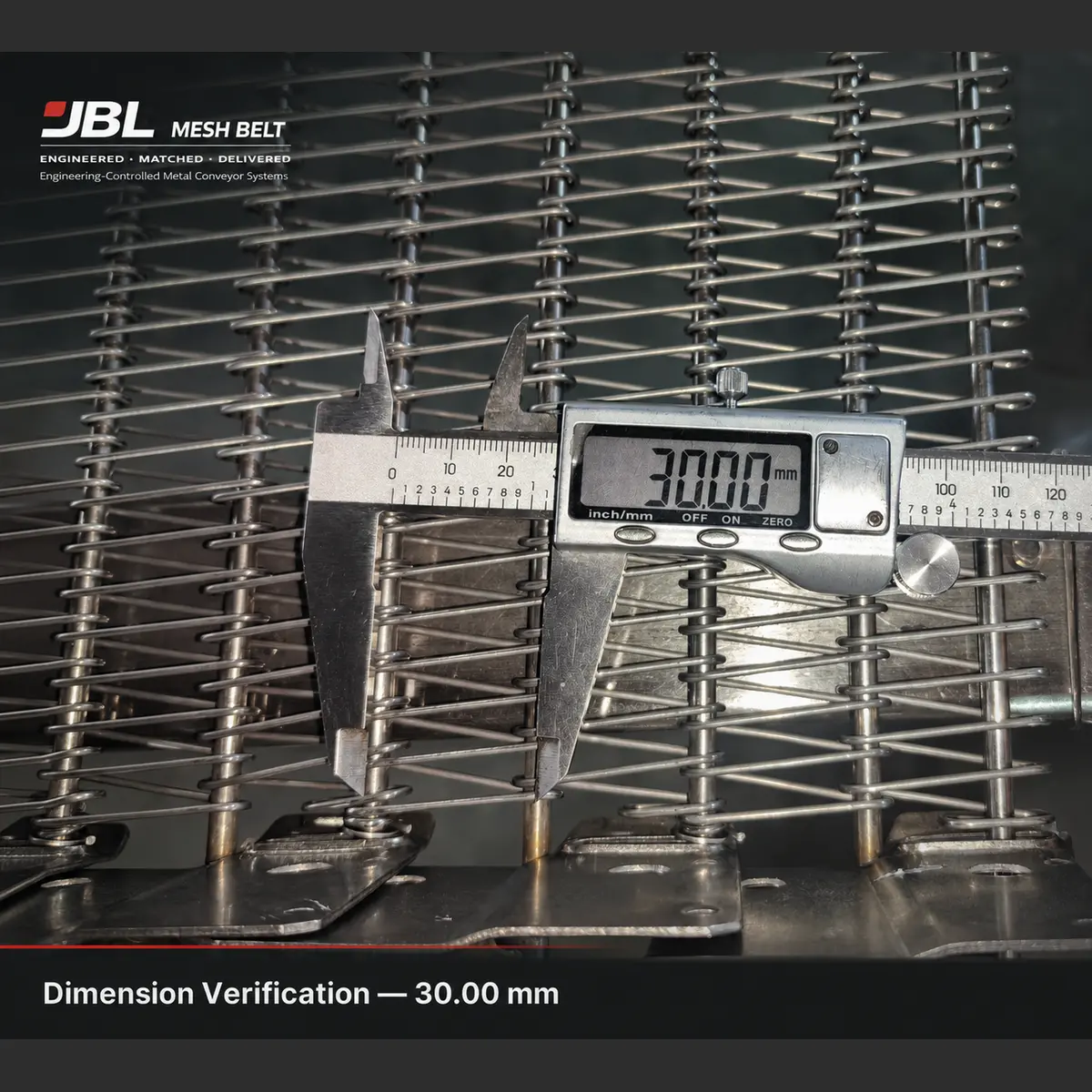
02Side plates
Side plate height, thickness and straightness decide whether one tier sits on the next. Deformed plates are the most common reason a stack fails.
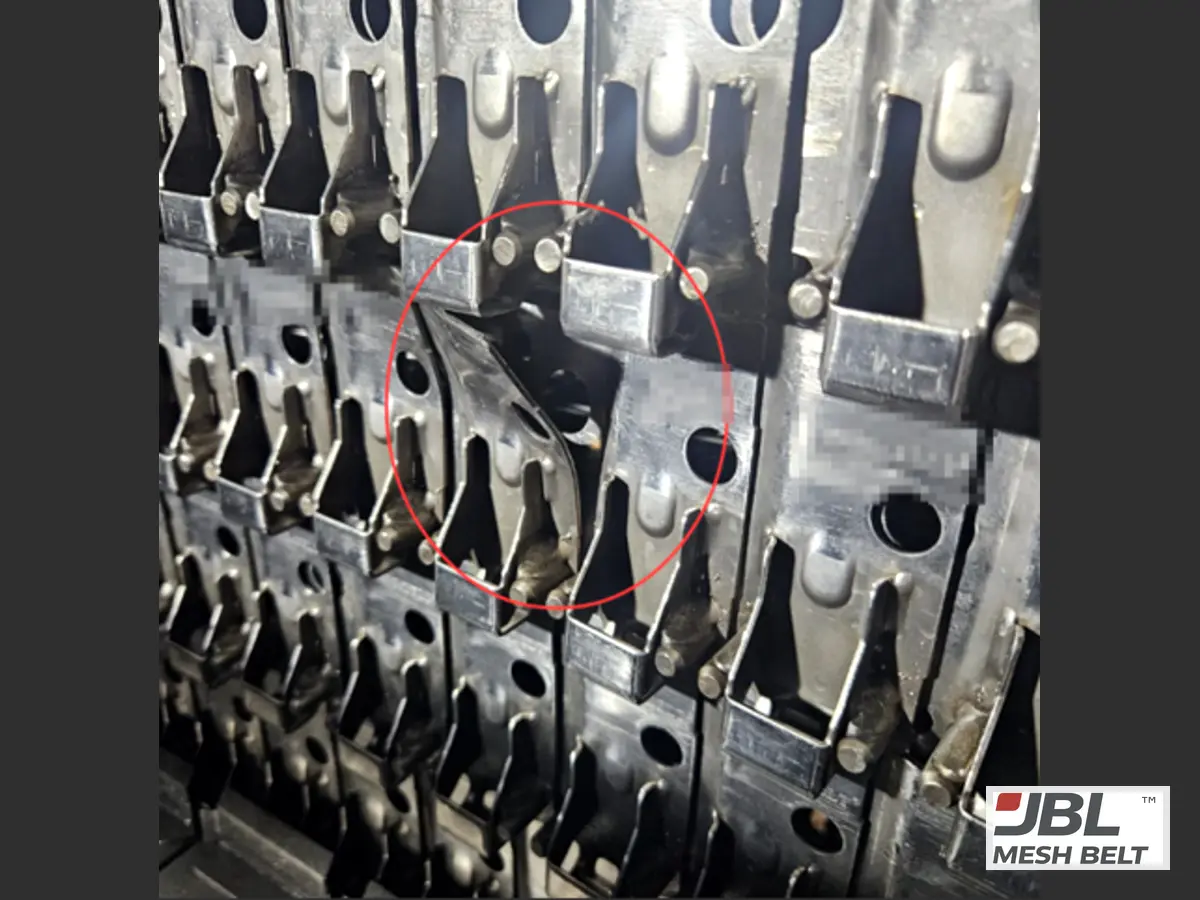
03Stacking test
The belt is laid out on a curve and stacked tier on tier to check engagement and clearance before it is packed.
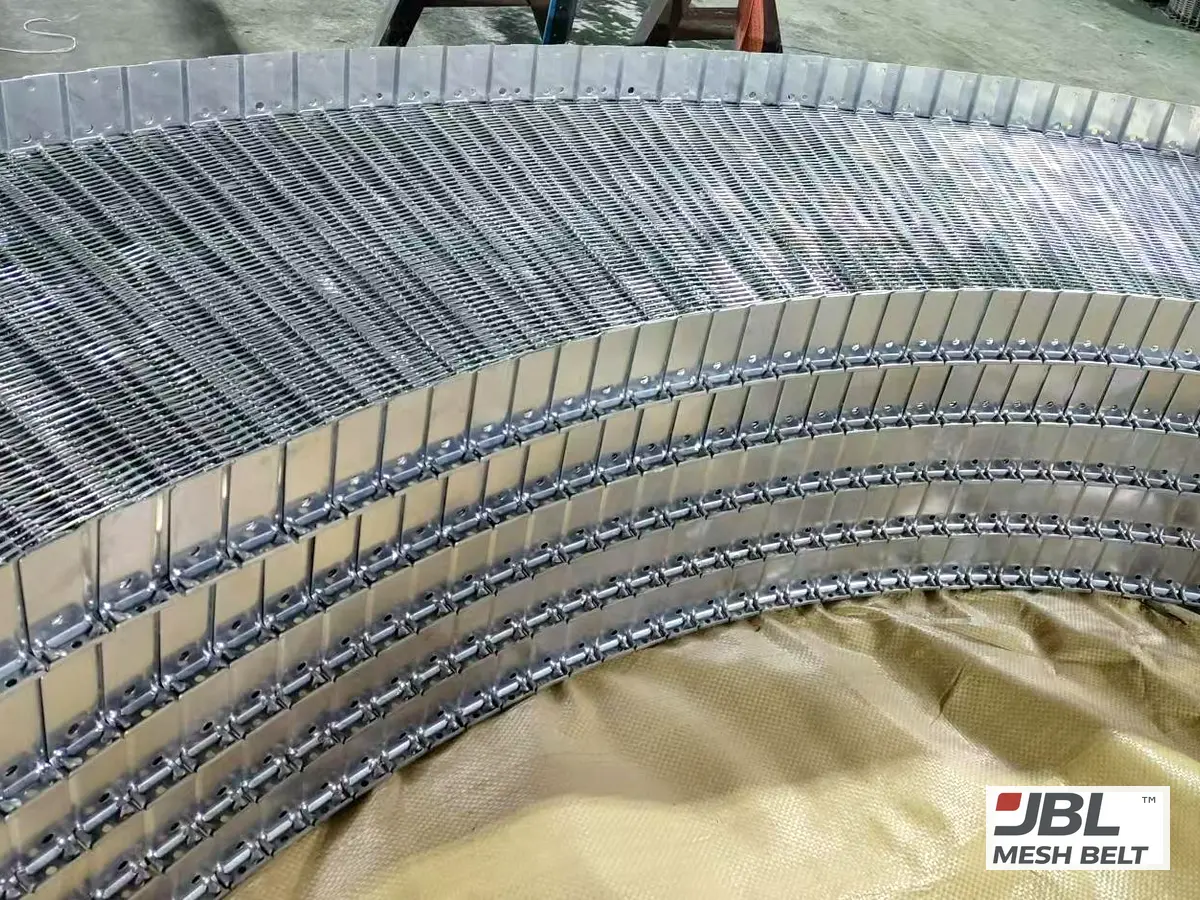
04Replacement: compared with the original
For replacements, the material and structure of the original belt are checked, and the new belt is compared with the original sample before production.
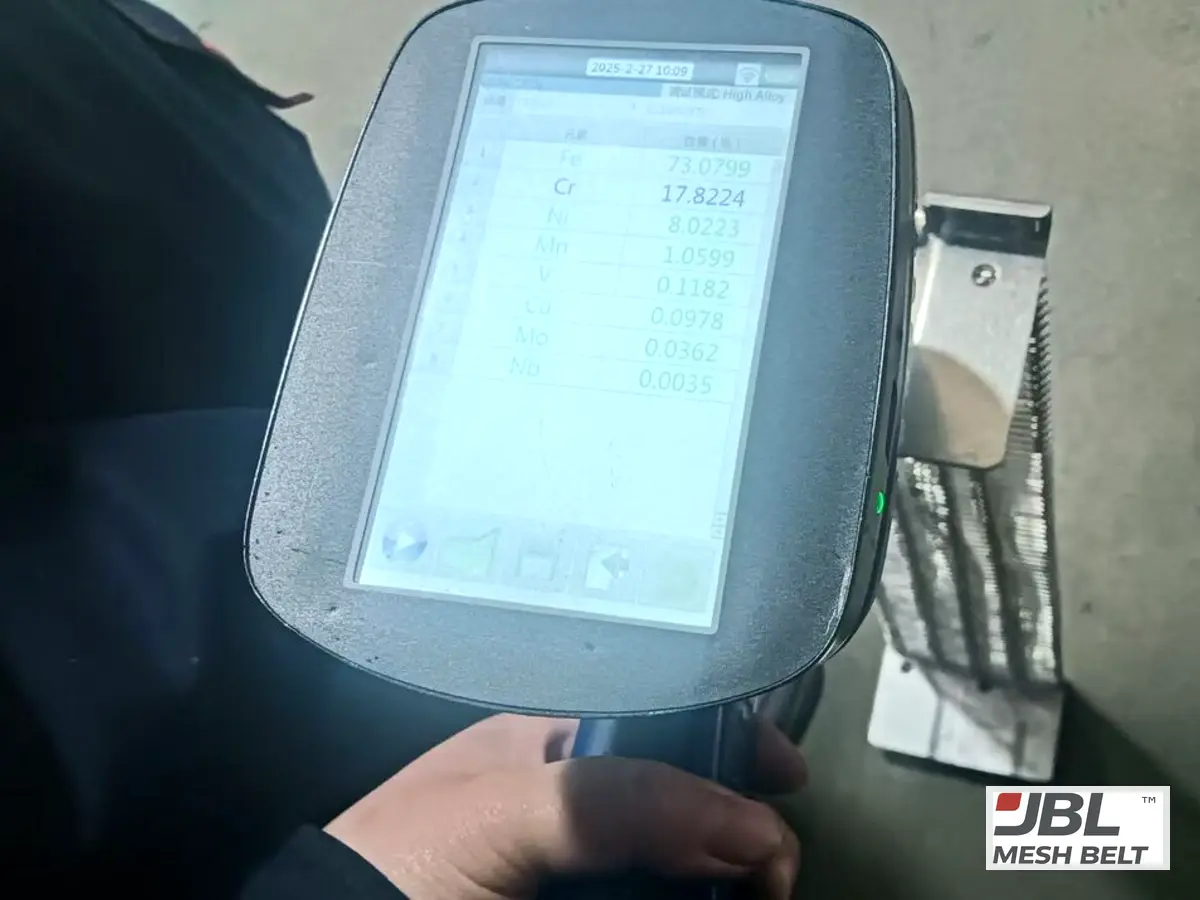
05Checklist
- ✓Running direction confirmed: CW or CCW
- ✓Tier height and product clearance
- ✓Side plate height, thickness, straightness
- ✓Rod-end welds and rust-free plate welds
- ✓Stacking test photos and video
- ✓Flat packing so plates do not bend in transit
06Self-stacking belt checks at a glance
| Check | Why it matters | Evidence before shipment |
|---|---|---|
| Running direction (CW / CCW) | A belt built the wrong way will not stack | Direction written on the order and drawing |
| Side plate height and straightness | One tier must sit on the next | Plate readings and photos |
| Rod pitch and rod diameter | Pitch errors add up along the belt | Readings over several pitches |
| Rod-end and plate welds | Cracked welds break plates and catch product | Weld close-ups |
| Stacking on a curve | Shows engagement and clearance before you install | Stacking test photos or video |
| Flat packing | Plates must not bend in transit | Packing photos |
Want this checked on your belt?
Send photos with a tape in the picture, a drawing or an old belt section.
Belts in this guide
Related guides
Questions Buyers Ask
Q1Why is running direction so important?
A self-stacking belt built for the wrong direction will not stack. CW or CCW is confirmed at inquiry and written into the order.
Q2Can you replace the belt on our existing self-stacking freezer?
Yes — self-stacking belts are our most frequent replacement. The original belt is measured and compared with a sample before production.
Q3How is the stacking checked?
Tiers are stacked on a curve before shipment and photographed or filmed.
Q4What should I send for a self-stacking replacement?
Photos of the belt with a tape, side plate height, rod pitch, running direction, tier count and drum details; a short sample section helps most.
Q5Can a trial length be checked before the full order?
Yes, a trial length can be made and checked against your freezer first; it is agreed per project.