Why Metal Conveyor Belts Fail — and the Checks That Prevent It
Short answer
Most belt failures start before production: a belt that does not match the drum or drive, a pitch measured wrong, worn sprockets left in place, or weld and surface problems missed before shipment. Each one has a check you can ask for.
01Mismatch with the machine
Tracking off, riding up the drum or not stacking usually means drum, turn ratio, direction or sprocket pitch were not matched.
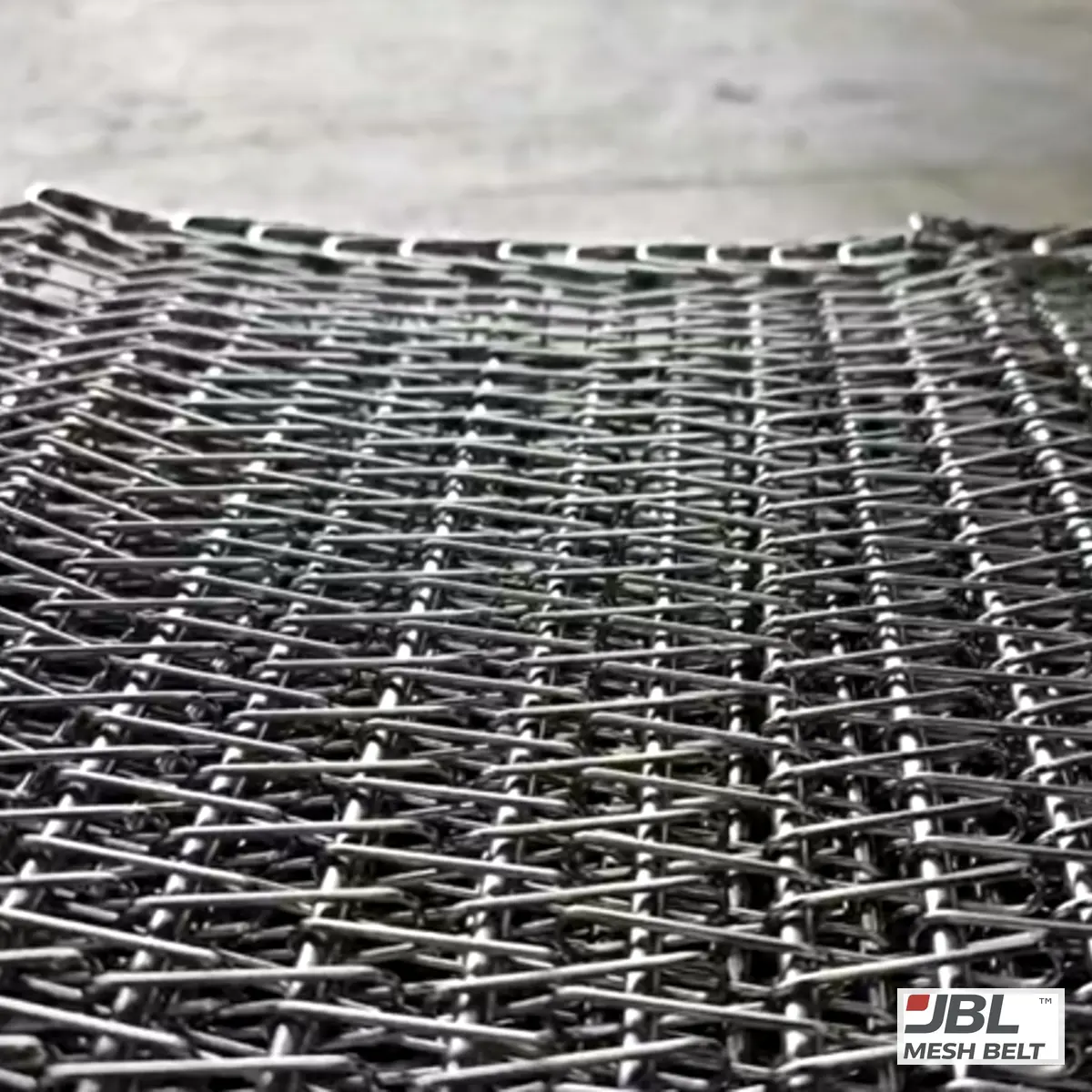
02Weld and edge problems
Cracked rod-end welds and burrs break or catch product. Every edge weld is checked before release.
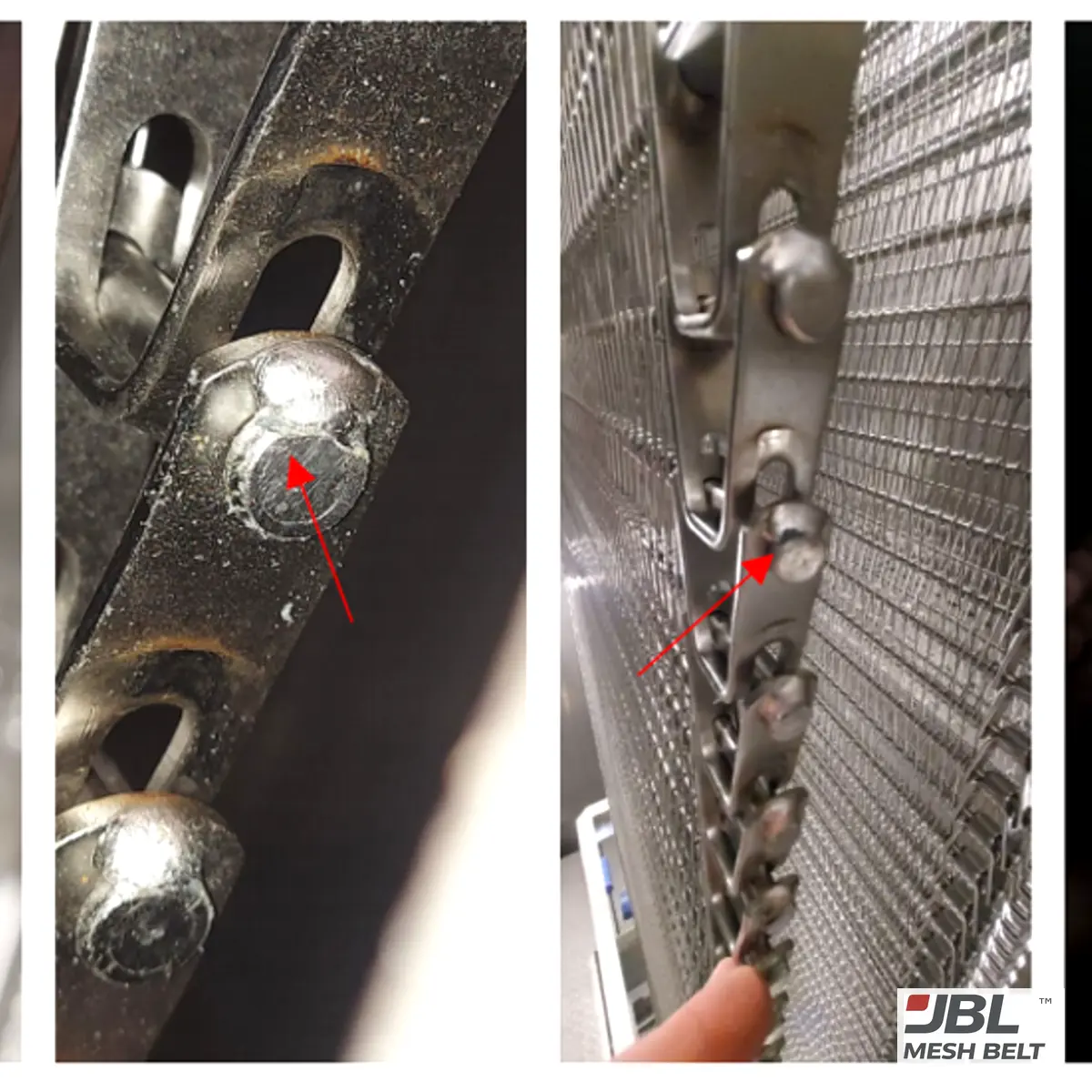
03Residue and corrosion
Oil, black residue or rust on a food belt is a complaint waiting to happen; surfaces are cleaned and checked with a white glove.
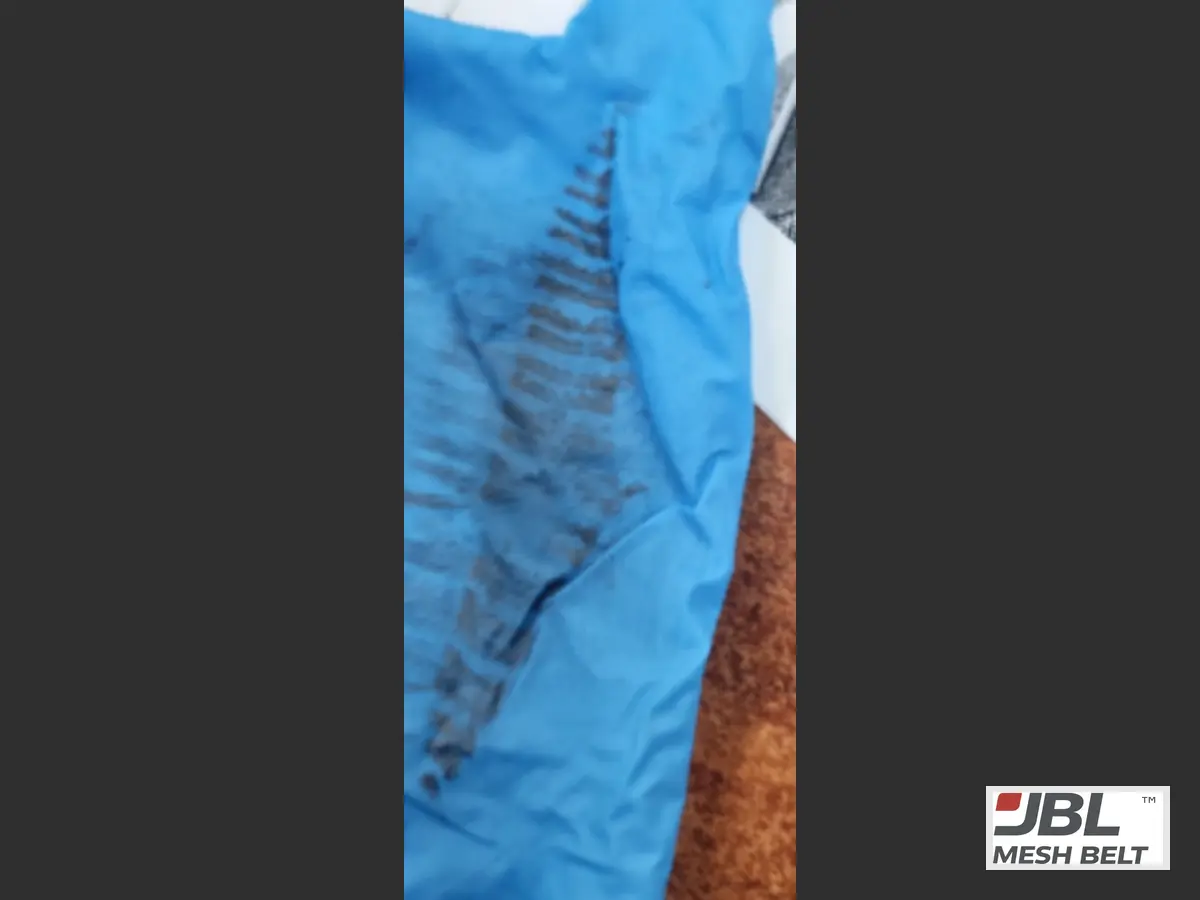
04Belt problem or system problem?
- ✓Belt: weld cracks, burrs, wrong pitch, uneven surface
- ✓System: worn sprockets, drum wear, tension, wrong direction
- ✓Both: mismatch between a new belt and an old drive
05Symptom, likely cause and what to send
| What you see | Check first | Send us |
|---|---|---|
| Belt rides up or tracks off the drum | Drum diameter, turn ratio, running direction | Drum and belt photos with a tape; running direction |
| Rod-end welds crack | Weld quality, tension, sprocket wear | Close-ups of the cracked welds and the sprockets |
| Belt jumps or climbs the sprocket | Belt pitch against sprocket pitch, tooth wear | Tooth photos; pitch measured over several pitches |
| Surface uneven, product tips over | Spiral and rod readings, flatness | Photos along the belt with a straight edge |
| Rust, oil or residue on a food belt | Material grade, cleaning, surface finish | Photos of the surface and the cleaning method |
Want this checked on your belt?
Send photos with a tape in the picture, a drawing or an old belt section.
Questions Buyers Ask
Q1How long should a belt last?
It depends on load, temperature, cleaning, drive and maintenance. We do not promise a number; we check the factors that shorten it.
Q2Can you tell from photos why my belt failed?
Often, yes — send photos of the damage, the whole belt and the drive.
Q3Should I replace the sprockets together with the belt?
If the teeth are hooked, thinned or the pitch differs, yes. Photos of the teeth and the belt pitch decide it.
Q4What do you need to look at a failure?
Photos of the damage, the whole belt, the drum or sprockets, and how the line runs: load, speed, temperature and cleaning.