Spiral Belt Troubleshooting by Symptom: What to Check First and What to Send
Short answer
Start from what you see: tracking off, jumping at the sprocket, lifting or flipping in the turn, riding up the drum, noise, stretch or weld scratching. Each symptom points first to the belt, the machine or the match between a new belt and an old drive. Check those parts, then send photos of the damage, the whole belt and the drive, plus a short running video.
01Symptom index: first check and what to send
Use this table to find your symptom, then read the section below it. The same symptom can start in the belt, in the machine or in the match between them, so the first check covers both sides.
| Symptom | Check first | Send |
|---|---|---|
| Tracking off | Belt flatness and pitch; drum wear, alignment, direction | Whole belt on the line, running video |
| Jumping at the sprocket | Belt pitch against sprocket pitch; hooked or thinned teeth | Teeth from the side, pitch over several rods |
| Lifting or flipping in the turn | Belt built for the drum it runs on; same width does not mean same turn | Drum diameter or inside radius, belt width, system drawing |
| Riding up the drum | Drum bars, direction, the match between belt and drum | Drum bars close up, running video |
| Clicking or knocking | Tooth shape and pitch at the sprocket | Short video at the sprocket, tooth close-ups |
| Stretch (longer pitch) | Pitch over several rods on the old belt; sprocket wear | Caliper readings and where they were taken |
| Weld scratching, dark residue | Rod-end welds on the inner edge; drum bars and guide strips | Weld close-ups with a ruler, bar and strip photos |
02Tracking off
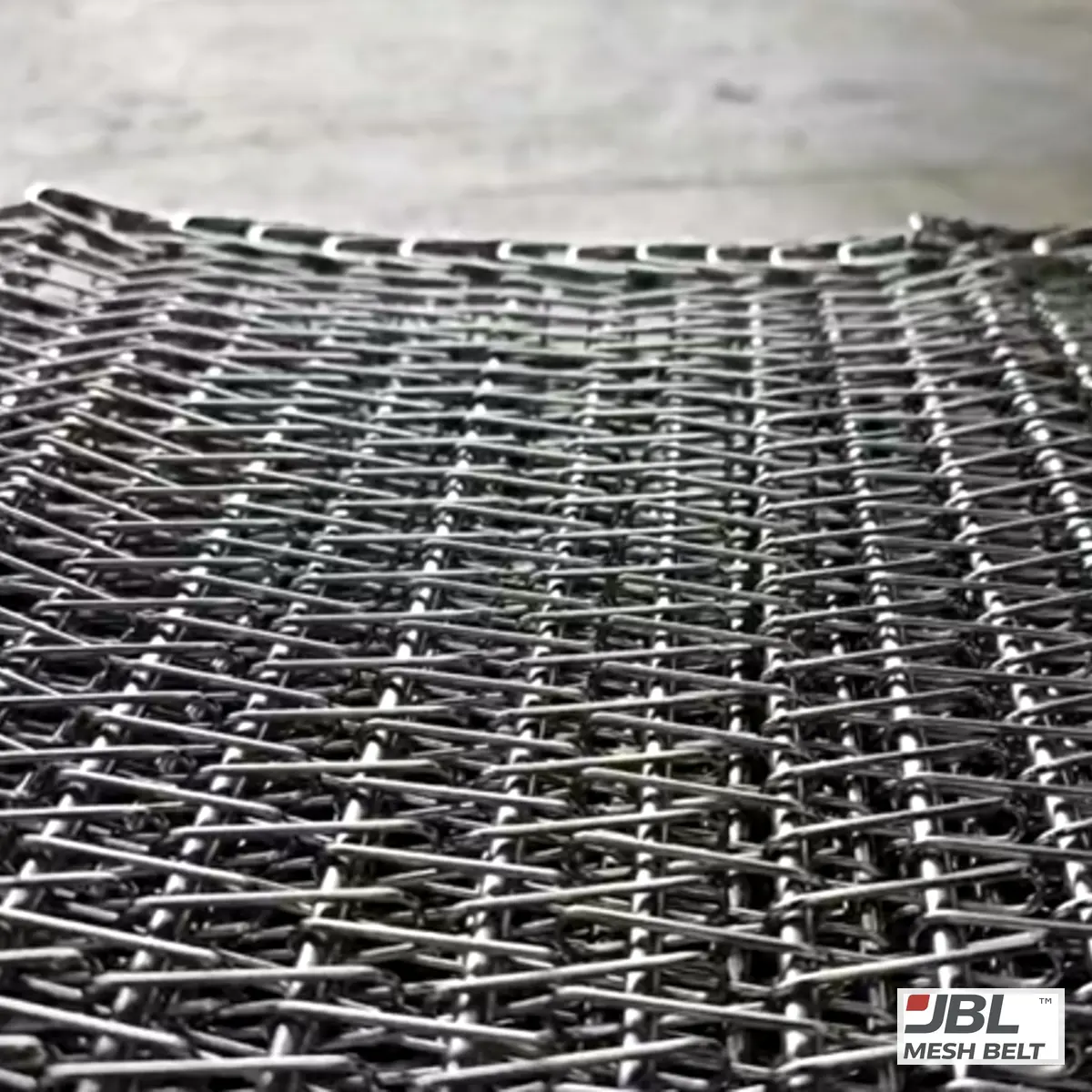
A belt that runs to one side may be bent or uneven, or it may be running on a worn drive. Look at where the damage is and when it started. Damage at welds, rods or the mesh points to the belt; damage that follows the sprockets, drum or guides points to the machine; trouble that starts right after a belt change often points to a mismatch. Send a photo of the whole belt on the line and a short running video so the point where it leaves its path can be seen.
03Jumping at the sprocket
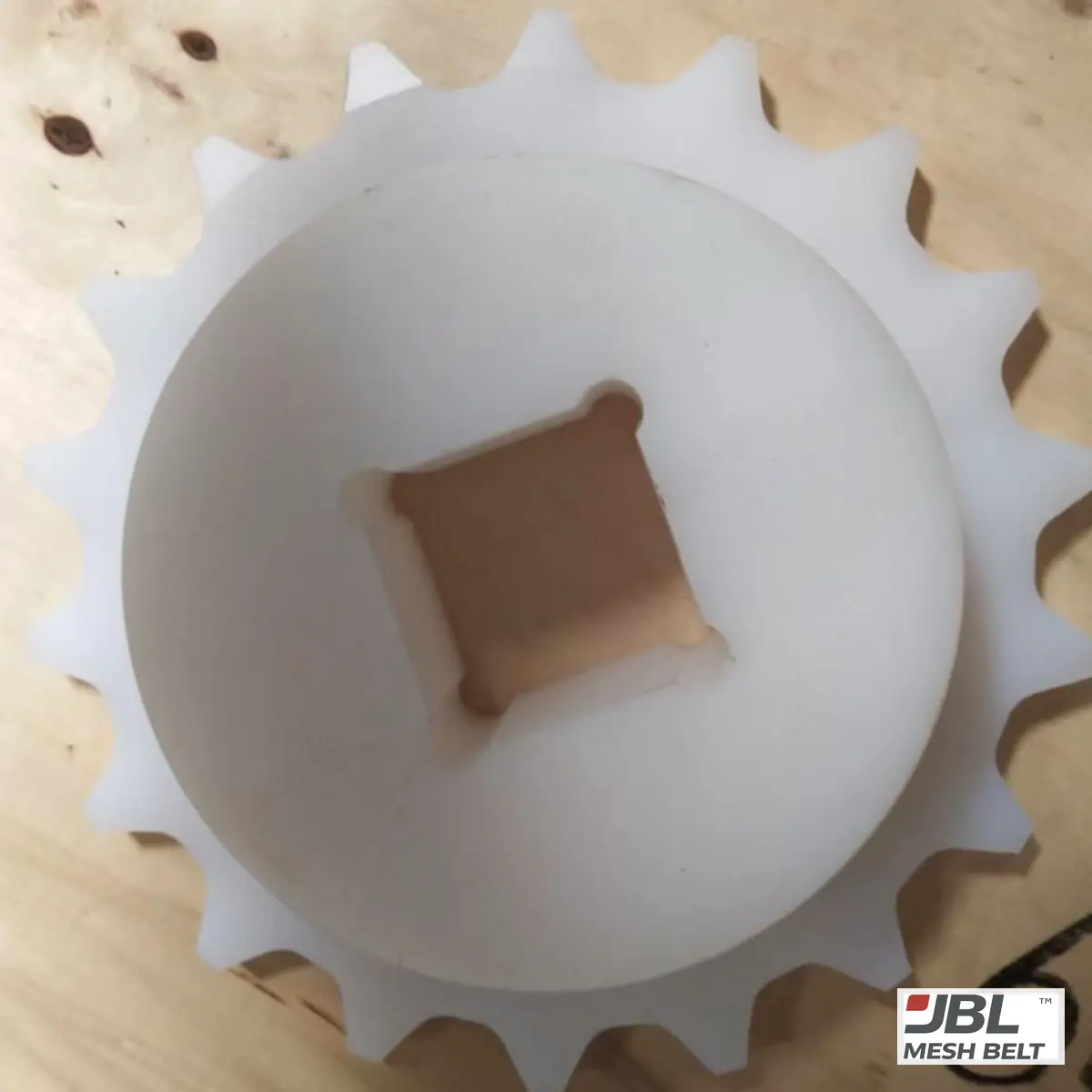
The rods ride over the tooth tips instead of seating between them. On an old belt the usual cause is stretched pitch; on a new belt it is often worn sprockets kept from the old one, or a belt pitch that is close to the sprocket pitch but not the same. A pitch that is nearly right is still wrong. Check the teeth for hooking, thinning or one-sided wear, and read the belt pitch over several rods.
Read more:New belt on worn sprockets →Pitch and sprocket mismatch →Measuring sprocket wear →
04Lifting or flipping in the turn
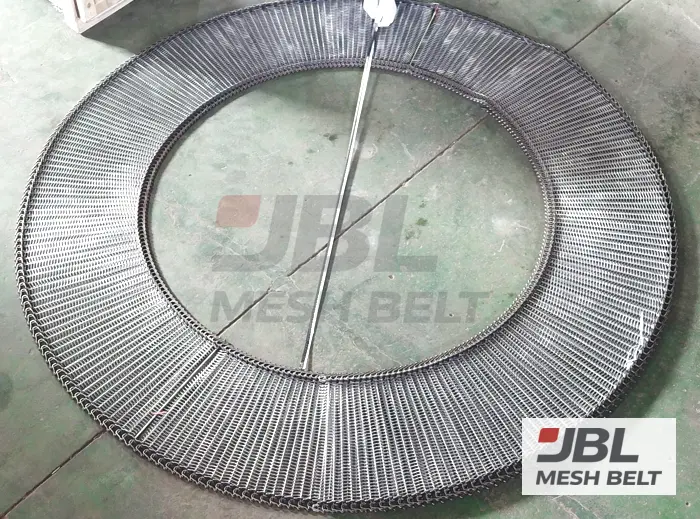
In a turn the inside edge must close and the outside edge carries most of the pull. A belt built for a wider turn, put on a tighter drum, cannot close enough on the inside and lifts or waves. Belt width alone does not tell you how tightly a belt can turn: two belts of the same width can be built for different drums. Send the drum diameter or inside radius with the belt width, and the system drawing if you have it. The turn ratio is confirmed for each project, not taken from a general value.
Read more:Turn ratio, load and tracking →Same width and pitch, not compatible →
05Riding up the drum
When the belt climbs on the drum, check the drum bars for grooves, scratches or dark residue where the belt edge runs, and check that the belt runs the way it was designed to turn. A wrong turn ratio or direction on a new belt can show the same sign from the first hour. Tension and drive settings belong to the freezer maker or your maintenance team; we do not guess them, but the belt evidence can show when they are the likely cause.
Read more:Belt or machine? →7 system components to inspect →
06Clicking or knocking
A new belt should run quietly on its sprockets. A rhythmic click or knock, once per tooth or once per rod, is a warning that the teeth hit the rods instead of picking them up. Listen at the sprocket during a slow, empty run. After a few days, bright polished spots on rods or links where they meet the teeth show where the load is concentrated.
Read more:Signs of poor engagement →Measuring sprocket wear →
07Stretch: the pitch is longer than before
A belt and its sprockets wear as a pair. As the belt stretches, the teeth wear to follow it, so the old belt keeps running until the day it is removed. Read the pitch with a caliper over several rods, on a section that is not damaged, and note where you took it. A replacement is matched from these readings and the drawing, not by copying the wear; check the sprockets at the same time.
Read more:Old dimensions vs original design →Data to record before a failure →
08Weld scratching and dark residue
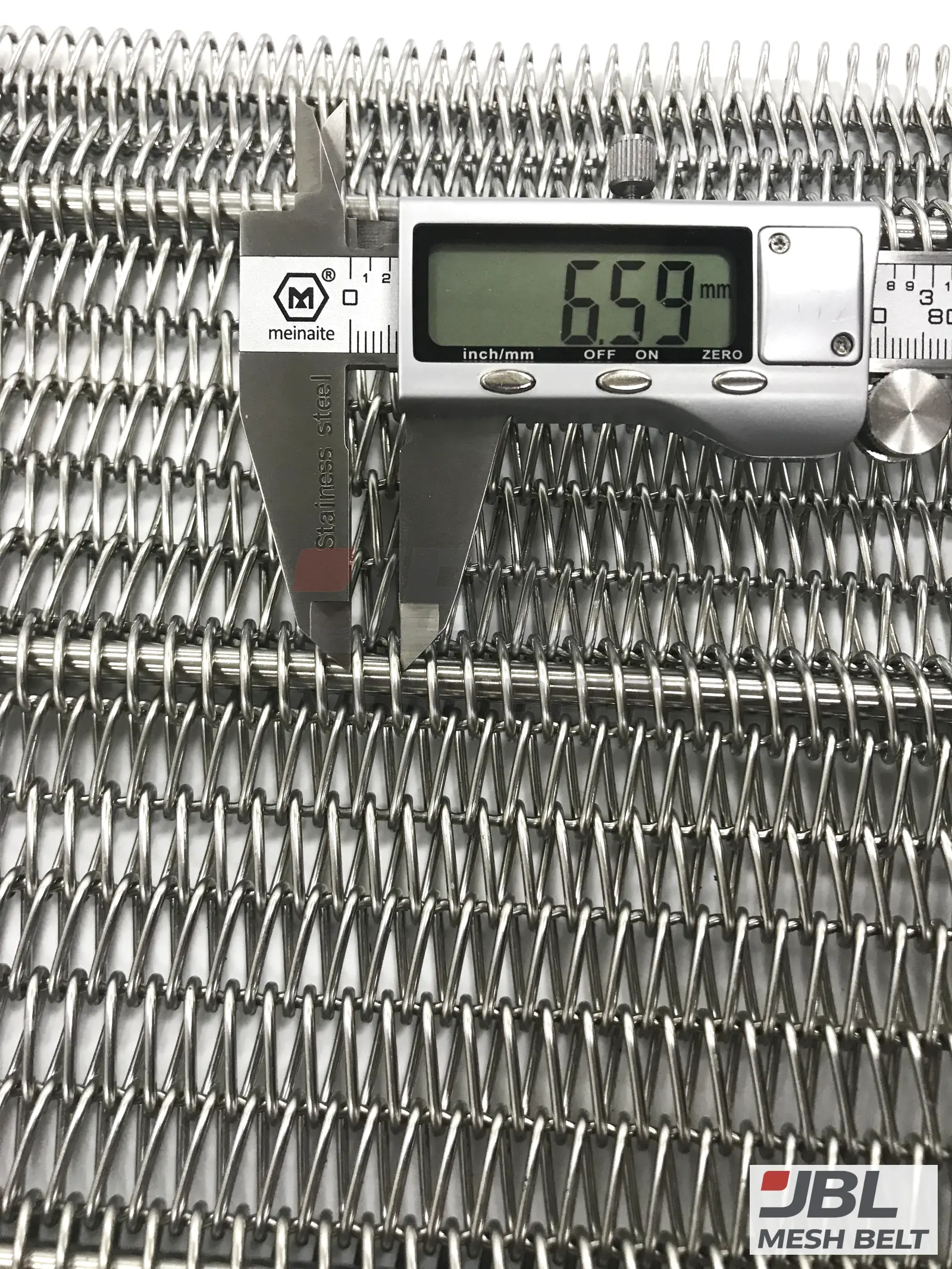
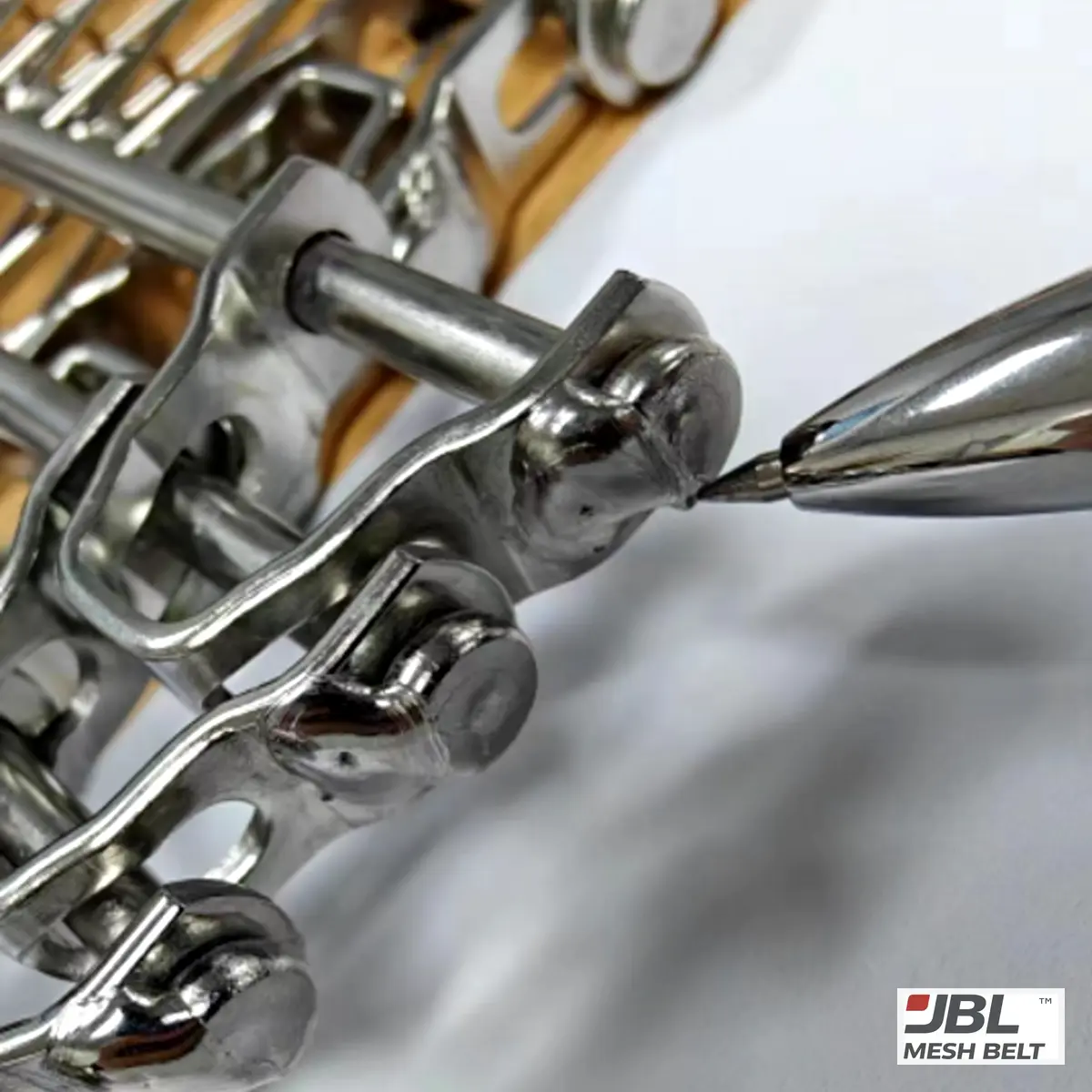
On a friction-drive spiral, belt tension presses the inner edge and its welds against the drum bars on every turn. Burrs, spatter or a raised bead on the rod-end welds can scratch the bars and score the guide strips, and the scraped material can collect as dark residue. Look at both edges, inner edge first, and photograph the welds with a ruler in the picture. For the replacement, write the weld finish into the specification and check it on the sample.
Read more:Judging the welds on your old belt →
09What to send for any symptom
- ✓Close-up of the damage, in good light, with a caliper or ruler in the picture
- ✓The whole belt on the line, so we can see where the damage repeats
- ✓The machine parts it touches: sprocket teeth, drum bars, guides and wear strips
- ✓A short running video at the point where the problem shows
- ✓Pitch and rod readings with a caliper, if you can take them
- ✓When it started, what changed just before, and how long the belt has run
10When a new belt is not the answer
If the belt stopped because of a jam or a foreign object, that is an incident: repair the damage and remove the cause. If the freezer has a control or electrical fault, call the freezer maker or your maintenance team. If worn sprockets or drum parts caused the symptom, a new belt alone will meet the same parts; replace or repair them with the belt.
Want this checked on your belt?
Send photos with a tape in the picture, a drawing or an old belt section.
Questions Buyers Ask
Q1Why does my spiral belt keep tracking off?
Common causes are a mismatch with the drum, turn ratio, direction or sprockets, edge wear and pitch stretch. Photos of the whole belt and a running video show which one.
Q2Why does a new spiral belt jump at the sprocket?
Most often the old sprockets were kept. Hooked or thinned teeth do not seat a new belt; replace them with the belt. A belt pitch that is nearly the sprocket pitch also jumps.
Q3Can the belt damage the machine?
Yes. Burrs on edge welds can score guide strips and, on friction-drive spirals, scratch the drum bars.
Q4Can the cause be found from photos?
Often, yes, if the photos show the damage, the whole belt and the drive, ideally with a short running video.
Q5Do you give tension or turn-ratio values for my freezer?
No general values. Tension and drive settings belong to the freezer maker or your maintenance team, and the turn ratio is confirmed for each project from the drum and the belt.