1.No old belt? Start from a drawing
When there is nothing to copy, a dimensioned drawing of every link, rod and washer is the shared reference both sides approve.
A shrimp processor in Spain needed eye link belts for an IQF tunnel line, including the glazing and hardening sections. There was no old belt to copy, so the requirements were turned into dimensioned drawings, approved by the customer, and a physical sample was made and sent for checking on the customer's line. Bulk production — about 100 m — started only after that approval.
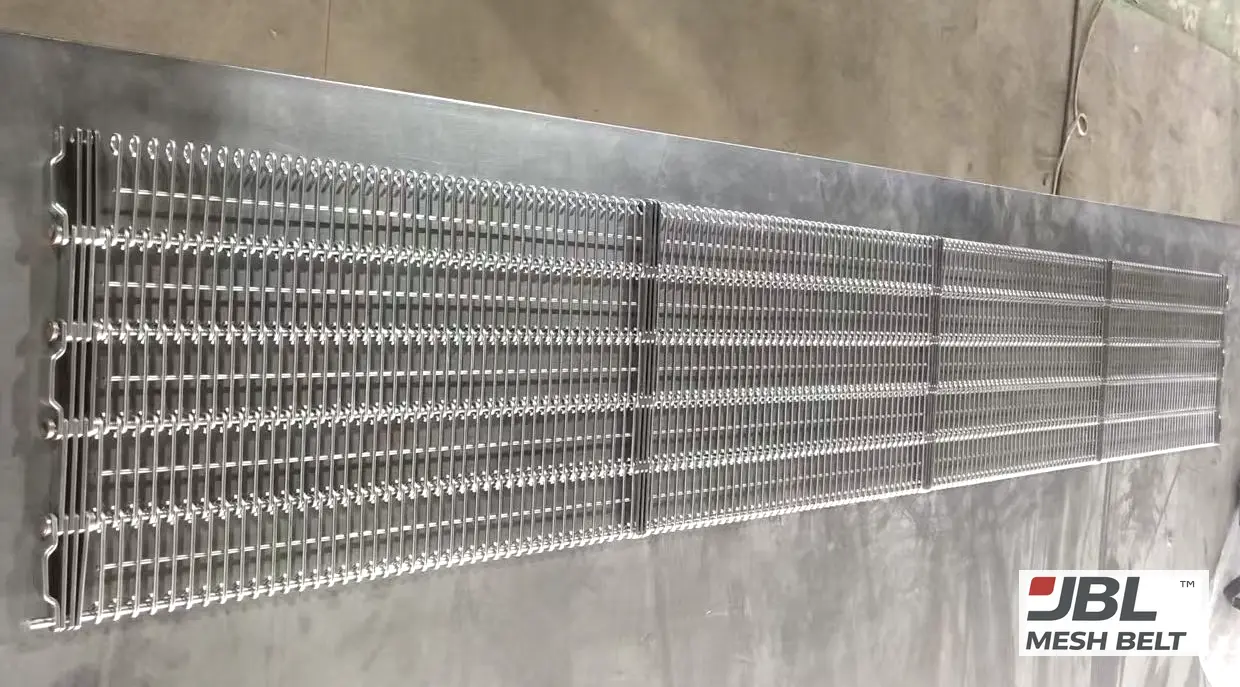
The customer explained the line after first meeting us: shrimp glazed, hardened and frozen in an IQF tunnel, with belts that had to carry small product on a wide, open eye link mesh and run on a chain-type edge drive. Nothing existed to measure — the belt had to be designed first.
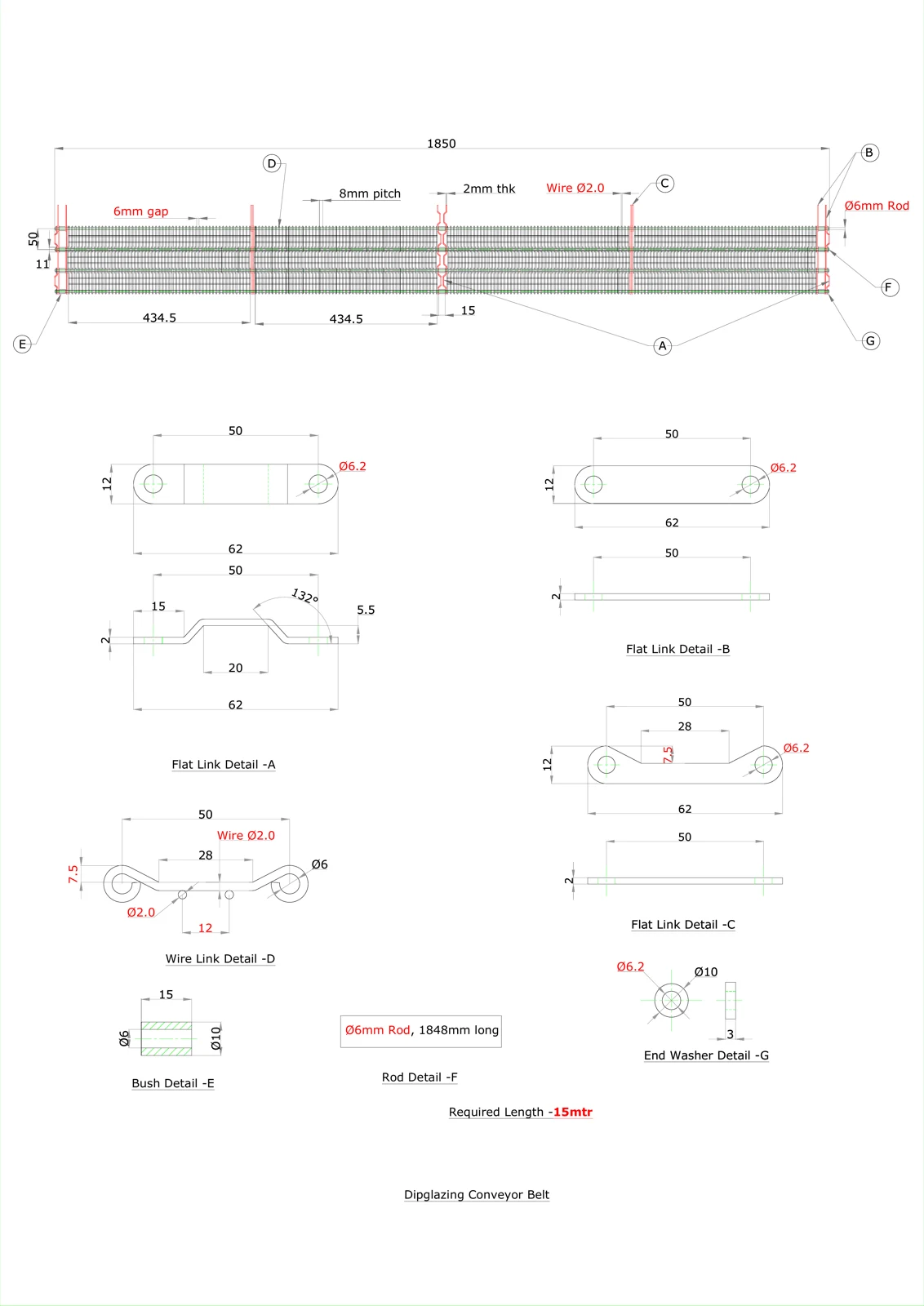
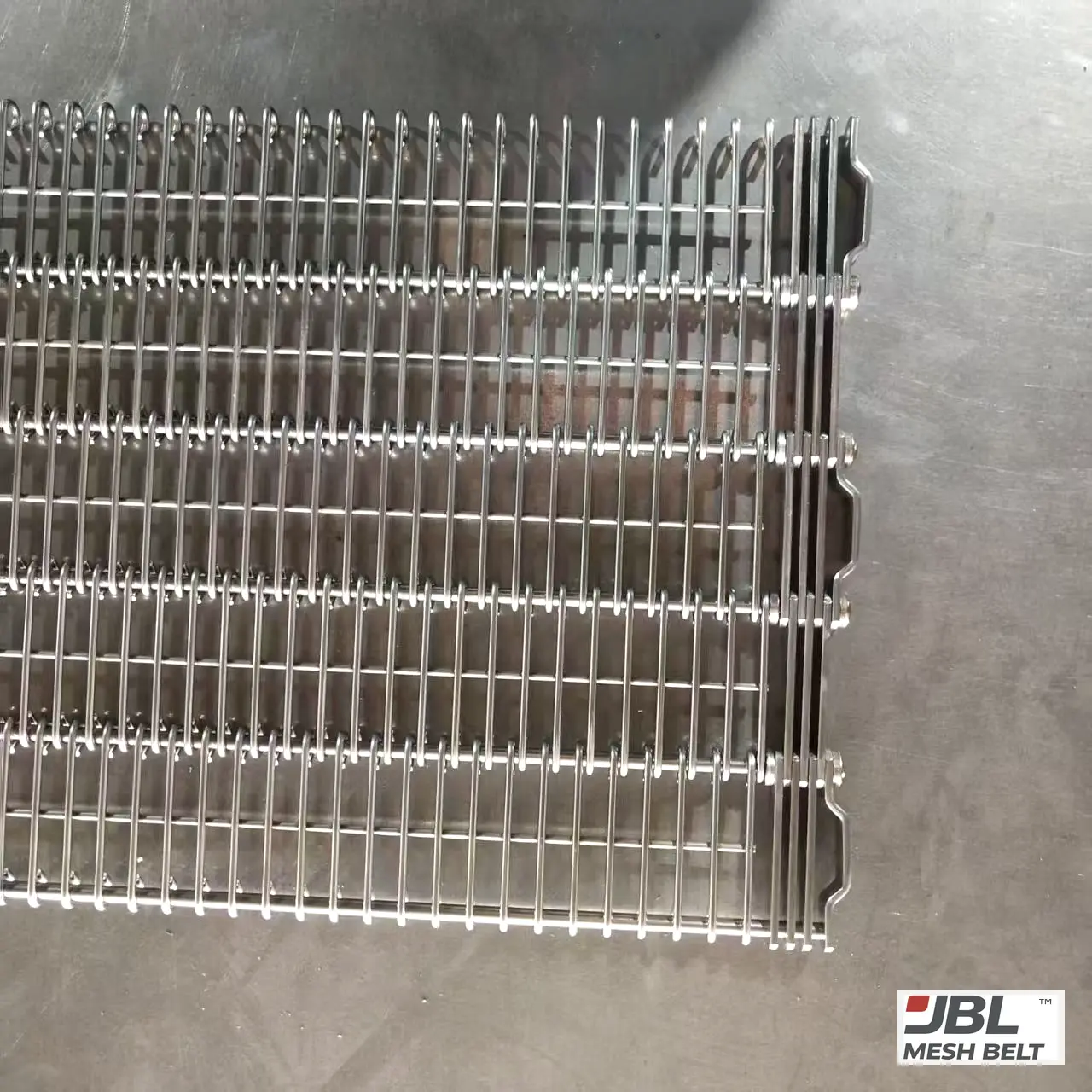
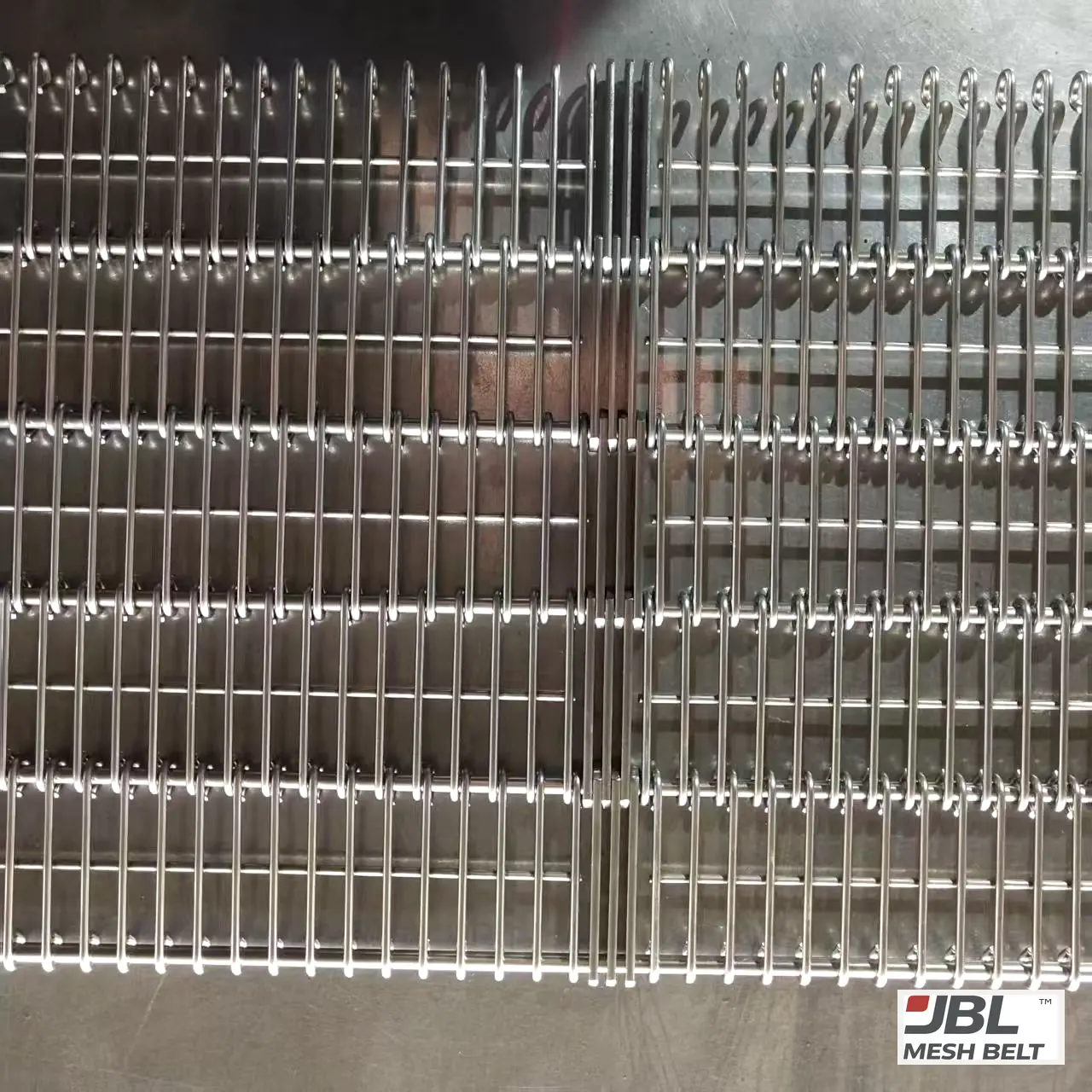
Belt width, link pitch, rod and wire diameters, and each flat link — including the joggled link that lets the edge run like a chain — were drawn and dimensioned, then approved by the customer before anything was made.
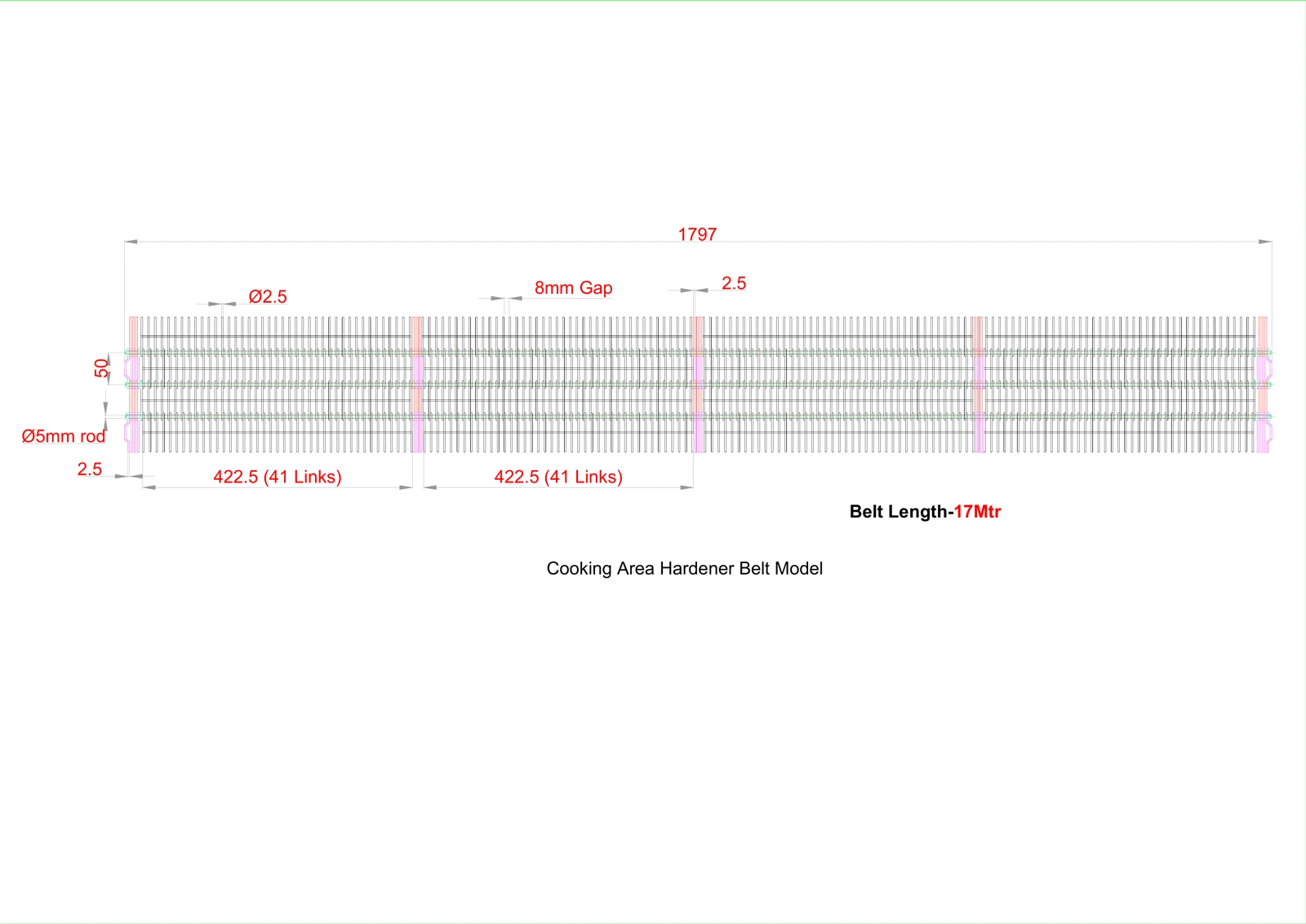
A sample was made to the approved drawing, measured, and sent to Spain so the customer could check it on the line — fit, edge drive and product support. Bulk production started only after their confirmation.
| Checked | Approved drawing | Sample measured |
|---|---|---|
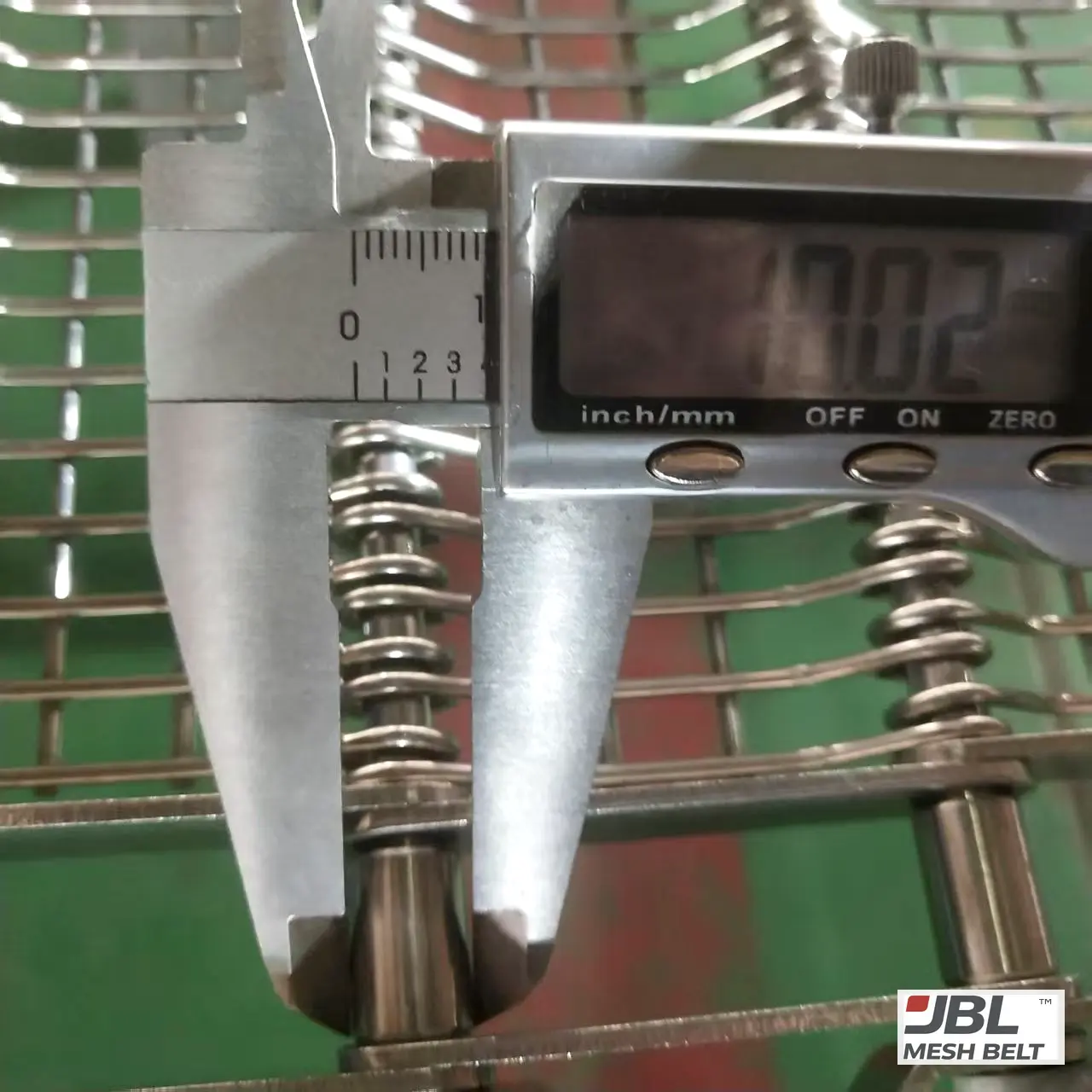
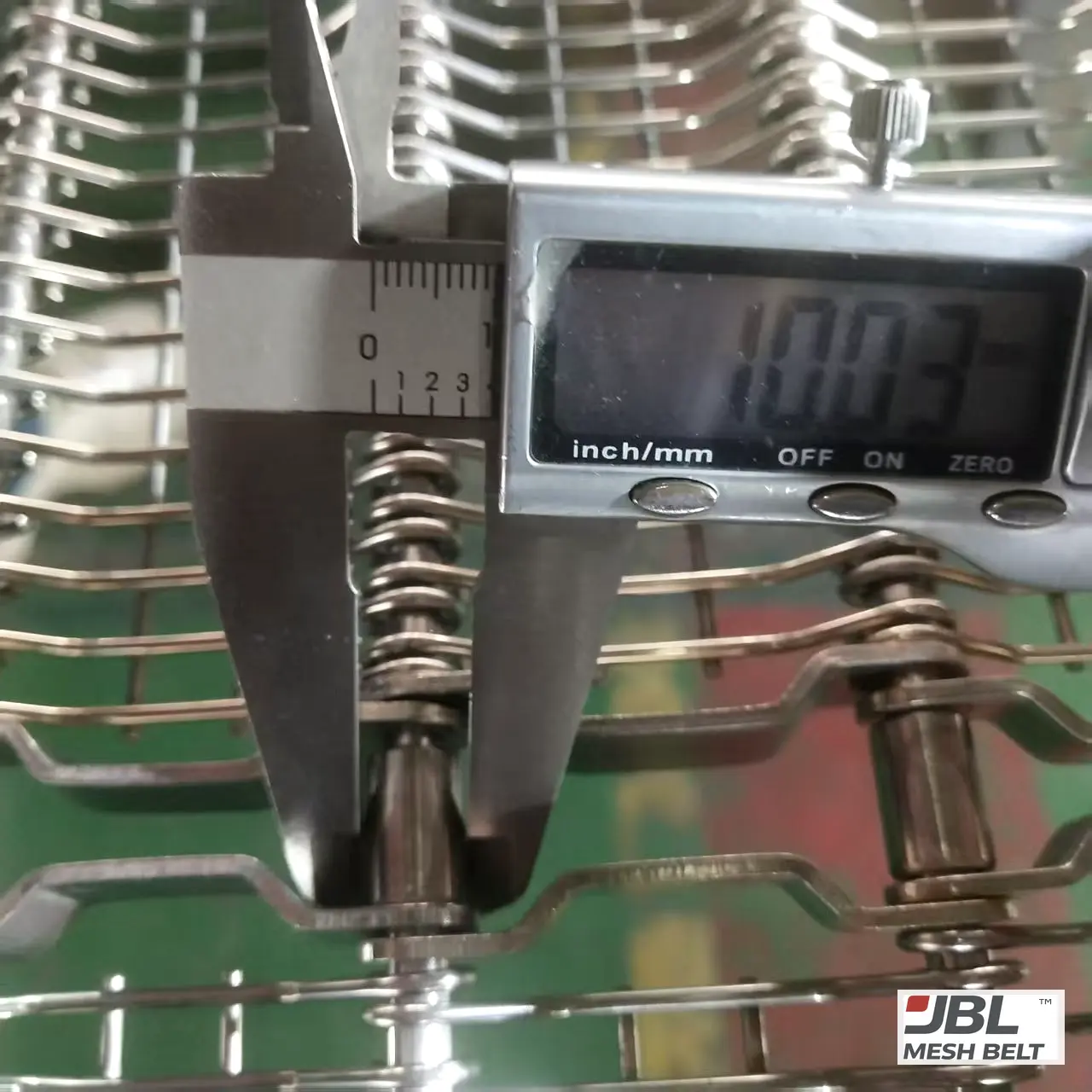
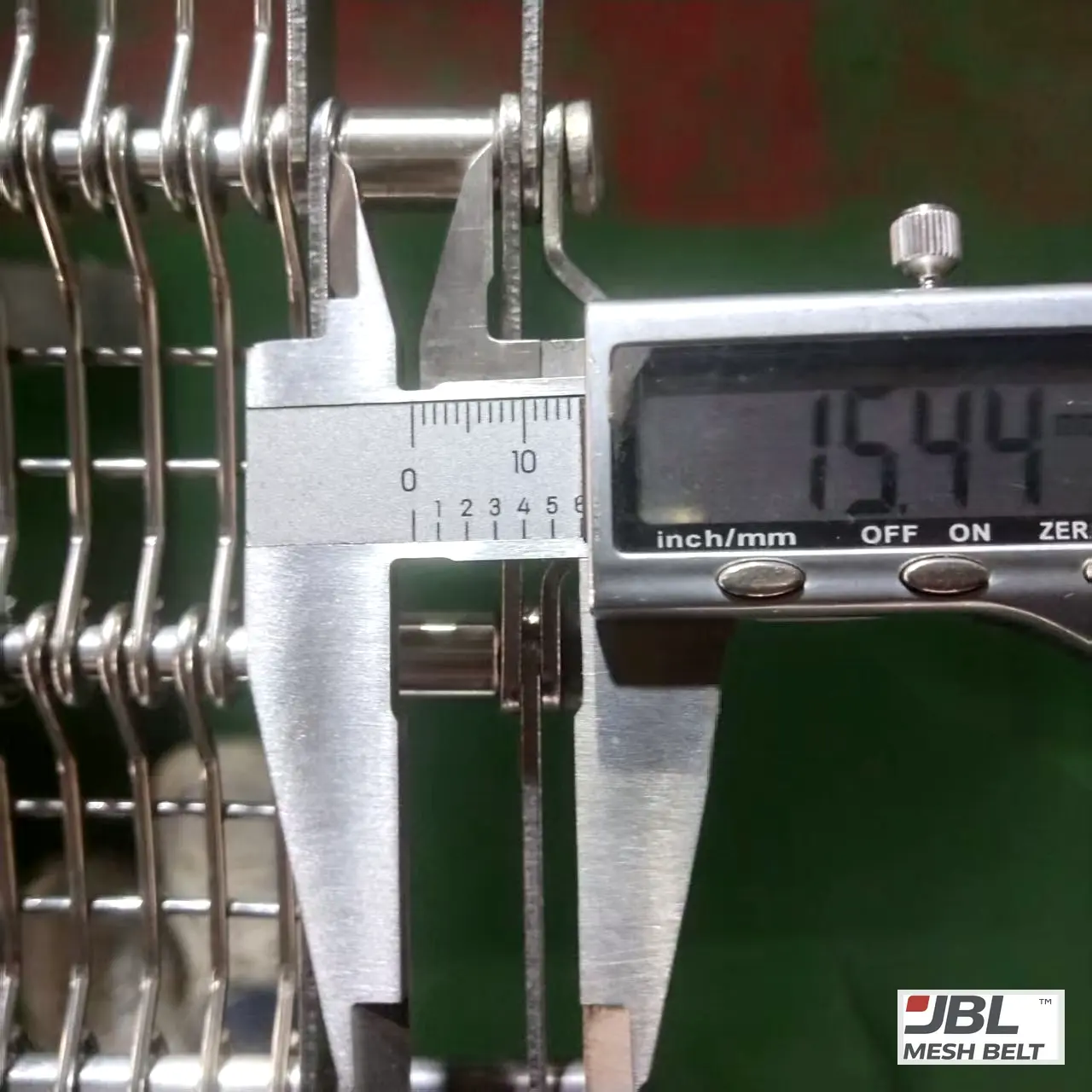
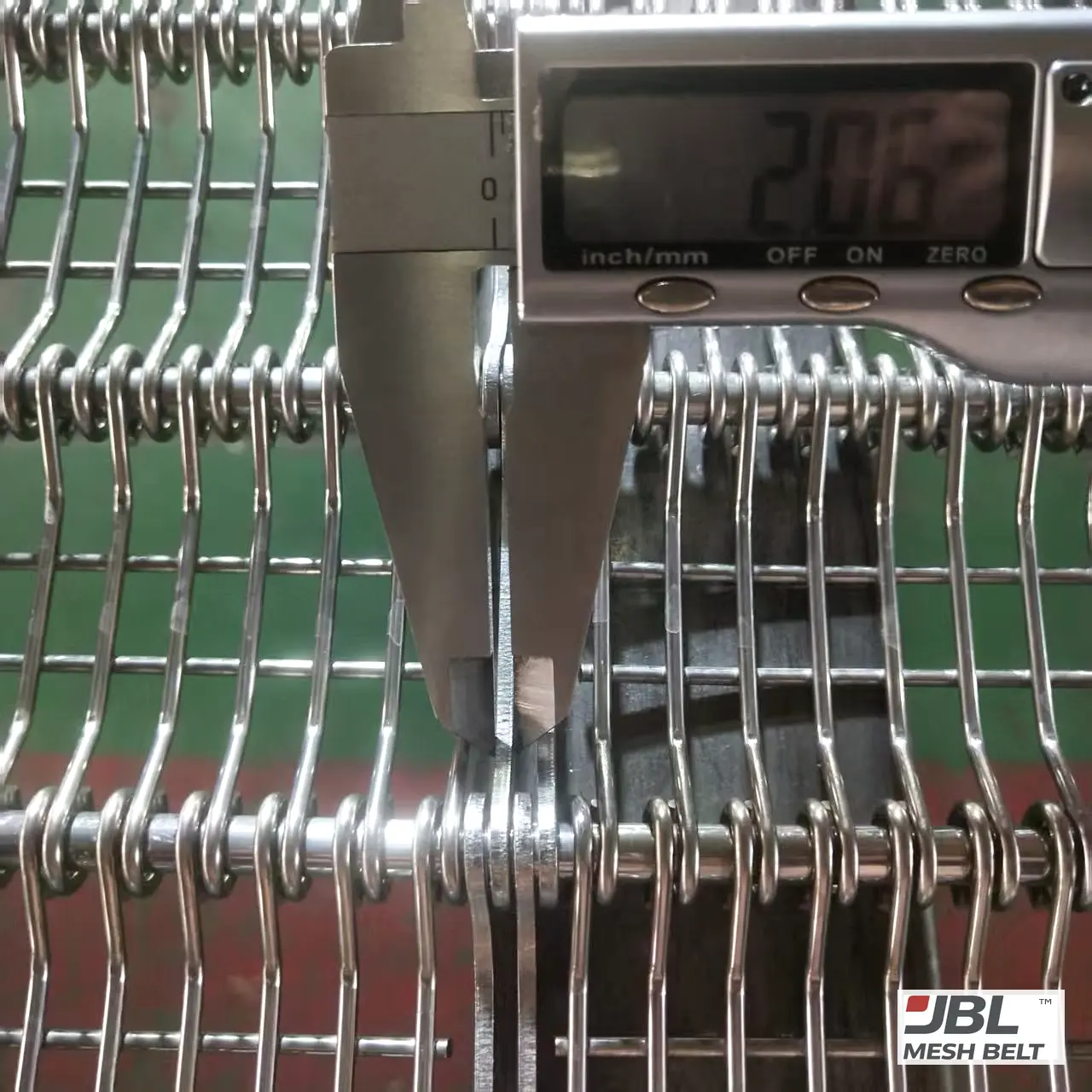
| Link pitch | 50 mm | 50.01 mm |
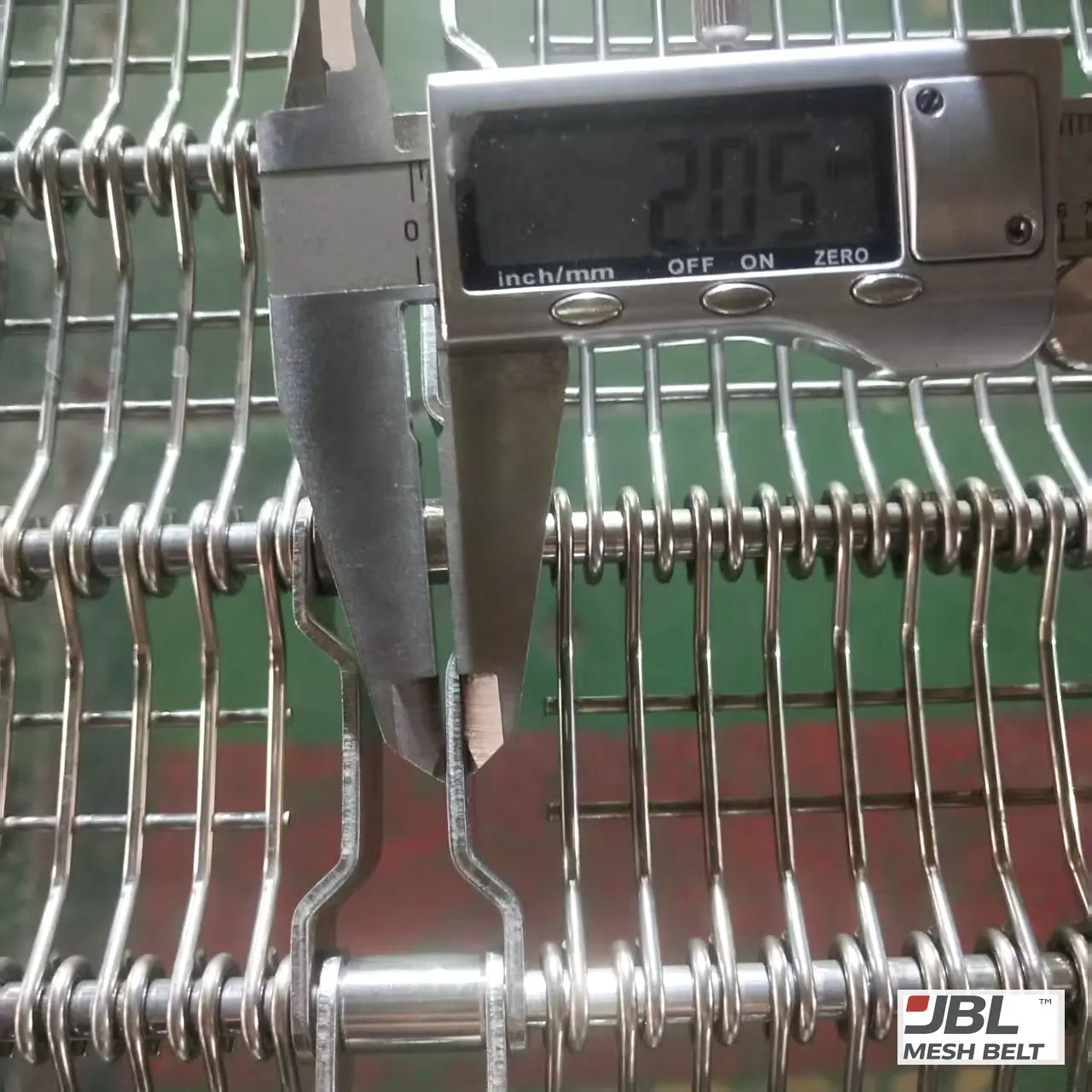
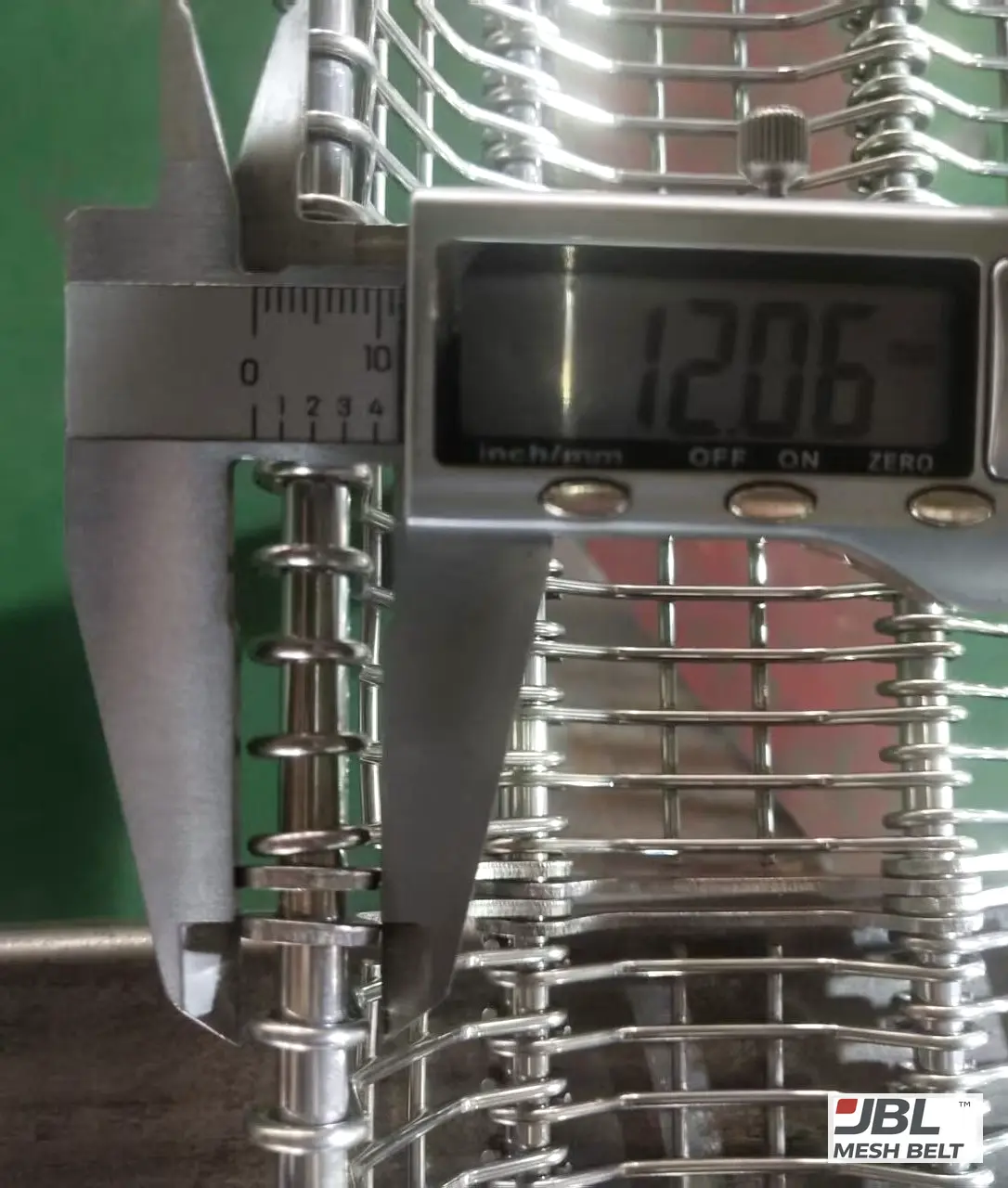
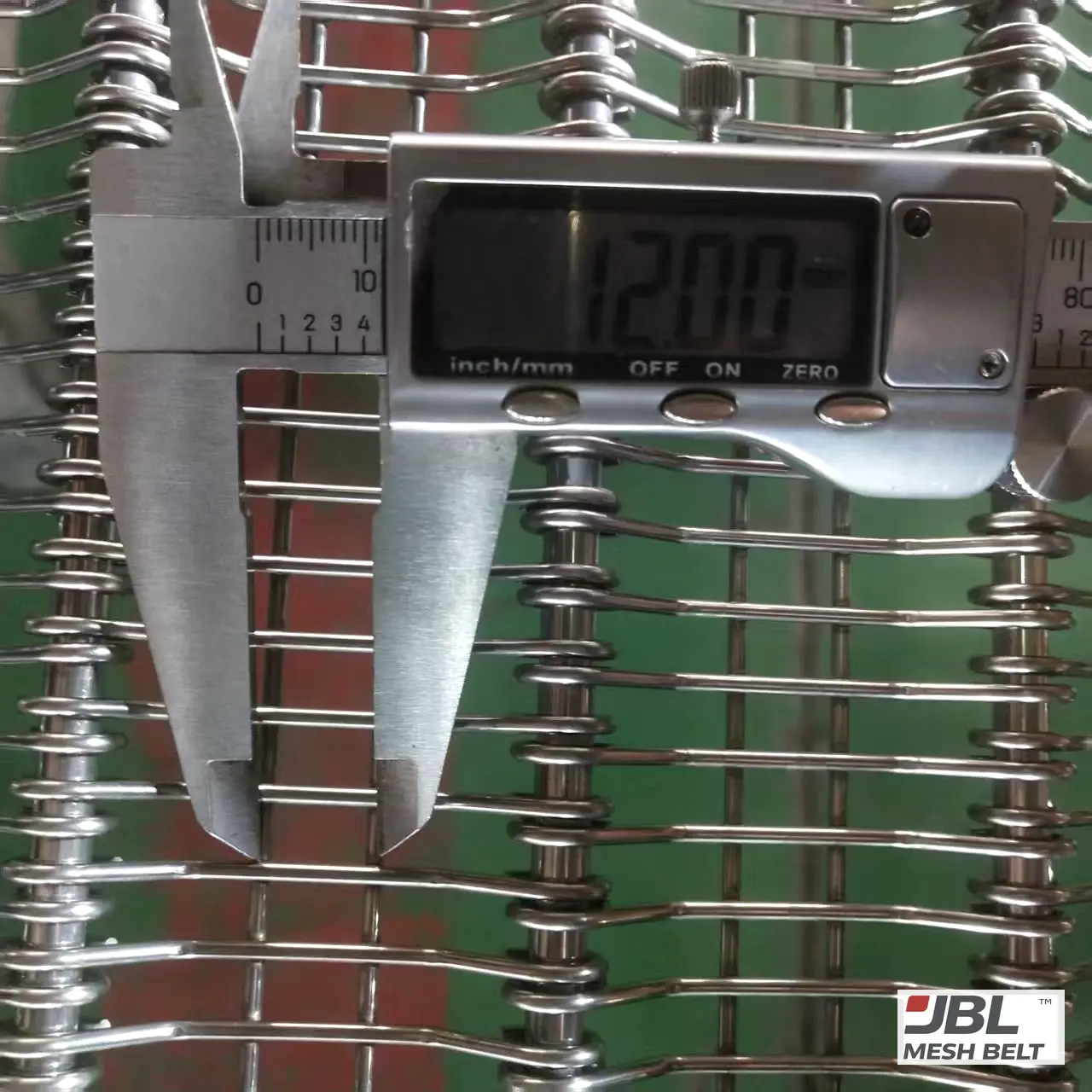
| Flat link width | 12 mm | 12.02 / 12.07 mm |
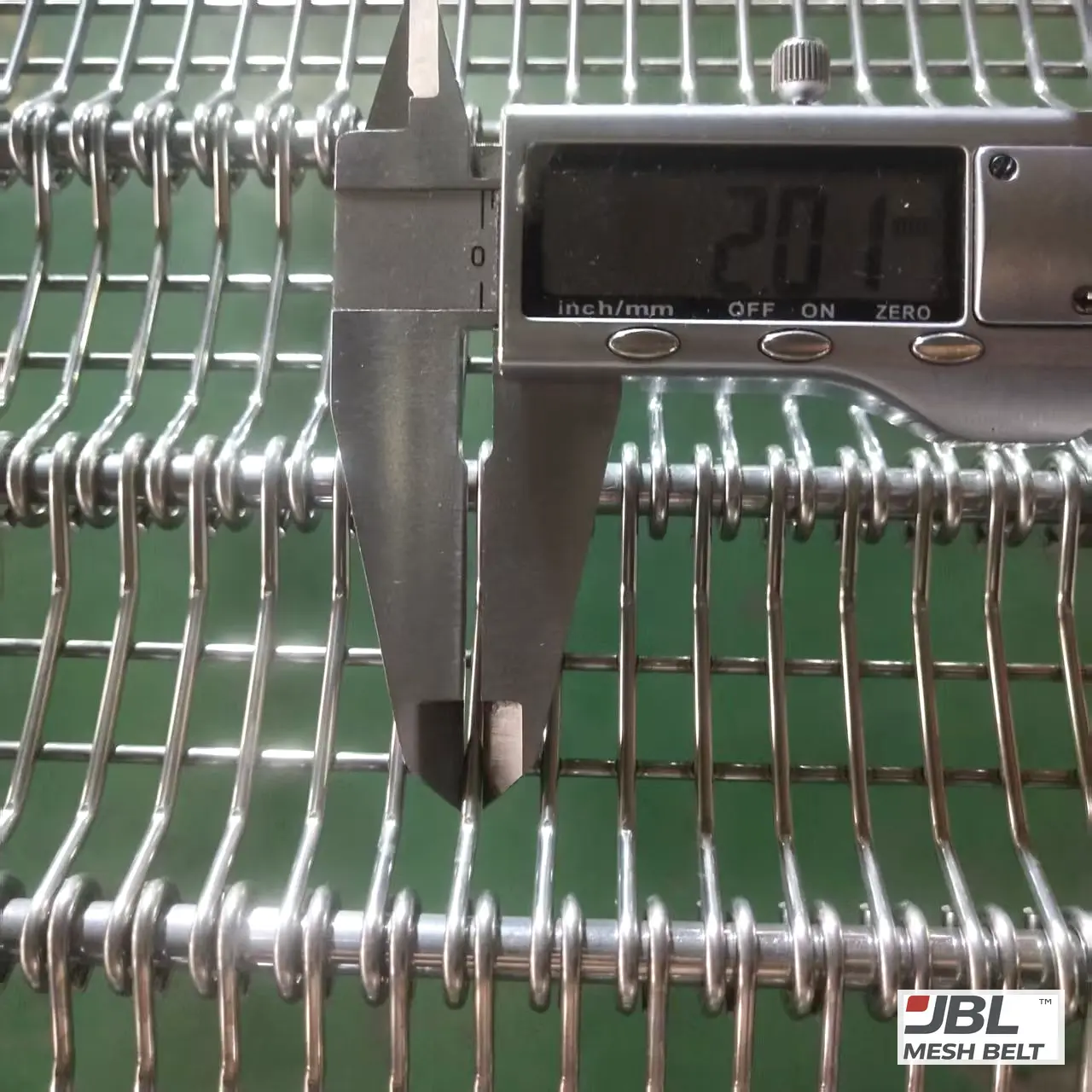
| Flat link thickness | 2.5 mm | 2.50 / 2.52 mm |
| Wire | Ø2.5 mm | 2.50 / 2.51 mm |
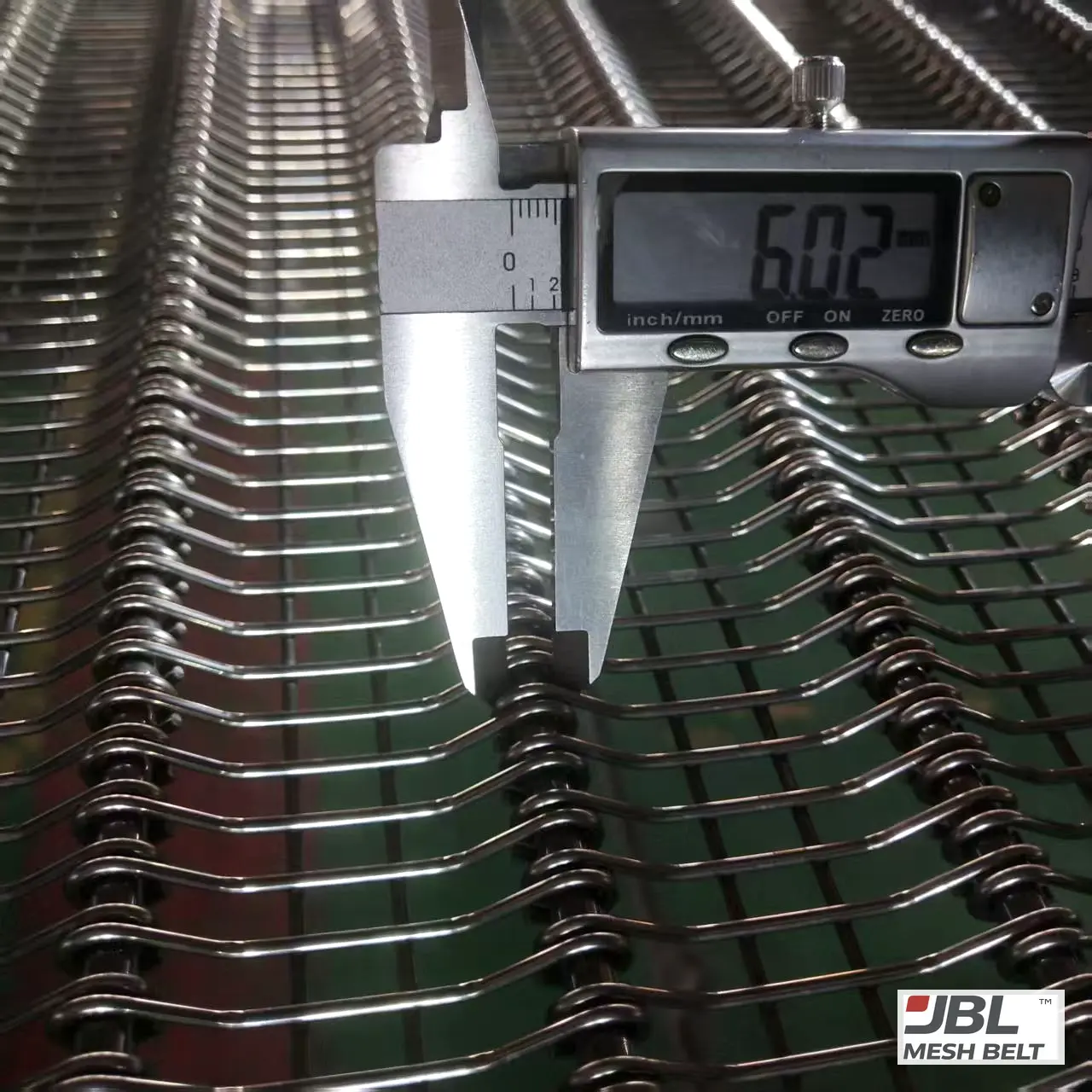
Caliper readings from the photos on this page. Final values follow the drawing confirmed with the buyer.
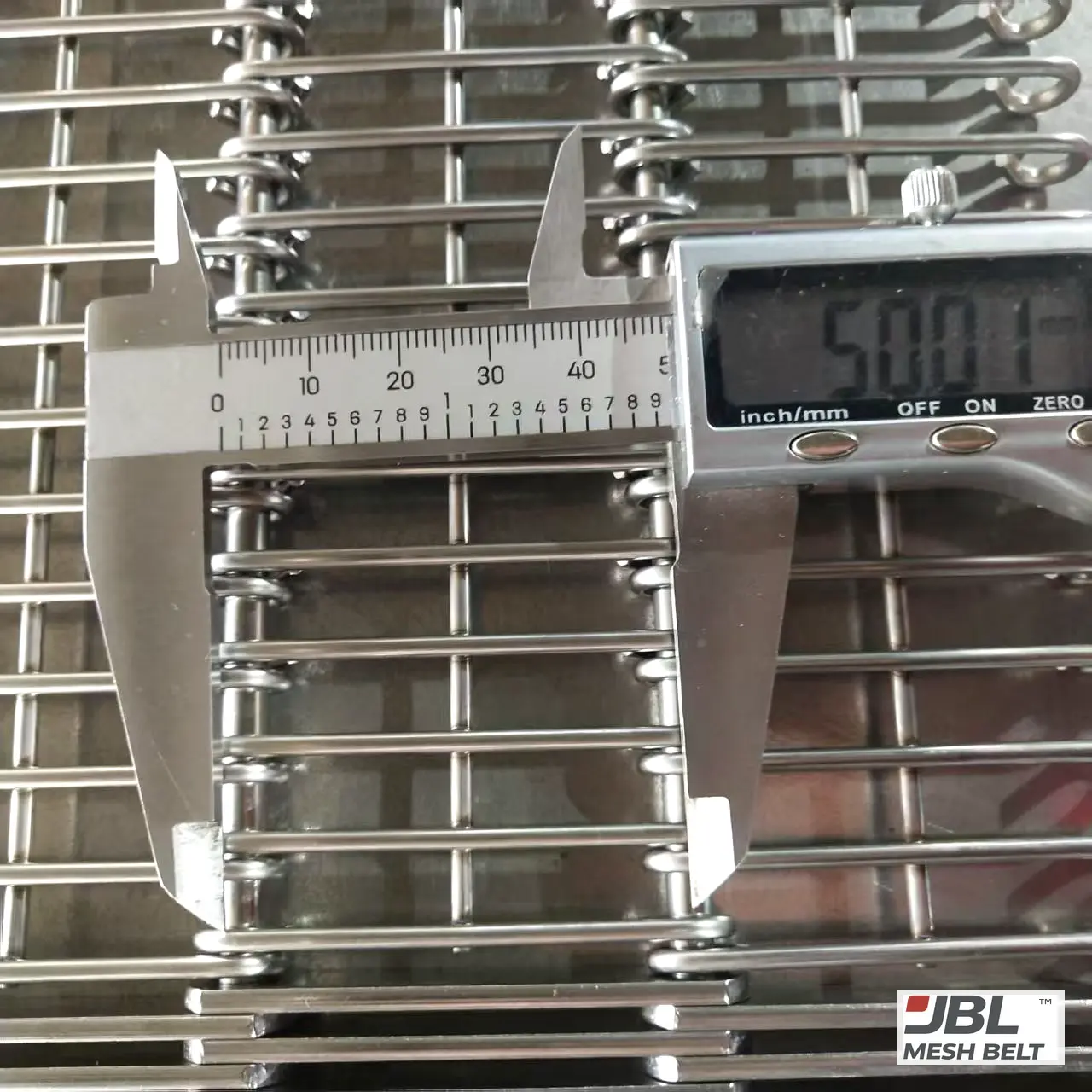
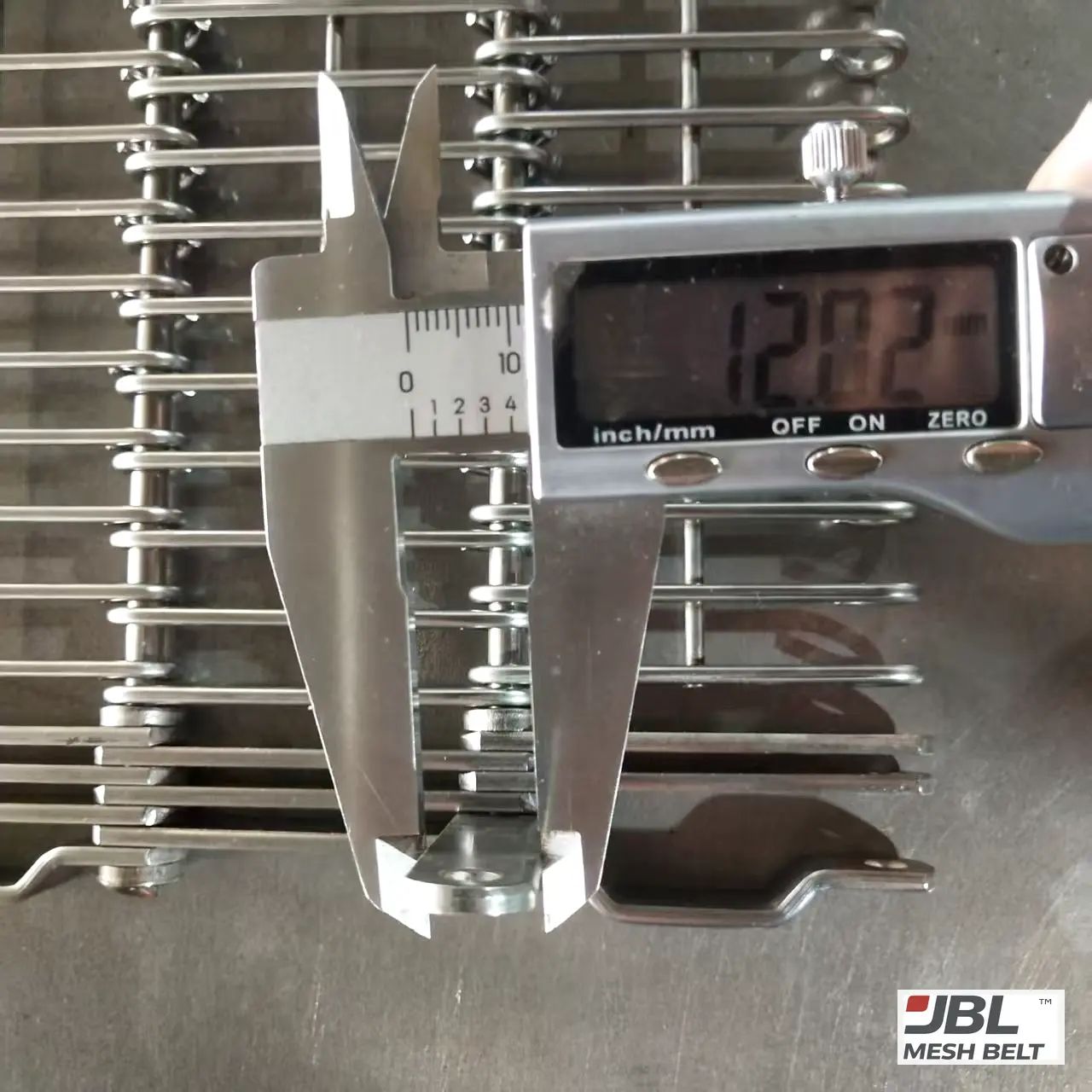
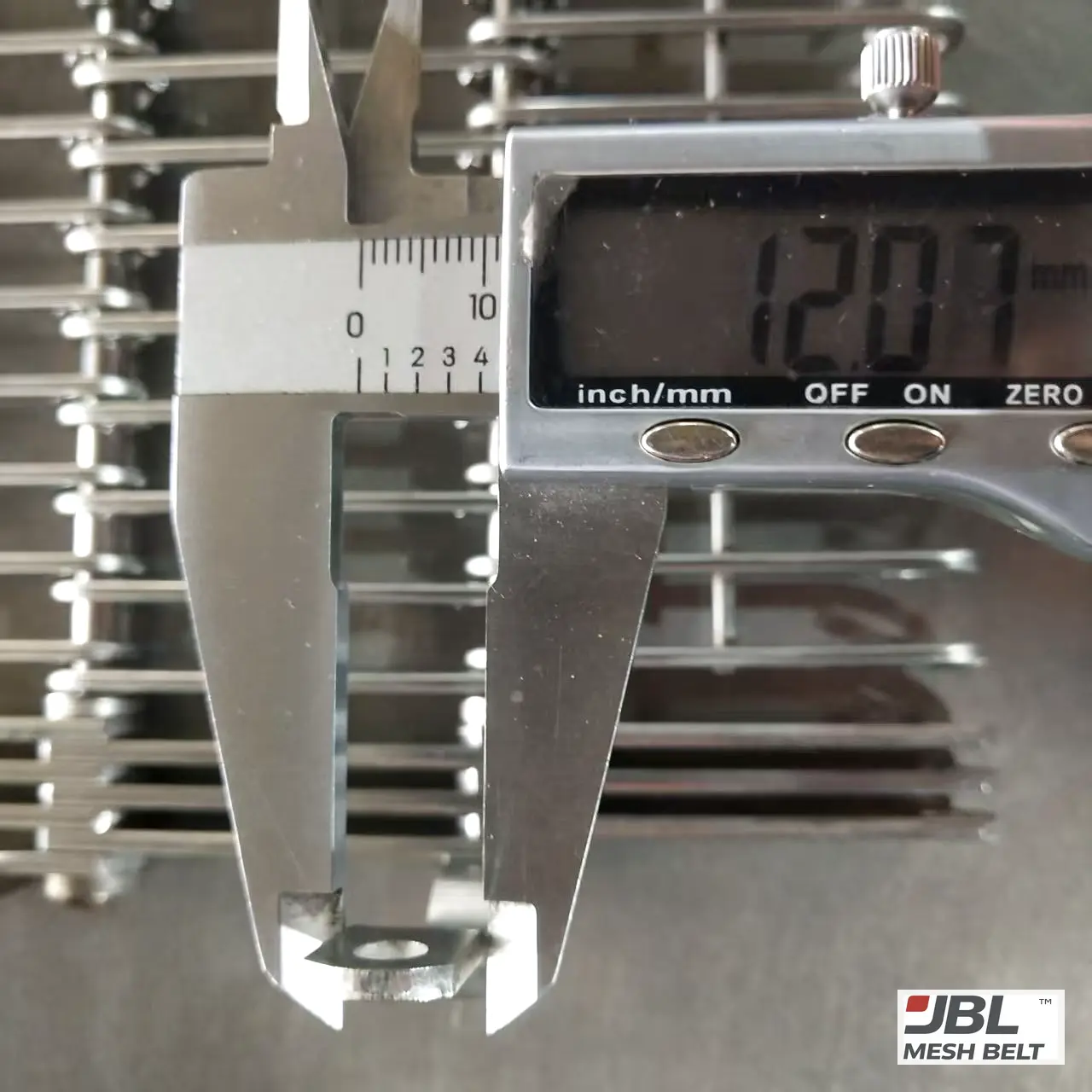
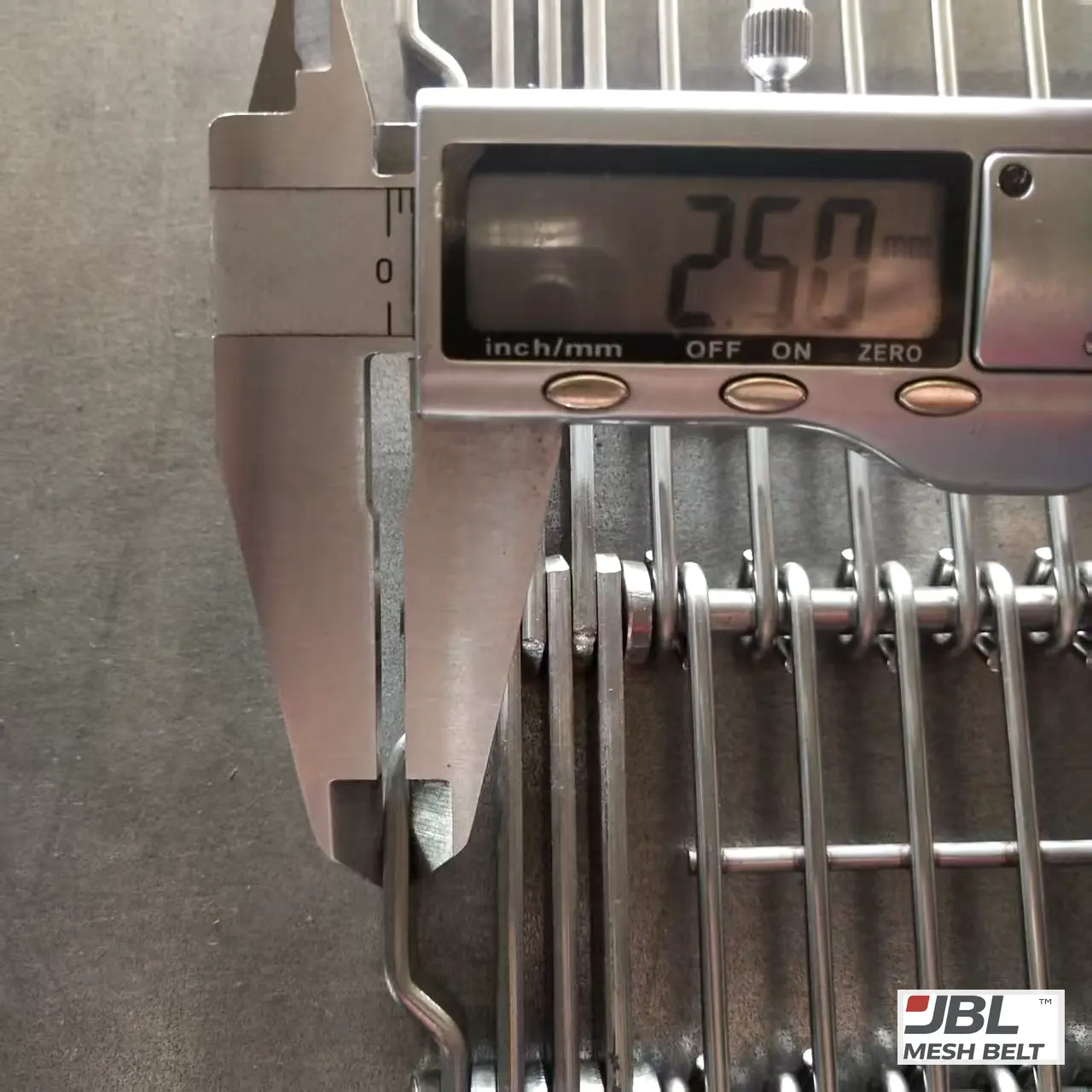
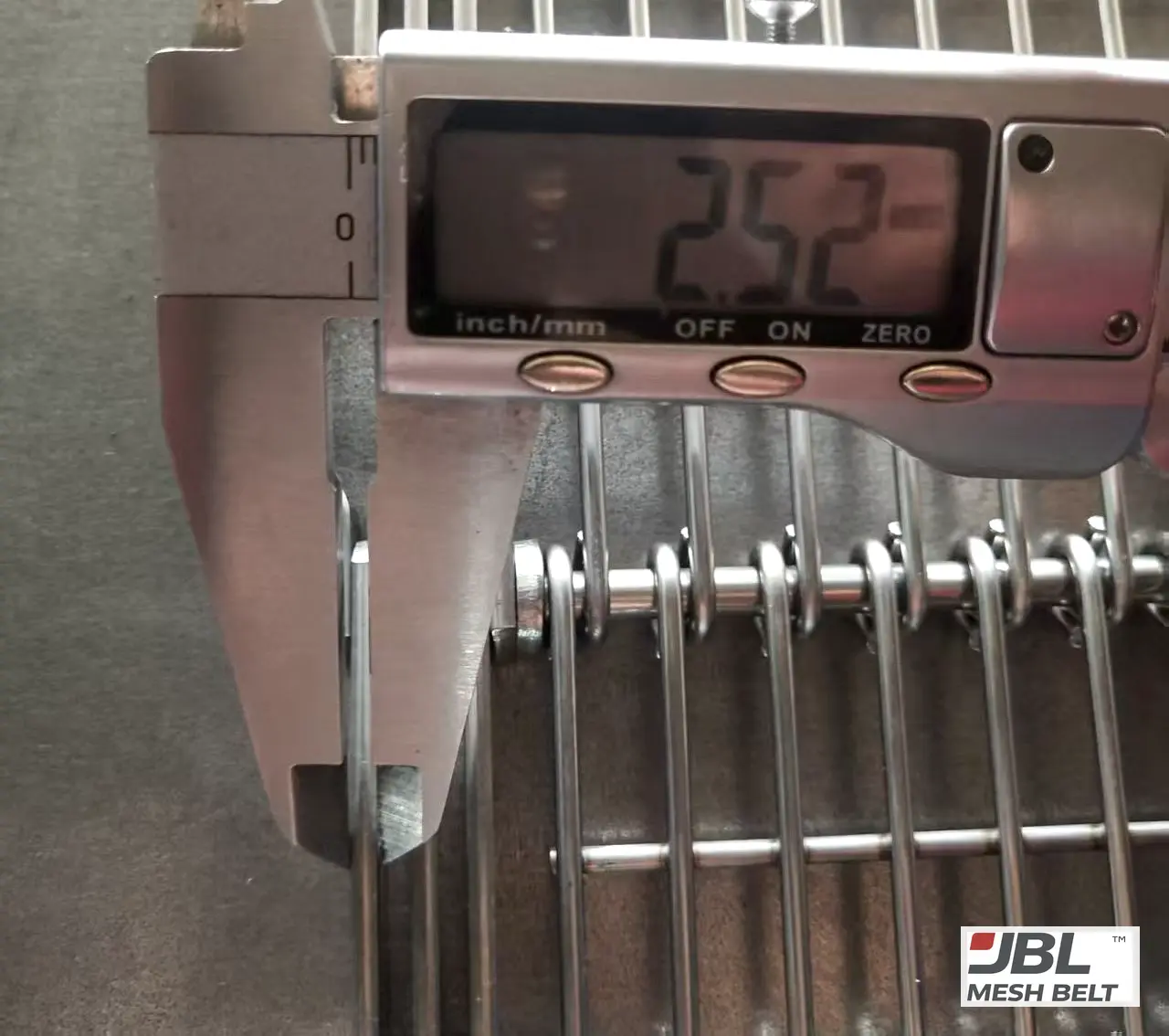
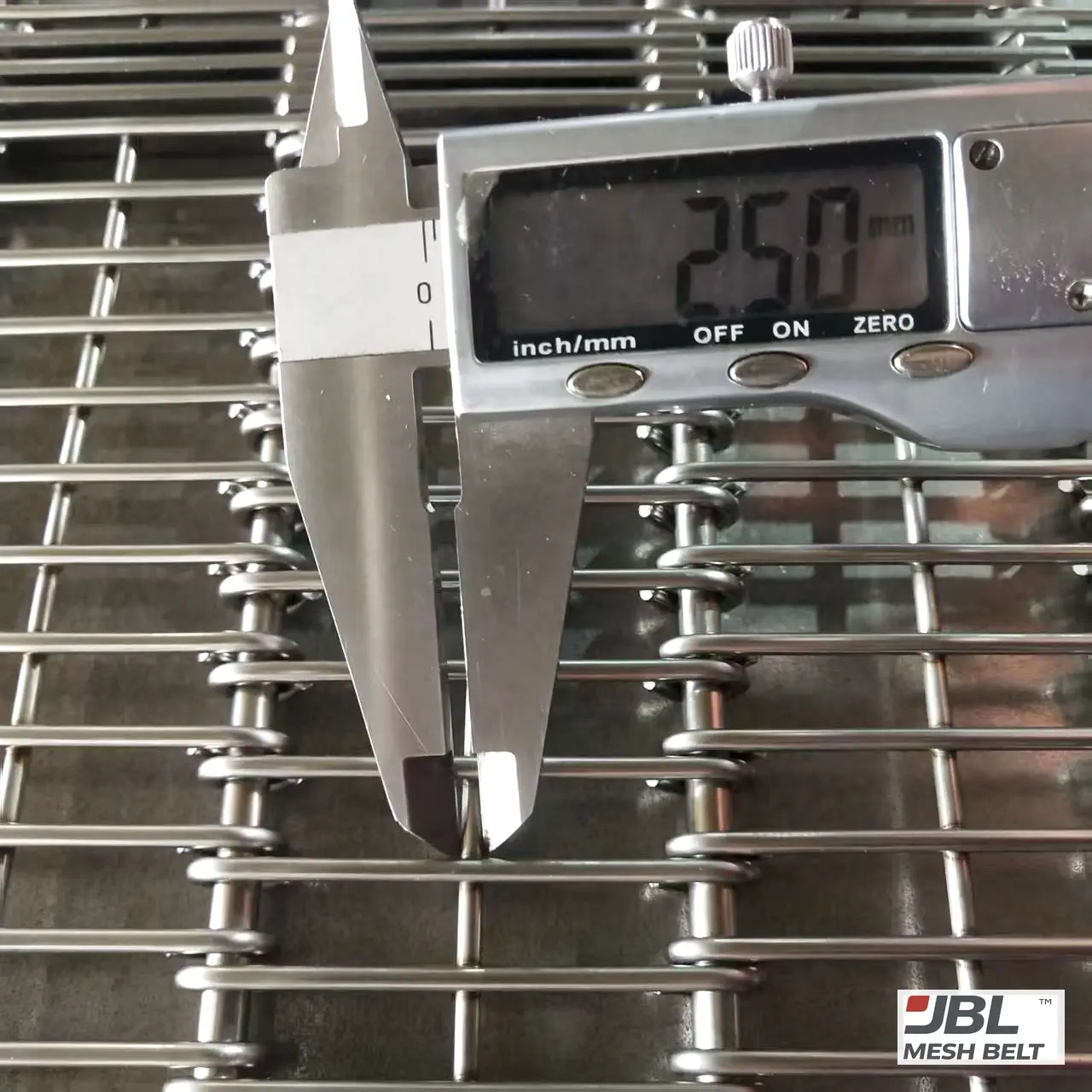
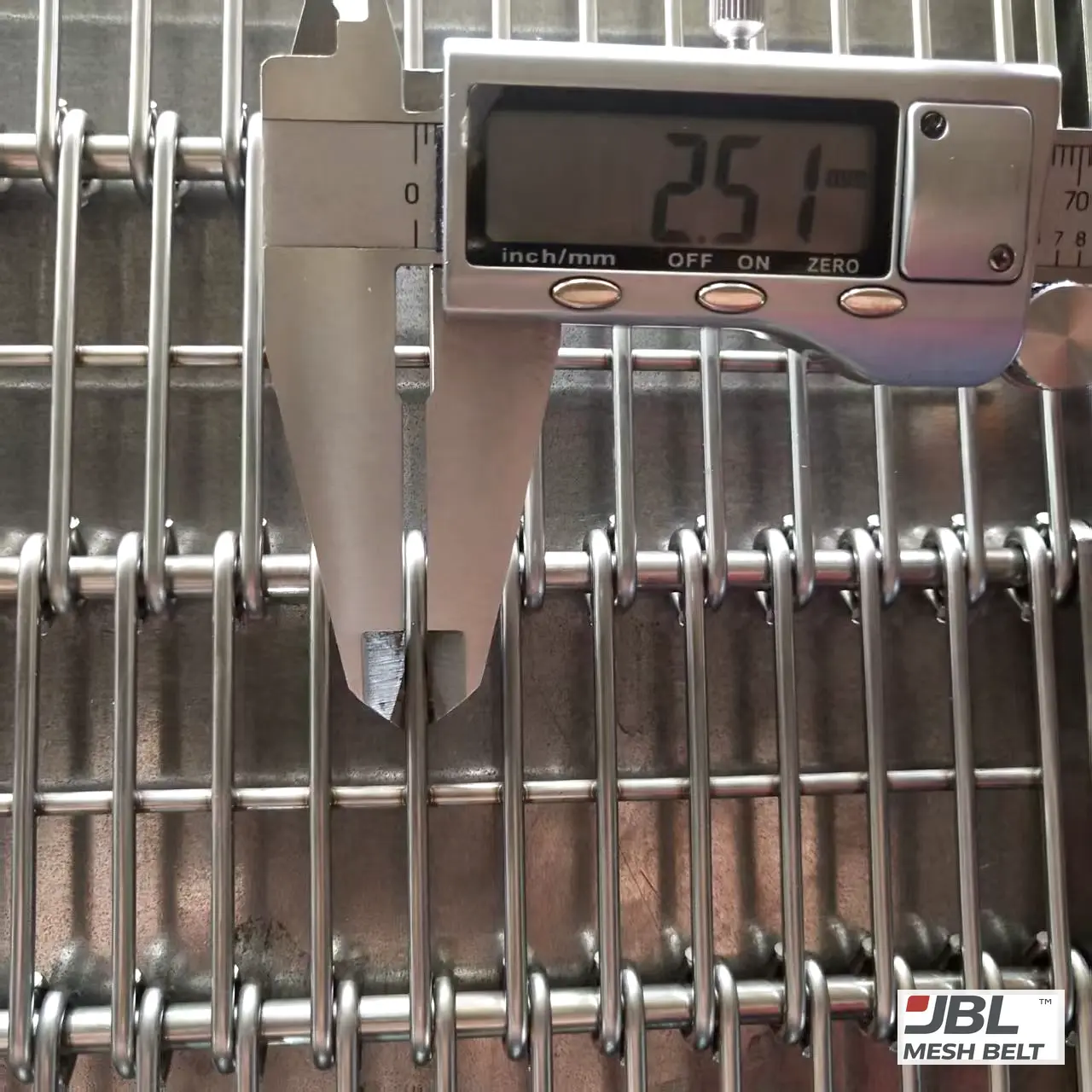
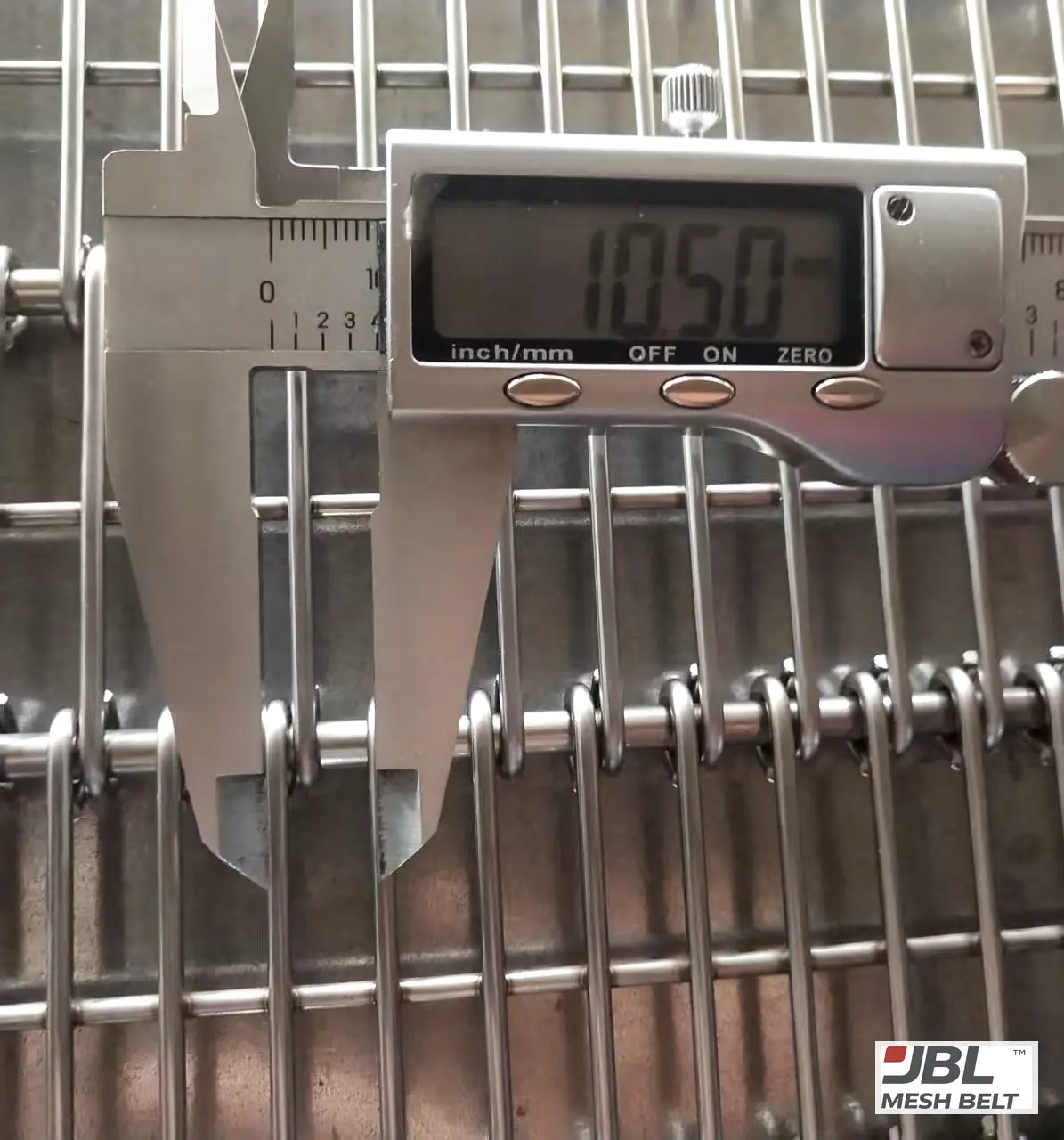
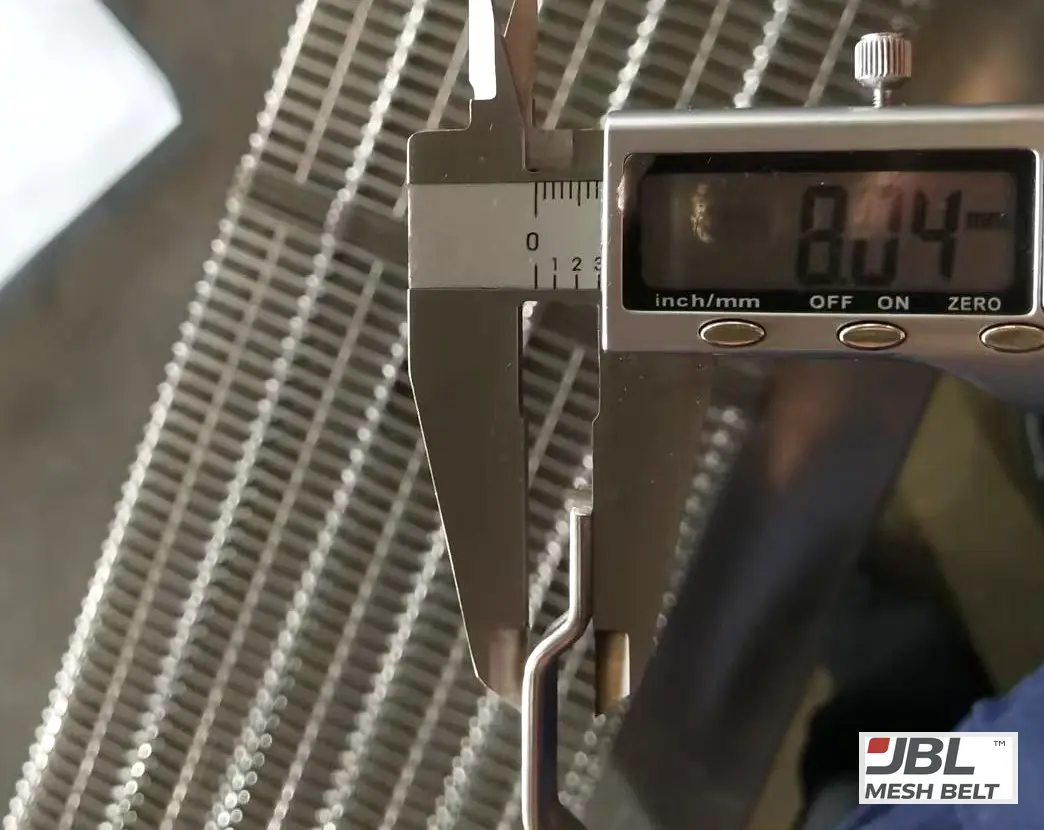
The bulk belts were measured the same way as the sample before packing: chain pitch, roller, chain plate, rod and wire. The glazing belt runs on a roller-chain edge — 50 mm pitch, 2 mm plates, 10 mm rollers — so the chain parts were checked as closely as the mesh.
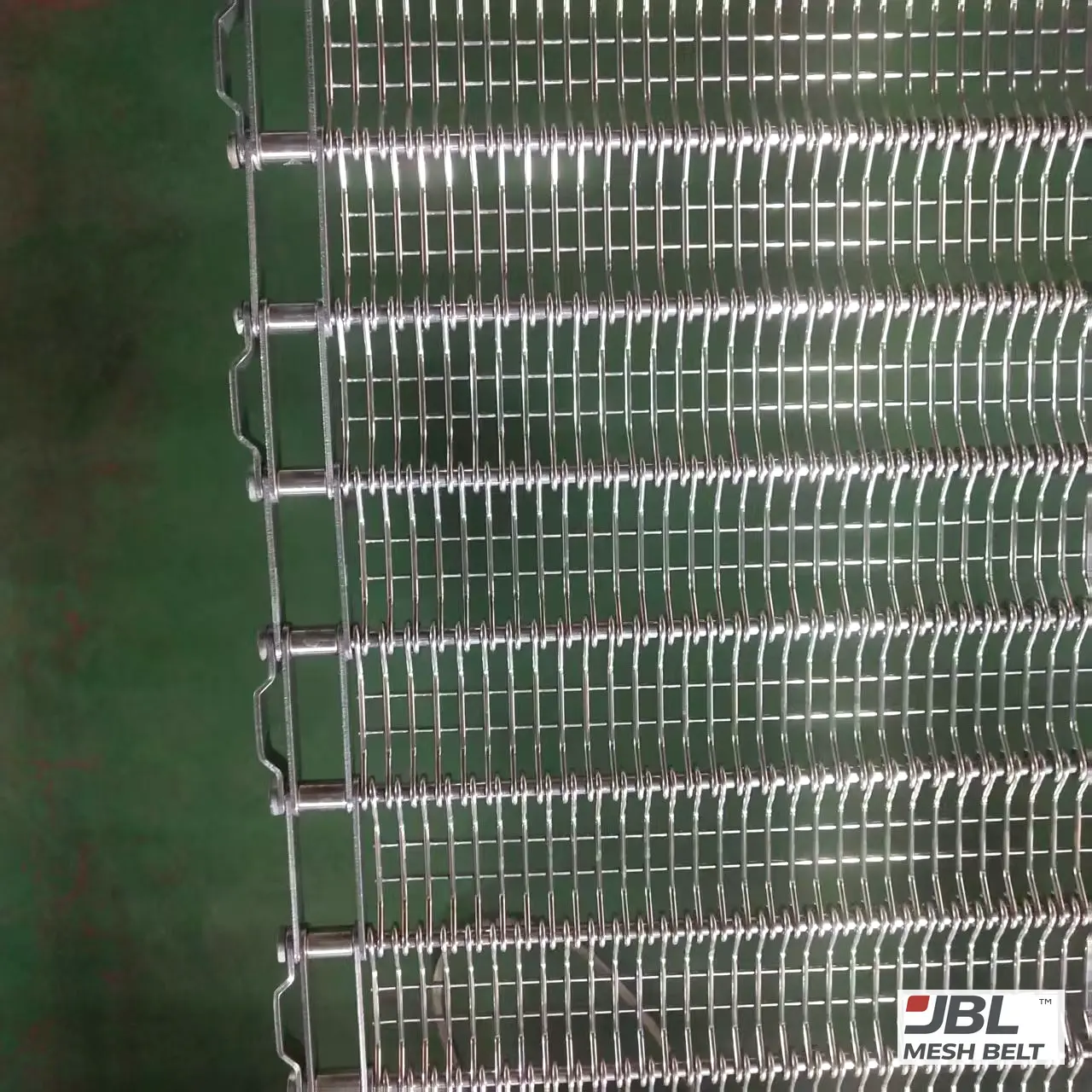
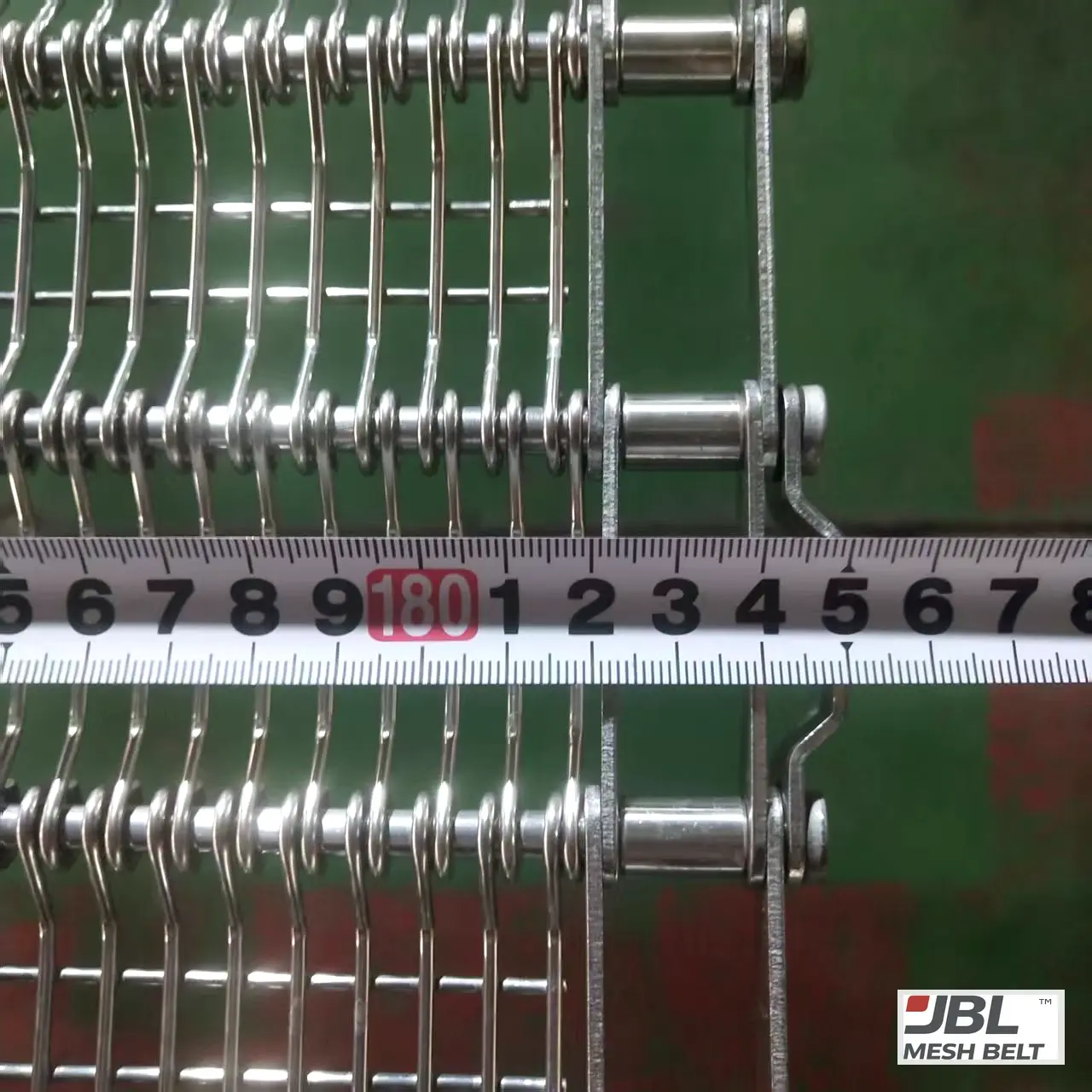
| Location · year | Spain · April 2026 |
|---|---|
| Industry · equipment | Shrimp processing · IQF tunnel line (glazing, hardening, freezing) |
| Starting point | Customer requirements — no sample, no drawing |
| Belts | Glazing belt 1850 mm × 15 m (rod 6 mm, wire 2 mm, roller-chain edge 50 mm pitch); hardening belt 1797 mm × 17 m (rod 5 mm, wire 2.5 mm, reinforcing bars); SUS304, washer-welded, pickled |
| Before bulk | Drawings approved; physical sample sent and checked on the customer's line |
| Before packing | Bulk belt measured against the drawing: chain pitch, rollers, plates, rod and wire |
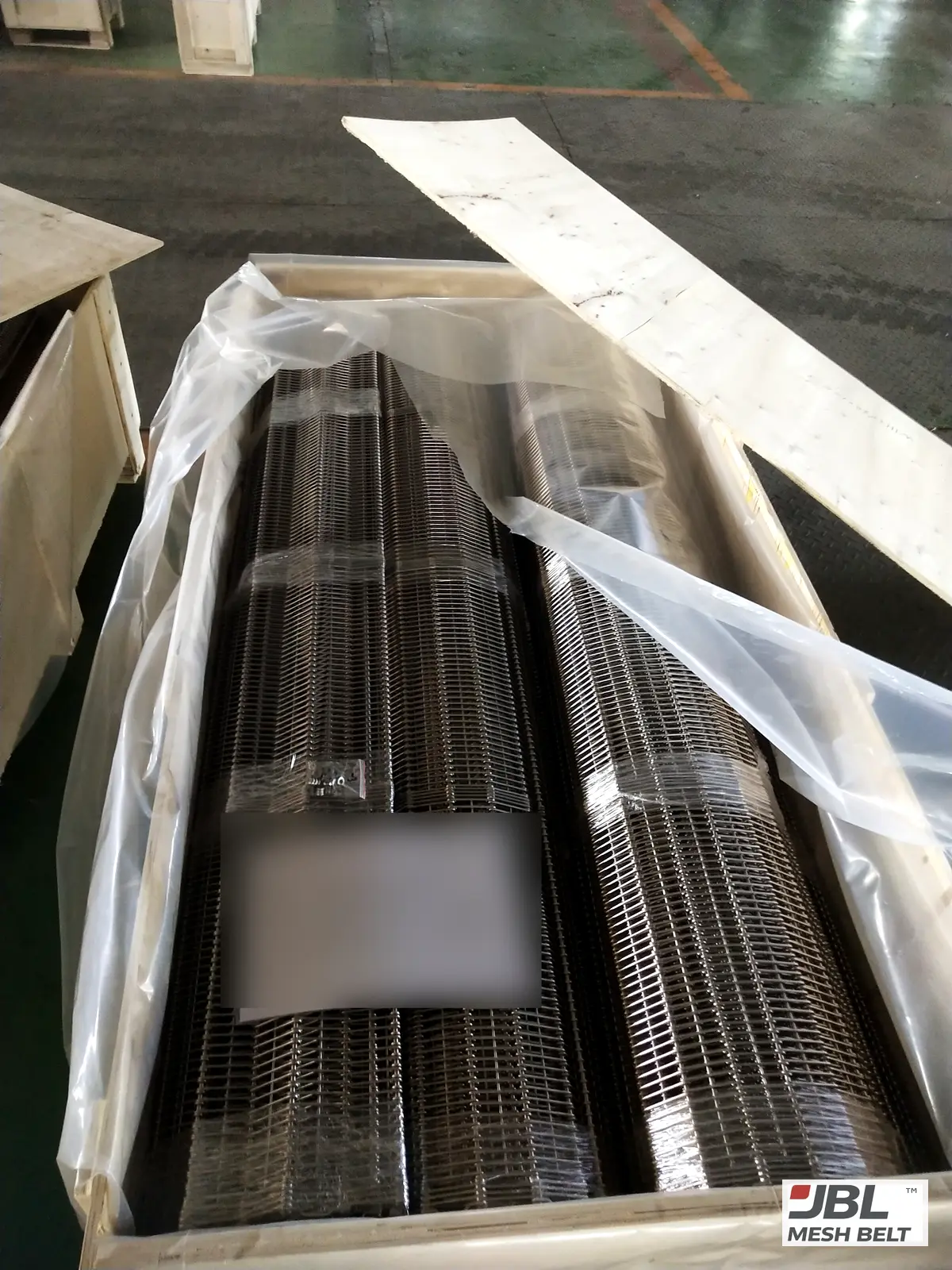
| Result | Approved; bulk produced and shipped in film-lined crates |
1.No old belt? Start from a drawing
When there is nothing to copy, a dimensioned drawing of every link, rod and washer is the shared reference both sides approve.
2.A sample on your own line beats any datasheet
Checking a real sample on the customer's line confirmed edge drive and product support before the full order.
3.The edge link decides the drive
Joggled flat links let the belt edge run like a chain; their pitch, width and thickness were checked against the drawing.
4.Readings, not promises
Pitch 50.01 mm against 50 mm on the drawing; link thickness 2.50–2.52 mm against 2.5 mm — measured and shown.
✓ Evidence on this page: two dimensioned belt drawings, sample photos and 9 caliper readings on the sample compared with the drawing, 11 readings on the bulk belt and packing. Customer name and order numbers are withheld.
Planning a new IQF line or tunnel freezer belt?
Send a short section of the old belt, or photos with a caliper in the picture — usually a reply within 8 hours.
Yes. Requirements are turned into a dimensioned drawing for approval, then a physical sample is made before bulk production.
Yes. In this project the sample was sent to Spain and checked on the customer's line before the order.
The bent (joggled) flat link lets links overlap at the edge so the belt runs like a chain on the drive. Its pitch, width and thickness are set on the drawing.
No. Cases show country only; the customer and order numbers are not published.