Replacing a worn belt · 8 min read
How Do You Copy a Chain-Driven Belt When the Chain Is Custom?
 Written bySpringSales Director, JBL Mesh Belt · 16 years in metal conveyor beltsProjects in United Kingdom · USA · Australia · Brazil · South Korea · Spain · Malaysia · LibyaPublished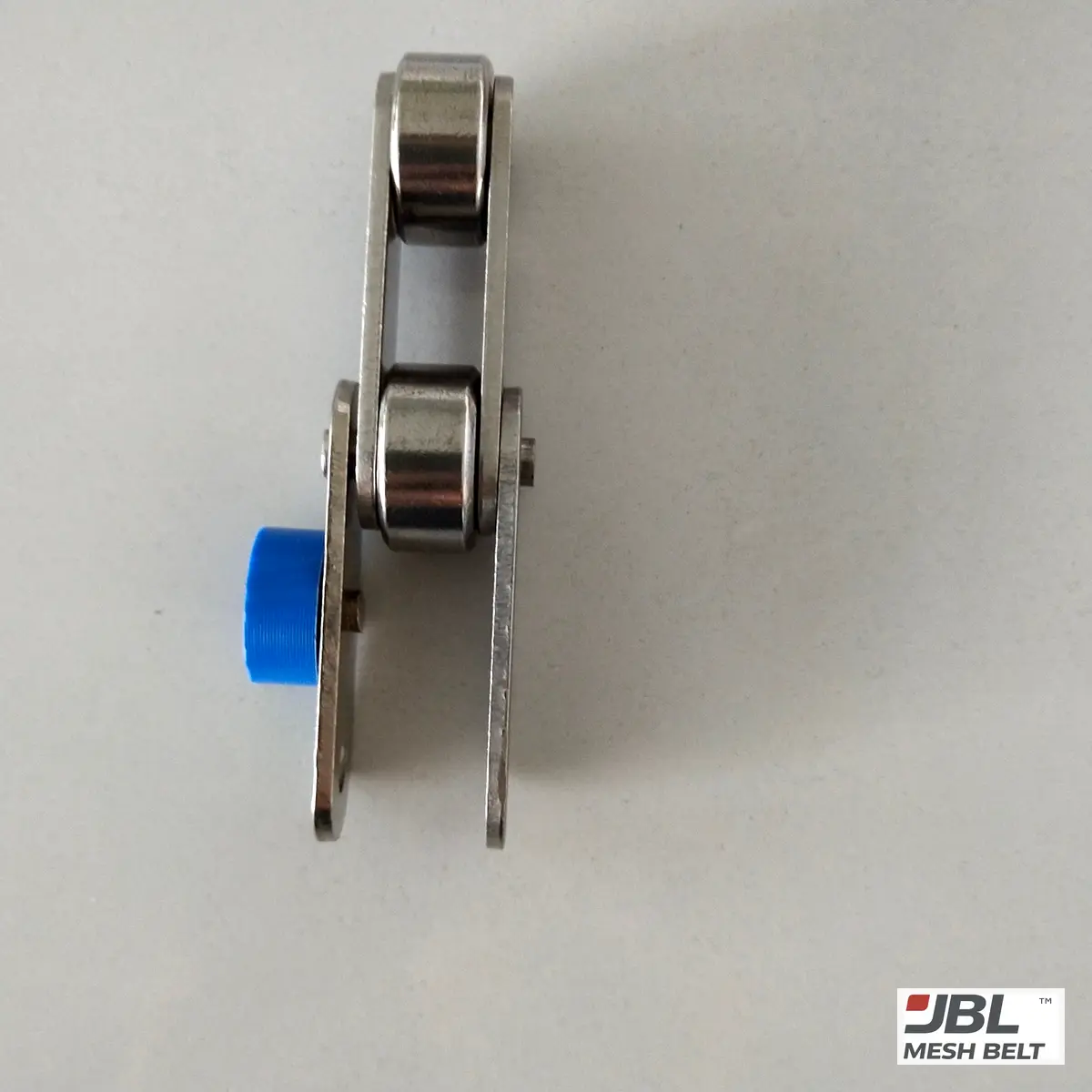
Your chain-driven belt is worn. The mesh looks simple, but the chain has odd plates and guide rollers nobody sells off the shelf.
Short answer
Measure the chain as closely as the mesh: chain pitch, roller, plate, rod and any guide rollers. If the chain is custom, make a short trial chain first and check it against your sample. Then build the belt. For a steam oven in Australia, every part was made in 316.
At a Glance
| Part | What to read | Steam oven, Australia |
|---|---|---|
| Chain pitch | Caliper over one link | 31.75 mm (1¼ in) |
| Chain roller | Caliper across the roller | 19.05 mm (¾ in) |
| Chain plate | Plate thickness | 2.00 mm |
| Guide roller | Diameter | 16.00 mm |
| Rod | Diameter | 7.00 mm |
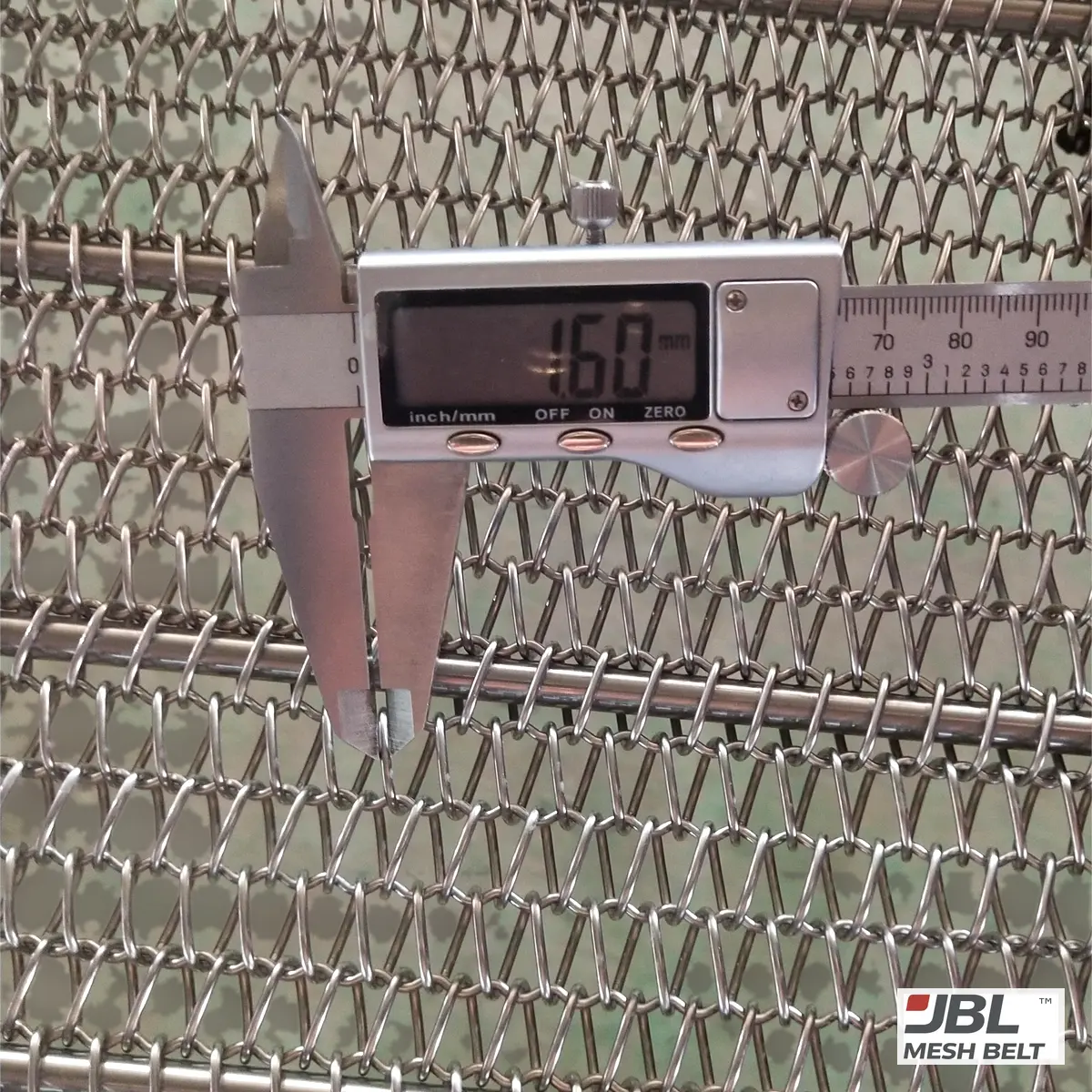
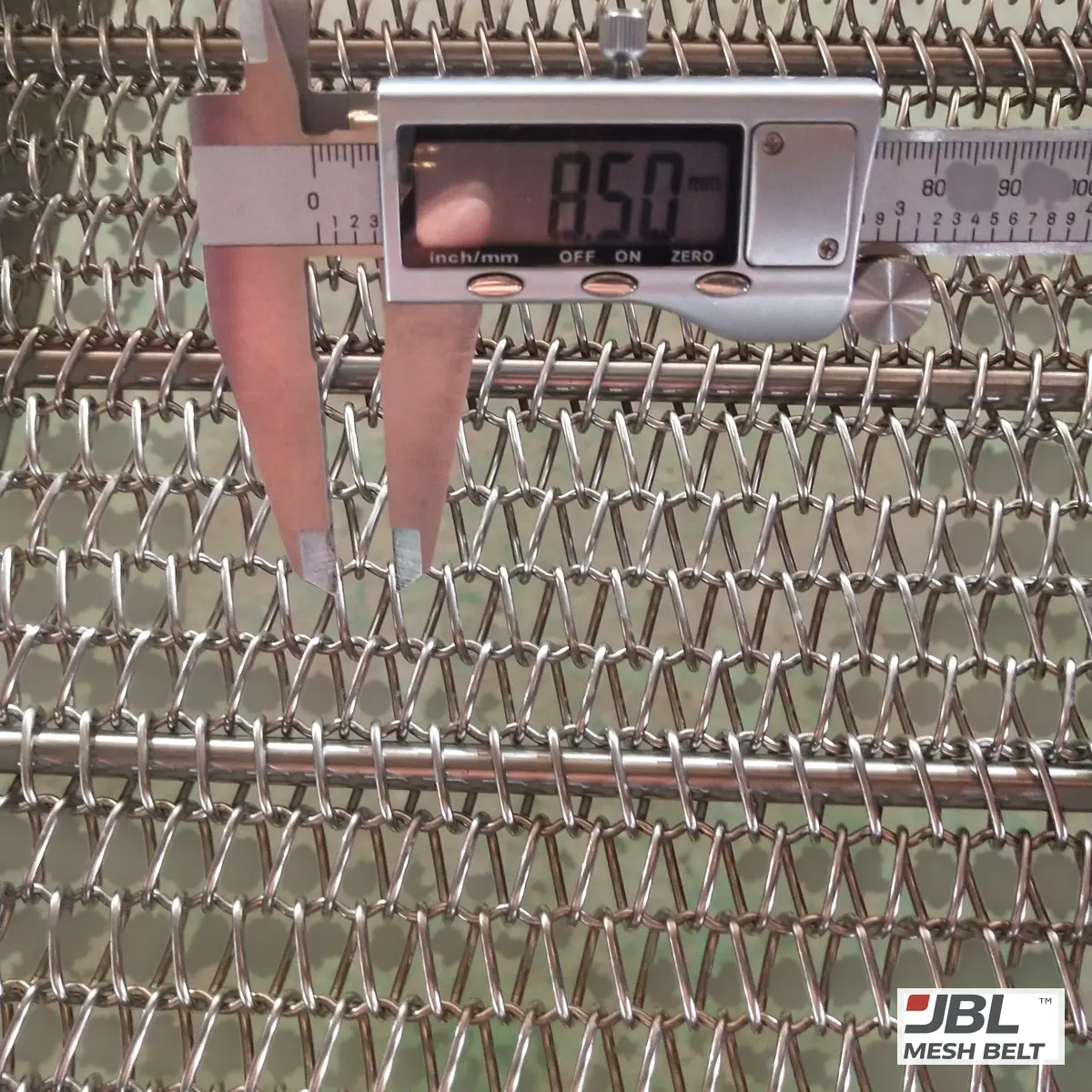
| Mesh | Pitch and wire | 8.50 mm pitch · 1.60 mm wire |
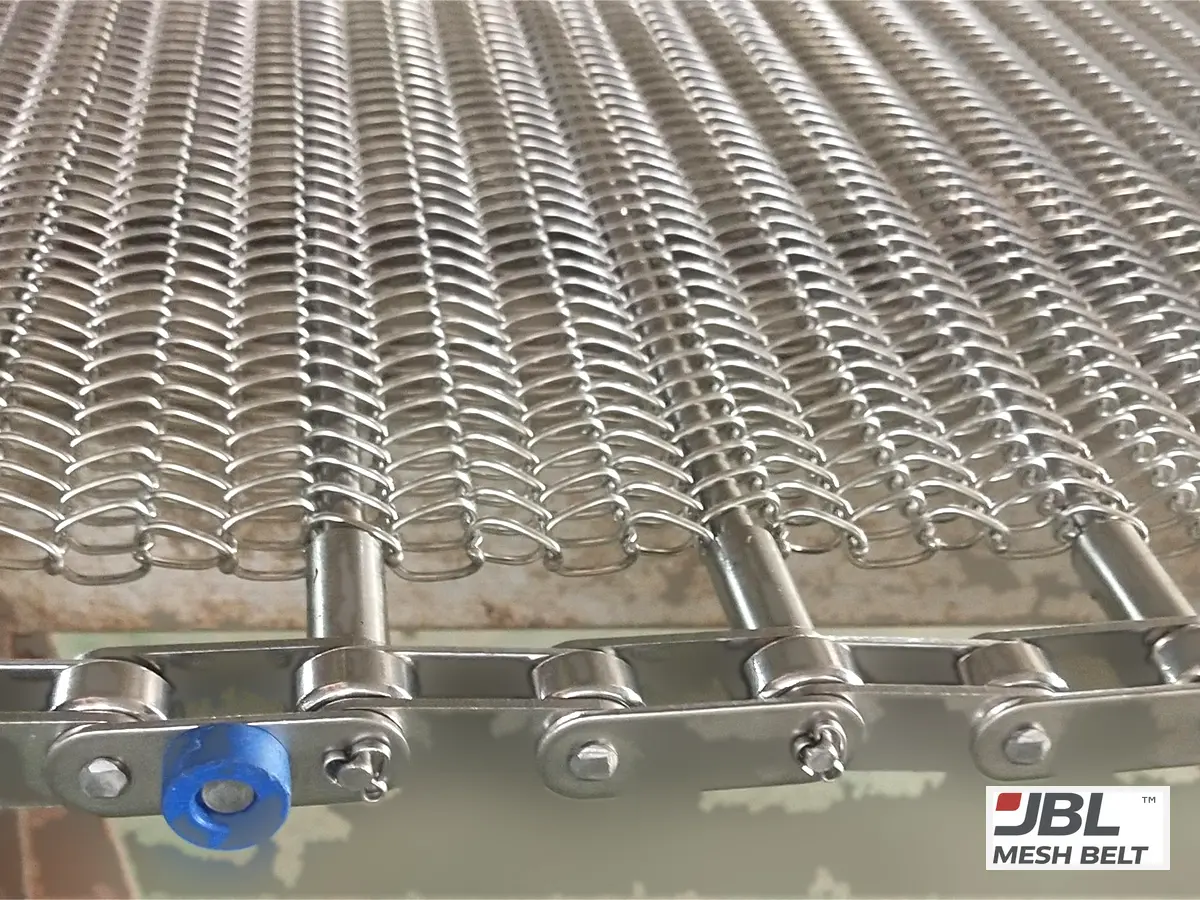
This customer sent a sample of the belt and chain. Below is what I measured, why the chain came first, and how the steel was chosen for steam.
01What do you measure on a chain-driven belt sample?
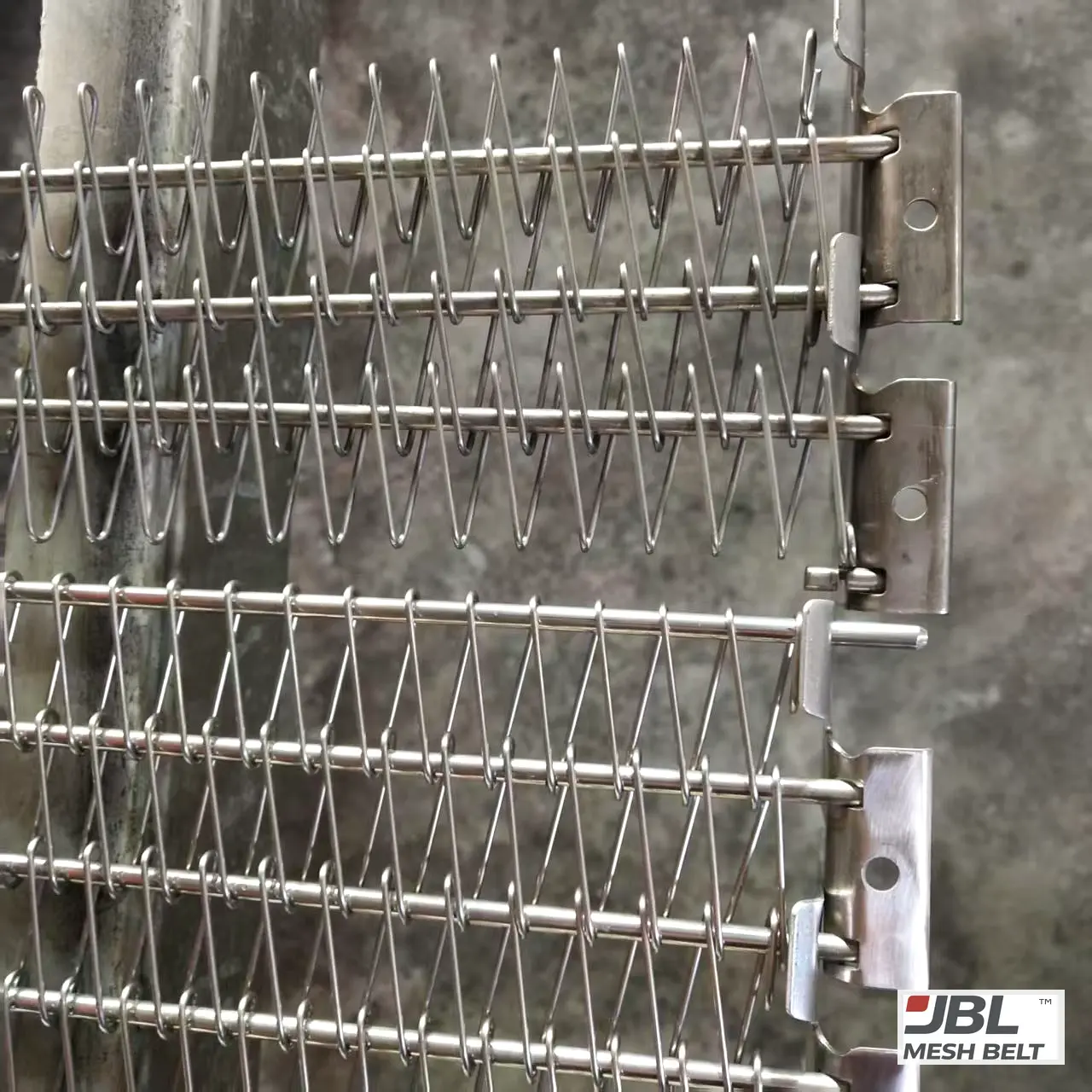
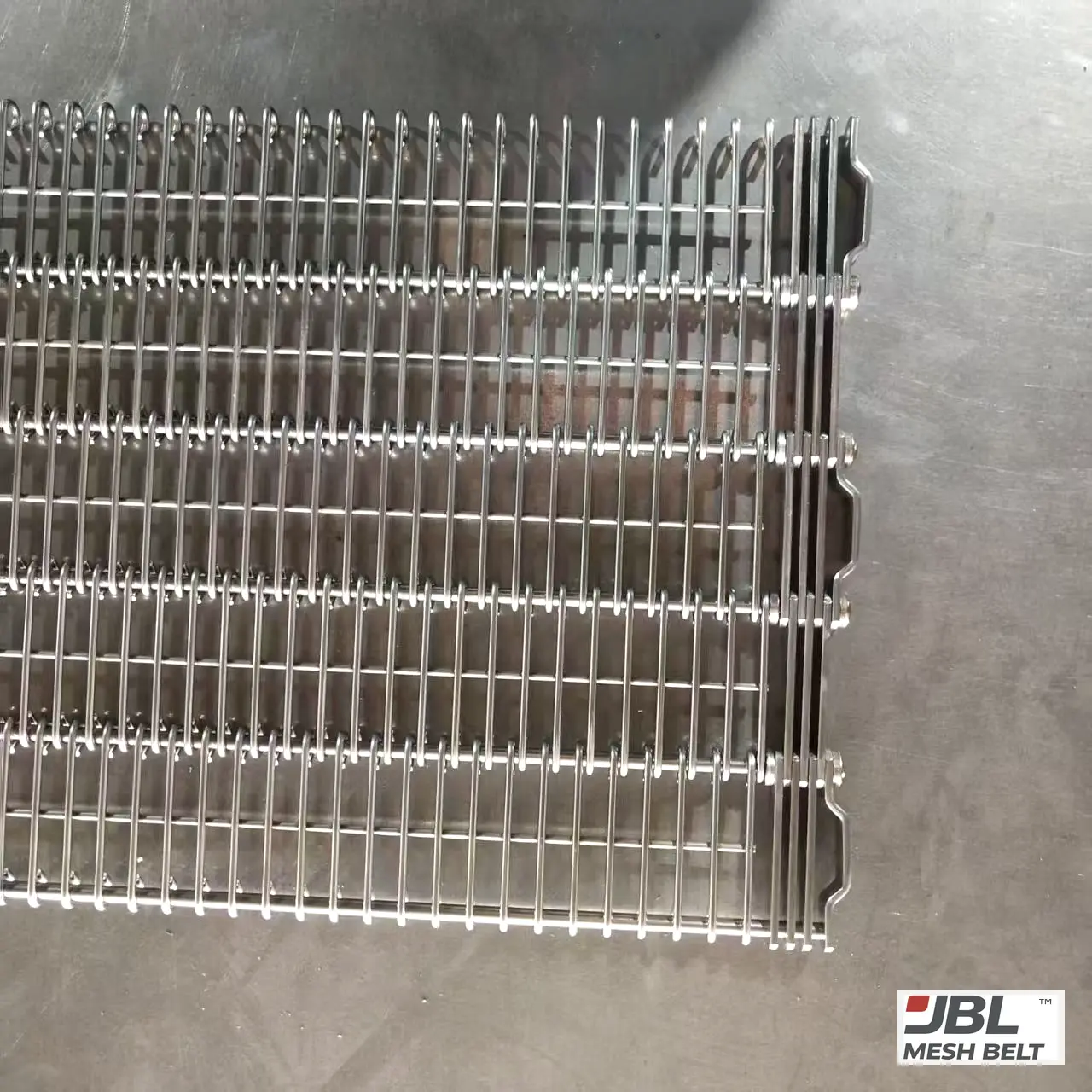
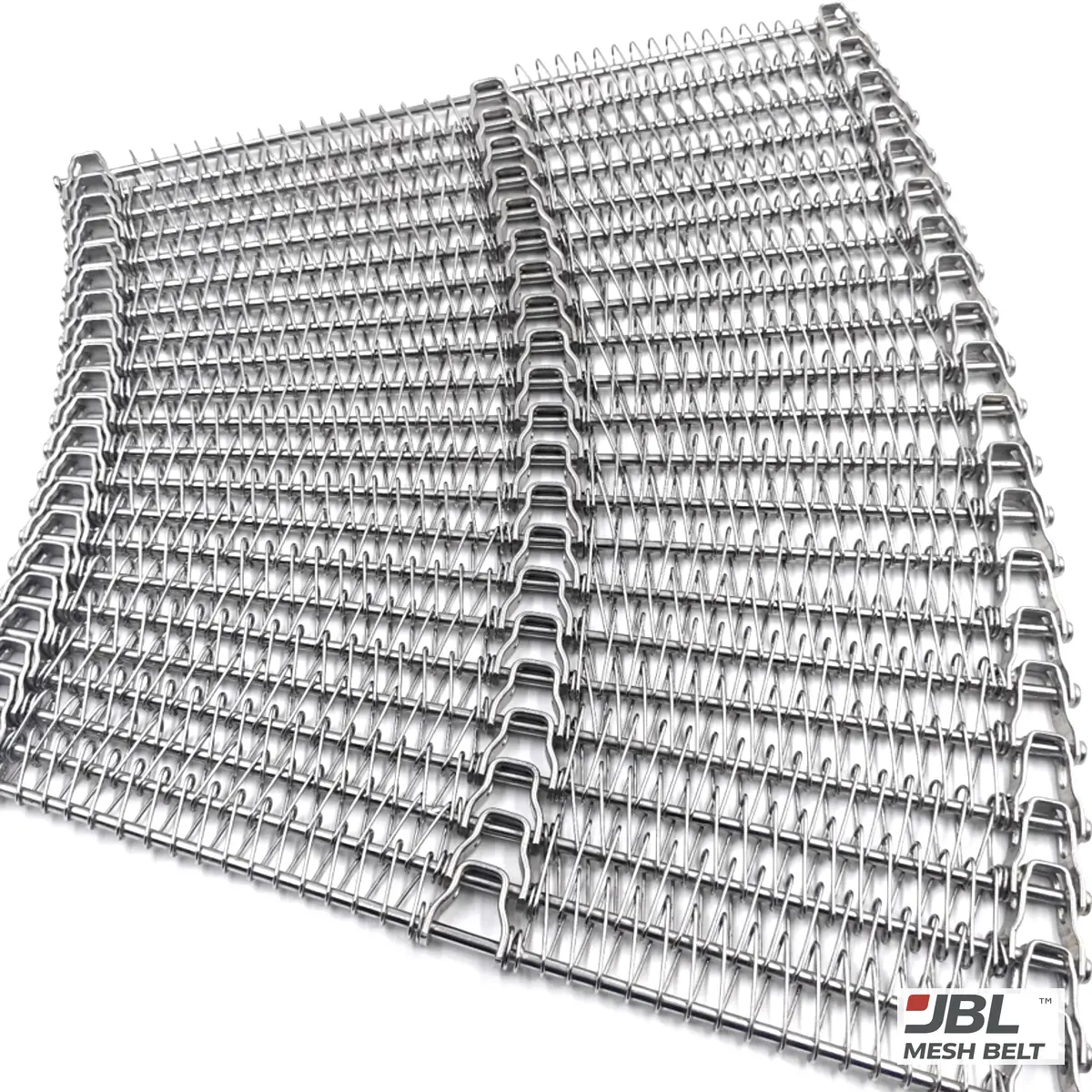
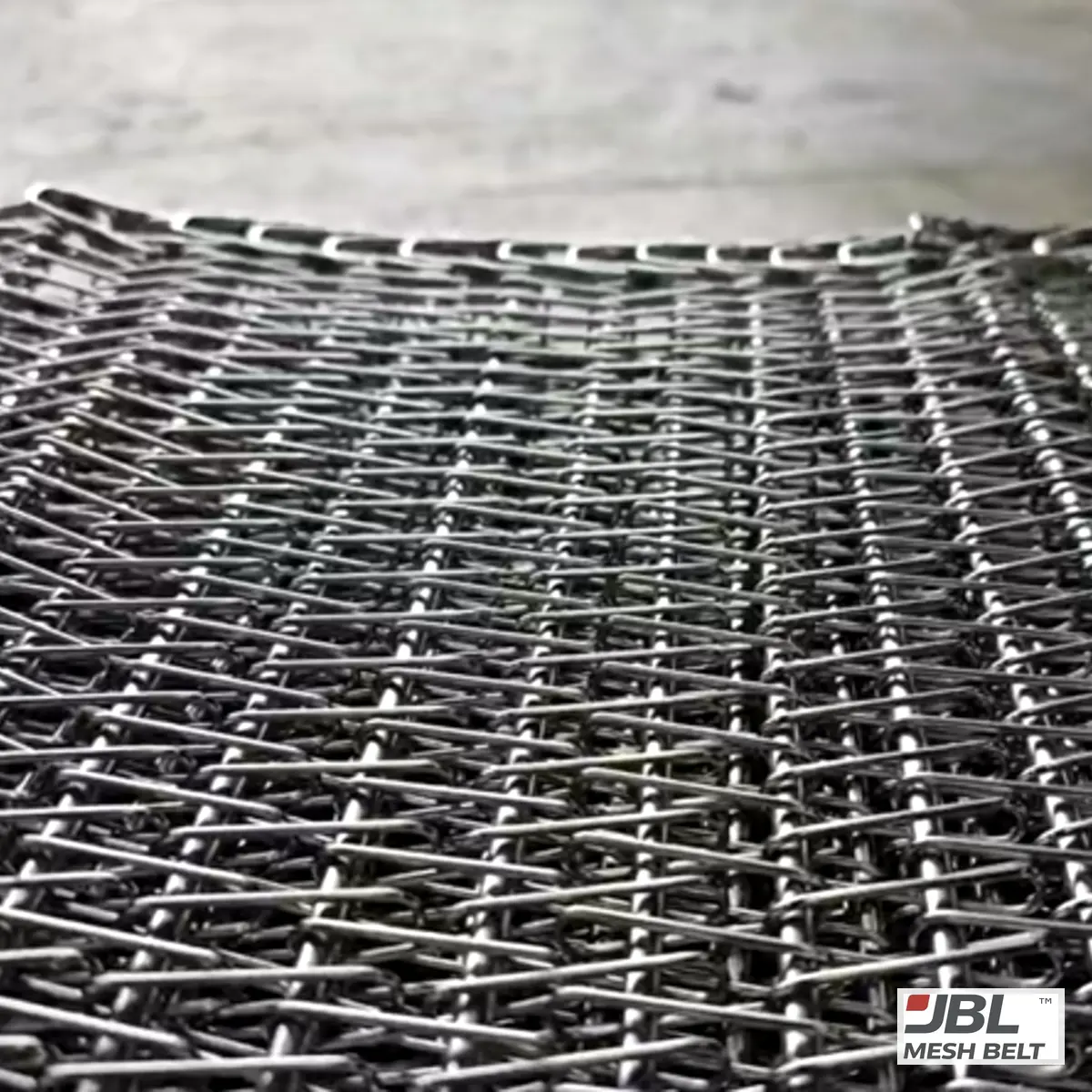
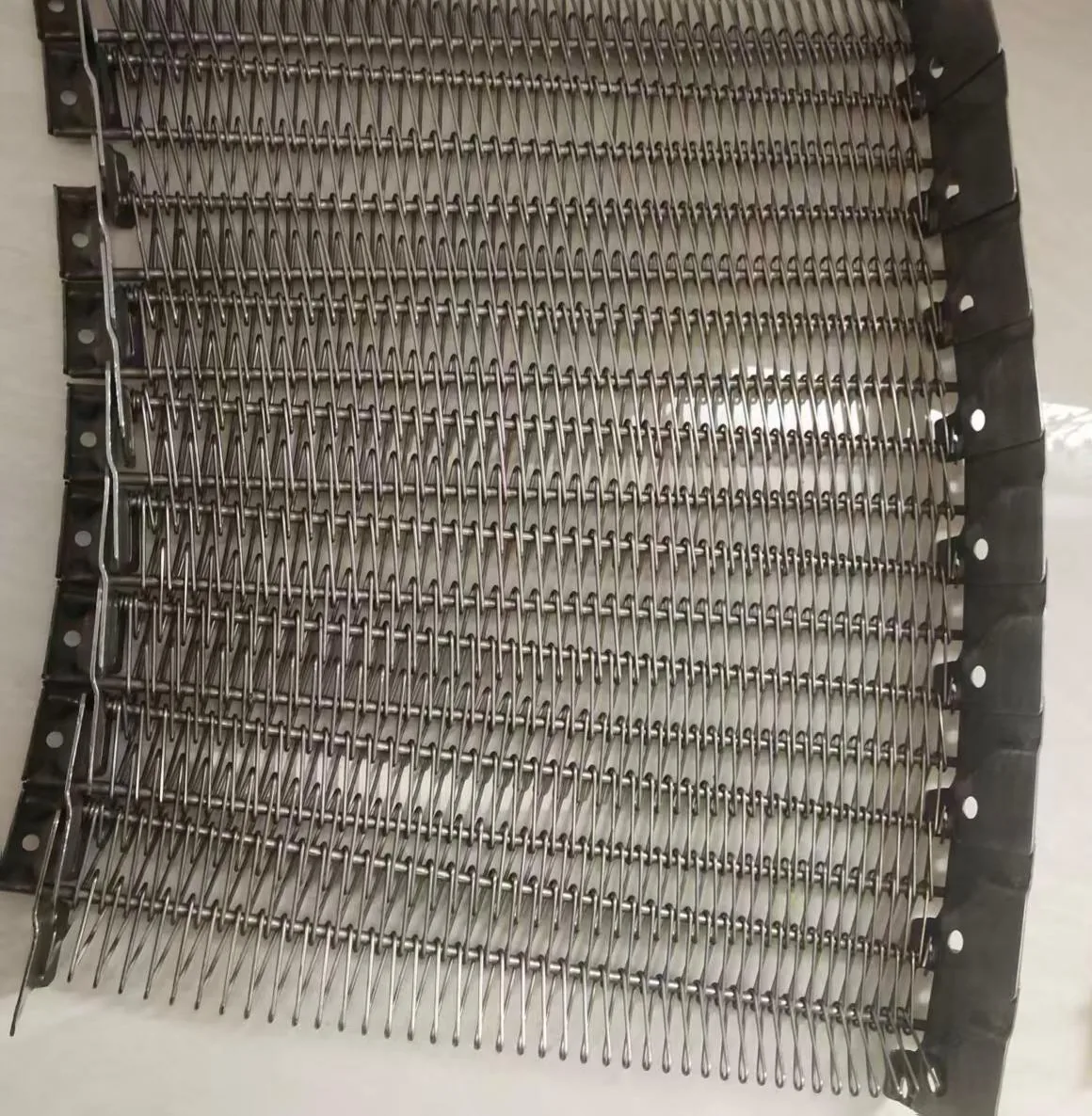
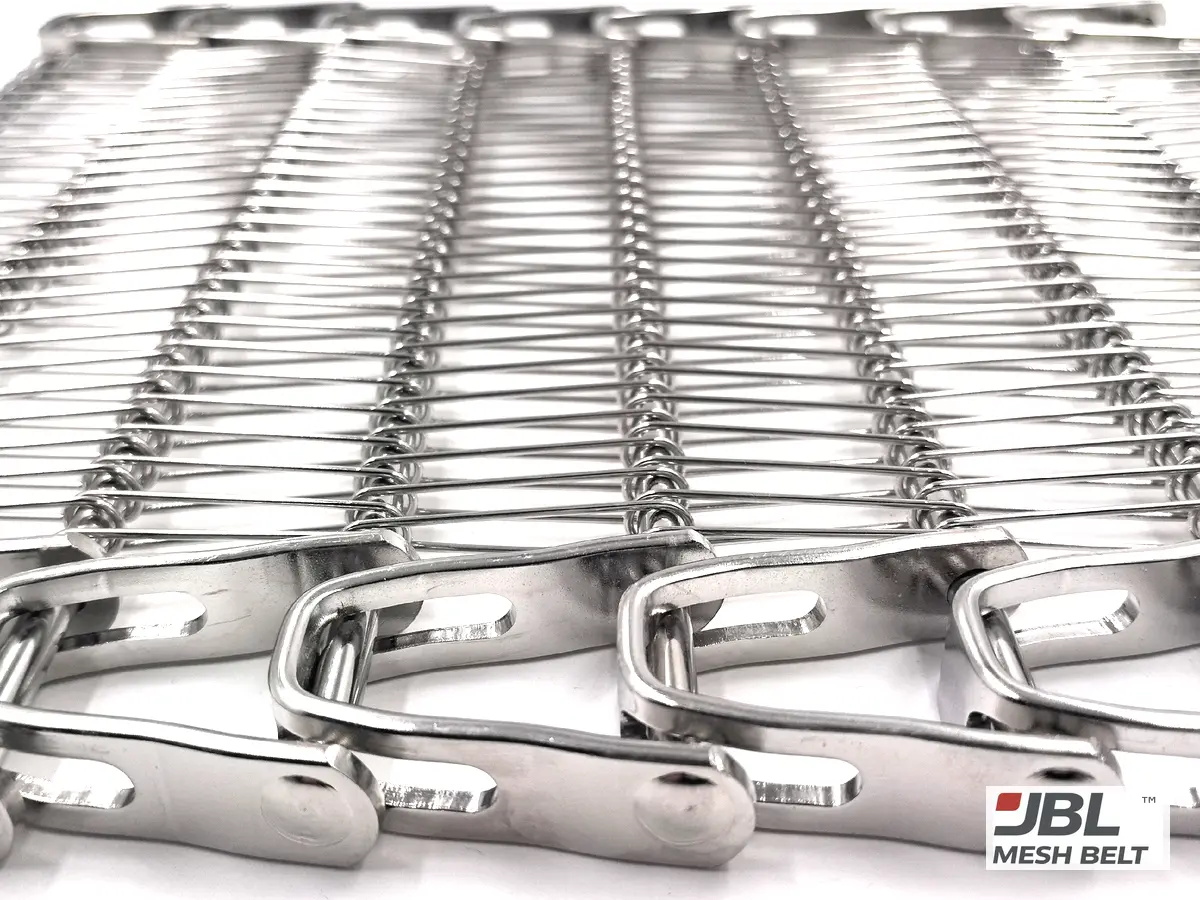
Two systems ride together: the mesh carries the product, the chain carries the mesh.
Short answer
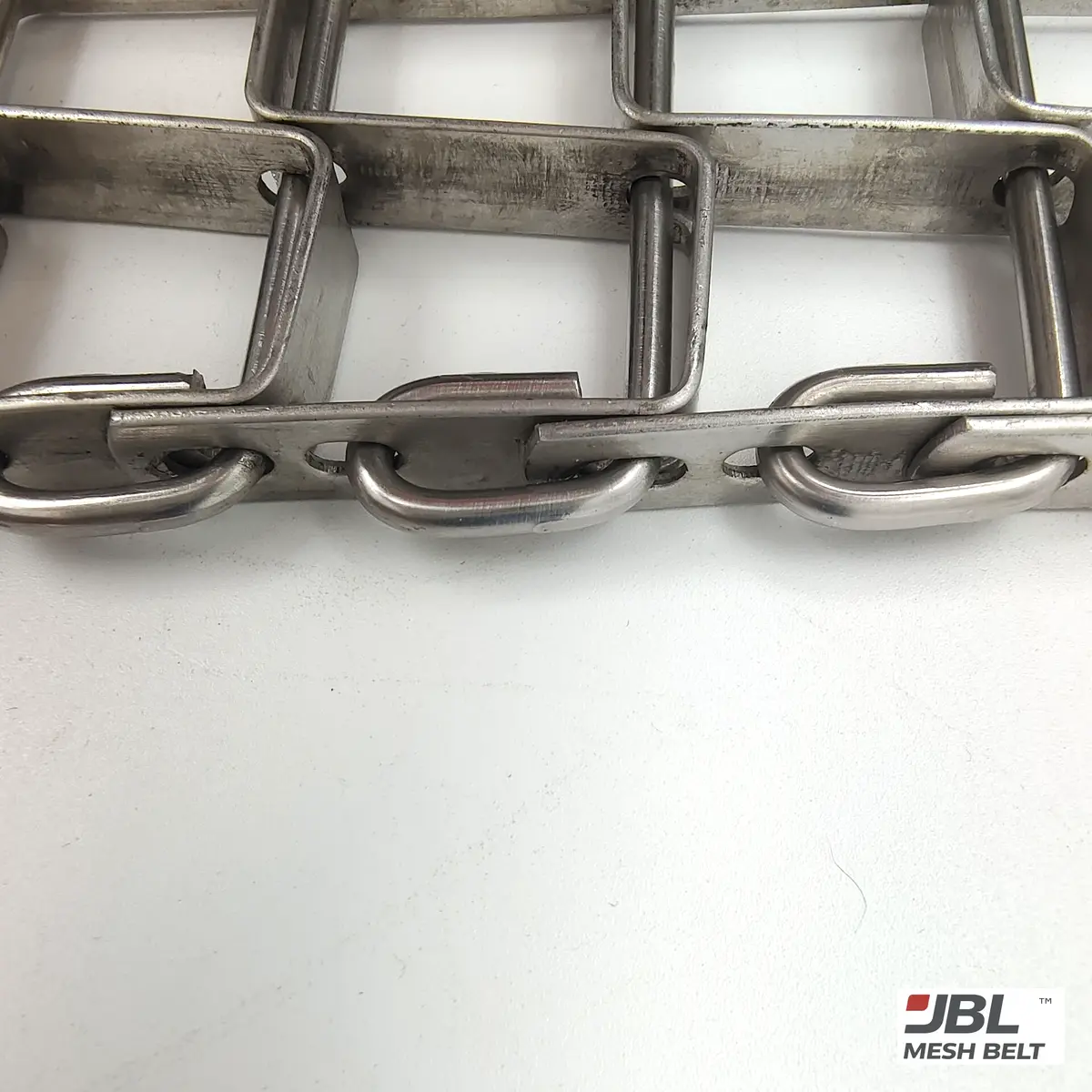
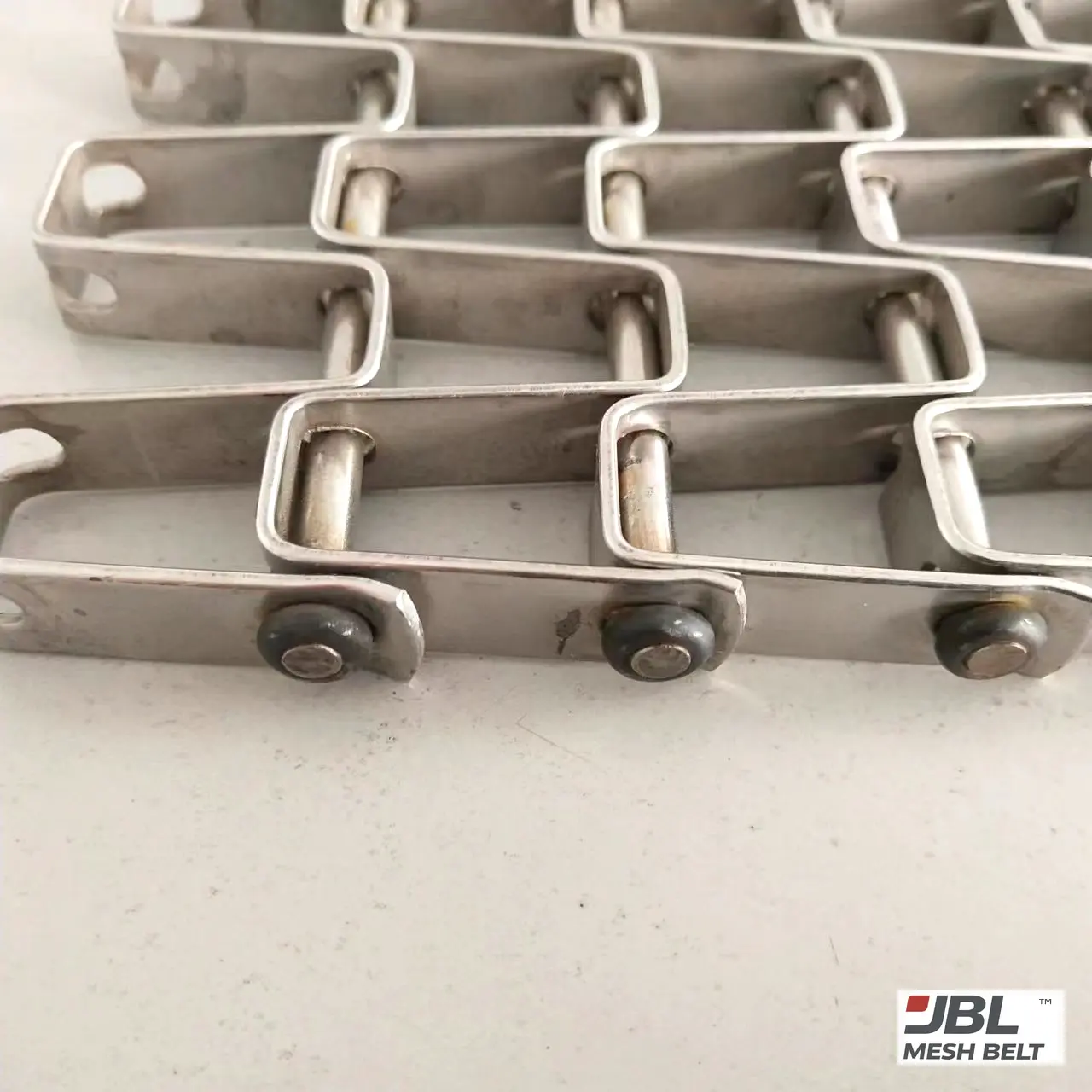
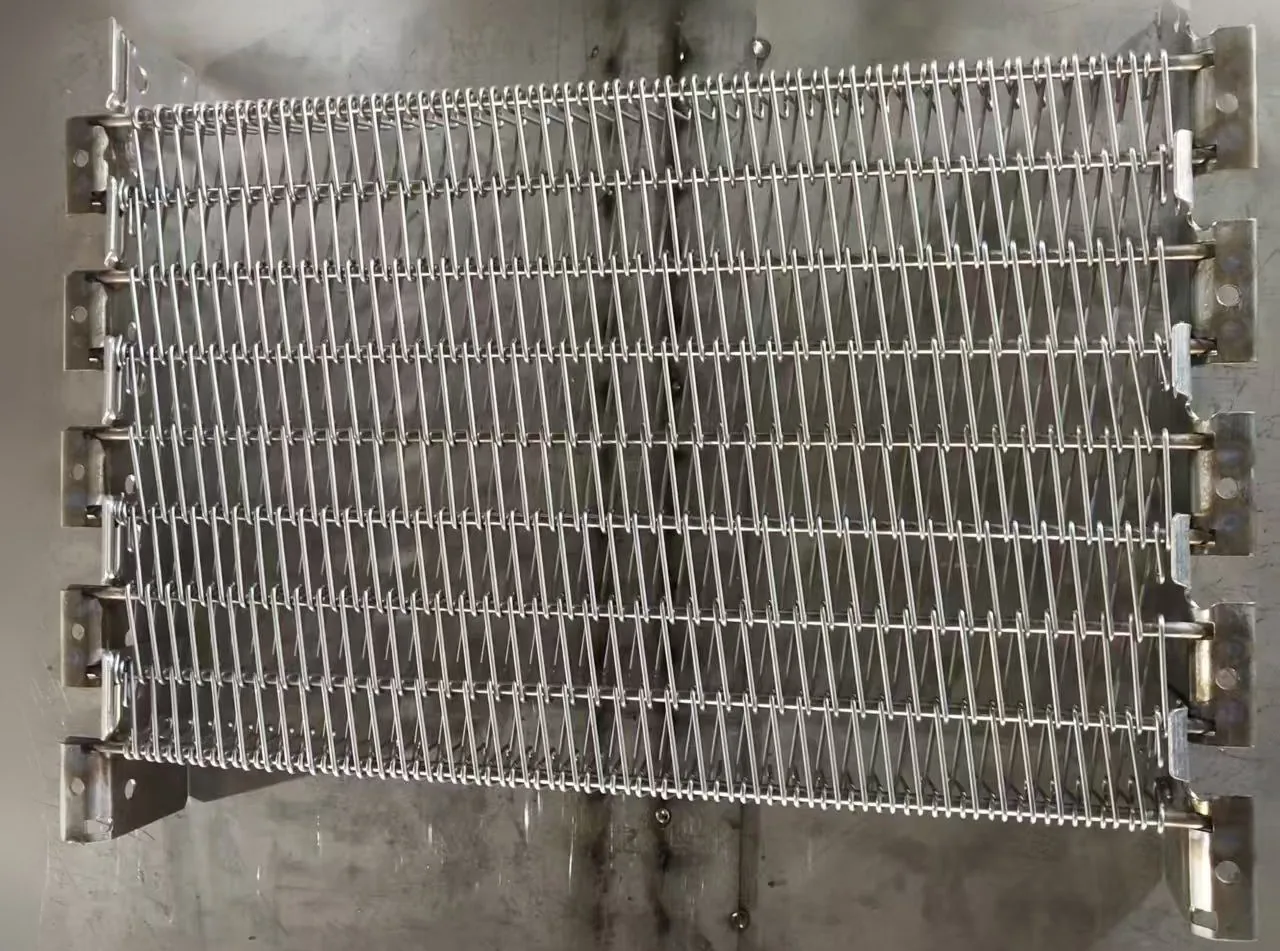
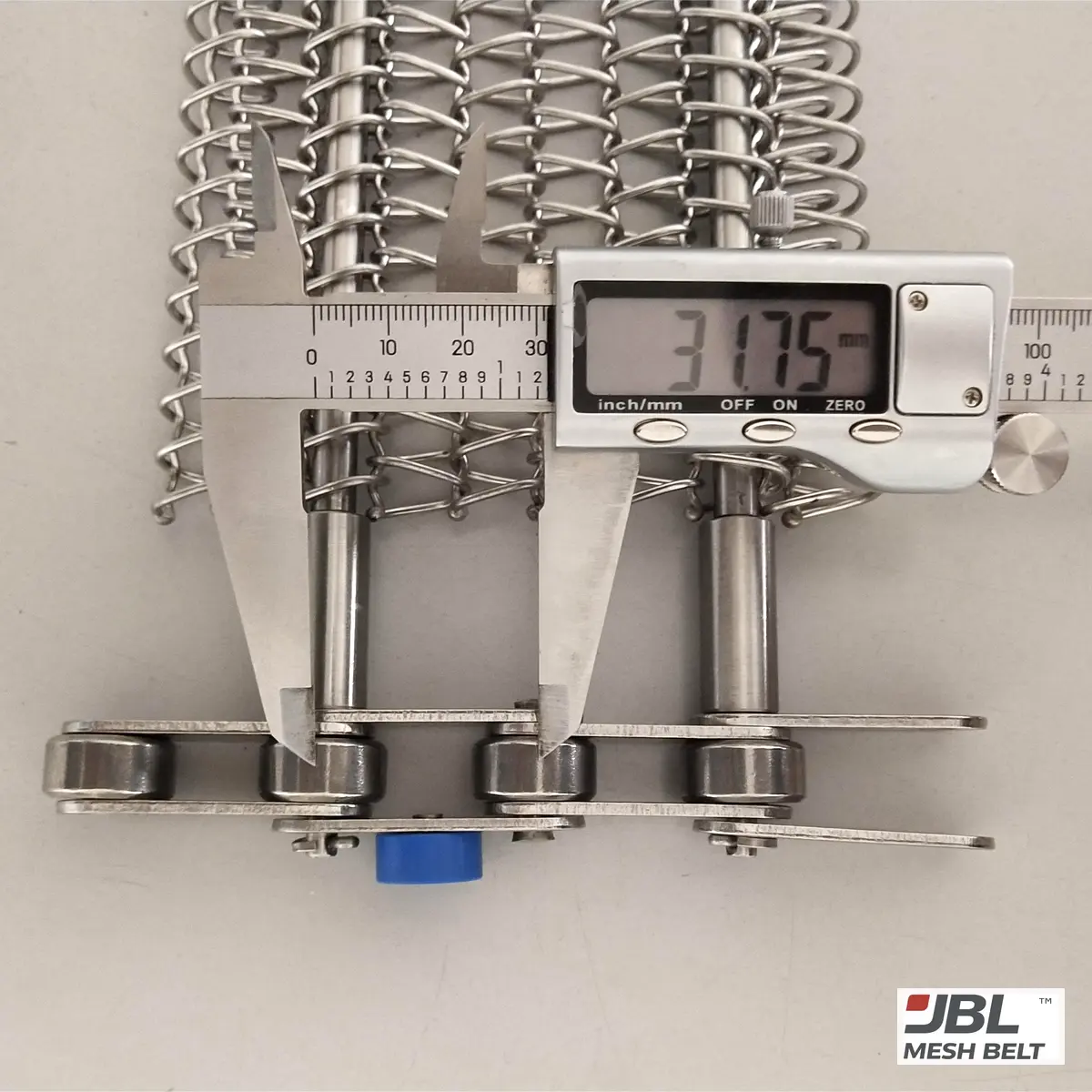
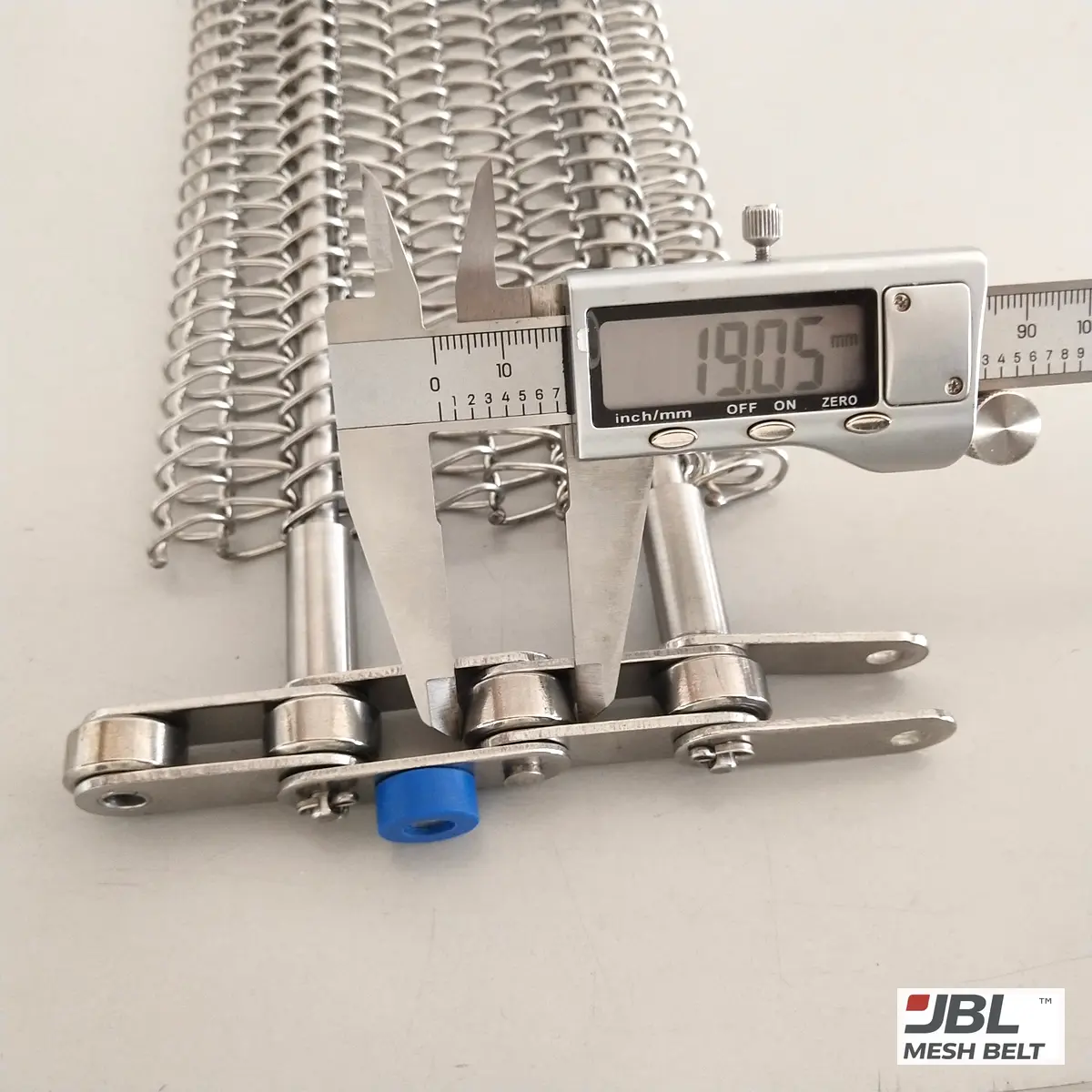
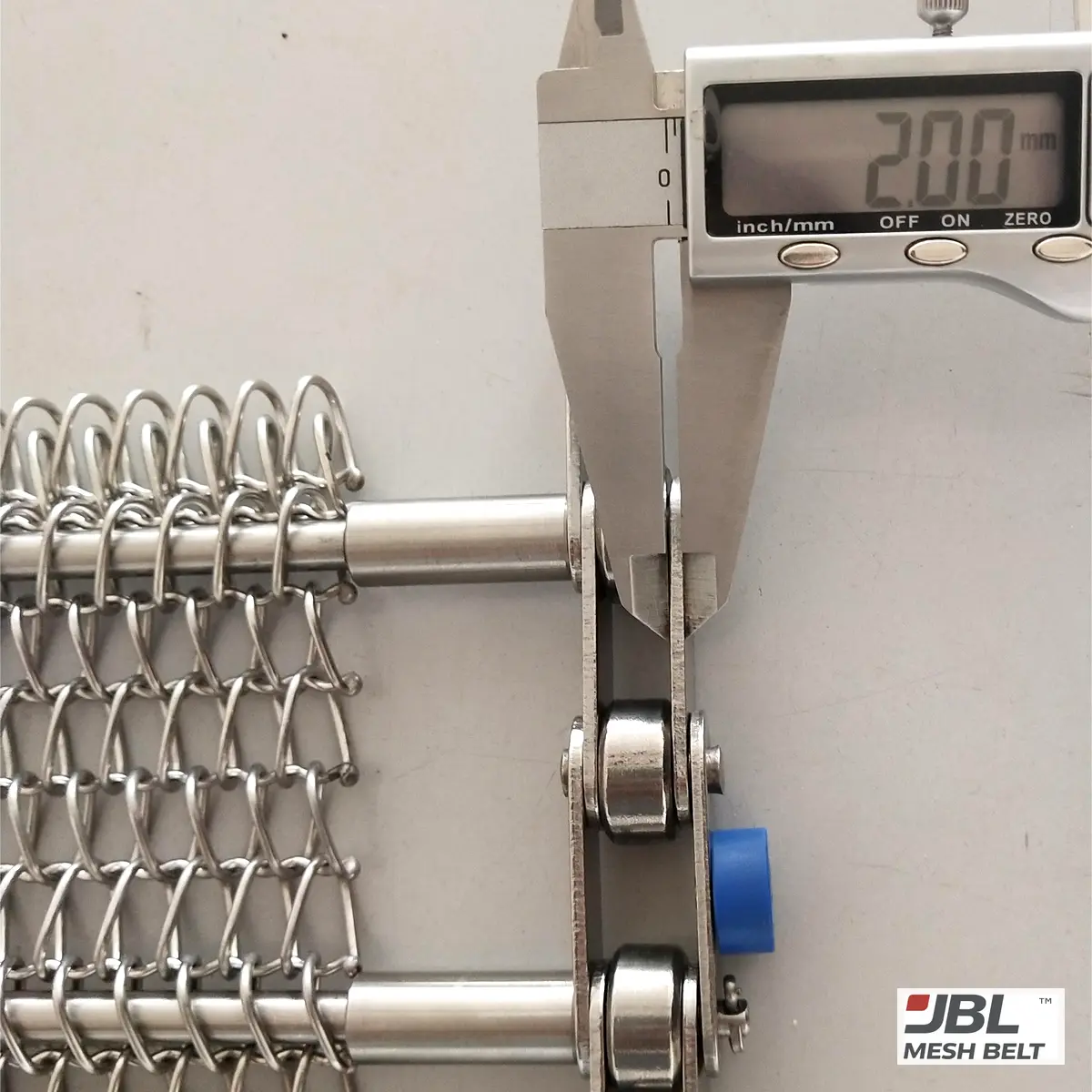
Measure chain pitch, roller diameter, plate thickness, rod diameter and any guide rollers, then the mesh pitch and wire. On the Australian sample: chain pitch 31.75 mm, roller 19.05 mm, plate 2.00 mm, rod 7.00 mm, guide roller 16.00 mm.
| Reading on the sample | Value |
|---|---|
| Chain pitch | 31.75 mm |
| Chain roller | 19.05 mm |
| Chain plate | 2.00 mm |
| Rod | 7.00 mm |
| Guide roller | 16.00 mm |
| Mesh pitch | 8.50 mm |
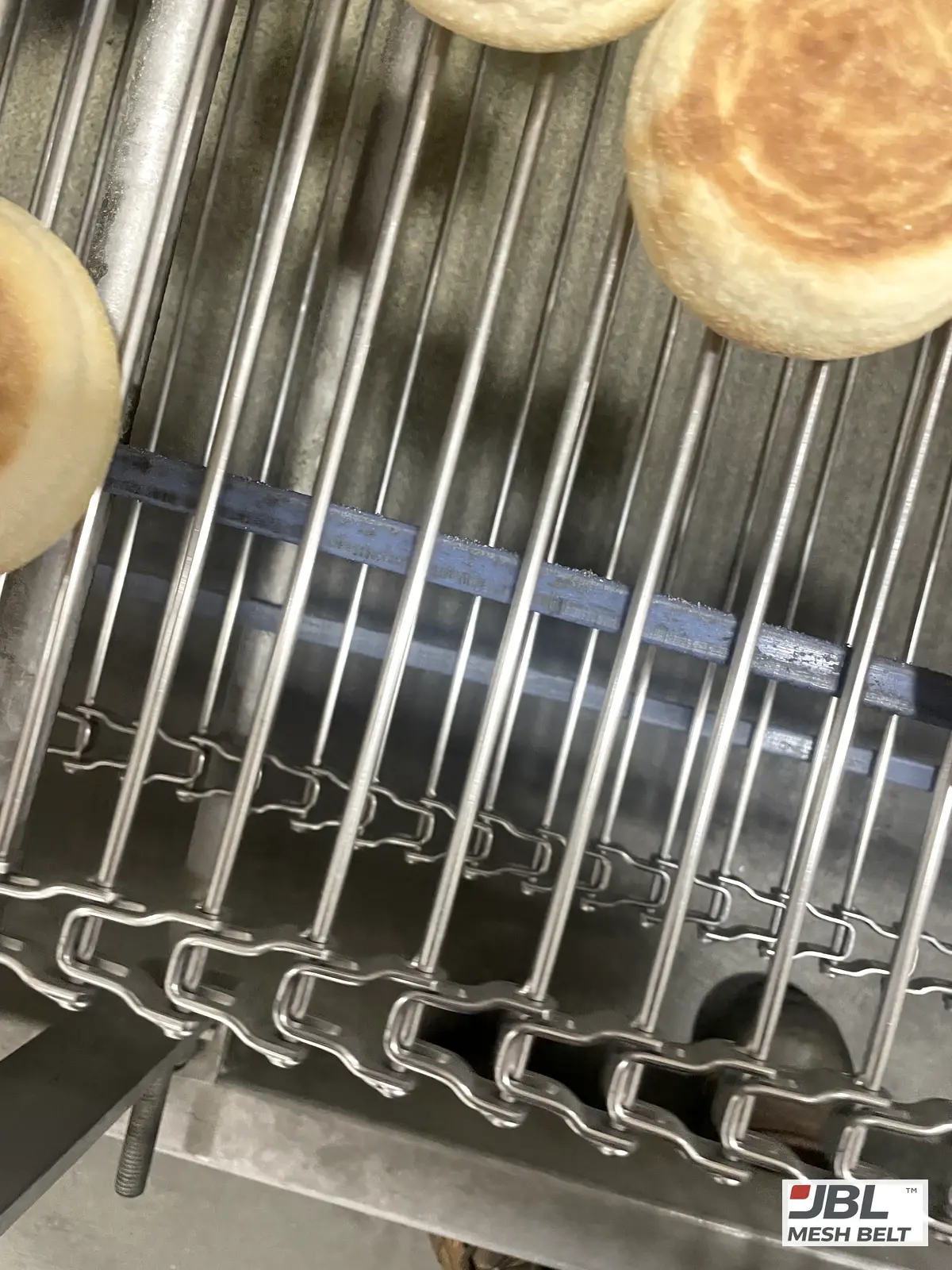
Australia, 2023 — steam oven tunnel.
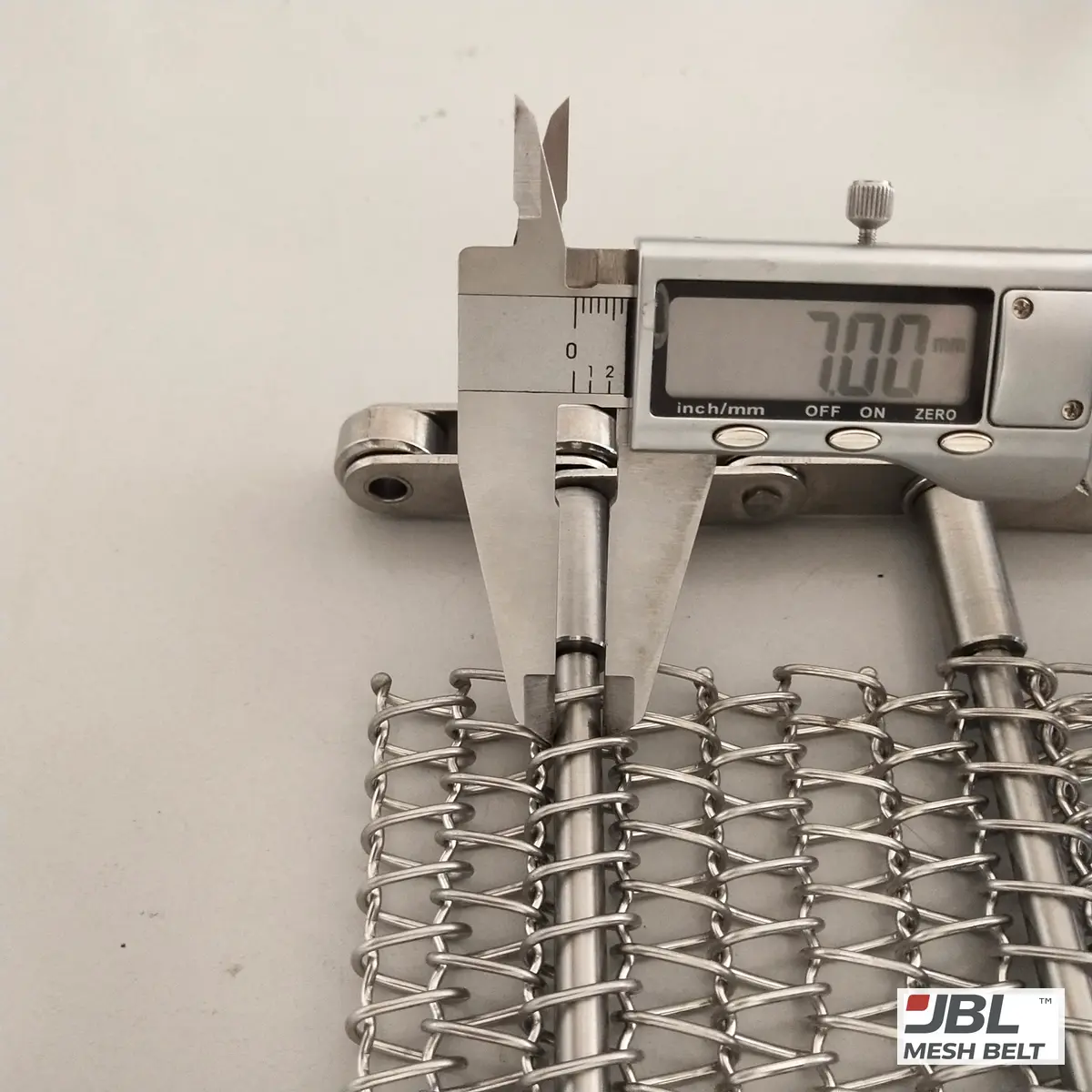
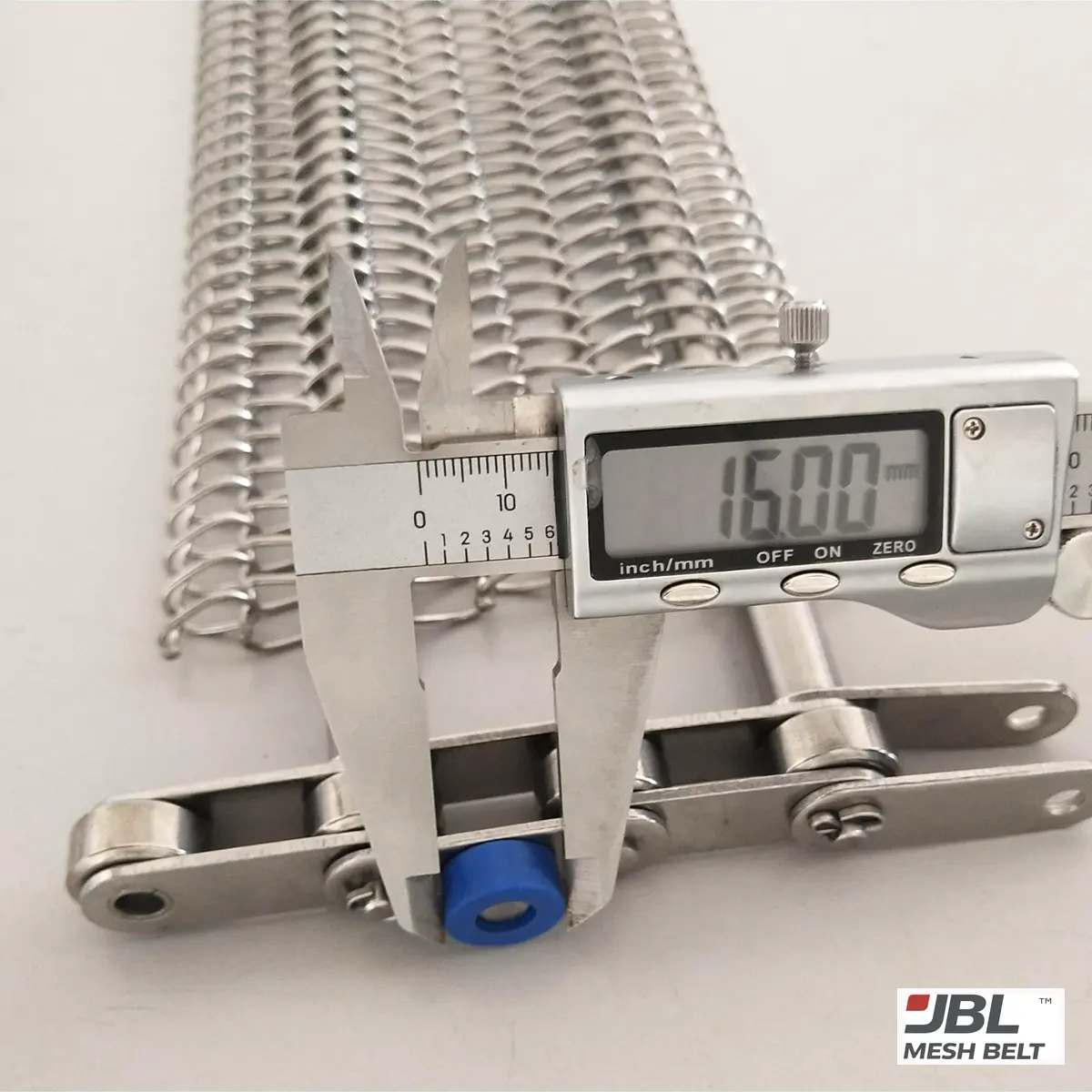
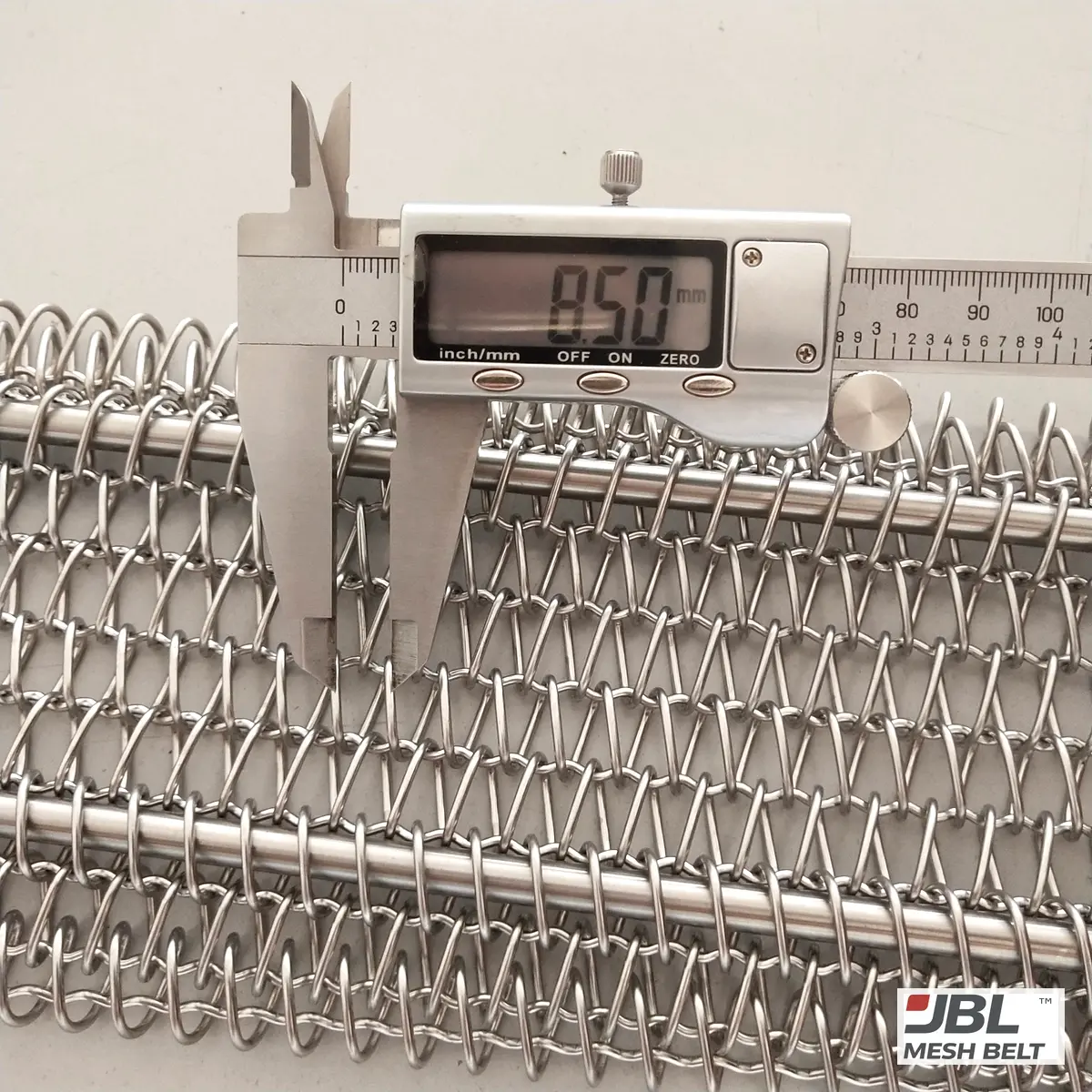
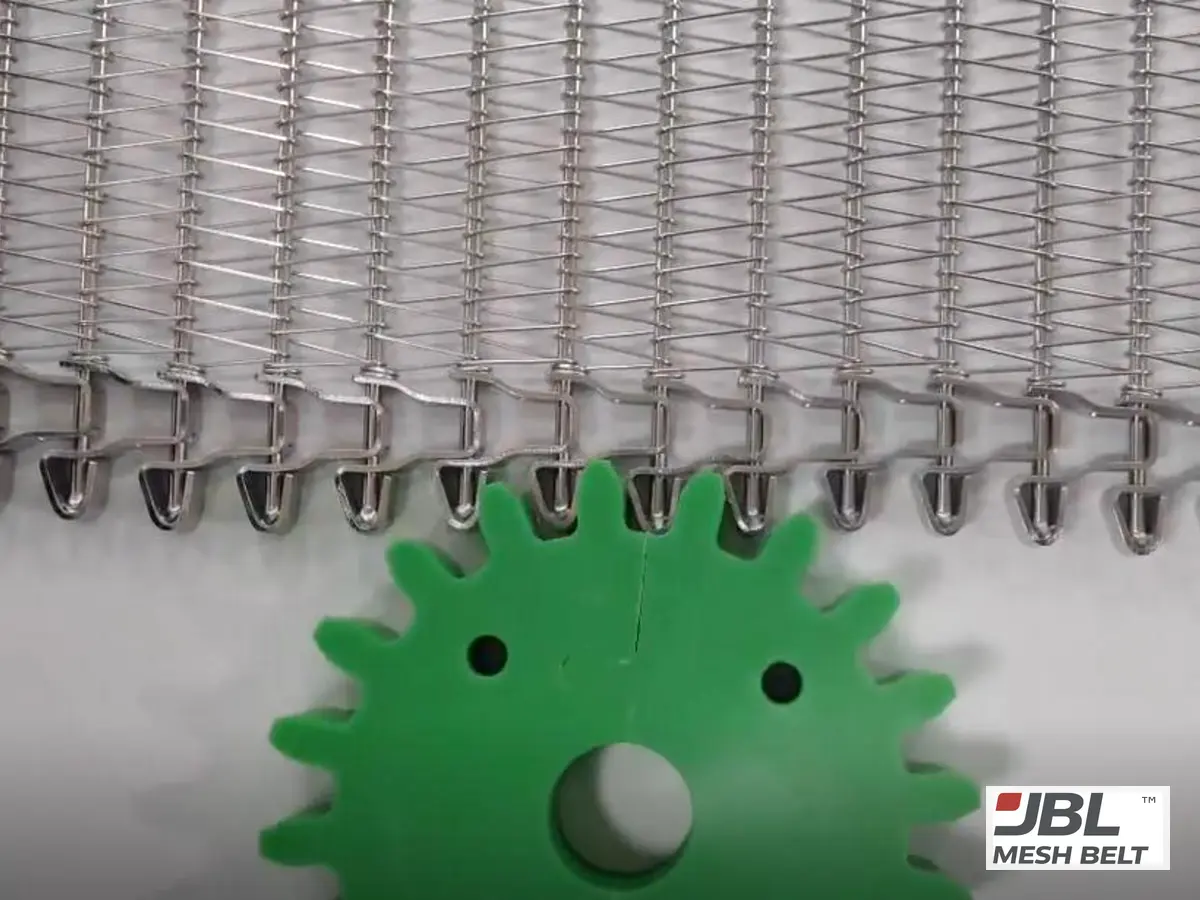
31.75 mm is 1¼ inch and 19.05 mm is ¾ inch. When chain readings land on inch values, I keep them exactly — rounding would put the chain out of step with the sprockets.
02Why make a trial chain before the belt?
A standard chain can be bought. A custom chain with guide rollers has to be made — and proven.
Short answer
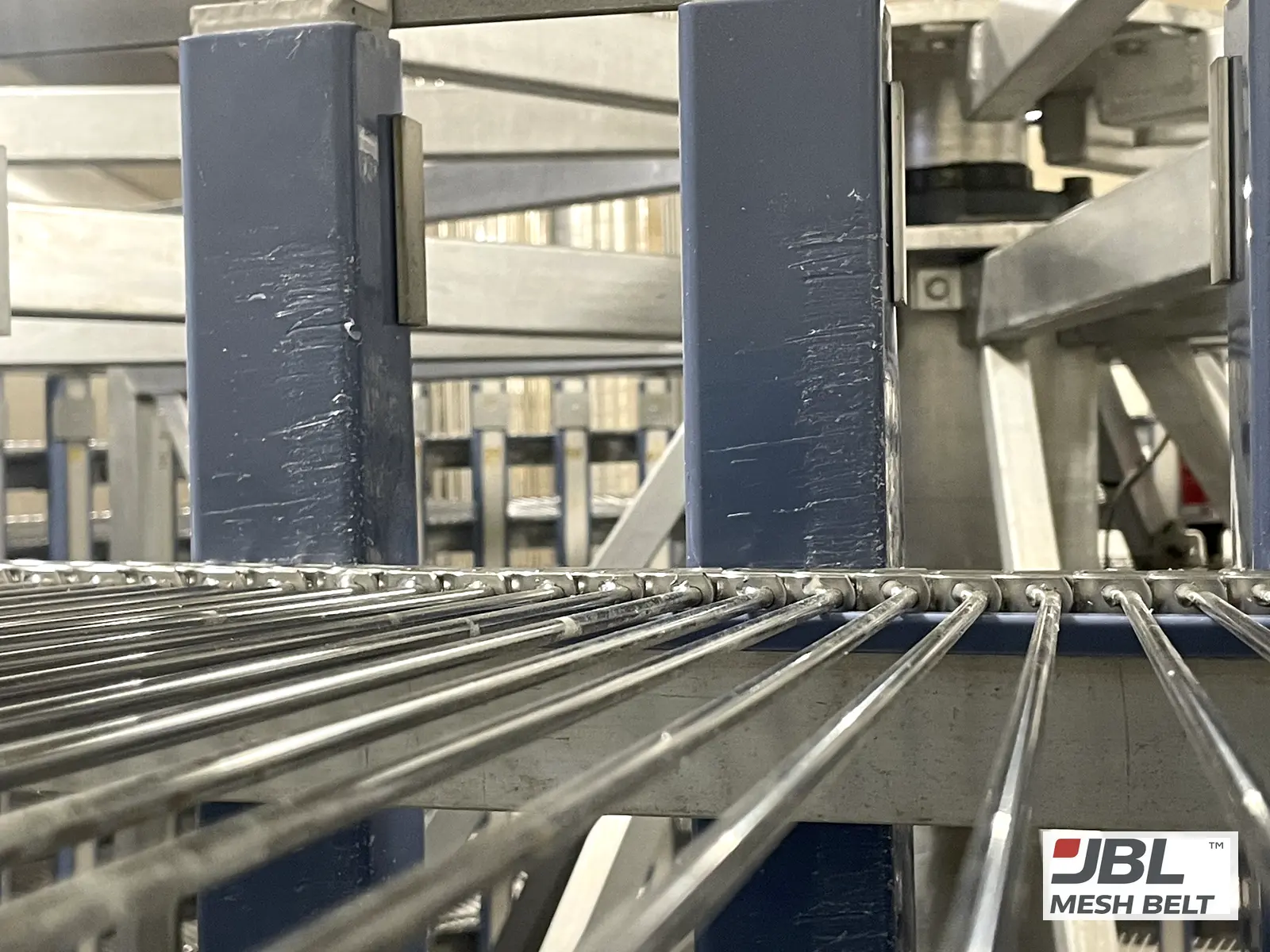
A custom chain is the part most likely to go wrong. A short trial chain, with the same plates, rollers and guide rollers, is checked against the sample before any belt is built. In Australia the trial guide roller read 16.00 mm, the same as the sample.
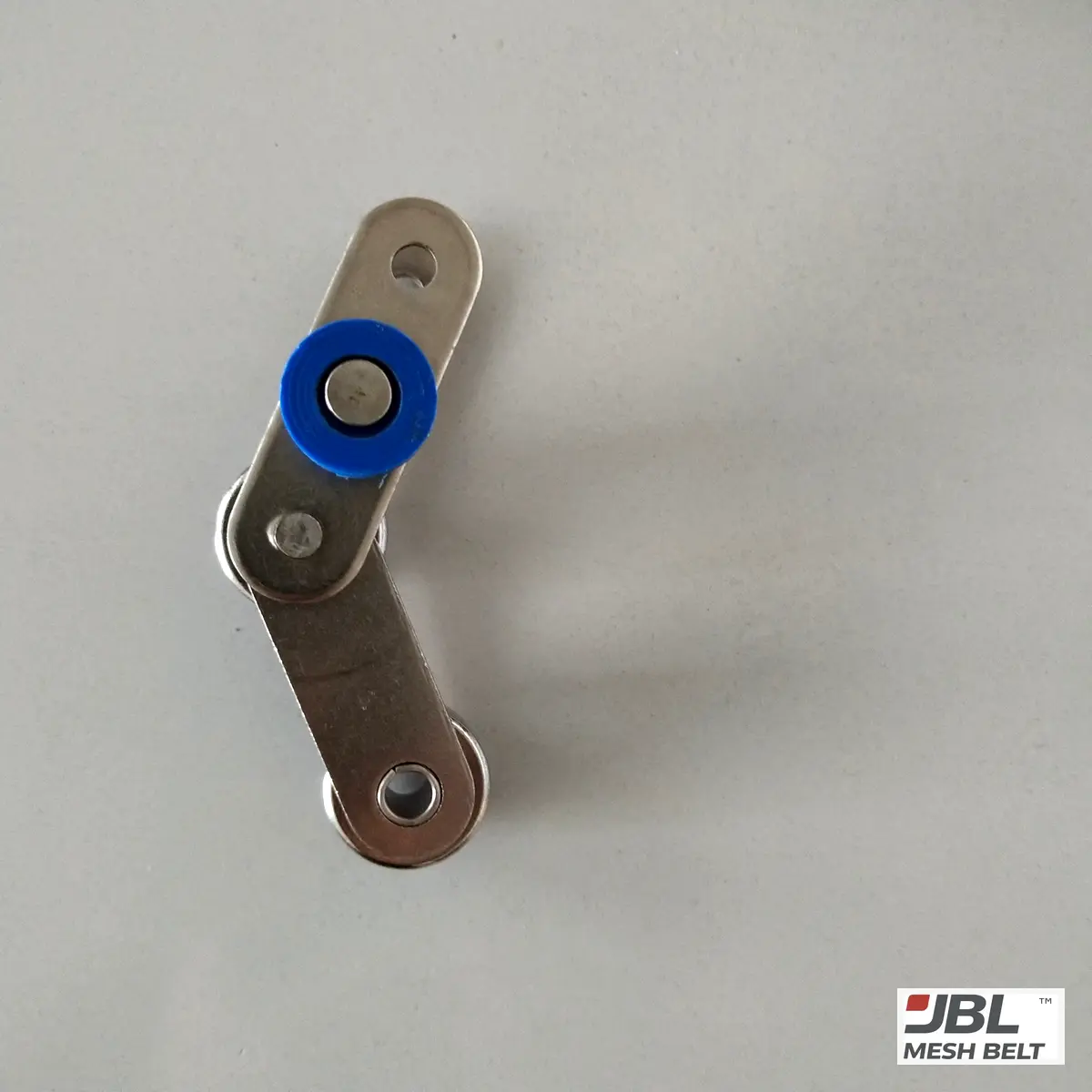
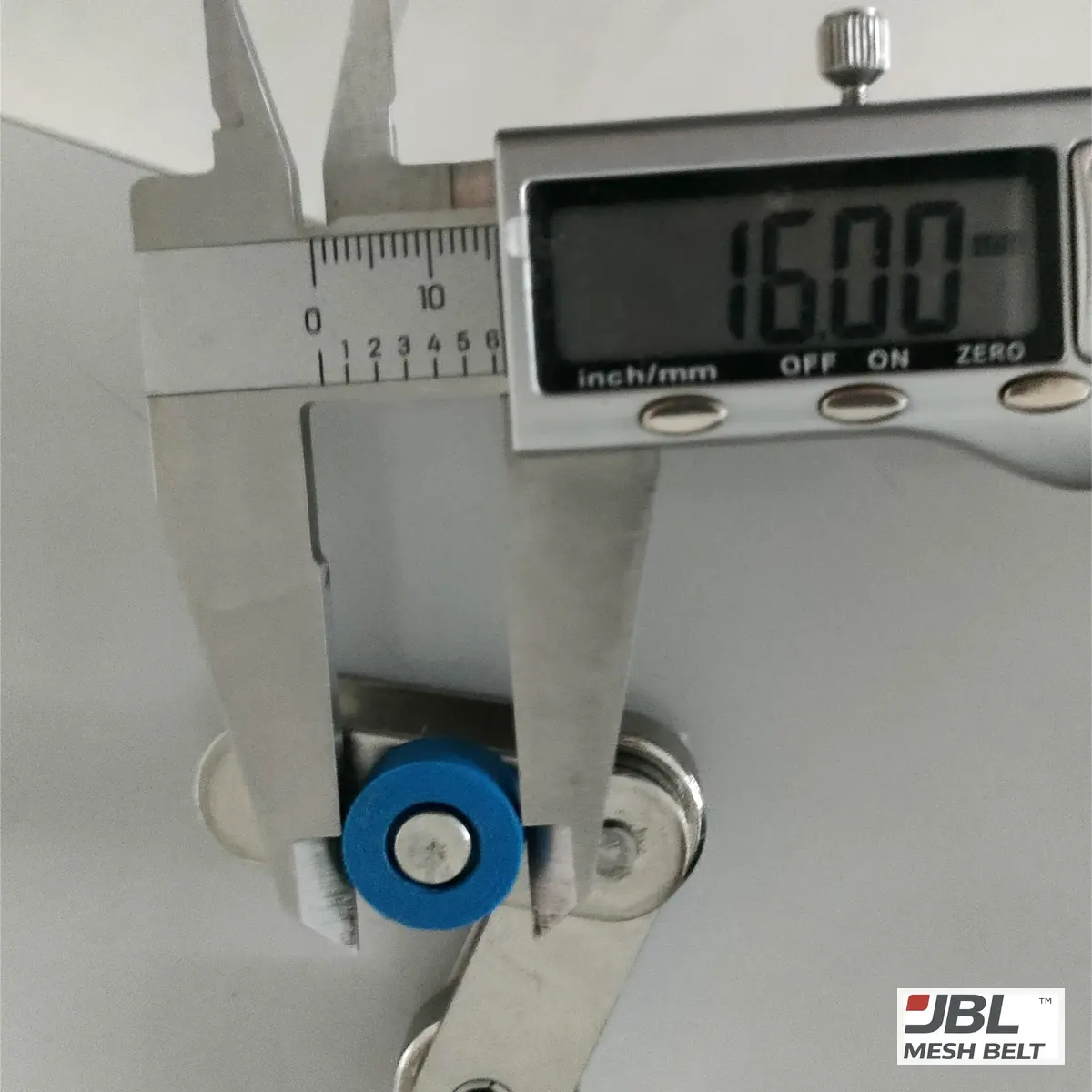
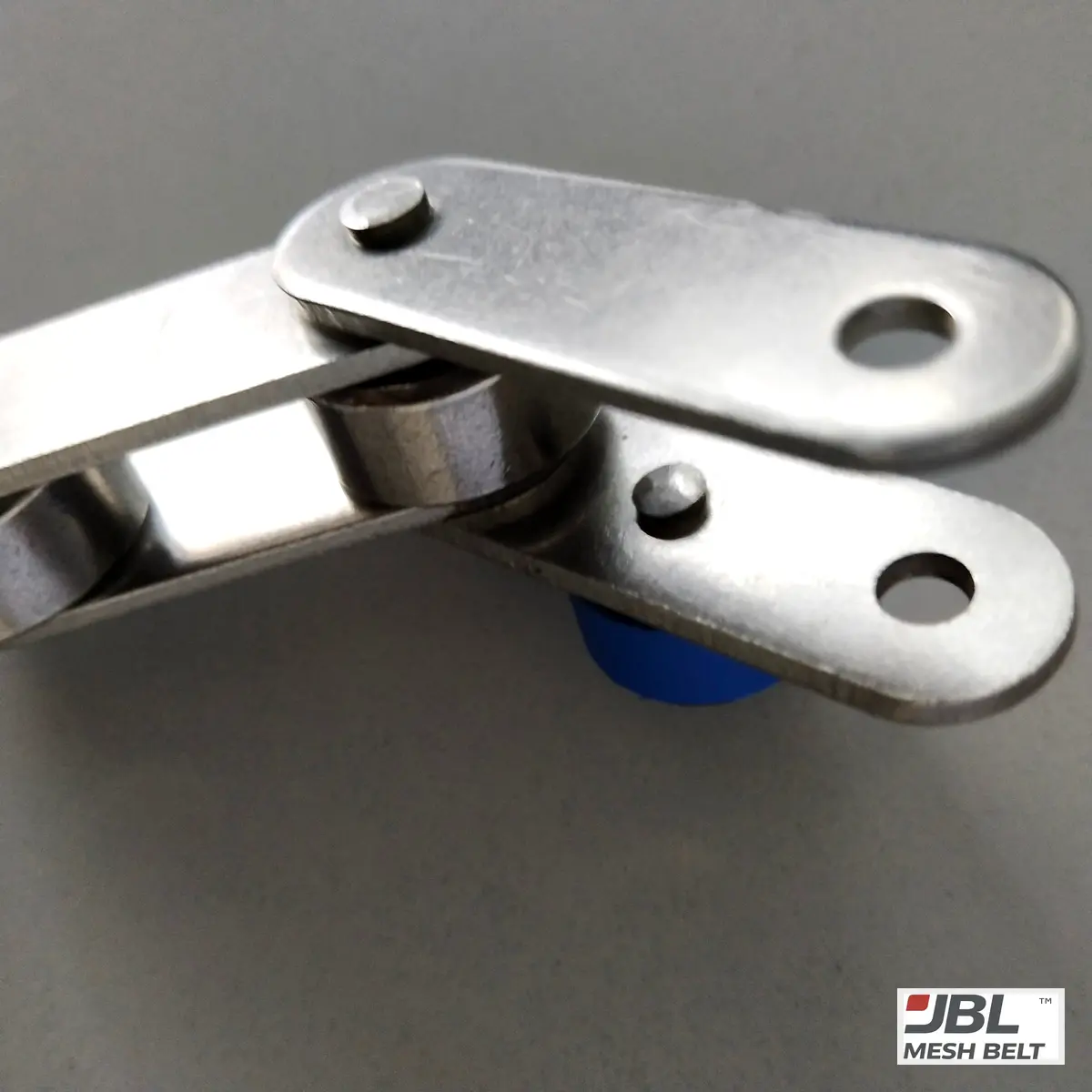
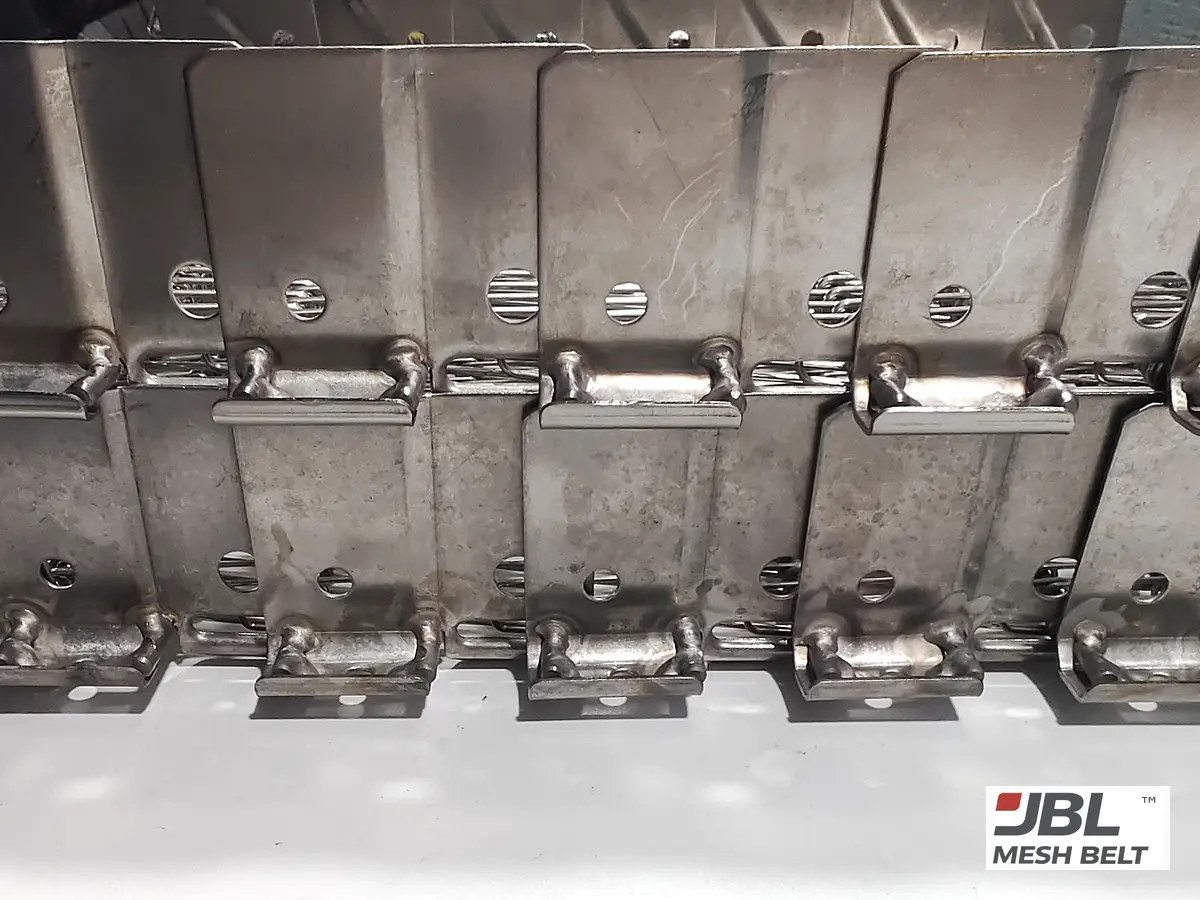
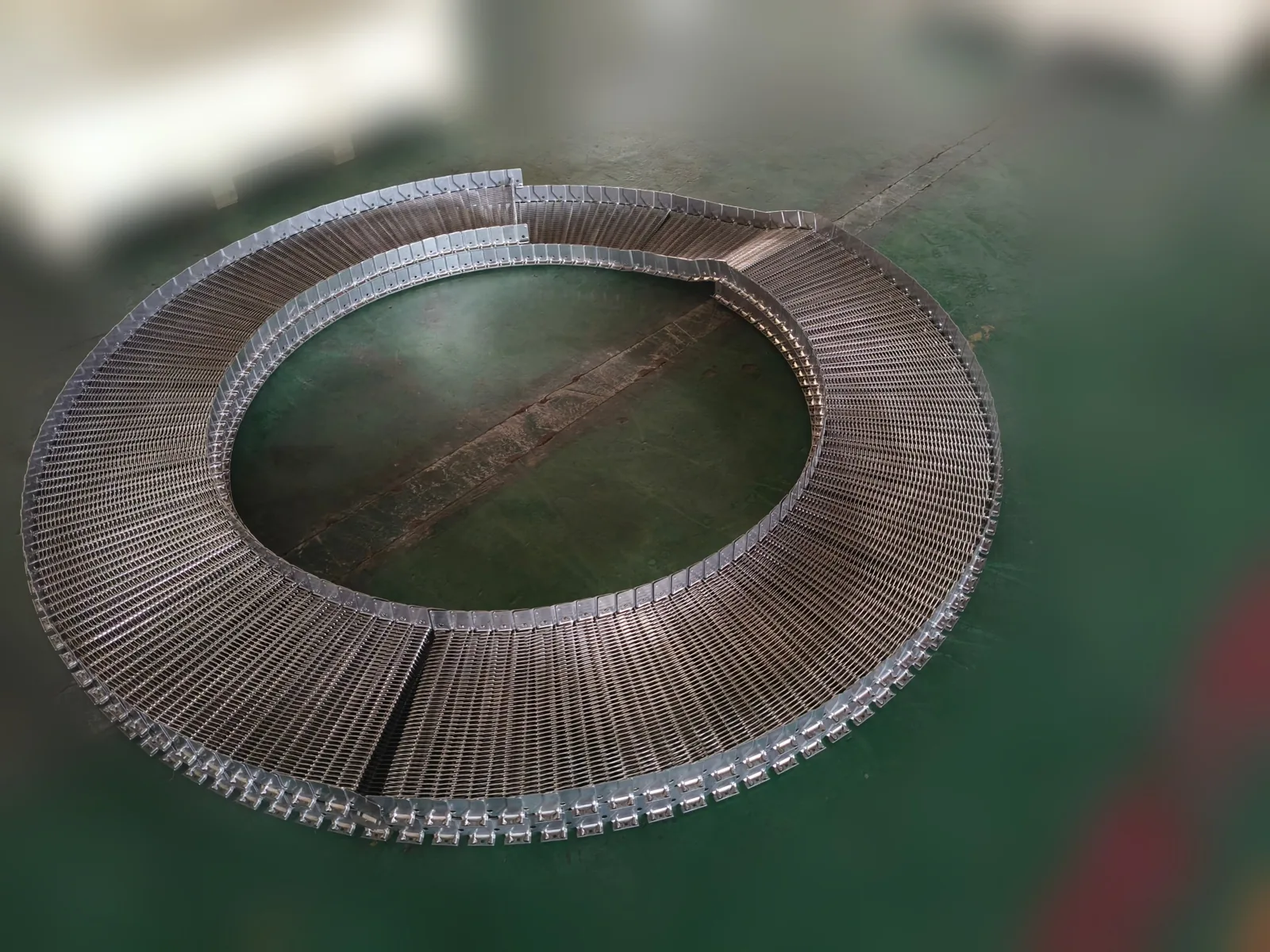
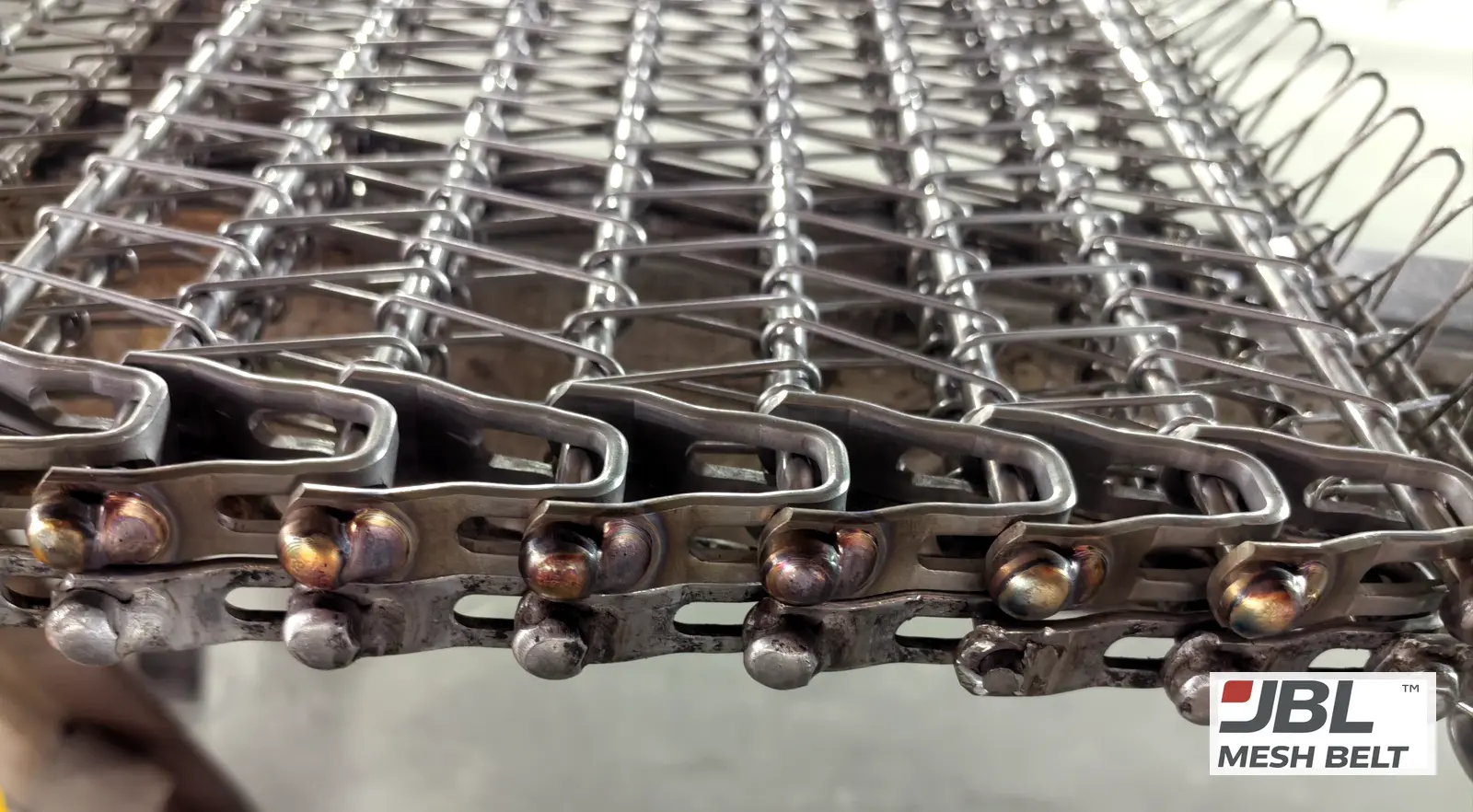
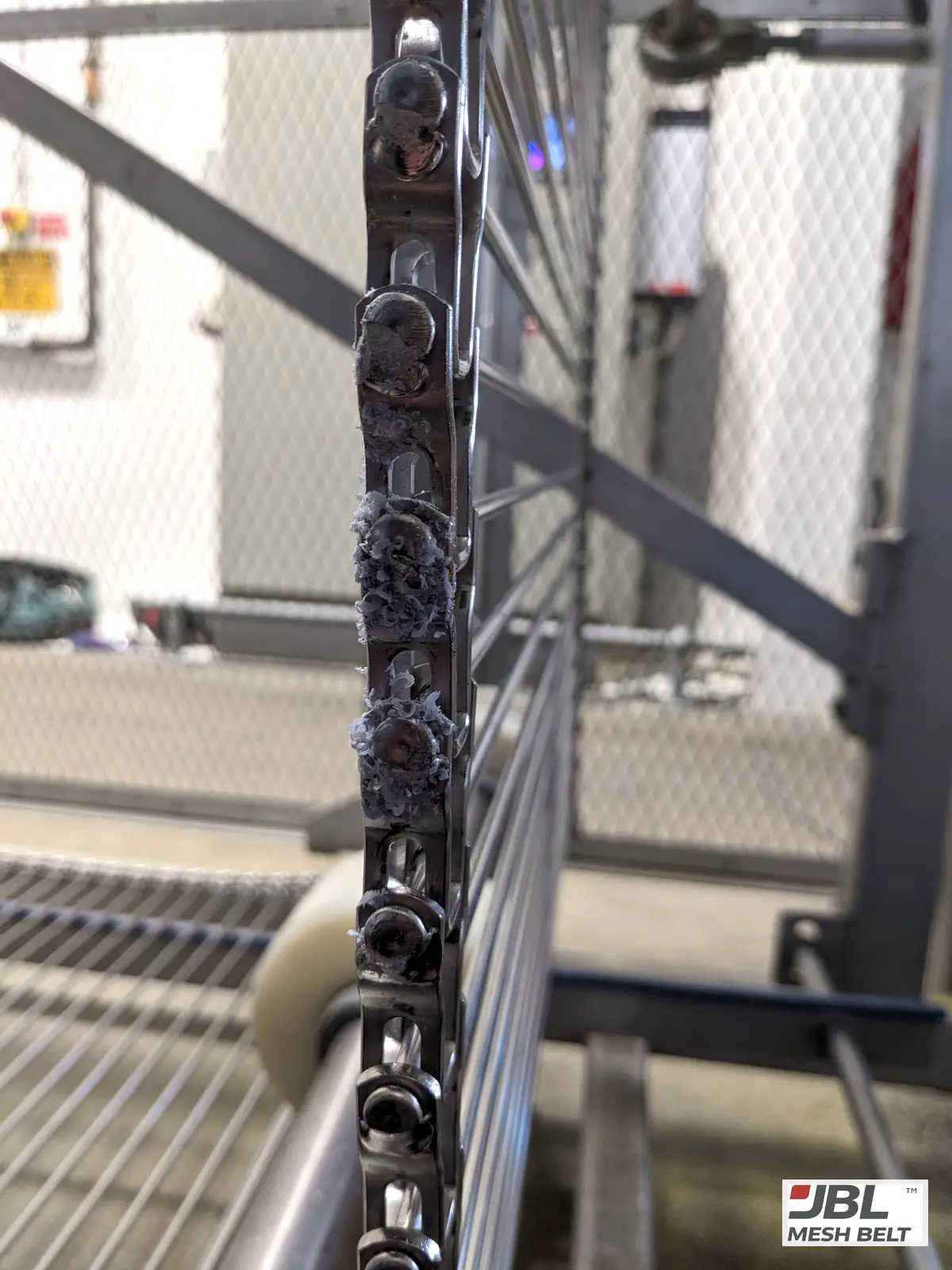
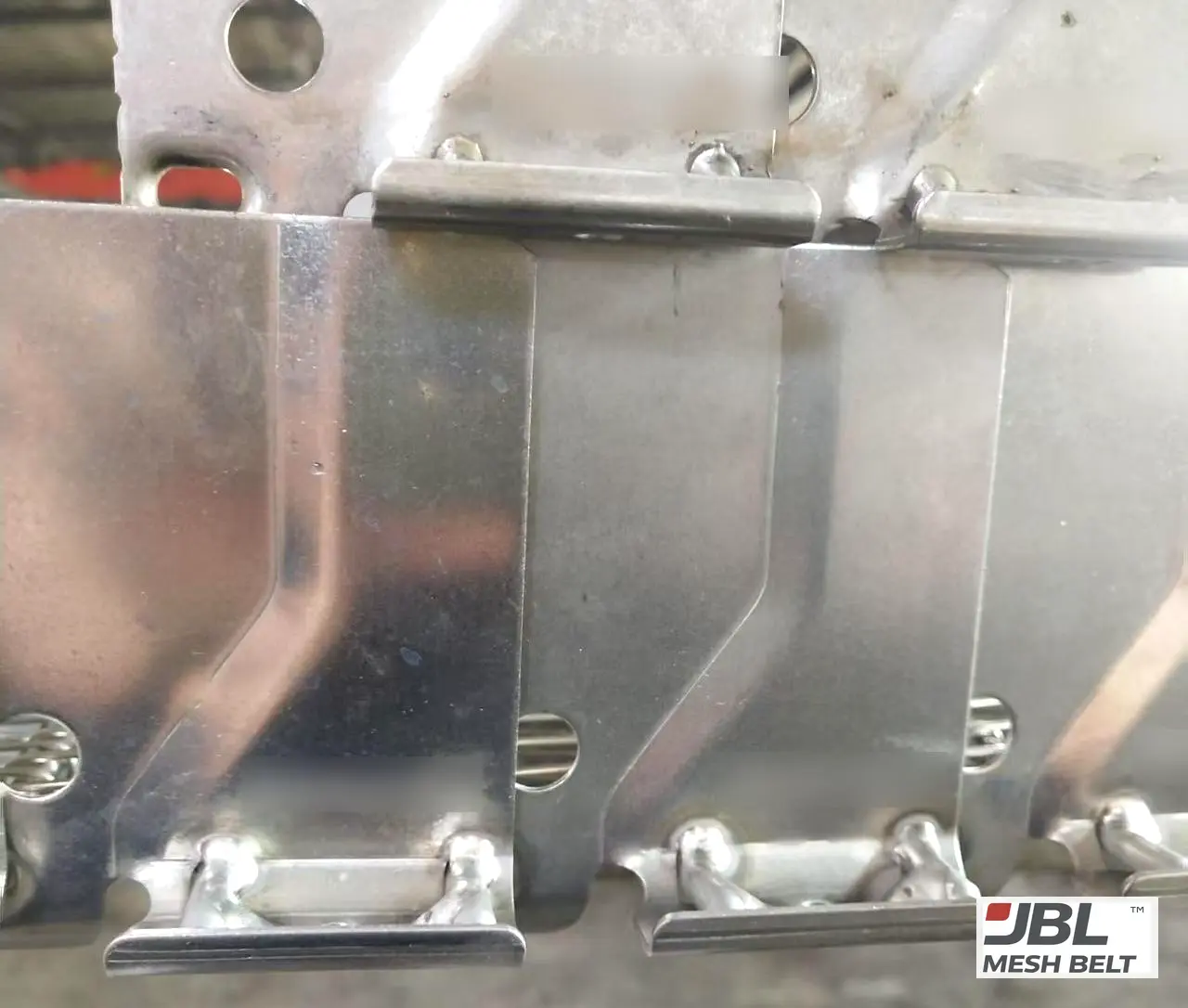
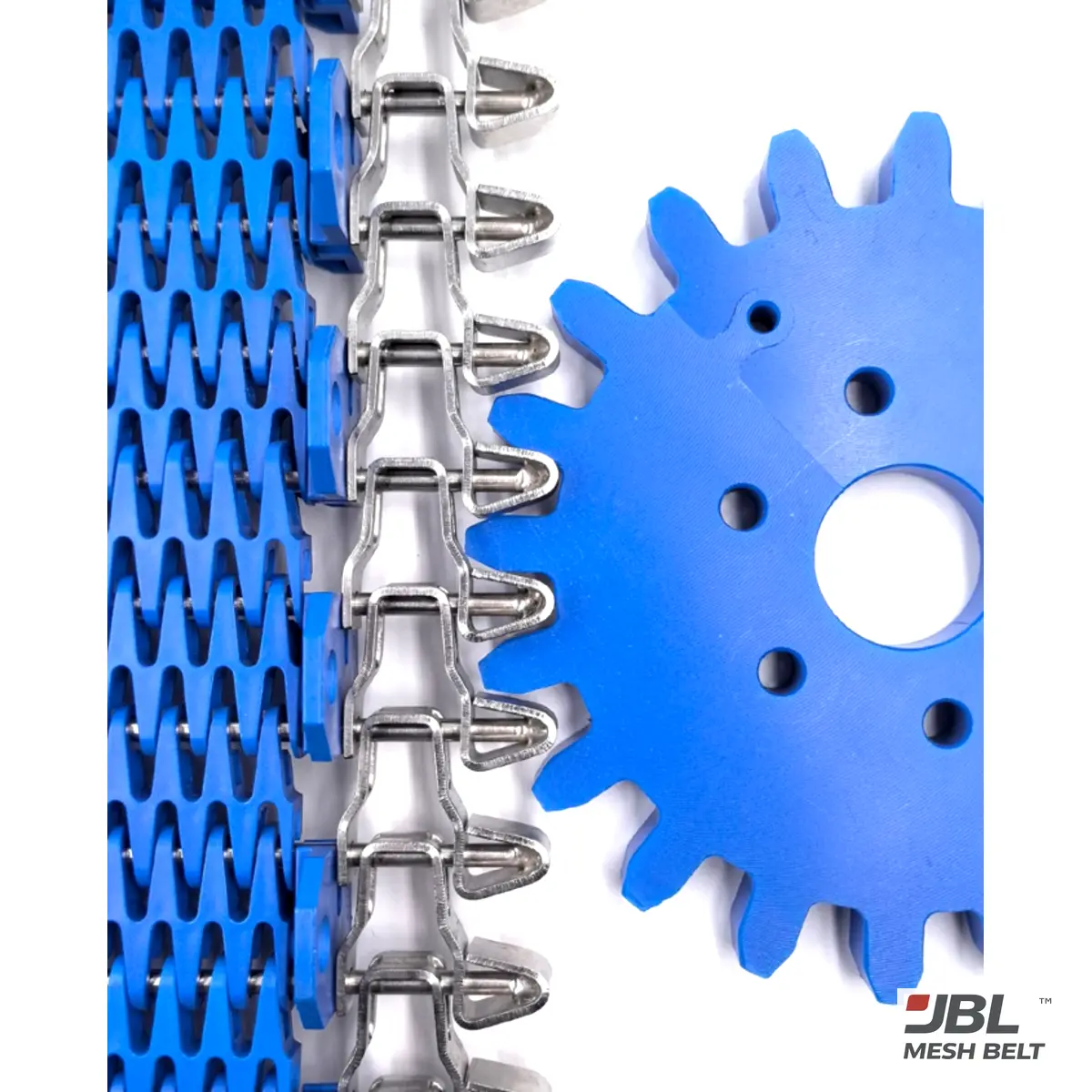
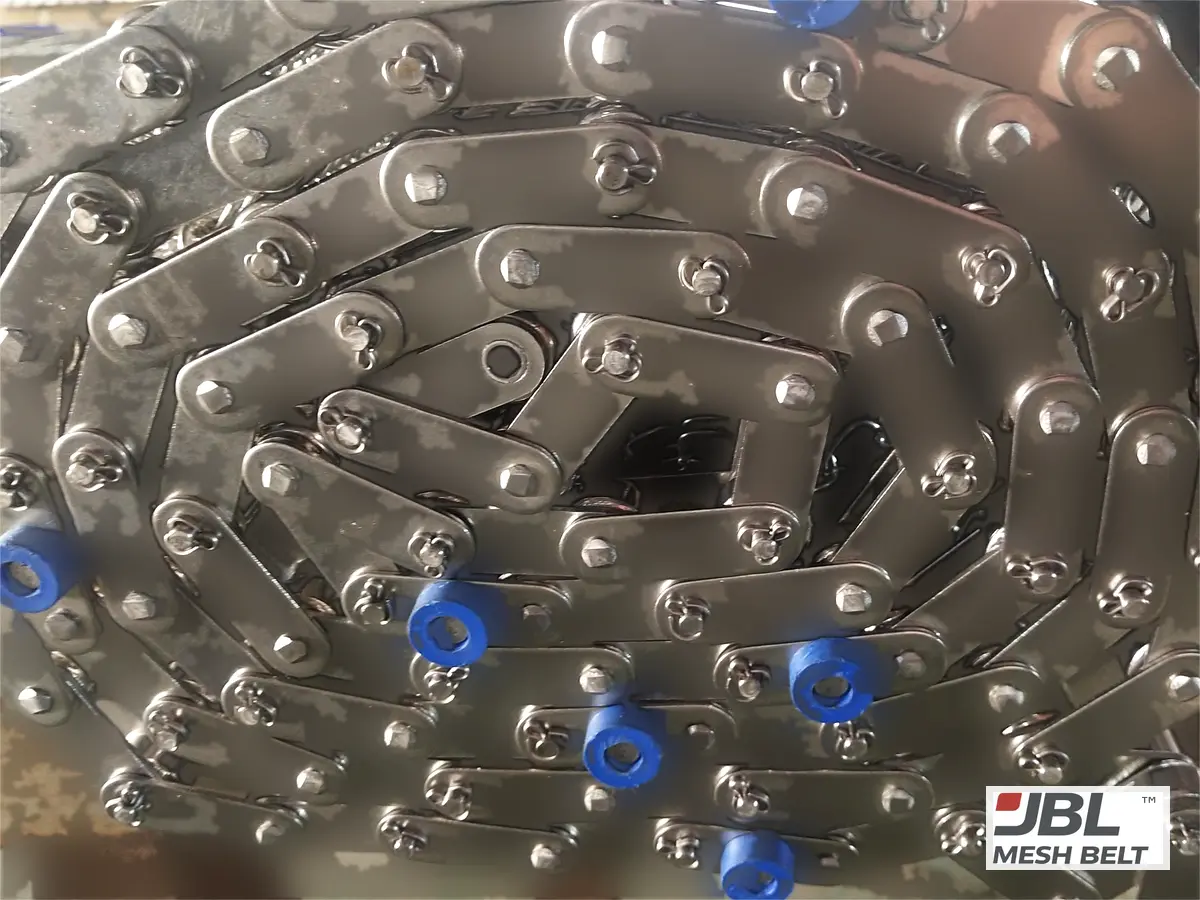
The sample chain had extended plates and blue guide rollers. That is not a catalogue part. So we made a short length of chain first and compared it with the sample: plates, rollers, pins and the guide roller.
| Chain part | Sample | Trial / bulk |
|---|---|---|
| Chain pitch | 31.75 mm | 31.75 mm |
| Roller | 19.05 mm | 19.05 mm (spec) |
| Plate | 2.00 mm | 2.00 mm (bulk) |
| Guide roller | 16.00 mm | 16.00 mm (trial) |
| Edge | Cotter pins | Cotter pins |
Only once the chain matched did the mesh and rods go into production. For more on proving a part before the full order, read should you trial a short length first.
03Which steel should a steam oven belt use?
Steam, heat and acid or alkaline cleaning all attack the belt at once.
Short answer
For this steam oven tunnel, the customer chose 316 stainless steel for the mesh, rods and chain — not only the mesh. Grade 316 generally resists corrosion better than 304 in wet, chemical conditions. The final grade is confirmed for your cleaning agents.
| Project | Line | Material |
|---|---|---|
| Australia, 2023 | Steam oven tunnel (chain-driven) | 316 throughout |
| Australia, 2022 | Can washing line (flat wire) | SUS316L |
| Libya, 2025 | Potato chip frying line (Z-type) | SUS304 |
A common mistake is to upgrade the mesh and leave the chain in a lower grade. The chain then corrodes first, and the whole belt stops. On this project every part was 316.
For a washing line in 316L, read which belt to use on a can washing line. For how we check grades, see our material verification guide.
04What should be checked on the finished belt?
The same readings, on the bulk belt, before the crate is closed.
Short answer
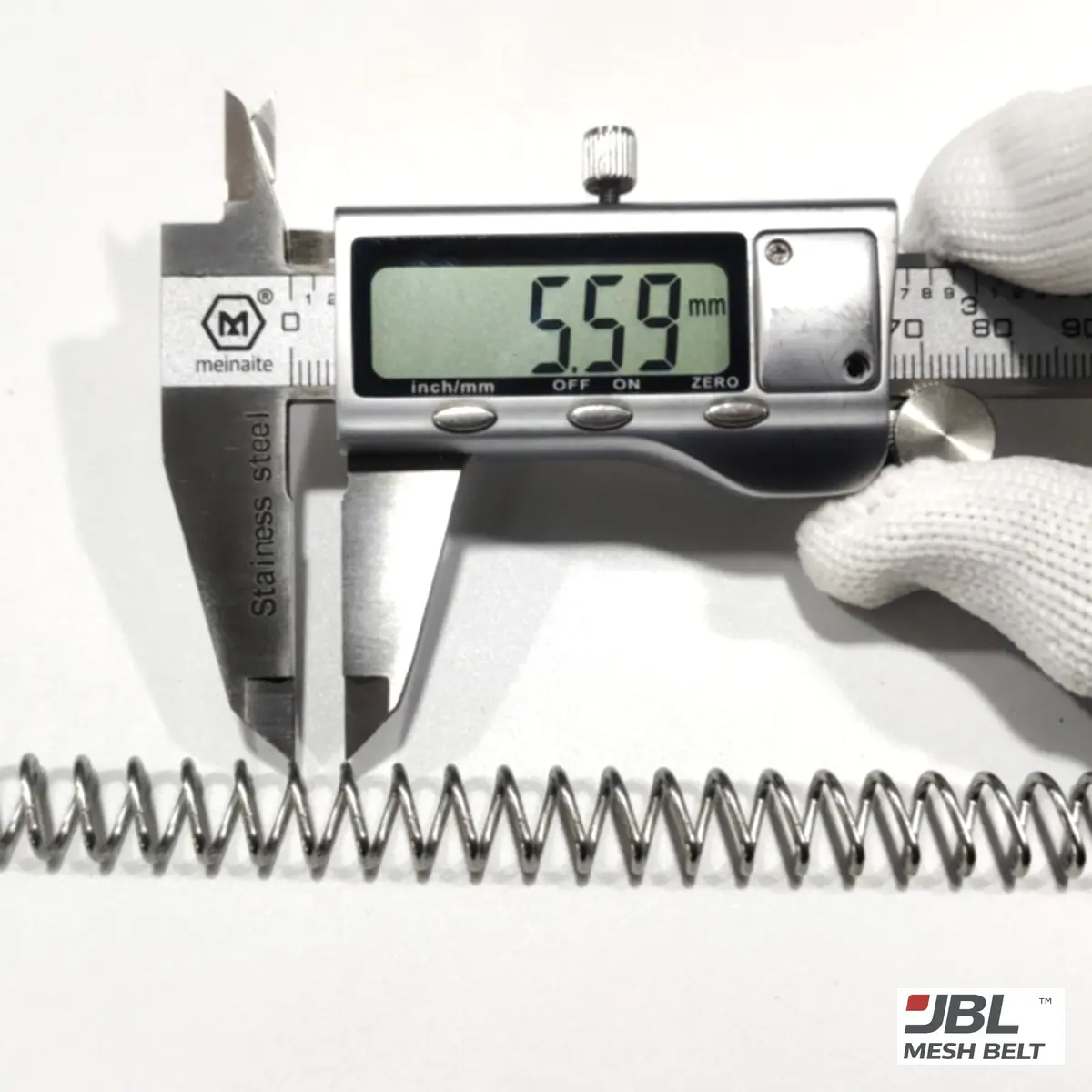
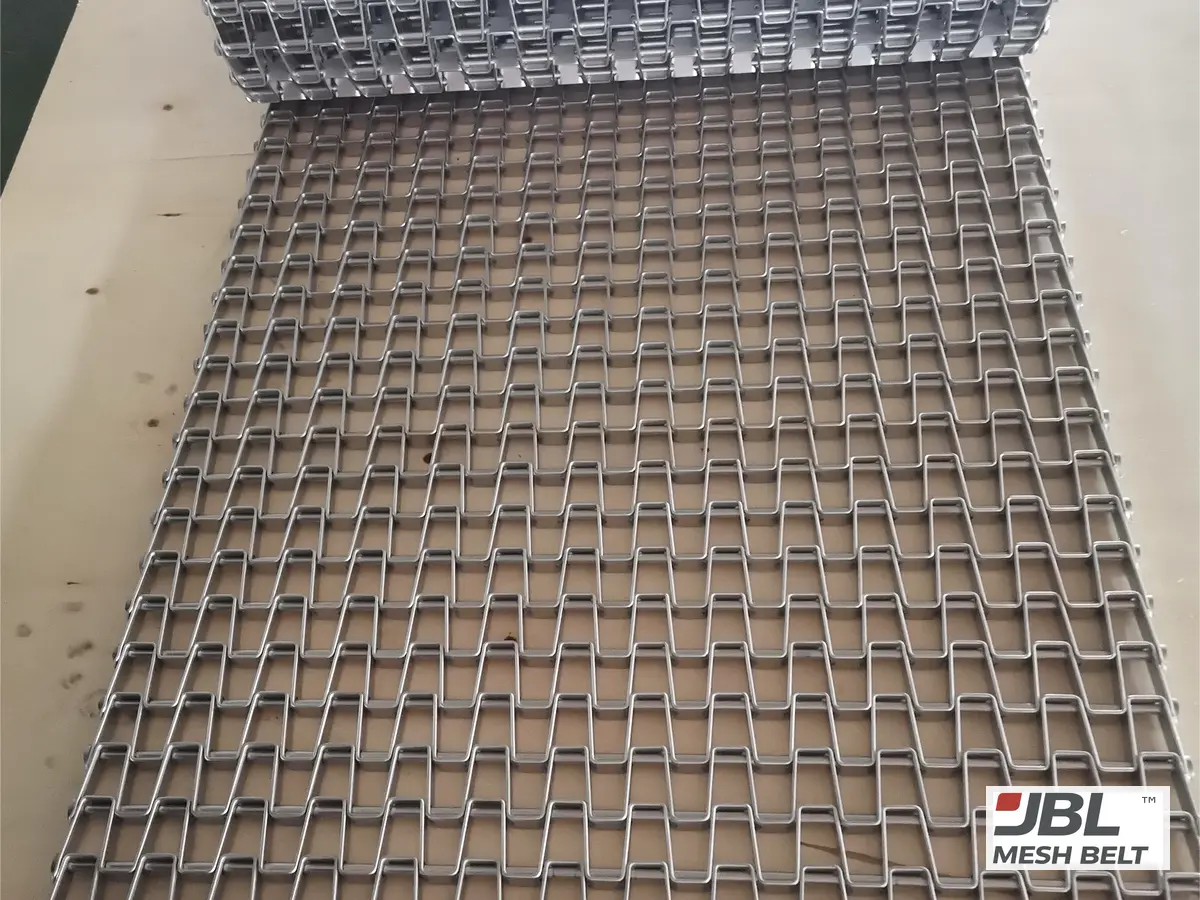
Read the bulk belt with the same caliper: chain plate, rod, mesh pitch and wire. On the Australian belt: plate 2.00 mm, rod 7.00 mm, mesh pitch 8.50 mm, wire 1.60 mm — matching the sample and the specification.
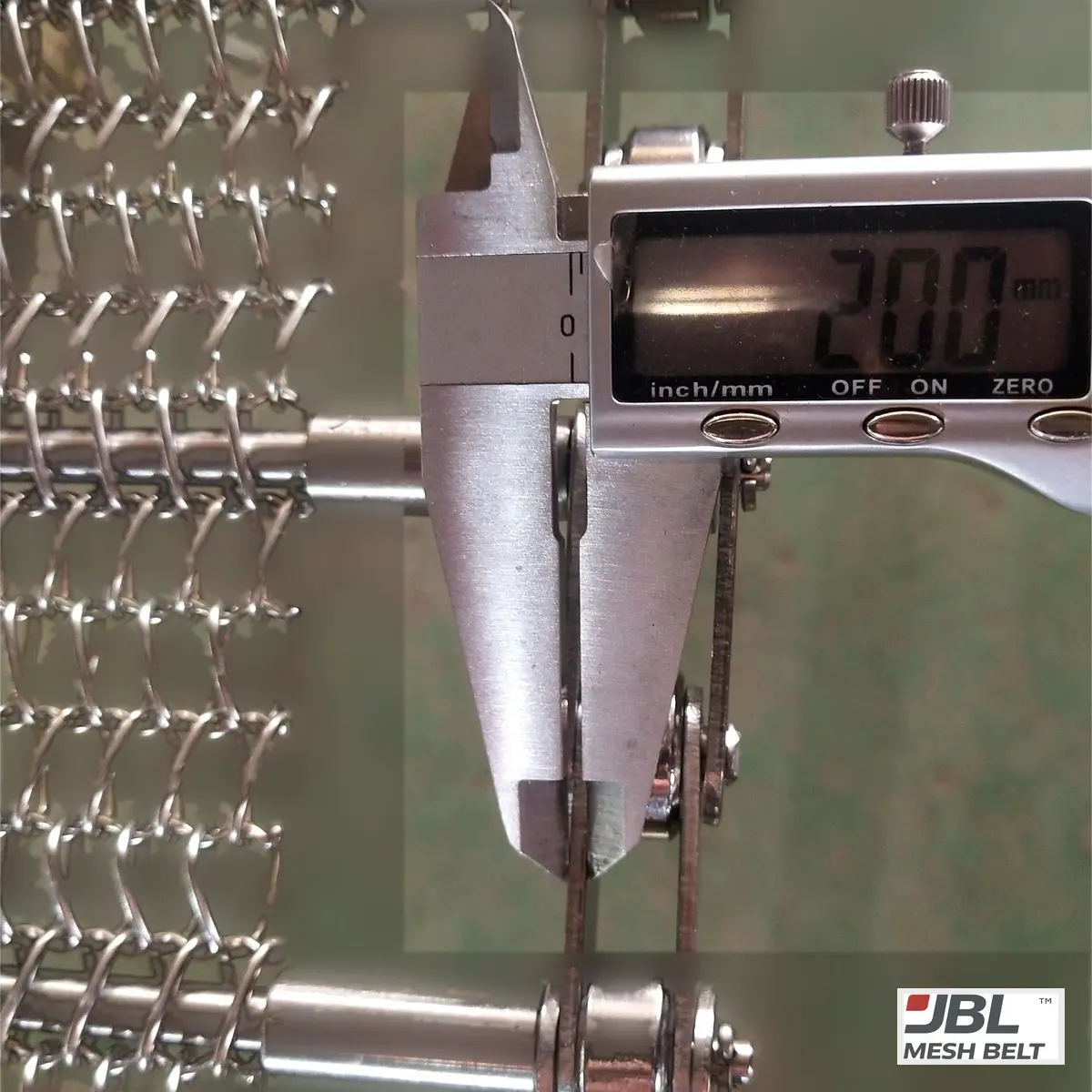
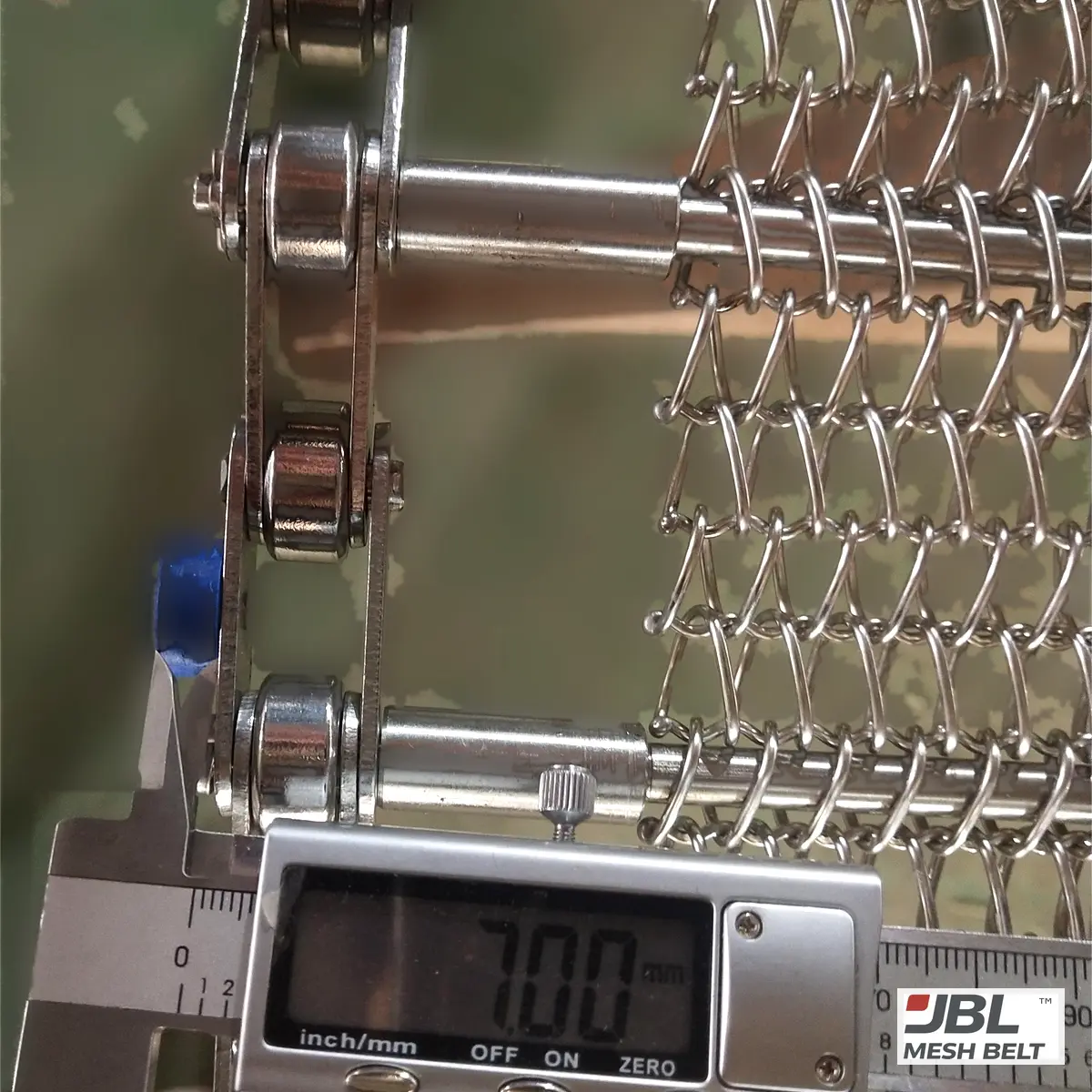
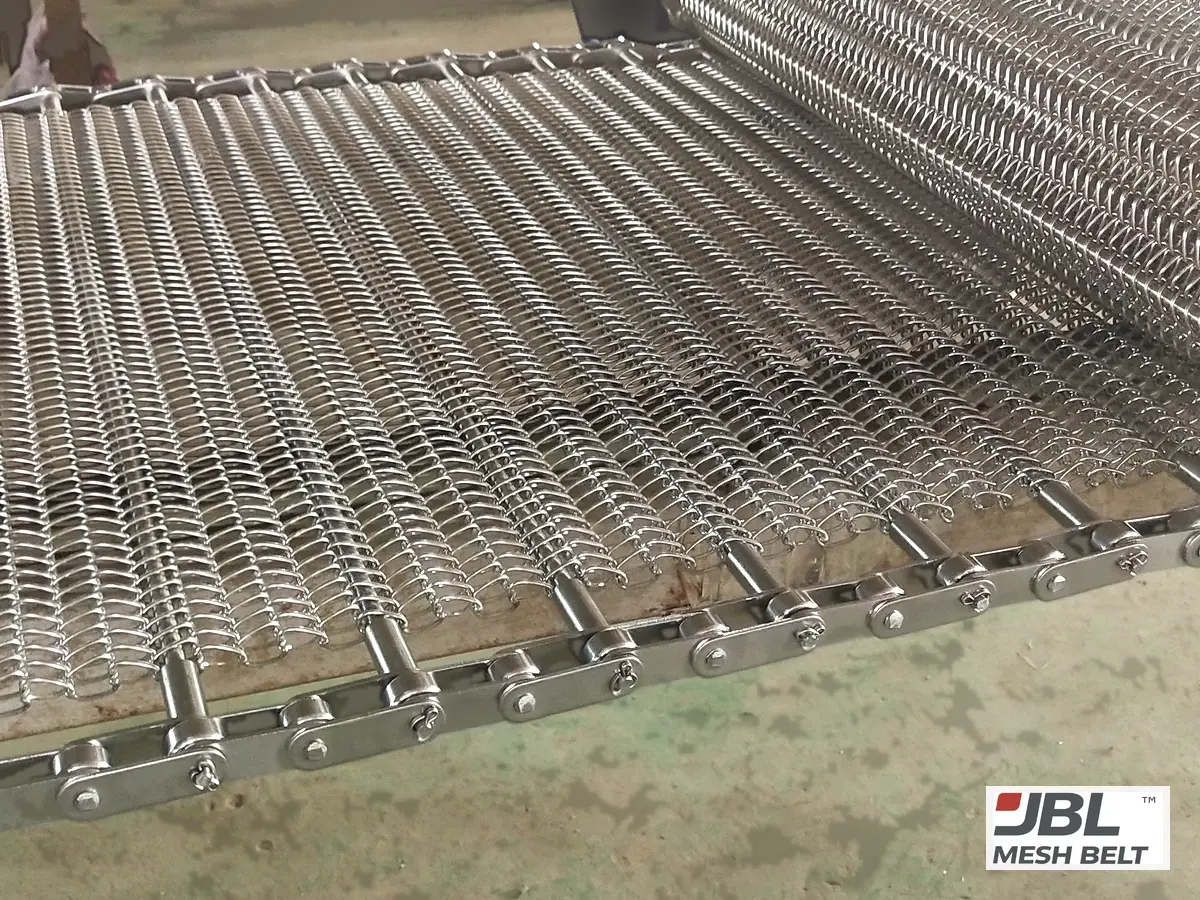
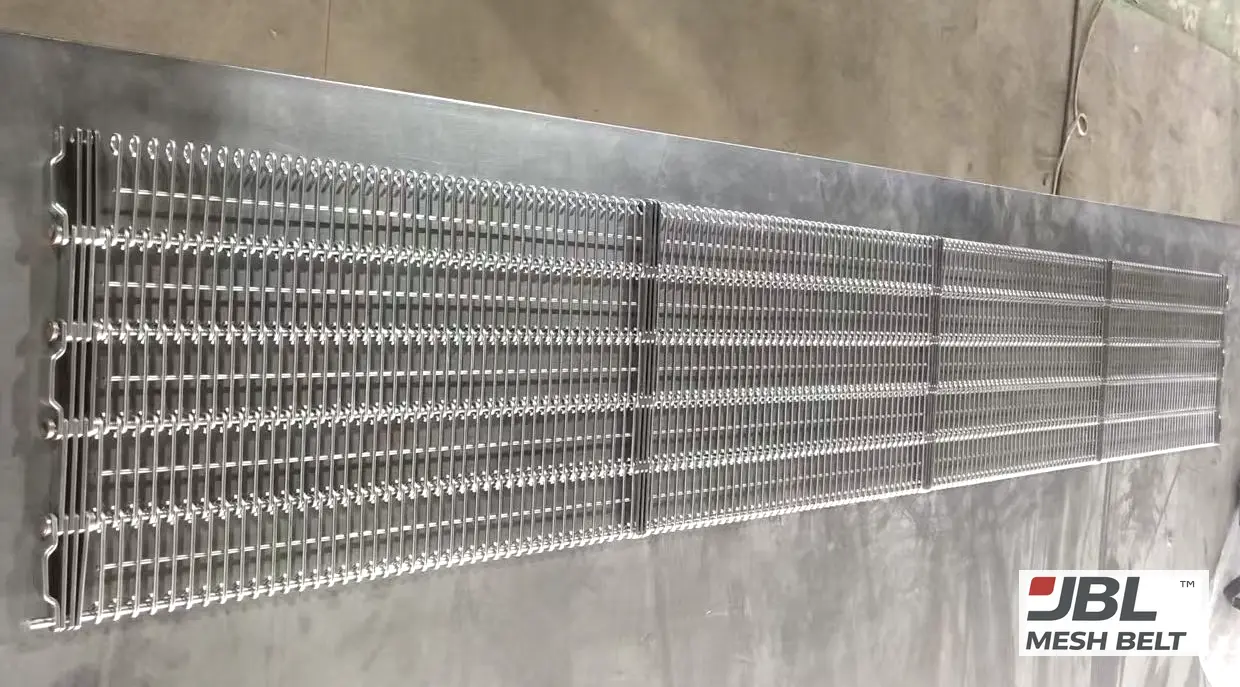
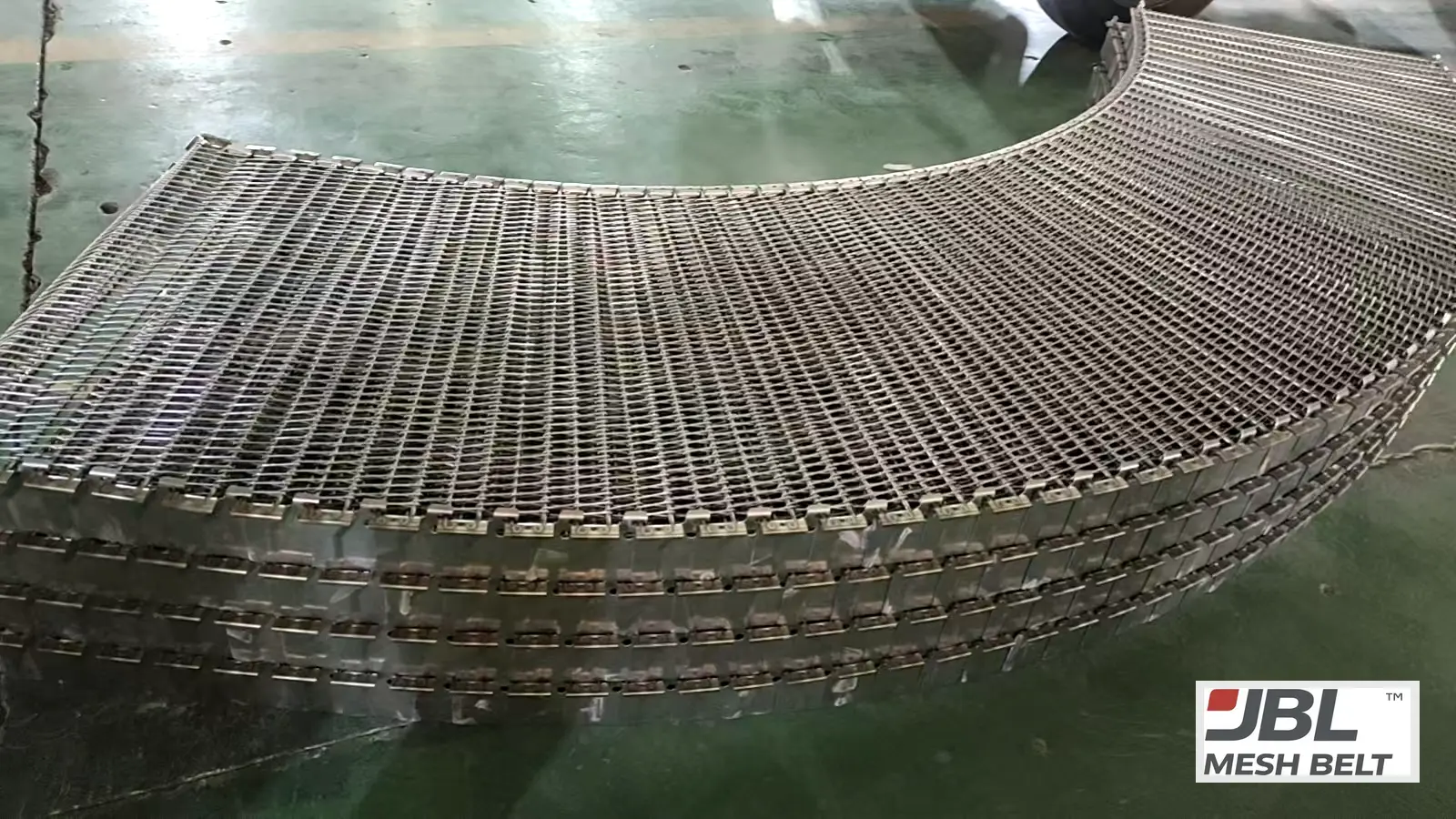
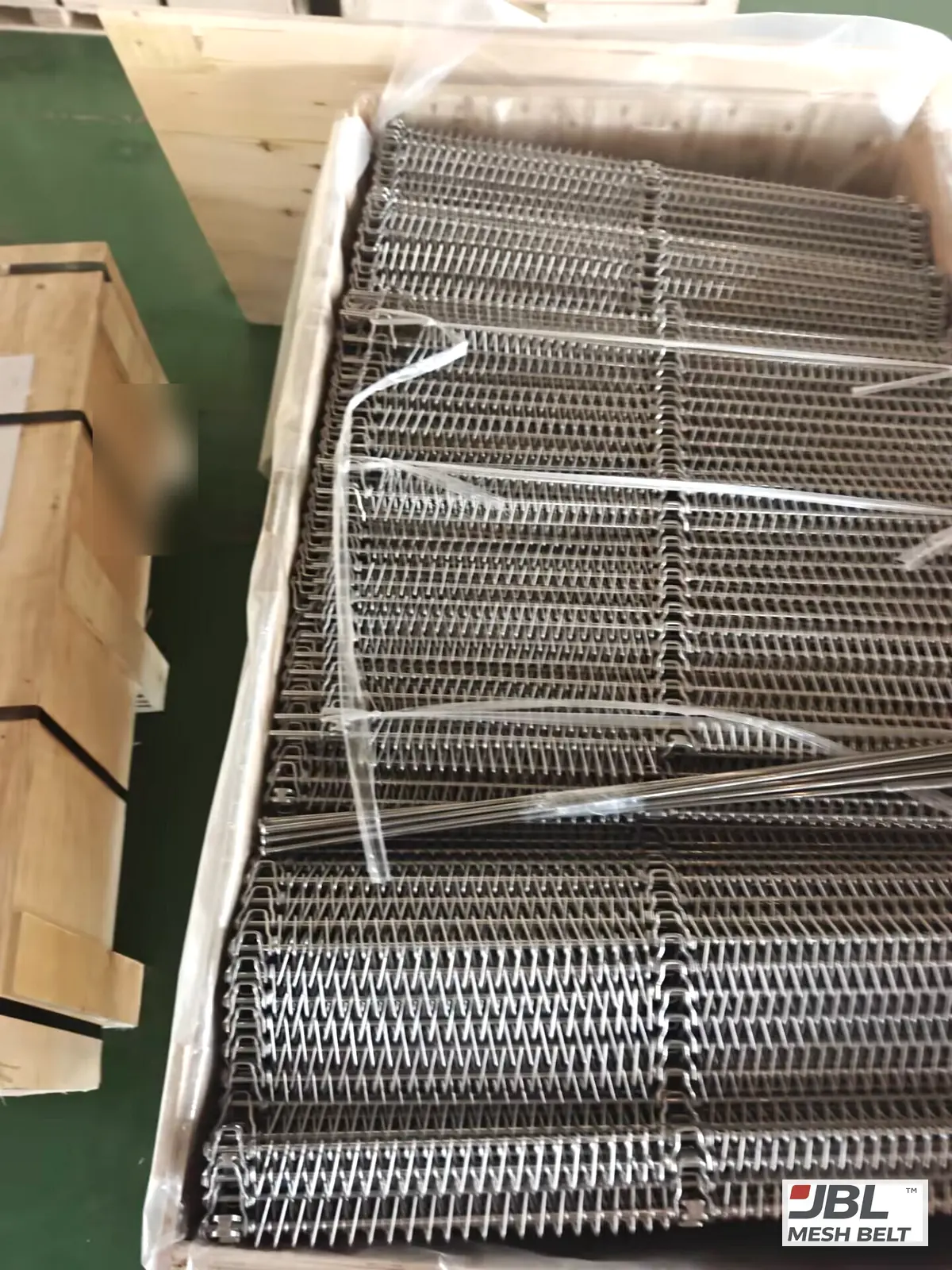
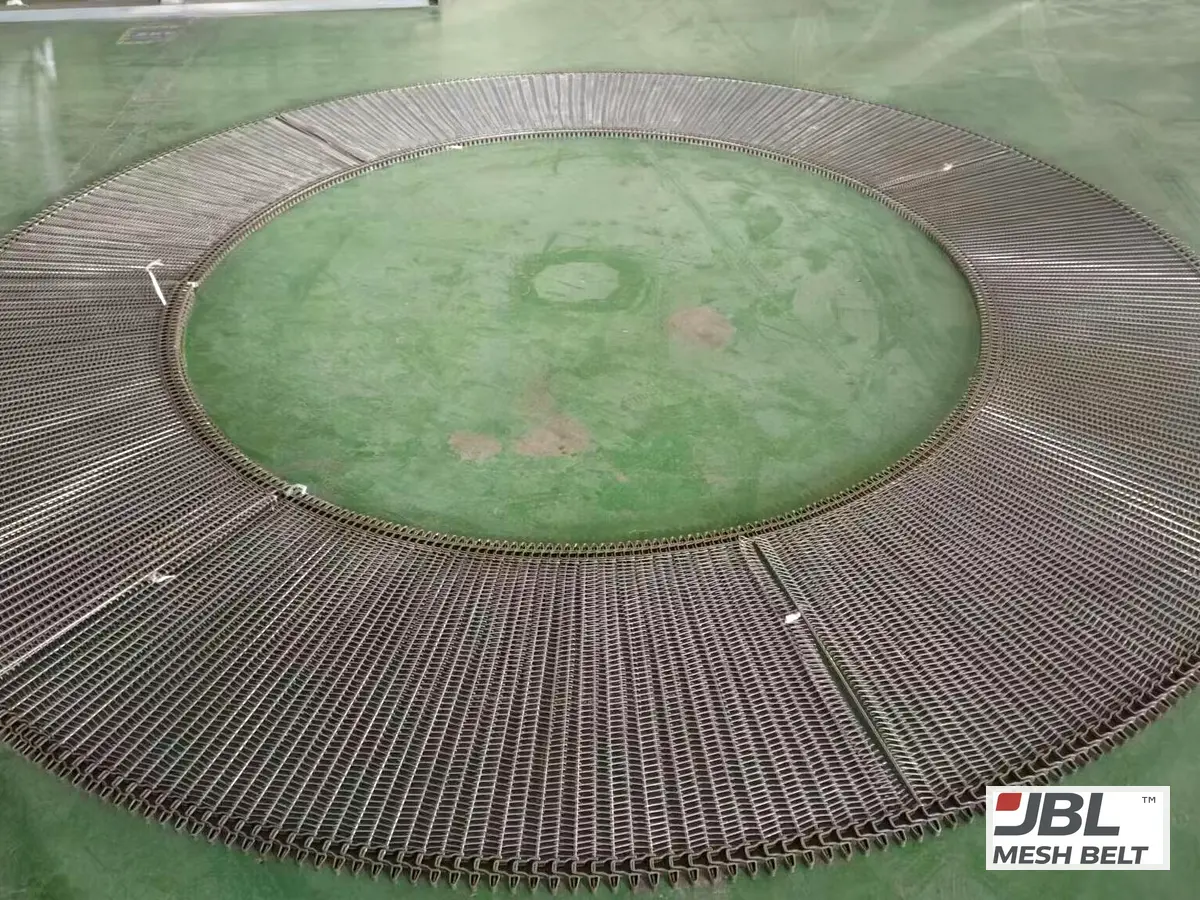
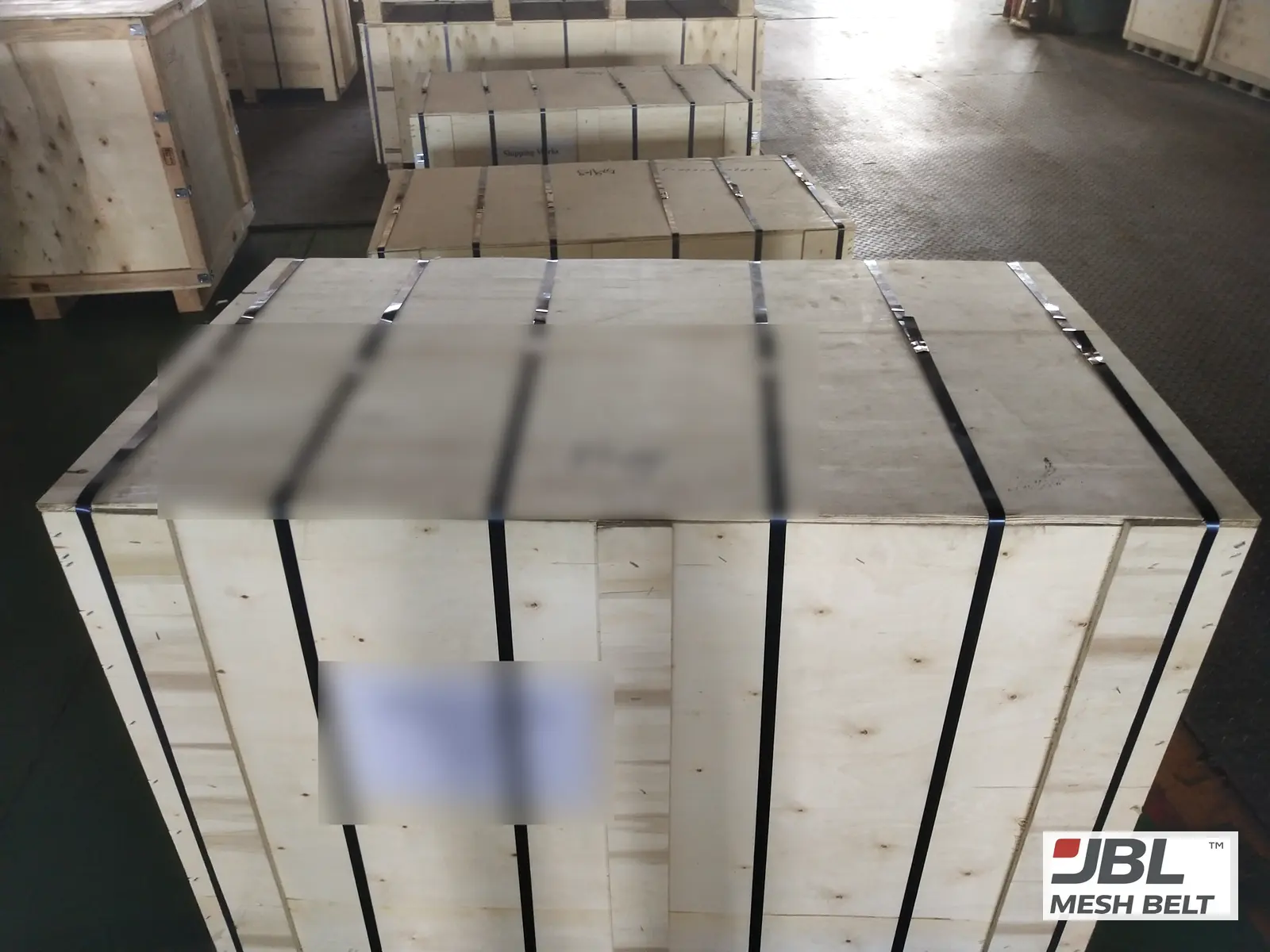
About 33 m was crated and shipped by air in November 2023, with a cotter-pin chain edge and mill finish.
05What should you send to replace a chain-driven belt?
A short section with the chain attached answers most questions.
Short answer
Send a section of the belt with the chain, or caliper photos of chain pitch, roller, plate, rod and any guide rollers. Add the mesh pitch and wire, the oven or line type, and the cleaning agents. I list anything missing before quoting.
| Send | Why |
|---|---|
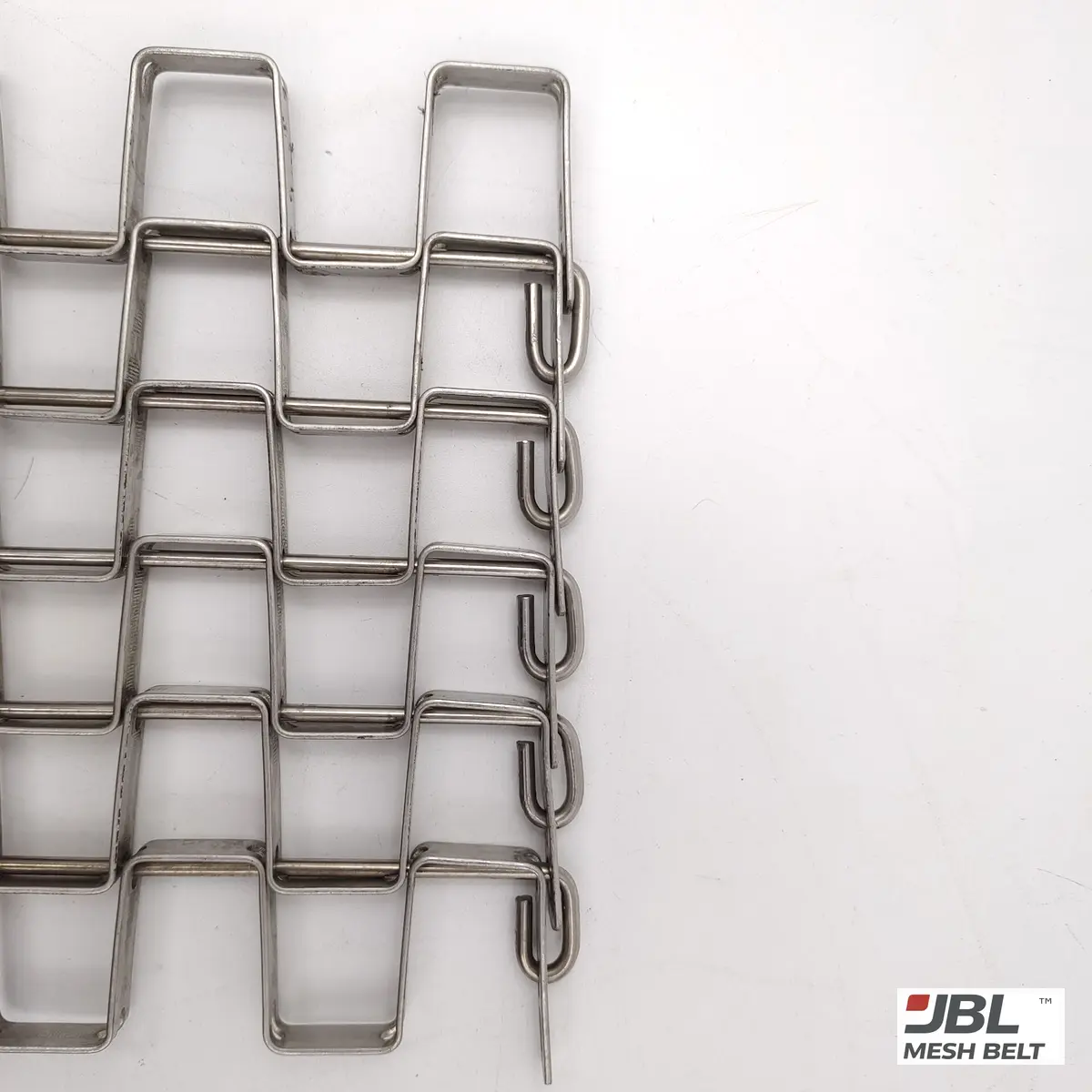
| Section with chain attached | Shows how rods, sleeves and chain fit together |
| Chain pitch, roller, plate | Decides sprocket and guide fit |
| Guide rollers or attachments | Often custom; must be copied |
| Mesh pitch and wire | Product support |
| Line type and cleaning | Sets the steel grade |
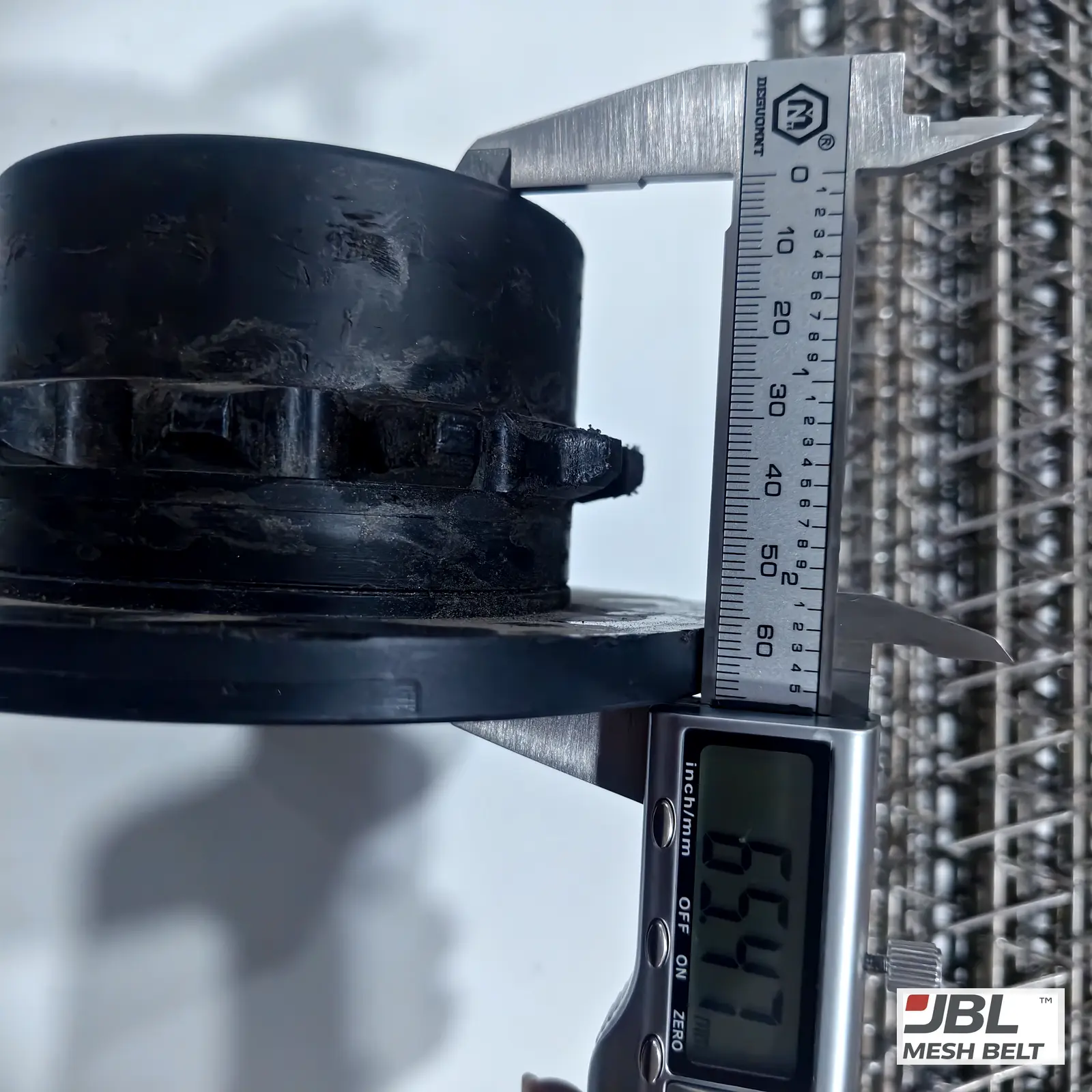
Sprockets wear with the chain. If yours are old, send a photo of the teeth too — see new belt on worn sprockets.
Start with our chain-driven belt page or the chain-driven replacement checklist.
When This Is Not the Right Choice
- ✕If you only have a photo of the mesh, without the chain, the drive cannot be confirmed — send the chain readings too.
- ✕If your sprockets are badly worn, a new chain may not engage them well; plan to replace both.
- ✕If your cleaning chemistry is unknown, I will ask before confirming the grade.
From My Engineering Experience
Buyers usually describe the mesh first. I always ask about the chain first, because that is where a copy fails.
On this project the guide roller was the small part that mattered. 16.00 mm on the sample, 16.00 mm on the trial chain.
Making a trial chain cost a little time. It meant the belt was built to a chain we had already checked.
— Spring, Sales Director, JBL Mesh Belt
Evidence From Our Work
Australia, 2023 — 316 chain-driven belt for a steam oven tunnel →
| Step | Detail |
|---|---|
| Starting point | Sample of the belt and chain |
| Chain | Pitch 31.75 · roller 19.05 · plate 2.00 · guide roller 16.00 mm |
| Mesh | Pitch 8.50 mm · wire 1.60 mm · rod 7.00 mm |
| Material · scope | 316 throughout · about 33 m |
Spain, 2026 — eye link belts with a roller-chain edge →
| Step | Detail |
|---|---|
| Starting point | Requirements — drawing made and approved |
| Chain edge | 50 mm pitch · rollers 10.02 / 10.03 mm · plates 2.05 / 2.06 mm |
| Before bulk | Sample checked on the customer's line |
FAQ
Q1Can you copy a chain-driven belt with a custom chain?
Yes. The chain is measured on your sample and a trial chain is made and checked before the belt is built.
Q2What chain pitches do you work with?
Reference projects include 12.7, 15.875, 25.4, 31.75, 38.1, 50.8 and 63.5 mm; others are confirmed per project.
Q3Which material did the steam oven belt use?
316 stainless steel for the mesh, rods and chain.
Q4What are the blue rollers?
Guide rollers on the chain. They were measured on the sample and copied on the trial chain.
Q5Can you supply sprockets as well?
Yes. Sprockets are matched to the chain type, pitch and tooth count and can be run with the belt before shipment.
Conclusion
Measure the chain as closely as the mesh, prove a custom chain with a trial length, and choose the steel for every part.
Download the Chain-Driven Belt Technical Specification (PDF)
Specification ranges and options in mm and inch. Enter your work email and the file downloads right away.
References
Your contact for this belt
Spring · Sales Director, JBL Mesh Belt · 16 years
“Your belt is worn, the OEM price is high, and there is no drawing. That is where I start.”
Send me a worn section, a few photos with a caliper in the picture, or a drawing. I tell you what fits, what is missing, and show you a sample measured against your own belt before you pay for the full length. Buyers in the UK, the USA, Australia, Brazil, South Korea, Spain, Malaysia and Libya have replaced belts this way.
- ✓Readings on your original next to readings on our sample
- ✓Nothing in bulk until you approve the sample
- ✓Turning, stacking or sprocket tests before your belt ships
- ✓A reply from me, usually within 8 hours