OEM Decision · 10 min read
Like-for-Like Replacement or Spiral Retrofit: How Should an OEM Decide?
 Written bySpringSales Director, JBL Mesh Belt · 16 years in metal conveyor beltsProjects in United Kingdom · USA · Australia · Brazil · South Korea · Spain · MalaysiaPublished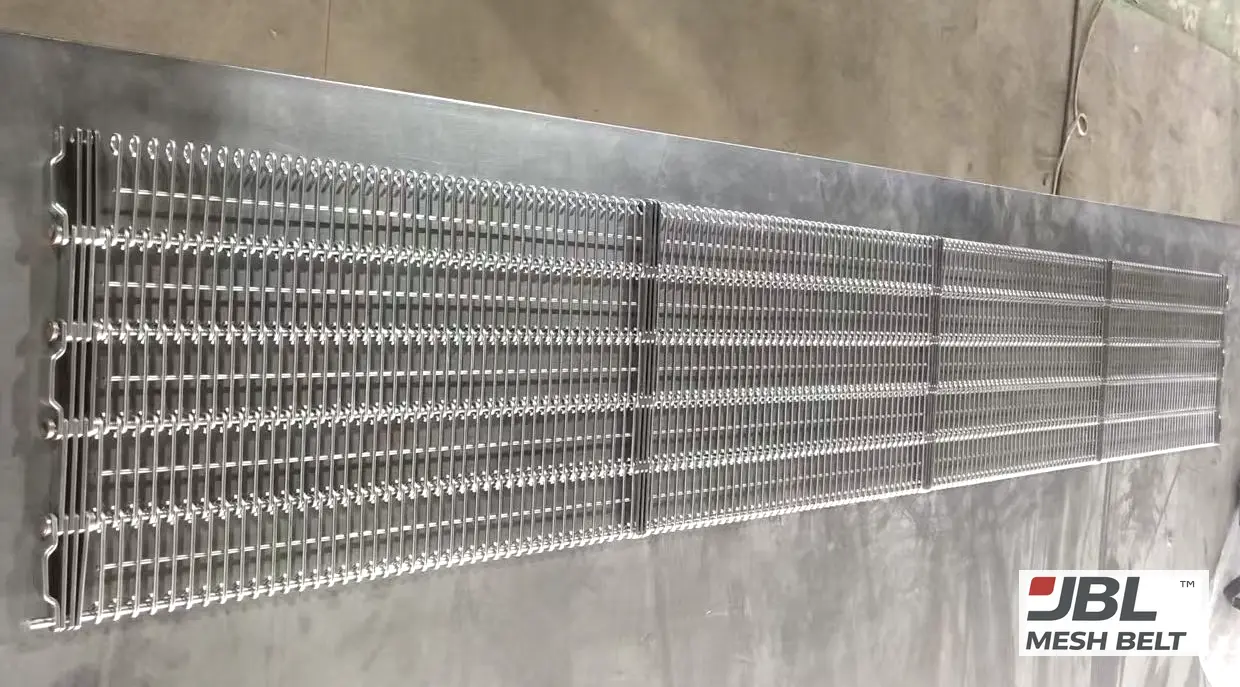
The belt is due for replacement. Copy it exactly, and you may copy its problems. Change it, and you may break a system that worked for years.
Short answer
Replace like-for-like when the system runs stably, wear is normal and product, capacity and drive are unchanged. Ask for an engineering review when belts fail repeatedly or requirements, drive or supply have changed. Do not redesign a proven system without reason — but do not reproduce a known failure.
At a Glance
| Product | Application | Key point | Buyer type | What to send |
|---|---|---|---|---|
| Spiral, self-stacking and process belts | Planned replacement or line change | Copy what works, review what fails | OEMs, integrators, plant engineering | Current belt data, failure history, any change in product, capacity or hygiene |
Below I set out the two routes, the signs that point to each, what can be improved without touching the machine, and what information I need to give you an initial view.
01What is the difference between like-for-like replacement and an engineering review?
Both routes end with a new belt. The difference is whether the existing specification is accepted as right or questioned first.
Short answer
Like-for-like replacement reproduces the existing, proven specification as closely as possible. An engineering review asks first whether that specification still fits the line — because something failed or changed — and may lead to a targeted improvement or a new design.
| Like-for-like replacement | Engineering review / retrofit | |
|---|---|---|
| Starting point | Existing belt or drawing is right | Existing specification is questioned |
| Goal | Same fit, same behaviour | Remove a known problem or meet a new need |
| Typical change | None, or wear corrected | Detail improved, or new specification |
| Risk | Copying a hidden problem | Changing what already worked |
| Our examples | UK, Brazil | Melbourne (detail), Spain (new design) |
The sentence I use with OEMs is simple: do not redesign a proven system without reason — but do not reproduce a known failure either. Both mistakes are expensive. The first creates new problems; the second keeps old ones.
Our order process starts by asking which route a project is on: new equipment, old equipment replacement, retrofit, repeat order or urgent downtime support. The answer changes what I review and what I ask you for. It is one of the first questions in our order control process.
02When is a like-for-like replacement the right choice?
When the line has run well for years, the safest belt is usually the one it already knows.
Short answer
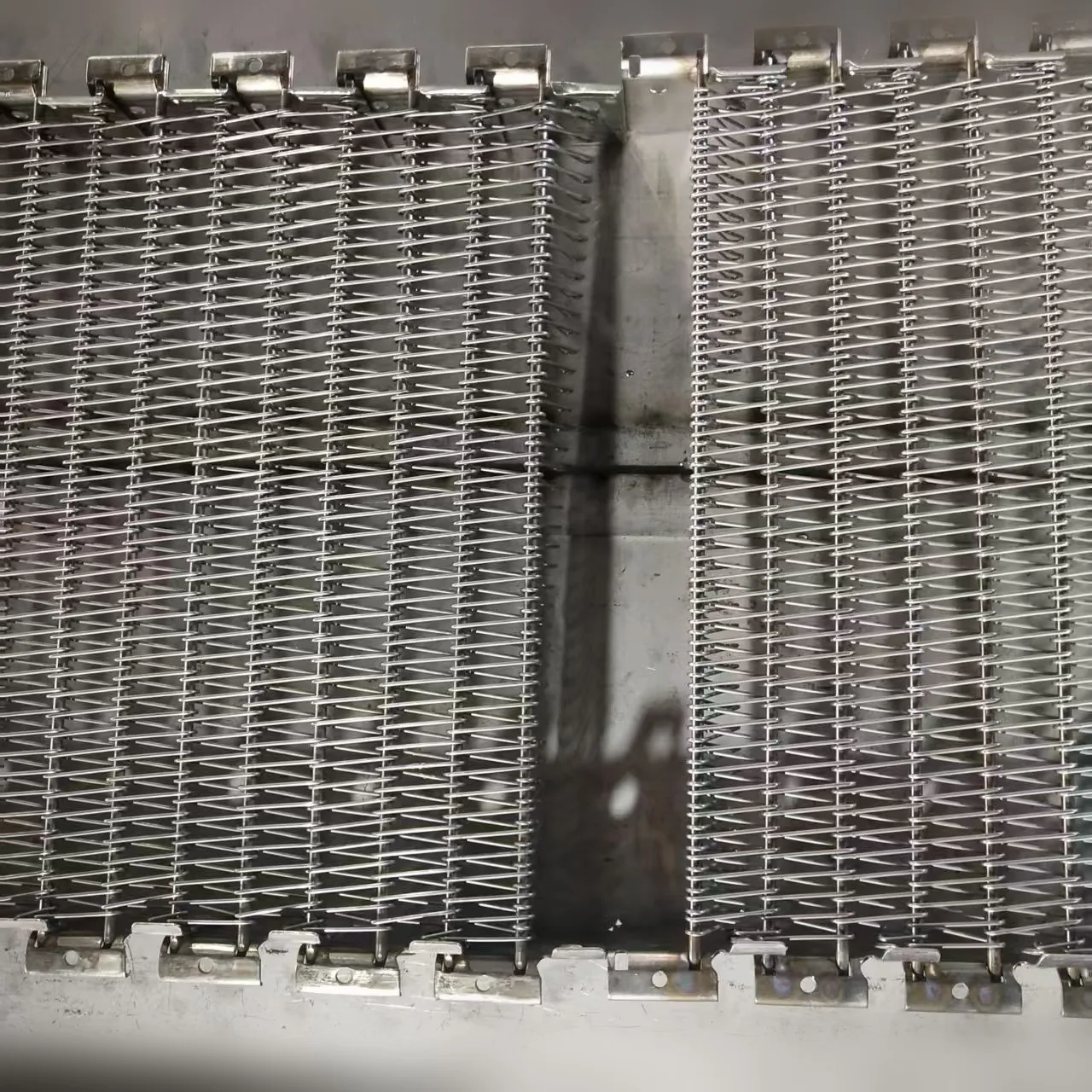
Like-for-like is right when the system has historically been stable, wear is normal, capacity and product are unchanged, the drive system is healthy, and the existing design is proven. Then the job is to copy the design accurately — correcting wear, not changing the concept.
- ✓The line has run stably on this belt type.
- ✓Wear is normal for the belt's age.
- ✓Product and capacity are unchanged.
- ✓The drive — drum, sprockets, take-up — is healthy.
- ✓The existing design is proven on this machine.
The UK and Brazil projects were like-for-like. In the UK, 450 m of self-stacking belt was copied from the customer's sample: rod pitch 30.00 mm on the original, the sample and the bulk belt. In Brazil, the new belt was joined to the original and stacking-tested, and about 50 m ran on the freezer before the 350 m order.
Like-for-like does not mean copying worn dimensions. It means recovering the original design. I explain the difference in why old belt dimensions may not match the original design.
03Which signs call for an engineering review?
Some situations make a straight copy risky. If one of them applies, the specification needs a second look before it is reproduced.
Short answer
Ask for an engineering review when belts fail repeatedly, tension is excessive, the product or capacity has changed, hygiene requirements are stricter, the drive is worn, the belt type is obsolete, or parts are hard to source. Each one means the old specification may no longer be the right one.
| Sign | Why a copy is risky | What a review looks at |
|---|---|---|
| Repeated belt failure | The copy may fail the same way | Root cause: belt, machine or match |
| Excessive tension | Belt and drive overloaded | Drive, take-up, belt type |
| Product changed | Support, opening or load differ | Mesh, pitch, wire |
| Capacity increased | More load, speed or tiers | Belt strength, drive |
| Hygiene requirement changed | Finish or welds no longer enough | Weld finish, surface, material |
| Drive wear | New belt on worn parts | Sprockets, drum bars, strips |
| Obsolete belt / hard-to-source parts | No reliable supply | Equivalent structure, second source |
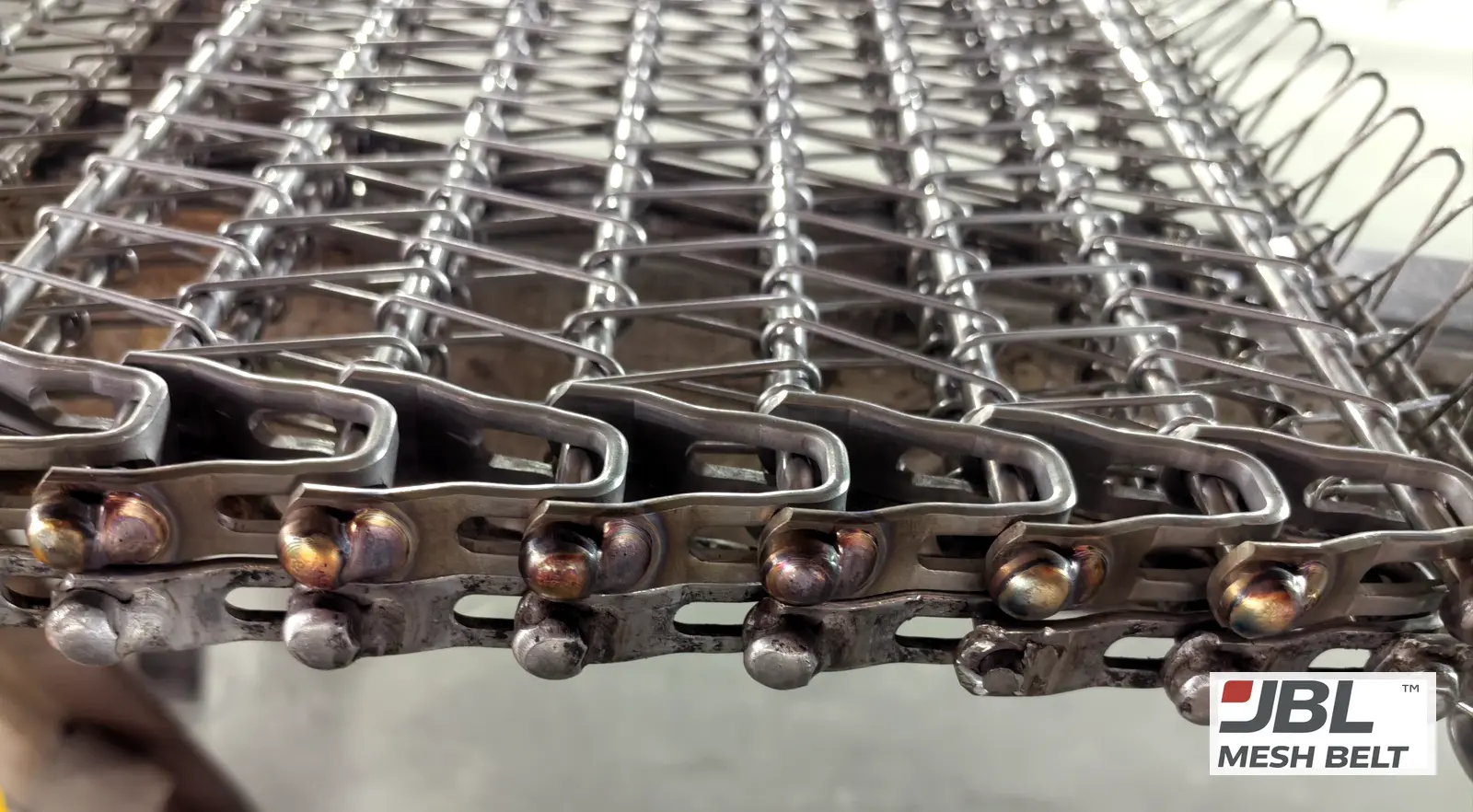
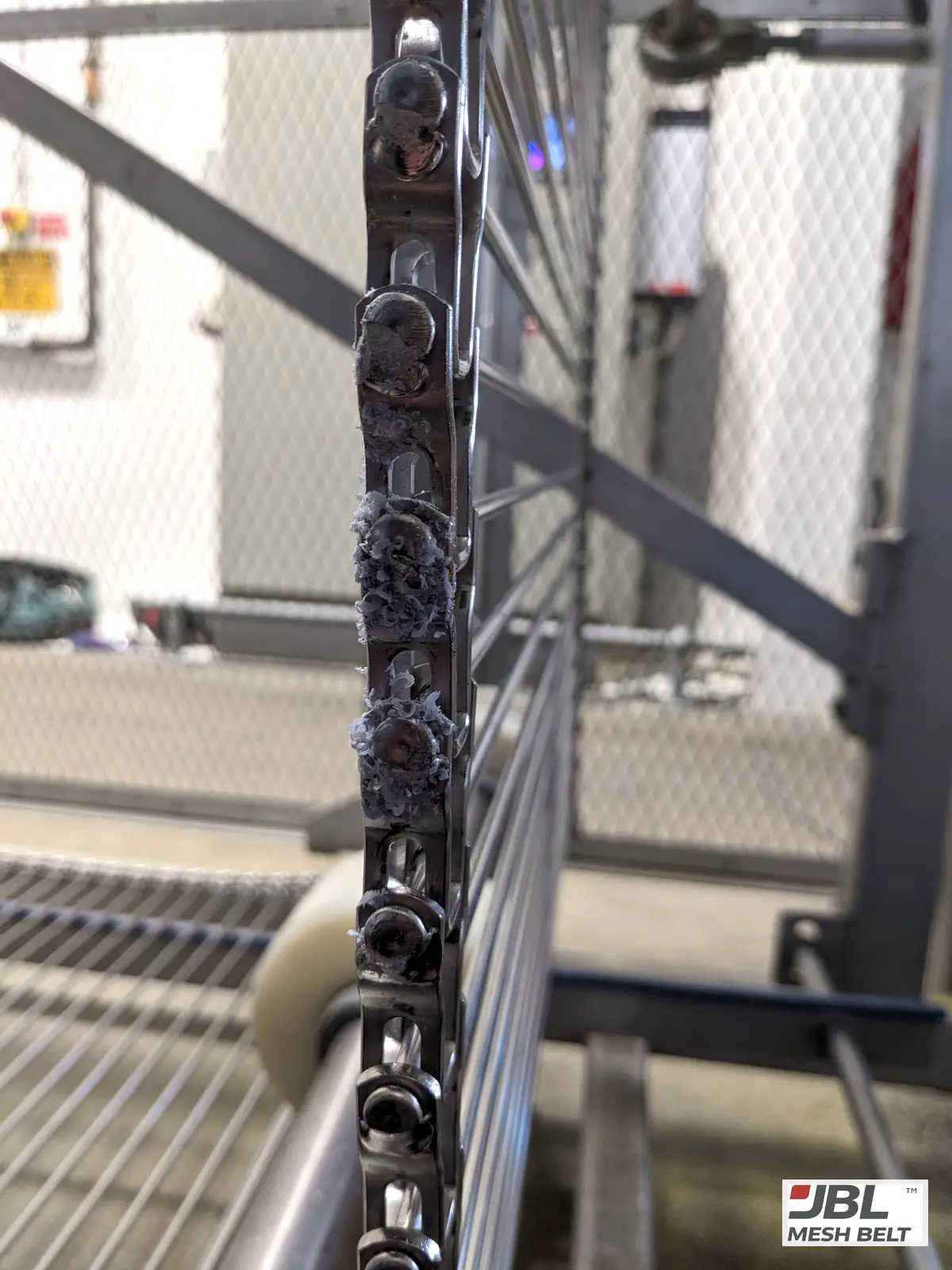
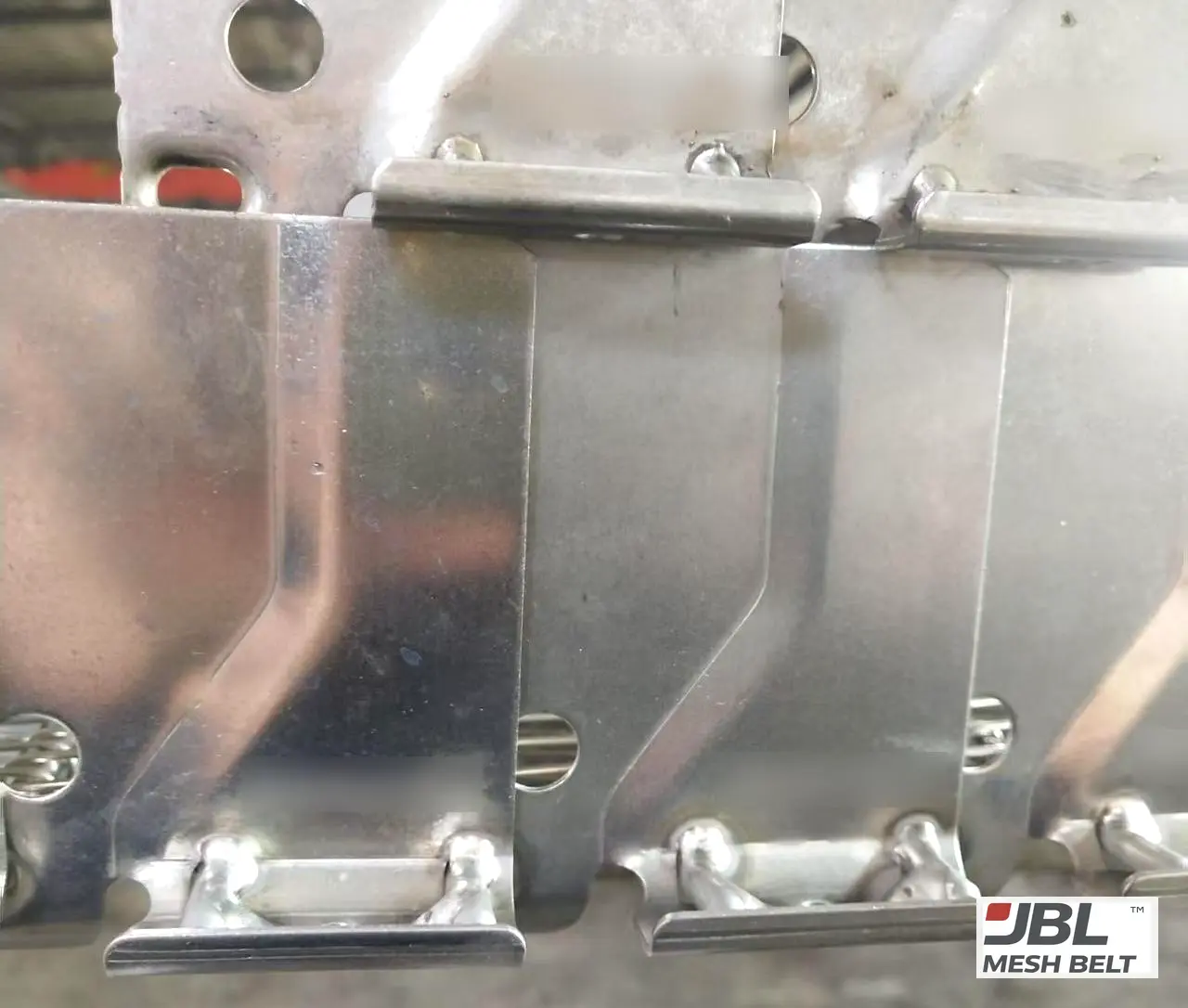
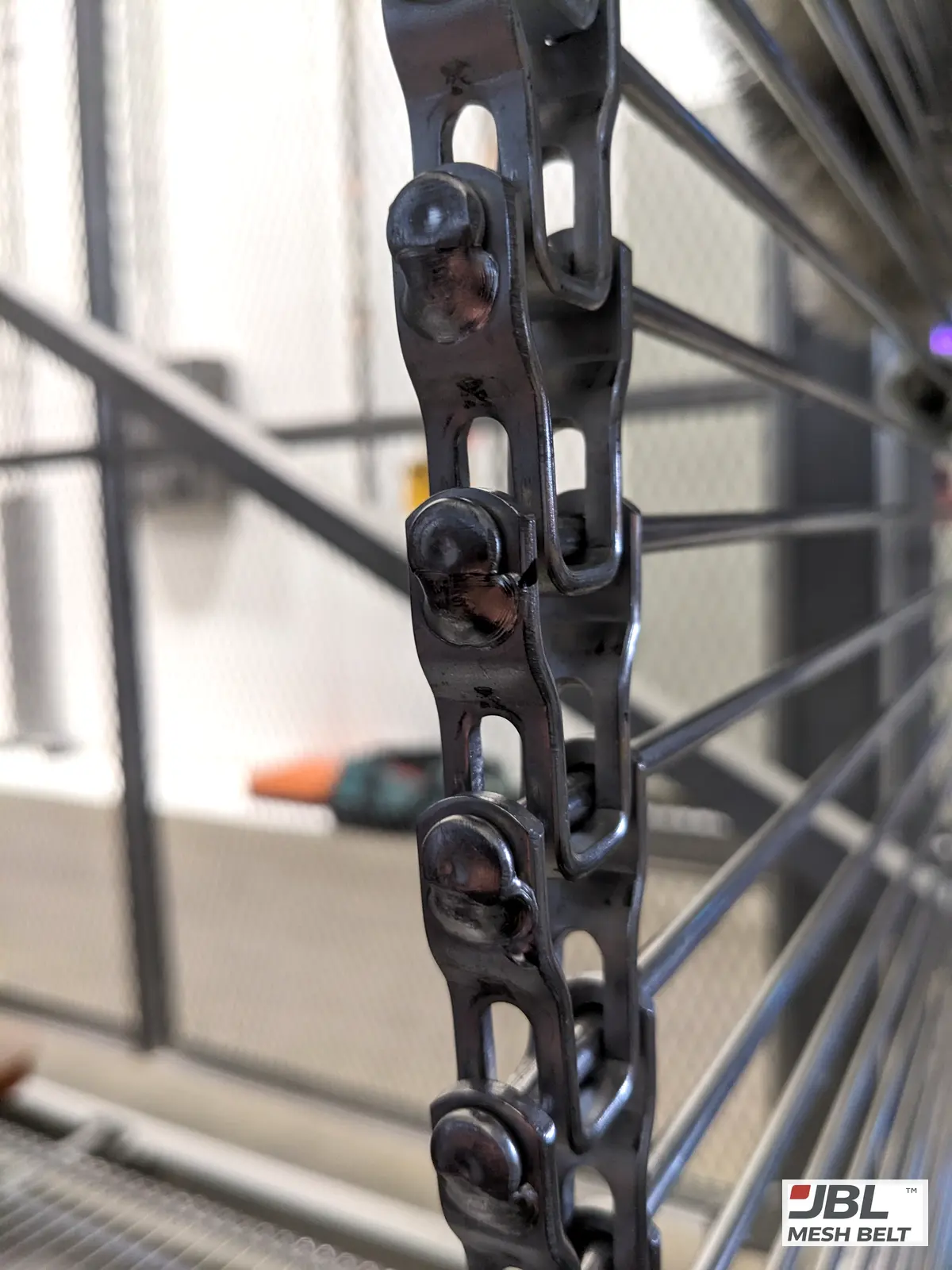
Melbourne is a good example of a review that led to a small, targeted change. The original belt's rough welds scored the guide strips. Copying it exactly would have reproduced a known failure. We matched the pitch, rod and link and finished the welds smooth; the new belt was also electropolished.
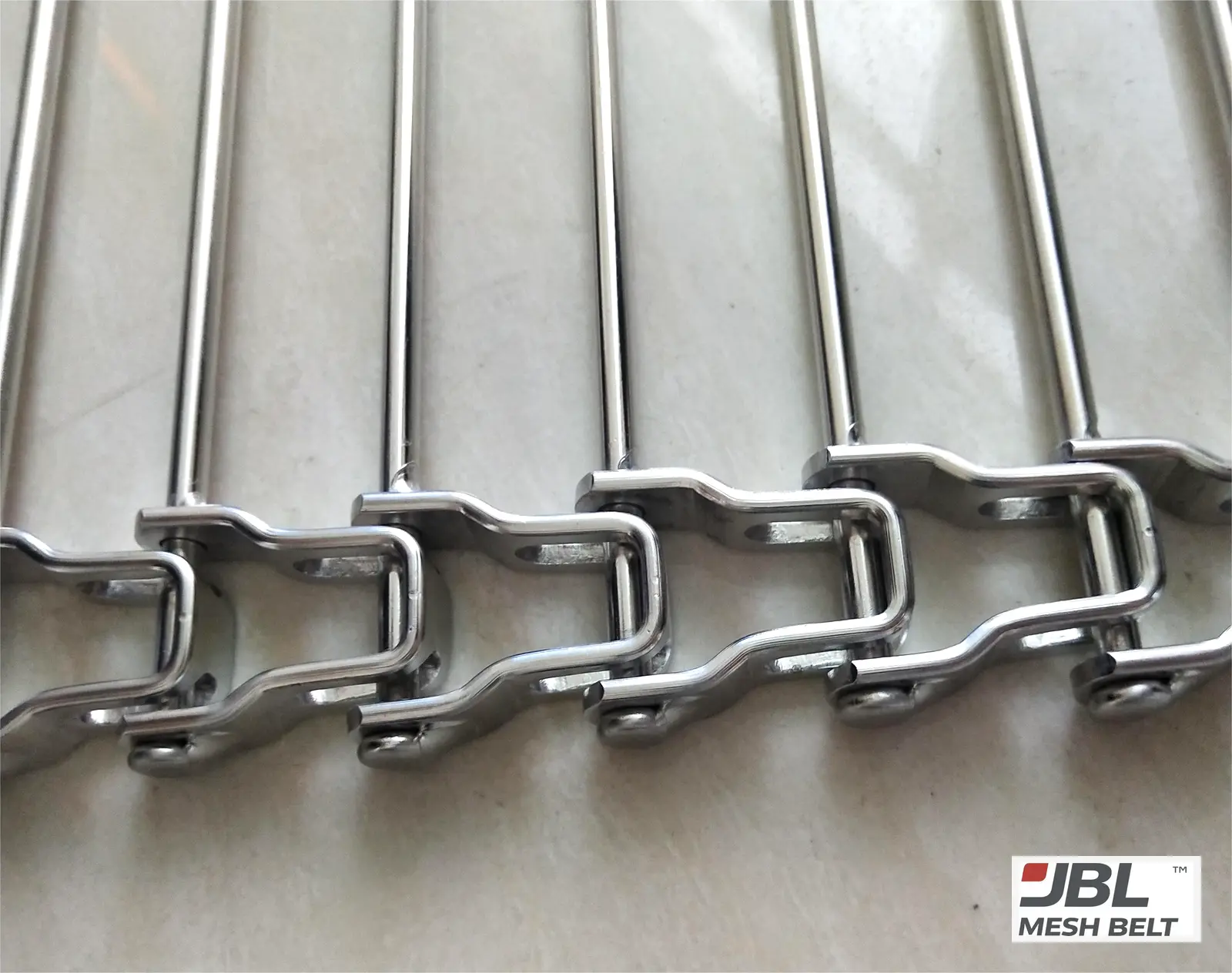
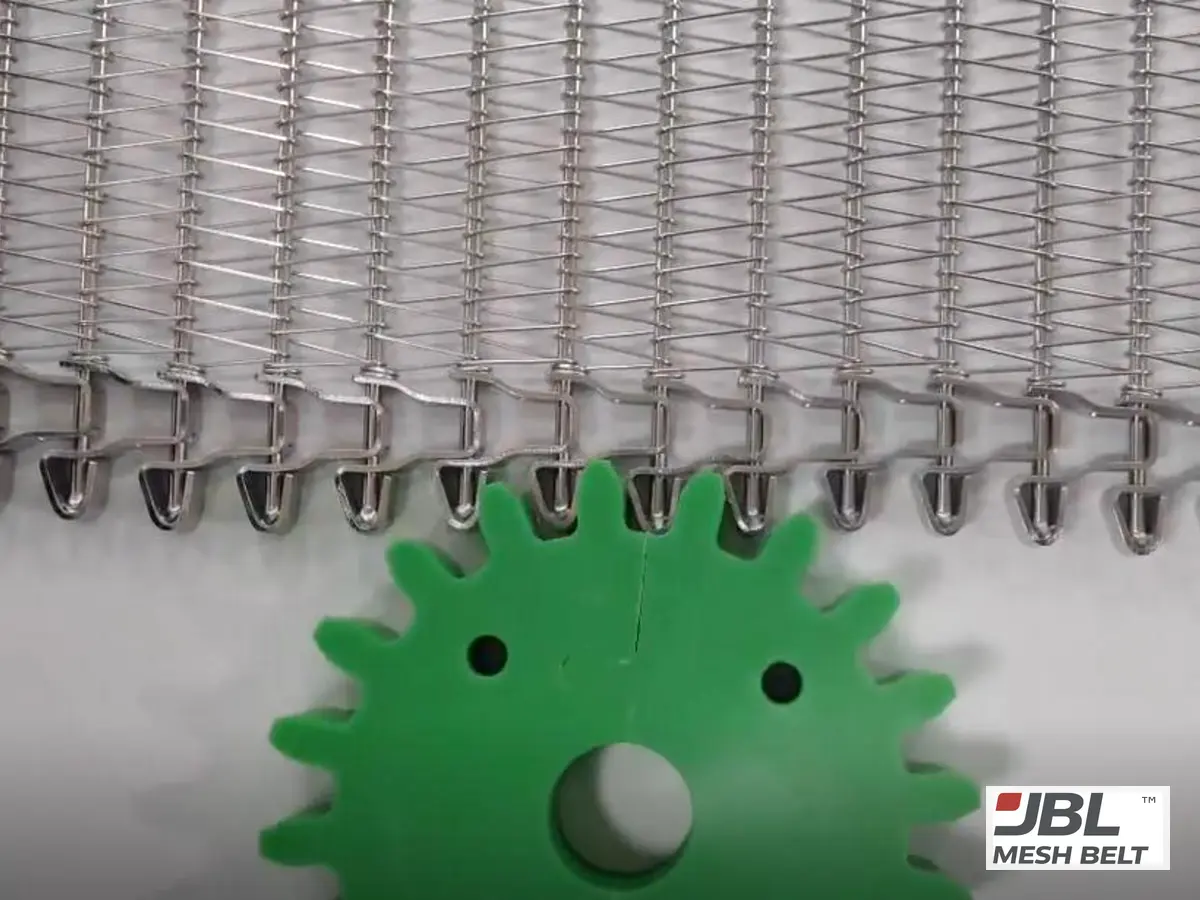
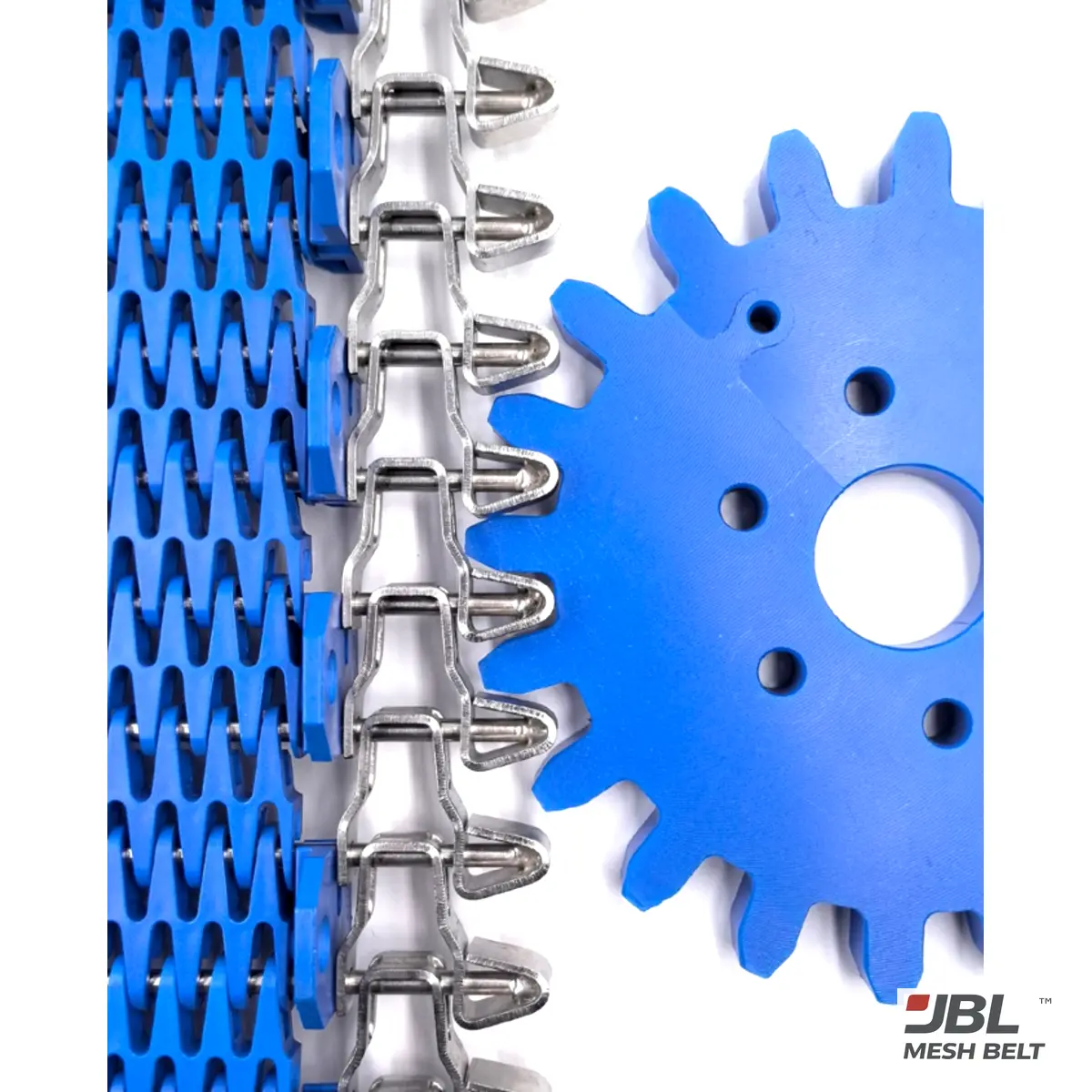
The waffle line is another: the belt was due, and the sprocket teeth were worn too. The customer sent both to be copied, and both were replaced. The fix stayed in the belt and its sprockets.
04What can be improved without changing the machine?
Many problems can be fixed in the belt alone. That keeps the risk low, because the machine stays as it was proven.
Short answer
Without changing the machine, I can improve weld finish, surface finish, material grade, link and wire sizes back to the original, and supply matched sprockets. Changes to the drum, drive type, turn ratio, layout or capacity are a machine project for the freezer maker or an integrator.
| Belt-only change | Machine change |
|---|---|
| Weld finish (smooth, no burrs) | Drum diameter or bars |
| Surface finish (pickled, electropolished) | Drive type (friction, side, edge) |
| Material (SUS304 or SUS316) | Turn ratio or tower layout |
| Wear corrected to the original size | Number of tiers or capacity |
| Matched sprockets supplied with the belt | Take-up and tension system |
I keep a clear line between the two columns. Everything on the left I can propose, sample and prove before production. Everything on the right changes how the machine works, so it belongs with the freezer maker or an equipment integrator, who designs the change. I then supply the belt to their new design.
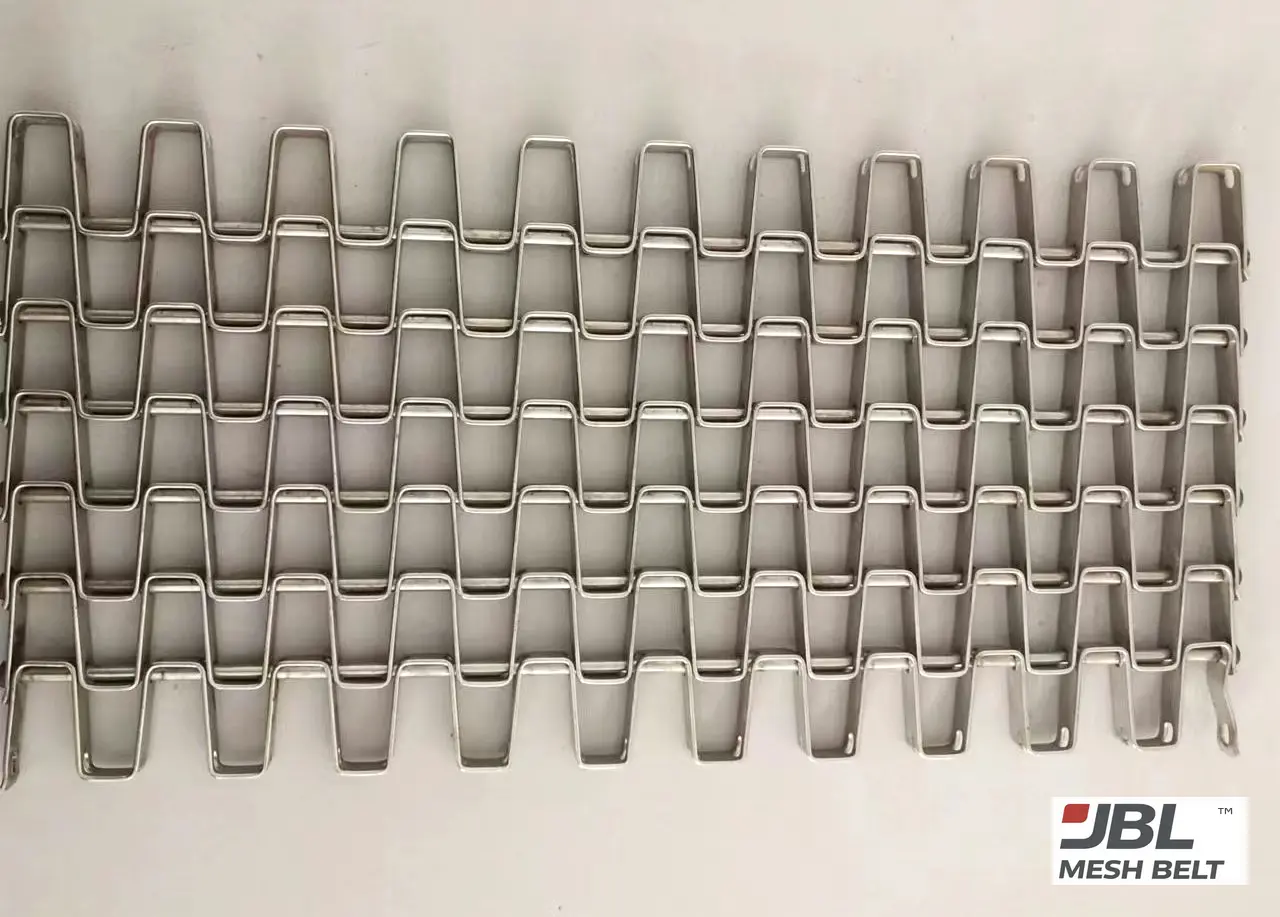
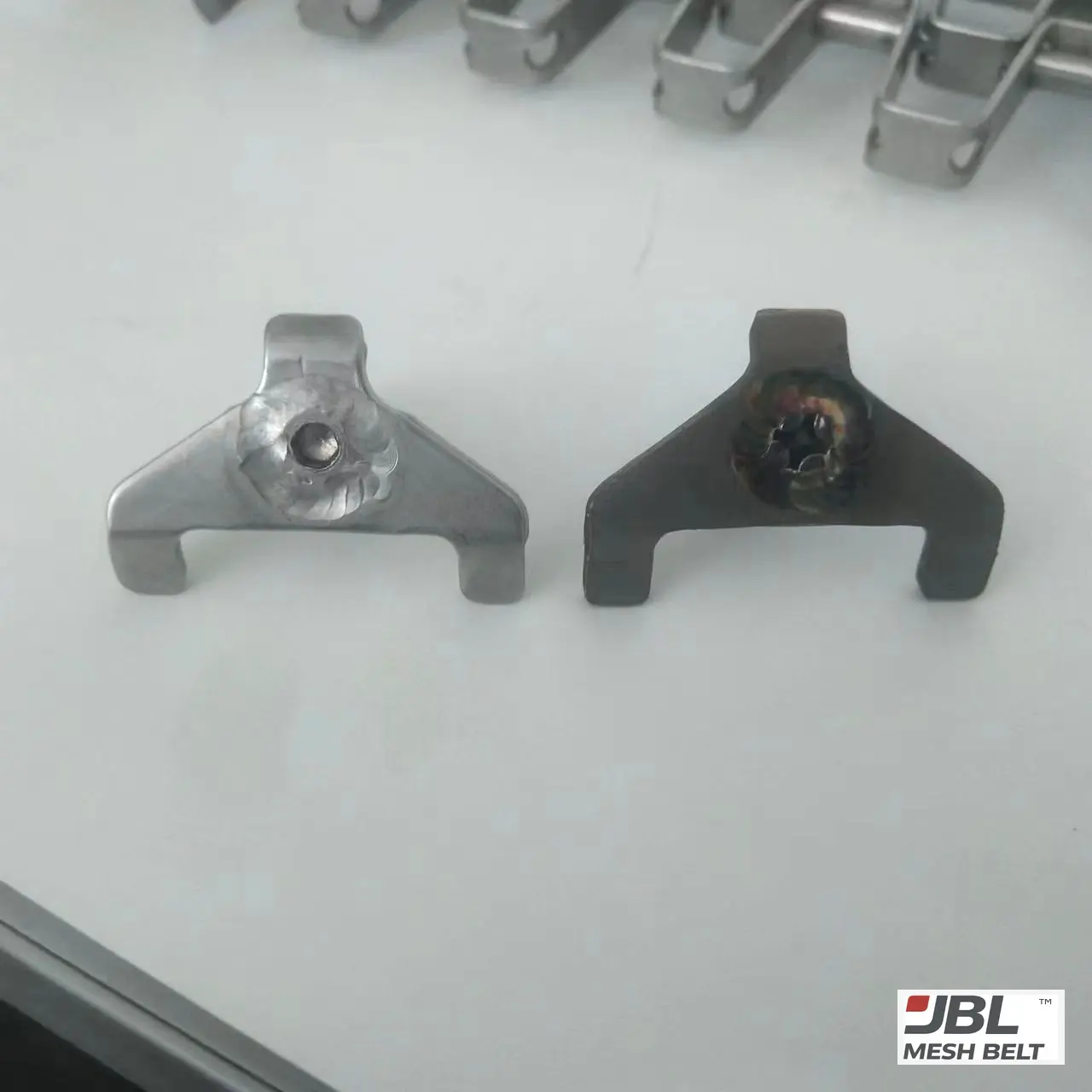
The USA project shows how strict a drawing can be. The buyer, an equipment integrator building conveyors for fishing vessels, was replacing OEM belts. Their drawing set bend radii and allowed no burrs. We matched it from the drawing and an original sample, then supplied clips, flight bars and sprockets too.
When there is no old belt at all, the route is a new design. In Spain, the customer's requirements became dimensioned drawings, the drawings were approved, and a physical sample was checked on the customer's line before bulk.
05What information does an initial engineering review need?
I can give an initial view quickly — if I know the system, its history and what has changed.
Short answer
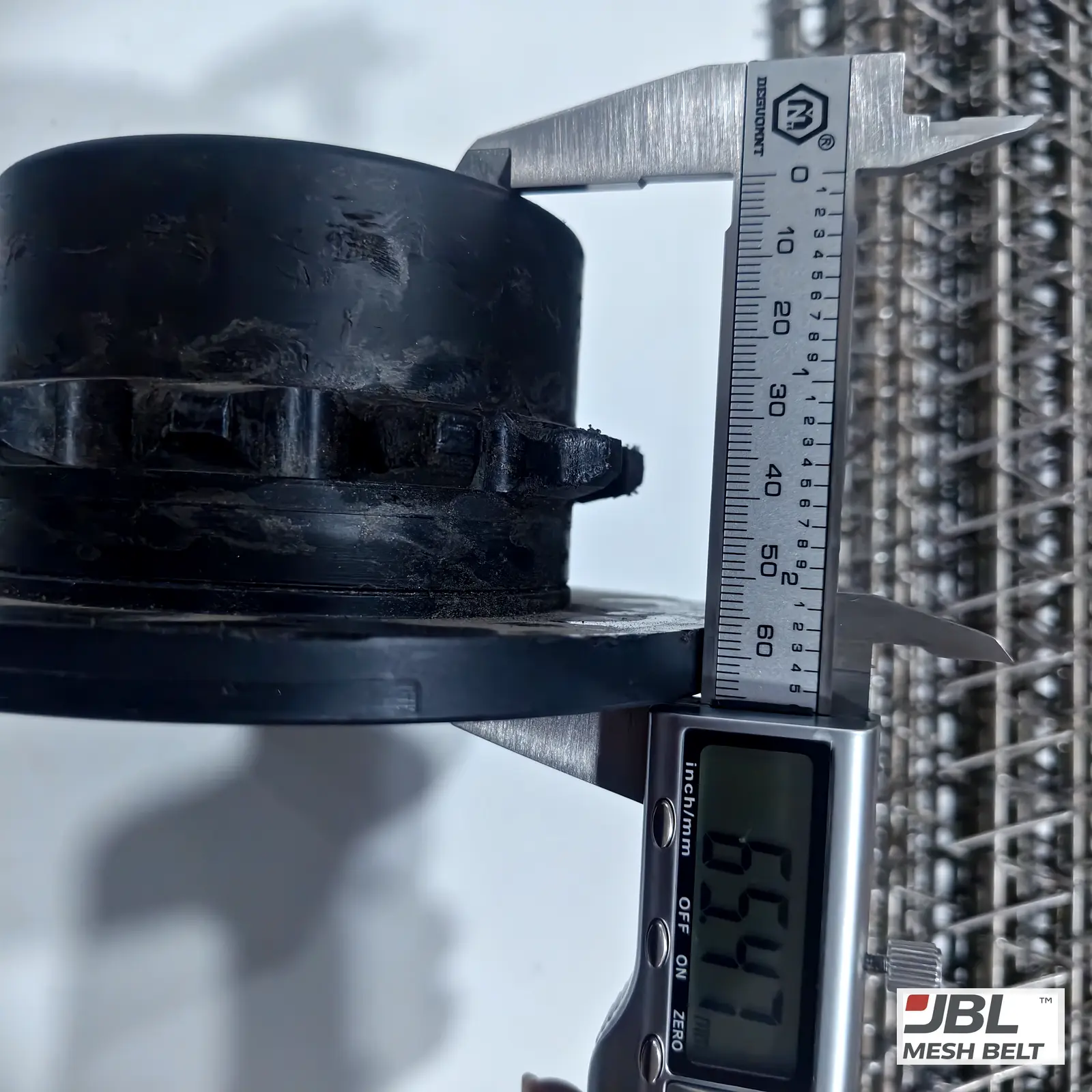
Send the project route (replacement, retrofit, repeat or urgent), the current belt data or drawing, old belt photos, the failure history, any change in product, capacity or hygiene, the drive and sprocket condition, and for spirals the drum diameter, turn direction and a running video.
| Information | Why I need it |
|---|---|
| Project route | Decides like-for-like or review |
| Drawing, old belt photos or sample | The existing specification |
| Failure history | Whether a copy would repeat a problem |
| Product, load, temperature, cleaning | Whether requirements have changed |
| Drive and sprocket condition | Whether the system is healthy |
| Drum diameter, turn direction, running video | Spiral-specific fit |
This list follows the buyer information in our order control process. With it, I reply with one of three answers: replace like-for-like, replace with a targeted improvement, or involve the machine side because the change goes beyond the belt.
- 01
Send the system information
Route, belt data, history and changes.
- 02
Get an initial view
Like-for-like, targeted improvement, or machine project.
- 03
Confirm the specification
Drawing or sample approved in writing.
- 04
Prove it
Sample or trial run measured and tested before bulk.
Replacement or retrofit?
Send the current system information and the belt's history. I give you an initial engineering view before any quotation.
When This Is Not the Right Choice
- ✕If the machine is under the maker's warranty or service contract, discuss any change with them first.
- ✕If the line is being redesigned for a new product or capacity, start with the machine design; the belt follows it.
- ✕If the belt type is protected by the original maker's rights, a copy may not be possible; I will tell you if I see that risk.
From My Engineering Experience
When a line has run well for years, I think like-for-like is right. That line has earned its specification. In the UK and Brazil, the job was to copy accurately, and the tests proved it.
But I have also seen where a straight copy would have been wrong. In Melbourne, the welds were the problem. On the waffle line, the sprockets were worn too. In both, the fix stayed in the belt and its sprockets.
So I ask two questions at the start: has anything changed, and has anything failed? If both answers are no, I copy. If either is yes, I review first.
— Spring, Sales Director, JBL Mesh Belt
Evidence From Our Work
Melbourne, Australia — a targeted improvement →
| Step | Detail |
|---|---|
| Known problem | Rough welds scored the guide strips |
| Matched | Pitch 27.41 → 27.40 mm, rod 5.03 → 5.00 mm, link 2.70 mm |
| Changed | Welds finished smooth; new belt electropolished |
| Route | From the customer's sample, no drawing |
Spain, 2026 — a new design from requirements →
| Step | Detail |
|---|---|
| Starting point | No sample, no drawing |
| Design | Dimensioned drawings approved by the customer |
| Proof | Sample checked on the customer's line |
| Bulk | About 100 m after approval |
FAQ
Q1When should I replace a spiral belt like-for-like?
When the system has run stably, wear is normal, and product, capacity and drive are unchanged.
Q2When do I need an engineering review?
When belts fail repeatedly, tension is high, requirements have changed, the drive is worn or the belt type is obsolete.
Q3Can you improve the belt without changing the machine?
Yes: weld and surface finish, material, wear-corrected sizes and matched sprockets.
Q4Do you redesign spiral freezers?
No. Changes to drum, drive or layout are for the freezer maker or an integrator; I supply the belt to their design.
Q5What do you need for an initial review?
Project route, belt data, failure history, any changes, drive condition and, for spirals, drum diameter, turn direction and a running video.
Conclusion
Copy what has proven itself; review what has failed or changed. Most fixes live in the belt — the rest belong to the machine.
Download the Spiral Freezer Belt Technical Specification (PDF)
Specification ranges and options in mm and inch. Enter your work email and the file downloads right away.
References
Your contact for this belt
Spring · Sales Director, JBL Mesh Belt · 16 years
“Your belt is worn, the OEM price is high, and there is no drawing. That is where I start.”
Send me a worn section, a few photos with a caliper in the picture, or a drawing. I tell you what fits, what is missing, and show you a sample measured against your own belt before you pay for the full length. Buyers in the UK, the USA, Australia, Brazil, South Korea, Spain and Malaysia have replaced belts this way.
- ✓Readings on your original next to readings on our sample
- ✓Nothing in bulk until you approve the sample
- ✓Turning, stacking or sprocket tests before your belt ships
- ✓A reply from me, usually within 8 hours