Engineering · 11 min read
Low-Tension, Direct, Side or Edge Drive: How Does Your Freezer's Drive Change the Belt You Need?
 Written bySpringSales Director, JBL Mesh Belt · 16 years in metal conveyor beltsProjects in United Kingdom · USA · Australia · Brazil · South Korea · Spain · MalaysiaPublished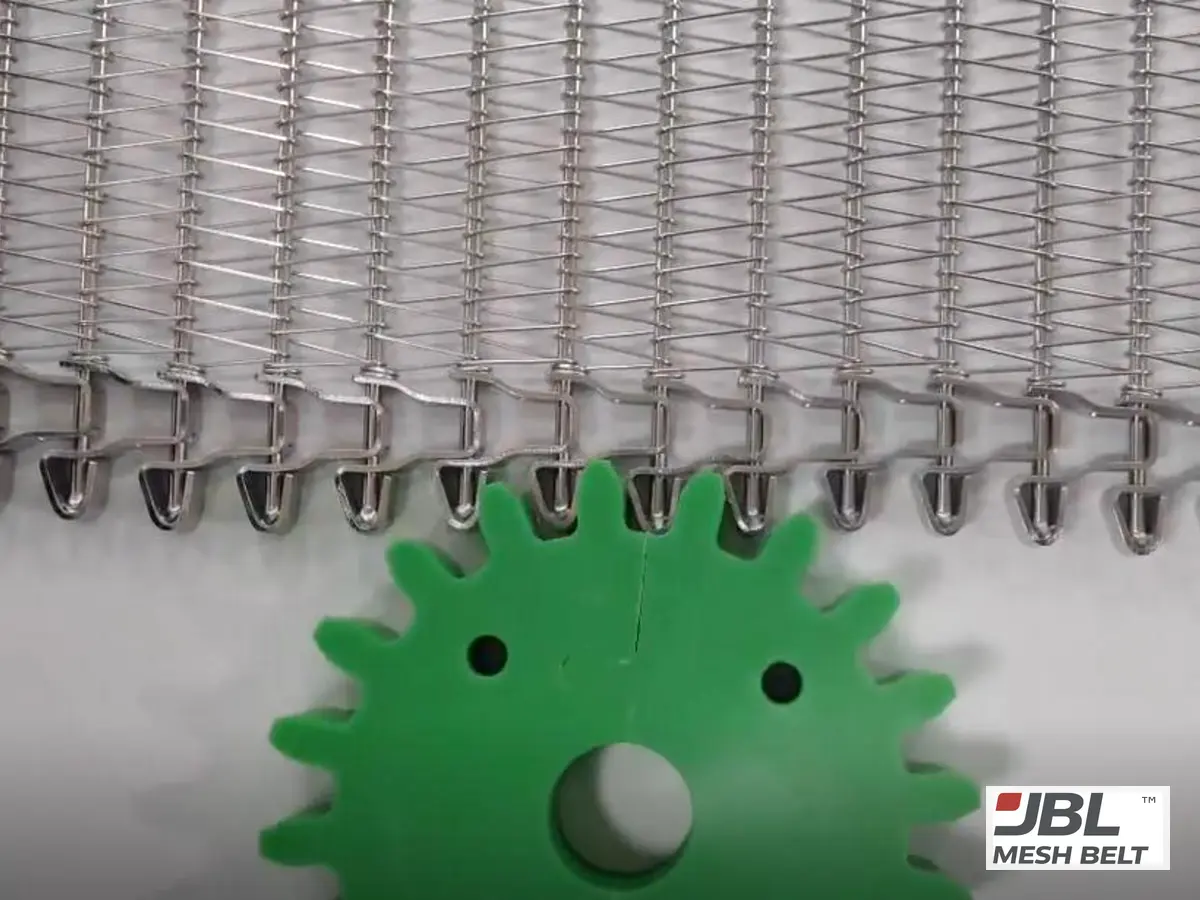
Two freezers can look alike from the outside and move the belt in completely different ways. Order for the wrong drive, and the belt fights the machine.
Short answer
The drive decides where the machine touches the belt. A low-tension drive moves it by friction on the inner edge, a direct drive engages the inner edge, a side drive uses sprockets on the side links, and an edge drive uses roller chains. Each one needs different belt details matched.
At a Glance
| Product | Application | Key point | Buyer type | What to send |
|---|---|---|---|---|
| Spiral, side-driven and chain-edge belts | Spiral freezers and coolers, tunnel lines | Know your drive before you order | Engineers, maintenance teams, OEMs | Photos of the drive, drum or sprockets and the old belt edge |
Freezer makers use different names for these systems, so I go by how the belt is moved, not by the name on the brochure. Here is what each drive does and what I check on the belt for it.
01How do the four drive types move the belt?
Each drive pushes or pulls the belt at a different point. That point is where wear, noise and most fit problems start.
Short answer
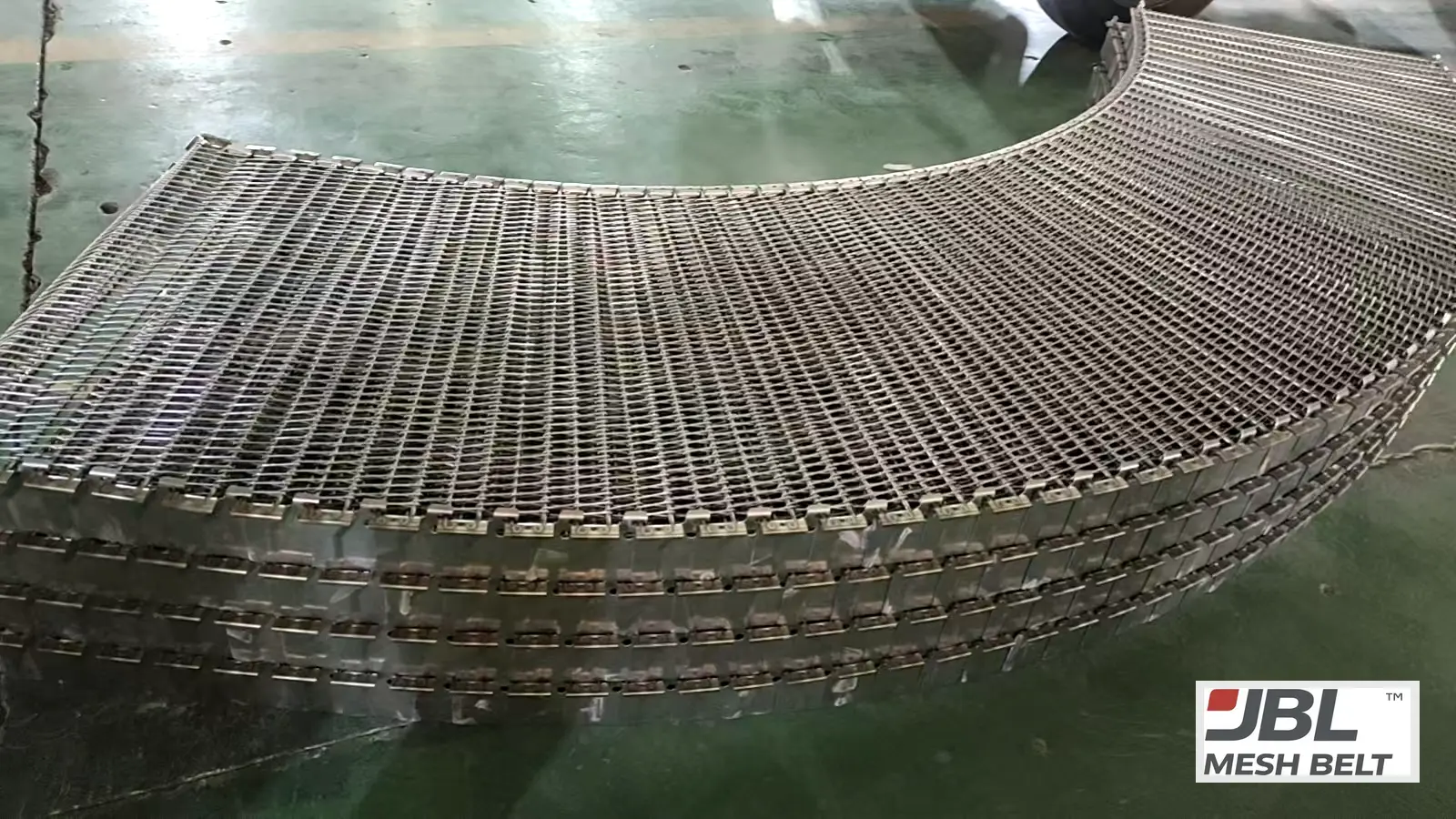
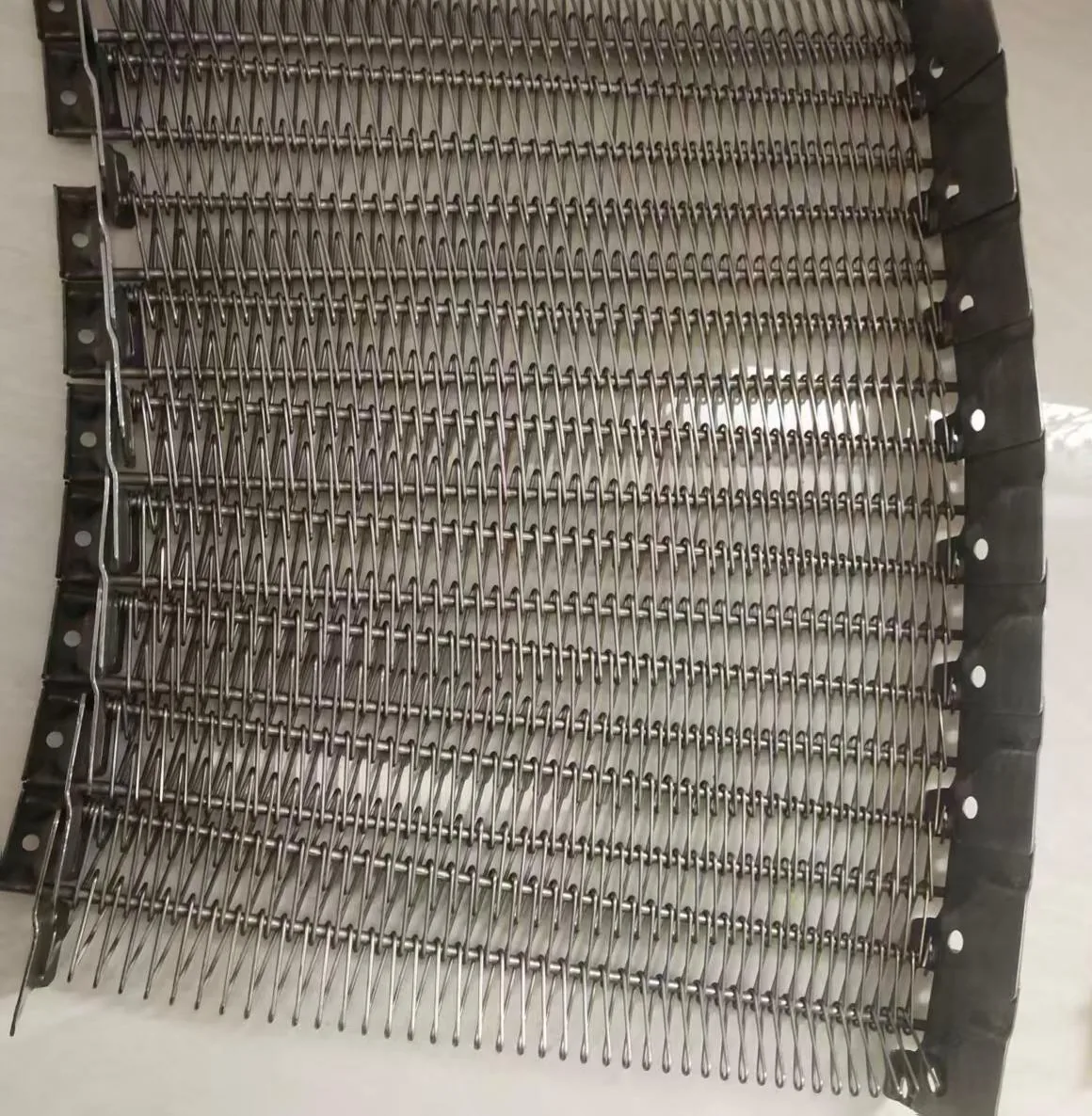
A low-tension drive moves the belt by friction between the turning drum and its inner edge. A direct drive engages the inner edge with the drum itself. A side drive pulls the belt with sprockets on its side links. An edge drive uses sprockets on roller chains along both edges.
| Drive | What moves the belt | Where it touches | What the belt must match |
|---|---|---|---|
| Low-tension (friction) | Rotating drum, by friction | Inner edge against the drum bars | Turn ratio, smooth inner edge, link design |
| Direct drive | Drum engages the belt directly | Inner edge against the drum | Edge geometry and pitch to suit the drum |
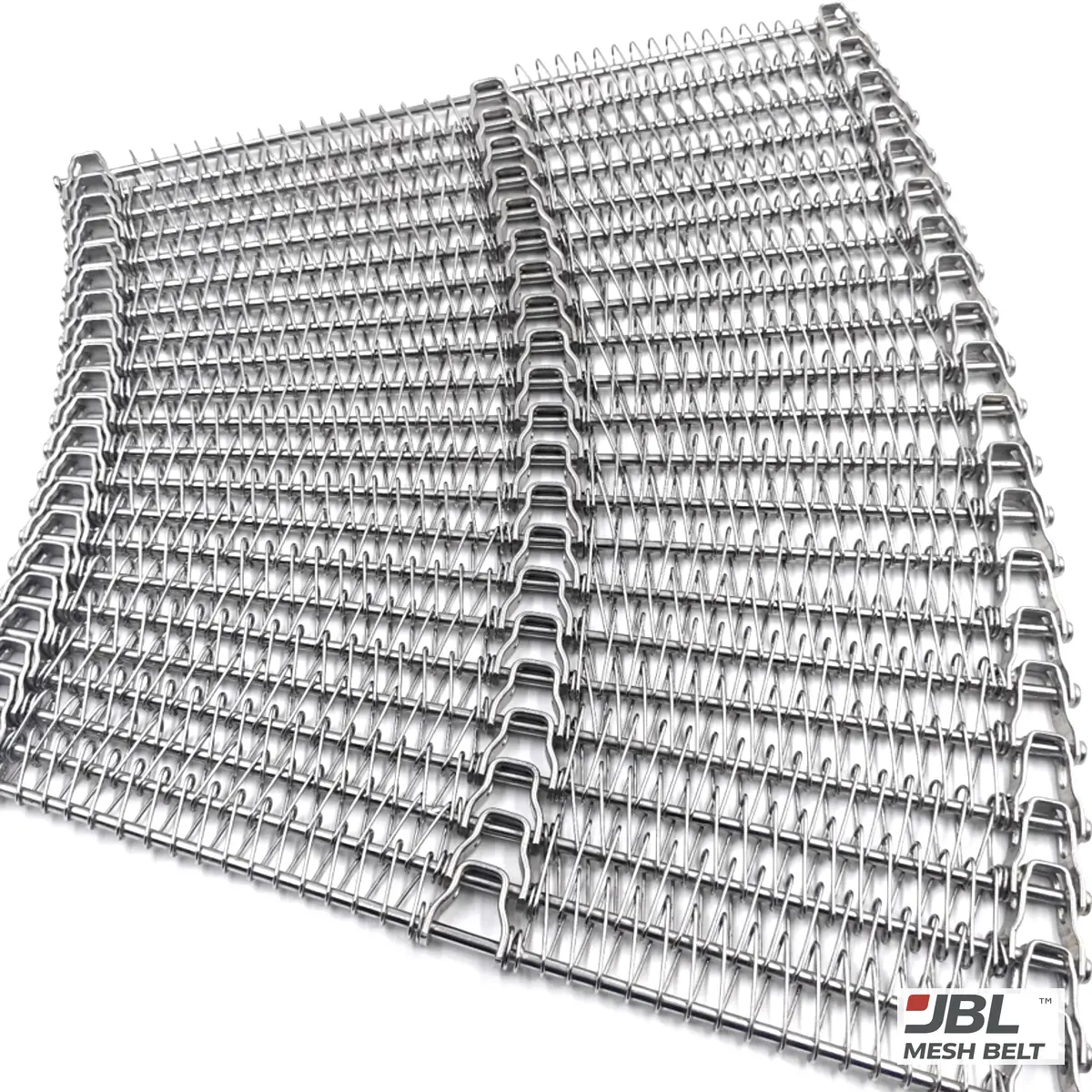
| Side drive | Sprockets on the side links | Side links and rods | Rod pitch (e.g. 31.75 or 34 mm), turn ratio |
| Edge drive (chain) | Sprockets on roller chains | Chain on both edges | Chain model and pitch, rod pitch |
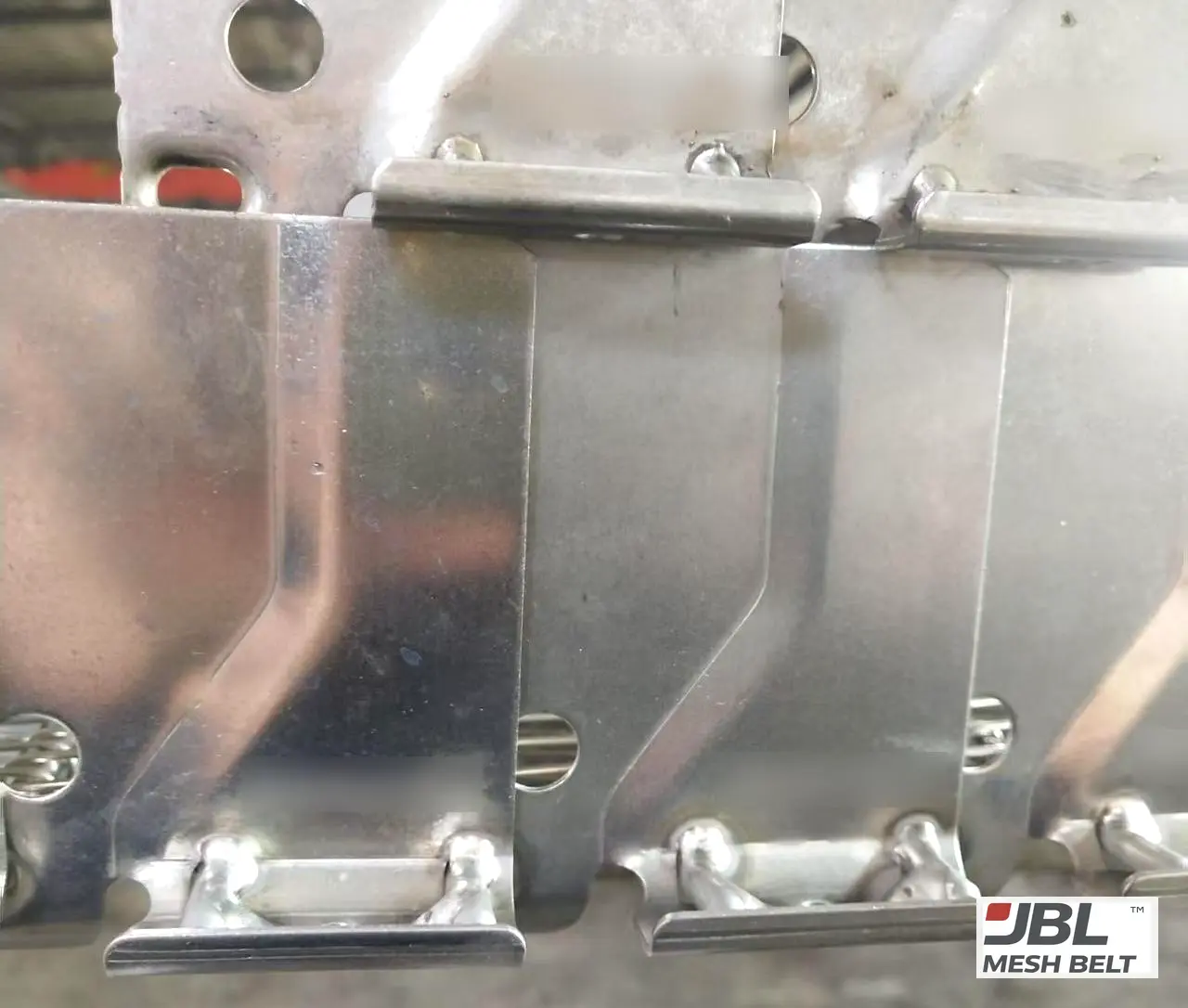
When a buyer is not sure which drive they have, I ask for two photos: one of the place where the drive meets the belt, and one of the old belt's edge. Those two photos usually answer the question faster than the freezer's name.
The drive also tells me what the old belt was designed for. A belt that worked on one drive can fail on another, even with the same width and pitch. I cover that in why the same width and pitch does not mean compatibility.
Freezers for fish and other foods come in many layouts. For a neutral overview of freezer types, the FAO's guide Freezing and refrigerated storage in fisheries is a good start.
02What does a low-tension friction drive ask of the belt?
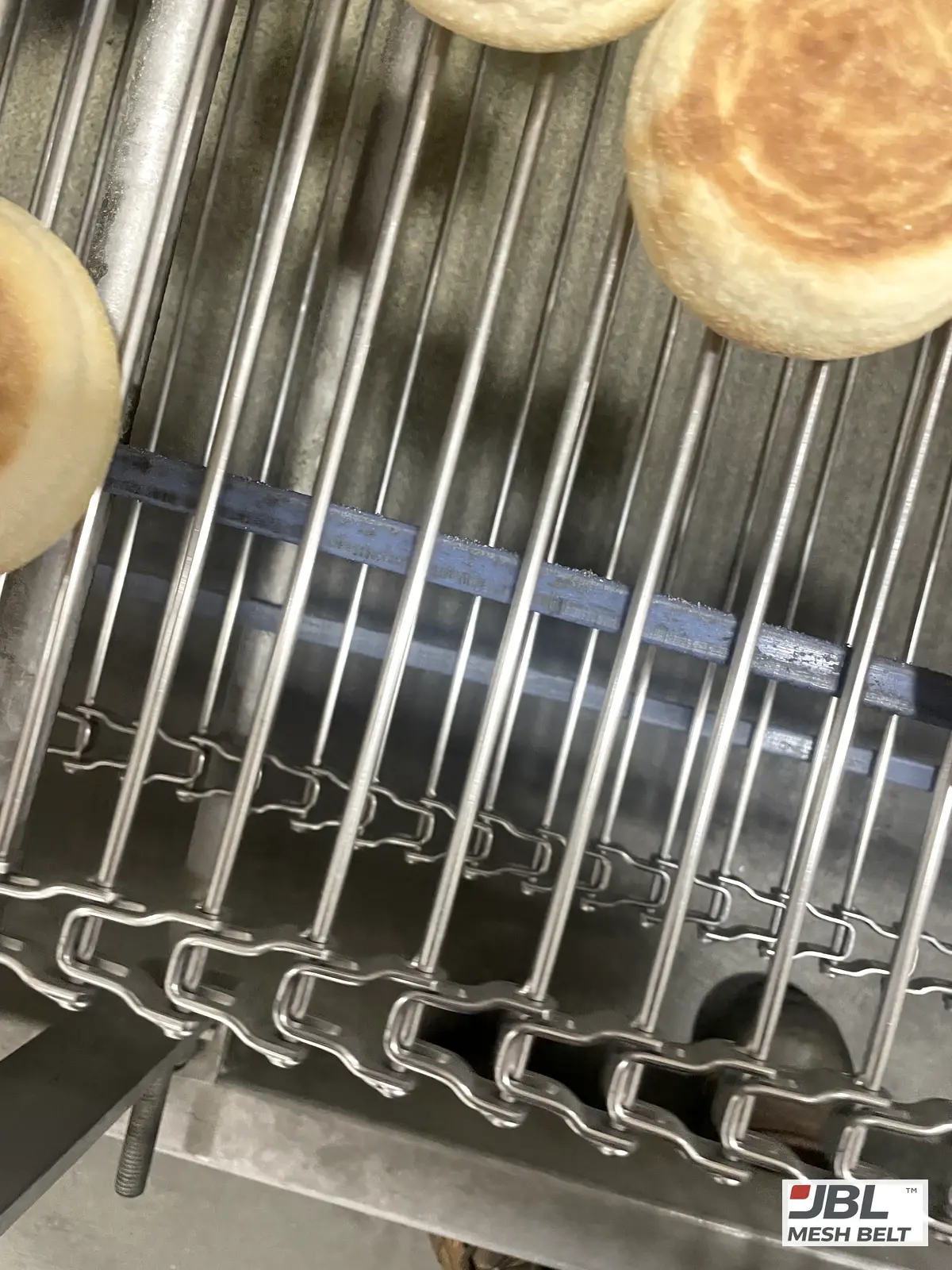
In a friction-drive spiral, the inner edge of the belt is pressed against the drum bars for the whole time it is in the freezer.
Short answer
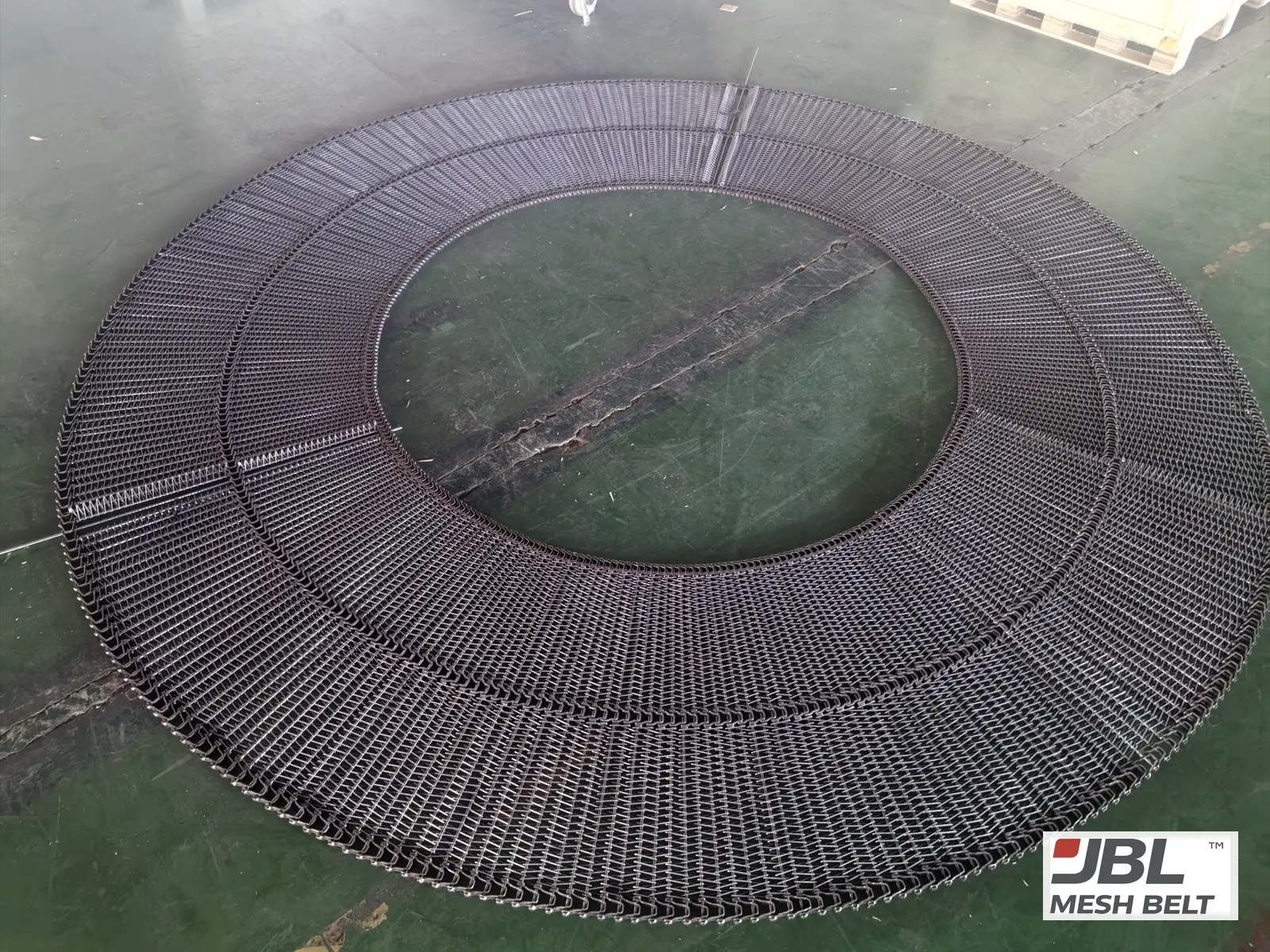
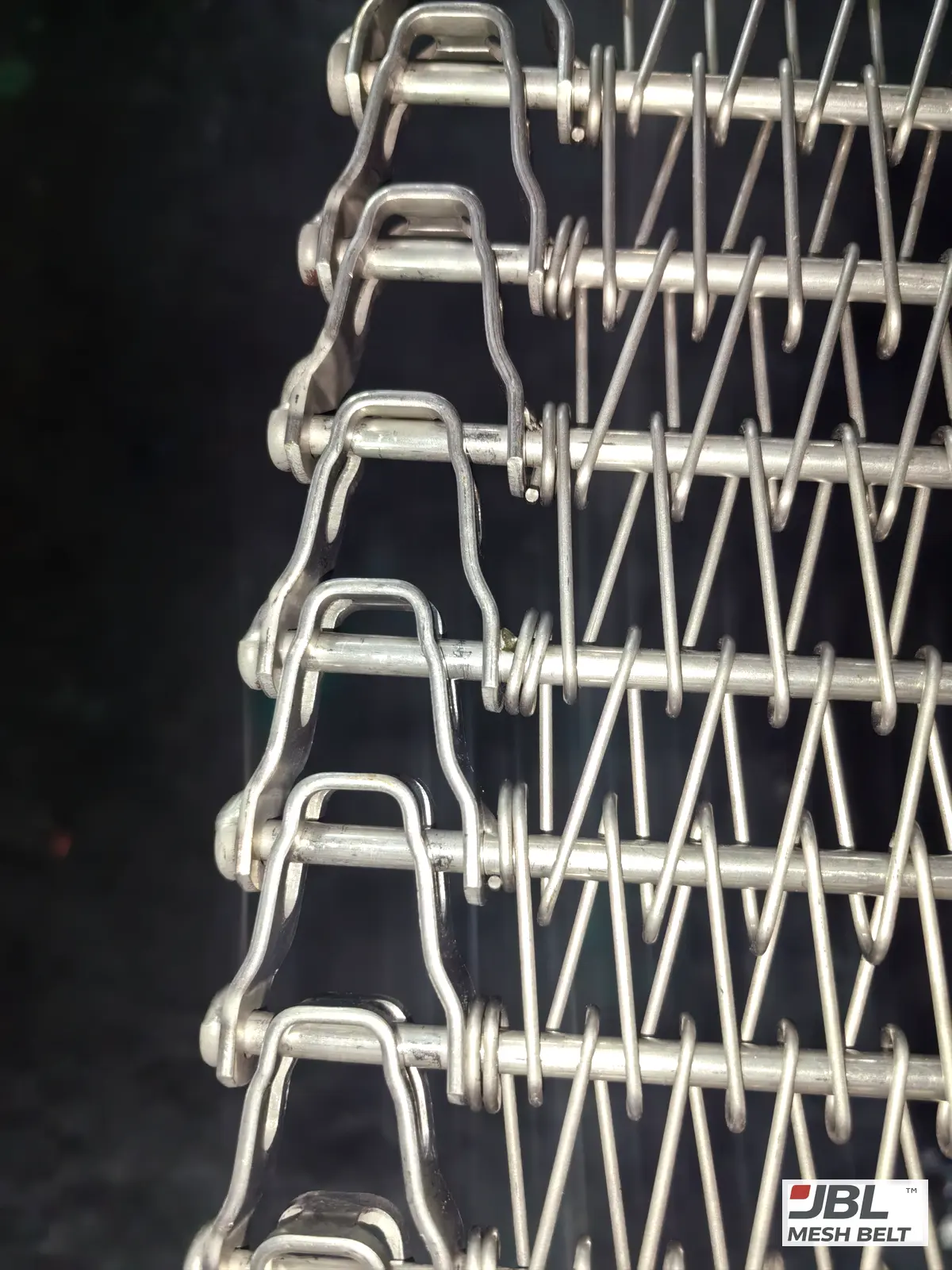
On a low-tension friction drive, belt tension presses the inner edge against the drum's bars, and friction moves the belt. So the inner edge must be smooth, the links must collapse to your turn ratio, and the edge welds must carry no burrs that scratch the bars.
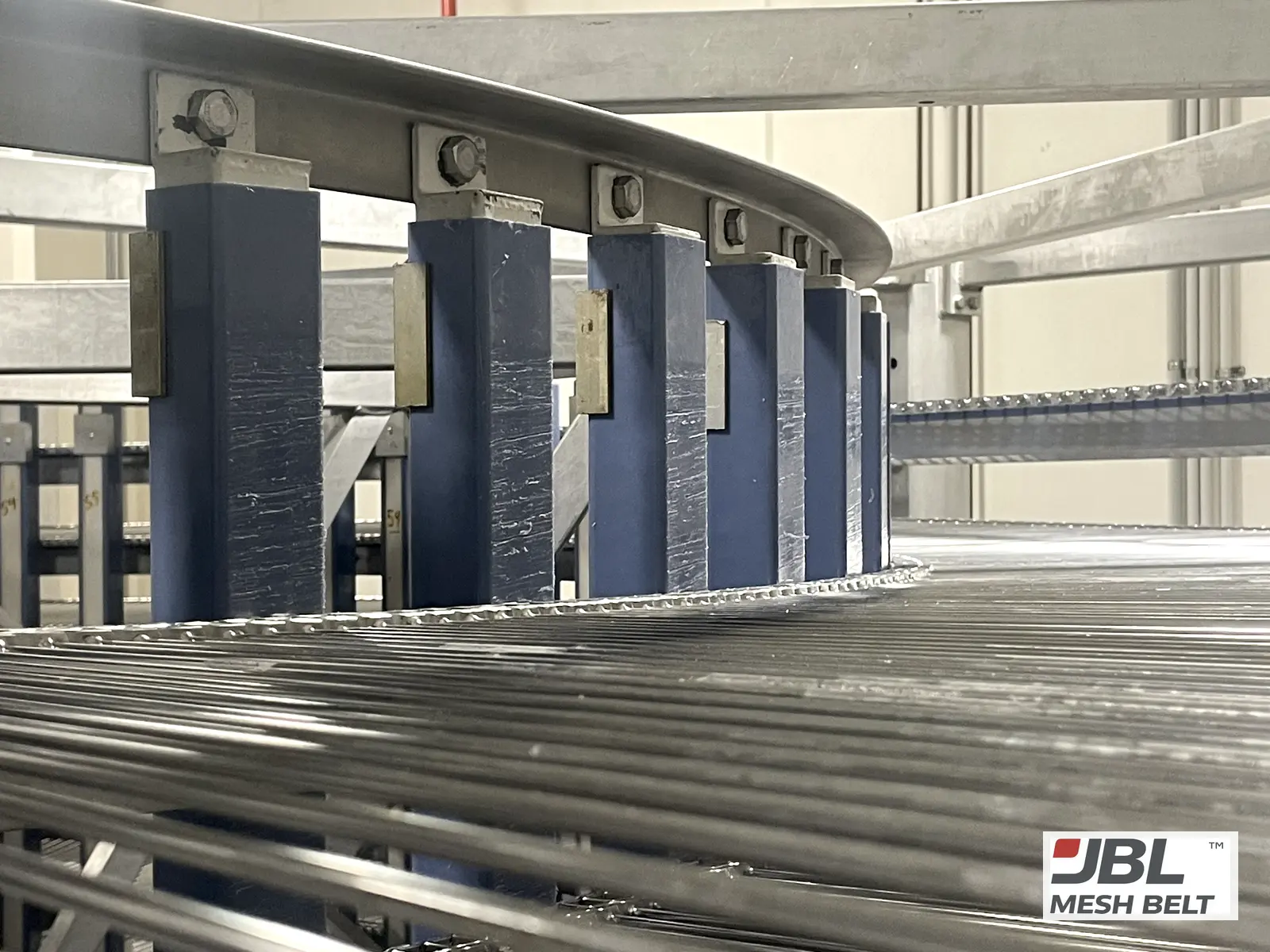
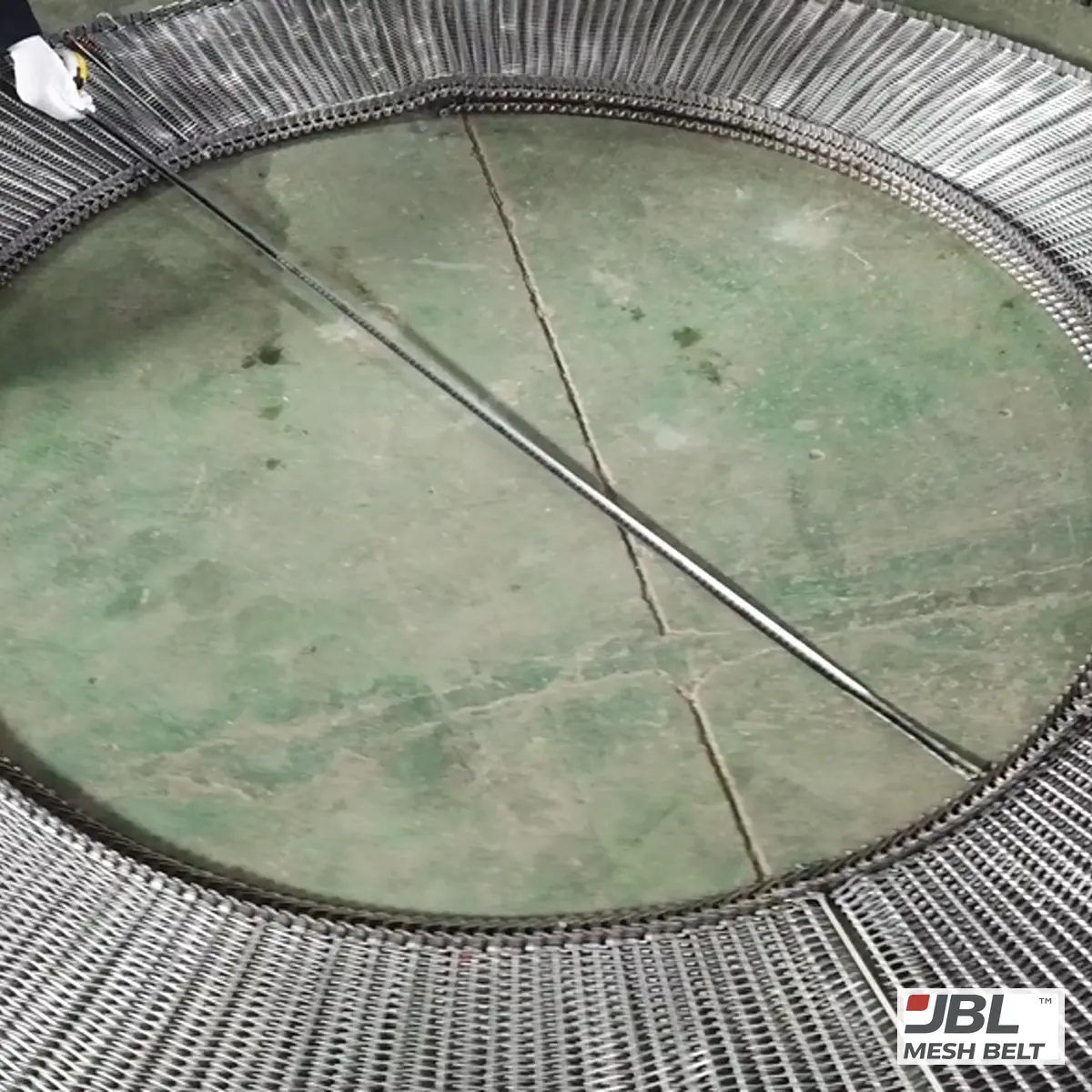
The drum turns, and the belt follows it by friction. A separate drive pulls the belt out of the spiral and keeps the tension low. The settings of that drive are the machine's job. The belt's job is to turn smoothly and slide on the drum bars without damaging them.
Three things I check for a friction drive
- ✓Turn ratio and link type — the inside edge must close to your drum's radius. Standard two-row links start around 1.15; small radius three-row links around 1.1.
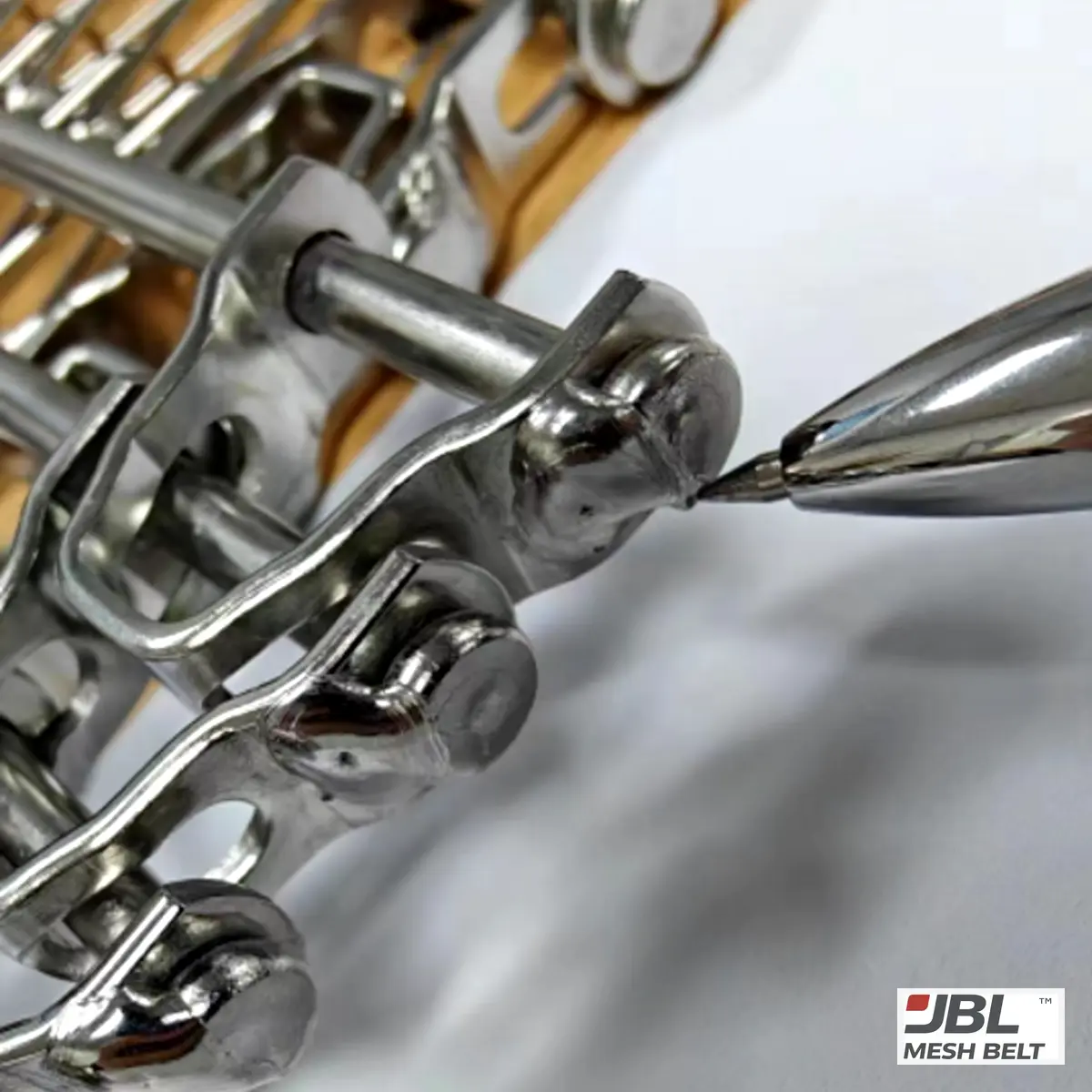
- ✓Inner-edge welds — every weld that touches the drum bars is ground and checked for burrs.
- ✓Flatness — a belt that waves instead of lying flat tracks badly and loads the edge unevenly.
The weld point is the one buyers underestimate. On friction-drive spirals I have seen burrs on inner-edge welds scratch the drum's U-shaped bars and leave black residue that ends up on product. I explain the full mechanism in weld burrs and IQF contamination.
03What changes with a direct drive at the drum?
With a direct drive, the drum does not rely on friction. It engages the belt edge itself.
Short answer
On a direct drive, the drum engages the belt's inner edge instead of relying on friction. The edge geometry and pitch must suit the drum, and pitch stretch can matter more, because both must stay in step. I need photos of the drum where it meets the belt.
| What I ask for | Why |
|---|---|
| Photo of the drum where it meets the belt edge | Shows how the drum engages the belt |
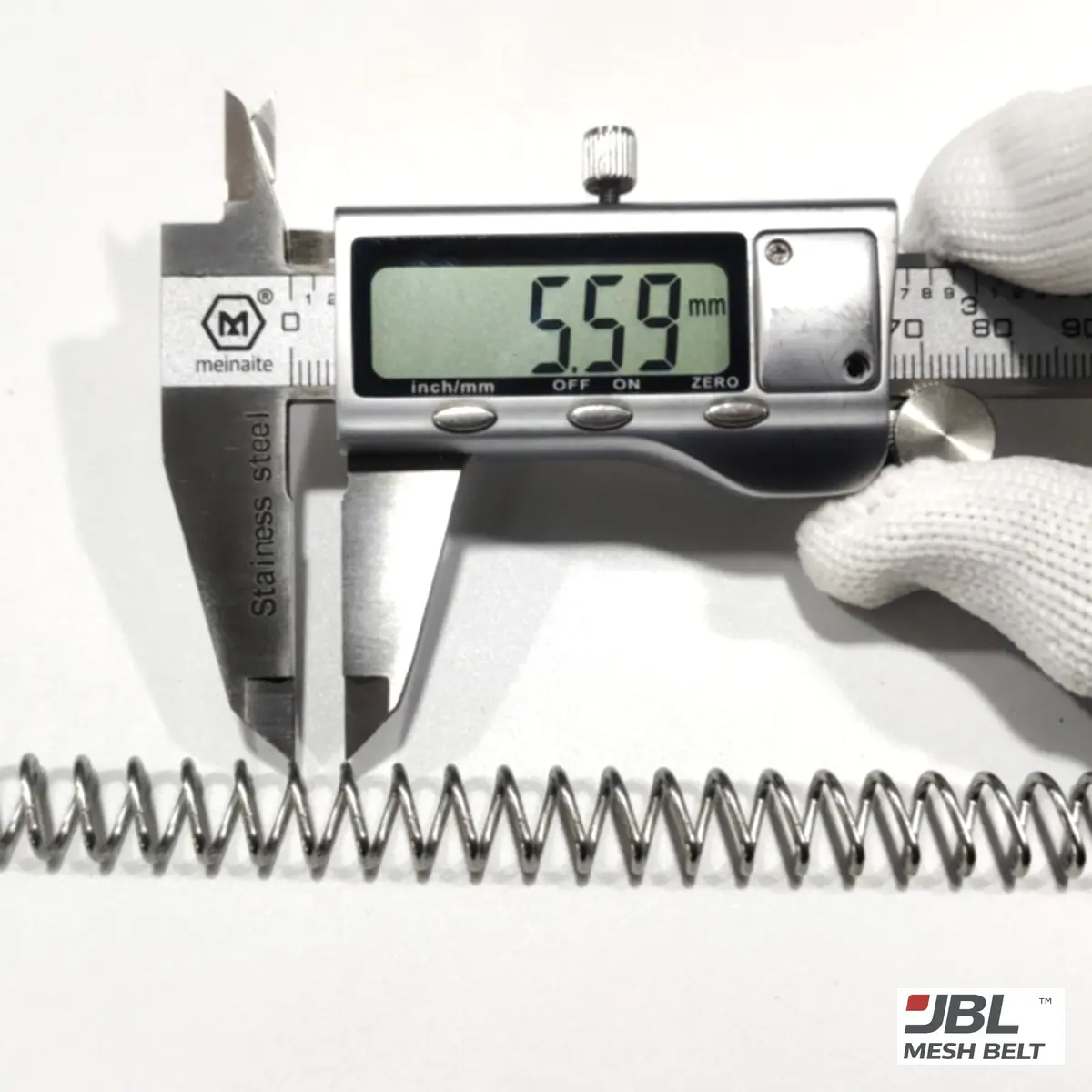
| Photo and caliper reading of the old belt's inner edge | Gives the edge shape and size to match |
| Pitch measured over several rods | Shows stretch, which matters more without slip |
| Drum diameter and turn direction | Sets turn ratio and which edge is inside |
Because the drum engages the belt instead of slipping against it, the belt and the drum have to agree at the engagement points. A belt that has stretched, or a new belt with a slightly different edge, may not just run a little worse; it can load single links. Direct-drive drums are more common with plastic modular spiral belts, so I treat each one as a case to check from photos.
Direct-drive systems differ from maker to maker, so I do not quote from a name. I quote from photos and readings of your drum and your old belt edge. If those are not available, I ask for a short section of the old belt, so the edge can be read with a caliper and copied exactly.
Pitch stretch is the reading I watch most. On a worn belt, I measure over several rods in more than one place and compare worn and less-worn areas, as described in copying a worn belt from a sample.
Not sure if your drum is friction or direct drive?
Send me a photo of the drum where it meets the belt, and one of the old belt edge. I will tell you what I see.
04How does a side-drive belt engage its sprockets?
A side-driven belt is pulled from its side links, not pushed by the drum. The sprocket is now the part that decides fit.
Short answer
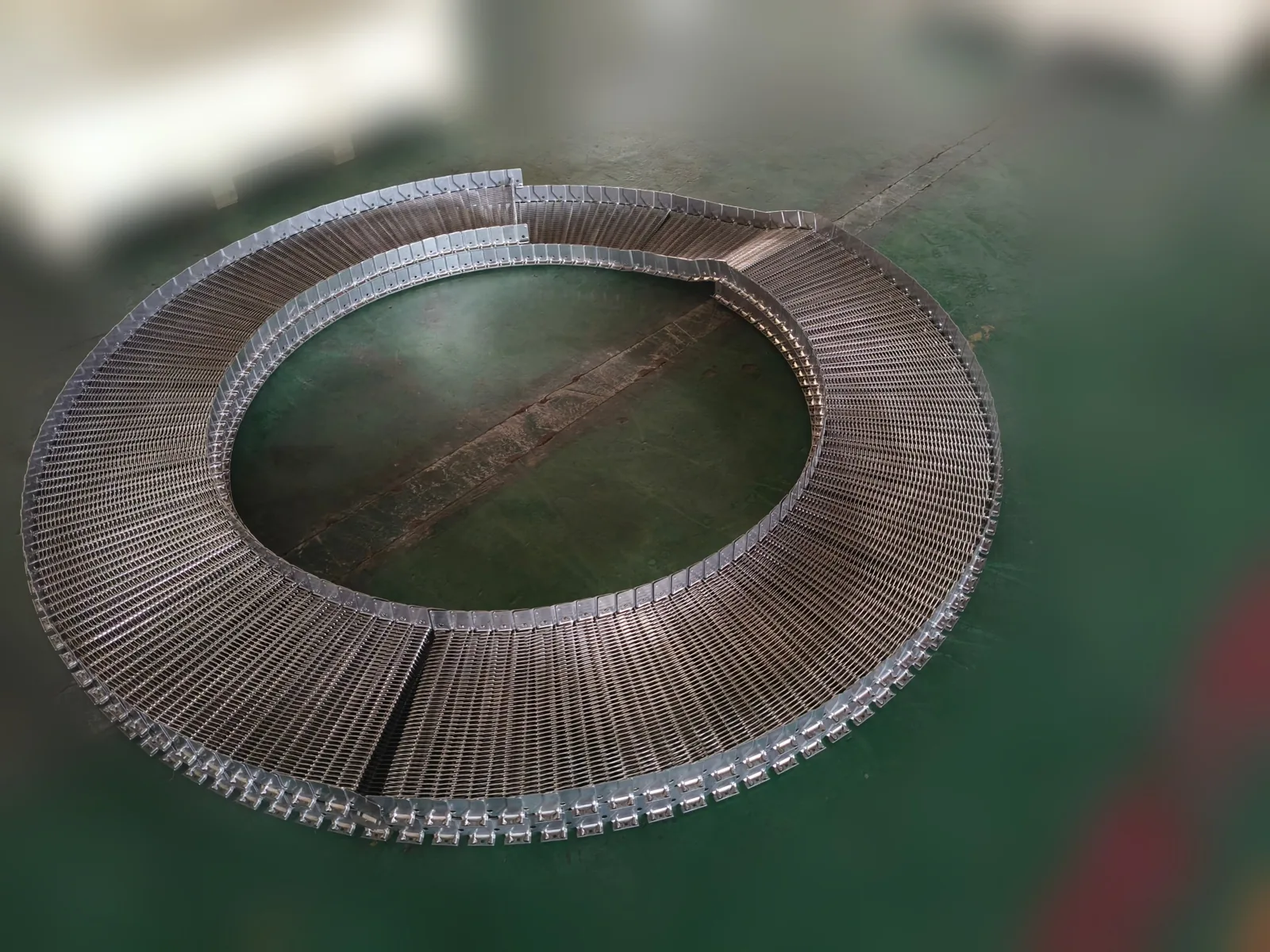
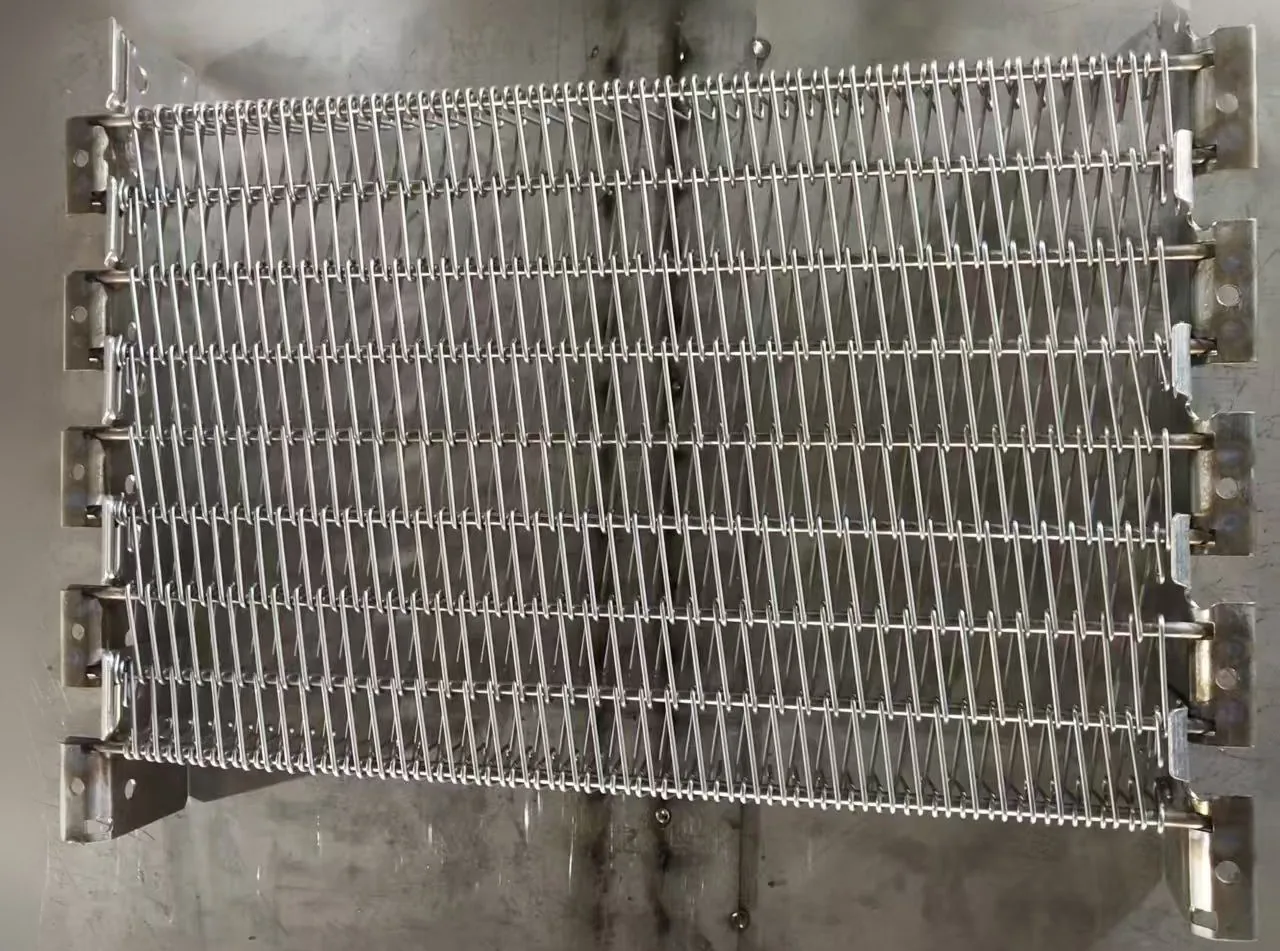
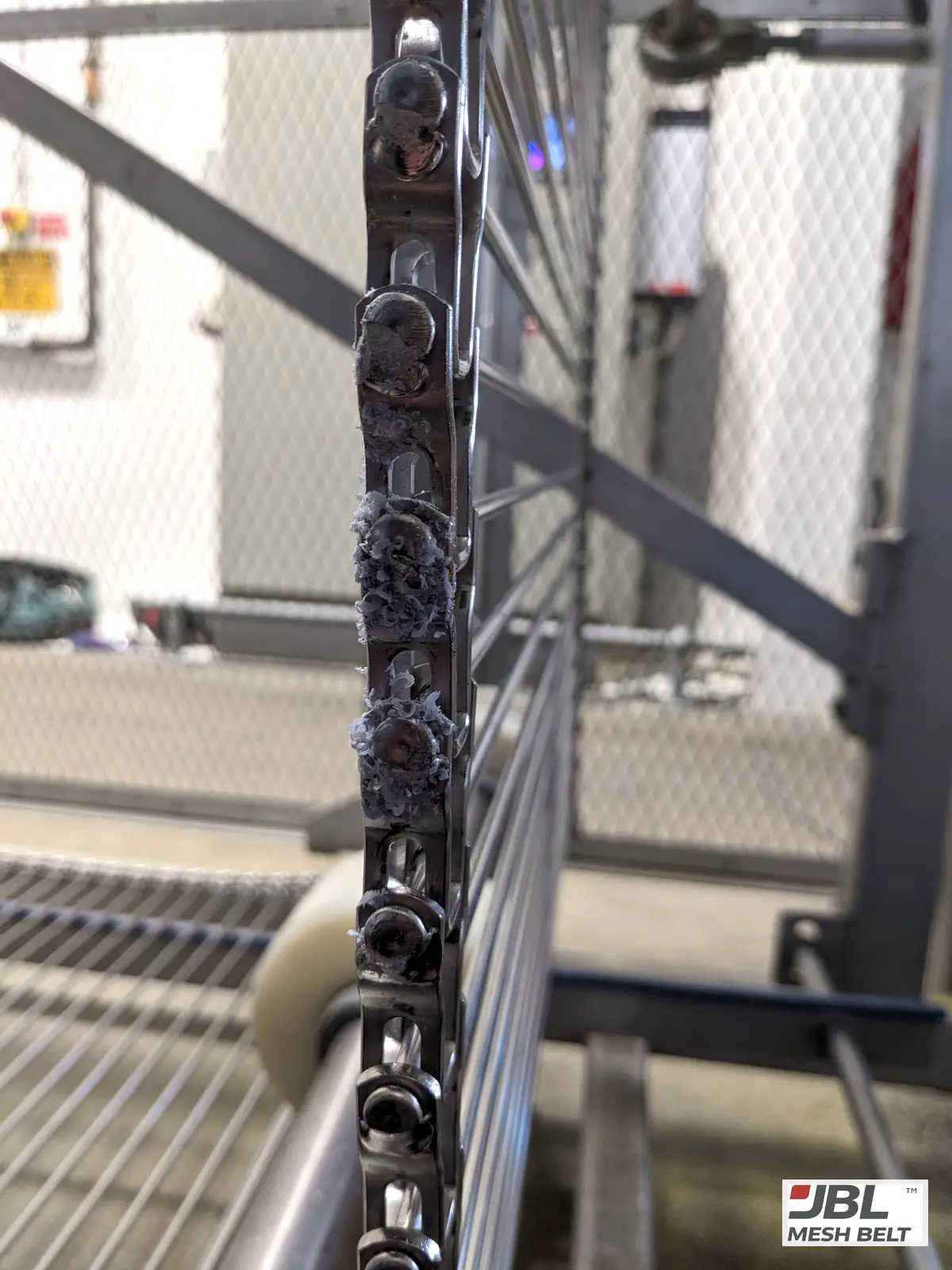
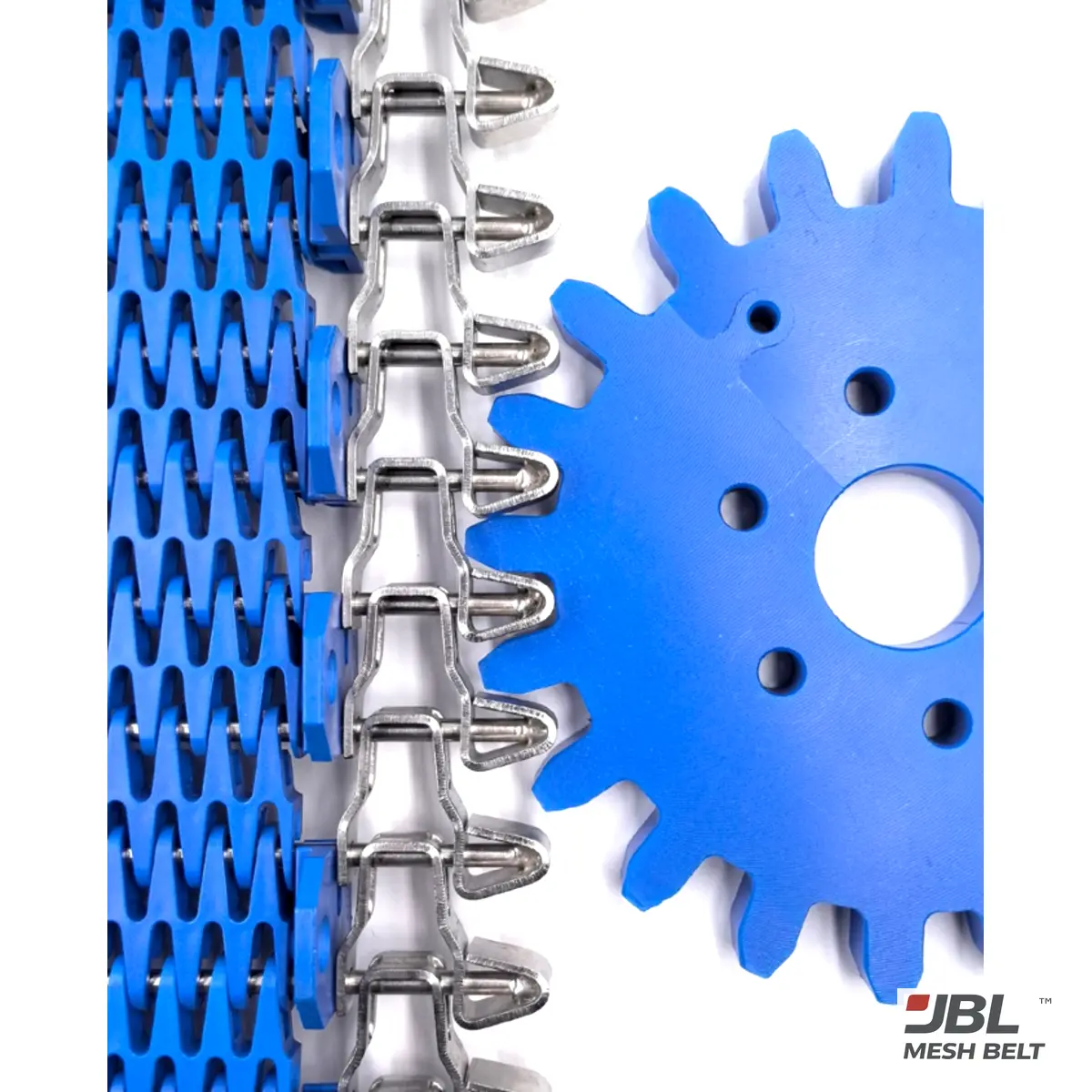
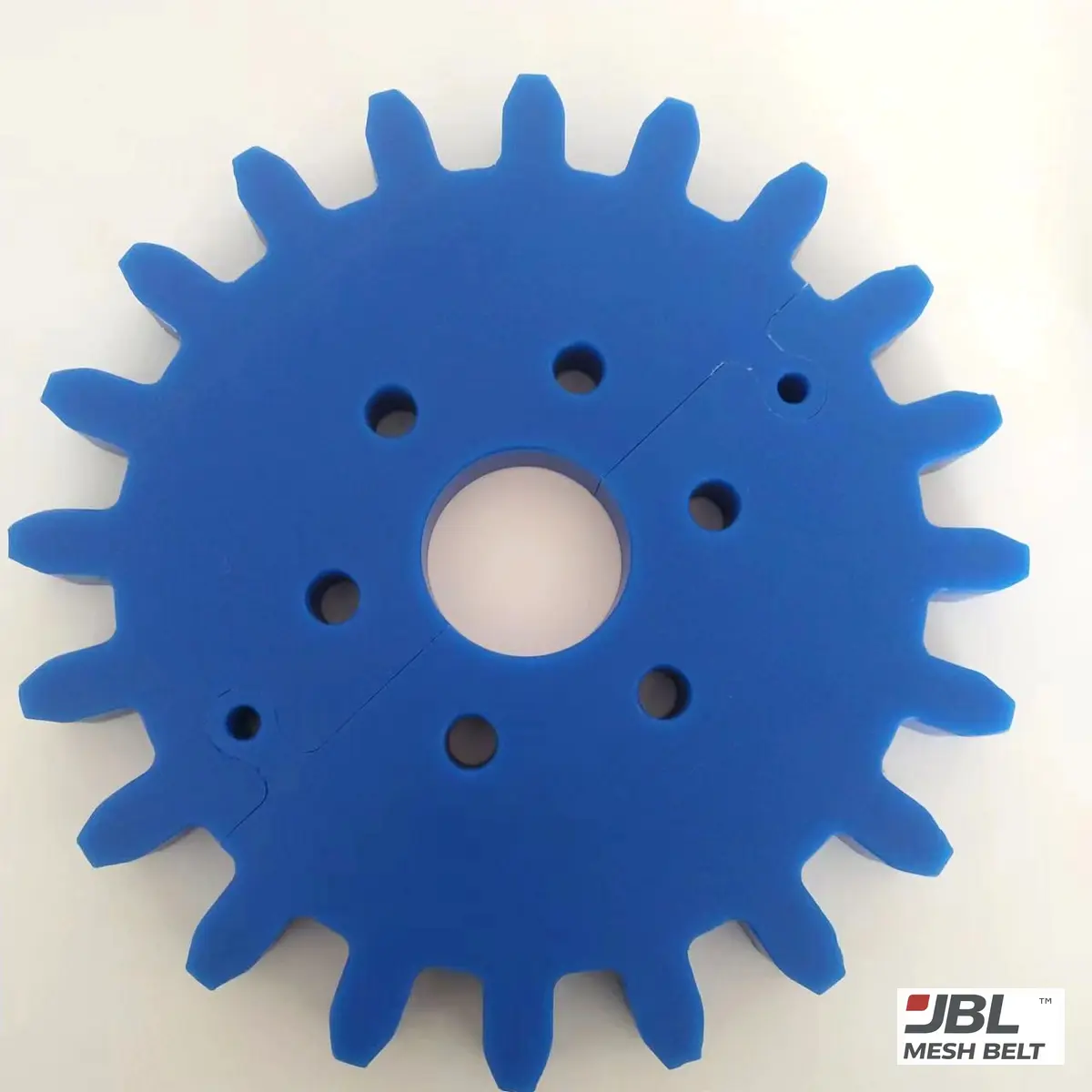
A side-driven belt is pulled by sprockets that engage its side links. Our side-driven belts run on 6.0 mm rods at a 31.75 mm or 34 mm rod pitch. The pitch must match your sprockets, and the turn ratio must still match your drum.
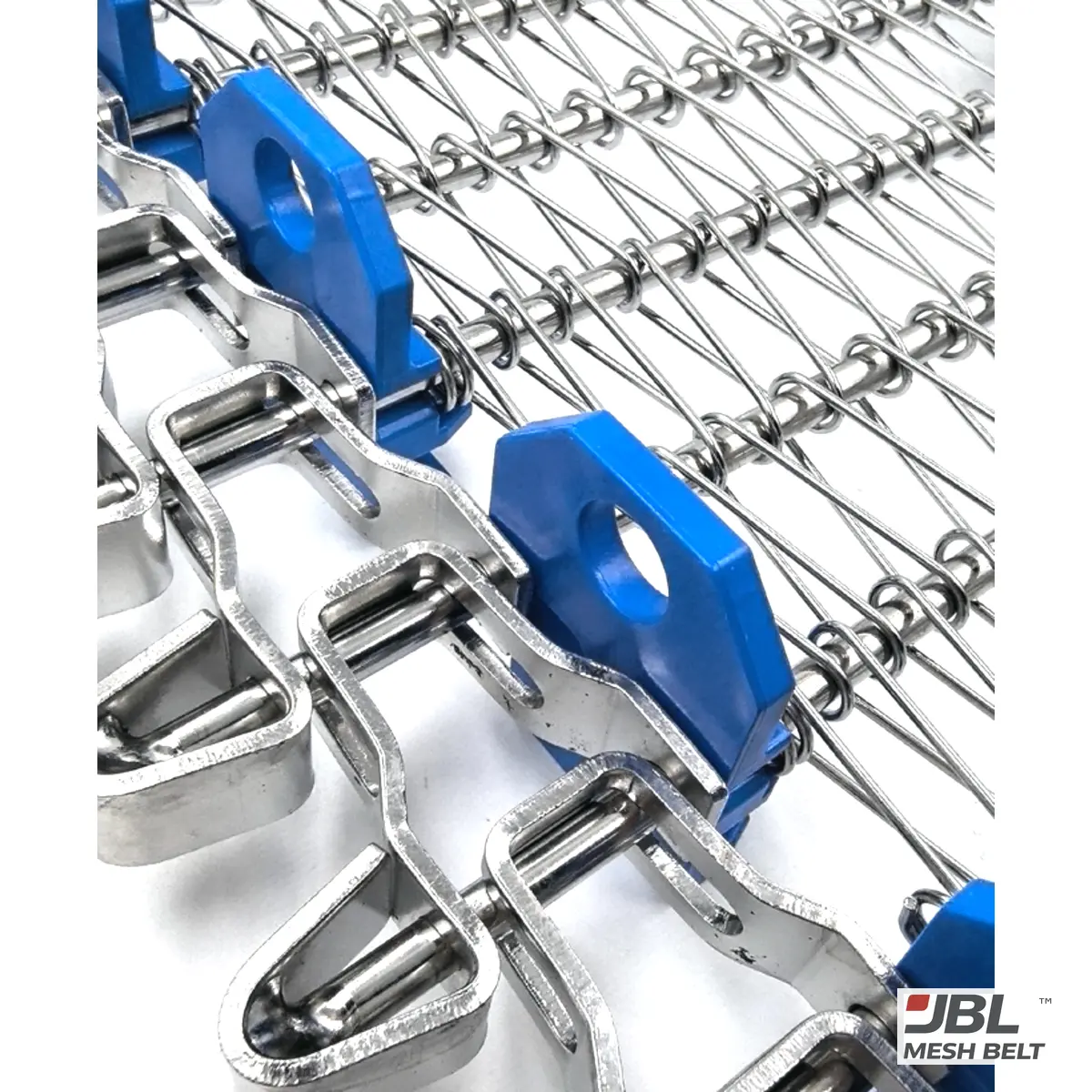
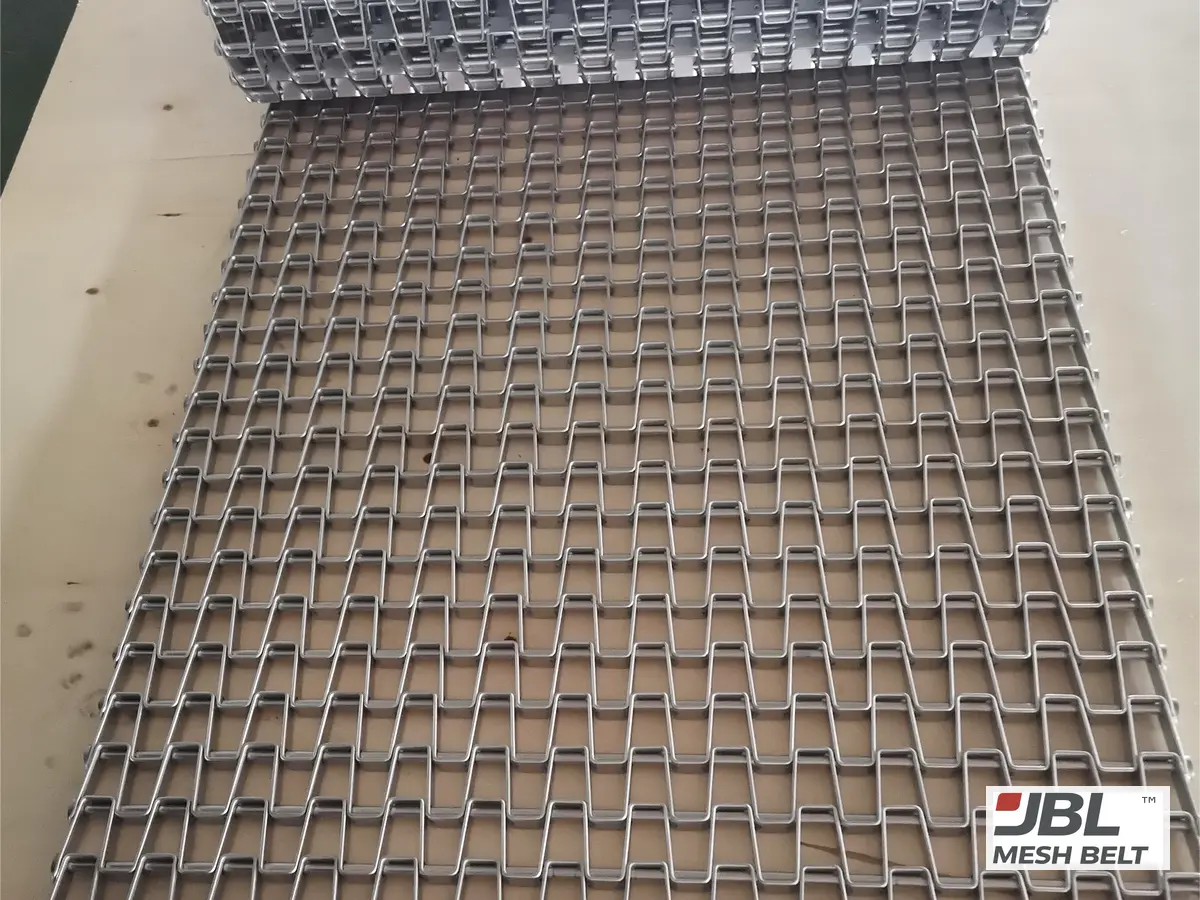
The mesh can be stainless steel spiral wire or POM. Both run on the same stainless side links and 6.0 mm rods. POM is only used in a grade suited to your temperature; standard POM is not for freezing.
| Check | Side-driven belt |
|---|---|
| Rod pitch | 31.75 or 34 mm, measured on your old belt |
| Rod diameter | 6.0 mm |
| Turn ratio | Confirmed against your drum diameter and belt width |
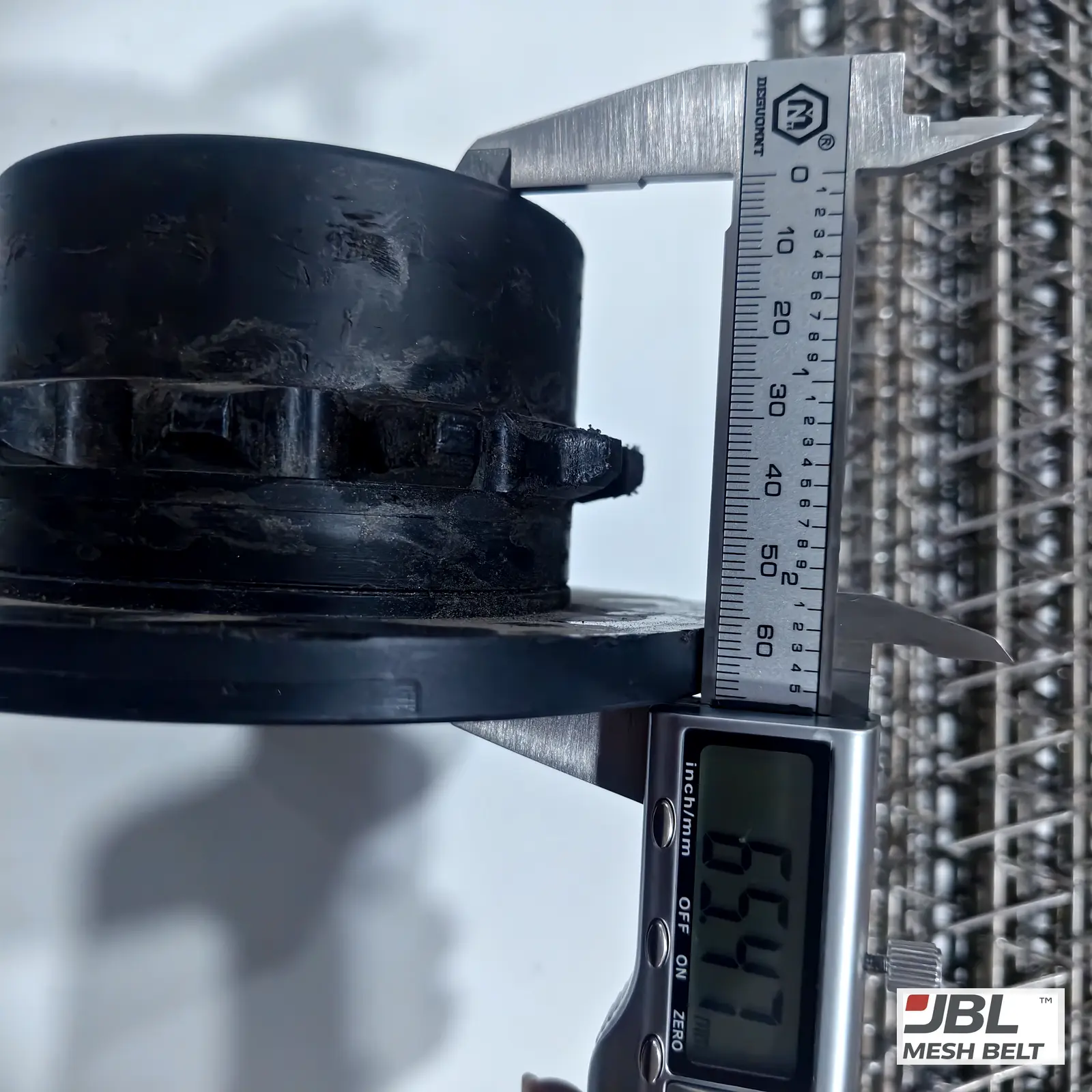
| Sprockets | UHMWPE, solid or split; tooth count, bore, keyway per drawing |
| Before shipment | Drum test and sprocket running test |
Split sprockets fit onto the shaft without removing it. Whatever the sprocket, it must be cut for the same pitch as the belt. The two pitches look alike, so they are read with a caliper, never by eye.
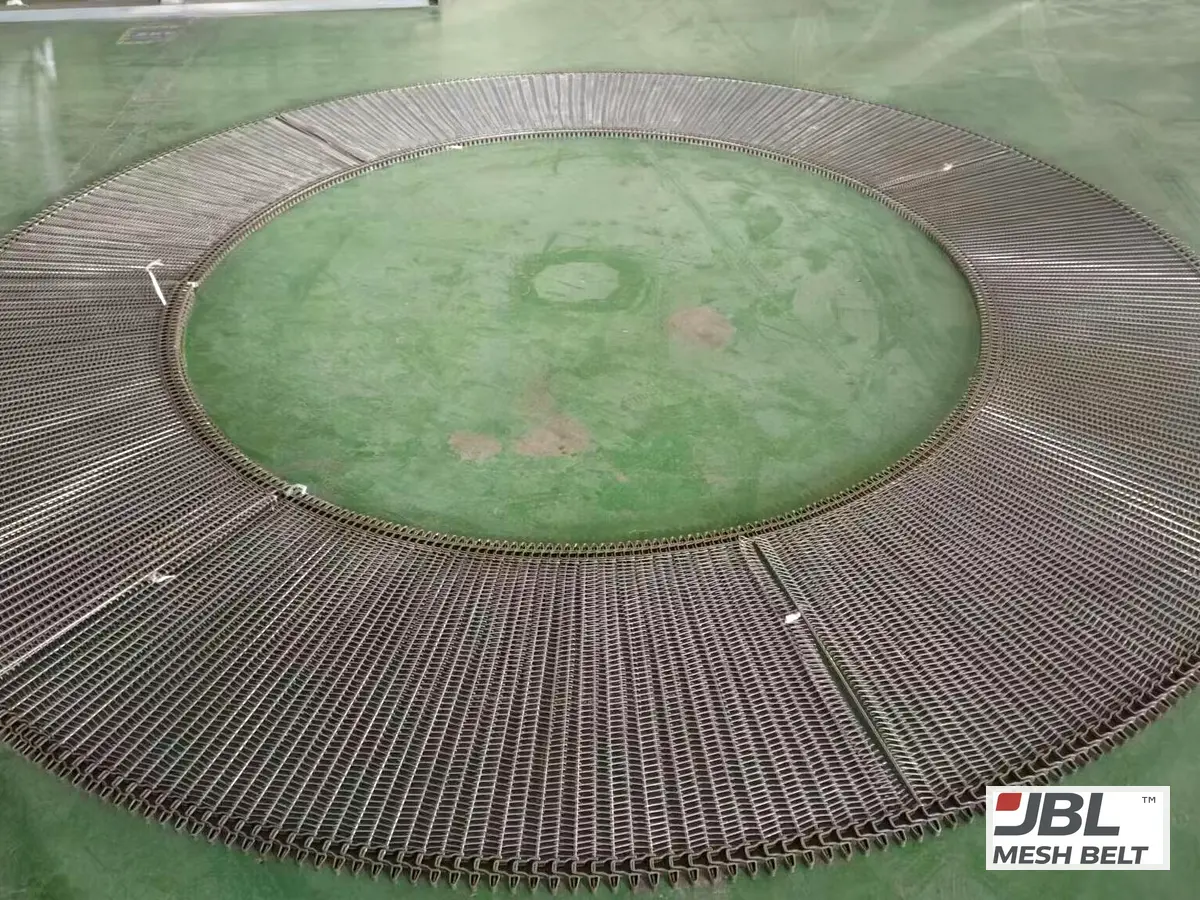
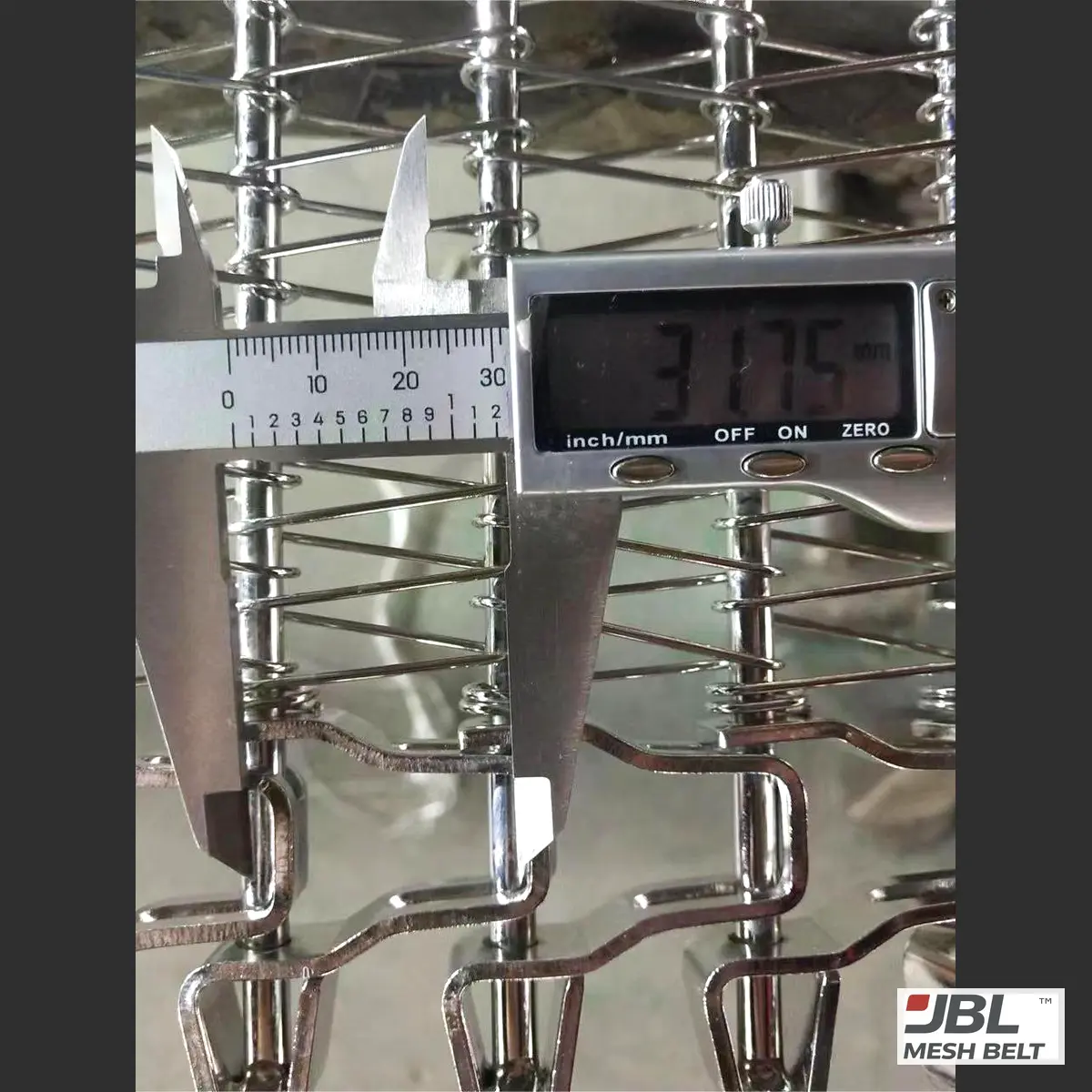
More on the belt itself on our side-driven belt page.
05When is an edge drive used, and what must match?
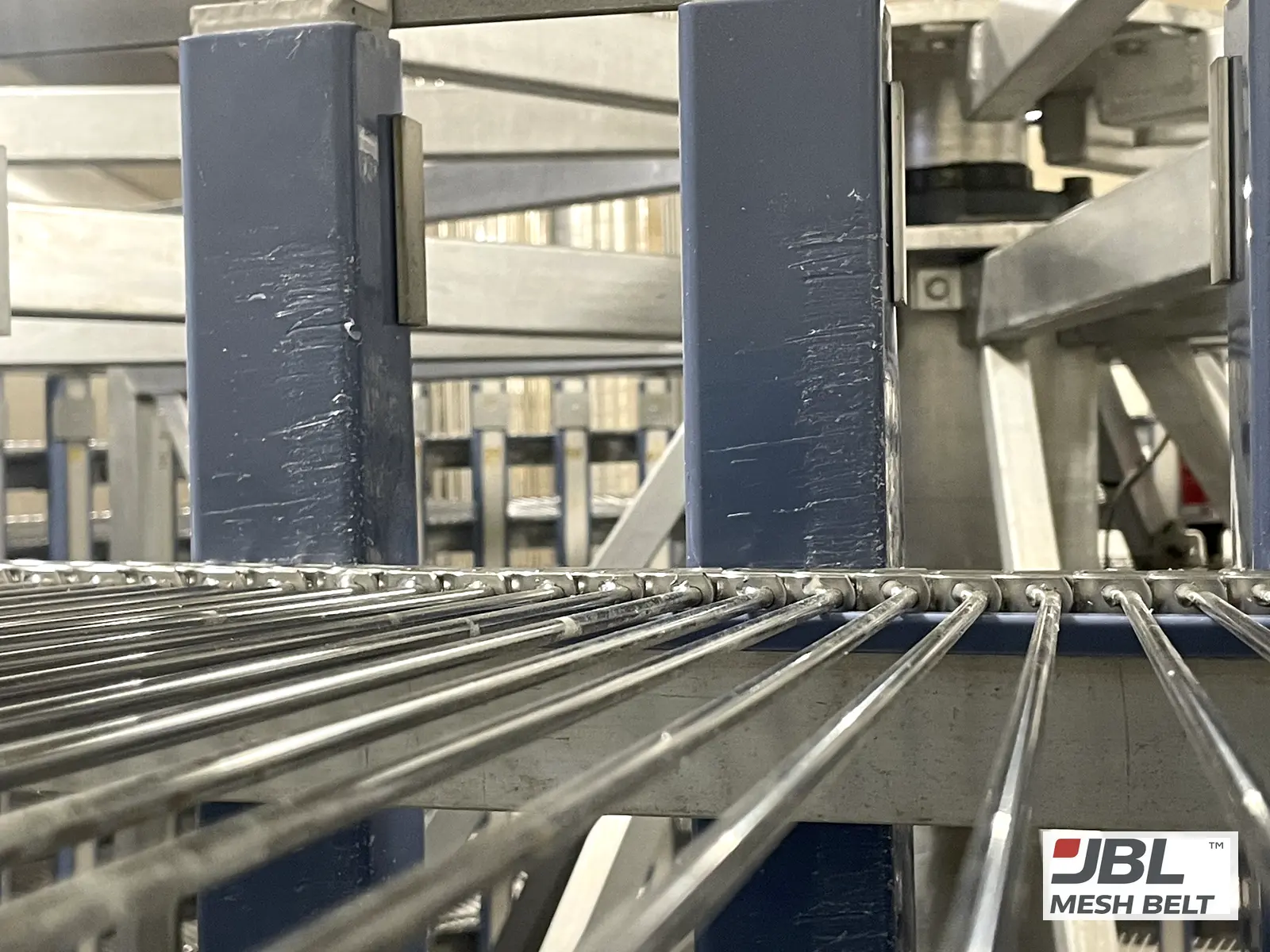
On many straight tunnels and heavier lines, roller chains run along both belt edges and do the pulling.
Short answer
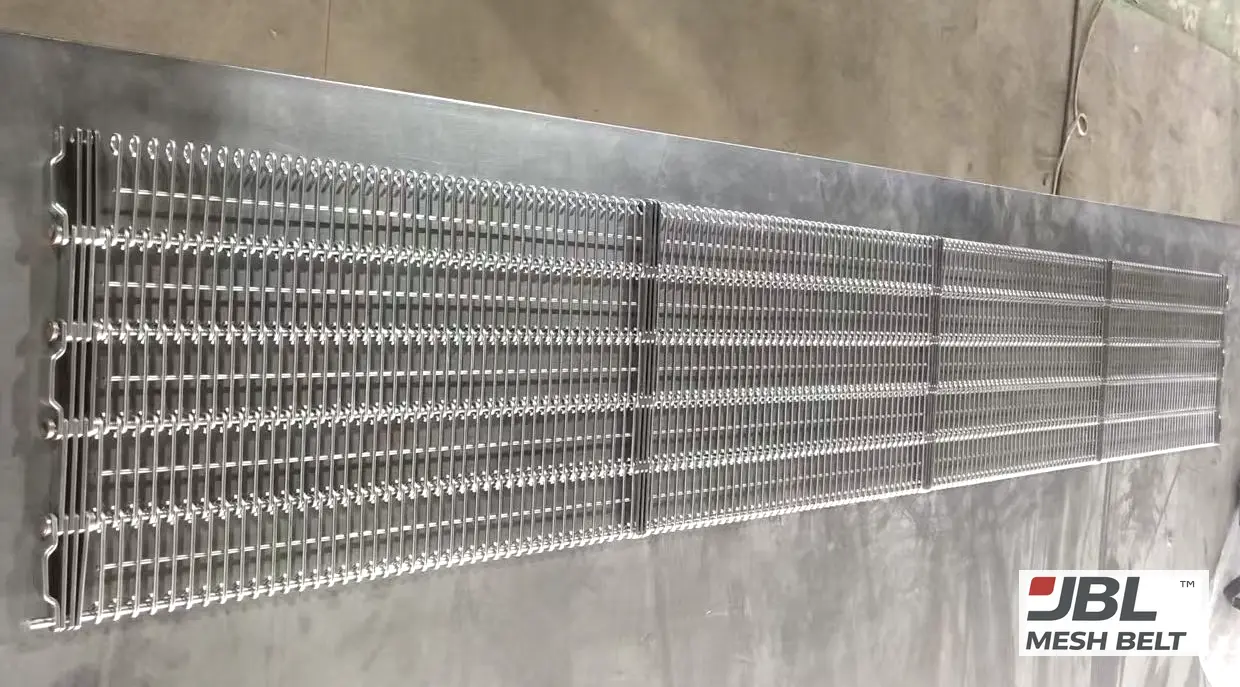
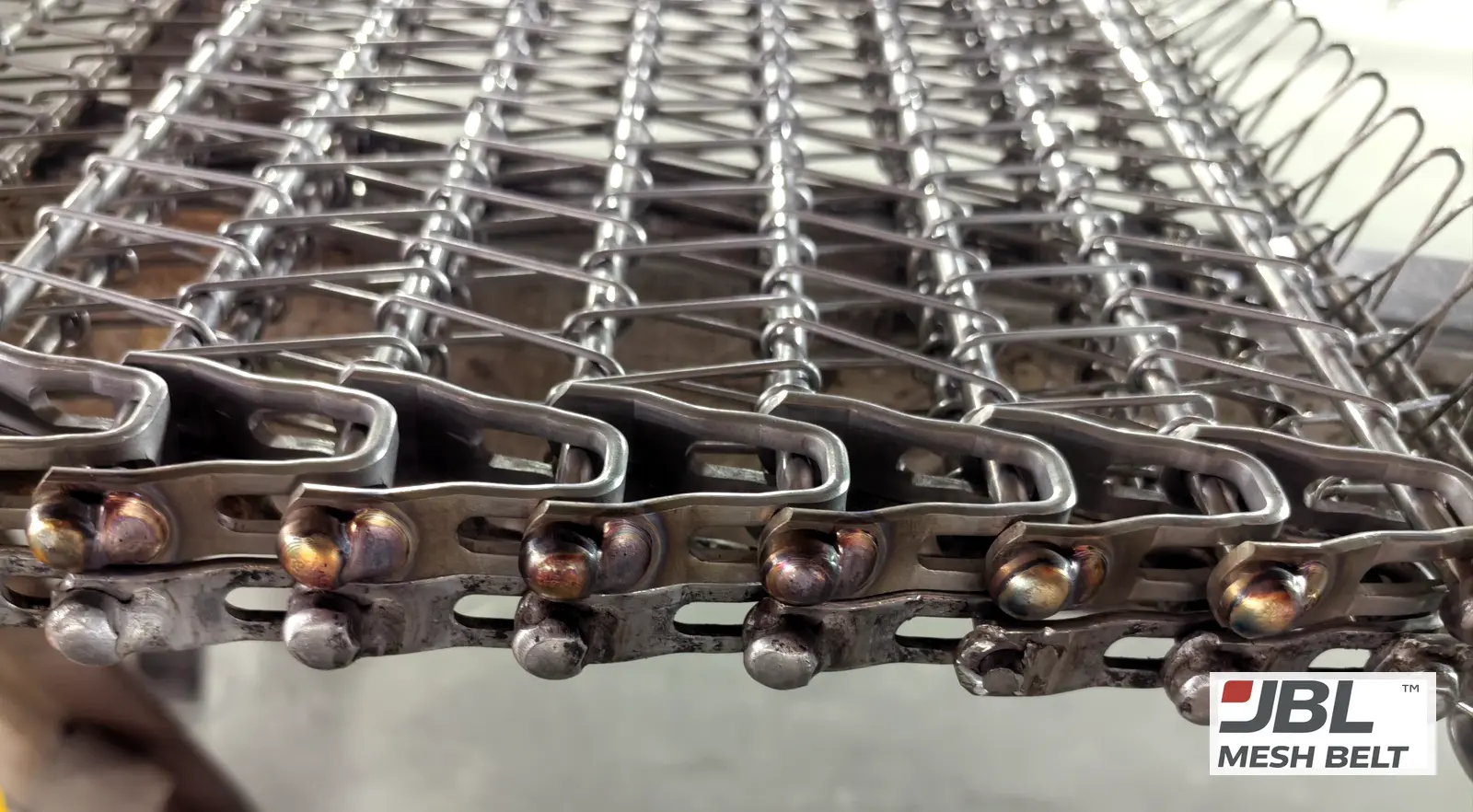
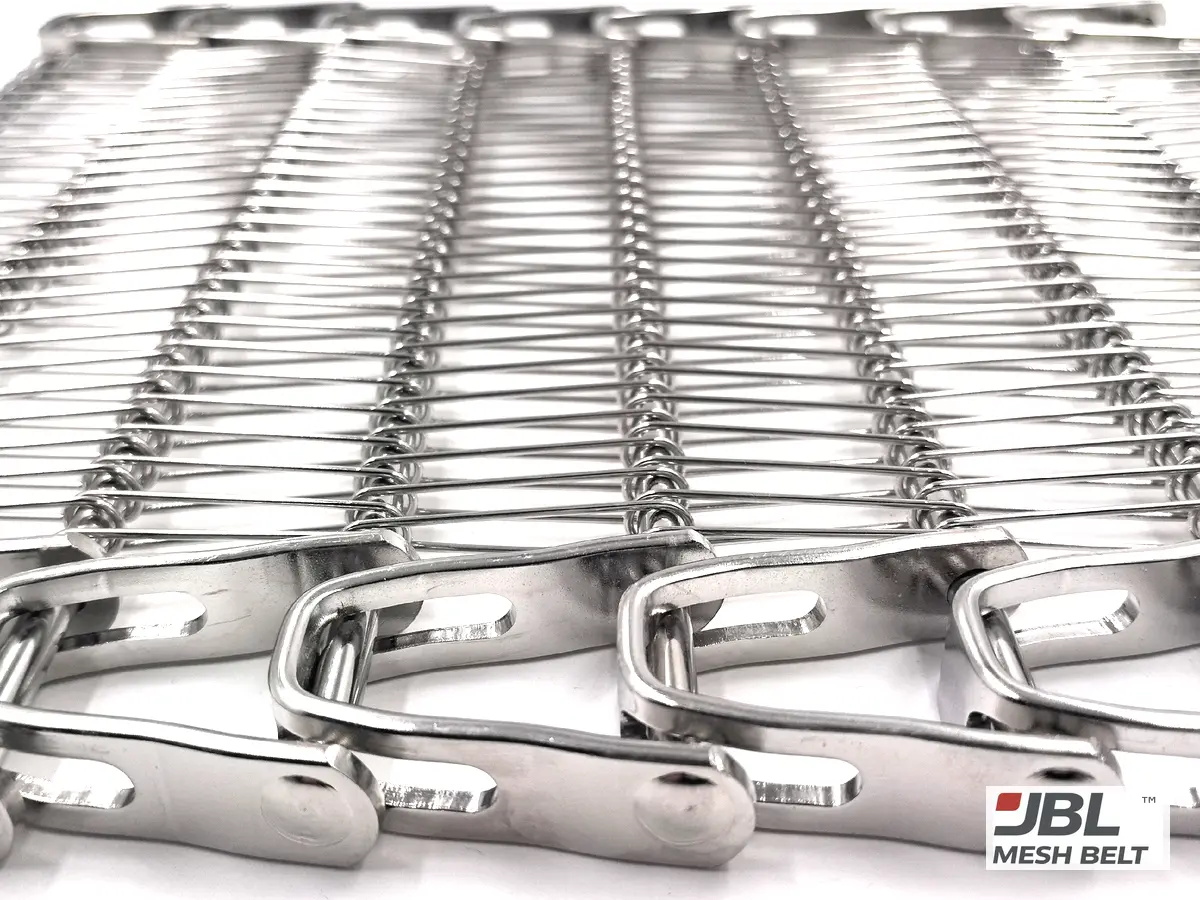
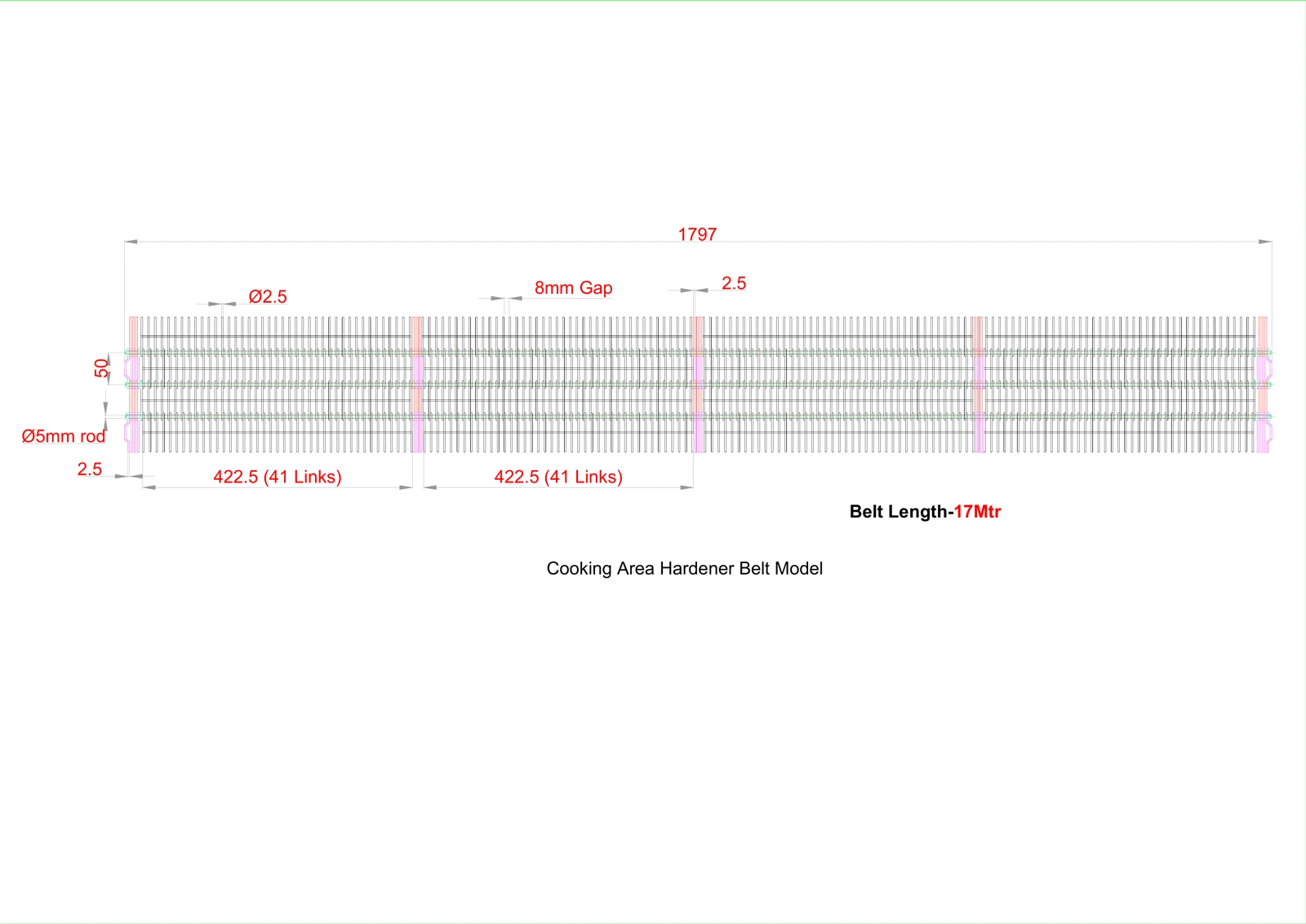
In an edge drive, roller chains on both edges carry the cross rods and are pulled by sprockets. The chain model and pitch must match your sprockets, and the rod pitch is a multiple of the chain pitch. I measure the chain itself, not only the drawing.
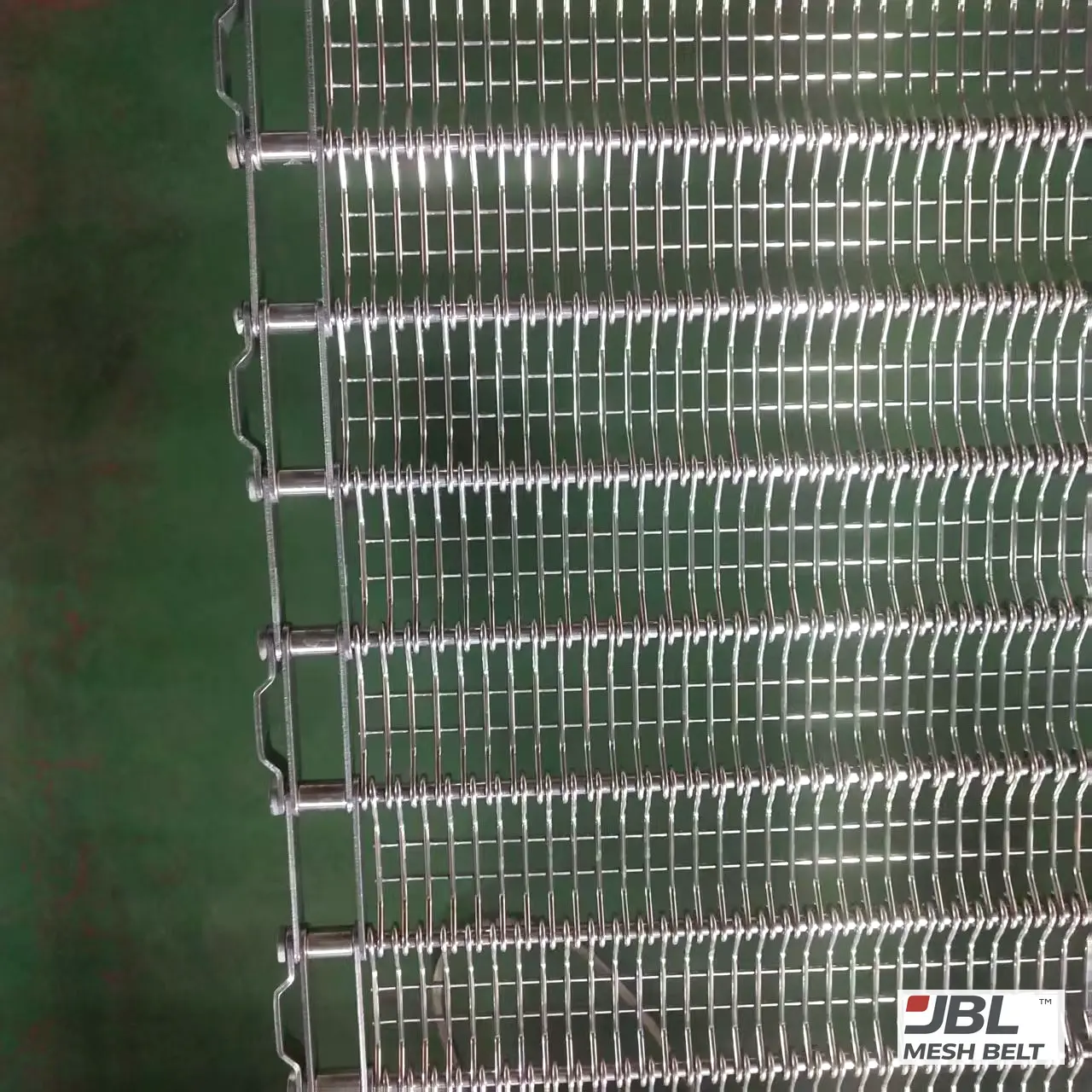
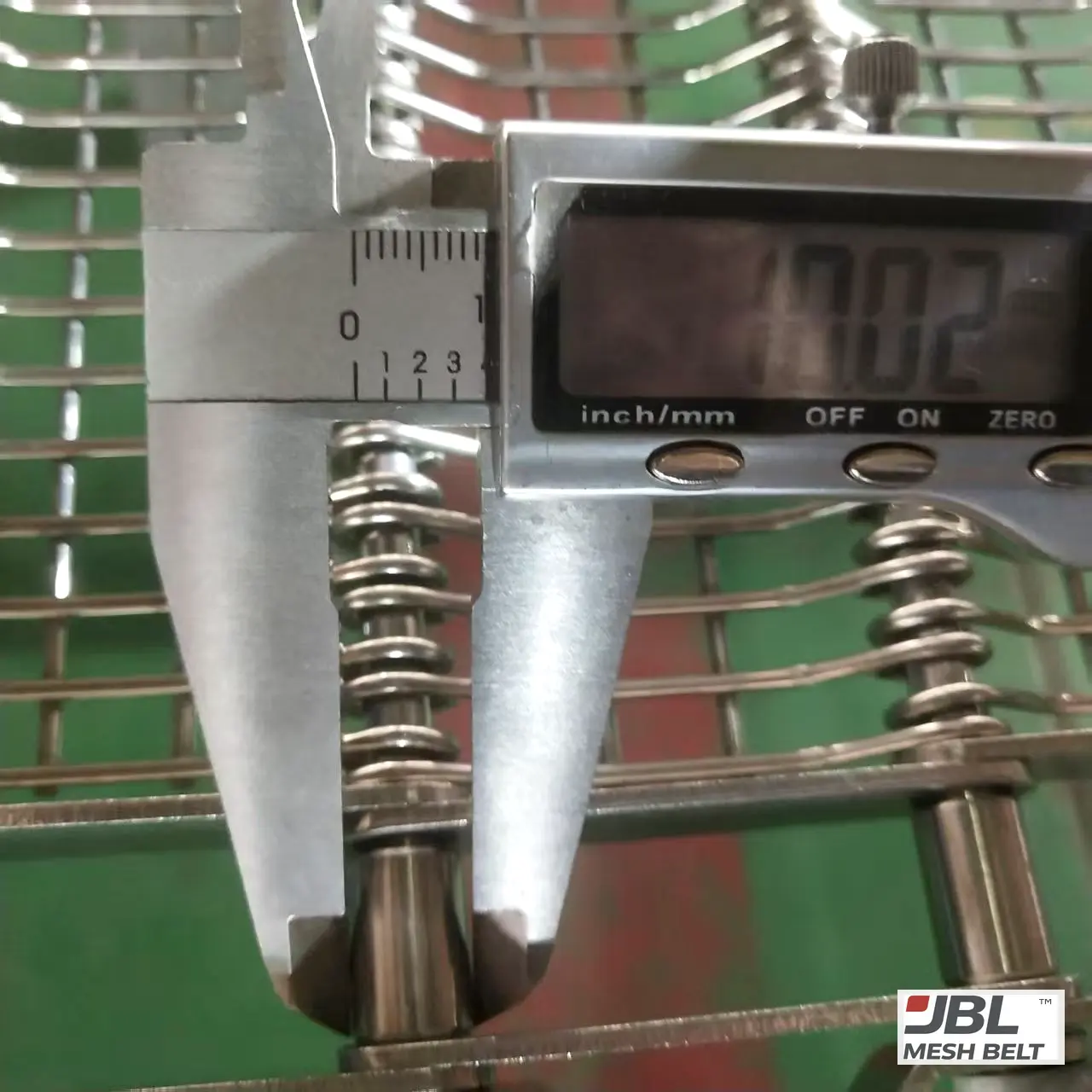
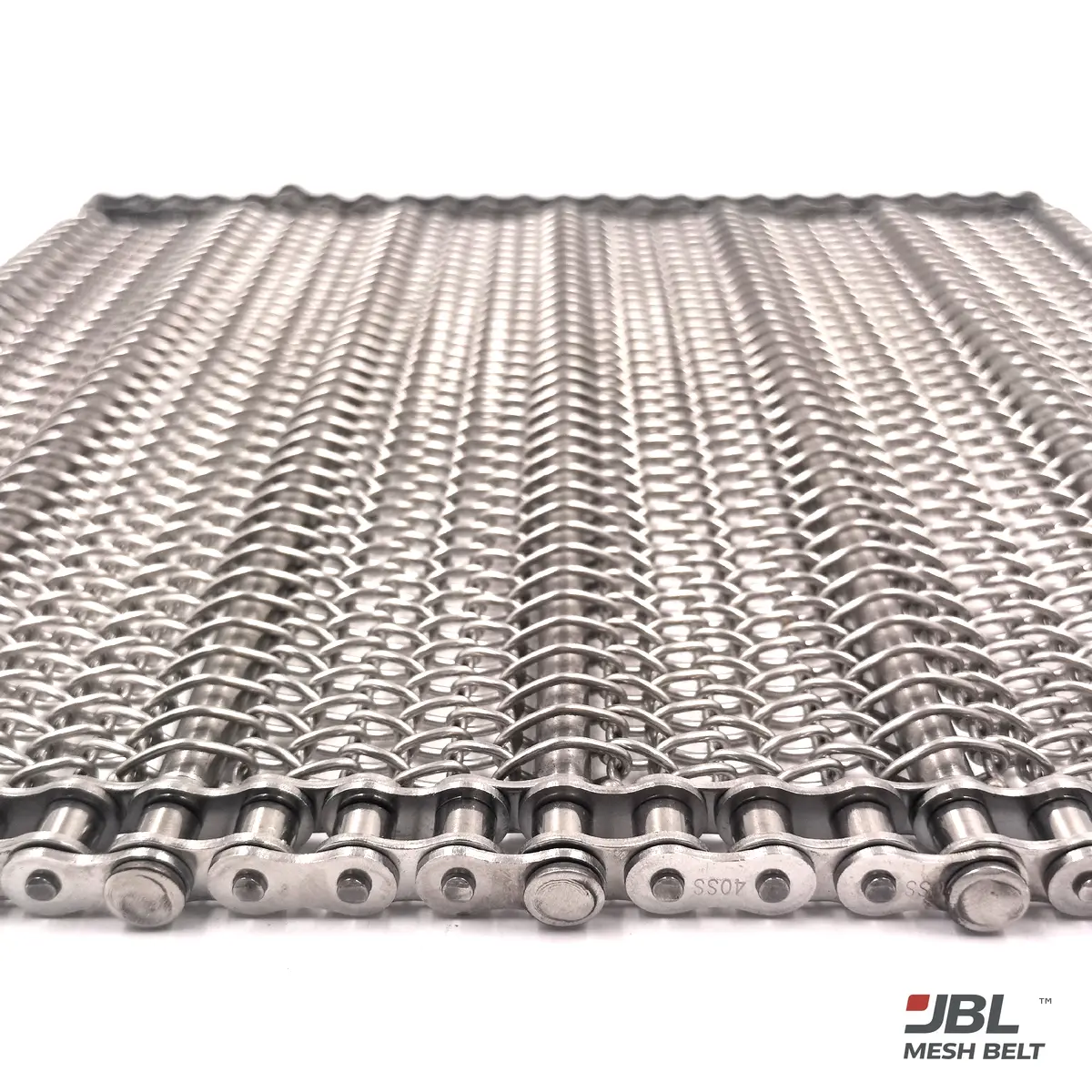
Chain-edge belts run at chain pitches from 12.7 to 63.5 mm on our drawings. Because the cross rods pass through the chain, the rod pitch is a multiple of the chain pitch. Both are fixed on the drawing before I quote.
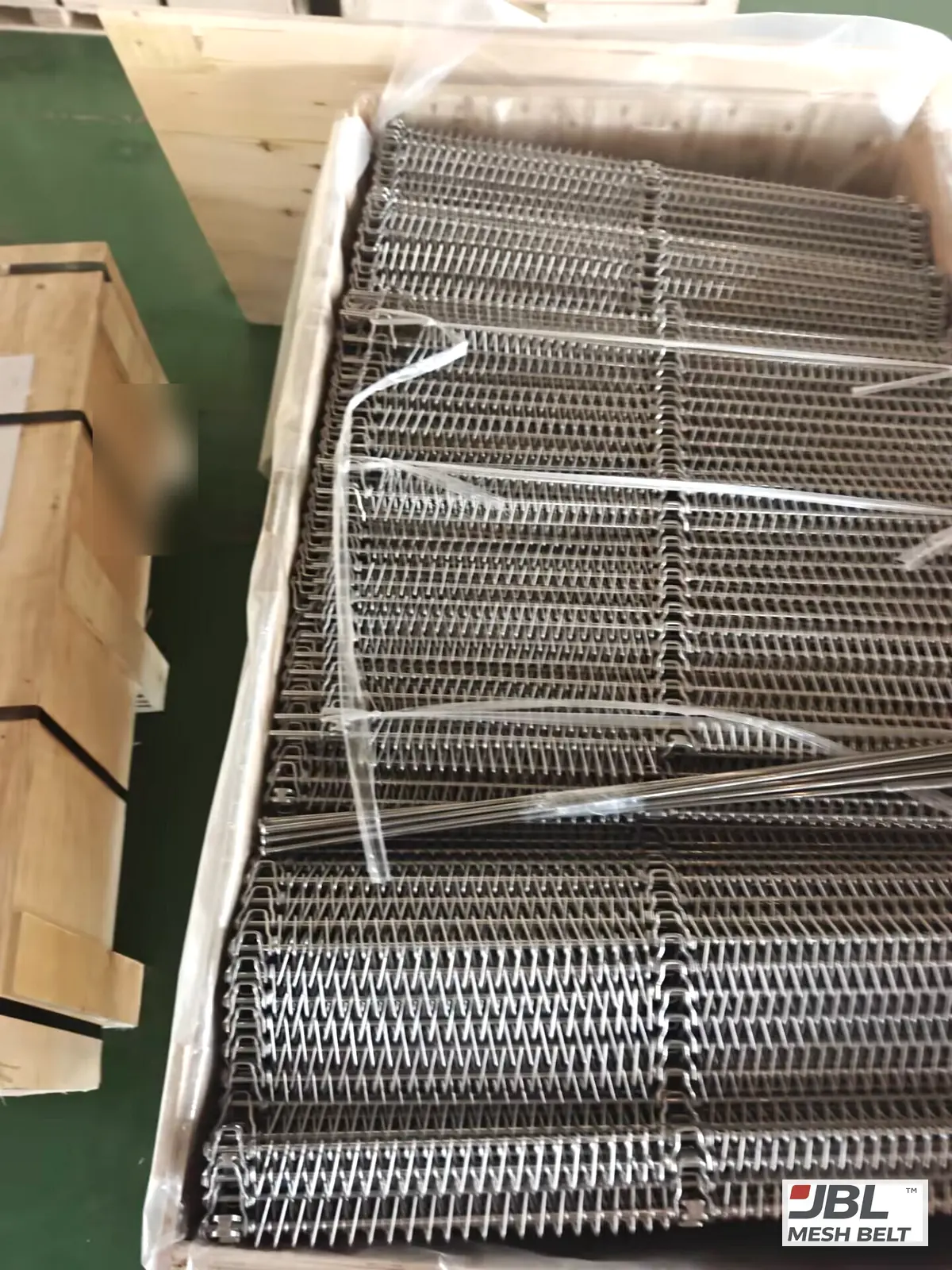
| Chain reading (Spain, glazing belt) | Value |
|---|---|
| Chain pitch | 50 mm |
| Roller diameter | 10.02 / 10.03 mm |
| Chain plate thickness | 2.05 / 2.06 mm |
| Chain plate height | 12.06 mm |
| Rod | 6.02 mm |
Readings on the bulk belt before packing, Spain shrimp IQF line.
Roller chains follow a recognised standard, ISO 606, which covers roller chains and their sprockets. But a belt chain is often a special, so I measure the actual chain on your old belt — pitch, roller, plate and inner width — and check the sprocket teeth for wear.
In Spain, the glazing belt runs on a roller-chain edge at 50 mm pitch. We measured the rollers, plates and rods on the bulk belt against the approved drawing before packing. More detail in our chain-driven belt replacement checklist.
When This Is Not the Right Choice
- ✕If your freezer maker gives the drive a trade name, do not order by that name alone; send photos of the drive and the belt edge.
- ✕If the drive itself is worn — drum bars grooved, sprocket teeth hooked, chain stretched — fix or replace those parts with the belt.
- ✕If you are converting a freezer from one drive to another, that is a machine project first; the belt follows the new design.
From My Engineering Experience
Buyers often tell me the name of the freezer and expect me to know the belt. I would rather see where the machine touches the belt. That one photo tells me whether the inner edge, the side links or a chain does the work.
On friction drives, I look hardest at the inner-edge welds, because they rub on the drum bars every turn. On side drives, I look at the rod pitch, because 31.75 mm and 34 mm are easy to mix up. On chain edges, I measure the chain on the old belt, because a special chain does not always match a catalogue.
The drive is where problems start, so it is where I start too.
— Spring, Sales Director, JBL Mesh Belt
Evidence From Our Work
Spain, 2026 — eye link belts on a roller-chain edge →
| Step | Detail |
|---|---|
| Drive | Roller-chain edge, 50 mm pitch |
| Sample | Pitch 50.01 mm against 50 mm on the drawing |
| Bulk belt | Rollers 10.02 / 10.03 mm; plates 2.05 / 2.06 mm; rod 6.02 mm |
| Approval | Sample checked on the customer's line before bulk |
Melbourne, Australia — belt and nylon sprockets matched together →
| Step | Detail |
|---|---|
| Sprockets | Nylon, supplied with the belt |
| Measured | Outside diameter 160.97 mm, bore detail 18.00 mm, pin 8.00 mm |
| Edge | Welds finished smooth, belt electropolished |
| Before shipment | Sprocket run on the new belt to check engagement |
FAQ
Q1How do I know which drive my spiral freezer uses?
Look at where the machine touches the belt: drum bars on the inner edge, sprockets on side links, or roller chains on both edges. A photo of that point usually shows it.
Q2What is a low-tension spiral drive?
The rotating drum moves the belt by friction on its inner edge while a separate drive keeps belt tension low.
Q3Which pitches do side-driven belts use?
Our side-driven belts run at a 31.75 mm or 34 mm rod pitch on 6.0 mm rods; the pitch must match your sprockets.
Q4Can one belt run on any drive type?
No. Each drive touches the belt in a different place, so edge, pitch and links are matched to the drive.
Q5Do you supply sprockets for side and edge drives?
Yes. Sprockets are matched to the belt or chain pitch and run on the belt before shipment.
Conclusion
Know where your drive touches the belt. That point decides which belt details must match, and which checks I run before shipment.
Download the Side-Driven Belt Technical Specification (PDF)
Specification ranges and options in mm and inch. Enter your work email and the file downloads right away.
References

Your contact for this belt
Spring · Sales Director, JBL Mesh Belt · 16 years
“Your belt is worn, the OEM price is high, and there is no drawing. That is where I start.”
Send me a worn section, a few photos with a caliper in the picture, or a drawing. I tell you what fits, what is missing, and show you a sample measured against your own belt before you pay for the full length. Buyers in the UK, the USA, Australia, Brazil, South Korea, Spain and Malaysia have replaced belts this way.
- ✓Readings on your original next to readings on our sample
- ✓Nothing in bulk until you approve the sample
- ✓Turning, stacking or sprocket tests before your belt ships
- ✓A reply from me, usually within 8 hours