Flat Wire Conveyor Belt vs Balanced Weave Belt: Which One for Your Line?
Short answer
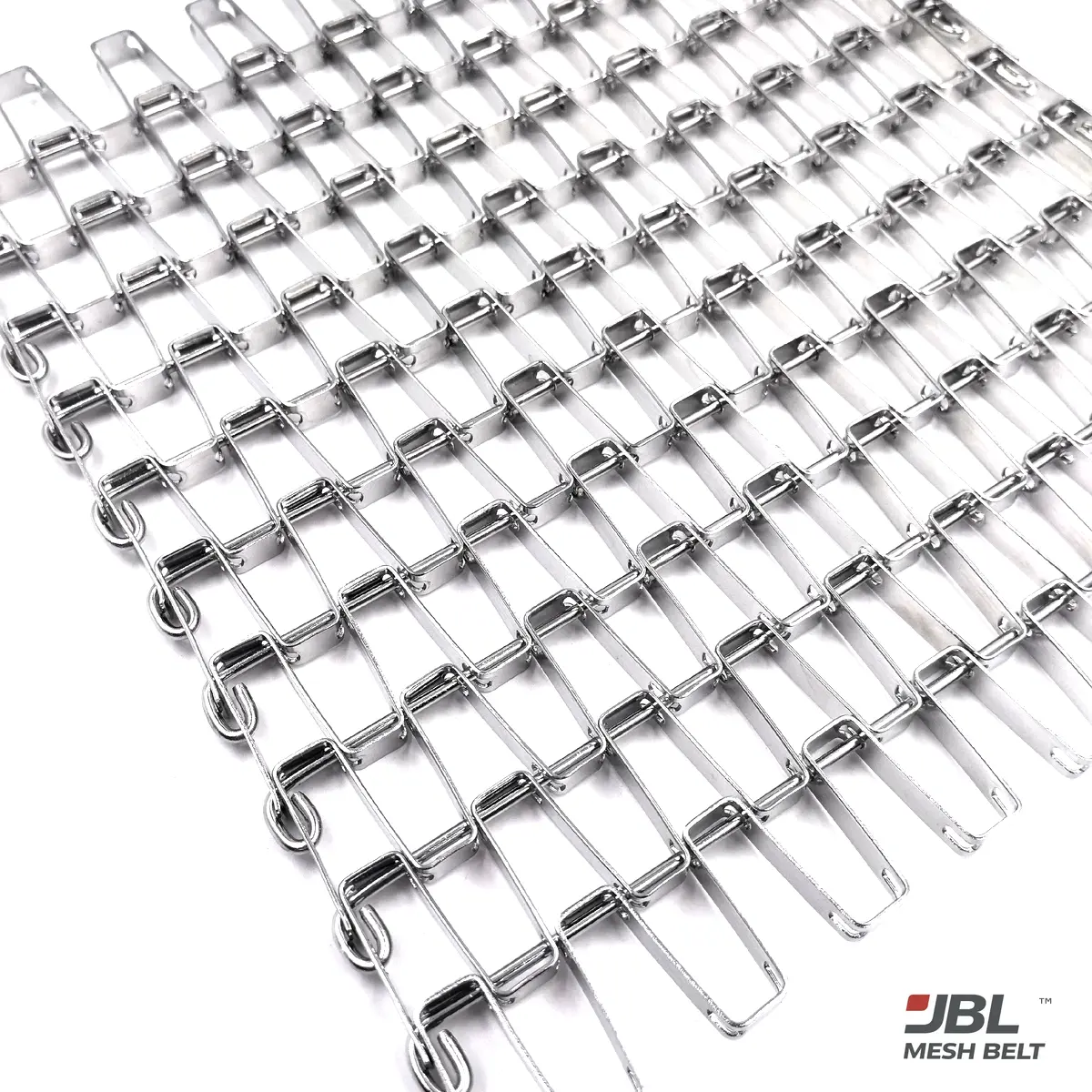
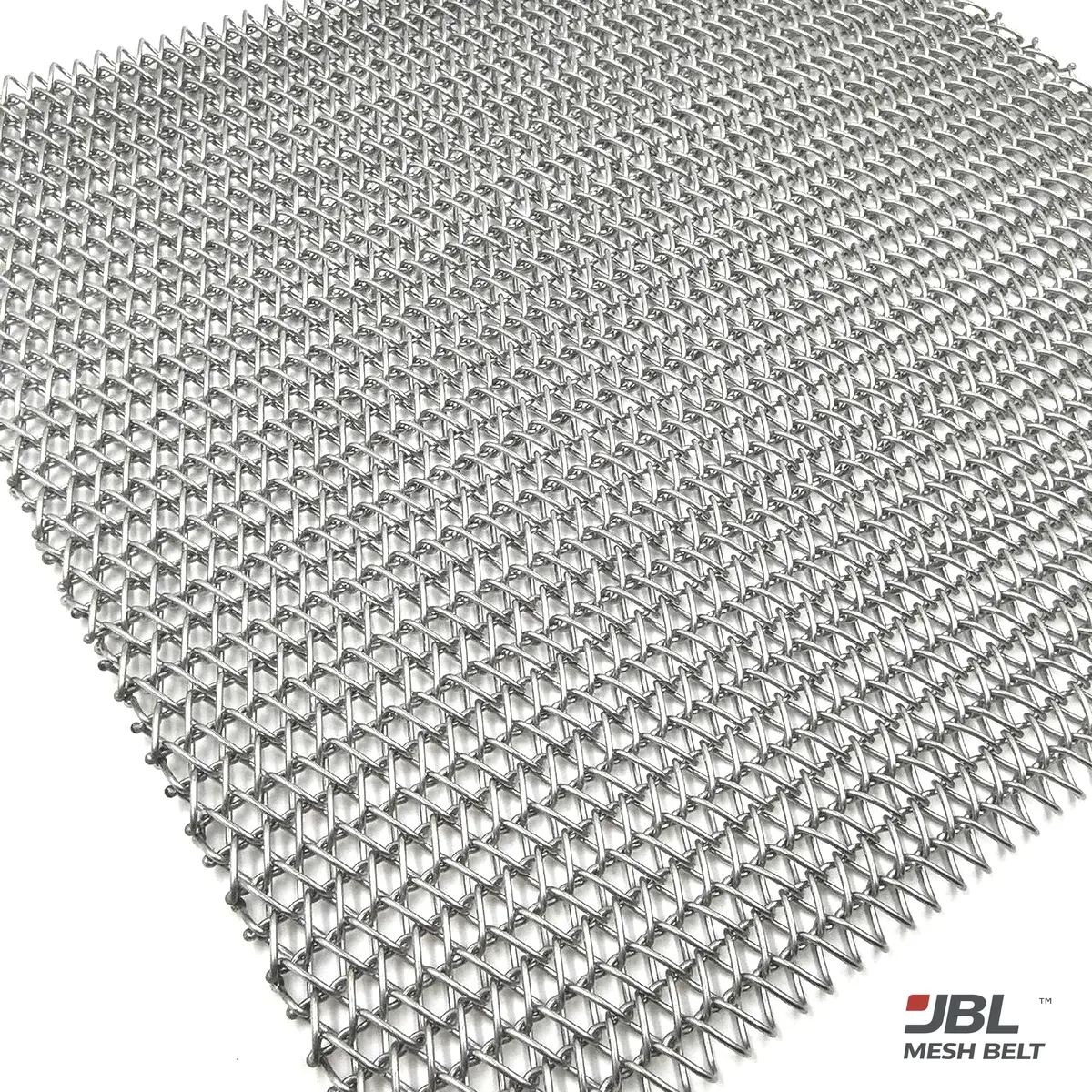
A flat wire conveyor belt (honeycomb belt) is built from flat strips formed into openings and joined by rods: a flat, very open surface that drains, cools and cleans easily, driven by sprockets. A balanced weave belt is woven from alternating left- and right-hand spirals joined by crimped wires: a closer surface for small or soft products, baking and drying, driven by sprockets or by friction. Replacing a belt? Match the installed one first.
01Flat wire vs balanced weave, side by side
The two belts are often confused in emails and drawings because both run straight and flat. Construction, surface and drive are what set them apart.
| Flat wire / honeycomb belt | Balanced weave belt | |
|---|---|---|
| Construction | Flat strips formed into openings, joined by rods | Left- and right-hand spirals joined by crimped connector wires |
| Surface | Flat and very open | Woven and closer |
| Product support | Flat, stable surface for products that should not fall through the openings | Closer support for small or soft products |
| Drive | Sprockets | Sprockets, or friction on a drum |
| Edge | Washer welded, rod welded or clinched | Welded or clinched |
| Typical lines | Cooling, washing, draining, frying, onboard freezing | Baking, drying, cooling, heat treatment, freezing |
| Materials | SUS304, SUS316, SUS316L or mild steel | SUS304, SUS316 or mild steel |
| Checked first | Number of openings, strip size, rod pitch, edge | Drive type, spiral and crimped wire pitch, wire hardness |
02Flat wire conveyor belt: choose it when…
- ✓The product must drain, cool or be washed on a flat, open surface
- ✓Air or water has to pass through the belt freely
- ✓The line is cleaned often and the belt must be easy to clean
- ✓Lift plates, side guards or centre flights are needed on the belt
- ✓You are replacing a flat wire belt — the installed belt is the reference
03Balanced weave belt: choose it when…
- ✓Small or soft products need closer support than flat wire openings give
- ✓The line bakes, dries or heat-treats on a flat woven surface
- ✓The conveyor is driven by friction on a drum rather than by sprockets
- ✓Flat wire spirals are wanted for a flatter, larger contact surface
- ✓You are replacing a balanced weave belt — the installed belt is the reference
04Can one replace the other?
Sometimes, but it is a design change, not a like-for-like replacement. The drive (sprocket or friction), the sprocket tooth spacing, product support and cleaning are reviewed before anything is promised. On an existing line the installed belt type stays the starting point.
05What is checked on a flat wire conveyor belt before quoting
- ✓Number of openings across the width — kept to an odd number so the structure stays symmetrical and the belt runs straight
- ✓Rod pitch, rod diameter, flat strip thickness and height, measured on the old belt or the drawing
- ✓Inside of the strips: no scratches or tool marks that could mark the product
- ✓Gap between the corners of adjacent rows kept small and even, so small products cannot catch
- ✓Edge type confirmed from a photo of the old belt, not from a verbal description
- ✓Sprockets matched to the belt pitch and run with the belt before packing
06What is checked on a balanced weave belt before quoting
- ✓Drive type: a sprocket-driven belt uses hard wire so the mesh keeps its pitch on the teeth; a friction-driven belt uses soft wire up to about 2 m wide and semi-hard wire above
- ✓Spiral pitch and crimped wire pitch matched to the sprocket tooth spacing; multi-row sprockets engage several spirals across the width
- ✓Round or flat wire spirals, wire diameters and overall width measured over 10 pitches at several points
- ✓Sectioned belts: joining wires left at the section ends so the sections can be connected on site
- ✓Mild steel belts: a thin, even coat of rust-preventive oil, so it does not mark product or packaging
07Real flat wire conveyor projects
Both projects are on the case pages with readings and photos.
| Project | Line | Starting point | Belt |
|---|---|---|---|
| Australia, 2022 | Can washing line | The customer's sample — no drawing | Flat wire belt, SUS316 rods and SUS316L strips |
| USA, equipment integrator | Fishing vessels: sea to onboard freezing | A strict drawing | About 700 m of SUS304 flat wire belt, with clips, flight bars and sprockets |
08What to send for a quote
- ✓Photos of the belt top, edge and underside, with a ruler or caliper in the picture
- ✓Flat wire: number of openings, strip size, rod pitch and rod diameter
- ✓Balanced weave: drive type, spiral pitch and crimped wire pitch over 10 pitches
- ✓Sprocket tooth count, bore, rows and a photo of the teeth
- ✓The product, the line temperature and the cleaning chemicals
Want this checked on your belt?
Send photos with a tape in the picture, a drawing or an old belt section.
Belts in this guide
Related guides
- Case: 316 / 316L flat wire belt, can washing, Australia →
- Case: flat wire belt for fishing vessels, USA →
- Can washing line belt: 316 / 316L flat wire from a sample →
- Flat wire belt to a strict OEM drawing →
- Video: balanced weave belt sprocket engagement test →
- Washing line belts →
- Metal conveyor belt selection guide →
- IQF tunnel freezer belt guide →
Questions Buyers Ask
Q1What is the difference between a flat wire conveyor belt and a balanced weave belt?
A flat wire belt is built from flat strips and rods and gives a flat, very open surface. A balanced weave belt is woven from left- and right-hand spirals and gives a closer surface. Flat wire runs on sprockets; balanced weave runs on sprockets or by friction.
Q2Is a honeycomb belt the same as a flat wire belt?
Yes. Honeycomb belt is another name for the flat wire belt, after the shape of its openings.
Q3Can I replace a balanced weave belt with flat wire?
Only if the product support and the drive allow it. It is a design change and is reviewed against the line first.
Q4Which cleans easier?
Flat wire, because it is very open. A balanced weave belt cleans well too when the pitch suits the product.
Q5Do you supply the sprockets?
Yes. Sprockets are matched to the belt pitch and run with the belt before shipment.
Q6What is the fastest way to start?
Send your drawing or old-belt photos on WhatsApp +86 138 1487 2506. Commercial terms are confirmed in writing in your quotation.