OEM Approval · 9 min read
How Do You Make a Flat Wire Belt to a Strict OEM Drawing for Onboard Fish Freezing?
 Written bySpringSales Director, JBL Mesh Belt · 16 years in metal conveyor beltsProjects in United Kingdom · USA · Australia · Brazil · South Korea · Spain · MalaysiaPublished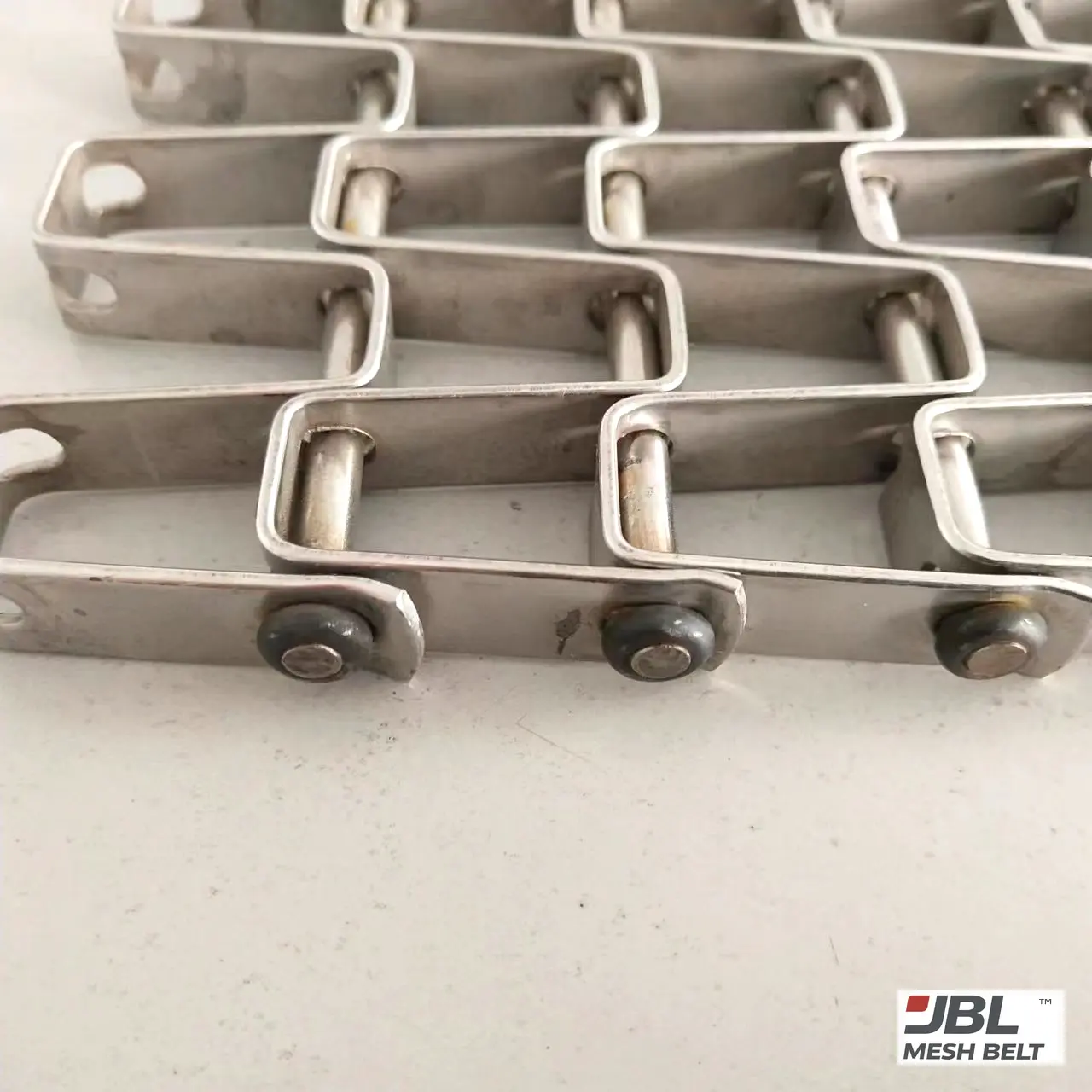
Your drawing gives every bend radius and says no burrs. The belt will run at sea, wet and cold. Copying the shape will not meet it.
Short answer
Read the drawing first, then measure the original against it. Adjust the forming tools and process until the radii and edges match. Make a trial run, check it against the drawing and the original, and start bulk only after you approve it. In the USA, about 700 m followed.
At a Glance
| Requirement | What we did | Evidence |
|---|---|---|
| Bend radii specified | Forming tools adjusted | Trial run checked against the drawing |
| No burrs | Process changed | Edges checked on the trial run |
| Flat belt surface | Checked lying flat | Photos of the trial belt |
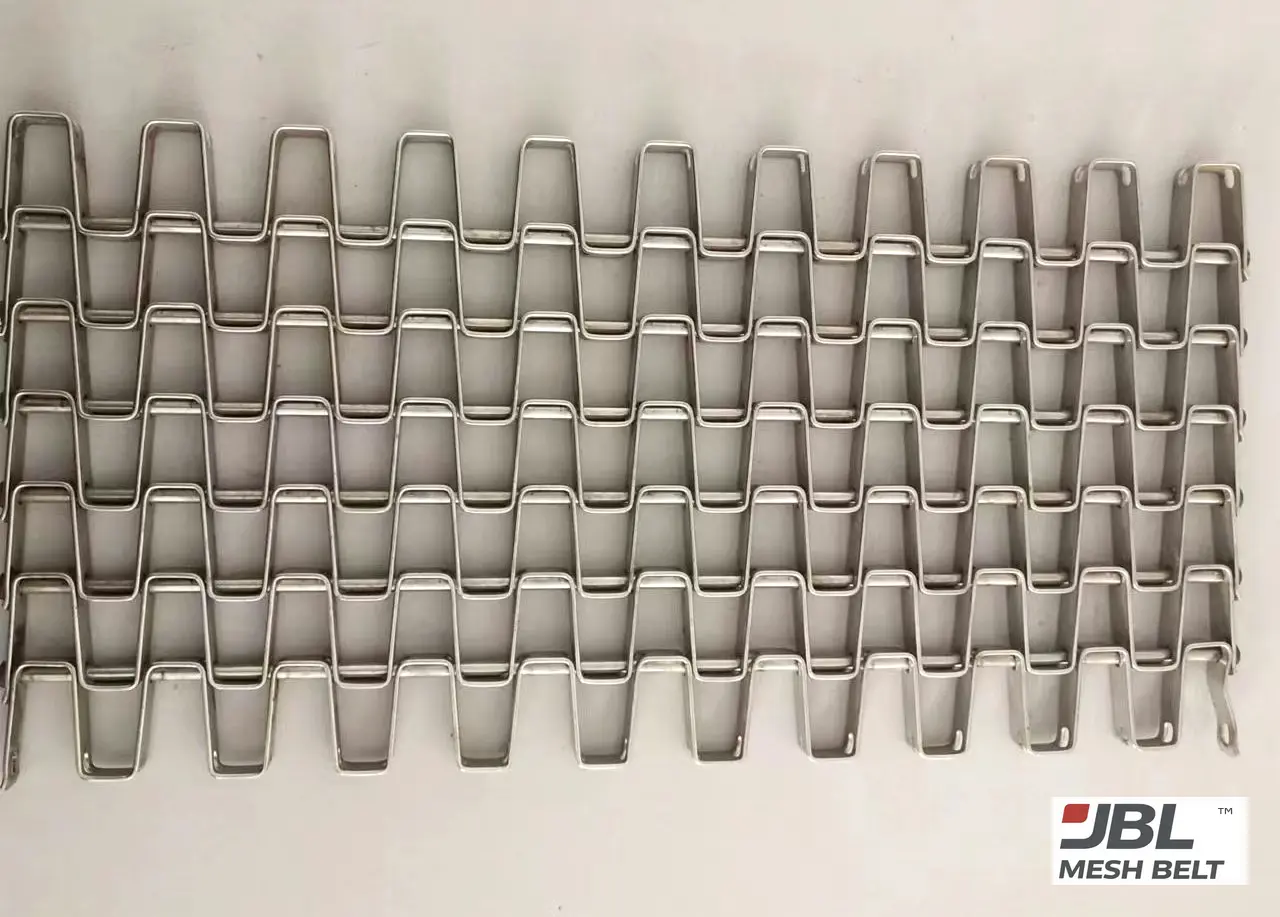
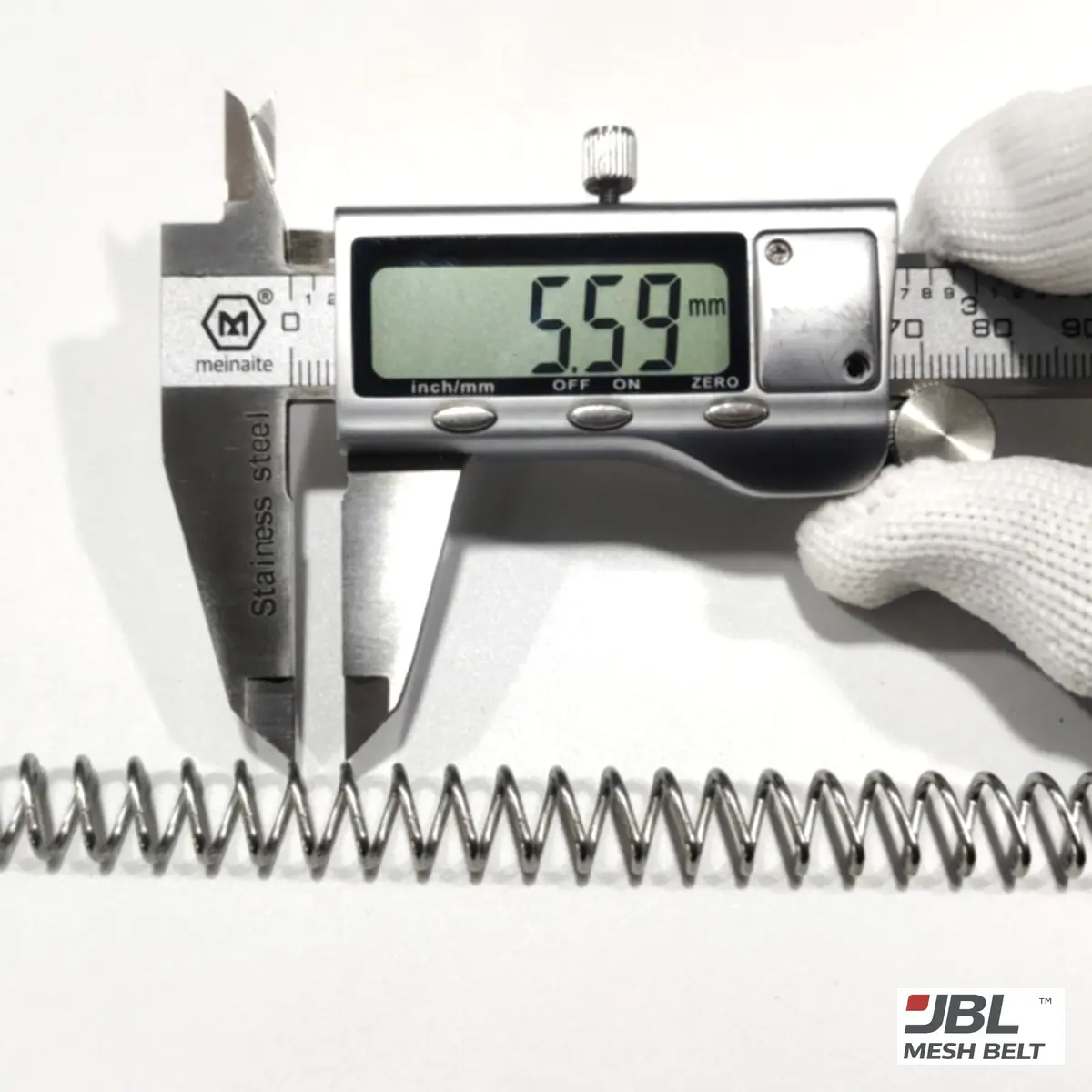
| Belt spec: pitch 27.4 · rod 5 · strip 1.6 × 12.7 mm | Caliper on the finished belt | 27.40 · 5.00 · 1.60 · 12.70 mm |
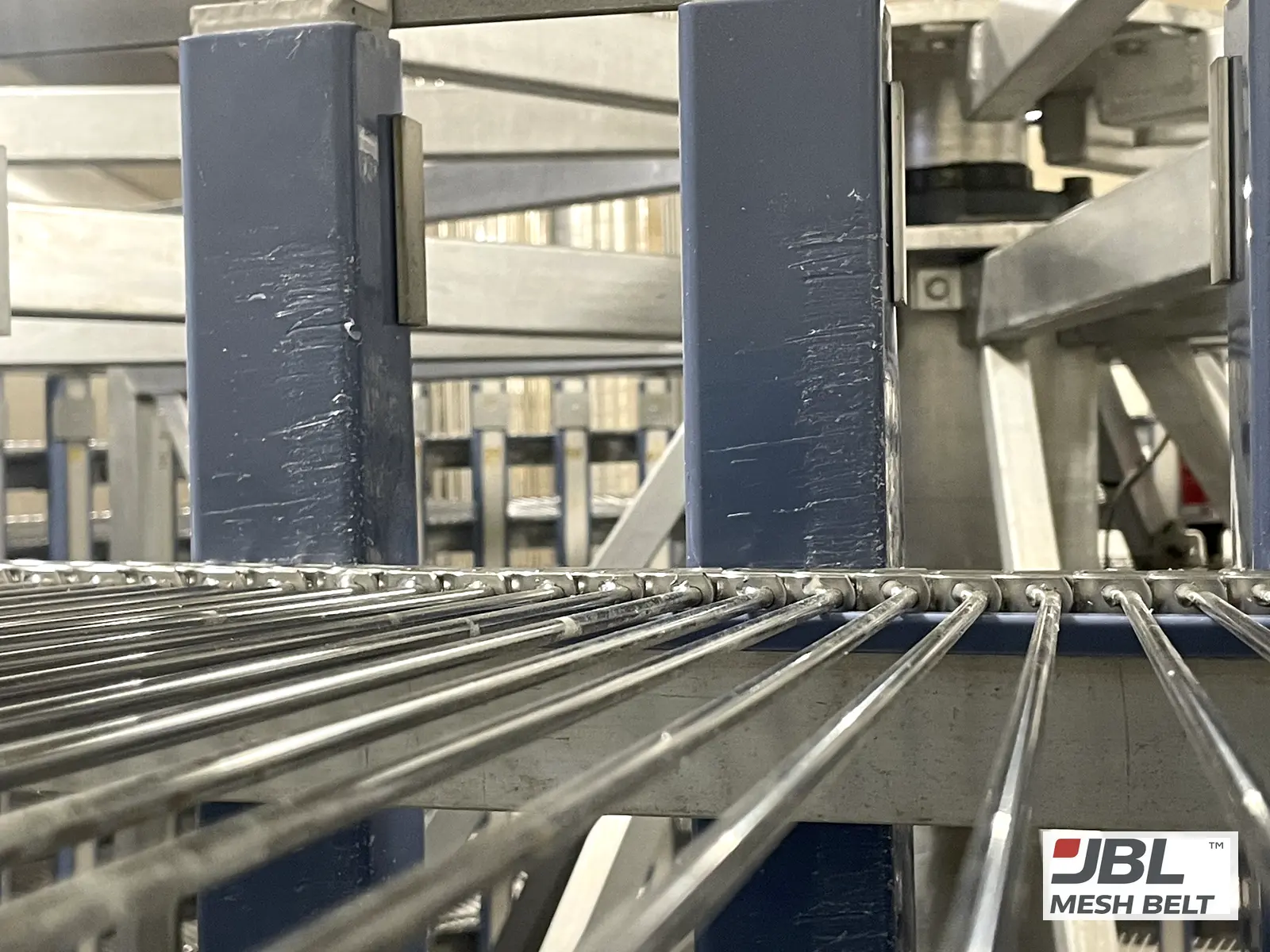
| Clips and sprockets | Verification clips; full set of nylon sprockets | Clip and sprocket readings |
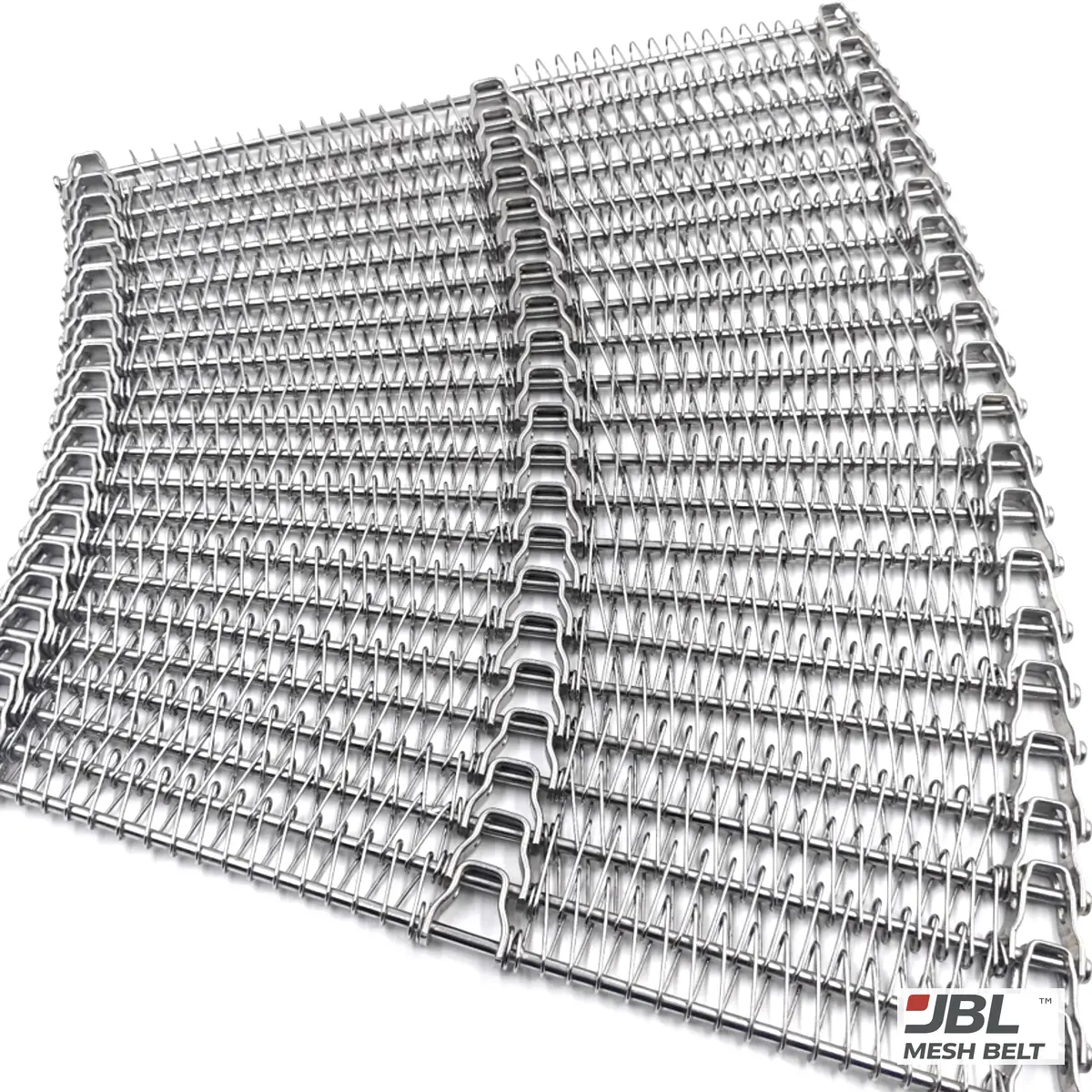
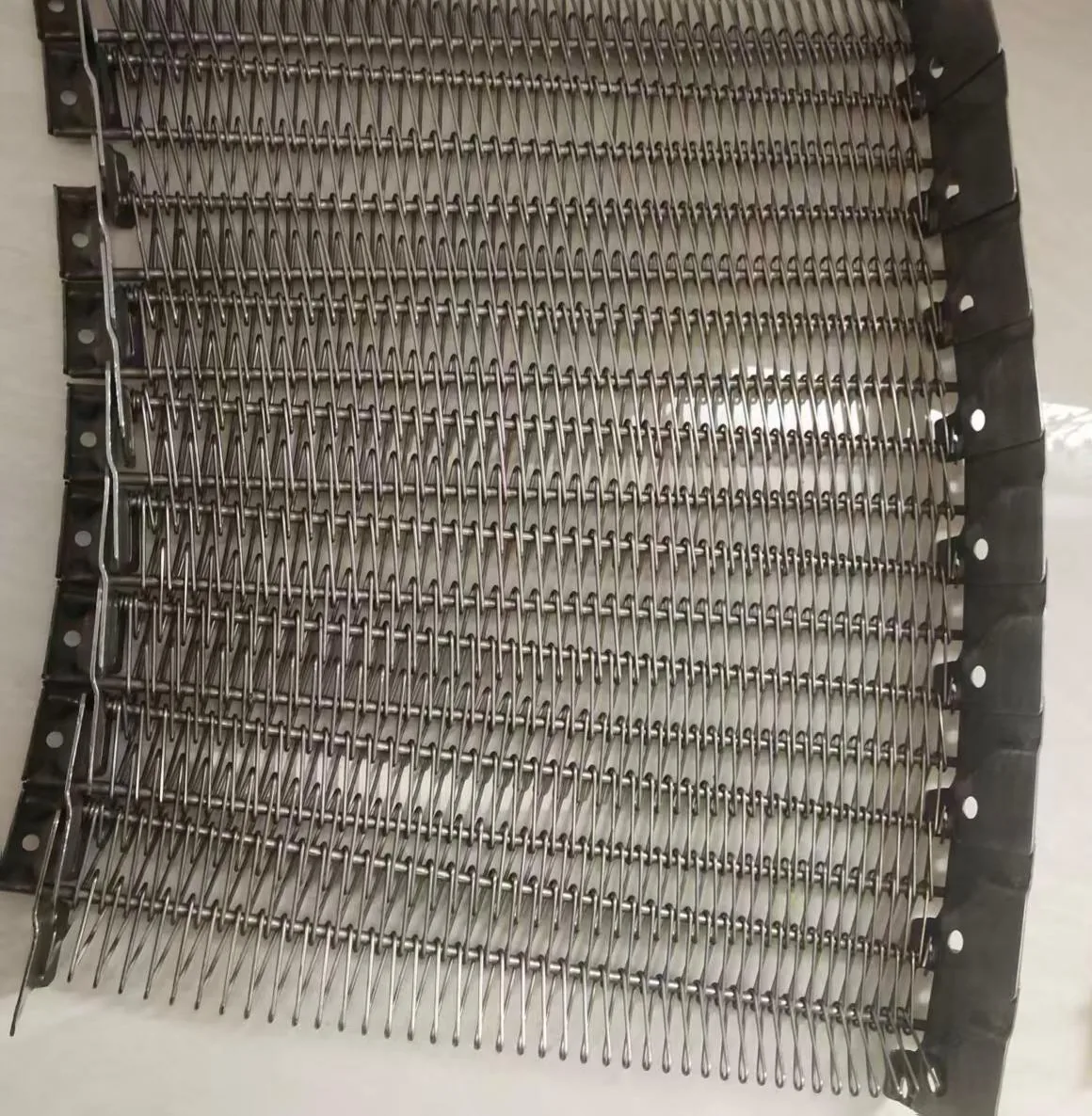
This project was for an equipment integrator in the USA that builds conveyors for fishing vessels. Below is how a strict drawing was met, and what to ask any supplier who says they can copy your belt.
01Why is a strict drawing harder than a sample?
A sample tells you what a belt is. A drawing tells you what it must be.
Short answer
A drawing that sets bend radii and bans burrs cannot be met by copying the shape. The forming tools and the process must be set to the drawing, then the trial run checked against it, point by point.
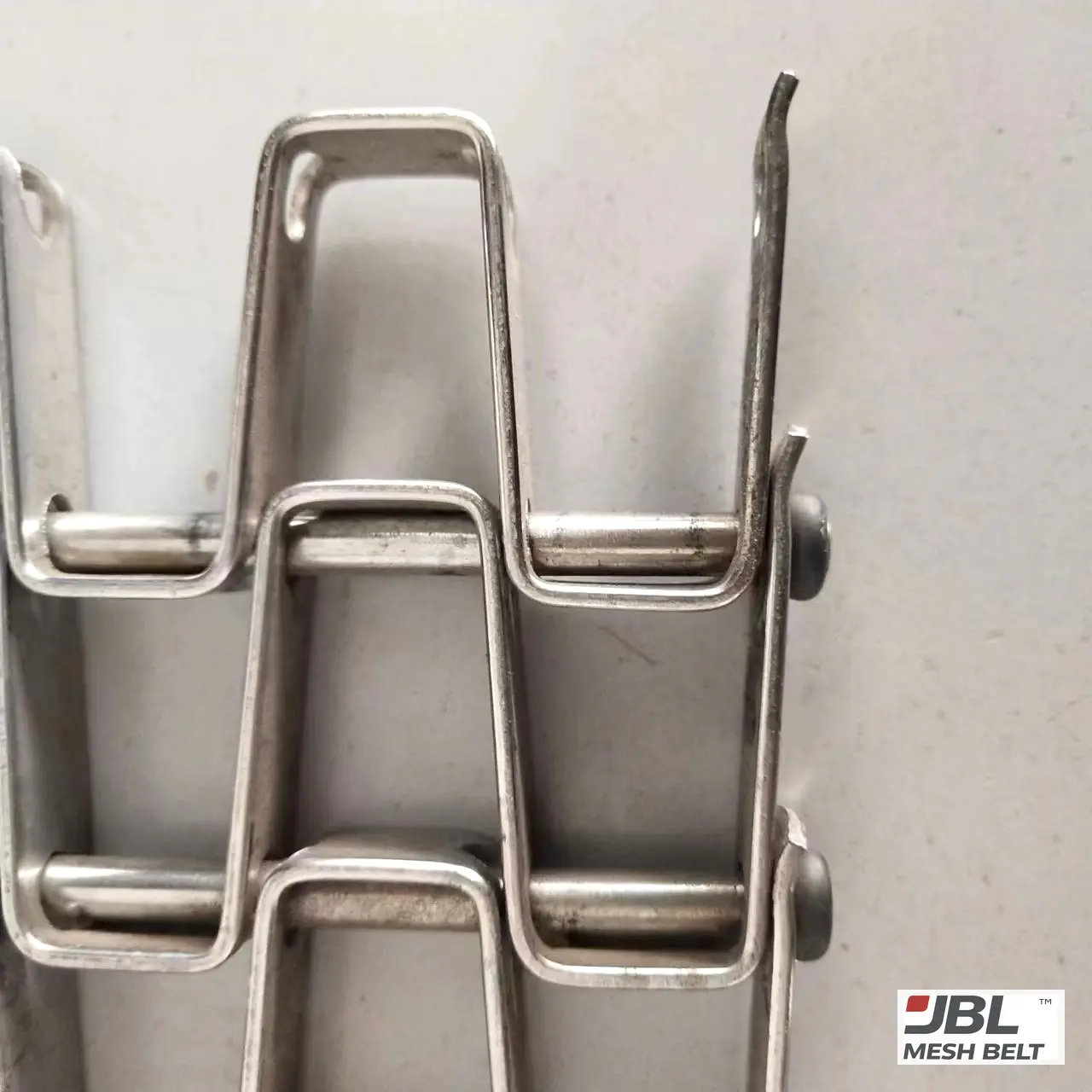
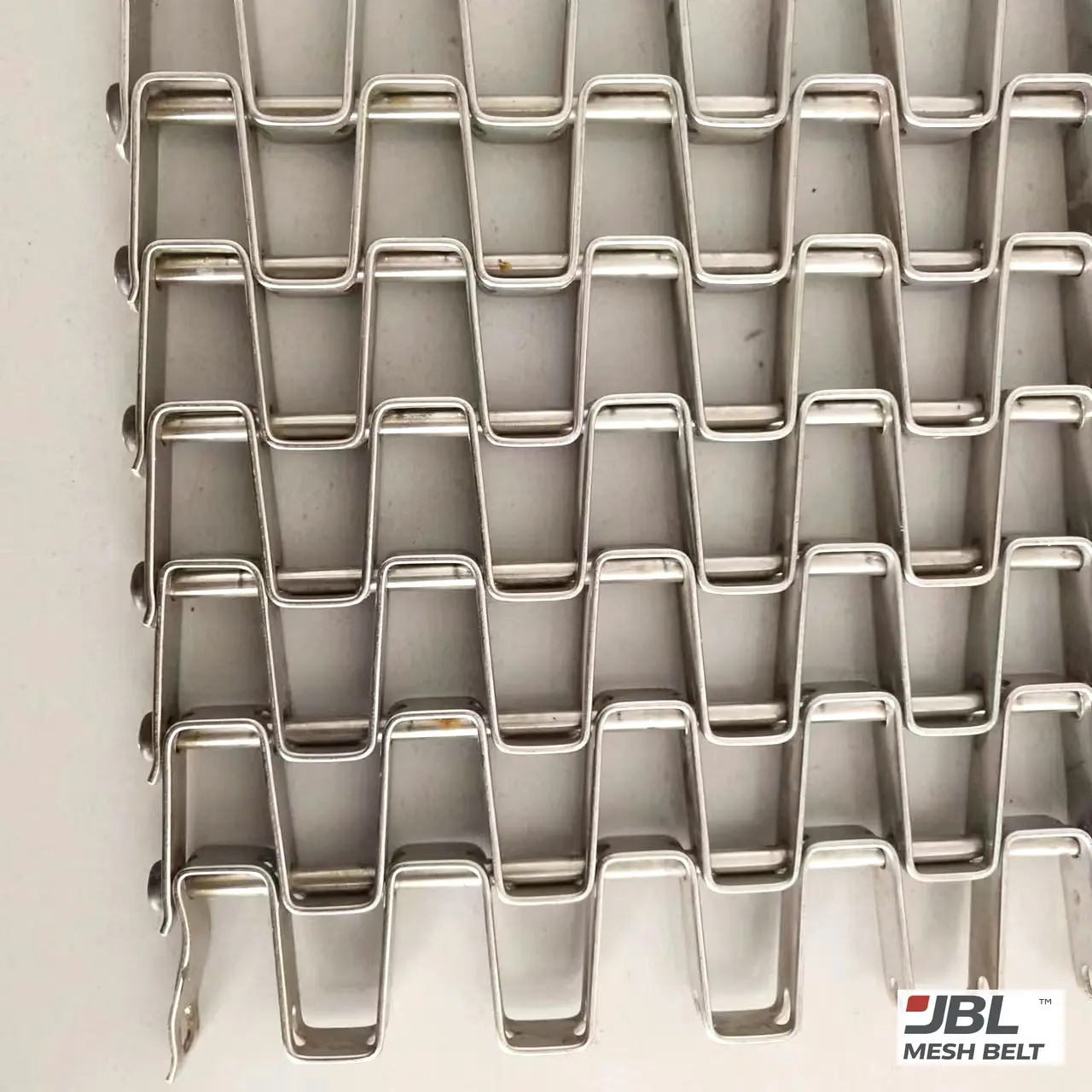
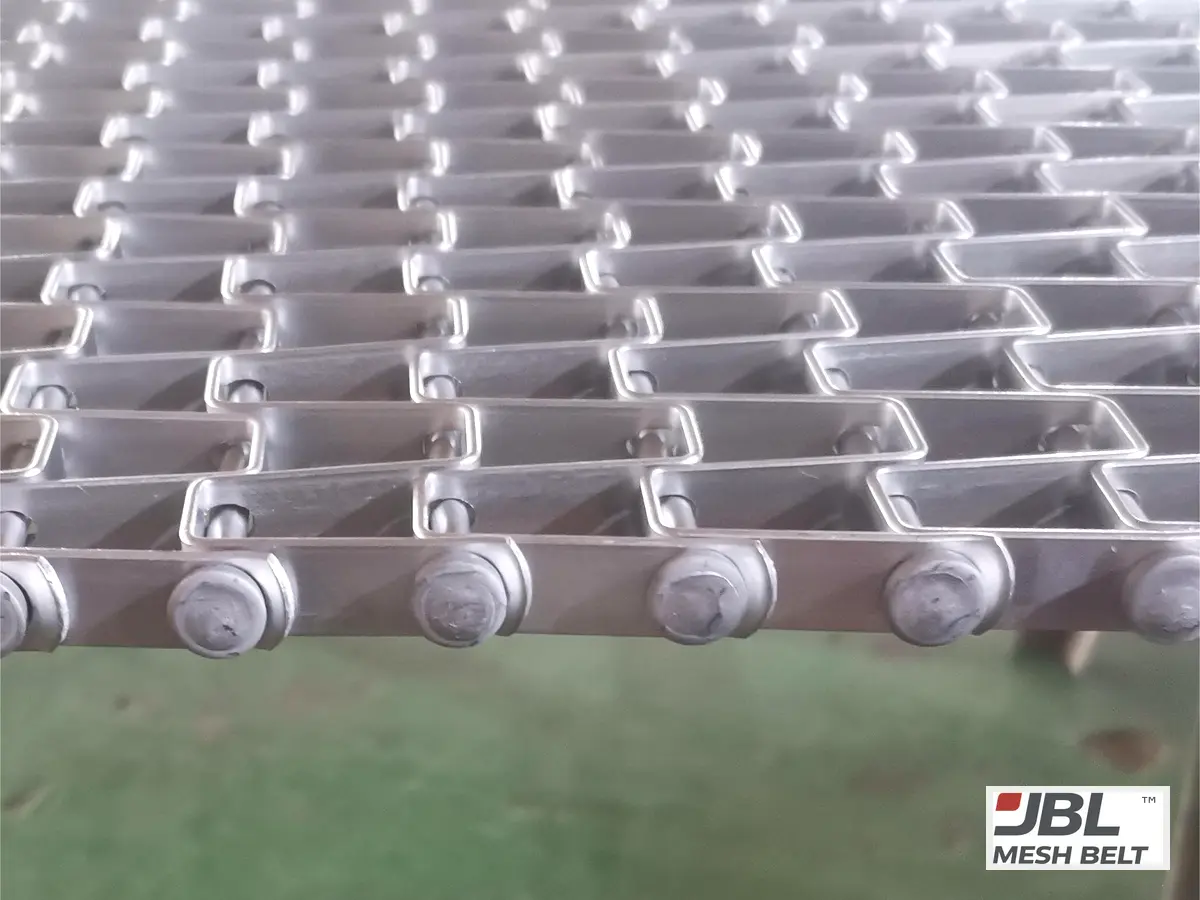
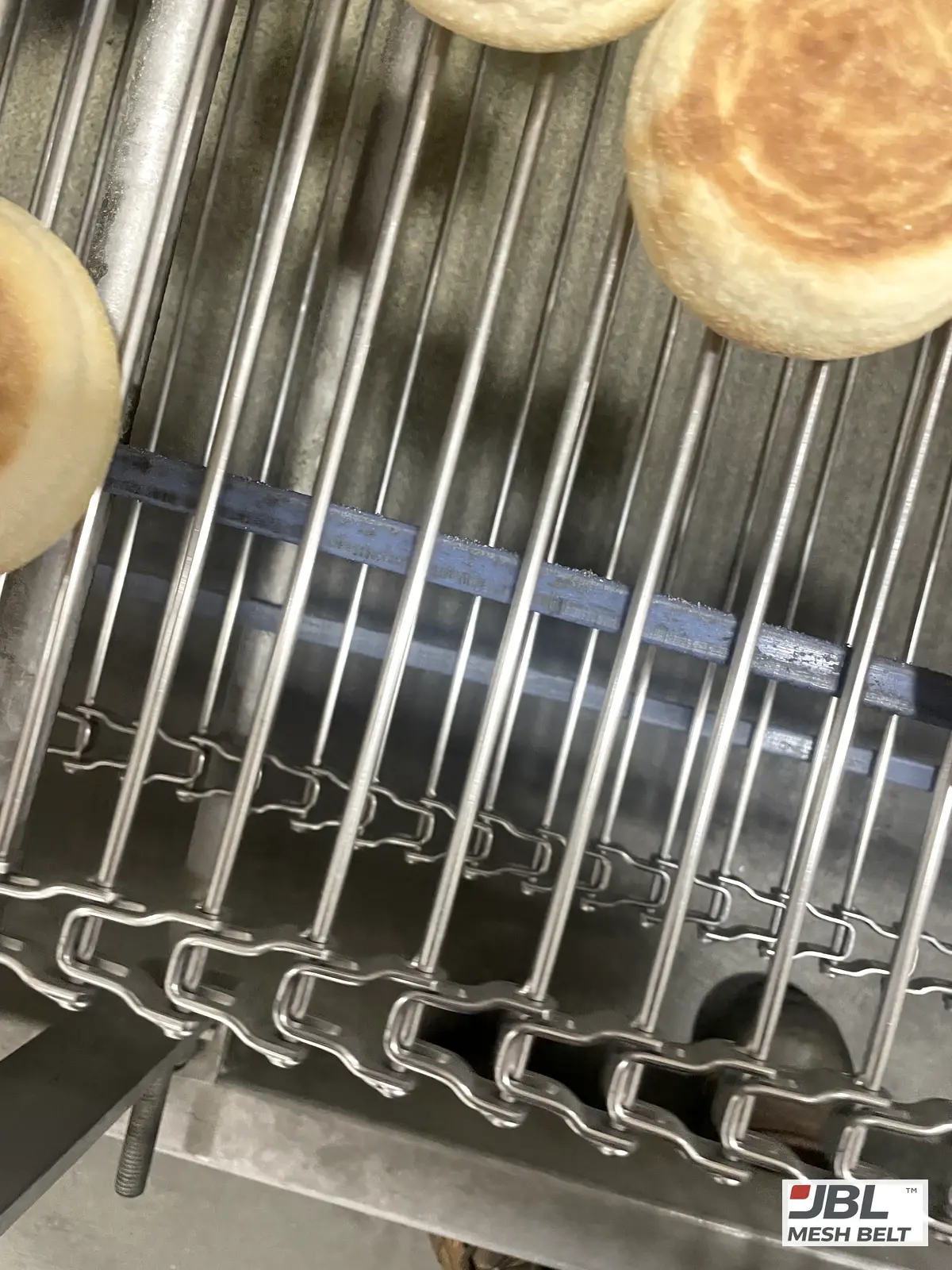
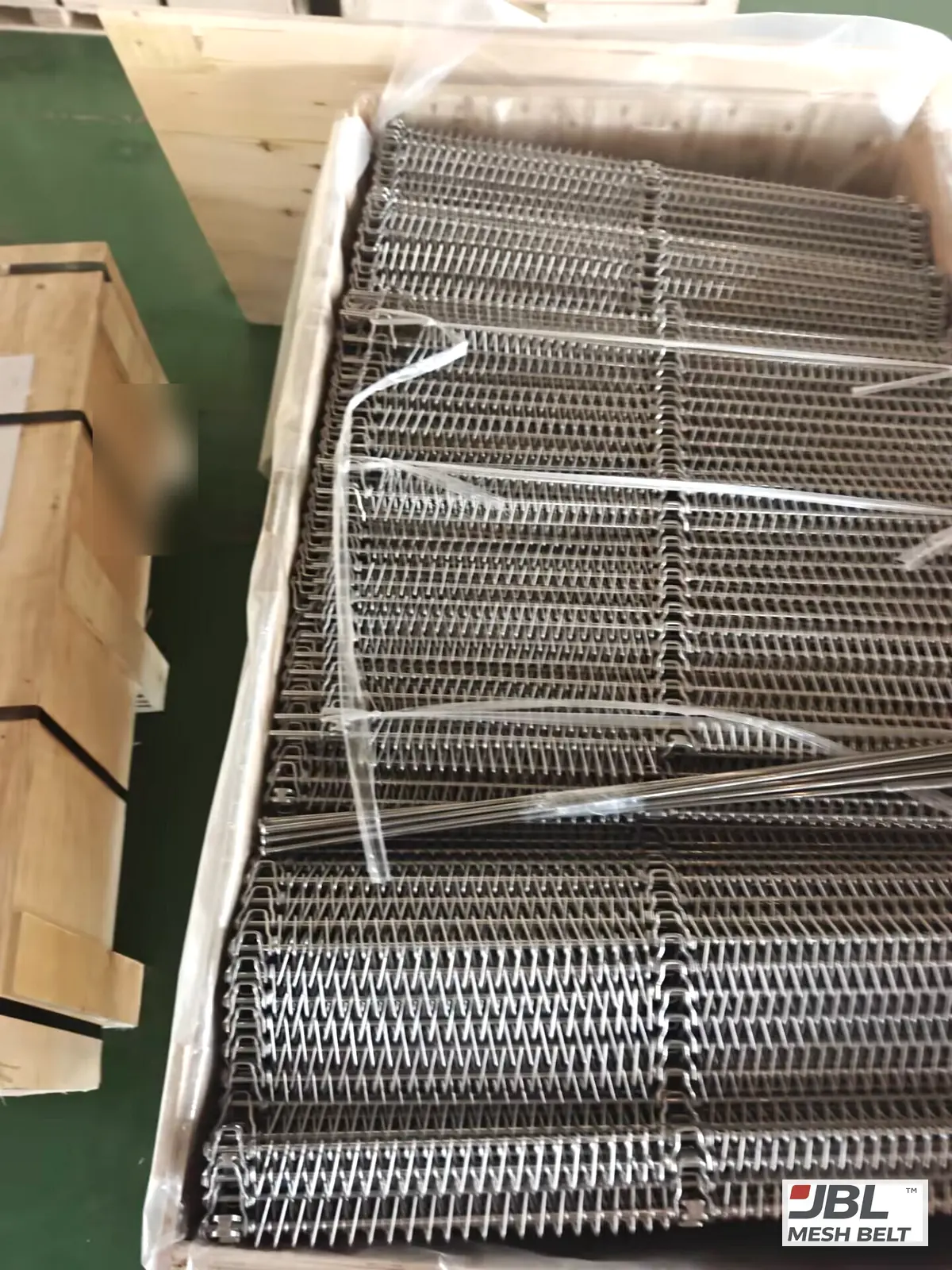
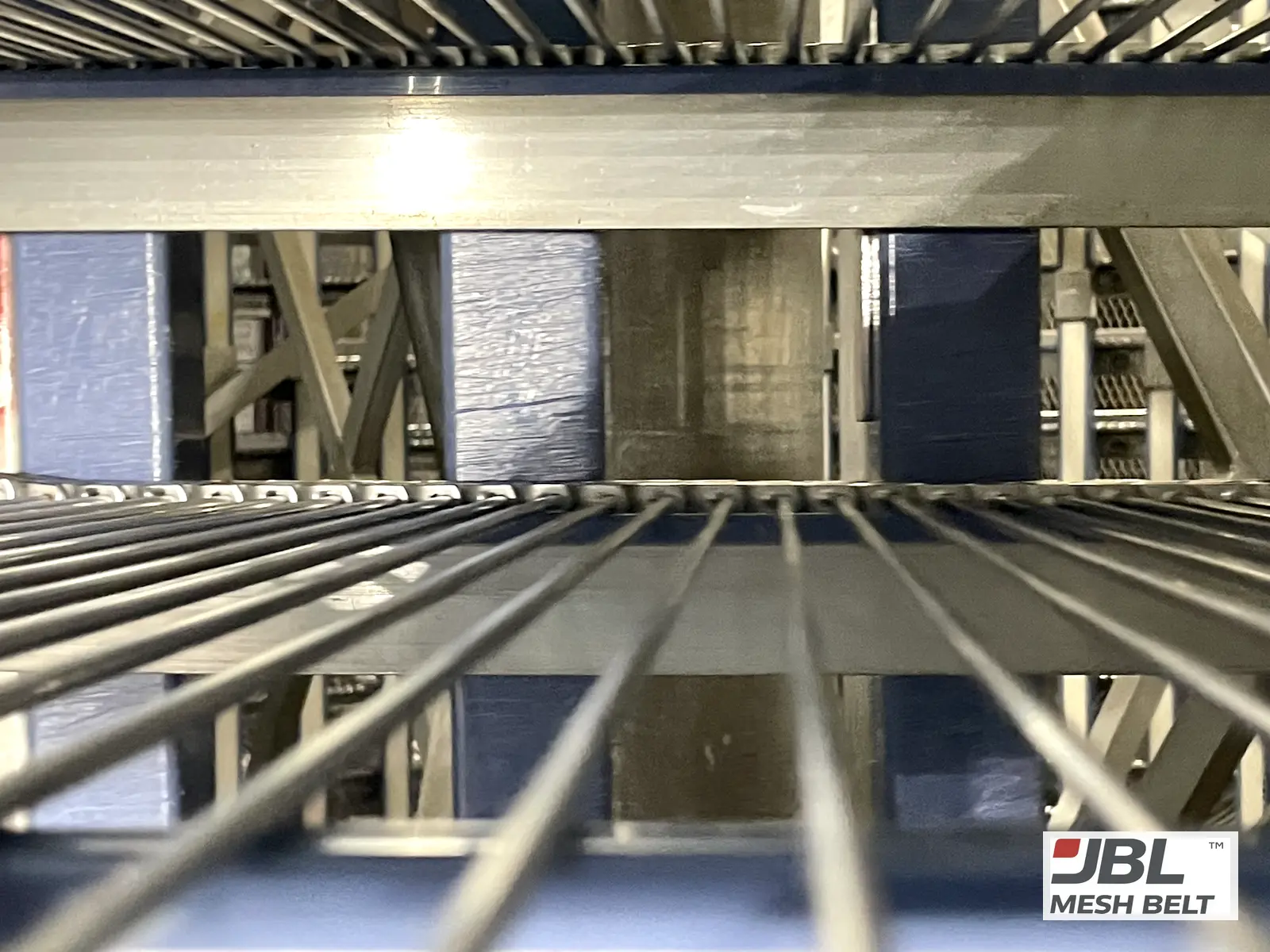
The integrator found us online and was not sure we could do it. Its own clients would run these belts at sea, carrying fish from the sea into onboard freezers. Replacing about 700 m with local OEM parts was too expensive.
We asked for an original belt sample to work from alongside the drawing. The drawing gave the targets. The sample showed how the original was formed.
| Source | What it gives you | Its limit |
|---|---|---|
| Drawing | Targets, radii, tolerances | Does not show how the original was formed |
| Original sample | Real forming, edge and weld detail | Worn; may differ from the drawing |
| Both together | Targets plus a real reference | Each point must be checked against both |
02What do you measure on the original against the drawing?
Each number on the drawing gets a reading on the sample, and later on the finished belt.
Short answer
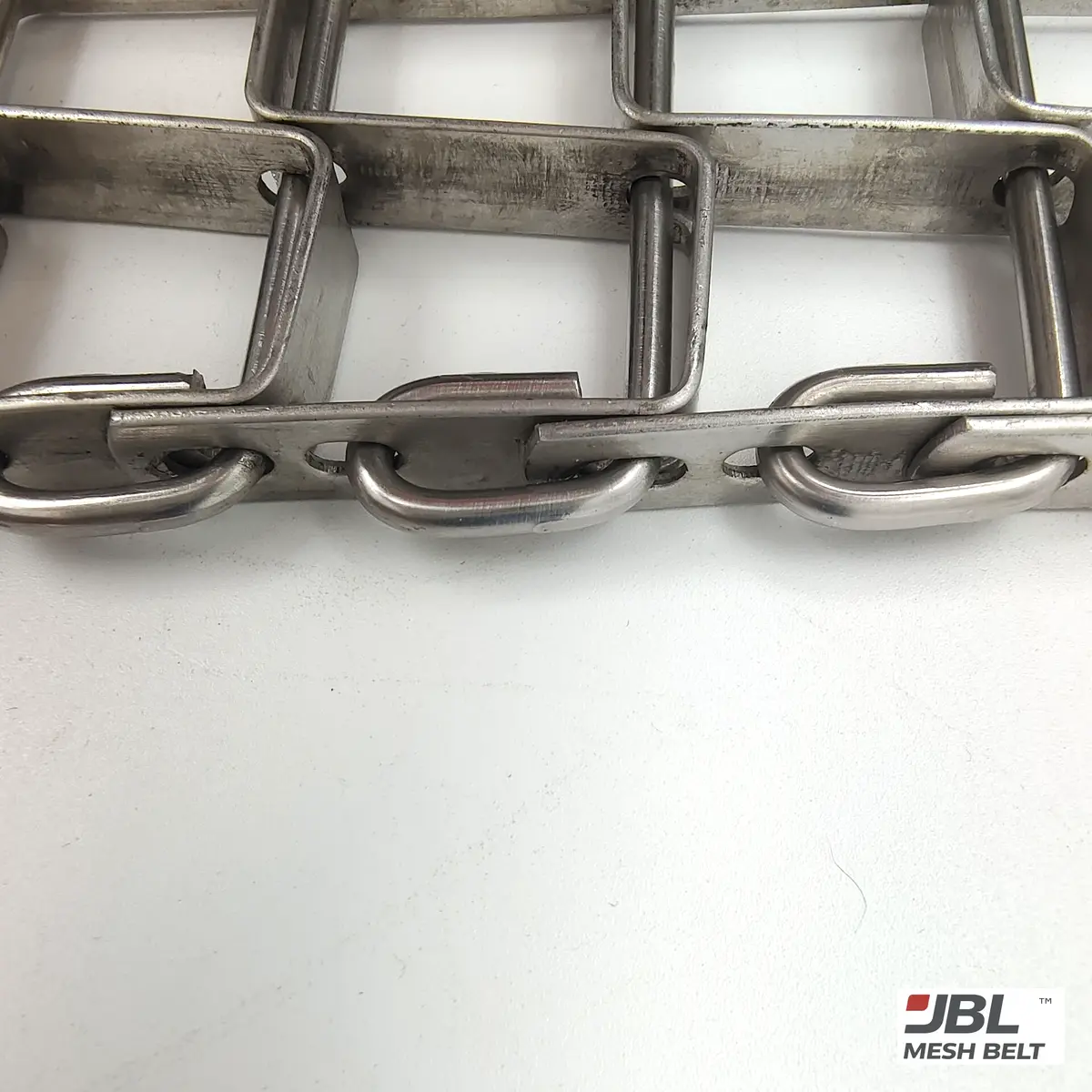
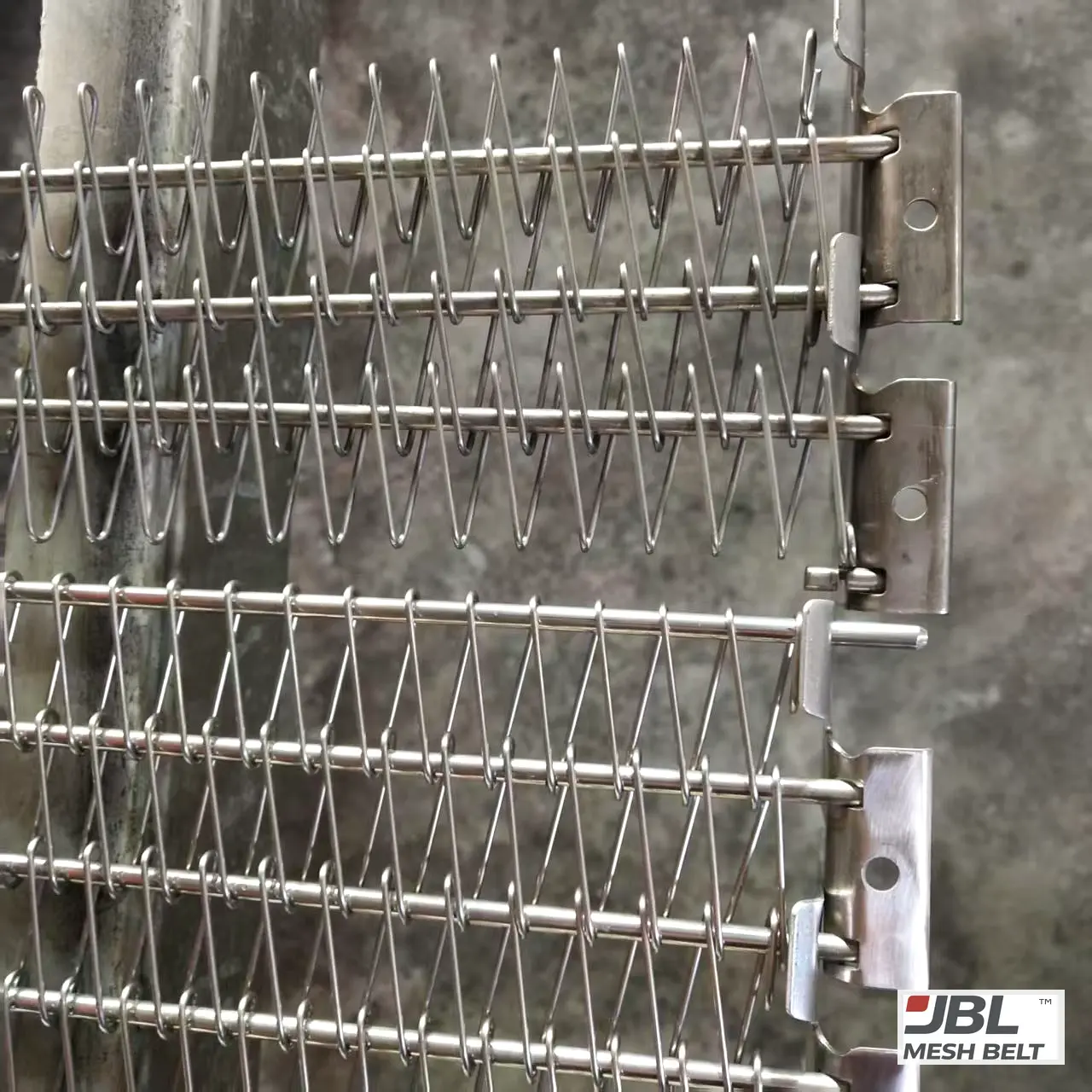
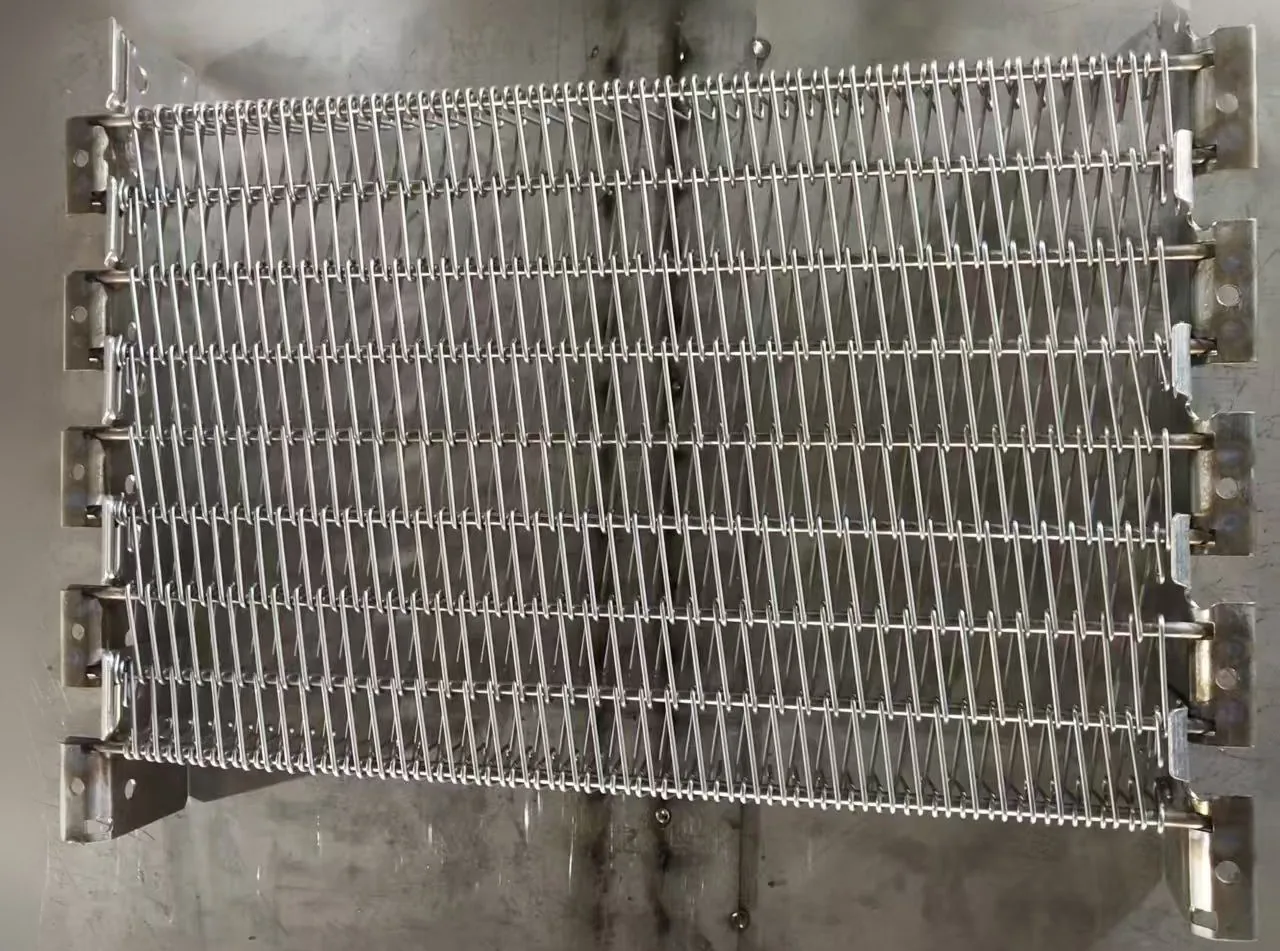
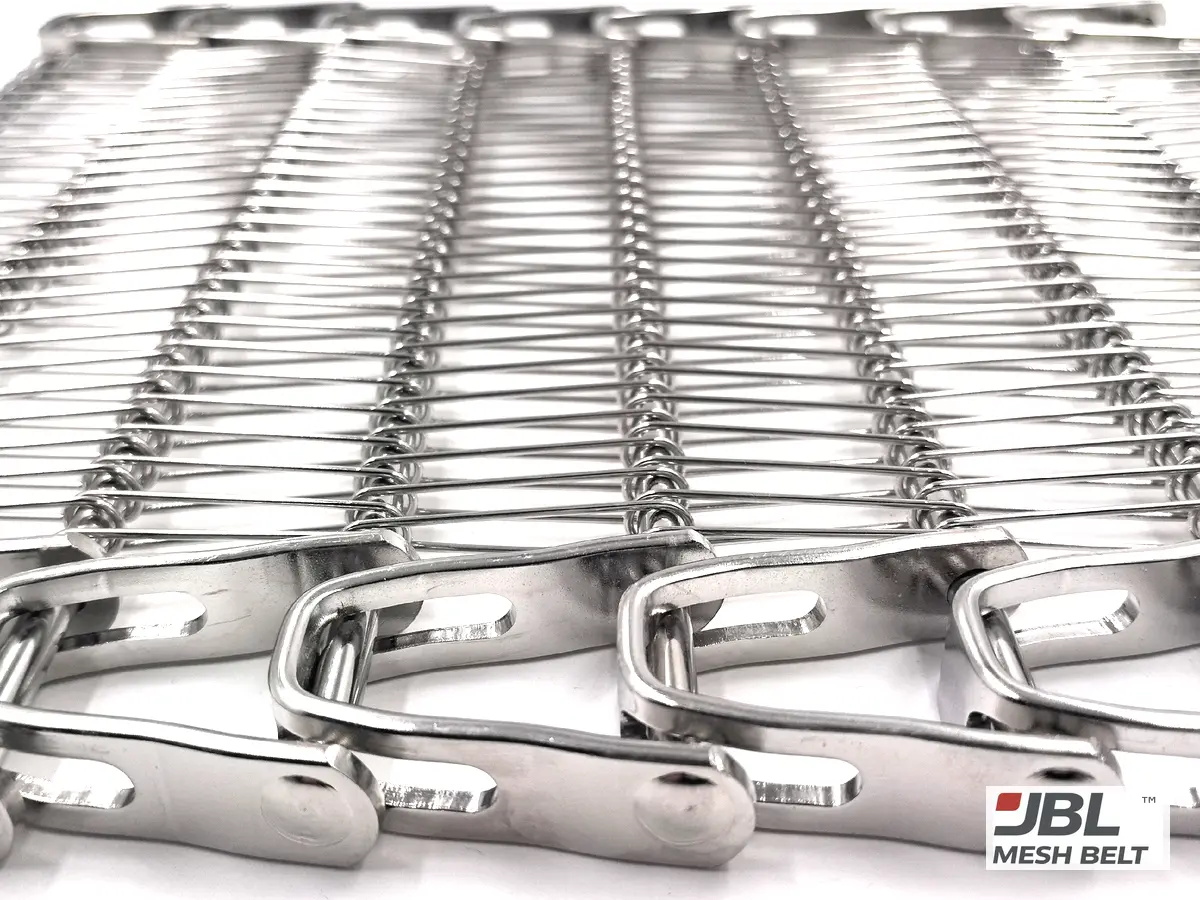
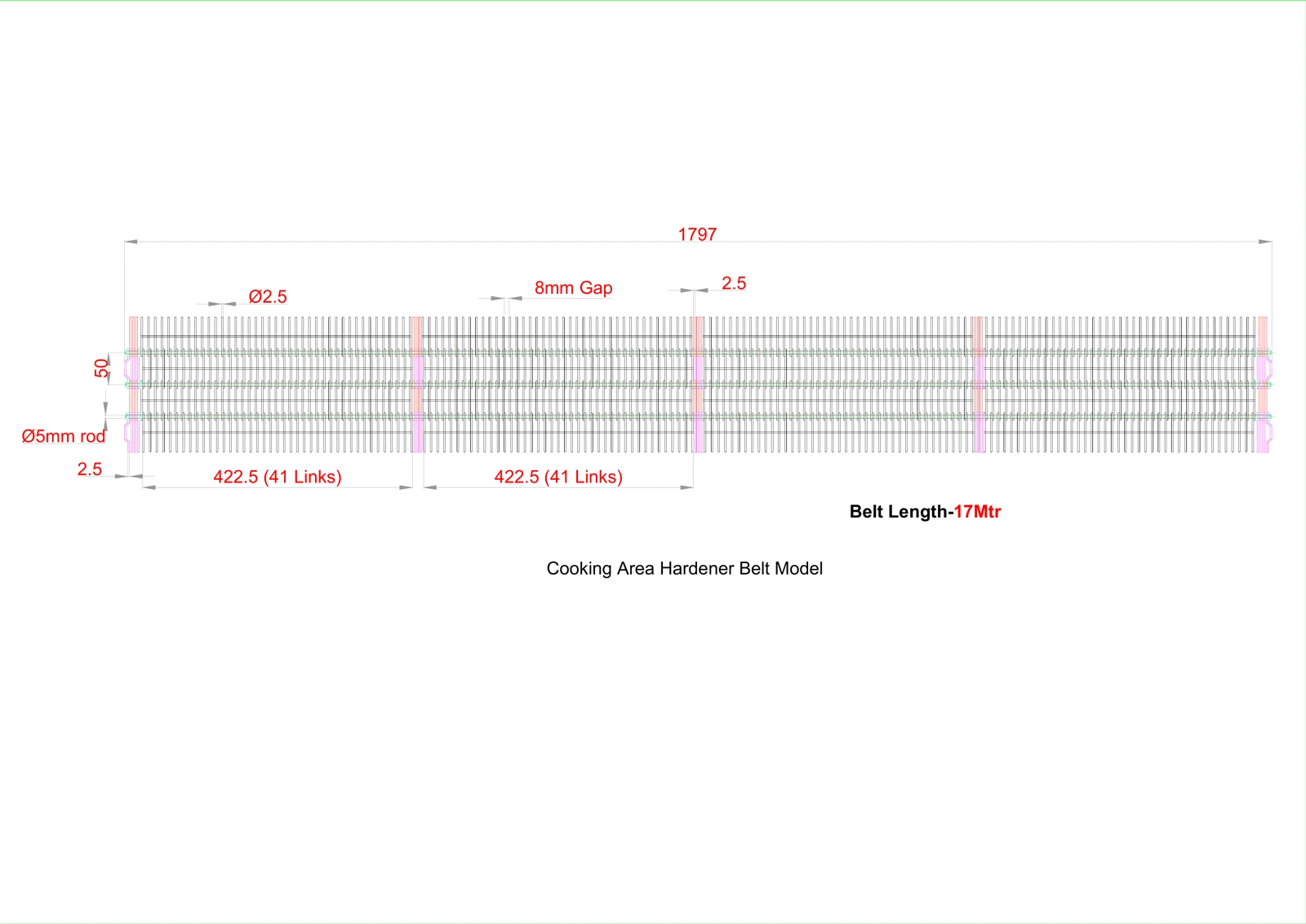
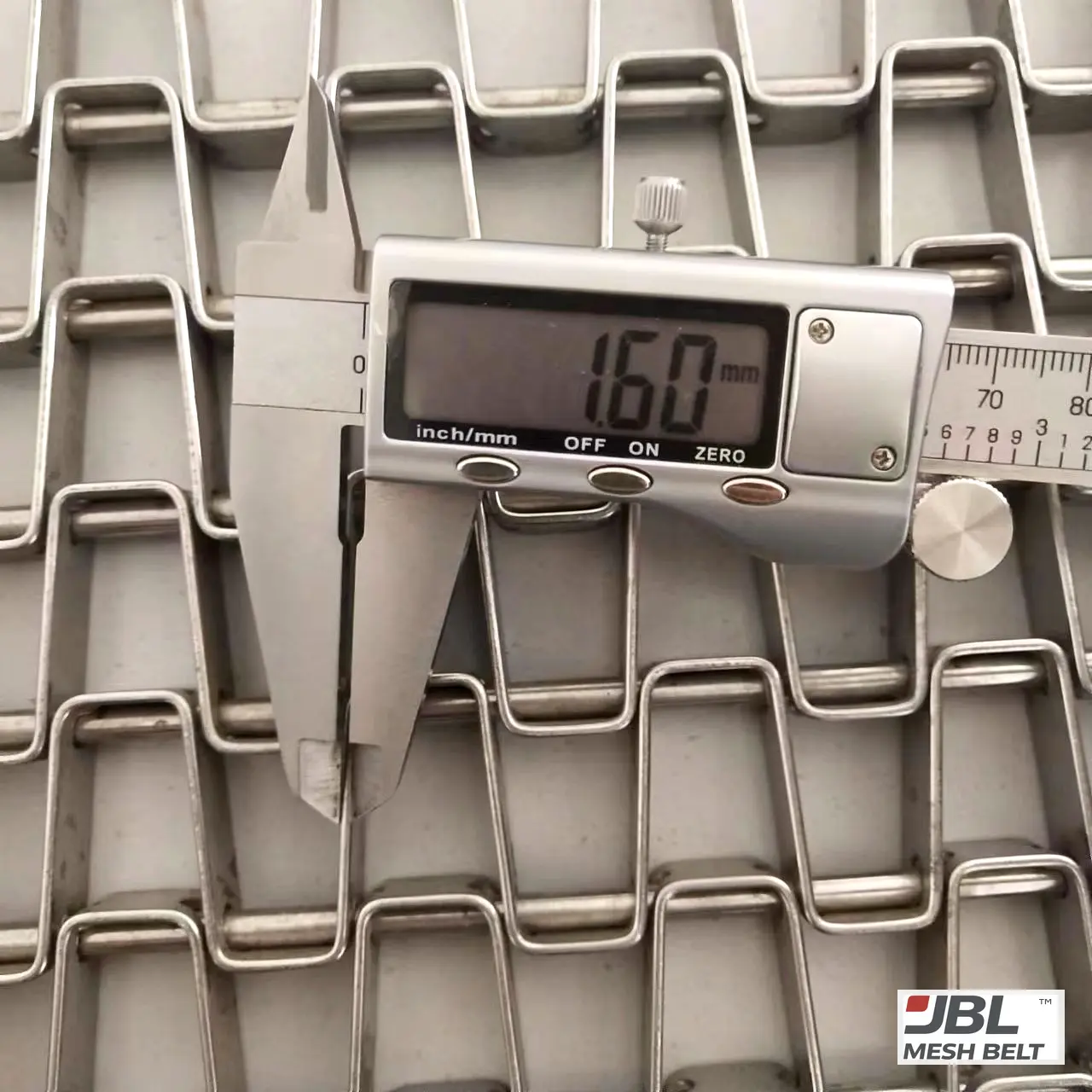
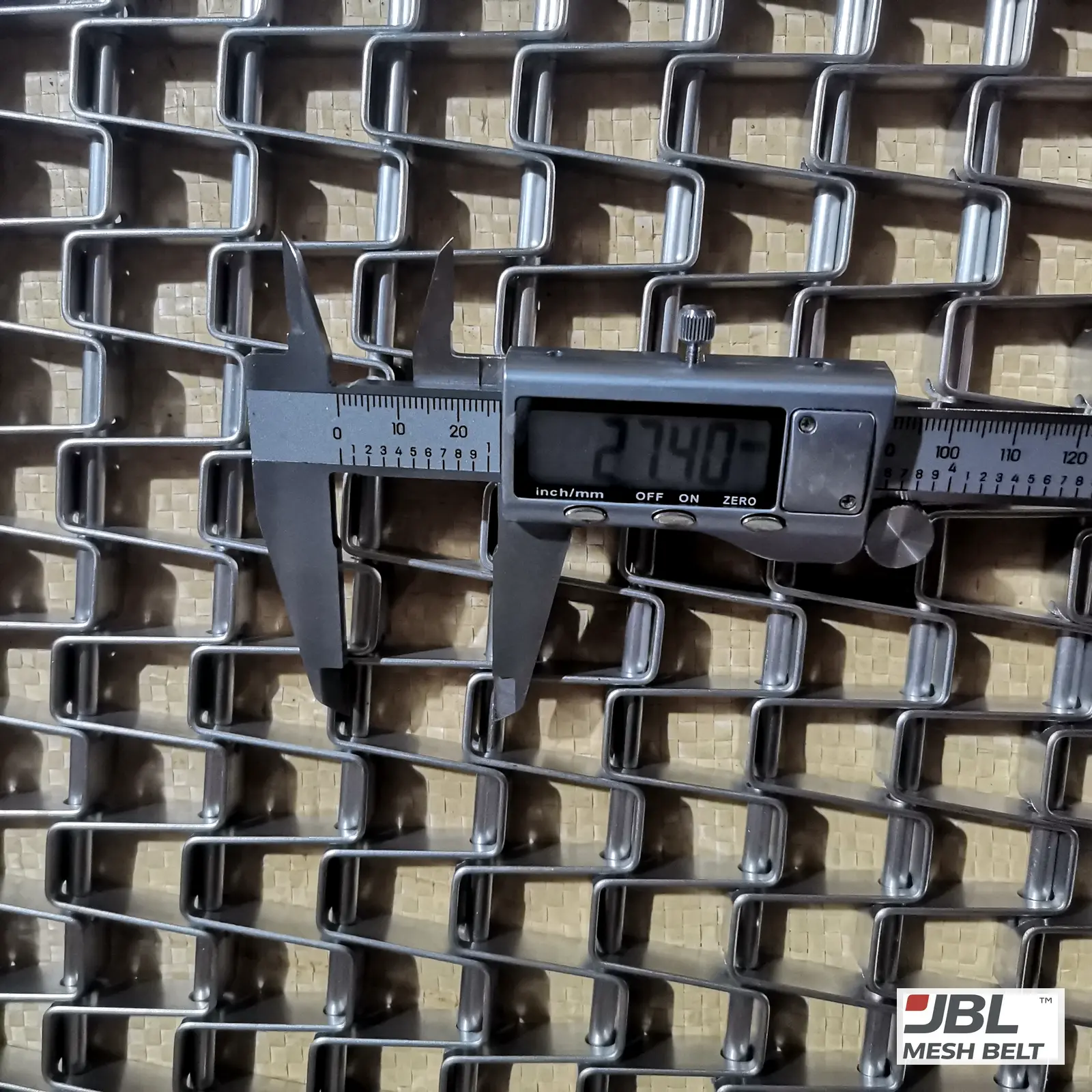
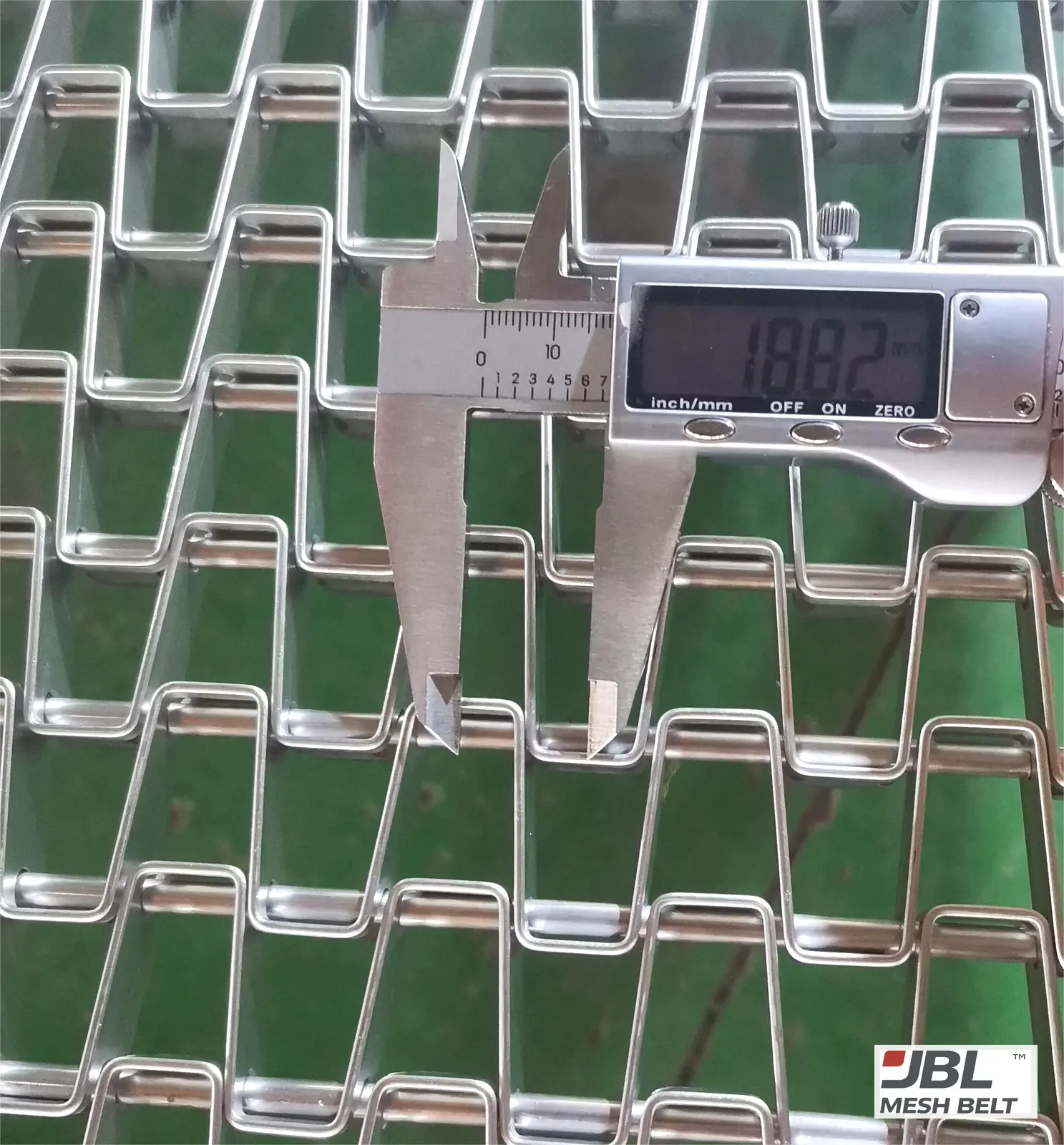
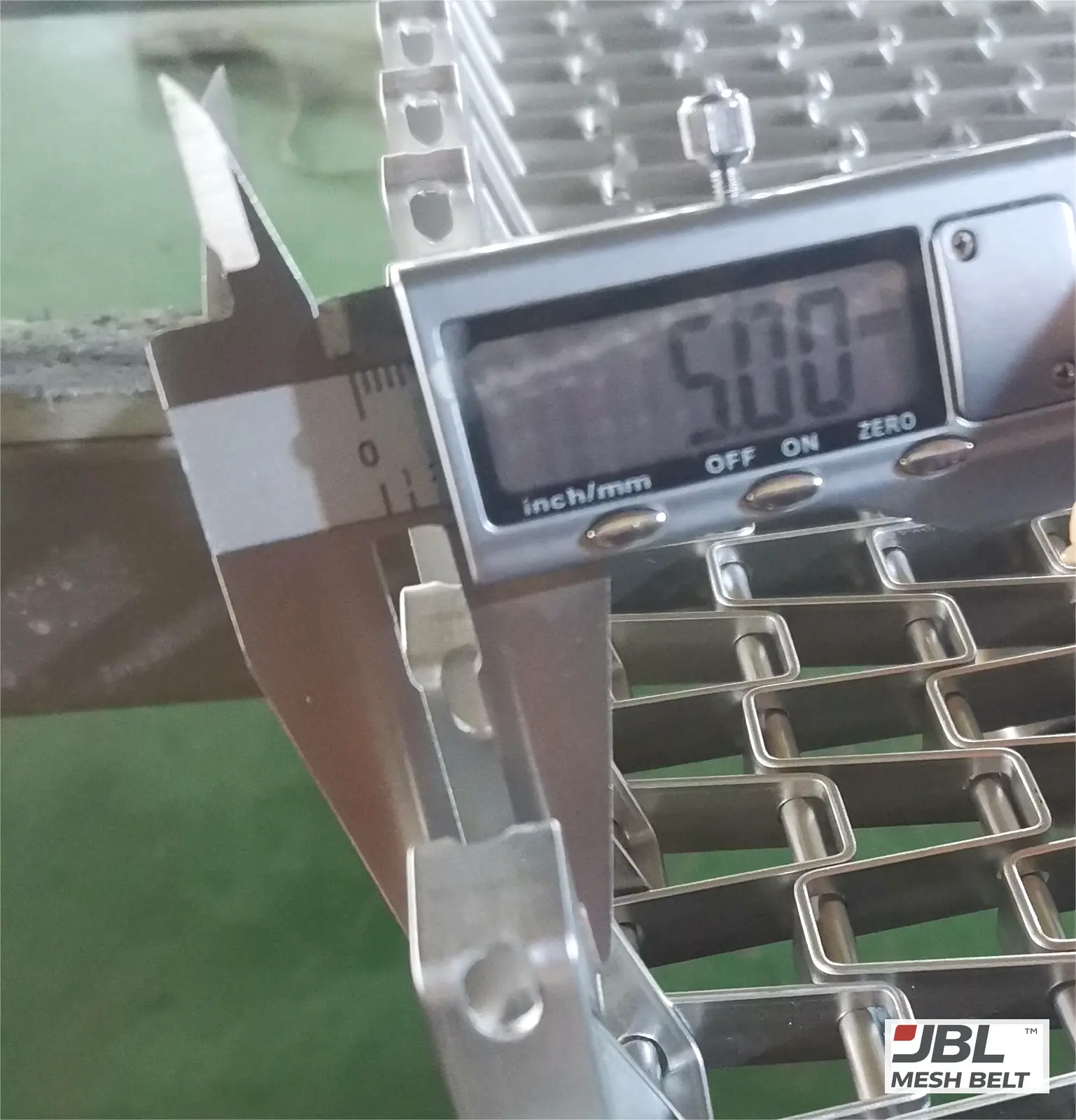
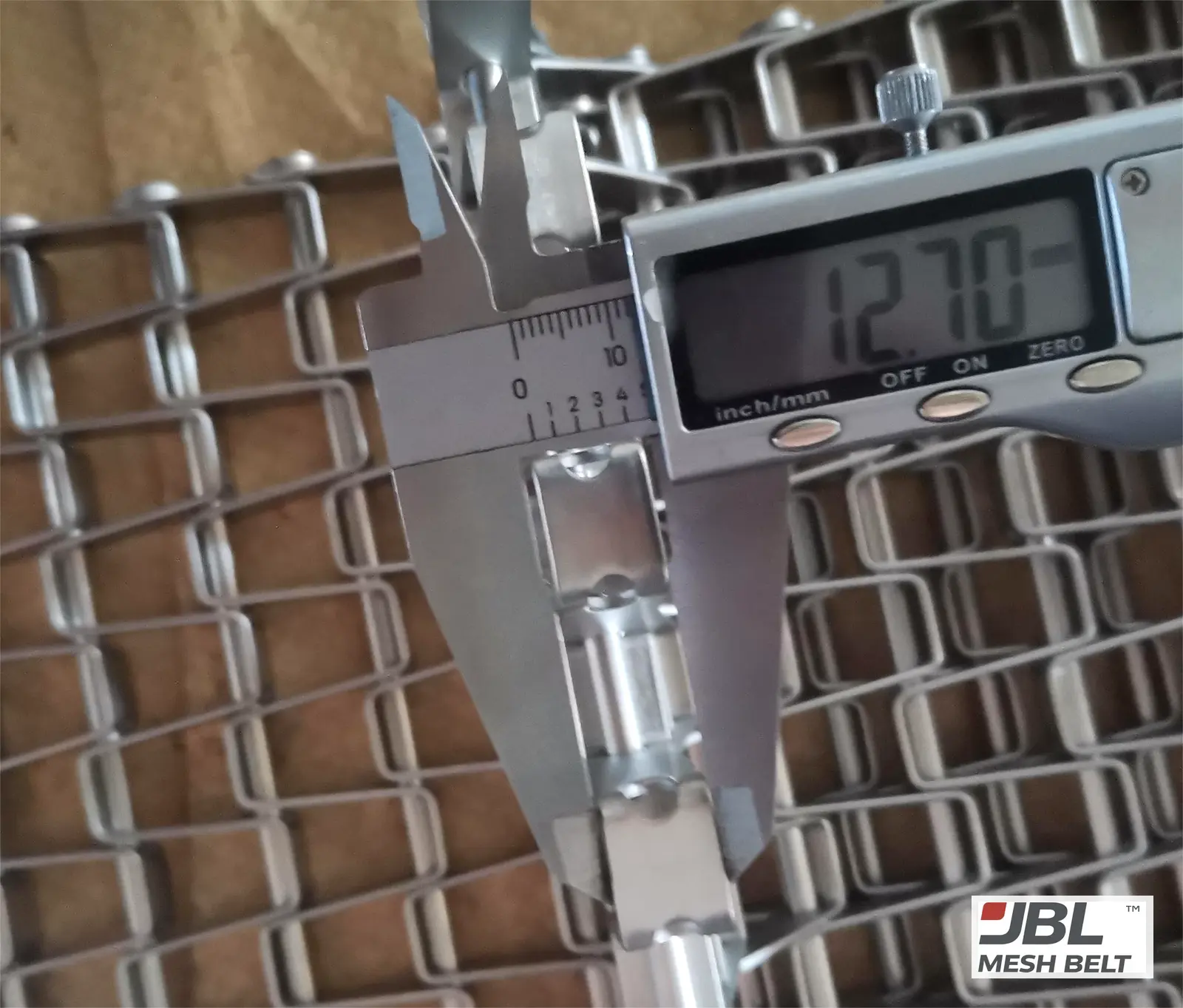
On the original I checked strip thickness, edge detail and pitch against the drawing. On the finished belt: pitch 27.40 mm, rod 5.00 mm, strip 1.60 × 12.70 mm, mesh opening 18.82 mm.
| Dimension | Belt spec | Reading |
|---|---|---|
| Pitch | 27.4 mm | 27.40 mm (finished belt) |
| Cross rod | 5 mm | 5.00 mm (finished belt) |
| Strip thickness | 1.6 mm | 1.60 mm (original and finished belt) |
| Strip height | 12.7 mm | 12.70 mm (finished belt) |
| Mesh opening | — | 18.82 mm (finished belt) |
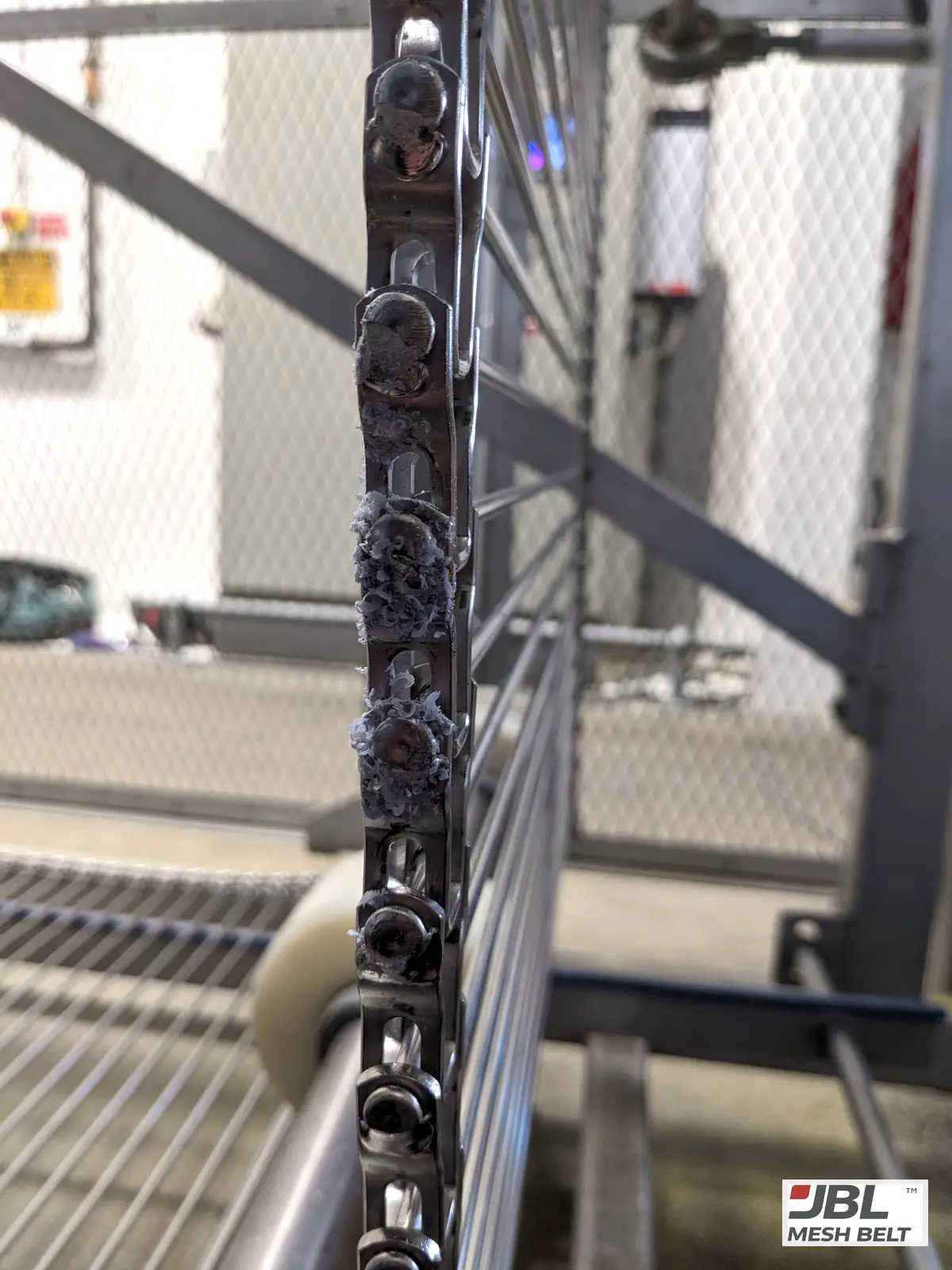
| Edge detail | ½ in | 12.70 mm (original) |
| Edge part | — | 4.89 mm (original) |
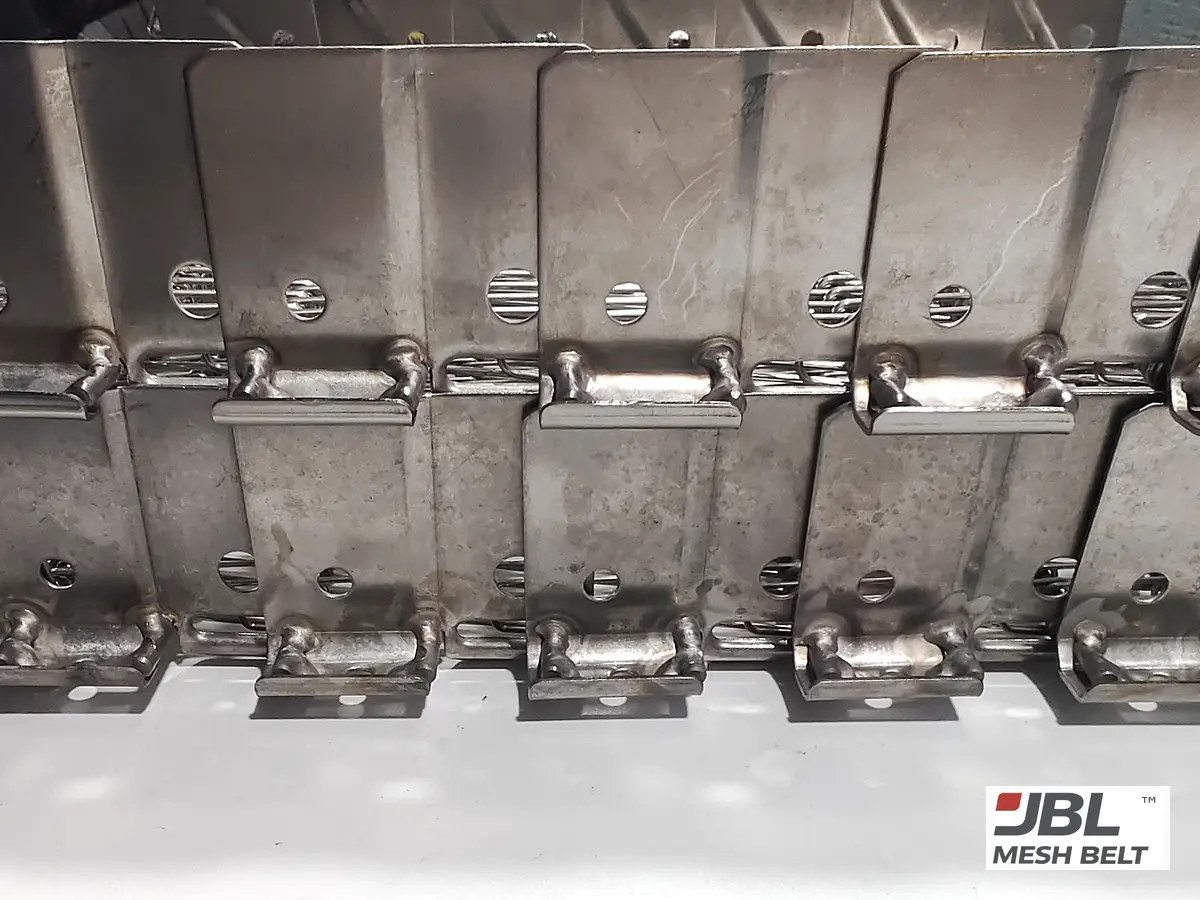
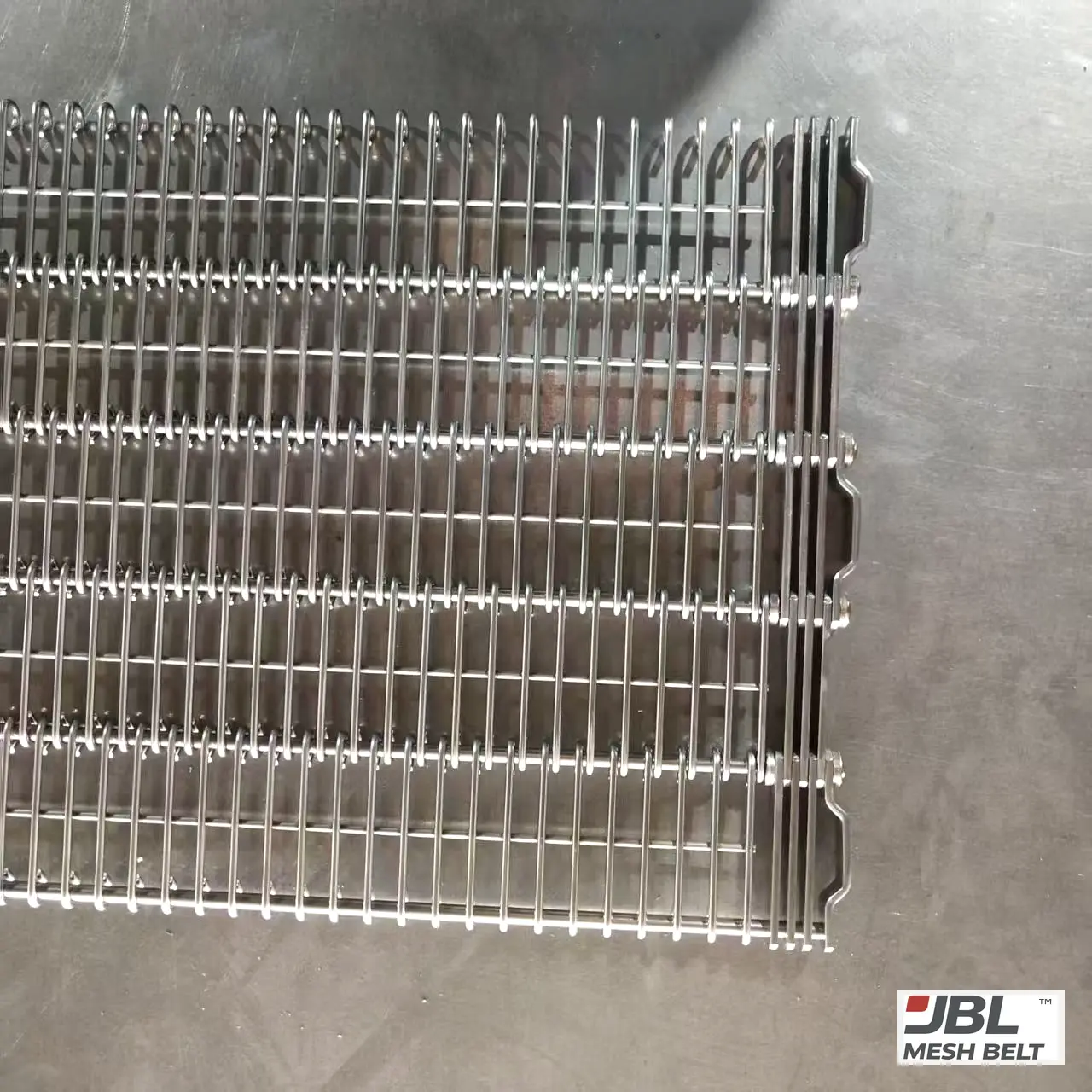
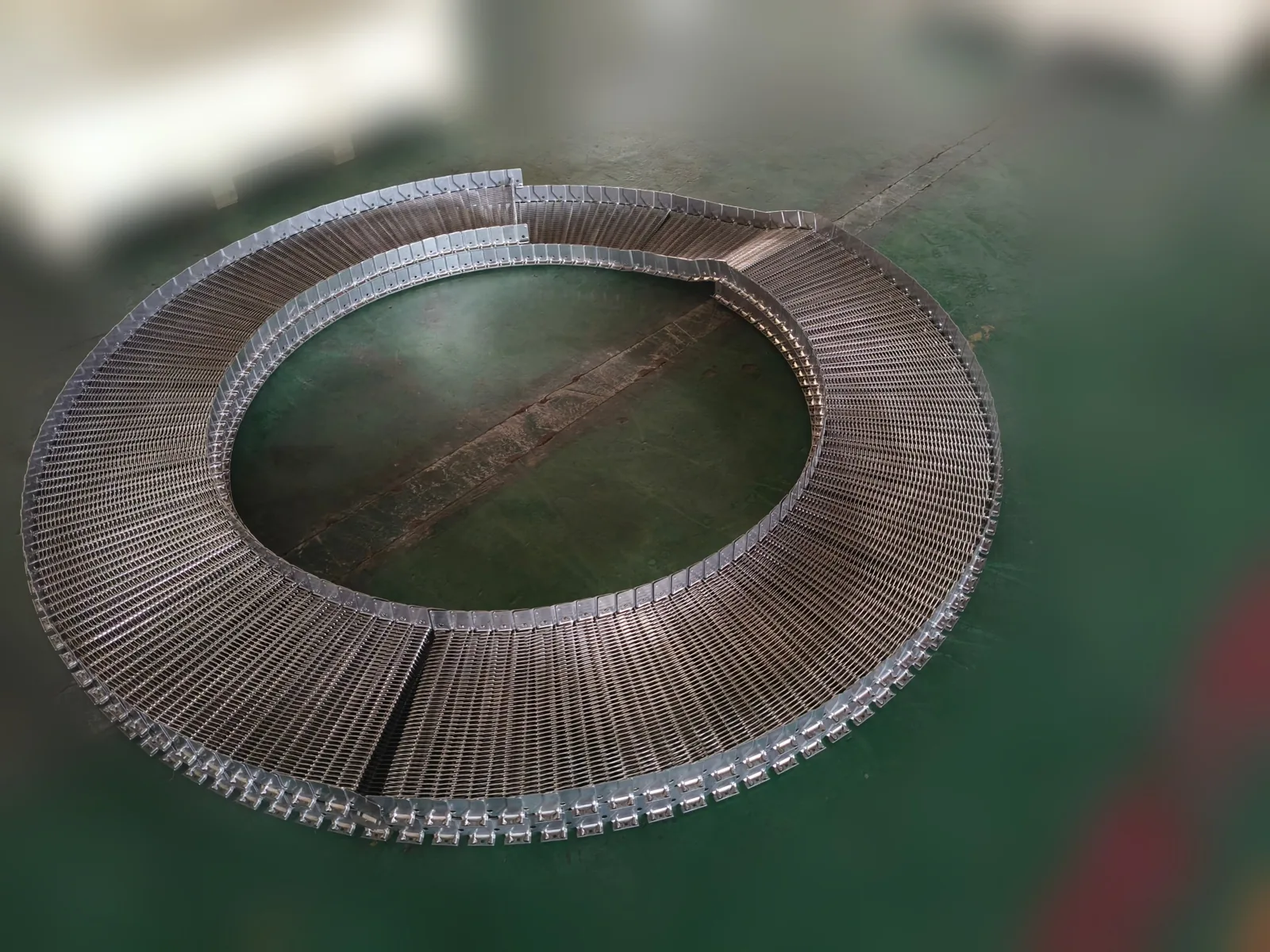
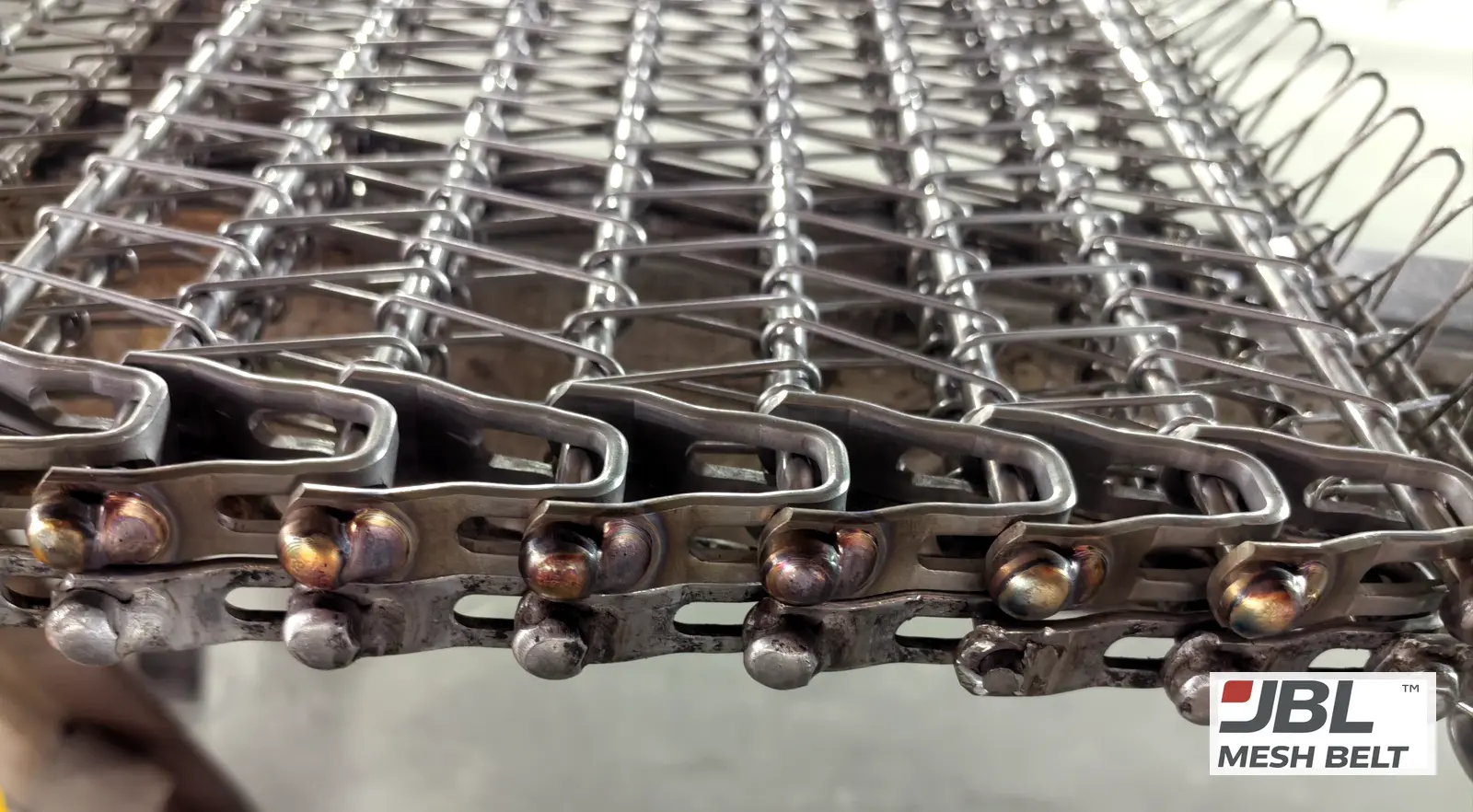
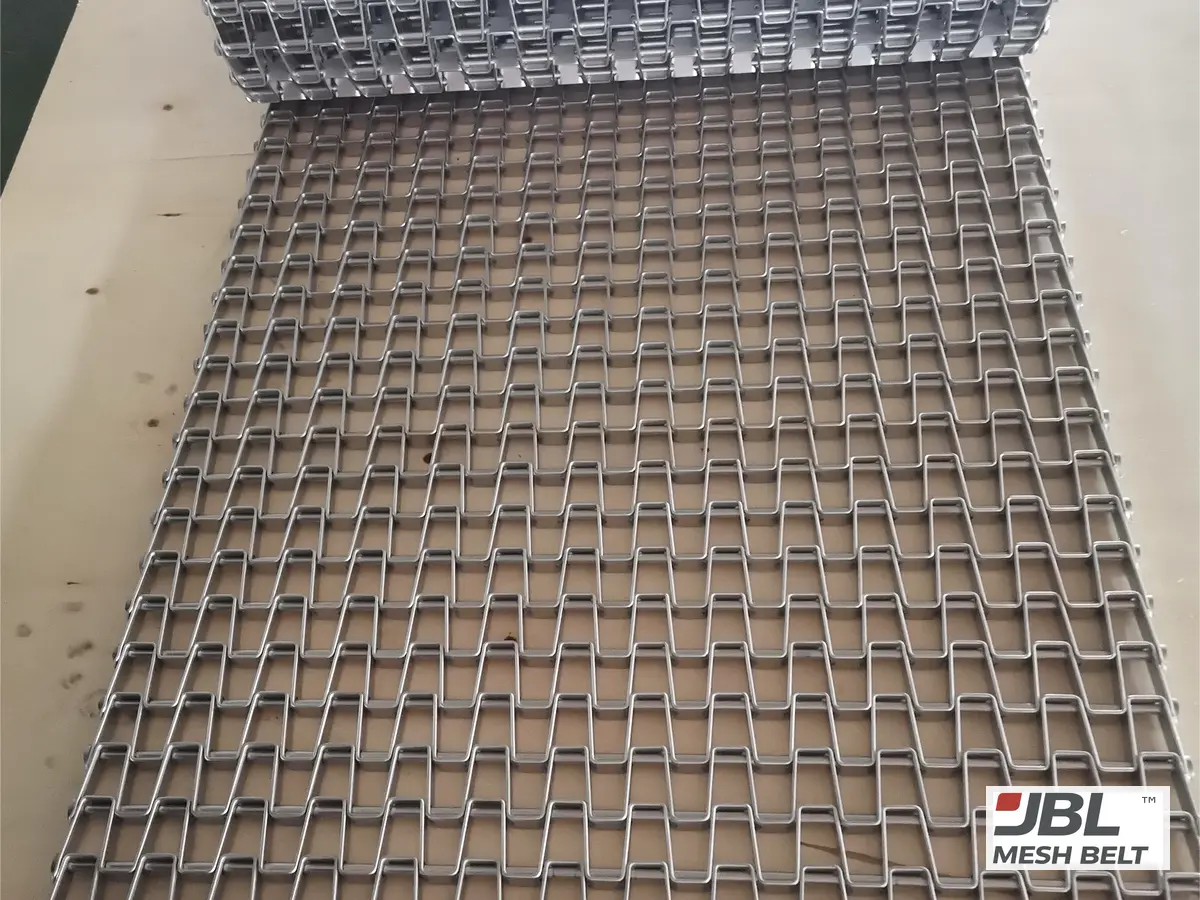
USA, 2024 — SUS304 flat wire belt with washer-welded edge.
Many of these values are inch sizes: 12.70 mm is ½ in. When a drawing comes from the USA, I check which unit each value was set in before I round anything.
03How do you meet bend radii and a no-burr rule?
This is where copying stops and process work starts.
Short answer
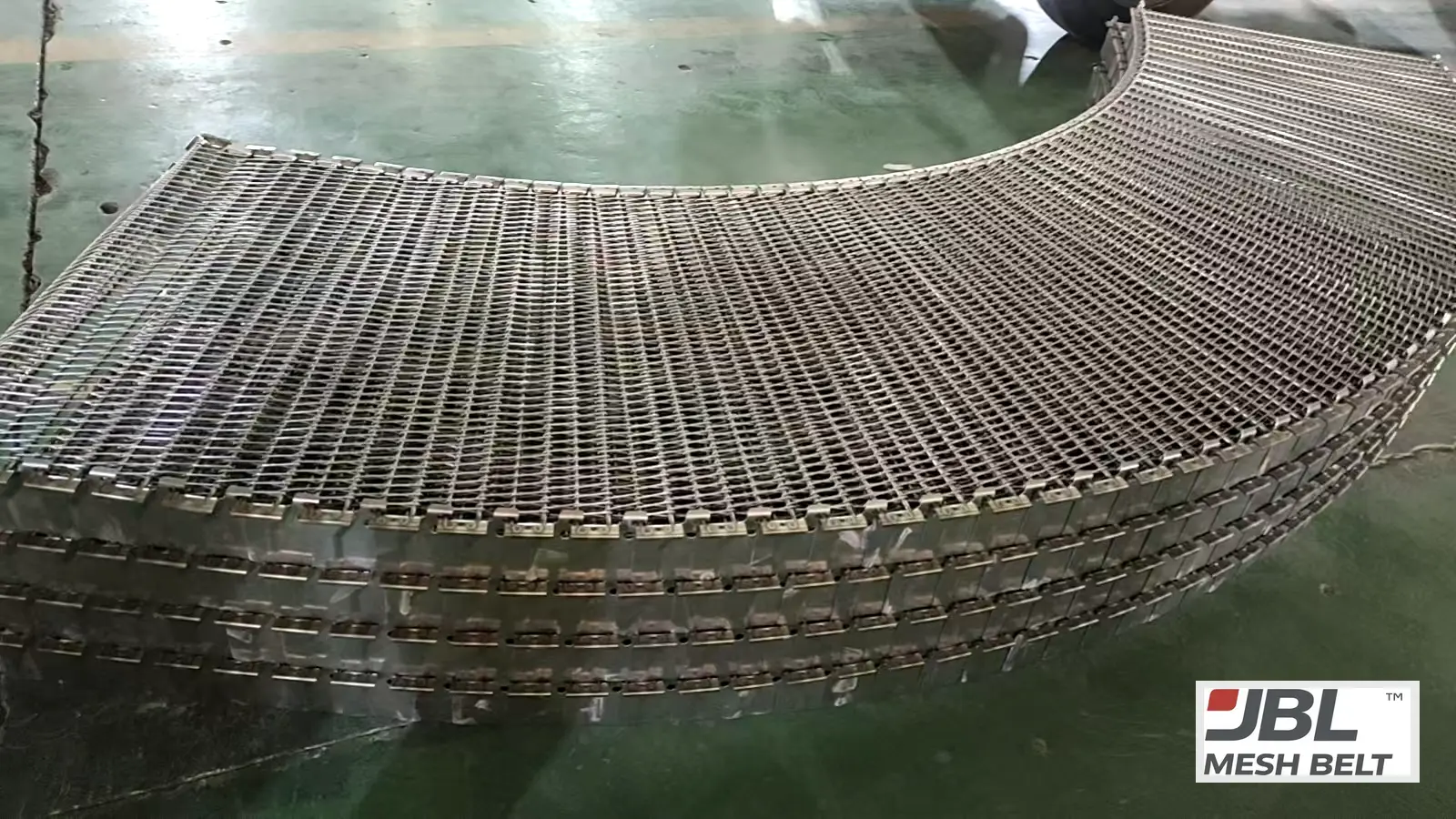
The forming tools were adjusted to the drawing radii, and the process was changed so edges came out free of burrs. A trial run was made and checked against the drawing and the original, and the customer approved it.
| Requirement | Drawing | What we did |
|---|---|---|
| Bend radii | Every angle and radius specified | Forming tools adjusted to the drawing |
| Edges | No burrs | Process changed; edges checked on the trial run |
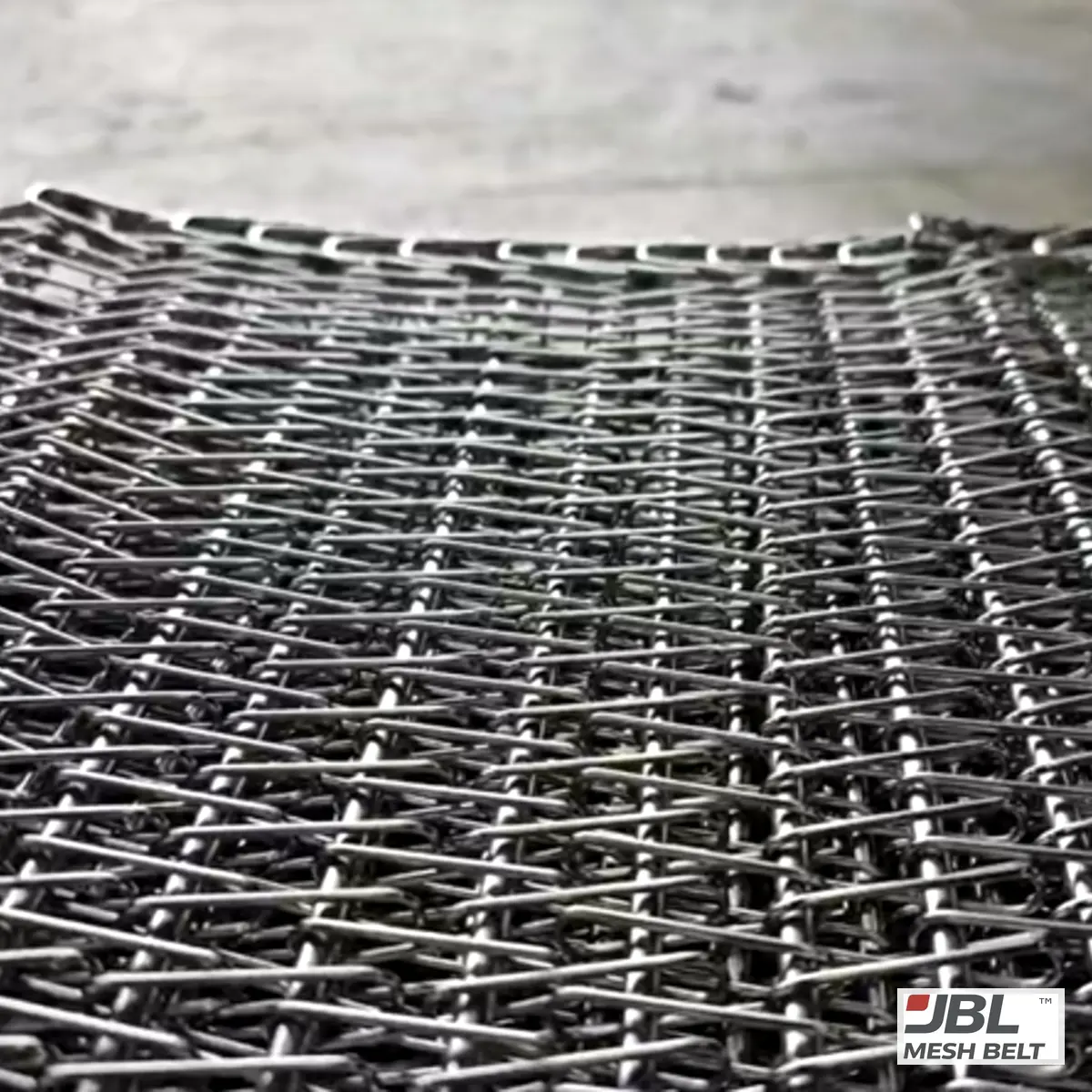
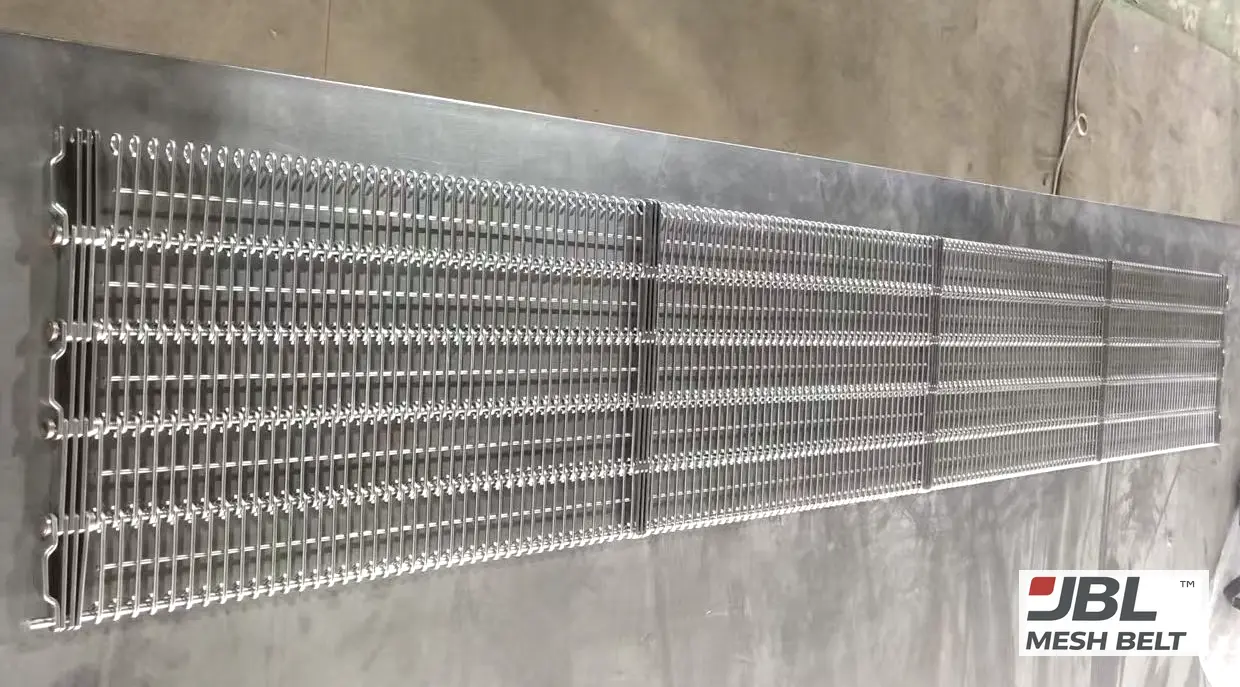
| Belt surface | Flat | Checked lying flat |
| Approval | Before bulk | Trial run approved by the customer |
Why burrs matter on a food belt
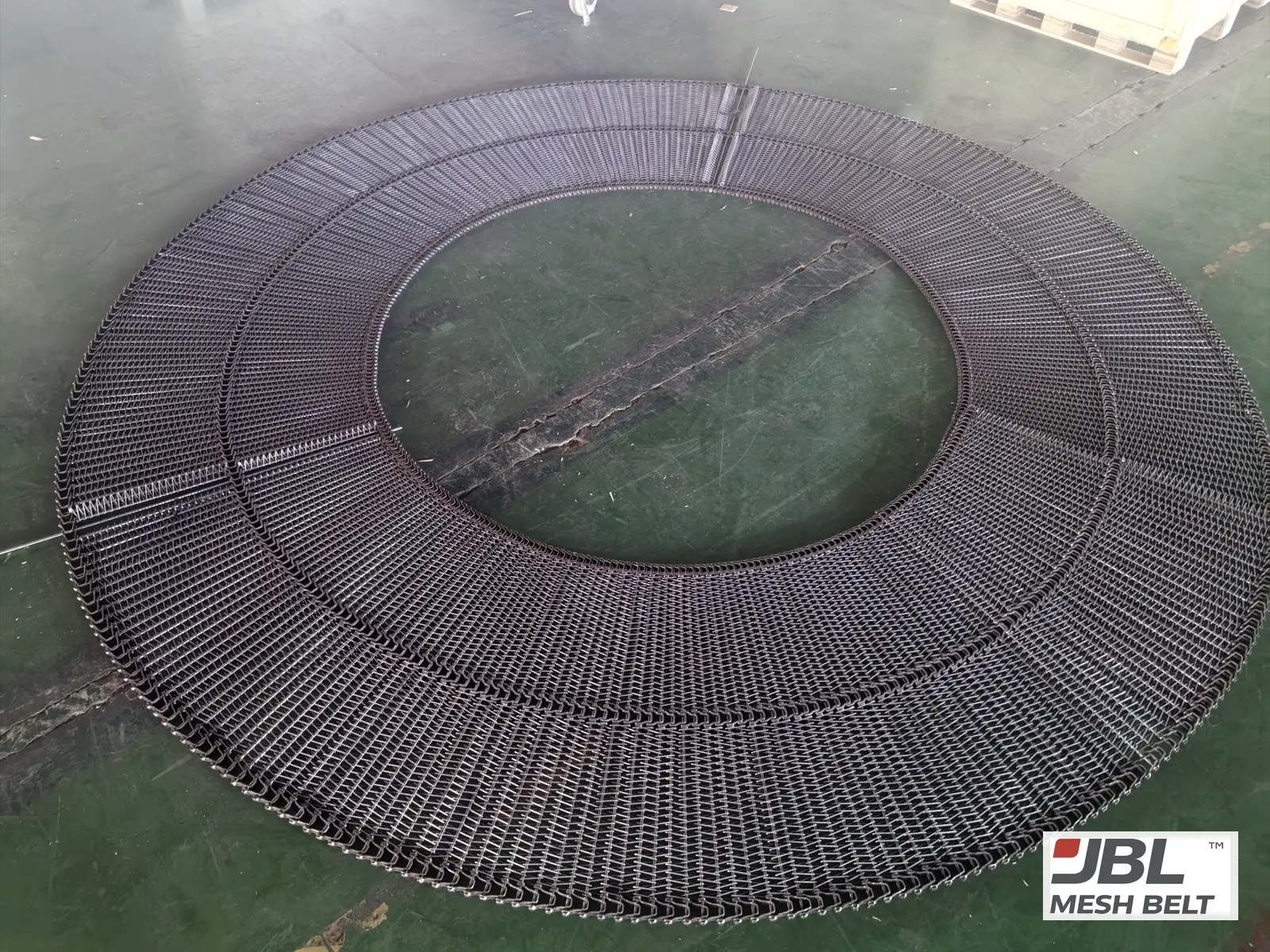
In a bakery project in Melbourne, the original spiral belt had rough rod-end welds with burrs. Plastic shavings built up along the edge, and the guide strips were scored. Burrs wear whatever they touch.
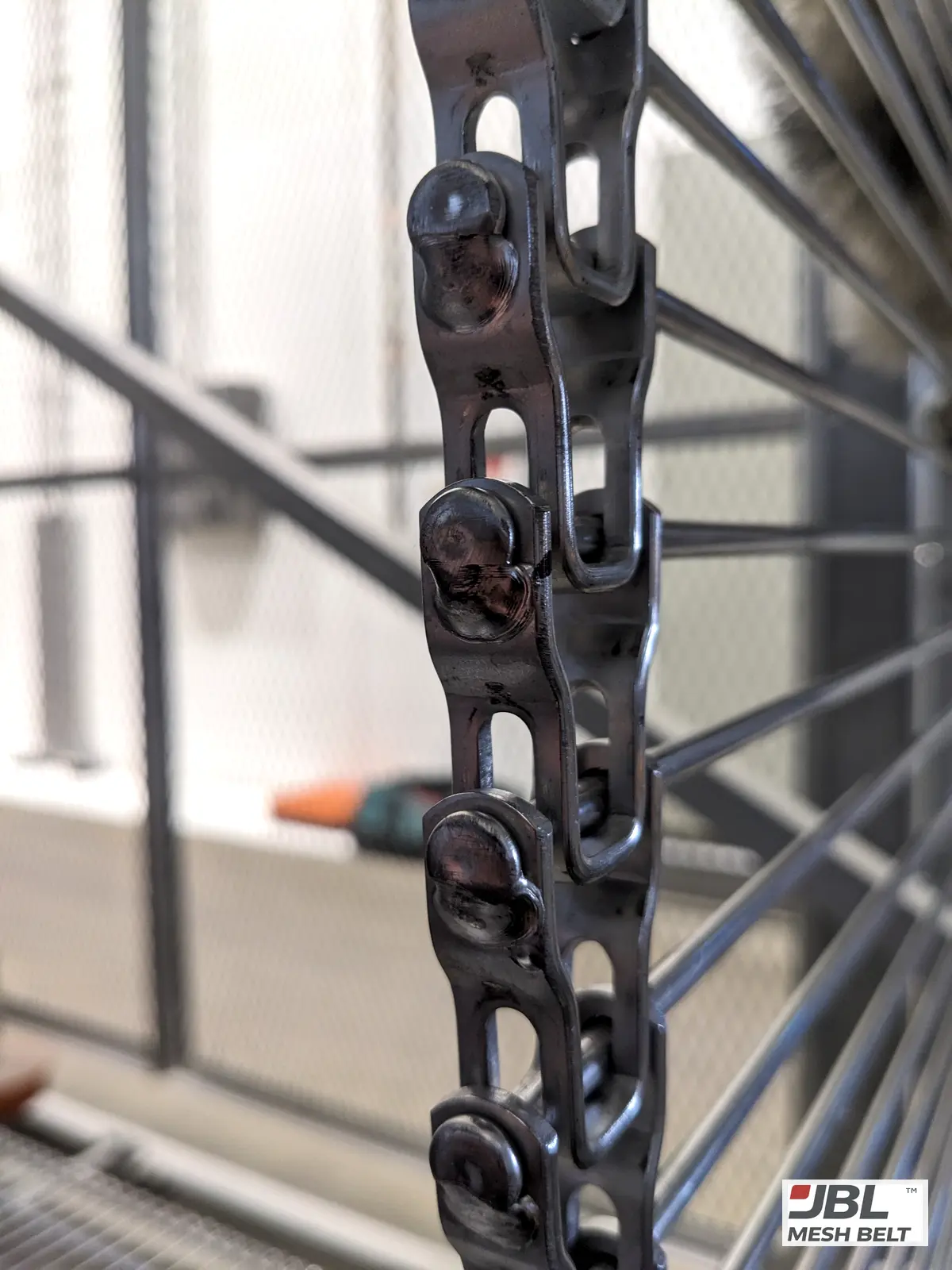
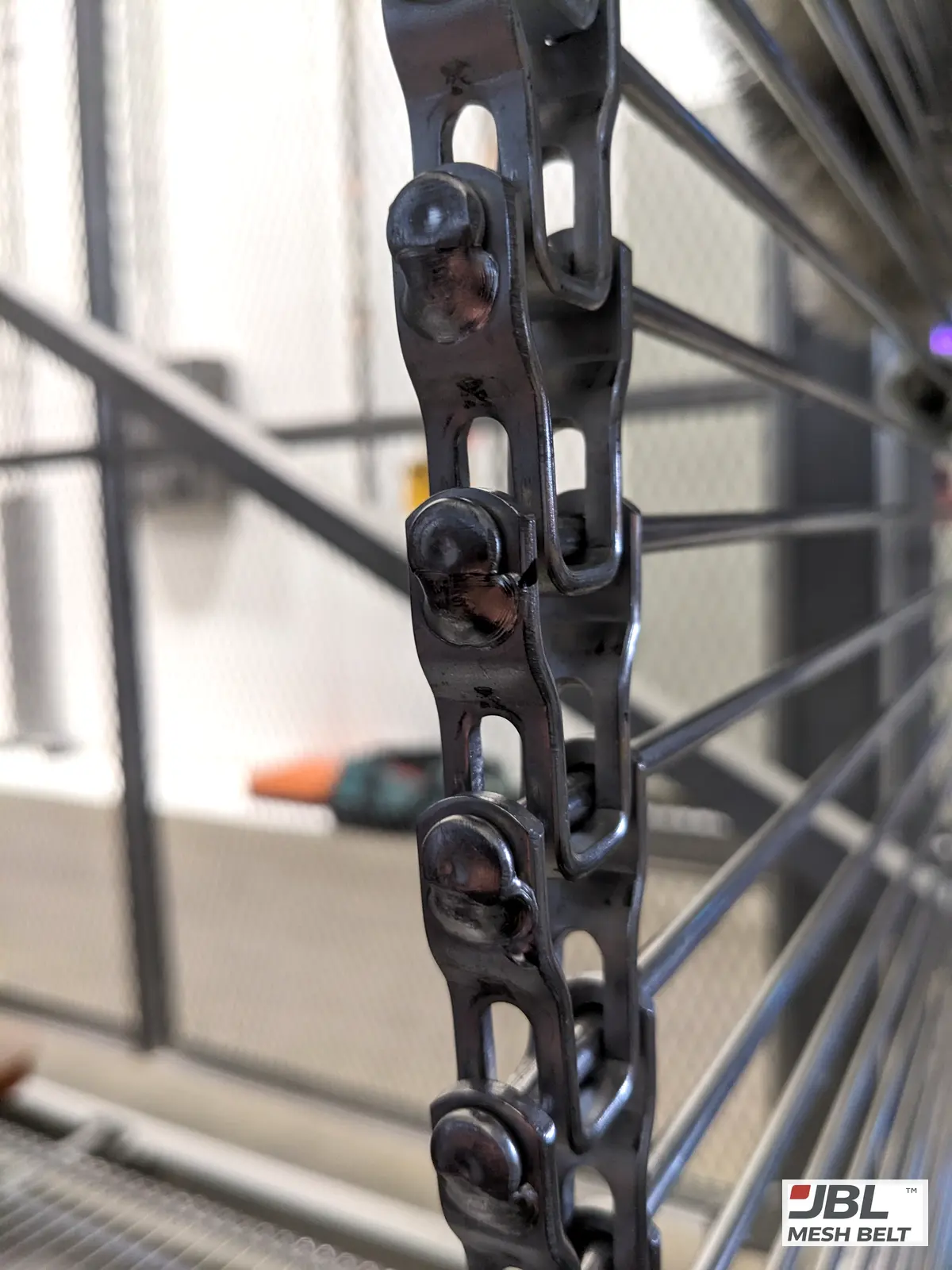
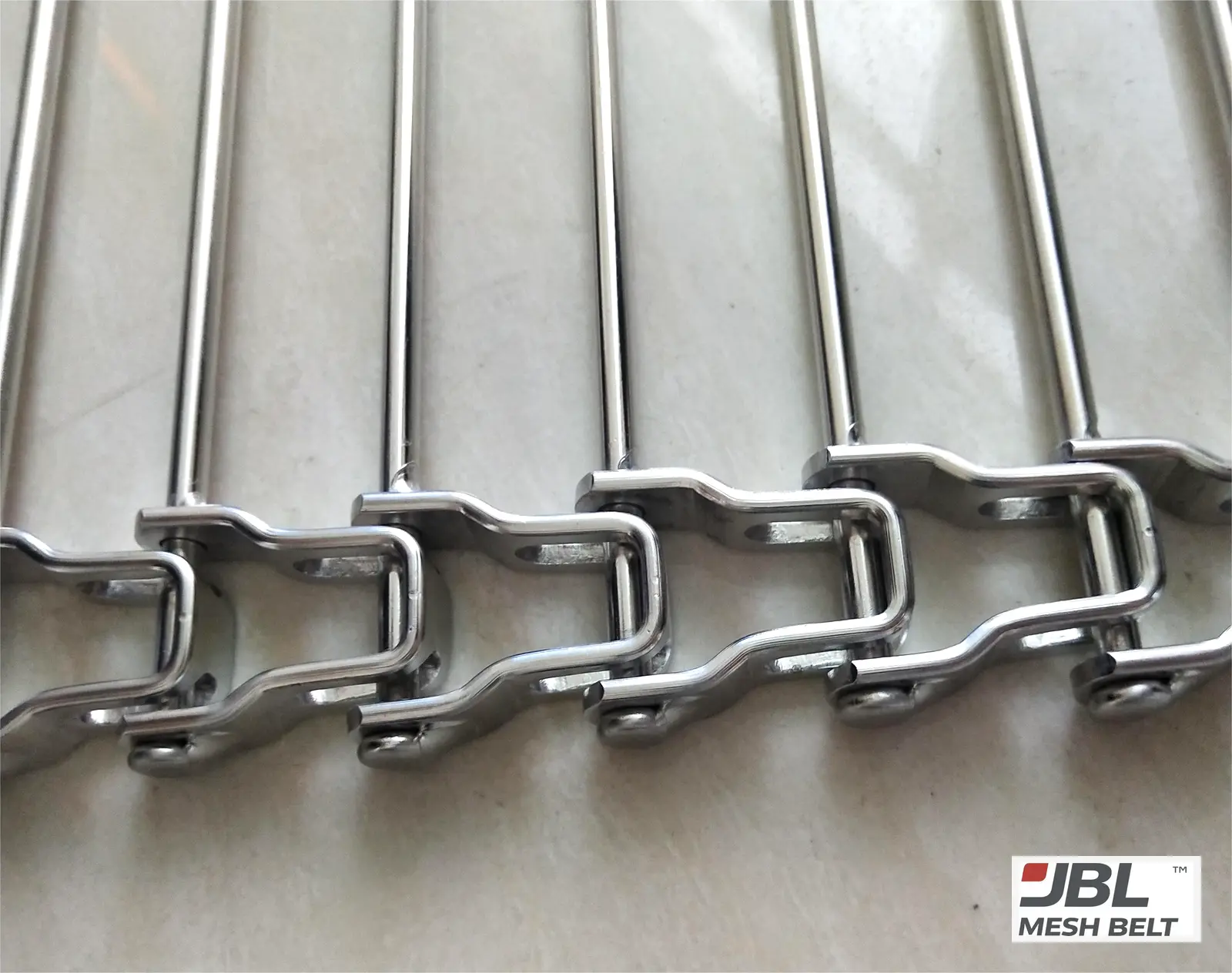
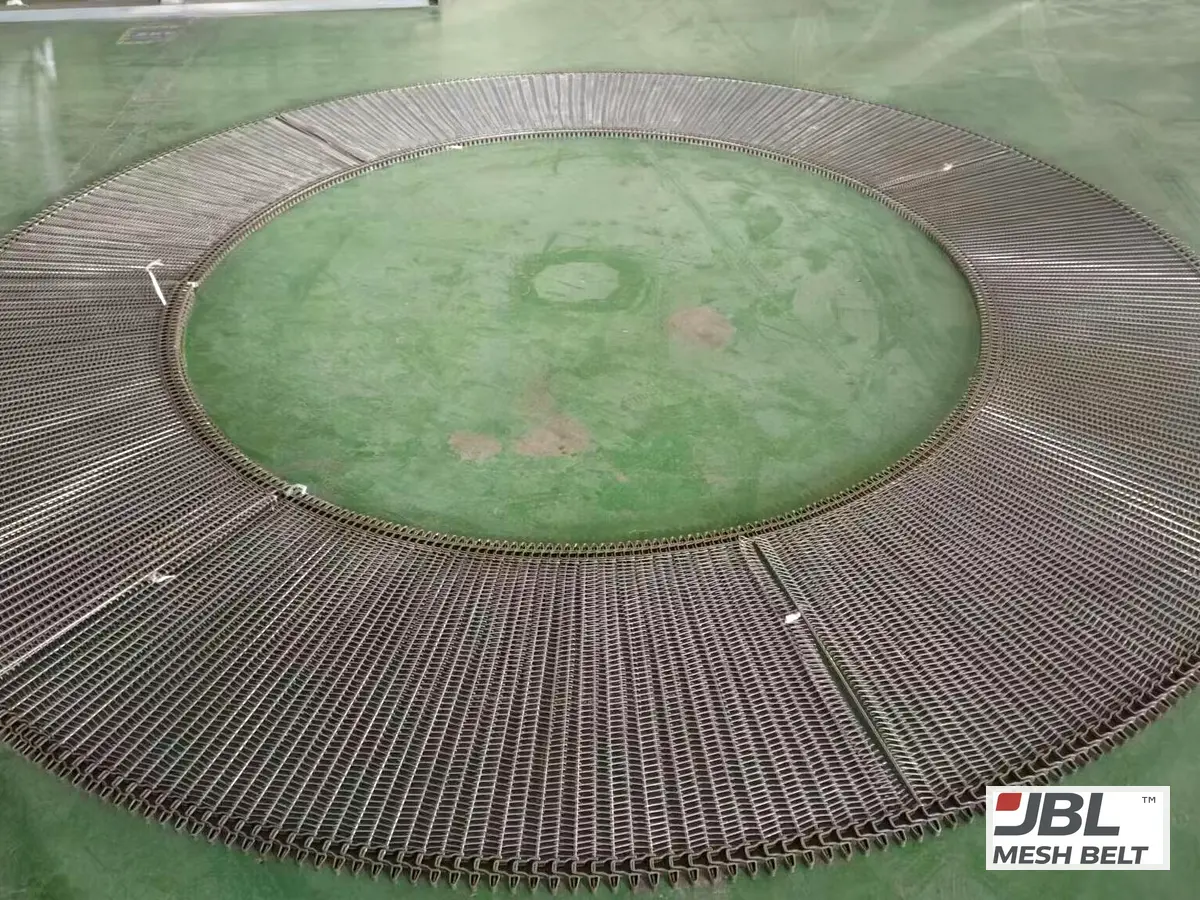
In Malaysia the customer supplied a drawing for a spiral belt. Welds and rod ends on the trial run were ground a second time so the edge is smooth and free of burrs. The same rule runs through all three projects: check the edge on the trial, not after installation.
Read more on weld burrs and contamination risk.
04Should the same supplier make the clips and sprockets?
The customer planned to make the clips in-house. After the trial run, they sent them to us.
Short answer
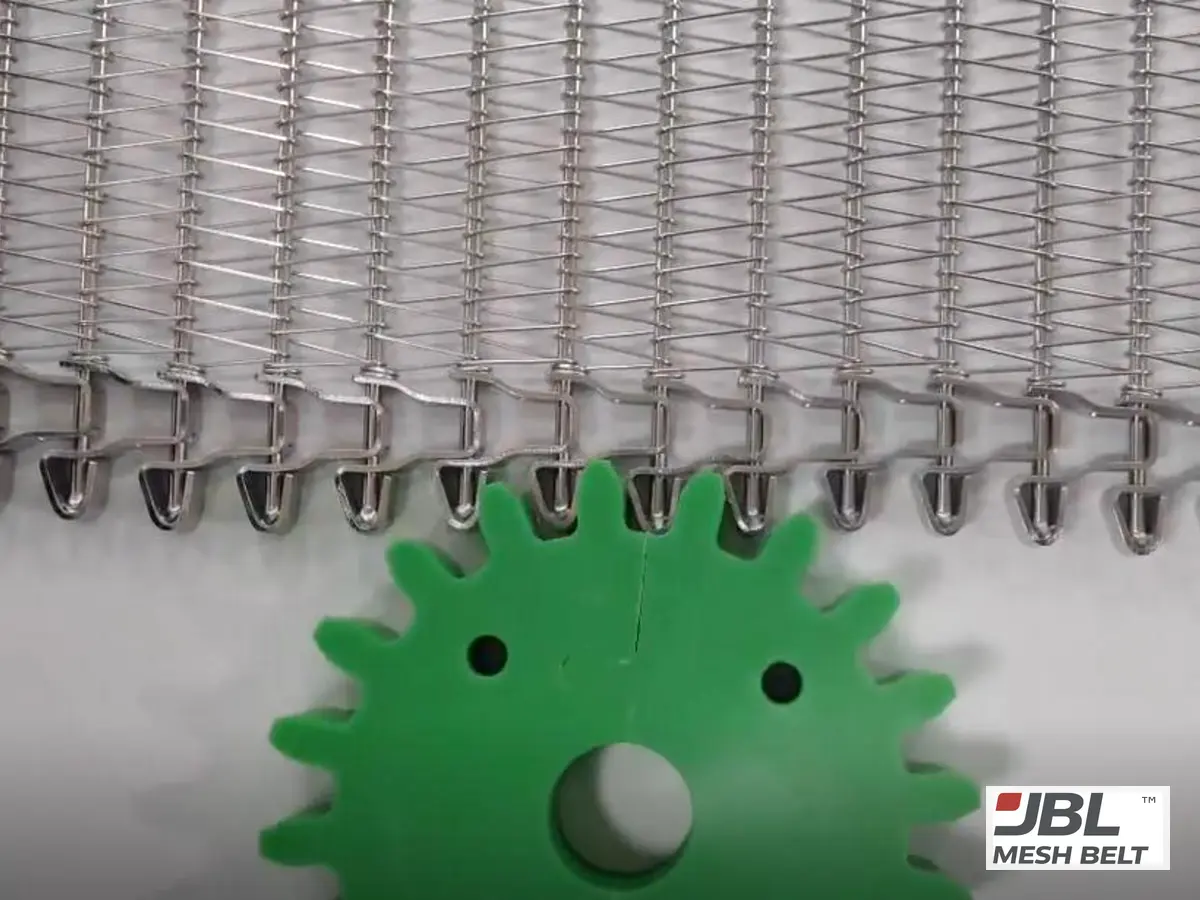
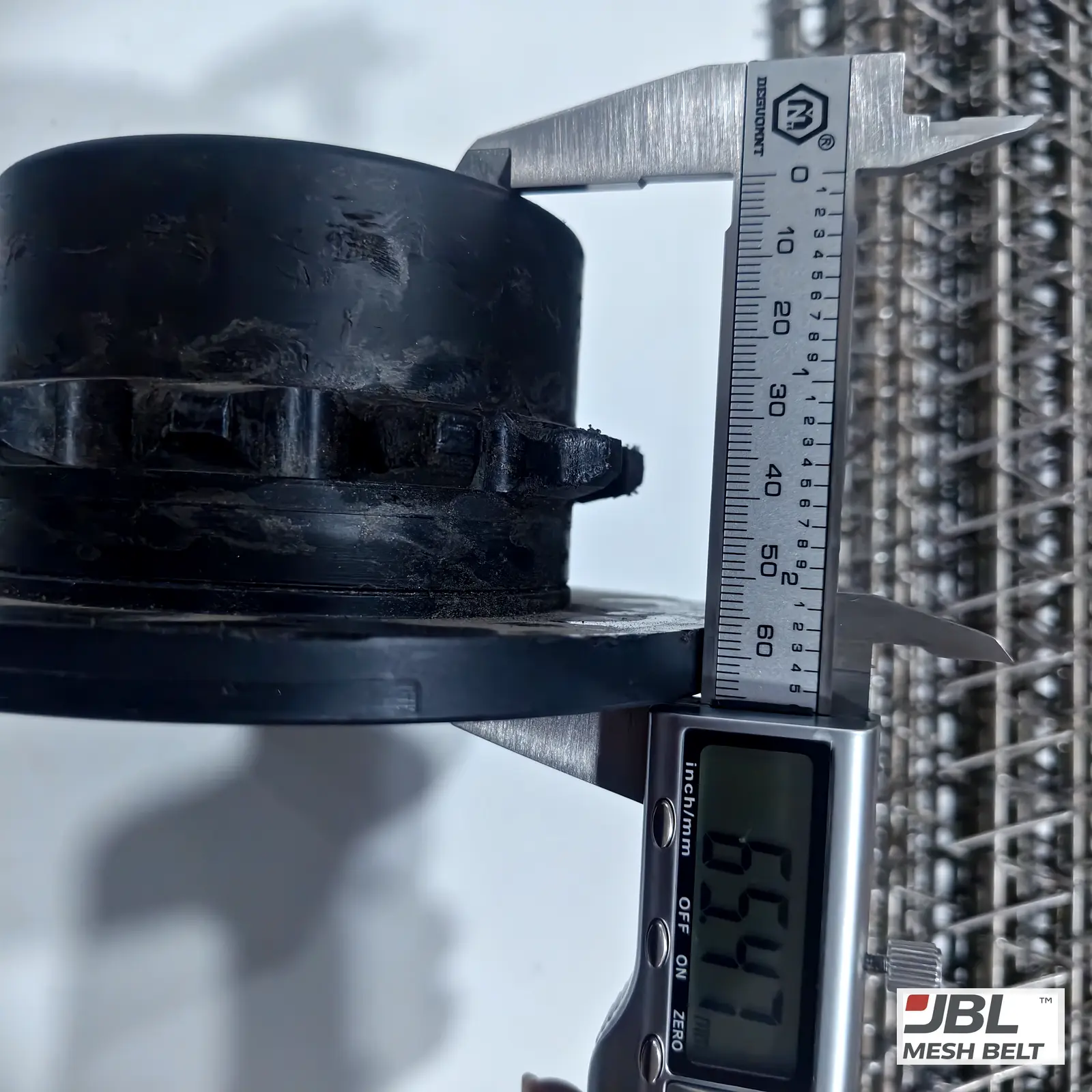
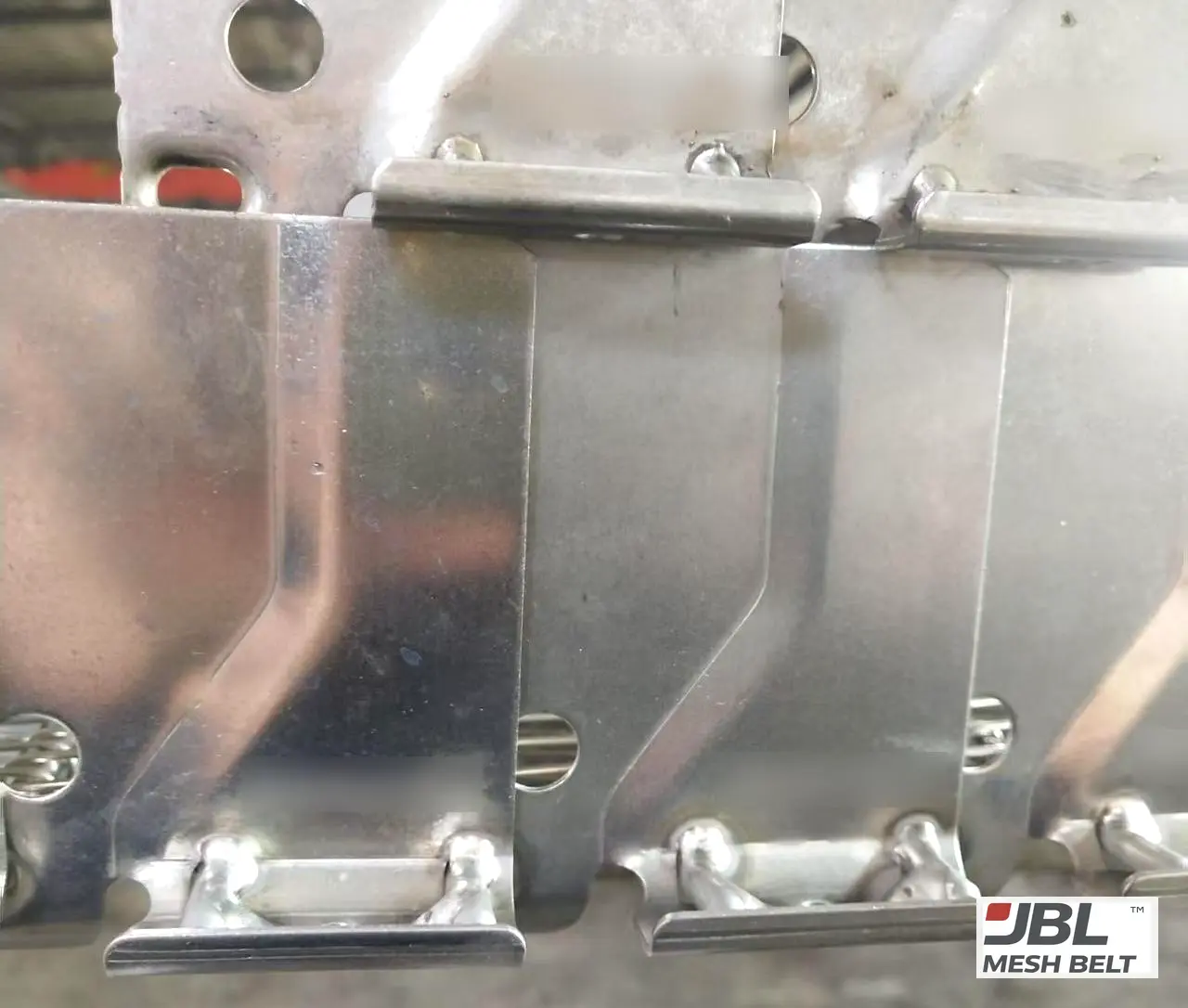
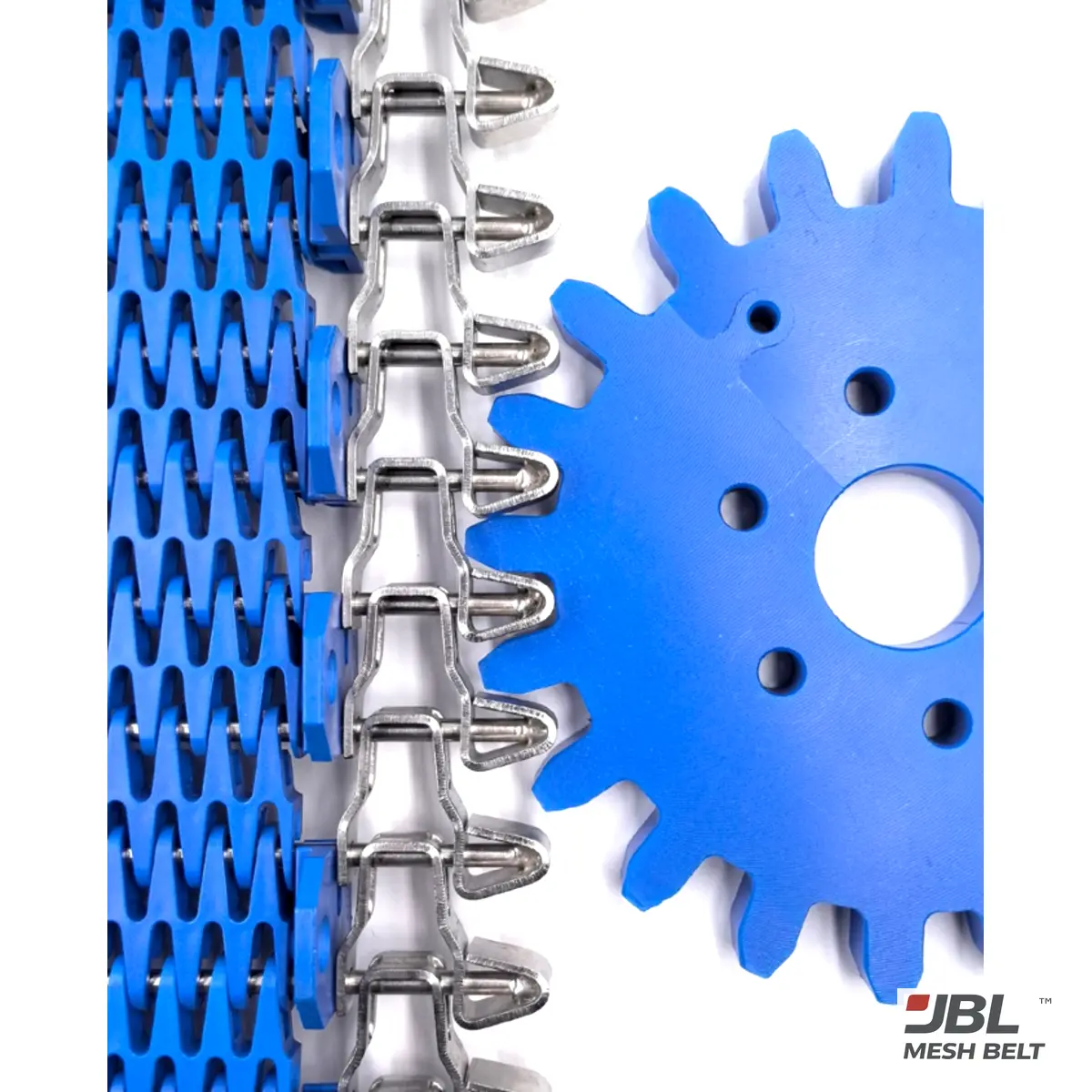
One supplier measuring belt, clips and sprockets together gives you one point of responsibility for fit. Here we made verification clips to the original's form and fit, sent samples for approval, and made a full set of nylon sprockets.
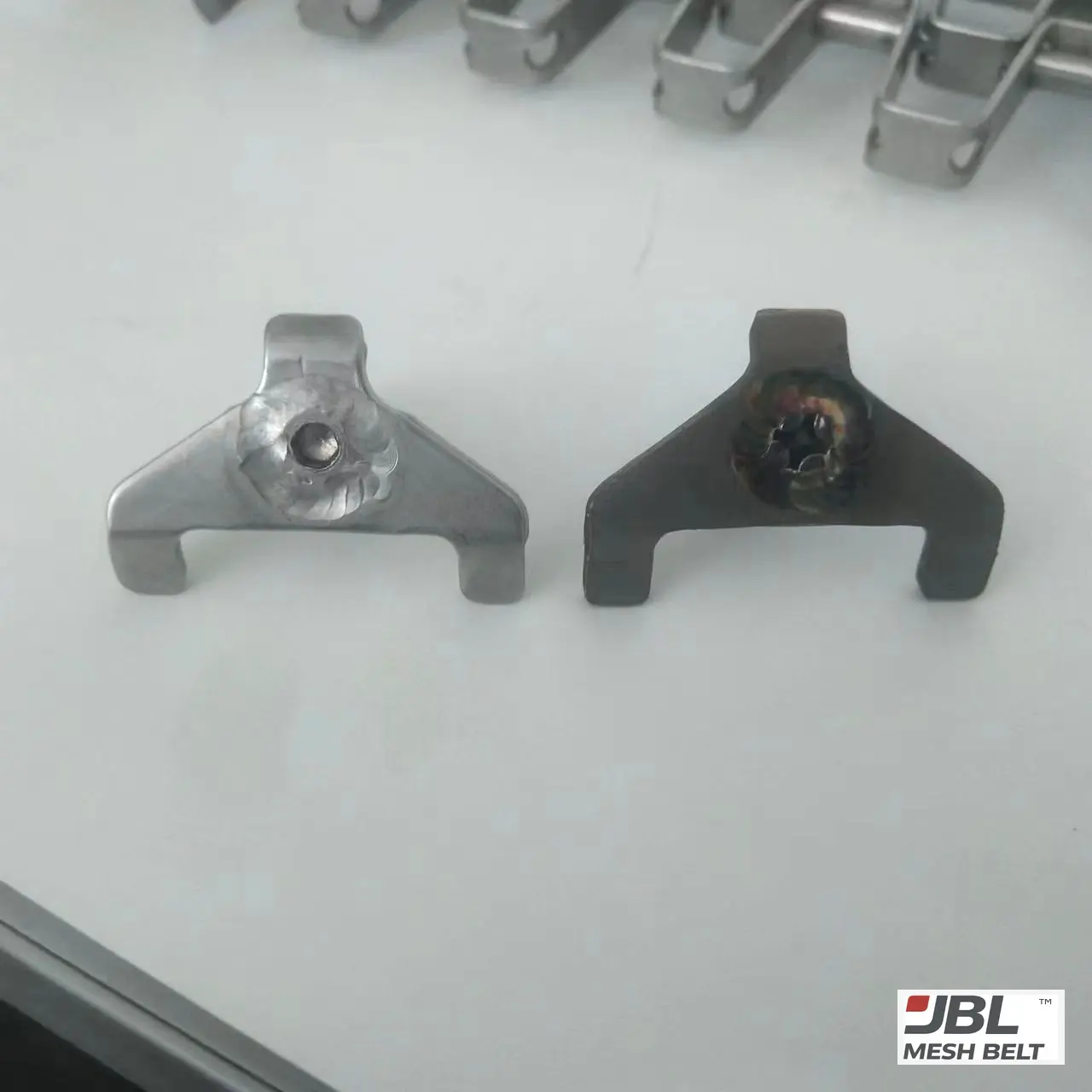
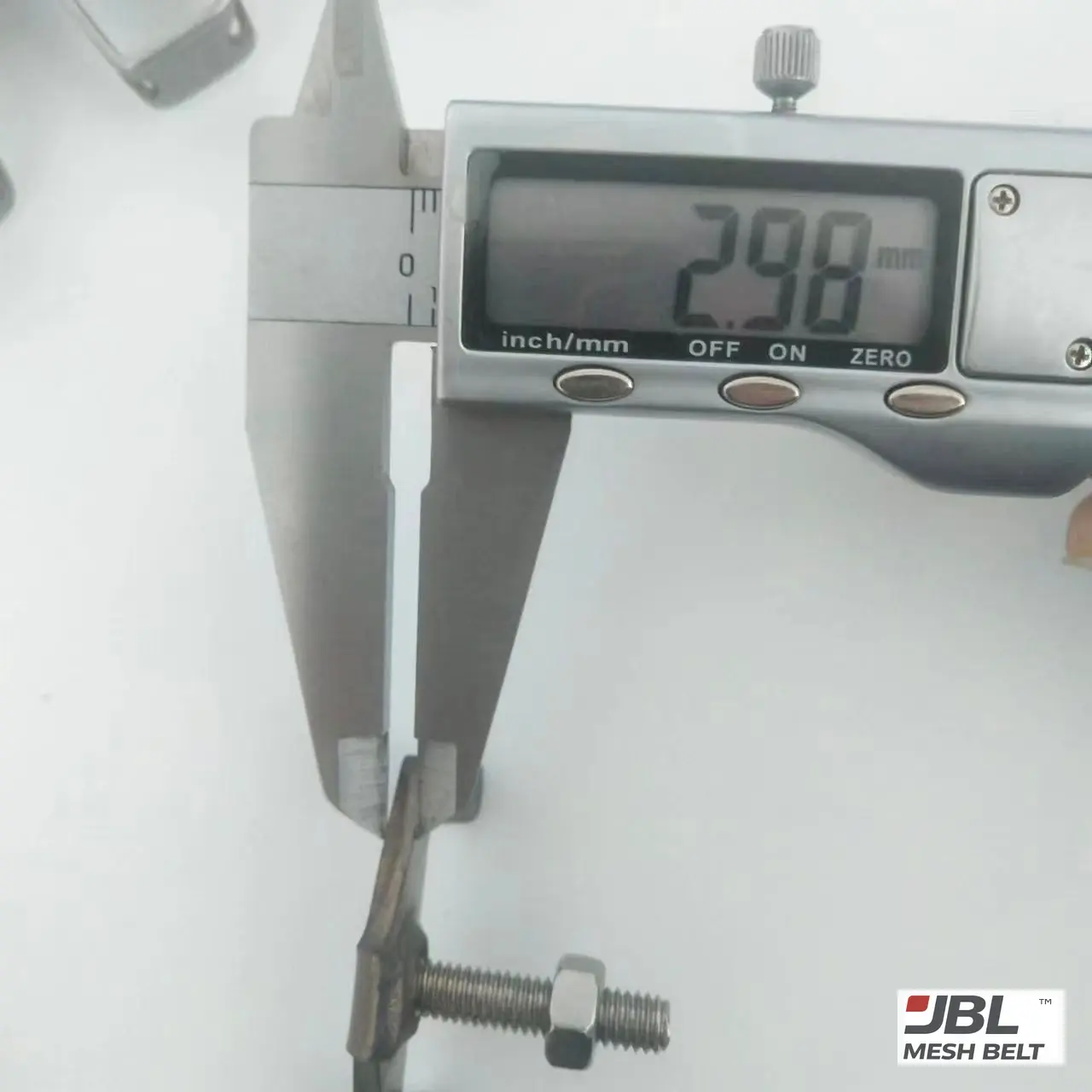
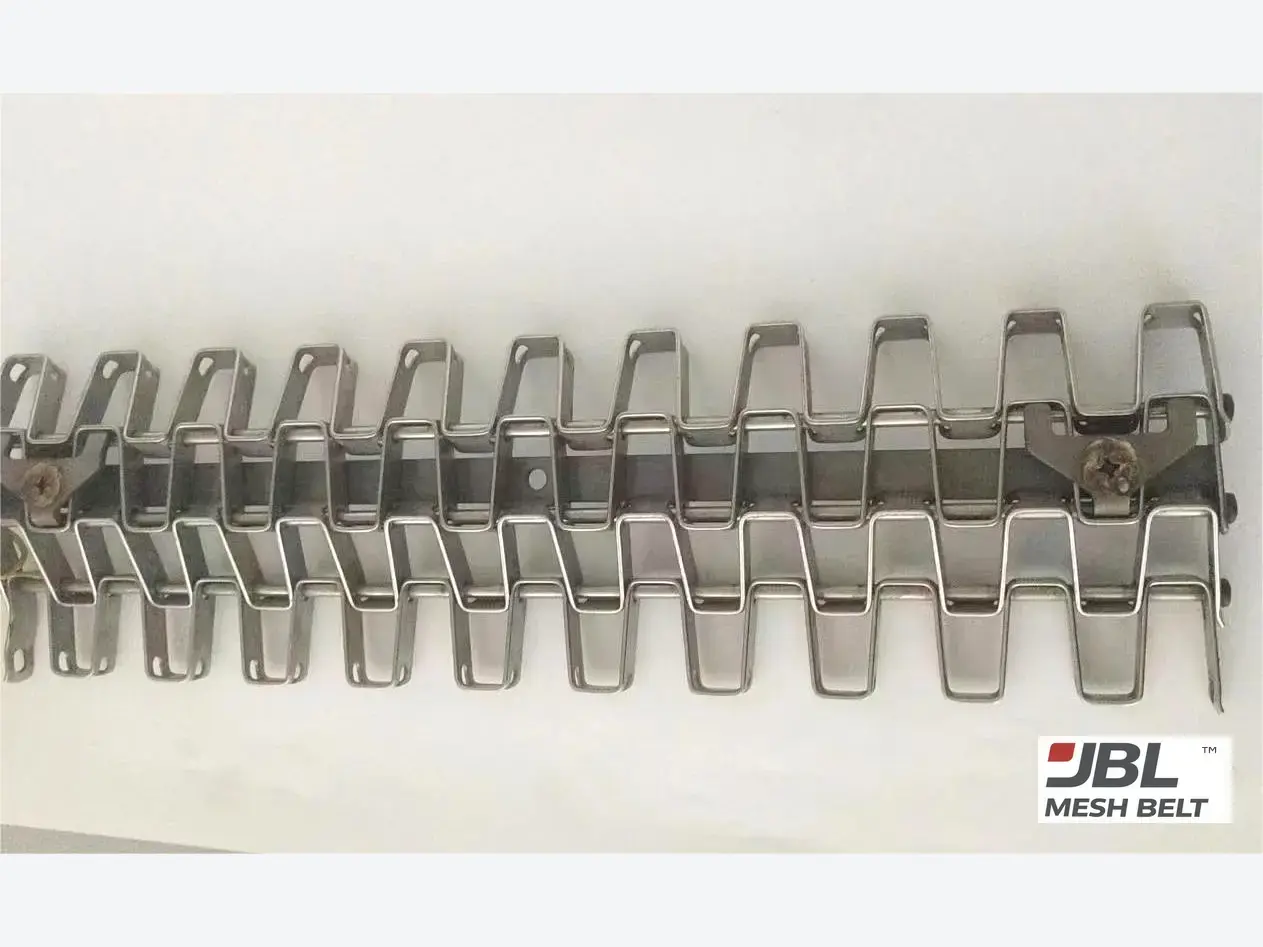
| Part | Reading |
|---|---|
| Clip thickness | 2.98 mm |
| Clip opening | 30.01 mm |
| Sprocket tooth pitch | 25.40 mm (1 in) |
| Sprocket outside diameter | 132.00 mm |
| Sprocket bore | 40.00 mm |
Clip samples were sent for the customer to confirm before production.
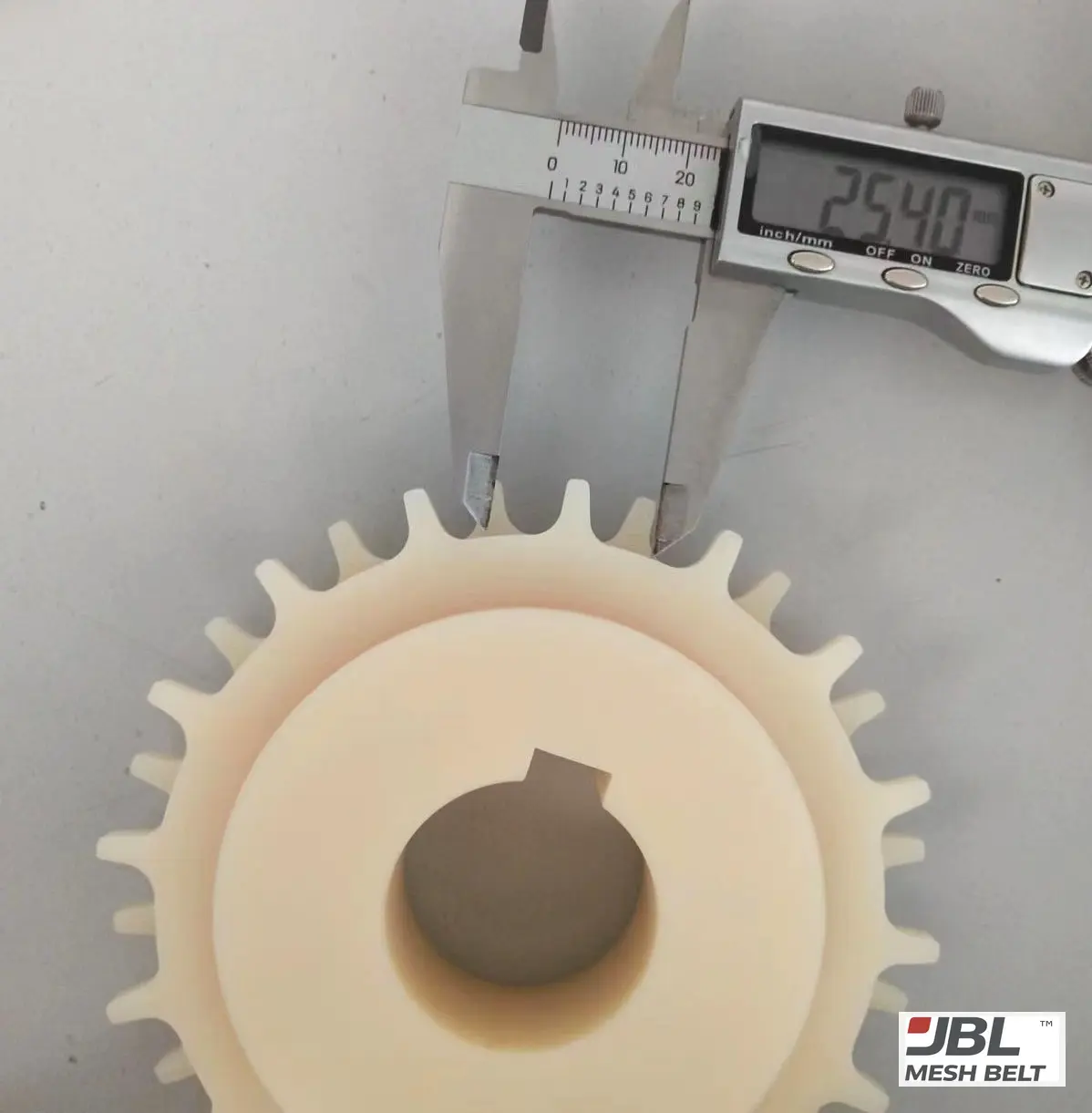
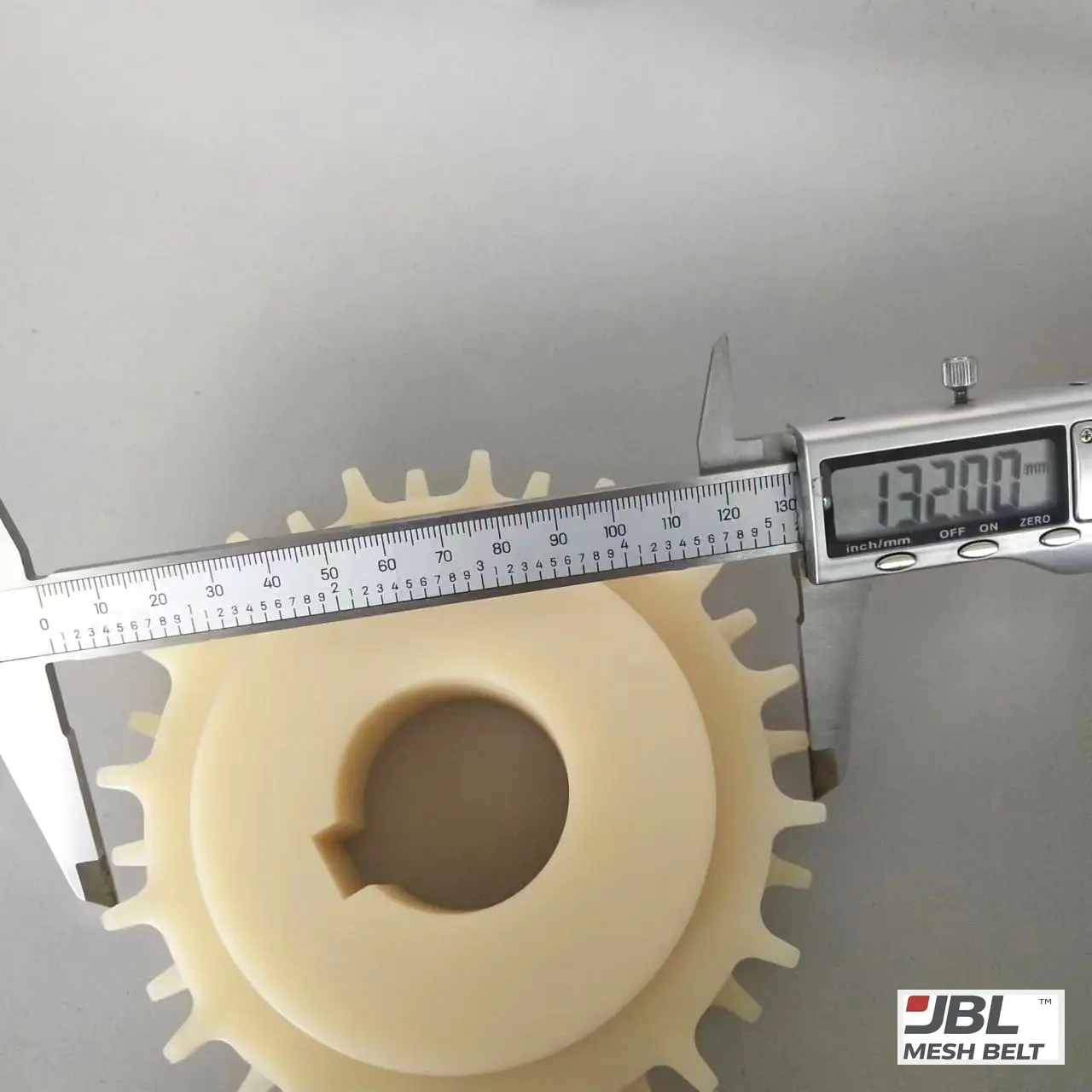
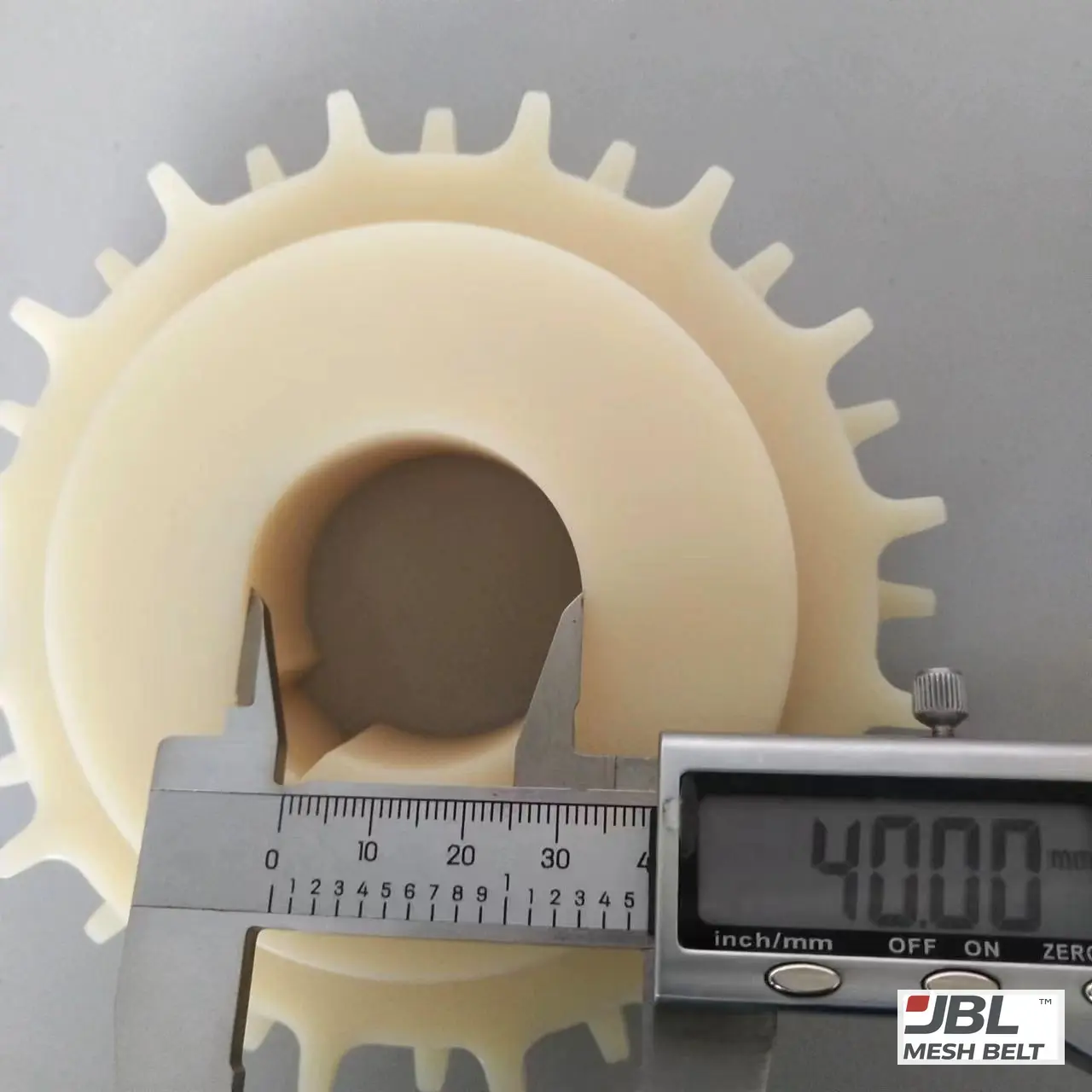
The customer called the clips “clippers” on their line. See our drive sprockets page for how sprockets are matched to a belt.
05What should you ask a supplier before you send a strict drawing?
Ask for proof on your drawing, not a catalogue.
Short answer
Ask how they will meet each radius and the burr rule, whether they will make a trial run first, which readings you will get on the trial and the finished belt, and whether bulk waits for your approval.
| Ask | Good answer | Warning sign |
|---|---|---|
| How will you meet the radii? | Tools set to the drawing; trial checked | “We copy the sample” |
| How do you control burrs? | Process change; edges checked on the trial | No clear answer |
| Trial run first? | Yes, approved before bulk | Straight to the full order |
| What readings will I see? | Caliper photos on trial and finished belt | A general certificate only |
| Who makes clips and sprockets? | Measured against the same belt | Left to you |
On this project the integrator later wrote that its clients gave good feedback on the belts, clips and pins, with no complaints. That email is shown on the case page.
Price, lead time and terms are confirmed in writing in your quotation.
Start with our flat wire belt page, or compare flat wire and balanced weave belts. For seafood lines, see seafood and IQF freezing.
When This Is Not the Right Choice
- ✕If you have only a photo, with no drawing and no sample, the radii cannot be confirmed — send a section first.
- ✕If your drawing changes during the project, it needs a controlled revision before tooling is set.
- ✕A flat wire belt is not right for every product; small product may need a tighter mesh.
From My Engineering Experience
The integrator was not sure we could do it. That was fair. A strict drawing is a test, not a formality.
Copying the shape would have been faster. It would not have met the radii or the burr rule. Adjusting the tools and the process, then proving it on a trial run, is what won the order.
After the trial run, the customer sent us the clips they had planned to make themselves. To me, that was the real approval.
— Spring, Sales Director, JBL Mesh Belt
Evidence From Our Work
USA, 2024 — flat wire belt for onboard fish freezing →
| Step | Detail |
|---|---|
| Starting point | Customer drawing + original sample |
| Before bulk | Tools and process adjusted; trial run approved |
| Finished belt | Pitch 27.40 · rod 5.00 · strip 1.60 × 12.70 mm |
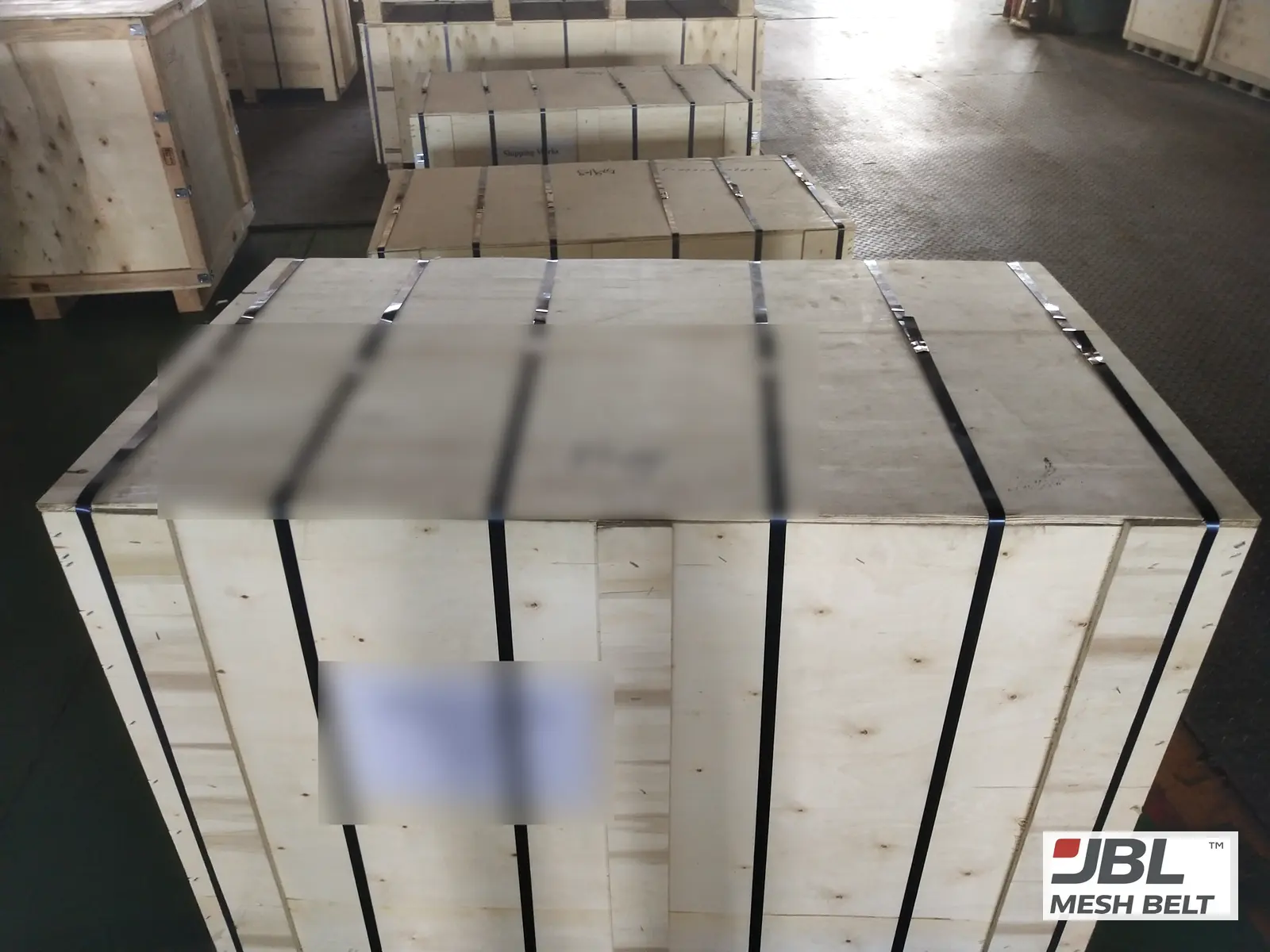
| Scope | About 700 m + clips, flight bars, sprockets |
Melbourne, Australia, 2023–2024 — spiral cooling belt →
| Step | Detail |
|---|---|
| Problem on the original | Rough rod-end welds with burrs; scored guide strips |
| Fix | Same pitch, rod and link; welds finished smooth |
| Readings | Pitch 27.41 → 27.40 mm; rod 5.03 → 5.00 mm |
FAQ
Q1Can you work to my customer's OEM drawing?
Yes. We review the drawing first, measure your original against it, and make a trial run for your approval before bulk.
Q2What if the drawing and the original sample do not agree?
I list the differences and ask which one to follow before tooling is set.
Q3What material was used for the fishing-vessel belt?
SUS304 flat wire with a washer-welded edge.
Q4Do you also make the clips and sprockets?
On this project, yes: verification clips approved from samples, flight bars, and a full set of nylon sprockets.
Q5How do I know the finished belt matches the trial run?
The finished belt is measured with a caliper before packing, and you receive the readings and photos.
Conclusion
A strict drawing needs adjusted tools, a trial run and your approval — not a copied shape. Ask for readings on the trial and the finished belt.
Download the Flat Wire Belt Technical Specification (PDF)
Specification ranges and options in mm and inch. Enter your work email and the file downloads right away.
References
Your contact for this belt
Spring · Sales Director, JBL Mesh Belt · 16 years
“Your belt is worn, the OEM price is high, and there is no drawing. That is where I start.”
Send me a worn section, a few photos with a caliper in the picture, or a drawing. I tell you what fits, what is missing, and show you a sample measured against your own belt before you pay for the full length. Buyers in the UK, the USA, Australia, Brazil, South Korea, Spain and Malaysia have replaced belts this way.
- ✓Readings on your original next to readings on our sample
- ✓Nothing in bulk until you approve the sample
- ✓Turning, stacking or sprocket tests before your belt ships
- ✓A reply from me, usually within 8 hours