Project case · Australia · 2023–2024

Replacing a 400 m Spiral Cooling Belt for a Bakery in Melbourne — Made From the Customer's Sample

A bakery in Melbourne needed about 400 m of spiral belt for a bread cooling spiral. The original belt had rough edge welds with burrs, and the guide strips were wearing. From the customer's sample, the belt was measured, a new sample made to the same pitch, rod and link — with cleaner welds — and compared before bulk production.

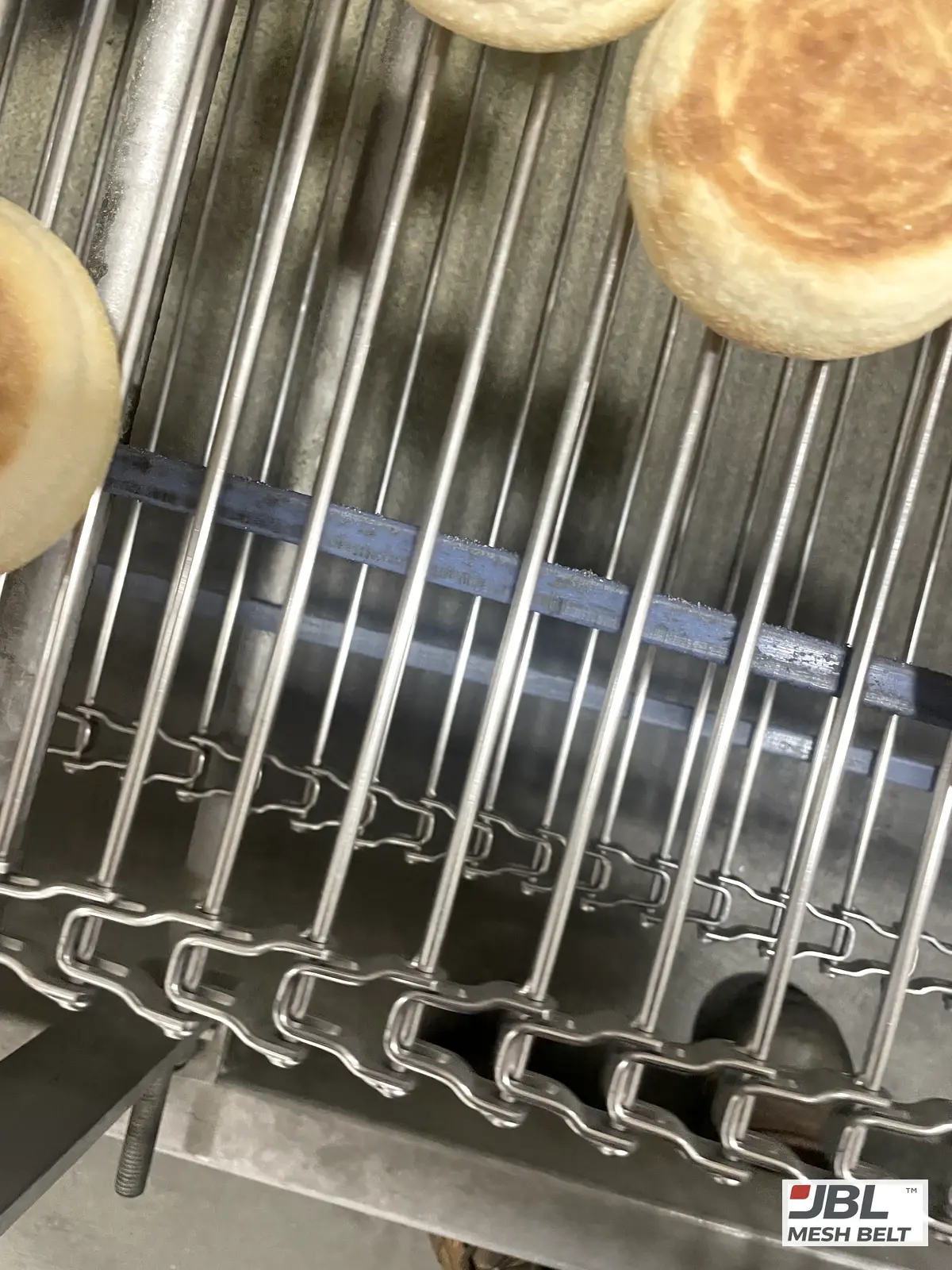
Spiral cooling belt carrying bakery products on the customer's line
Location
Melbourne, Australia · 2023–2024
Application
Bakery spiral cooling
Scope
About 400 m replacement belt
Route
From the customer's sample
Belt
760 mm wide · SUS304
Edge · finish
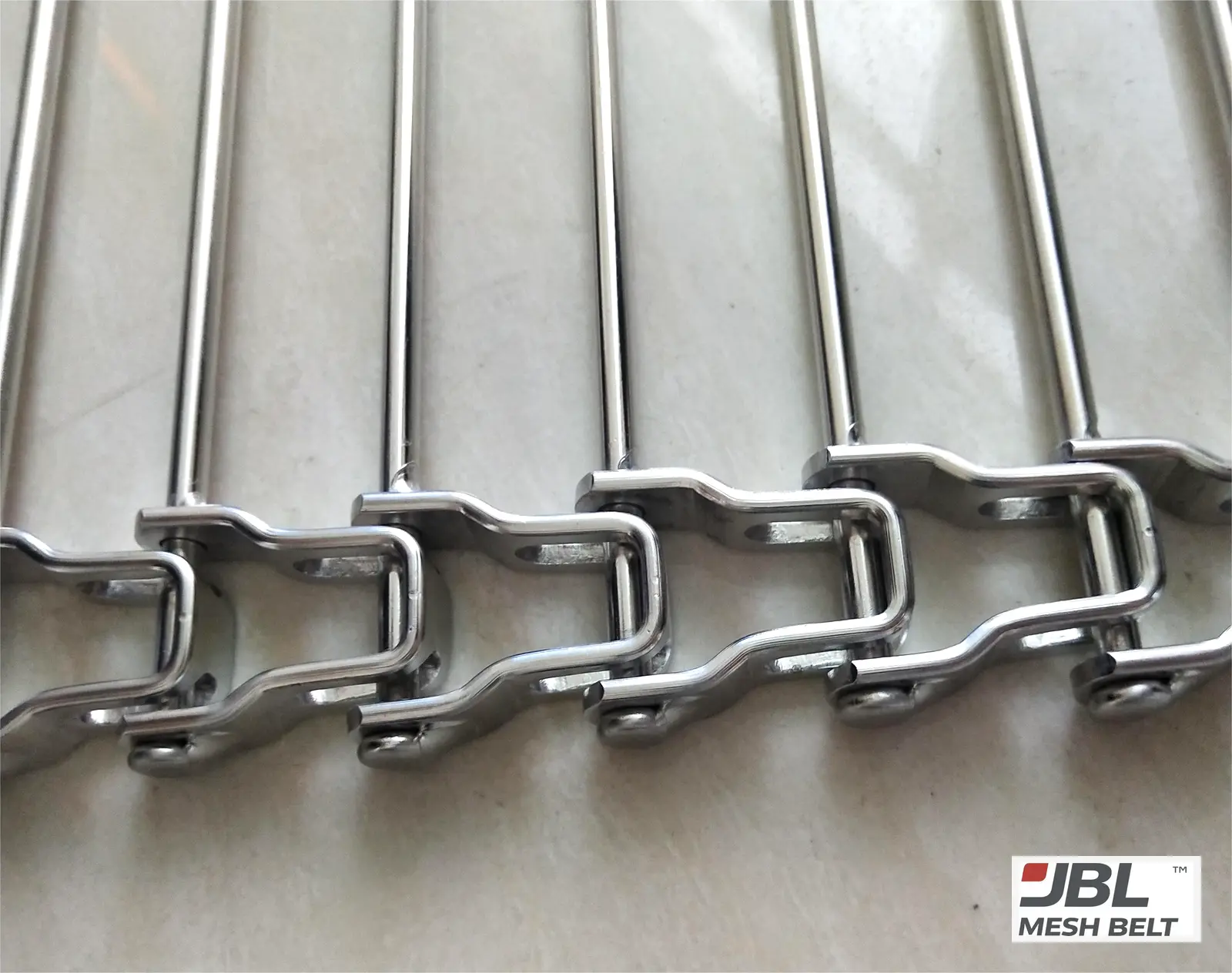
Flat-head welded · electropolished
Sprockets
Nylon, supplied with the belt
Pitch · rod
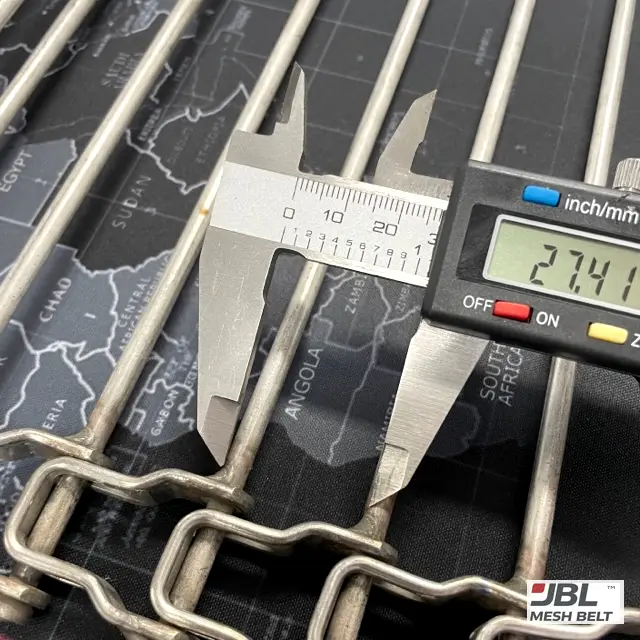
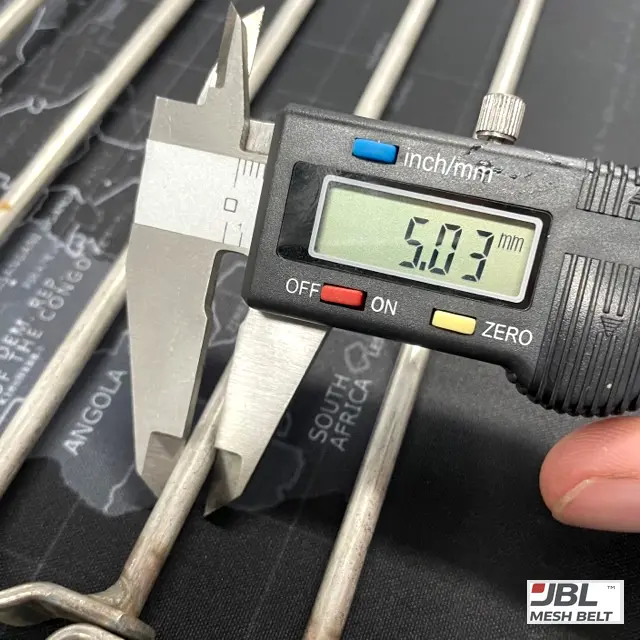
27.4 mm · 5.0 mm
01
The situation

Rough Welds on the Old Belt — and What They Did to the Line

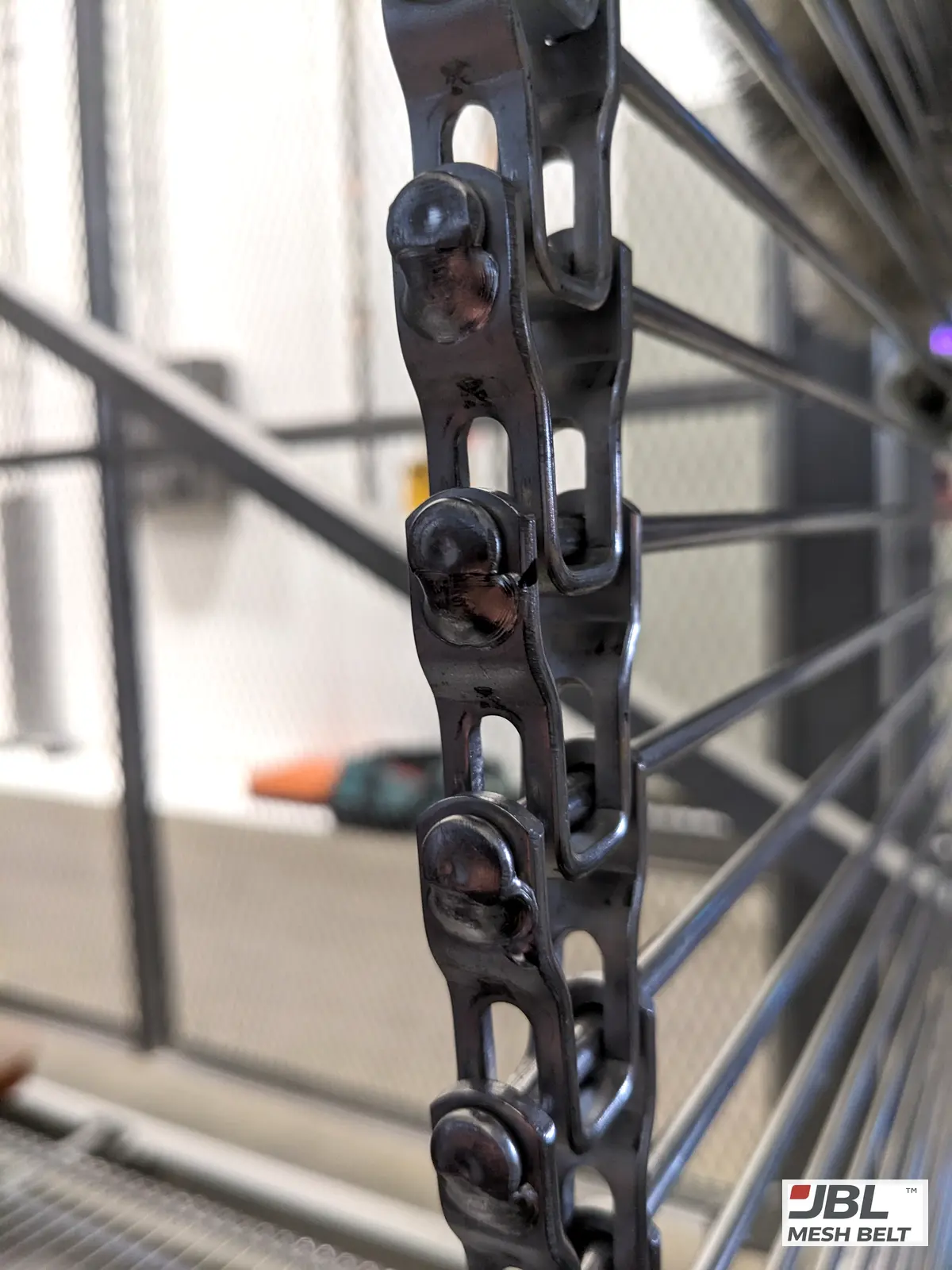
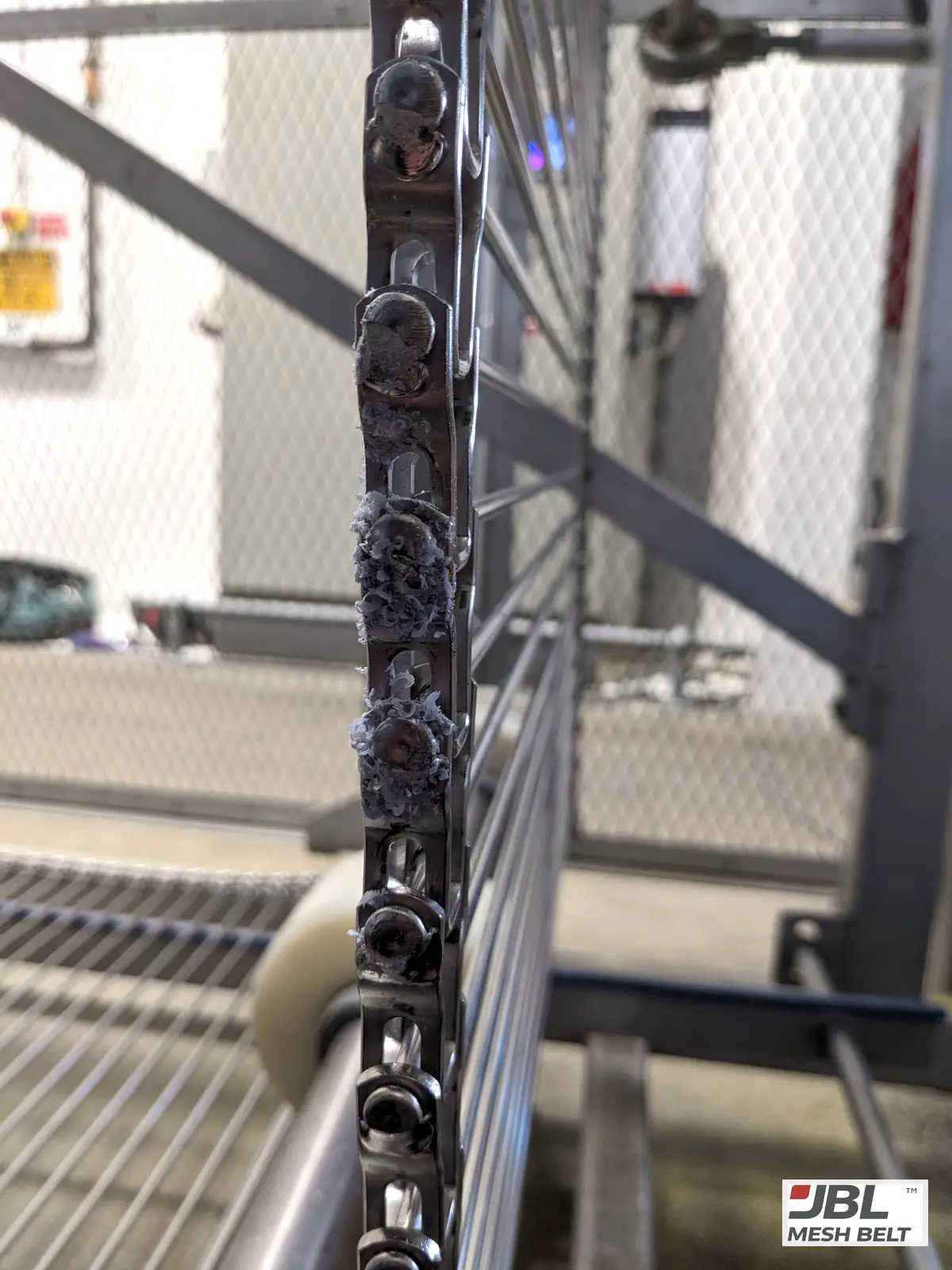
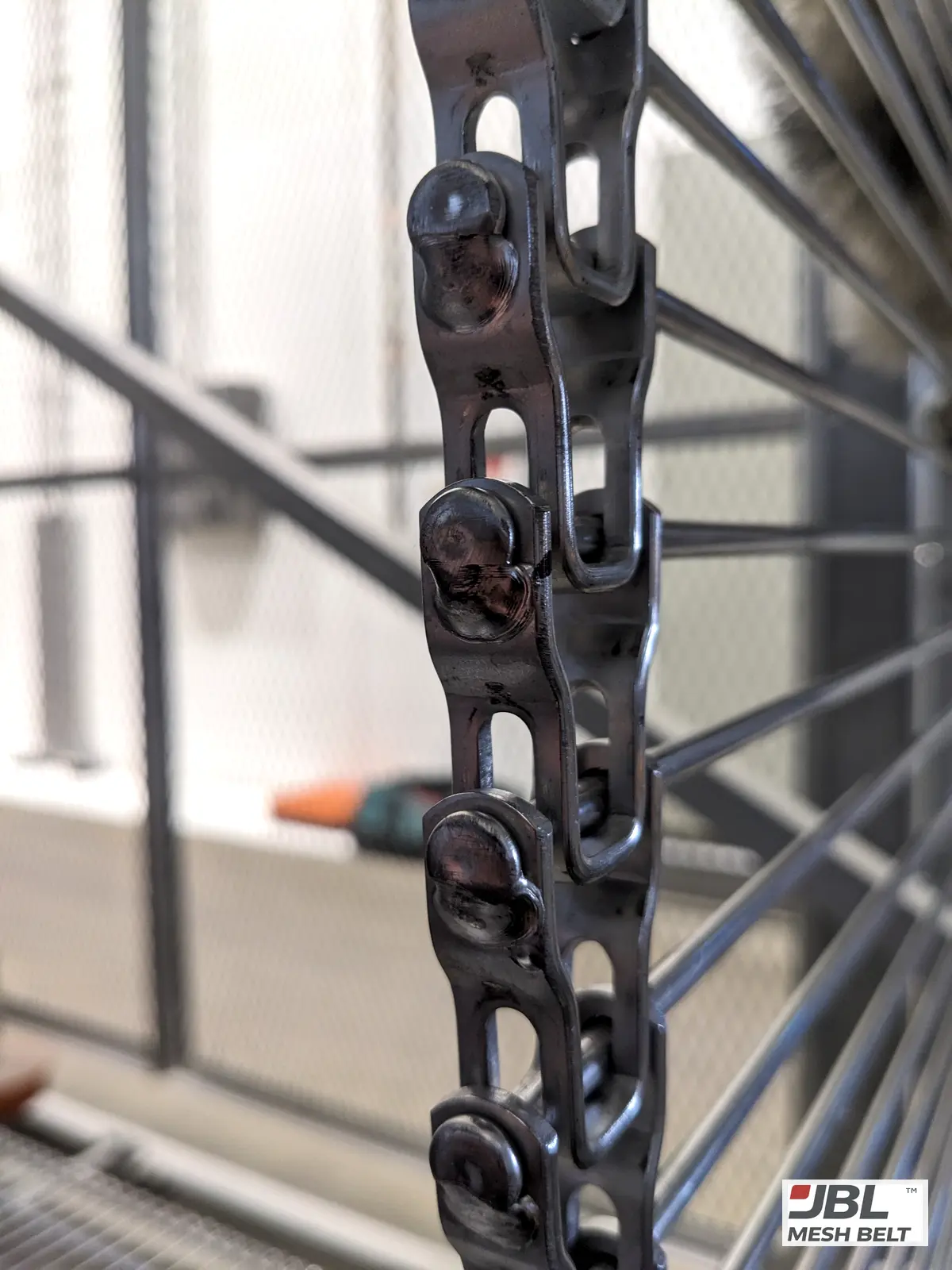
The buyer's main complaint was weld quality: the rod-end welds on the belt edge were rough, with burrs. Plastic shavings built up along the edge and the blue guide strips were scored. A replacement had to fit the existing spiral exactly — and not repeat the problem.

Original belt: rod-end welds on the edge
Plastic shavings collecting at the edge
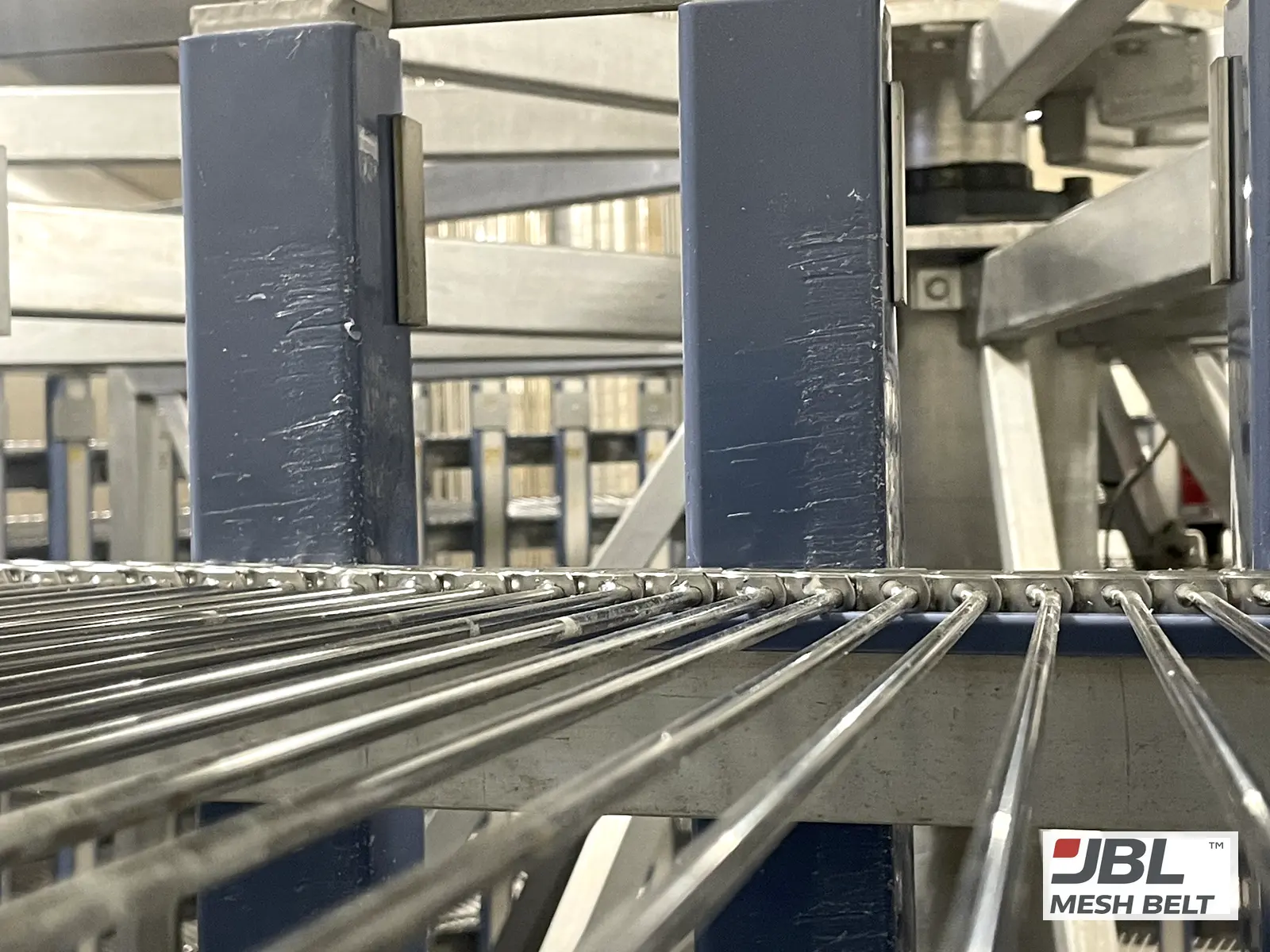
Guide strips scored along the belt path
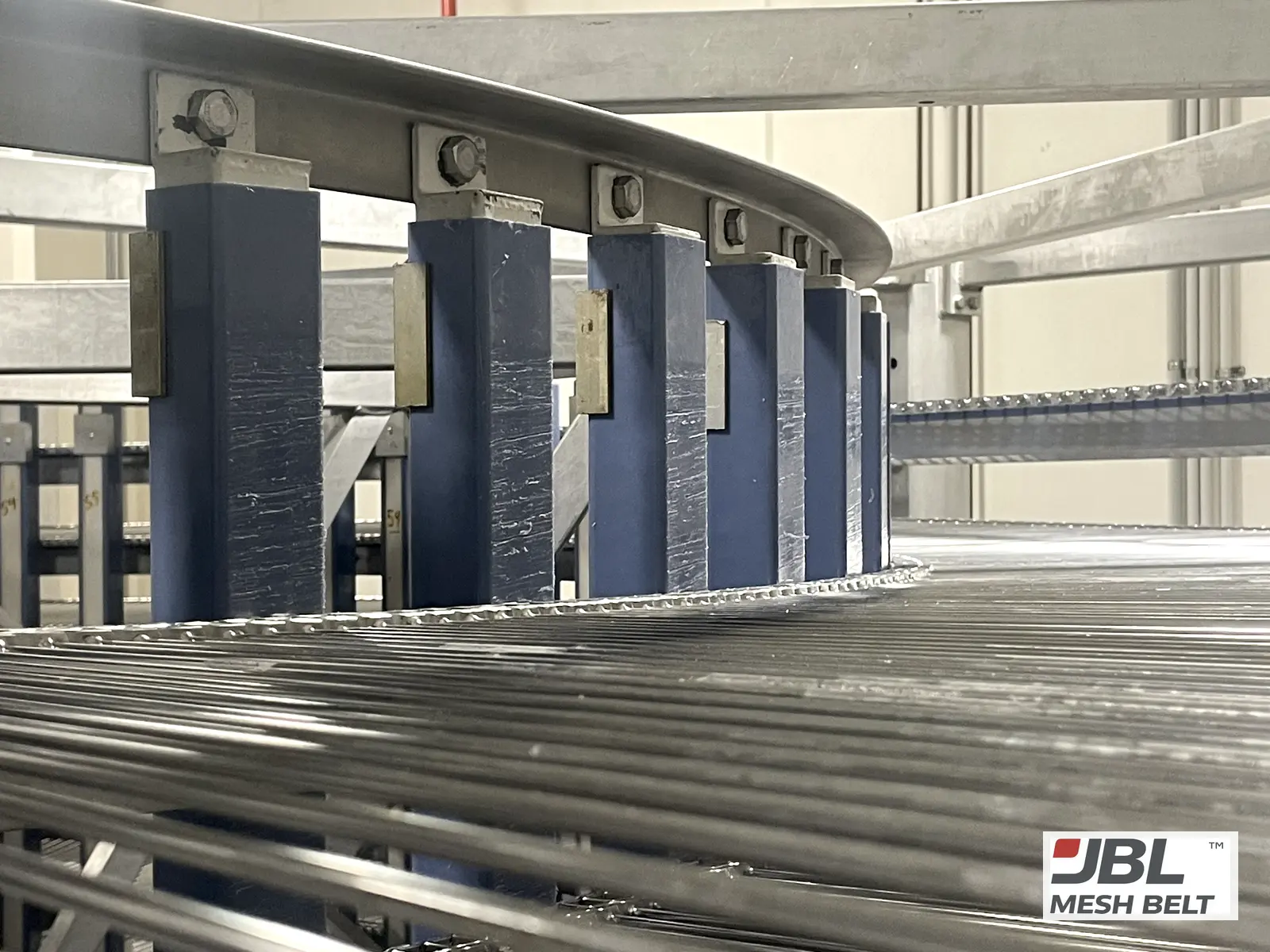
Original belt on the curve, guide posts behind
Weld finish, close up
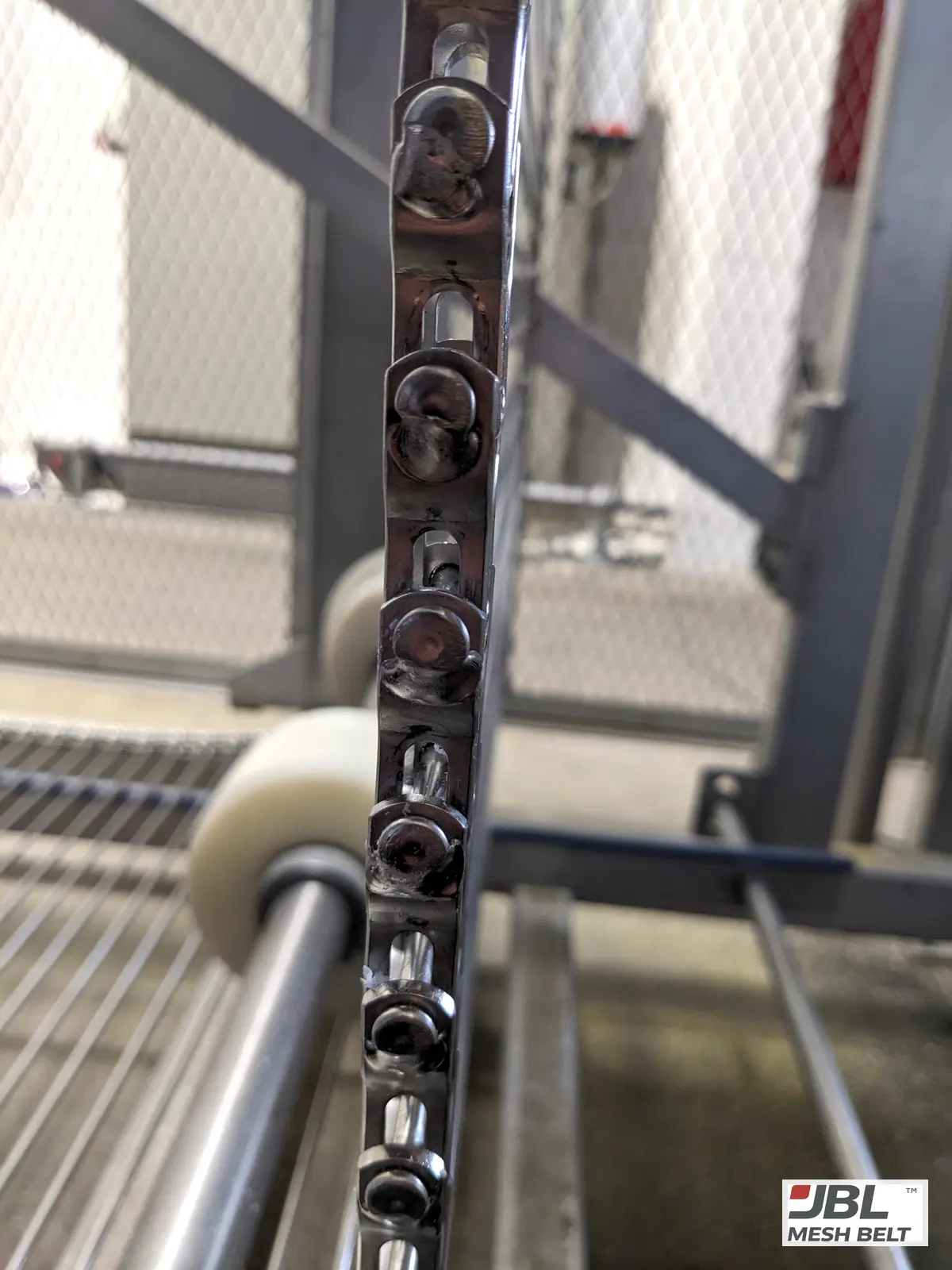
Edge links on the line
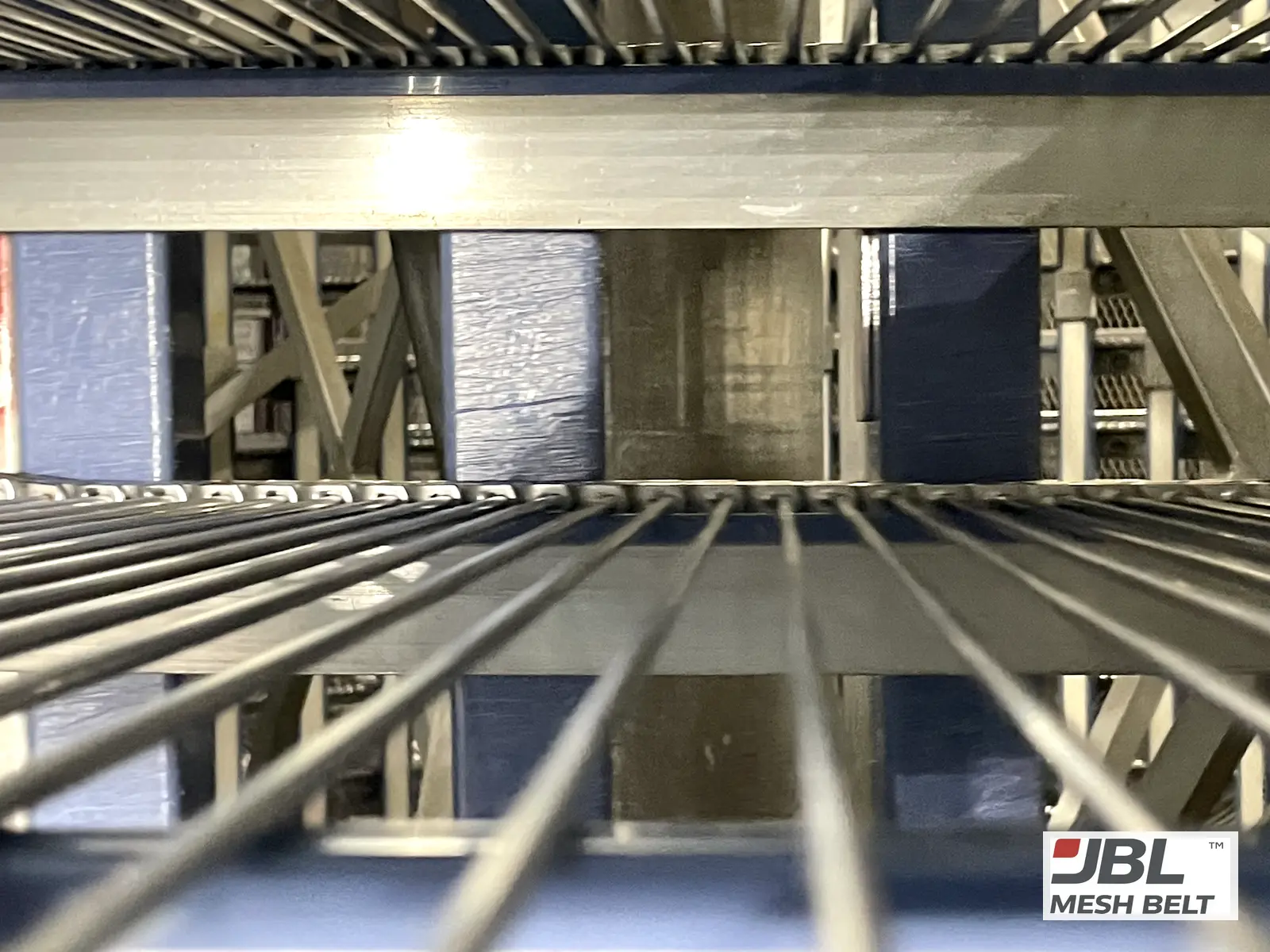
Under a tier of the spiral
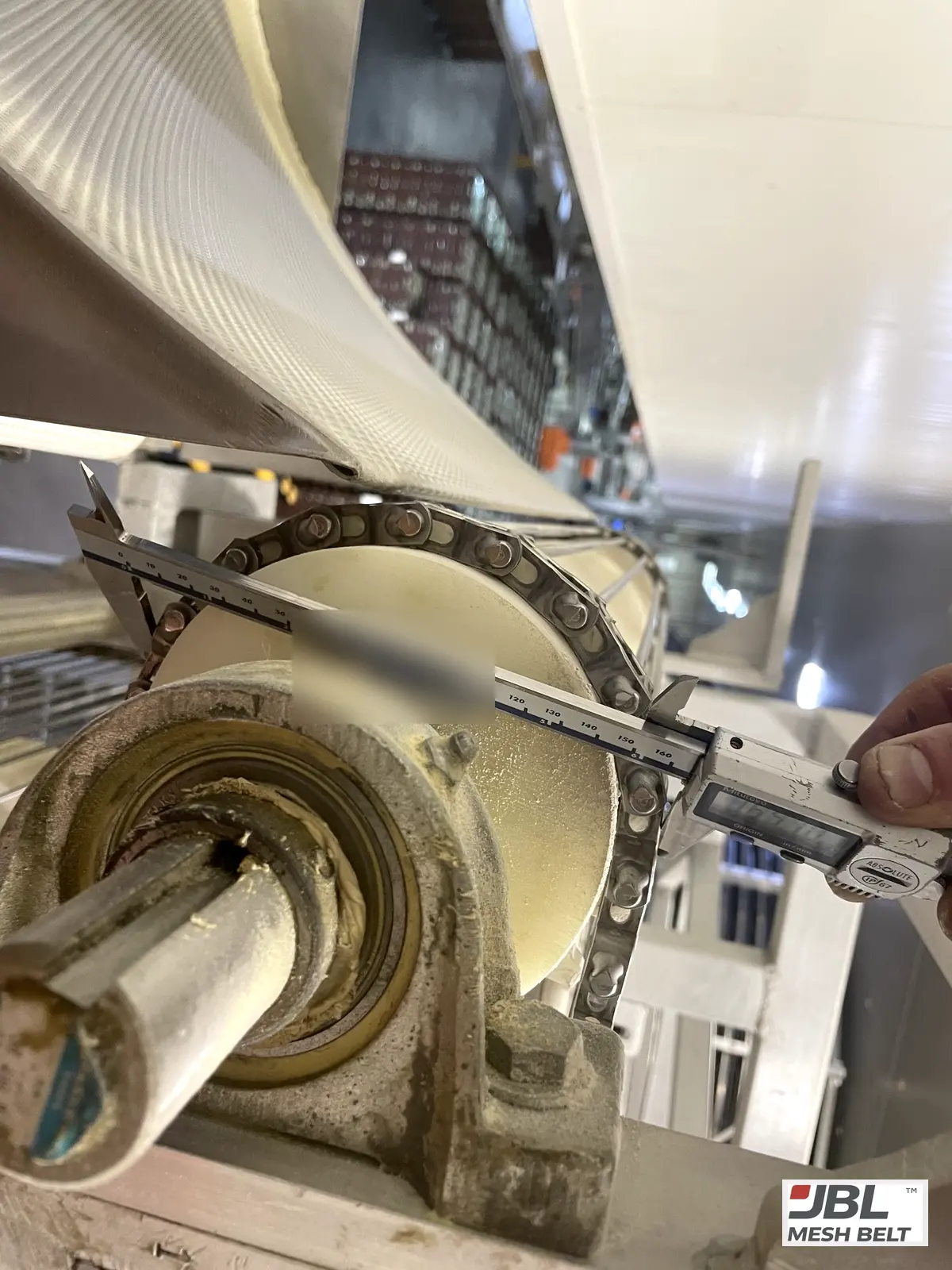
Sprocket measured on site
02
Reverse engineering

What Was Measured on the Customer's Sample

No drawing was used. A section of the original belt was sent, and every dimension that decides fit was read with a caliper — pitch, rod, link thickness and link size — so the new belt runs on the same drum, sprockets and guides.

Pitch on the original: 27.41 mm
Rod on the original: 5.03 mm
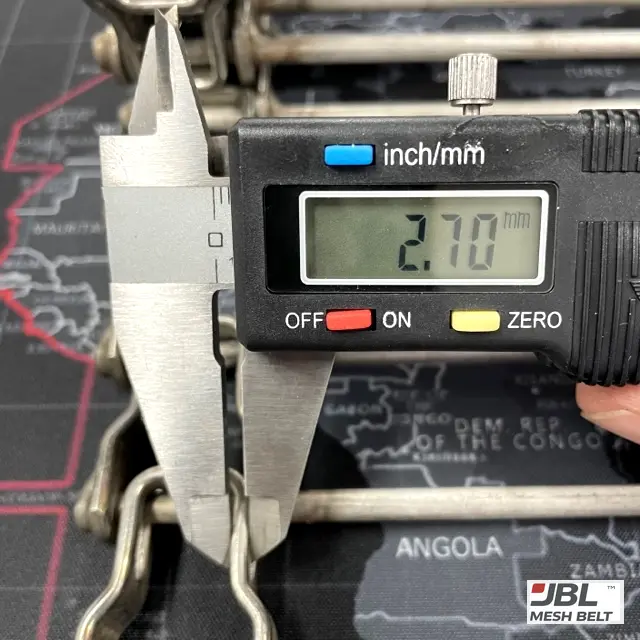
Link thickness on the original: 2.70 mm
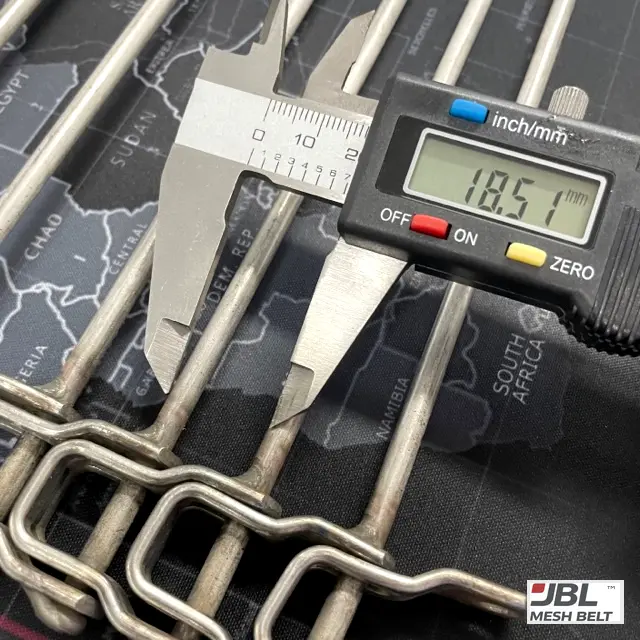
Link opening measured: 18.51 mm
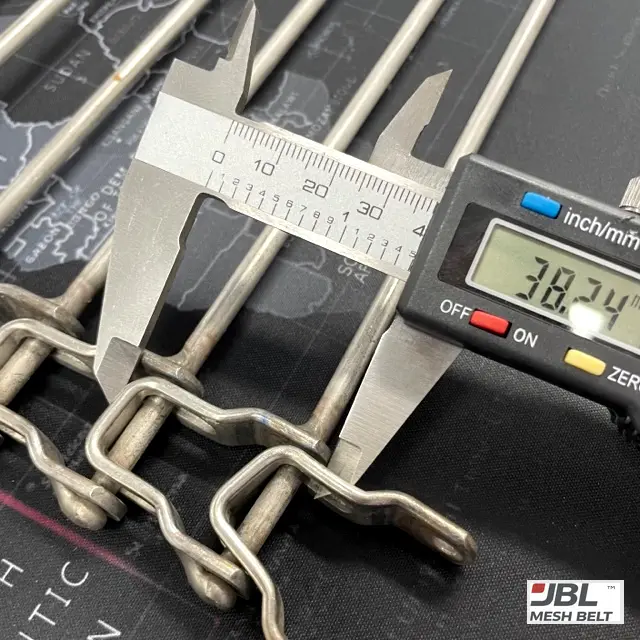
Link measured across: 38.24 mm
03
Sample before bulk

The New Sample Next to the Original

A sample was made to the measured values and checked with the same tools before bulk production. The readings match the original within normal measuring tolerance.

CheckedCustomer's originalNew sample
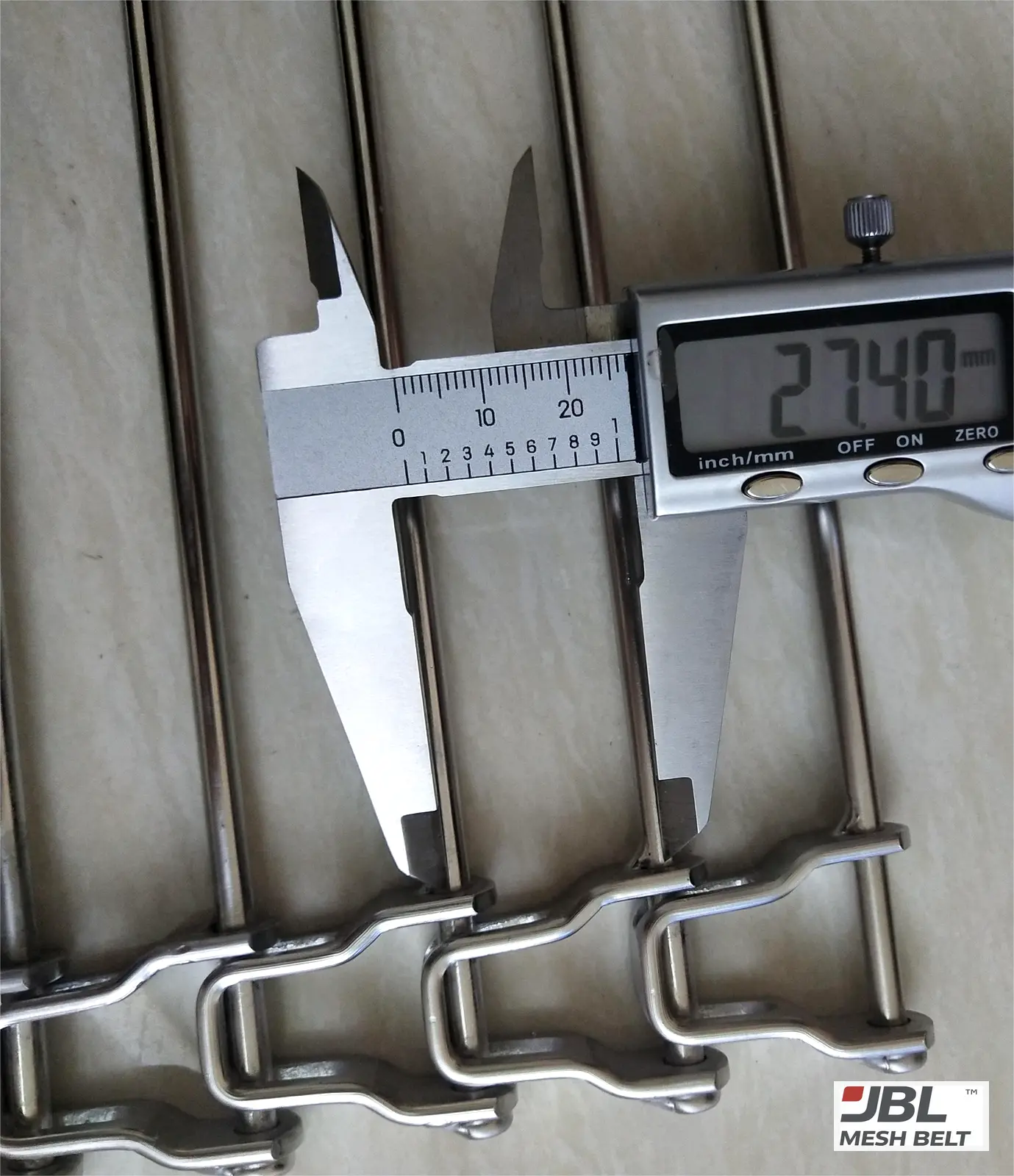
Pitch27.41 mm27.40 mm
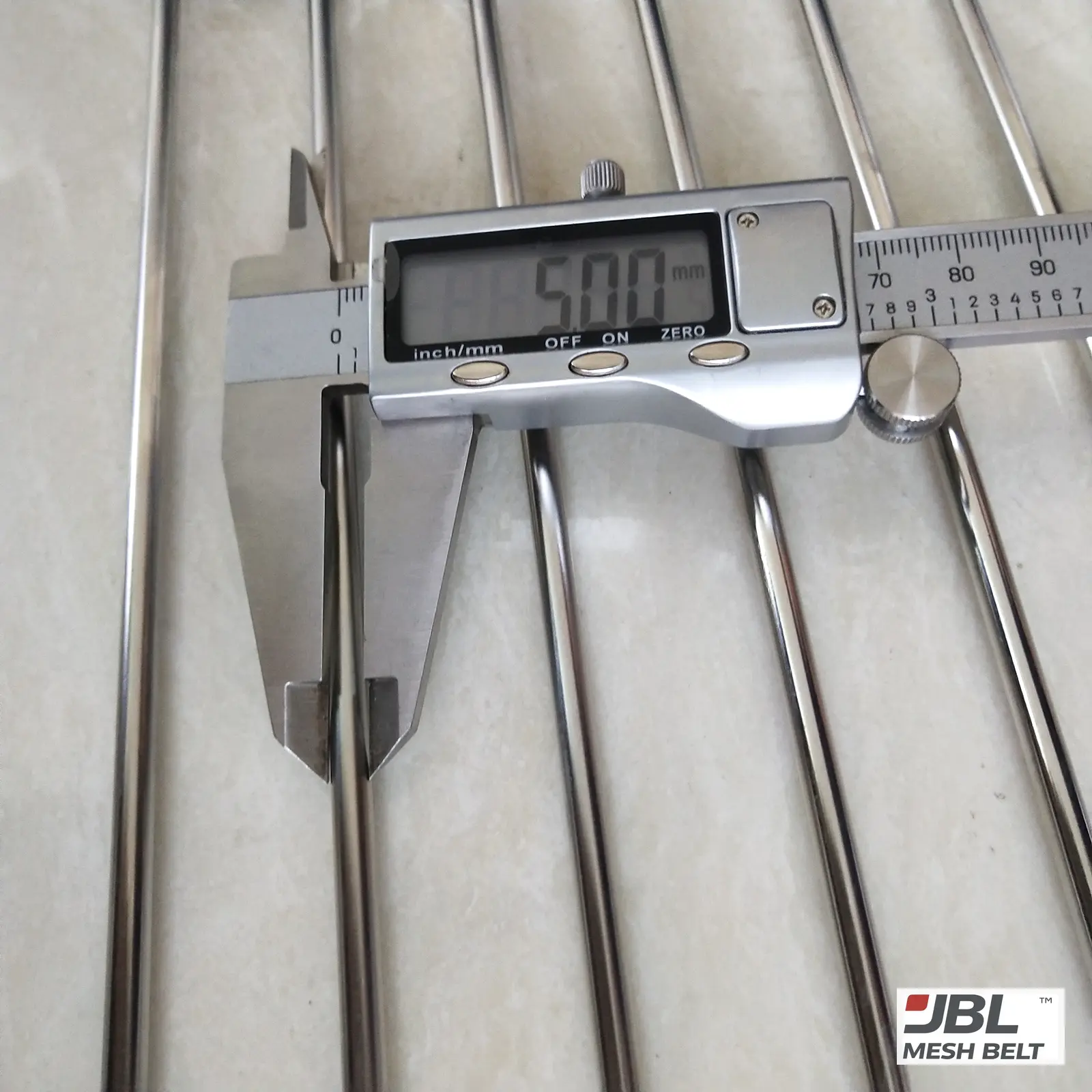
Rod diameter5.03 mm5.00 mm
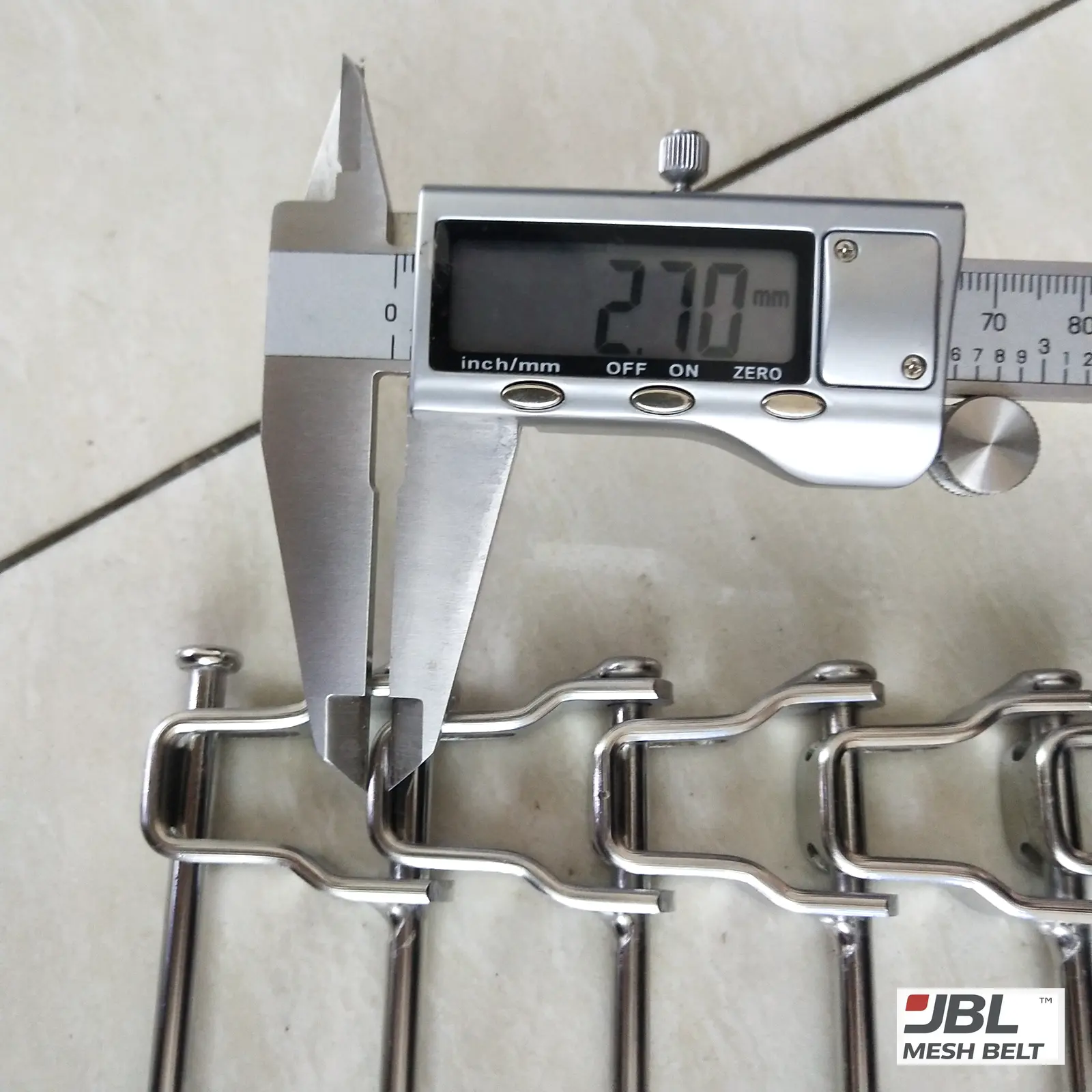
Link thickness2.70 mm2.70 mm
Edge weldRough, with burrsSmooth, cleaned

Caliper readings from the photos below. Final values follow the drawing confirmed with the buyer.

Sample pitch: 27.40 mm
Sample rod: 5.00 mm
Sample rod: 5.00 mm
Sample link thickness: 2.70 mm
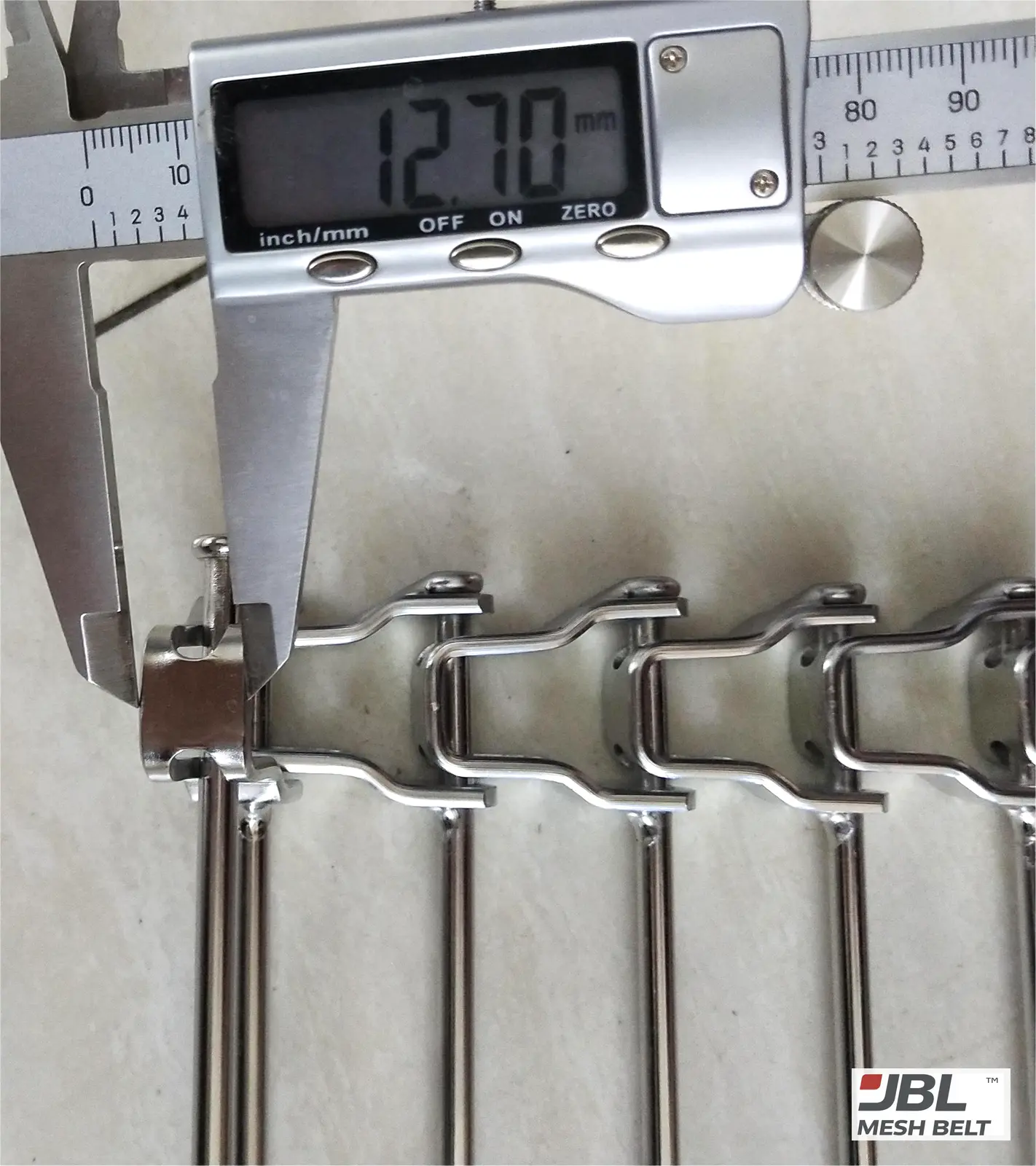
Sample link height: 12.70 mm
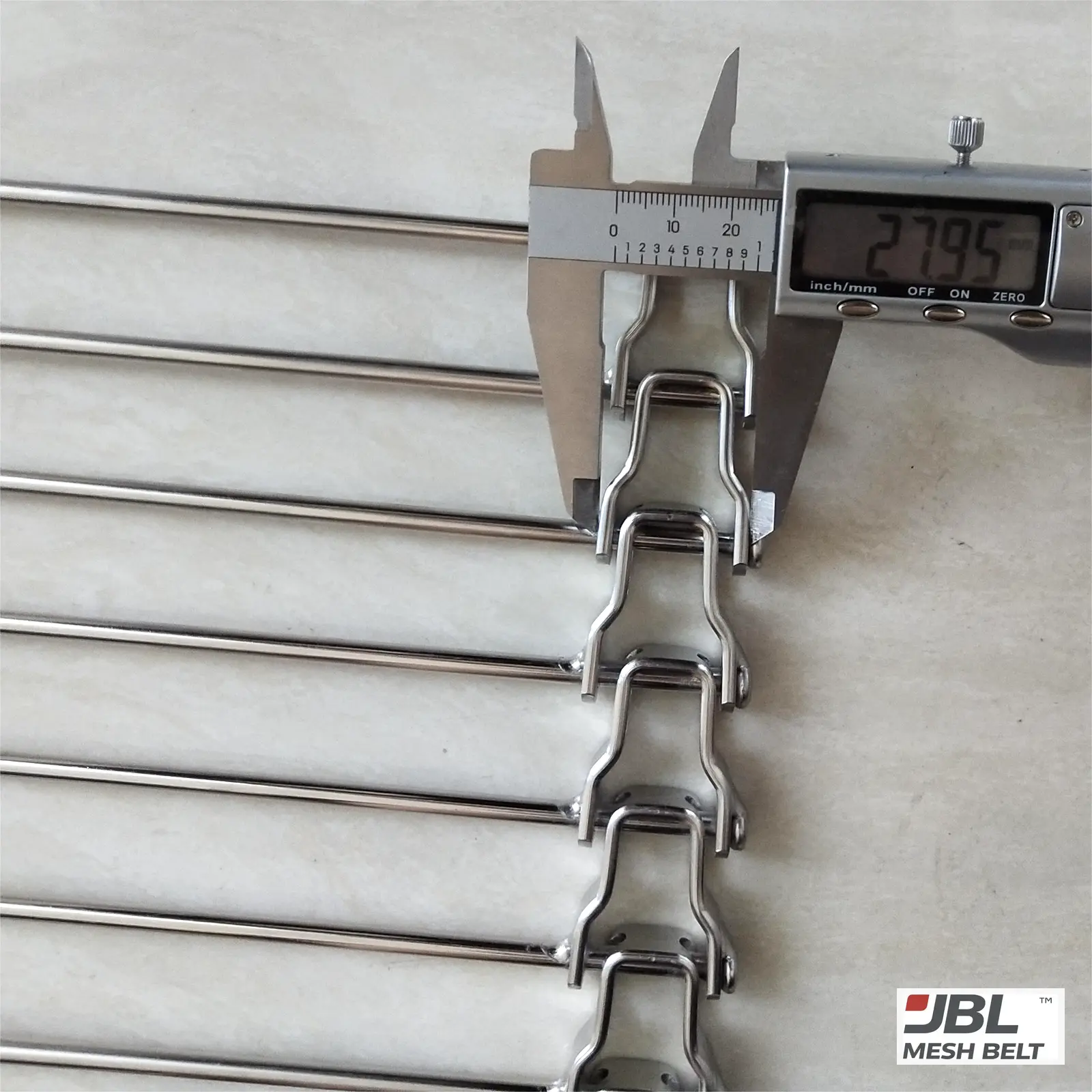
Sample link width: 27.95 mm
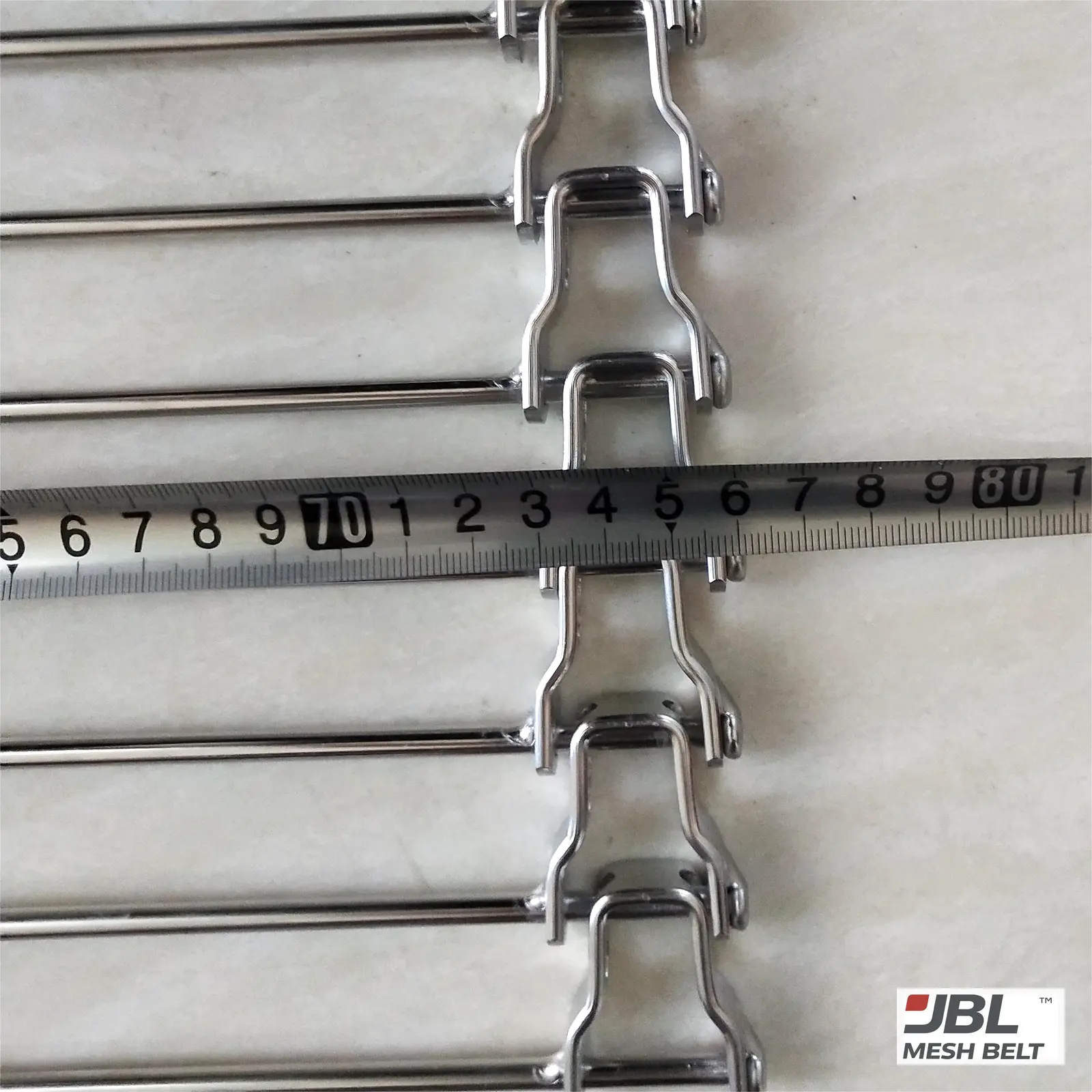
Sample checked with a tape
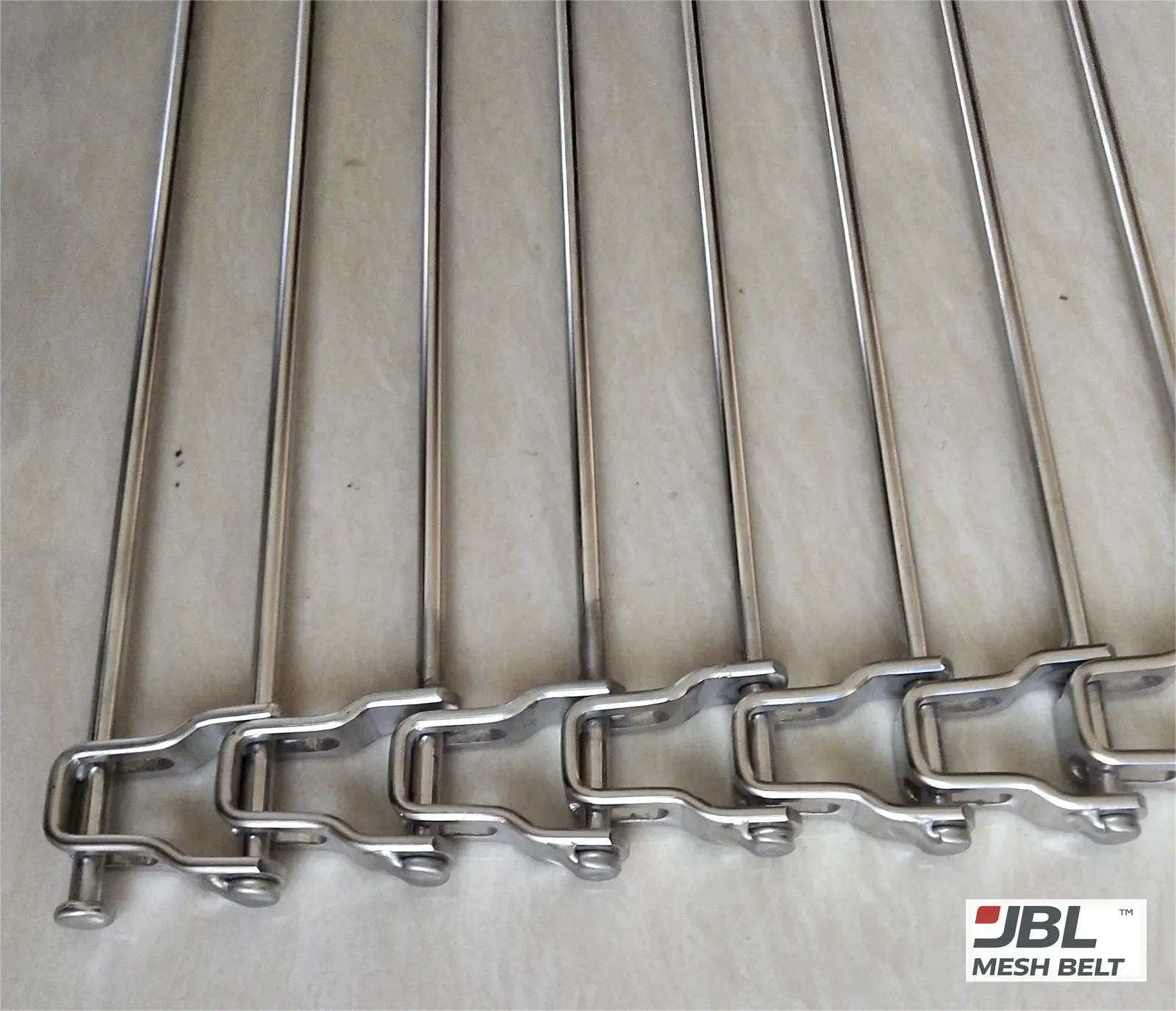
Sample edge links and rod heads
Sample links, side view
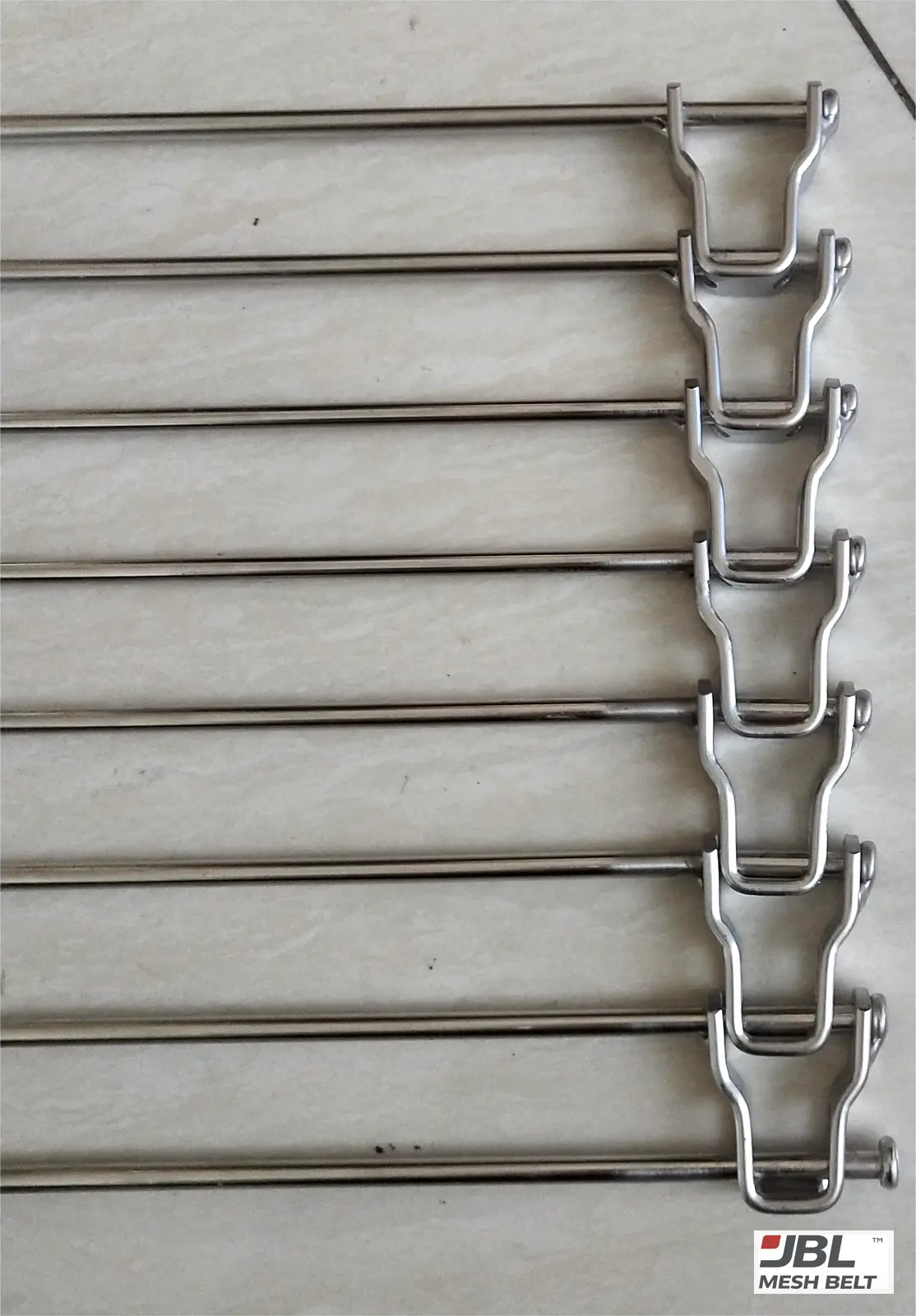
Sample laid out
Sample laid out
Before: original weld
After: new sample weld

The fix the buyer asked for: clean edge welds

Same pitch, rod and link as the original — but the rod-end welds on the new belt are finished smooth, with no burrs to catch the guide strips. Weld finish was one of the points checked on the sample before bulk.

04
Sprockets

Sprockets Made to Match — and Run With the Belt Before Shipment

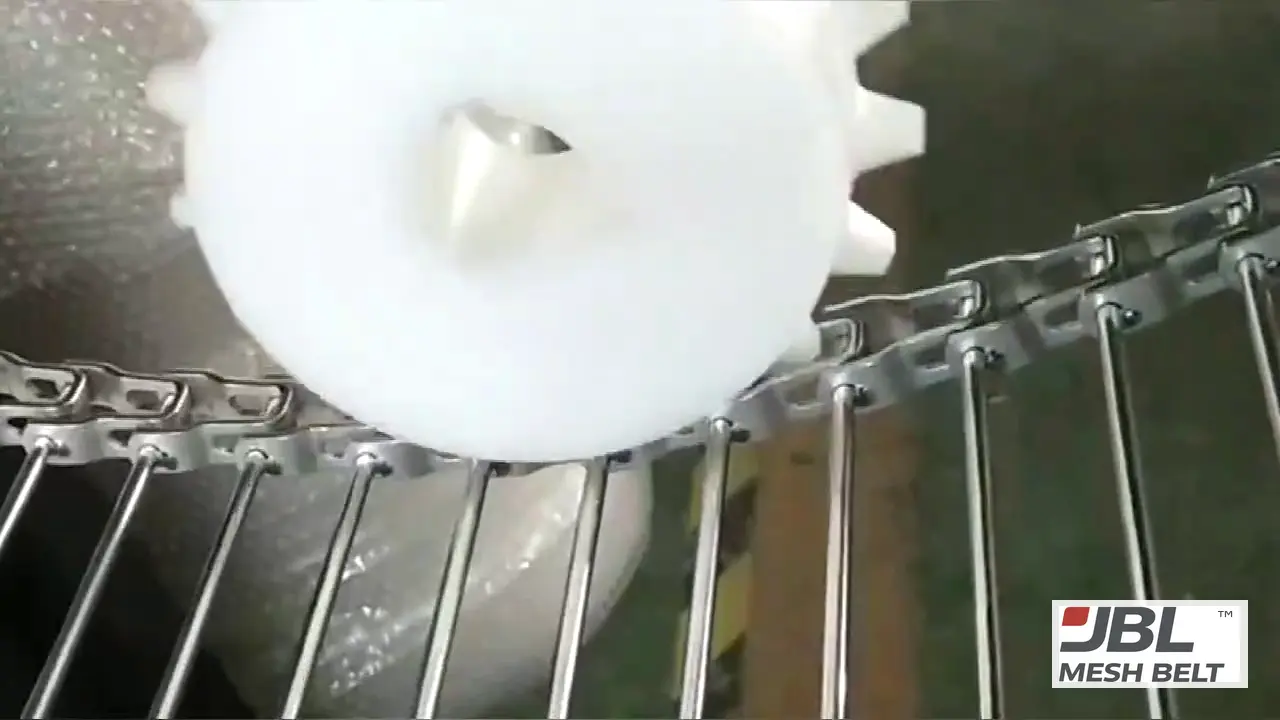
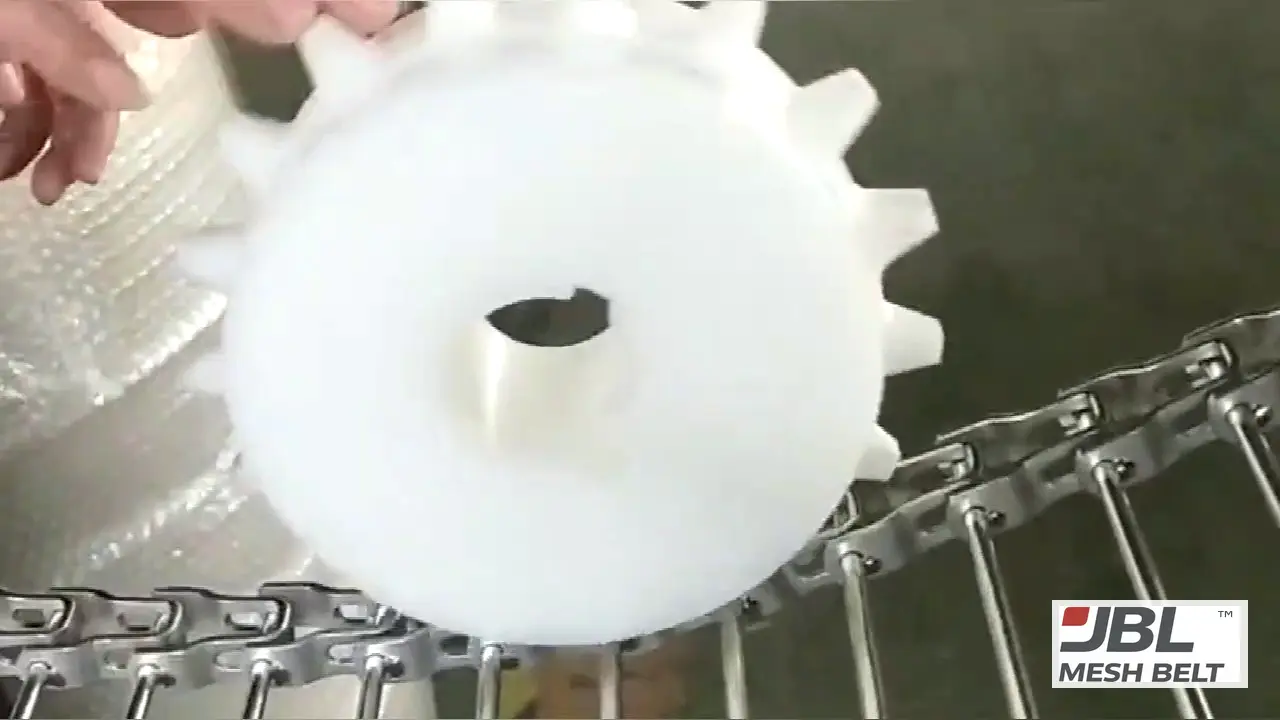
Nylon sprockets were supplied with the belt. Outside diameter, bore and pin were measured, then a sprocket was run on the new belt to check tooth engagement before the crates were closed.

Sprocket running on the new belt — engagement check before shipment
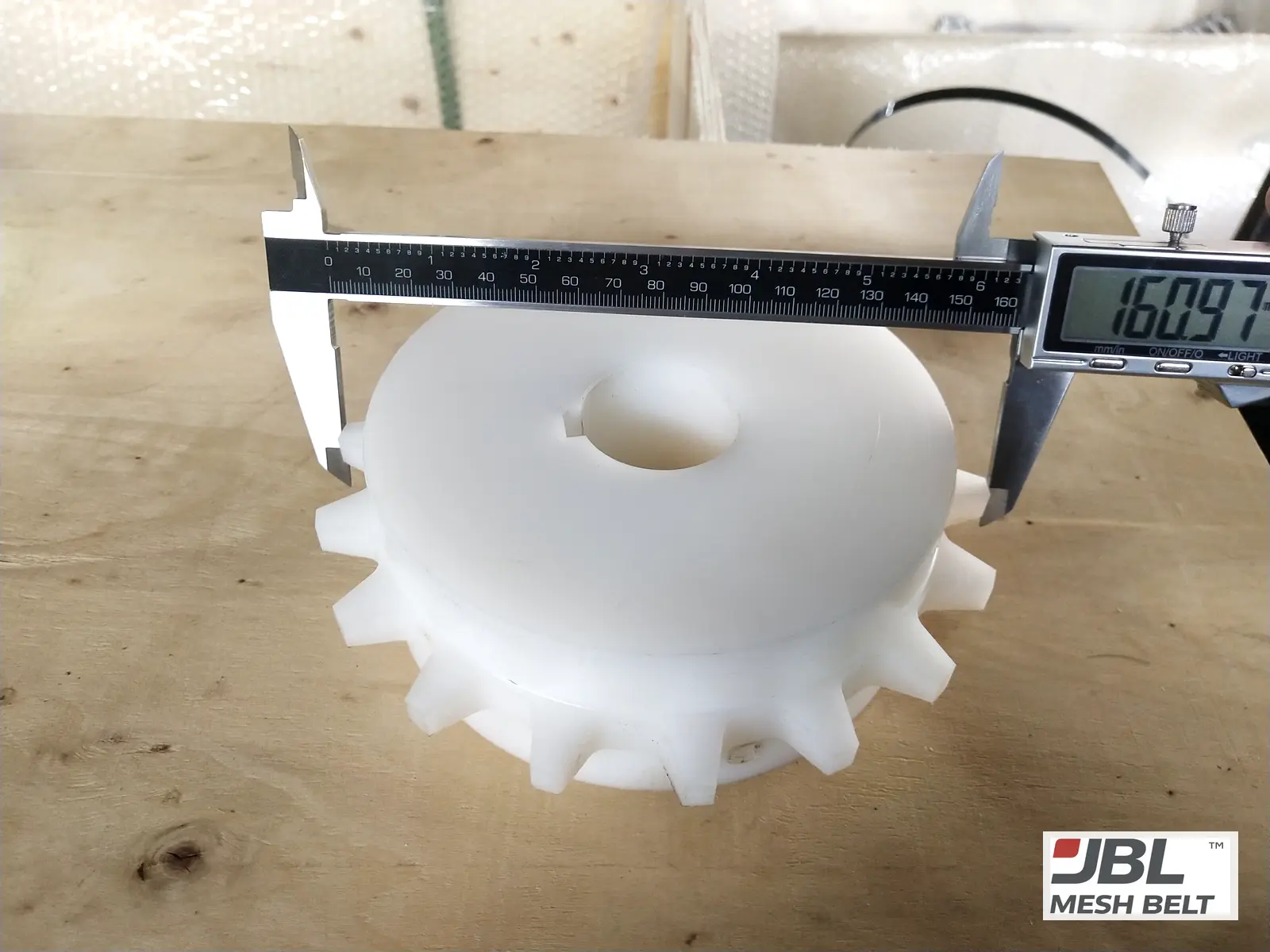
Sprocket outside diameter: 160.97 mm
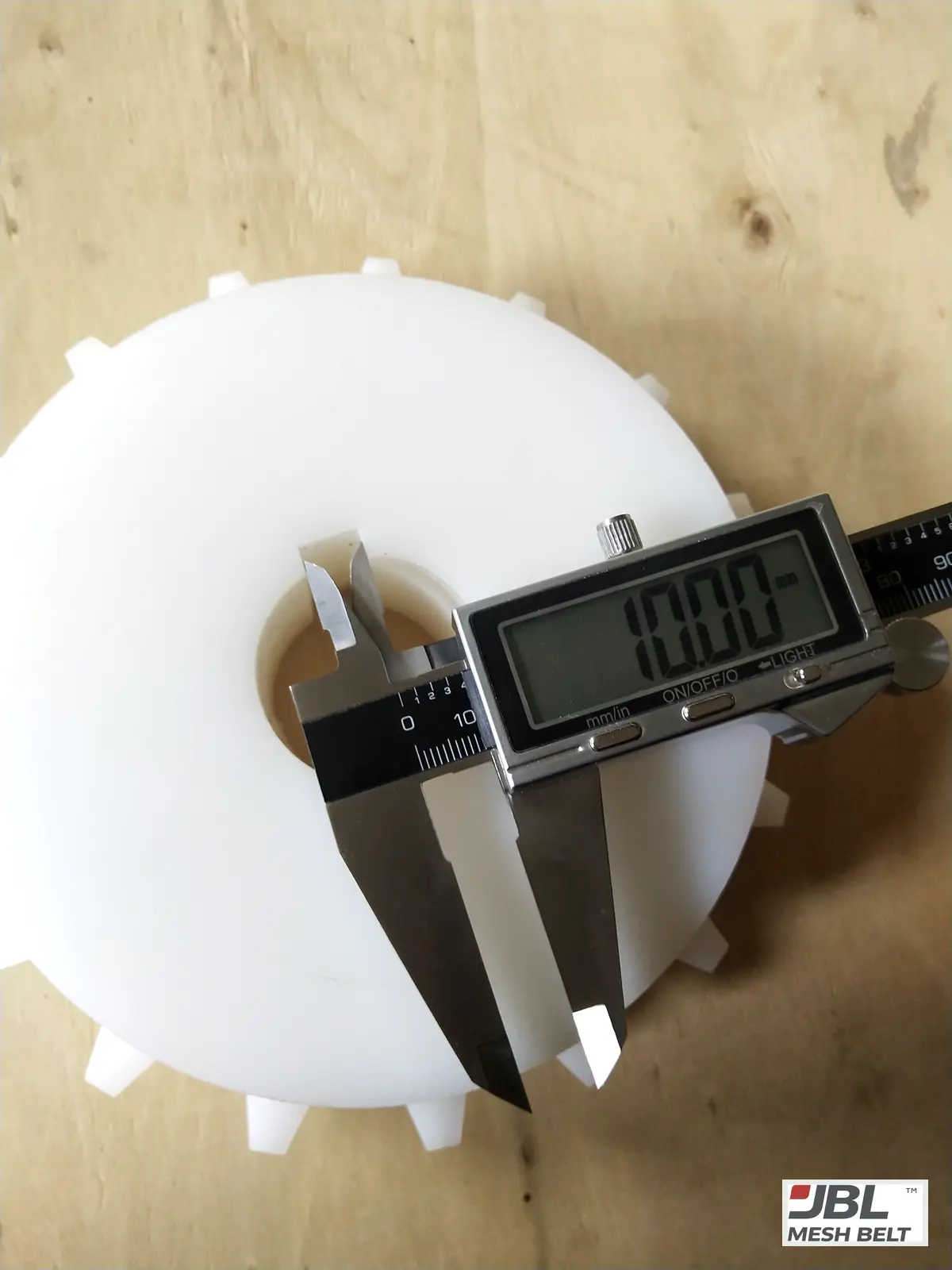
Bore detail measured: 18.00 mm
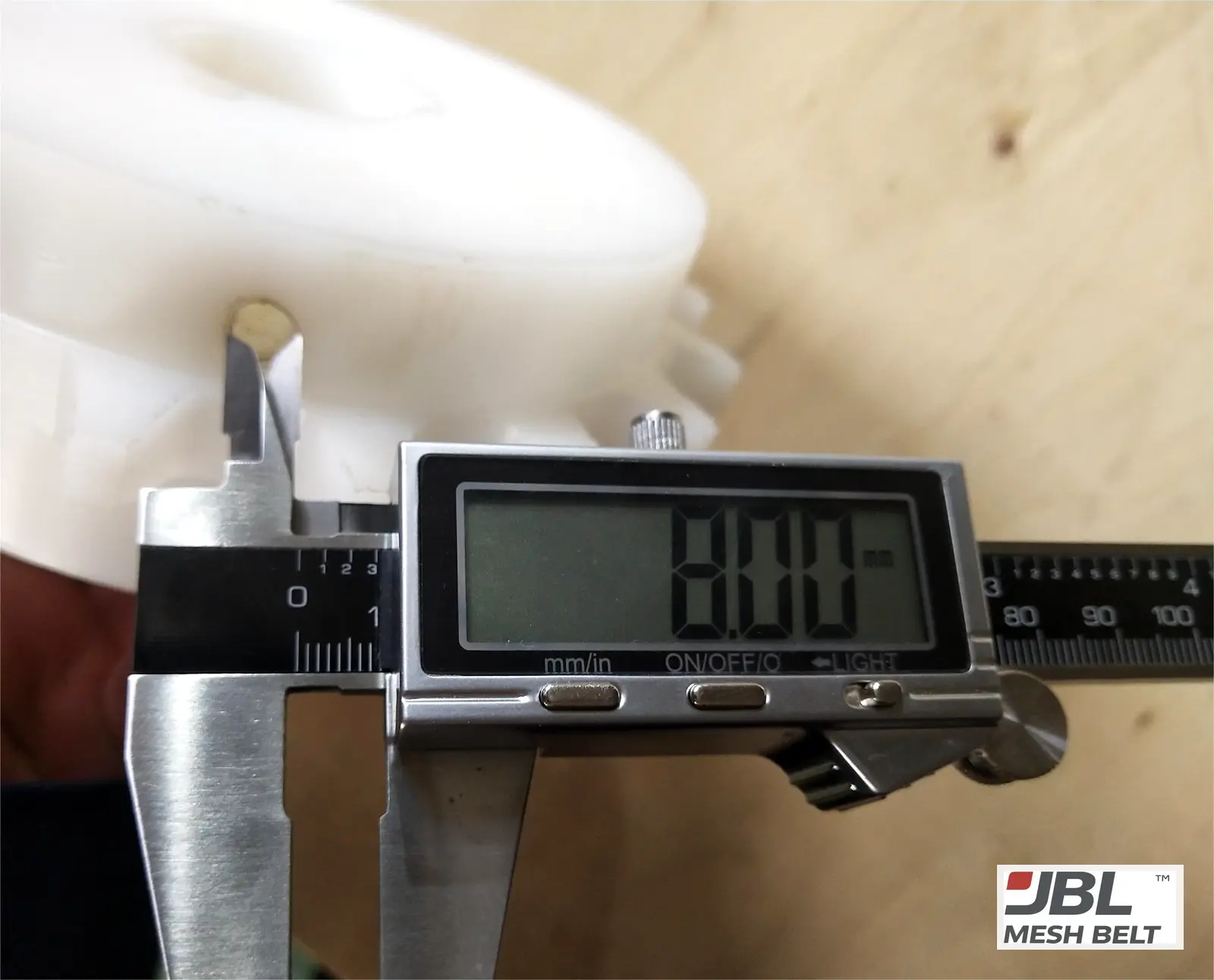
Pin measured: 8.00 mm
Running test: teeth engaging the belt links
Running test: sprocket turned through the belt
05
Shipment

Checked Before Packing, Then Shipped

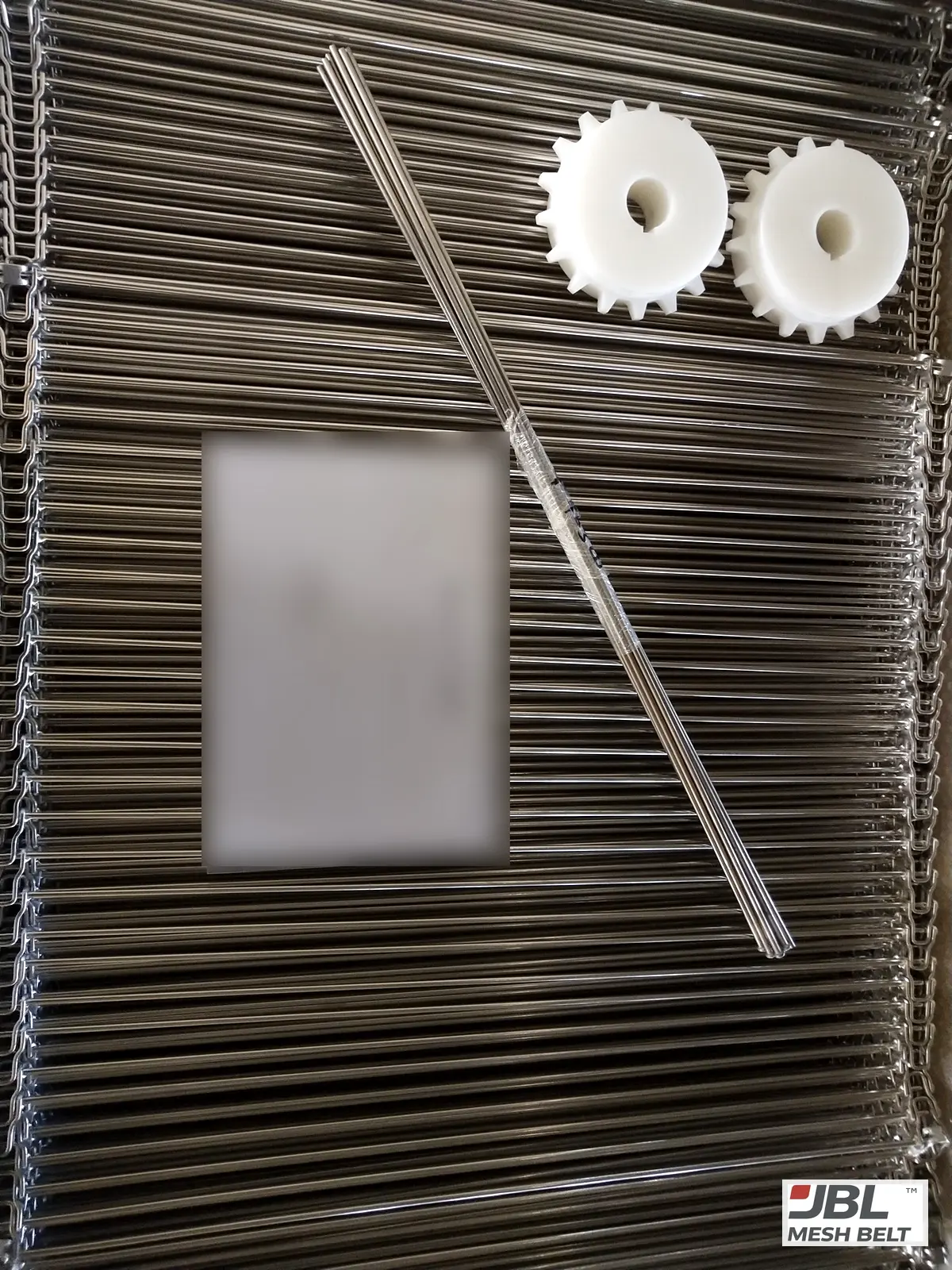
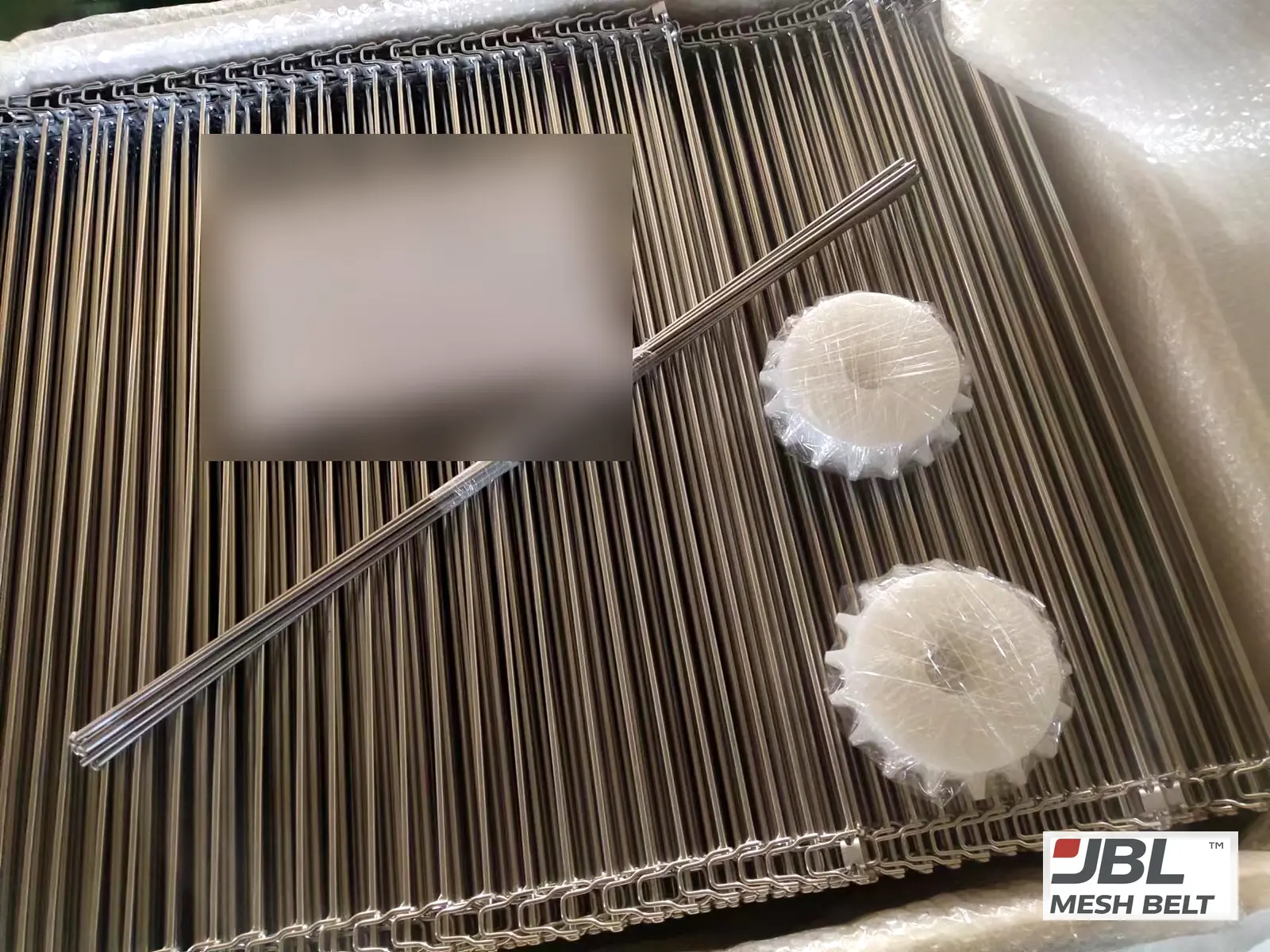
Belt with spare rods and sprockets, shipping list on top
Packed in a lined crate, sprockets wrapped
06
Project summary

What This Project Shows Buyers

Project facts
Location · yearMelbourne, Australia · 2023–2024
Industry · equipmentBakery · spiral cooling tower (bread cooling)
ProblemRough rod-end welds with burrs on the original belt; plastic shavings and scored guide strips
Starting pointSection of the original belt — no drawing
Belt suppliedSpiral belt, about 400 m, 760 mm wide, SUS304, pitch 27.4 mm, rod 5.0 mm, flat-head welded edge, electropolished
Sprockets suppliedNylon, outside diameter about 161 mm, measured and run on the new belt
Checked before bulkPitch, rod, link thickness and link size compared with the original on the same caliper; weld finish
Checked before shipmentSprocket running and engagement test on the new belt
PackedLined export crates with spare rods; shipping list on each belt

1.A worn sample is enough — if the right dimensions are read

Pitch, rod diameter, link thickness and link size decide whether a spiral belt fits the drum, sprockets and guides. Reading them on the original with a caliper replaced the missing drawing.

2.Weld finish is a fit issue, not only cosmetics

Burrs on rod-end welds scraped the plastic guide strips. Matching dimensions alone would have repeated the problem; the weld finish was specified and checked on the sample.

3.Replace sprockets with the belt and run them together

A new belt on worn sprockets can jump or wear early. Here the sprockets were measured, supplied and run on the new belt before shipment.

4.Compare original and new with the same tools

Original 27.41 mm pitch vs new 27.40 mm; rod 5.03 vs 5.00 mm; link 2.70 vs 2.70 mm — read the same way, so the buyer can check the numbers, not a promise.

✓ Evidence on this page: 8 site photos of the original belt, 8 caliper readings on the original and 7 on the new sample, 3 sprocket measurements, a sprocket running test video with stills, and shipment photos. Customer name, order numbers and the original brand are withheld.

Replacing a spiral belt without a drawing?

Send a short section of the old belt, or photos with a caliper in the picture — usually a reply within 8 hours.

07
FAQ

Questions About This Project

Q1Can a spiral belt be replaced without the original drawing?

Yes. In this project a section of the old belt was enough: pitch, rod, link thickness and link size were measured with a caliper, a sample made and compared before bulk production.

Q2How is the new belt checked against the old one?

The same dimensions are read on the original and on the new sample with the same tools, and the buyer approves the sample before production. Readings and photos are shared at each step.

Q3The old belt had poor welds. Can that be improved?

Yes, as long as the fit dimensions stay the same. Here the rod-end welds were finished smooth on the new belt while pitch, rod and link stayed matched to the original.

Q4Were the sprockets replaced too?

Yes. Nylon sprockets were measured and supplied with the belt, and a sprocket was run on the new belt to check engagement before shipment.

Q5Is the customer or the original supplier named?

No. Cases show country, city and year only. The buyer's name, address and the original belt brand are not published.