Replacement · 11 min read
Spiral Freezer Belt Replacement: How Do You Know the New Belt Is Compatible?
 Written bySpringSales Director, JBL Mesh Belt · 16 years in metal conveyor beltsProjects in United Kingdom · USA · Australia · Brazil · South Korea · Spain · MalaysiaPublished
Your spiral belt is worn and a new one is ordered. If it does not match your drum and drive, you find out at installation — with the freezer stopped.
Short answer
A replacement spiral belt is compatible when it matches your freezer — drum diameter, turn ratio, direction and drive — and your old belt — pitch, rod, wire, link and edge. I check both on your sample, photos or drawing, and you approve a measured sample before bulk production.
At a Glance
| Product | Application | Key point | Buyer type | What to send |
|---|---|---|---|---|
| Spiral freezer and cooling belts | Replacing a belt on an existing spiral | Belt and freezer are checked as one system | Plant engineers, maintenance, buyers, OEMs | Old belt section, caliper photos or drawing; drum and drive details |
This guide puts the whole replacement in one place: what decides fit, what to send, how the new belt is compared with your old one, which tests run before shipment and when the sprockets need replacing too.
01What decides whether a replacement spiral belt fits your freezer?
Most buyers start with width and pitch. Those two numbers are needed, but they are only part of the answer.
Short answer
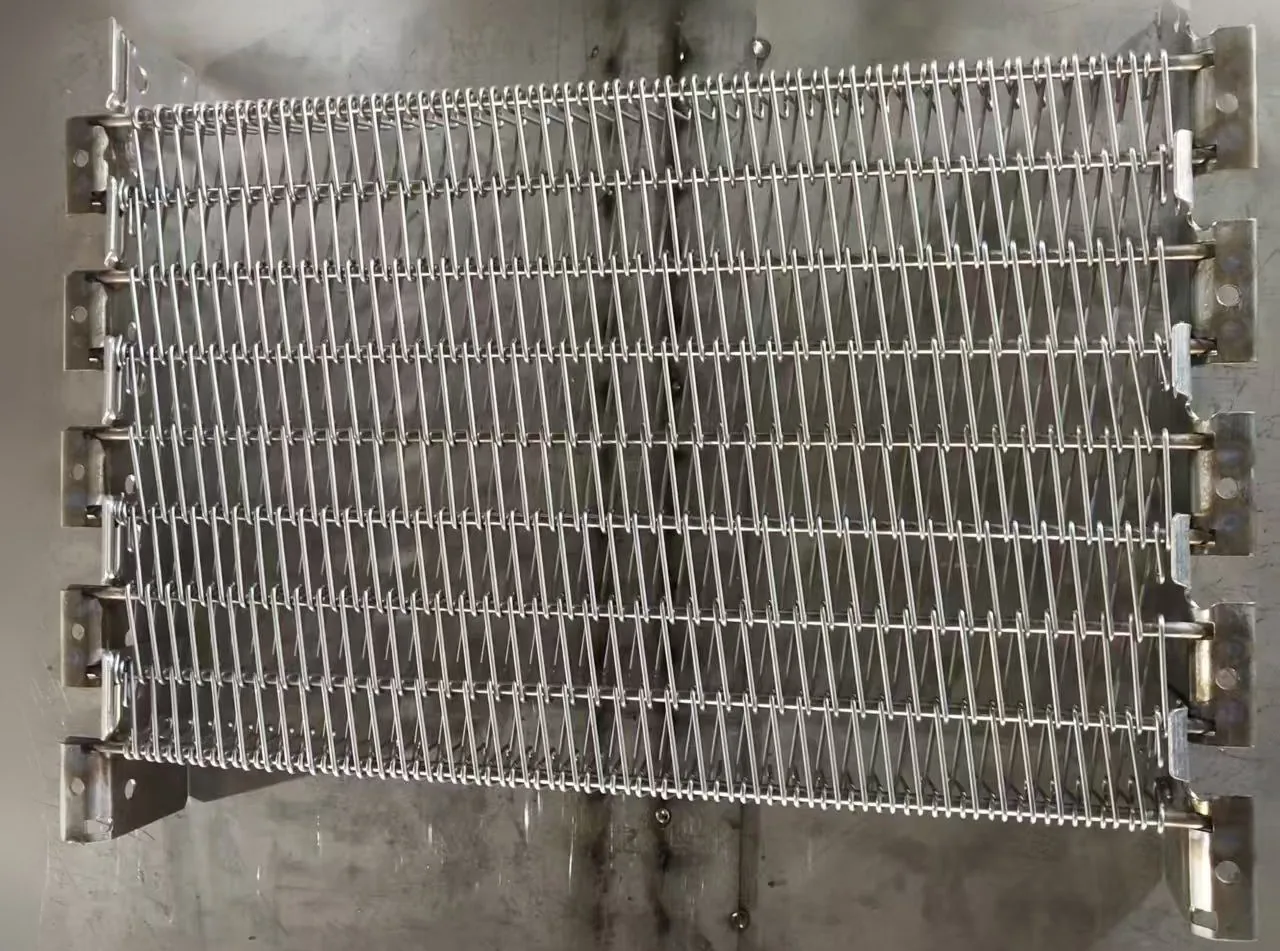
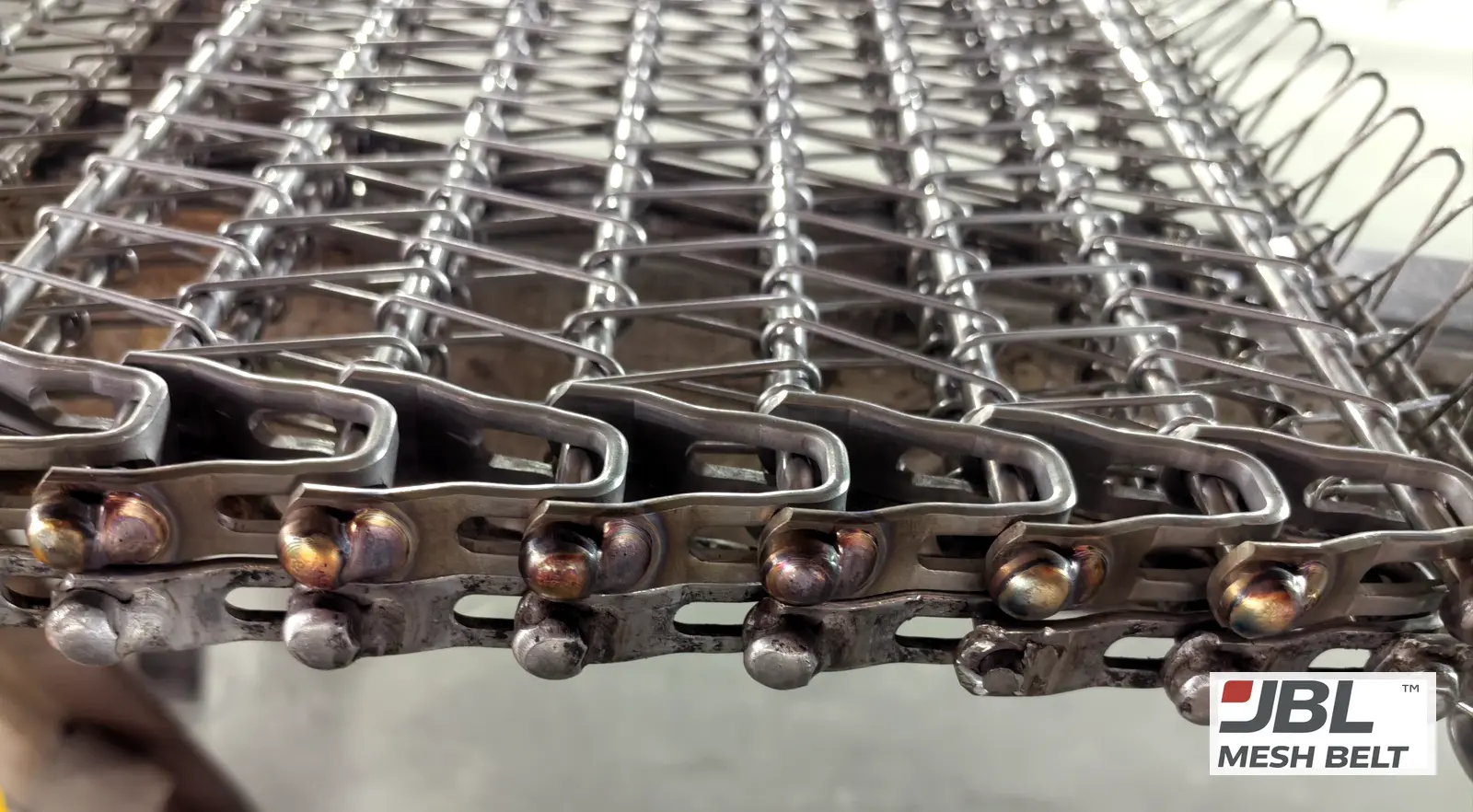
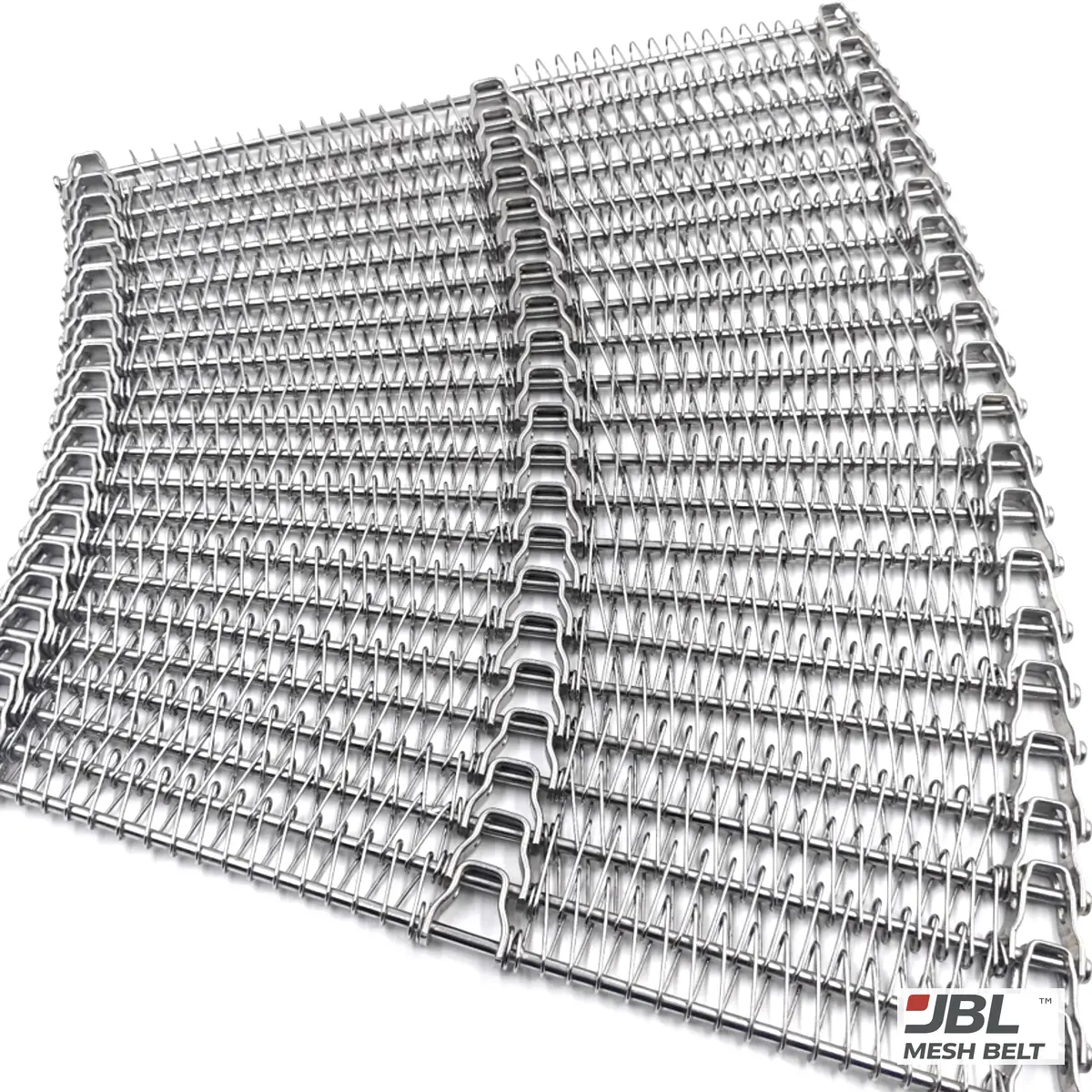
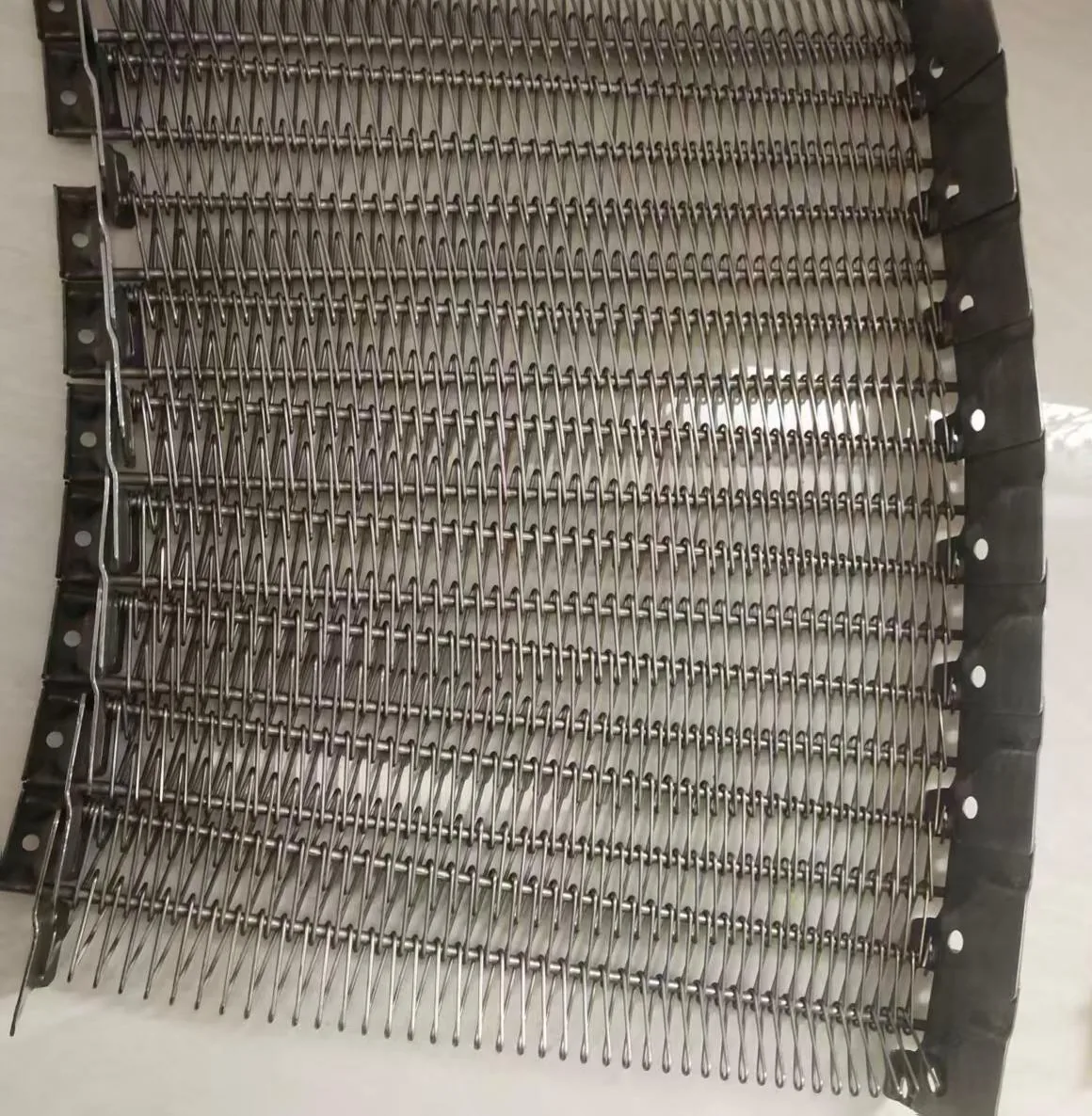
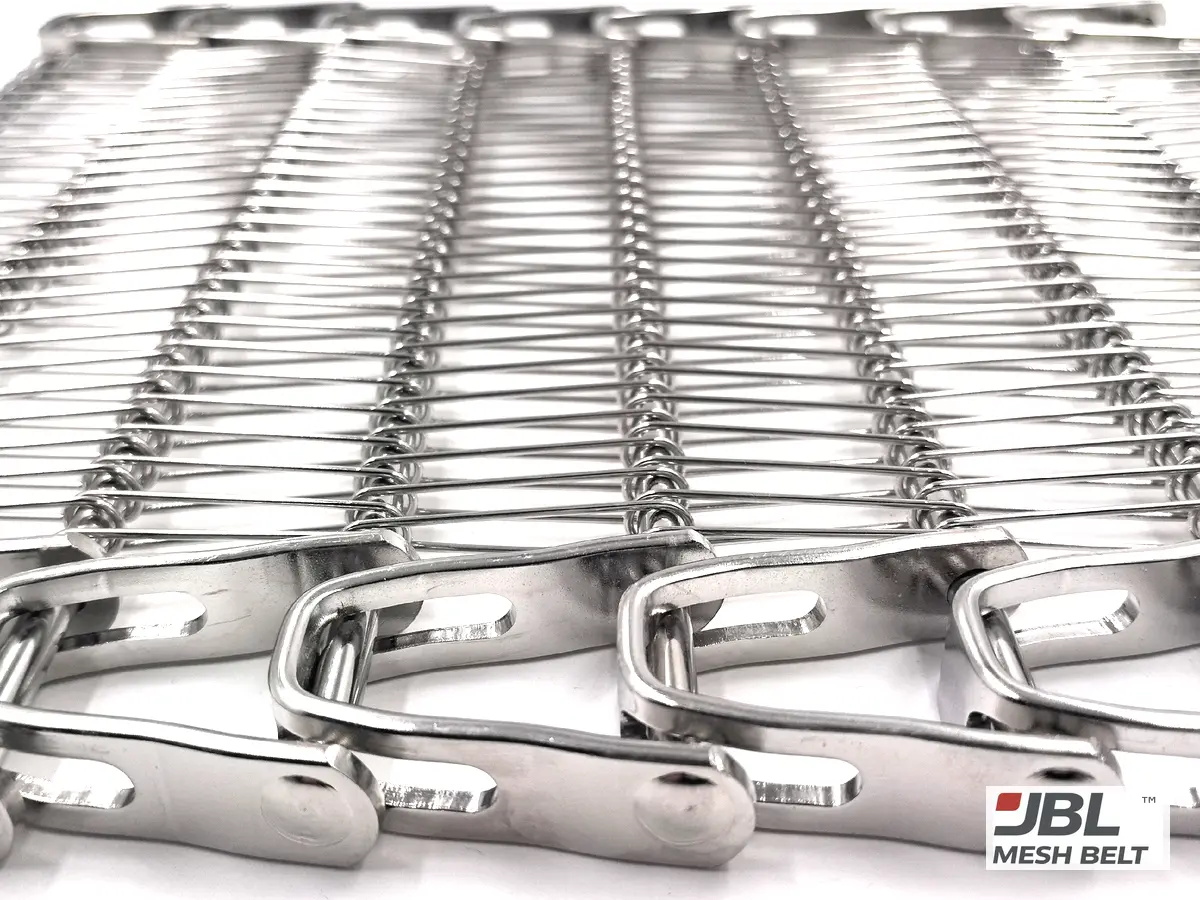
Two groups of data decide fit. From the freezer: drum diameter, turn ratio, single or bi-drum, up or down, and the drive and sprockets. From the belt: rod pitch, rod diameter, wire and spiral pitch, link height and thickness, edge type and material.
| Freezer side | Belt side |
|---|---|
| Drum (cage) diameter | Rod pitch — e.g. 19.05, 25.4, 27.4 or 38.1 mm |
| Turn ratio | Rod diameter — e.g. 5.0 or 6.0 mm |
| Single or bi-drum, ascending or descending | Wire diameter and spiral pitch |
| Drive type and sprockets | Link height and thickness |
| Product and temperature range | Edge type and material (SUS304 / SUS316) |
A spiral belt does not run in a straight line. It wraps around a drum, tier after tier, and it is driven, guided and supported by parts of your freezer. So I never check the belt alone. I check the belt against the freezer it has to run in.
Turn ratio is the number most people miss
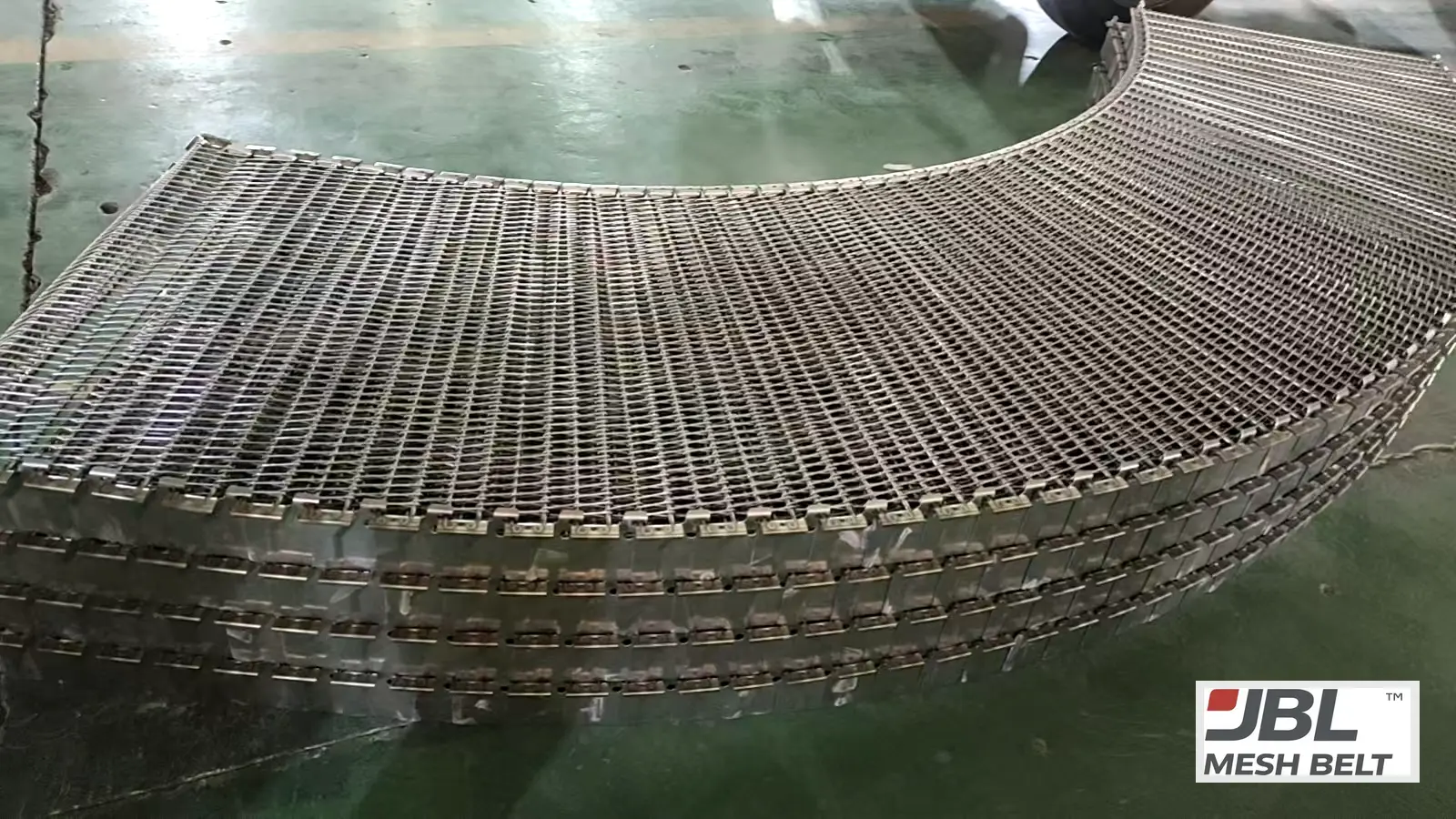
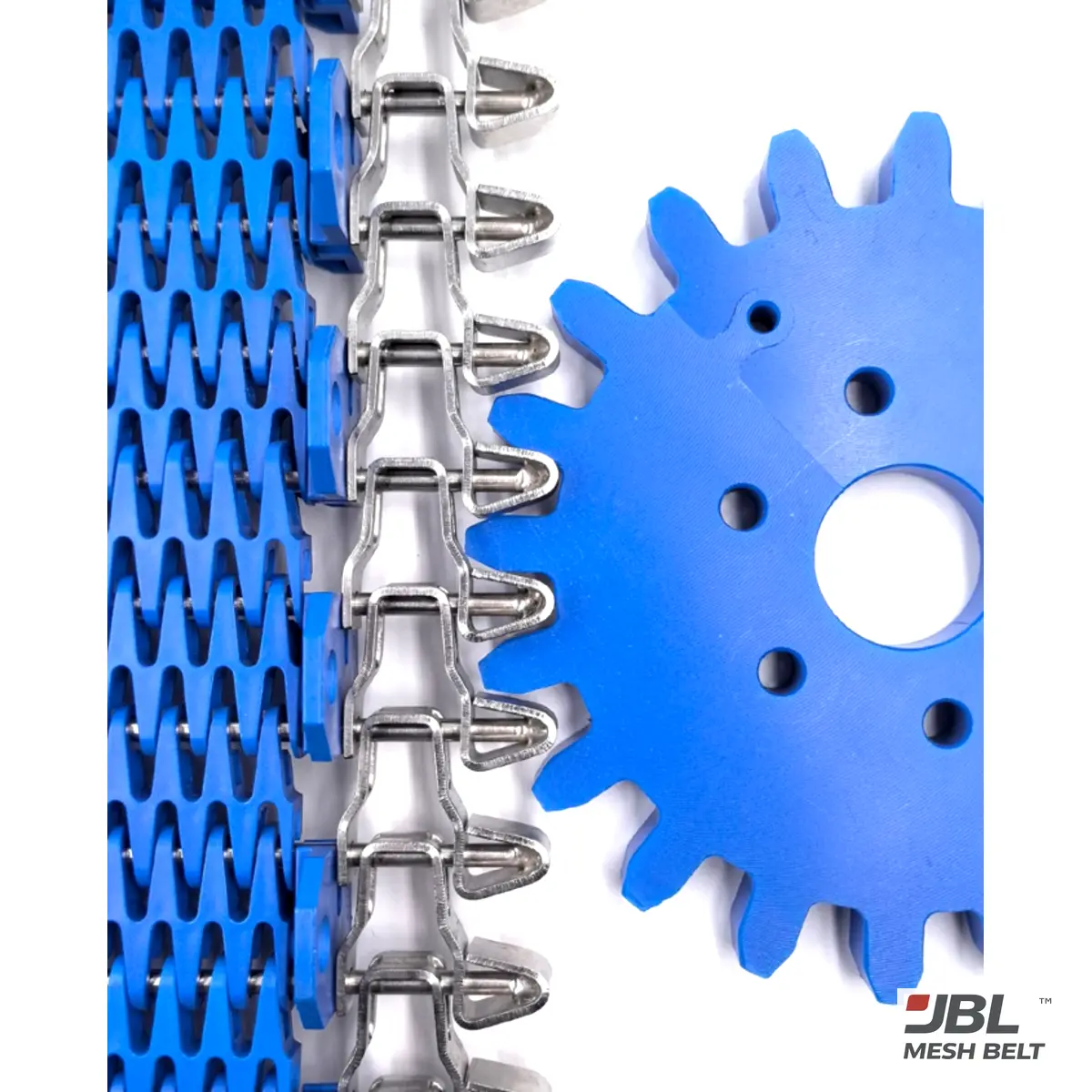
Turn ratio describes how tightly the belt turns around the drum relative to its width. A standard two-row link belt is used from a turn ratio of about 1.15; when the freezer turns tighter, a small radius three-row link belt is needed, from about 1.1. Small radius belts use a shorter inner pitch and a longer outer pitch, for example 19.05 × 27.4 mm or 27.4 × 38.1 mm.
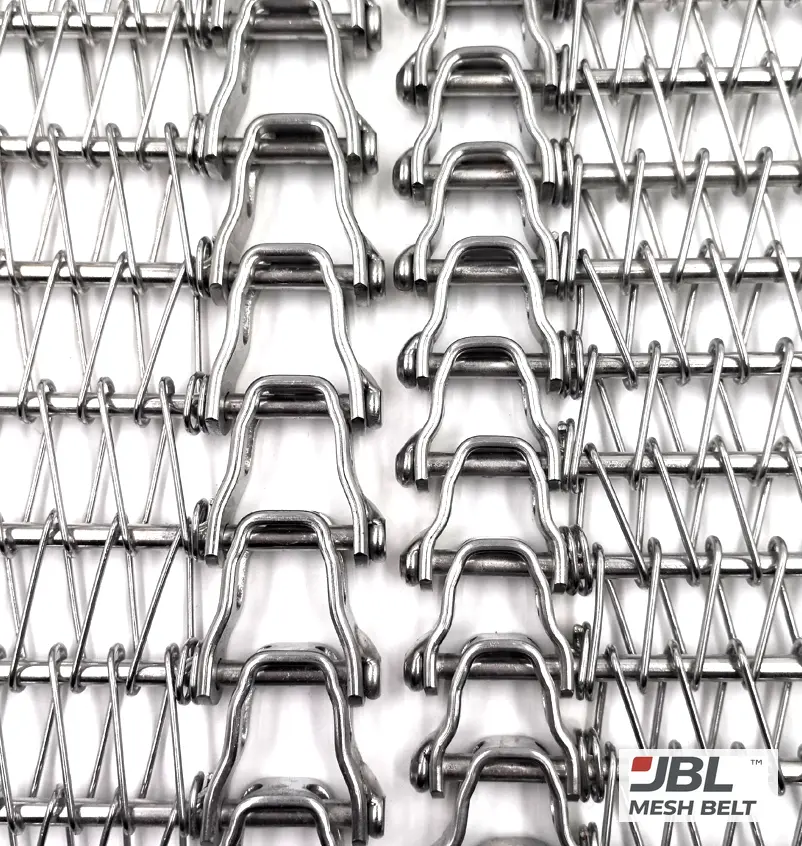
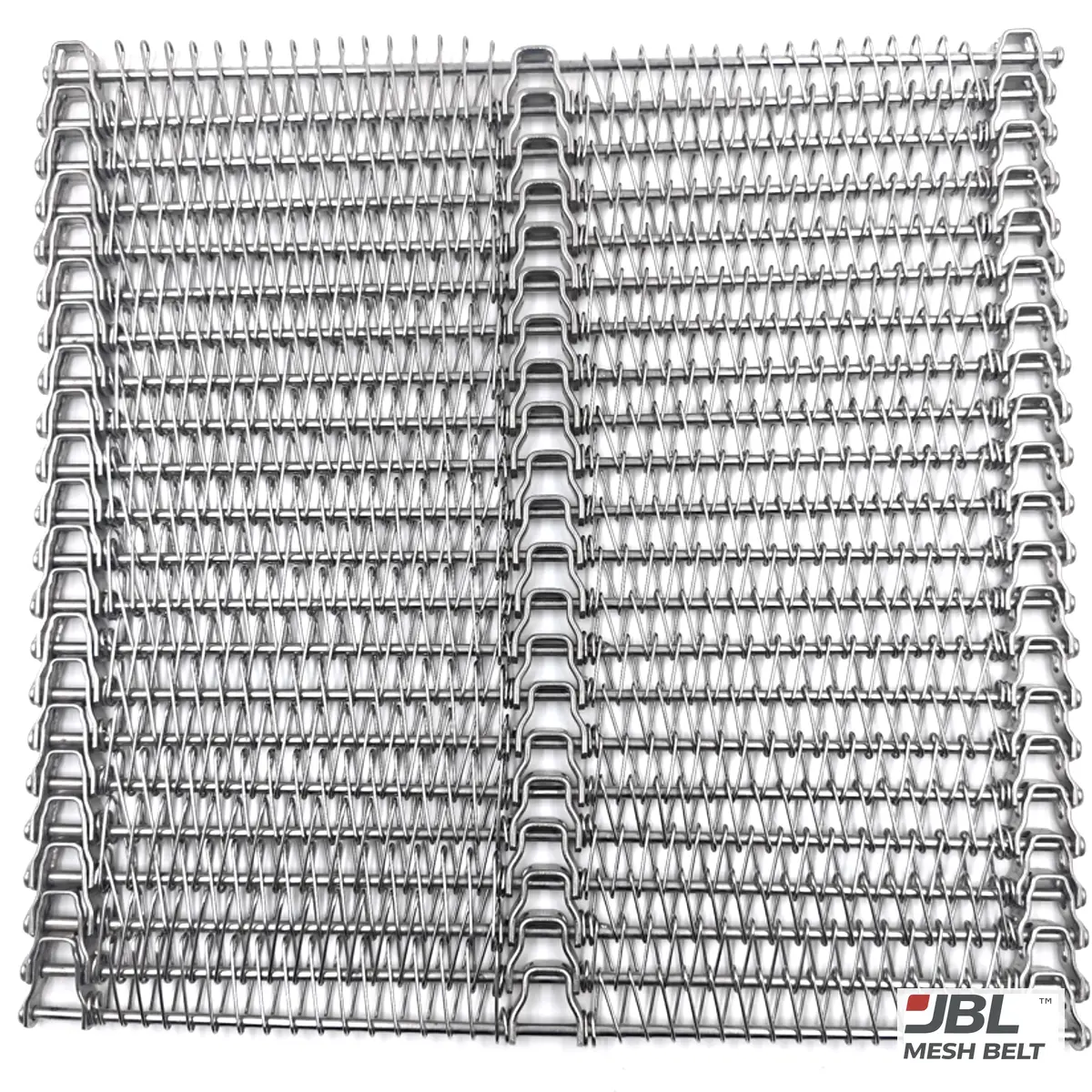
Two belts can have the same width and the same rod pitch and still behave very differently in the turn. I explain this in detail in why the same width and pitch does not mean compatibility.
The drive matters too. A friction-drive drum, a direct-drive drum, a side-drive sprocket system and a chain edge all ask different things of the belt edge. If you are not sure which one you have, read the four drive types first.
02What can you send if you have no drawing?
Many buyers think a replacement is impossible without the original drawing. In my projects, the drawing is often the thing that is missing.
Short answer
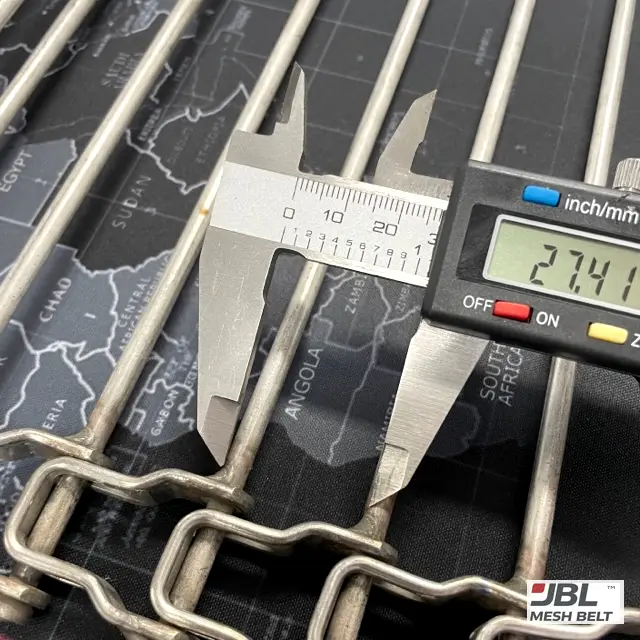
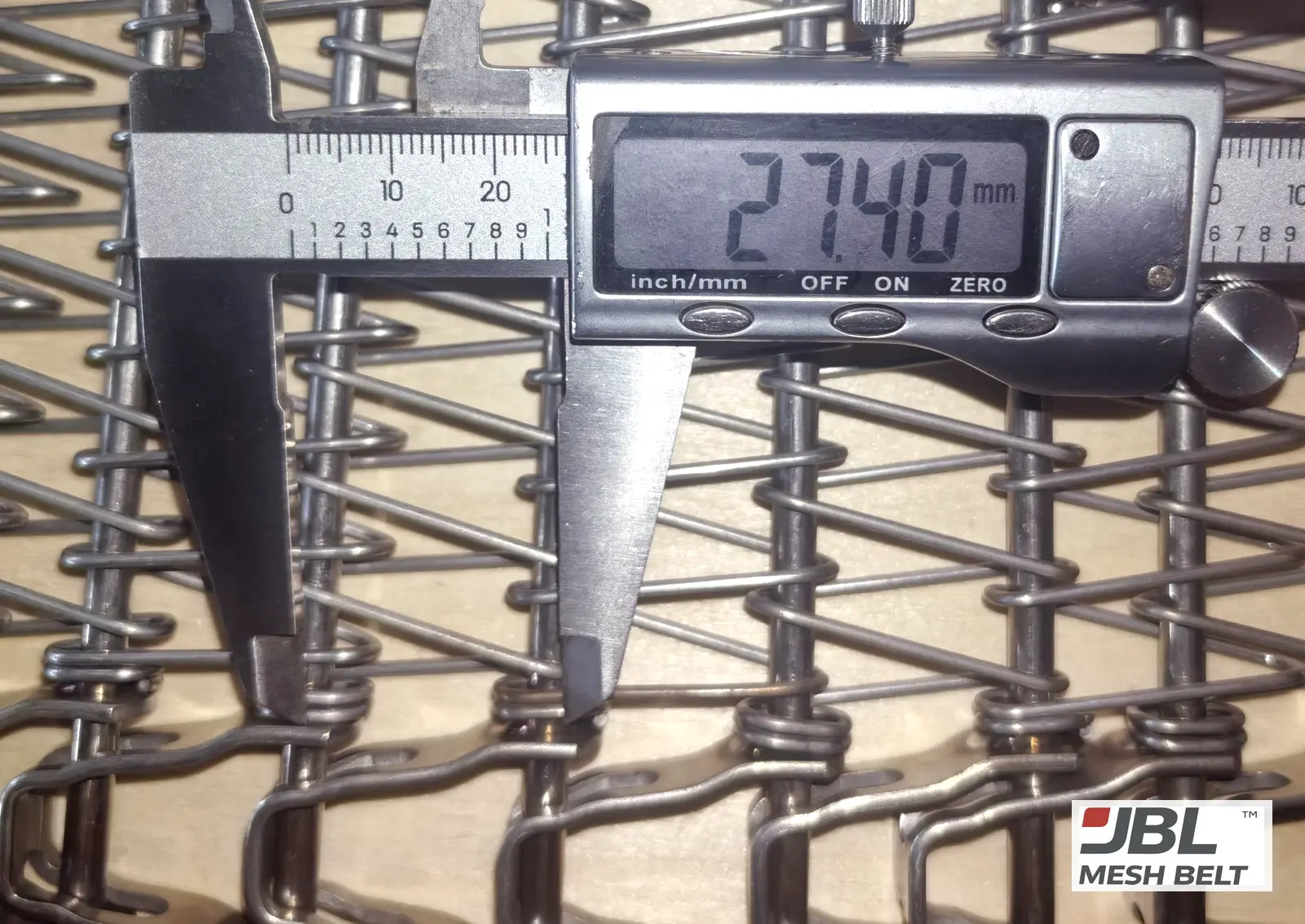
You can start from three things: a short section of the old belt, photos with a caliper reading in each picture, or a drawing. A physical section gives the most reliable readings. Photos support a first review. A drawing works when it is complete and current.
| Starting point | What it gives me | Project example |
|---|---|---|
| Section of the old belt | Every fit dimension, read with a caliper | Australia, waffle line, UK |
| Photos with caliper readings | A first review and an indicative quote | A fast first step |
| Customer drawing | The design values, if the drawing is current | Malaysia |
| Requirements only | A new drawing for approval, then a sample | Spain (eye link belt) |
In Melbourne, a bakery sent a section of the original spiral belt. There was no drawing. I read pitch, rod, link thickness and link size on that section, and those readings became the specification. In Malaysia, the customer supplied a drawing, and we measured the trial run against it.
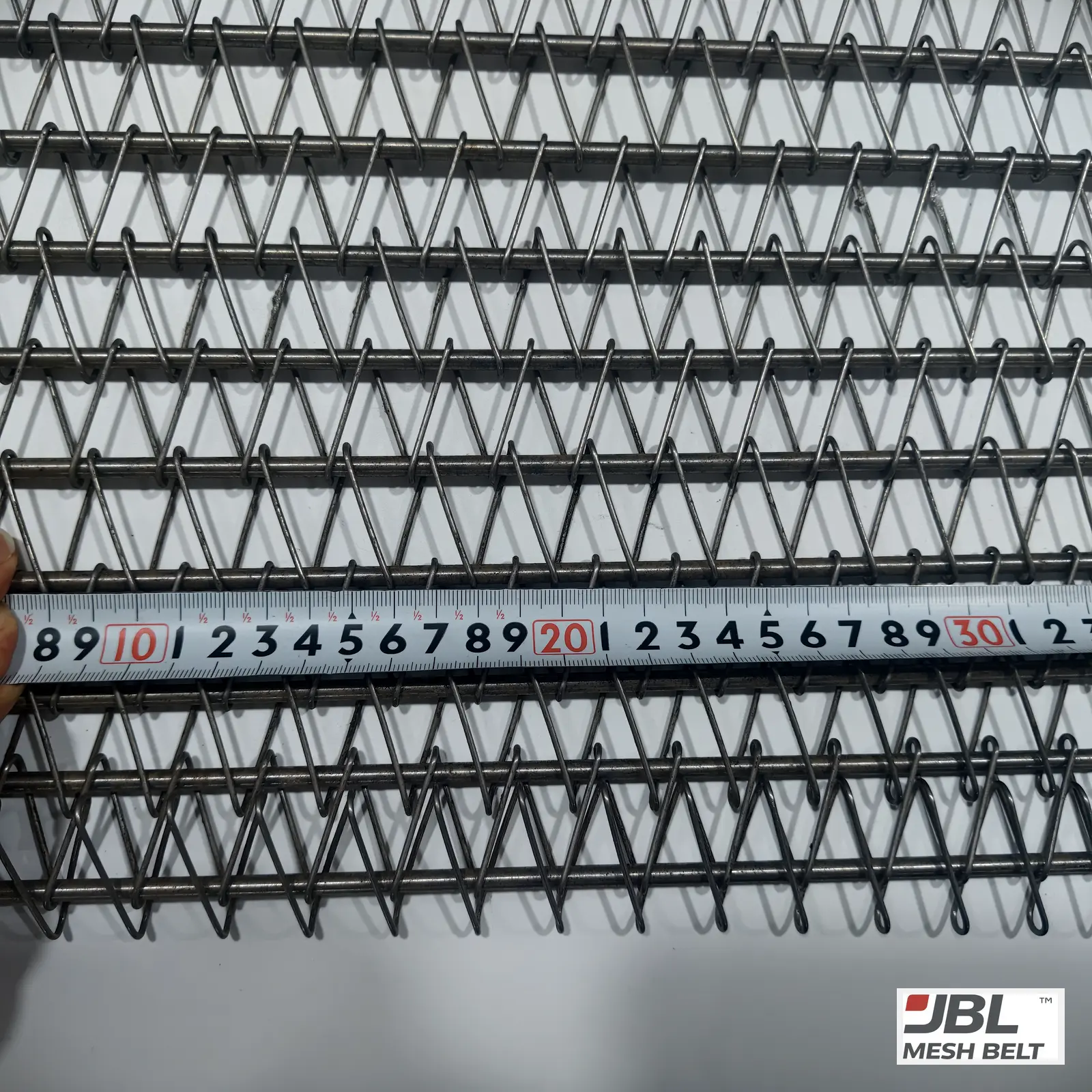
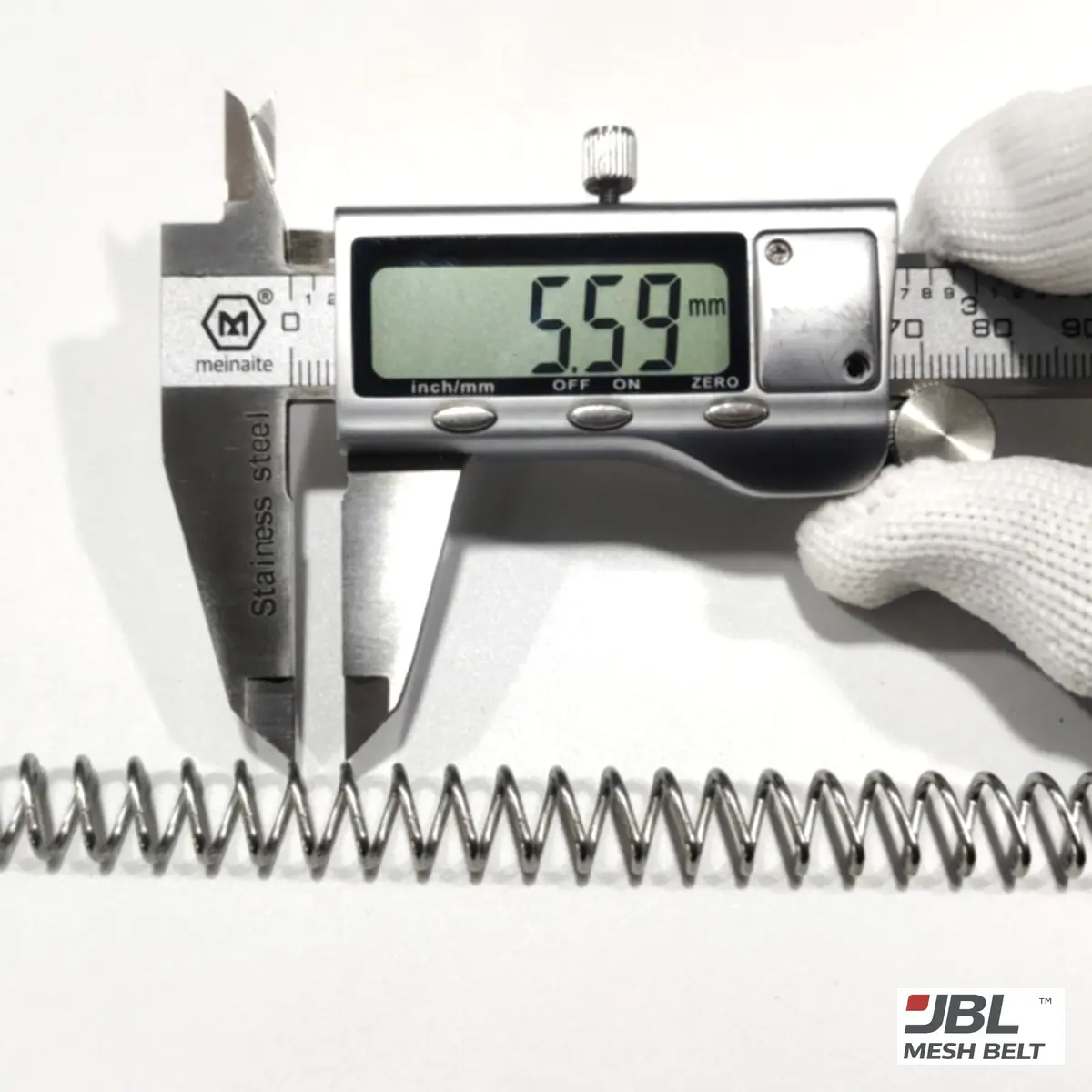
Photos are the fastest start. Put a caliper in the picture and make the reading visible. I can then tell you what fits, what is missing, and what I still need. A formal quotation follows a confirmed drawing or specification.
If you want a checklist, I list every value in the 12 parameters to send before a spiral belt replacement.
03How is the new belt compared with your old one?
A promise that the belt is 'the same' is worth nothing. A reading on your original next to a reading on our sample is worth a lot.
Short answer
I measure your original and our sample with the same caliper, point by point, and send you both readings with photos. Where your belt is worn, I identify the wear and make the new belt to the original size, not the worn size.
| Dimension | Customer's original | JBL sample |
|---|---|---|
| Pitch | 27.41 mm | 27.40 mm |
| Rod diameter | 5.03 mm | 5.00 mm |
| Link thickness | 2.70 mm | 2.70 mm |
| Edge weld | Rough, with burrs | Smooth, cleaned |
Melbourne bakery spiral, readings from the case photos.
The table above is from the Melbourne project. Pitch, rod and link thickness match within normal measuring tolerance. The weld finish is different on purpose: the customer asked for clean welds because the old ones scored the guide strips.
Worn is not the same as original
On the waffle cooling spiral, the customer's link read 2.42 mm. That is wear, not design. The new belt was made at 2.71 mm, and the trial section was linked into the original belt to prove the fit. Copying 2.42 mm would have made a new belt that is already worn.
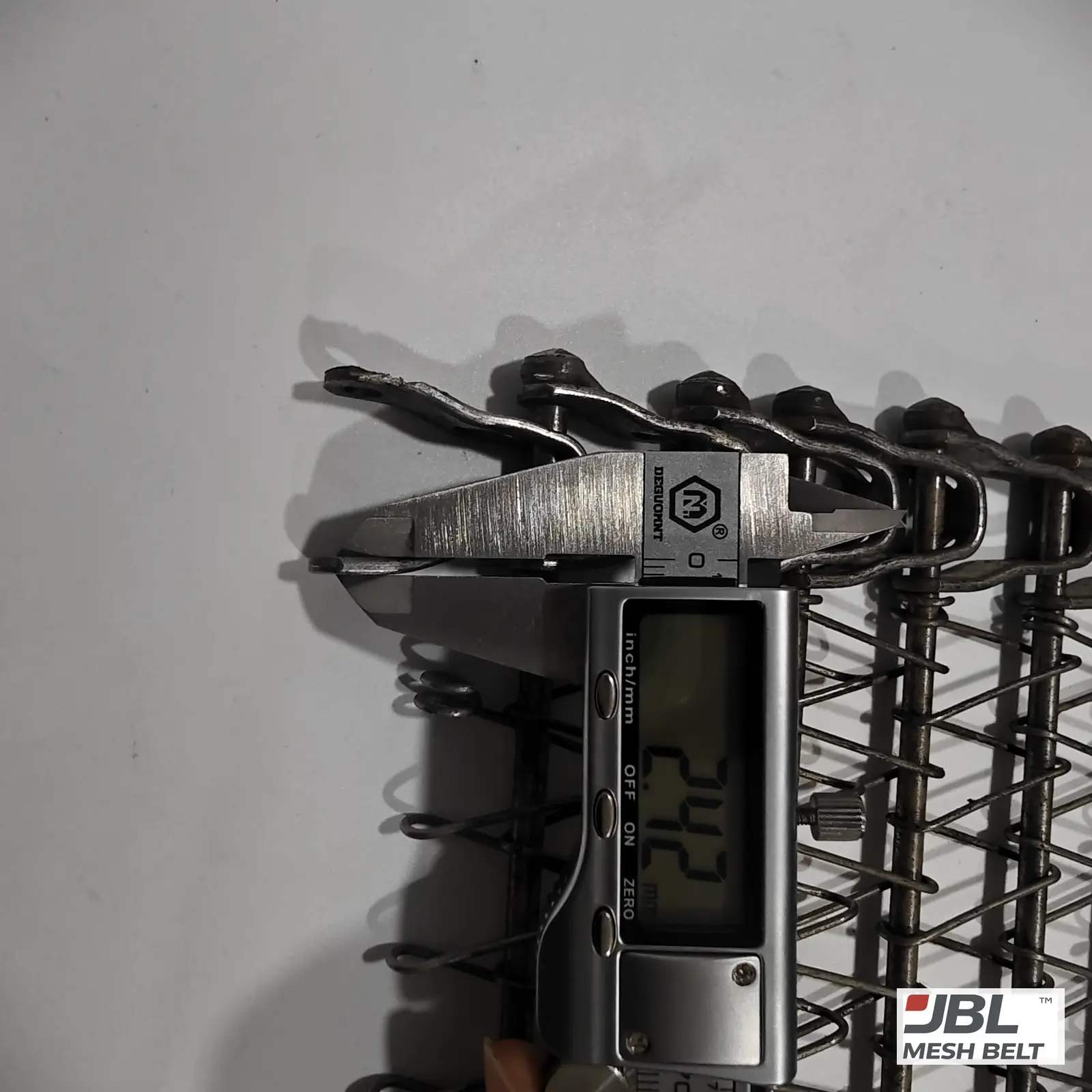
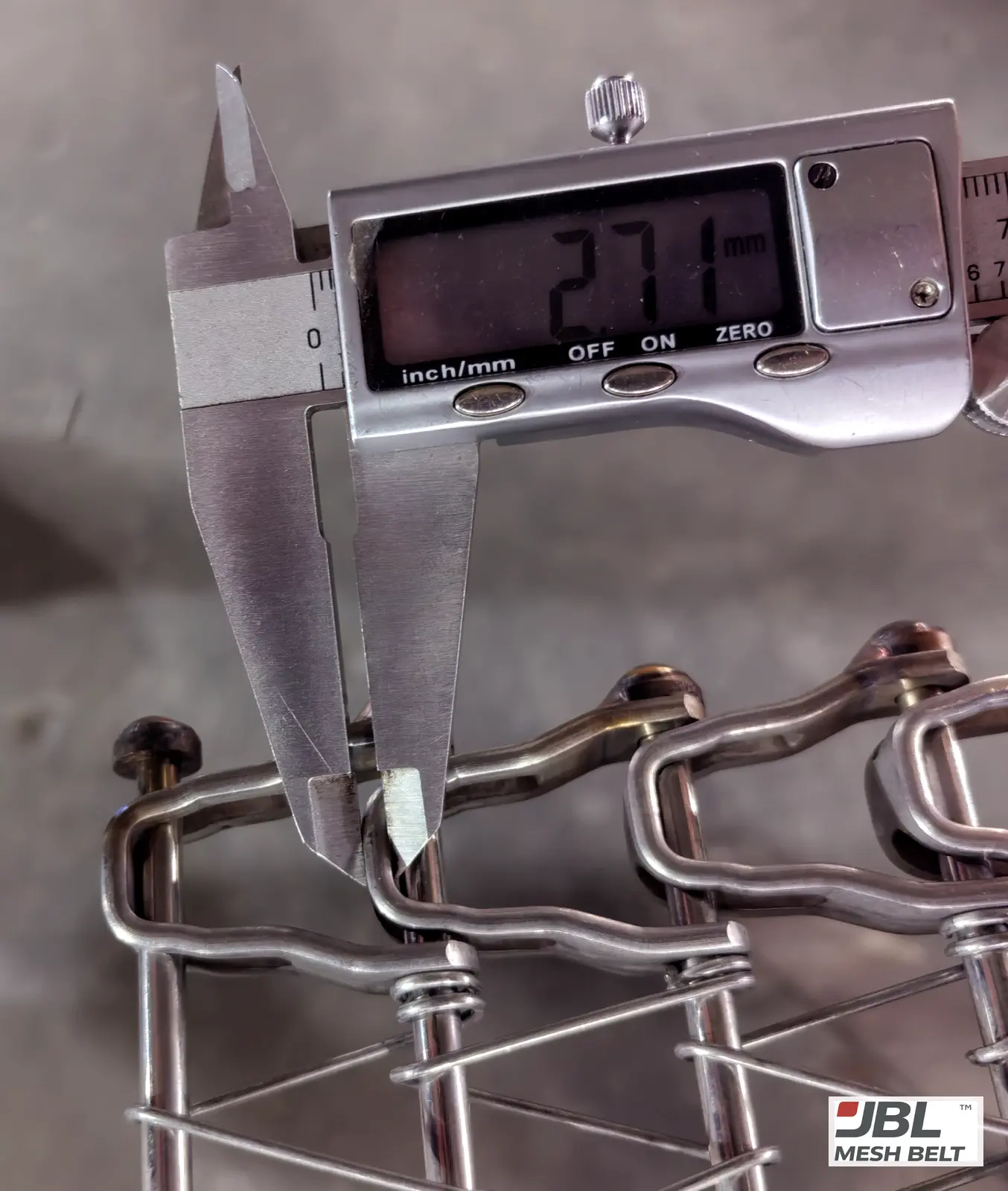
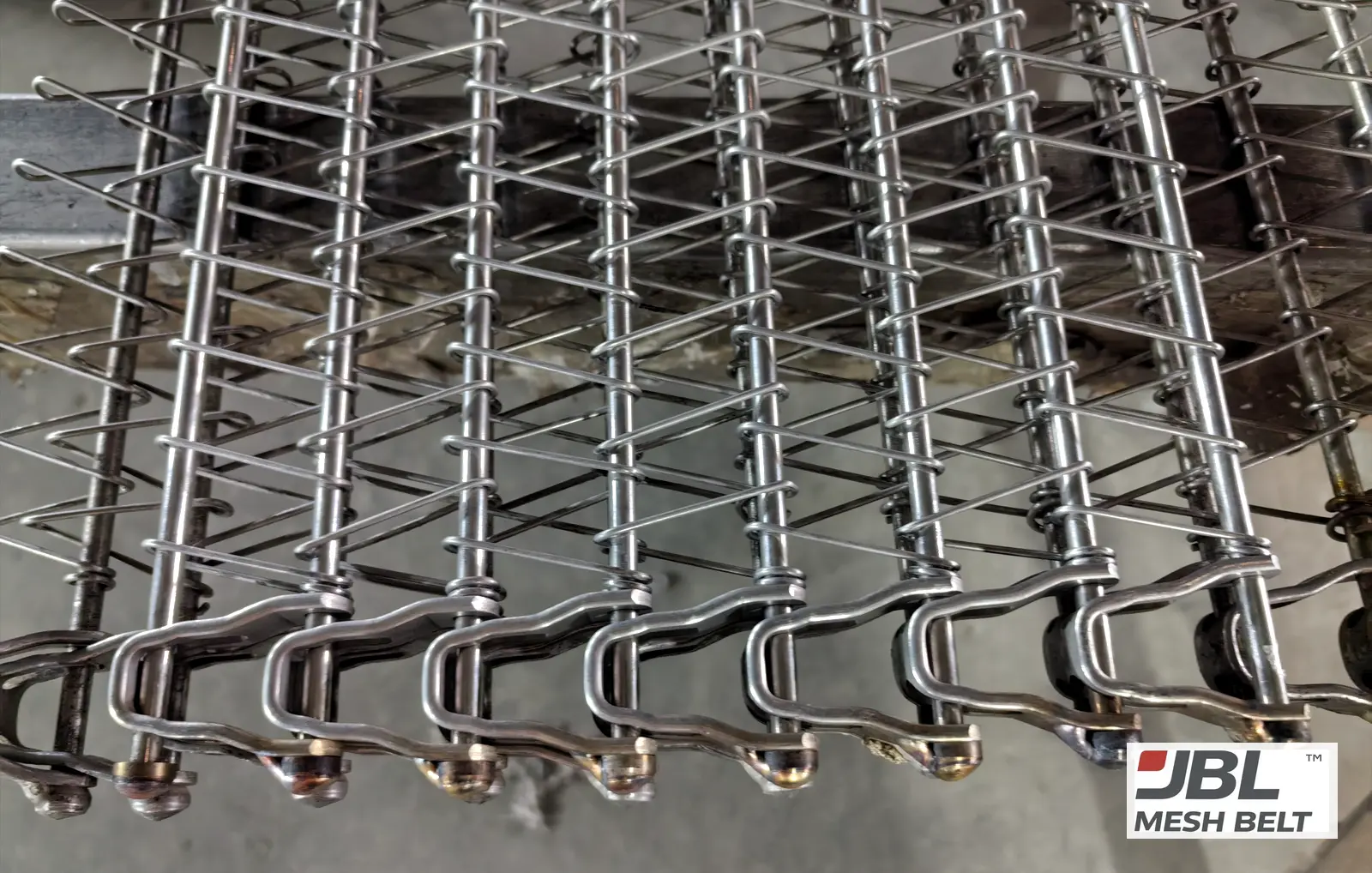
Nothing goes into bulk production until you approve the sample. You see the numbers first, and you decide.
04Which tests should run before the belt ships?
Dimensions on a flat sample cannot show how a belt behaves on a turn or on a sprocket. That needs a test.
Short answer
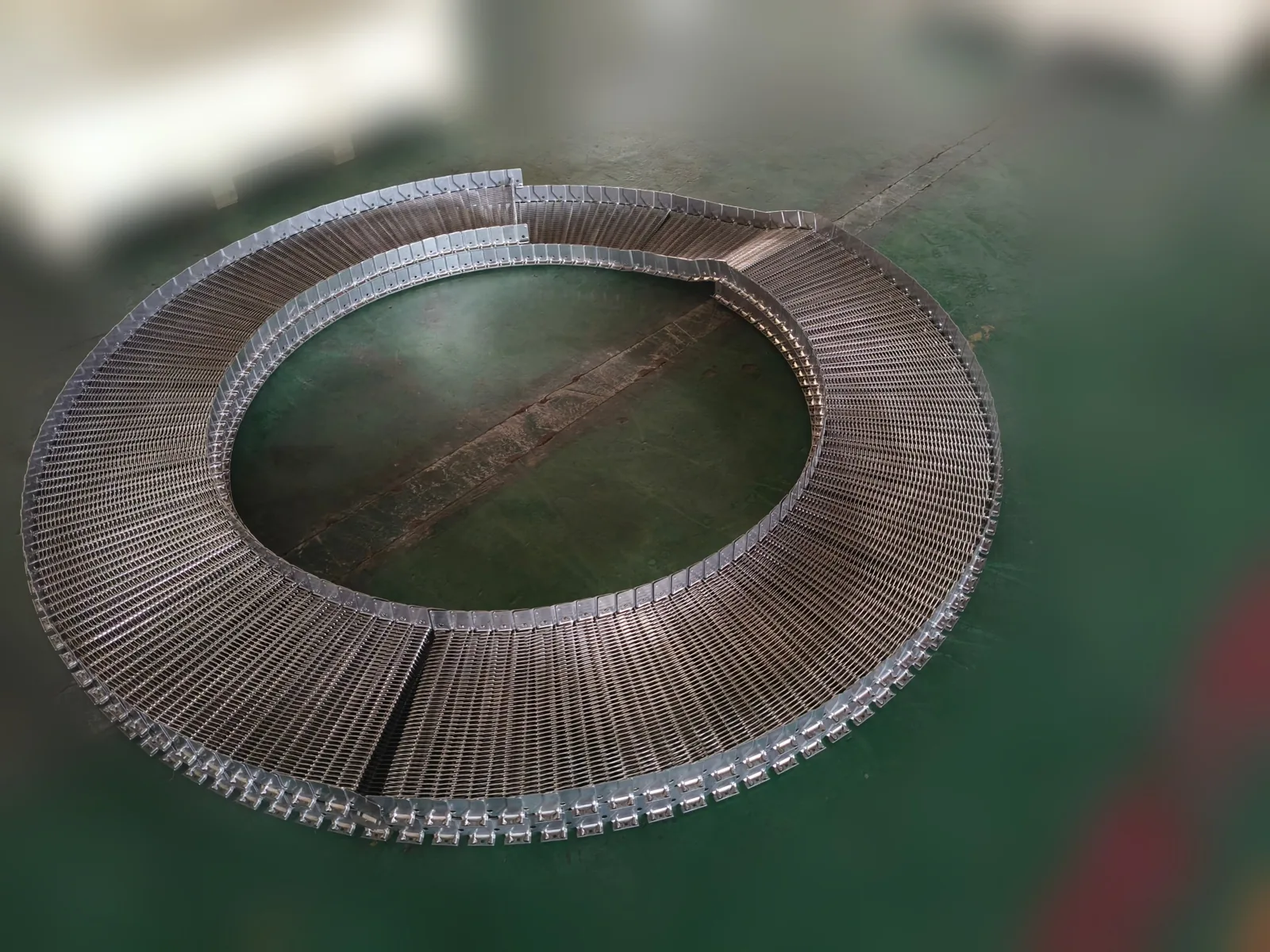
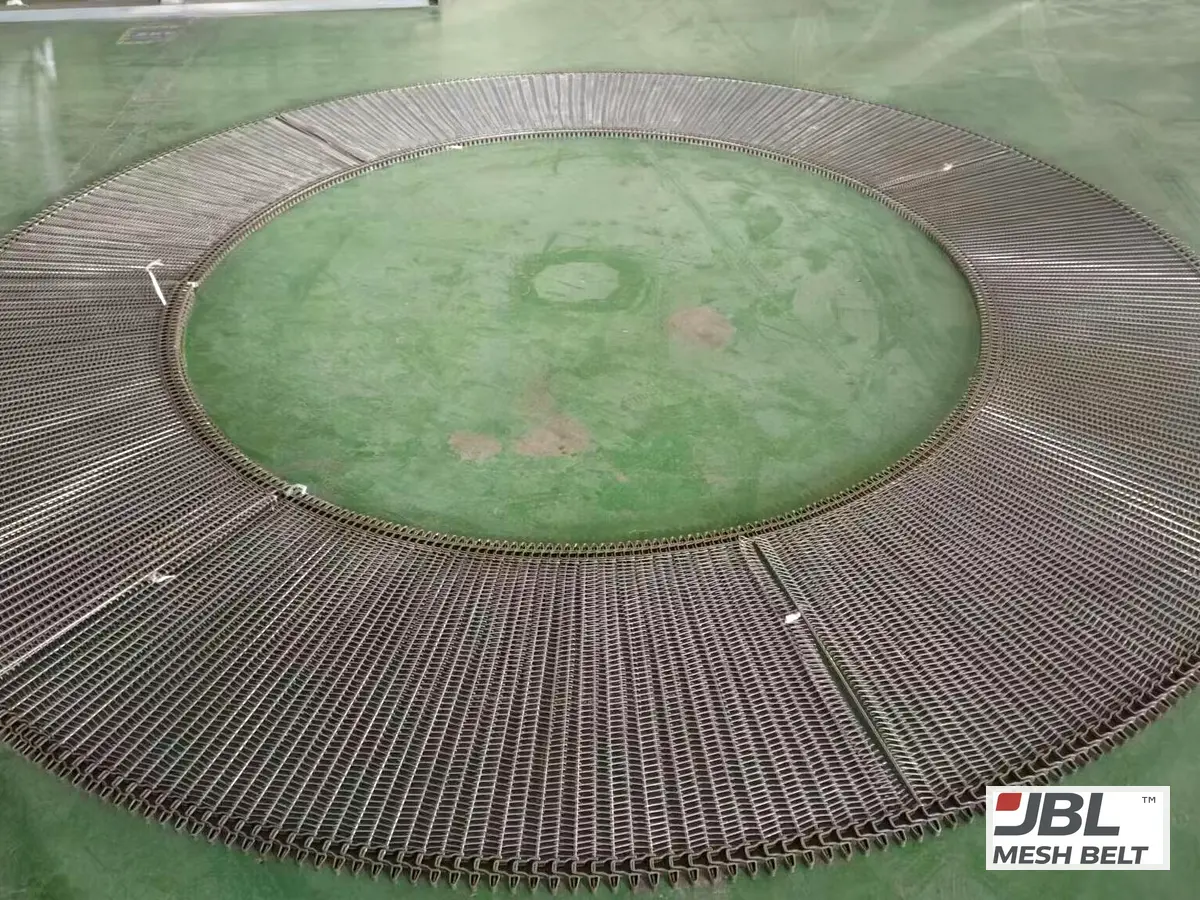
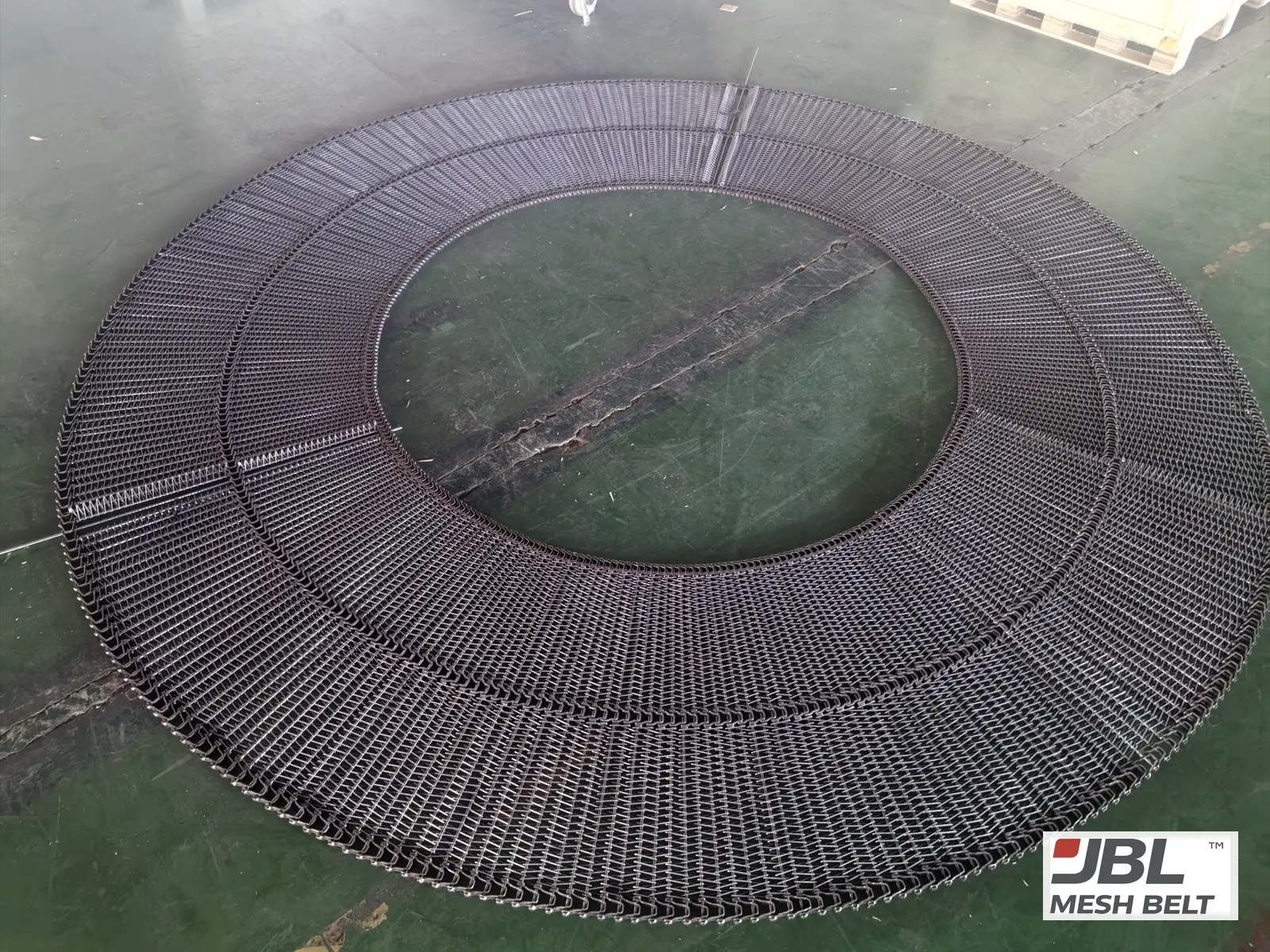
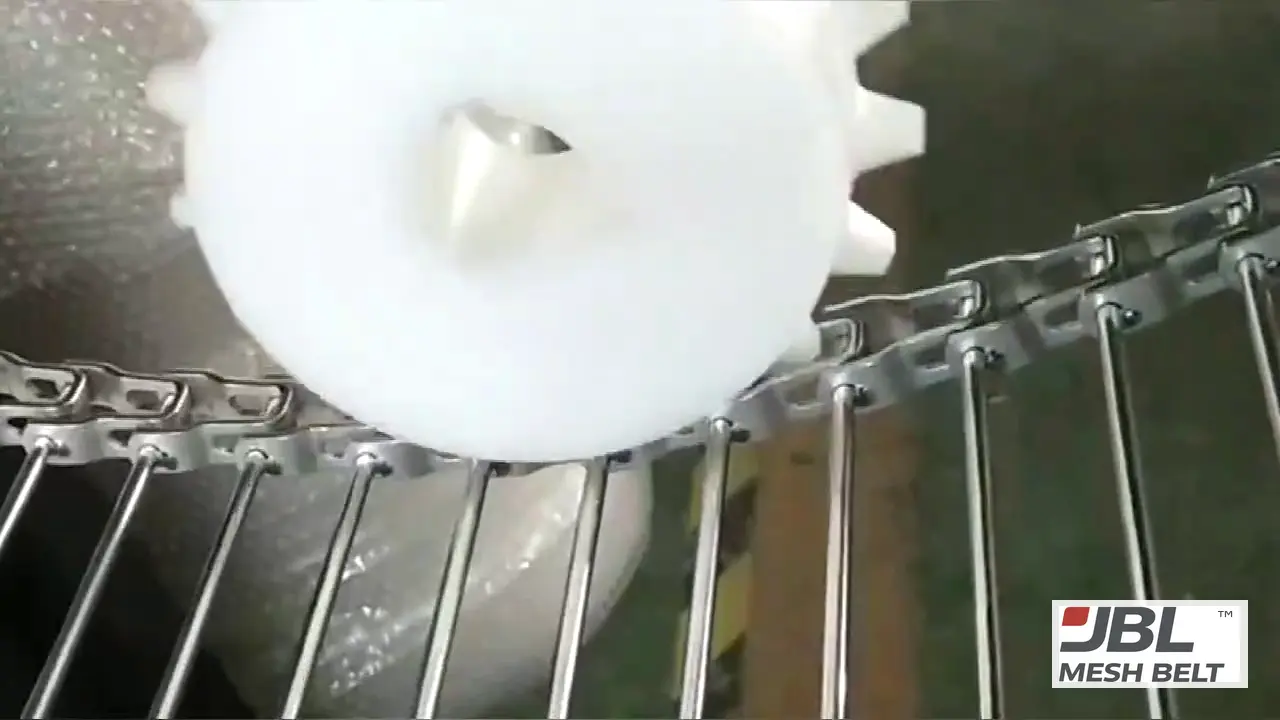
Before a spiral belt ships, I want three checks: a turn test with the belt laid out in a circle or on a drum matched to your drum diameter, a sprocket running test, and a weld finish review. You get the photos and video before the crate is closed.
| Test | What it shows | What can go wrong without it |
|---|---|---|
| Turn test | Mesh closes evenly on the inside, links follow the radius | Belt lifts, waves or rides up the drum |
| Drum test | Belt turns on a drum matched to your drum diameter and turn ratio | Wrong turn ratio found at installation |
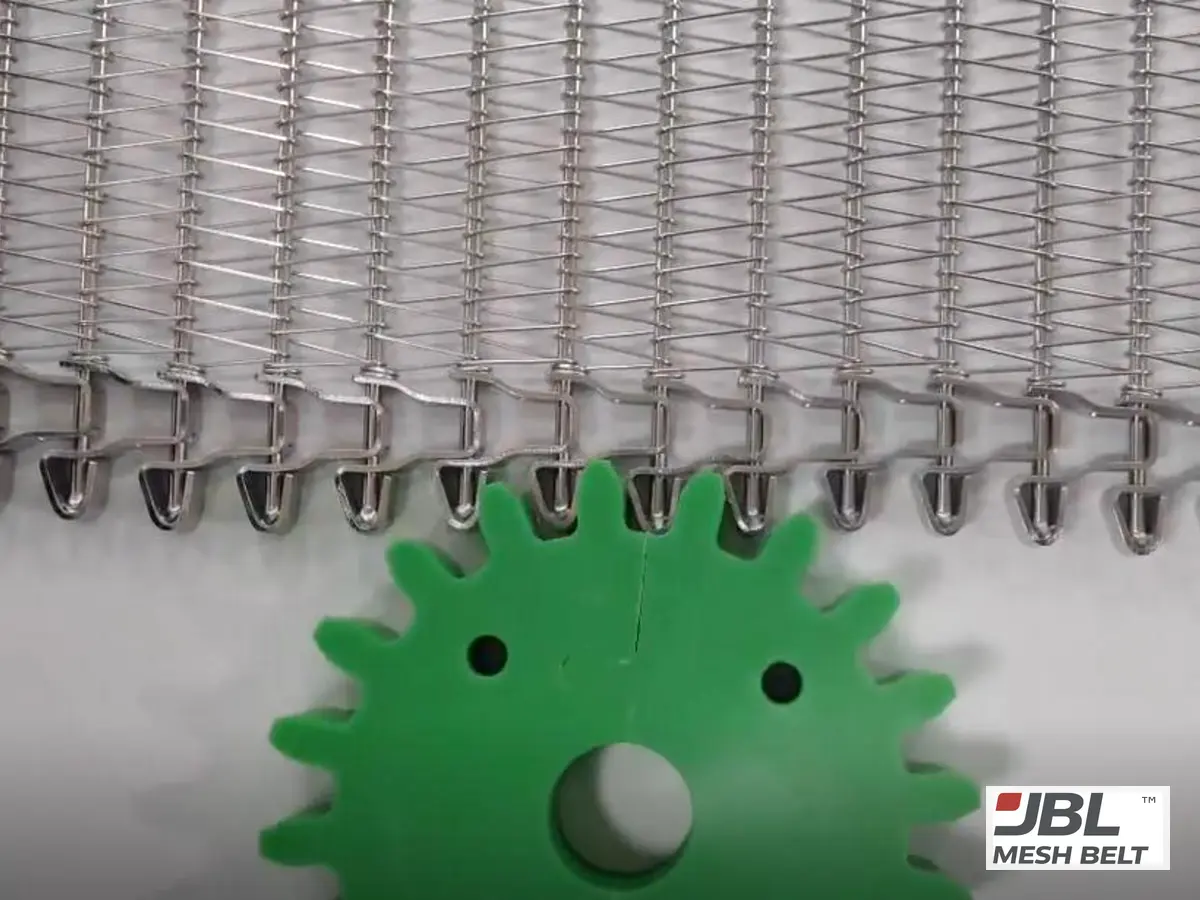
| Sprocket running test | Teeth engage the belt cleanly | Belt jumps or wears the teeth fast |
| Weld finish review | Smooth edge welds, no burrs | Scratched drum bars, guide strips or product |
In Malaysia, the belt was laid out in a full circle after the welds were ground a second time. In Melbourne, a nylon sprocket was run on the new belt before the crates were closed. I show how these tests are done in what a turning test and a stacking test should show.
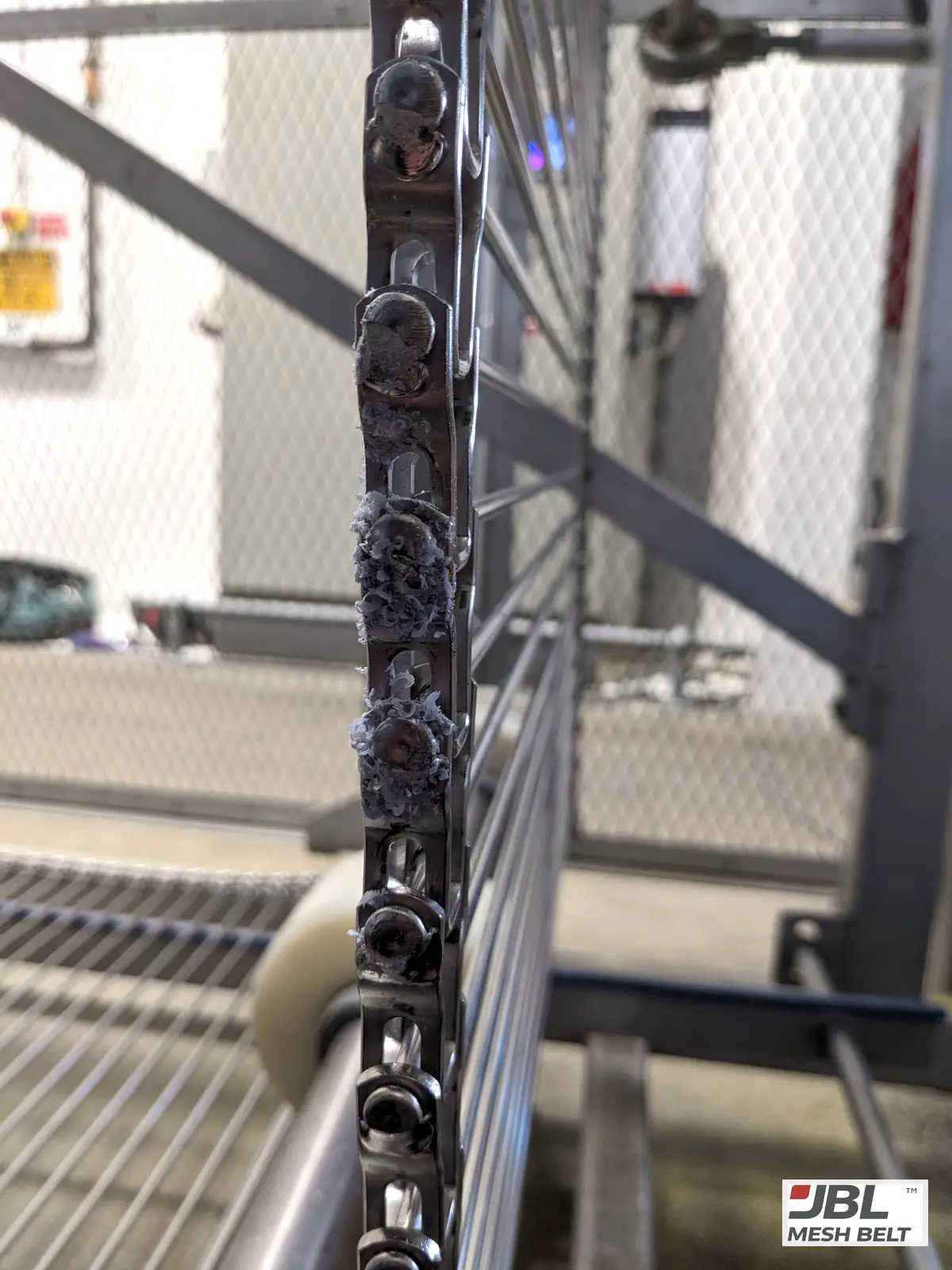
Weld finish deserves its own check. On a friction-drive spiral, a burr on an inner-edge weld rubs on the drum bars every turn. I explain the risk in weld burrs and IQF contamination.
05Do you need new sprockets when you replace the spiral belt?
A new belt on old sprockets is a common shortcut. Sometimes it works. Sometimes it wears a new belt out early.
Short answer
Not always. I check your existing sprockets first for tooth wear, tooth count, bore and keyway. If the teeth are worn or hooked, I replace the sprockets with the belt, make them to your originals, and run them on the new belt before shipment.
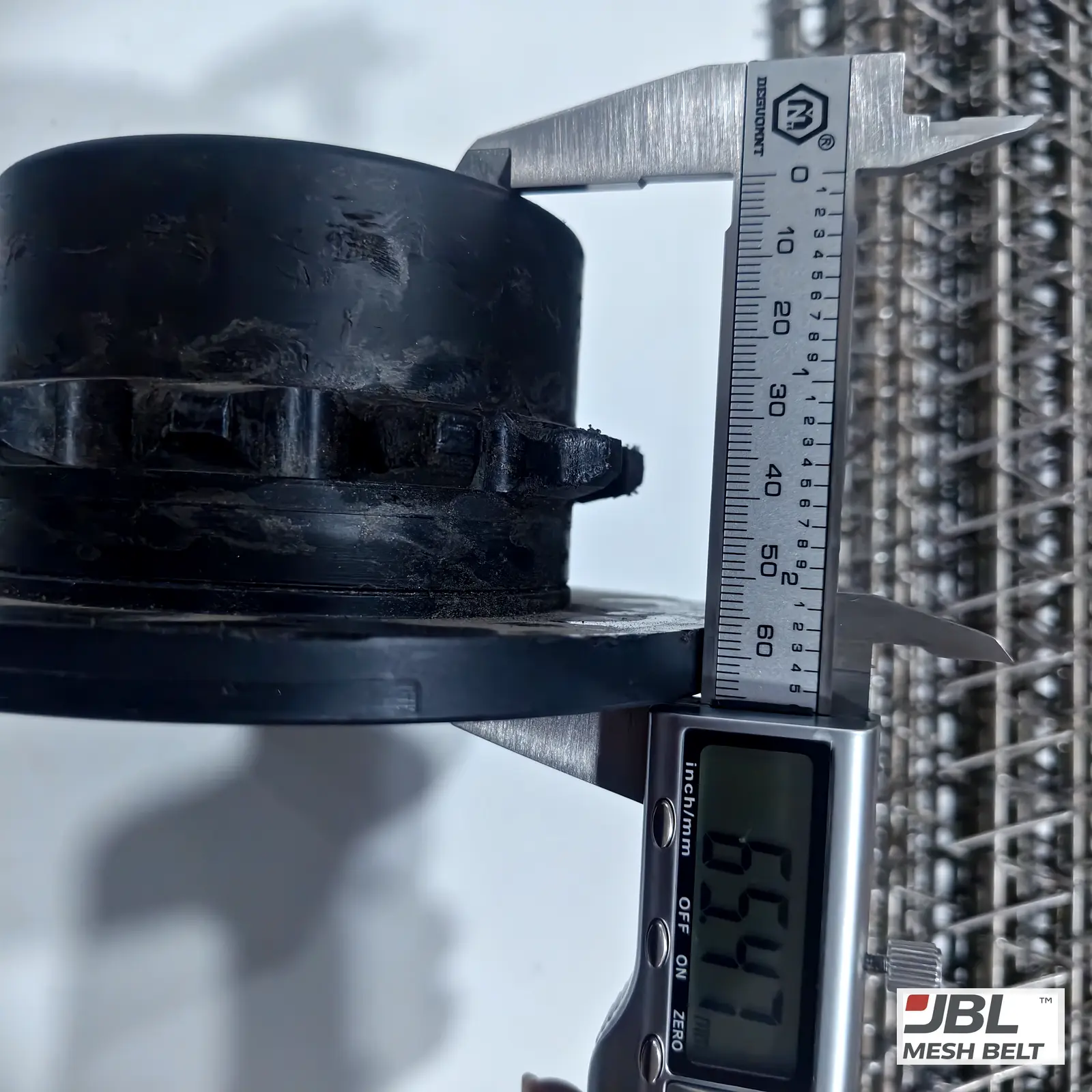
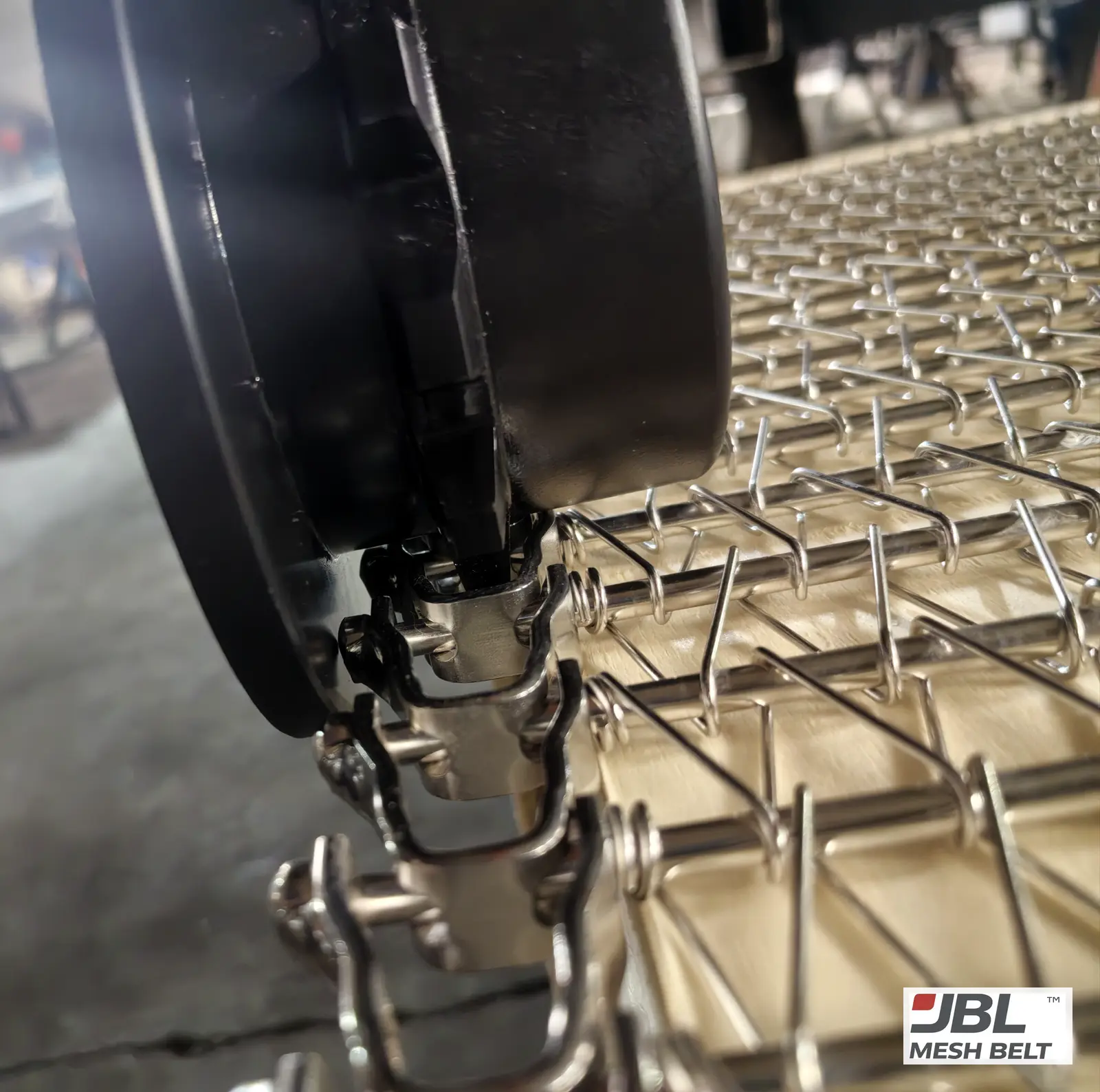
On the waffle cooling spiral, the original sprocket teeth were clearly worn. We measured the sprocket width at 40.36 mm, the hub at 90.42 mm and a tooth at 10.77 mm, made new sprockets, and checked the keyway on the new part at 10.02 mm. Then a sprocket was run on the bulk belt before packing.
| Sprocket check | Waffle line (original) | Melbourne bakery (new) |
|---|---|---|
| Width / outside diameter | 40.36 mm width | 160.97 mm outside diameter |
| Hub or bore detail | Hub 90.42 mm | Bore detail 18.00 mm |
| Tooth / pin | Tooth 10.77 mm | Pin 8.00 mm |
| Running test | On the bulk belt | On the new belt |
If you only order a belt, still send sprocket photos. Worn teeth do not seat a new belt properly, and the belt gets the blame. More on this in belt, sprocket and drum matching.
Not sure your belt will fit?
Send me photos of your old belt with a caliper reading, your drum diameter and a sprocket photo. I tell you what fits and what is missing.
When This Is Not the Right Choice
- ✕If your freezer is still under the original maker's warranty, check the warranty terms before you fit a belt from another supplier.
- ✕If you do not know your drum diameter or turn ratio and cannot send a sample, a quotation can only be indicative until those are confirmed.
- ✕If the freezer itself is damaged — worn drum bars, bent supports, a failing drive — a new belt alone will not fix it. Check the machine first.
From My Engineering Experience
In my projects, the belt is almost never the only question. The Melbourne bakery wanted the same belt, but with better welds. The waffle line needed belt and sprockets, because the old teeth were worn. The Malaysian customer had a drawing but still wanted to see the belt before ordering.
What these projects share is the order of work: read the old belt, make a sample, compare it with the same tools, let the customer approve, then test the turn and the sprocket before shipment. When that order is kept, the replacement is quiet. When a step is skipped, the problem appears on the customer's line.
So I ask for more than width and pitch at the start. It takes a little longer before the quote, and it saves a lot of time after delivery.
— Spring, Sales Director, JBL Mesh Belt
Evidence From Our Work
Melbourne, Australia, 2023–2024 — bakery spiral cooling, about 400 m →
| Step | Detail |
|---|---|
| Starting point | Section of the original belt, no drawing |
| Measured | Pitch 27.41 mm, rod 5.03 mm, link 2.70 mm |
| Sample | Pitch 27.40 mm, rod 5.00 mm, link 2.70 mm; welds finished smooth |
| Before shipment | Nylon sprocket run on the new belt |
Waffle spiral cooling, 2026 — belt and sprockets, about 200 m →
| Step | Detail |
|---|---|
| Starting point | Customer's belt section and sprockets, no drawing |
| Wear identified | Link 2.42 mm worn; new belt 2.71 mm |
| Approval | Trial run linked into the original, approved from photos |
| Before packing | Sprocket run on the bulk belt |
FAQ
Q1Can a spiral freezer belt be replaced without the original drawing?
Yes. A section of the old belt, or photos with caliper readings, is enough to start; a sample is approved before bulk production.
Q2Is the same width and pitch enough to order a replacement?
No. Turn ratio, drum diameter, drive, rod, wire, link and edge type also decide whether the belt runs.
Q3What is turn ratio?
It describes how tightly the belt turns around the drum relative to its width; standard two-row link belts start around 1.15, small radius three-row link belts around 1.1.
Q4How do I know the new belt matches my old one?
Your original and our sample are measured with the same caliper, and you get both readings with photos before you approve.
Q5Do I need new sprockets?
Only if they are worn or do not match. I check tooth wear, count, bore and keyway first and run new sprockets on the belt before shipment.
Q6SUS304 or SUS316?
SUS304 suits most freezing and cooling lines; SUS316 is considered where salt, brine or strong cleaning chemicals are present.
Conclusion
A spiral belt is compatible when it matches your freezer and your old belt. Measure both, approve a sample, and see the turn and sprocket tests first.
Download the Spiral Freezer Belt Technical Specification (PDF)
Specification ranges and options in mm and inch. Enter your work email and the file downloads right away.
References

Your contact for this belt
Spring · Sales Director, JBL Mesh Belt · 16 years
“Your belt is worn, the OEM price is high, and there is no drawing. That is where I start.”
Send me a worn section, a few photos with a caliper in the picture, or a drawing. I tell you what fits, what is missing, and show you a sample measured against your own belt before you pay for the full length. Buyers in the UK, the USA, Australia, Brazil, South Korea, Spain and Malaysia have replaced belts this way.
- ✓Readings on your original next to readings on our sample
- ✓Nothing in bulk until you approve the sample
- ✓Turning, stacking or sprocket tests before your belt ships
- ✓A reply from me, usually within 8 hours