Replacing a worn belt · 9 min read
Replacing a Bakery Spiral Cooling Belt: What Should You Check First?
 Written bySpringSales Director, JBL Mesh Belt · 16 years in metal conveyor beltsProjects in United Kingdom · USA · Australia · Brazil · South Korea · Spain · Malaysia · LibyaPublished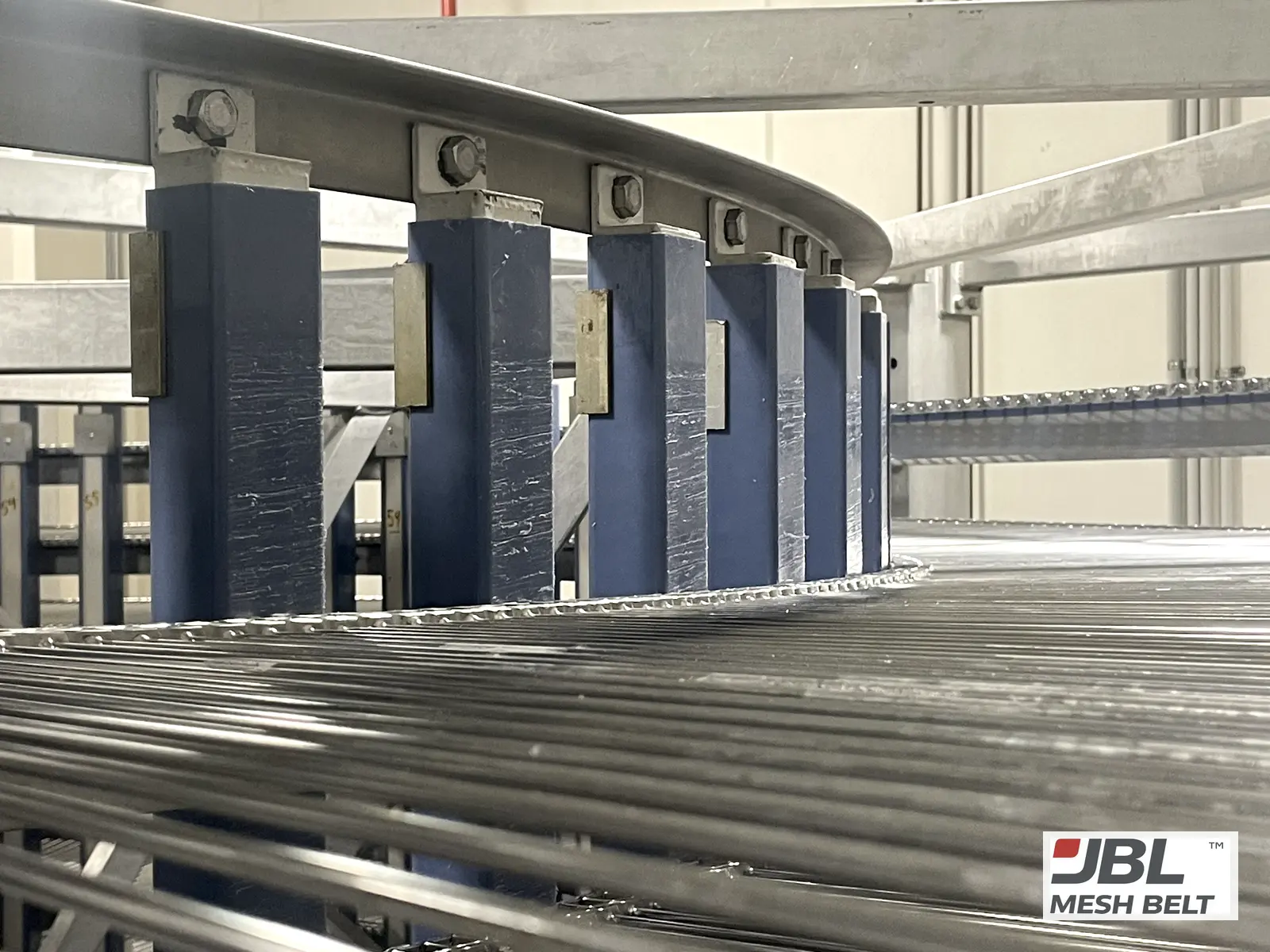
Your cooling spiral still runs. But the edge scrapes the guide strips, and the sprockets look tired. What do you check before ordering?
Short answer
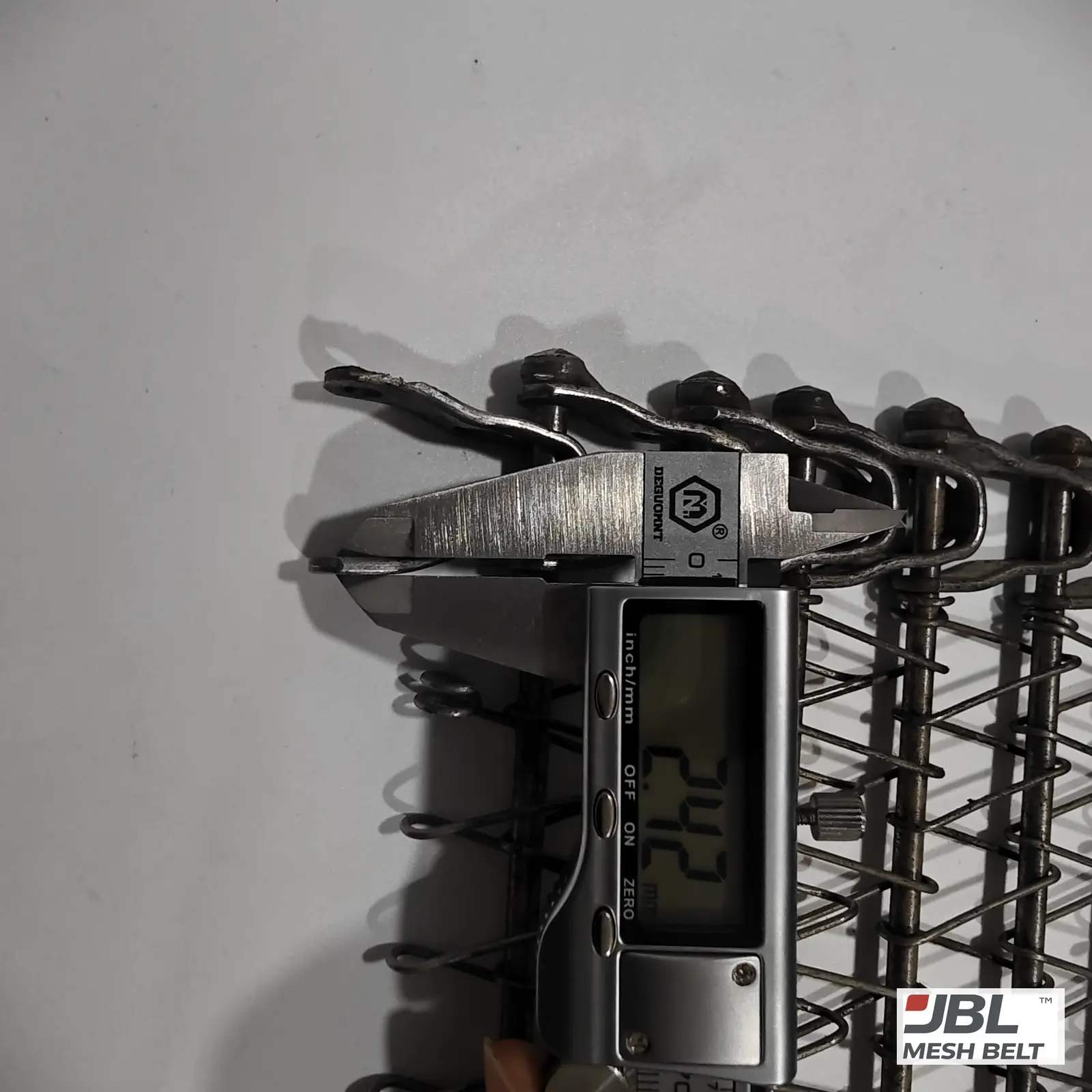
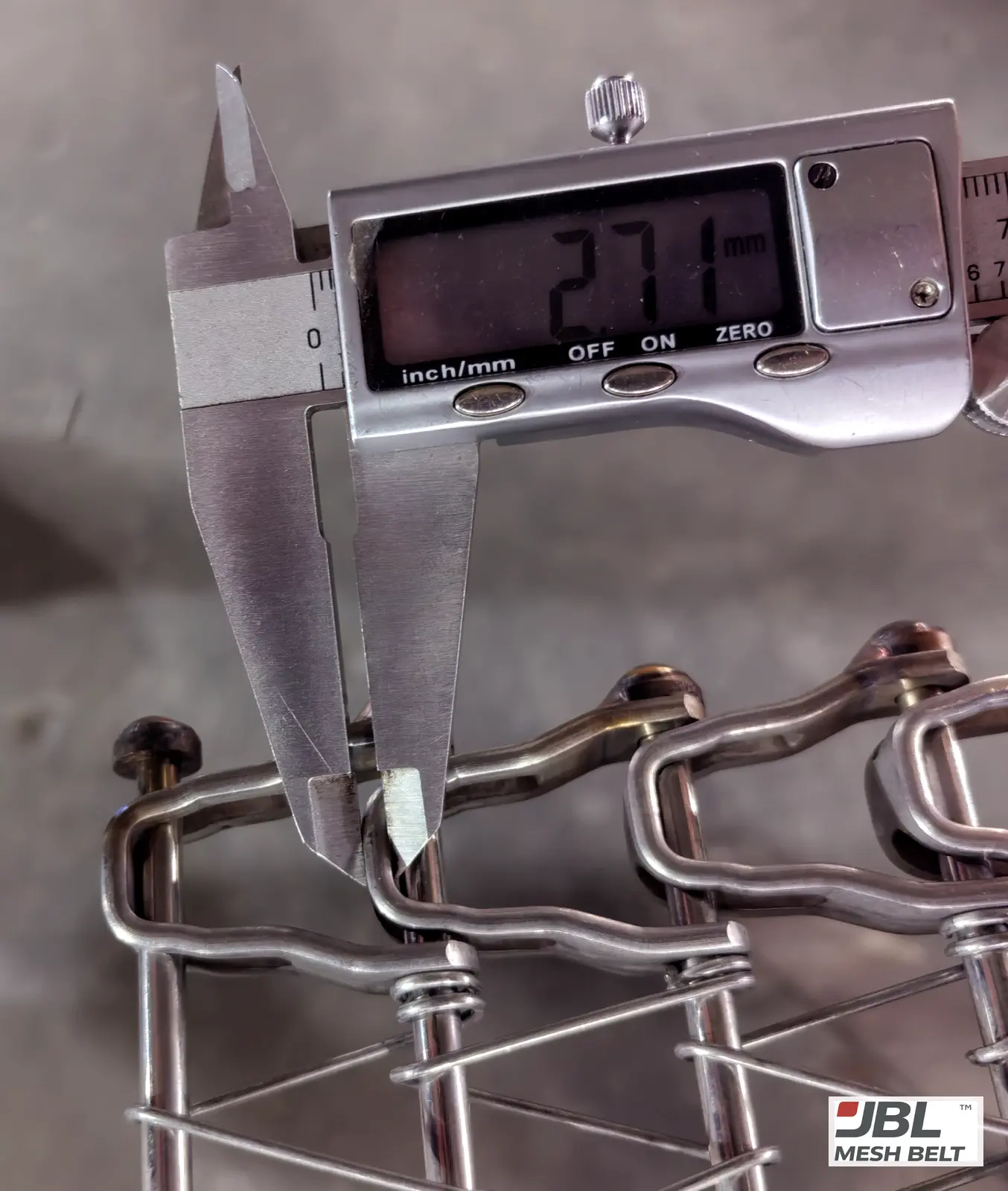
Check four things: the fit dimensions (pitch, rod, link), the edge weld finish, link wear and the sprockets. In Melbourne rough welds were scoring the guide strips; on a waffle spiral worn links read 2.42 mm and the new belt was made at 2.71 mm.
At a Glance
| Check | Melbourne bread cooling spiral | Waffle cooling spiral |
|---|---|---|
| Fit dimensions | Pitch 27.41 mm · rod 5.03 mm · link 2.70 mm | Rod 4.99 mm · link sizes read on the original |
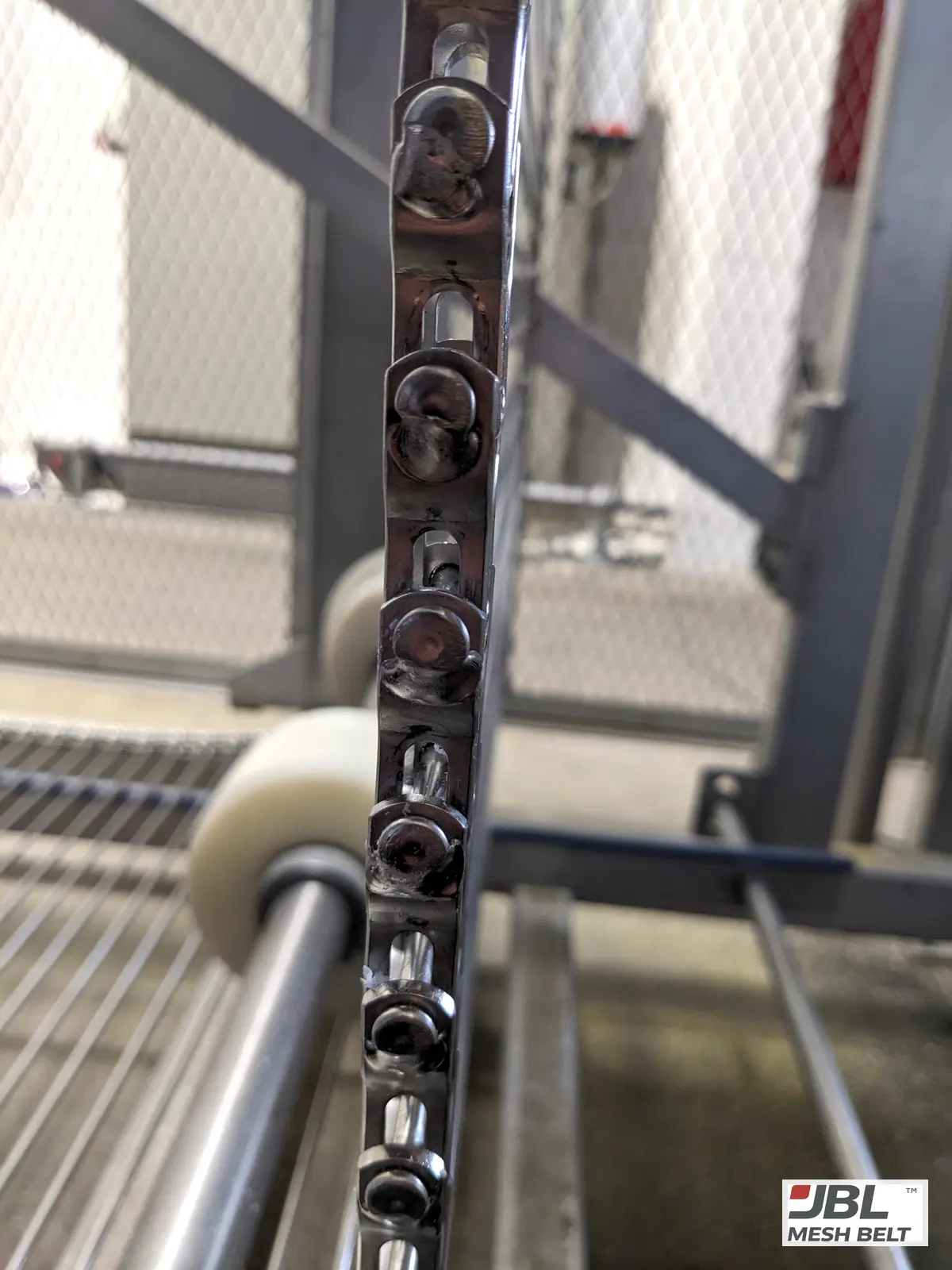
| Edge welds | Rough, with burrs — scoring the guide strips | Welded rod heads photographed on the trial run |
| Link wear | Link 2.70 mm on original and sample | Worn 2.42 mm → new 2.71 mm |
| Sprockets | Nylon, measured and run on the new belt | Worn teeth; remade and run on the bulk belt |
Both lines had no drawing from the original builder. Both were replaced from the customer's own belt. Here is what I checked, and what I would check on yours.
01Is a cooling spiral belt replaced the same way as a freezer belt?
Yes — the belt type is the same, a spiral belt on a drum. What differs is what goes wrong on bakery lines.
Short answer
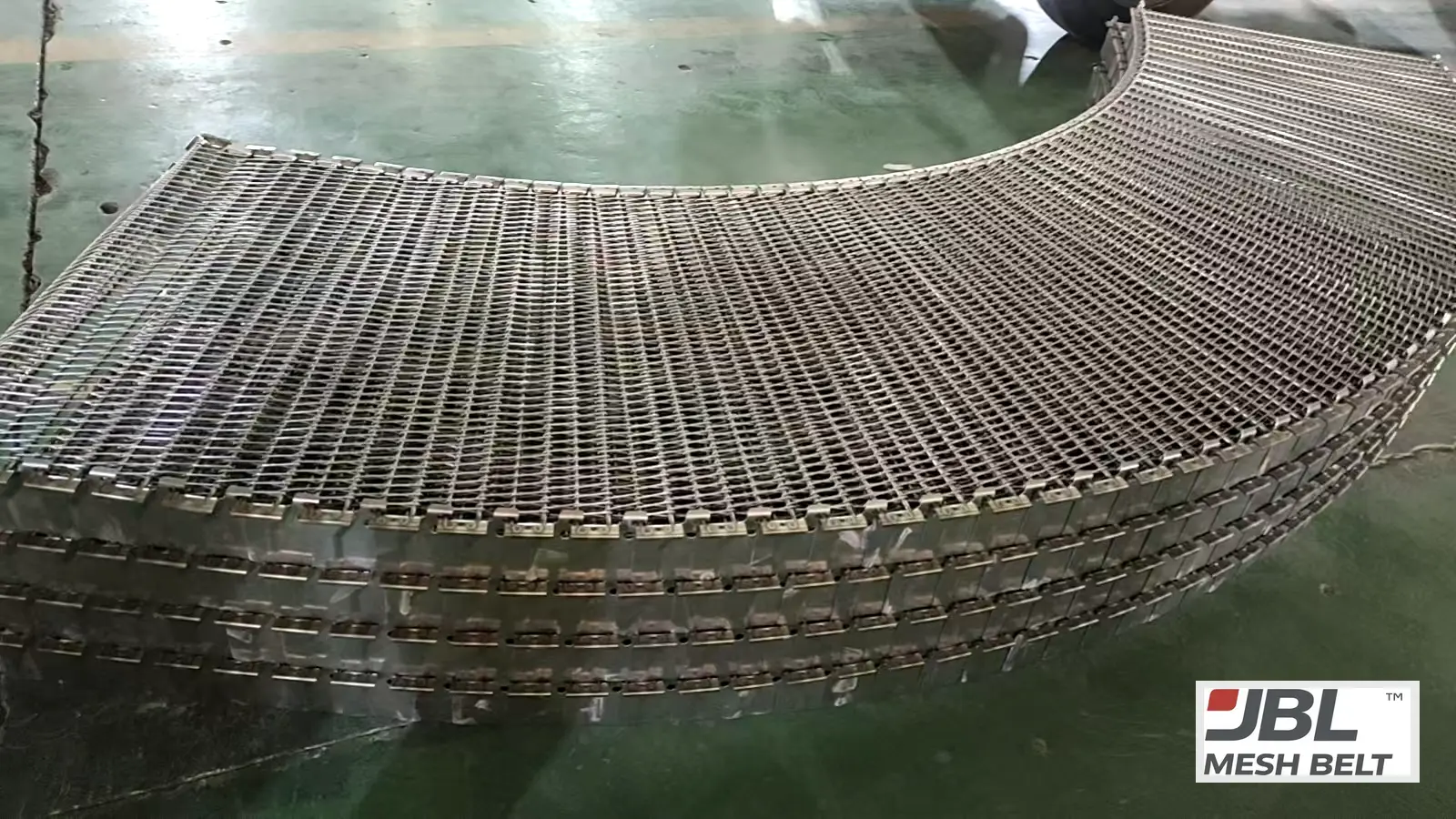
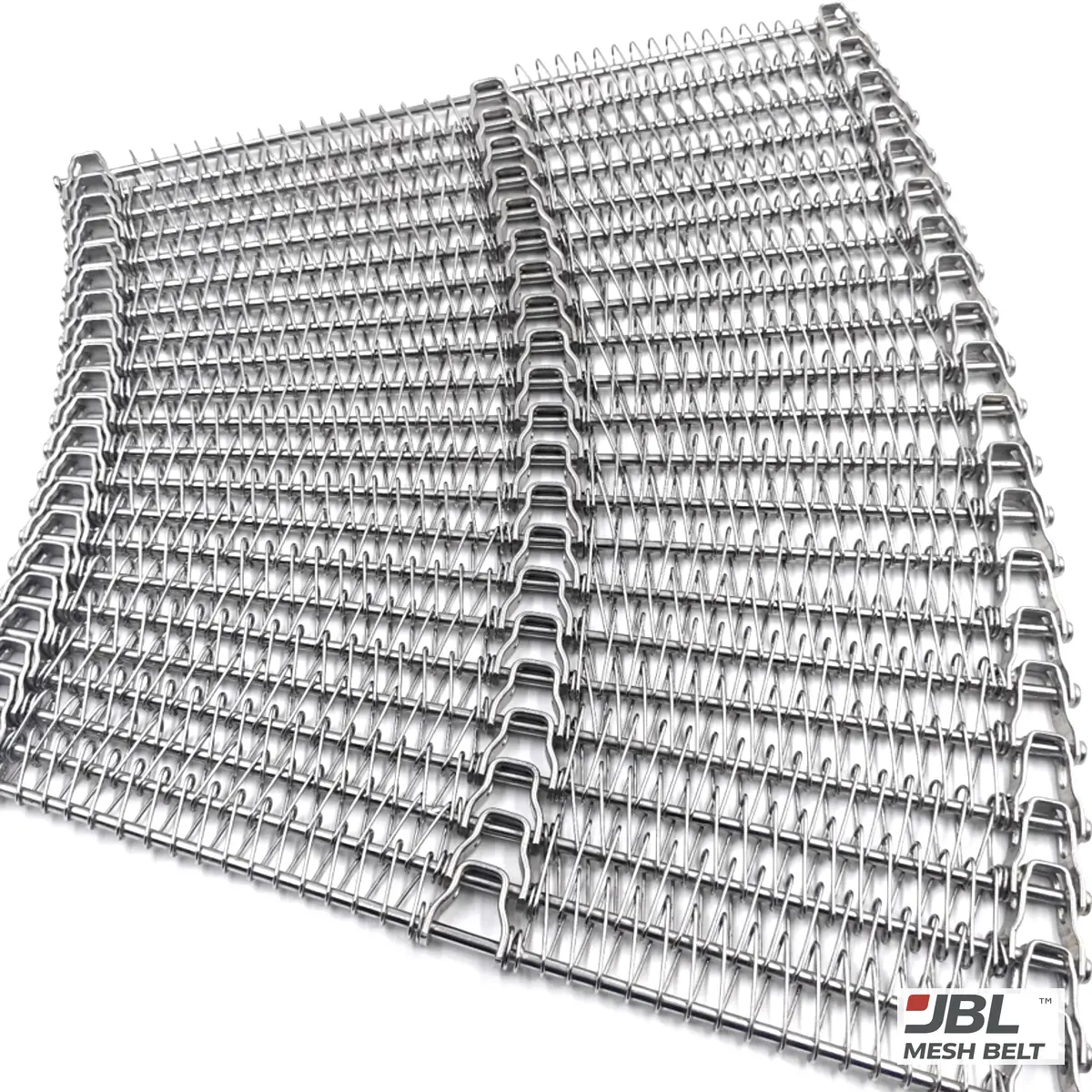
A cooling spiral belt is replaced like any spiral belt: from the fit dimensions of the old belt, the drum and the sprockets. On our two bakery projects the problems to fix were rough edge welds, worn links and worn sprockets.
| Melbourne, Australia | Waffle cooling spiral | |
|---|---|---|
| Product | Bread | Waffles |
| Year | 2023–2024 | 2026 |
| Original builder | Not named | An equipment maker in Türkiye (not named) |
| Starting point | Section of the original belt — no drawing | Belt section and sprockets — no drawing |
| Scope | About 400 m + nylon sprockets | About 200 m + sprockets |
Neither customer had drawings from the original builder. That is normal on older spirals. The old belt itself is the specification — as long as you know which dimensions to read, and which ones wear.
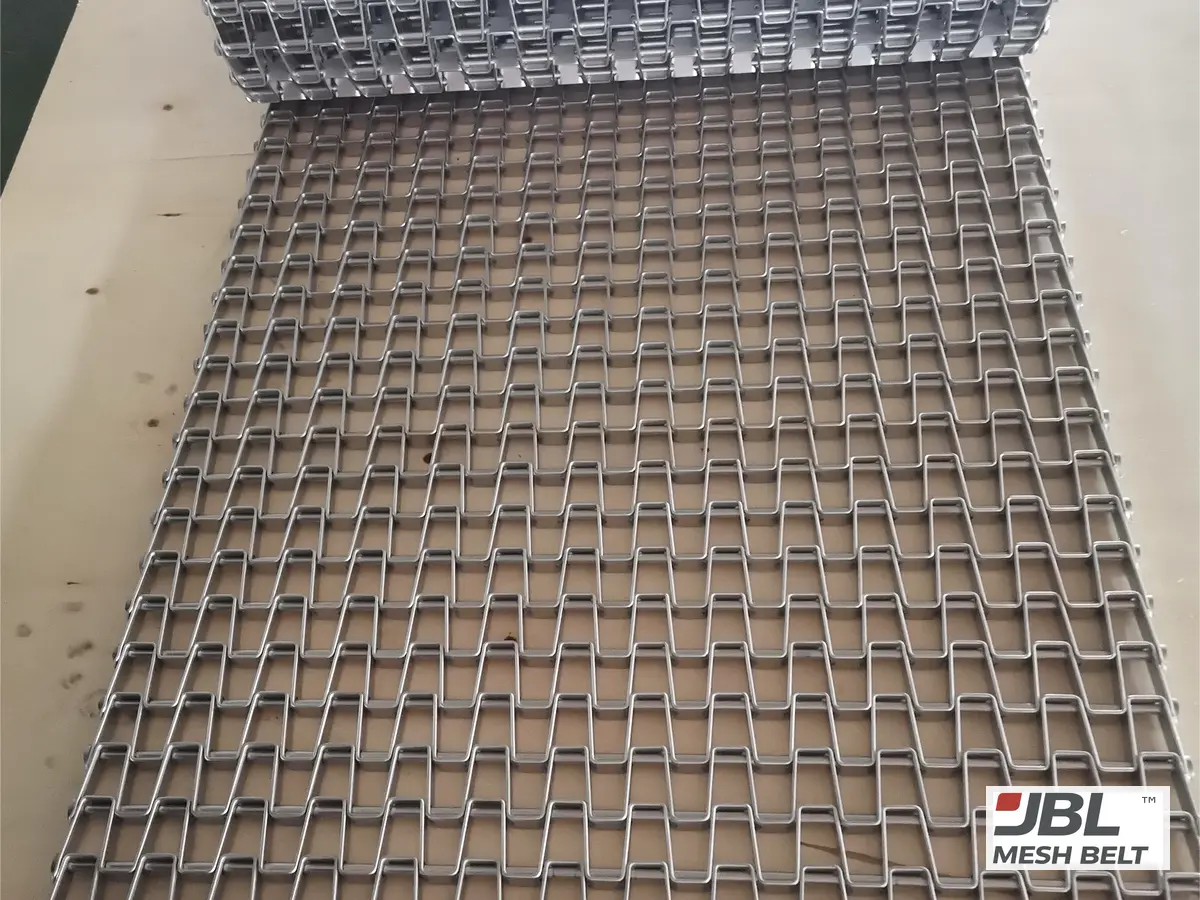
A bread or waffle cooling spiral runs long hours. Small problems at the edge show up slowly — shavings on the floor, scored strips, a sprocket that no longer seats cleanly — and are easy to live with until the belt is replaced.
What to send for a cooling spiral
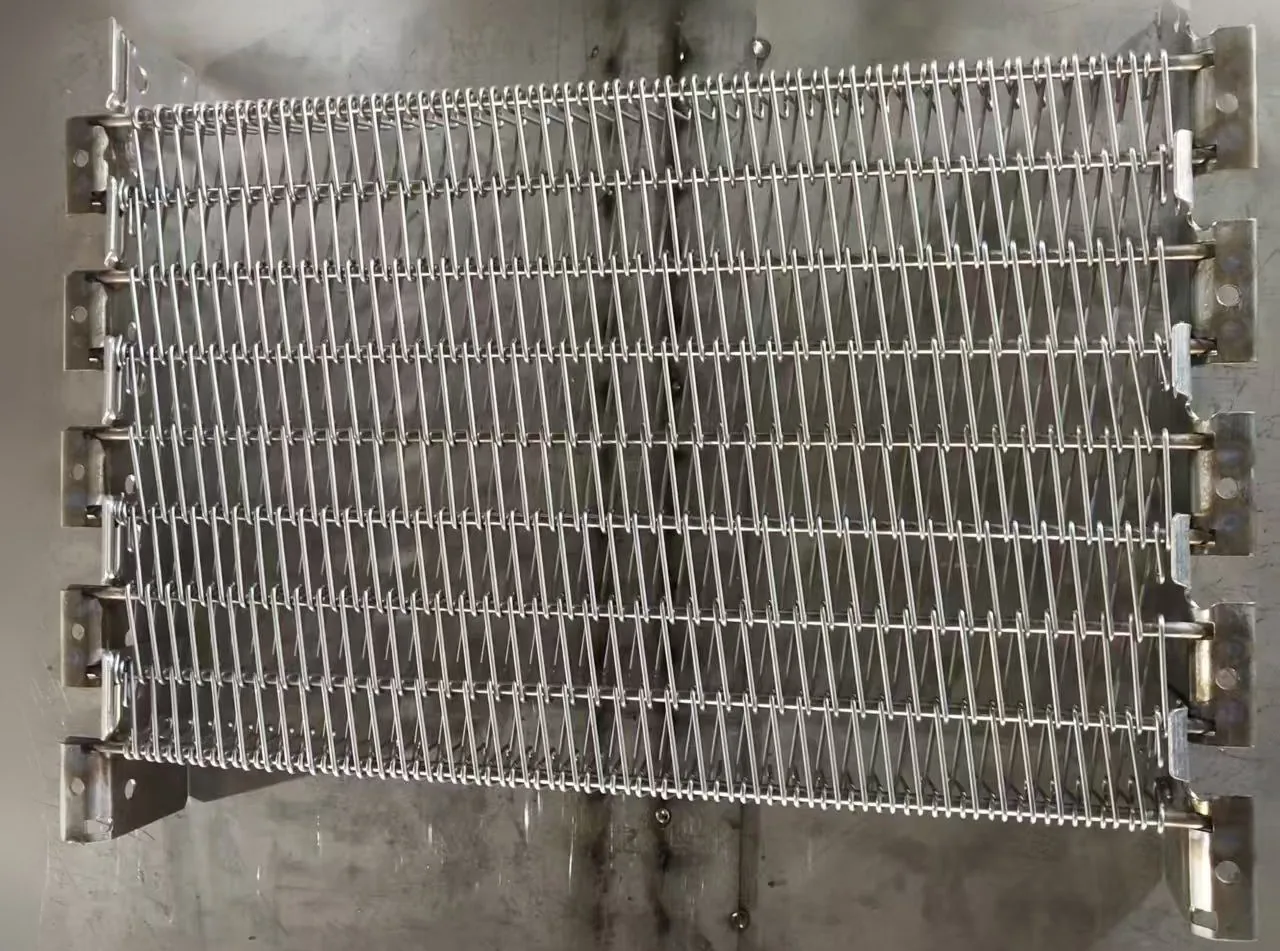
- ✓Photos of the belt edge and rod-end welds, close up
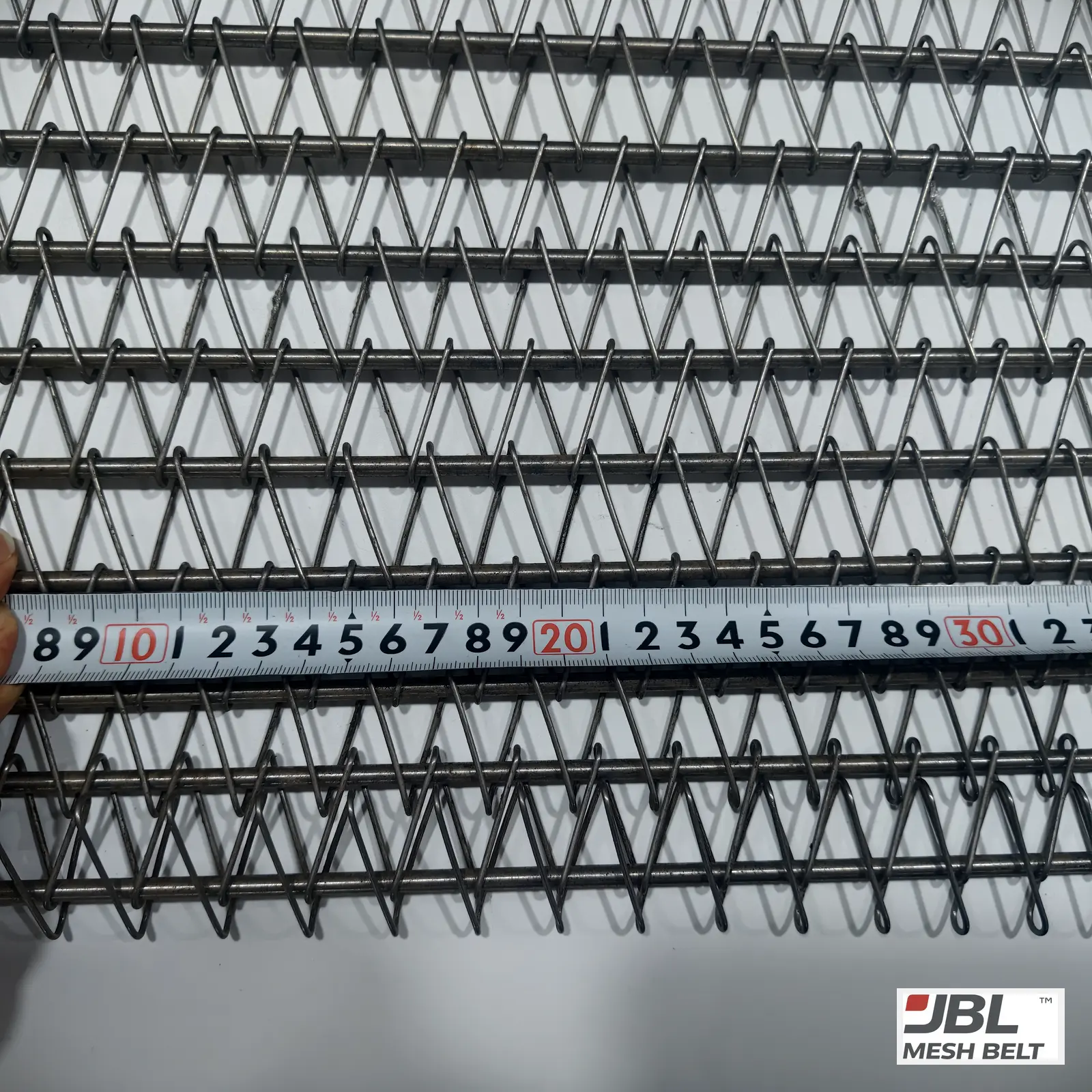
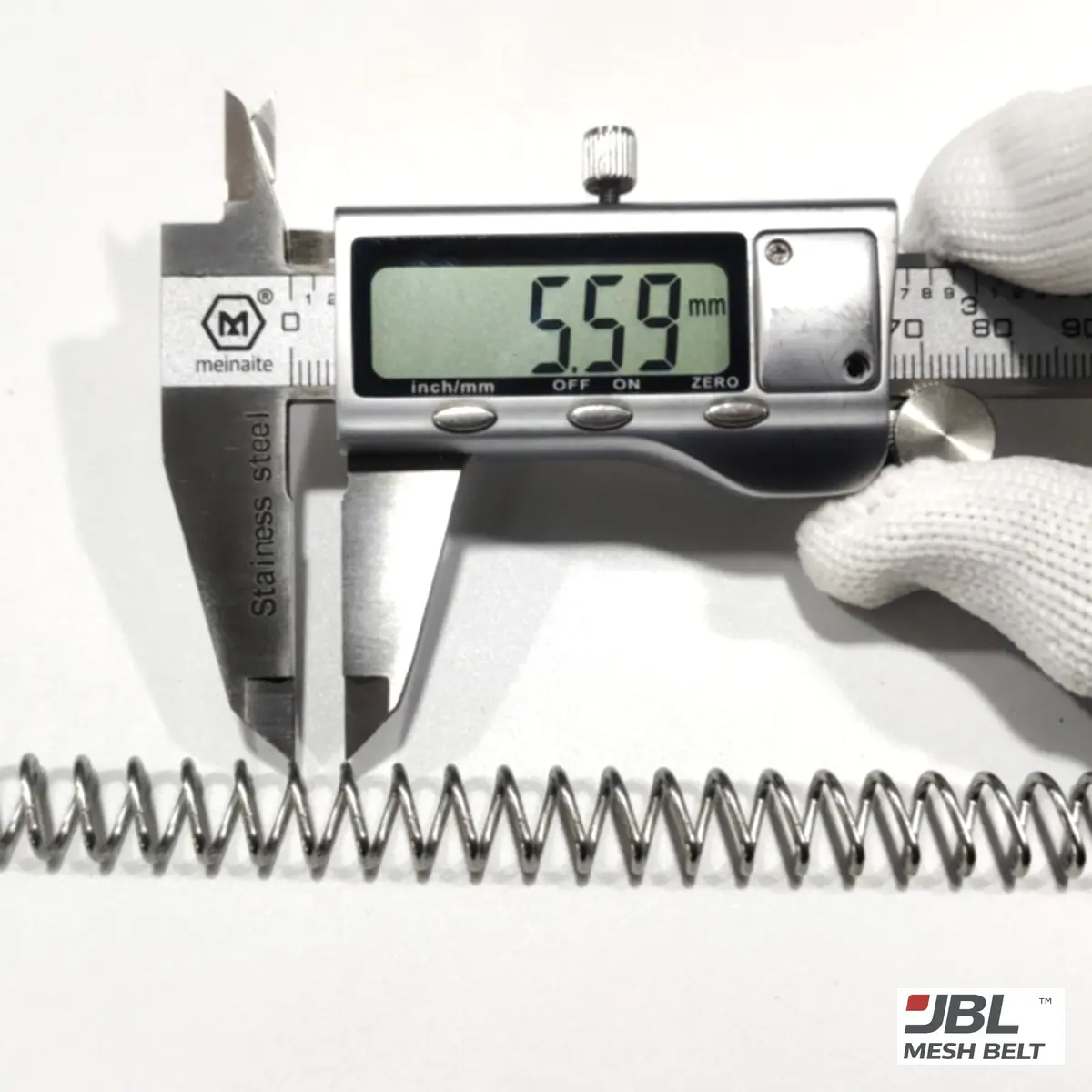
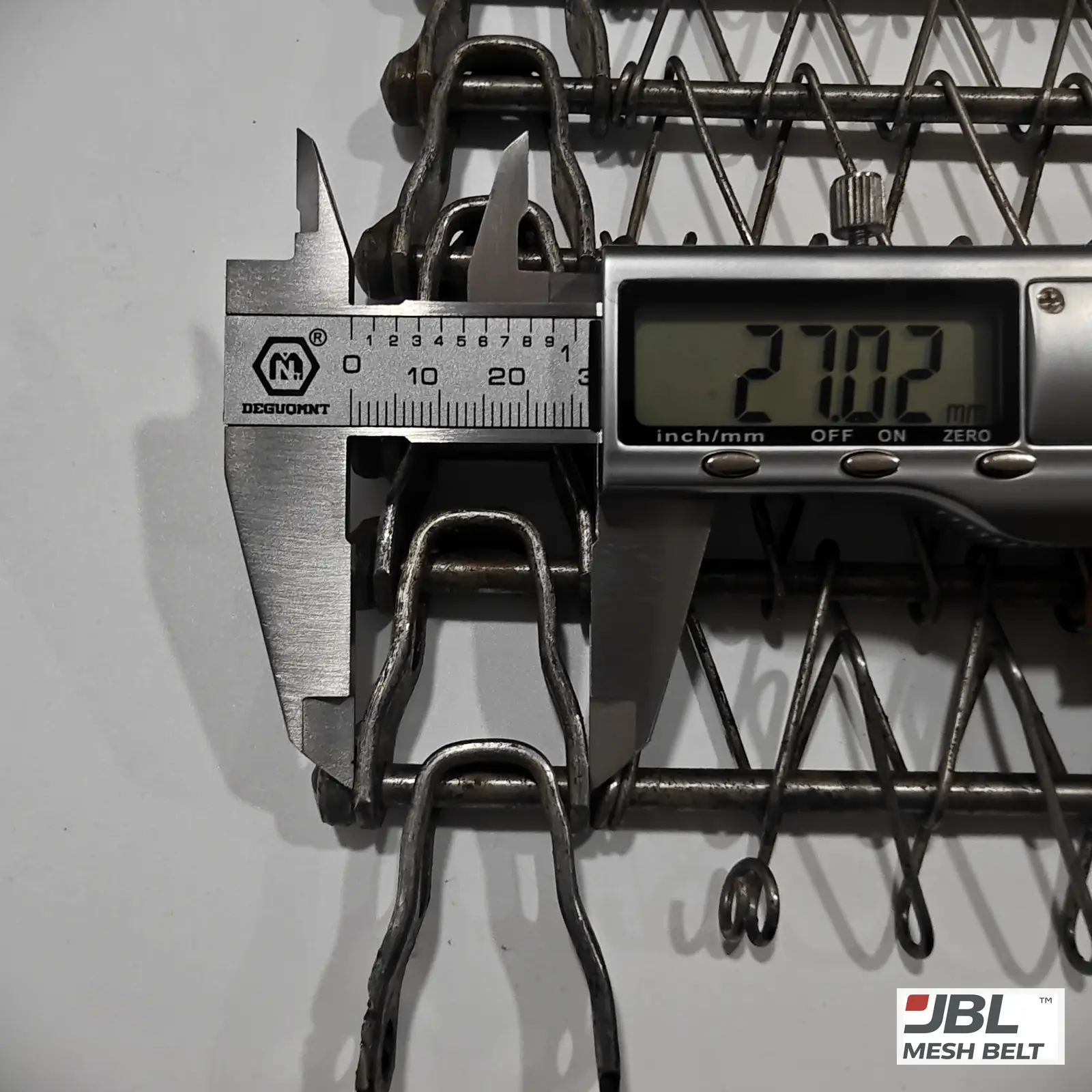
- ✓Pitch read with a caliper over several links
- ✓Rod diameter and link thickness, on a worn and a less-worn area
- ✓A photo of each sprocket, with outside diameter, bore and tooth readings if you can
- ✓Drum diameter and the direction the belt travels
For the full list of values, see 12 parameters for a spiral belt replacement.
02Why do rough edge welds matter on a cooling spiral?
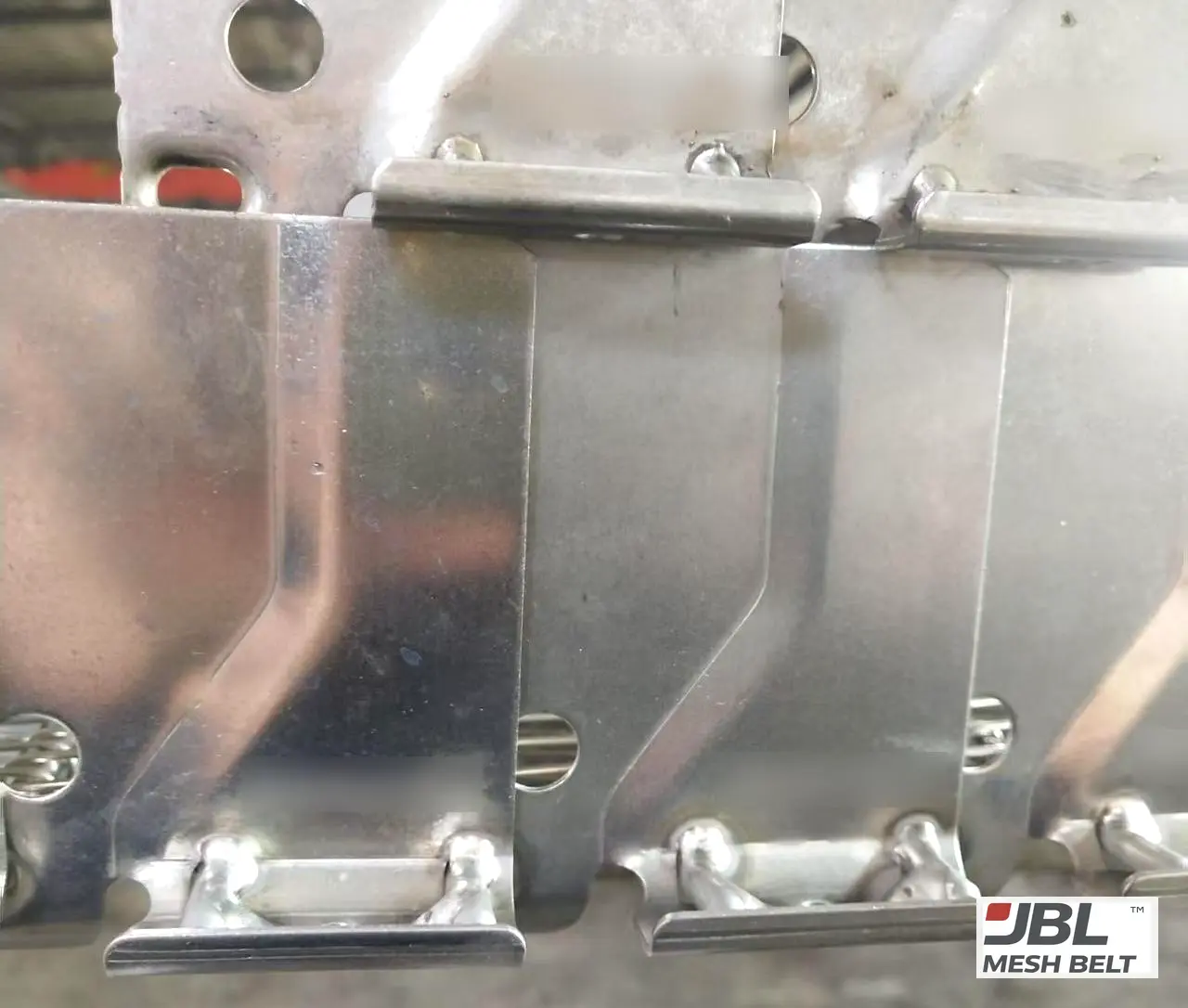
In Melbourne the buyer's main complaint was not size. It was the welds.
Short answer
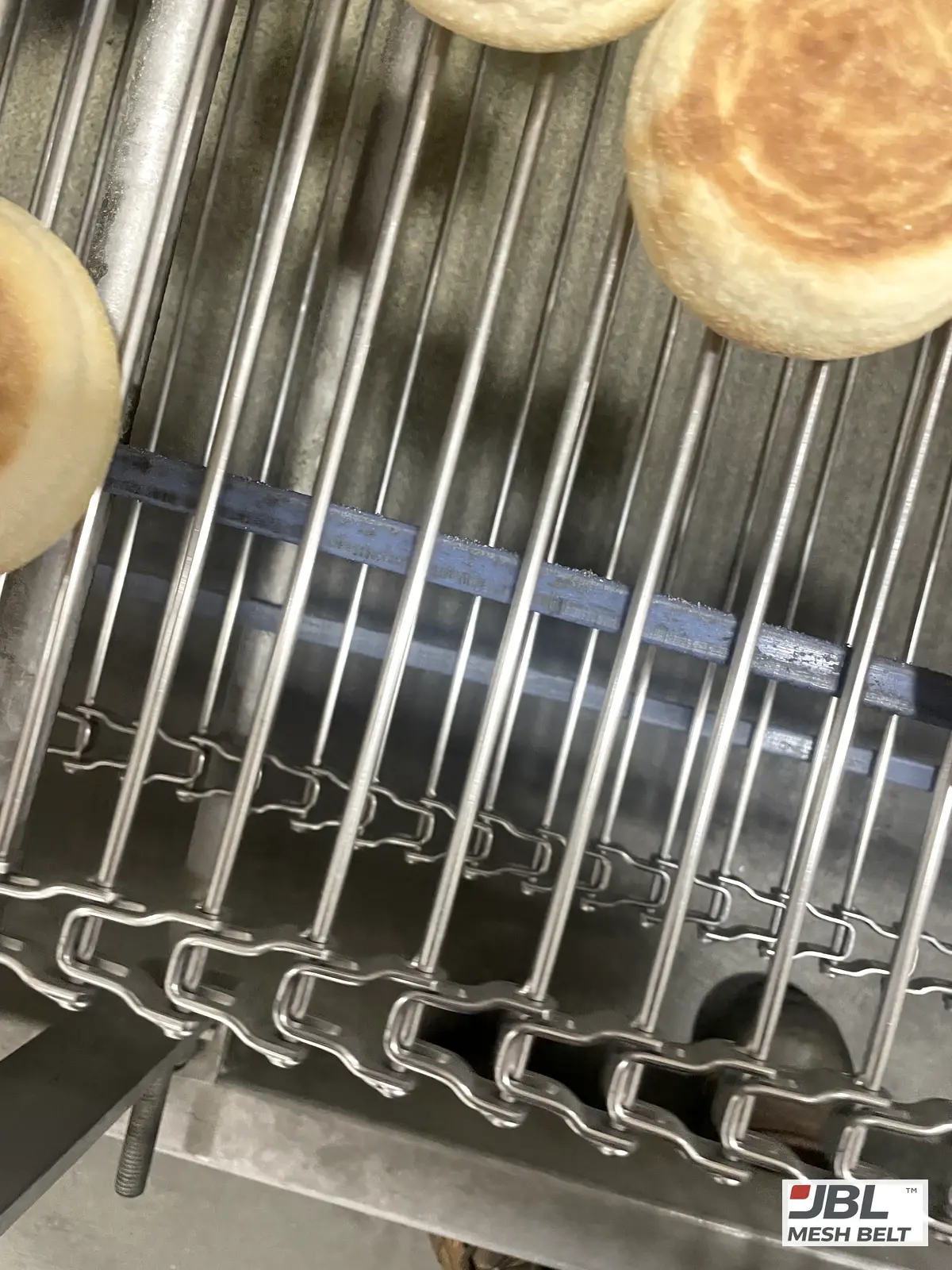
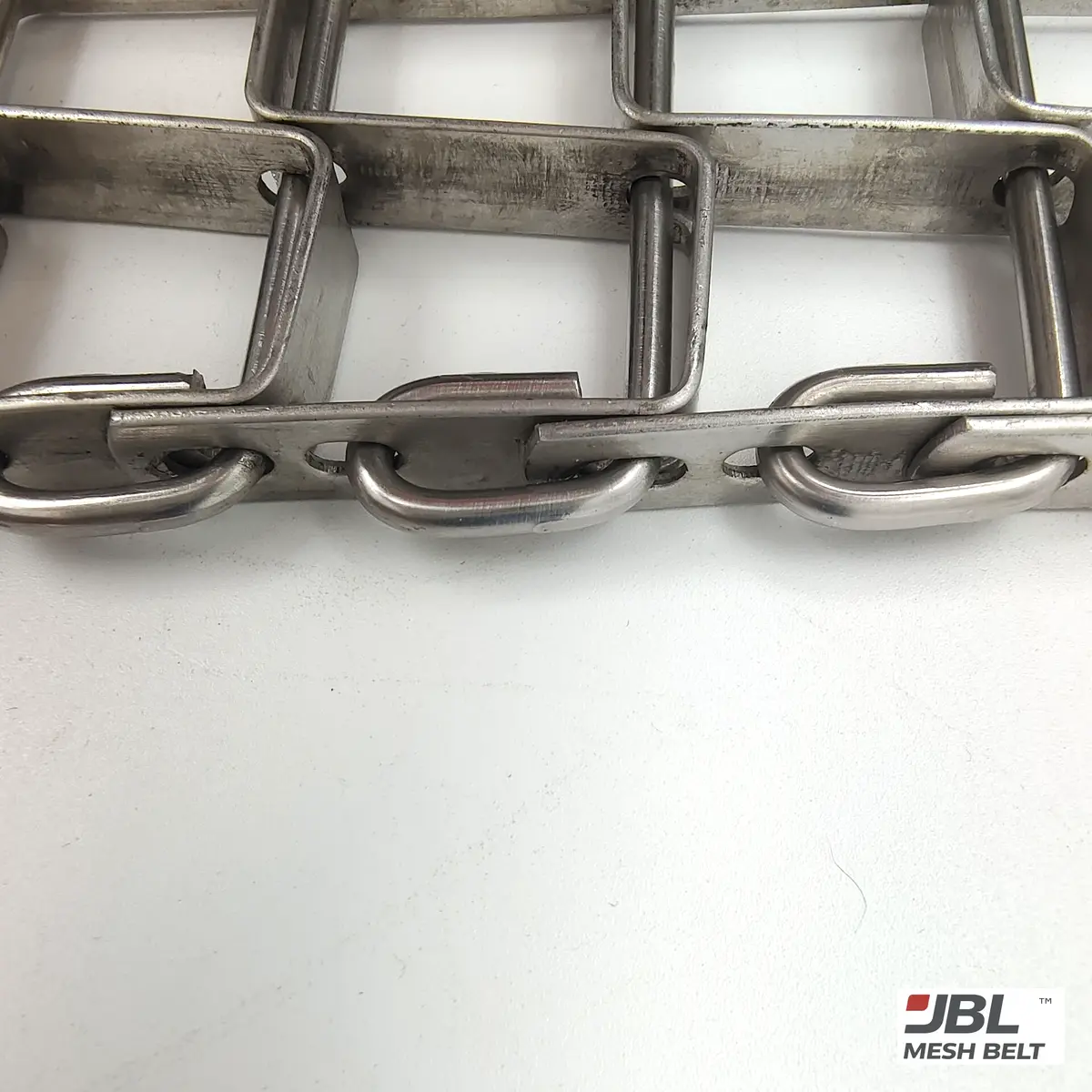
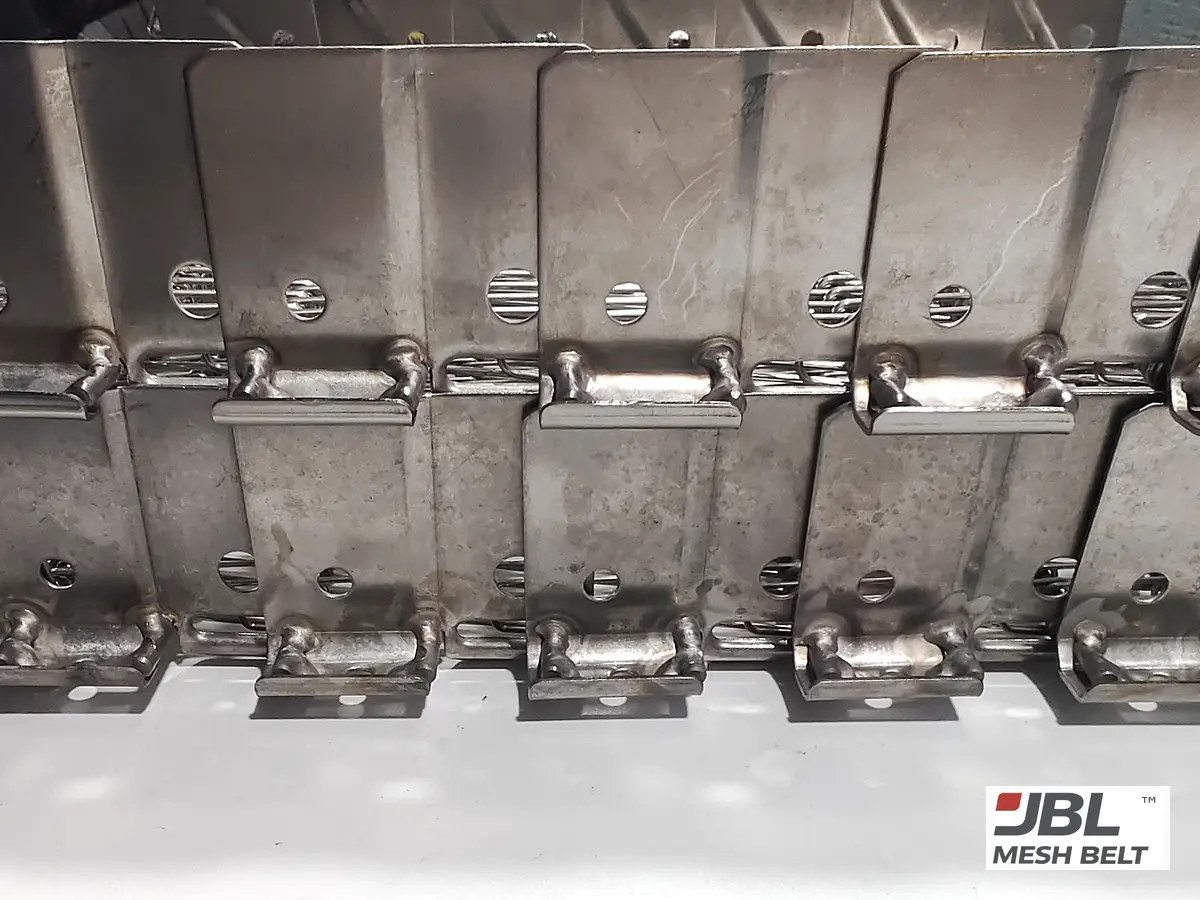
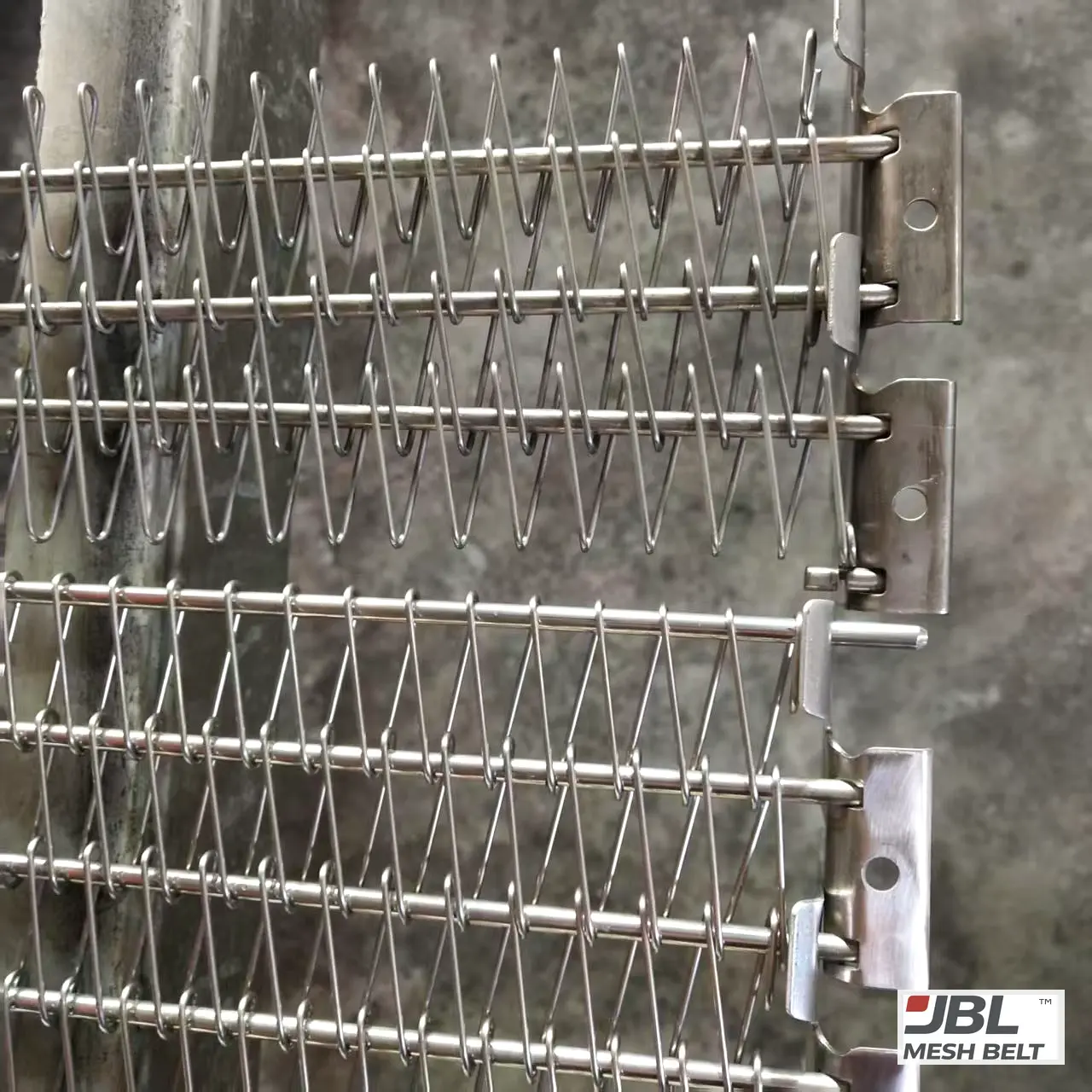
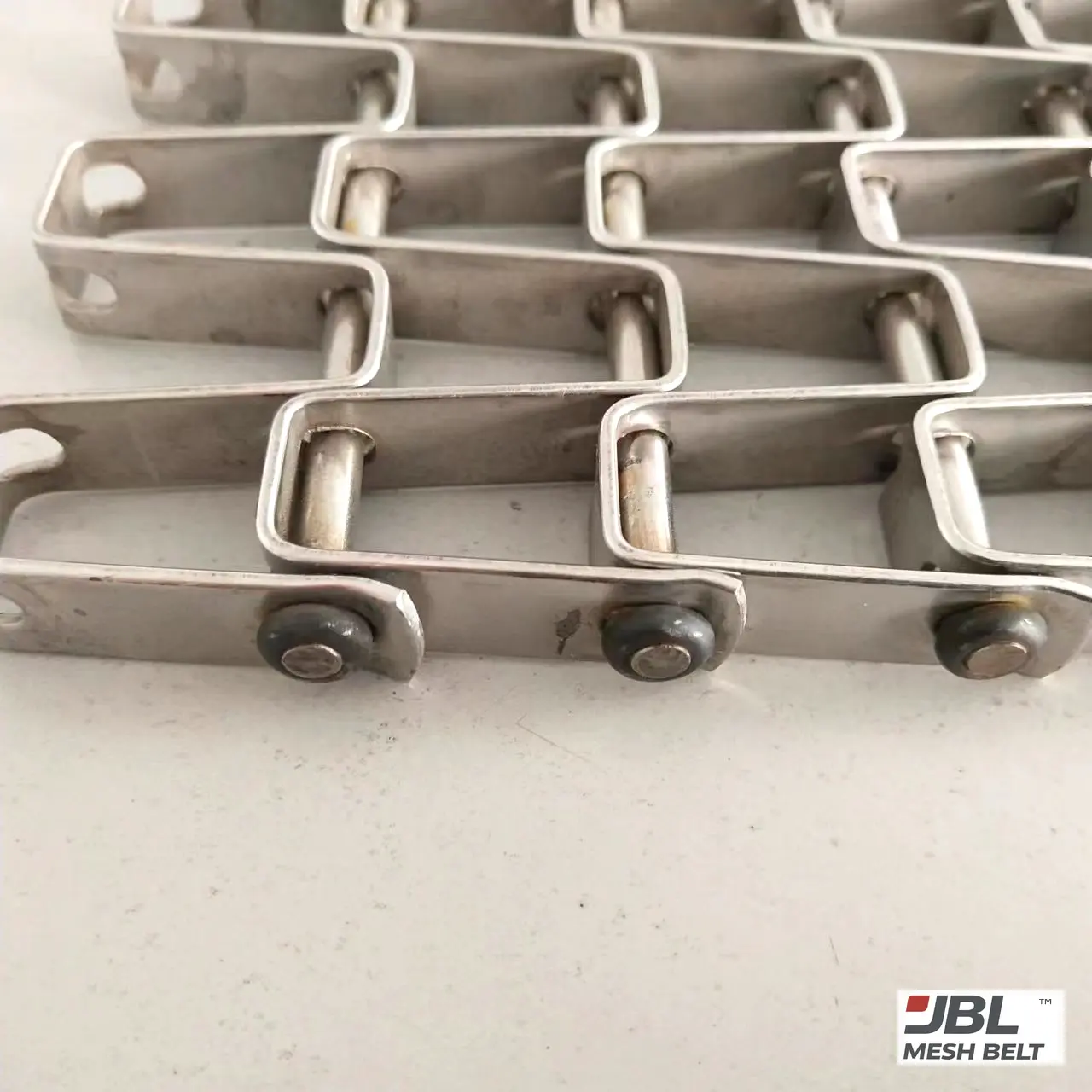
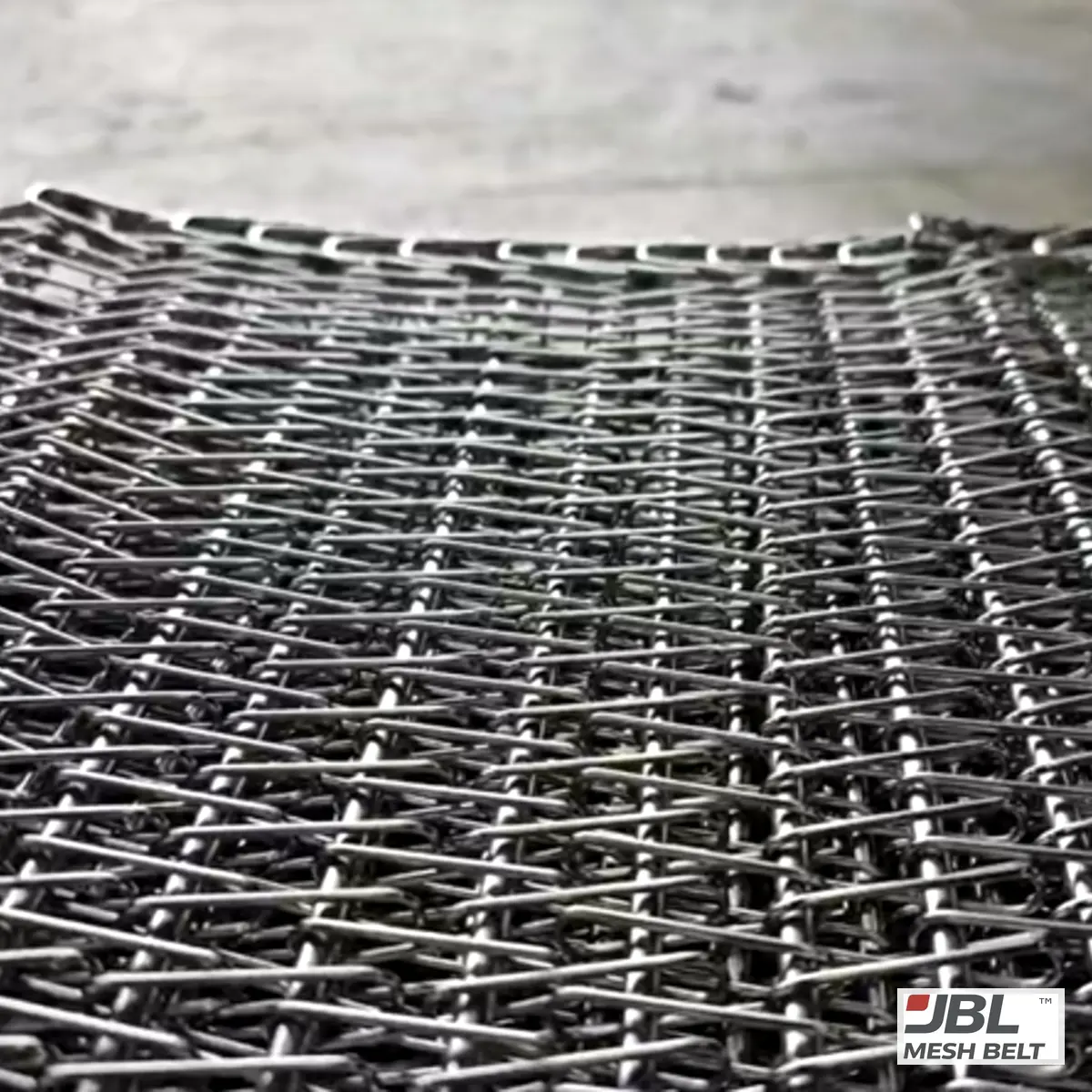
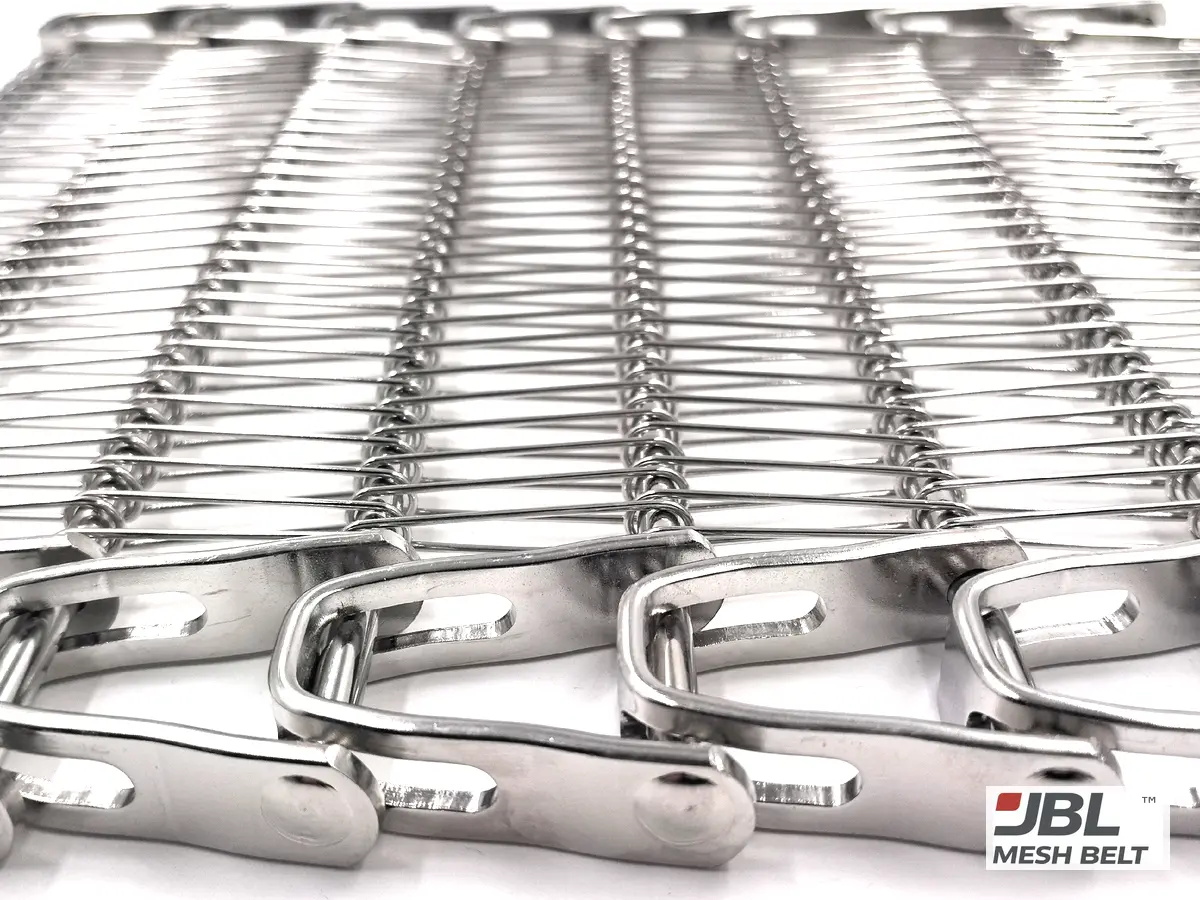
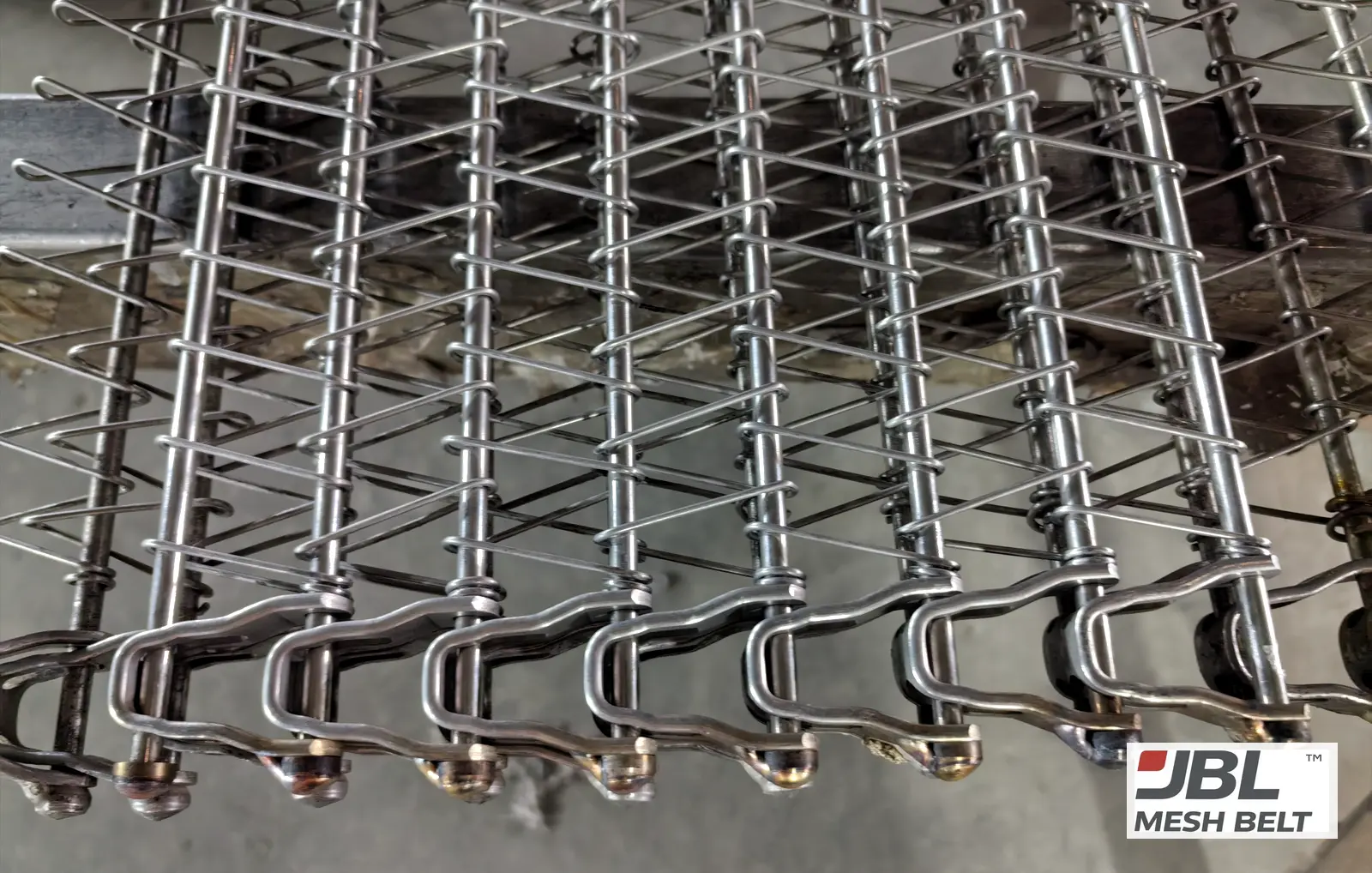
Rough rod-end welds with burrs were scoring the blue plastic guide strips and leaving plastic shavings along the edge. The new belt kept the same pitch, rod and link, but the welds were finished smooth and checked on the sample before bulk.
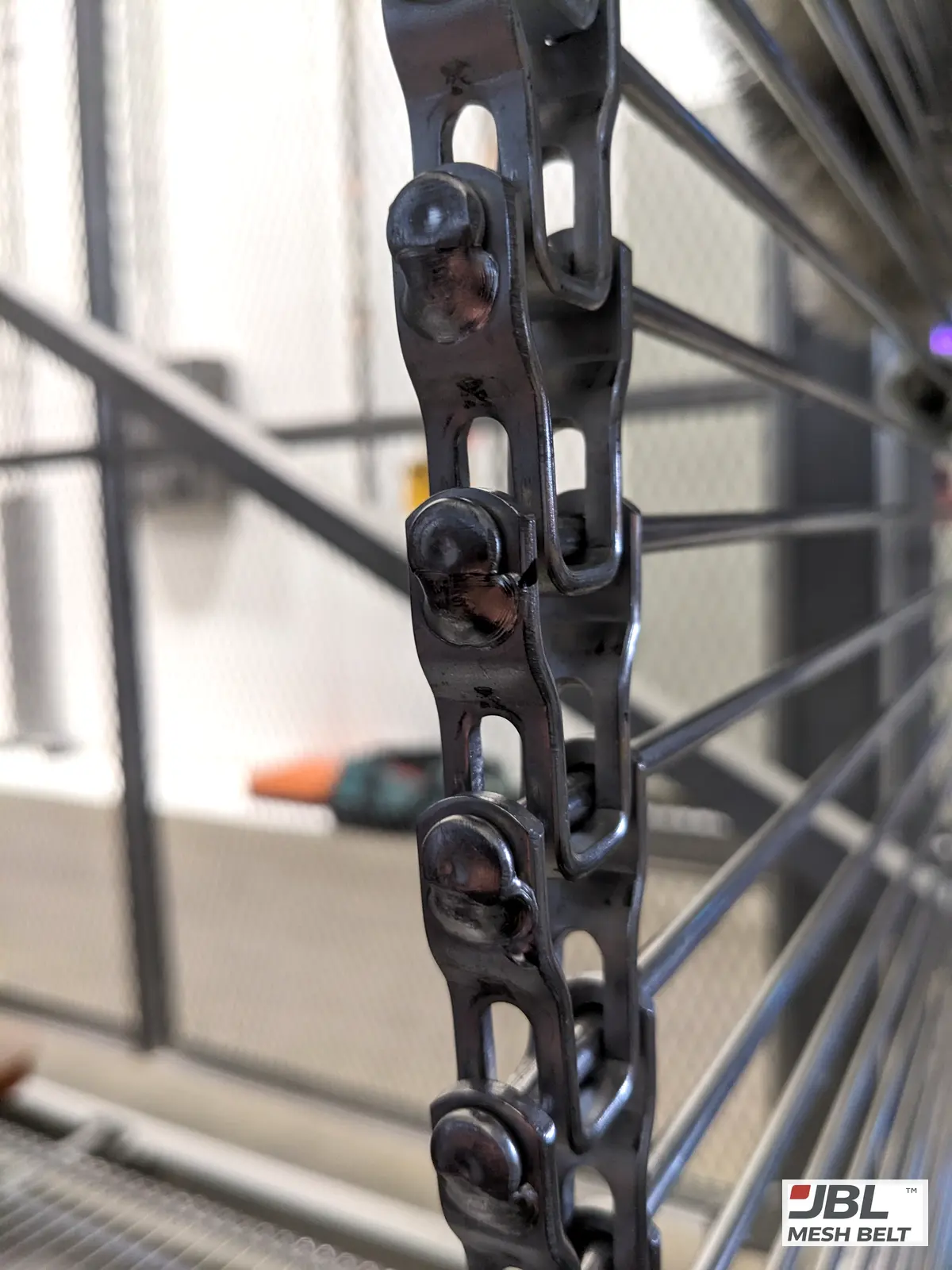
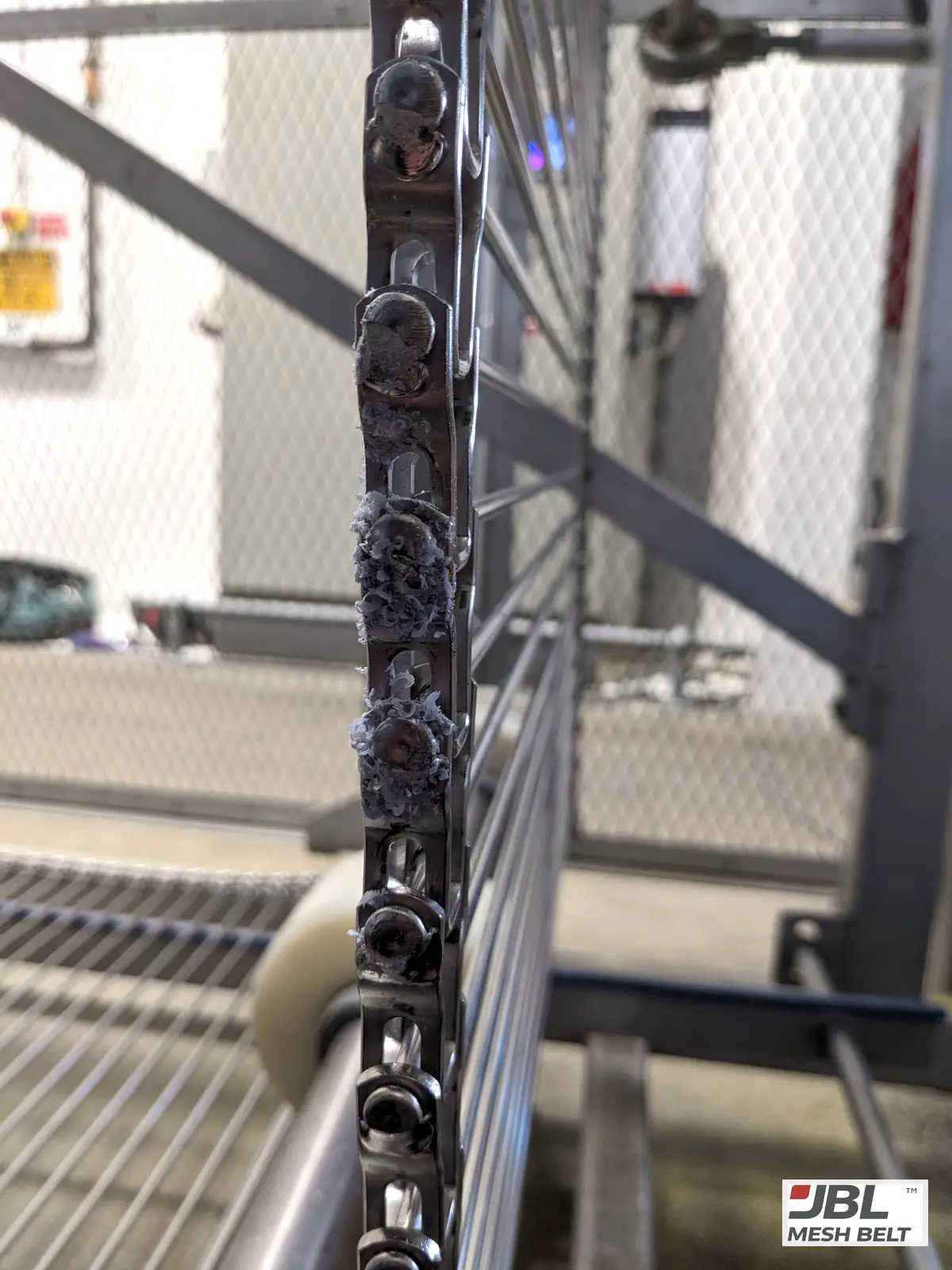
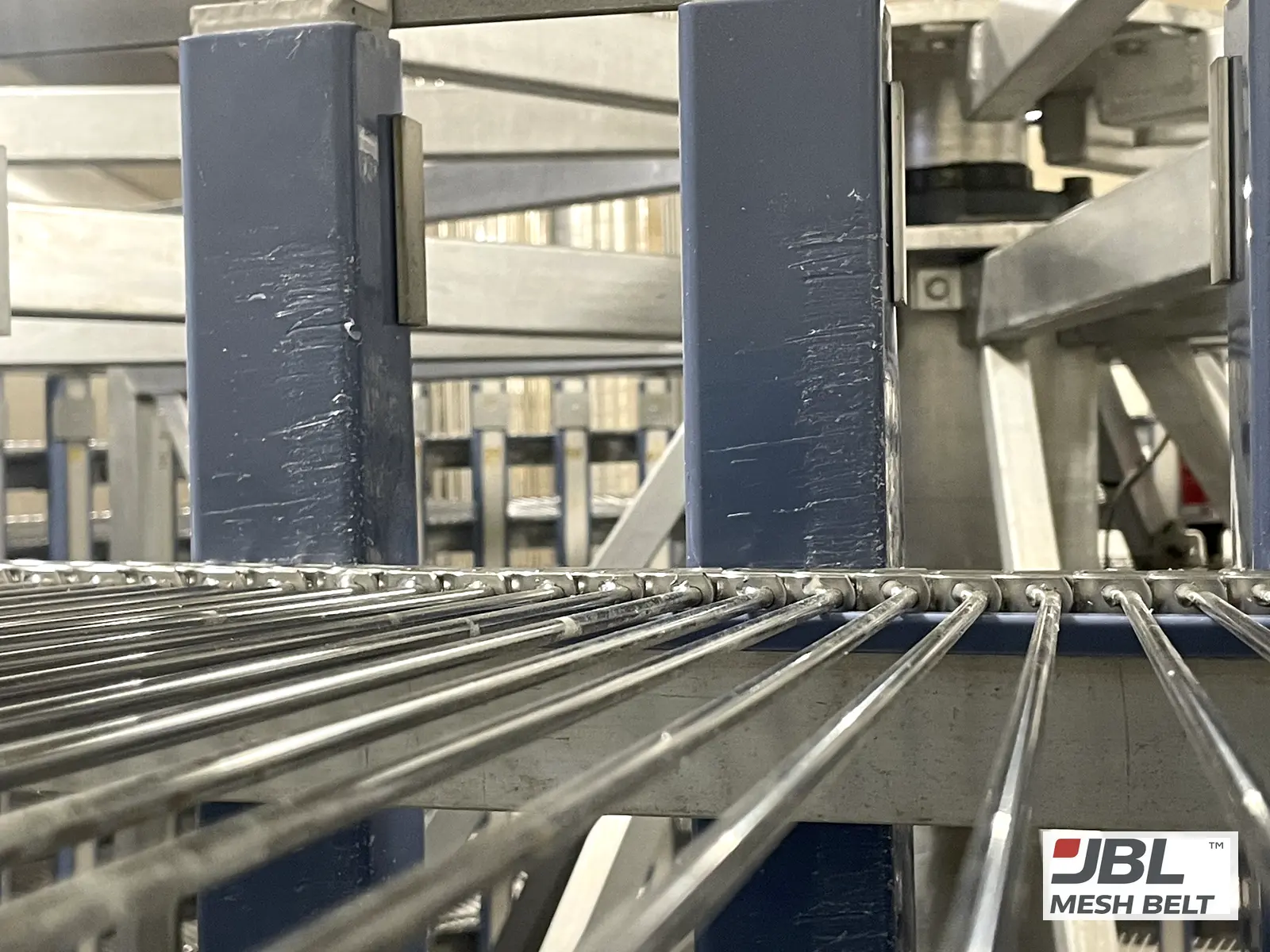
| Original belt | New sample | |
|---|---|---|
| Edge weld | Rough, with burrs | Smooth, cleaned |
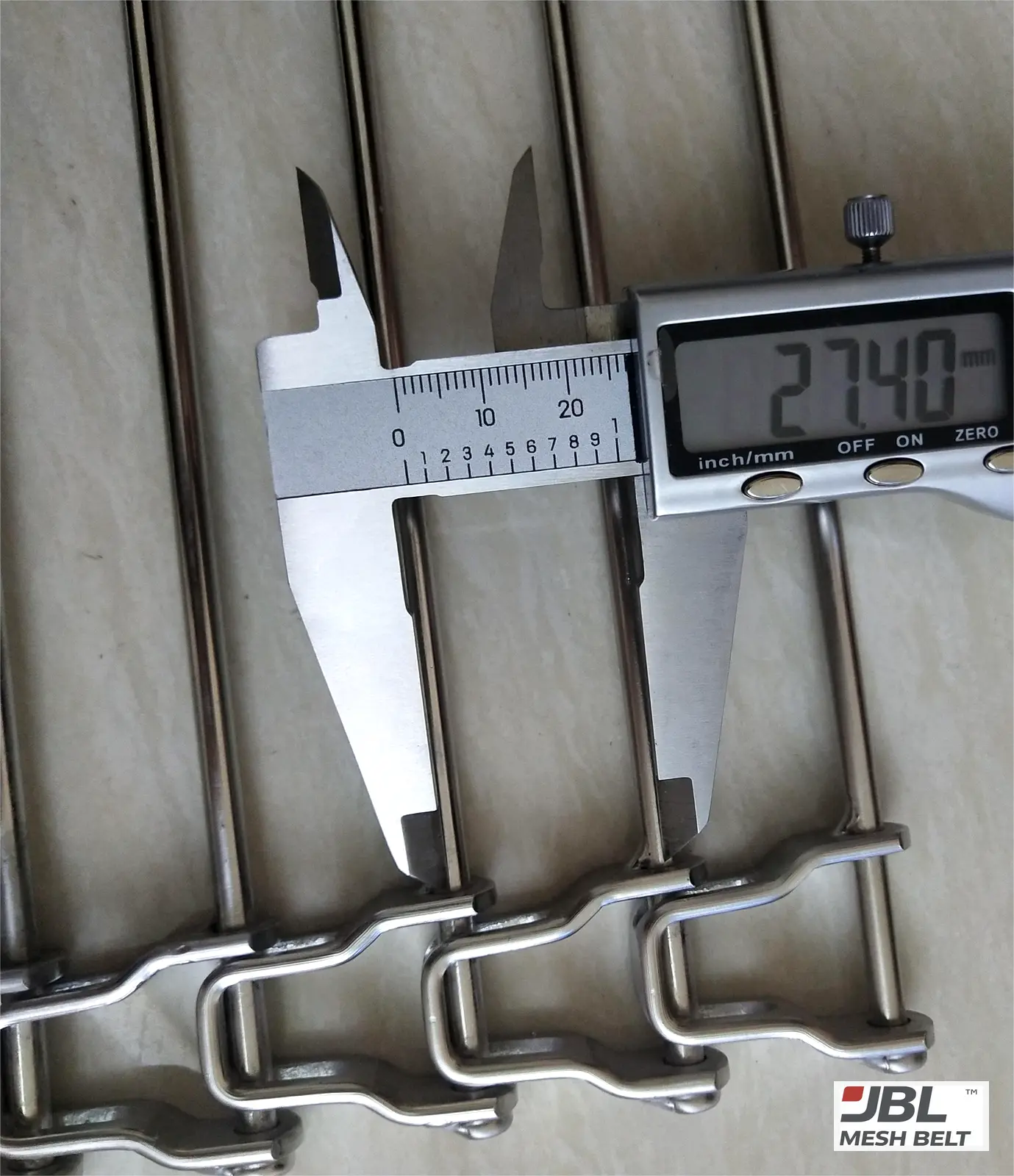
| Pitch | 27.41 mm | 27.40 mm |
| Rod | 5.03 mm | 5.00 mm |
| Link thickness | 2.70 mm | 2.70 mm |
Matching the dimensions alone would have repeated the problem. The weld finish was written into the specification and checked on the sample, like any other value.
Guide strips cost less than a belt, but changing them still stops the line. If your strips are scored, look at the belt edge before you order new strips.
On a freezer the same burrs can end up in product. Read why weld burrs on a spiral belt contaminate IQF products.
03Should you copy a worn link exactly?
A worn belt still has the right shape. Its thickness is no longer the design value.
Short answer
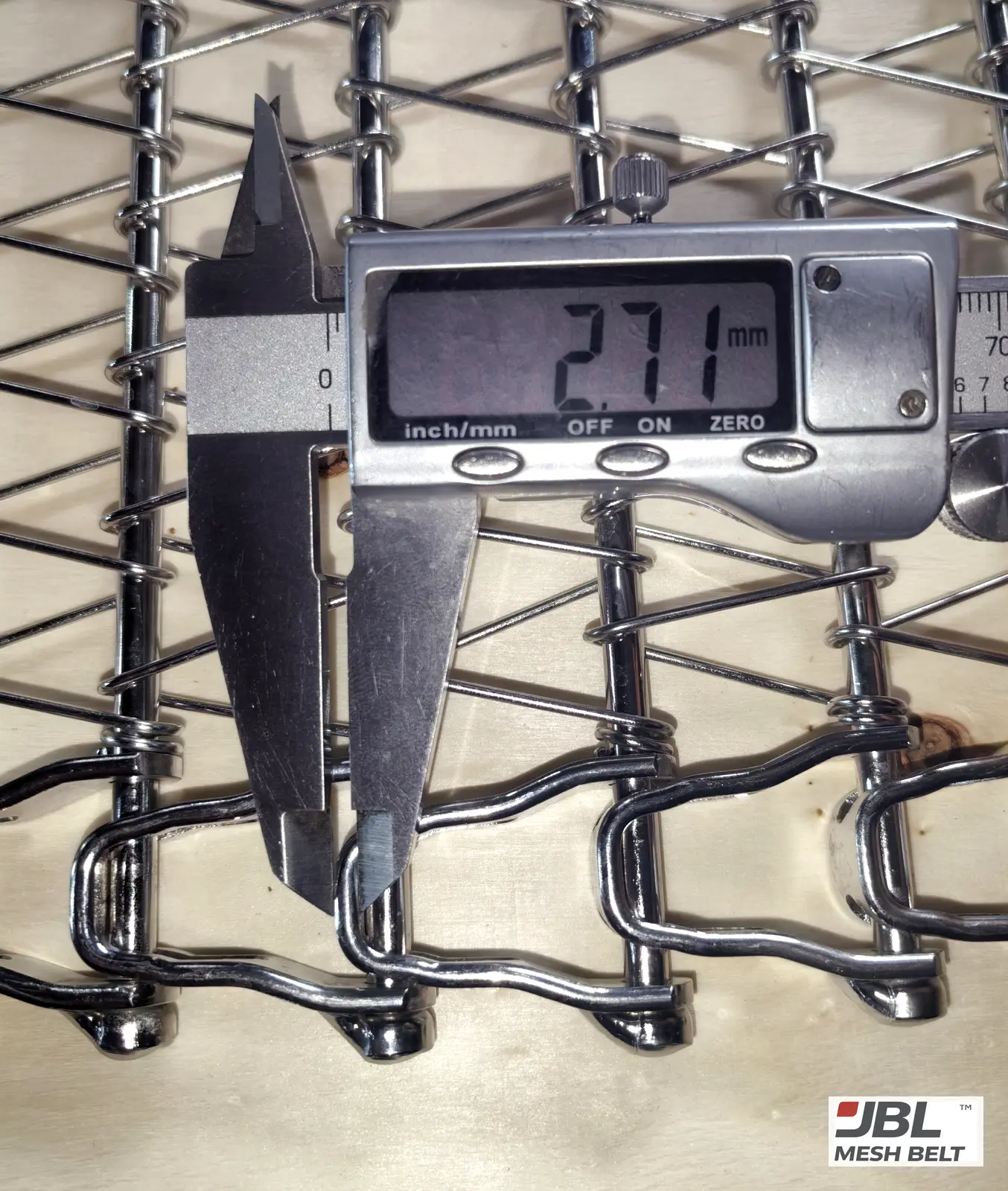
No. On the waffle spiral the original link read 2.42 mm after years of wear; the new belt was made at 2.71 mm. Wear is identified on the sample and corrected, not copied — otherwise the new belt starts life already worn.
| Value | Customer's original | New belt |
|---|---|---|
| Link thickness | 2.42 mm (worn) | 2.71 mm |
| Rod | 4.99 mm | Matched to the original |
| Link | 12.71 mm | 12.70 mm (bulk) |
| Link | 27.02 mm | 27.24 mm (bulk) |
| Wire | — | 1.51 mm (bulk) |
Readings from the case photos. Belt width and order details are withheld.
To tell wear from design, compare readings across the sample — worn areas against less-worn areas — and look for round numbers and inch values. A link that reads far below the others is usually wear.
Which values wear first?
Link thickness and the surfaces that touch the drum and the sprockets usually wear first. Rods can wear at the hinge, and the pitch can grow as links and rods wear together. That is why one reading is never enough.
More on this in old belt dimensions vs the original design.
04How do you prove the new belt fits before bulk production?
The buyer should see the new belt next to the old one — measured the same way — before paying for the full length.
Short answer
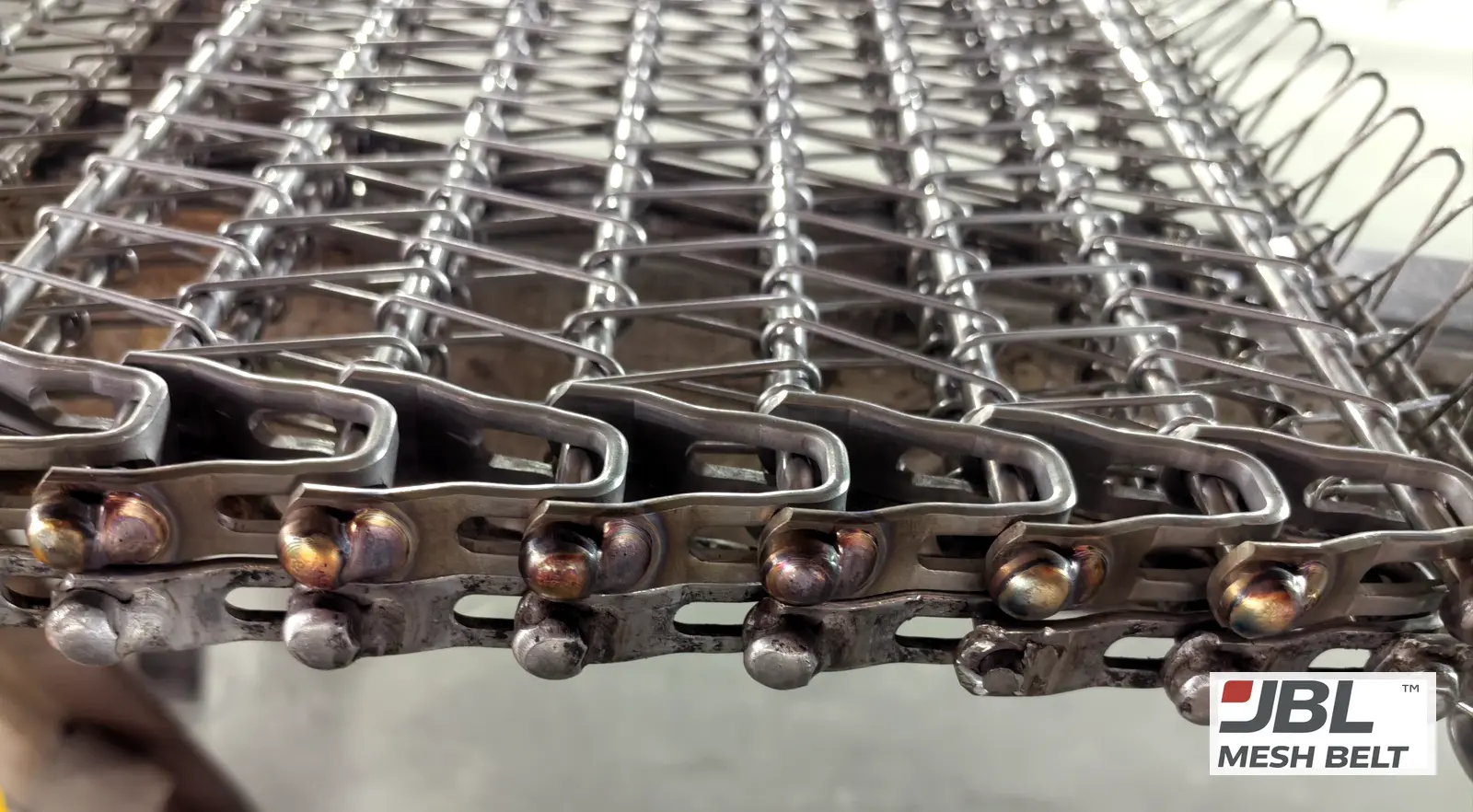
Make a sample or trial run, measure it with the same tools as the original, and send photos side by side. On the waffle spiral the trial run was also linked into the original belt. Bulk started only after the customer approved from photos.
| Step | Melbourne | Waffle spiral |
|---|---|---|
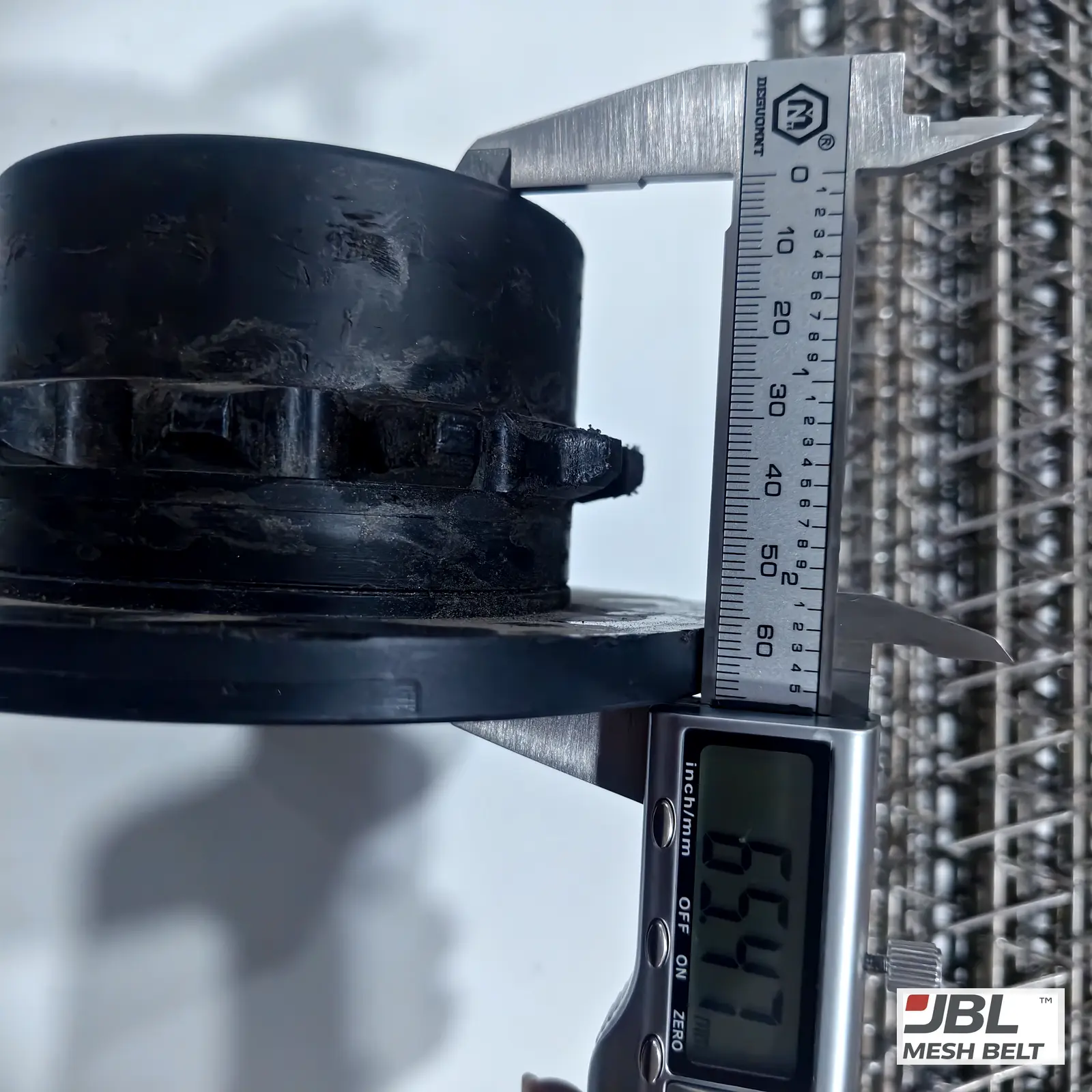
| Measure the original | Pitch, rod, link thickness and link size | Rod, link thickness and link sizes; sprocket width, hub, bore, tooth |
| Make | A sample to the measured values | A trial run of belt and sprockets |
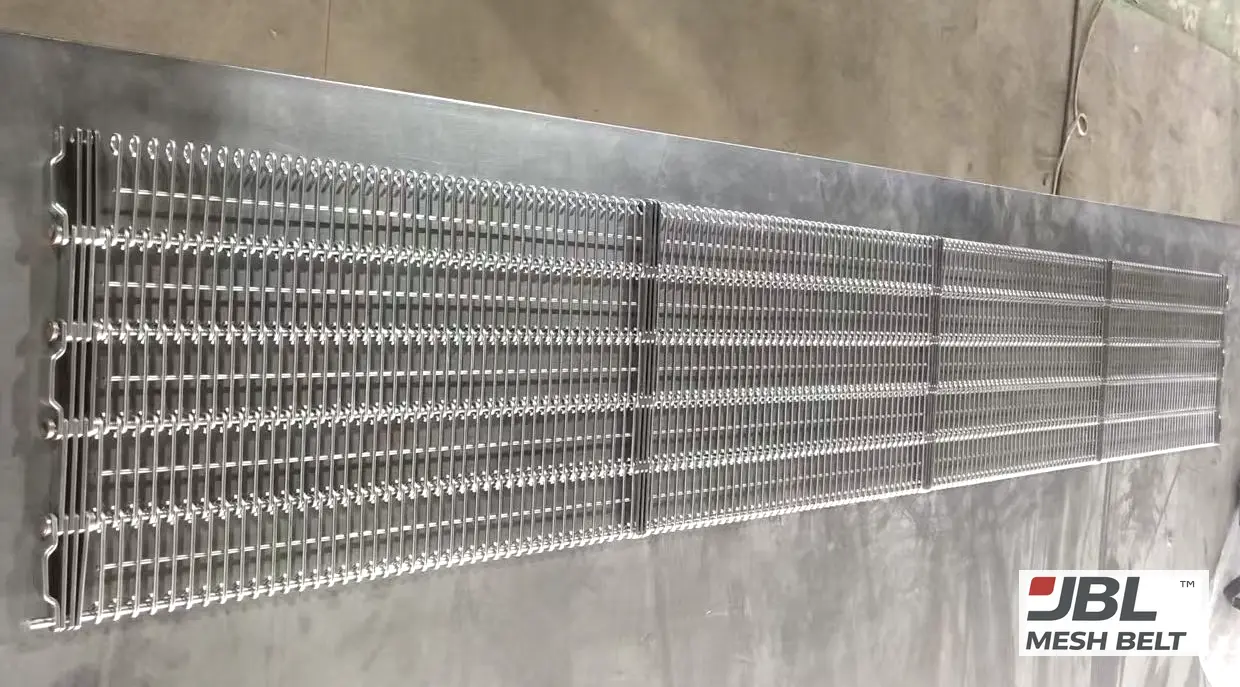
| Compare | Same caliper on original and sample | Side by side, and linked into the original |
| Approve | Sample checked before bulk | Customer approved from photos |
Linking a trial section into the old belt is the clearest test I know. If the pitch or link is wrong, it shows at the joint at once.
Readings are photographed with the caliper or tape in the picture, original and new side by side, so you check the numbers yourself — not a promise.
For more, read should you trial a short length before the full order.
05Should the sprockets be replaced with the belt?
A new belt on worn sprockets can jump or wear early. Both bakery customers replaced them together.
Short answer
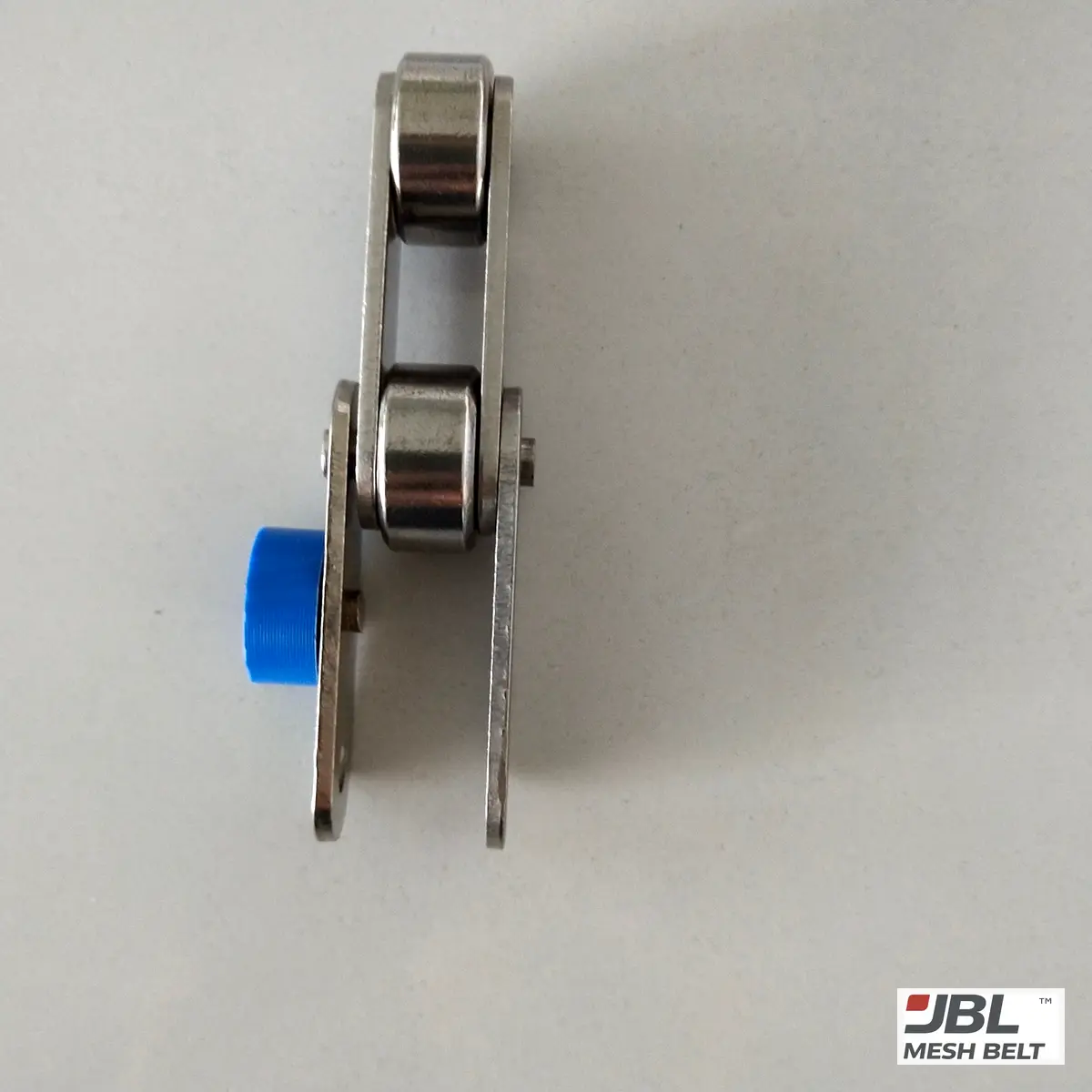
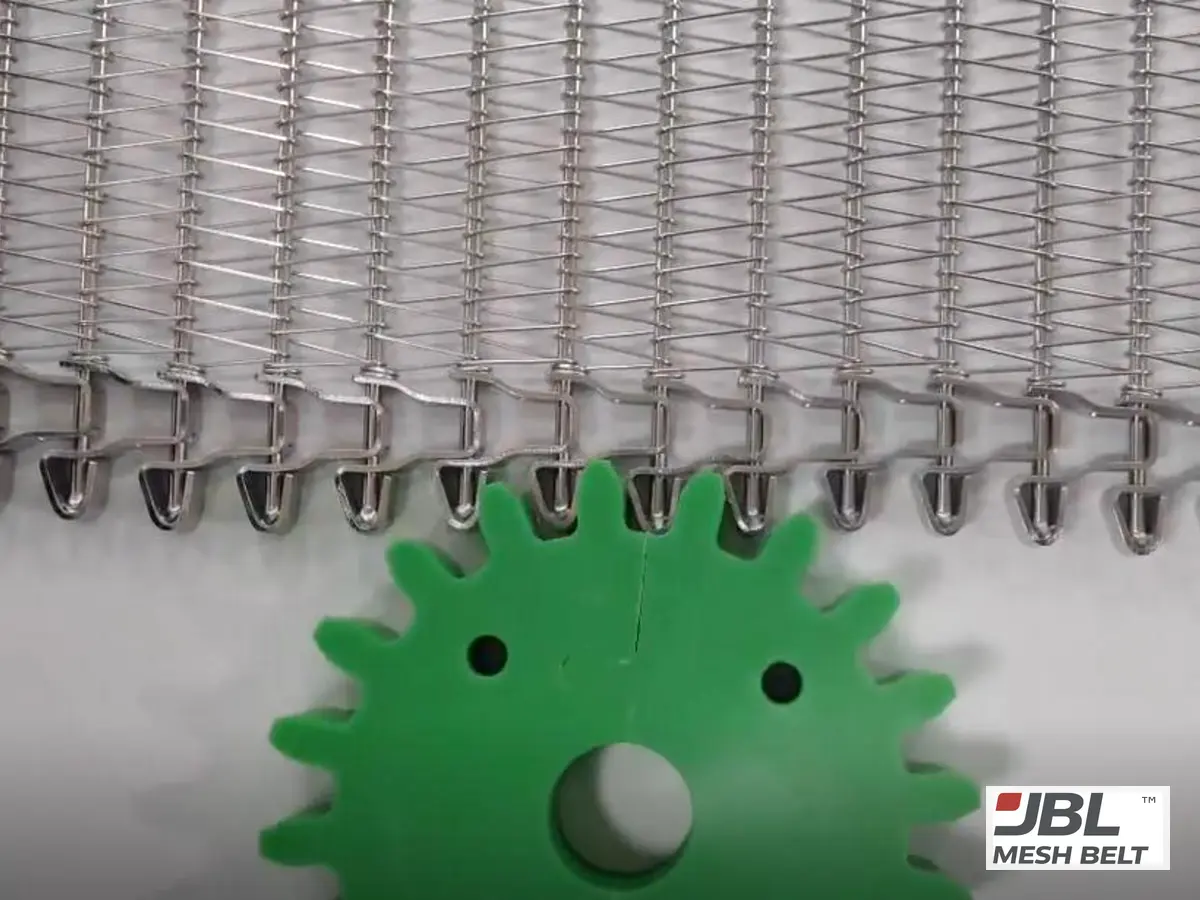
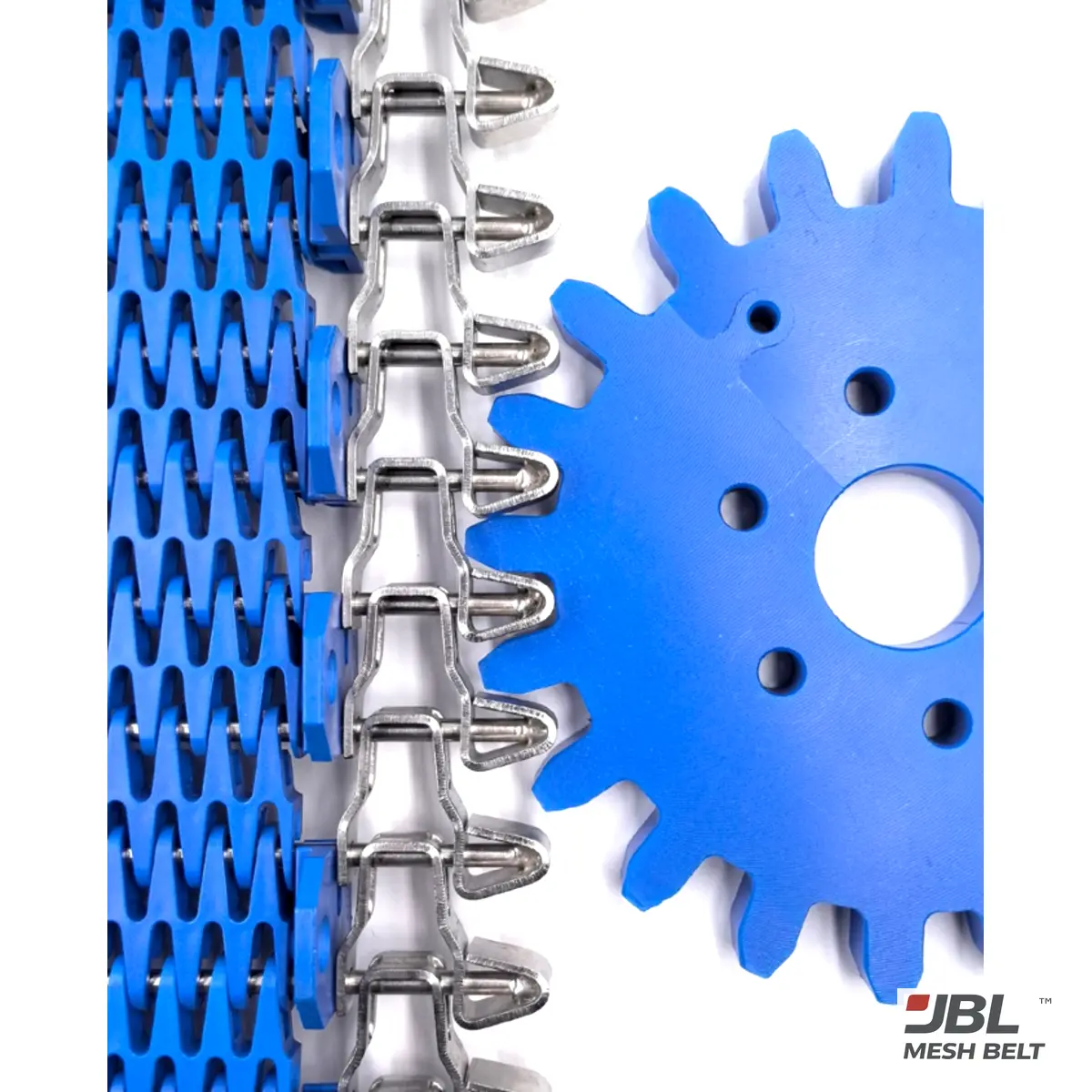
Yes, if they are worn. In Melbourne nylon sprockets were measured, supplied and run on the new belt before shipment. On the waffle spiral the worn sprockets were remade from the customer's own and run on the bulk belt before packing.
| Sprocket reading | Melbourne (nylon) | Waffle spiral |
|---|---|---|
| Outside diameter | 160.97 mm | — |
| Bore / keyway | Bore detail 18.00 mm | Keyway 10.02 mm (new sprocket) |
| Pin / tooth | Pin 8.00 mm | Tooth 10.77 mm (original) |
| Width · hub | — | Width 40.36 mm · hub 90.42 mm (original) |
| Check before shipment | Running test on the new belt | Running test on the bulk belt |
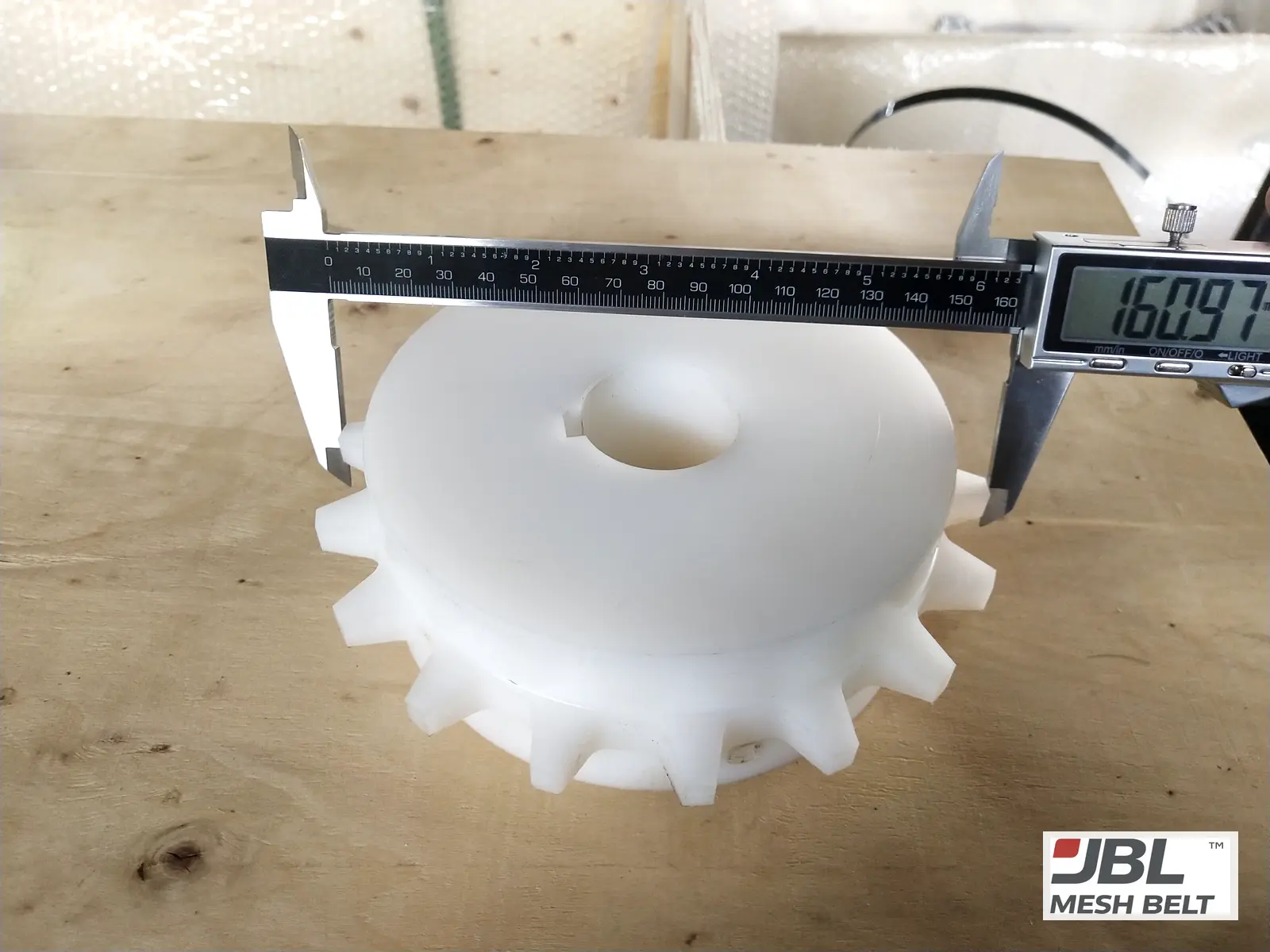
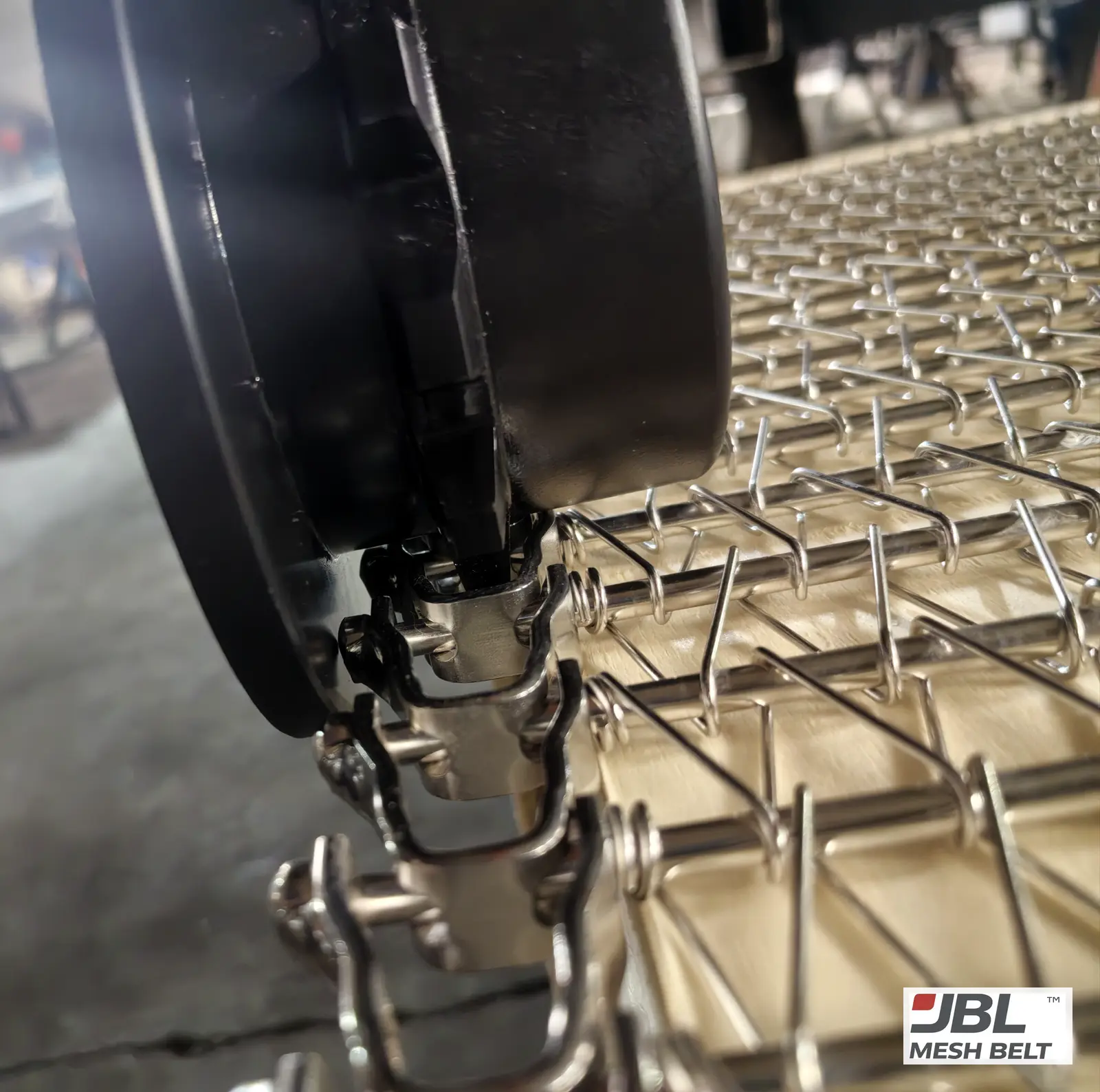
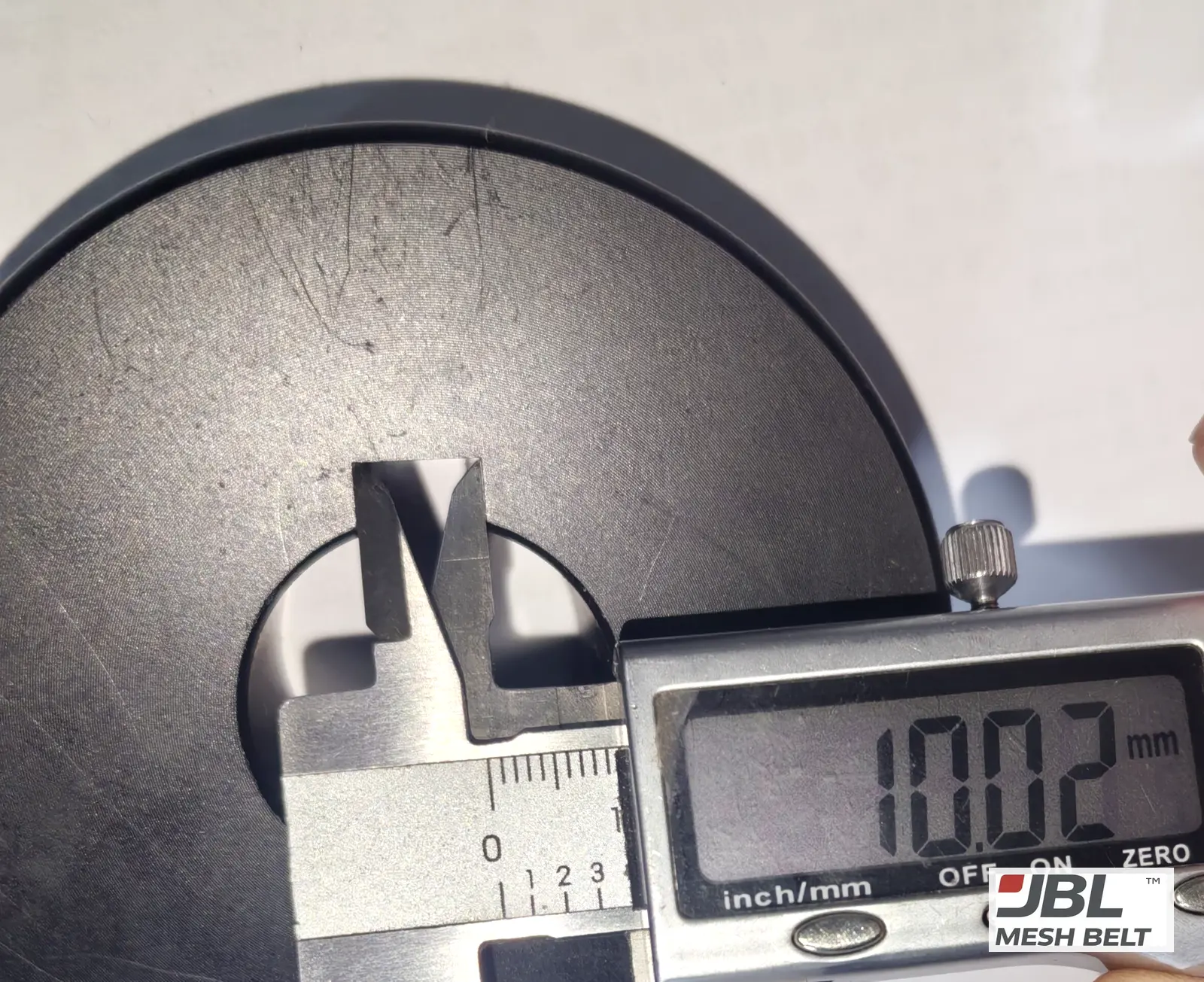
The Melbourne spiral used nylon sprockets. The material for your sprockets — SUS304, SUS316 or plastic — is confirmed together with the belt.
How to judge sprocket wear is covered in how to measure sprocket wear and why a new belt can fail on worn sprockets.
When This Is Not the Right Choice
- ✕If your spiral needs a different belt design — a new turn ratio, load or width — this is a retrofit, not a like-for-like replacement.
- ✕If the old belt is too worn to read pitch reliably, send the sprocket and a less-worn section as well.
- ✕If you cannot stop the line to send a sample, photos with a caliper can start the review, but a physical sample is safer.
From My Engineering Experience
On the Melbourne job the size was never the problem. The welds were. Matching dimensions was not enough; the weld finish had to be specified and checked too.
The waffle customer was worried at the start. Seeing the trial run next to the original, photographed and measured, is what made the go-ahead easy.
A worn link reading of 2.42 mm is a clue, not a specification. Copying it would have shipped a belt that was already old.
— Spring, Sales Director, JBL Mesh Belt
Evidence From Our Work
Melbourne, Australia, 2023–2024 — bakery spiral cooling belt →
| Step | Detail |
|---|---|
| Problem | Rough rod-end welds scoring the guide strips |
| Original vs sample | Pitch 27.41 → 27.40 mm · rod 5.03 → 5.00 mm · link 2.70 mm |
| Sprockets | Nylon, measured and run on the new belt |
| Scope | About 400 m, SUS304, electropolished |
Waffle spiral cooling, 2026 — belt and sprockets →
| Step | Detail |
|---|---|
| Starting point | Customer's belt section and sprockets — no drawing |
| Wear corrected | Link thickness 2.42 mm worn → 2.71 mm new |
| Before bulk | Trial run linked into the original; approved from photos |
| Scope | About 200 m of belt plus sprockets |
FAQ
Q1Can a cooling spiral belt be replaced without a drawing?
Yes. On both bakery projects the belt was measured from the customer's own sample, a sample or trial run made, and compared before bulk.
Q2Why were the guide strips scored?
In Melbourne the original belt had rough rod-end welds with burrs. The new belt kept the same dimensions with smooth welds.
Q3Do you copy worn dimensions?
No. Worn values are identified and corrected. On the waffle spiral the worn link read 2.42 mm; the new belt is 2.71 mm.
Q4Should I replace the sprockets too?
If they are worn, yes. Both bakery projects replaced the sprockets and ran them on the new belt before shipment.
Q5Which material did these belts use?
The Melbourne belt was SUS304, electropolished, with nylon sprockets. Material is confirmed on the drawing for each project.
Conclusion
Read the fit dimensions, check the welds, correct the wear, and replace worn sprockets with the belt — then see the sample next to your old belt before bulk.
Download the Spiral Freezer Belt Technical Specification (PDF)
Specification ranges and options in mm and inch. Enter your work email and the file downloads right away.
References

Your contact for this belt
Spring · Sales Director, JBL Mesh Belt · 16 years
“Your belt is worn, the OEM price is high, and there is no drawing. That is where I start.”
Send me a worn section, a few photos with a caliper in the picture, or a drawing. I tell you what fits, what is missing, and show you a sample measured against your own belt before you pay for the full length. Buyers in the UK, the USA, Australia, Brazil, South Korea, Spain, Malaysia and Libya have replaced belts this way.
- ✓Readings on your original next to readings on our sample
- ✓Nothing in bulk until you approve the sample
- ✓Turning, stacking or sprocket tests before your belt ships
- ✓A reply from me, usually within 8 hours
Get new project cases by email
One short email when we publish a new case or buyer guide.
New lines and replacements — what we measured, what we checked before shipment. Real readings and photos. Unsubscribe anytime.
Prefer LinkedIn? Subscribe on LinkedIn · RSS