Replacement · 9 min read
Can a Worn Conveyor Belt Be Copied From a Sample?
 Written bySpringSales Director, JBL Mesh Belt · 16 years in metal conveyor beltsProjects in United Kingdom · USA · Australia · Brazil · South Korea · Spain · MalaysiaPublished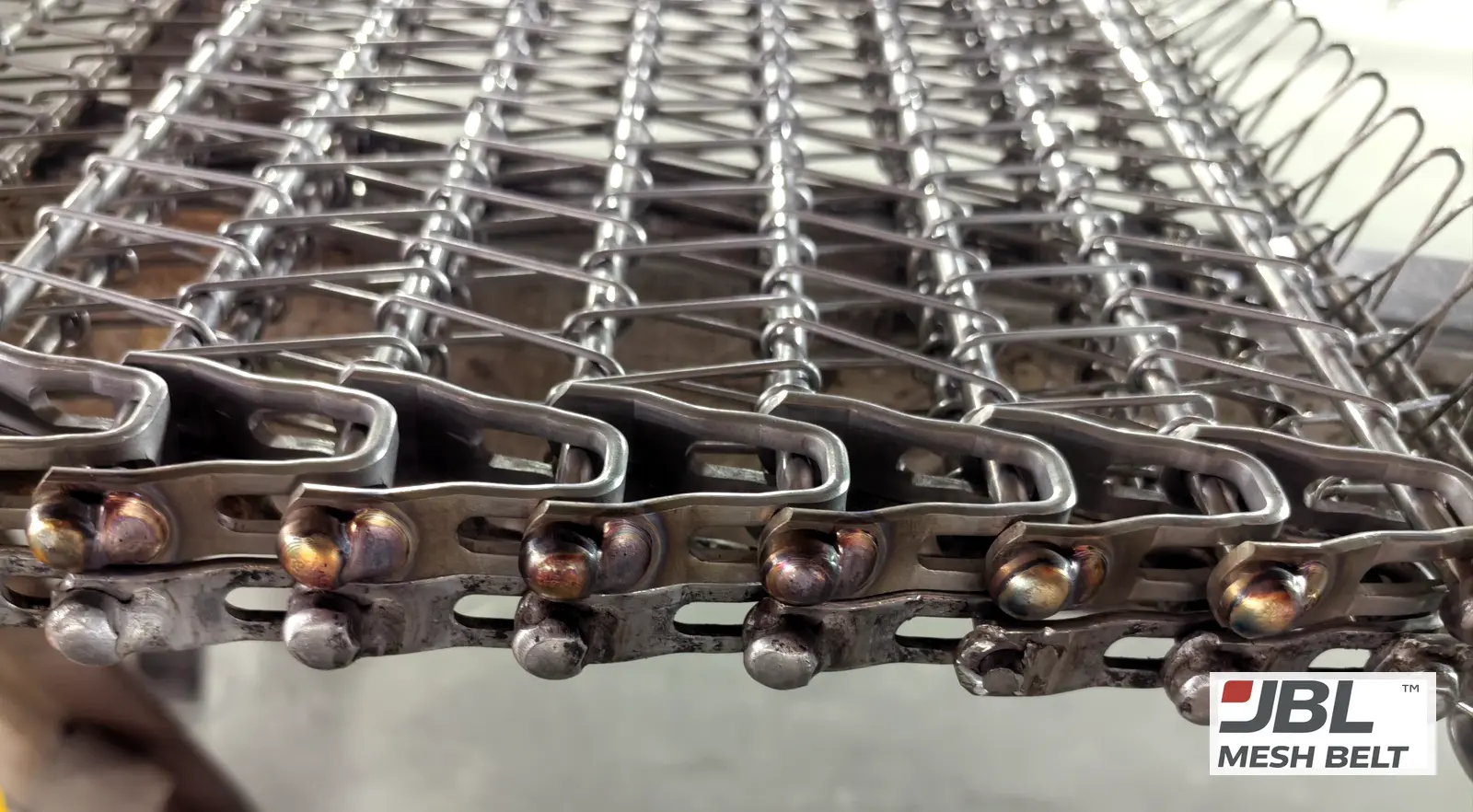
Your only sample is a belt that ran for years. It is thinner, longer and rougher than when it was new. Copy it exactly, and you copy the wear.
Short answer
Yes, a worn belt can be copied, as long as the wear is identified and not copied. I read the dimensions that wear, compare them with unworn areas or known values, make the new belt to the original size, and check a trial run against your old belt.
At a Glance
| Product | Application | Key point | Buyer type | What to send |
|---|---|---|---|---|
| Spiral, self-stacking and other metal belts | Replacement on existing lines | Wear identified, original size restored | Plants without a drawing | Worn sample + note on years in service |
Most samples I receive are worn. That is normal — nobody replaces a new belt. Below I explain what wear changes, how I separate it from the original size, and how you can check the result before bulk.
01What does wear change on a belt sample?
A belt that runs every day rubs on drums, rails and sprockets. The parts that rub get thinner. The parts that carry load can stretch.
Short answer
Wear mainly changes the parts that rub or carry load: link and side plate thickness, rod surfaces and, over time, pitch. Sizes that do not rub, such as rod pitch set by the links, often stay close to the original.
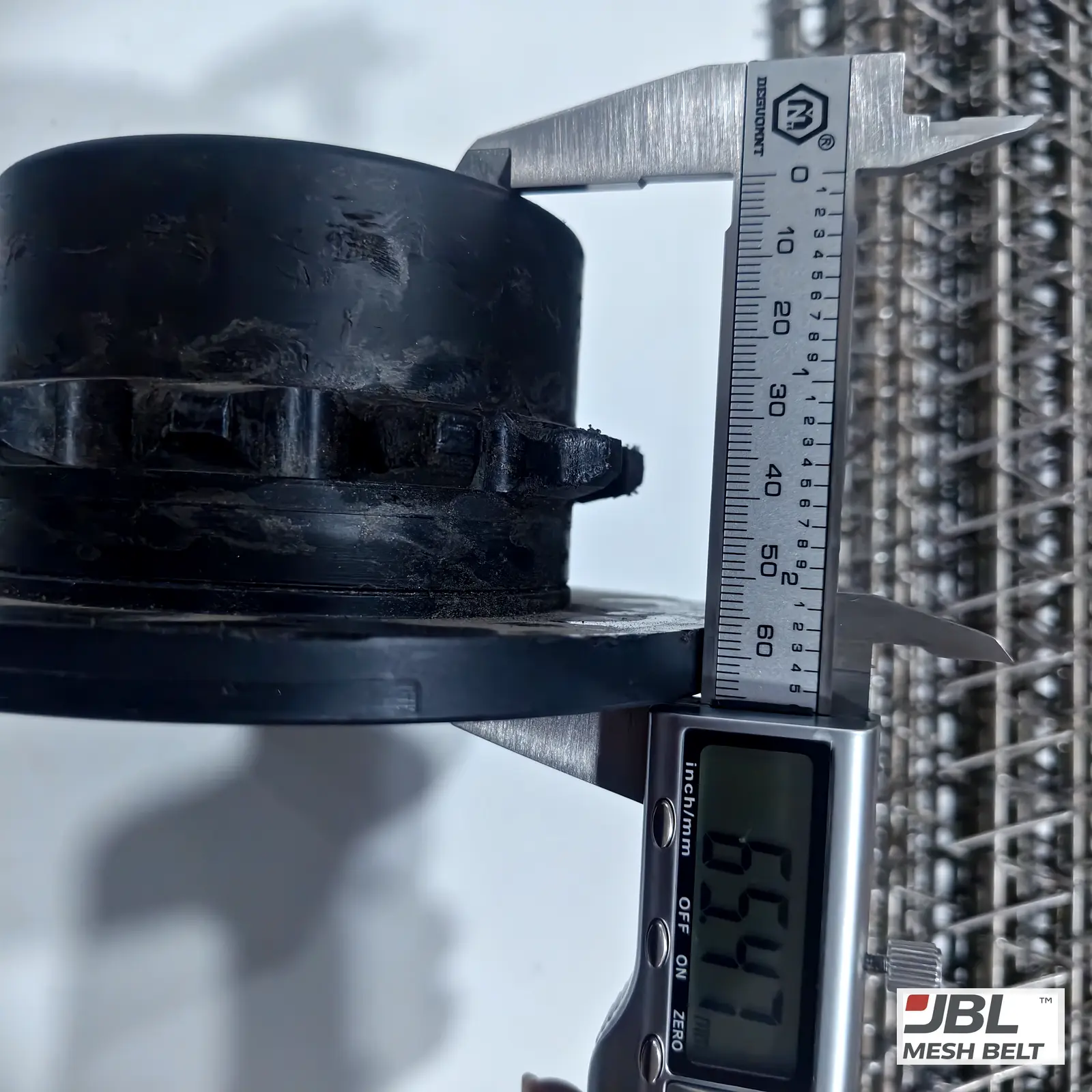
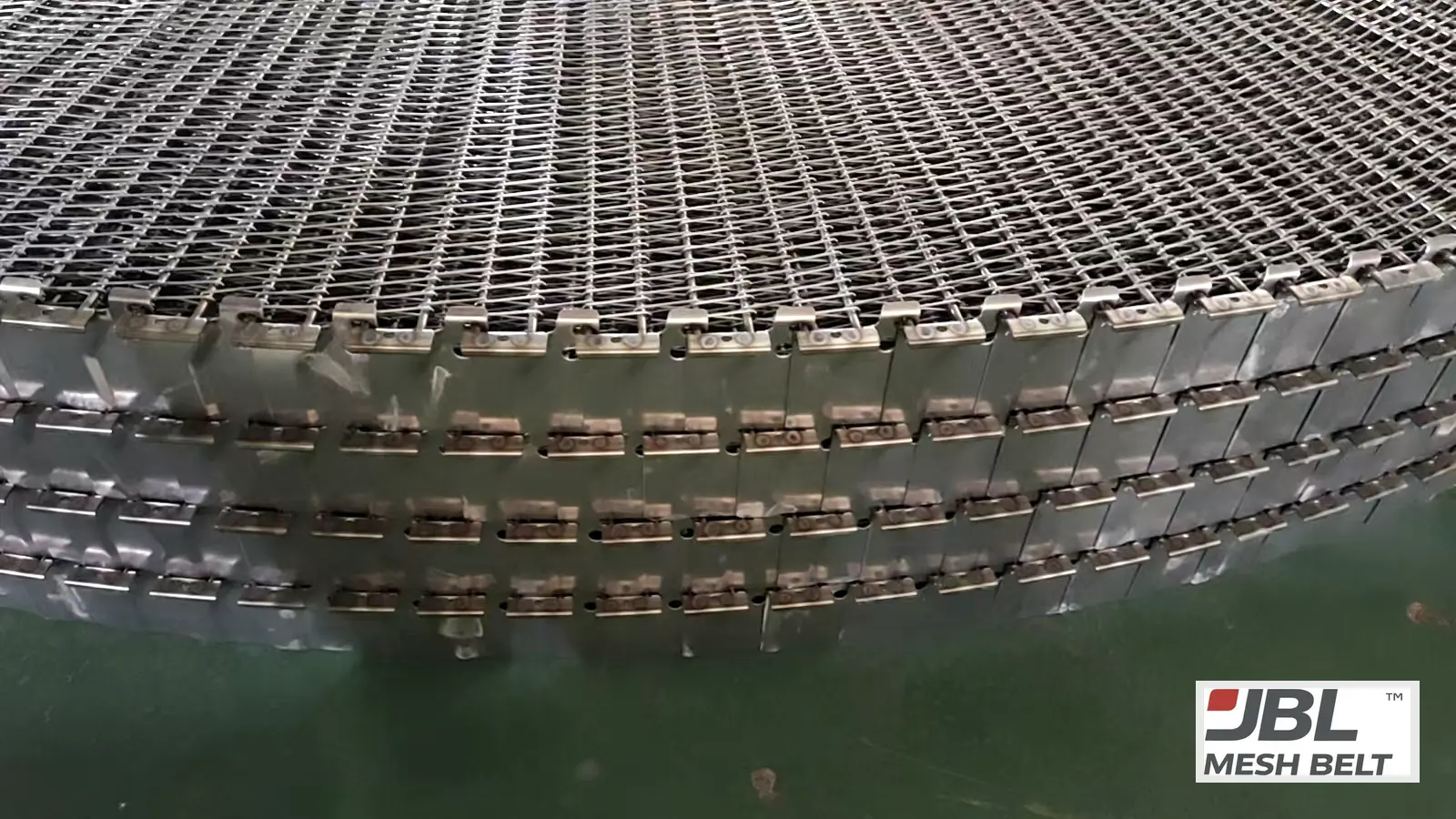
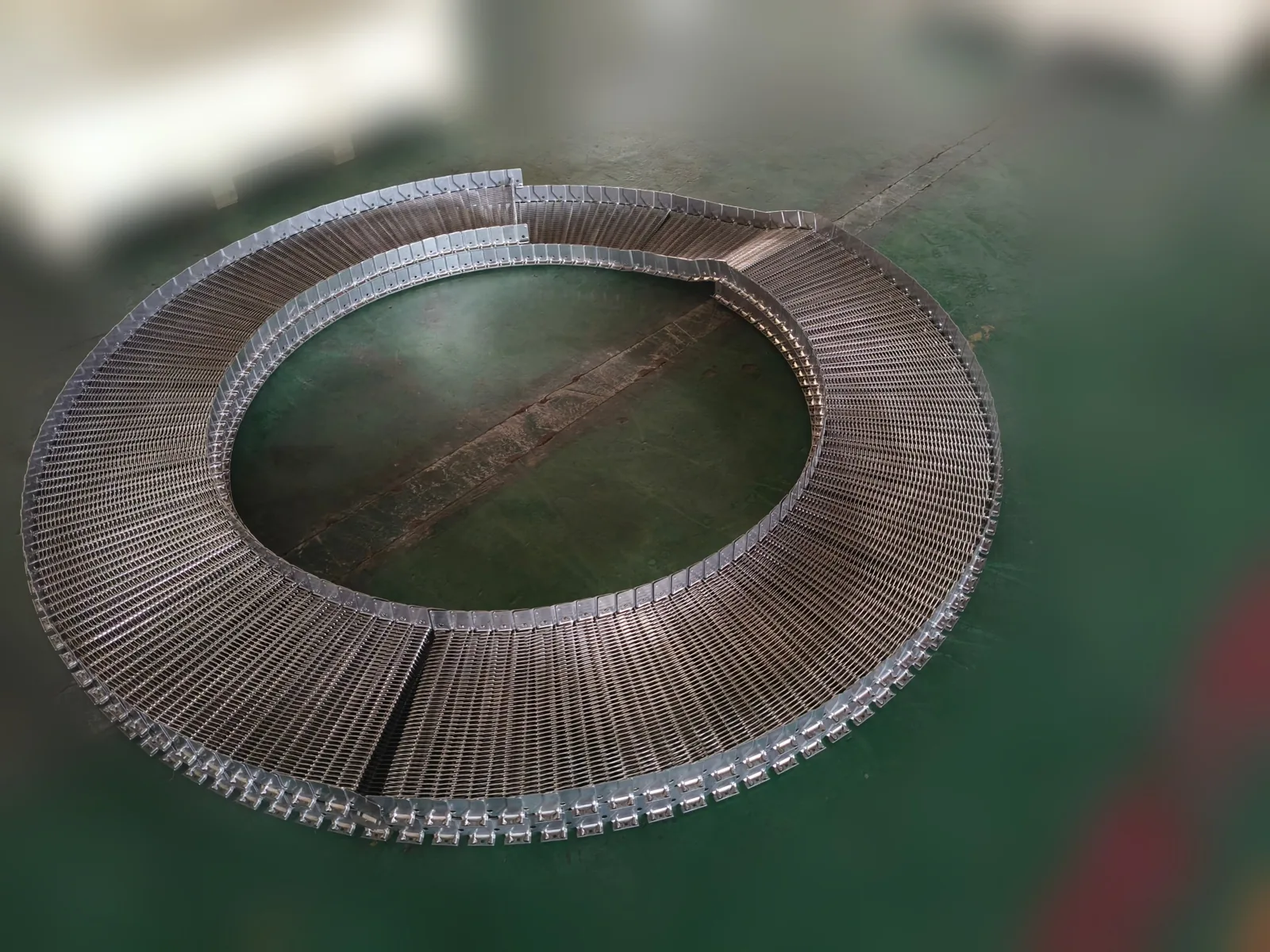
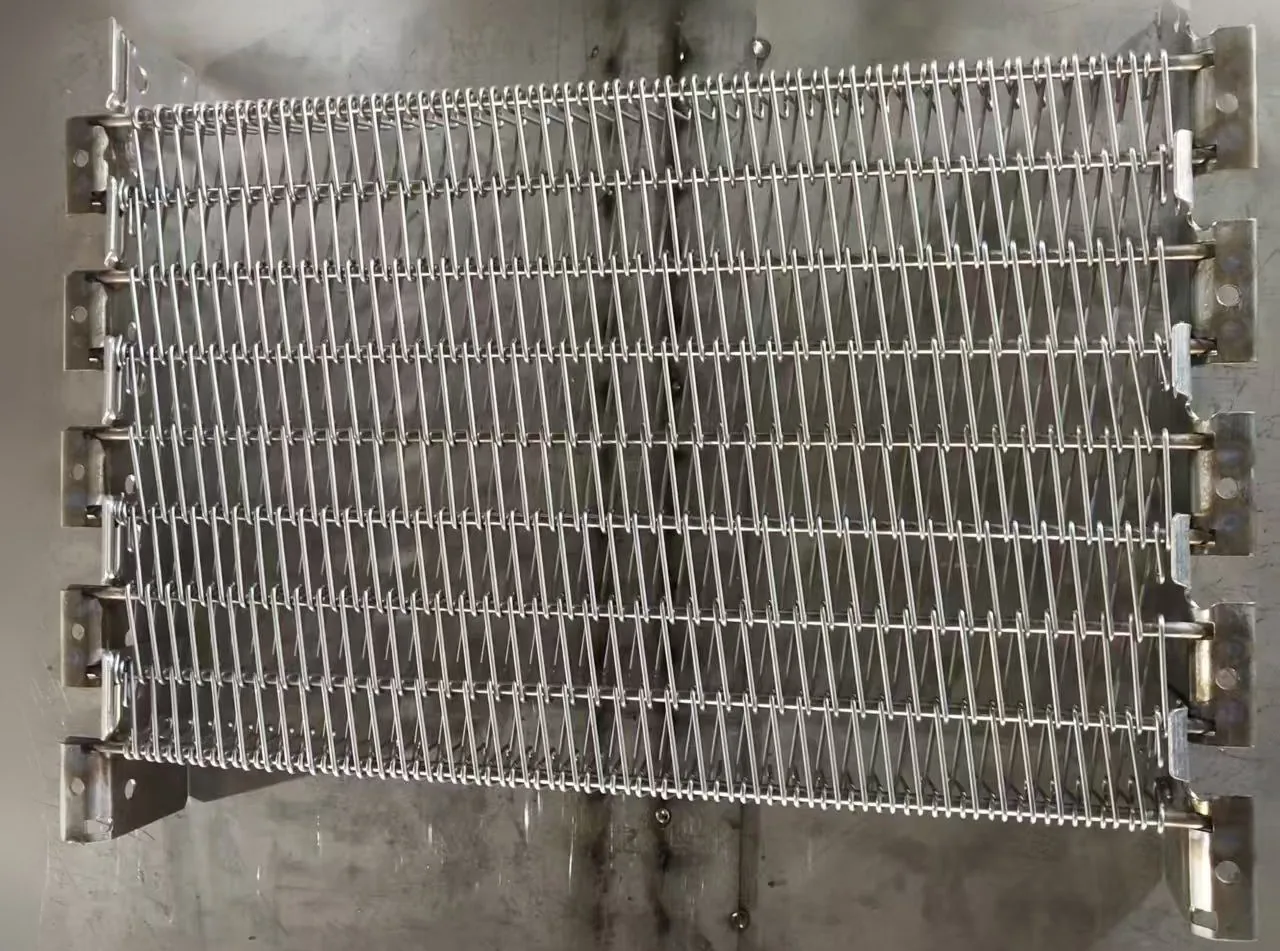
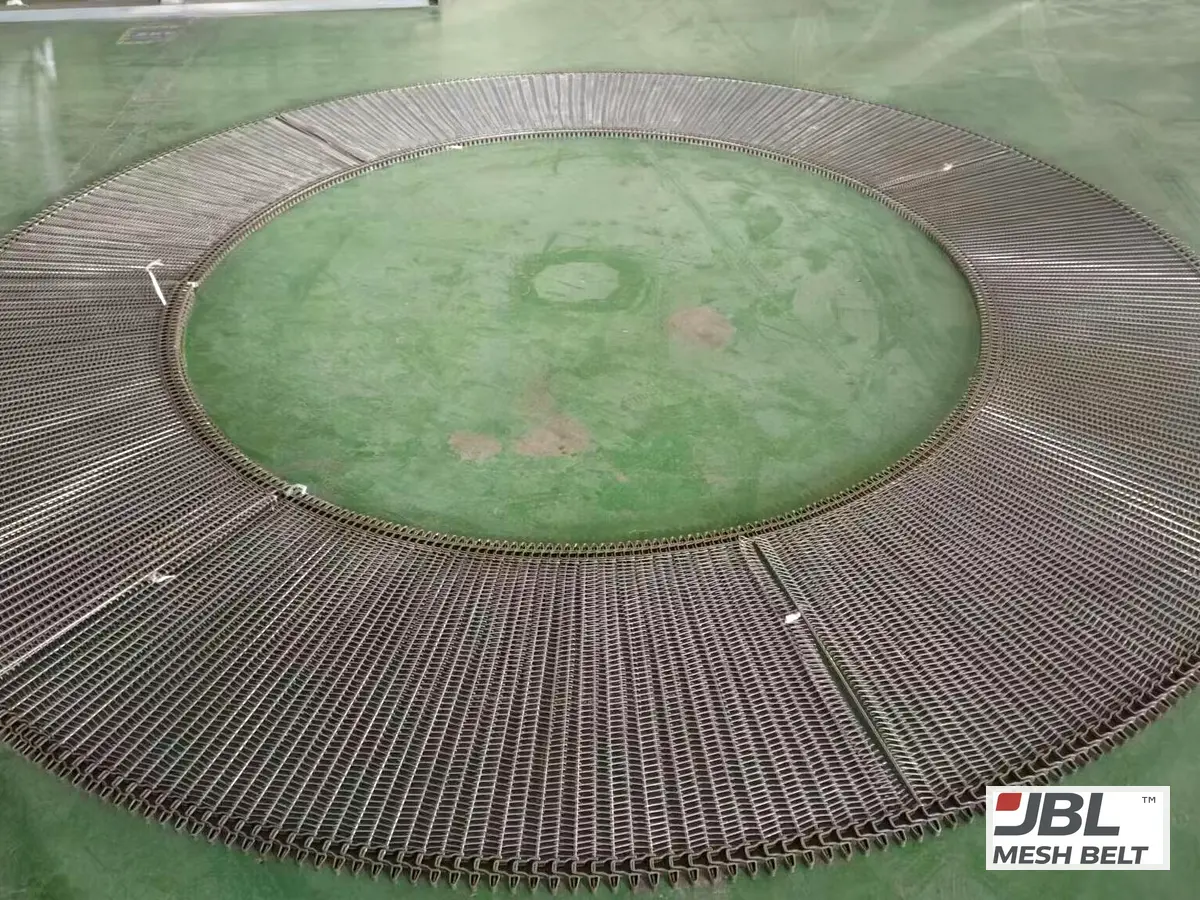
In a waffle cooling spiral project, the customer sent a section of the belt and the worn sprockets. The spiral was originally built by an equipment maker in Türkiye, and no drawing was available.
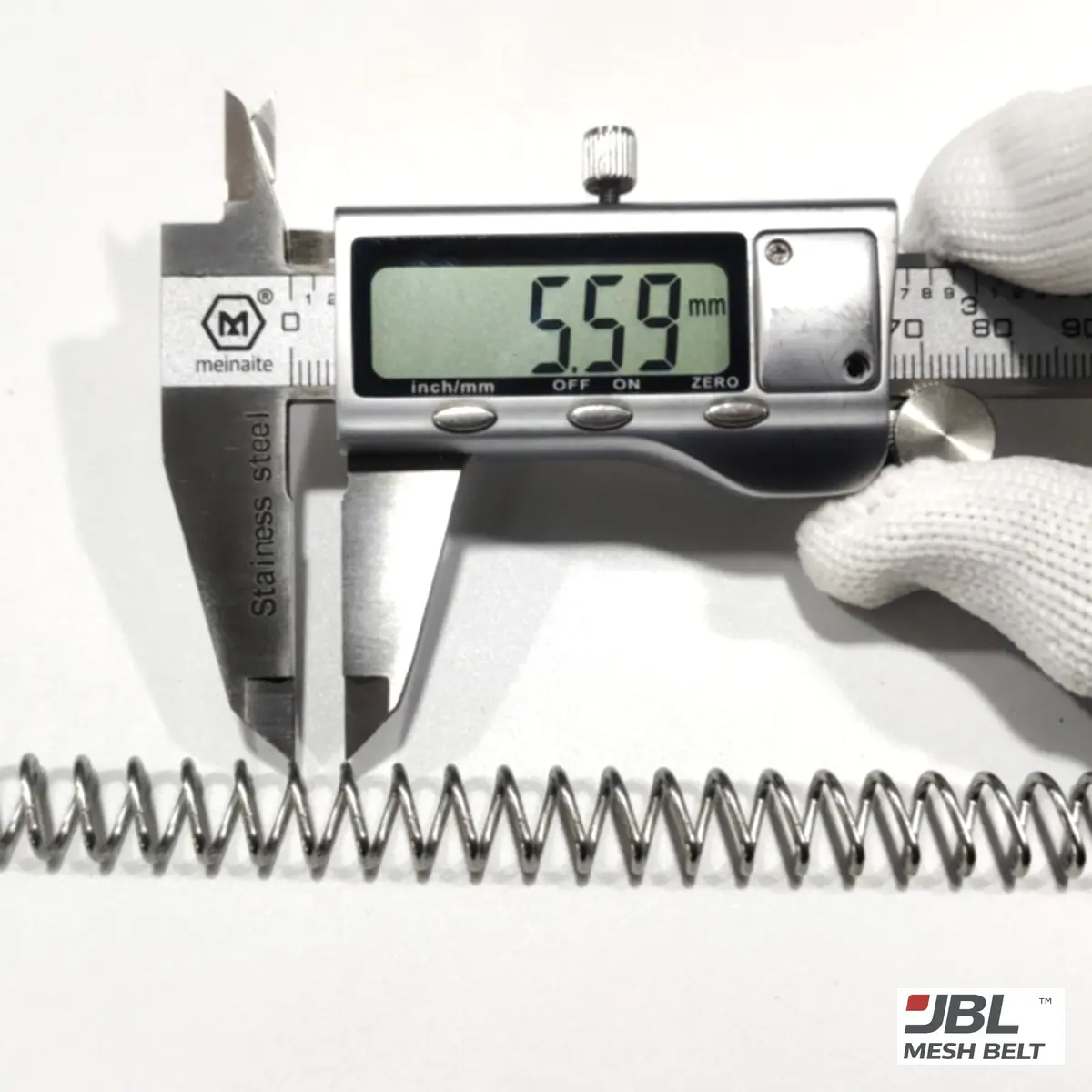
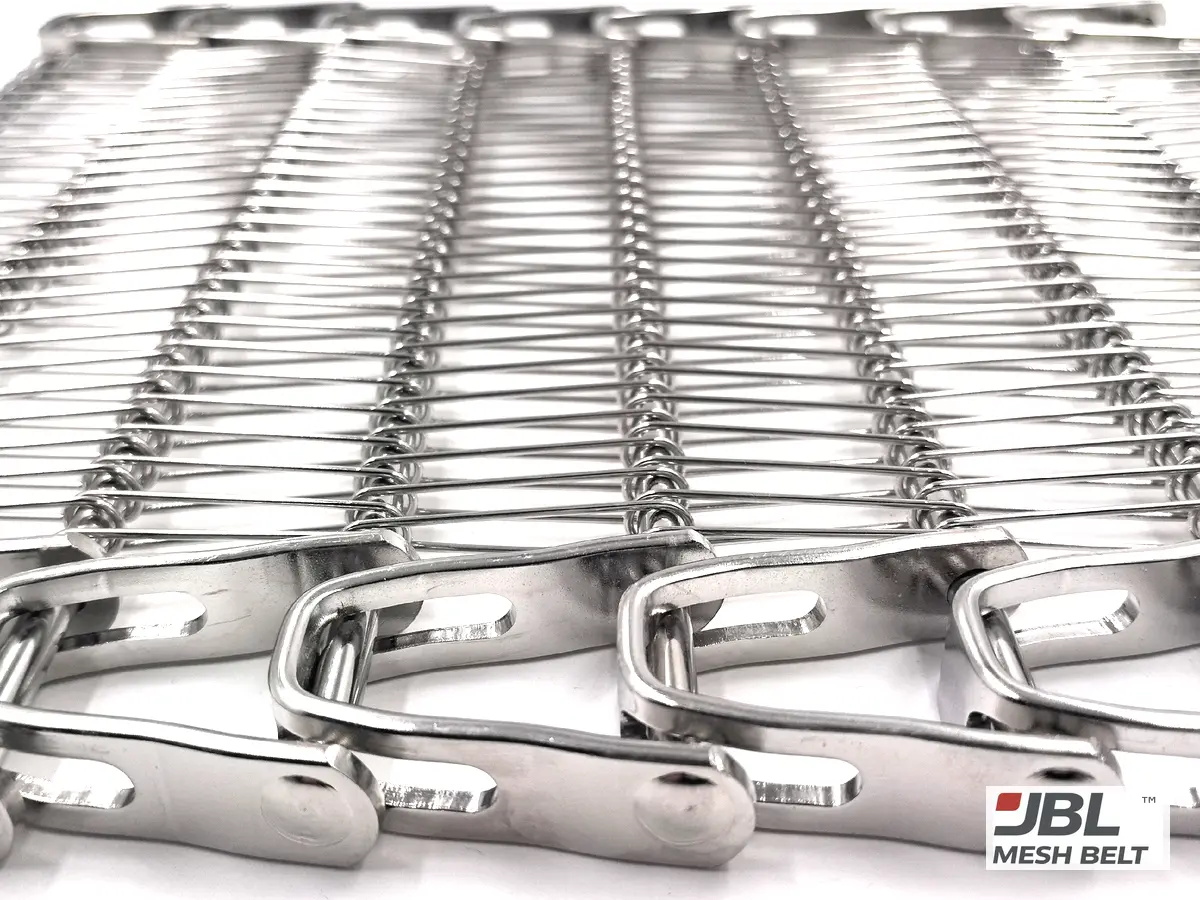
The edge links showed clear wear. When I measured link thickness on the sample, it read 2.42 mm. That is not the size the belt was made with. It is the size after years of running.
| Part | Changes with wear? | How I read it |
|---|---|---|
| Link / side plate thickness | Yes — rubs on rails and drum | Compare worn and less-worn areas |
| Rod diameter | Slightly, where it rubs | Measure away from contact points |
| Rod pitch | Can grow slowly | Measure over several pitches, not one |
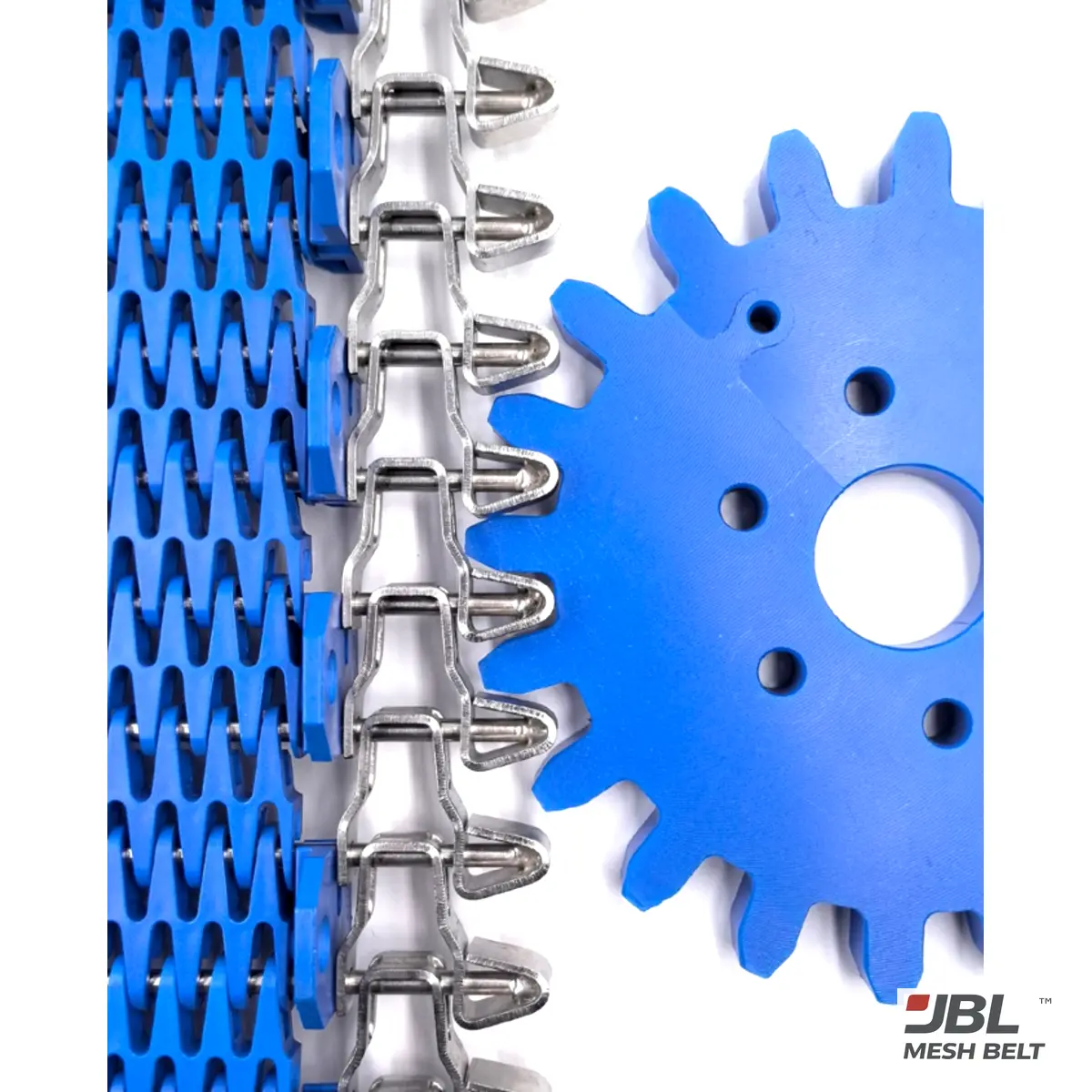
| Sprocket teeth | Yes — clearly | Read bore, keyway and hub; rebuild tooth to the belt |
02How do you separate wear from the original size?
If I copy every reading exactly, the new belt starts its life already worn. That is the mistake I avoid on every worn sample.
Short answer
I measure each fit dimension at several points, compare worn and unworn areas, and check against known standard sizes. Then I make the new belt to the original size and show you both readings side by side.
| Reading | Worn original | New trial run |
|---|---|---|
| Link thickness | 2.42 mm (worn) | 2.71 mm (new) |
| Rod | 4.99 mm | Matched to the original |
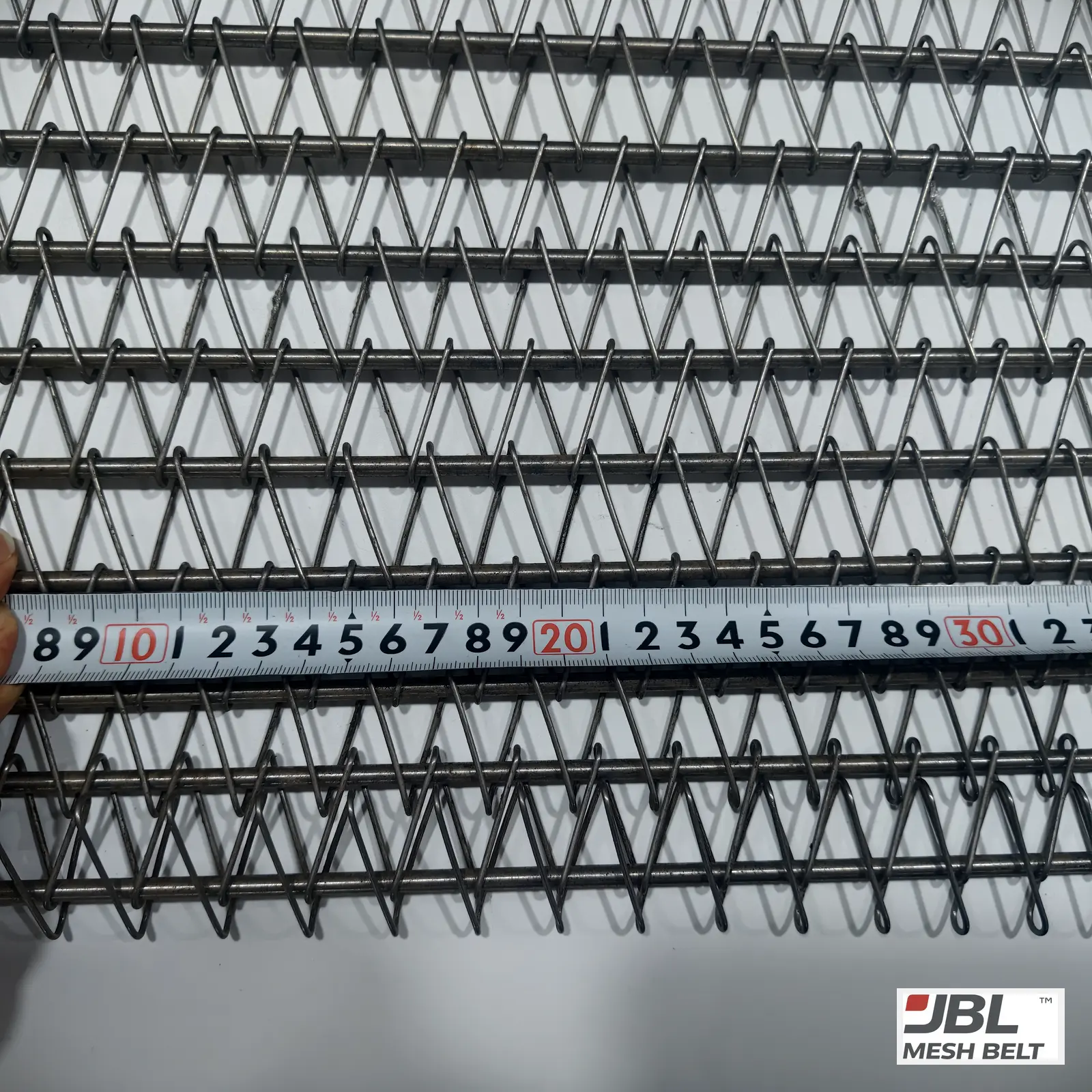
| Pitch along the edge | Read with a tape | Read the same way — compared |
Waffle cooling spiral, February 2026, about 200 m + sprockets.
Wear is rarely even. The inside edge of a spiral wears more than the outside. Areas that touch rails wear more than areas in the middle. So I never trust one reading. I take several and look for the pattern.
Then I compare the worn readings with less-worn areas of the same sample, and with any original data you can send. The goal is the size the belt had when it was new, not the size it has today.
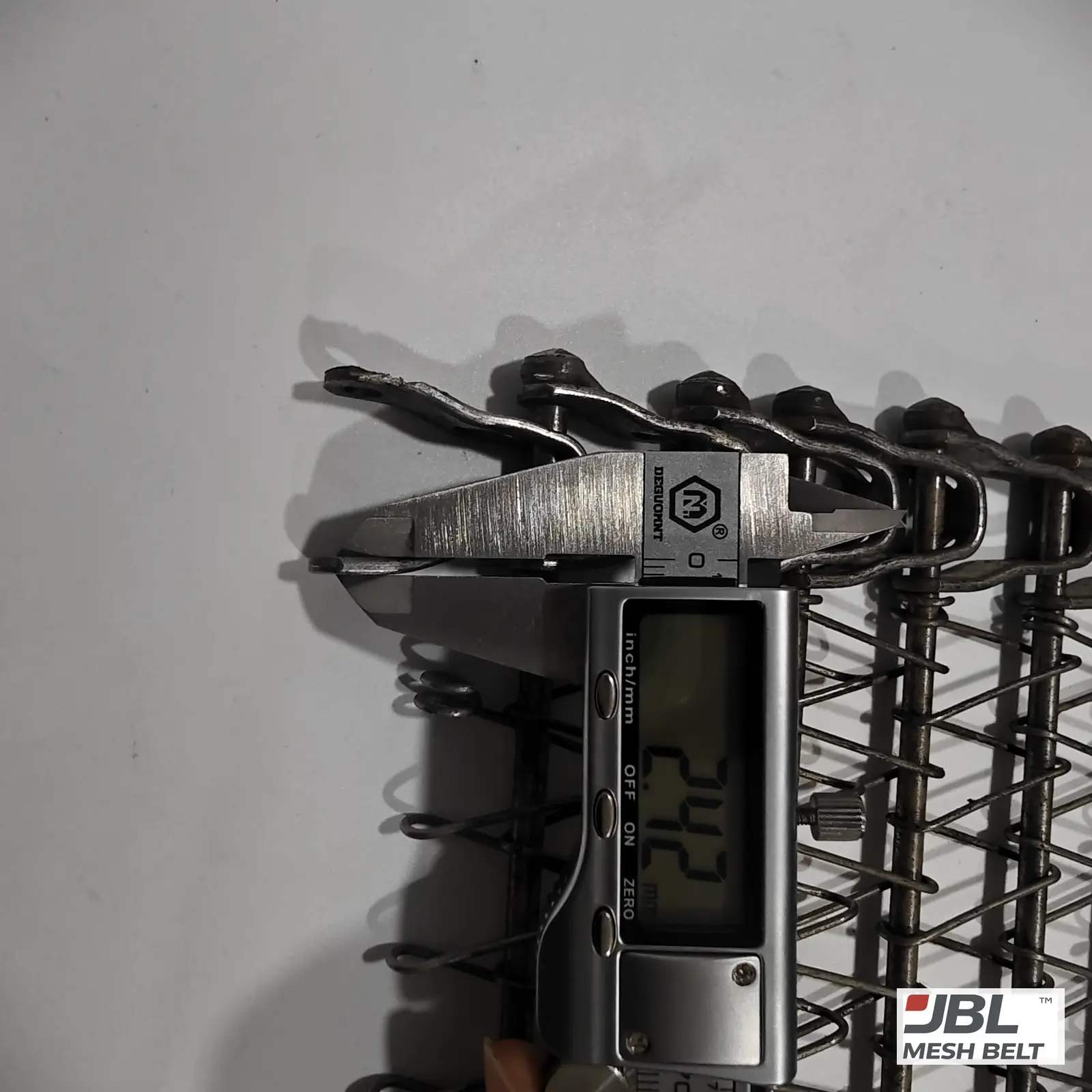
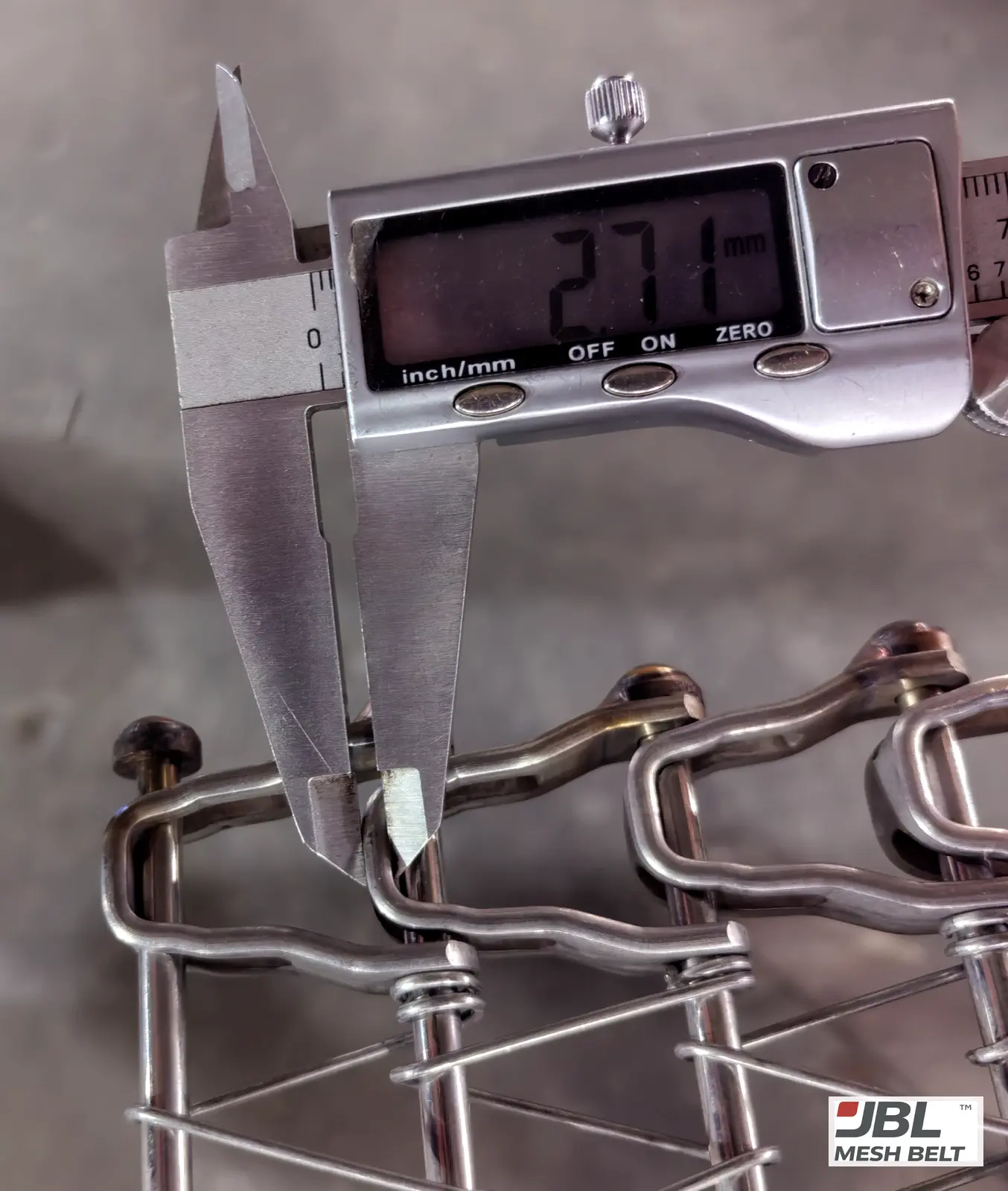
You see both numbers. If you have an unworn spare section, or the original specification sheet, send it. It makes this step faster and more certain.
03Why join a trial section to the old belt?
A drawing tells you the size. Joining a new section to the old belt shows you the fit — with your own eyes.
Short answer
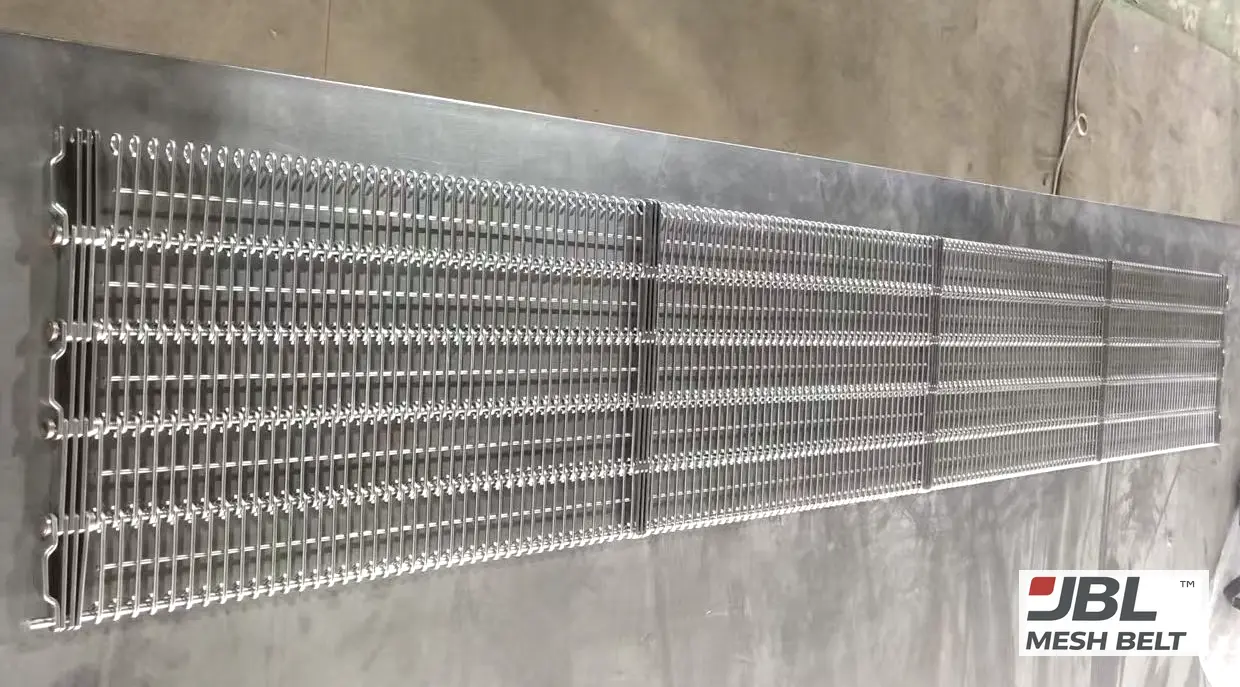
Joining a trial section to your old belt shows directly whether pitch, rods and links match. If they join and run together, the fit is right. I photograph the joint and send it to you before bulk production.
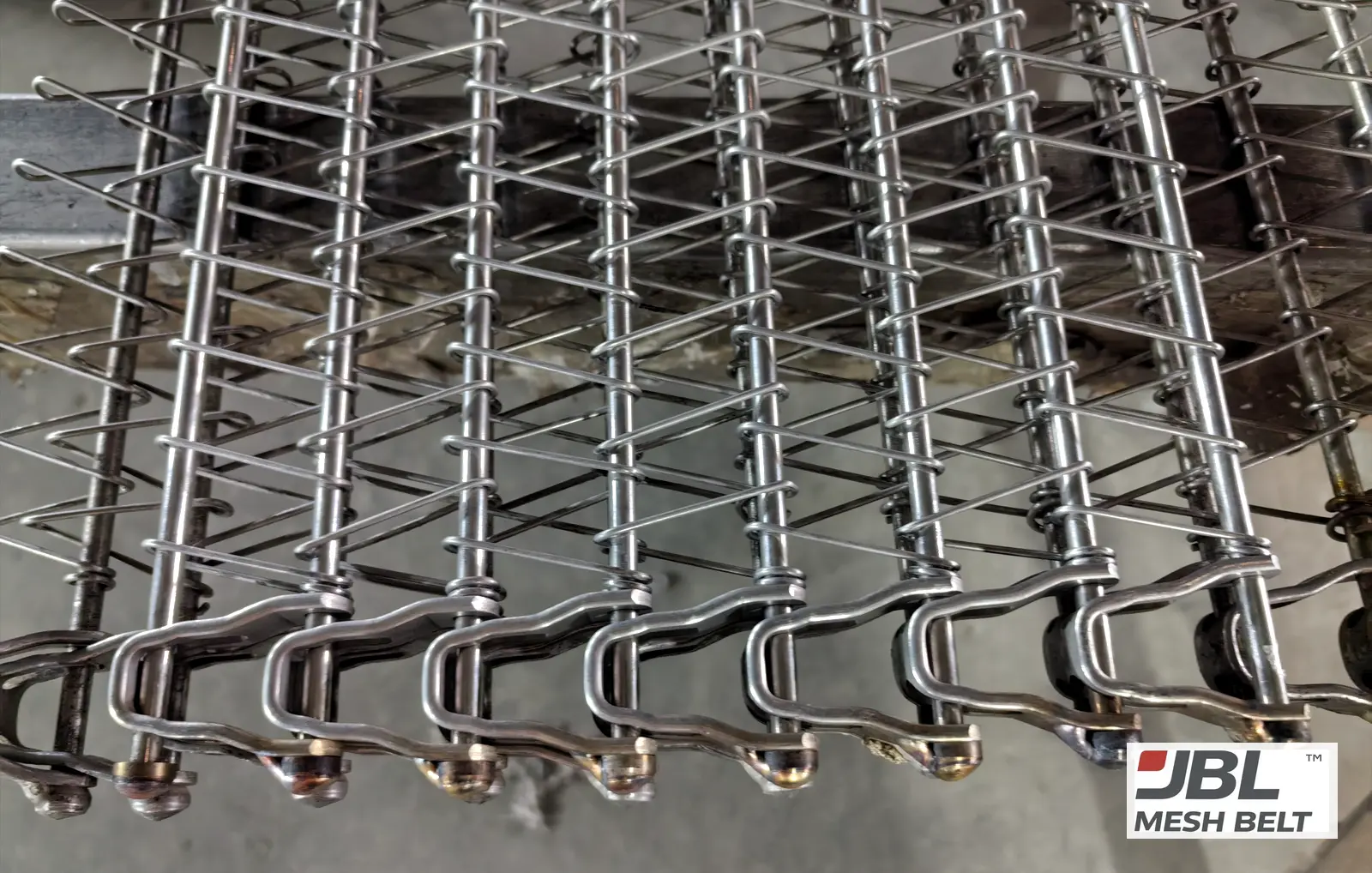
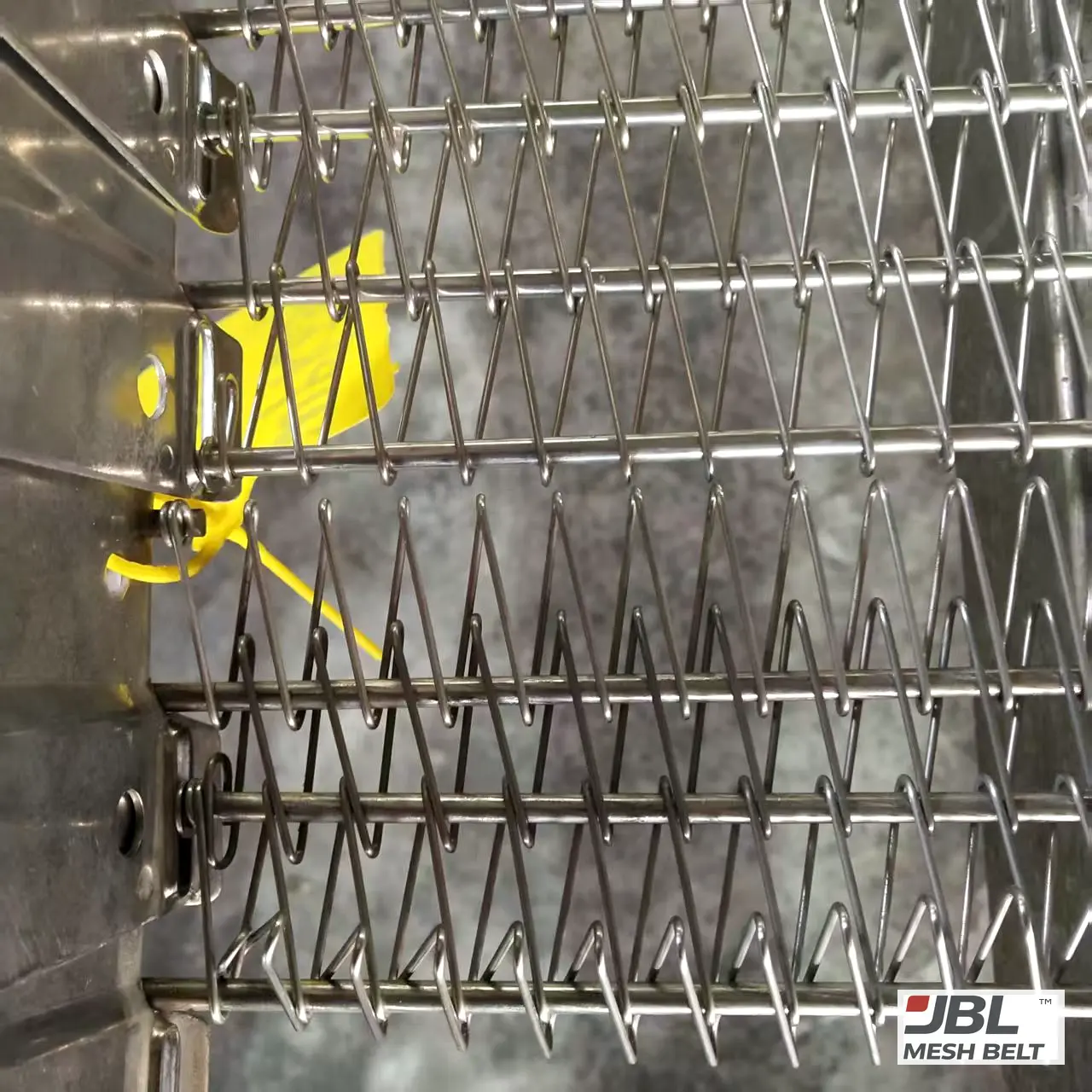
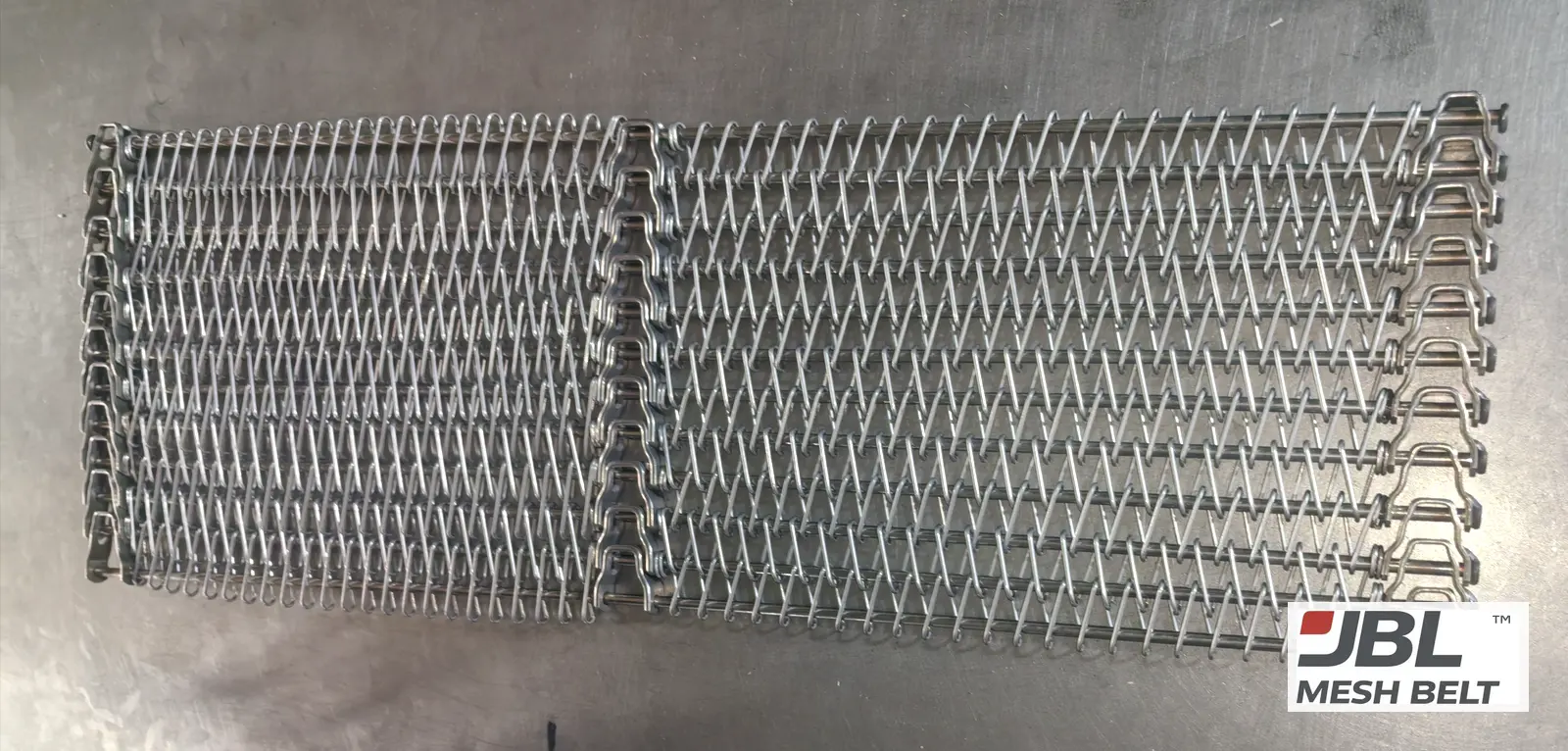
I used this method on three of our published projects: the waffle cooling spiral, a self-stacking belt for a meat plant in Brazil, and a spiral belt in Malaysia. In each case the new section was linked into the customer's original.
The joint tells you things a table cannot. Do the rods pass through both belts? Do the links sit at the same height? Does the mesh continue without a step? If the answer is yes, the bulk belt will fit your machine.
Then prove it on the line
In Brazil the customer went one step further. They ran about 50 m on the freezer before ordering 350 m. After installing the first 350 m, they ordered a second 350 m. Read the Brazil case.
04Can a copy fix the old belt's faults?
A copy should match the fit. It does not have to repeat what was wrong with the old belt.
Short answer
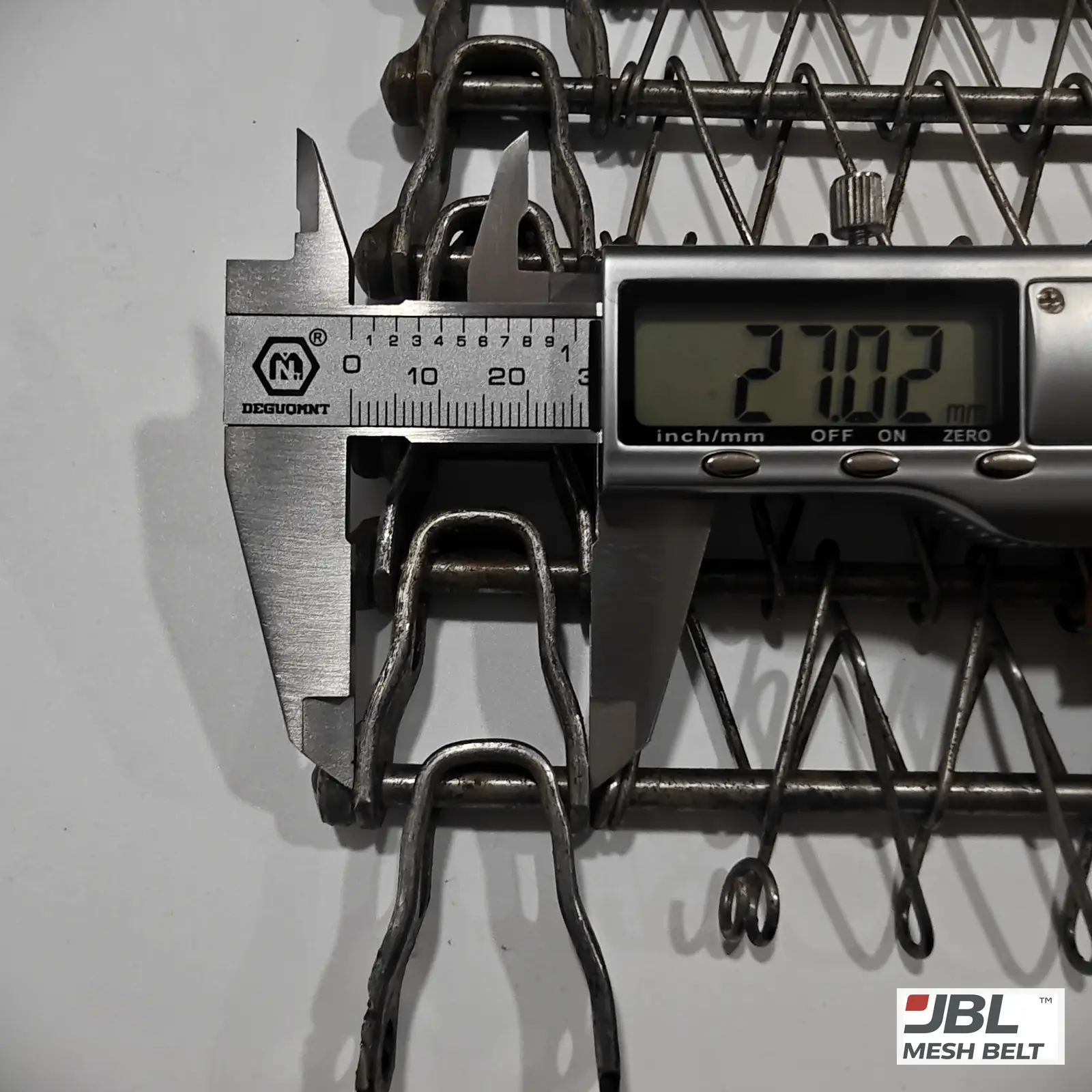
Yes. As long as every fit dimension stays the same, a copy can fix faults such as rough welds or burrs. In a Melbourne bakery project we matched pitch, rod and link, and finished the welds smooth.
| Reading | Original | New sample |
|---|---|---|
| Pitch | 27.41 mm | 27.40 mm |
| Rod diameter | 5.03 mm | 5.00 mm |
| Link thickness | 2.70 mm | 2.70 mm |
| Edge weld | Rough, with burrs | Smooth, cleaned |
Australia, spiral cooling belt, about 400 m.
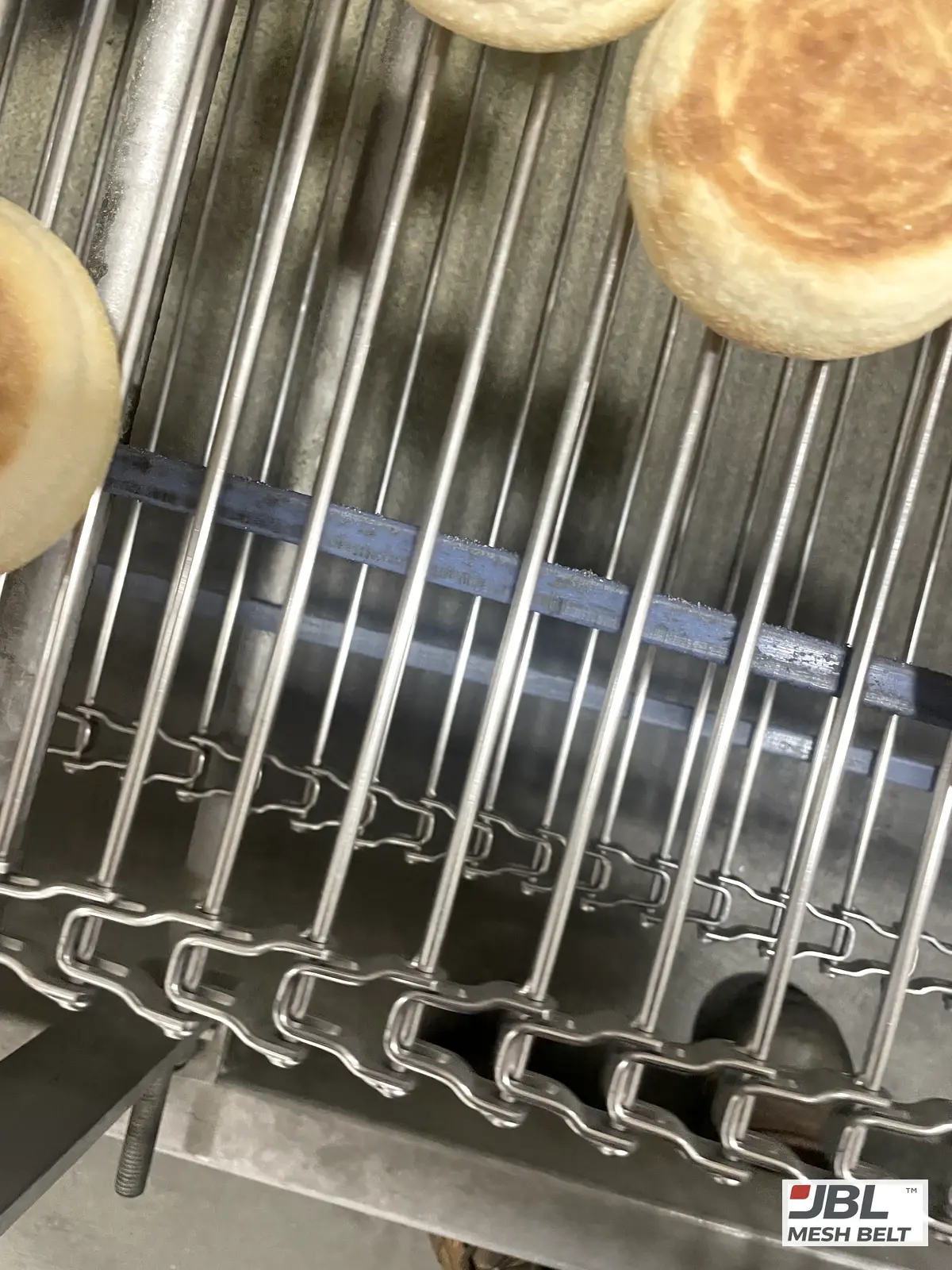
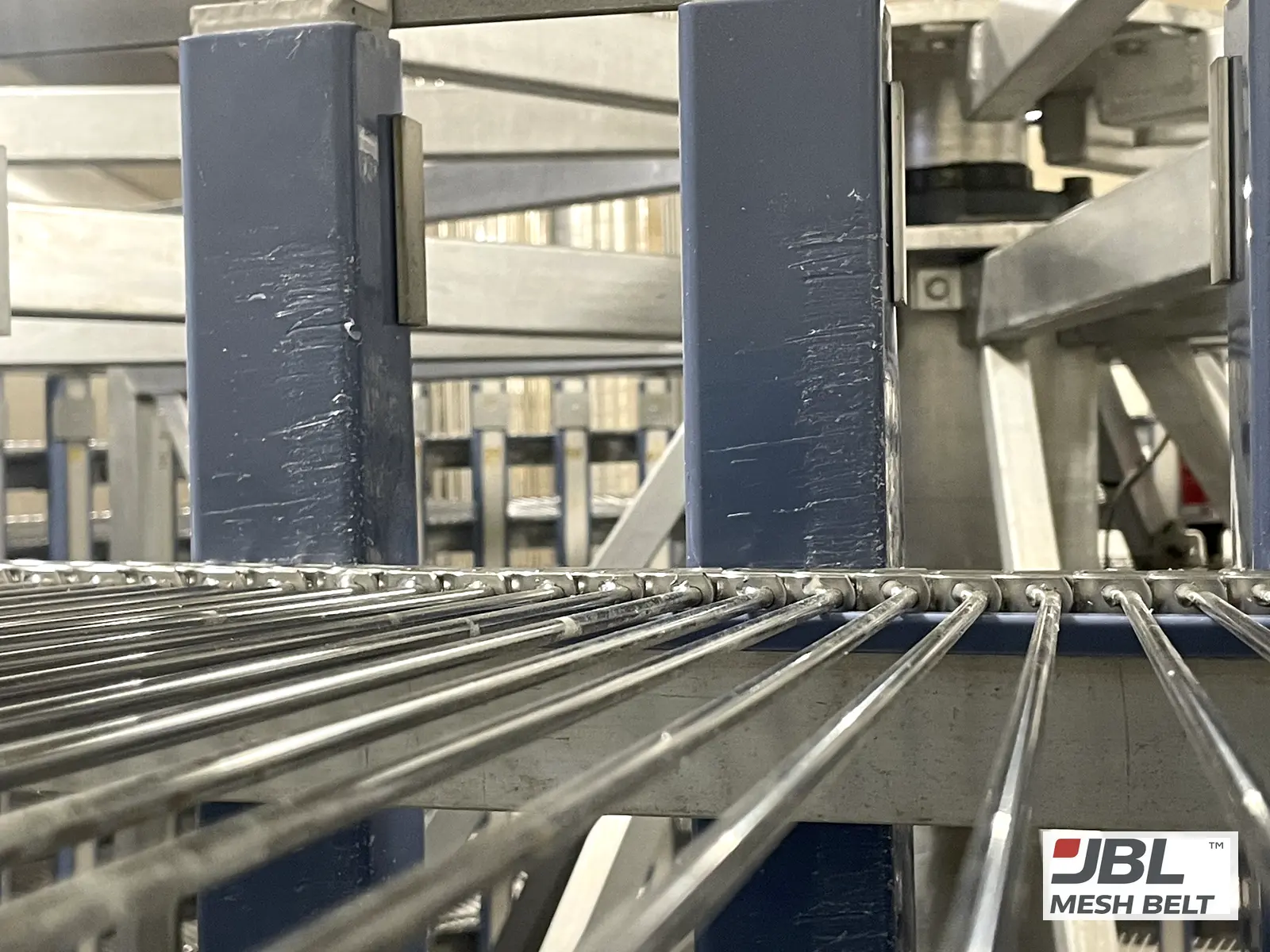
The bakery's main complaint was weld quality. The rod-end welds on the old belt were rough. Plastic shavings built up along the edge, and the blue guide strips were scored.
Copying that belt exactly would have copied the problem. So we kept pitch, rod and link the same and changed only the weld finish. The weld finish was one of the points checked on the sample before bulk.
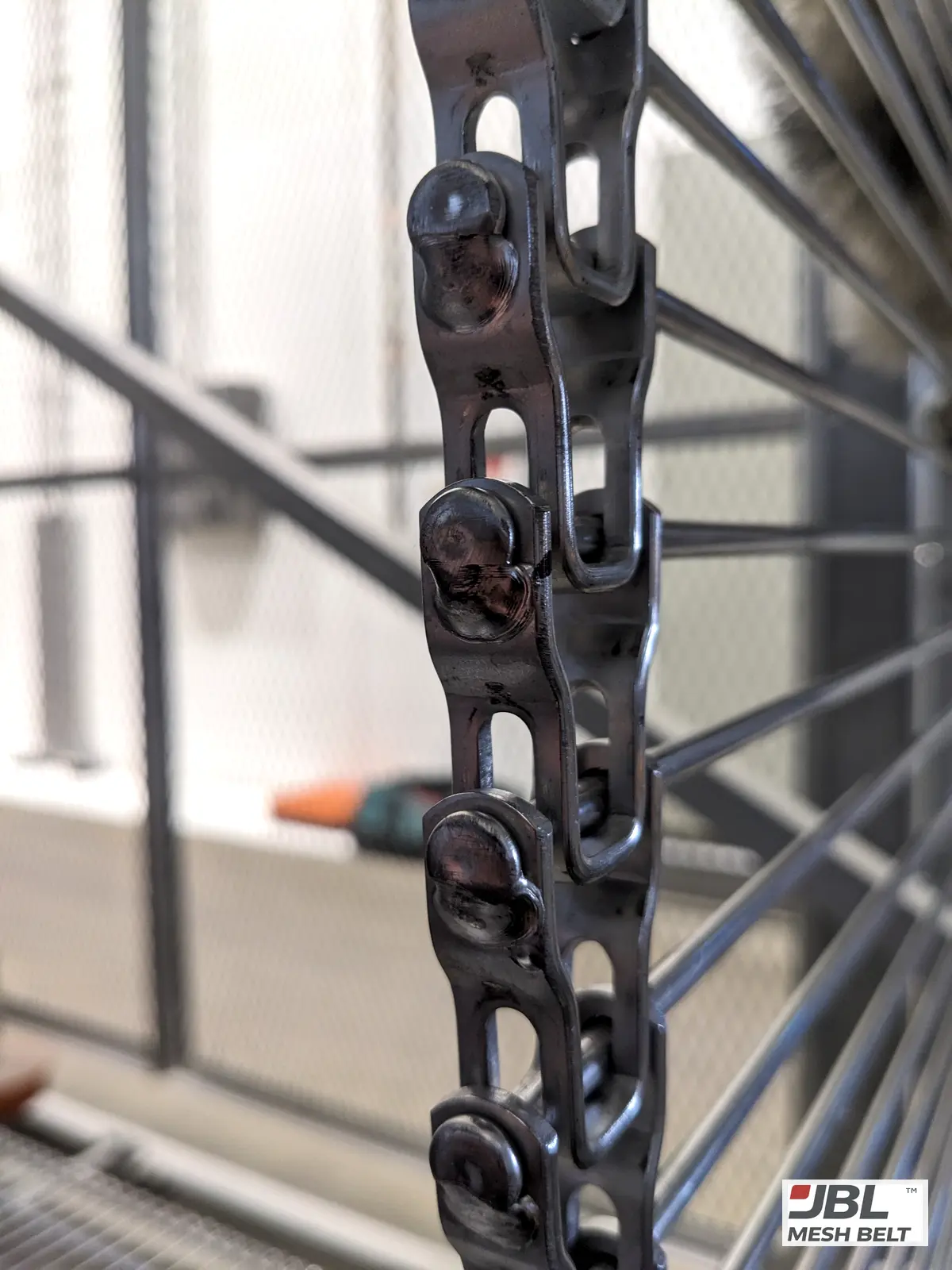
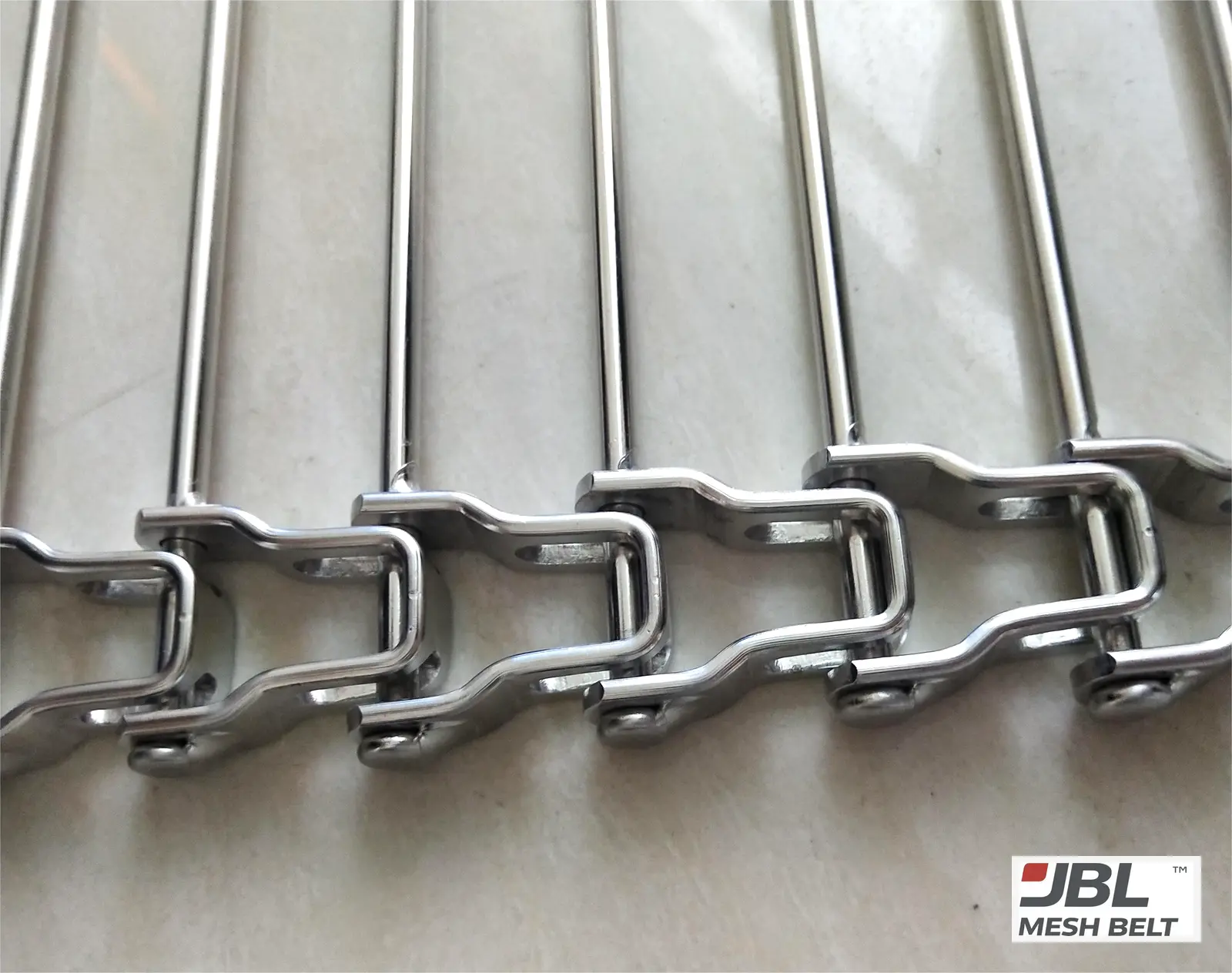
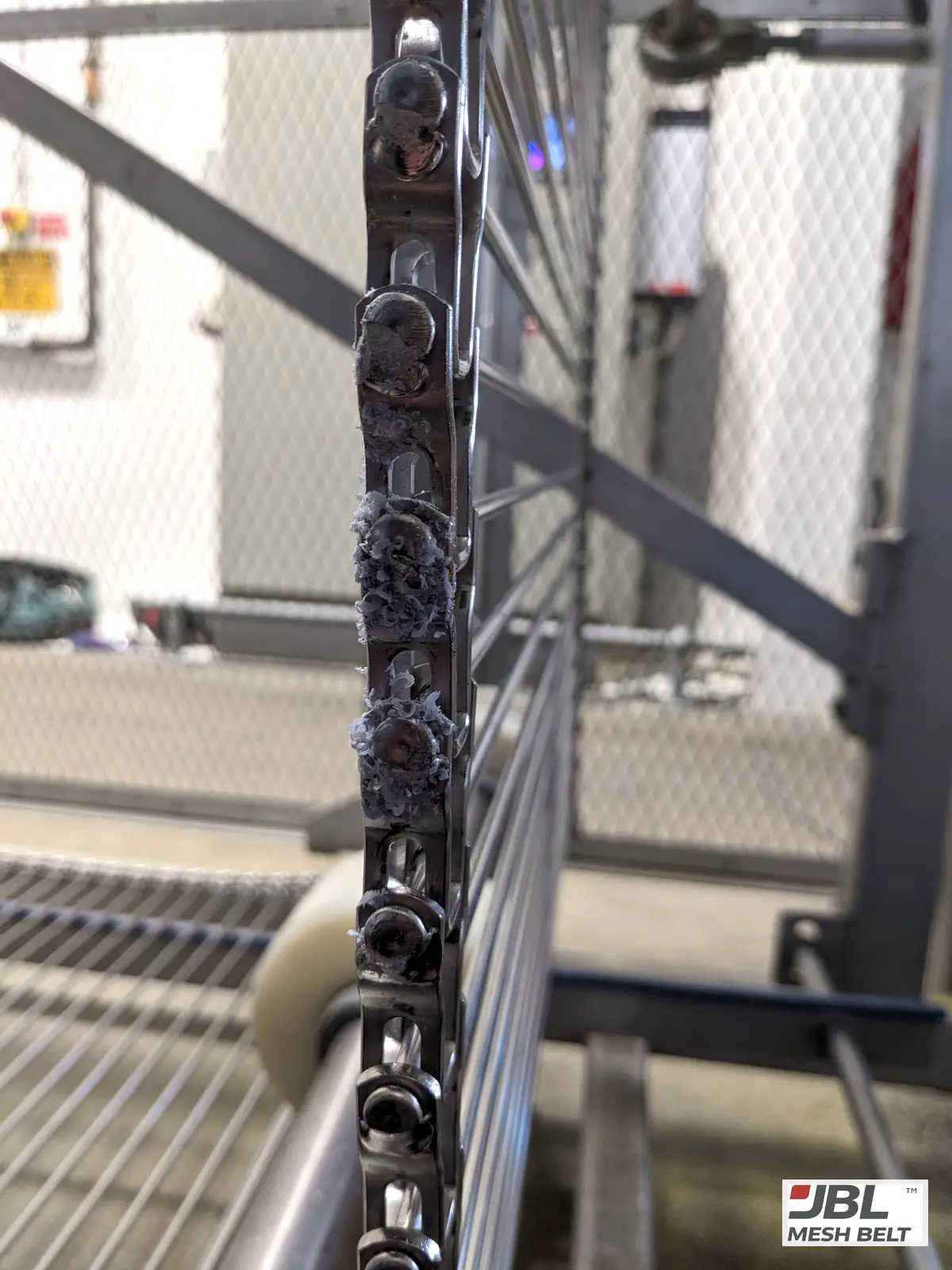
I wrote more about weld burrs in Why Do Weld Burrs on a Spiral Freezer Belt Contaminate IQF Products?
05What should you send with a worn sample?
The sample is the start. A few extra facts help me read it correctly the first time.
Short answer
Send the sample with a note that it is worn and roughly how long it ran. Add an unworn spare section or the original specification if you have one, photos of the belt on the line, and anything the old belt did badly.
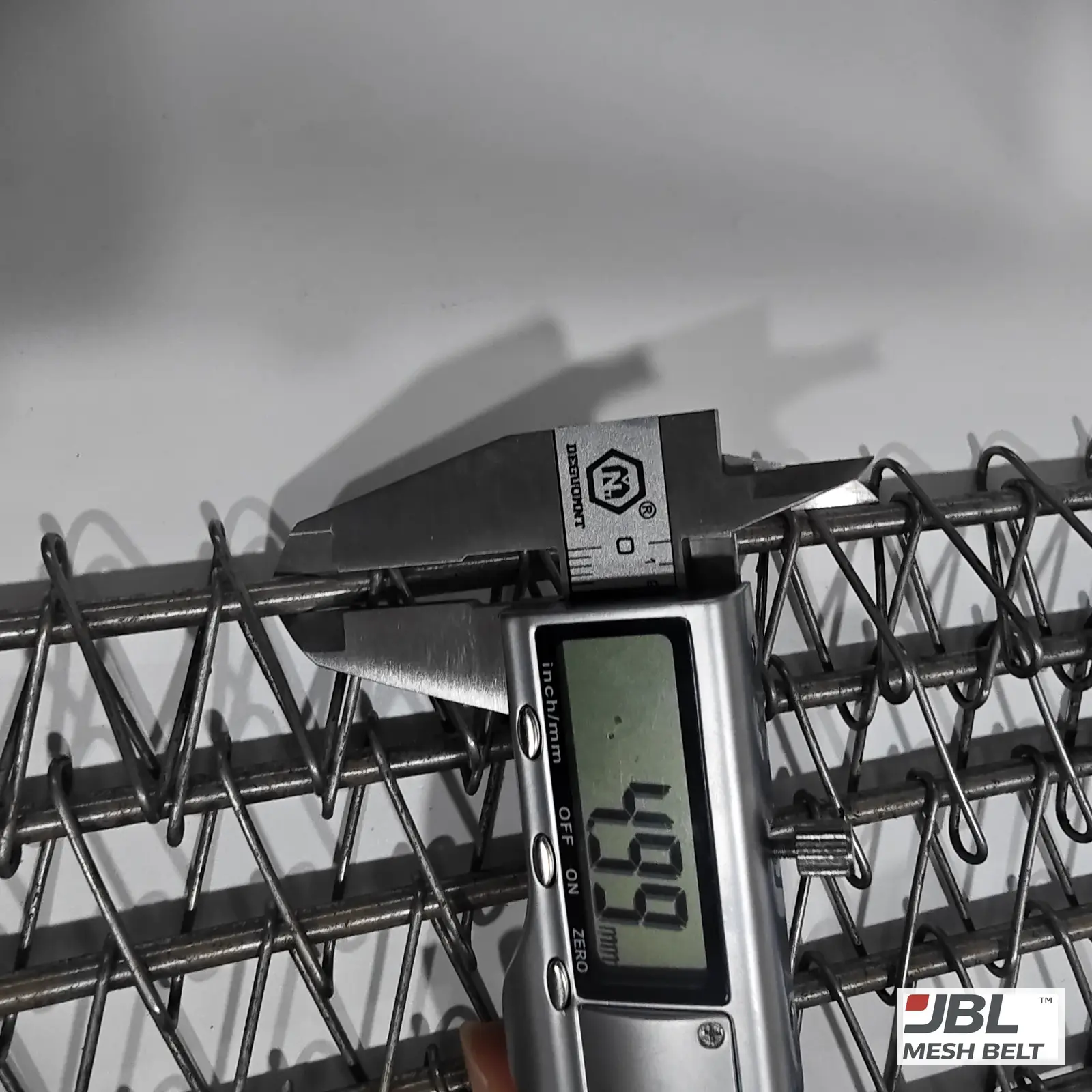
- ✓The sample, and a note that it is worn and roughly how long it ran.
- ✓If you have it: an unworn spare section, or the original belt specification.
- ✓Photos of the belt on the line: edges, sprockets and any damaged area.
- ✓Anything the old belt did badly — burrs, tracking, noise — so the copy can fix it.
- ✓Your sprockets, if they are worn too. We can measure and remake them.
If you want to start with photos, follow my photo and measurement guide. Tell me in the message that the belt is worn. A worn belt measured as new is one of the most common mistakes I see.
When This Is Not the Right Choice
- ✕The sample is so damaged that no fit dimension can be read — then I need the drawing, the freezer data or a spare section.
- ✕Only a small piece of one edge is available — I need both edges to see the full structure.
- ✕You need the belt within days — a trial run and approval take time.
From My Engineering Experience
Almost every sample I receive is worn. Nobody replaces a belt that is still new. So reading wear is not a special skill for me. It is the daily job.
The rule I follow is simple: measure the wear, then decide the size. Never the other way round. The waffle project is the clearest example — 2.42 mm worn, 2.71 mm new.
And I always ask what the old belt did badly. In Melbourne, that one question turned a copy into an improvement.
— Spring, Sales Director, JBL Mesh Belt
Evidence From Our Work
Waffle cooling spiral, 2026 — belt + sprockets →
| Step | Detail |
|---|---|
| Start | Worn belt section and sprockets; no drawing |
| Wear found | Link 2.42 mm worn; made new at 2.71 mm |
| Fit check | Trial run joined to the original; approved from photos |
| Result | About 200 m belt + sprockets, running-tested before packing |
Melbourne, Australia, 2023–2024 — bakery spiral cooling →
| Step | Detail |
|---|---|
| Problem | Rough rod-end welds, plastic shavings, scored guide strips |
| Fit | Pitch 27.41 → 27.40 mm; rod 5.03 → 5.00 mm; link 2.70 → 2.70 mm |
| Fix | Welds finished smooth; checked on the sample |
| Result | About 400 m belt + nylon sprockets |
FAQ
Q1Can you copy a belt that is badly worn?
Yes. We identify the wear on your sample, make the new belt to the original size, and compare a trial run with your old belt before bulk.
Q2Which dimensions change with wear?
Mainly the parts that rub or carry load, such as link thickness. We read them, then compare them with unworn areas or known values.
Q3Can the new belt fix problems the old one had?
Yes, as long as the fit dimensions stay the same — for example, smooth welds instead of rough ones.
Q4Will I see the result before the full order?
Yes. We photograph the trial run next to or joined to your original, measure it, and start bulk production after you approve.
Q5Can you copy worn sprockets too?
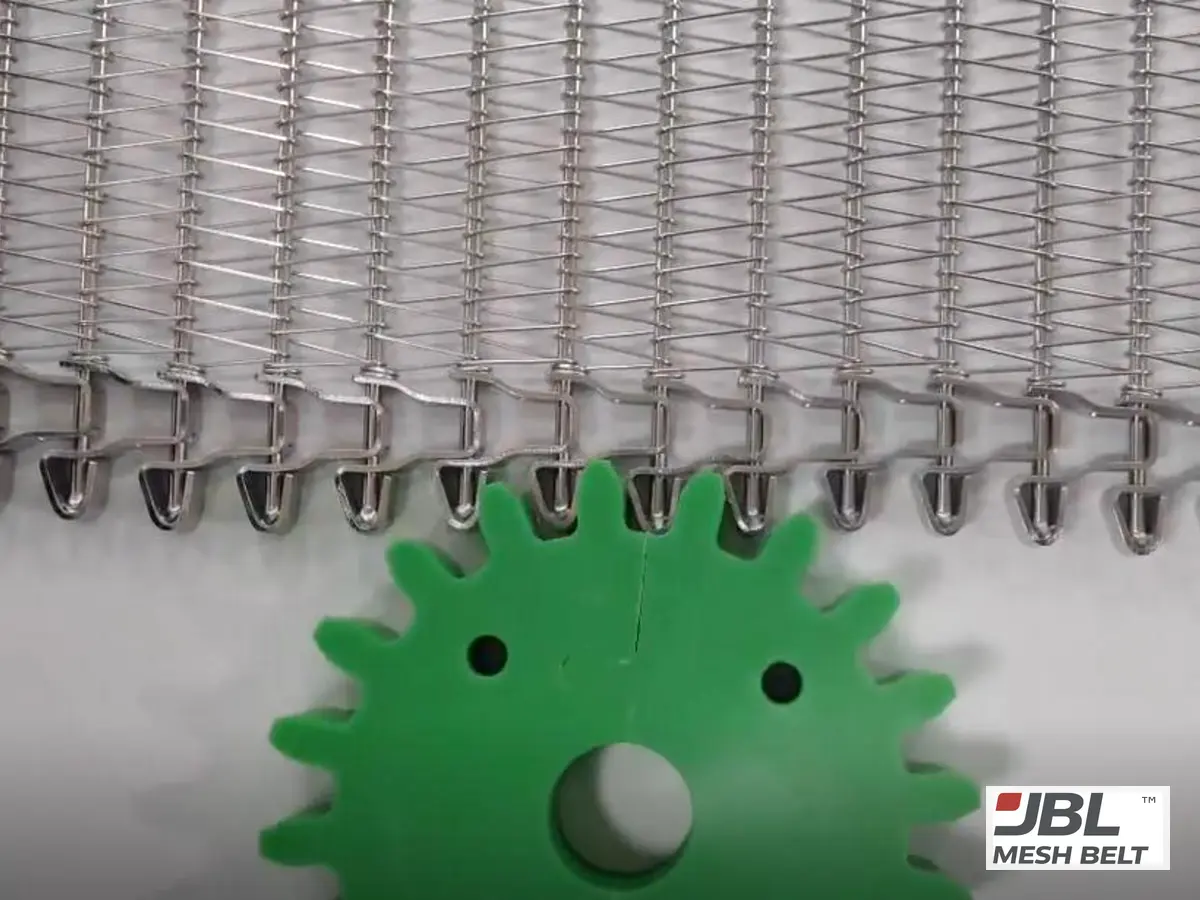
Yes. We measure bore, keyway and hub, rebuild the teeth to the belt, and run the new sprockets on the new belt before packing.
Conclusion
A worn sample is a good start — if wear is measured, not copied. Original size restored, faults fixed, trial run checked before bulk.
Download the Spiral Freezer Belt Technical Specification (PDF)
Specification ranges and options in mm and inch. Enter your work email and the file downloads right away.
References

Your contact for this belt
Spring · Sales Director, JBL Mesh Belt · 16 years
“Your belt is worn, the OEM price is high, and there is no drawing. That is where I start.”
Send me a worn section, a few photos with a caliper in the picture, or a drawing. I tell you what fits, what is missing, and show you a sample measured against your own belt before you pay for the full length. Buyers in the UK, the USA, Australia, Brazil, South Korea, Spain and Malaysia have replaced belts this way.
- ✓Readings on your original next to readings on our sample
- ✓Nothing in bulk until you approve the sample
- ✓Turning, stacking or sprocket tests before your belt ships
- ✓A reply from me, usually within 8 hours