Choosing the right spec · 8 min read
304, 316 or 316L: Which Stainless Steel Should a Washing or Steam Line Belt Use?
 Written bySpringSales Director, JBL Mesh Belt · 16 years in metal conveyor beltsProjects in United Kingdom · USA · Australia · Brazil · South Korea · Spain · Malaysia · LibyaPublished
Your belt runs wet all day, or in steam with cleaning chemicals. Is SUS304 enough, or do you need 316 or 316L?
Short answer
It depends on water, chlorides, cleaning chemicals and temperature. On our projects a chip fryer and pizza ovens used SUS304, a steam oven tunnel cleaned with acid and alkaline agents used 316 throughout, and a can washing line used SUS316L. The grade goes on the drawing.
At a Glance
| Line | Conditions | Grade used | Project |
|---|---|---|---|
| Can washing line | Wet all day, washing chemistry | SUS316L | Australia, 2022 |
| Steam oven tunnel | Steam; acid and alkaline cleaning | 316 — mesh, rods and chain | Australia, 2023 |
| Potato chip fryer | Hot oil | SUS304 | Libya, 2025 |
| Pizza ovens | Oven heat | SUS304 | Australia, 2025 |
The grade is not a habit. Each of these was chosen for what the belt runs in. Here is how I think about it, and what I ask before I write a grade on a drawing.
01What is the difference between 304, 316 and 316L?
All three are austenitic stainless steels. The difference is what is added — and what it costs.
Short answer
316 adds molybdenum to 304, which generally improves resistance to pitting in wet, chloride-containing conditions. 316L is the low-carbon version of 316, generally preferred where the steel is welded. 316 and 316L cost more than 304.
| Grade | What changes | Where it went on our projects |
|---|---|---|
| SUS304 | The base food-industry grade | Chip fryer (Libya), pizza ovens (Australia), bakery cooling spiral (Melbourne) |
| 316 | Molybdenum added | Steam oven tunnel: mesh, rods and chain (Australia) |
| SUS316L | 316 with low carbon | Can washing line (Australia) |
Why not 316 everywhere?
Because it costs more, and on many lines it adds nothing. A belt in a dry pizza oven or a hot-oil fryer does not see the chlorides that make 316 worth paying for. Choosing 316 where 304 is enough wastes money. Choosing 304 where chlorides are present can cost a belt.
That is why I ask about the line, not only the belt. Salt, brine, chloride cleaners and how well the belt is rinsed and dried all matter. So do temperature and how often it is cleaned.
| Question I ask | Why it matters |
|---|---|
| Does the belt run wet all day? | Constant moisture raises the corrosion risk |
| Is there salt, brine or a chloride cleaner? | Chlorides are what 316 is chosen for |
| Which cleaning agents, and how strong? | Acid and alkaline cleaning moved our steam oven belt to 316 |
| Is the belt welded? | Low-carbon 316L is generally preferred for welded parts |
What about cost over the life of the belt?
Price per metre is only part of it. A belt that corrodes early costs a stop, a new belt and the labour to fit it. Where chlorides are present, the extra cost of 316 is usually small next to that. Where they are not, 304 does the same job for less.
For general background on grades and life cycle cost, see the World Stainless Association links at the end of this article.
02Why was the can washing line belt made in 316L?
The belt carries cans through a washing line. It runs wet all day, and the customer had only a sample.
Short answer
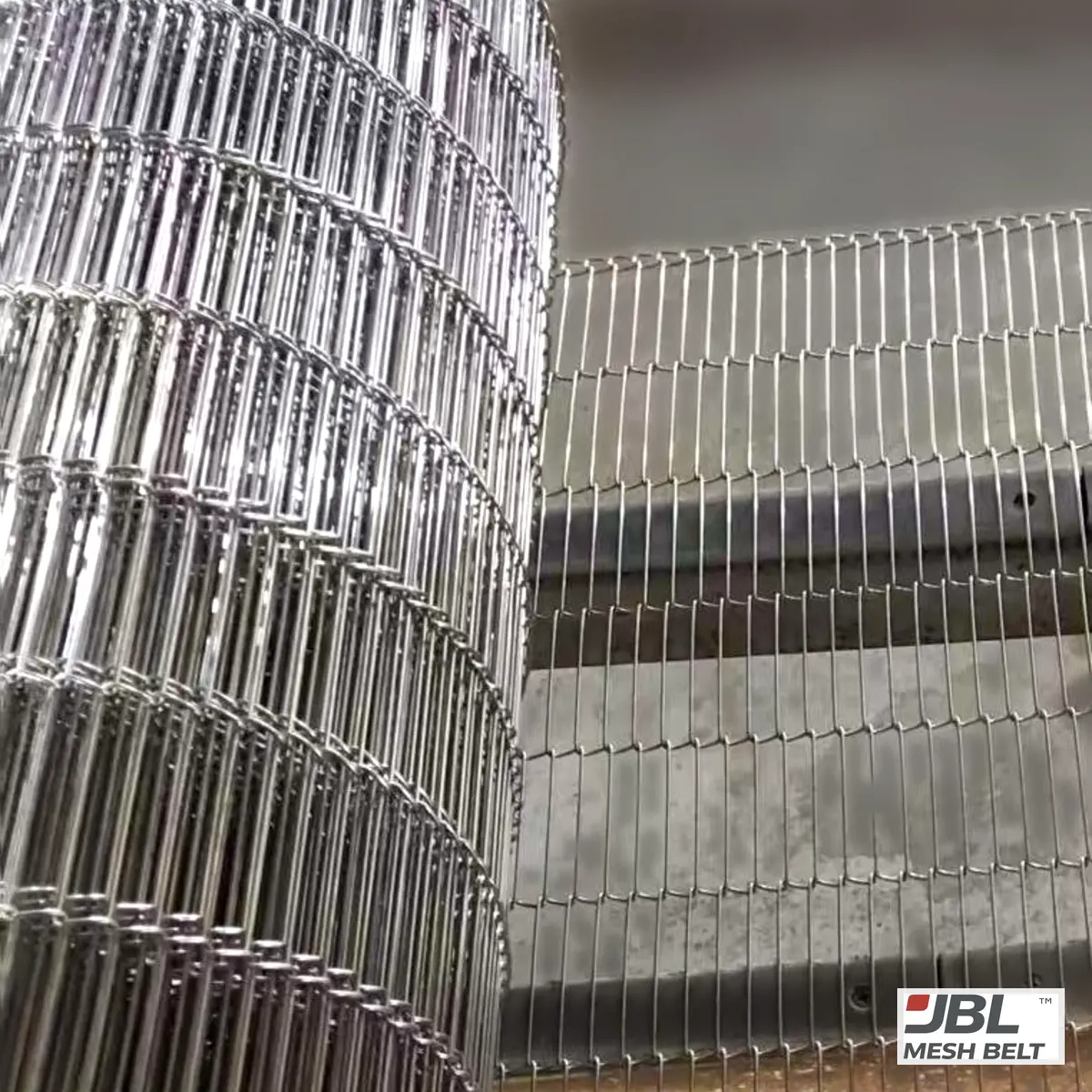
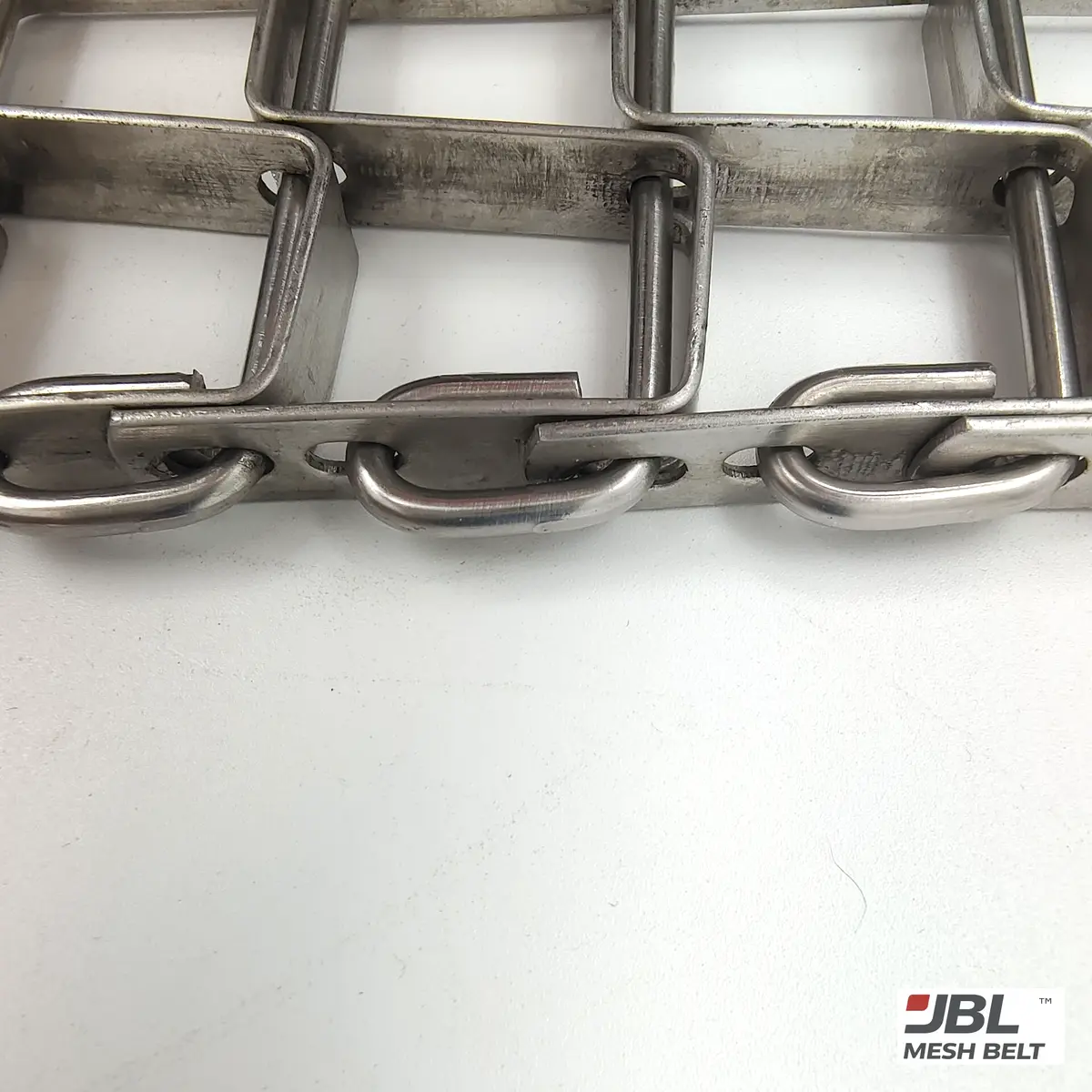
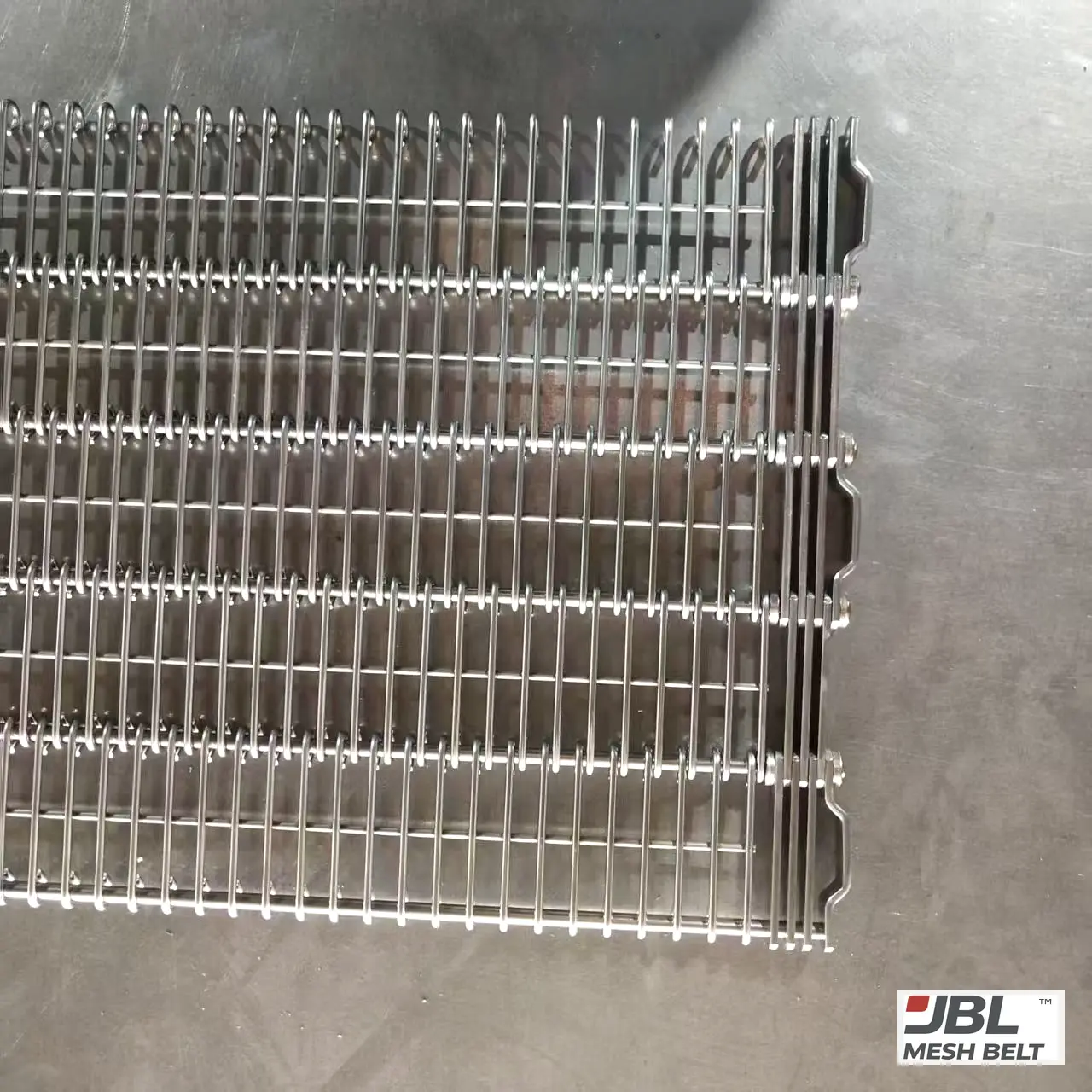
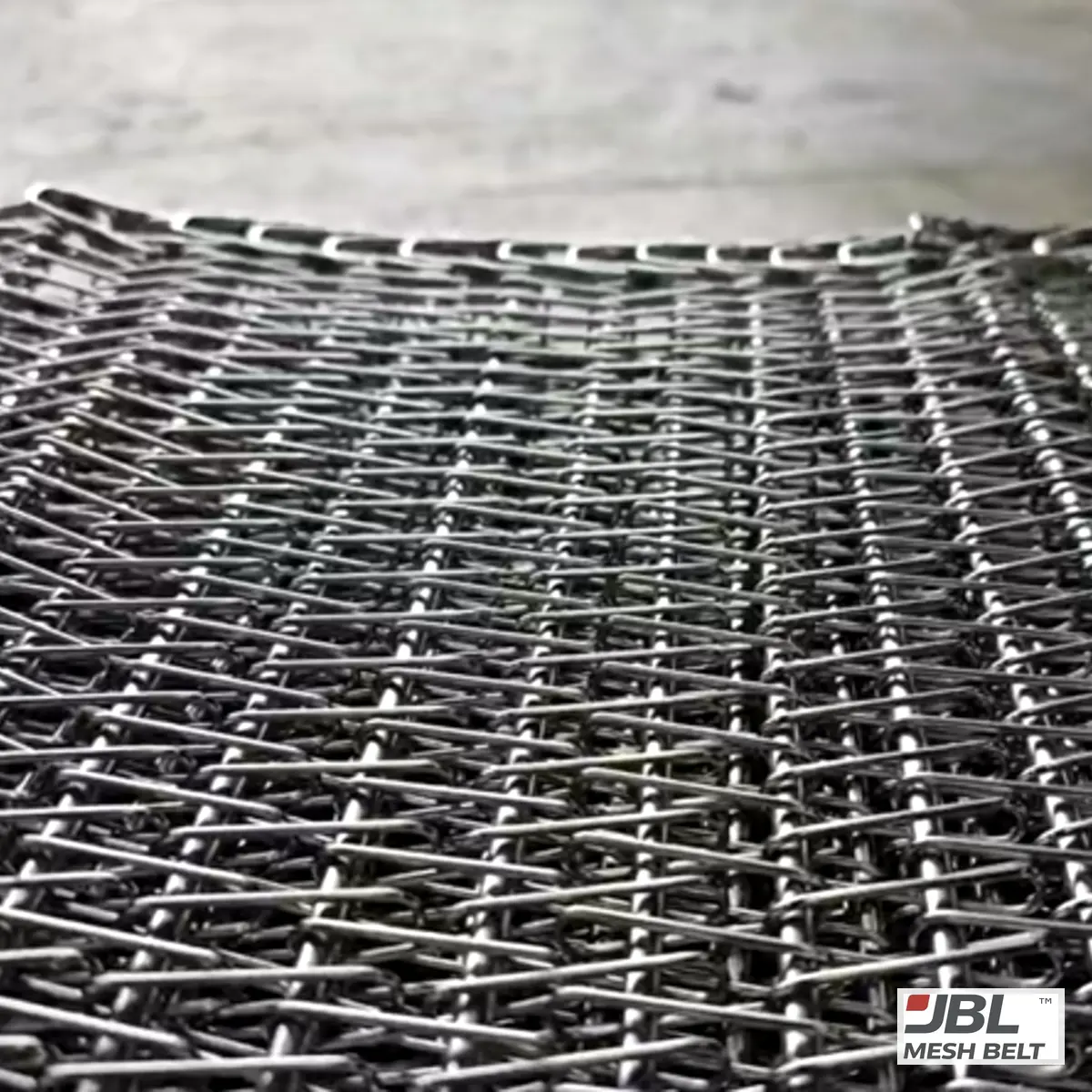
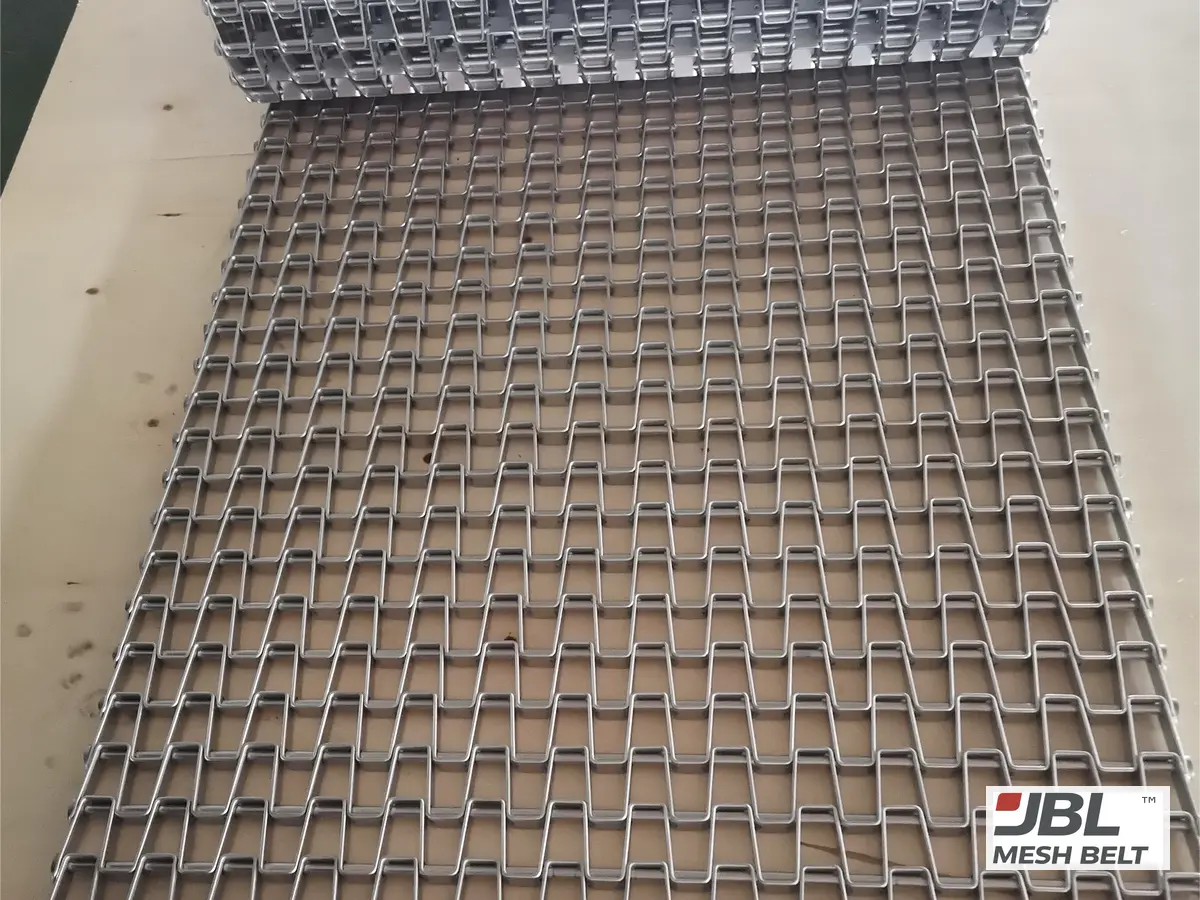
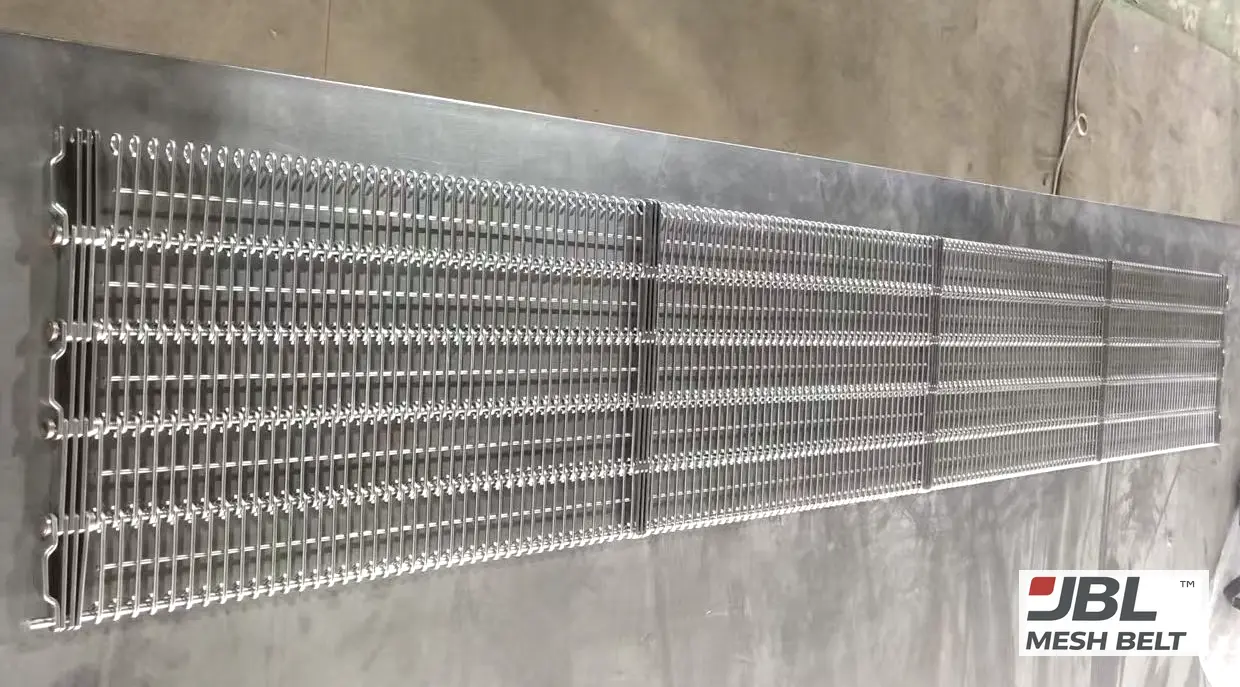
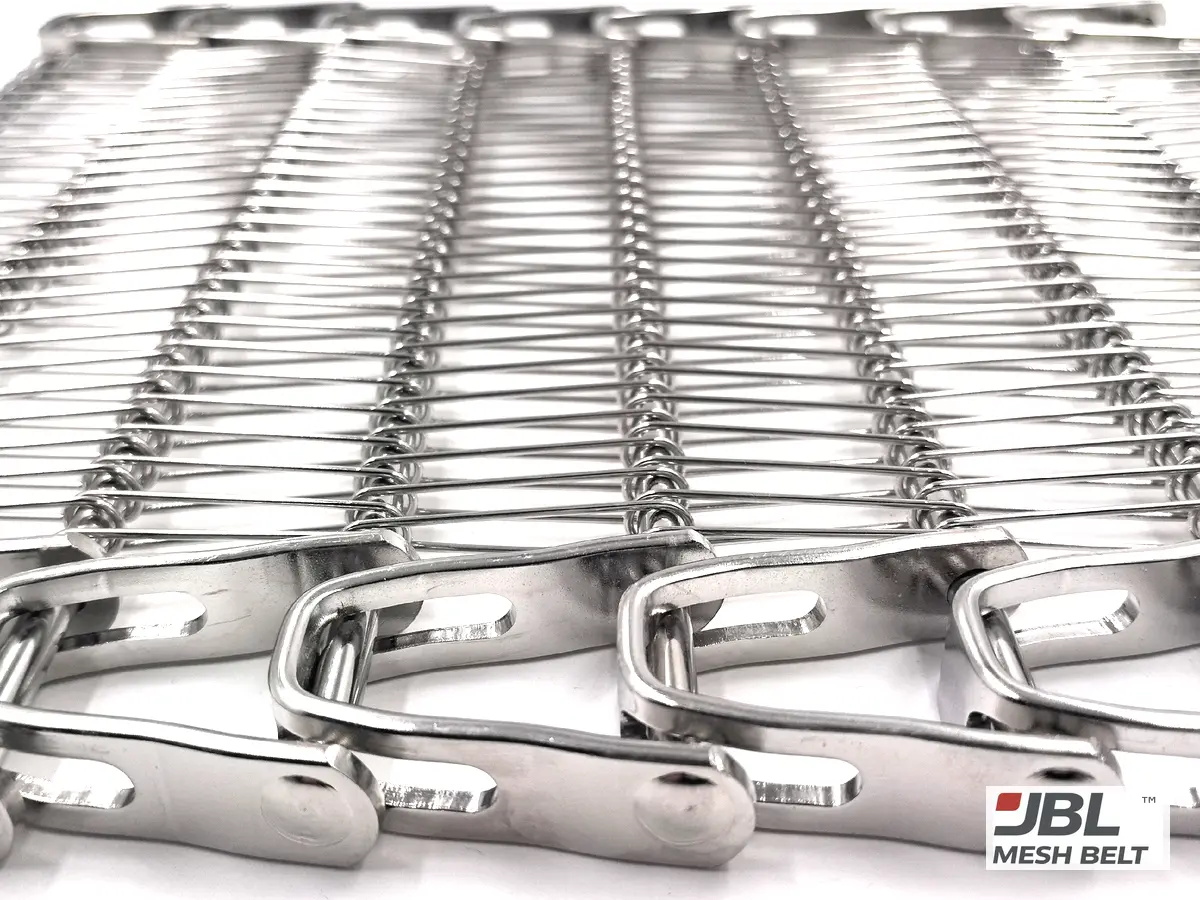
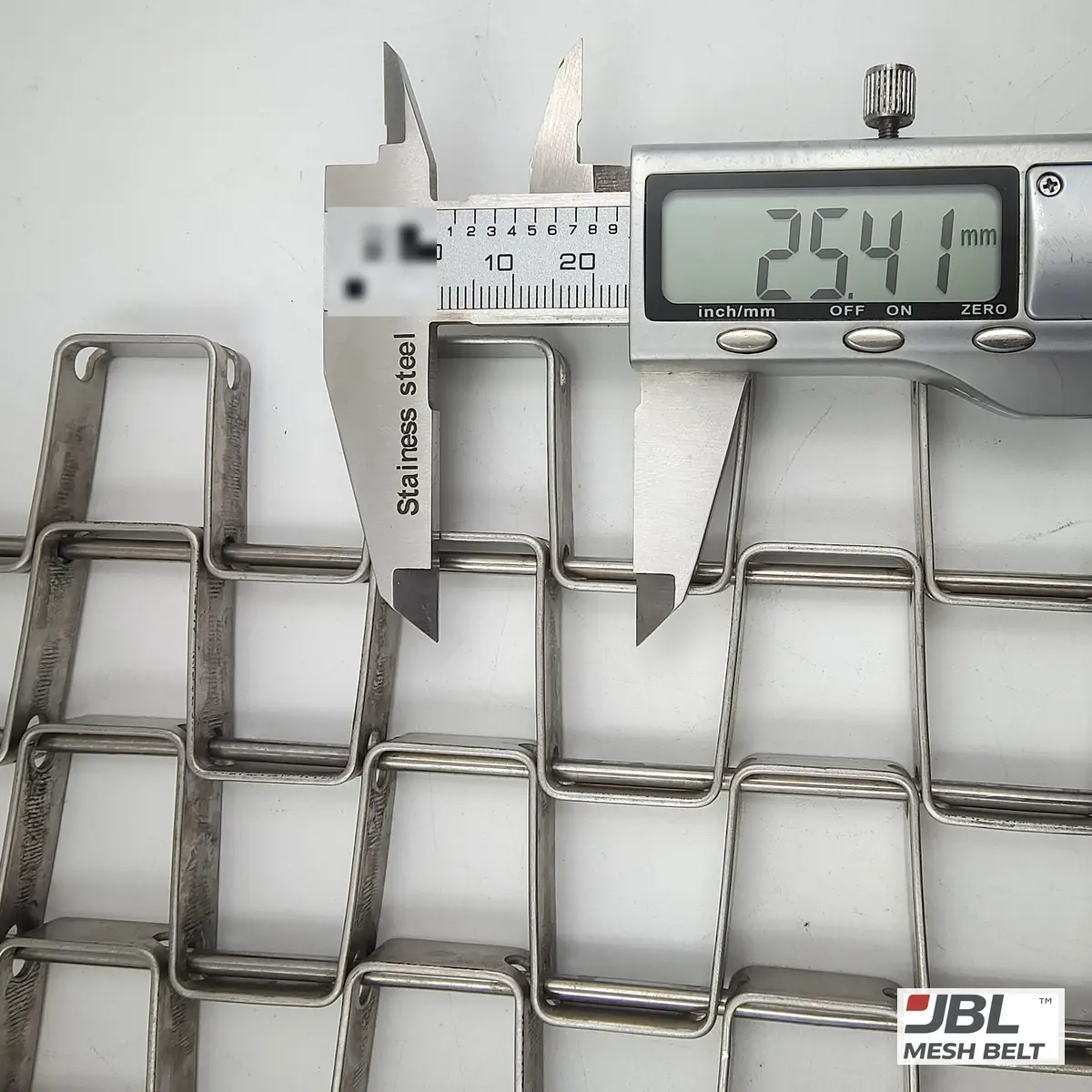
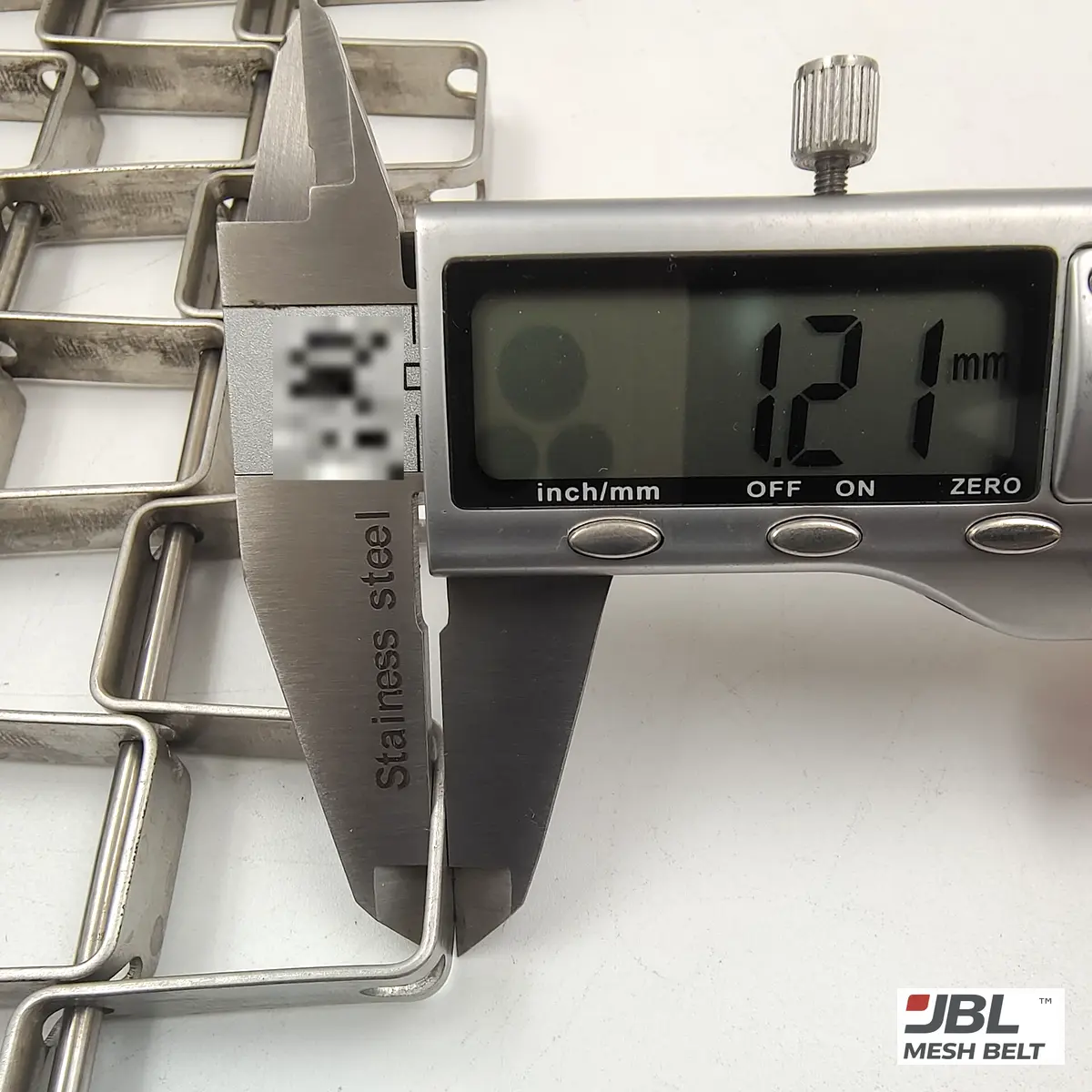
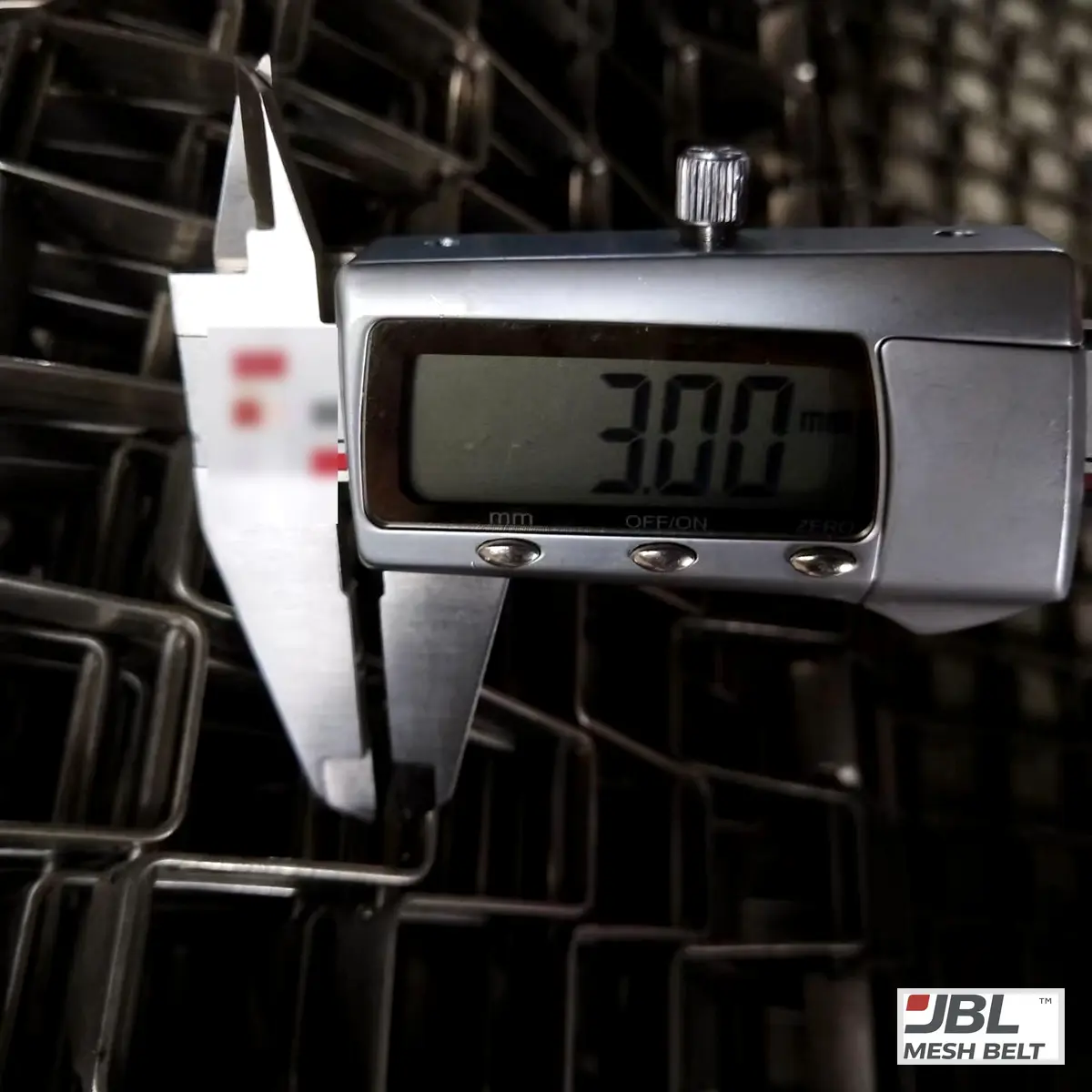
The Australian can washing belt was a flat wire belt made in SUS316L for a line that runs wet all day. Pitch 25.4 mm, rod 3.0 mm, flat strip 1.2 × 9.5 mm and a clenched edge were copied from the sample; about 61 m was supplied in two rolls.
| Value | Customer's sample | New belt |
|---|---|---|
| Pitch | 25.41 mm | 25.4 mm (spec) |
| Cross rod | 2.97 mm | 3.00 mm |
| Flat strip | 1.21 × 9.50 mm | 1.2 × 9.5 mm (spec) |
| Edge | Clenched | Clenched |
| Material | Stainless steel | SUS316L |
Belt width and order details are withheld.
The grade was set for the washing line, not copied from the sample — a sample tells you the dimensions, but not always the grade it was made in. When the grade of an old belt is unknown, I would rather choose for the conditions than guess.
Why the pitch stayed at 25.4 mm
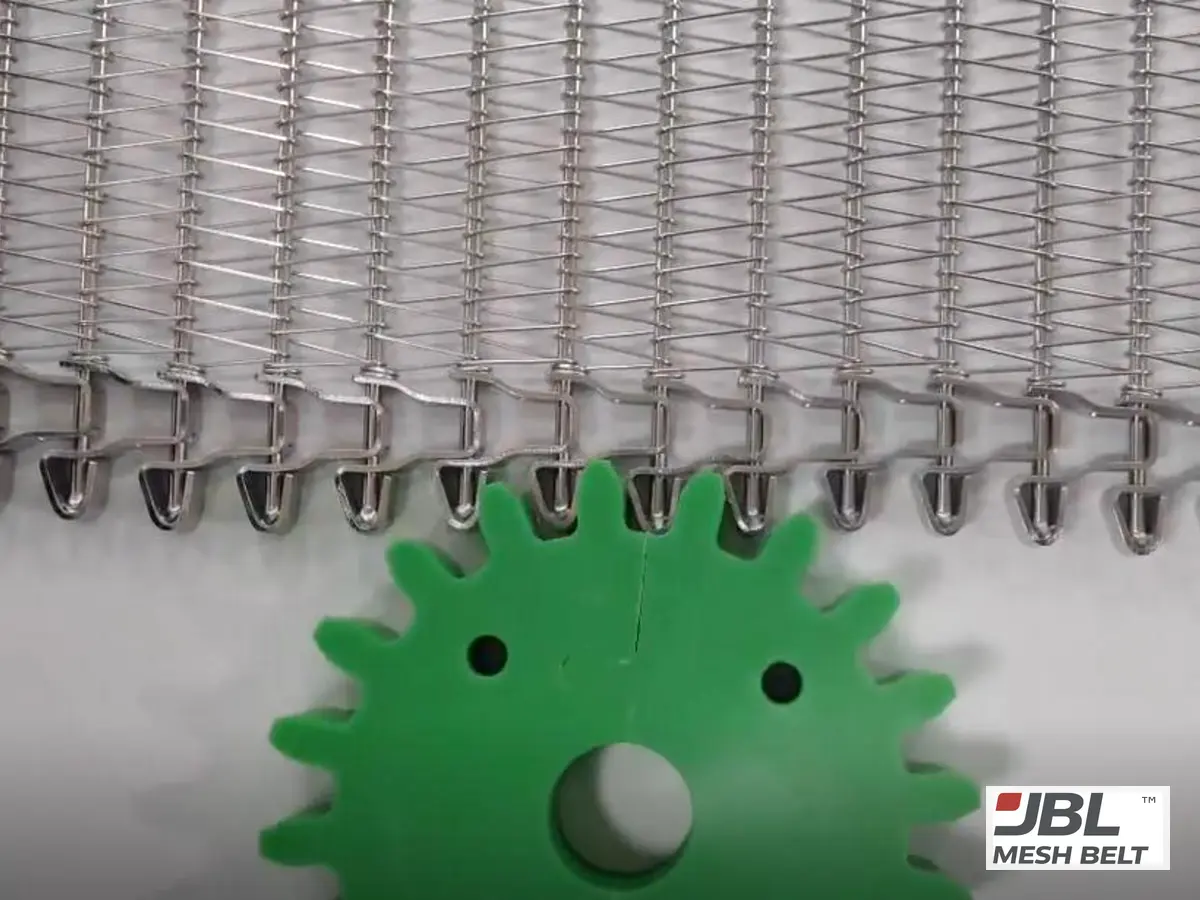
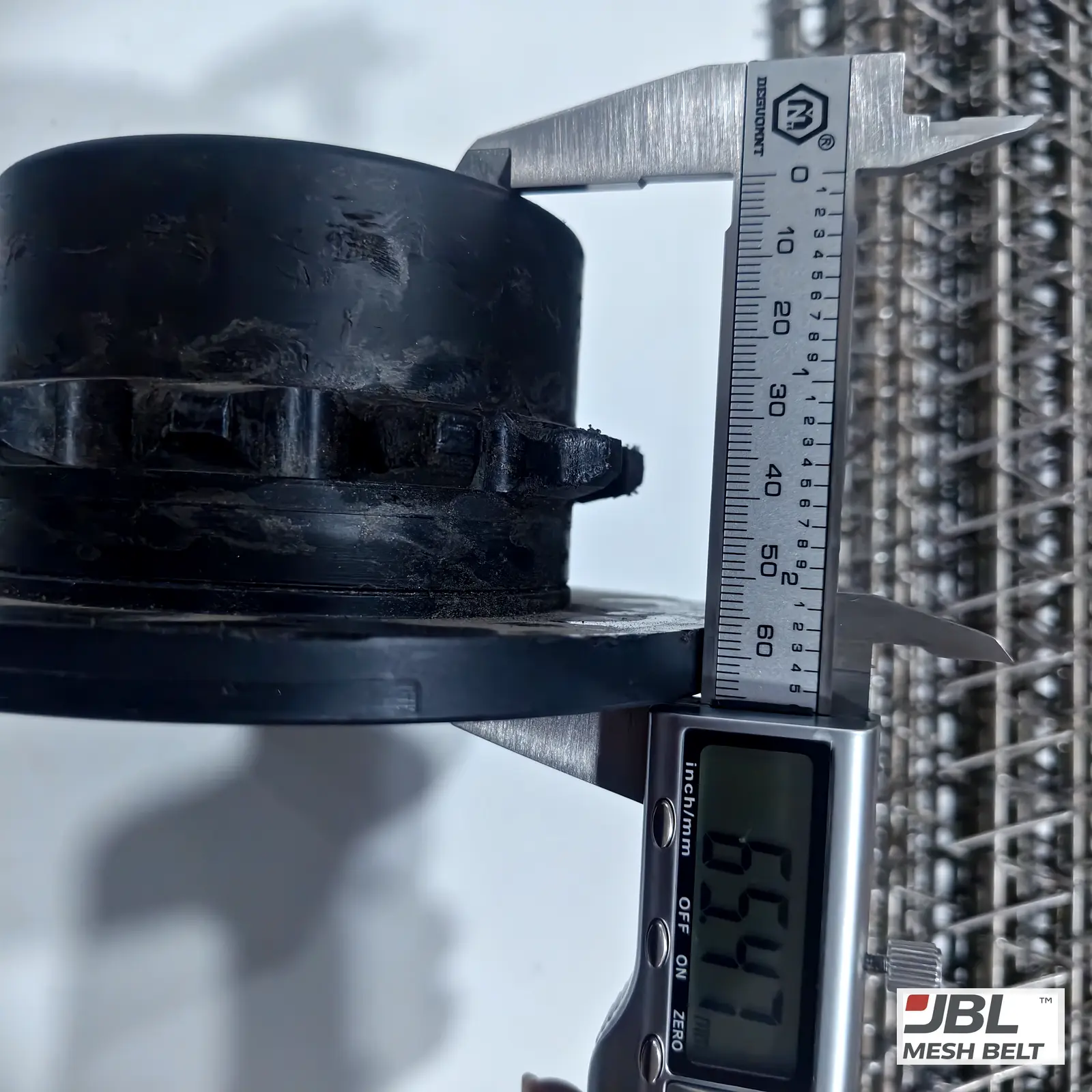
25.41 mm is 1 inch. The original belt was designed in inches, so the new belt kept 25.4 mm instead of rounding to 25 mm. A small rounding on every pitch adds up over 61 m, and the belt would no longer sit on the sprockets the same way.
The full story is in which belt to use on a can washing line, and can it be copied from a sample.
03Why did the steam oven belt use 316 for every part, chain included?
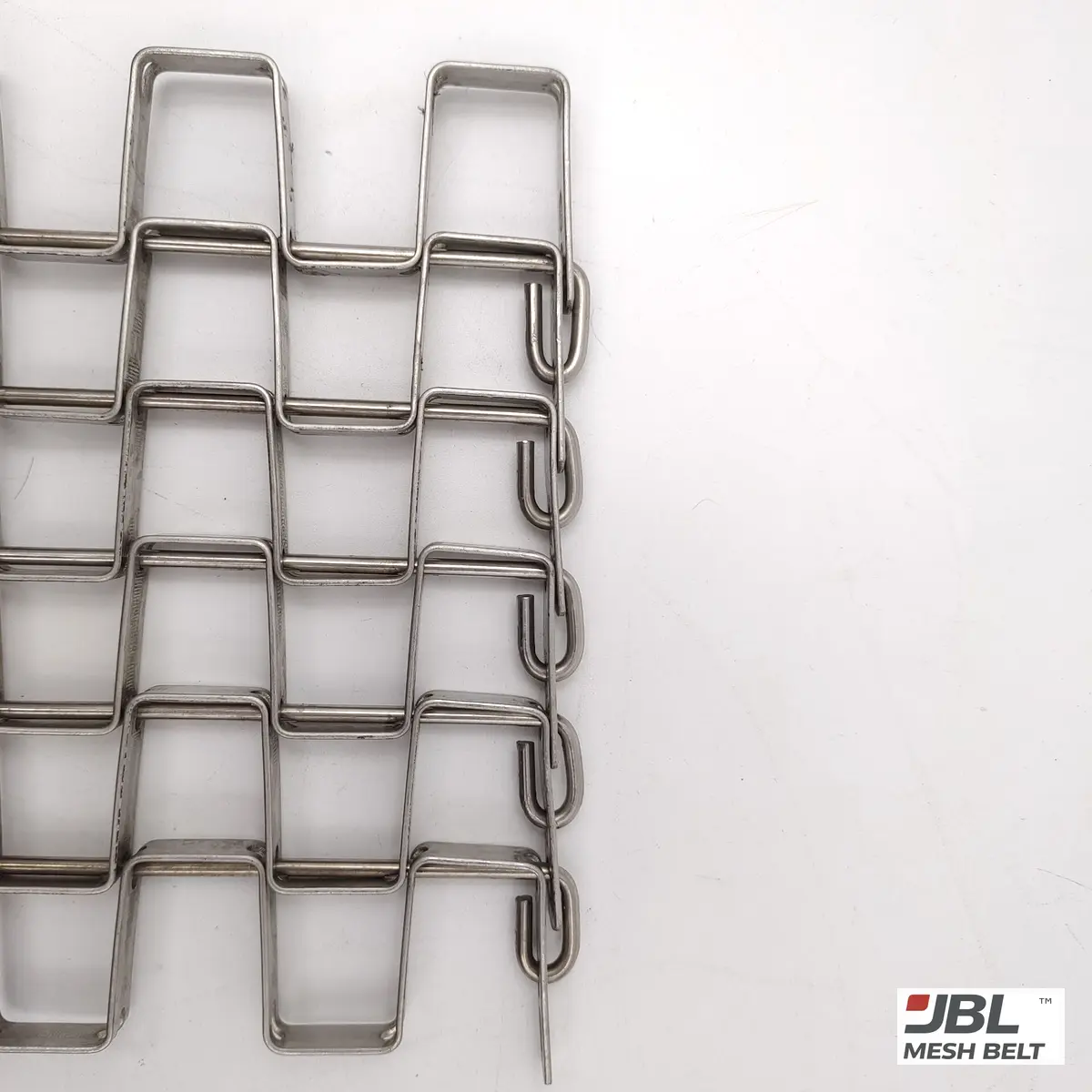
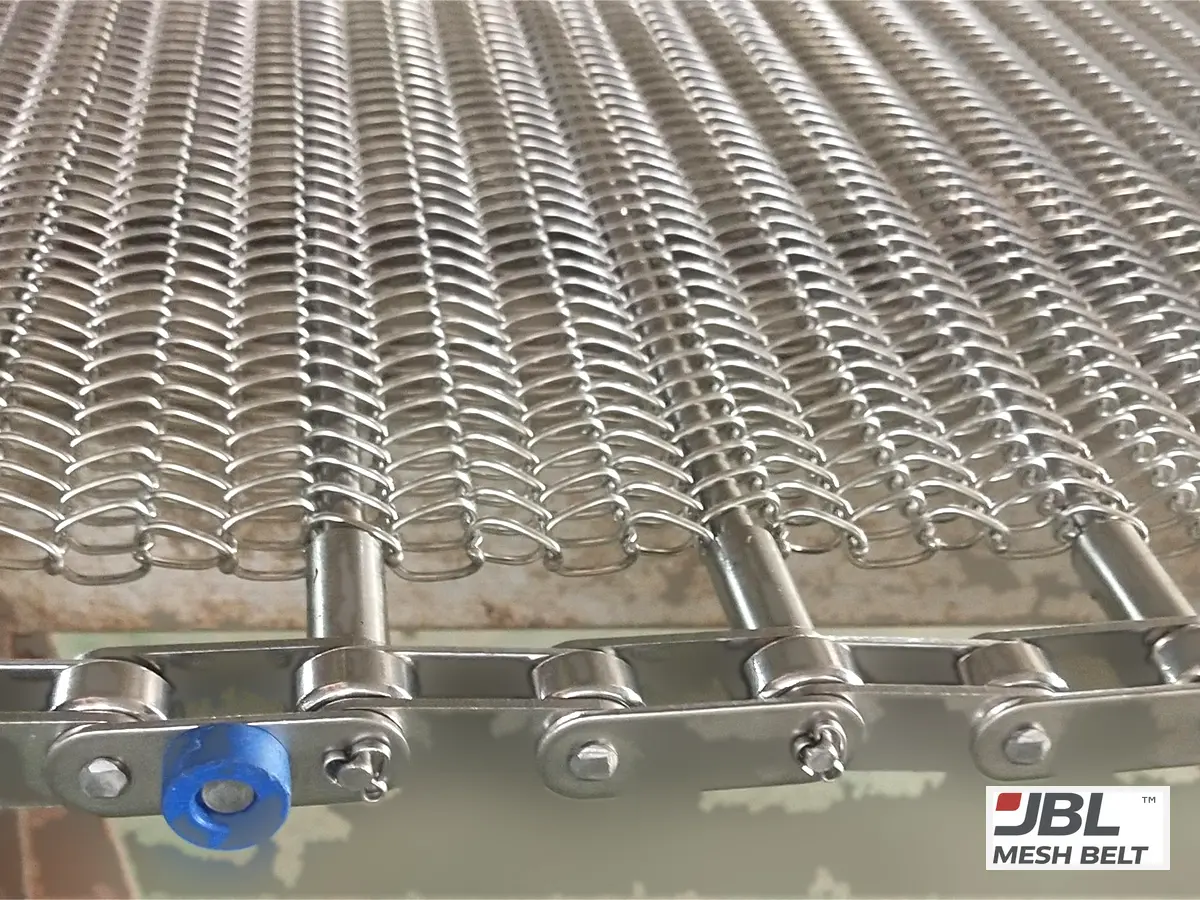
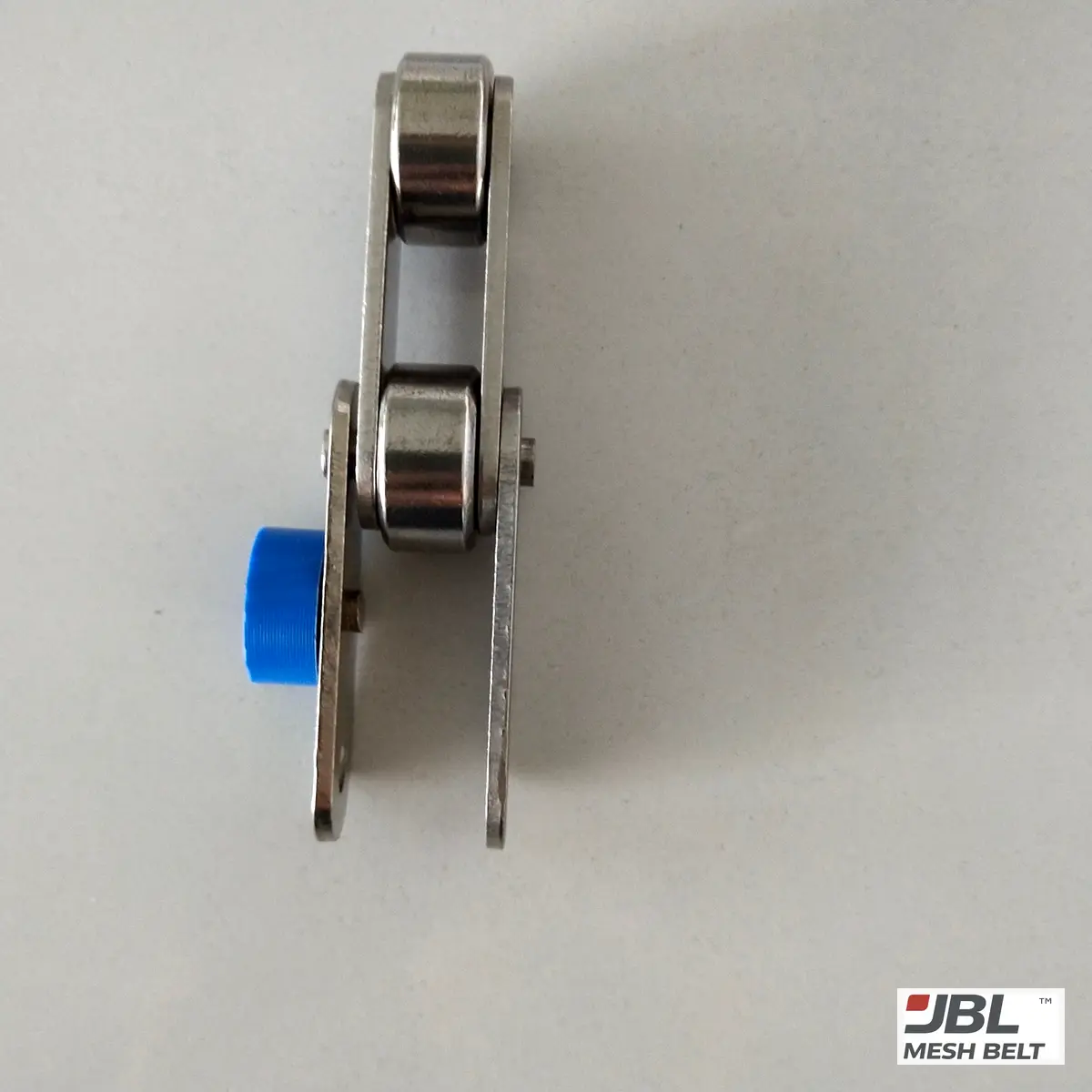
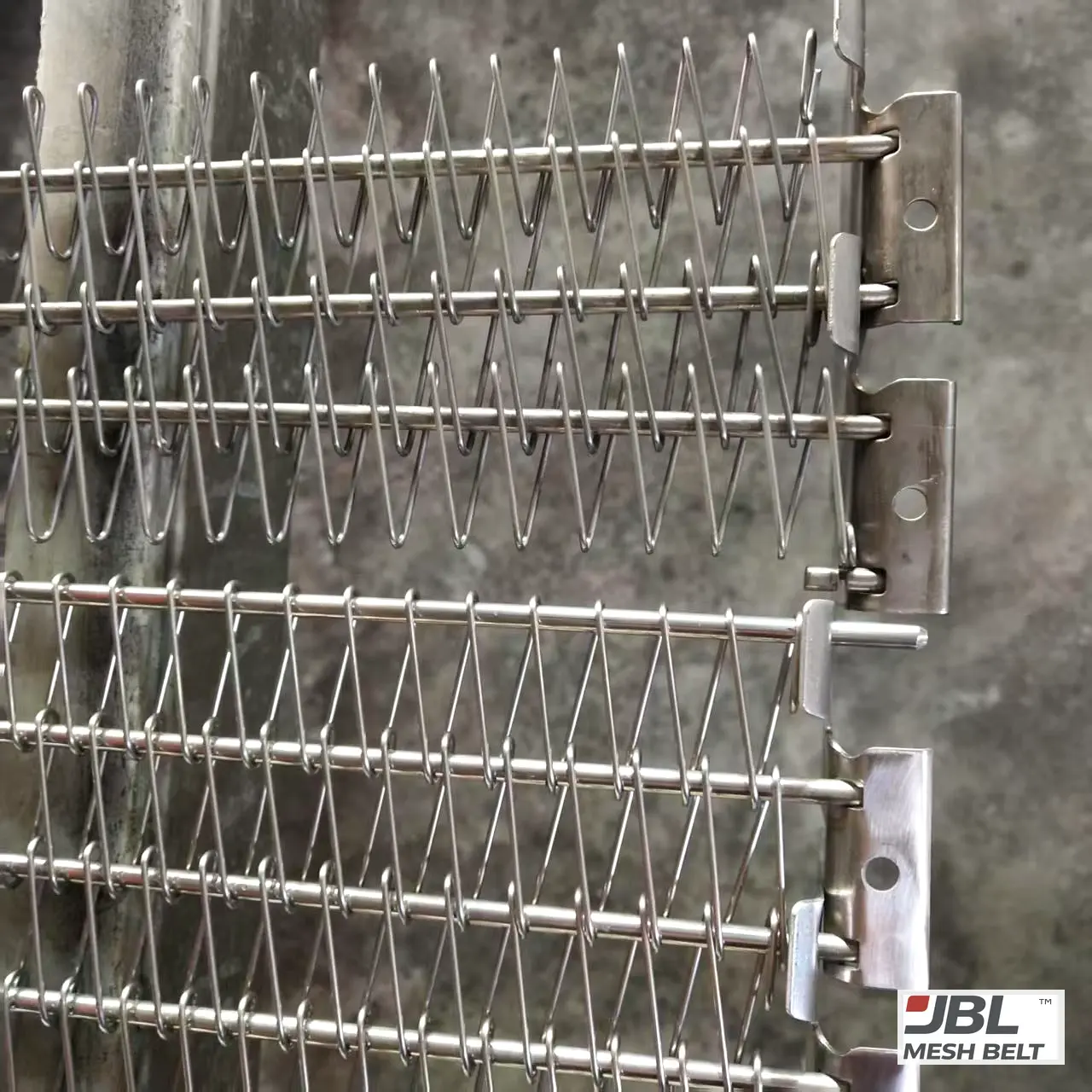
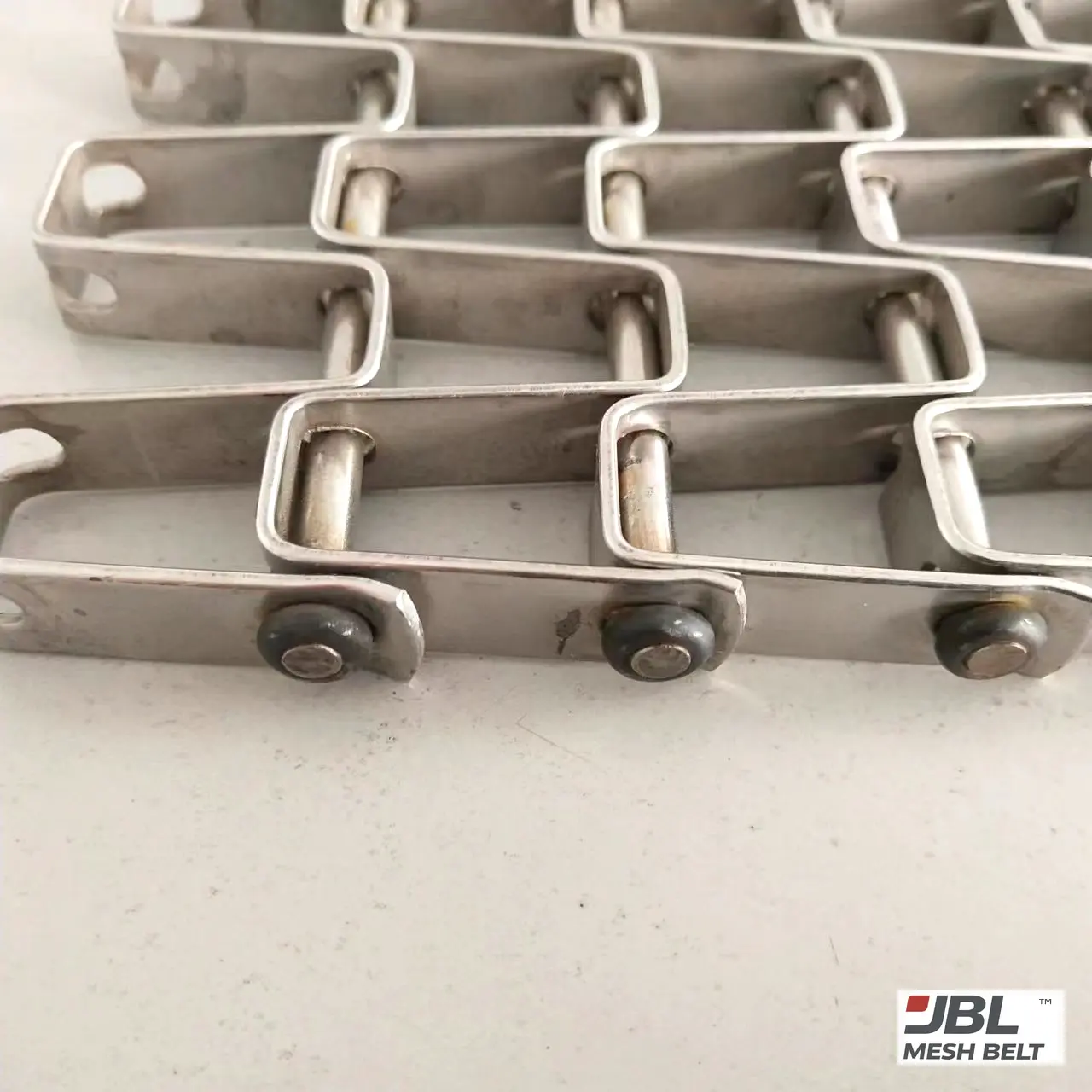
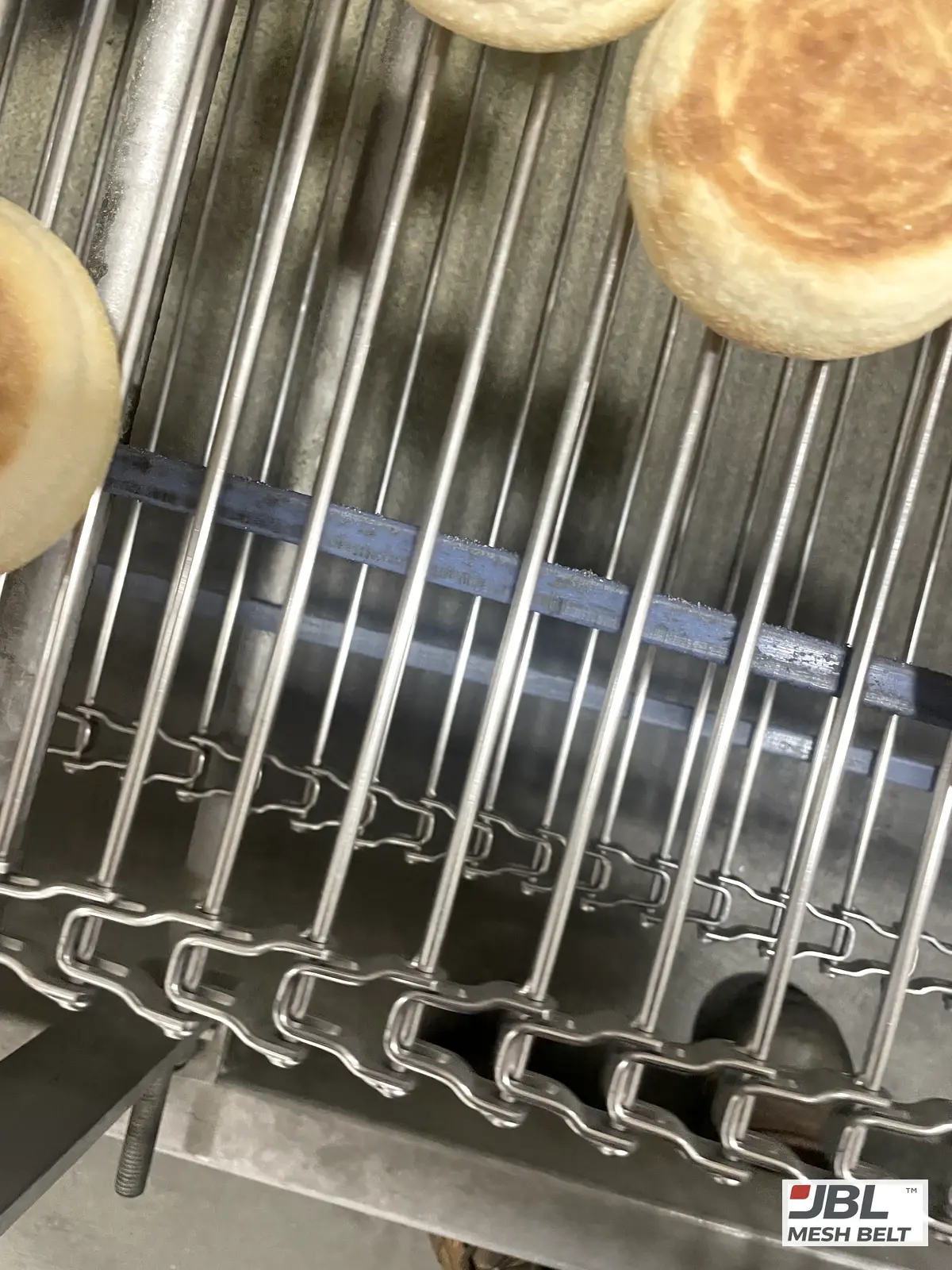
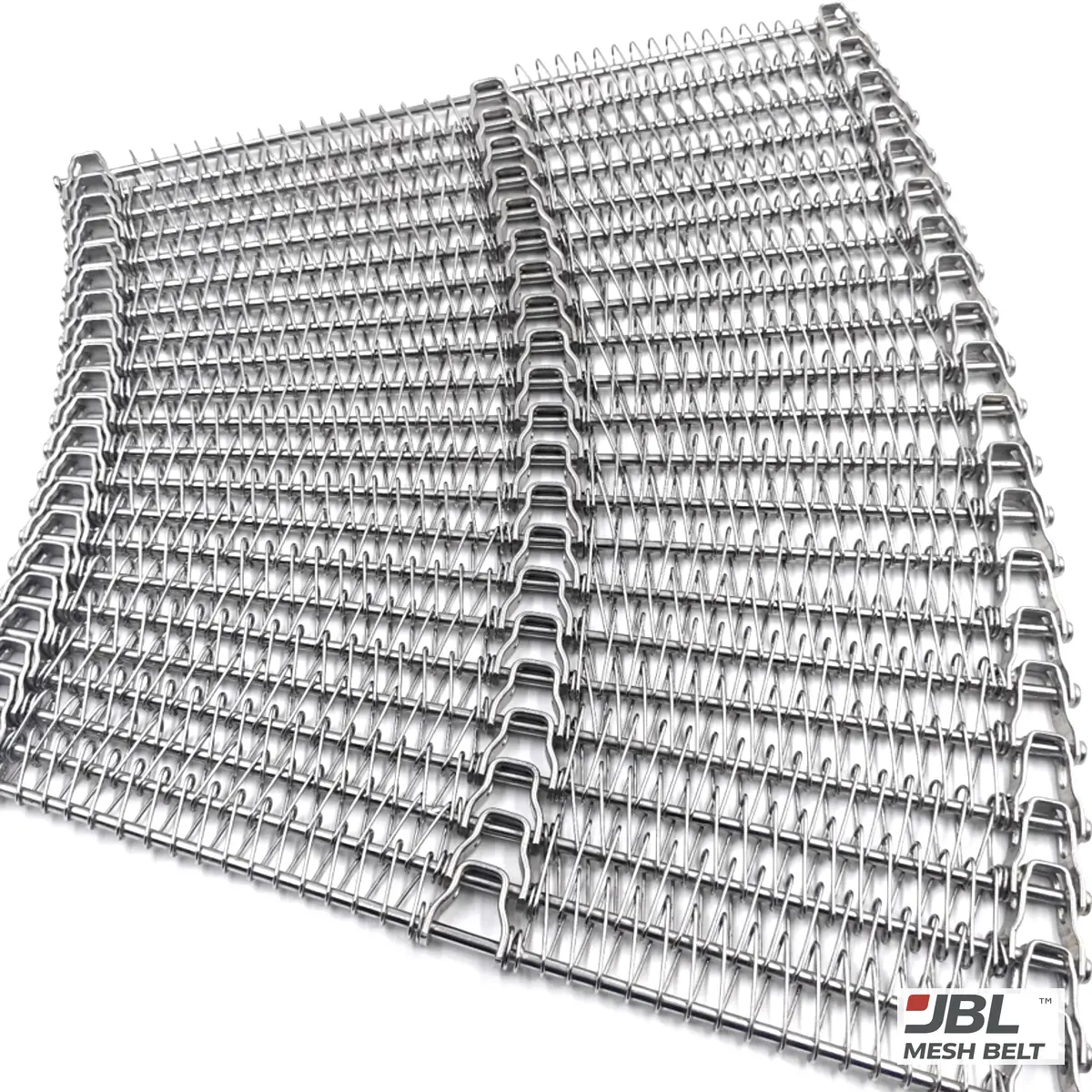
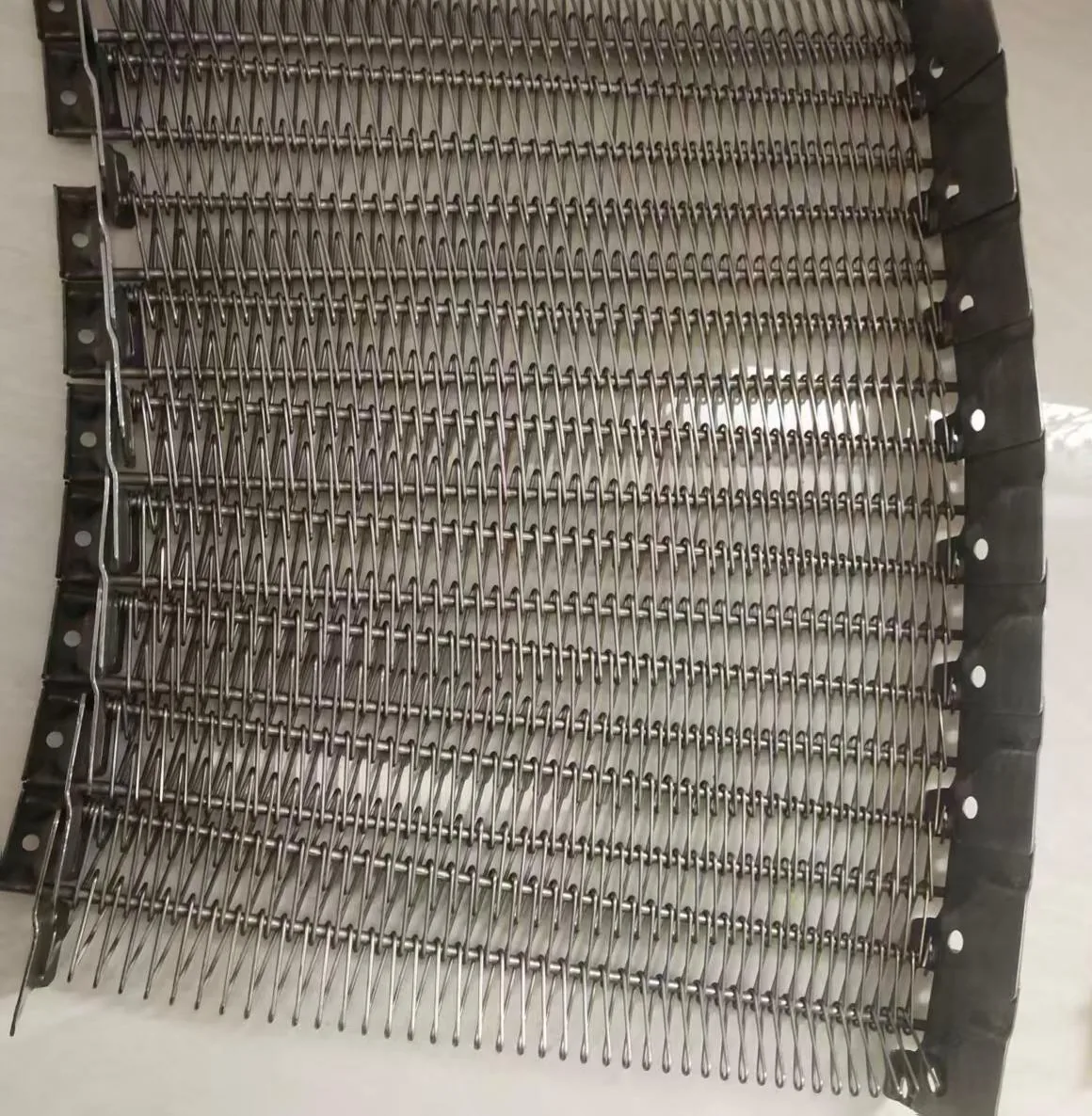
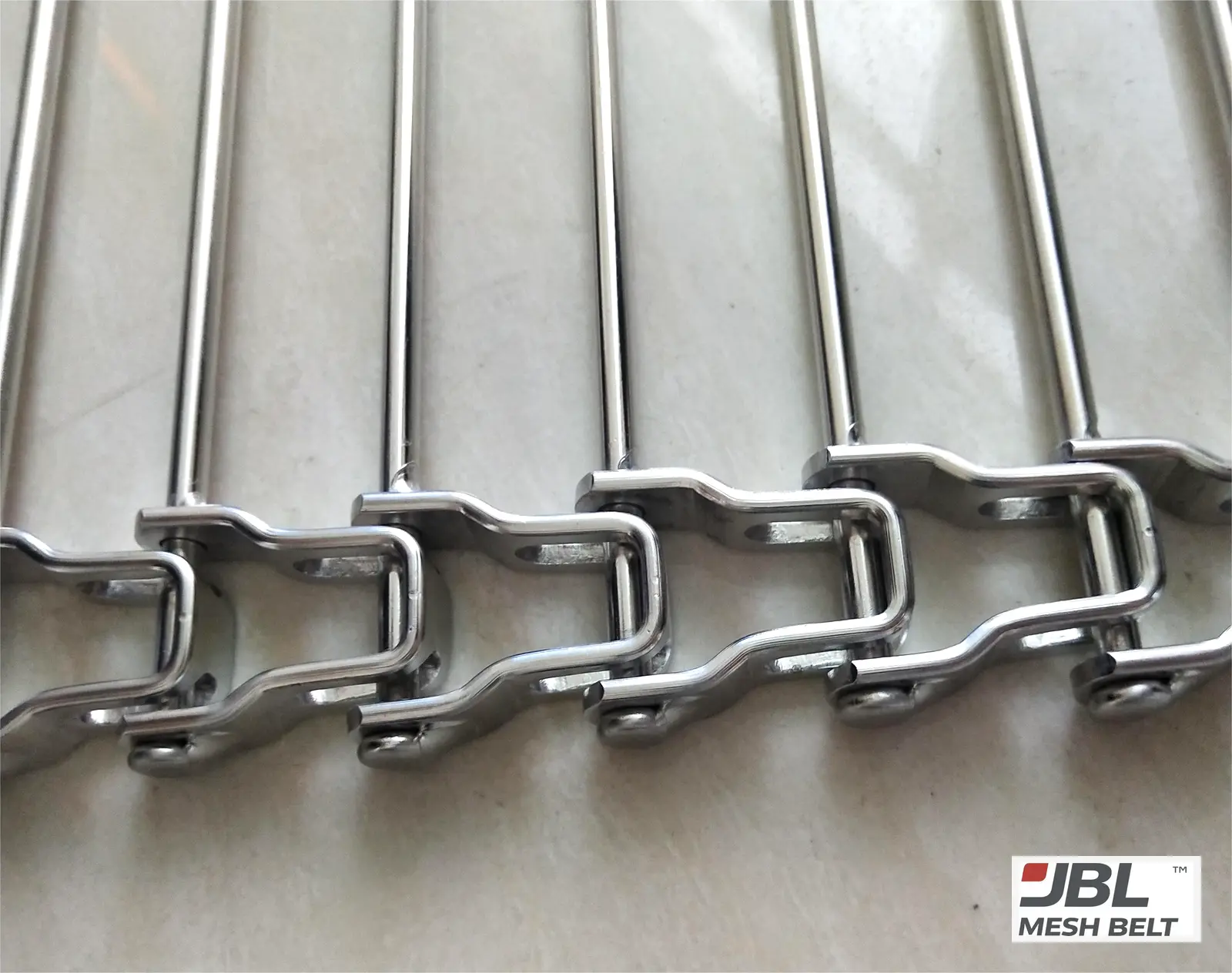
A chain-driven belt has three parts that see the same steam: mesh, rods and chain.
Short answer
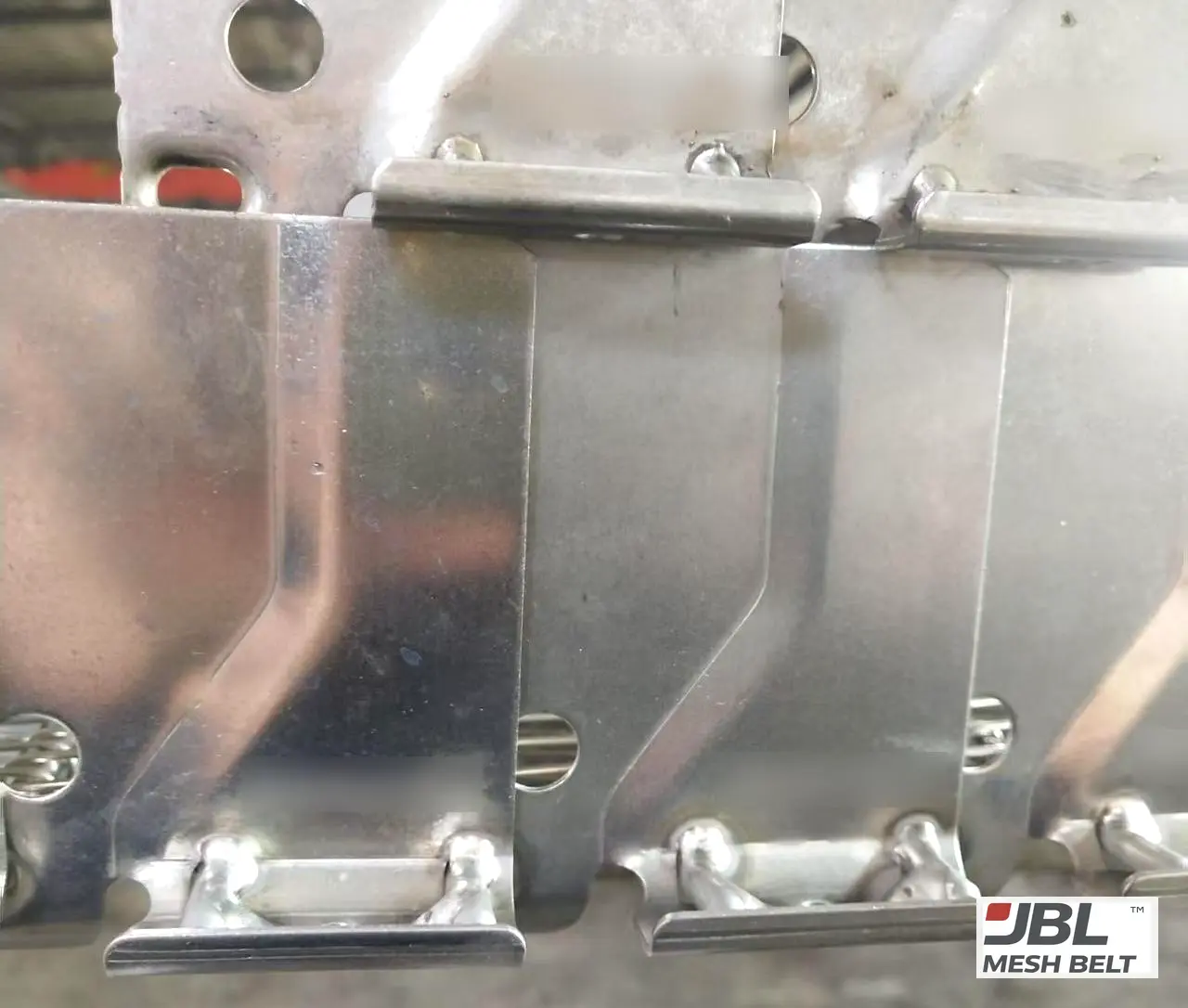
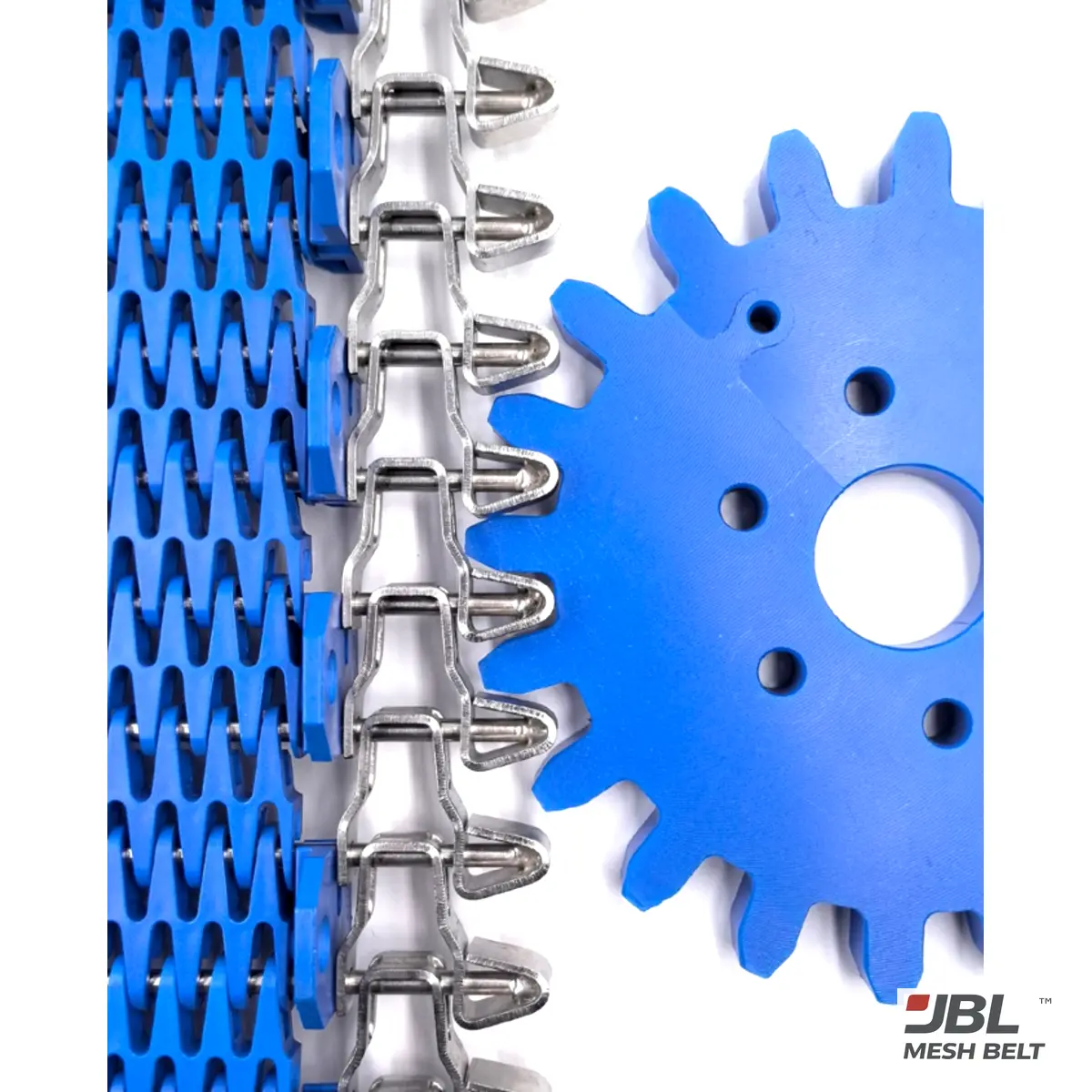
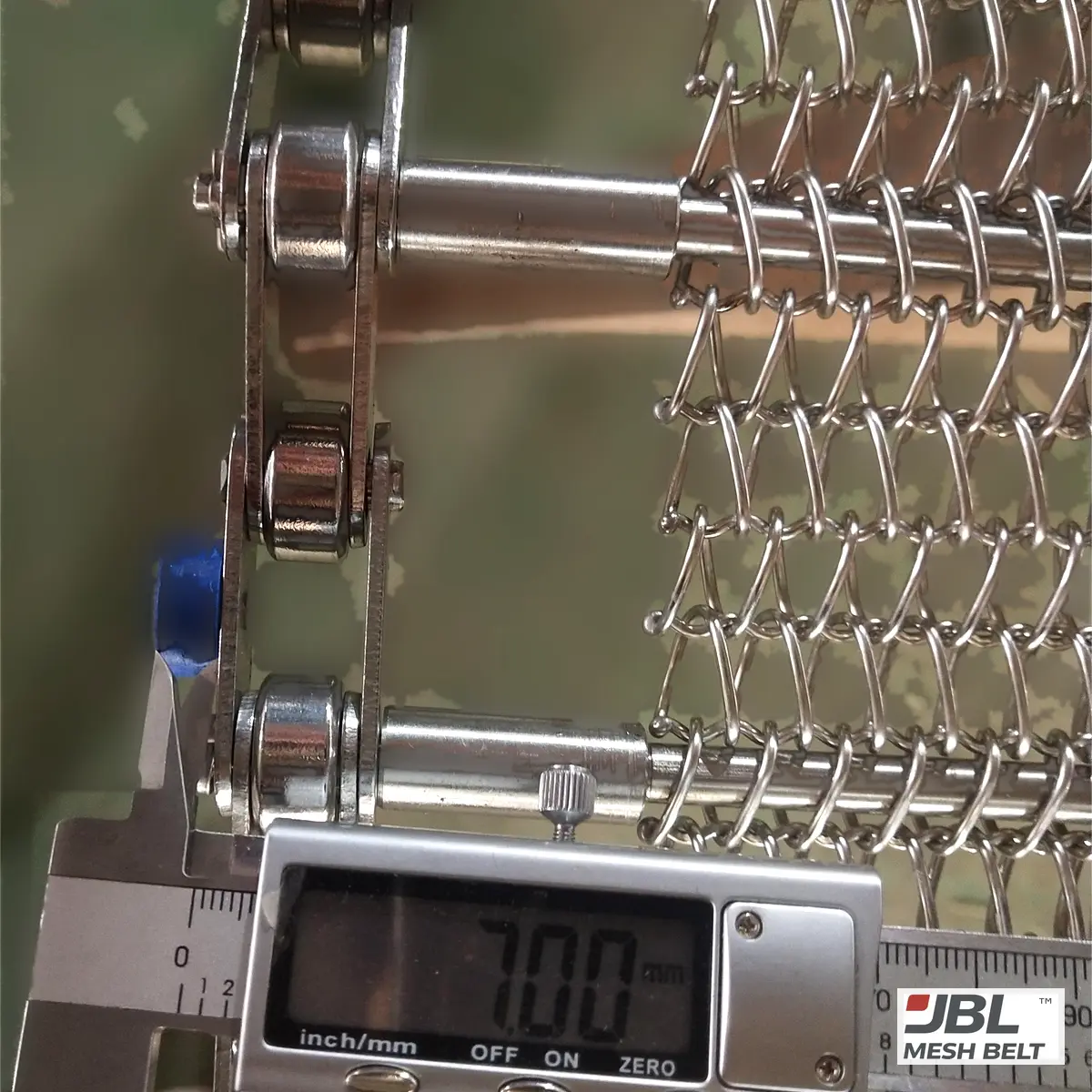
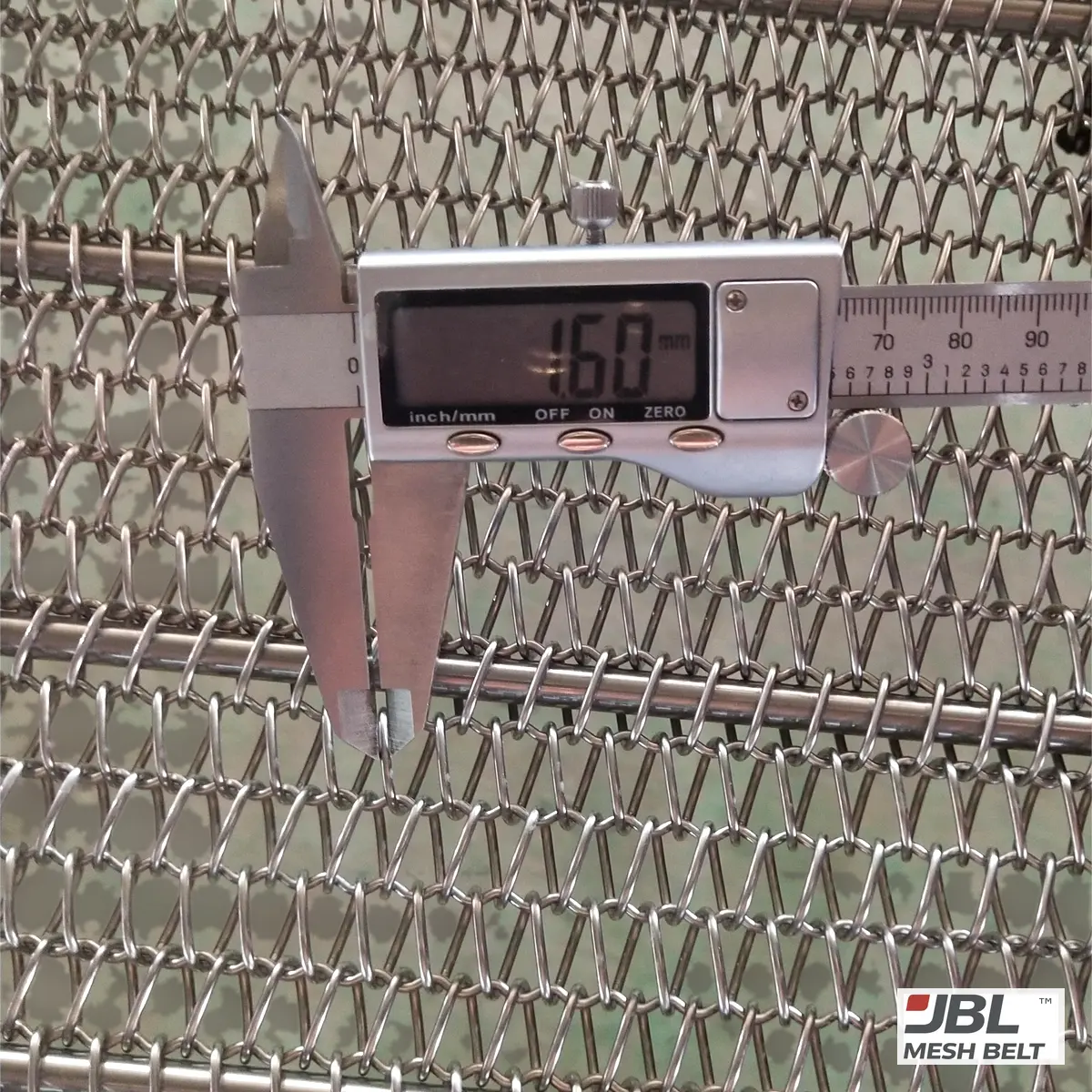
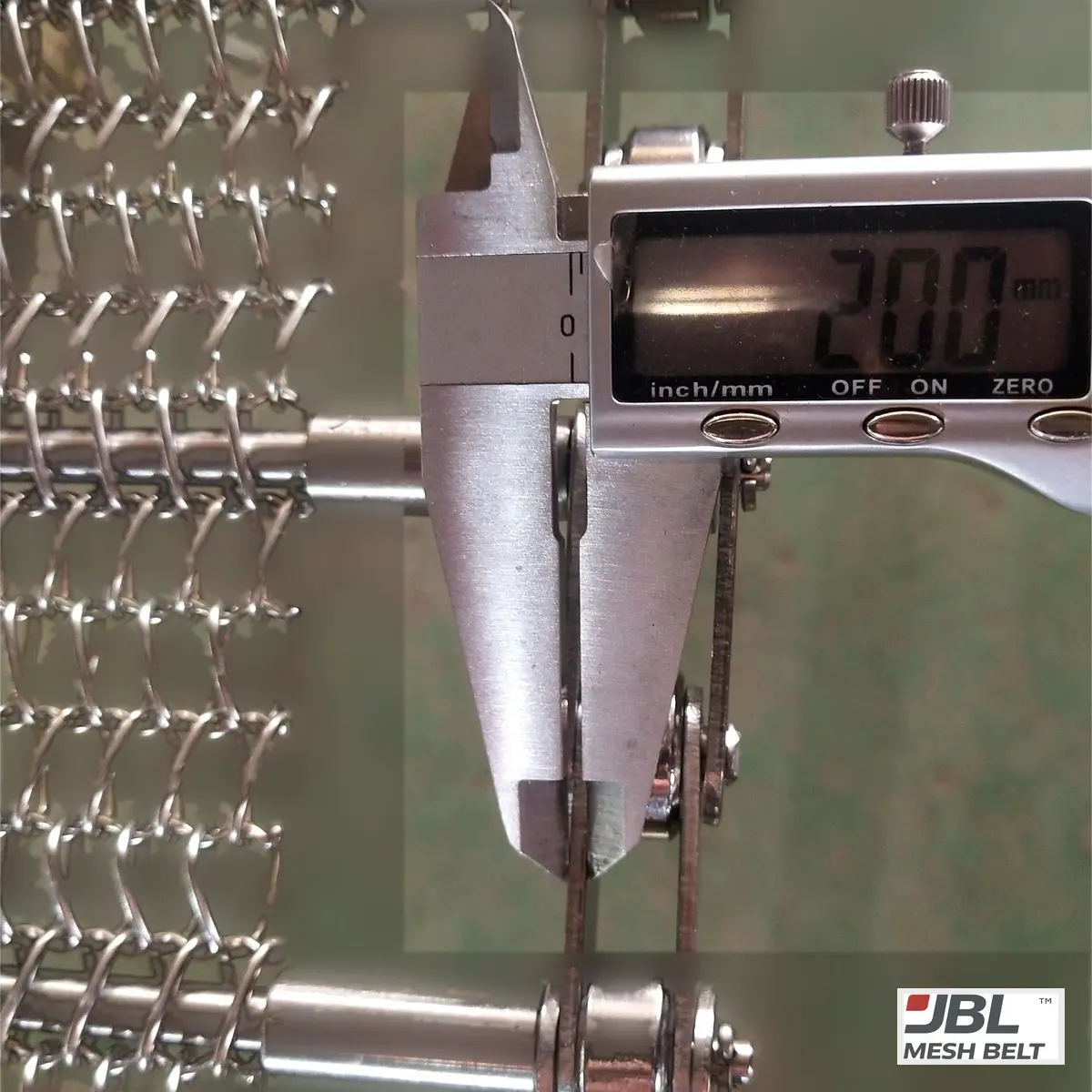
The steam oven tunnel runs in steam and is cleaned with acid and alkaline agents, so mesh, rods and chain were all made in 316. A belt with a 316 mesh on a weaker chain would only be as resistant as the chain.
| Part | Value | Grade |
|---|---|---|
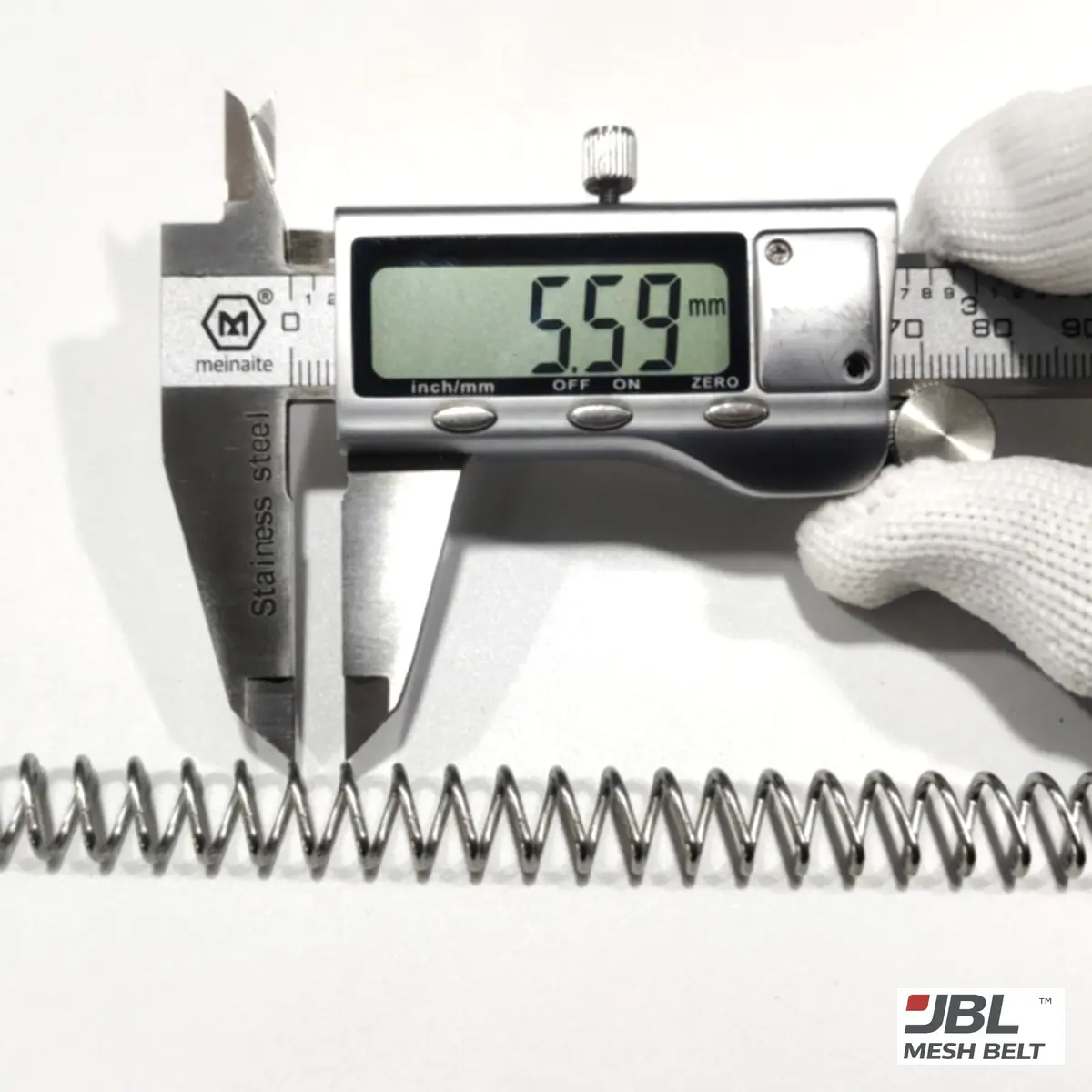
| Mesh wire | 1.60 mm (bulk reading) | 316 |
| Rod | 7.00 mm (bulk reading) | 316 |
| Chain plate | 2.00 mm (bulk reading) | 316 |
| Chain pitch · roller | 31.75 mm · 19.05 mm (sample reading; new chain to spec) | 316 |
Mixed grades are a common, quiet risk on chain-driven belts. The mesh is easy to specify; the chain is often bought separately. Ask your supplier to state the grade of every part on the drawing — mesh, rods, chain, pins and rollers.
See the chain-driven belt page for chain and mesh options.
04When is SUS304 enough?
Many belts on our projects are SUS304. That is not a shortcut; it is what those lines need.
Short answer
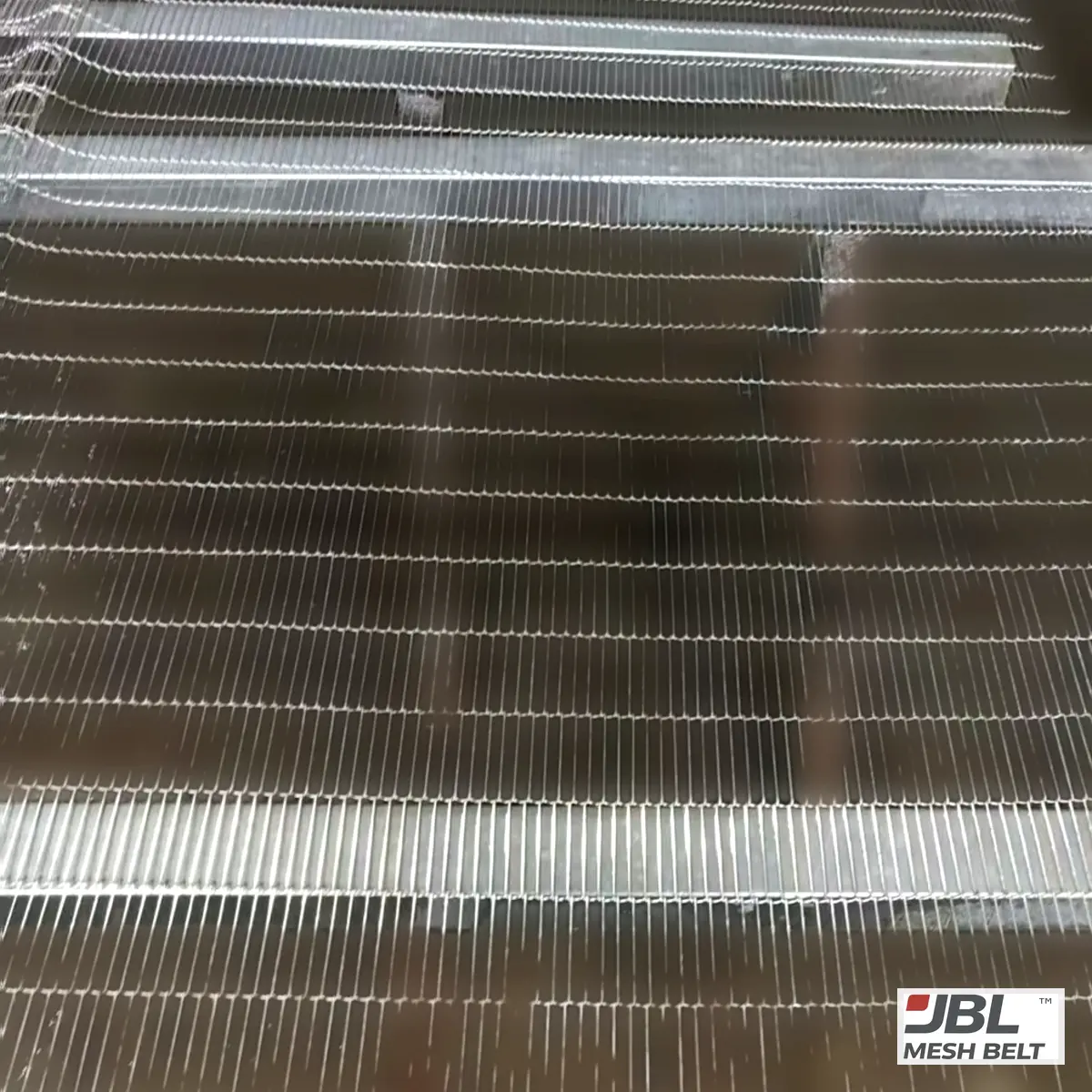
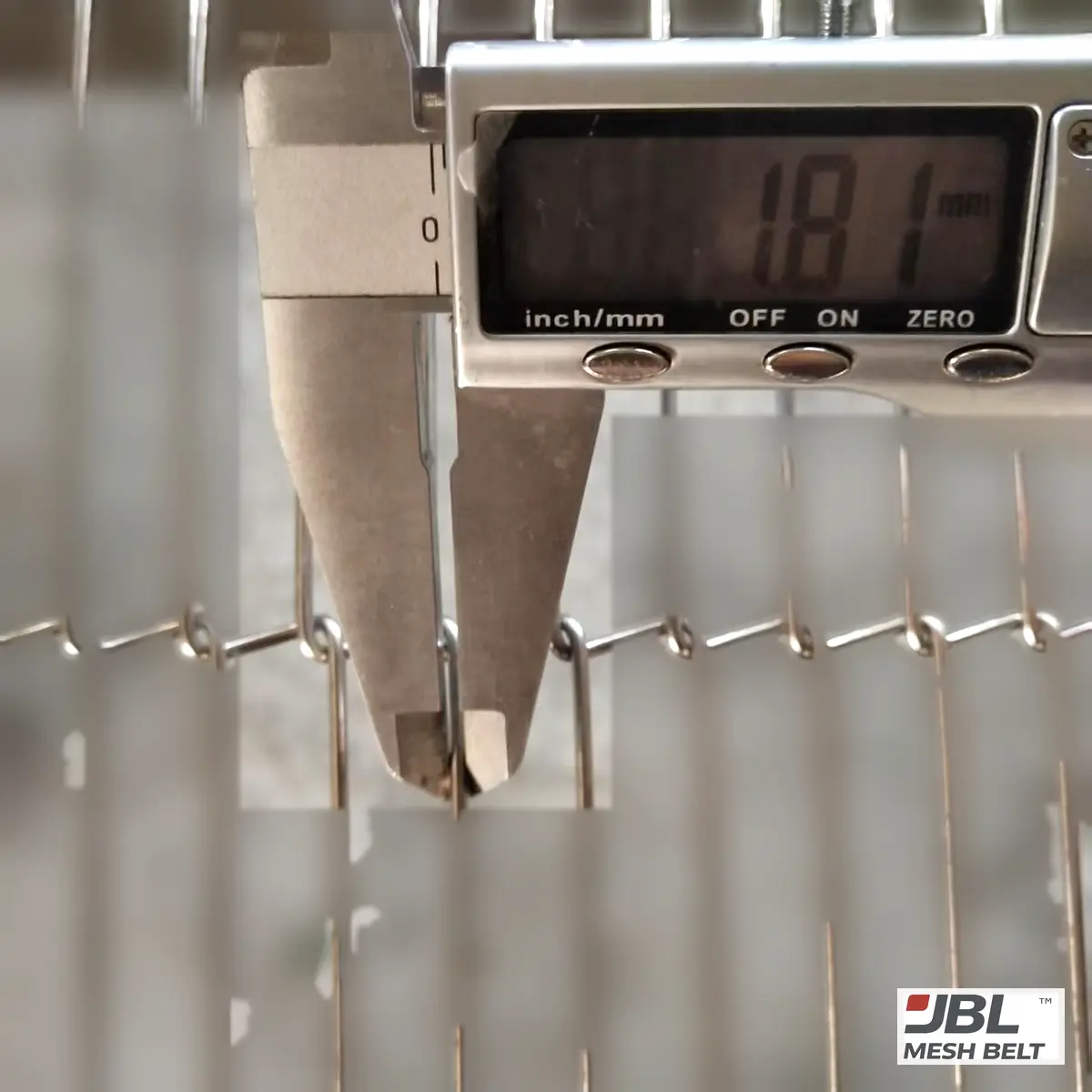
SUS304 is enough when the belt does not see salt, brine or chloride cleaners and is rinsed and dried well. Our potato chip fryer, pizza oven and bakery cooling spiral belts were all SUS304.
| Project | Line | Grade | Conditions |
|---|---|---|---|
| Libya, 2025 | Potato chip fryer | SUS304 | Hot oil |
| Australia, 2025 | Pizza ovens | SUS304 | Oven heat |
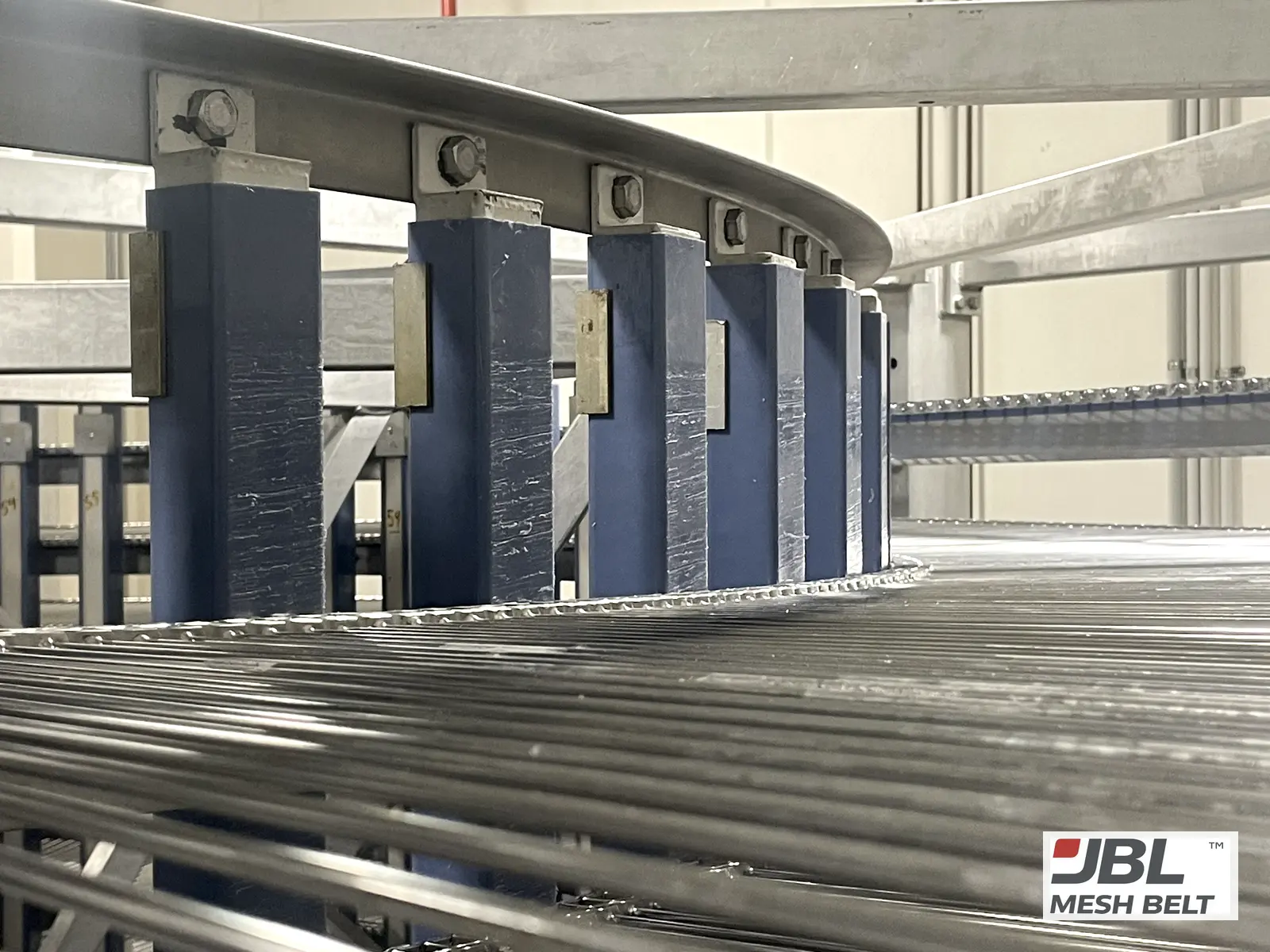
| Melbourne, 2023–2024 | Bakery spiral cooling | SUS304, electropolished | Bread cooling |
If your cleaning routine changes — a new chlorinated cleaner, more frequent wash-downs — tell your supplier. A grade that was right five years ago may not be right now.
Electropolishing, as on the Melbourne belt, gives a smoother surface that is easier to clean. It improves the surface; it does not change the grade.
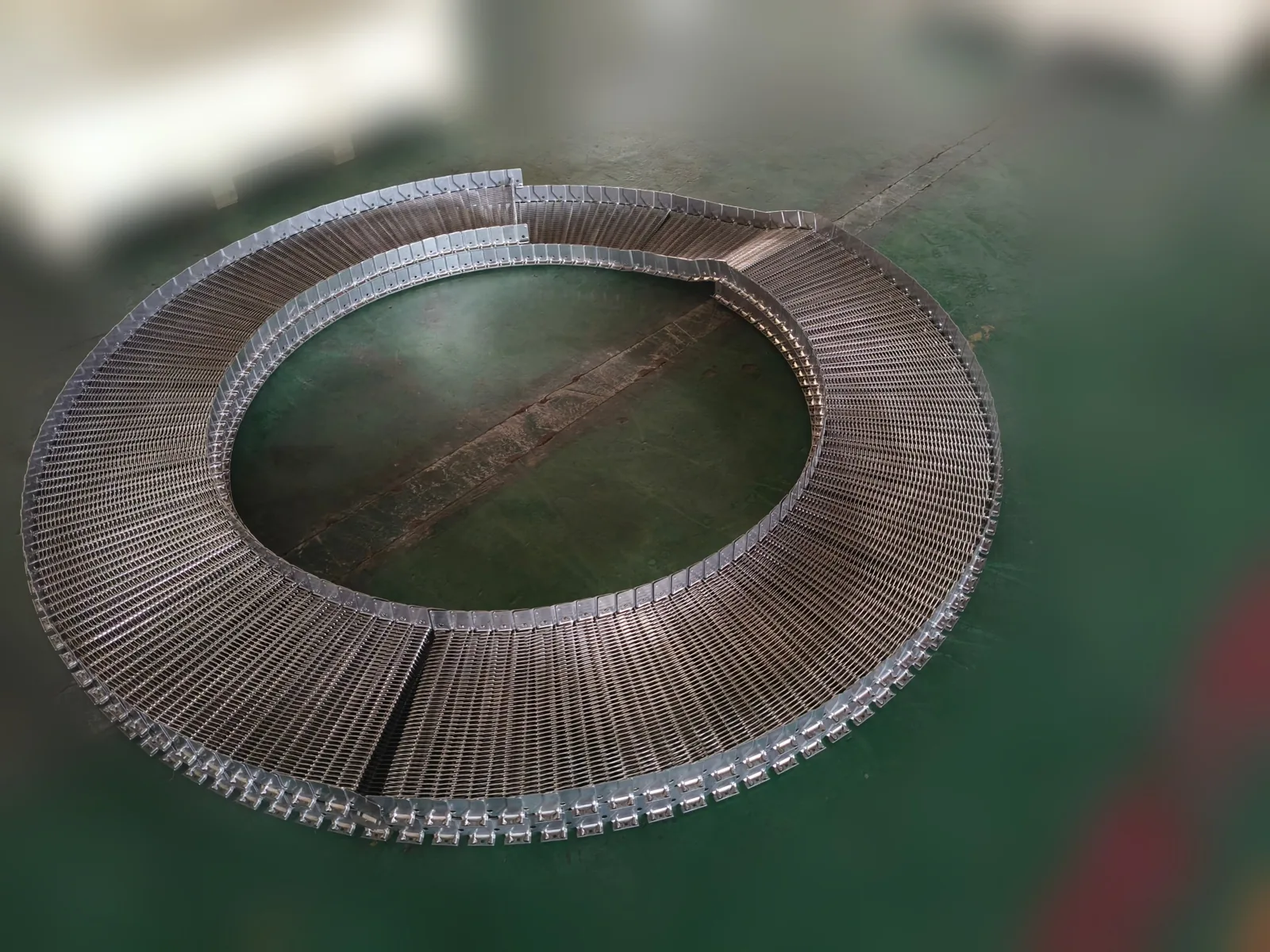
For spiral freezers and cooling spirals, see how cleaning conditions affect spiral belt material.
05How do you know the belt is really the grade you ordered?
A grade on a quotation is a promise. Buyers who run wet or chemical lines should ask how it is checked.
Short answer
Put the grade on the drawing for every part, check it against the original where its grade is known, and ask for material documents with the order. On request we can arrange a third-party laboratory material test report; tensile tests on a tensile testing machine where the project requires it.
- 01
Drawing
The grade is written for mesh, rods, chain and fittings.
- 02
Approval
You confirm the drawing before production.
- 03
Documents
Material documents are prepared as required for the order.
- 04
Third-party test
On request, a material sample goes to a third-party laboratory.
- 05
Tensile test
Where the project requires it, on a tensile testing machine.
| What to ask for | When it matters most |
|---|---|
| Grade per part on the drawing | Chain-driven and side-driven belts with several components |
| Material documents with the order | Any food line with an audit |
| Third-party laboratory material test report | Wet, chemical or steam lines; first order with a new supplier |
| Tensile test | Heavy loads or long belts where strength must be shown |
When the old belt's grade is unknown
On a replacement, the grade of the old belt is often unknown: the original supplier is gone and no papers came with the line. A magnet is not a reliable way to tell 304 from 316 — both are austenitic grades. Choose the grade for the conditions, write it on the drawing, and ask for a third-party material test if you need proof.
Agree these before the order and have them written in the quotation. Read more in choosing and verifying SUS304 or SUS316.
When This Is Not the Right Choice
- ✕If your belt runs above typical oven temperatures or in a furnace atmosphere, stainless 304 or 316 may not be the right family — the grade is reviewed for that project.
- ✕If the line uses strong chlorinated cleaners at high concentration, even 316 needs a careful review of rinsing and drying.
- ✕If you cannot tell me the cleaning agents, I will ask before writing any grade on a drawing.
From My Engineering Experience
Some buyers ask for 316 because it sounds safer. Sometimes it is. On a line that sees no chlorides, it is money spent for nothing.
On the steam oven belt every part was 316 — mesh, rods and chain. When a chain is part of the belt, its grade should be stated as clearly as the mesh grade.
When an old belt's grade is unknown, I choose for the line, not for the sample. The can washing belt went to 316L because of the washing line.
— Spring, Sales Director, JBL Mesh Belt
Evidence From Our Work
Australia, 2022 — 316L flat wire belt for a can washing line →
| Step | Detail |
|---|---|
| Starting point | Section of the customer's original belt — no drawing |
| Readings | Pitch 25.41 mm · rod 2.97 mm · strip 1.21 × 9.50 mm |
| Grade | SUS316L for a line that runs wet all day |
| Quantity | About 61 m in two rolls |
Australia, 2023 — 316 chain-driven belt for a steam oven tunnel →
| Step | Detail |
|---|---|
| Conditions | Steam; acid and alkaline cleaning |
| Grade | 316 for mesh, rods and chain |
| Readings | Wire 1.60 mm · rod 7.00 mm · chain plate 2.00 mm |
| Before bulk | Trial chain made and checked against the sample |
FAQ
Q1Is SUS304 used on food processing lines?
Yes, SUS304 is widely used on food processing lines. Whether it suits your line depends on chlorides, cleaning chemicals and temperature; the grade is confirmed per project.
Q2What does the L in 316L mean?
Low carbon. 316L is generally preferred where the steel is welded. Our can washing belt, which has a clenched edge, was made in SUS316L for a line that runs wet all day.
Q3Does 316 cost more than 304?
Yes. That is why it is chosen where the conditions need it, not by default.
Q4Can the chain be a different grade from the mesh?
It can be ordered that way, but on our steam oven belt every part was 316. Ask for the grade of each part on the drawing.
Q5Can you provide a material test report?
Material documents are prepared as required for the order. On request we can arrange a third-party laboratory material test report.
Conclusion
Choose the grade from what the belt runs in, write it on the drawing for every part, and agree how it will be verified before you order.
Download the Flat Wire Belt Technical Specification (PDF)
Specification ranges and options in mm and inch. Enter your work email and the file downloads right away.
References
Your contact for this belt
Spring · Sales Director, JBL Mesh Belt · 16 years
“Your belt is worn, the OEM price is high, and there is no drawing. That is where I start.”
Send me a worn section, a few photos with a caliper in the picture, or a drawing. I tell you what fits, what is missing, and show you a sample measured against your own belt before you pay for the full length. Buyers in the UK, the USA, Australia, Brazil, South Korea, Spain, Malaysia and Libya have replaced belts this way.
- ✓Readings on your original next to readings on our sample
- ✓Nothing in bulk until you approve the sample
- ✓Turning, stacking or sprocket tests before your belt ships
- ✓A reply from me, usually within 8 hours
Get new project cases by email
One short email when we publish a new case or buyer guide.
New lines and replacements — what we measured, what we checked before shipment. Real readings and photos. Unsubscribe anytime.
Prefer LinkedIn? Subscribe on LinkedIn · RSS