Choosing the right spec · 9 min read
Fryer, Pizza Oven or Steam Oven: Which Metal Conveyor Belt Fits Each Machine?
 Written bySpringSales Director, JBL Mesh Belt · 16 years in metal conveyor beltsProjects in United Kingdom · USA · Australia · Brazil · South Korea · Spain · Malaysia · LibyaPublished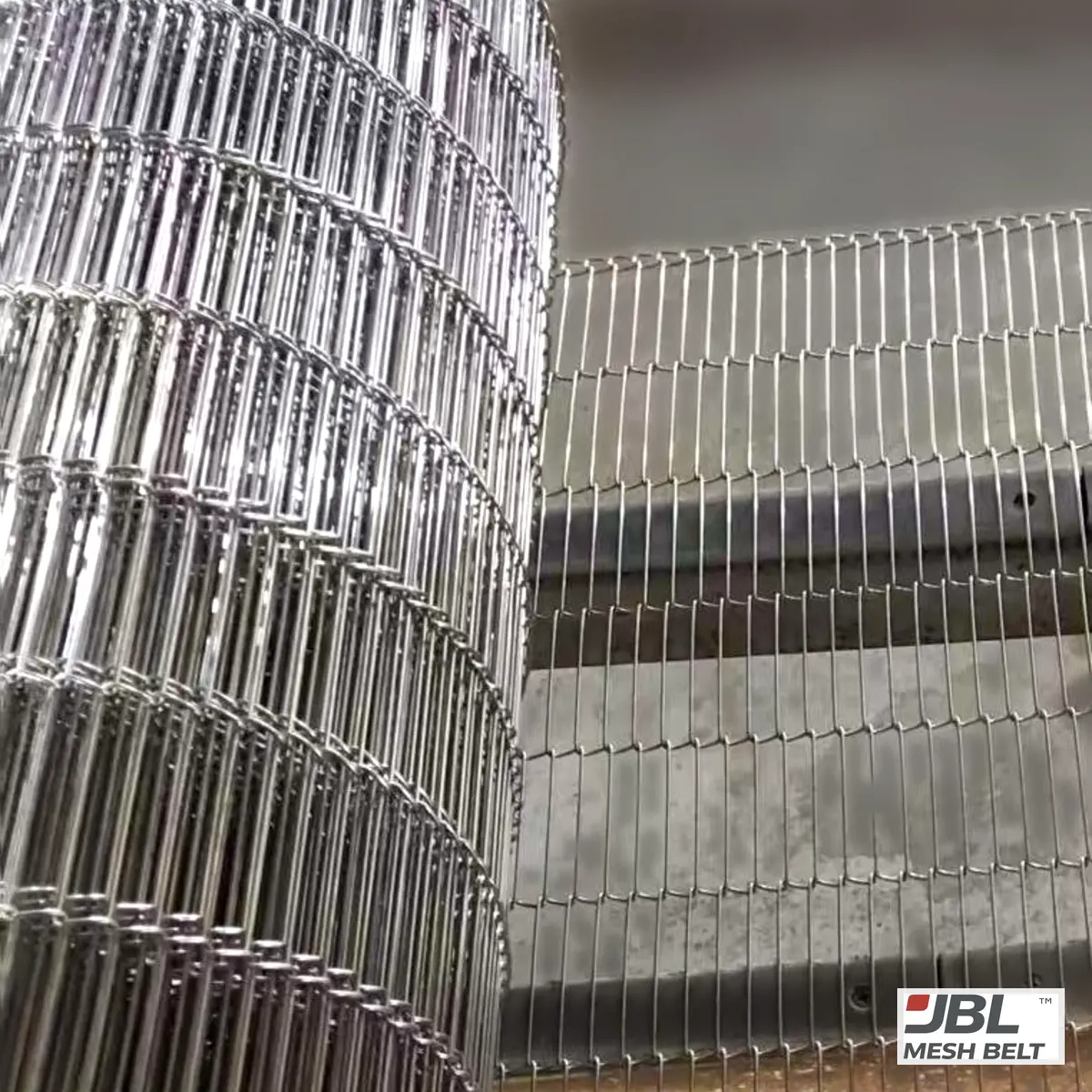
Fryers, pizza ovens and steam ovens all run hot. They do not all run the same belt. Which one does your machine need?
Short answer
Start from the machine, then match the old belt. On our projects a potato chip fryer and pizza ovens ran Z-type ladder belts in SUS304. A steam oven tunnel ran a chain-driven belt in 316. Wire, pitch, spaces and edge — or chain and rods — decide the fit.
At a Glance
| Machine | Belt on our project | Steel | Values that decided fit |
|---|---|---|---|
| Potato chip fryer (Libya, 2025) | Z-type ladder belt | SUS304 | Pitch 8 mm · wire 1 mm · 19 spaces · edge loop 5 mm |
| Pizza ovens (Australia, 2025) | Z-type ladder belt | SUS304 | Pitch 12.7 mm · wire 1.8 mm · 9 spaces · edge loop 9 mm |
| Steam oven tunnel (Australia, 2023) | Chain-driven belt | 316 throughout | Chain pitch 31.75 mm · roller 19.05 mm · rod 7 mm · mesh pitch 8.5 mm |
Three machines, two belt types, two steel grades. Here is why each one ended up where it did — and what I would ask about your machine.
01Which belt types run on fryers and ovens?
Fryers and ovens use several belt types. The machine usually narrows the choice to one or two.
Short answer
Fryers commonly run eye link, chain-driven or Z-type ladder belts; pizza ovens and light products often run Z-type ladder belts; steam and oven tunnels with chain edges run chain-driven belts. On a replacement, match the type that is installed.
| Belt type | How it is carried | Where we see it | What to send |
|---|---|---|---|
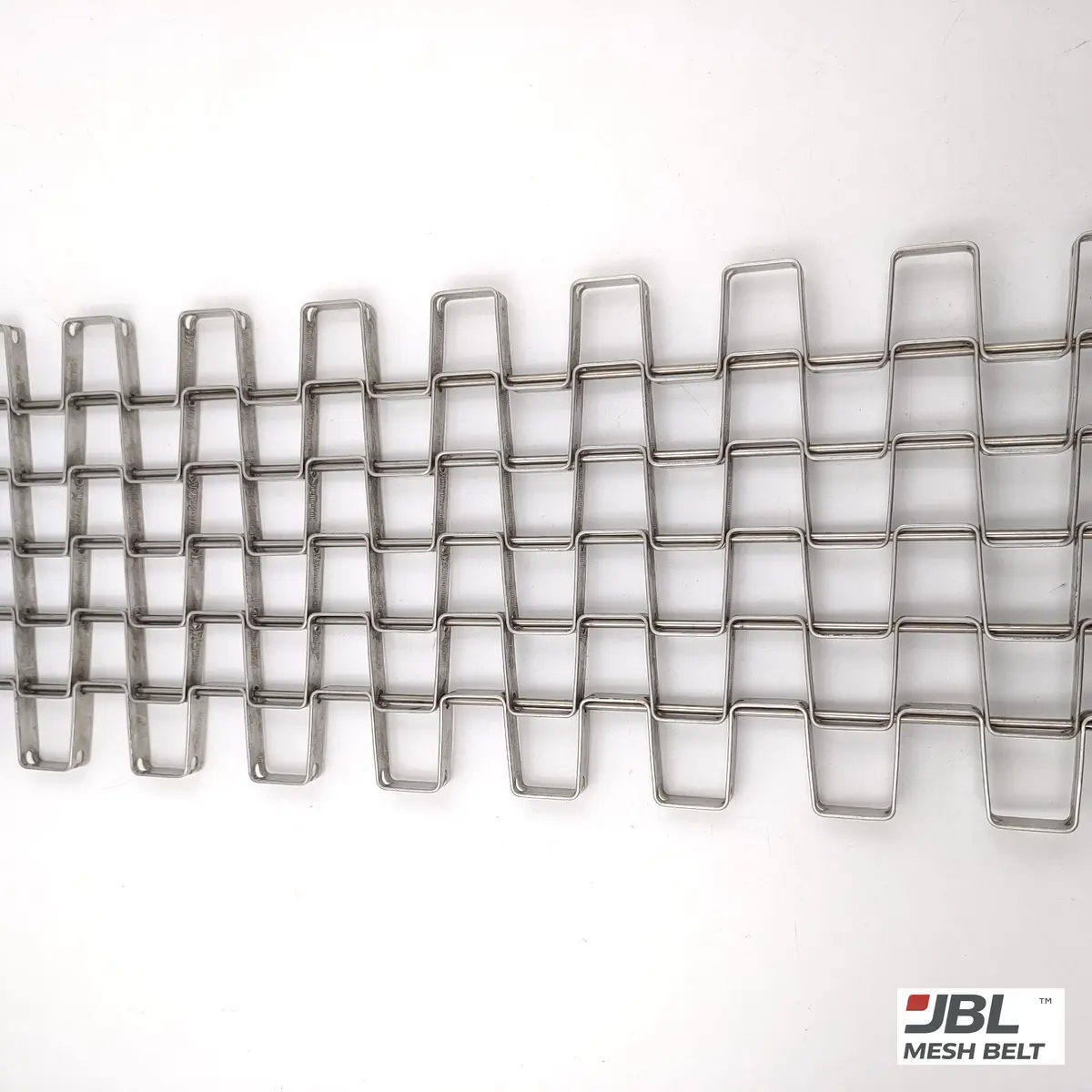
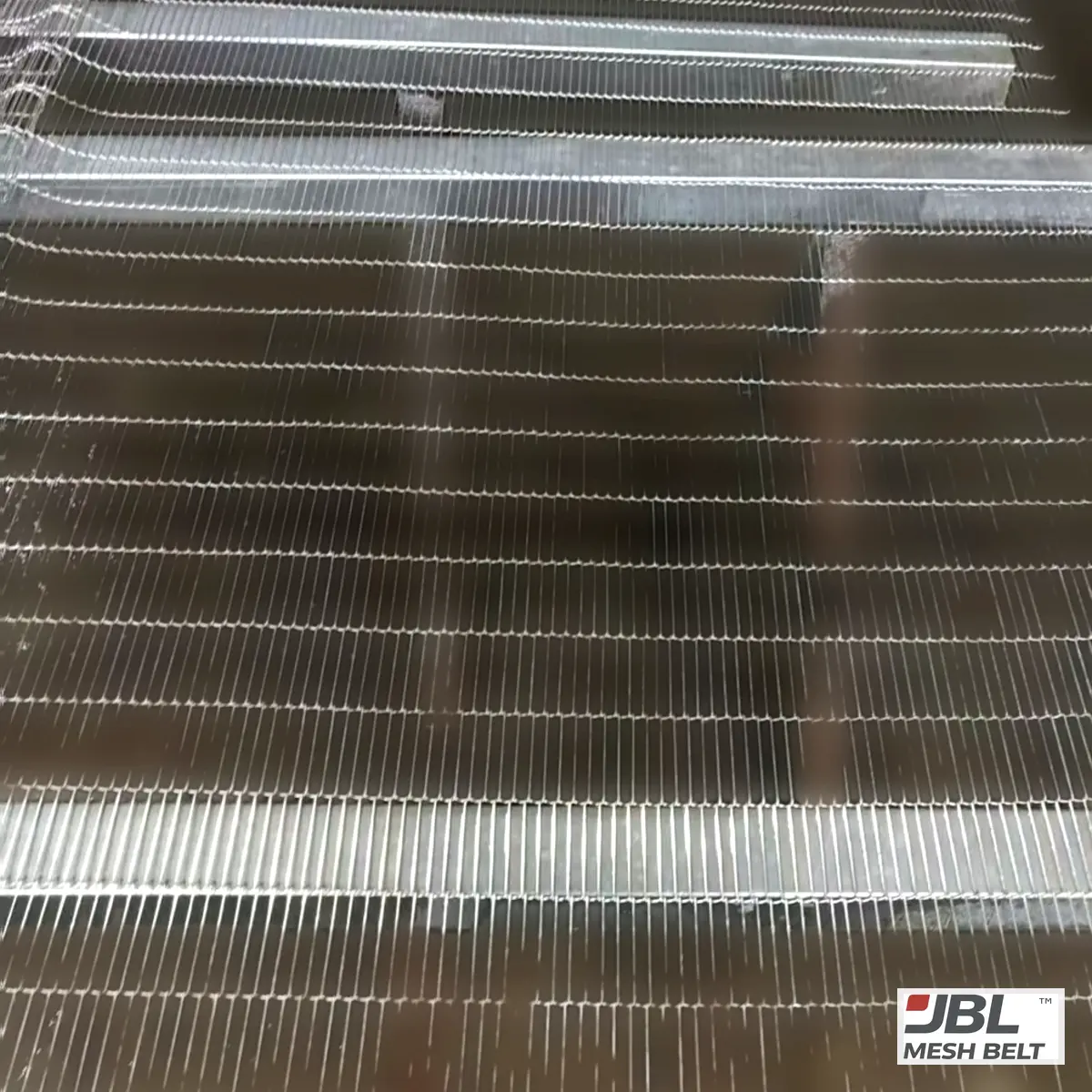
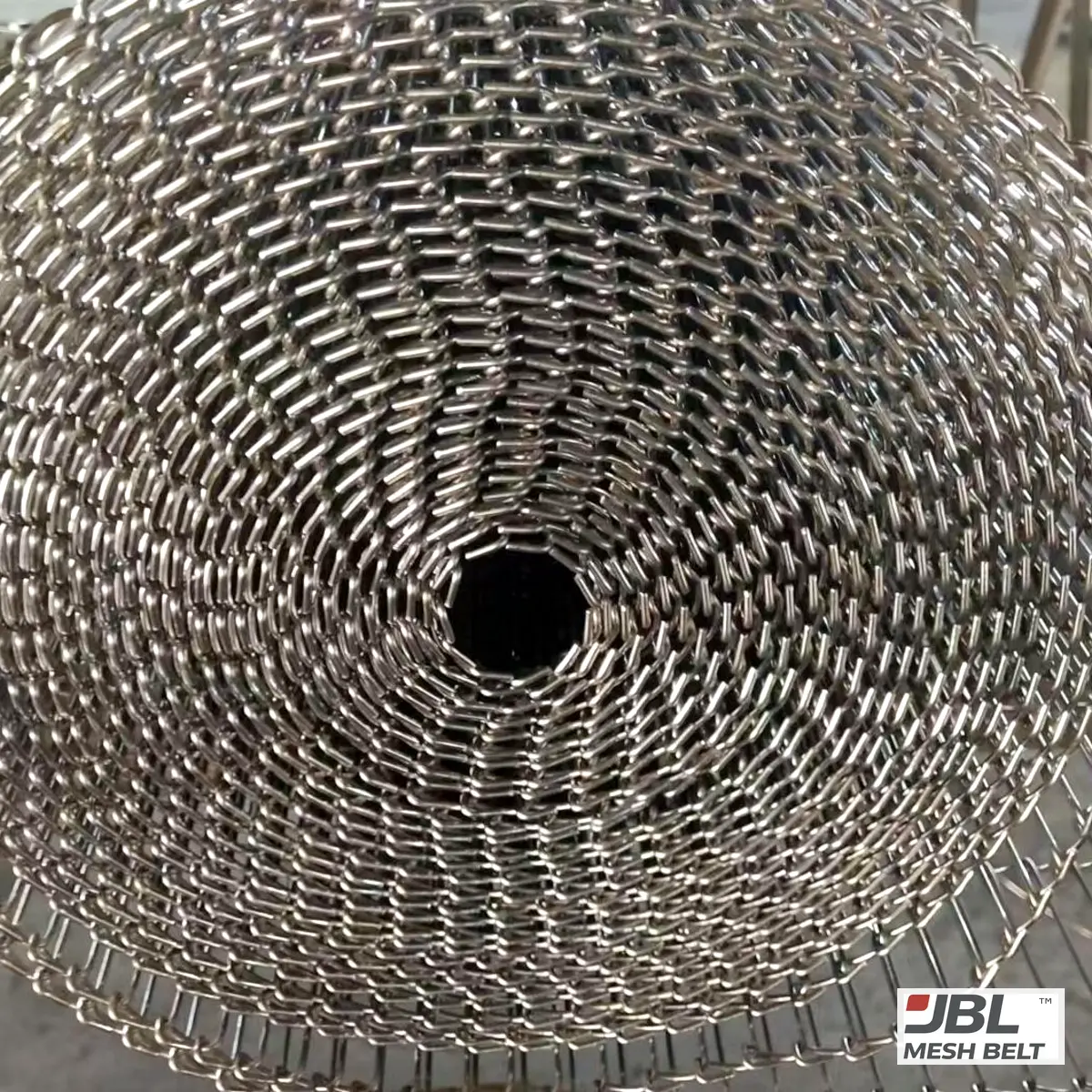
| Z-type ladder belt | On sprockets or drums at the ends | Fryers, pizza ovens, light products on an open belt | Wire, pitch over ten links, number of spaces, edge loop |
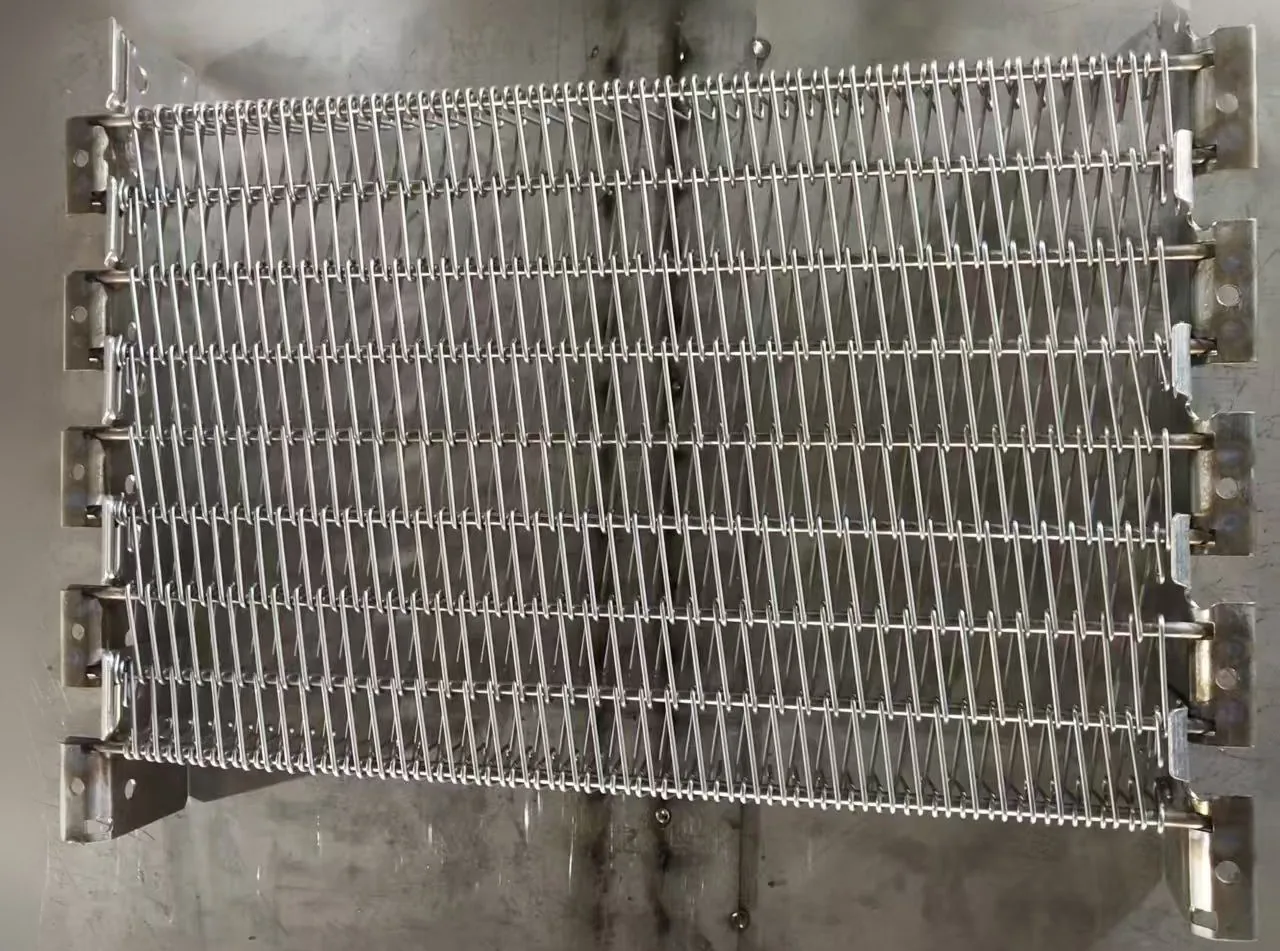
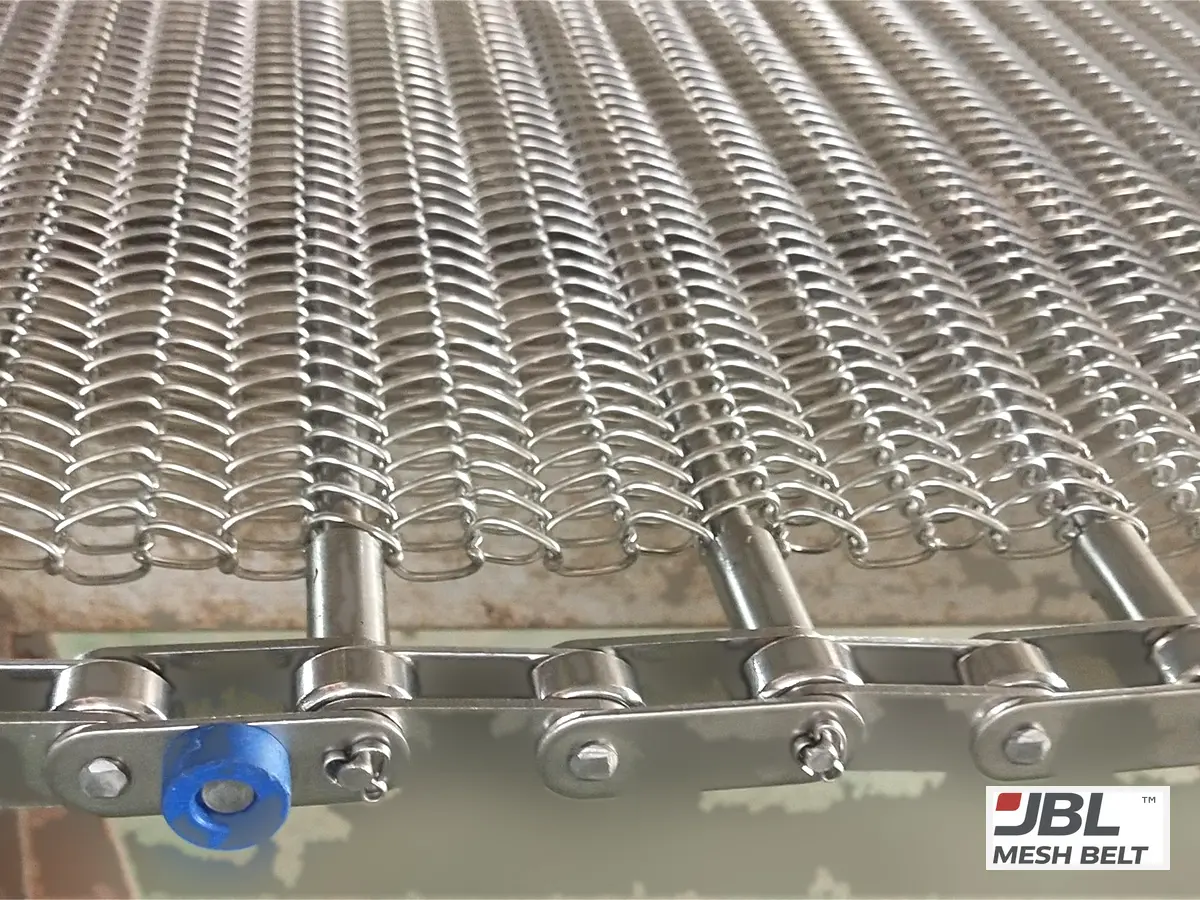
| Chain-driven belt | On side chains, often with guide rollers | Oven and steam tunnels with chain edges | Chain pitch, roller, plate, rod pitch and diameter, guide rollers |
| Eye link belt | On sprockets | Fryers and tunnels that need a stronger mesh | Link pitch, rod, link shape, edge |
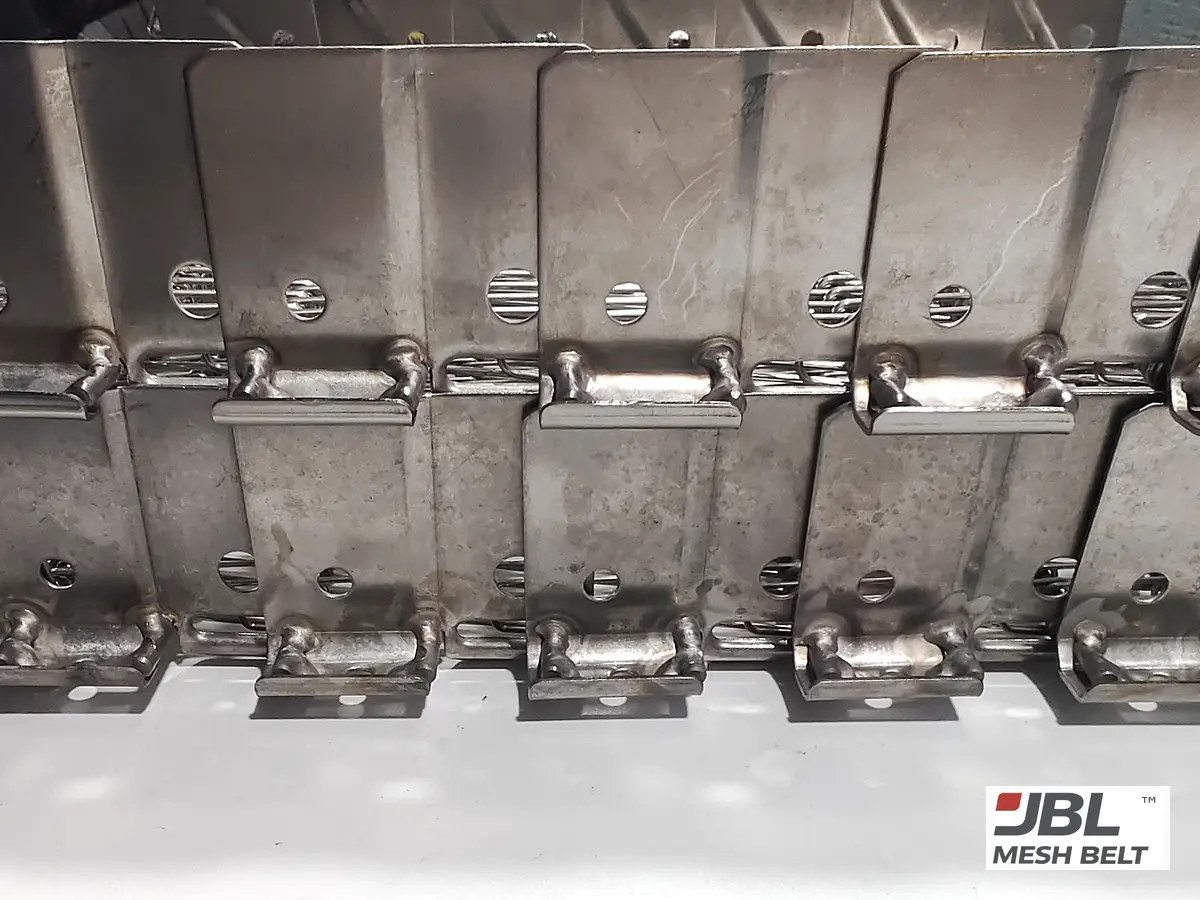
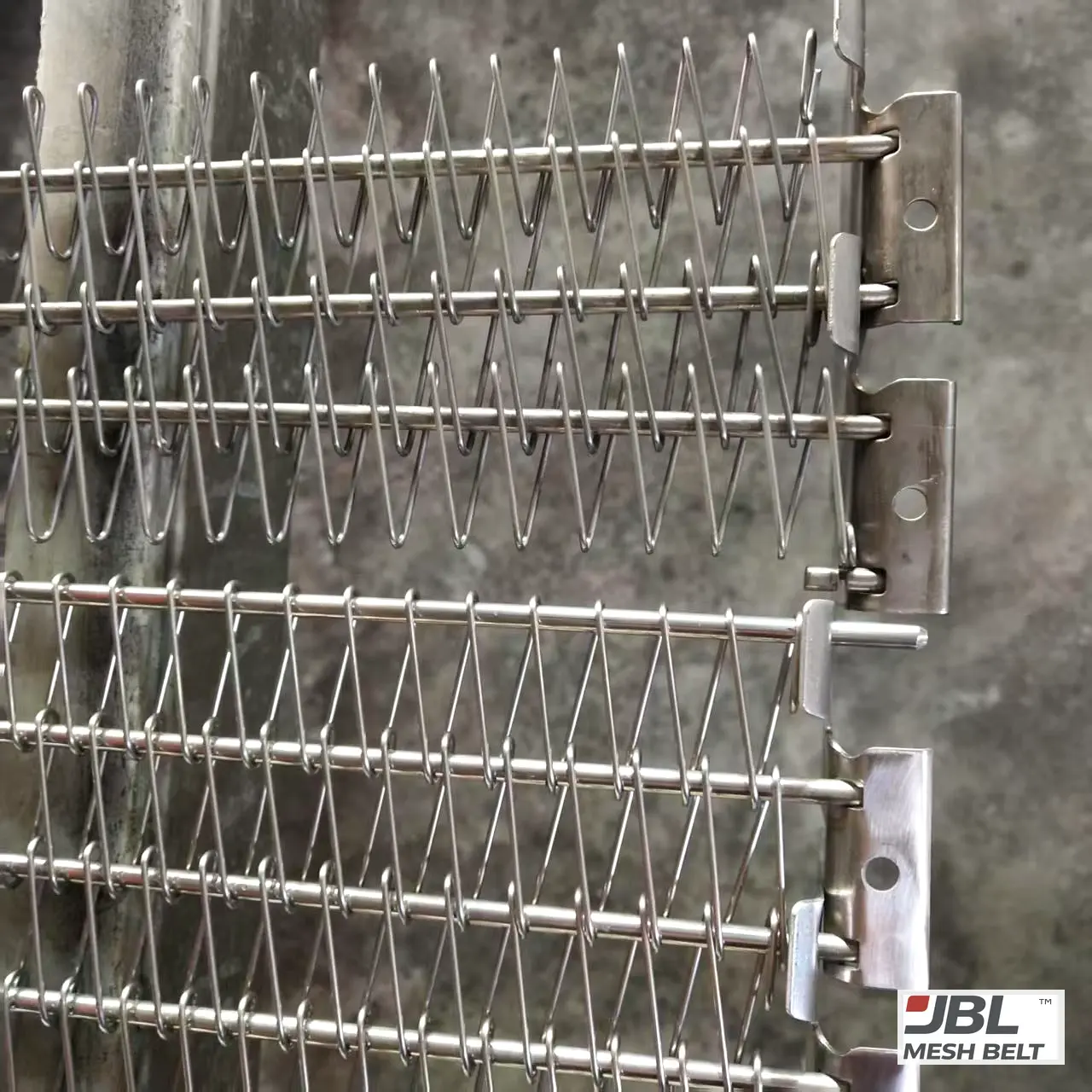
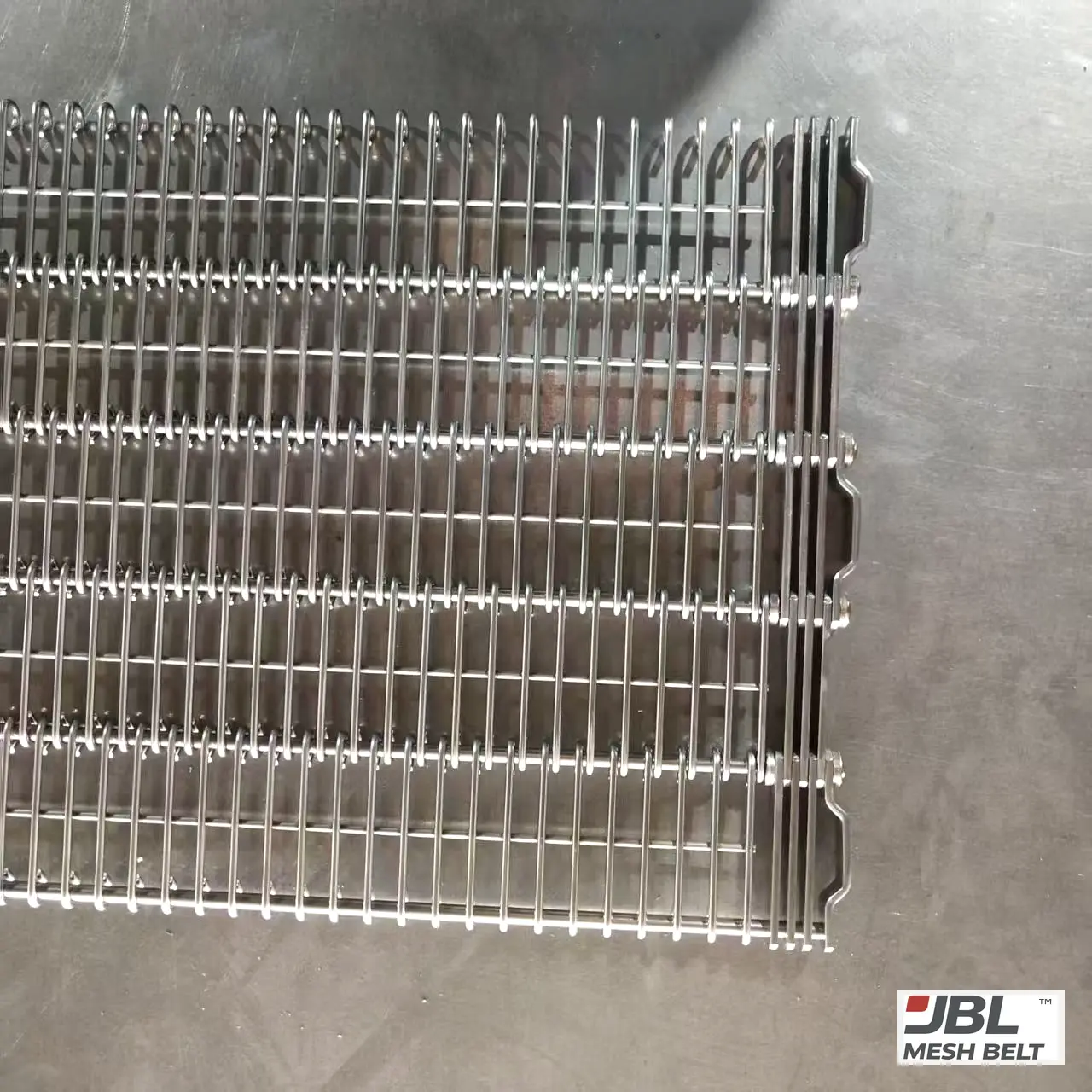
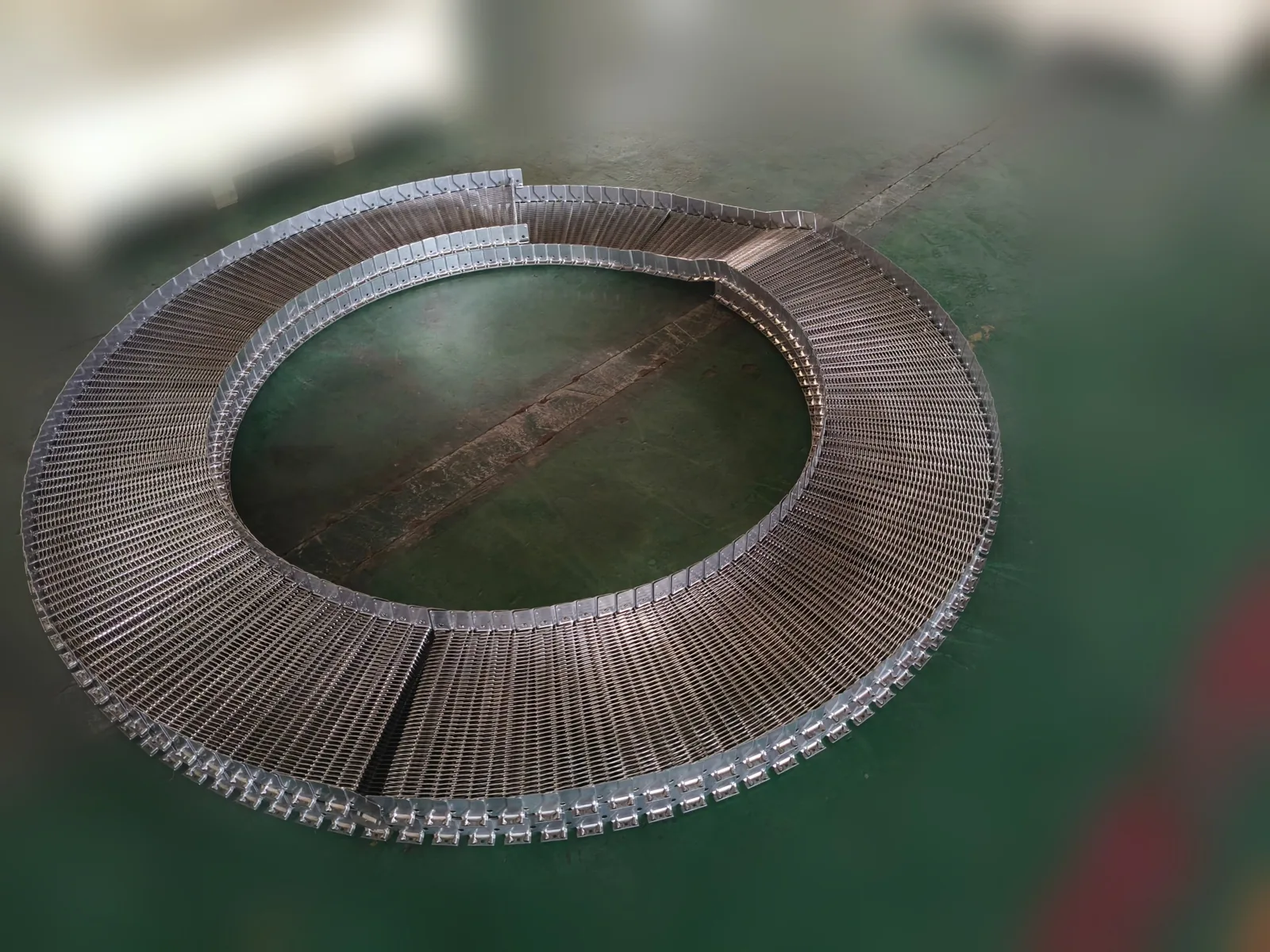
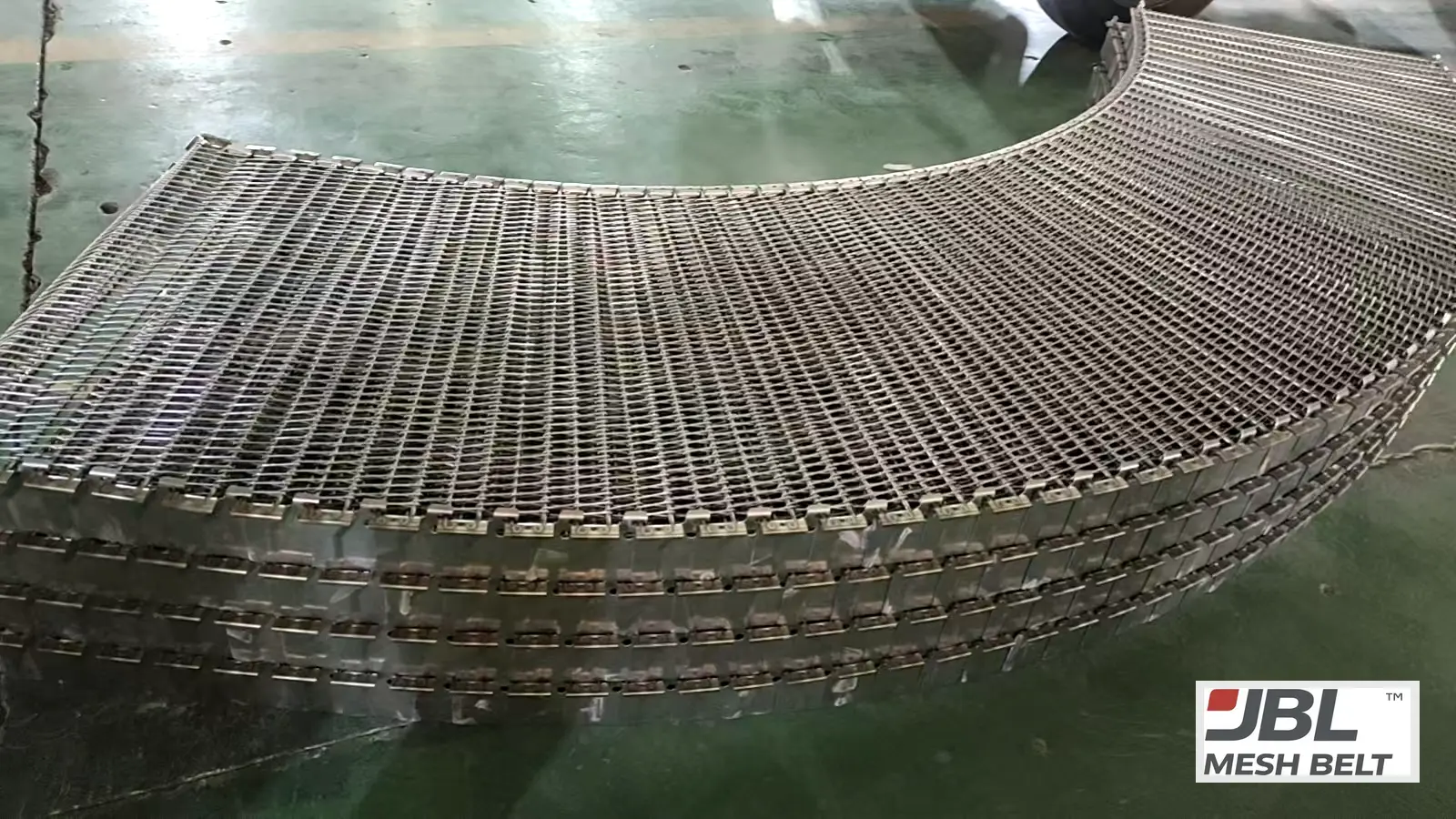
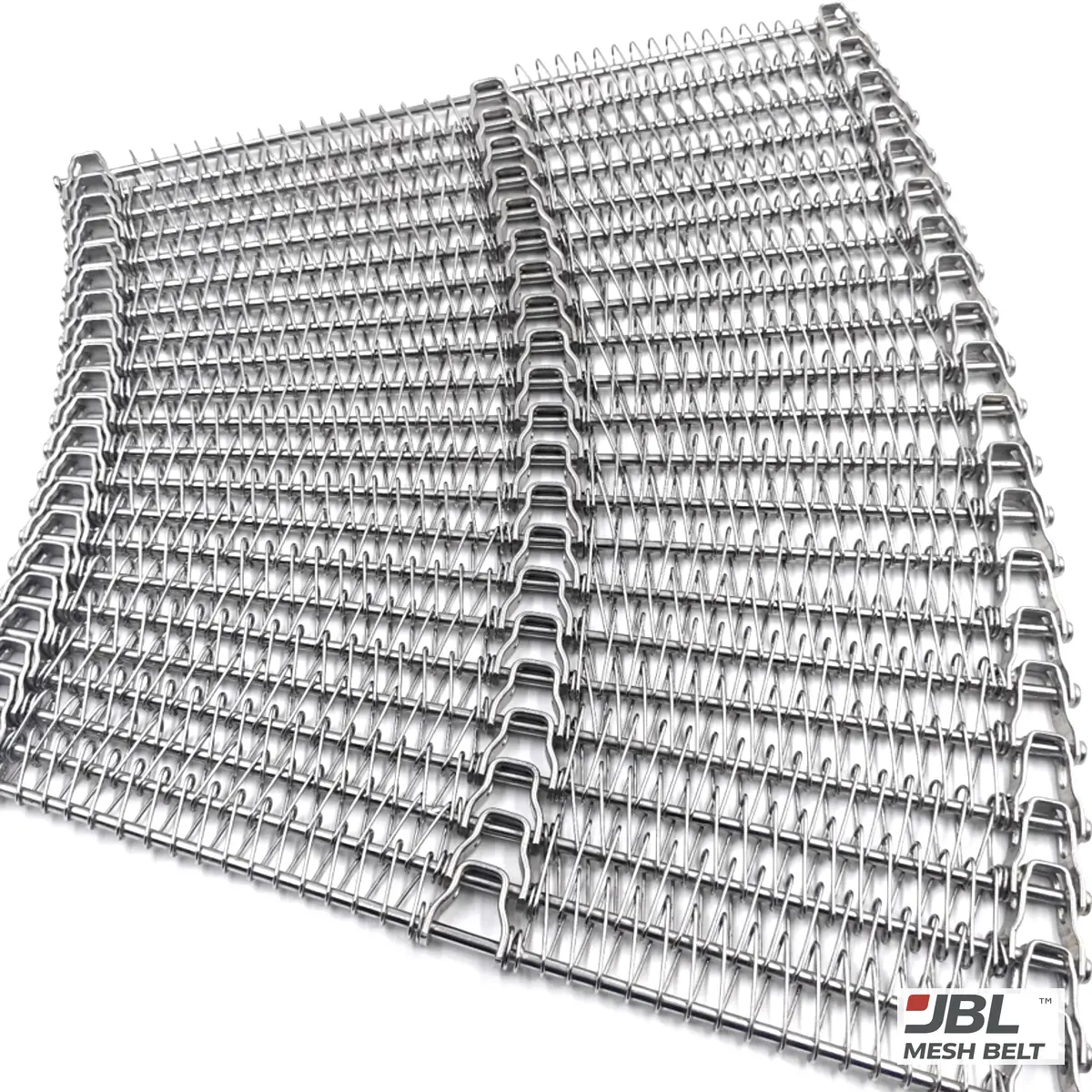
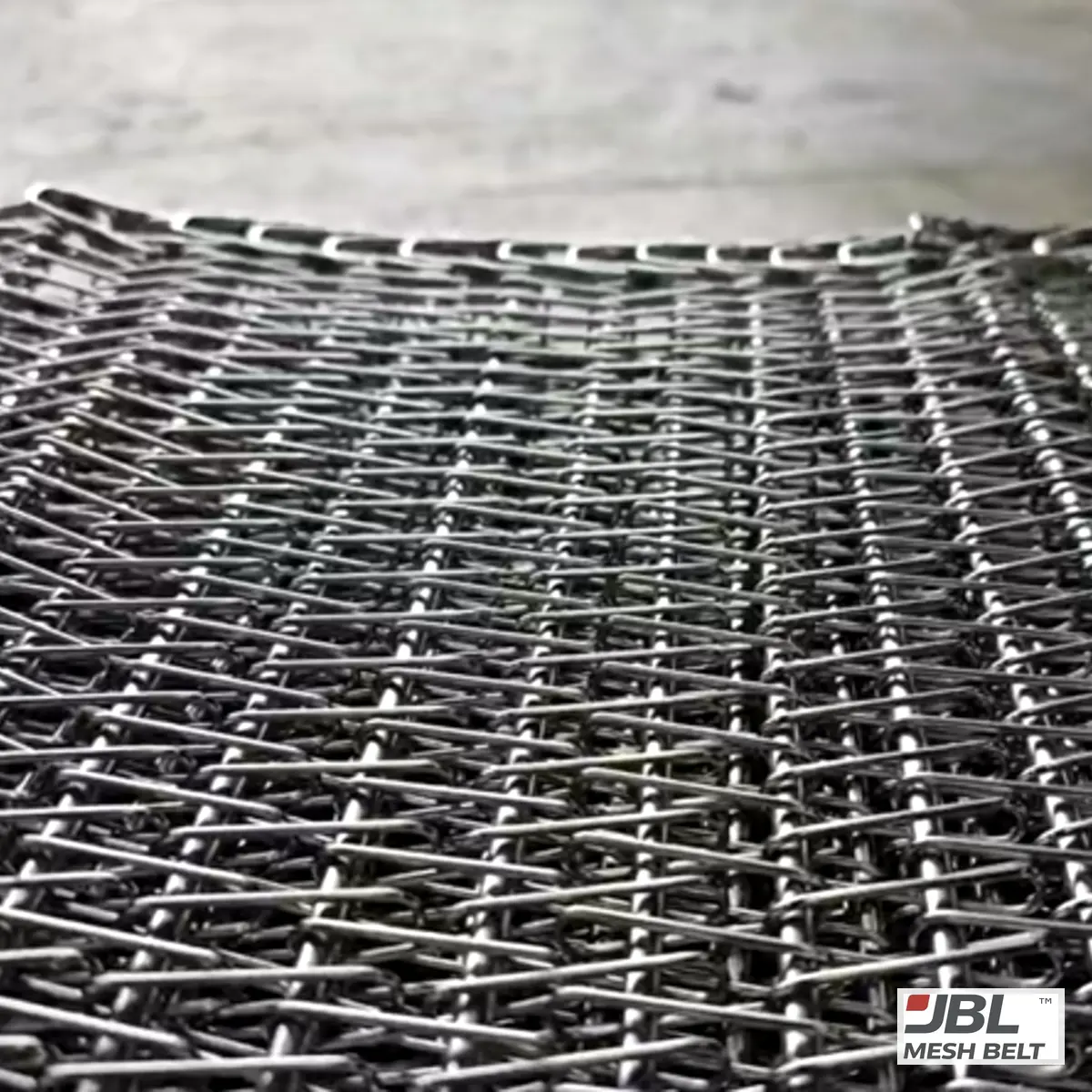
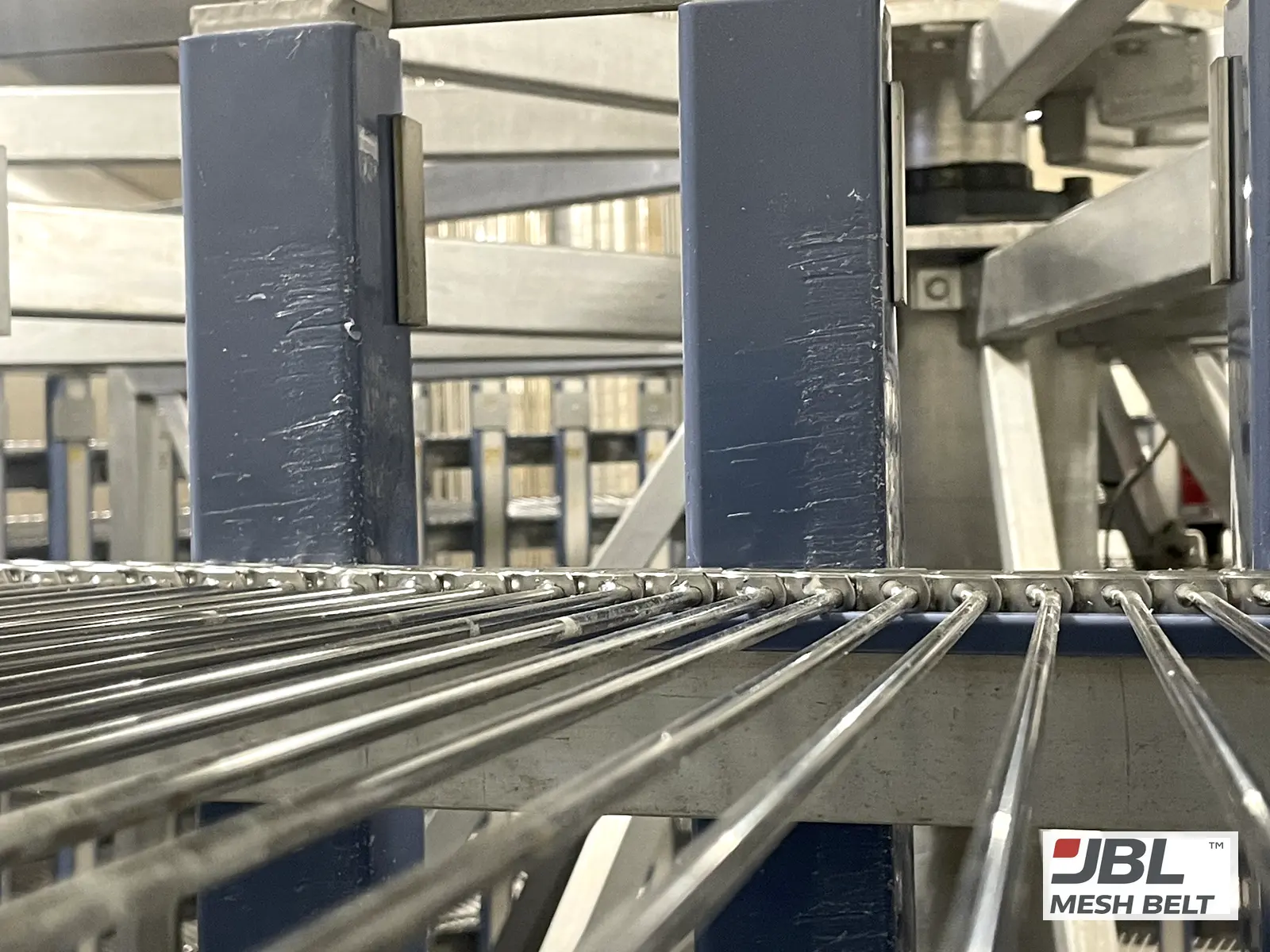
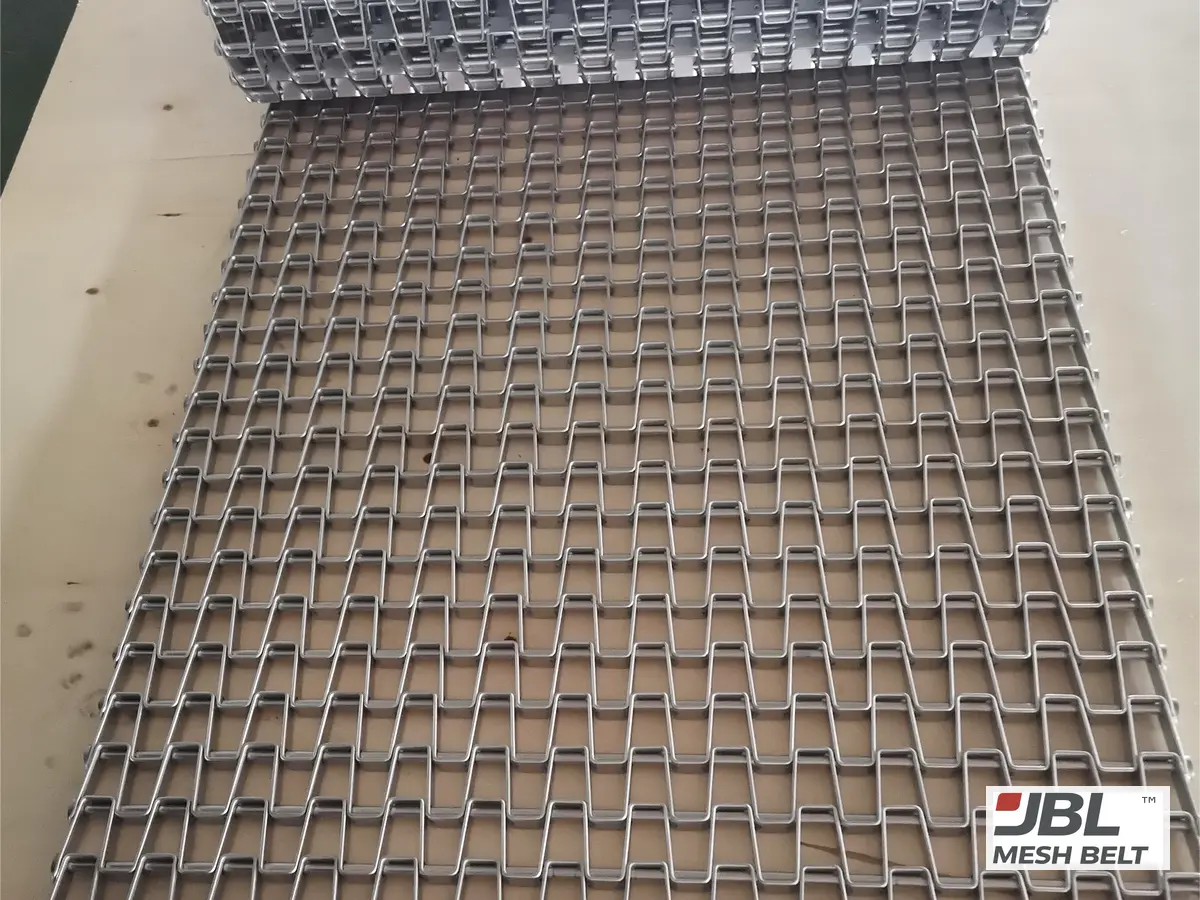
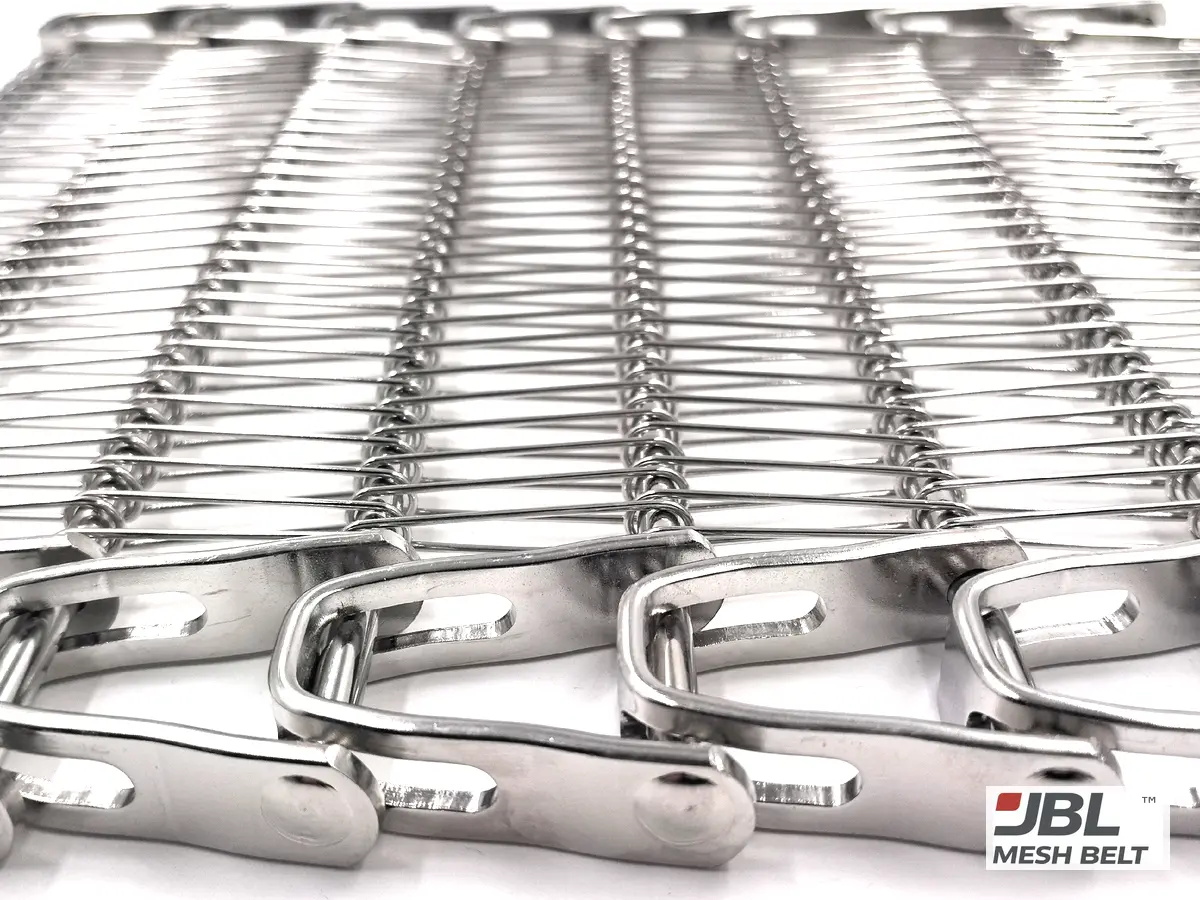
A ladder belt is open and light. It has few parts, so oil and heat pass through easily and it is simple to copy. A chain-driven belt hands the pulling to the chains, so the mesh between them can be chosen for the product.
Not sure which you have? The metal conveyor belt selection guide starts from the machine, and the frying and oven lines page lists what to check for each.
02What did the potato chip fryer in Libya need?
The fryer came with a Z-type ladder belt. The original maker's price for a new one was high.
Short answer
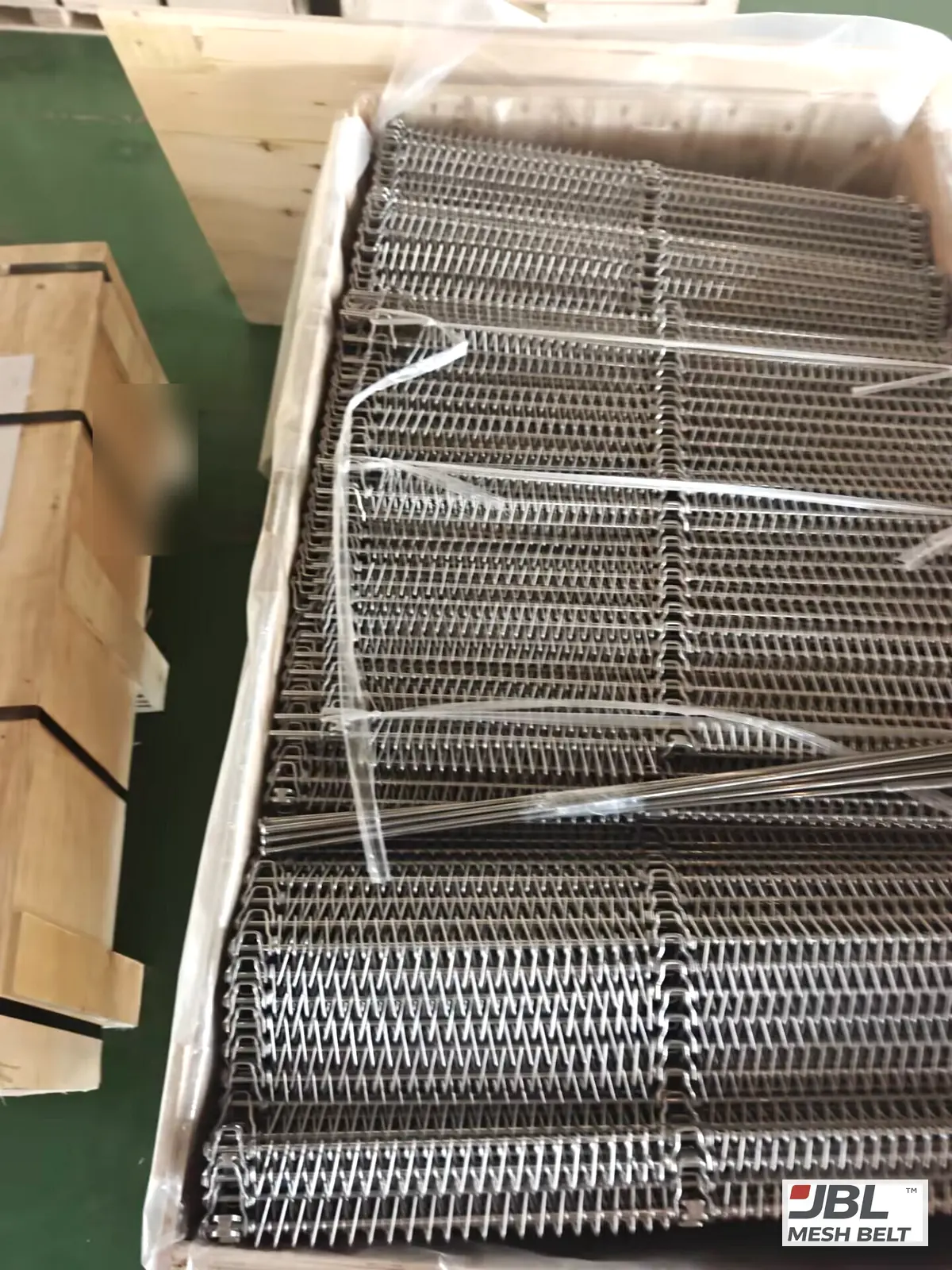
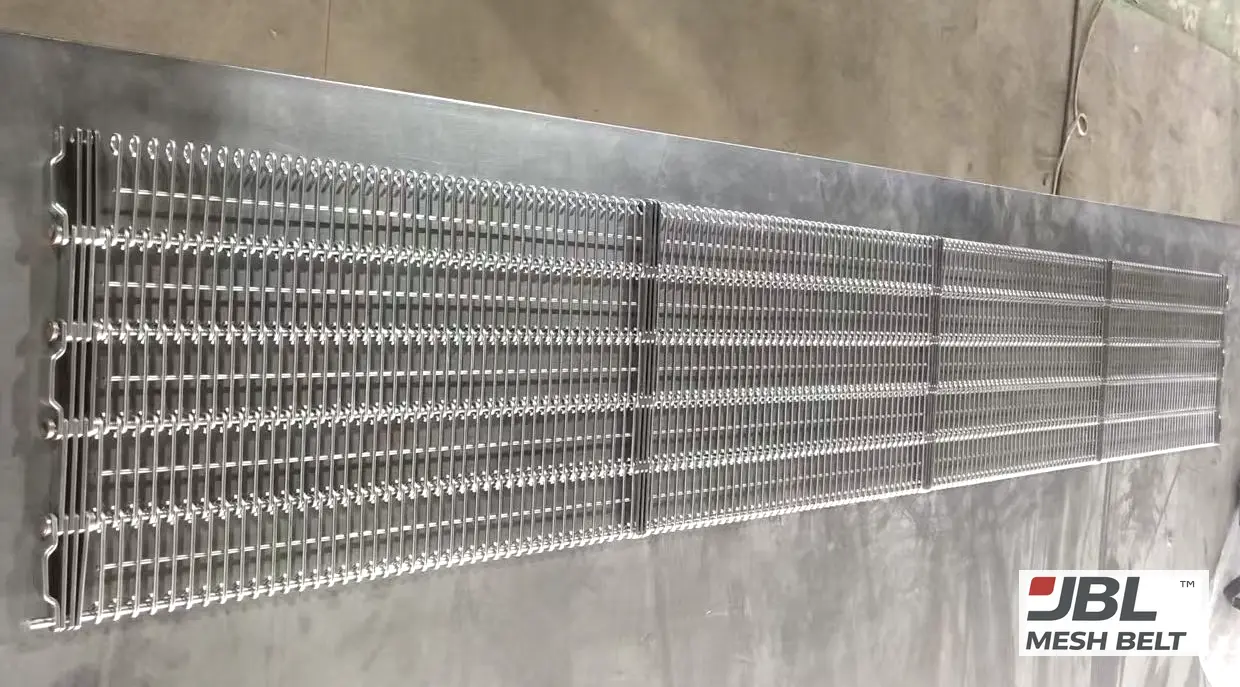
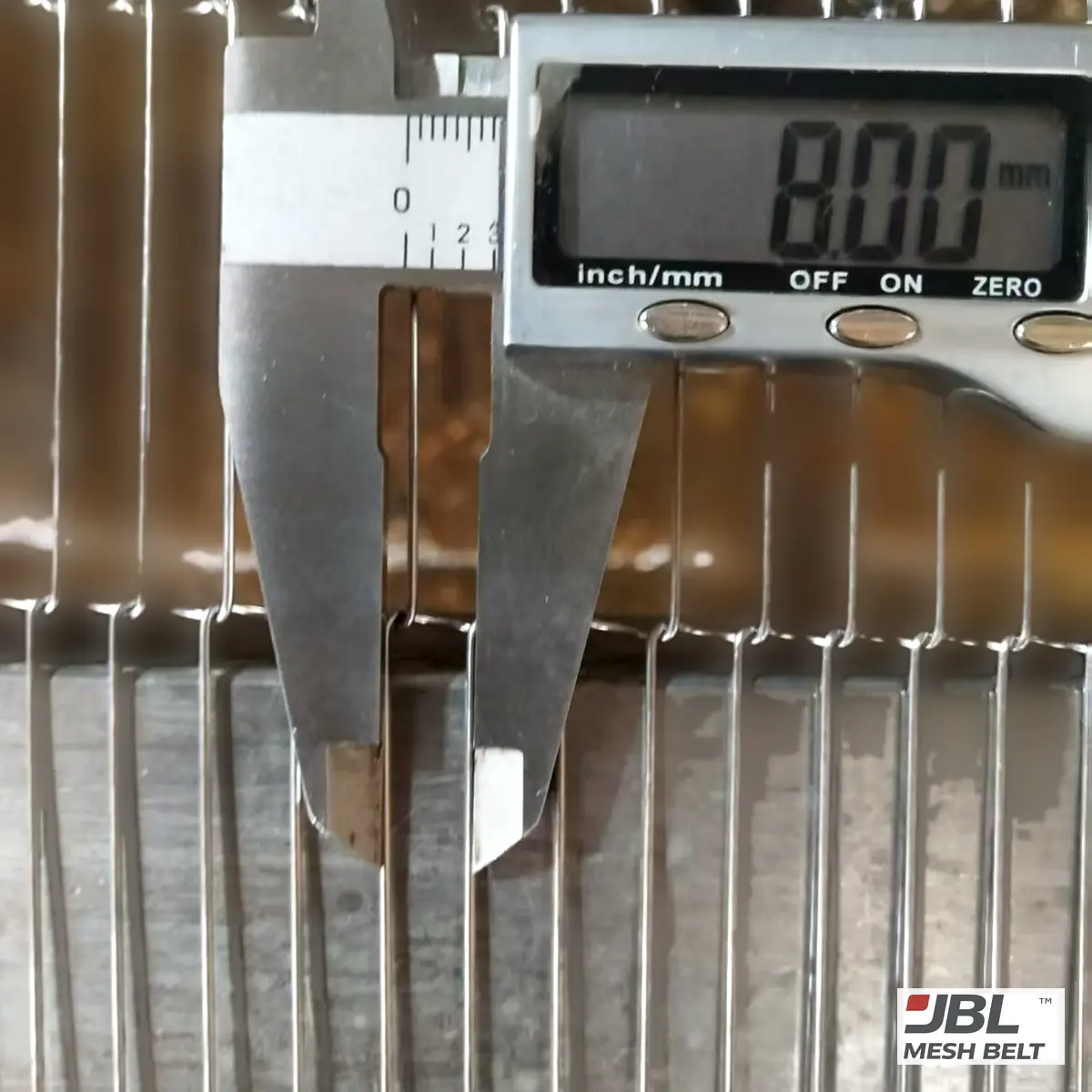
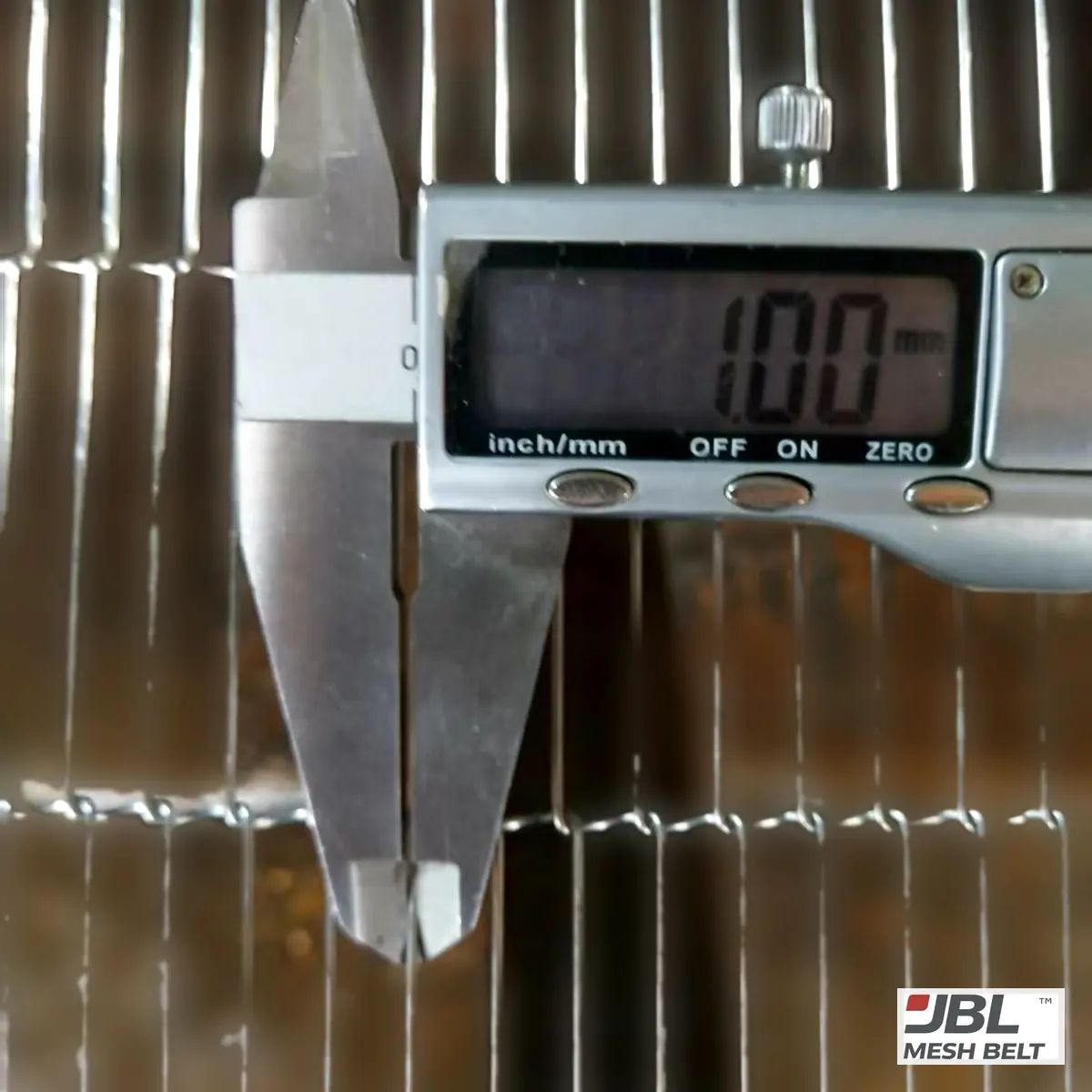
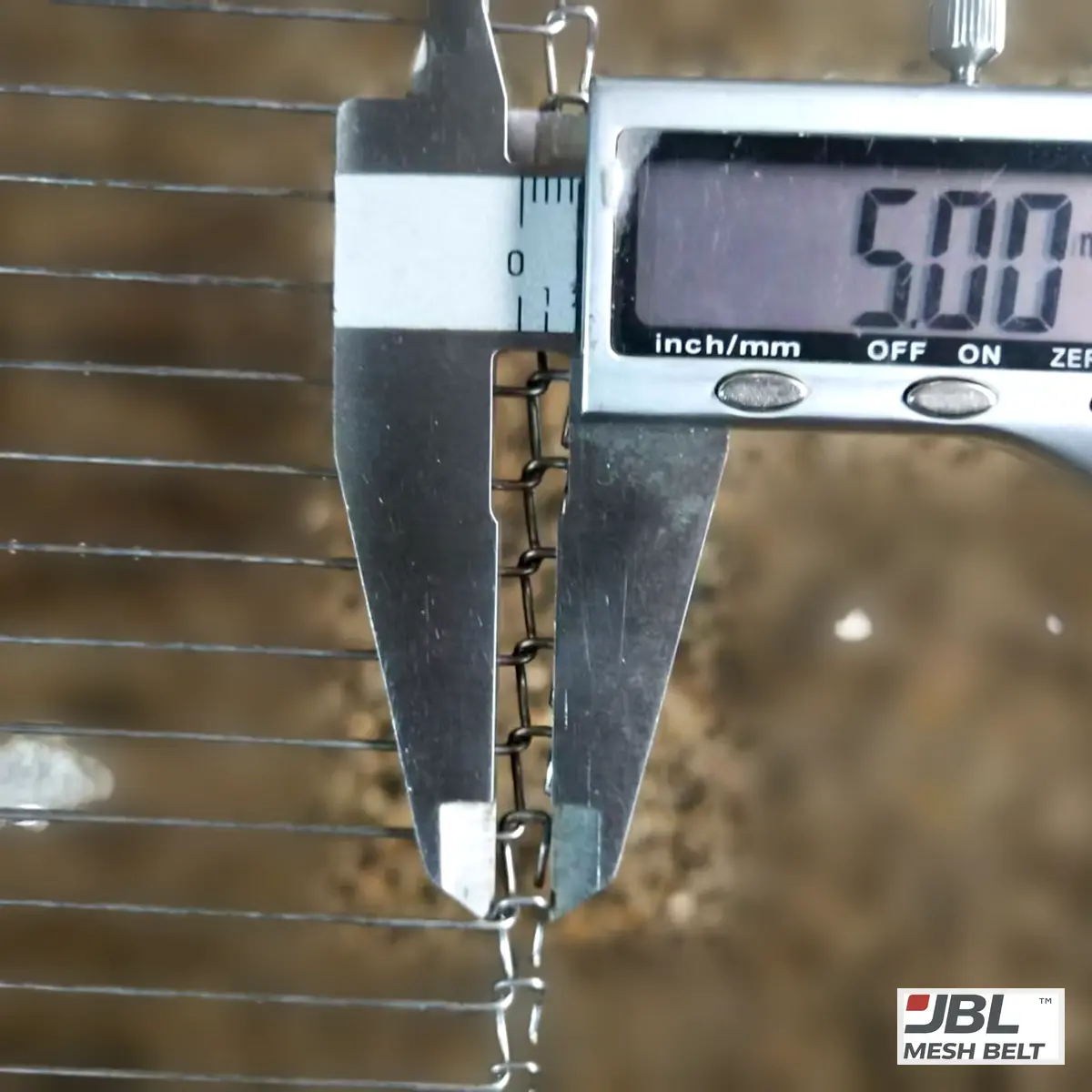
A Z-type ladder belt in SUS304: pitch 8 mm, wire 1 mm, 19 spaces, edge loop 5 mm. The customer sent a sample; we drew it, compared a trial length with the original, then made 50 m in five 10 m rolls.
| Value | Drawing | Caliper reading |
|---|---|---|
| Pitch | 8 mm | 8.00 mm |
| Ten pitches | 80 mm | 80.04 mm |
| Wire | 1 mm | 1.00 mm |
| Spaces across the belt | 19 | 19 |
| Edge loop | 5 mm | 5.00 mm |
Belt width and order details are withheld.
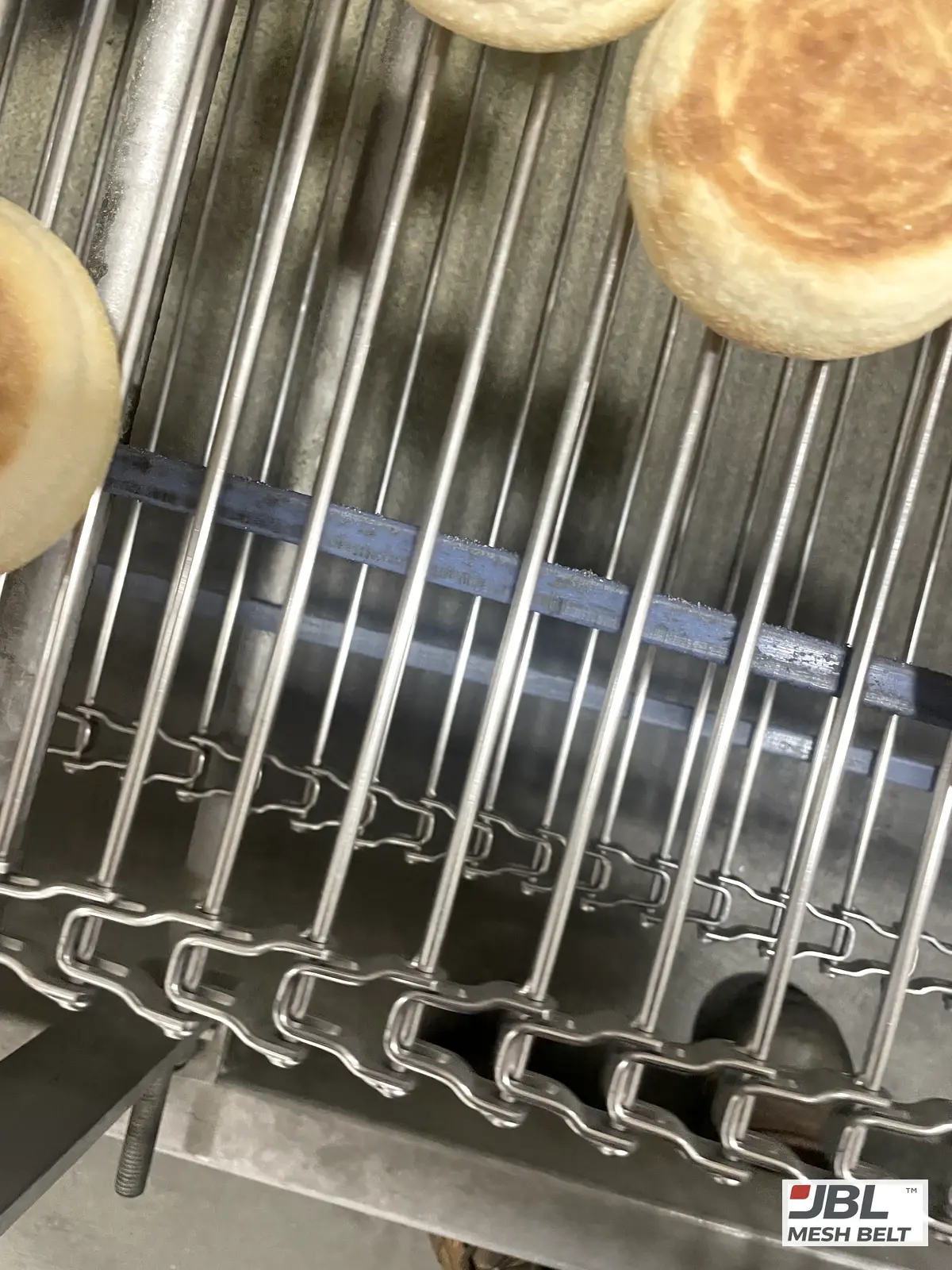
A chip fryer moves a lot of small, light pieces through hot oil. The ladder belt carries them on thin wires with open spaces, so oil drains back and the belt stays light.
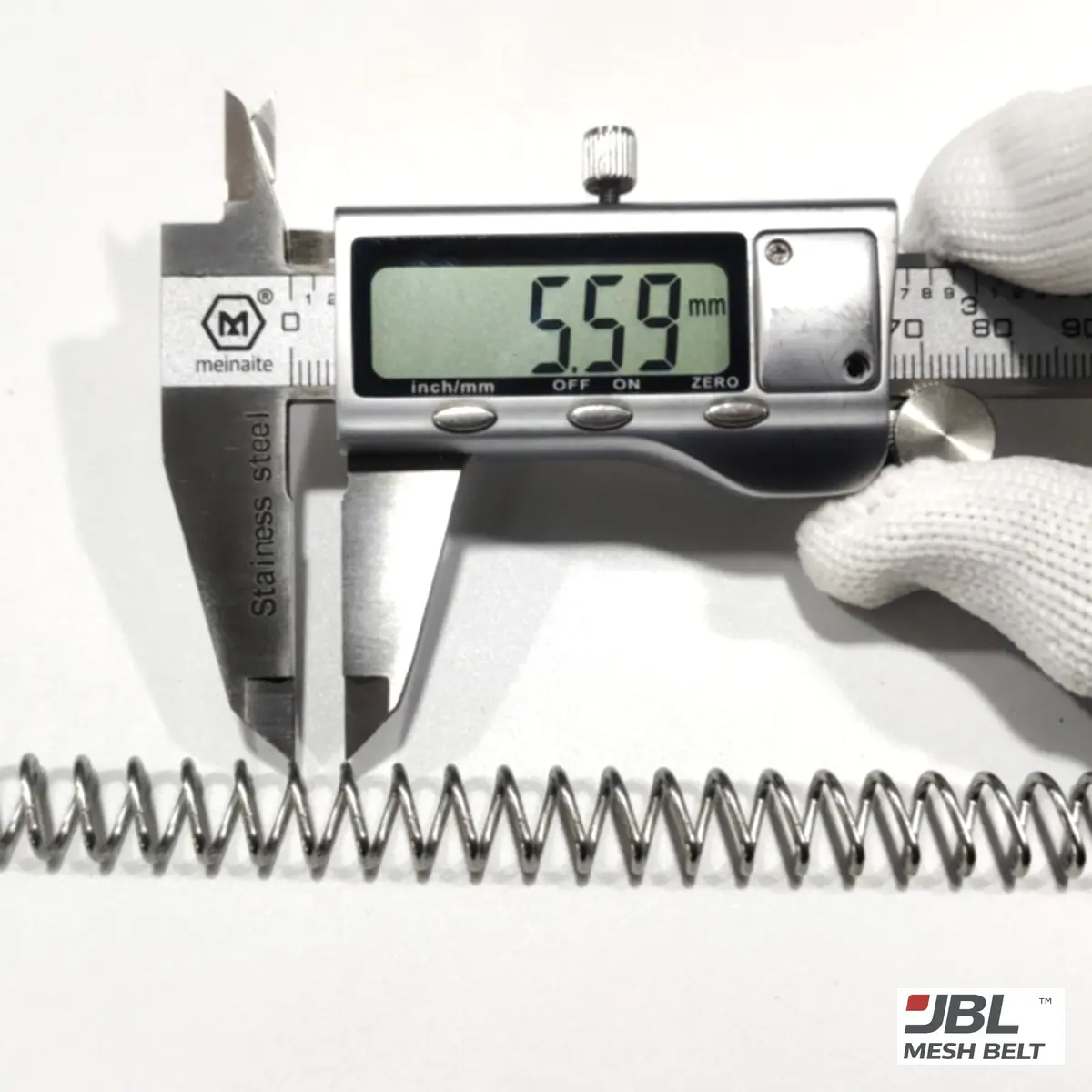
The value I watch most on this belt is the pitch over ten links. One link can read right while the belt drifts. Here ten pitches read 80.04 mm against 80 mm drawn.
The full replacement story is in how to replace a Z-type ladder belt on a fryer or pizza oven.
03What changes when the oven is a pizza oven?
Same belt type, different numbers. A pizza oven belt in Australia used heavier wire and a larger pitch.
Short answer
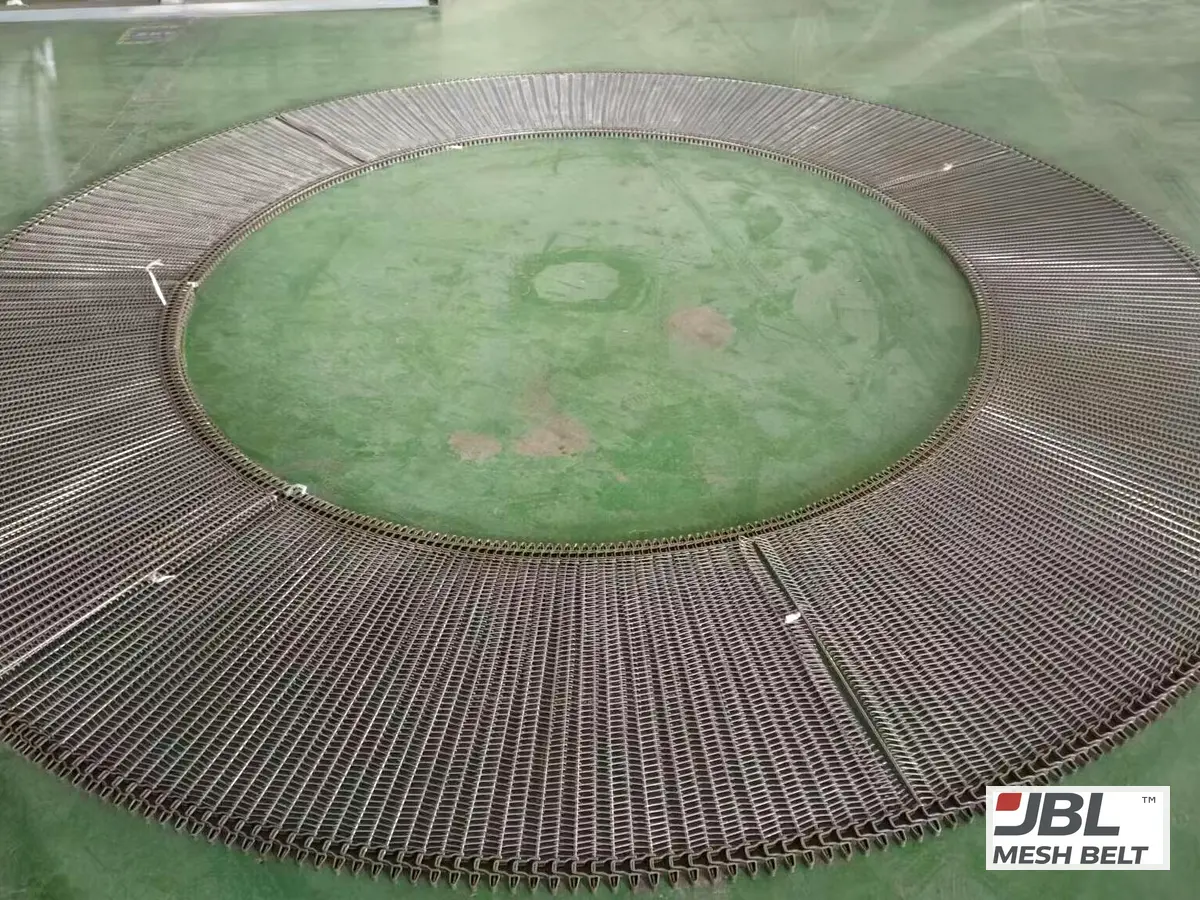
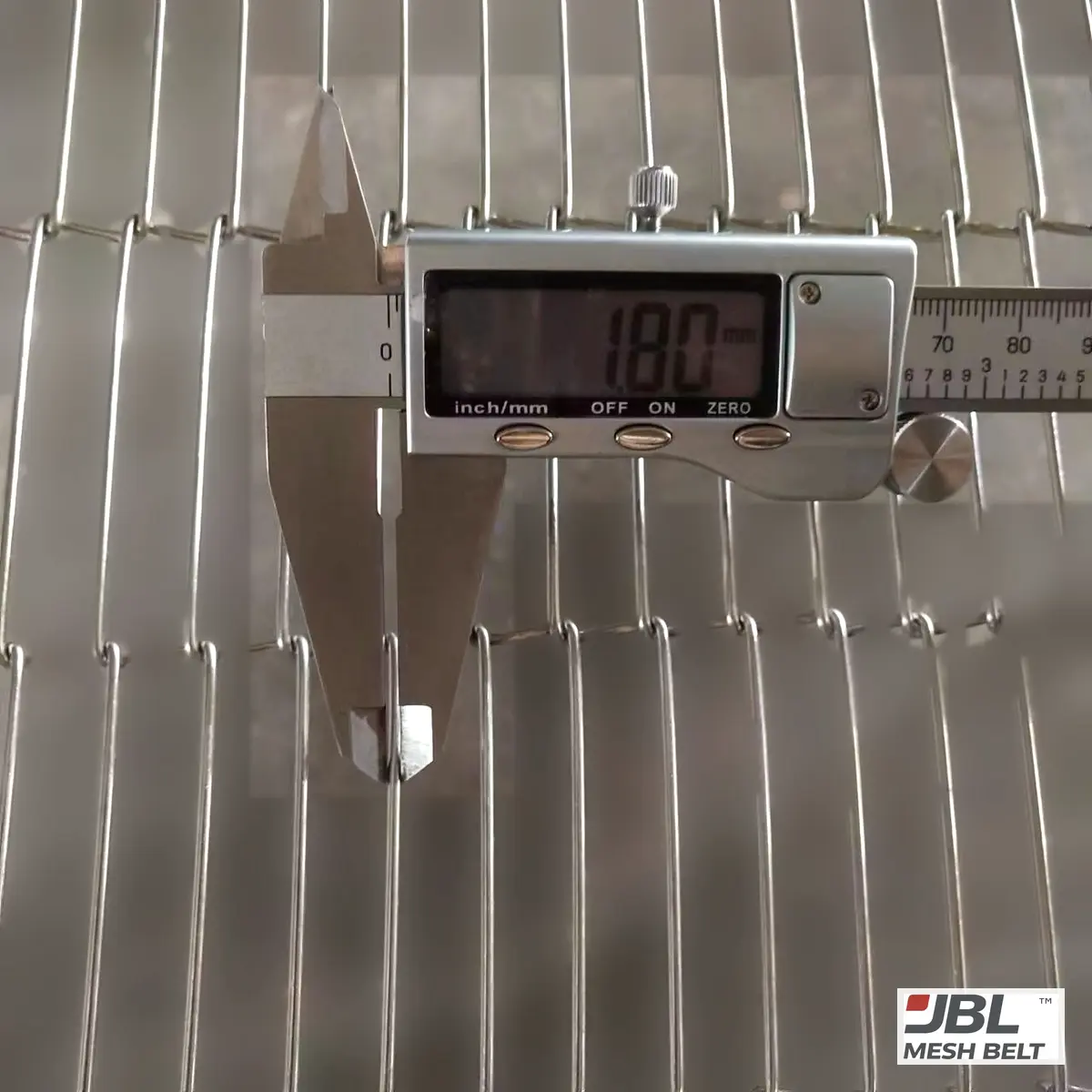
The pizza oven belt was also a Z-type ladder belt in SUS304, but with 1.8 mm wire, 12.7 mm pitch and 9 spaces. The customer fits one length per oven, so about 300 m was made in one order and cut into 10 m lengths.
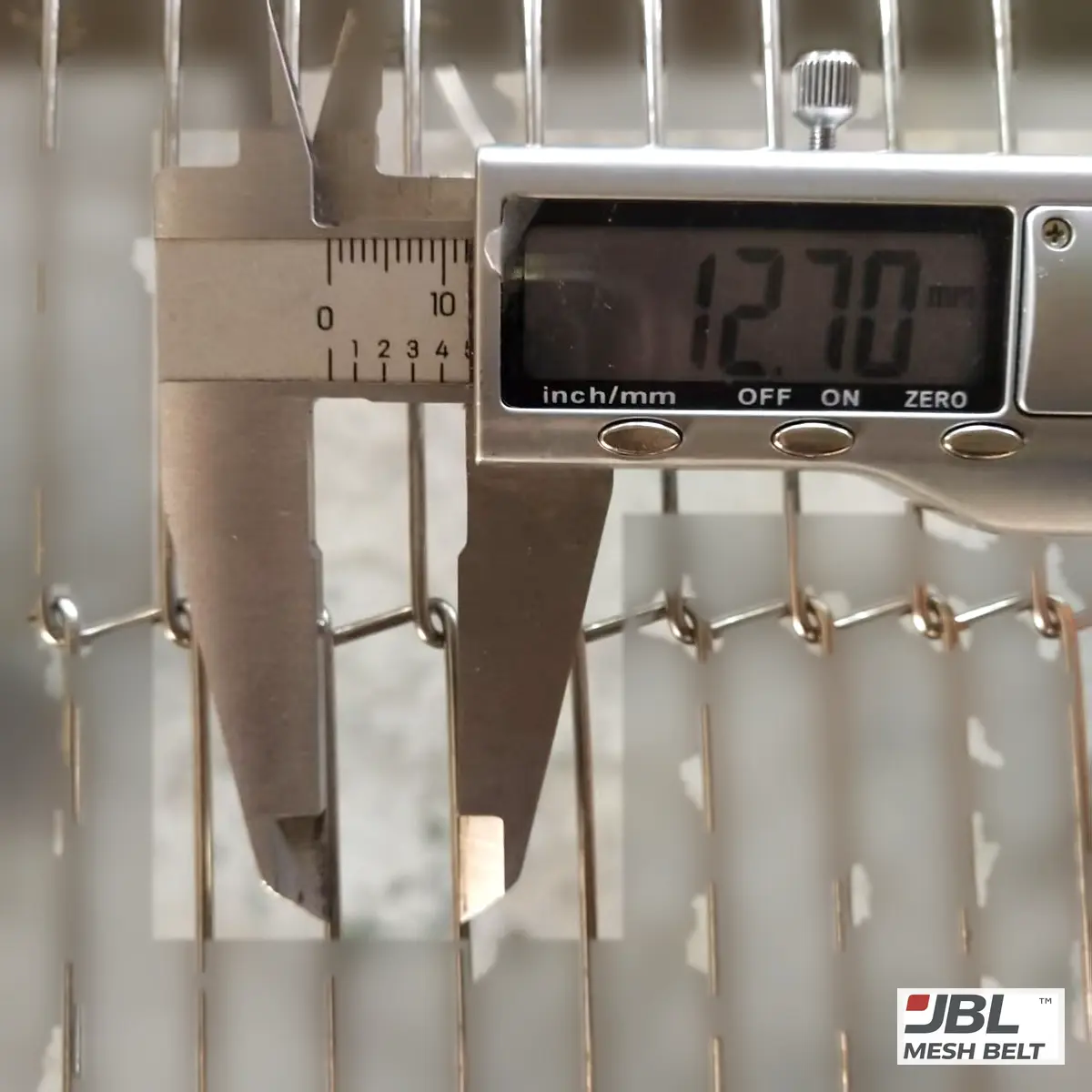
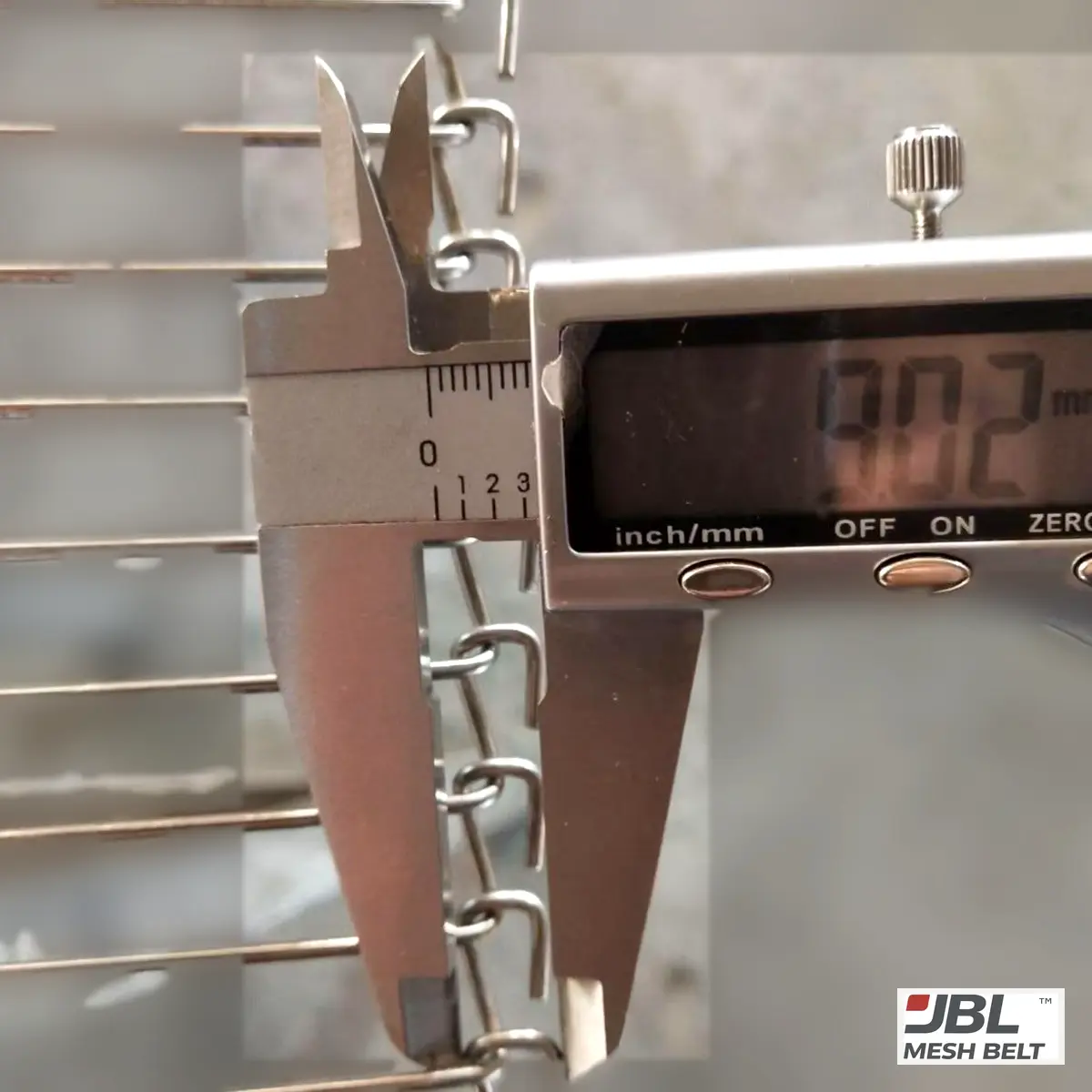
| Value | Chip fryer, Libya | Pizza ovens, Australia |
|---|---|---|
| Wire | 1.00 mm | 1.80 mm original · 1.81 mm bulk |
| Pitch | 8.00 mm | 12.70 mm (½ inch) |
| Ten pitches | 80.04 mm | 127.00 mm |
| Spaces across the belt | 19 | 9 |
| Edge loop | 5.00 mm | 10.00 mm original · 9 mm confirmed on the drawing |
| Supplied as | Five 10 m rolls | About 300 m in 10 m lengths |
Both belts have an odd number of spaces — 19 and 9. It is one of the values I check against the old belt on every ladder belt, together with the edge loop.
The edge loop changed on the Australian order: the original read 10.00 mm, and the customer confirmed 9 mm on the drawing before production. The bulk belt measured 9.02 mm. A change like that belongs on the drawing, never on the shop floor.
04Why did the steam oven tunnel need a chain-driven belt in 316?
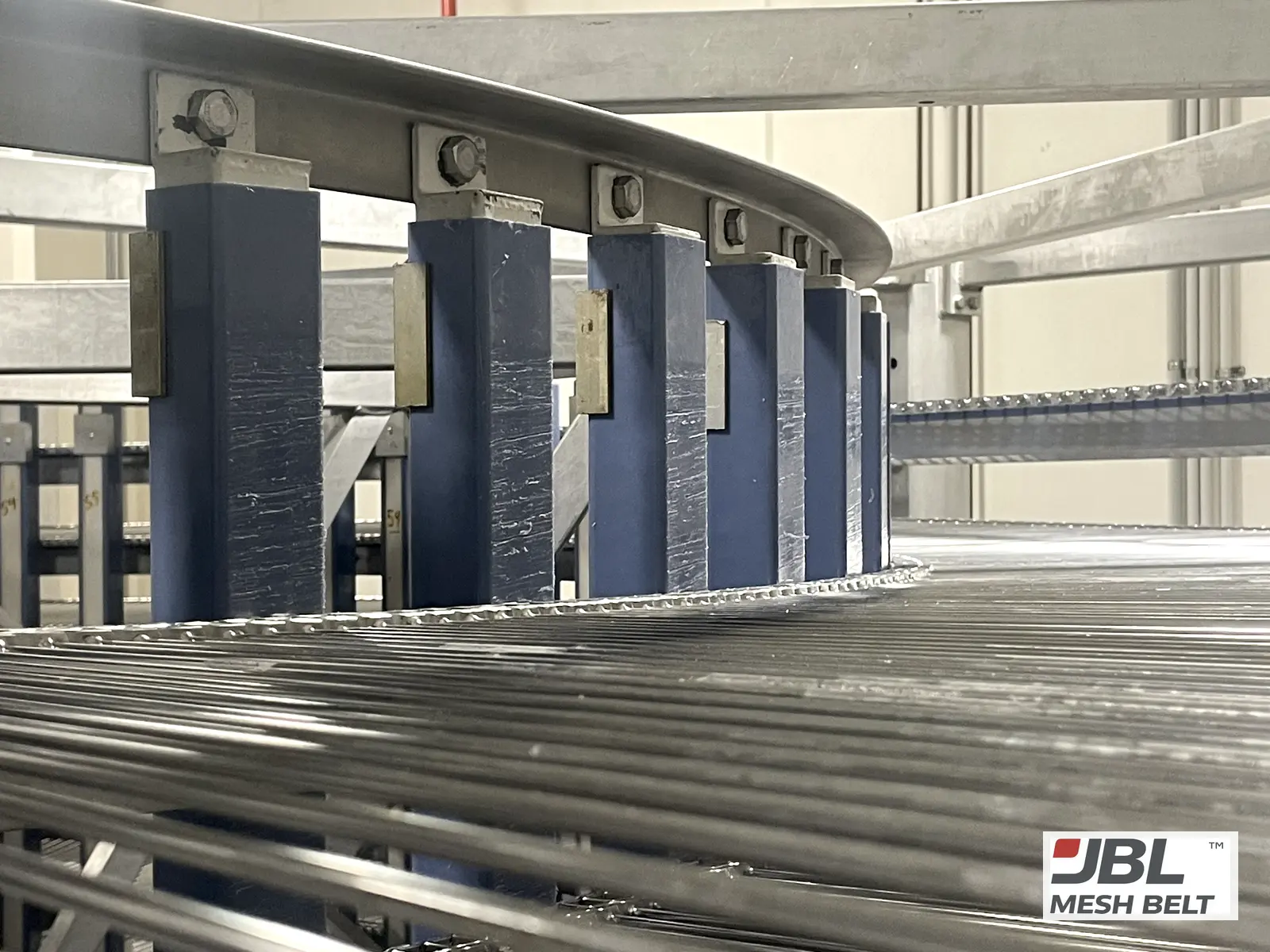
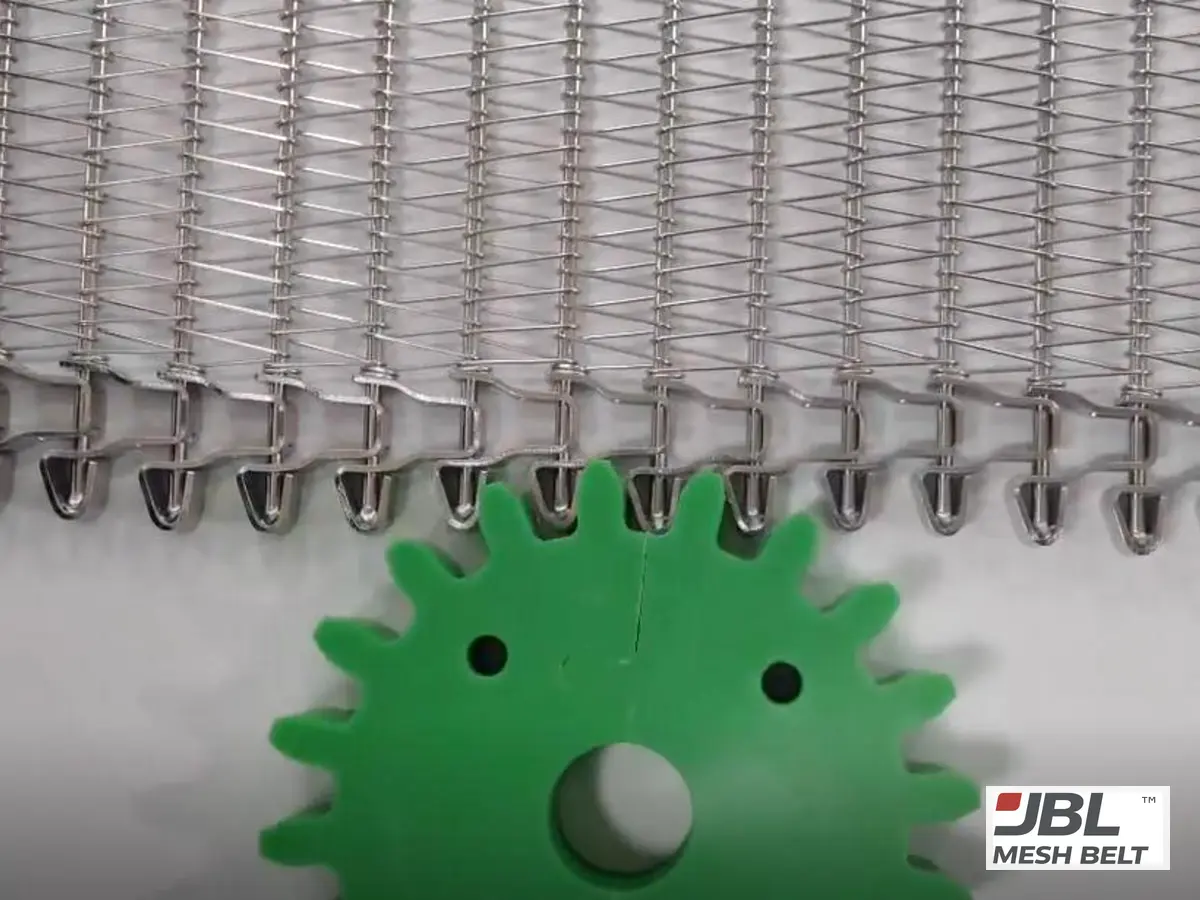
A steam oven tunnel is hot, wet and cleaned with chemicals. The belt here rode on side chains with guide rollers.
Short answer
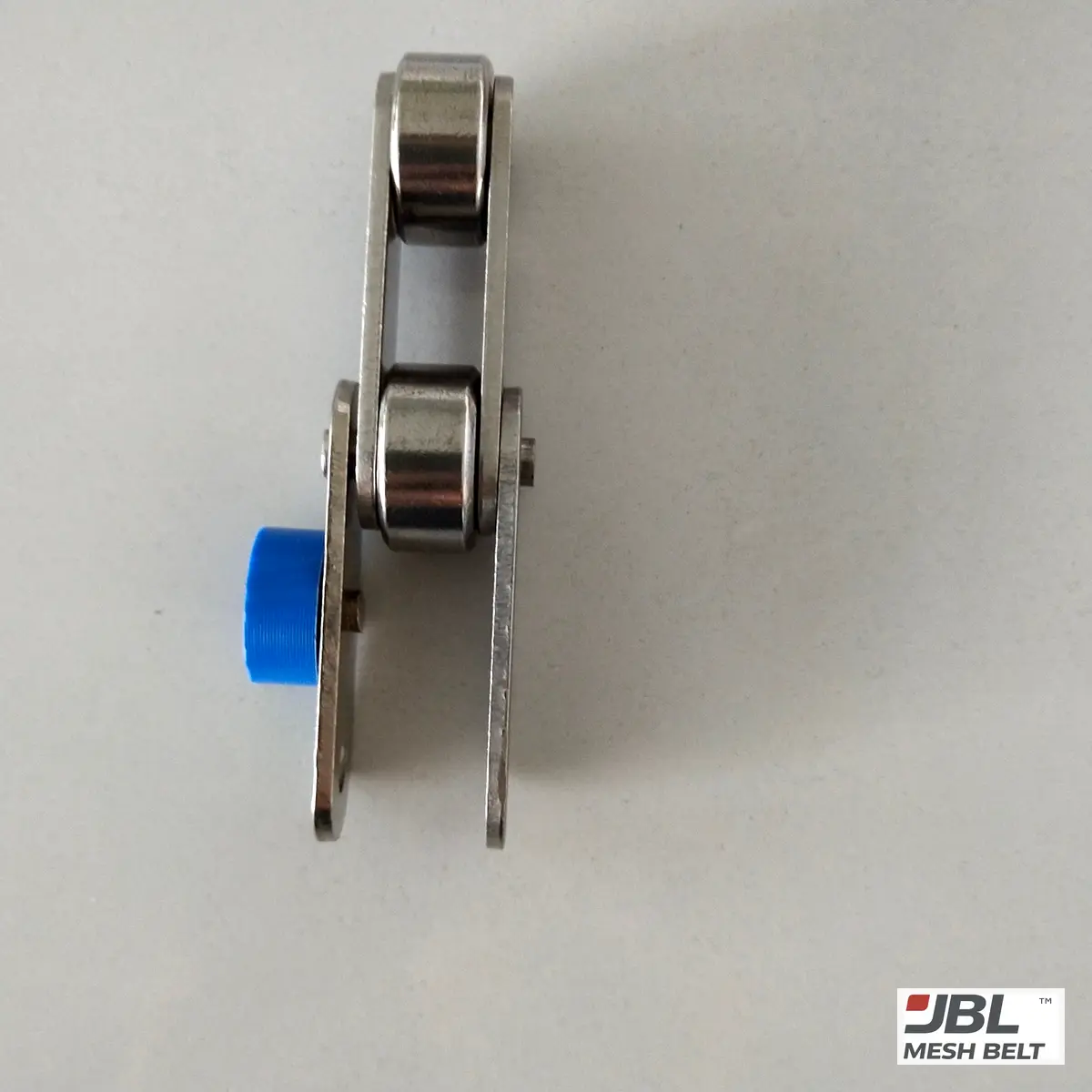
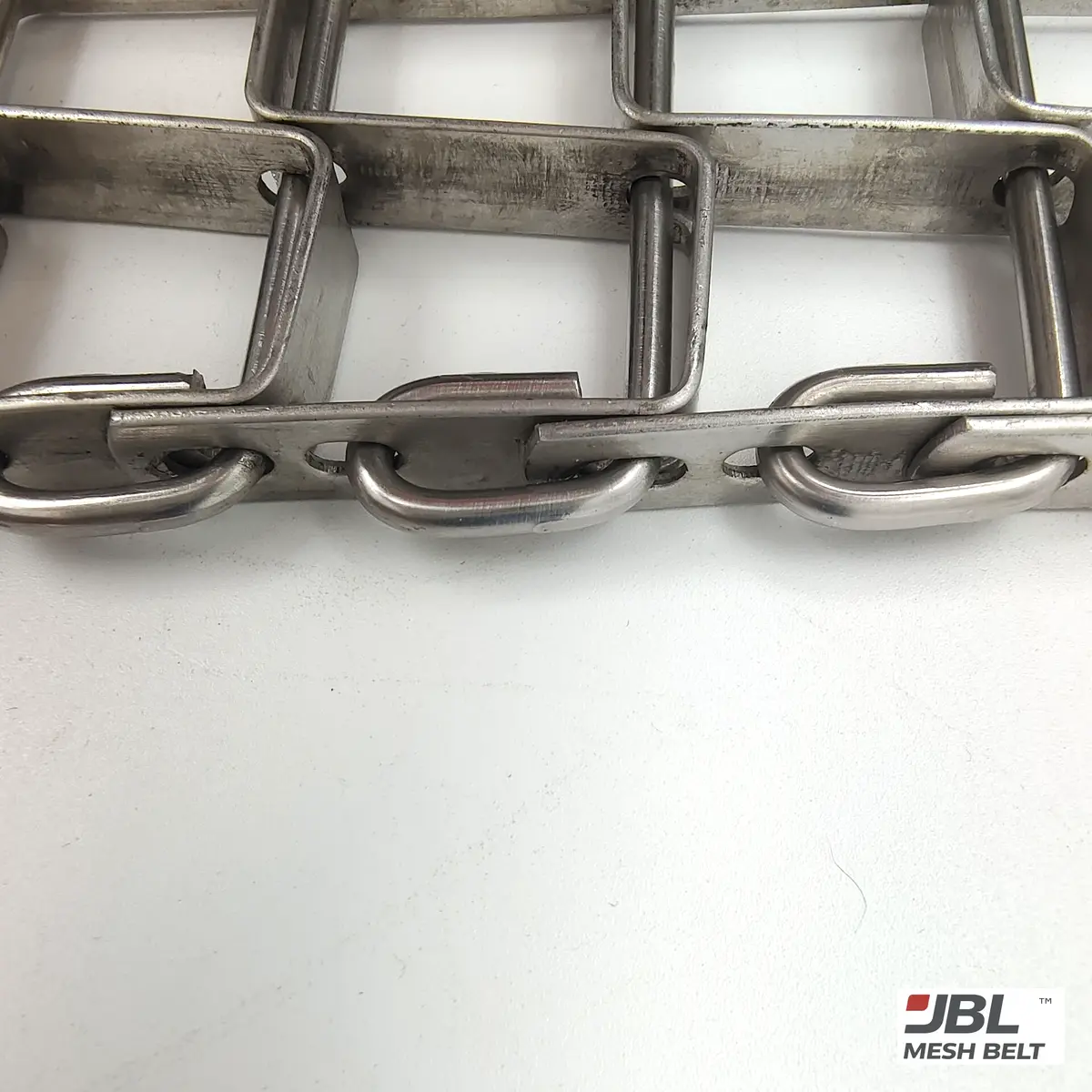
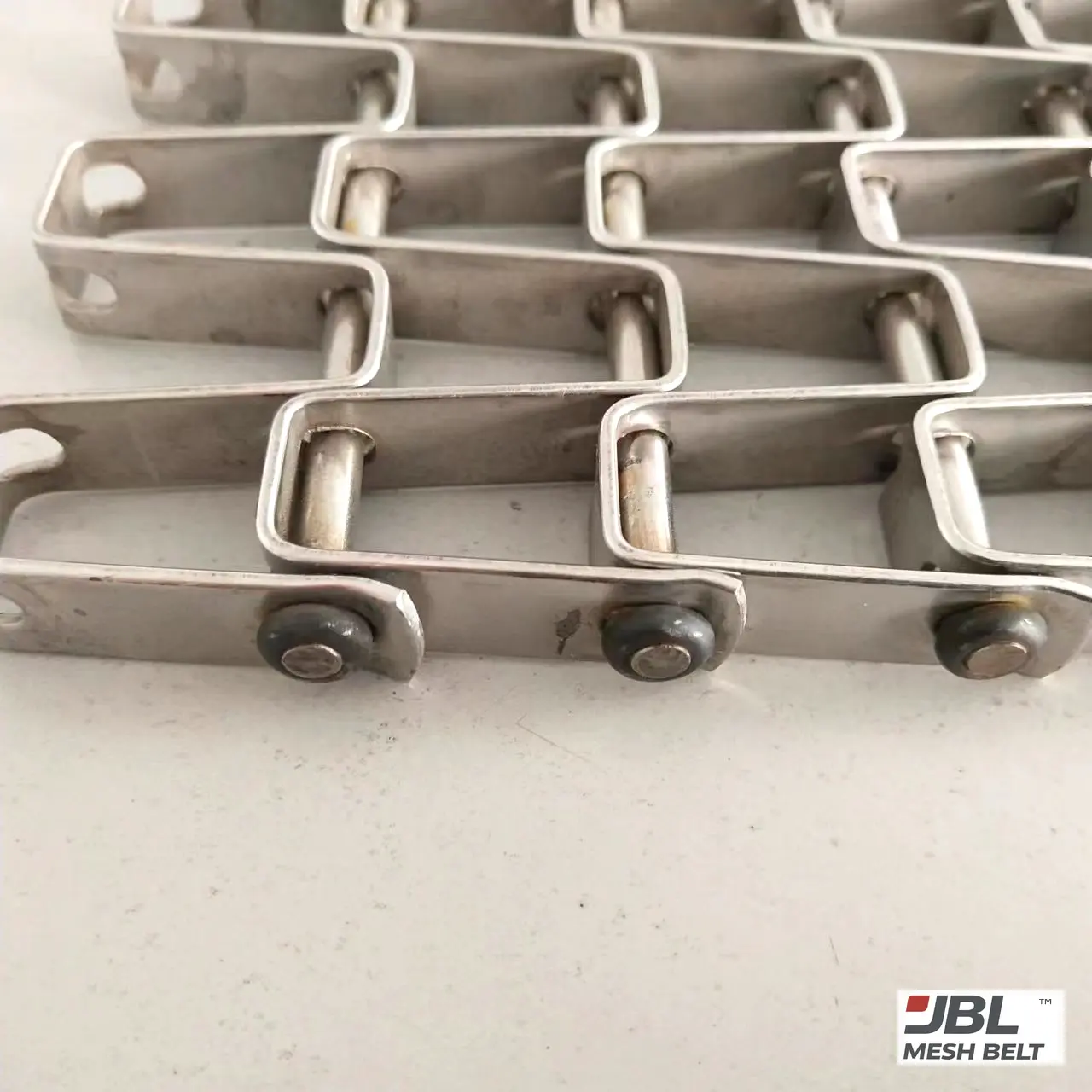
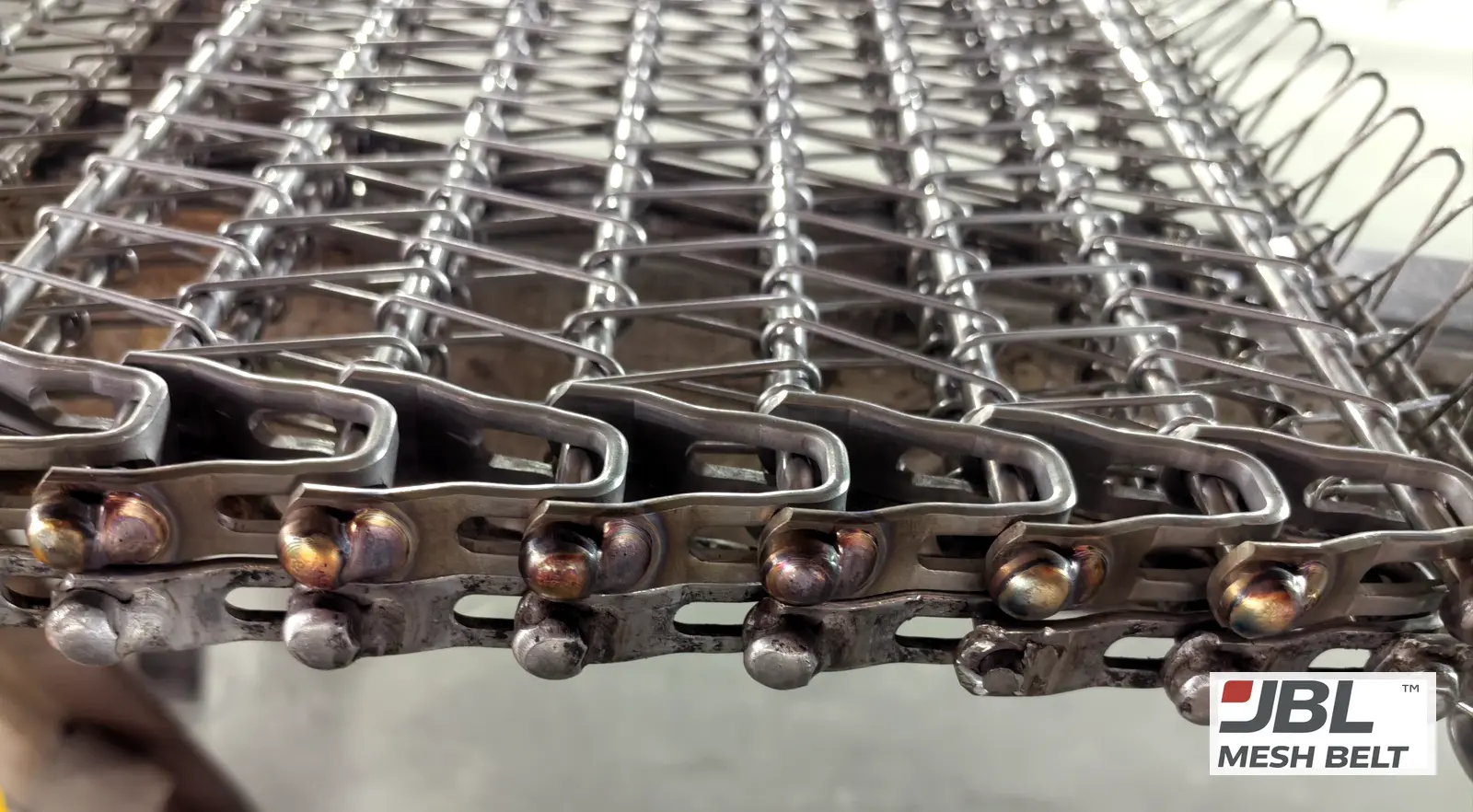
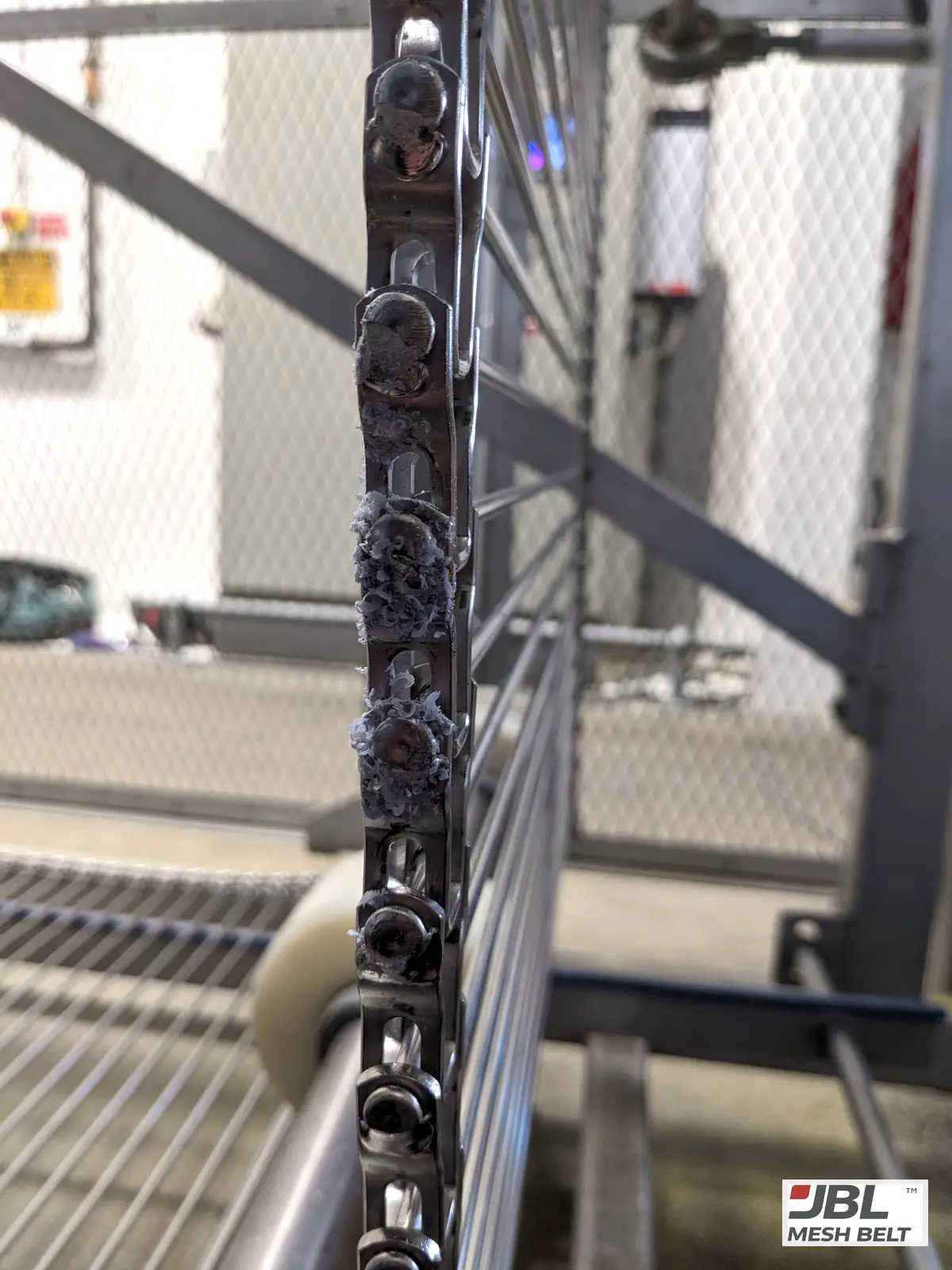
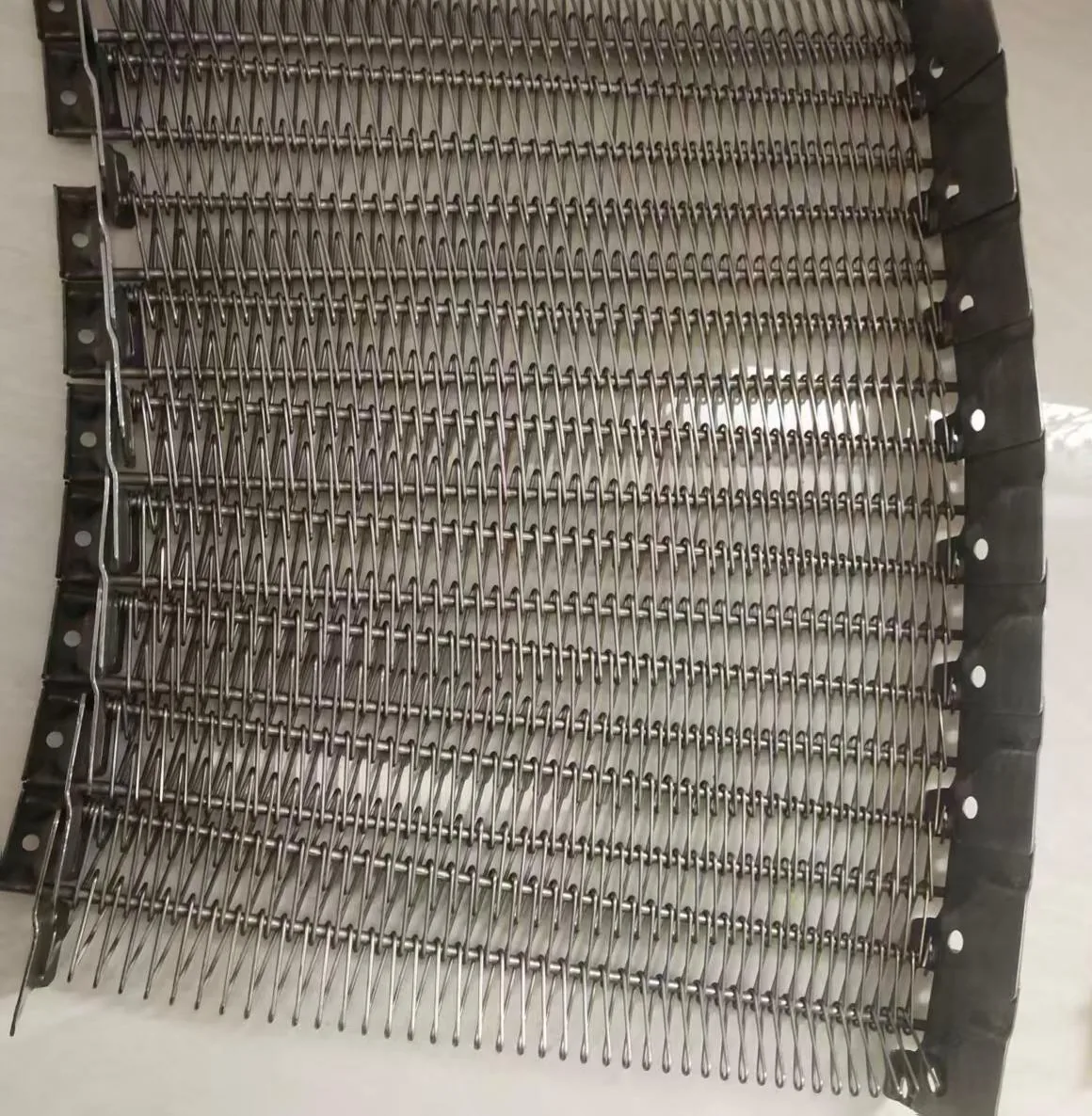
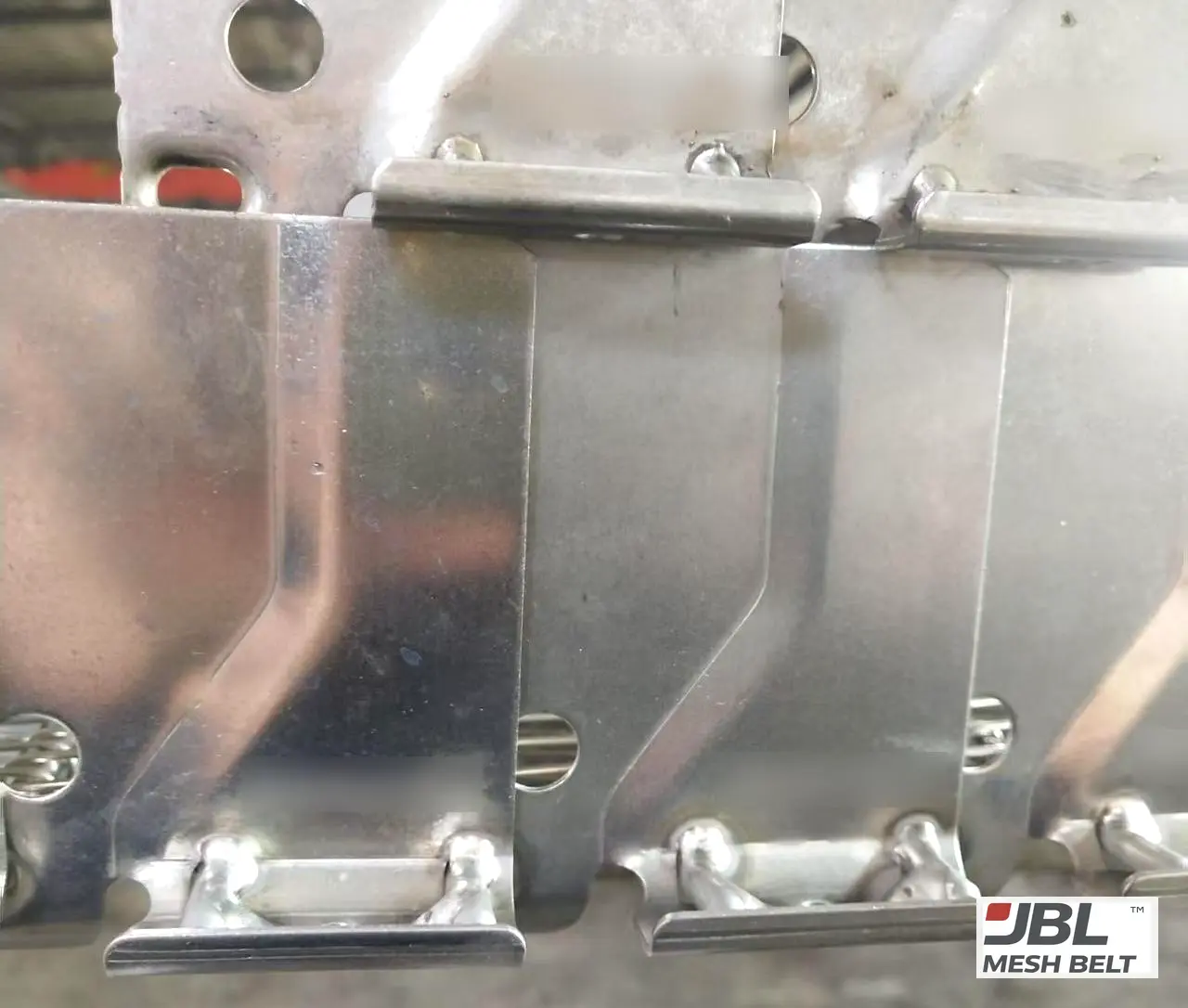
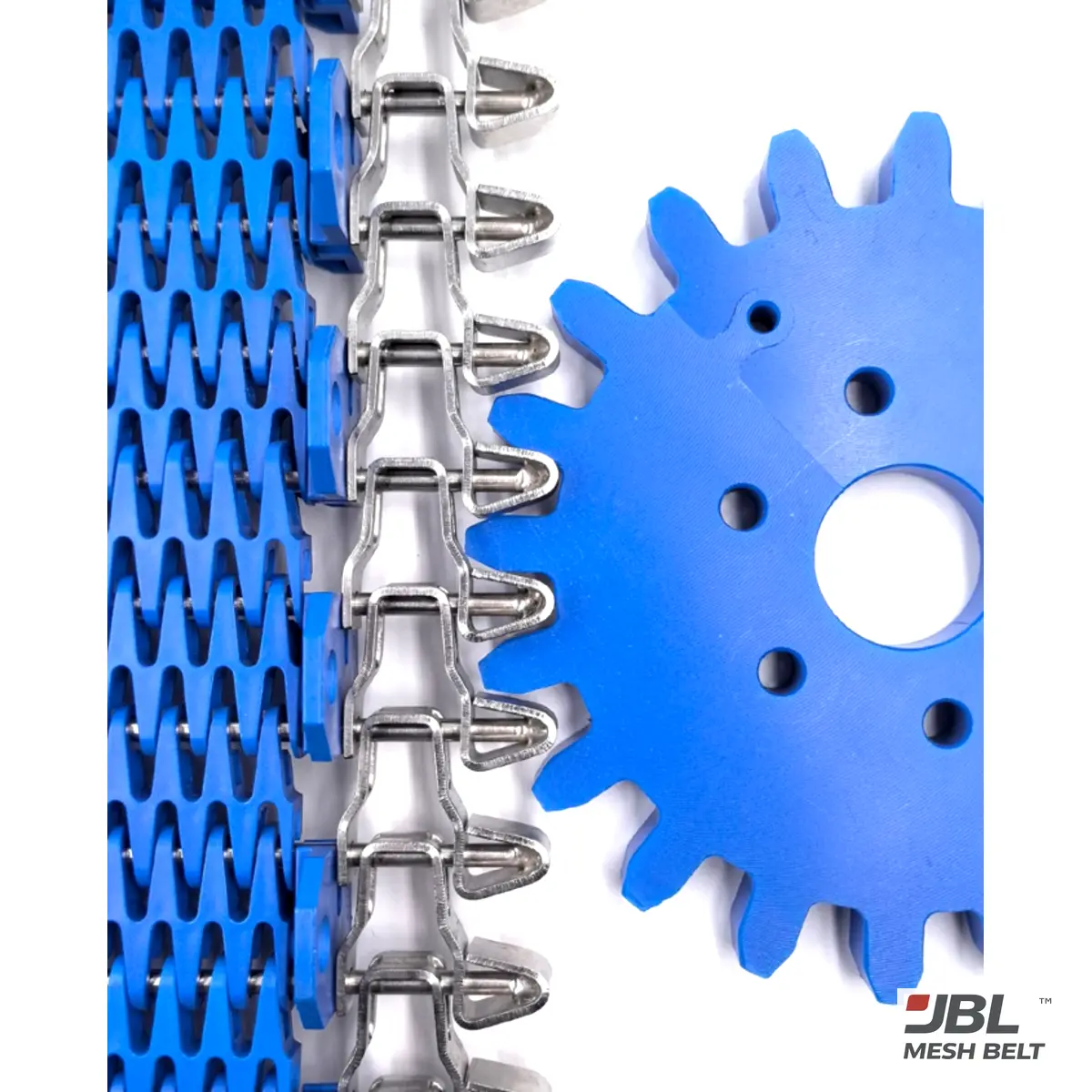
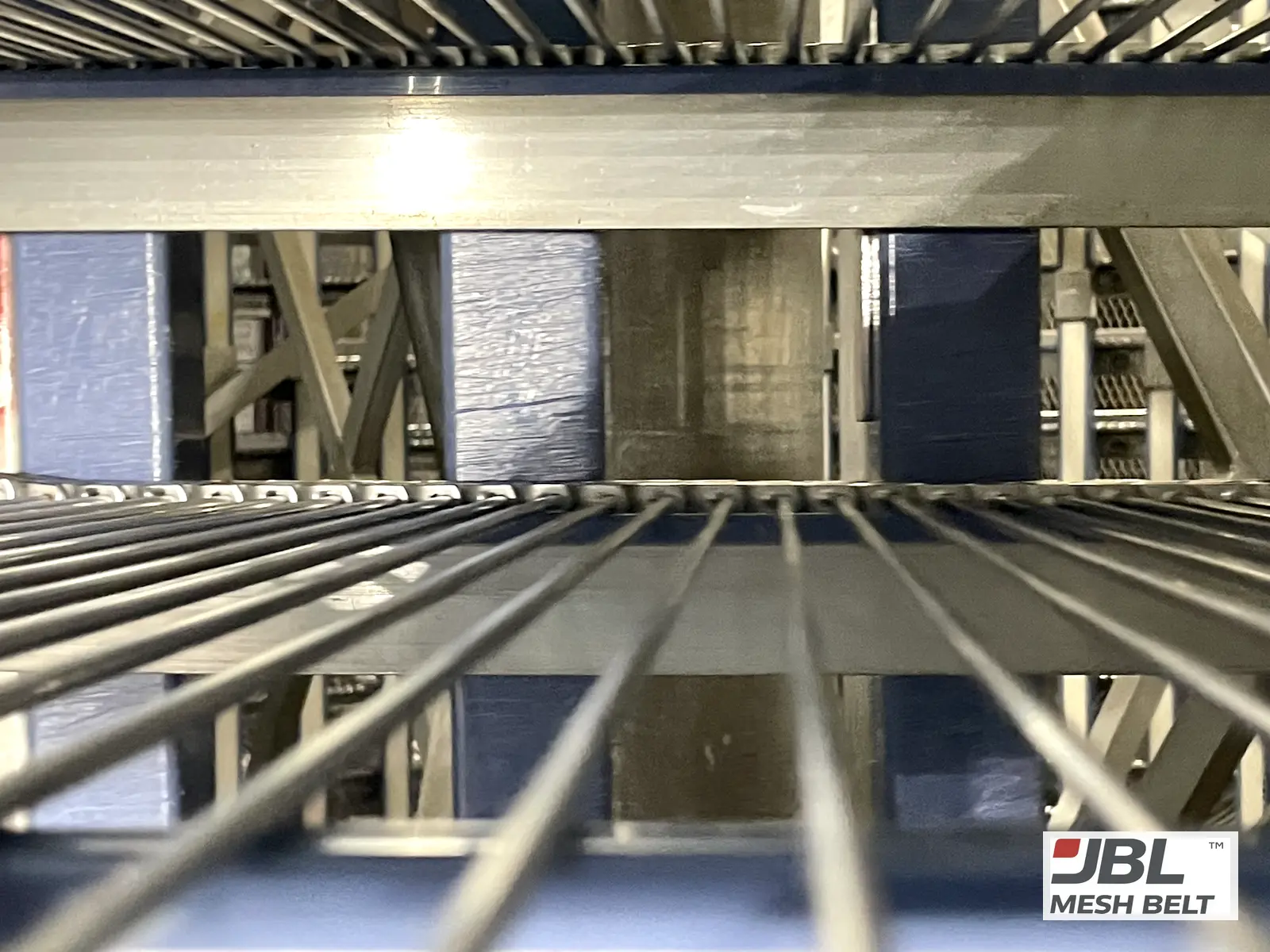
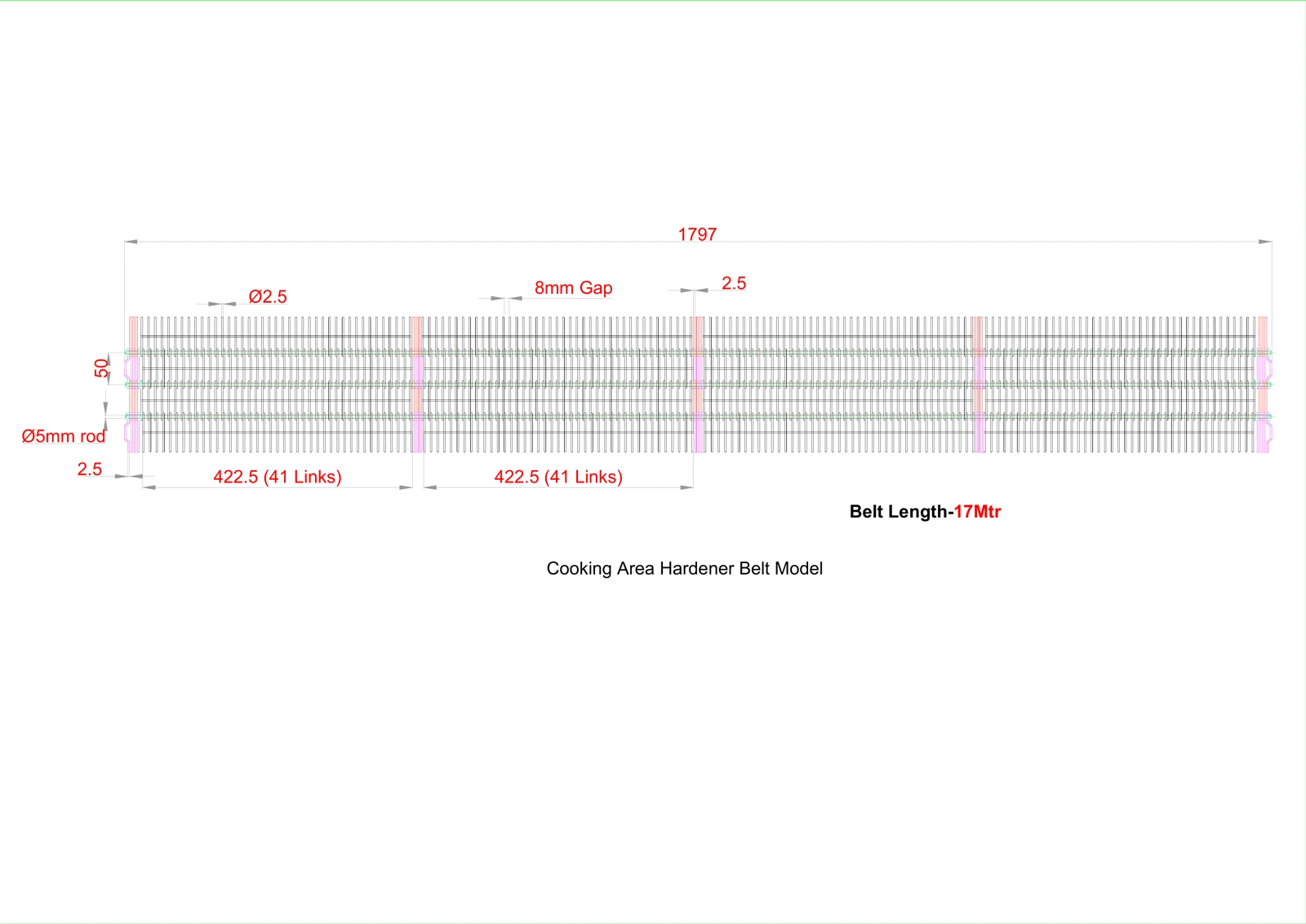
The tunnel carried the belt on side chains with blue guide rollers, so the new belt had to copy the chain as closely as the mesh. Because it runs in steam and is cleaned with acid and alkaline agents, mesh, rods and chain were all made in 316.
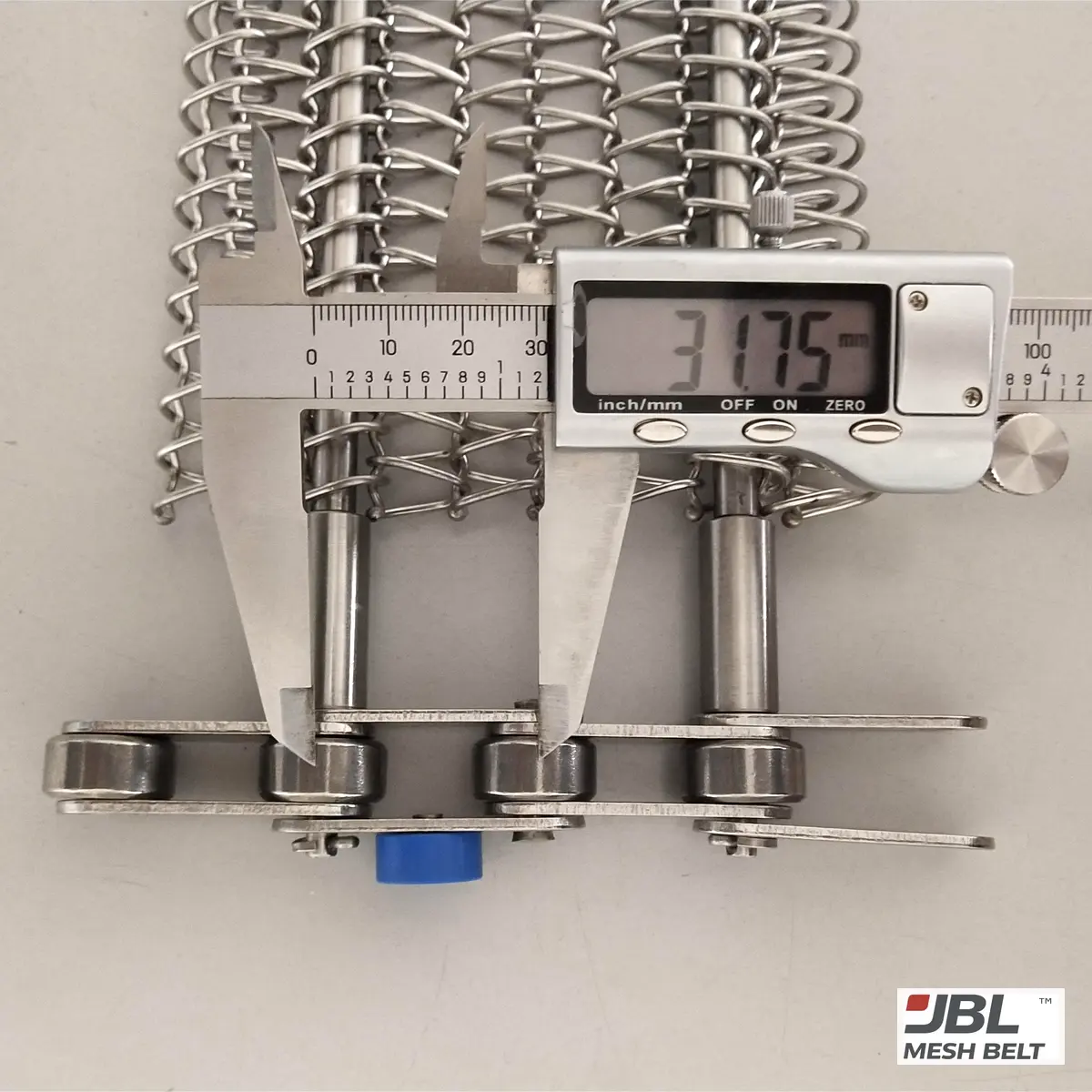
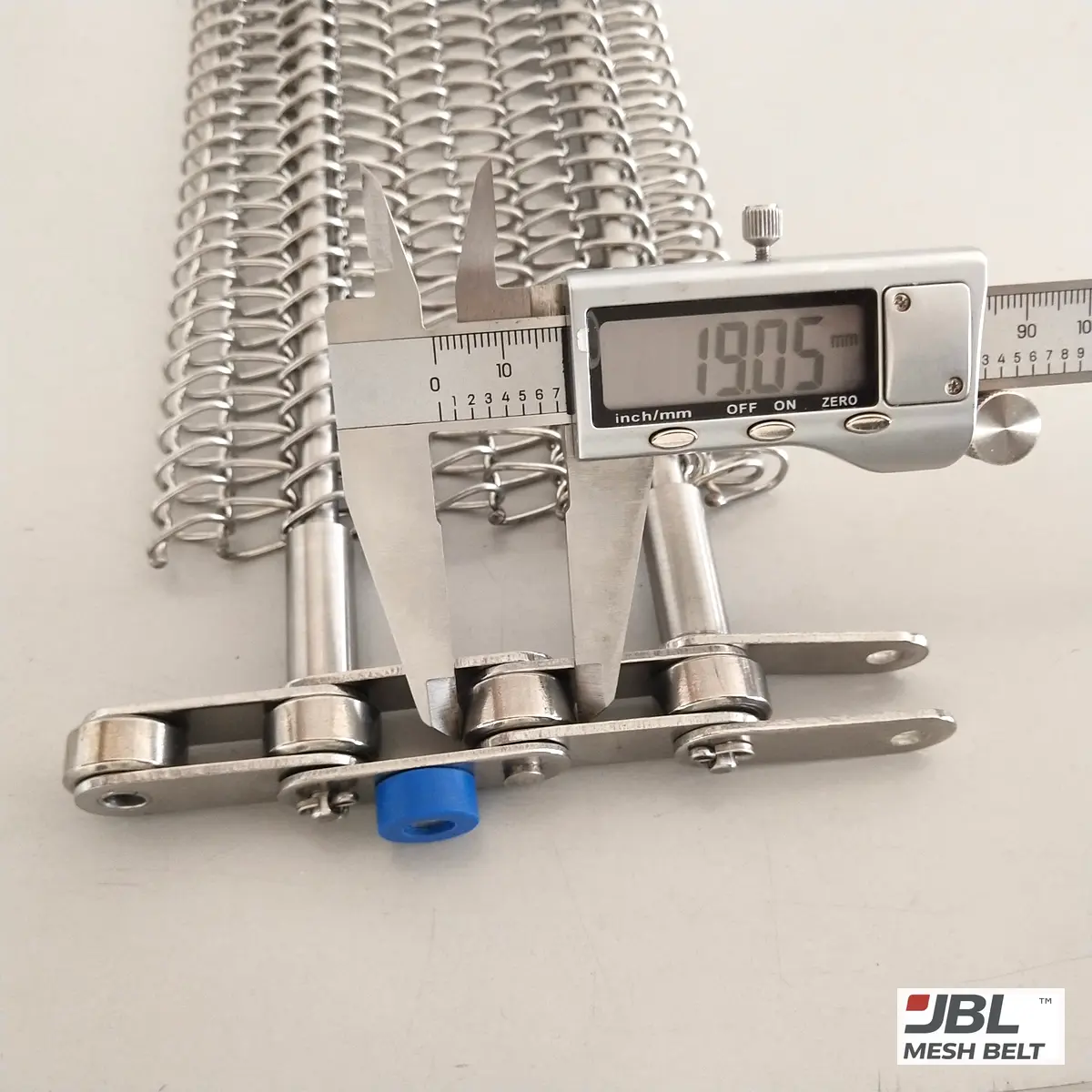
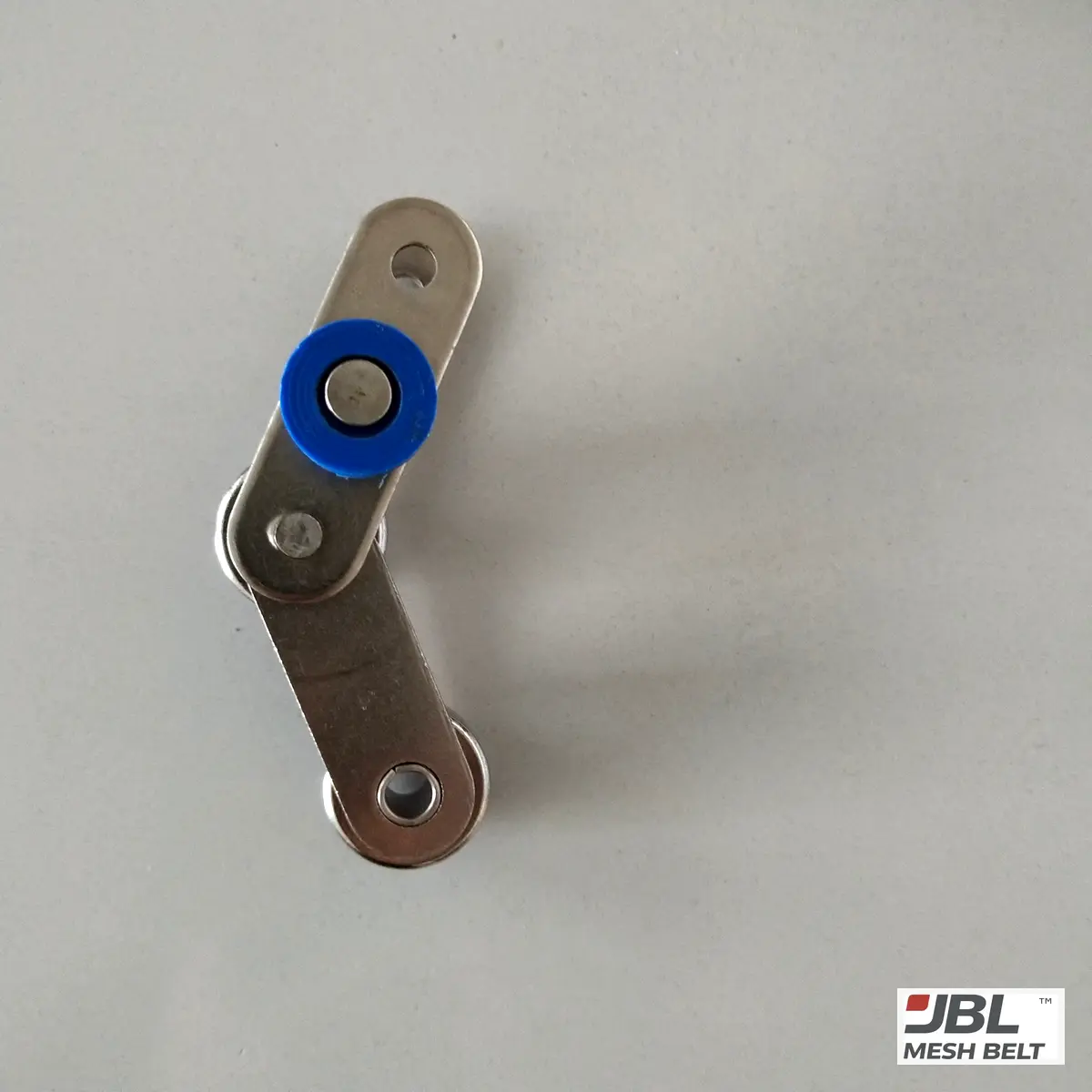
| Part | Customer's sample | New belt |
|---|---|---|
| Chain pitch | 31.75 mm (1¼ inch) | 31.75 mm |
| Chain roller | 19.05 mm (¾ inch) | 19.05 mm (spec) |
| Chain plate | 2.00 mm | 2.00 mm |
| Guide roller | 16.00 mm | 16.00 mm (trial chain) |
| Rod | 7.00 mm | 7.00 mm |
| Mesh pitch | 8.50 mm | 8.50 mm |
| Material | Stainless steel | 316 throughout |
The chain was not an off-the-shelf part, so a trial chain was made first with the same plates, rollers and guide rollers and checked against the sample. Only then was about 33 m of belt produced and shipped by air.
On a chain-driven belt the chain is half the belt. Read how we handled it in how do you copy a chain-driven belt when the chain is custom.
05What should you send before choosing a belt for your machine?
The fastest way to the right belt is to describe the machine first and the belt second.
Short answer
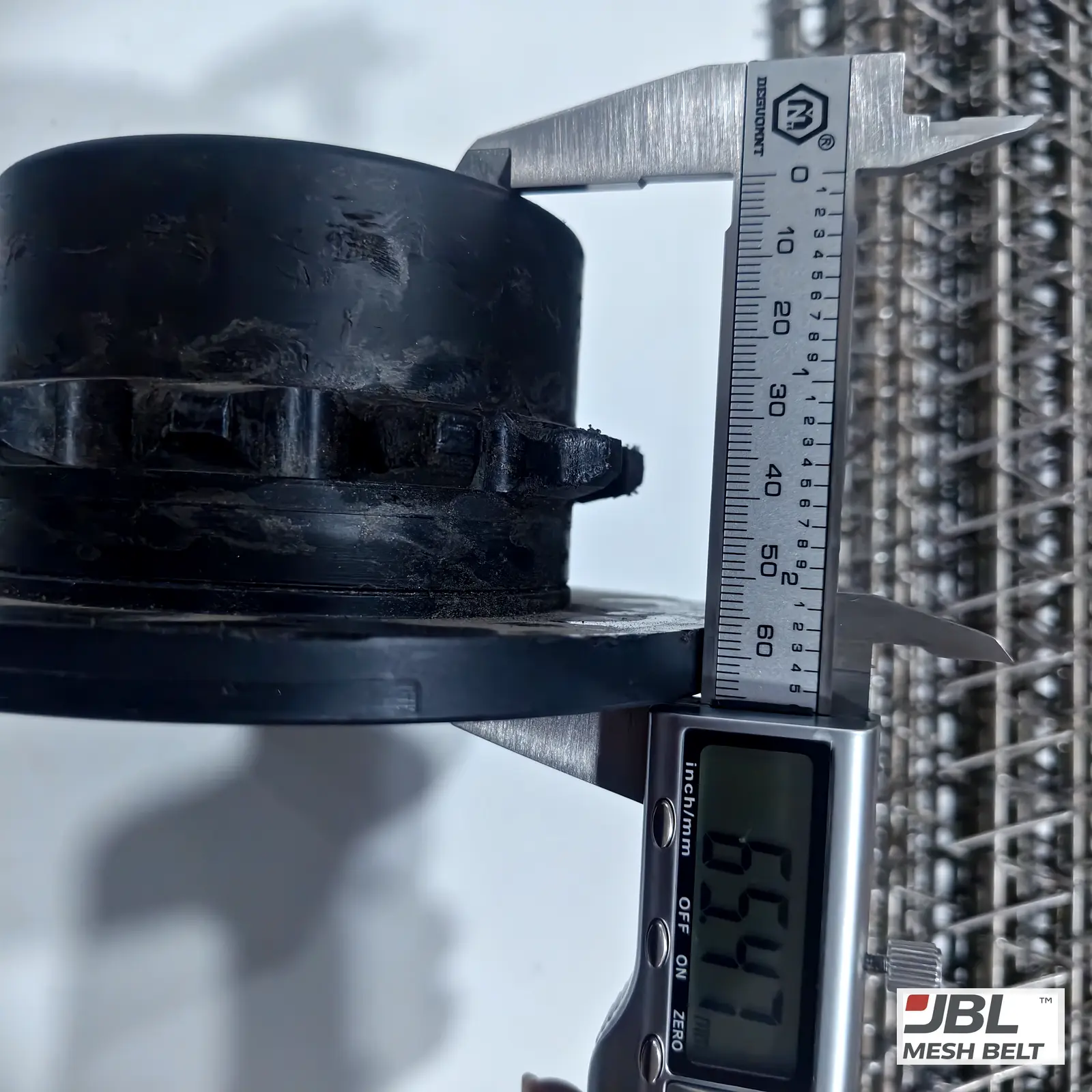
Send a photo of the machine, photos of the old belt with a caliper in the picture, the temperature and whether it runs in oil or steam, the cleaning chemicals, the length you fit, and the sprocket or chain. I tell you what fits and what is missing.
- 01
Machine
A photo of the fryer or oven, and what it carries.
- 02
Old belt
Photos with a caliper: wire, pitch over ten links, spaces, edge — or chain and rods.
- 03
Conditions
Temperature, oil or steam, and the cleaning chemicals.
- 04
Length
How you fit it: one length per oven, rolls per line, or one endless belt.
- 05
Drive
A photo of the sprocket or chain and how it meets the belt.
| Machine | Most useful photo | Question I will ask |
|---|---|---|
| Fryer | Belt edge and one full space across | What product, and what oil temperature? |
| Pizza or baking oven | Edge loop and ten pitches with a caliper | How many ovens, and what length per oven? |
| Steam or oven tunnel | Chain edge, end view with the guide roller | Which cleaning agents, and how often? |
On request we can arrange a third-party laboratory material test report, and where the project requires it, tensile tests on a tensile testing machine. Both are agreed before the order.
If you have no old belt at all, read how to get a belt made from your requirements.
When This Is Not the Right Choice
- ✕If your product is very small, an open ladder belt may let it fall through — tell me the product first.
- ✕If your oven needs a flat, dense surface for dough, look at biscuit or balanced weave belts instead.
- ✕If you only know the machine but have no old belt and no drawing, expect a few more questions before a quotation.
From My Engineering Experience
When a buyer asks which belt is best for a fryer, my first question is: what does your fryer run now? On a replacement, the installed belt has already answered most of the question.
On the steam oven the chain mattered as much as the mesh. We made a trial chain first, and only then the belt.
On the pizza oven order the edge loop changed from 10 mm to 9 mm. The customer confirmed it on the drawing before we made 300 m. That is the kind of change I always want in writing.
— Spring, Sales Director, JBL Mesh Belt
Evidence From Our Work
Libya, 2025 — Z-type ladder belt for a potato chip frying line →
| Step | Detail |
|---|---|
| Starting point | Customer's sample — OEM price too high |
| Belt | SUS304 · pitch 8 mm · wire 1 mm · 19 spaces · edge loop 5 mm |
| Before bulk | Drawing; trial length compared with the original |
| Result | 50 m delivered in five 10 m rolls; no quality issues reported |
Australia, 2023 — 316 chain-driven belt for a steam oven tunnel →
| Step | Detail |
|---|---|
| Starting point | Customer's sample of belt and chain |
| Chain | Pitch 31.75 mm · roller 19.05 mm · plate 2 mm · guide roller 16 mm |
| Before bulk | Trial chain made and checked against the sample |
| Belt | 316 throughout · about 33 m, shipped by air |
FAQ
Q1Which belt is used on a fryer?
Fryers commonly run eye link, chain-driven or Z-type ladder belts. On a replacement, match the type that is installed; the chip fryer in our Libya project ran a Z-type ladder belt.
Q2Is a Z-type ladder belt suitable for a pizza oven?
It was on our Australian project: a Z-type ladder belt in SUS304 with 1.8 mm wire and 12.7 mm pitch, one 10 m length per oven.
Q3When is a chain-driven belt needed?
When the machine carries the belt on side chains — as in the steam oven tunnel in our Australian project, where the chain had guide rollers.
Q4SUS304 or 316 for an oven belt?
It depends on steam, cleaning chemicals and temperature. Our fryer and pizza oven belts were SUS304; the steam oven belt was 316 throughout.
Q5Can you copy my old belt?
Yes. From a sample or photos with caliper readings we draw the belt for your approval, and can compare a trial length or a trial chain before bulk.
Conclusion
Start from the machine, match the installed belt, and let steam and cleaning decide the steel. Then measure — over ten pitches, chain included.
Download the Z-Type Ladder Belt Technical Specification (PDF)
Specification ranges and options in mm and inch. Enter your work email and the file downloads right away.
References
Your contact for this belt
Spring · Sales Director, JBL Mesh Belt · 16 years
“Your belt is worn, the OEM price is high, and there is no drawing. That is where I start.”
Send me a worn section, a few photos with a caliper in the picture, or a drawing. I tell you what fits, what is missing, and show you a sample measured against your own belt before you pay for the full length. Buyers in the UK, the USA, Australia, Brazil, South Korea, Spain, Malaysia and Libya have replaced belts this way.
- ✓Readings on your original next to readings on our sample
- ✓Nothing in bulk until you approve the sample
- ✓Turning, stacking or sprocket tests before your belt ships
- ✓A reply from me, usually within 8 hours
Get new project cases by email
One short email when we publish a new case or buyer guide.
New lines and replacements — what we measured, what we checked before shipment. Real readings and photos. Unsubscribe anytime.
Prefer LinkedIn? Subscribe on LinkedIn · RSS