Quality · 10 min read
Why Do Weld Burrs on a Spiral Freezer Belt Contaminate IQF Products?
 Written bySpringSales Director, JBL Mesh Belt · 16 years in metal conveyor beltsProjects in United Kingdom · USA · Australia · Brazil · South Korea · Spain · MalaysiaPublished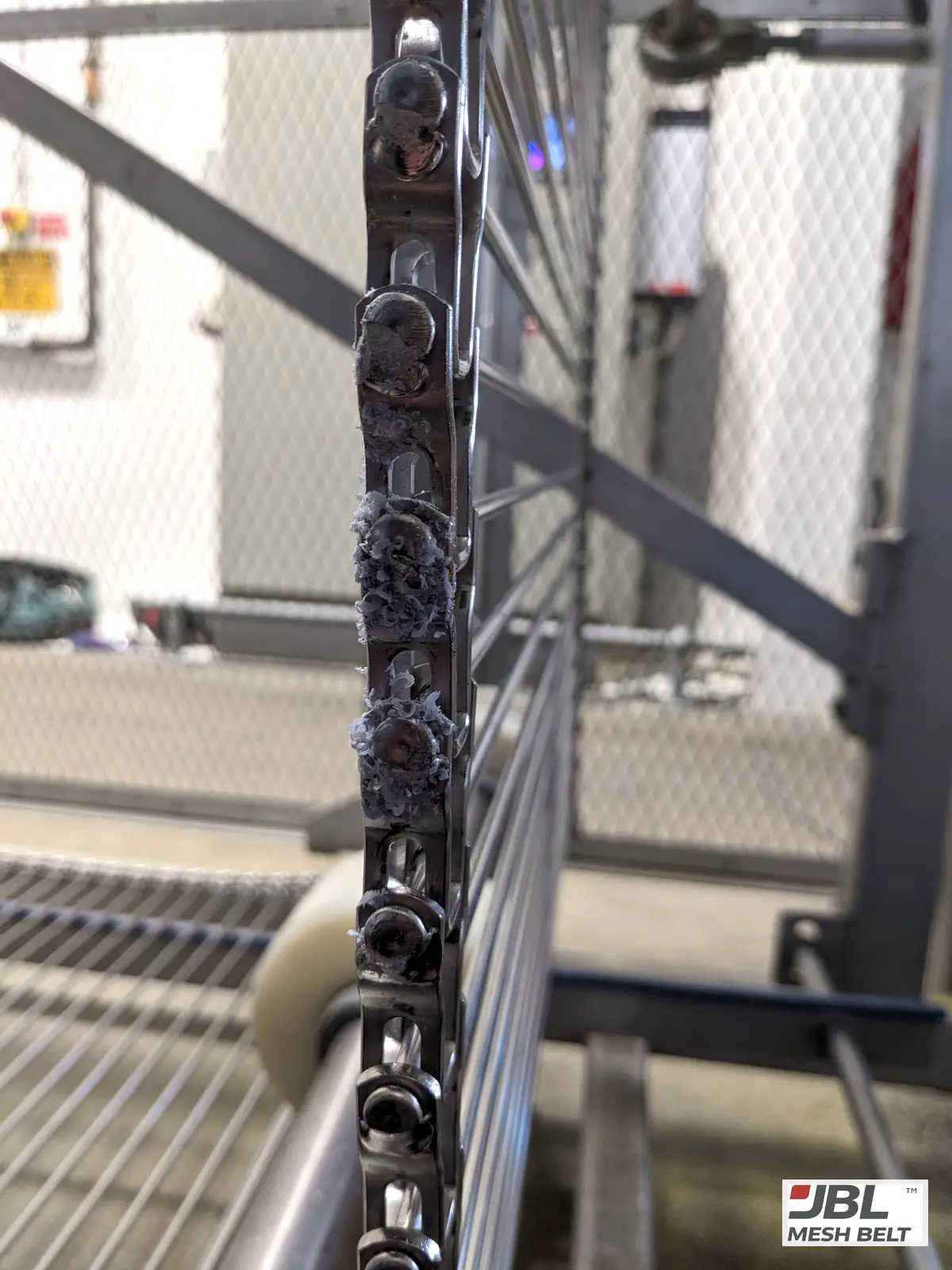
You find dark specks on frozen product. The belt looks fine. But a burr on an edge weld may be scraping your drum bars on every turn.
Short answer
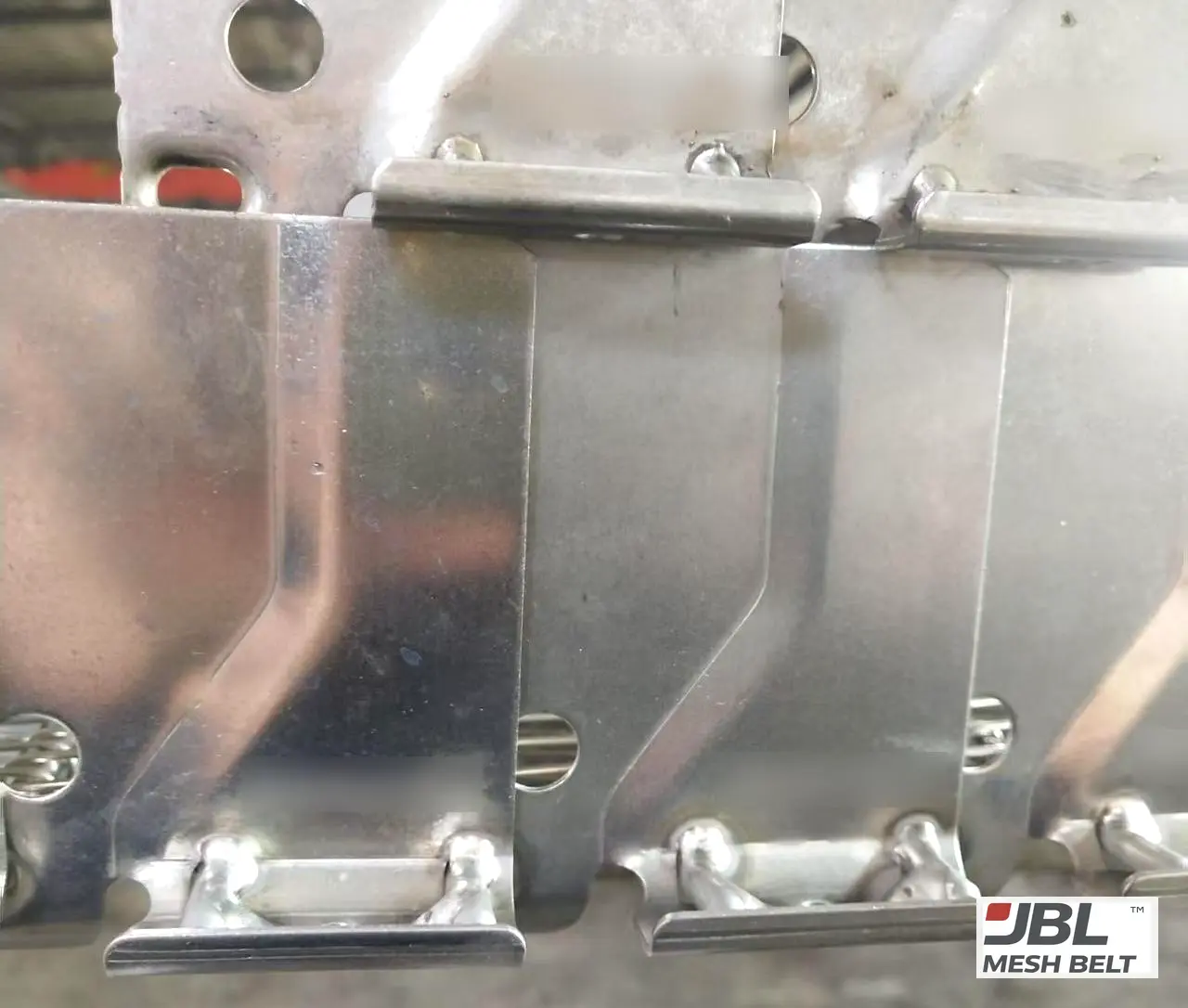
On a friction-drive spiral, belt tension presses the inner-edge welds against the drum's U-shaped bars. A burr on a weld scratches the bars on every turn. The scraped material turns into black residue, collects on the welds, and the freezer airflow carries it onto IQF products.
At a Glance
| Product | Application | Key point | Buyer type | What to send |
|---|---|---|---|---|
| Spiral freezer and cooling belts | IQF freezing, bakery cooling, friction-drive spirals | Smooth, burr-free edge welds | Food plants, QA managers, OEMs | Photos of the edge welds and drum bars, or a belt section |
This problem is easy to miss because the burr is tiny and the damage builds up slowly. Below I explain how a friction-drive spiral works, where burrs come from, what they do, and the steps we follow to remove them.
01How does a spiral freezer belt run on a friction-drive drum?
In a spiral freezer, the belt does not just ride around the drum. It is pulled against it, hard, all the time.
Short answer
On a friction-drive spiral, the rotating drum drives the belt by contact. Belt tension presses the inner edge of the belt — and its welds — against the U-shaped bars on the drum. That contact is what moves the belt.
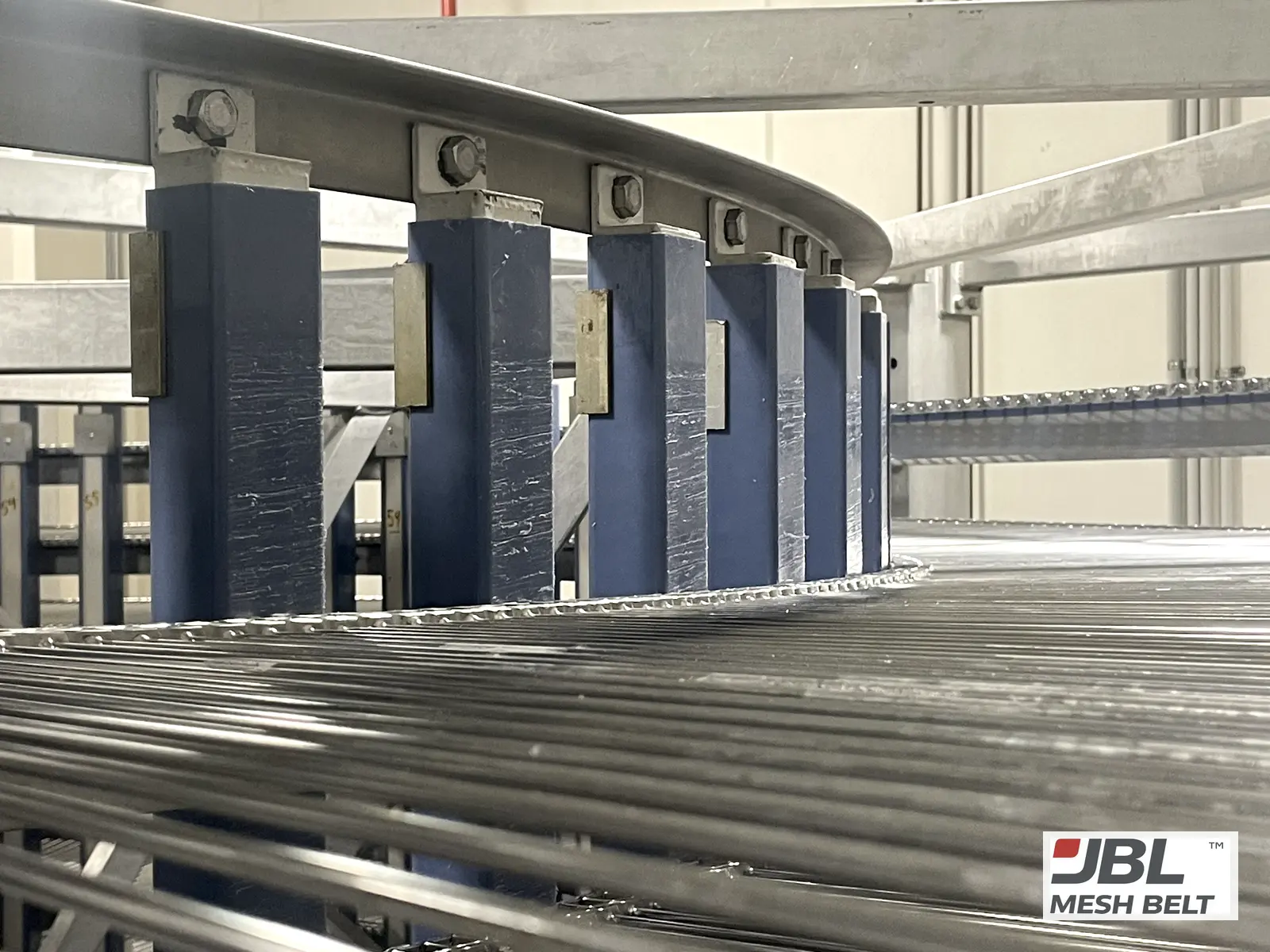
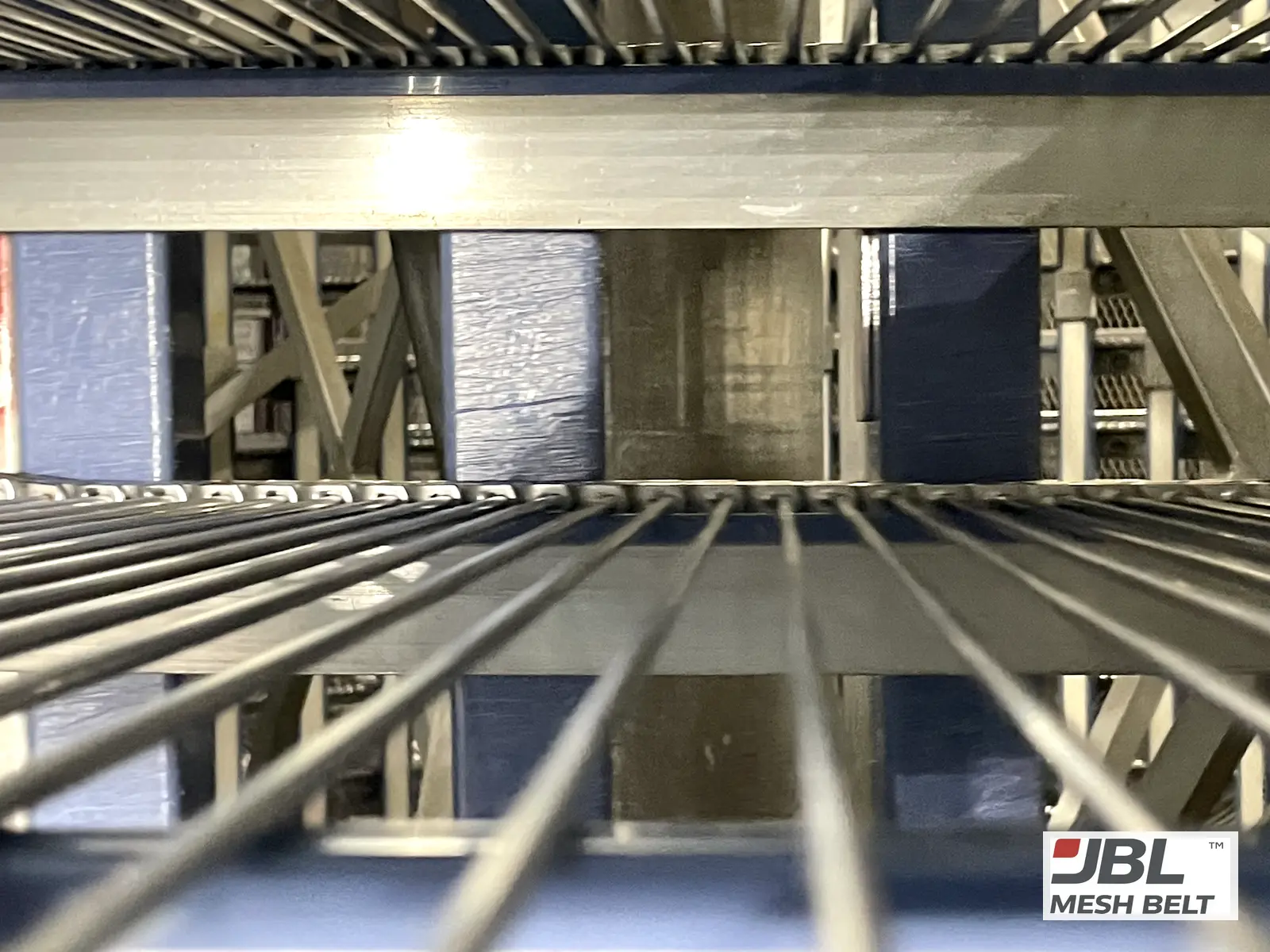
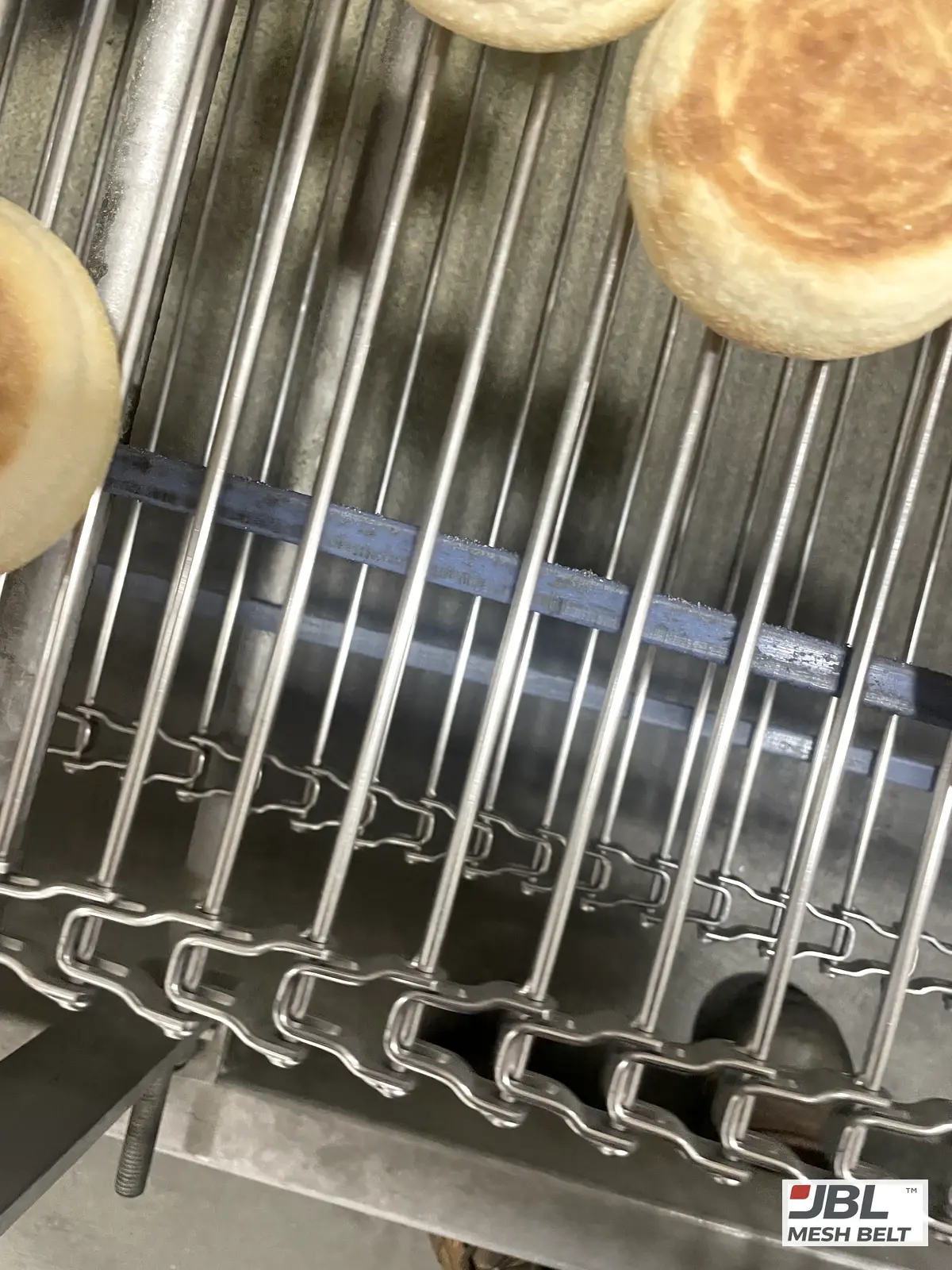
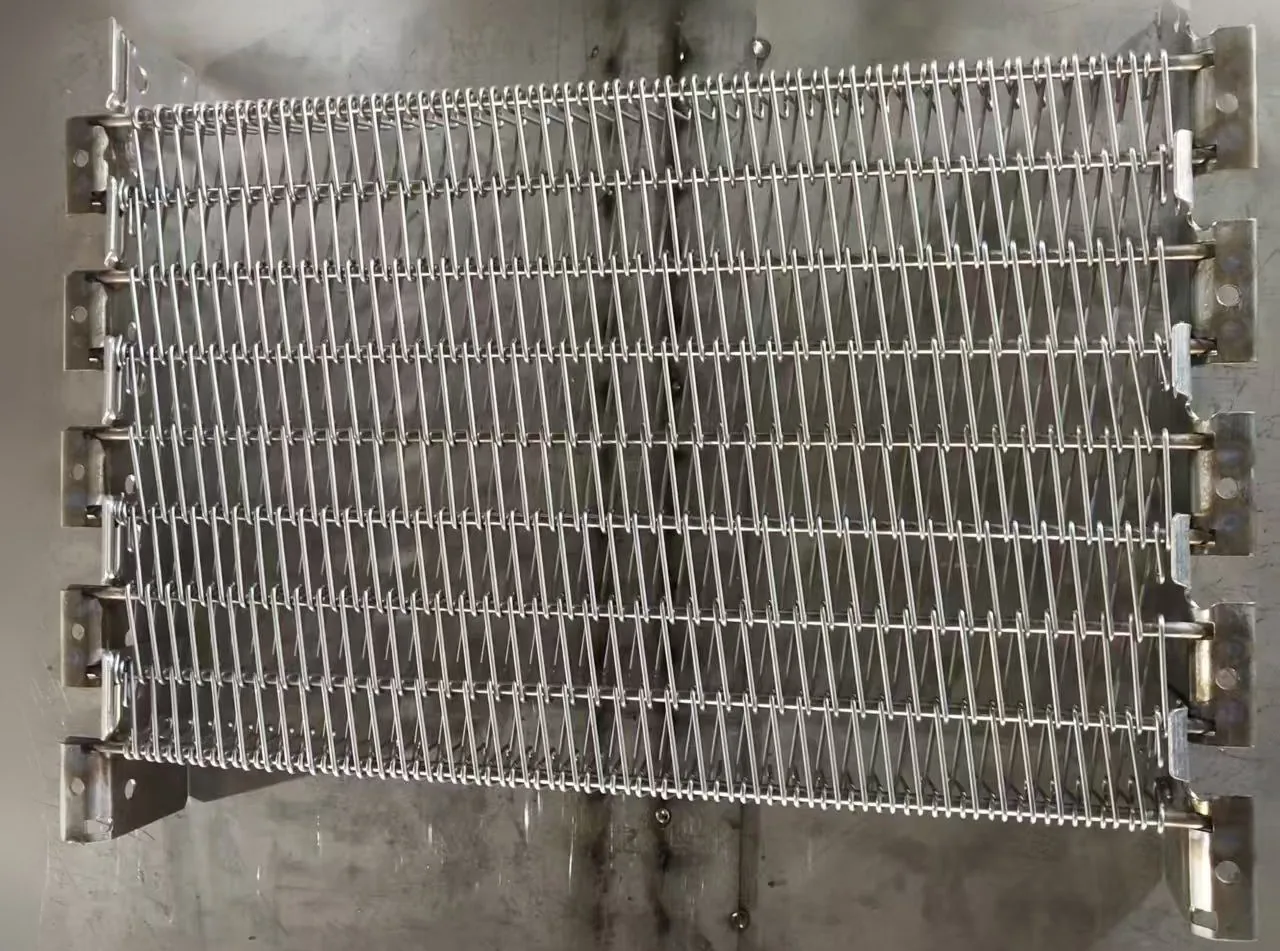
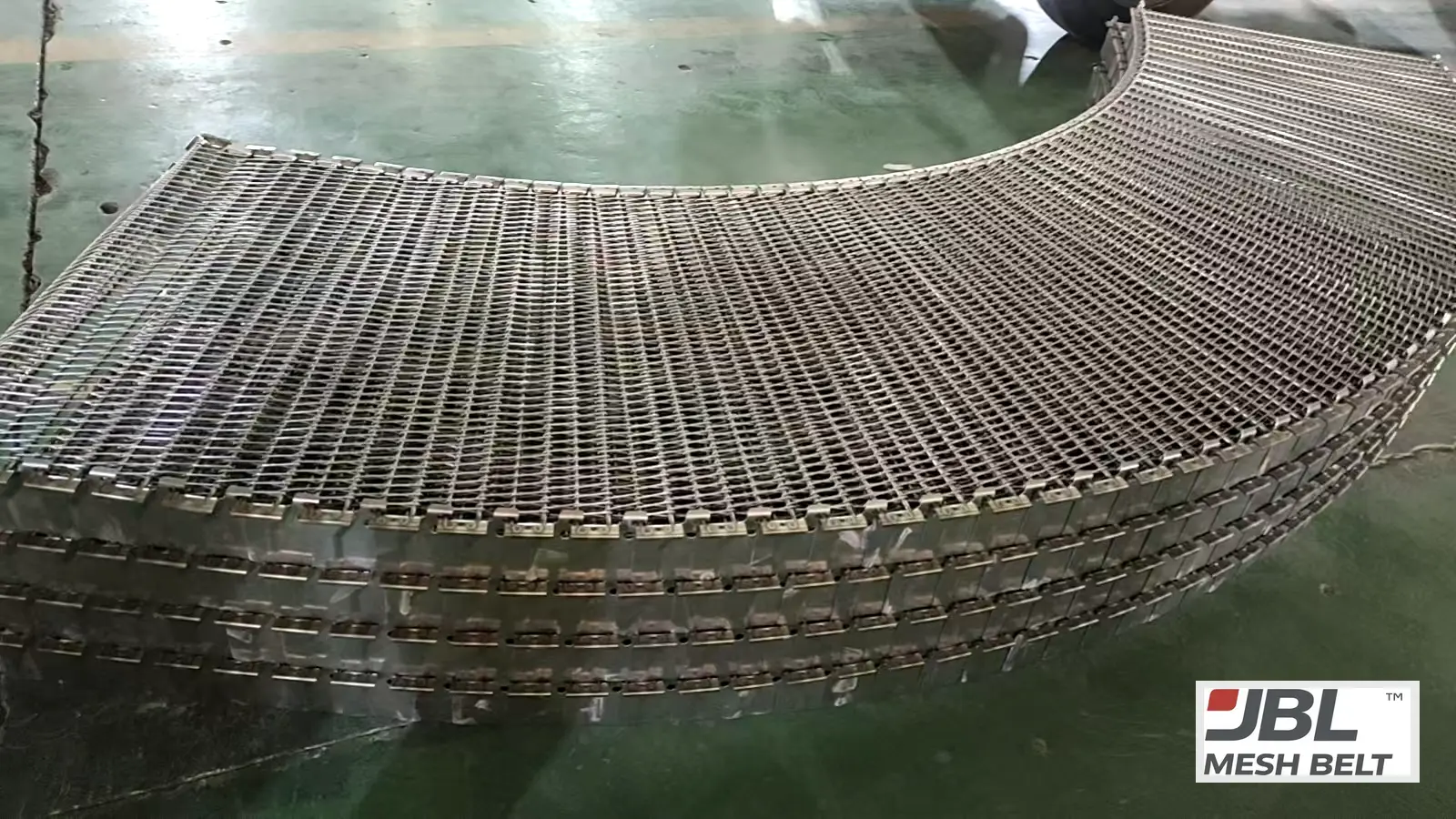
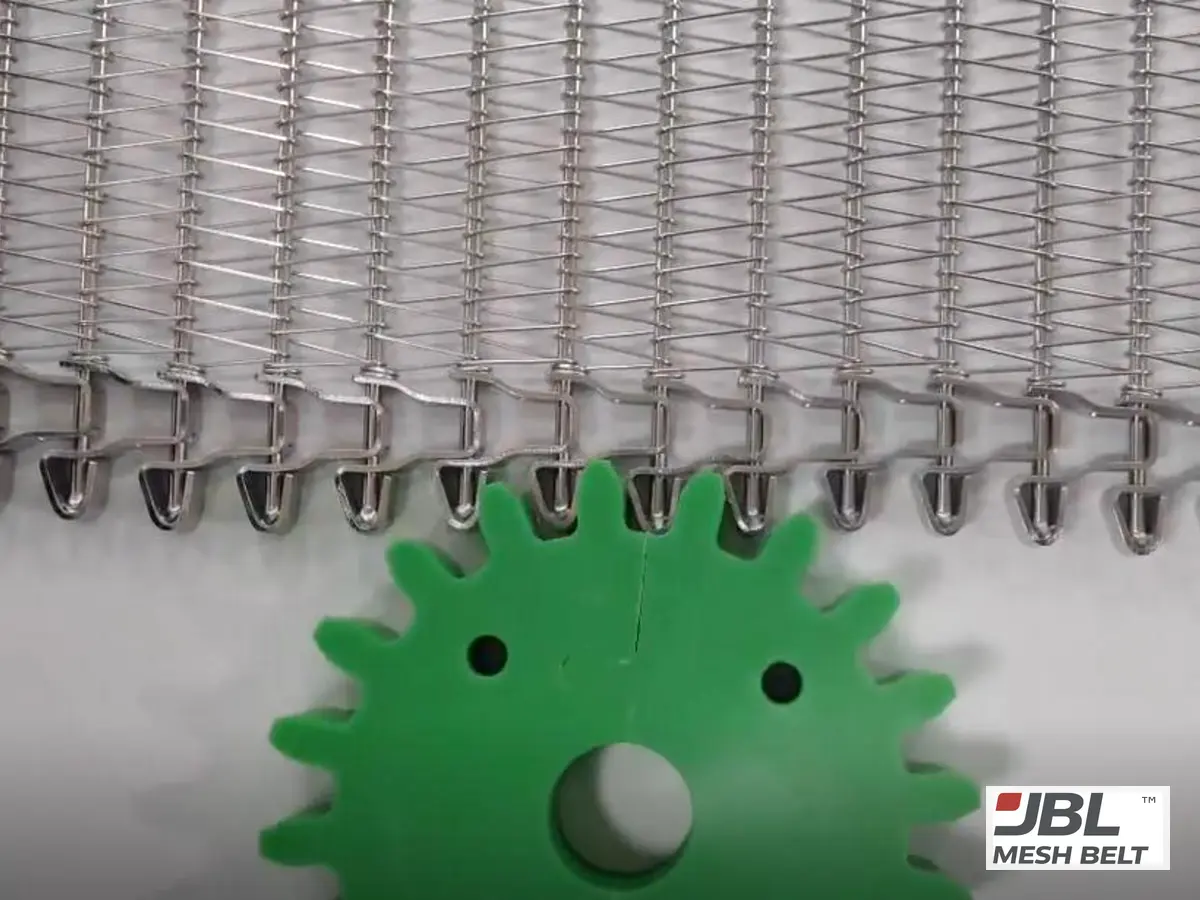
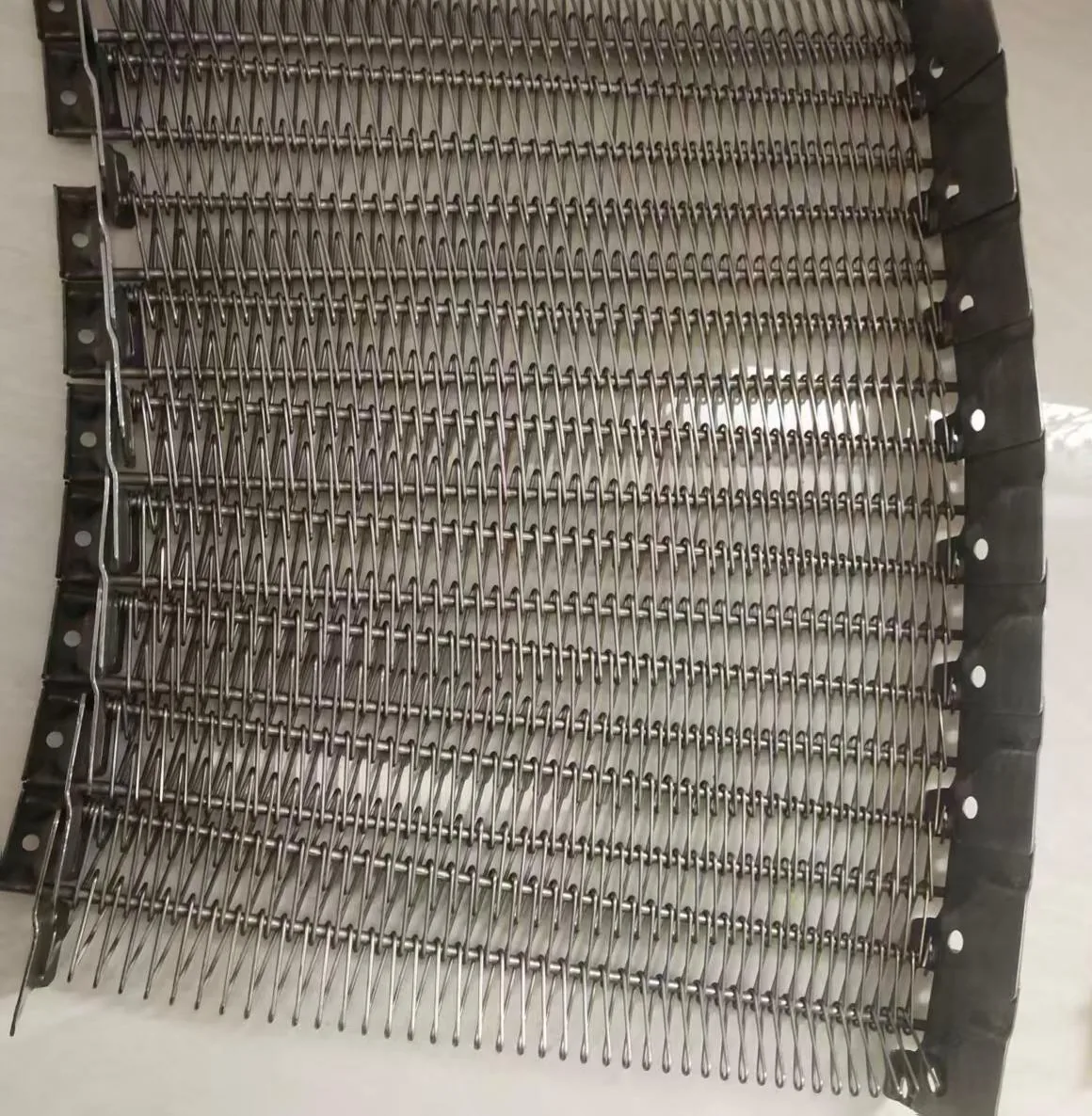
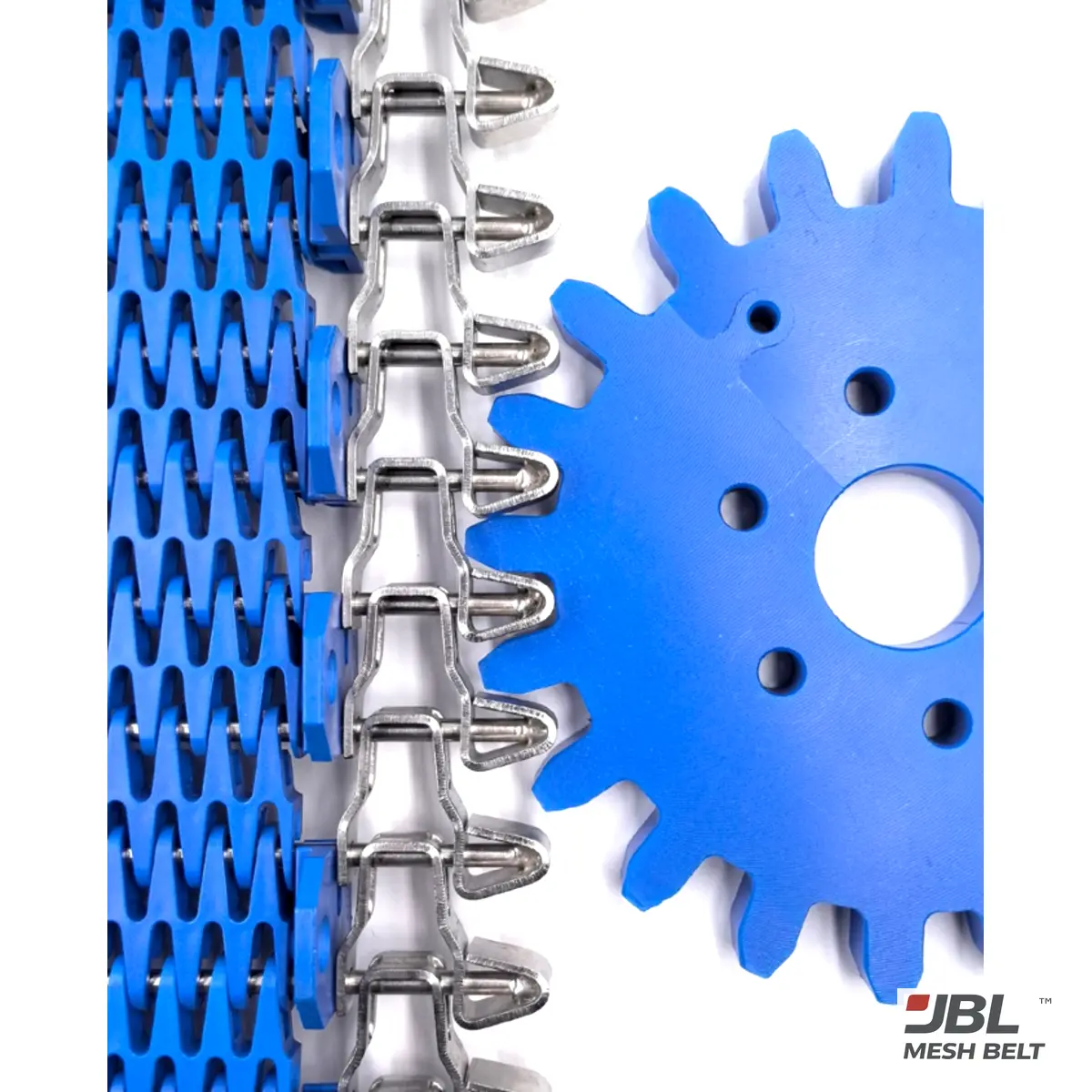
Spiral freezer belts are mostly used in spiral equipment with a traditional friction drive. The drum in the centre turns. Vertical U-shaped bars on the drum touch the inner edge of the belt. Belt tension keeps that edge pressed against the bars, and friction moves the belt up or down the spiral.
This means the inner edge of the belt is in constant, tight contact with metal bars. Every link, every rod end and every weld on that edge slides against the bars, tier after tier, hour after hour.
| Part | What it touches | What matters |
|---|---|---|
| Inner-edge welds | Drum U-bars, under tension | Weld surface must be smooth |
| Outer edge | Guide rails or strips | No sharp points to scrape rails |
| Mesh surface | Product | Clean, no loose particles |
A smooth weld slides. A weld with a burr cuts. That difference is invisible on a new belt lying on the floor, but it decides what happens inside your freezer.
02Where do weld burrs on a spiral belt come from?
Every spiral belt has hundreds of welds on each edge. Each one is a chance for a burr if it is not finished.
Short answer
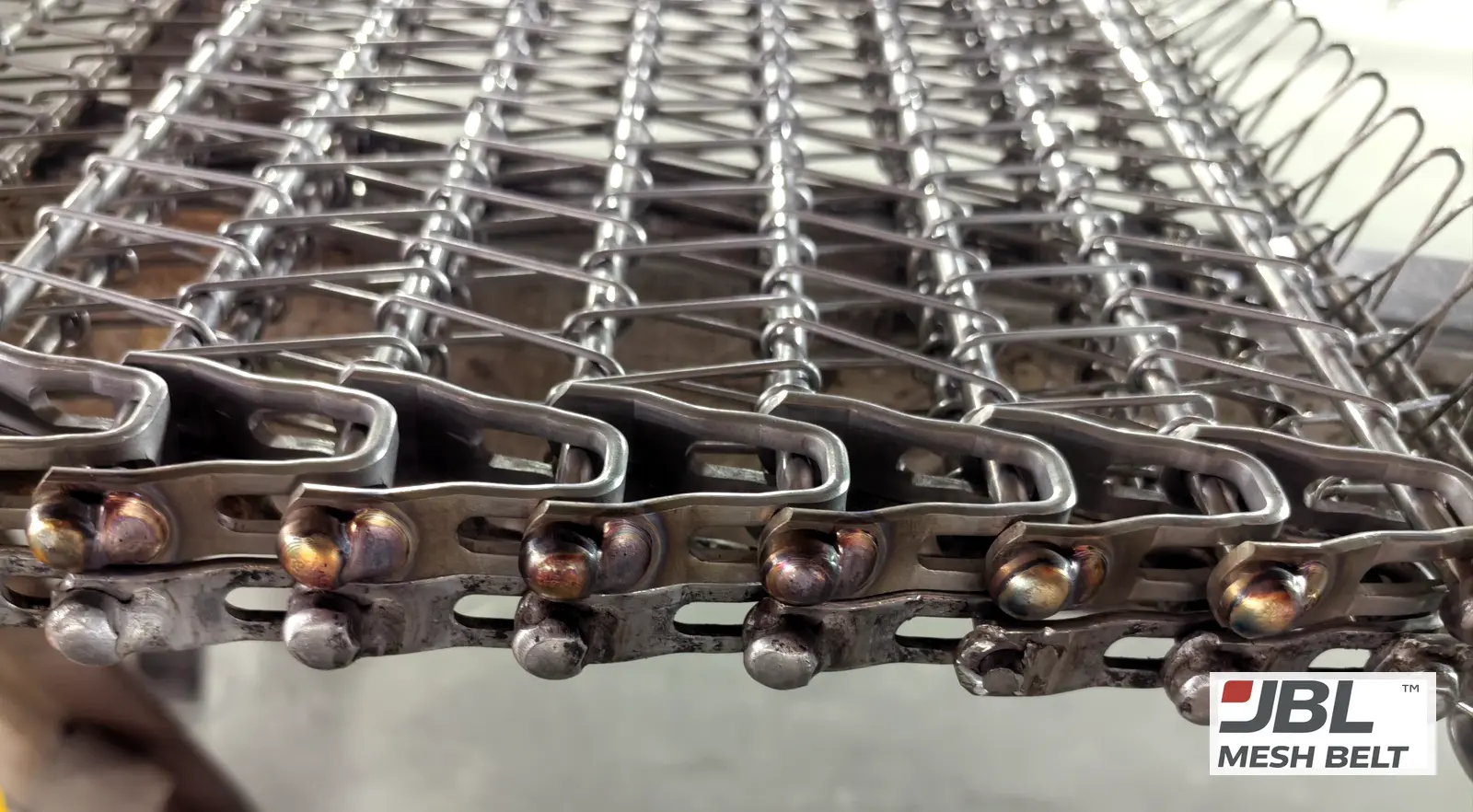
Burrs come from the rod-end welds on the belt edge. Welding leaves spatter, sharp edges or a raised bead. If the weld is not ground and finished afterwards, these points stay on the belt and go into your freezer.
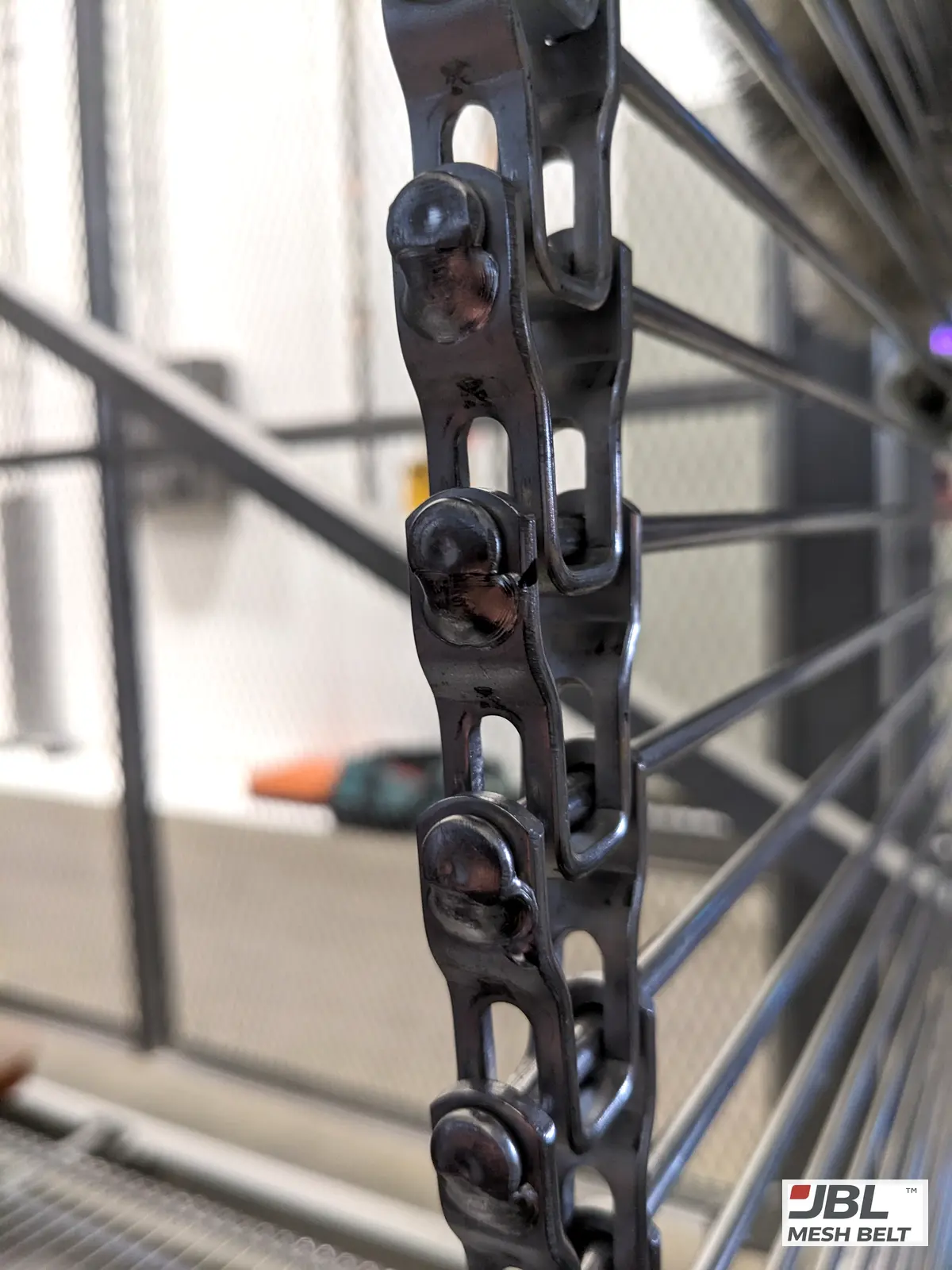
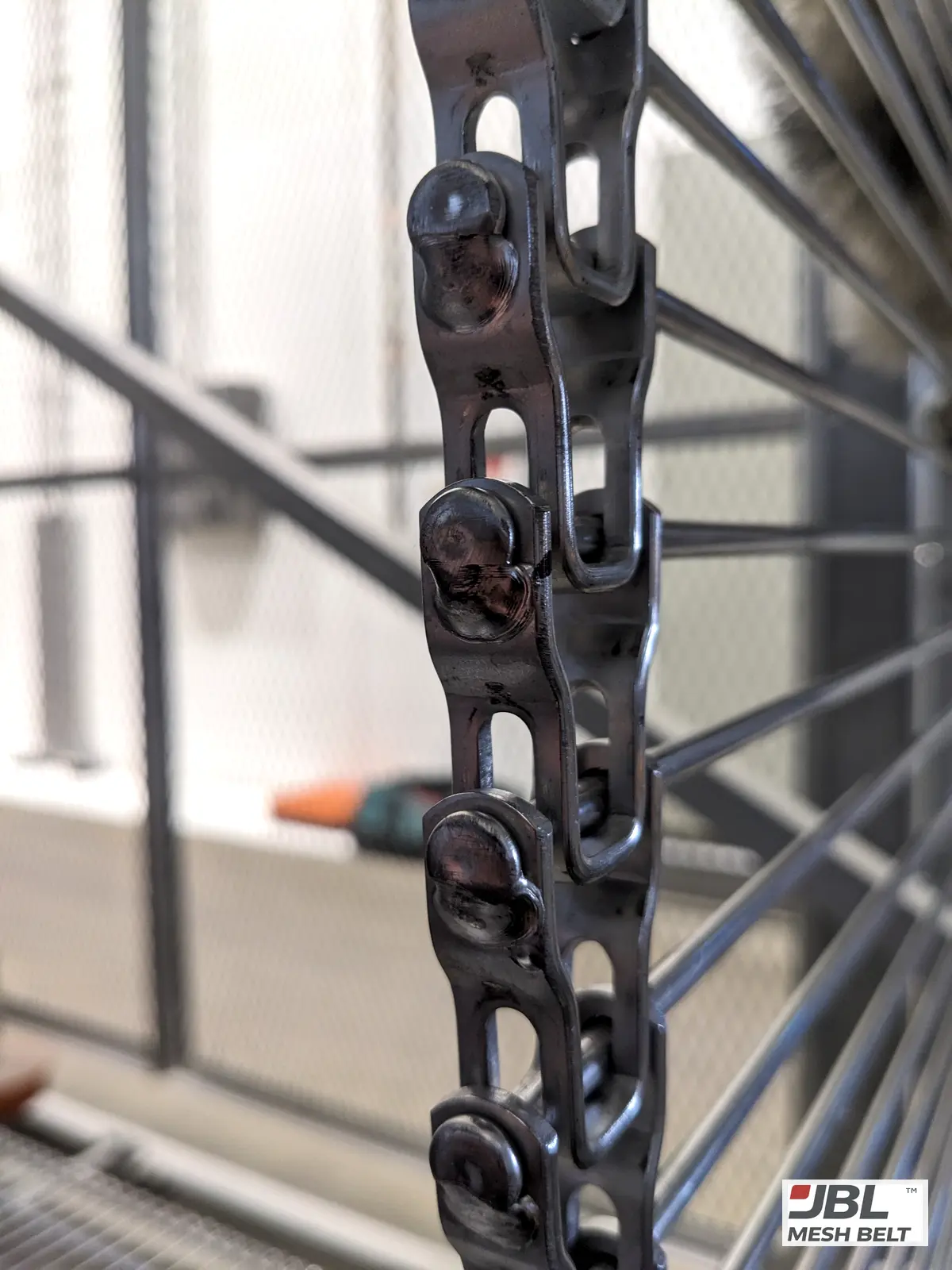
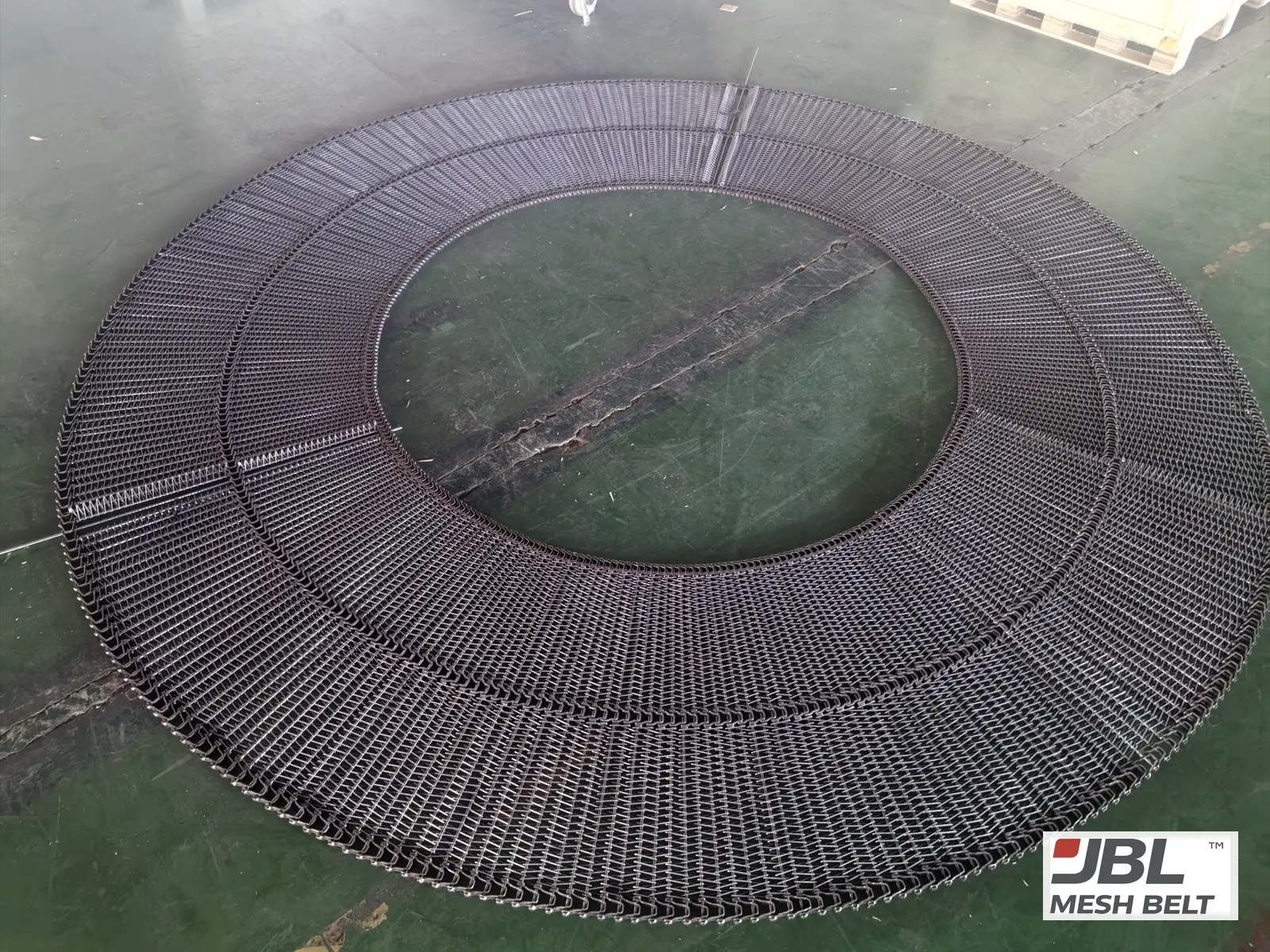
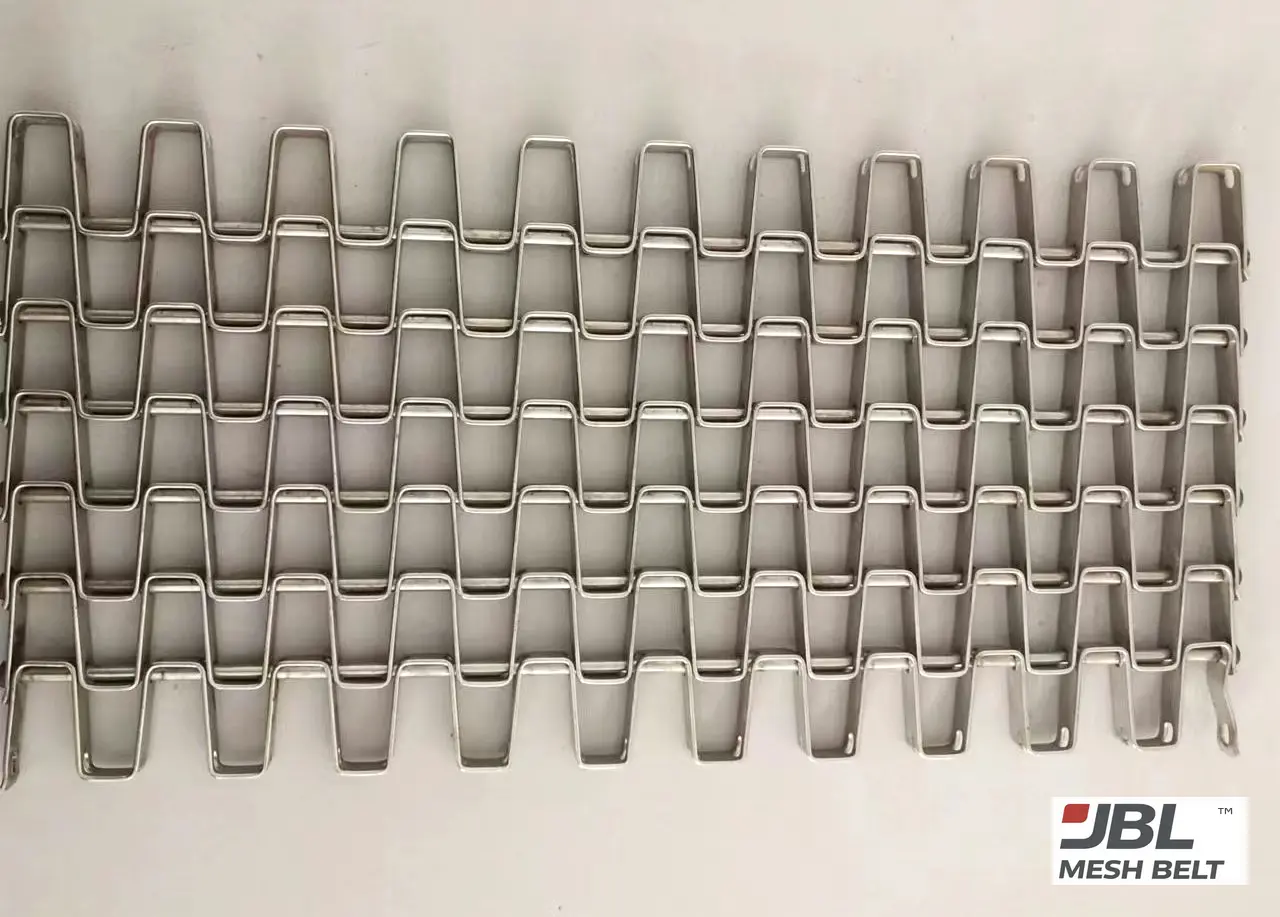
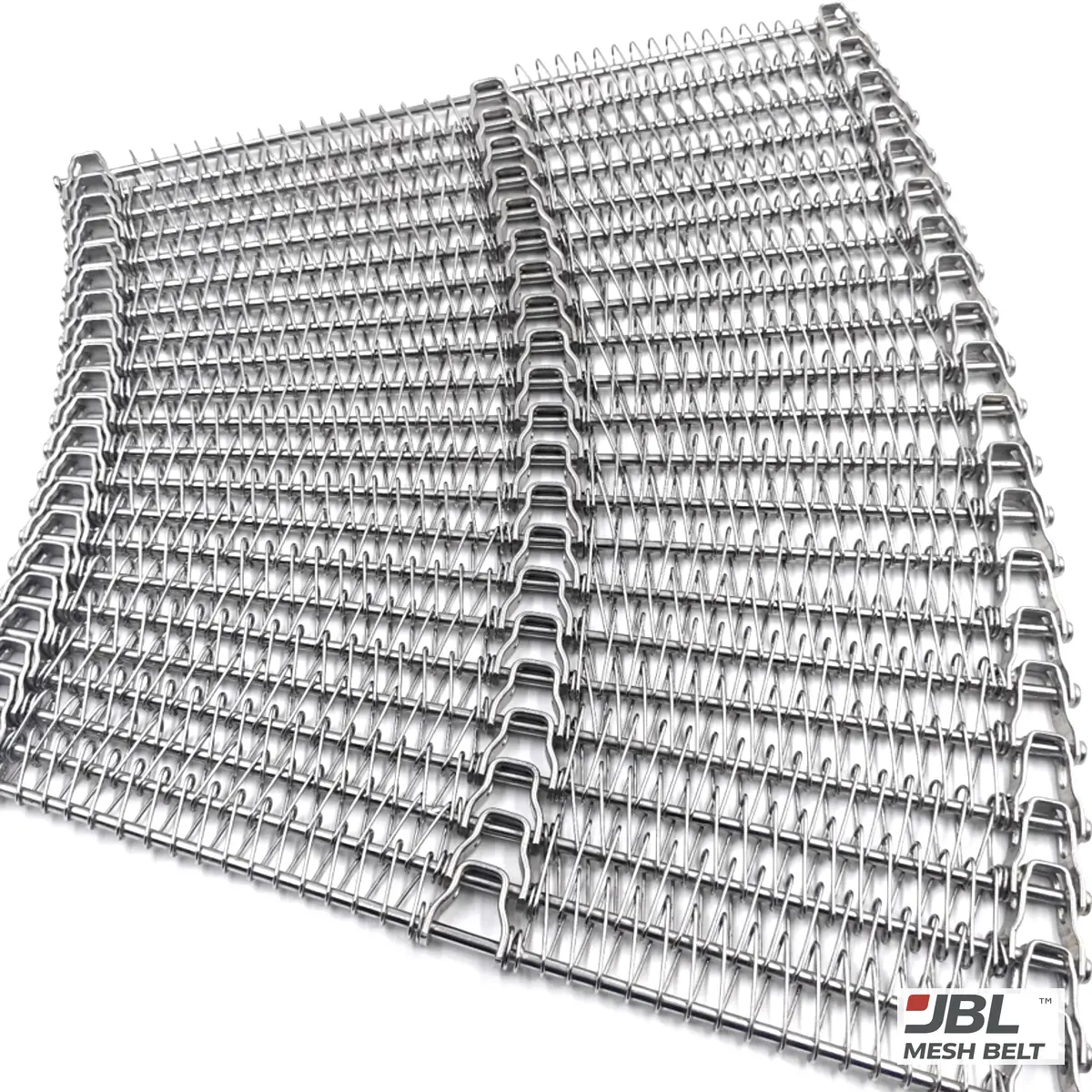
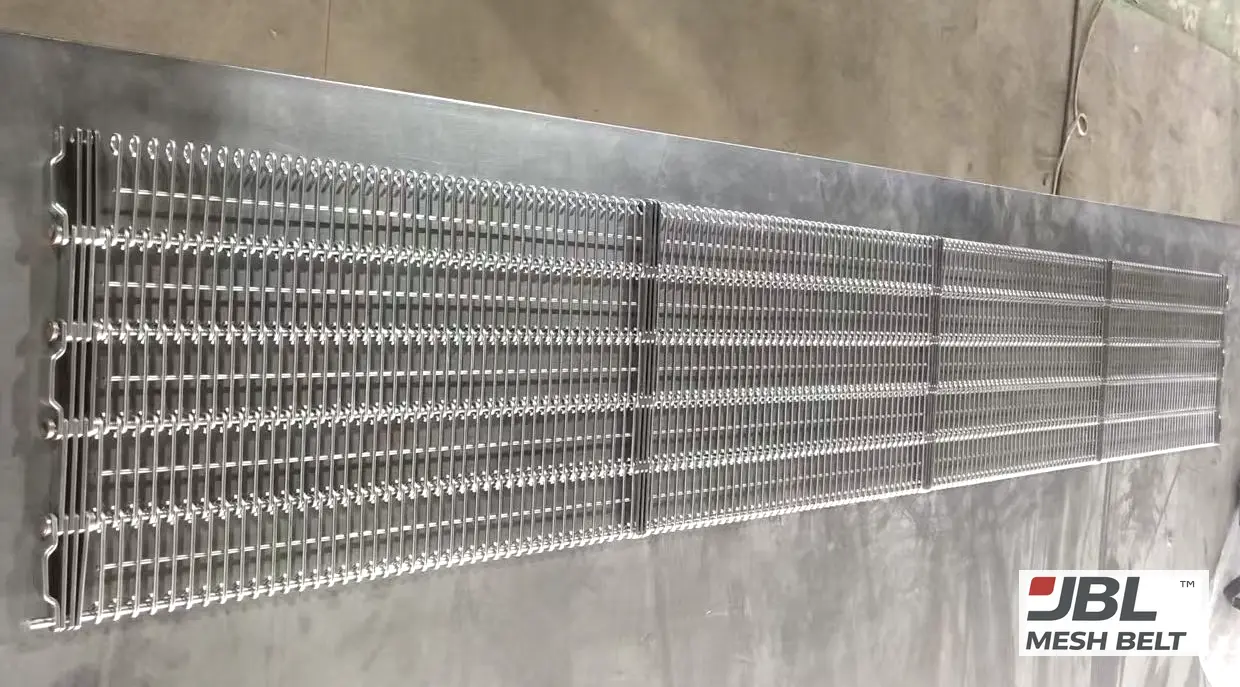
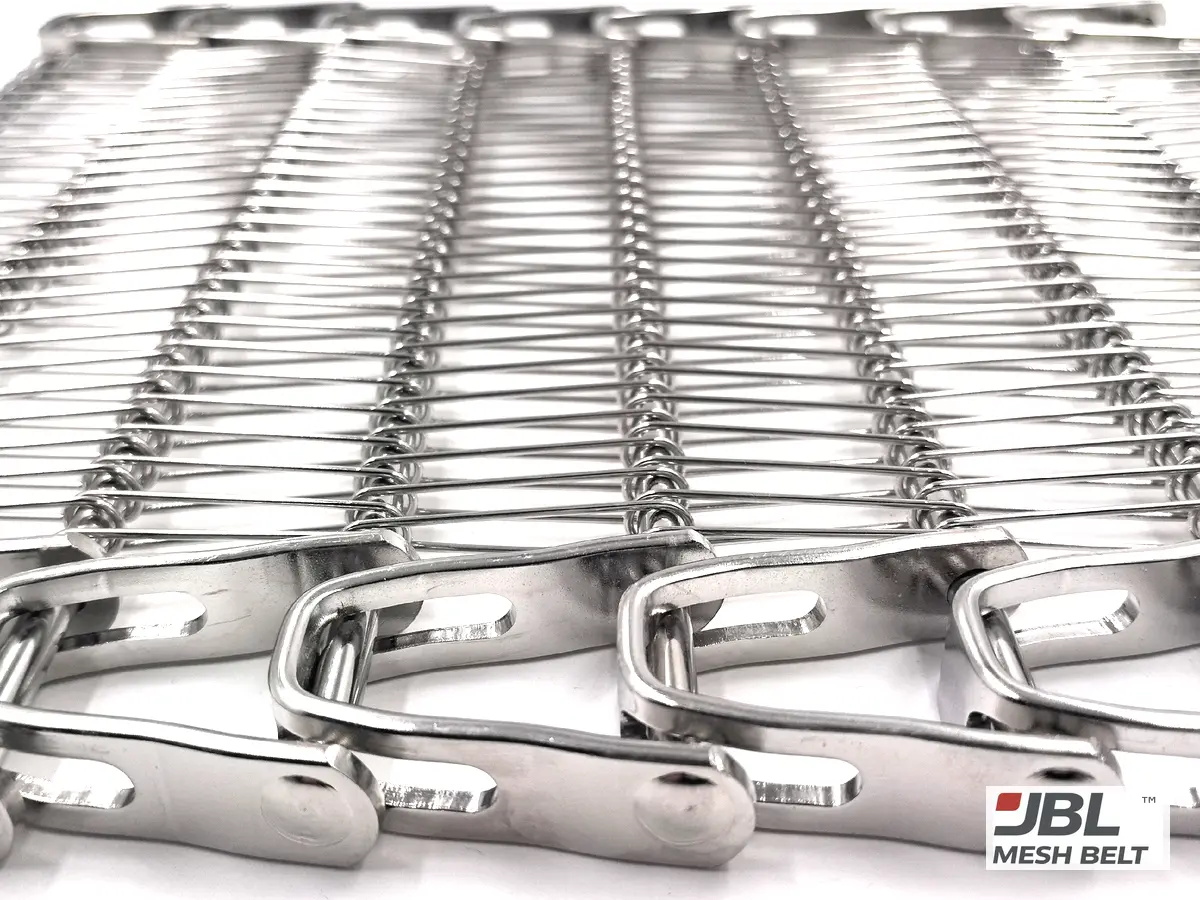
A spiral belt is built from spiral wire, cross rods and edge links. The rods pass through the links, and the rod ends are welded to hold the edge together. On a long belt this means thousands of welds.
Why some belts ship with burrs
Welding is fast. Finishing is slow. Grinding every weld smooth, and checking it, takes time on every metre of belt. When that step is rushed or skipped, the burrs stay. In our Melbourne bakery project, the customer's original belt had exactly this: rough rod-end welds with burrs.
| Weld condition | On the floor | In the freezer |
|---|---|---|
| Rough, with burrs | Looks acceptable | Scrapes drum bars and guide strips |
| Ground once | Mostly smooth | Small points may remain |
| Ground a second time and checked | Smooth to touch | Slides against bars and rails |
03What do weld burrs do to the drum bars and your product?
The damage starts as fine scratches. It ends as a contamination report from your customer.
Short answer
Burrs scratch the U-bars deep and shallow on every turn. The scratches shave fine black residue off the bars. The residue collects on the welds, and at infeed and outfeed the freezer airflow blows it onto IQF products.
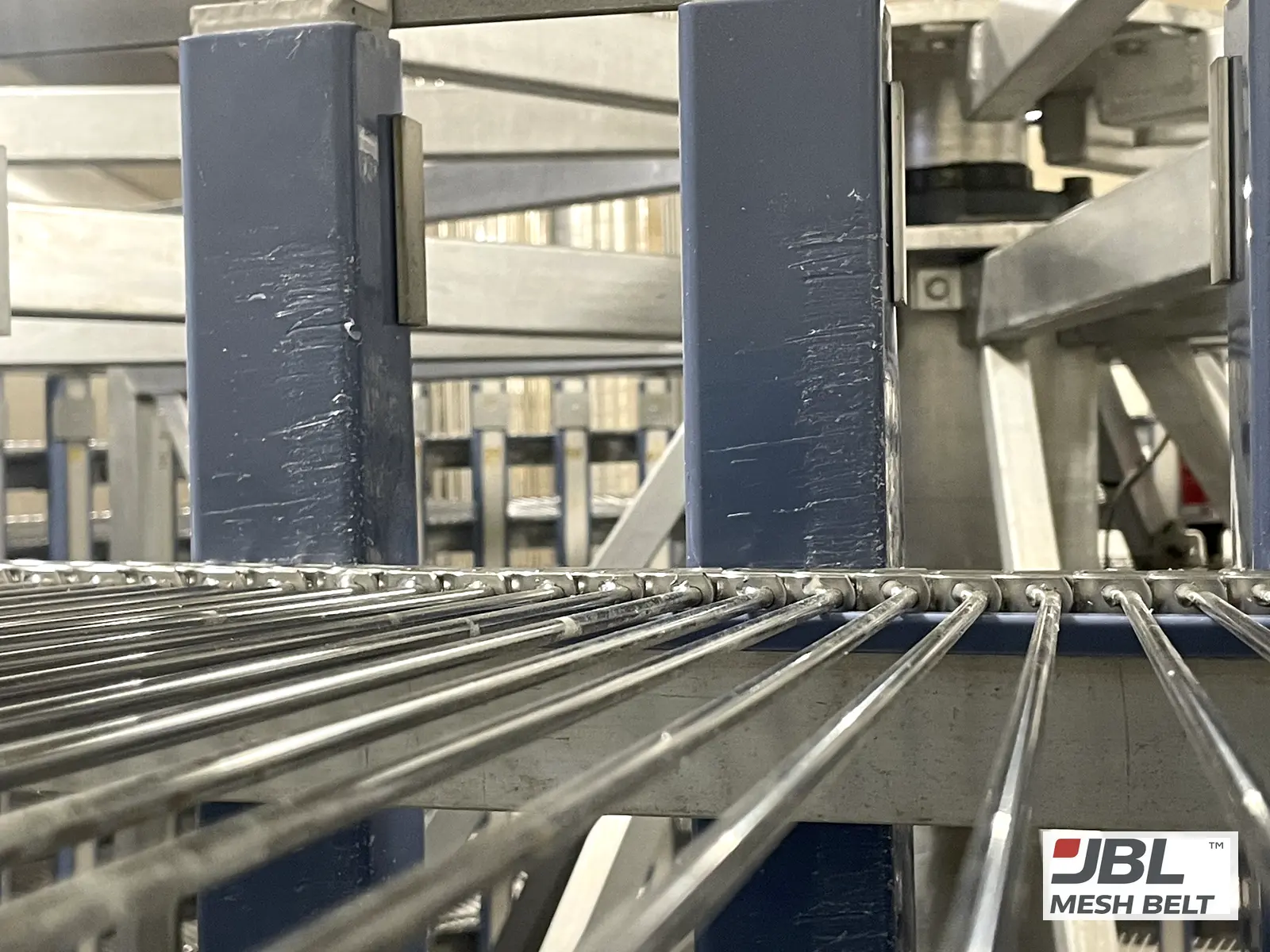
Here is what I see on friction-drive spirals. If the welds keep their burrs, they very easily scratch the U-bars. The scratches are deep and shallow. As the equipment keeps running, the scratches shave the bar surface and leave fine, black, plane-shaving-like residue on the U-bar strips.
These tiny black residues build up and stick to the welds. At the infeed and outfeed of the freezer, the cold fans blow hard. The airflow lifts the residue and carries it onto IQF products, parts or food on the belt.
What it costs
- ✓A contamination incident at your plant or at your customer's.
- ✓Non-conforming product that must be held, sorted or scrapped.
- ✓Unplanned stops to clean the freezer and inspect the drum bars.
- ✓Damaged drum bars or guide strips that need replacing.
The same mechanism showed up in Melbourne on a different part: the rough welds scored the blue plastic guide strips, and plastic shavings collected along the belt edge. Read the Australia case.
Food-safety rules point the same way. The US regulation on food equipment, 21 CFR 117.40, requires equipment to be designed and maintained to protect food against contamination, including from metal fragments.
04What standard steps remove weld burrs before shipment?
Burr-free welds are not luck. They come from a fixed routine, repeated on every metre of belt.
Short answer
Our routine is: weld, grind each weld, grind a second time where needed, finish the surface as specified, check the weld finish on the sample, then check the bulk belt edge again before packing — with photos sent to you.
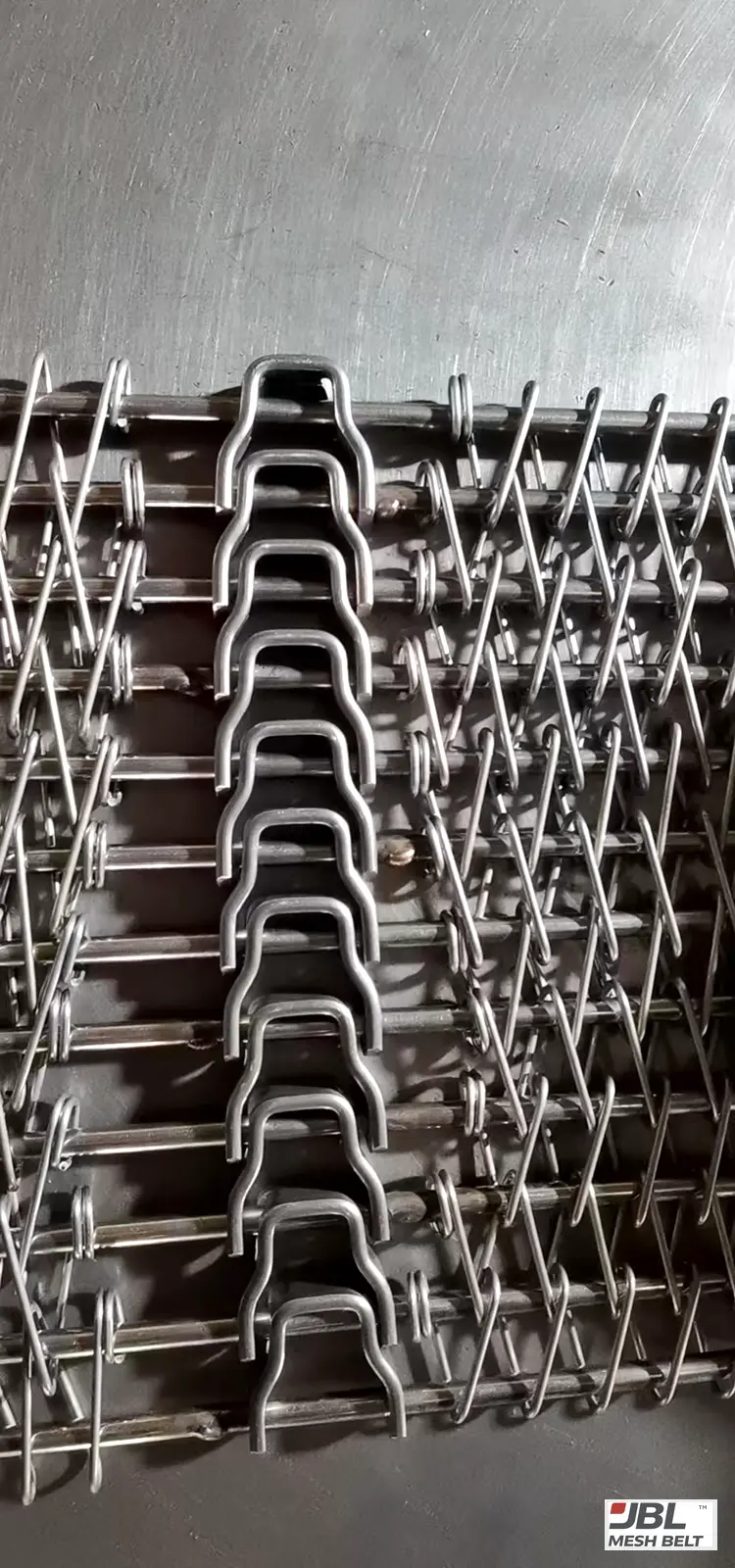
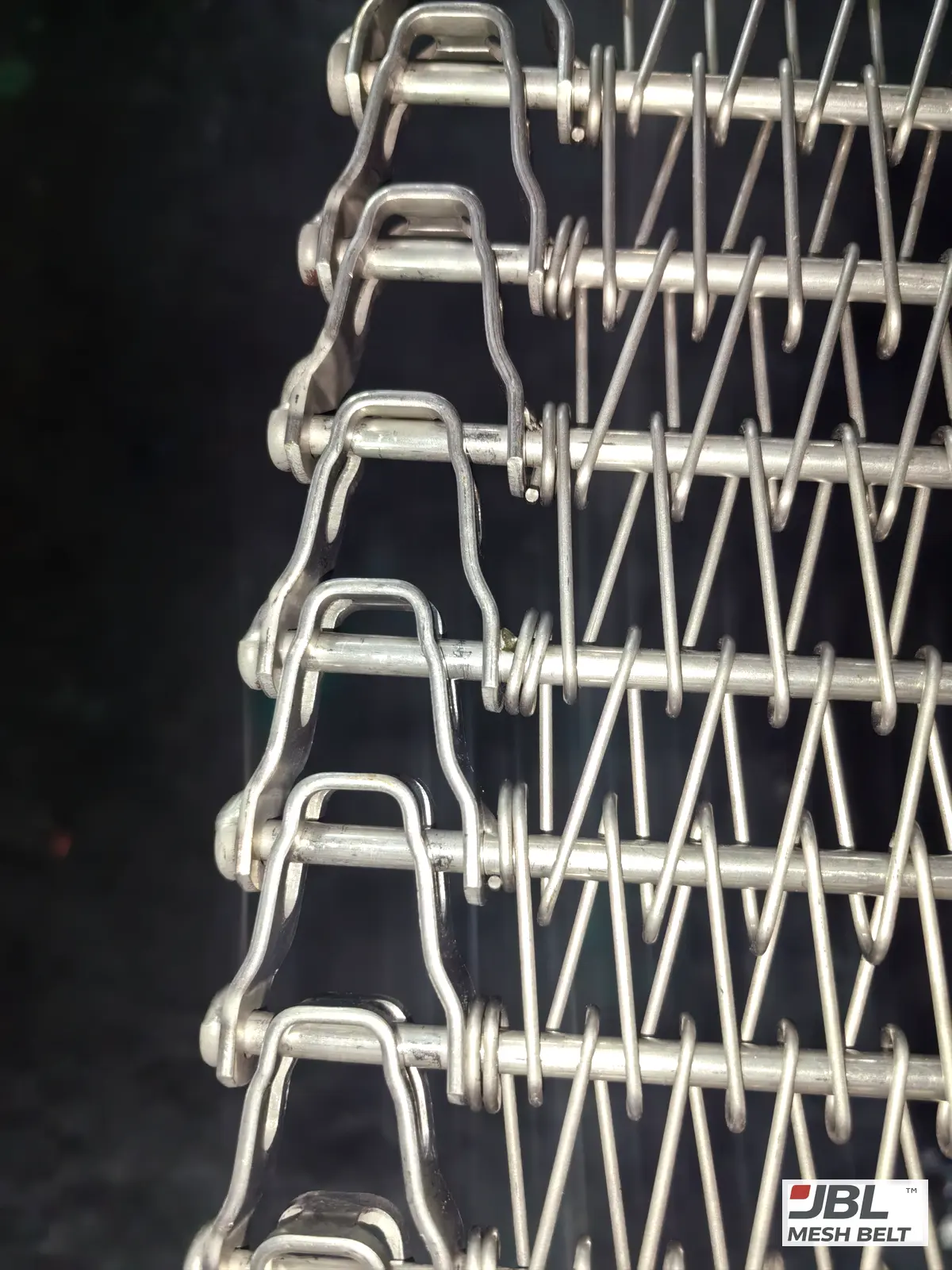
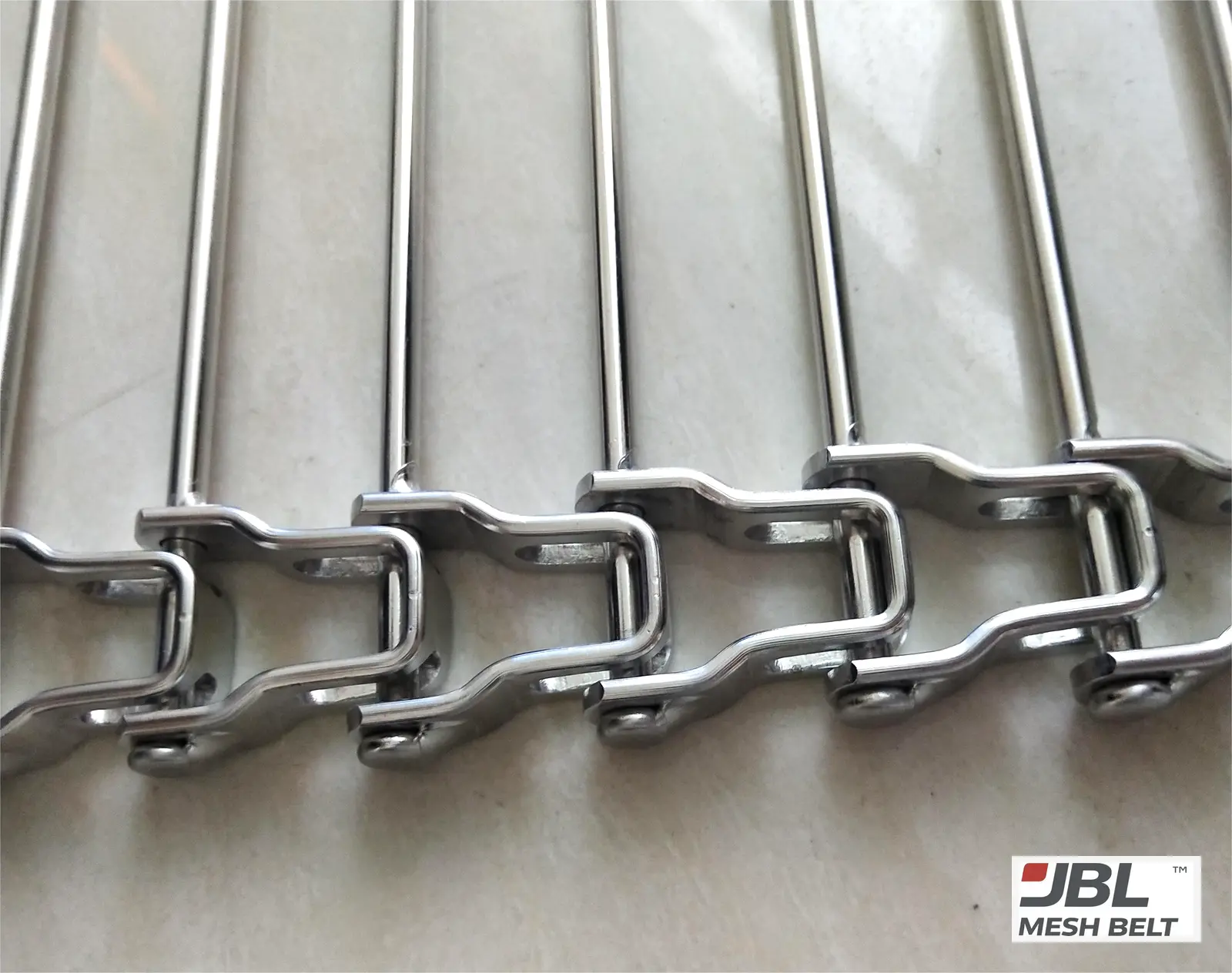
- 01
Weld the rod ends
Each rod end is welded to the edge link to the agreed edge type, for example a flat-head weld.
- 02
Grind every weld
Spatter, sharp edges and raised beads are ground off on both edges.
- 03
Grind a second time where needed
On our Malaysia project, welds and rod ends were ground a second time so the edge was smooth and free of burrs.
- 04
Finish the surface
Pickling or electropolishing as specified. The Melbourne belt was electropolished.
- 05
Check the sample
Weld finish is one of the points checked and photographed on the sample before bulk.
- 06
Check the bulk belt
The bulk belt edge is checked again before packing, and photos go to the buyer.
Hygienic welding is a recognised topic in food engineering. The European Hygienic Engineering & Design Group publishes guidance on welding stainless steel to meet hygienic requirements.
In the USA project, the customer's drawing allowed no burrs at all. Meeting it meant adjusting our forming tools and process, then checking the edges on a trial run before the full order. Read the USA case.
05How can you check a belt for burrs before you accept it?
You do not need a lab. You need good photos, the right questions and a few minutes with the belt.
Short answer
Ask for close-up photos of the edge welds on both sides, before and after grinding. When the belt arrives, run a gloved hand along the inner edge and look at the welds in good light. Any catch or sharp point is a burr.
| Check | When | What to look for |
|---|---|---|
| Close-up photos of edge welds | Before shipment | Smooth, rounded welds; no spatter |
| Weld finish on the sample | Before bulk approval | Same finish you will get on the bulk belt |
| Gloved-hand check along the inner edge | On arrival | No catching or sharp points |
| Drum bars after the first weeks | In service | No new scratches or dark residue |
Start before the belt ships. Ask your supplier for close-up photos of the welds on both edges, in sharp focus. A smooth weld looks rounded and even. A rough weld shows spatter, sharp corners or a raised bead.
When the belt arrives, check a few sections before installation. Use a glove and run your hand slowly along the inner edge. A burr catches the glove. Look at the welds under good light from the side.
After installation, look at the drum bars in the first weeks. New scratches or dark residue on the bars are an early warning. Catching it early saves the bars and your product.
Already seeing scratches or residue?
Send me photos of your edge welds and drum bars. I tell you whether the belt is the cause and what a replacement needs.
When This Is Not the Right Choice
- ✕If your spiral uses a positive drive with sprockets on the belt edge instead of a friction drum, the contact points are different — the risk moves to the sprocket teeth and edge links.
- ✕If the residue is not dark and not near the drum, look at other sources first: product build-up, lubricants or worn plastic parts.
- ✕If the drum bars are already deeply grooved, a new smooth belt will help, but the bars may also need repair.
From My Engineering Experience
Spiral freezer belts are mostly used on equipment with a traditional friction drive. Once the belt is installed, the inner-edge welds are pressed tightly against the drum's U-bars by belt tension. Under that driving force, any burr left on a weld will very easily scratch the U-bars.
As the equipment keeps running, those scratches grow deep and shallow, and they leave fine black residue on the U-bar strips — like shavings from a plane. The tiny particles collect on the welds. At the infeed and outfeed, under the cold fans, they blow onto IQF products, parts or food.
The result is a contamination incident, non-conforming product and real money lost. All from a burr you can barely see on a new belt. That is why I treat weld finish as a food-safety point, not a cosmetic one.
— Spring, Sales Director, JBL Mesh Belt
Evidence From Our Work
Melbourne, Australia, 2023–2024 — bakery spiral cooling →
| Step | Detail |
|---|---|
| Problem | Rough rod-end welds with burrs on the original belt |
| Damage seen | Plastic shavings at the edge; blue guide strips scored |
| Fix | Same pitch, rod and link; welds finished smooth; electropolished |
| Checked | Weld finish on the sample before bulk |
Malaysia, 2026 — spiral belt →
| Step | Detail |
|---|---|
| Requirement | Smooth edge, no burrs |
| Done | Welds and rod ends ground a second time |
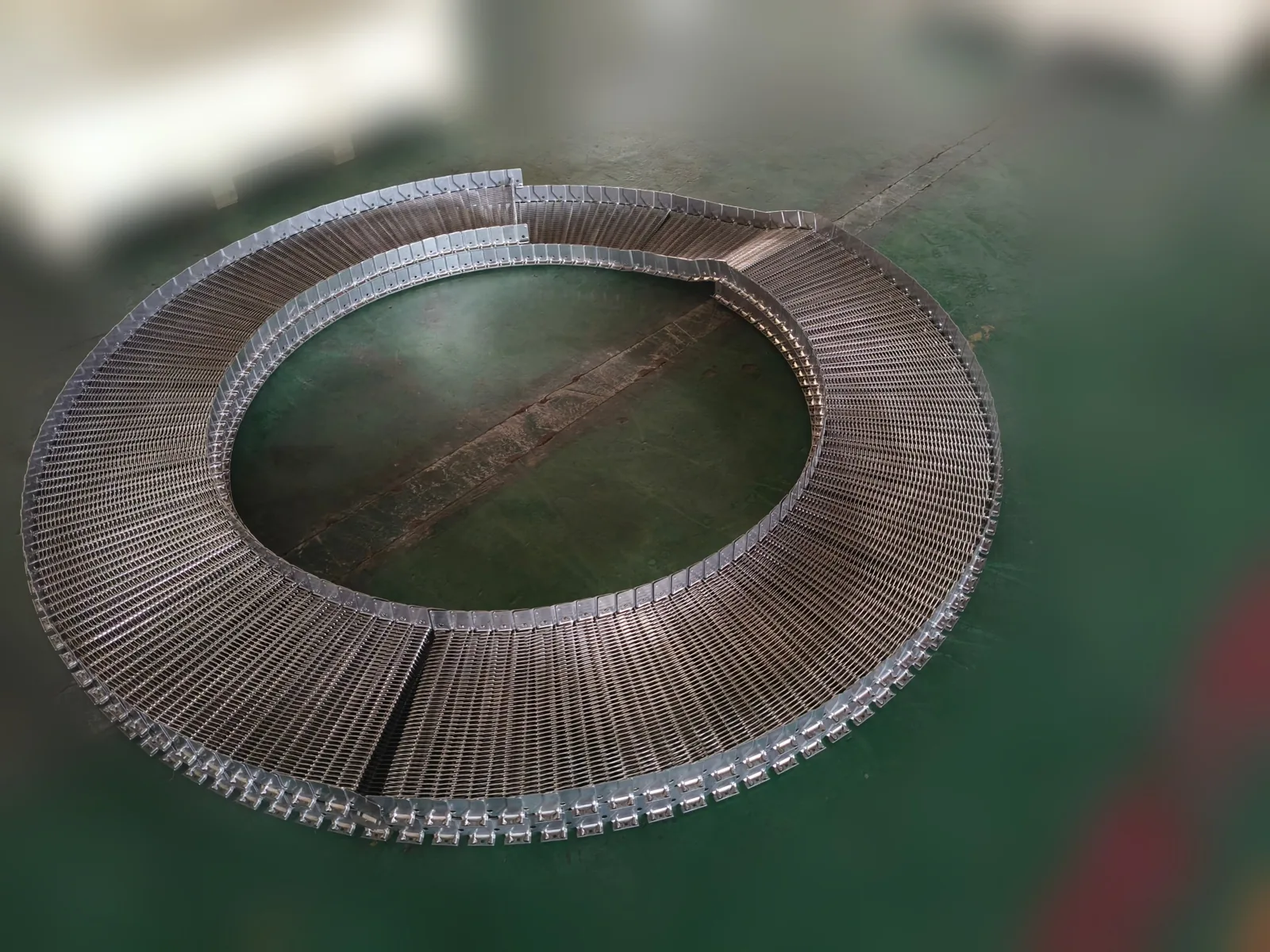
| Checked | Trial run photos and samples sent; full-circle turning test |
| Result | Bulk ordered and installed |
FAQ
Q1Can weld burrs on a spiral belt contaminate food?
Yes. On a friction-drive spiral, burrs scratch the drum bars, and the scraped residue can be blown onto product at infeed and outfeed.
Q2Where are weld burrs on a spiral belt?
On the rod-end welds along the belt edge, especially the inner edge that presses against the drum bars.
Q3How do you remove weld burrs?
We grind every weld, grind a second time where needed, finish the surface as specified, and check the weld finish on the sample and the bulk belt.
Q4Can you make a replacement belt with smoother welds than my old one?
Yes. We keep every fit dimension the same and improve only the weld finish, as we did for a bakery in Melbourne.
Q5How do I check my current belt?
Run a gloved hand along the inner edge and look for catching points, then check the drum bars for new scratches or dark residue.
Conclusion
A tiny weld burr can scratch your drum bars and contaminate IQF product. Ground, finished and checked welds remove the cause before the belt ships.
Download the Spiral Freezer Belt Technical Specification (PDF)
Specification ranges and options in mm and inch. Enter your work email and the file downloads right away.
References

Your contact for this belt
Spring · Sales Director, JBL Mesh Belt · 16 years
“Your belt is worn, the OEM price is high, and there is no drawing. That is where I start.”
Send me a worn section, a few photos with a caliper in the picture, or a drawing. I tell you what fits, what is missing, and show you a sample measured against your own belt before you pay for the full length. Buyers in the UK, the USA, Australia, Brazil, South Korea, Spain and Malaysia have replaced belts this way.
- ✓Readings on your original next to readings on our sample
- ✓Nothing in bulk until you approve the sample
- ✓Turning, stacking or sprocket tests before your belt ships
- ✓A reply from me, usually within 8 hours