Drive Interface · 10 min read
How Do You Measure Sprocket Wear Before It Damages a Spiral Belt?
 Written bySpringSales Director, JBL Mesh Belt · 16 years in metal conveyor beltsProjects in United Kingdom · USA · Australia · Brazil · South Korea · Spain · MalaysiaPublished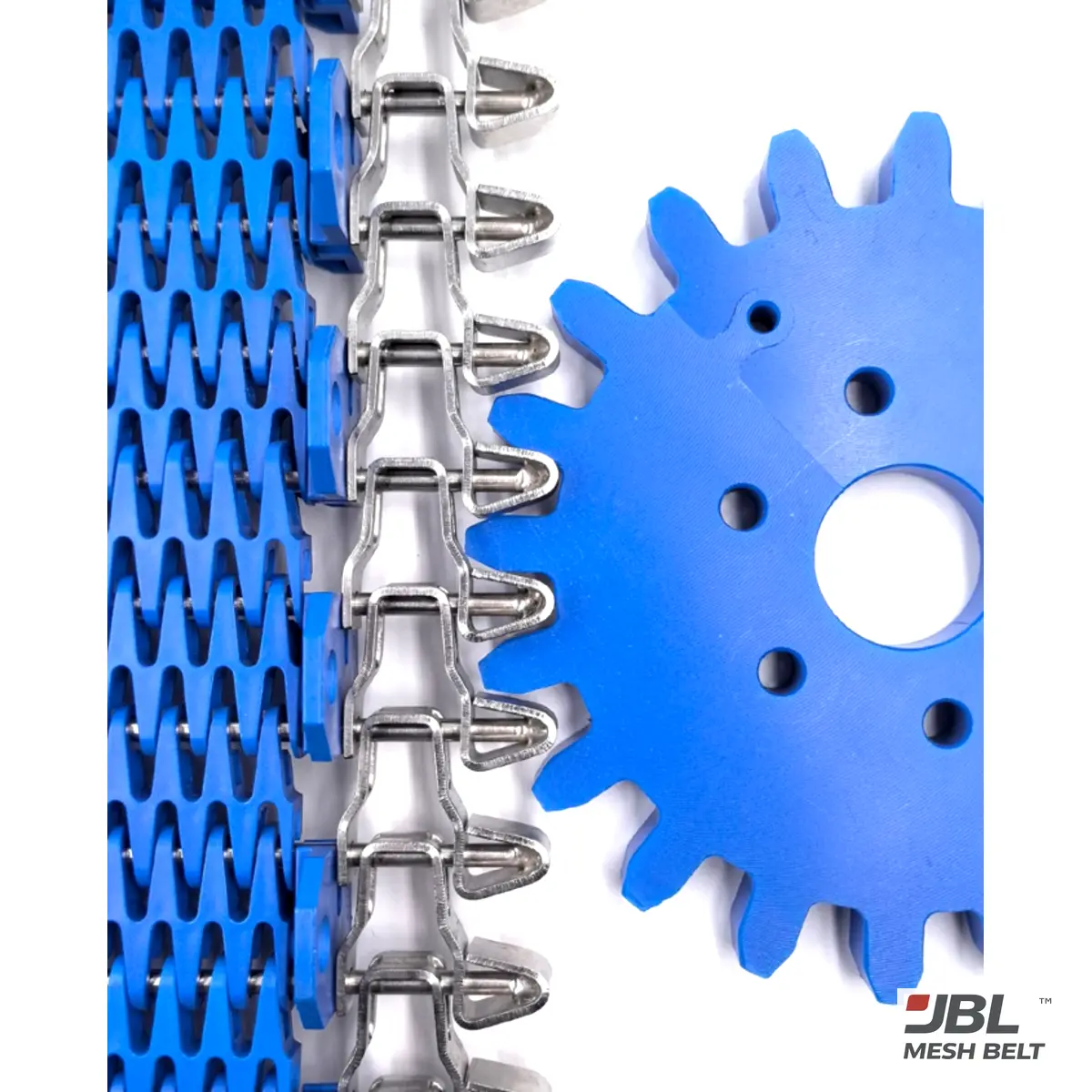
Everyone looks at the belt. Few people put a caliper on the sprocket. Yet the sprocket decides where every rod sits, thousands of times a shift.
Short answer
Measure the tooth, hub, bore, keyway and thickness with a caliper, read each value in more than one place, and compare with a new or unworn sprocket. Check alignment and shaft position too. Hooked or thinned teeth change where the belt engages and should be replaced with the belt.
At a Glance
| Product | Application | Key point | Buyer type | What to send |
|---|---|---|---|---|
| Sprockets for spiral, side-driven and flat wire belts | Belt replacement, drive maintenance | Measure the sprocket, not only the belt | Maintenance, engineers, OEMs | Sprocket photos with caliper readings, belt pitch, tooth count |
In an earlier article I explained why a new belt can fail on worn sprockets. This one is practical: what to measure on the sprocket, how to read the numbers, and what else around it to check.
01Which sprocket dimensions should you measure?
A sprocket has more dimensions than its tooth count. Each one tells you something about wear or fit.
Short answer
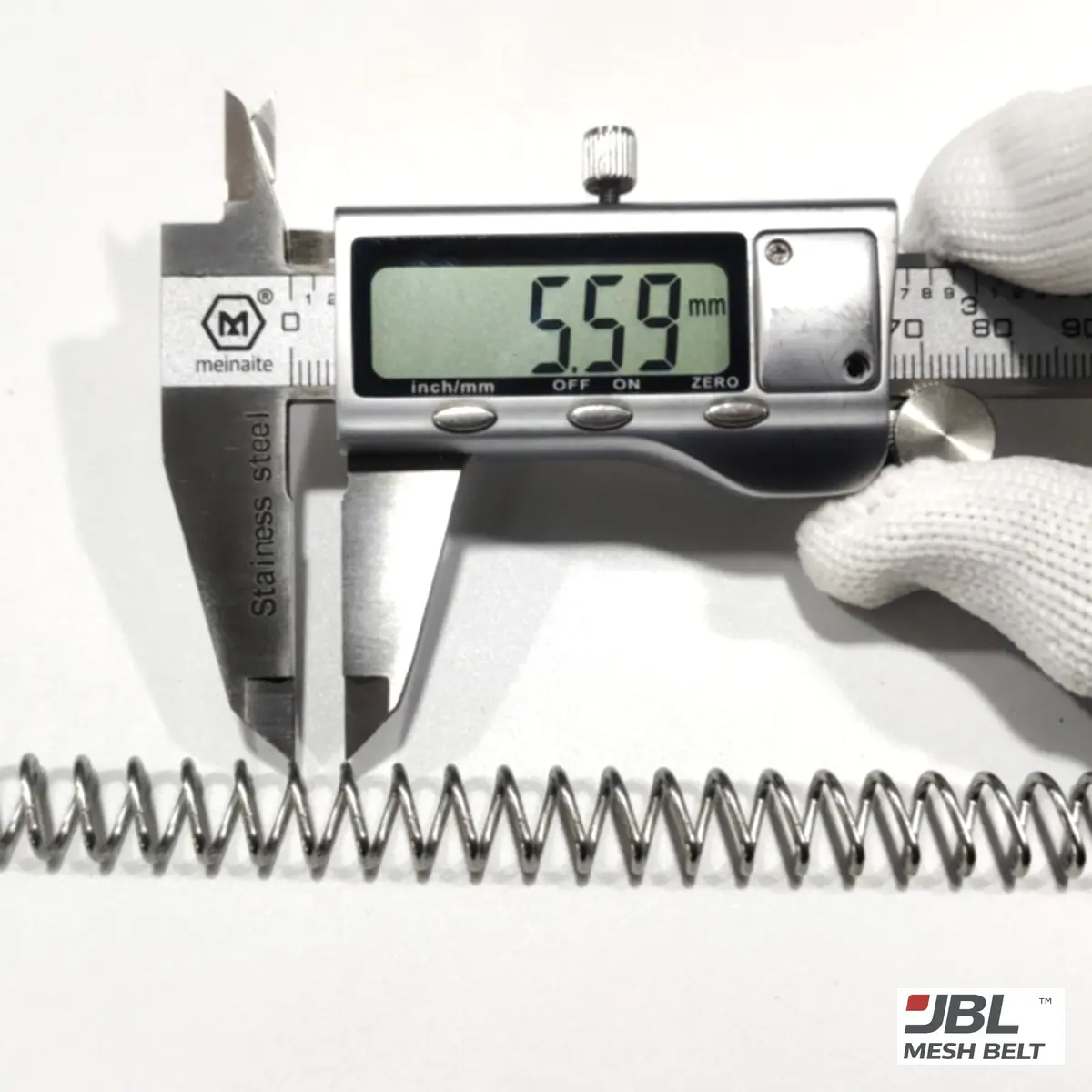
Measure the tooth width and profile, the outside diameter, the hub, the bore and keyway, and the thickness. Count the teeth and note the pitch of the belt it drives. Read each value with a caliper, in more than one place, and photograph the reading.
| Dimension | What it shows | Reading from our projects |
|---|---|---|
| Tooth | Wear on the driving face | 10.77 mm (waffle line, original) |
| Hub | Overall hub size, damage | 90.42 / 90.21 mm (waffle line, two readings) |
| Keyway | Fit on the shaft key | 10.02 mm (waffle line, new) |
| Bore | Fit on the shaft | 40.00 mm (USA) |
| Outside diameter | Overall size, tooth tip wear | 132.00 mm (USA); 160.97 mm (Melbourne) |
| Thickness | Face width on the belt | 20.02 mm (side-driven UHMWPE) |
| Tooth pitch | Match to the belt | 25.40 mm (USA) |
These readings come from three projects and from our side-driven sprockets. Look at the waffle line hub: it was read twice, 90.42 mm and 90.21 mm. Reading a value in more than one place shows whether a difference is real or just measuring spread before you decide on it.
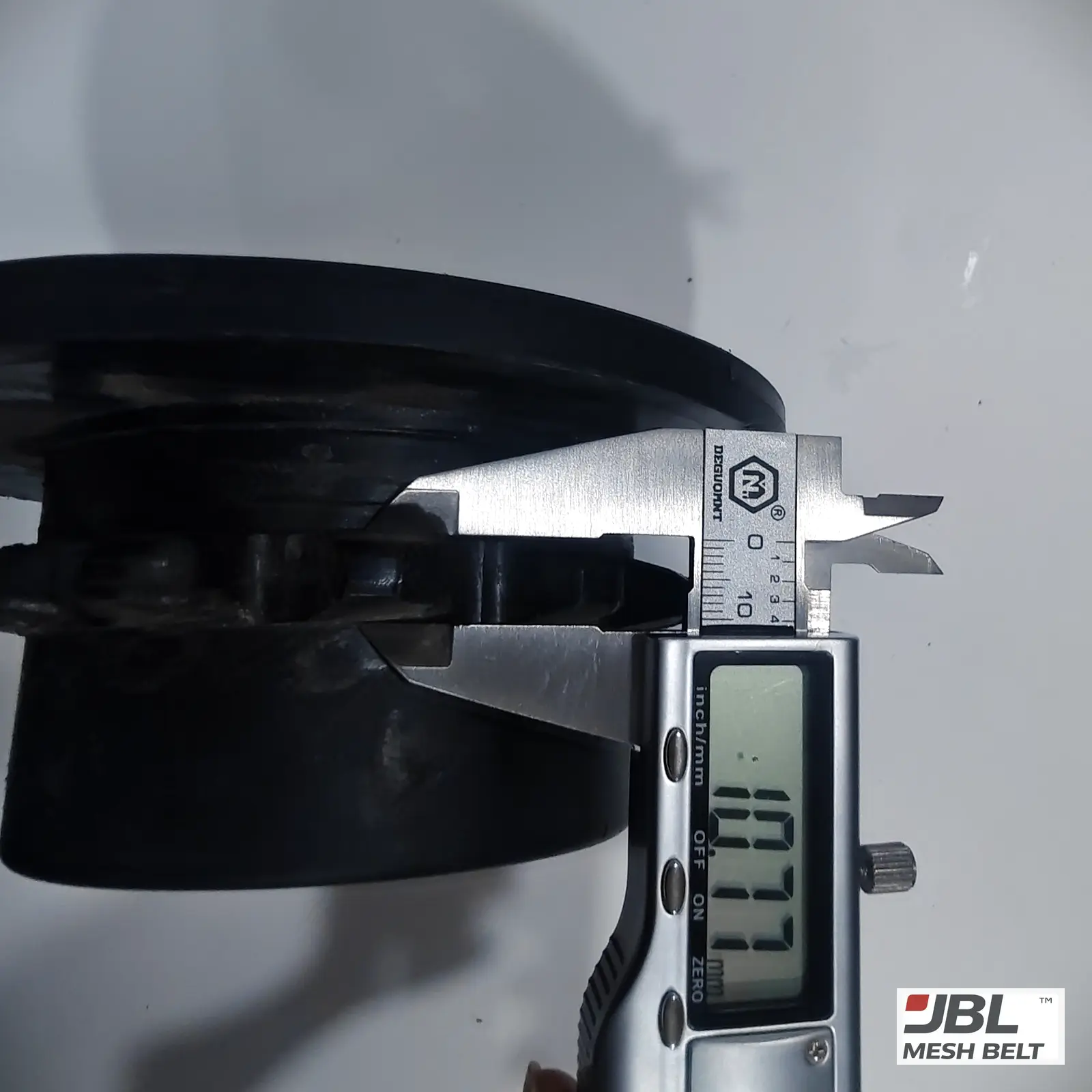
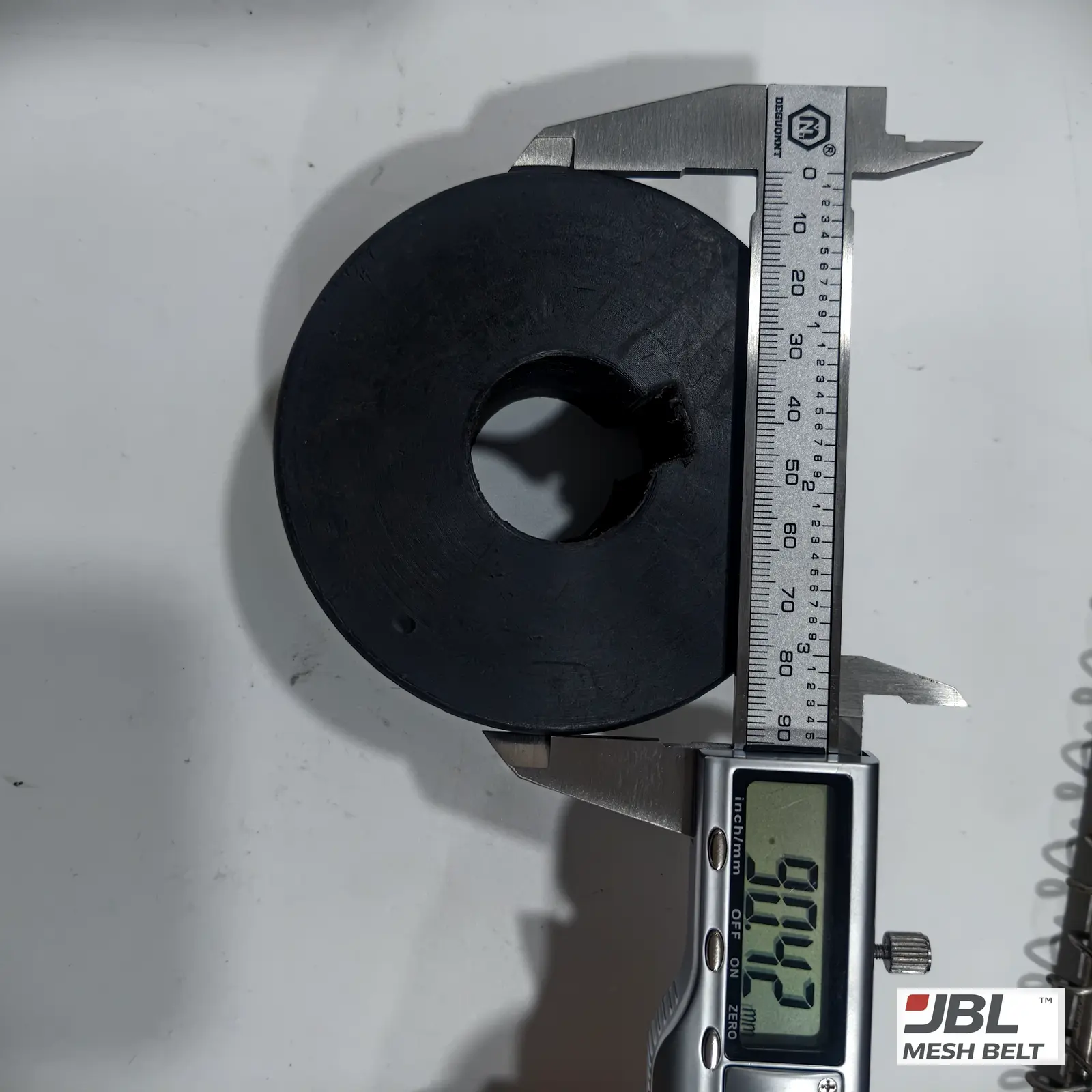
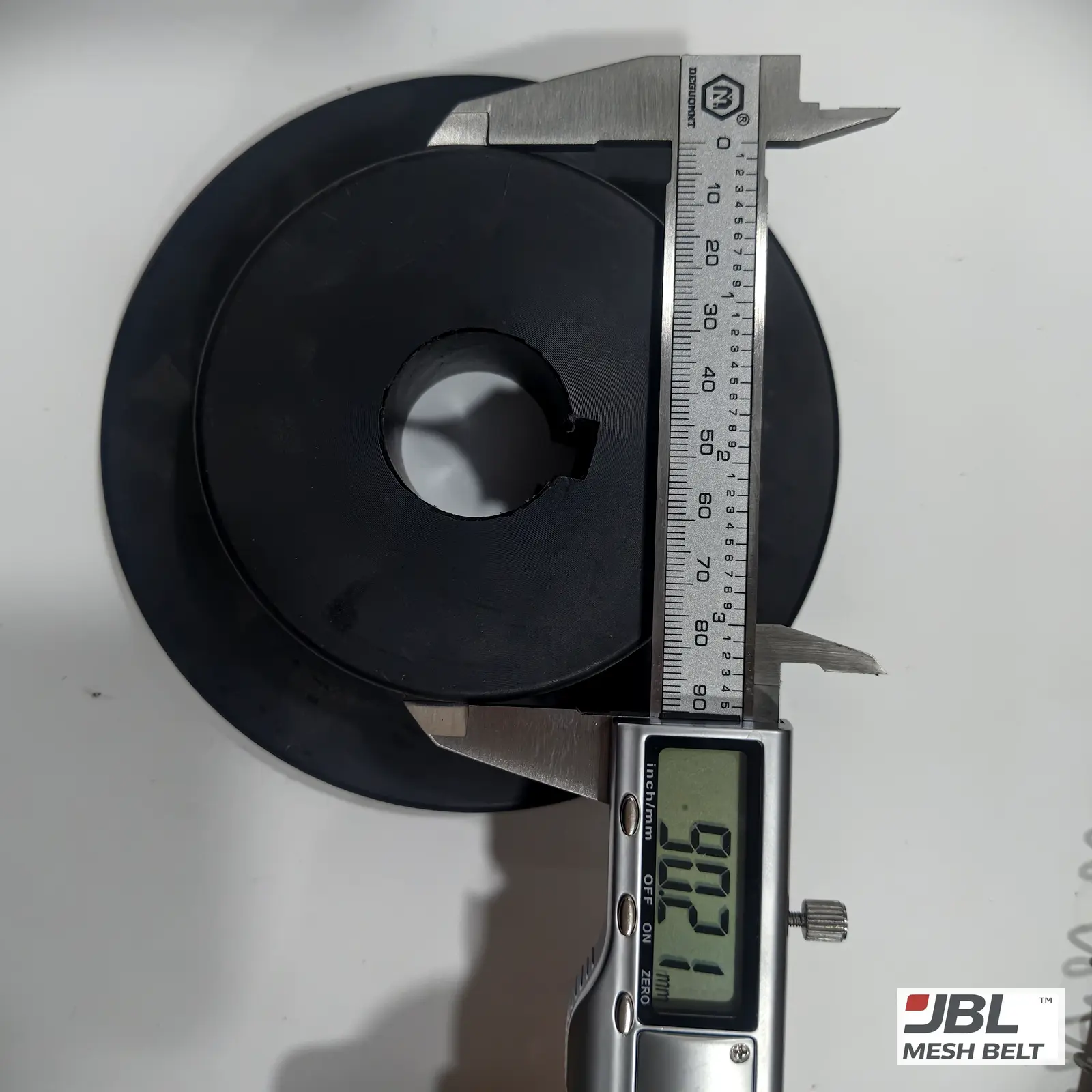
A sprocket is never quoted from a photo of the sprocket alone. The pitch of the belt or chain it drives is needed too, because a sprocket can look right and still have the wrong pitch or tooth profile for your belt.
02How do you judge a worn sprocket against a new one?
A number on its own means little. It becomes useful when you put it next to the number it should be.
Short answer
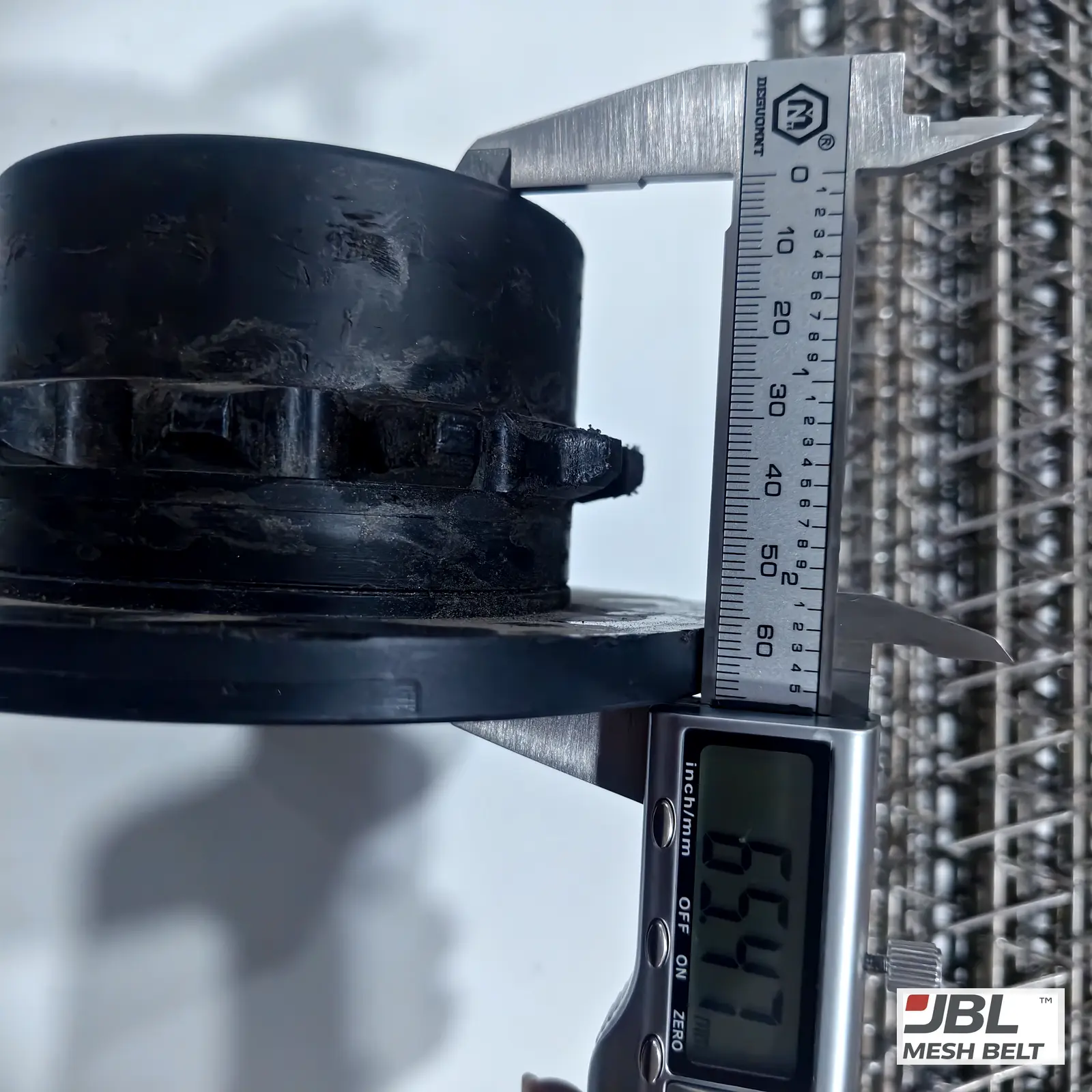
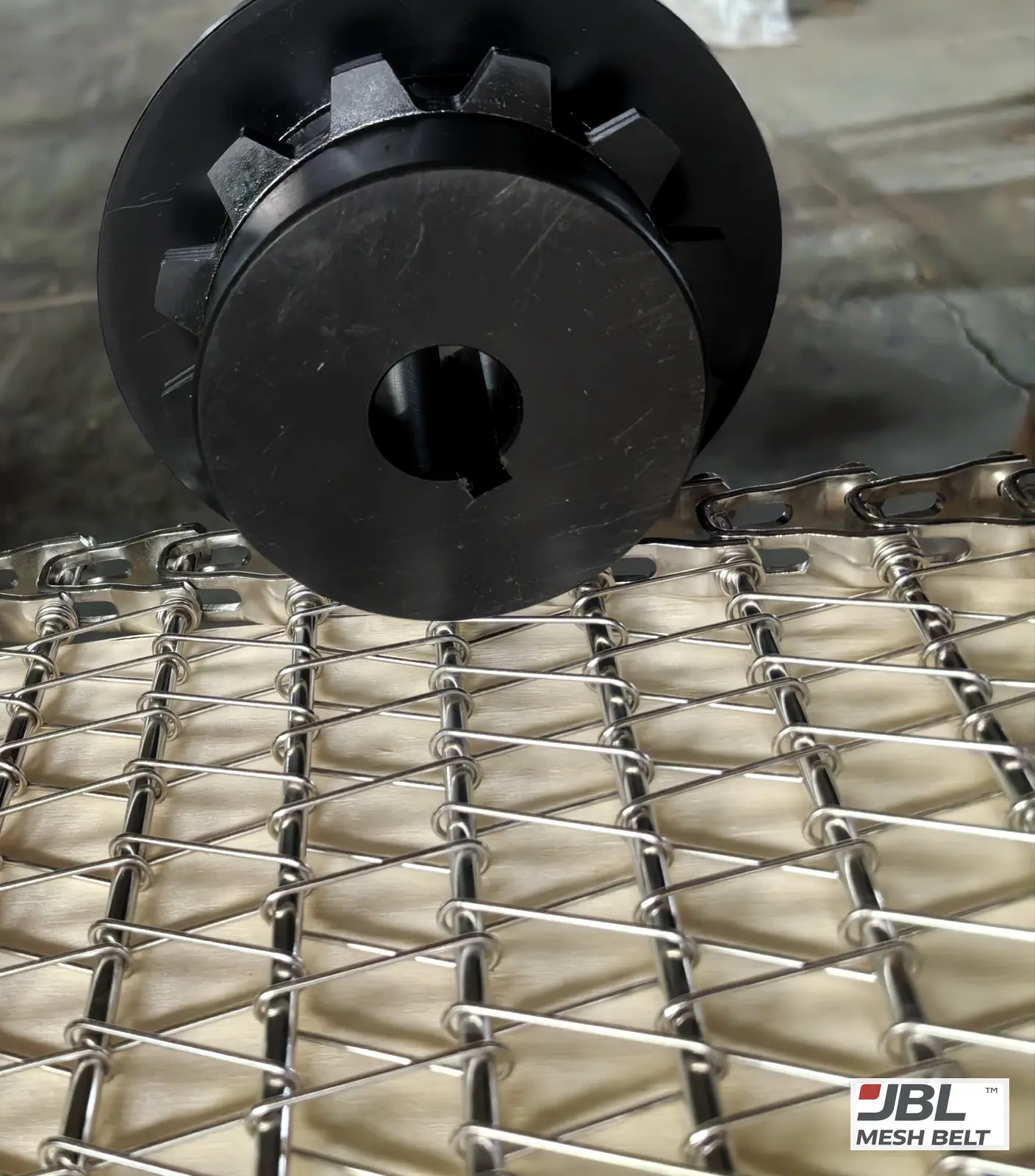
Compare each reading with a new sprocket, an unworn tooth on the same sprocket, or the drawing. Thinner teeth, a hooked tip, one polished face, or a hub or bore that reads differently in two places are signs of wear. The bigger the difference, the more engagement has changed.
| Compare with | When to use it |
|---|---|
| A new sprocket of the same design | Best reference, if you have a spare |
| Less-worn teeth on the same sprocket | When no spare exists |
| The sprocket drawing | When the drawing is current |
| The belt pitch | Always — the tooth must fit the belt |
Tooth profile
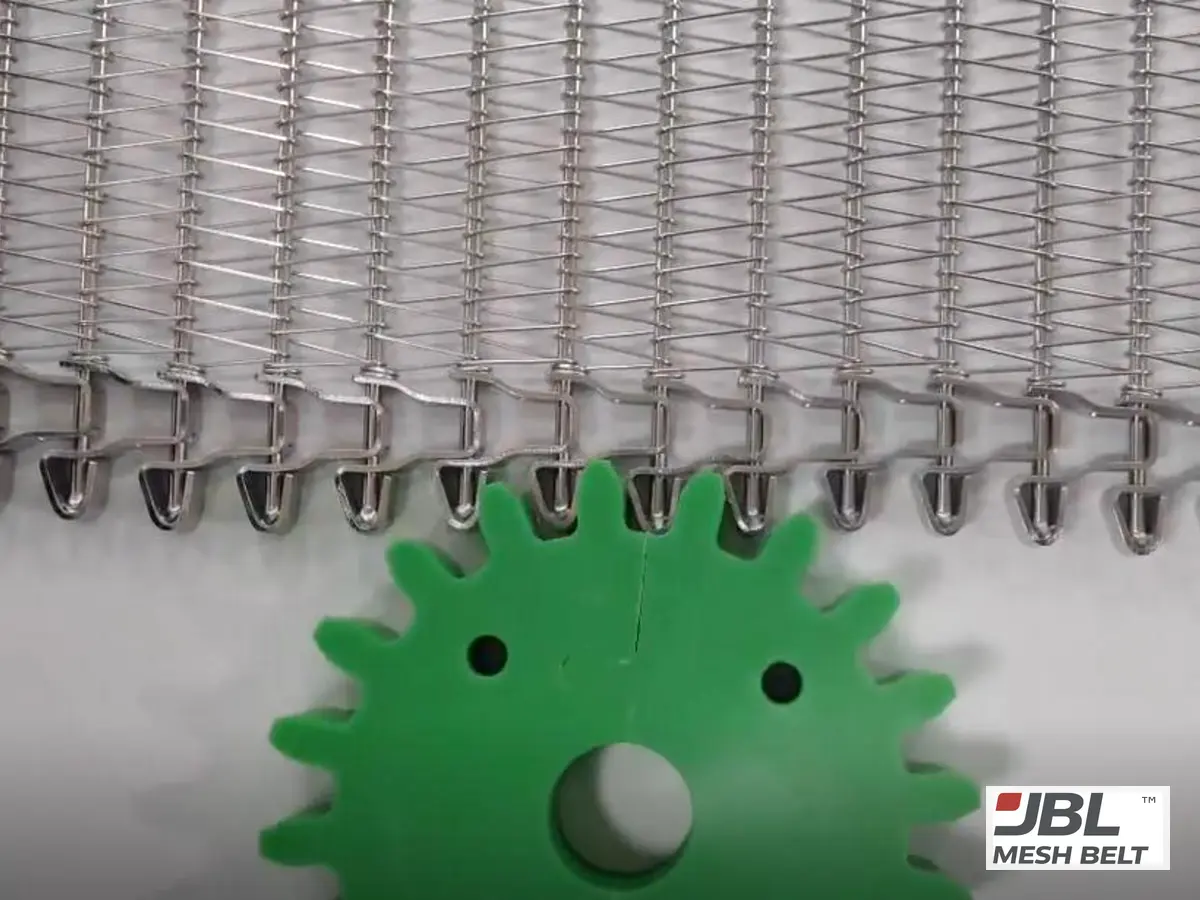
Look at each tooth from the side. A new tooth is symmetrical. A worn tooth is often cut back on the driving face, and the tip may bend in the running direction. That is a hooked tooth. It changes the point where the rod or link sits, so the belt rides higher in the tooth.
Pitch relationship
The spacing between teeth has to match the belt pitch. As teeth wear, the effective spacing changes. A belt that has stretched may still sit in those worn teeth. A new belt at the design pitch may not.
03Why do sprocket alignment and shaft position matter?
A perfect sprocket in the wrong place still damages the belt. Position matters as much as shape.
Short answer
Sprockets on one shaft must line up across the belt, and the shaft must be square to the belt path. If one sprocket is out of line or the shaft tilted, the belt is pulled unevenly: one edge carries more load, it tracks off, and teeth wear on one face.
- ✓Across the belt — all sprockets on a shaft at the same position relative to the belt rods.
- ✓Fixing — set screws, keys and locating screws holding each sprocket where it belongs.
- ✓Shaft — straight, square to the belt path, without play in the bearings.
- ✓Multiple sprockets — teeth on all sprockets in step, so each picks up the same rod at the same moment.
One-sided wear on a tooth is often the first sign of misalignment. If the teeth on one sprocket are polished on one face and the others are not, look at the position of that sprocket before you blame the belt.
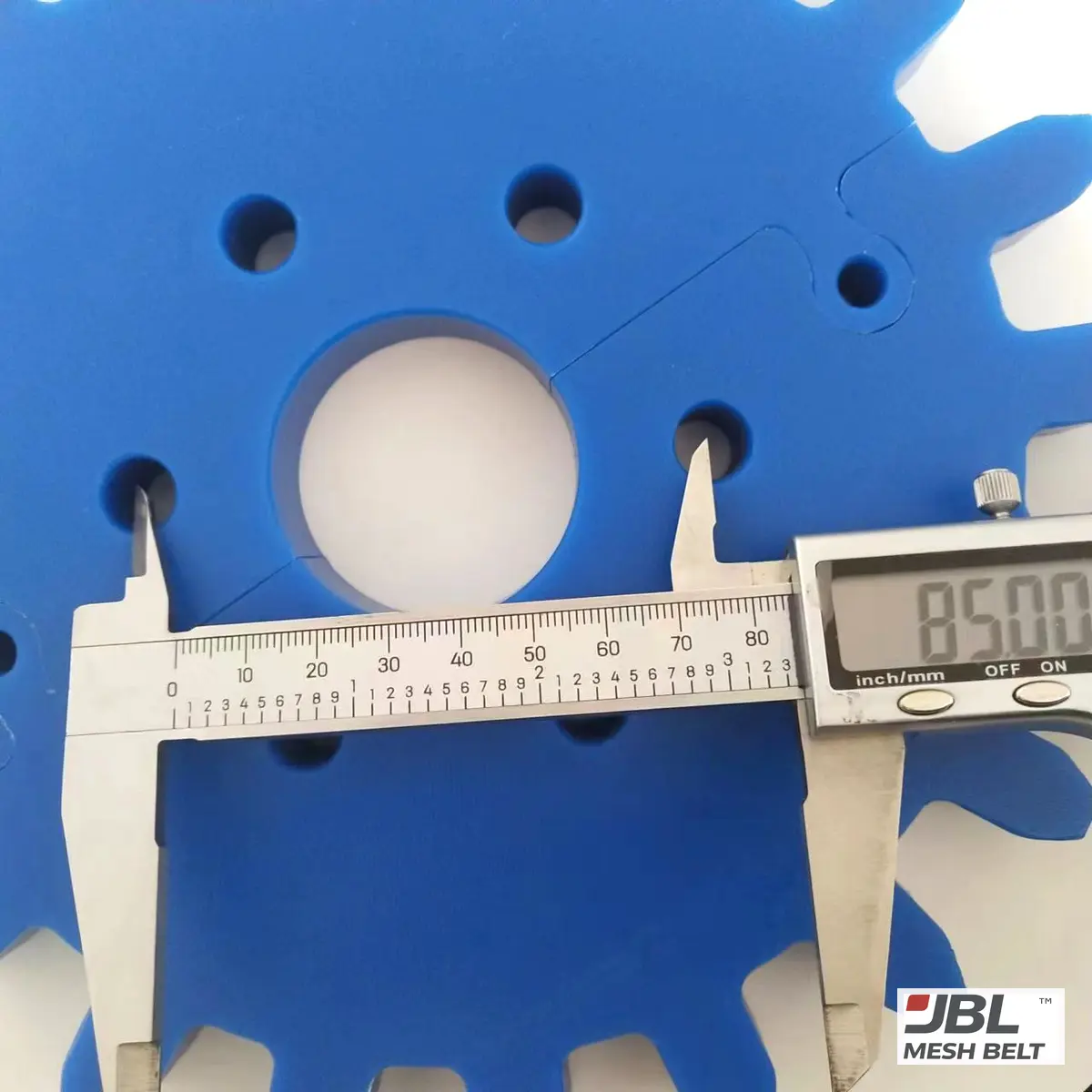
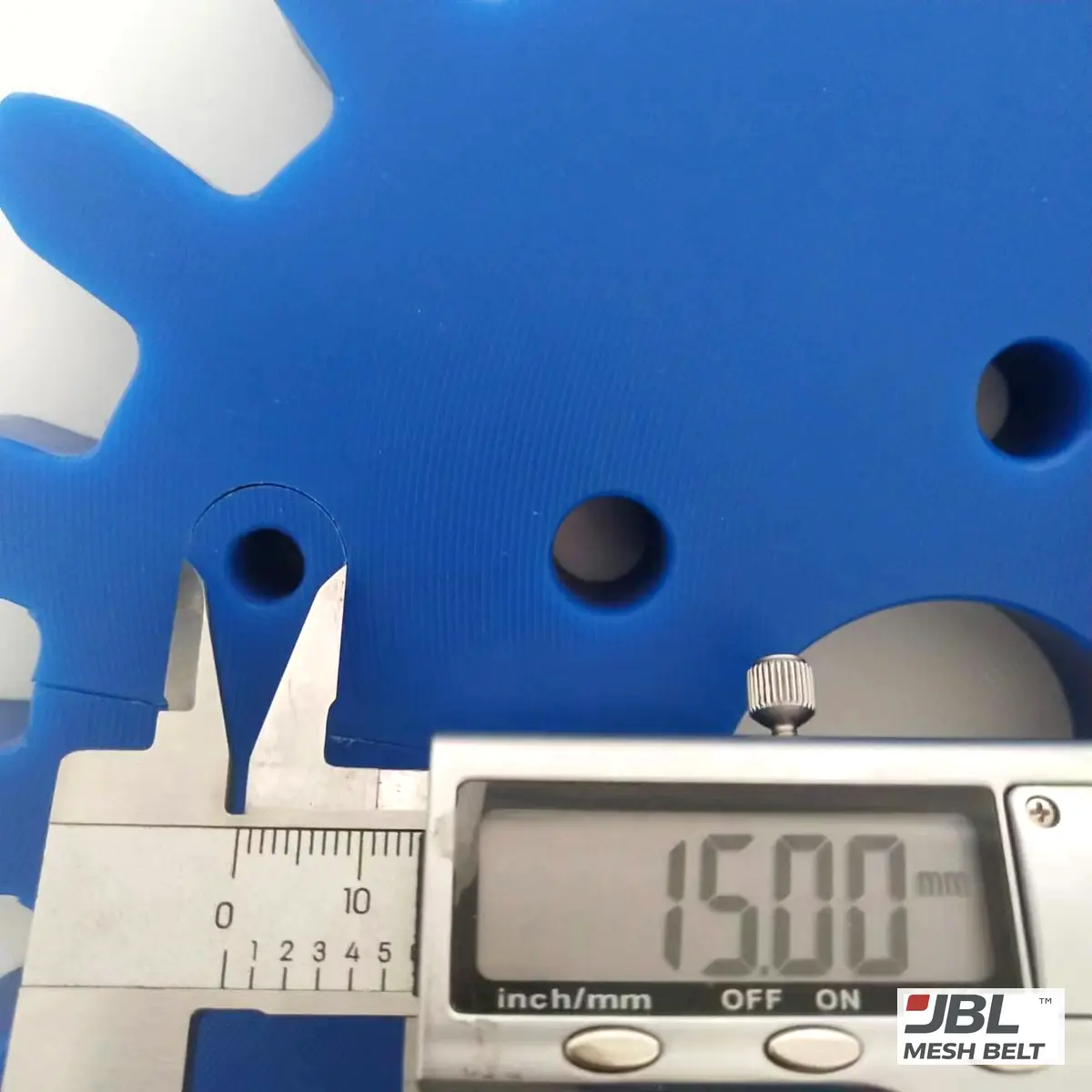
On split sprockets, the locating screw holes and bolt hole spacing are set on the drawing so the two halves close in the right place. On our side-driven sprockets we check these with a caliper — for example a 7.00 mm and a 15.00 mm locating hole, and 85 mm and 140 mm hole spacing.
Shaft and bearing work belongs to your maintenance team or the freezer maker. Lock out the drive before measuring, as the US rule on hazardous energy describes.
04How does sprocket wear lead to premature belt failure?
The damage builds in steps. Each step is visible if you know where to look.
Short answer
Tooth wear moves the engagement point. The belt rides higher, teeth hit rods instead of picking them up, load falls on a few links, and those links and rods wear fast. The belt starts to jump or track off, and fails long before its normal life.
| Step | What happens | What you can see or hear |
|---|---|---|
| 1. Tooth wear | Profile changes | Thin, hooked or one-sided teeth |
| 2. Engagement moves | Rods ride higher in the tooth | Belt sits differently on the sprocket |
| 3. Impact | Teeth hit rods | Clicking or knocking |
| 4. Uneven load | Few links carry the pull | Shiny contact marks on rods or links |
| 5. Jumping or tracking | Belt climbs or drifts | Visible jump, belt off-centre |
| 6. Local wear | Rods and links wear fast | Early wear on a new belt |
The earlier you catch the chain, the cheaper it is. Steps 1 and 2 cost a sprocket. Steps 5 and 6 cost a belt.
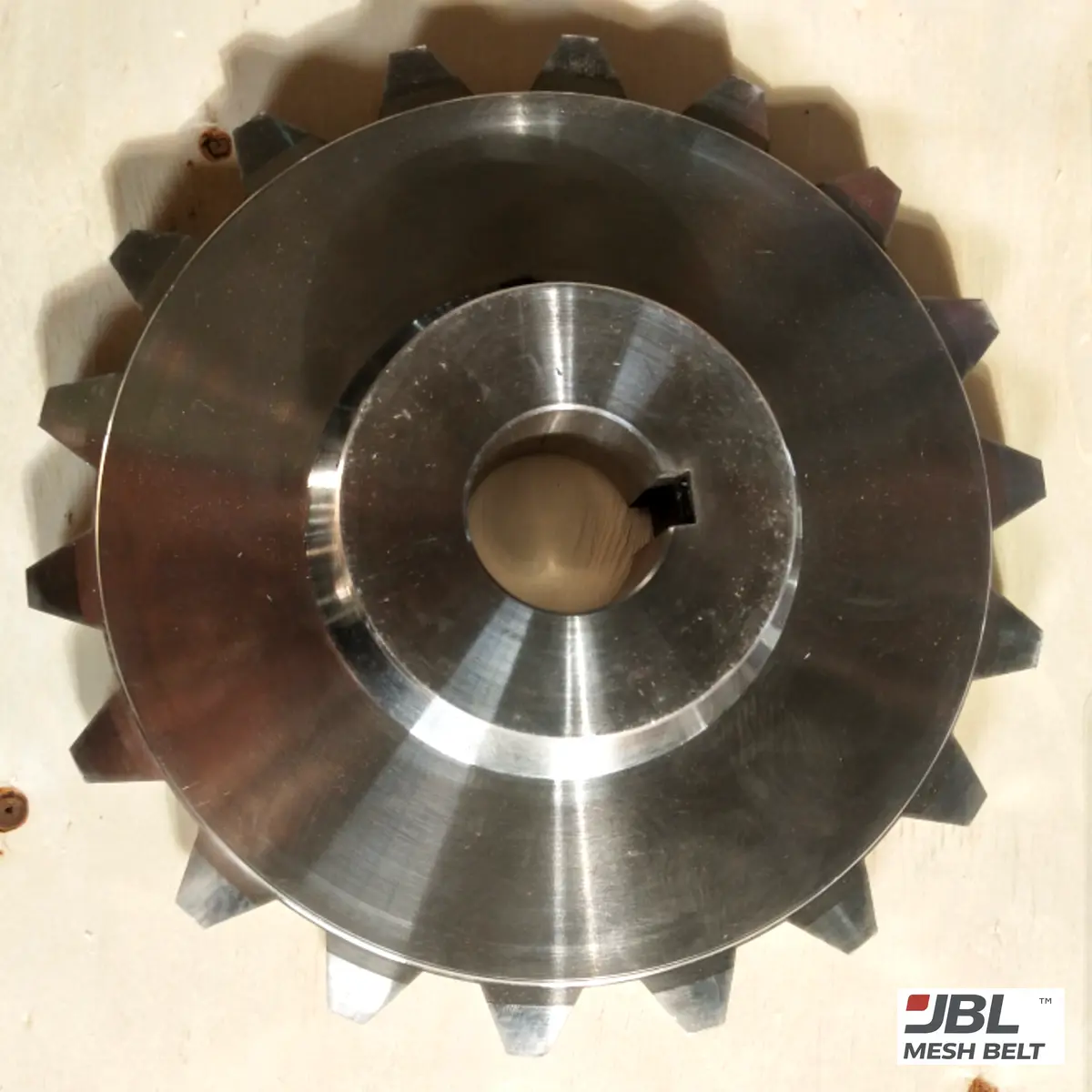
The surface of the tooth matters too. Rough steel tooth faces can leave black marks on the belt and product, which is why steel teeth are polished before shipment. Plastic sprockets are checked for scratches, black dirt and heavy burrs for the same reason.
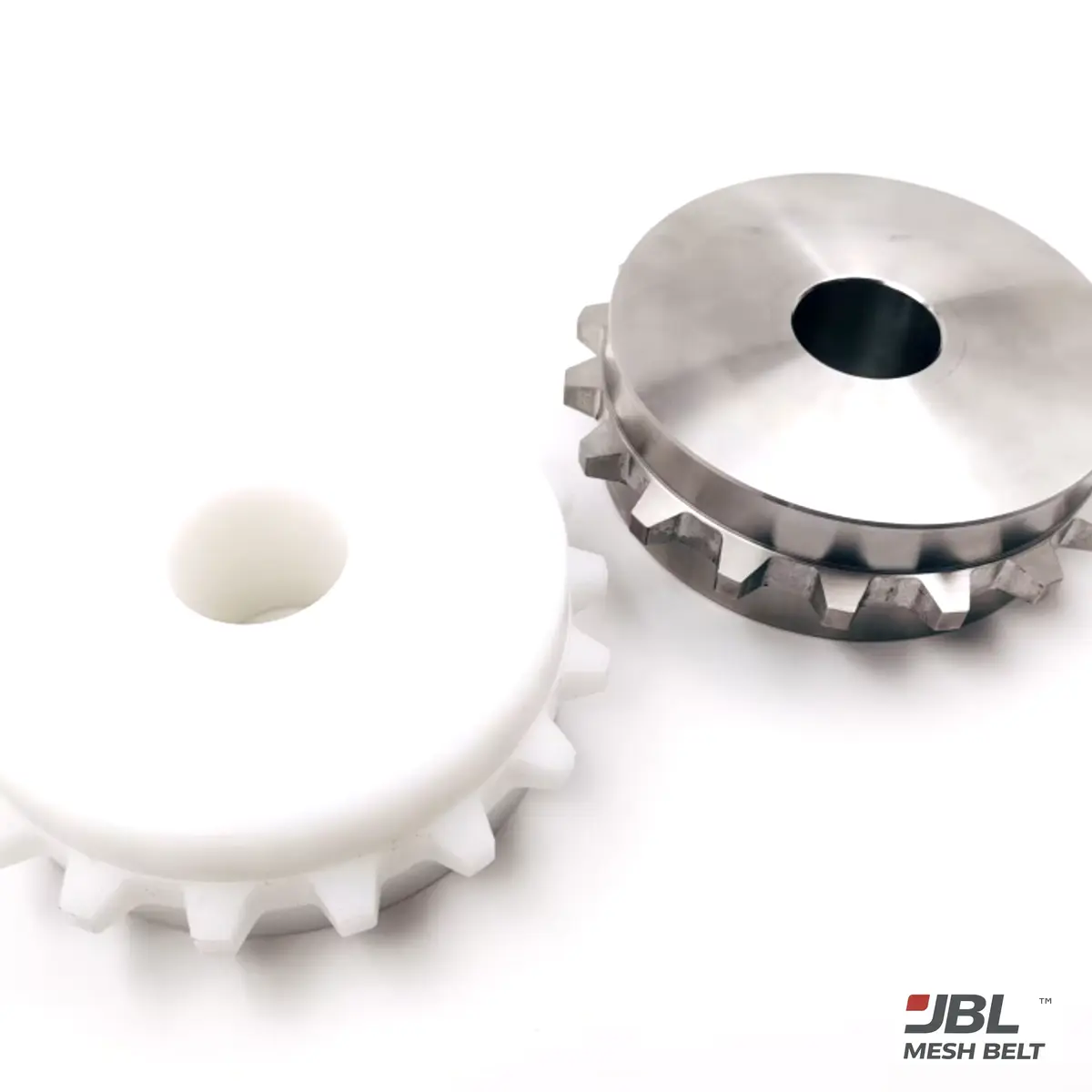
For the full picture of what a worn drive does to a new belt, see why a new spiral belt can fail on worn sprockets.
05When should belt and sprockets be assessed together?
The short answer is: whenever one of them is replaced. They are one interface, not two parts.
Short answer
Assess belt and sprockets together when the belt is replaced, when the belt pitch or type changes, when teeth show wear, when the belt jumps or tracks off, and when a new belt shows early wear. New sprockets should be made to the belt and run on it before shipment.
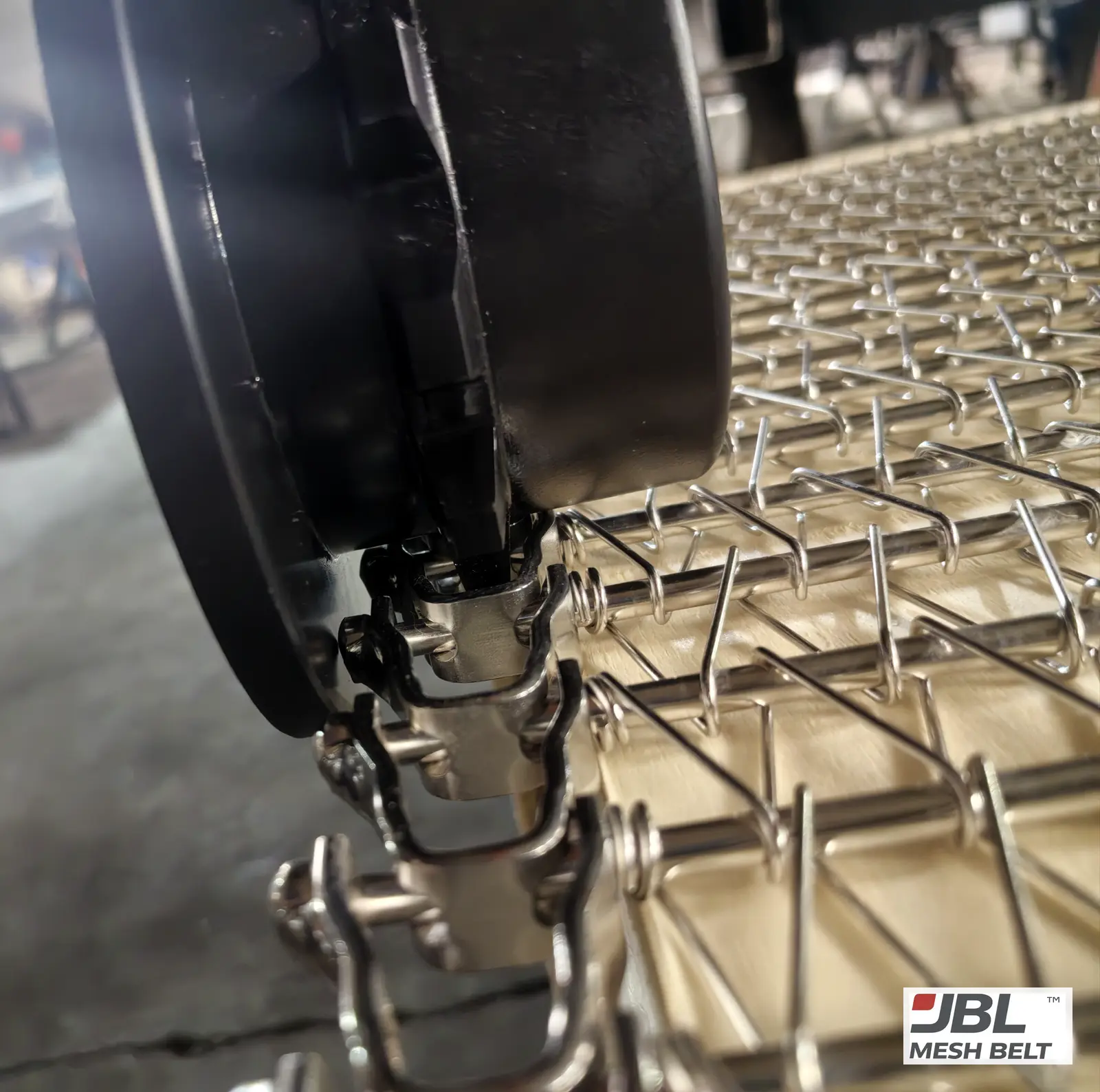
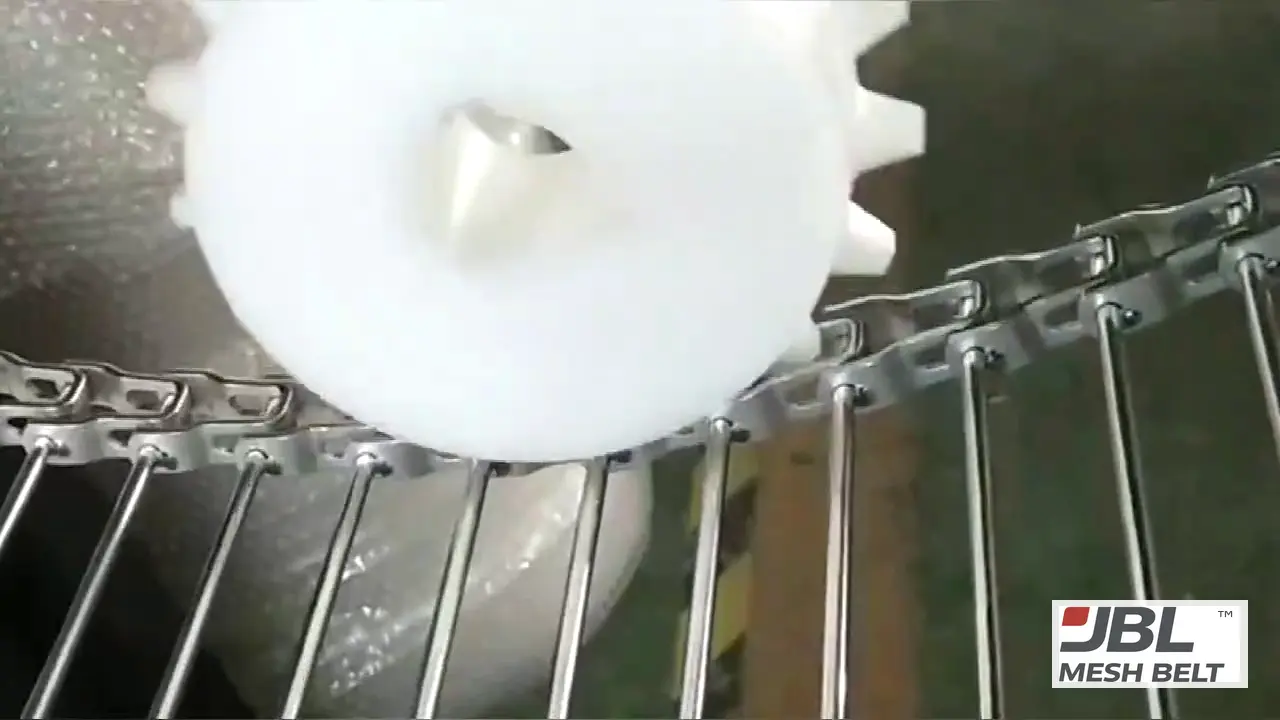
On the waffle line, the customer sent both the belt section and the sprockets. We measured both, made both, and ran a sprocket on the bulk belt before packing. In Melbourne, nylon sprockets were supplied with the belt and run on it. In the USA, after approving the belt trial, the customer asked us for the clips, flight bars and a full sprocket set.
| Trigger | Assess belt and sprockets together? |
|---|---|
| Belt replacement | Yes |
| Belt pitch or type changes | Yes |
| Visible tooth wear | Yes |
| Jumping, clicking, tracking | Yes |
| New belt wearing early | Yes |
| Routine check, no symptoms | Photograph teeth and keep the record |
Send belt and sprocket photos for an interface review
Photos of the sprocket face-on, the teeth close up from the side, the bore with a caliper and the belt on the sprocket are enough for a first view.
When This Is Not the Right Choice
- ✕If your spiral is driven only by friction on the drum, the drum bars play the role of the sprocket; inspect those instead.
- ✕If the shaft or bearings are damaged, new sprockets will not help until the machine is repaired.
- ✕If you cannot stop the line to measure, photos with a visible scale are a start, but a caliper reading is needed before a sprocket is made.
From My Engineering Experience
When a buyer sends me belt photos, I ask for one more: the sprocket, from the side, with a caliper on a tooth. It is the photo people forget, and it often explains the belt.
On the waffle line, the hub was read twice — 90.42 mm and 90.21 mm — and the worn teeth were clear in the photos. The customer had sent both belt and sprockets, and both were made new and tested together.
I treat the sprocket and the belt as one interface. If one changes, I want to see the other.
— Spring, Sales Director, JBL Mesh Belt
Evidence From Our Work
Waffle spiral cooling, 2026 — sprockets measured and remade →
| Step | Detail |
|---|---|
| Original sprocket | Width 40.36 mm; hub 90.42 / 90.21 mm; tooth 10.77 mm; teeth worn |
| New sprocket | Bore and keyway checked; keyway 10.02 mm |
| Test | Sprocket run on the bulk belt before packing |
| Supplied with | About 200 m of spiral belt |
USA, 2024 — full sprocket set with the belt →
| Step | Detail |
|---|---|
| Sprocket | Tooth pitch 25.40 mm; outside diameter 132.00 mm; bore 40.00 mm |
| Belt | Flat wire, pitch 27.4 mm, rod 5 mm |
| Route | Trial run approved, then belt, clips, flight bars and sprockets |
| Result | Installed; good feedback reported by the integrator |
FAQ
Q1How do I measure sprocket wear?
Measure tooth, hub, bore, keyway, thickness and outside diameter with a caliper, in more than one place, and compare with a new sprocket or the drawing.
Q2What does a worn sprocket tooth look like?
Thinner, hooked in the running direction, or polished on one face.
Q3Can misalignment wear sprockets?
Yes. A sprocket out of line wears on one face and pulls the belt unevenly.
Q4Can you quote a sprocket from a photo?
Not from appearance alone; the pitch of the belt or chain it drives is needed.
Q5When should sprockets be replaced with the belt?
Whenever teeth are worn, the belt pitch changes, or the belt shows jumping or early wear.
Conclusion
Put a caliper on the sprocket, not only the belt. Tooth, hub, bore and alignment decide where your belt engages — and how long it lasts.
Download the Drive Sprockets Technical Specification (PDF)
Specification ranges and options in mm and inch. Enter your work email and the file downloads right away.
References

Your contact for this belt
Spring · Sales Director, JBL Mesh Belt · 16 years
“Your belt is worn, the OEM price is high, and there is no drawing. That is where I start.”
Send me a worn section, a few photos with a caliper in the picture, or a drawing. I tell you what fits, what is missing, and show you a sample measured against your own belt before you pay for the full length. Buyers in the UK, the USA, Australia, Brazil, South Korea, Spain and Malaysia have replaced belts this way.
- ✓Readings on your original next to readings on our sample
- ✓Nothing in bulk until you approve the sample
- ✓Turning, stacking or sprocket tests before your belt ships
- ✓A reply from me, usually within 8 hours