Engineering · 10 min read
How Does Turn Ratio Affect Spiral Belt Load, Tracking and Service Life?
 Written bySpringSales Director, JBL Mesh Belt · 16 years in metal conveyor beltsProjects in United Kingdom · USA · Australia · Brazil · South Korea · Spain · MalaysiaPublished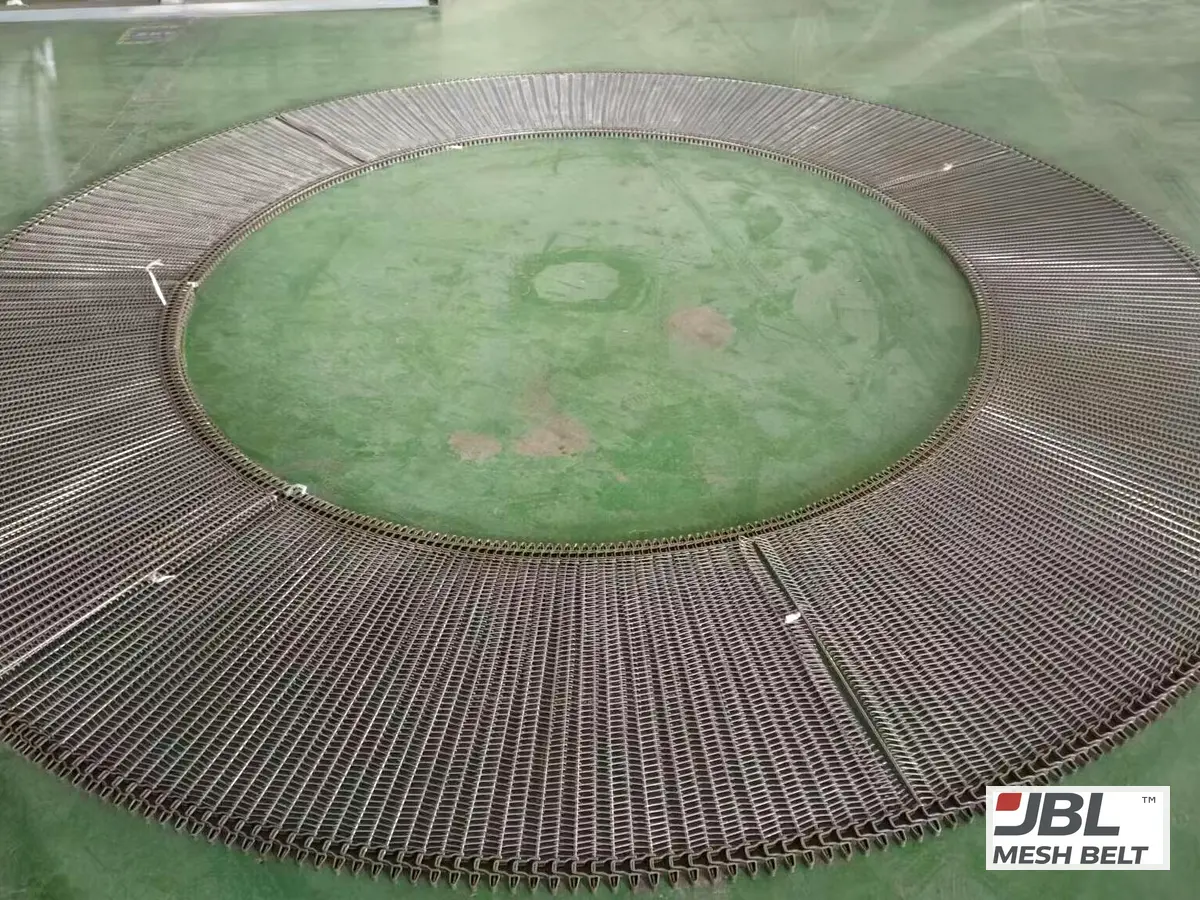
Your quote says turn ratio 2.2. Nobody explains what that number does — until a belt with the wrong one lifts, tracks off or tears at the outer edge.
Short answer
Turn ratio is the inside turning radius divided by the belt width. It decides how far the inside edge collapses and how much the outside edge carries. A tighter ratio saves space but concentrates load on the outer edge, affecting tracking and life. A replacement must match the original ratio.
At a Glance
| Product | Application | Key point | Buyer type | What to send |
|---|---|---|---|---|
| Spiral and side-driven belts | New spirals and replacements | Turn ratio sets geometry and load | Engineers, OEMs, maintenance | Belt width, inside radius or drum diameter, system drawing |
Below I explain what the number means, why width alone tells you nothing about the turn, what changes as the ratio gets tighter, and why a replacement must confirm the original system's ratio.
01What is turn ratio on a spiral belt?
Turn ratio is one number that links three things: your drum, your belt width and how the belt must bend.
Short answer
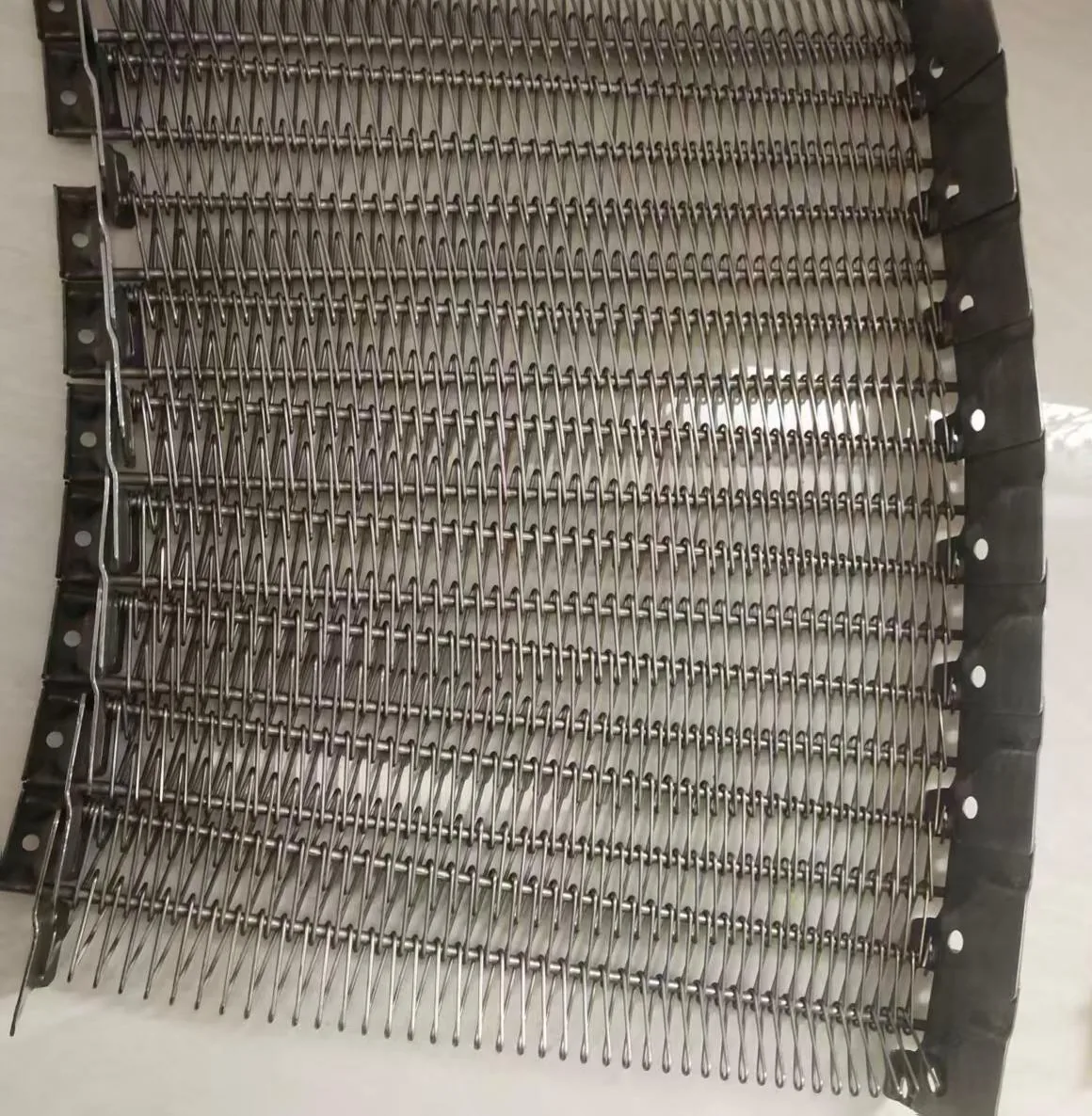
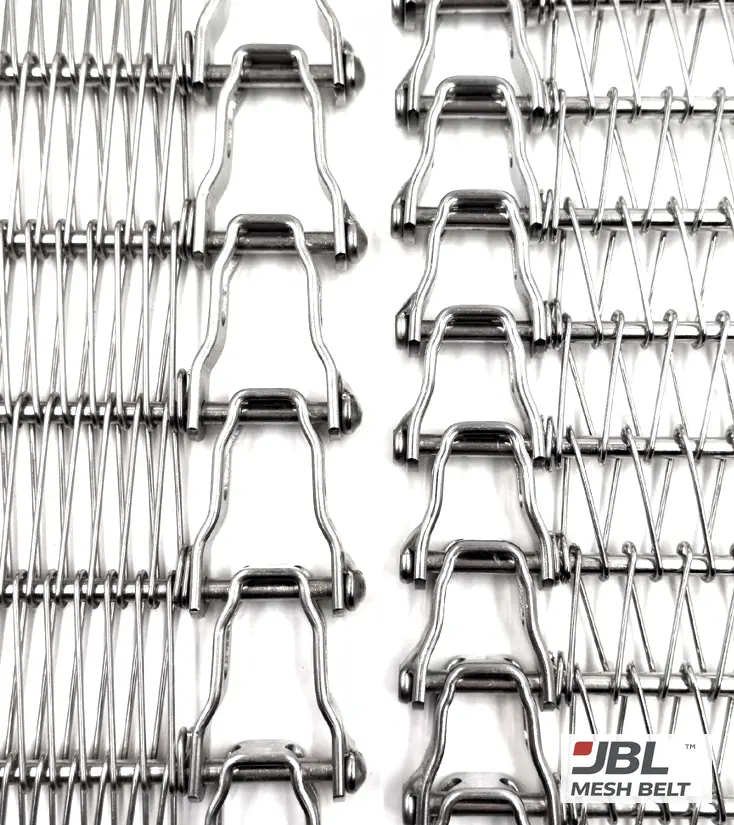
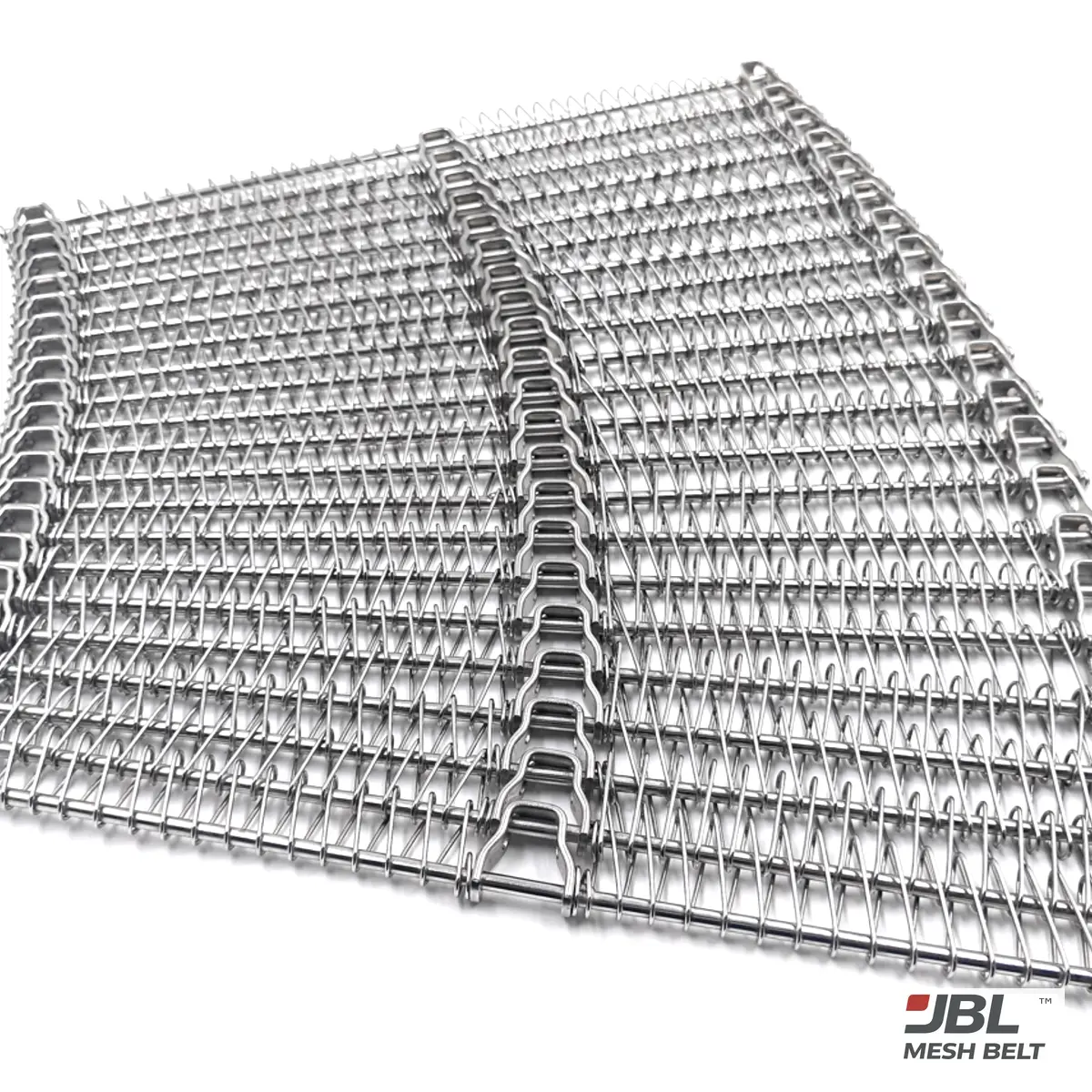
Turn ratio is the inside turning radius of the belt divided by its width. It describes how tightly the belt turns around the drum relative to its width. Our standard two-row link belts start at about 1.15; small radius three-row link belts go to about 1.1.
| Belt type | Turn ratio from | Typical pitch |
|---|---|---|
| Standard two-row link | about 1.15 (reference projects up to 2.5) | One rod pitch, e.g. 27.4 mm |
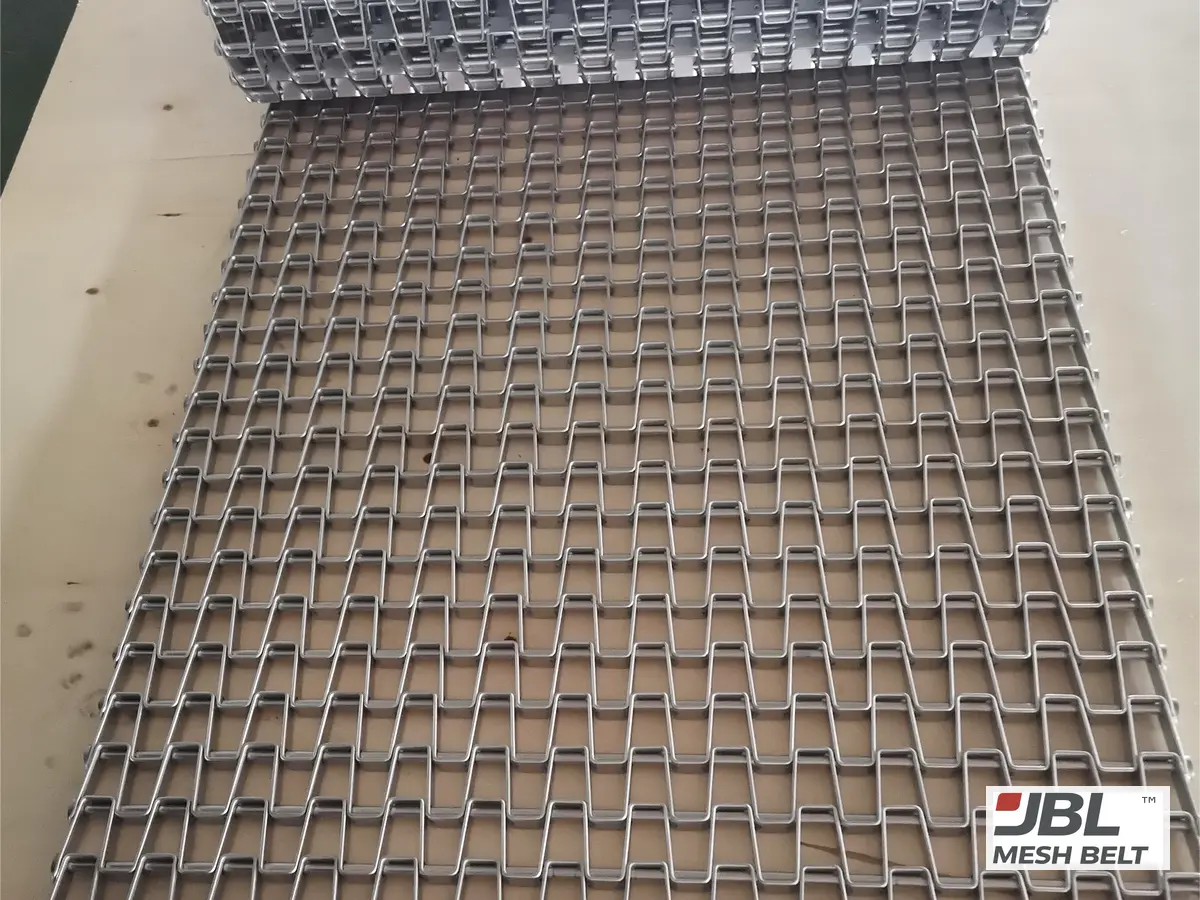
| Small radius three-row link | about 1.1 | 19.05 × 27.4 mm or 27.4 × 38.1 mm |
Imagine the belt wrapped around the drum. The inside edge follows a small circle; the outside edge follows a bigger one. The turn ratio tells you how small the inside circle is compared with the belt's width. A ratio of 2 means the inside radius is twice the width; a ratio of 1.1 means it is only a little more than the width.
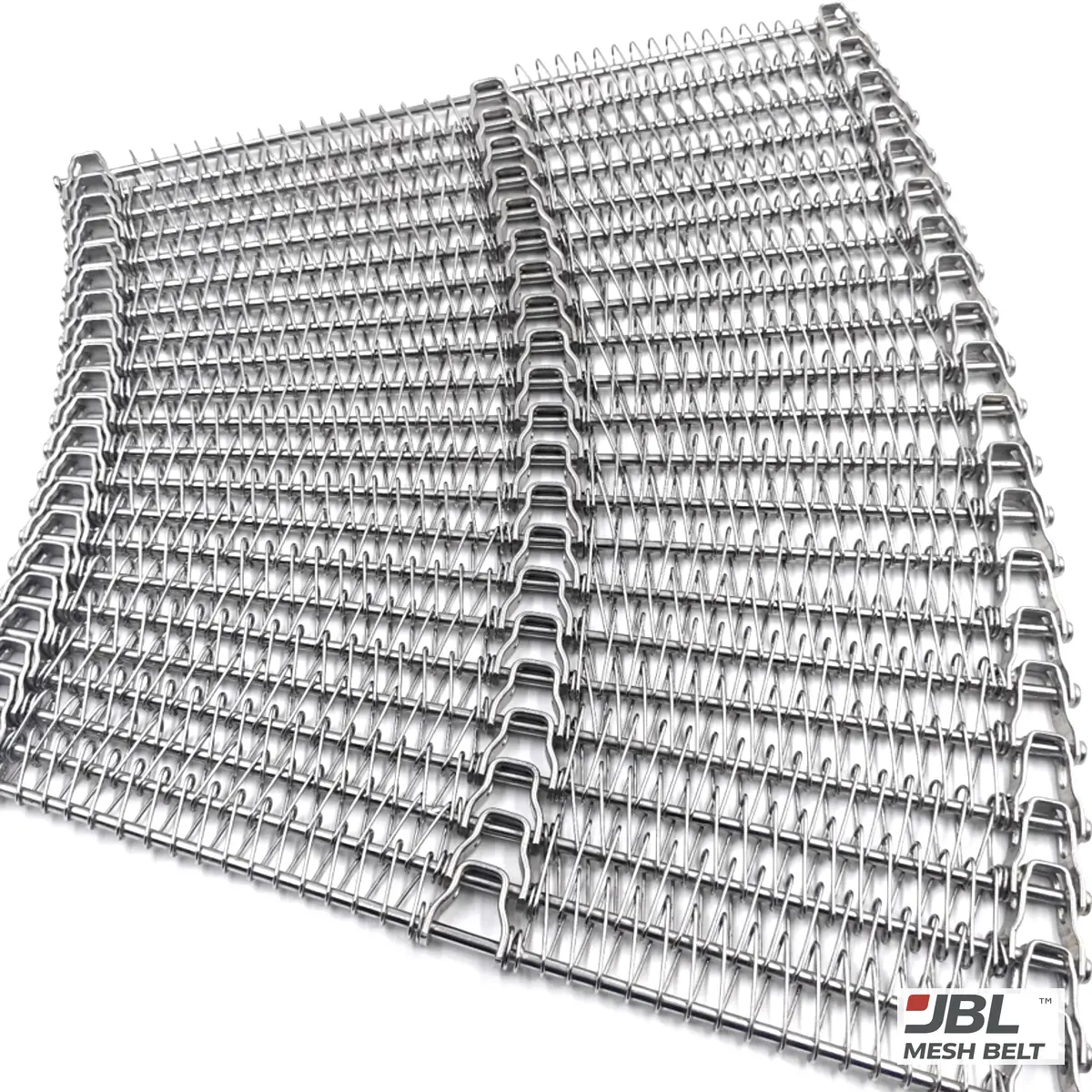
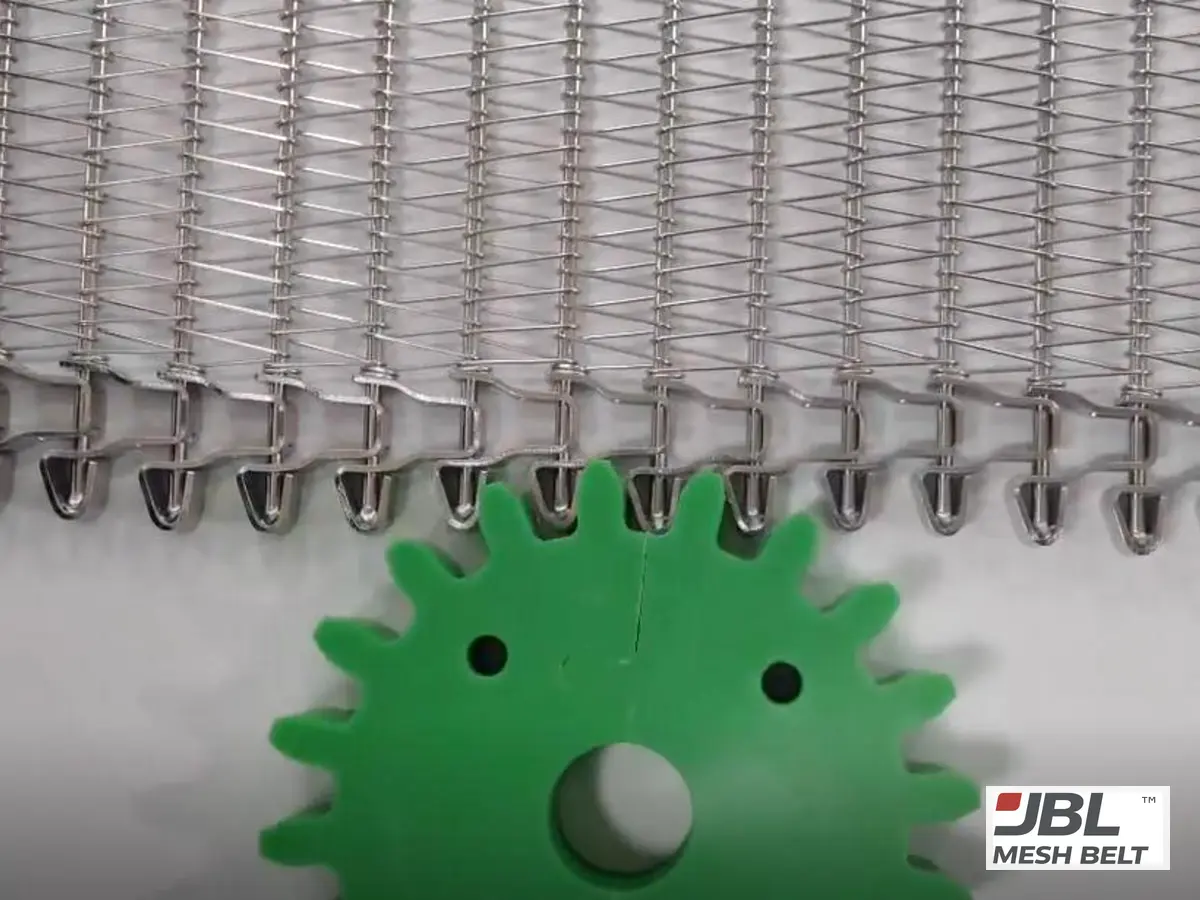
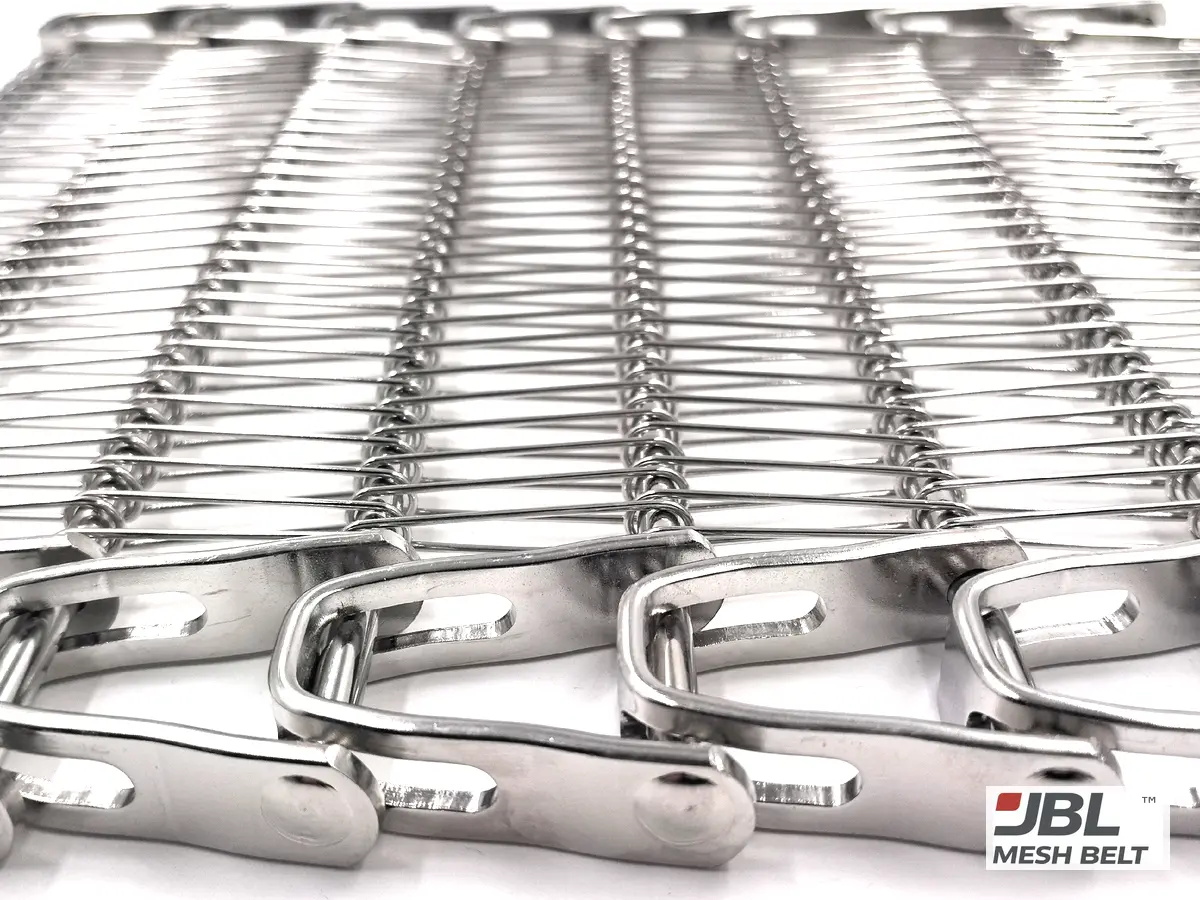
The lower the number, the tighter the turn. A tighter turn needs links that let the inside edge close further. That is why small radius belts use three rows of links and a shorter inner pitch: the inside edge has to collapse more than a standard belt can.
02Why isn't belt width enough to define a spiral belt?
Two belts of the same width can be designed for very different drums. Width tells you the product area, not the turn.
Short answer
Belt width tells you how much product the belt carries. It does not tell you how tightly the belt can turn. Two belts of the same width can be built for different turn ratios, with different links and pitches. On the wrong drum, one will lift, wave or ride up.
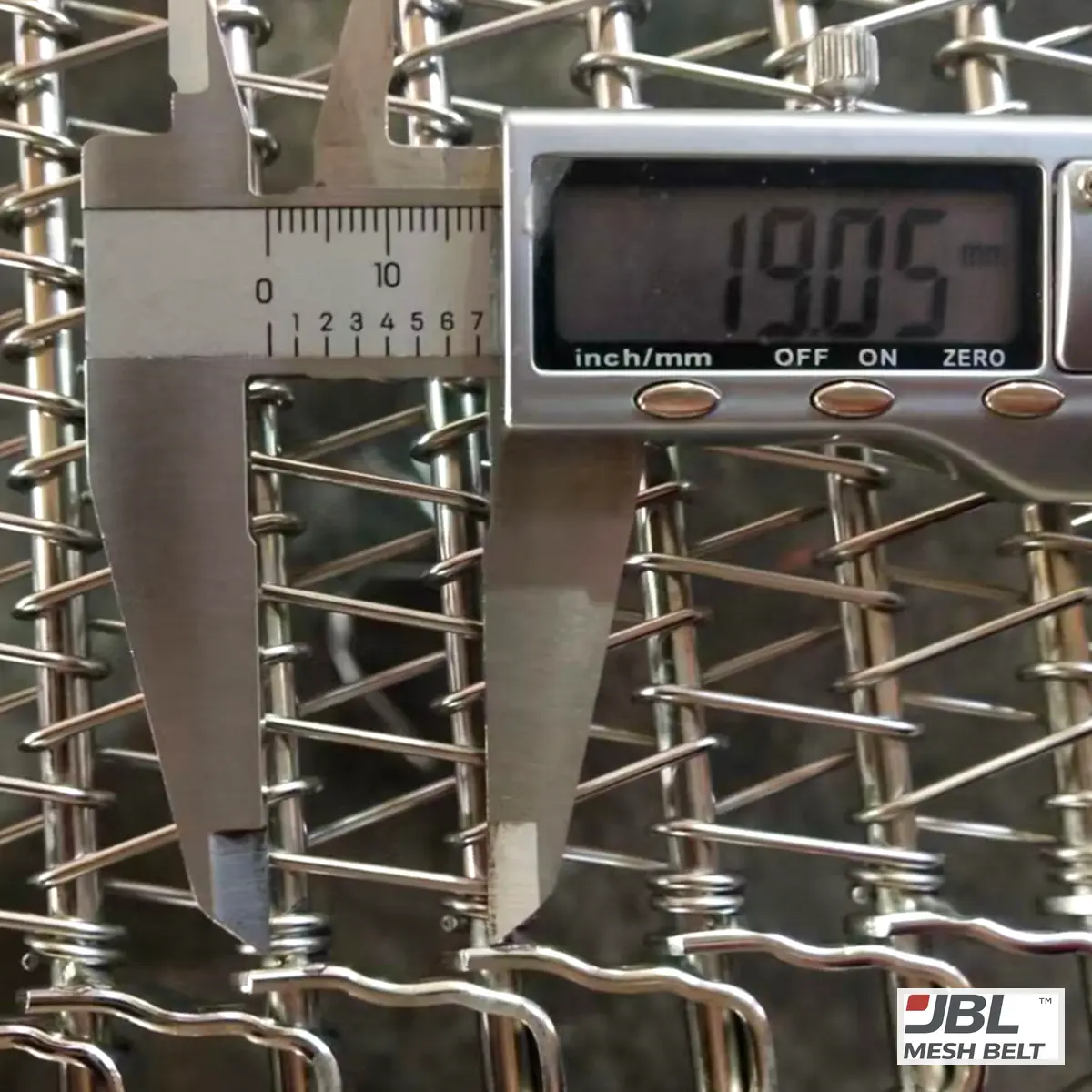
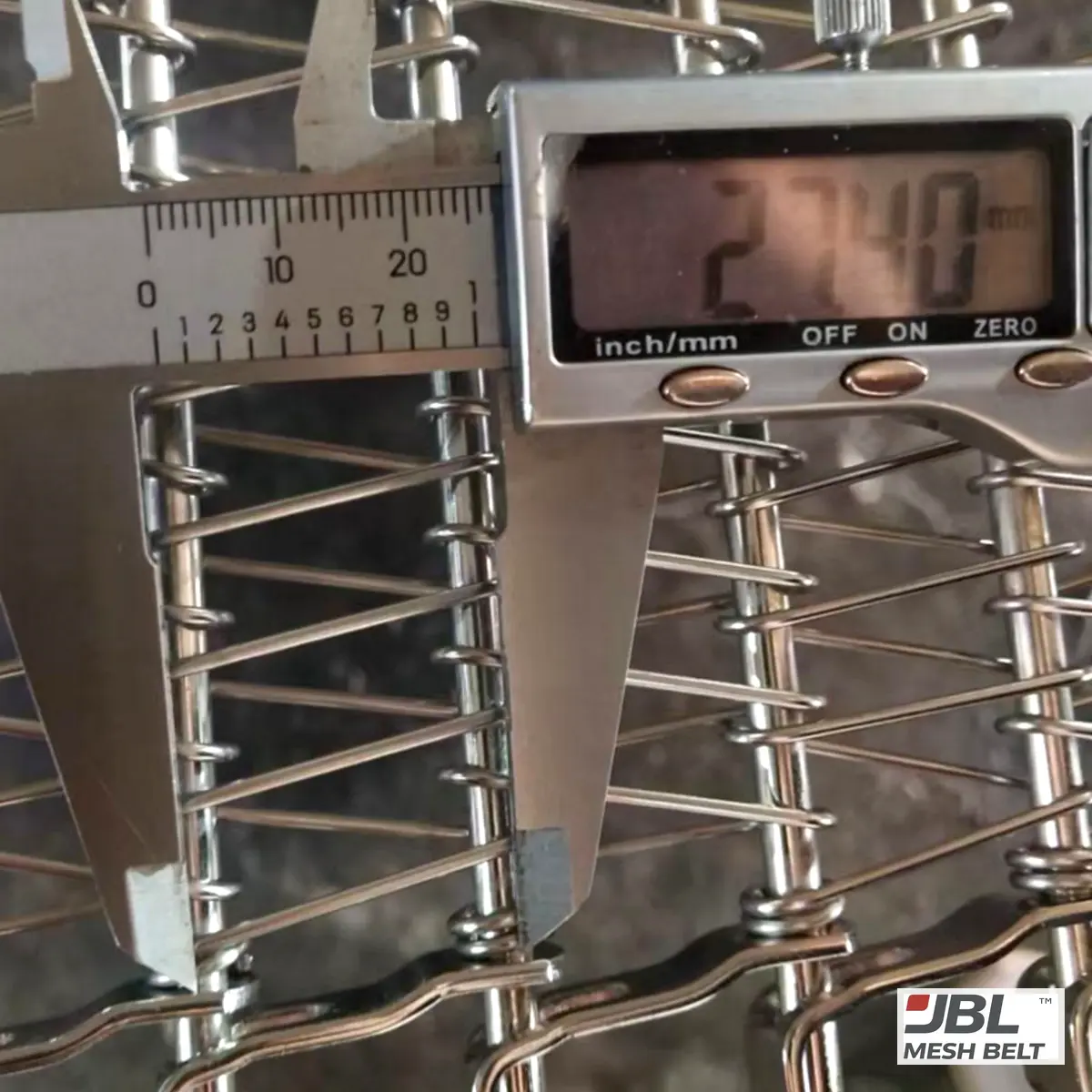
When I get an enquiry with only a width and a pitch, I ask for the drum diameter or the inside radius. Without it, I cannot tell which belt construction is needed, even if every other number is right.
| Same width, different design | What differs |
|---|---|
| Standard two-row link | Inside edge closes less; for wider turns |
| Small radius three-row link | Shorter inner pitch; for tighter turns |
| Side-driven belt | Driven by side links; turn ratio still matched to the drum |
I go through the other details that two numbers do not show in why the same width and pitch does not mean compatibility.
03How does turn ratio change load and tracking?
In a straight run, the whole width of the belt shares the pull. In a turn, it does not.
Short answer
In a turn, the inside edge collapses and the outside edge carries most of the pull. The tighter the turn ratio, the more load concentrates on the outer links and rods. If the ratio does not match the drum, the belt lifts, waves or rides up, and tracking becomes unstable.
| As the turn ratio gets tighter | Effect on the belt |
|---|---|
| Inside edge | Must collapse further; links close more |
| Outside edge | Carries more of the pull |
| Outer links and rods | More stress and wear |
| Tracking | Less margin if the ratio is wrong |
| Footprint | Smaller drum for the same belt width |
That is the trade-off. A tighter turn lets a freezer maker use a smaller drum for the same belt width. But it asks more of the belt's outer edge and leaves less margin for error in fit.
Tracking problems often come from a mismatch rather than from the ratio itself. A belt built for a wider turn, put on a tighter drum, cannot close enough on the inside and lifts. A belt built for a tighter turn on a wider drum may run, but loads its links differently from the original design.
Freezer design is the freezer maker's job, and I do not give a ratio for a new freezer without its drawing. For freezer types in general, the FAO guide Freezing and refrigerated storage in fisheries is a neutral overview.
04How does turn ratio affect service life?
A belt wears where it works hardest. The turn ratio decides where that is.
Short answer
A belt that matches its turn ratio wears evenly and slowly. A tighter ratio puts more work on the outer edge, so outer links, rods and welds deserve close checks. A mismatched ratio shortens life fastest, because the belt fights the drum on every turn.
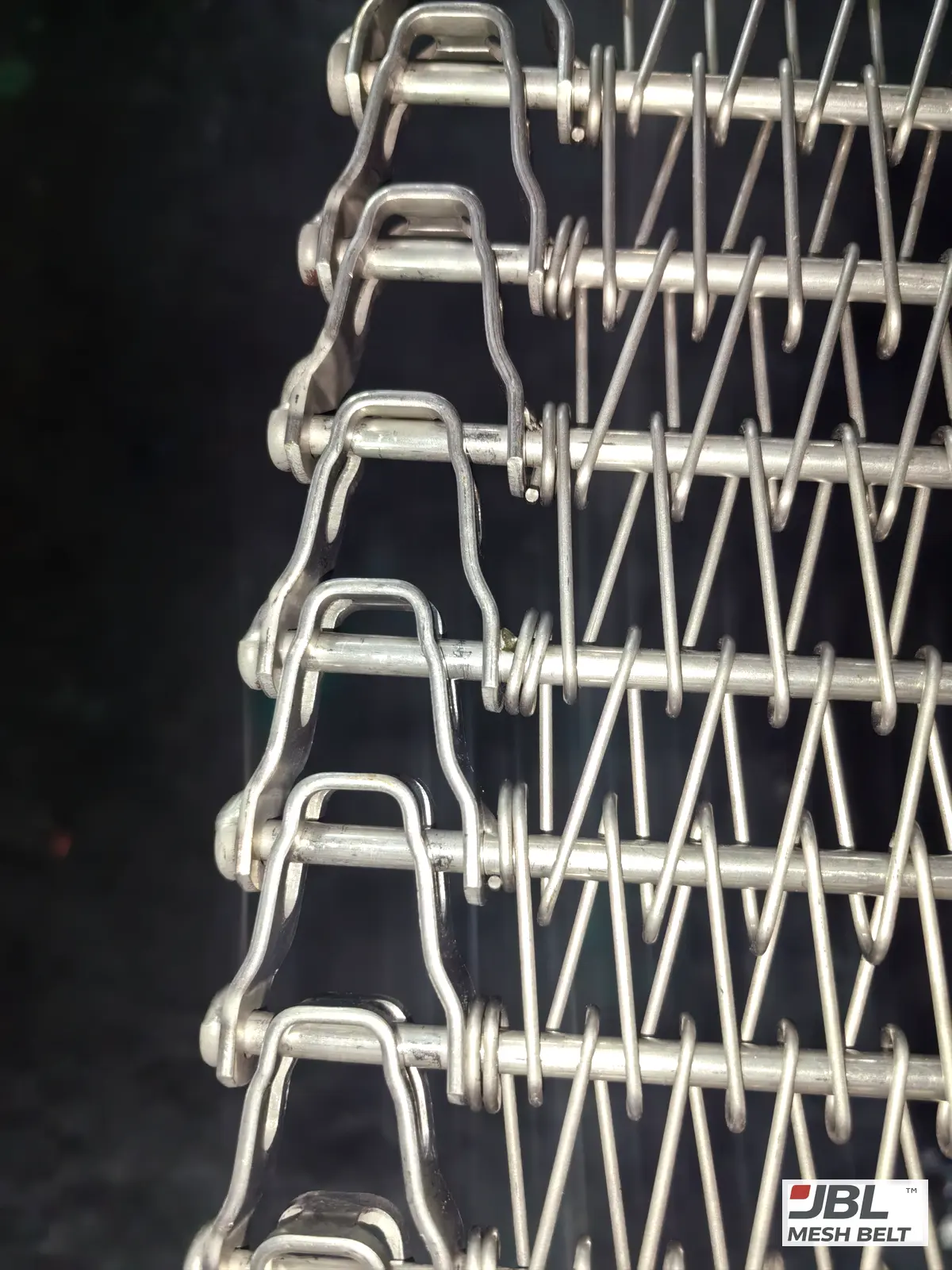
Service life depends on load, temperature, cleaning, drive and maintenance, and I do not promise a number. But the turn ratio tells me where to look: on tight turns, the outer edge; on any turn, the inner edge where it rubs the drum bars.
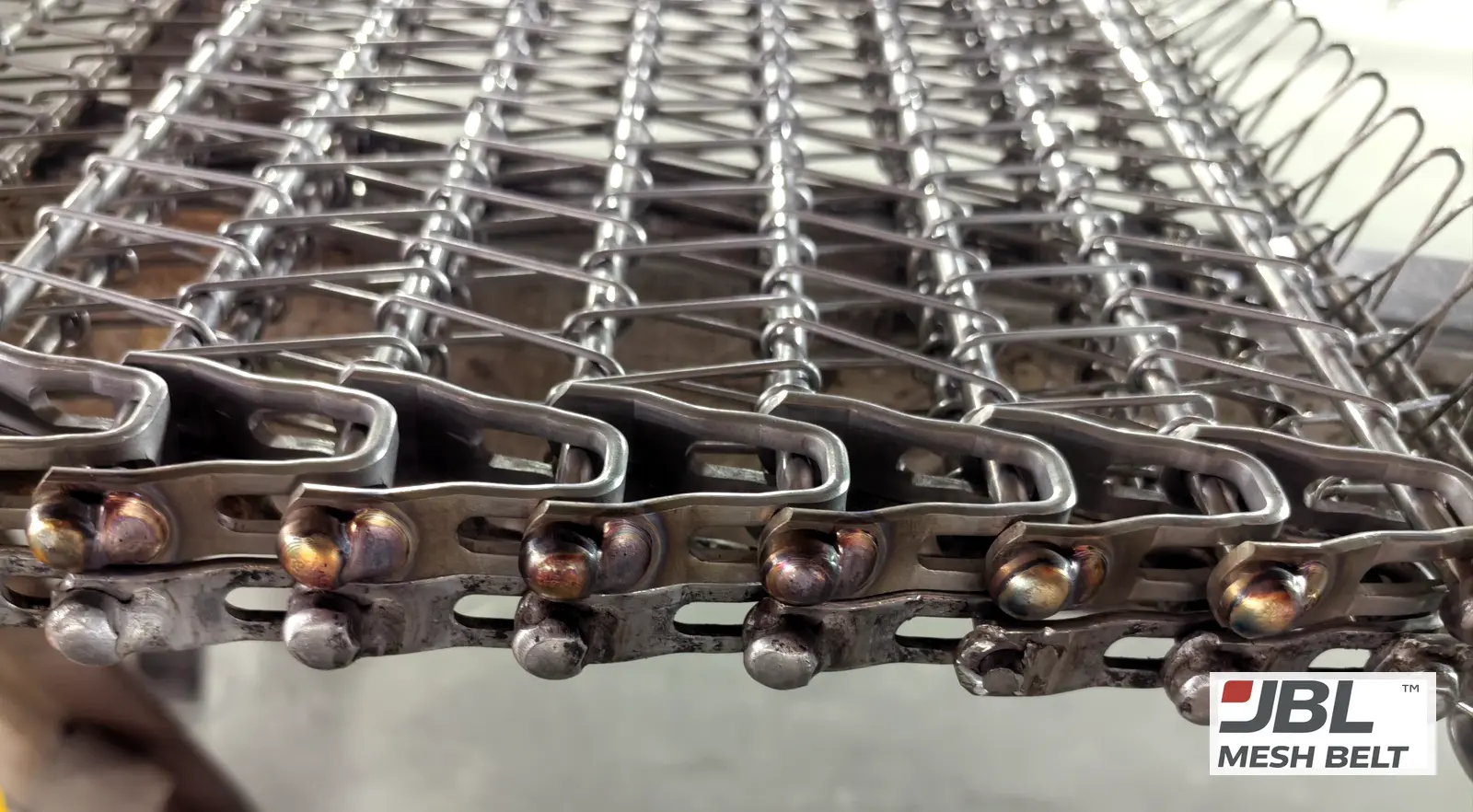
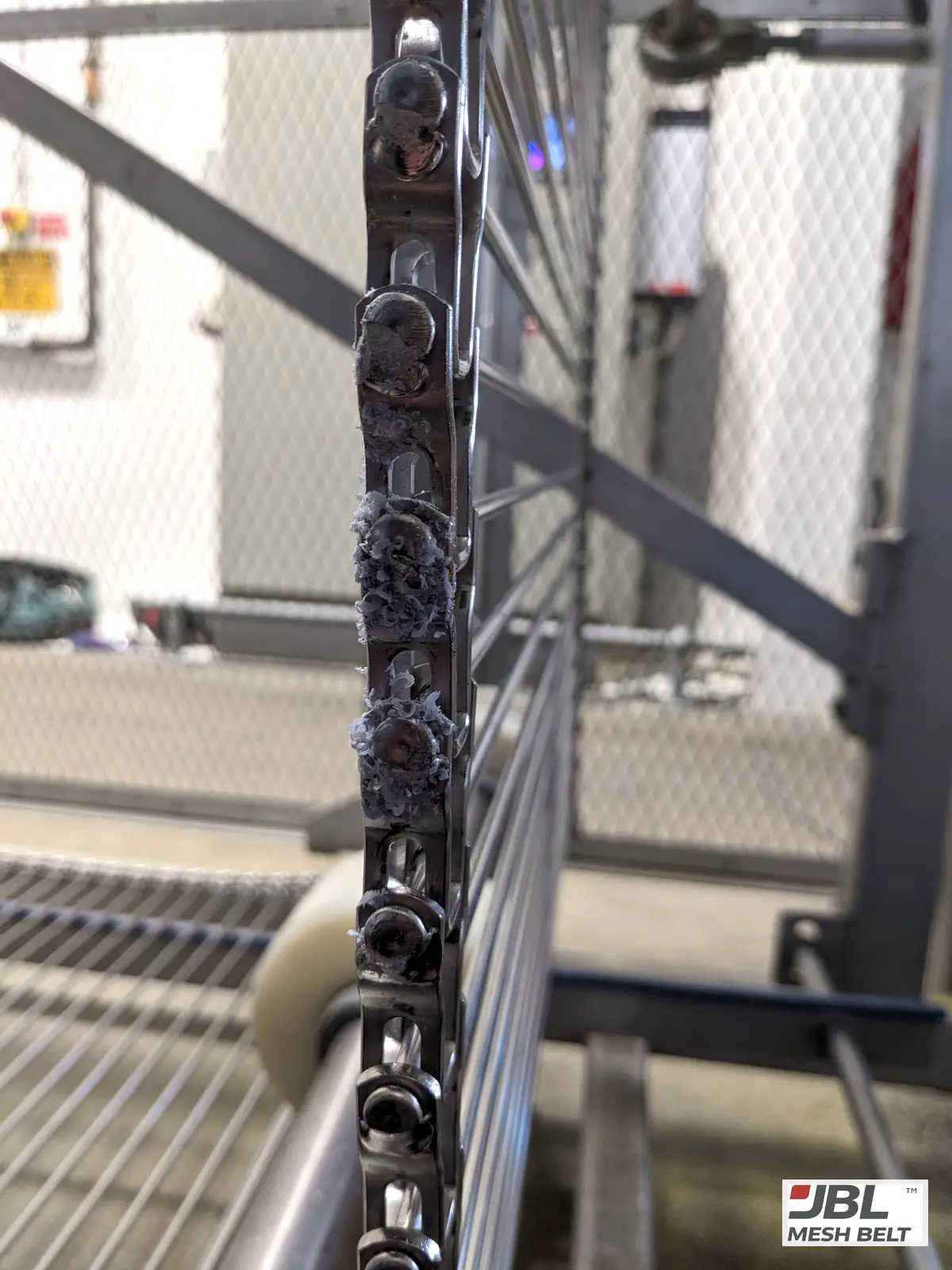
- ✓Outer edge — link thickness, rod ends and welds, because they carry the pull in the turn.
- ✓Inner edge — welds and link faces against the drum bars on friction drives.
- ✓Pitch over length — stretch changes how the belt sits in the turn and on sprockets.
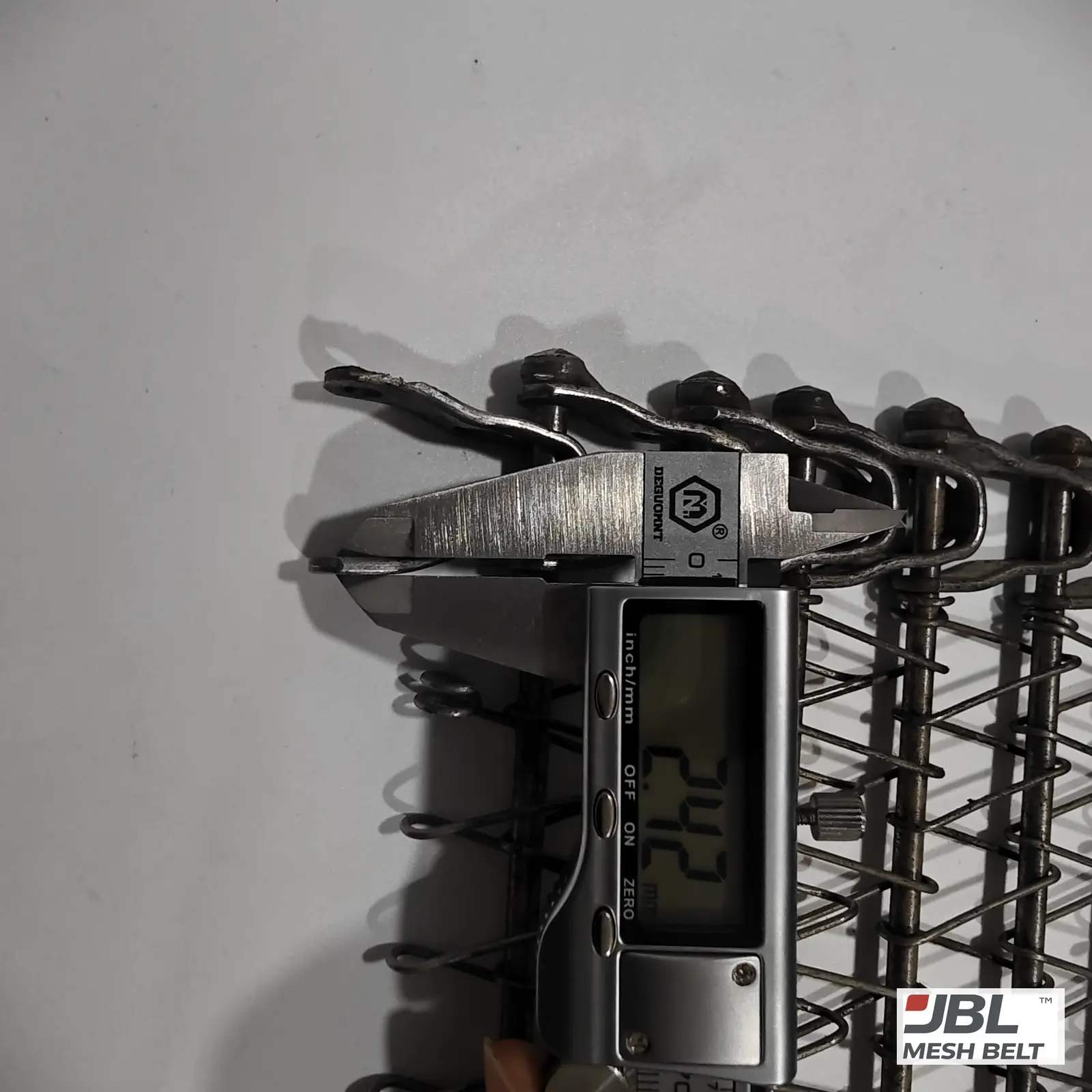
Edge links are where I look first on any spiral. On the waffle cooling spiral, for example, the original link had worn to 2.42 mm, and the new belt was made at 2.71 mm.
05Why must a replacement confirm the original system's turn ratio?
The original belt was designed for one drum. The replacement has to fit the same drum, not a typical one.
Short answer
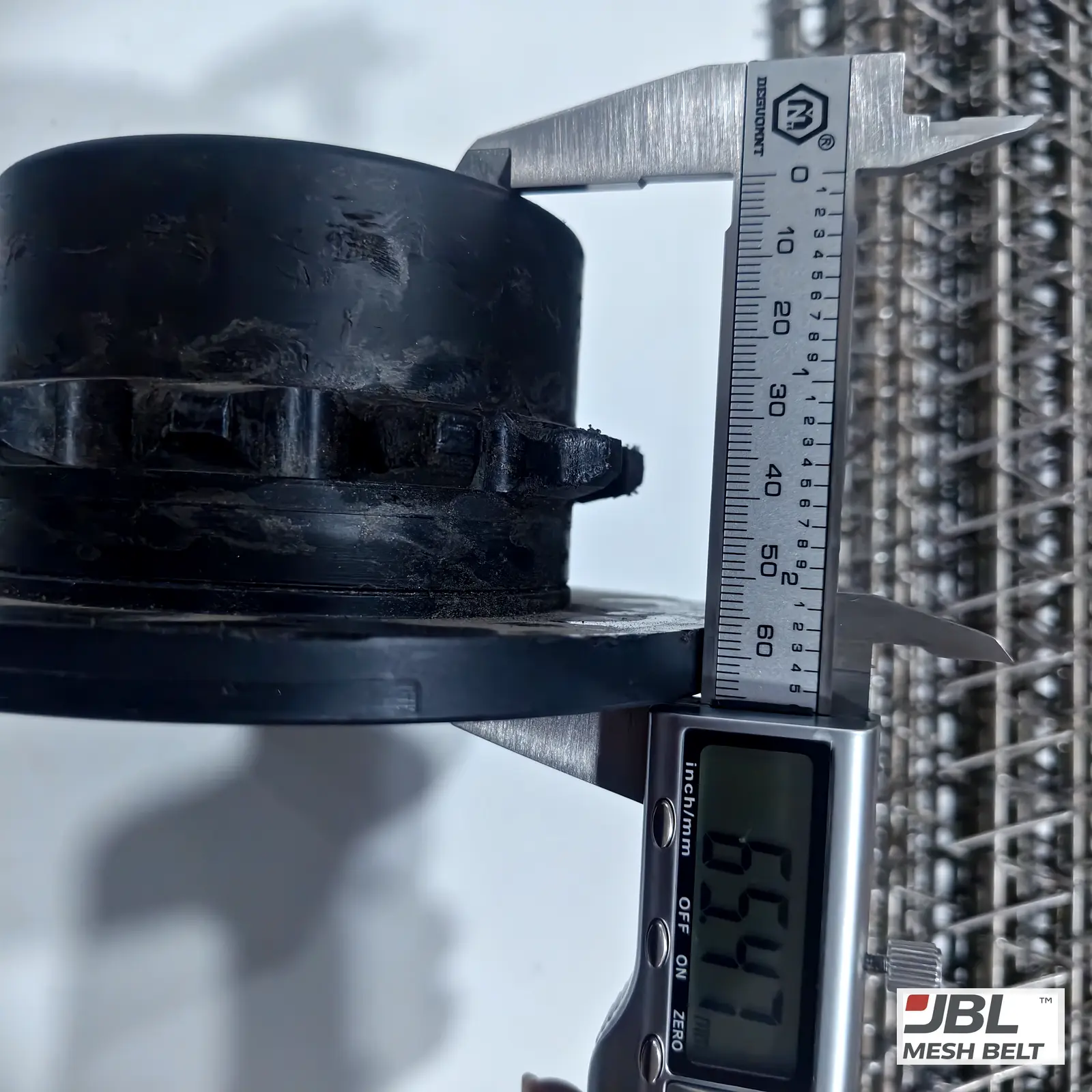
A replacement must match the original system, not a catalogue value. I confirm the turn ratio from your drum diameter or inside radius and belt width, check it against the old belt's links and pitch, and test the new belt on a drum matched to your drum diameter before shipment.
| What I need | Why |
|---|---|
| Belt width | One half of the ratio |
| Inside radius or drum diameter | The other half |
| System drawing, if available | Confirms the original design |
| Old belt links and pitch | Shows which construction was used |
| Turn direction | Which edge is inside |
- 01
Collect
Belt width, drum diameter or inside radius, drawing if any.
- 02
Calculate
Turn ratio from the system, not from a catalogue.
- 03
Cross-check
Against the old belt's link type and pitch.
- 04
Prove
Turn the sample or belt on a test drum or in a full circle before shipment.
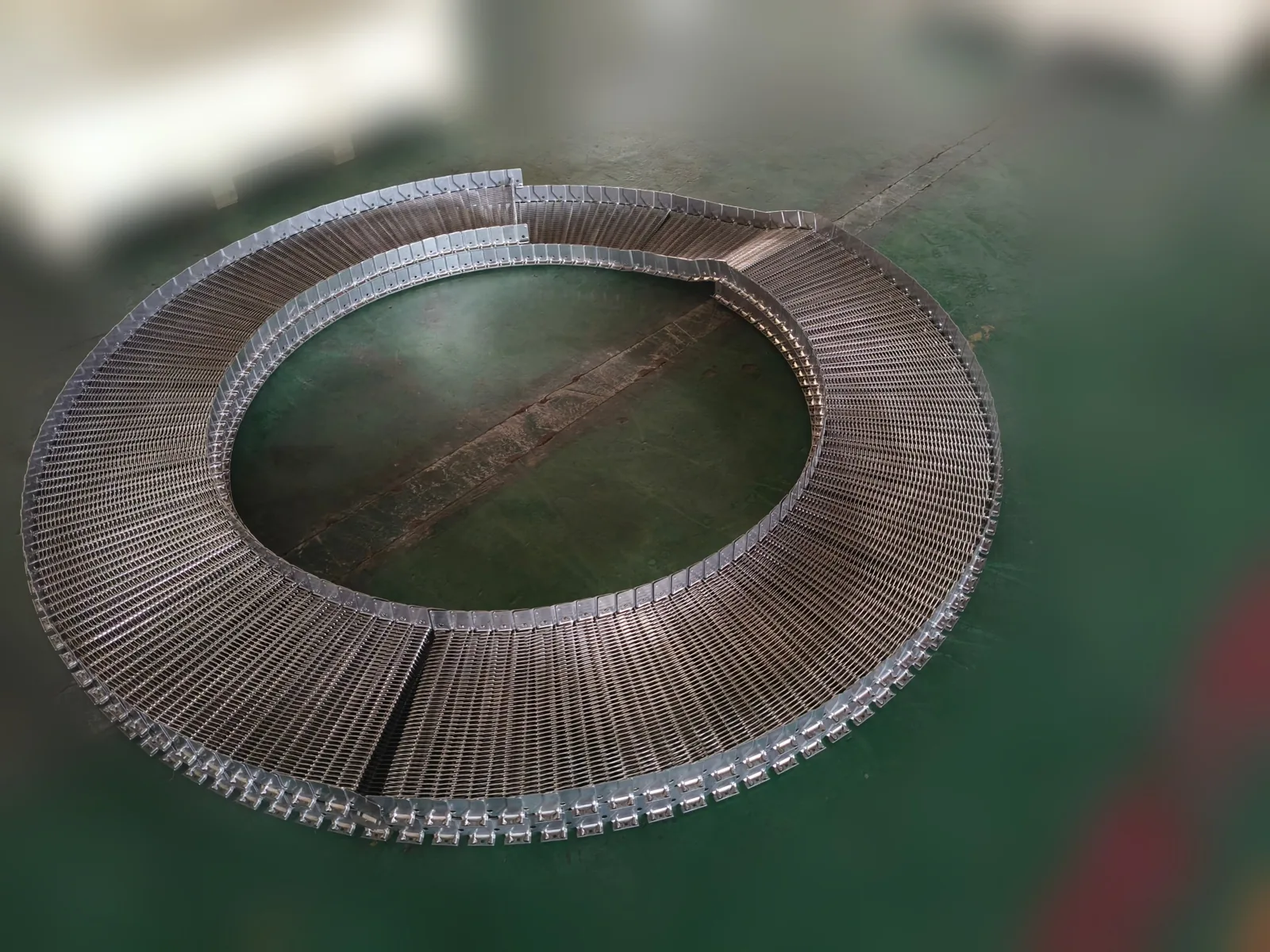
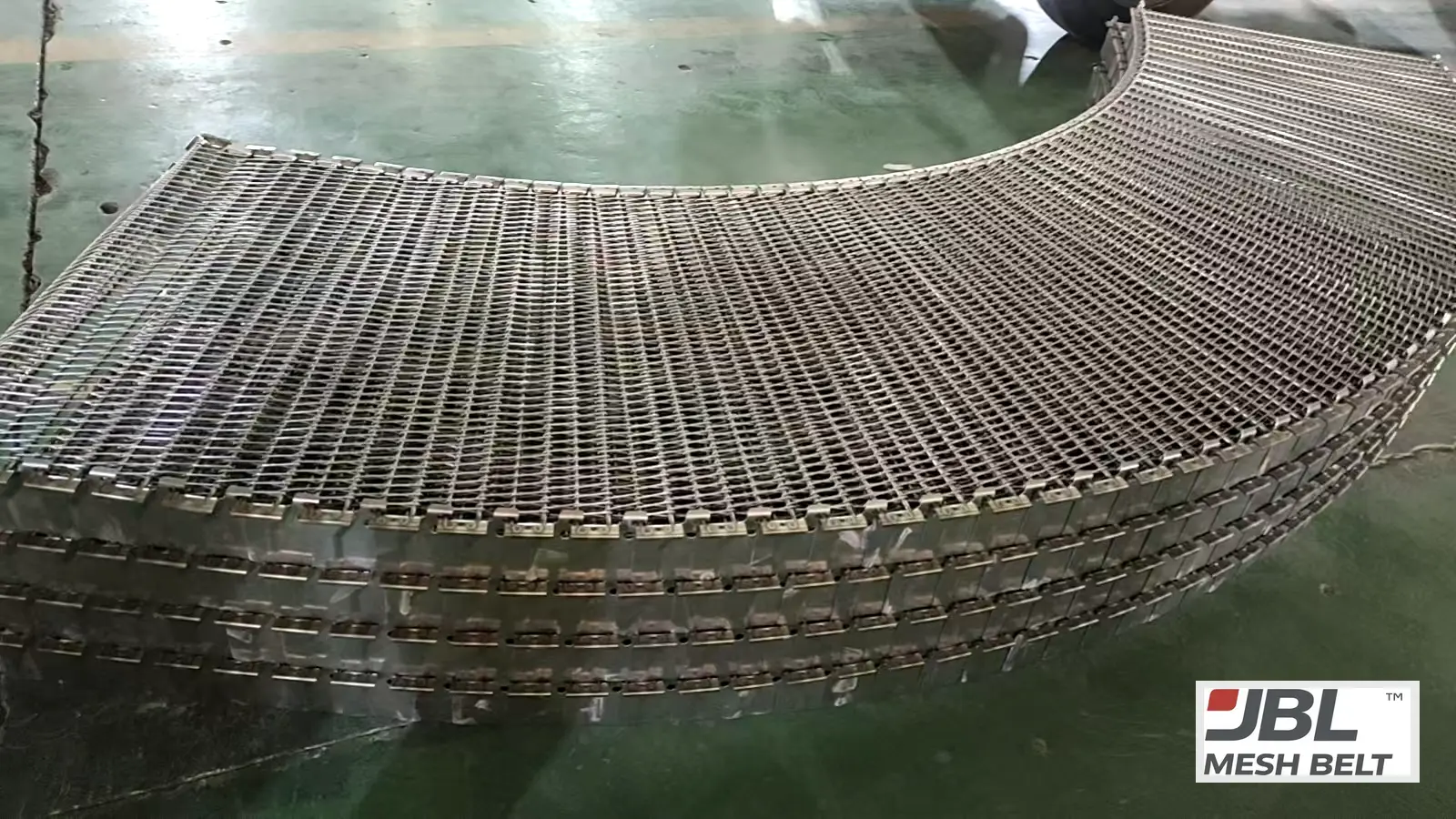
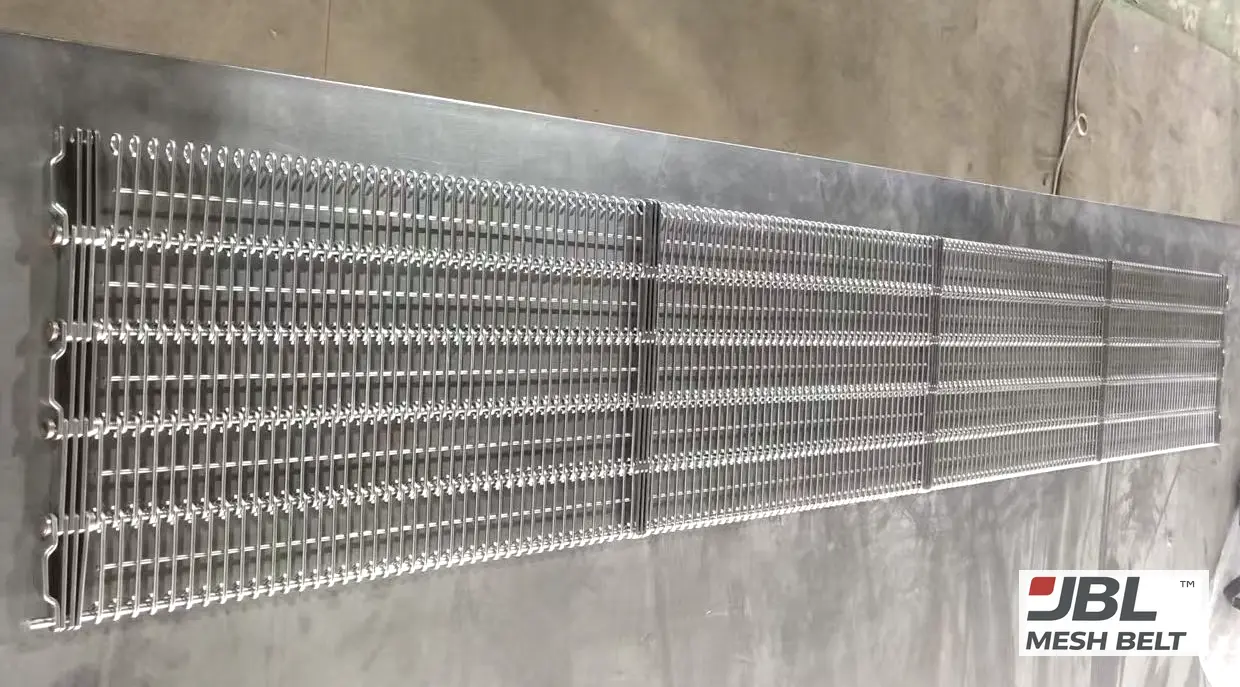
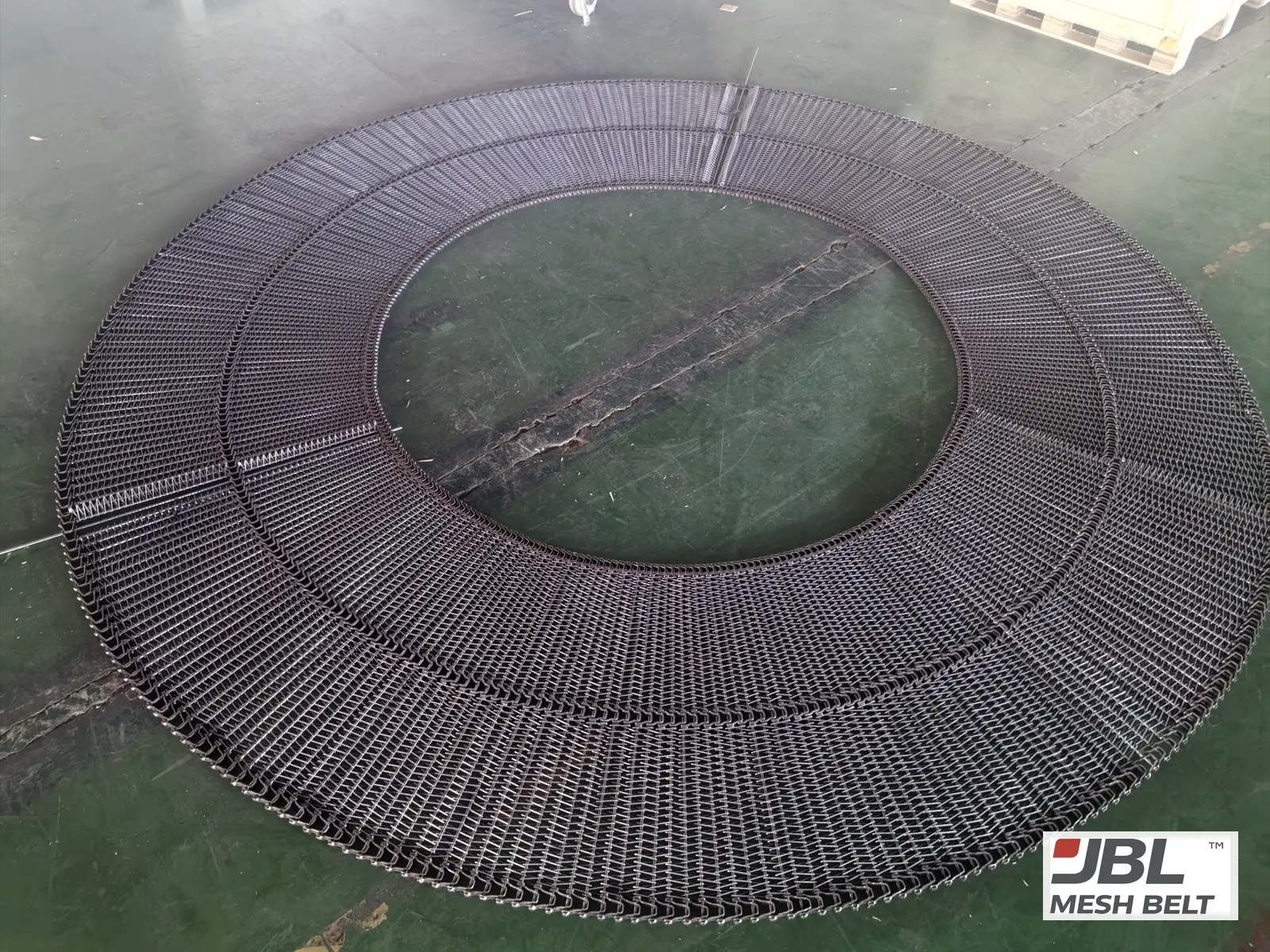
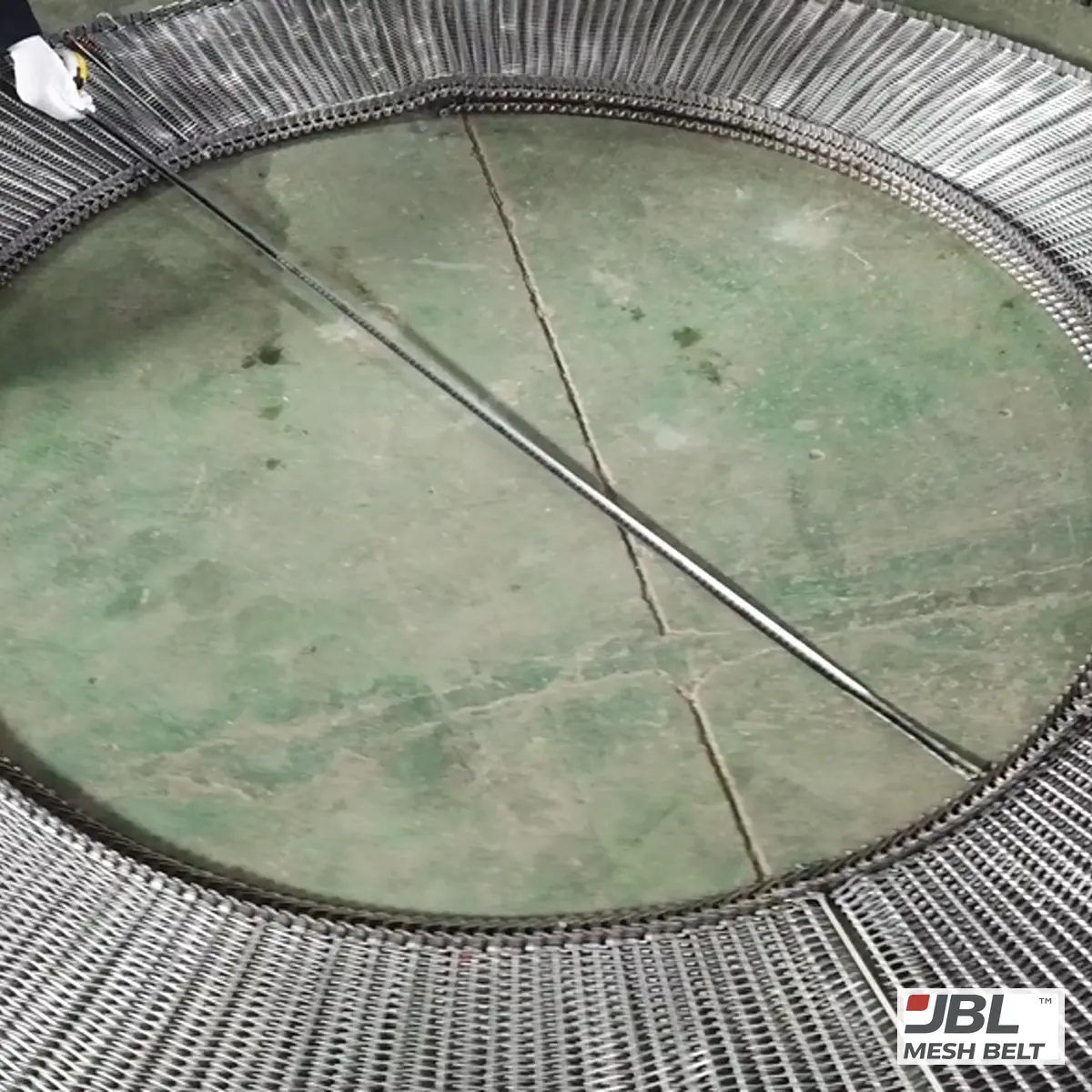
Before shipment, a spiral belt is laid out in a circle or turned on a test drum matched to your drum diameter and turn ratio. In Malaysia the belt was laid out in a full circle to check that the mesh closes evenly on the inner edge and the links follow the radius.
Need help confirming the turn ratio?
Send the belt width, the inside radius or drum diameter, and the system drawing if you have it. I confirm the ratio and which belt construction fits.
When This Is Not the Right Choice
- ✕If you are designing a new spiral, the turn ratio is a machine design decision; start with the freezer maker or integrator.
- ✕If your belt is a straight-running tunnel belt, turn ratio does not apply; pitch, width and drive do.
- ✕If you cannot measure the drum, a drawing or a section of the old belt can still identify the construction, but the ratio must be confirmed before production.
From My Engineering Experience
Turn ratio is the number I ask about most when a spiral enquiry arrives with only width and pitch. Without it, I cannot say which belt construction is needed.
The test before shipment exists for the same reason. In Malaysia, the belt was laid out in a full circle to check the inner and outer edge before bulk. On our test drums, the drum is matched to the customer's drum diameter and turn ratio, not to a standard size.
A number in a quote is easy to print. What matters is that it was confirmed on your system.
— Spring, Sales Director, JBL Mesh Belt
Evidence From Our Work
Malaysia, 2026 — turn checked before bulk →
| Step | Detail |
|---|---|
| Starting point | Customer's drawing |
| Measured | Pitch 27.40 mm, rod pitch 19.05 mm, link 2.72 mm |
| Turn test | Belt laid out in a full circle; inner and outer edge checked |
| Result | Approved, bulk ordered and installed |
Waffle spiral cooling — edge wear identified →
| Step | Detail |
|---|---|
| Worn original | Link 2.42 mm |
| New belt | Link 2.71 mm |
| Proof | Trial run linked into the original belt |
| Sprockets | Remade and run on the bulk belt |
FAQ
Q1What is turn ratio?
The inside turning radius of the belt divided by its width.
Q2What turn ratio do your spiral belts cover?
Standard two-row link belts from about 1.15, with reference projects up to 2.5; small radius three-row link belts from about 1.1.
Q3Does a tighter turn ratio shorten belt life?
It puts more load on the outer edge, so those parts need closer checks; a mismatched ratio shortens life fastest.
Q4Can I order a spiral belt by width and pitch only?
No. The turn ratio from your drum diameter or inside radius is needed to choose the construction.
Q5How is the turn checked before shipment?
The belt is laid out in a circle or turned on a test drum matched to your drum diameter and turn ratio.
Conclusion
Turn ratio decides how your spiral belt bends, where it carries load and how it wears. Confirm it on your system before any belt is made.
Download the Small Radius Spiral Freezer Belt Technical Specification (PDF)
Specification ranges and options in mm and inch. Enter your work email and the file downloads right away.
References

Your contact for this belt
Spring · Sales Director, JBL Mesh Belt · 16 years
“Your belt is worn, the OEM price is high, and there is no drawing. That is where I start.”
Send me a worn section, a few photos with a caliper in the picture, or a drawing. I tell you what fits, what is missing, and show you a sample measured against your own belt before you pay for the full length. Buyers in the UK, the USA, Australia, Brazil, South Korea, Spain and Malaysia have replaced belts this way.
- ✓Readings on your original next to readings on our sample
- ✓Nothing in bulk until you approve the sample
- ✓Turning, stacking or sprocket tests before your belt ships
- ✓A reply from me, usually within 8 hours