Replacement · 10 min read
Which 12 Parameters Do You Need Before Replacing a Spiral Belt?
 Written bySpringSales Director, JBL Mesh Belt · 16 years in metal conveyor beltsProjects in United Kingdom · USA · Australia · Brazil · South Korea · Spain · MalaysiaPublished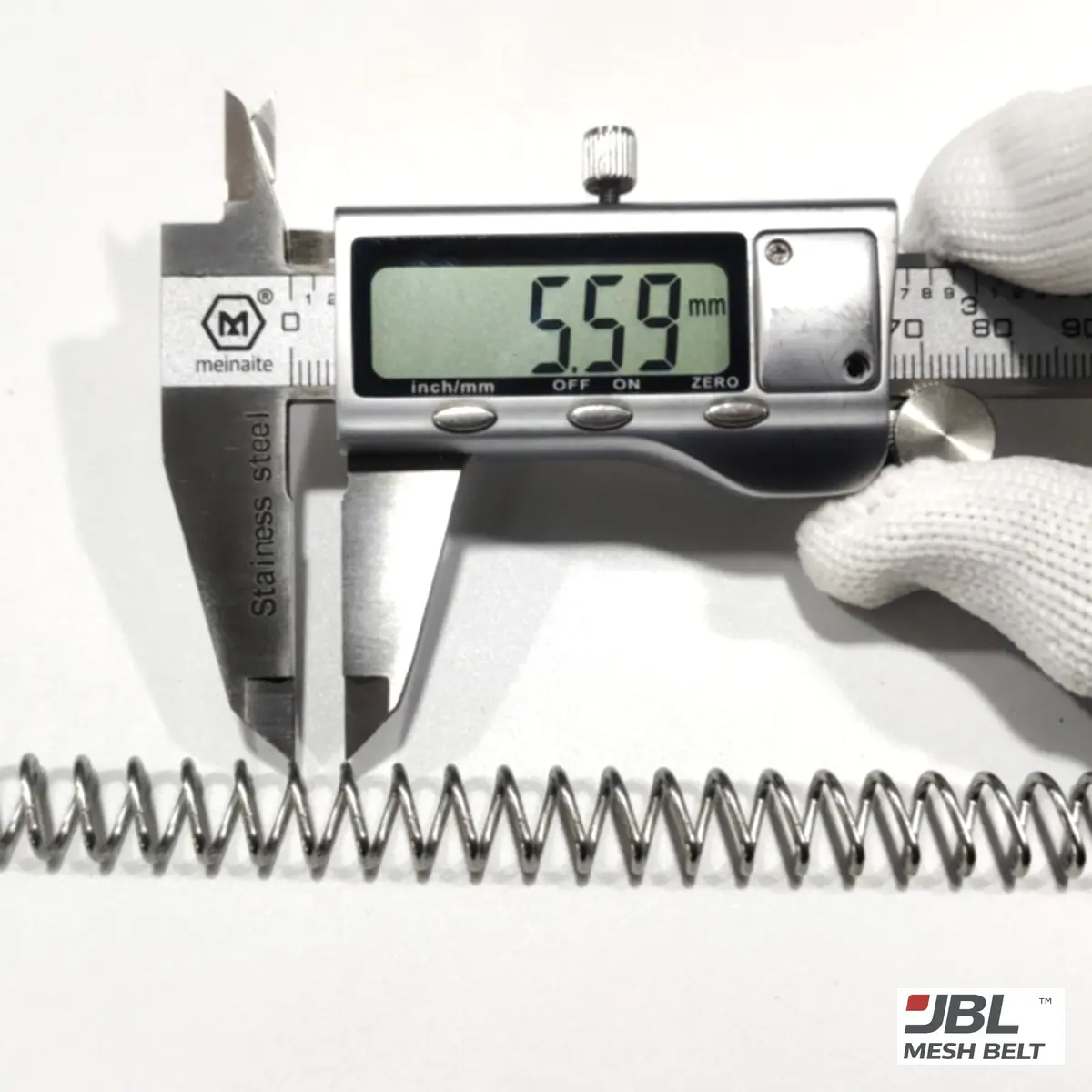
You ask three suppliers for a quote and each asks for different data. Send the wrong values, and the quotes compare belts that may not fit.
Short answer
Before a spiral belt replacement I need six values from the freezer — drum diameter, turn ratio and direction, layout, belt width and length, drive and sprockets, product and temperature — and six from the old belt: rod pitch, rod diameter, wire diameter, spiral pitch, link size and edge type.
At a Glance
| Product | Application | Key point | Buyer type | What to send |
|---|---|---|---|---|
| Spiral freezer and cooling belts | Replacement quotes | Six freezer values plus six belt values | Buyers, maintenance, purchasing | This checklist filled in, with caliper photos |
Here is the checklist, why each value matters, how to measure it, and what to do when you cannot get all twelve. Every example reading comes from a real project on this site.
01Why do you need 12 parameters, not just width and pitch?
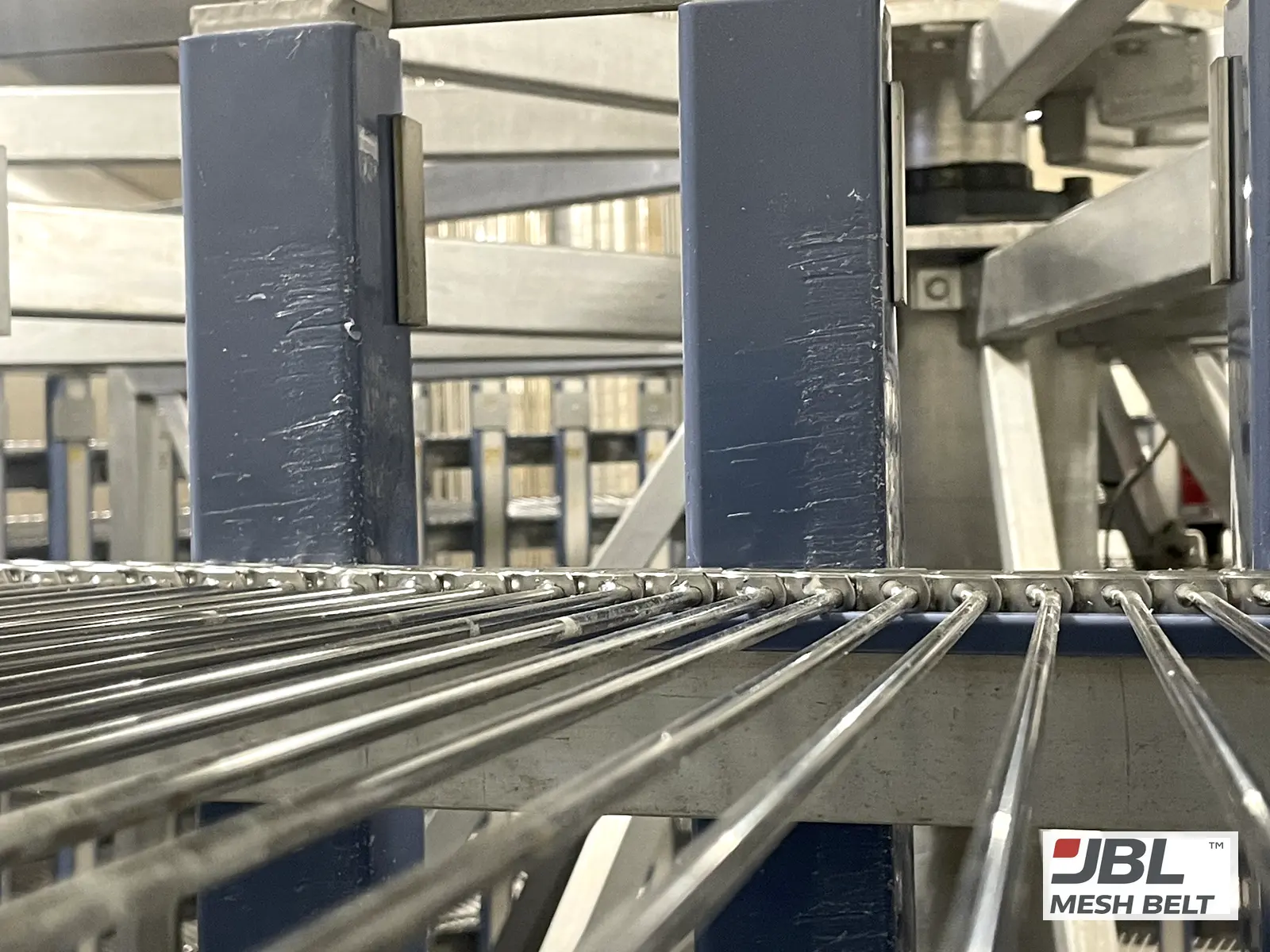
Width and pitch describe a belt lying flat. Your belt does not lie flat. It turns, stacks tiers and meets a drive.
Short answer
A spiral belt has to fit the freezer and copy the old belt. Six values describe the freezer: drum, turn ratio and direction, layout, width and length, drive, product and temperature. Six describe the belt: rod pitch, rod, wire, spiral pitch, link size and edge.
| # | Parameter | Where it comes from | Example from our projects |
|---|---|---|---|
| 1 | Drum (cage) diameter | Freezer | Confirmed per project |
| 2 | Turn ratio and turn direction | Freezer | Two-row links from about 1.15 |
| 3 | Single or bi-drum, up or down, tiers | Freezer | Confirmed per project |
| 4 | Belt width and length | Freezer / old belt | About 400 m (Melbourne) |
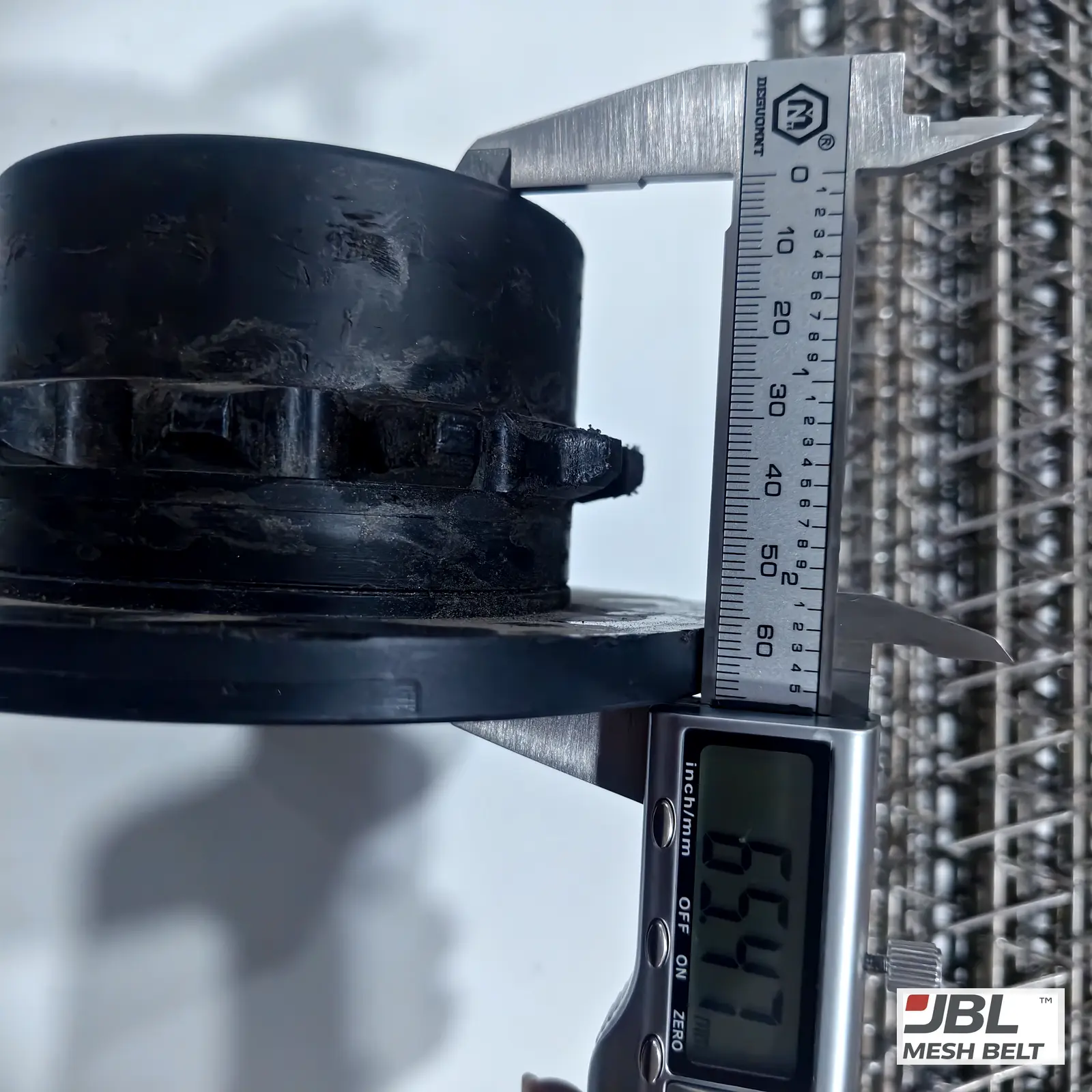
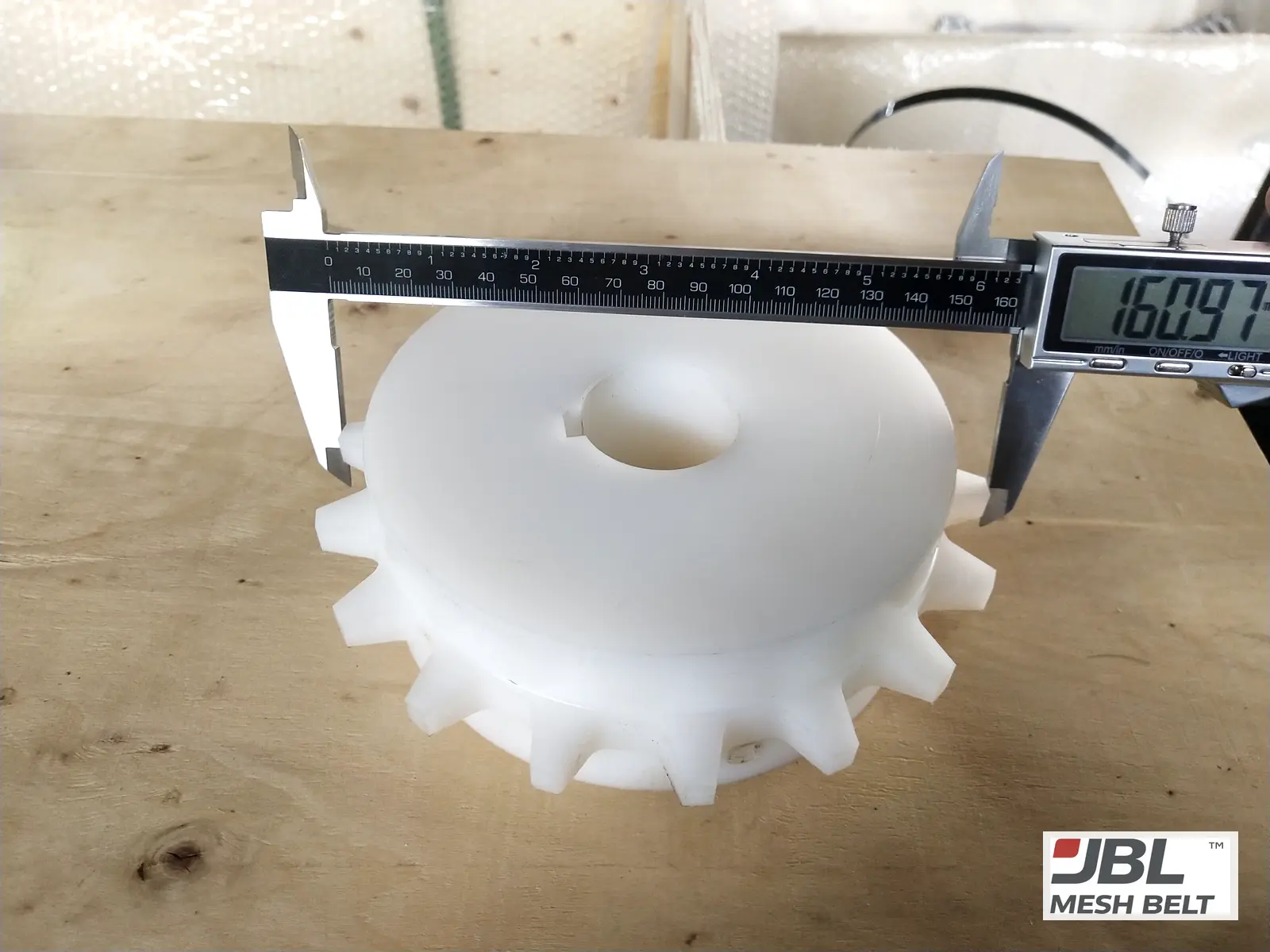
| 5 | Drive type and sprockets | Freezer | Sprocket outside diameter 160.97 mm |
| 6 | Product, temperature, cleaning | Your process | SUS304 or SUS316 |
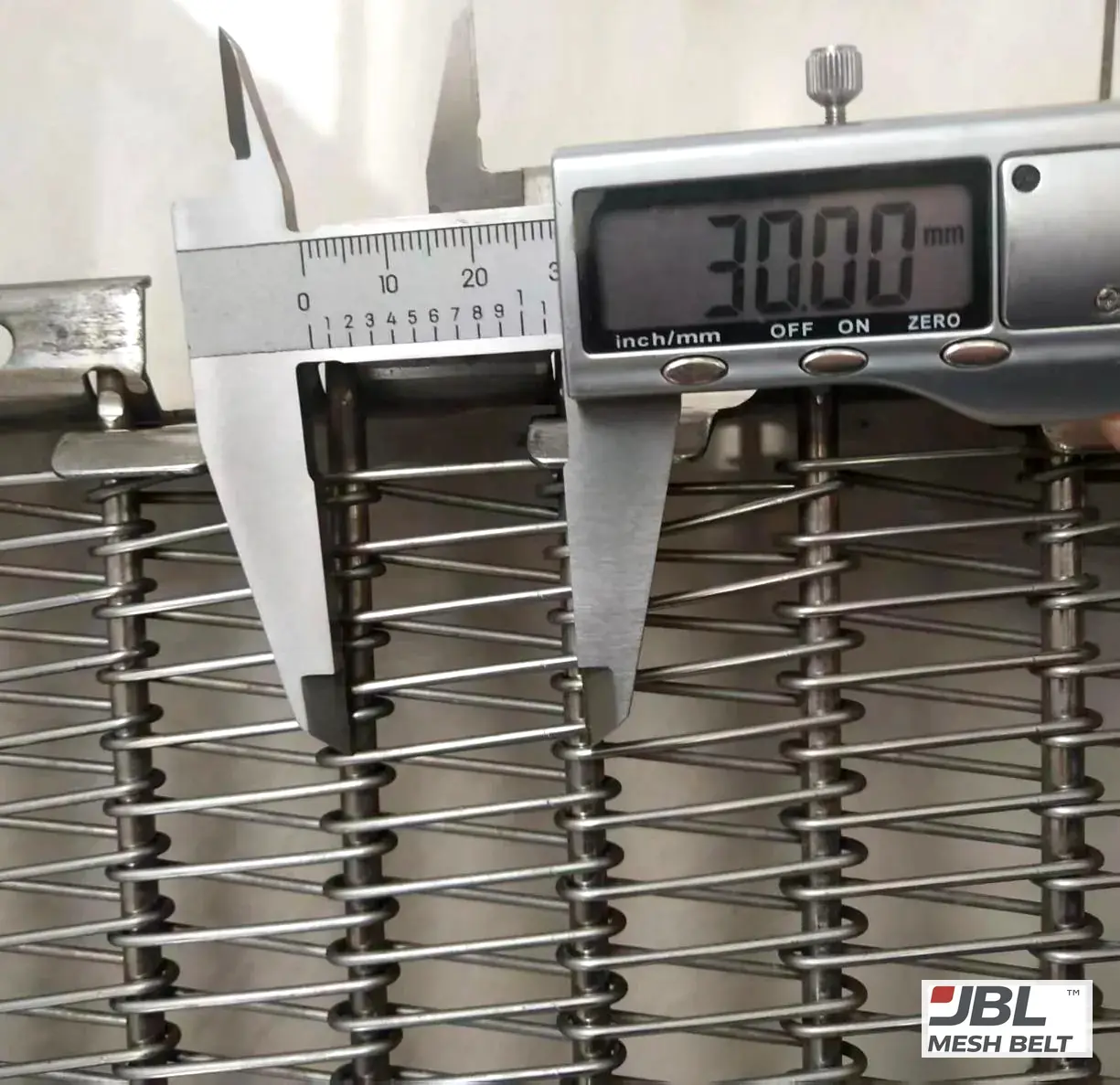
| 7 | Rod pitch | Old belt | 30.00 mm (UK) |
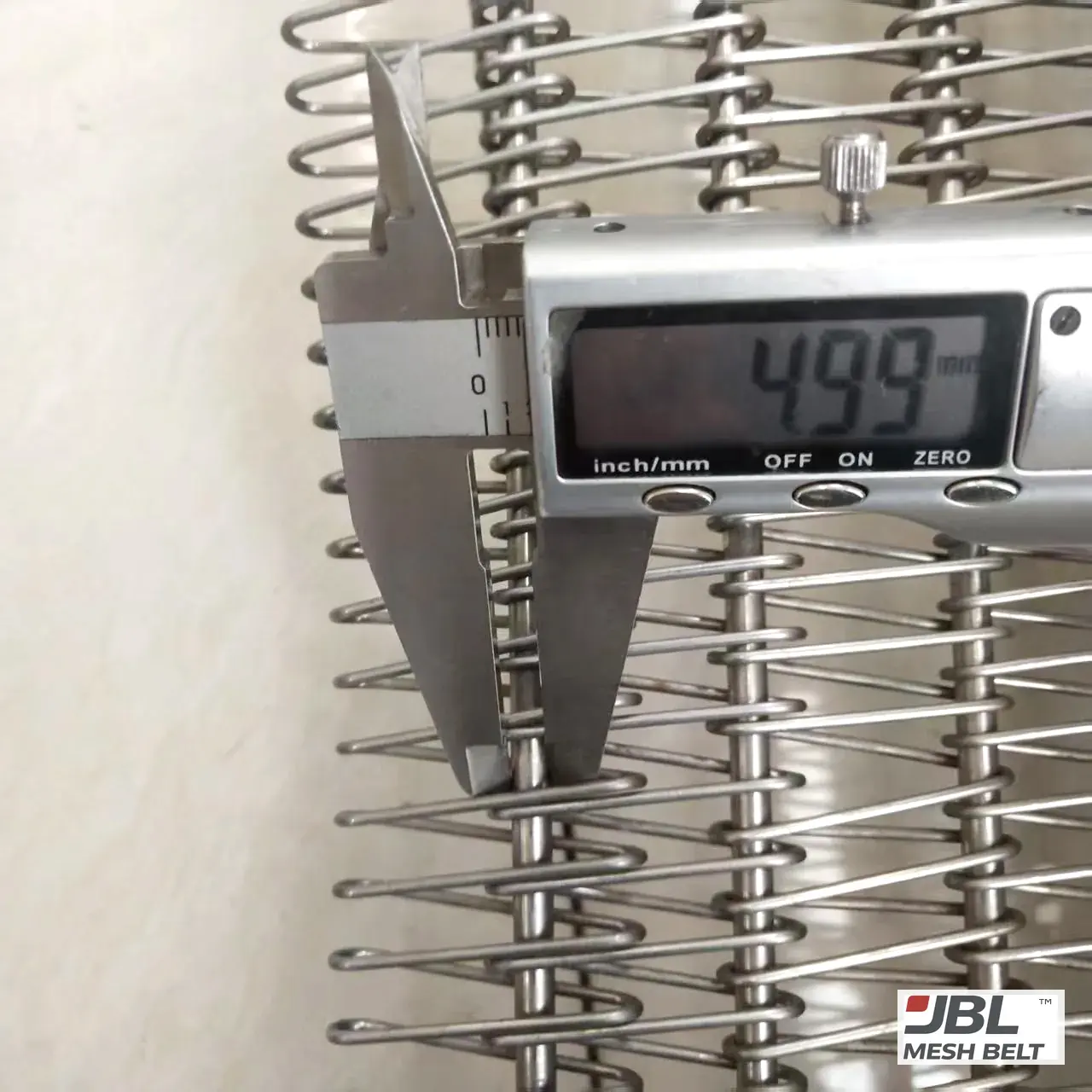
| 8 | Rod diameter | Old belt | 4.99 mm (UK) |
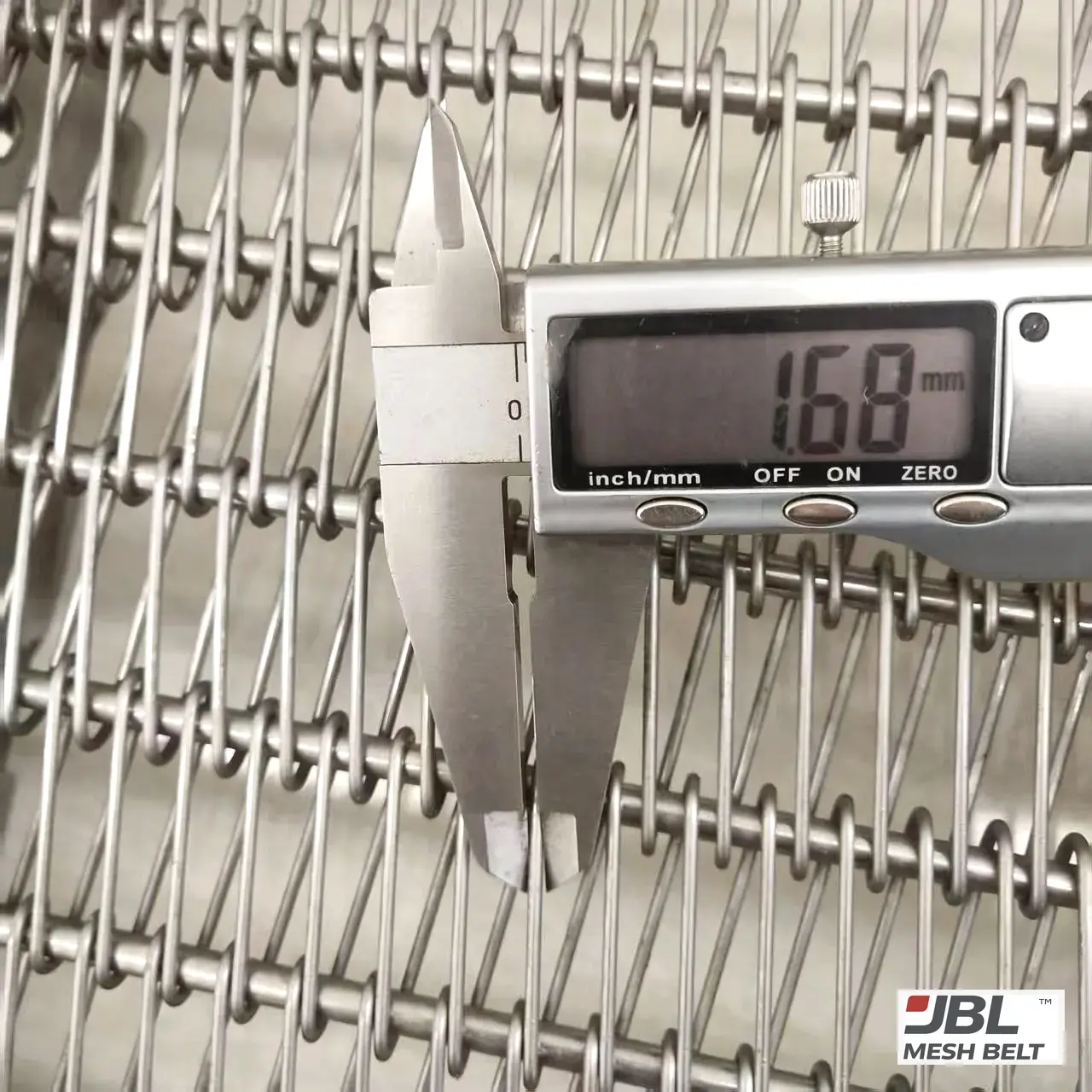
| 9 | Wire diameter | Old belt | 1.68 mm (UK) |
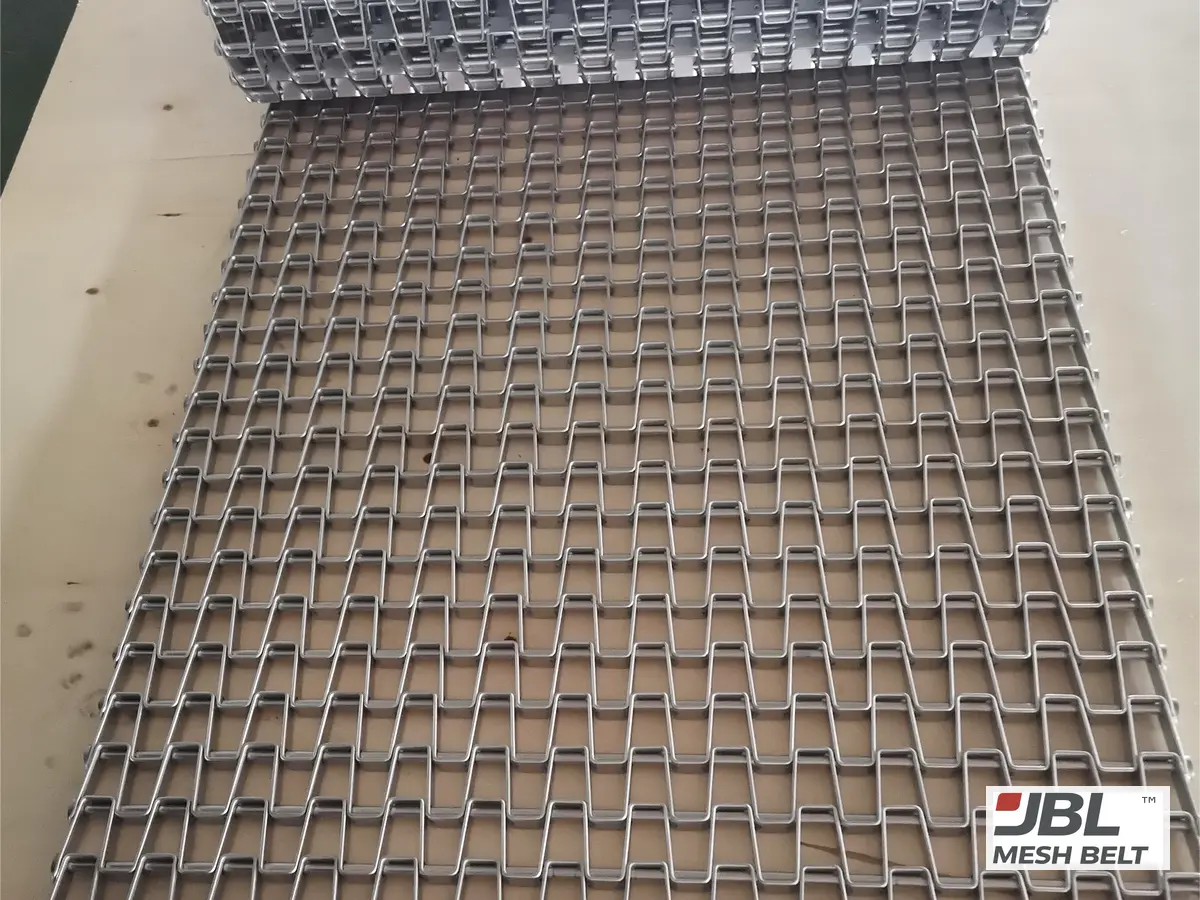
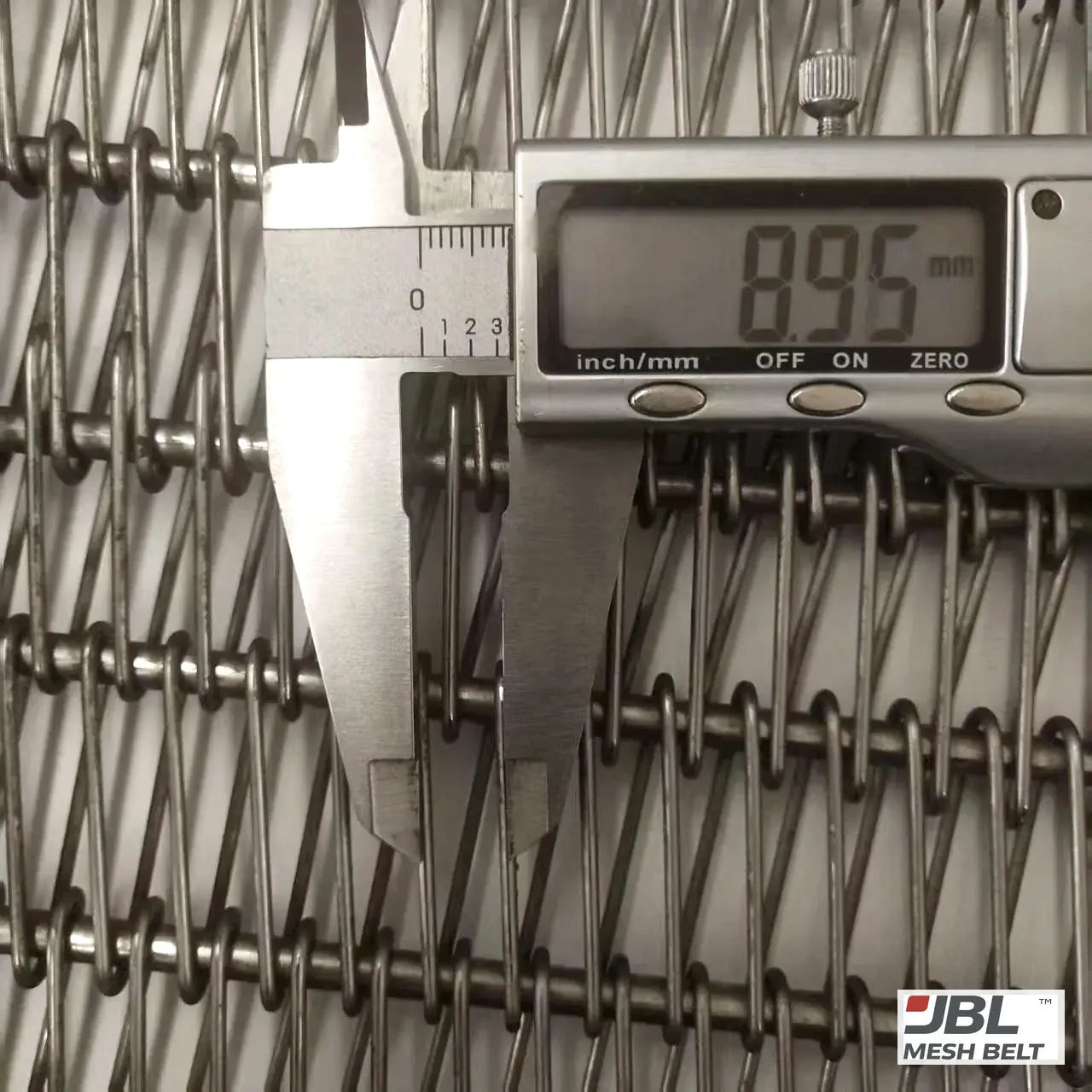
| 10 | Spiral pitch | Old belt | 8.95 mm (UK) |
| 11 | Link height and thickness | Old belt | Thickness 2.70 mm (Melbourne) |
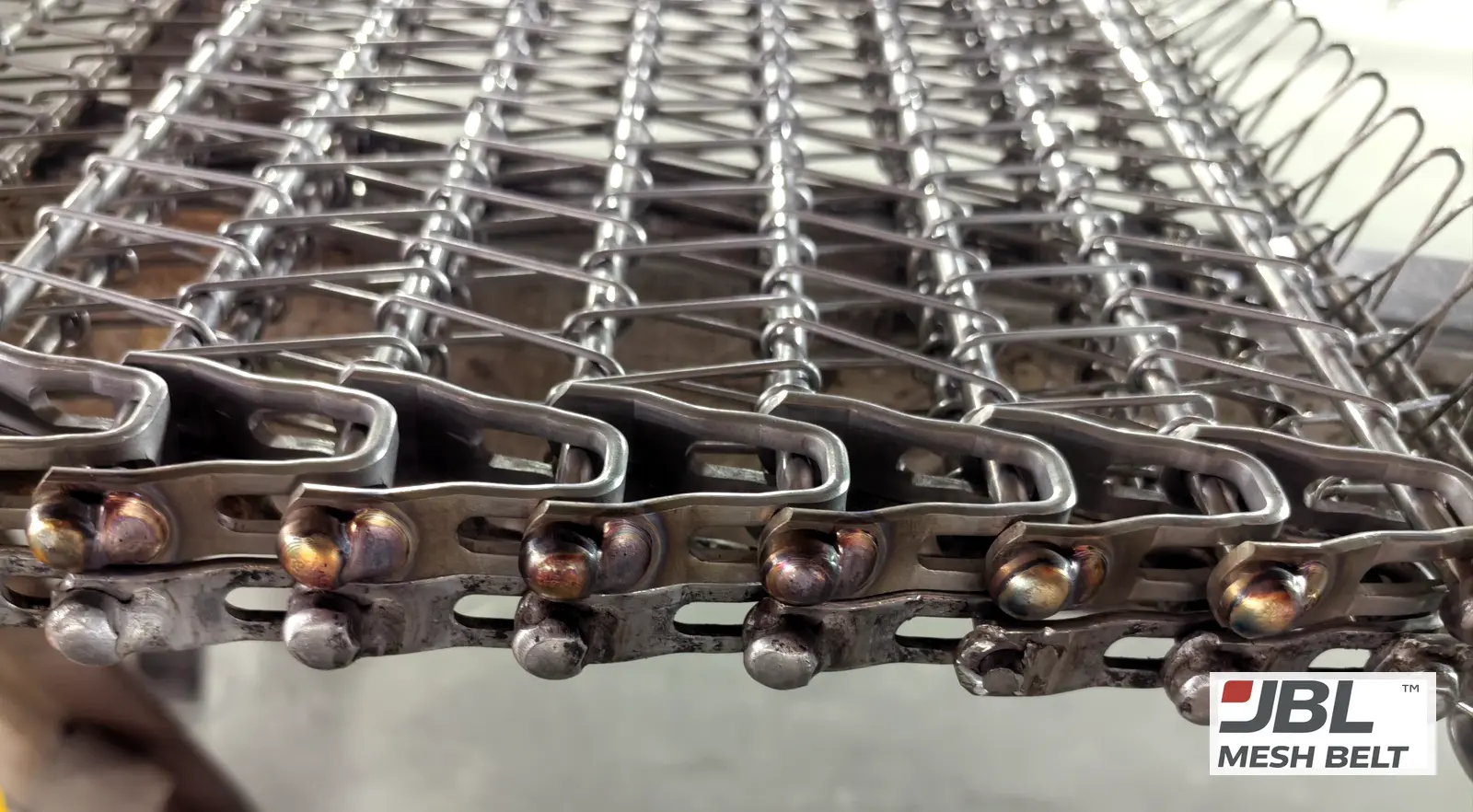
| 12 | Edge type and finish | Old belt | Rod-end welds, rough with burrs (Melbourne) |
I split the list in two because the values come from two places. The freezer values come from your drawings, your maintenance team or the freezer maker. The belt values come from a caliper on your old belt.
When both halves are complete, I can tell you whether a belt will run before anything is made. When only width and pitch are known, every quote is a guess, and the cheapest guess is not always the cheapest belt. I explain why in why the same width and pitch does not mean compatibility.
02Which six values come from your freezer?
These values do not change when the belt wears. They are the frame the new belt has to fit into.
Short answer
From the freezer I need: drum diameter, turn ratio and turn direction, the layout (single or bi-drum, ascending or descending, number of tiers), belt width and length, the drive type with sprocket details, and the product, temperature range and cleaning method.
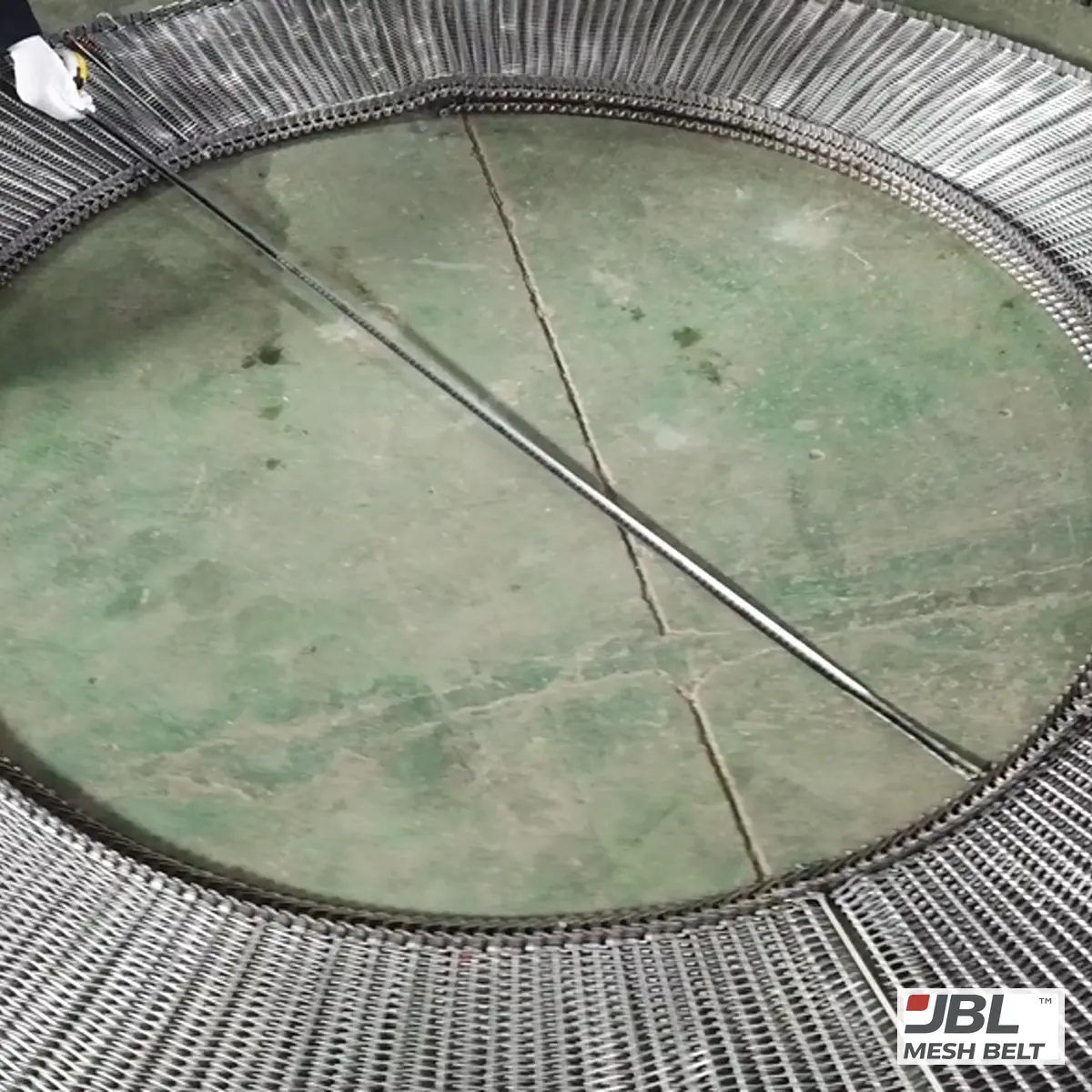
1–3. Drum, turn ratio and layout
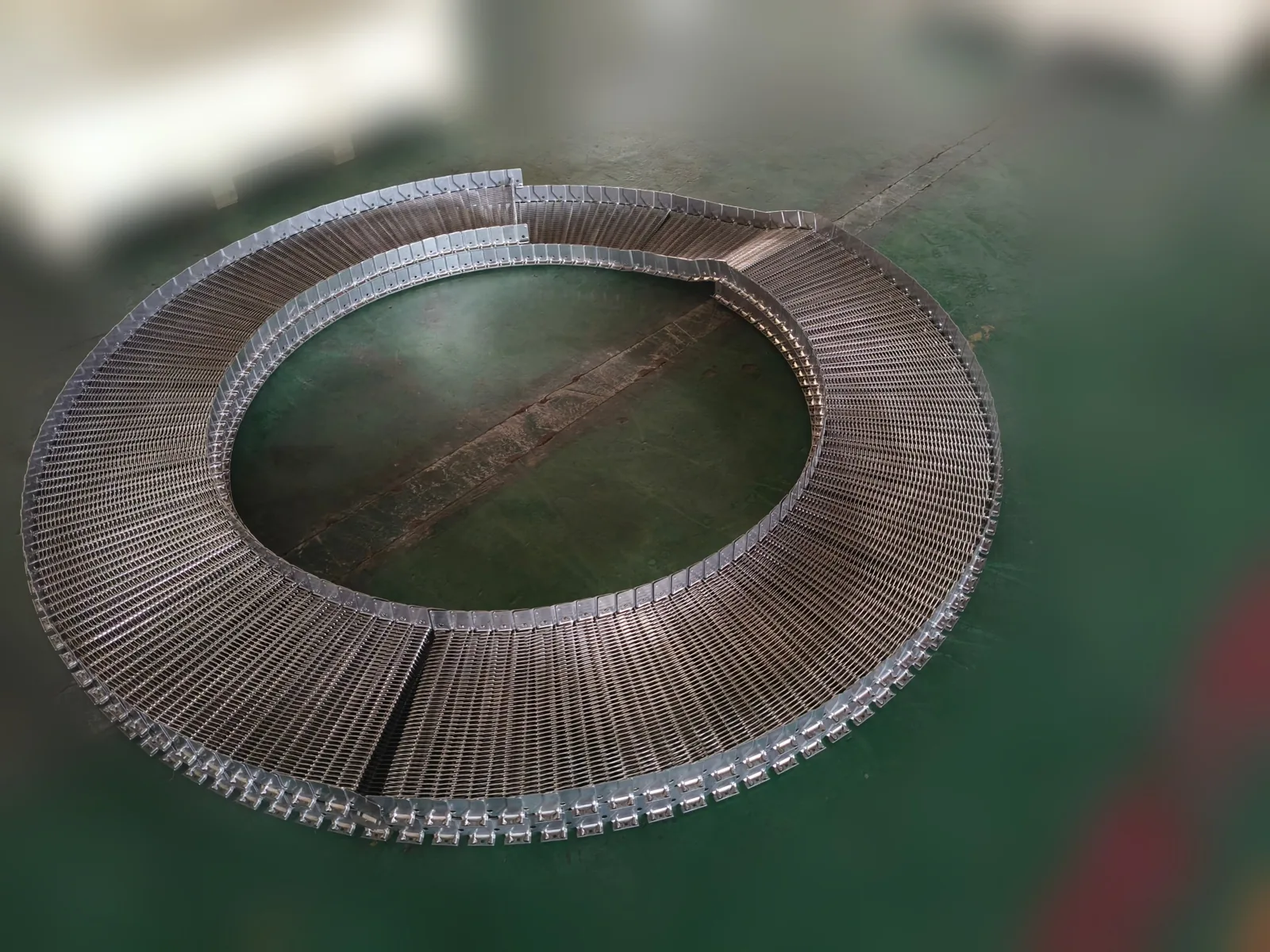
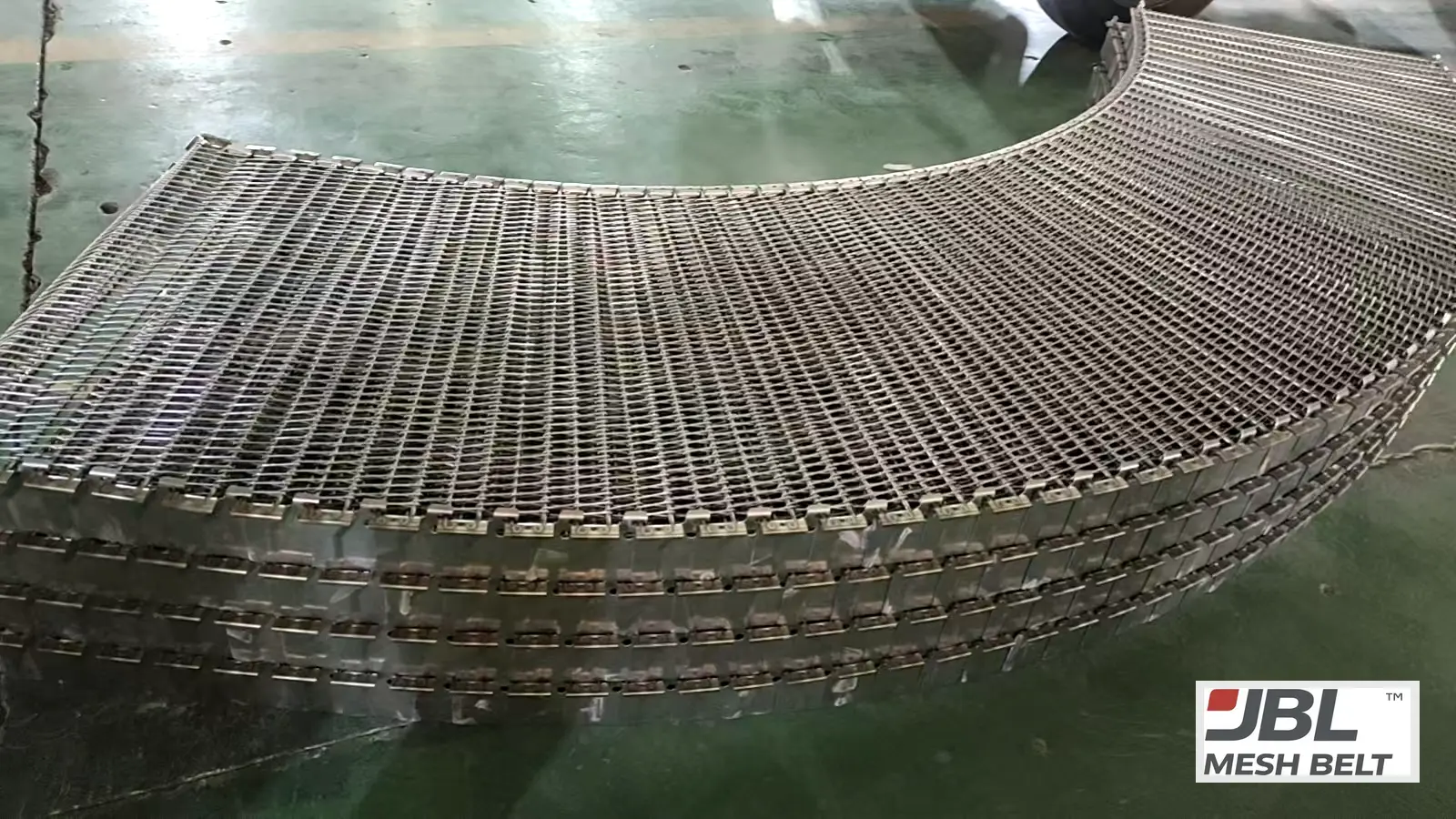
Drum diameter and belt width together give the turn ratio. The turn ratio decides whether a standard two-row link belt (from about 1.15) or a small radius three-row link belt (from about 1.1) is needed. Turn direction and whether the belt goes up or down decide which edge is inside.
4. Width and length
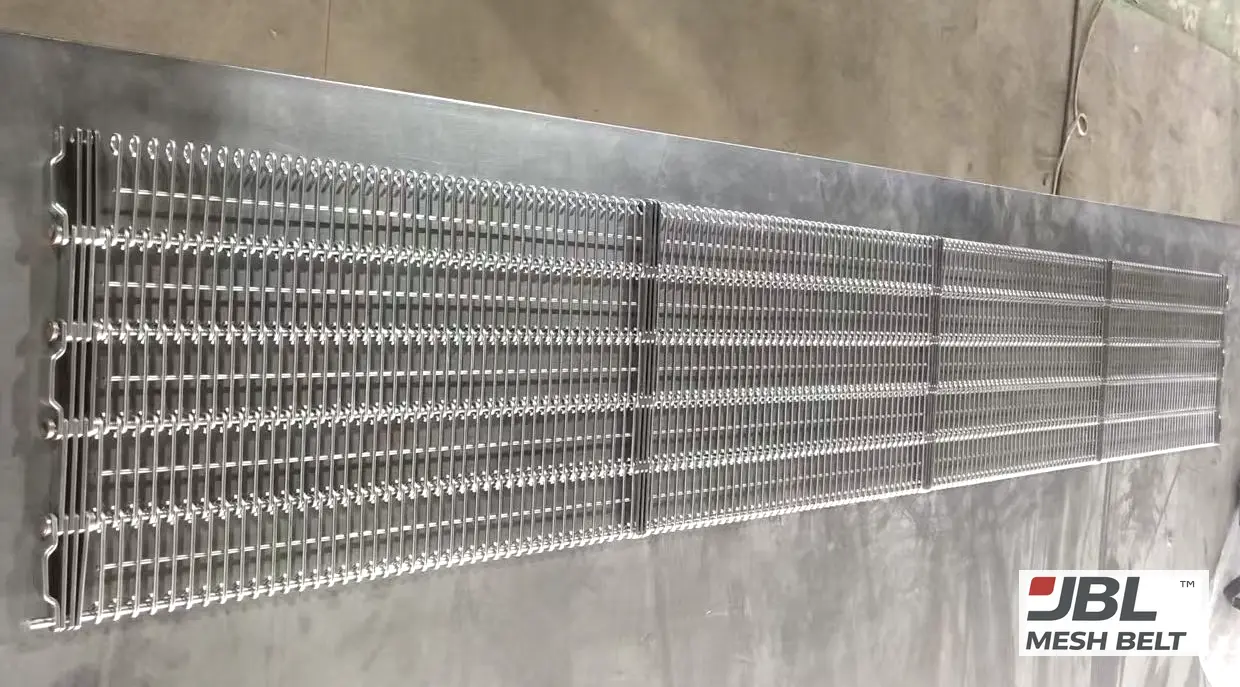
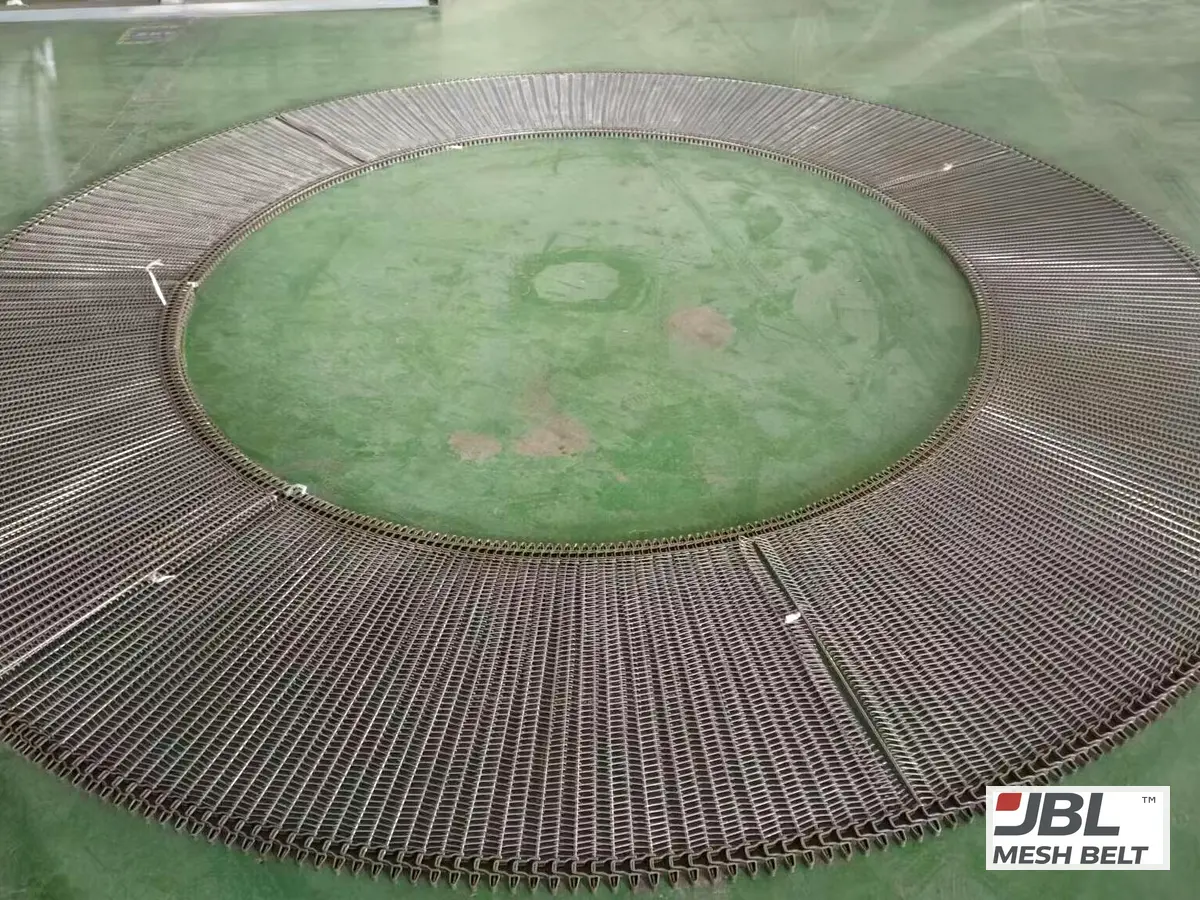
Measure the overall width on the old belt, and give me the total length or the number of tiers. Length also decides how the belt is split into sections for packing and installation.
5. Drive and sprockets
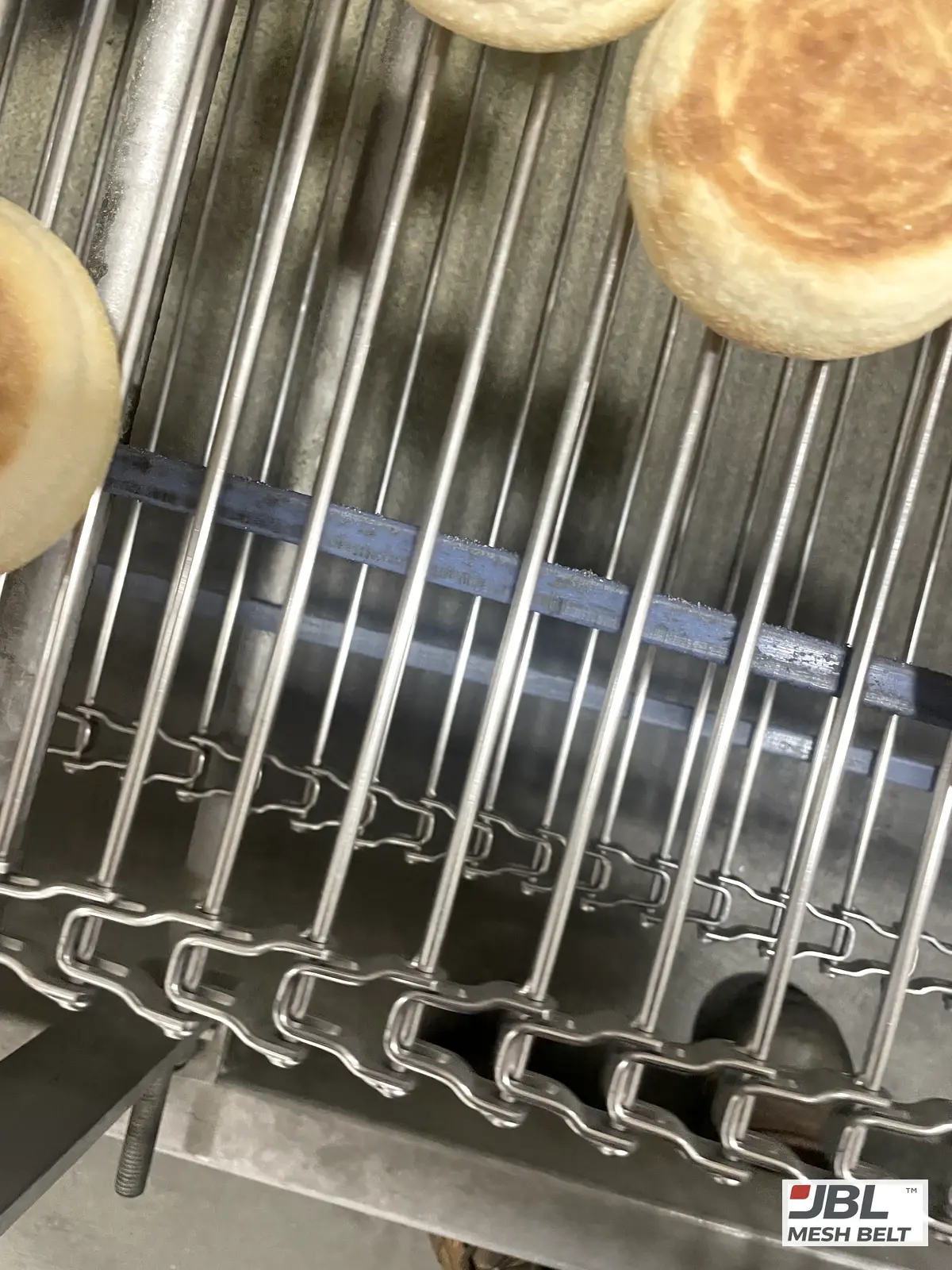
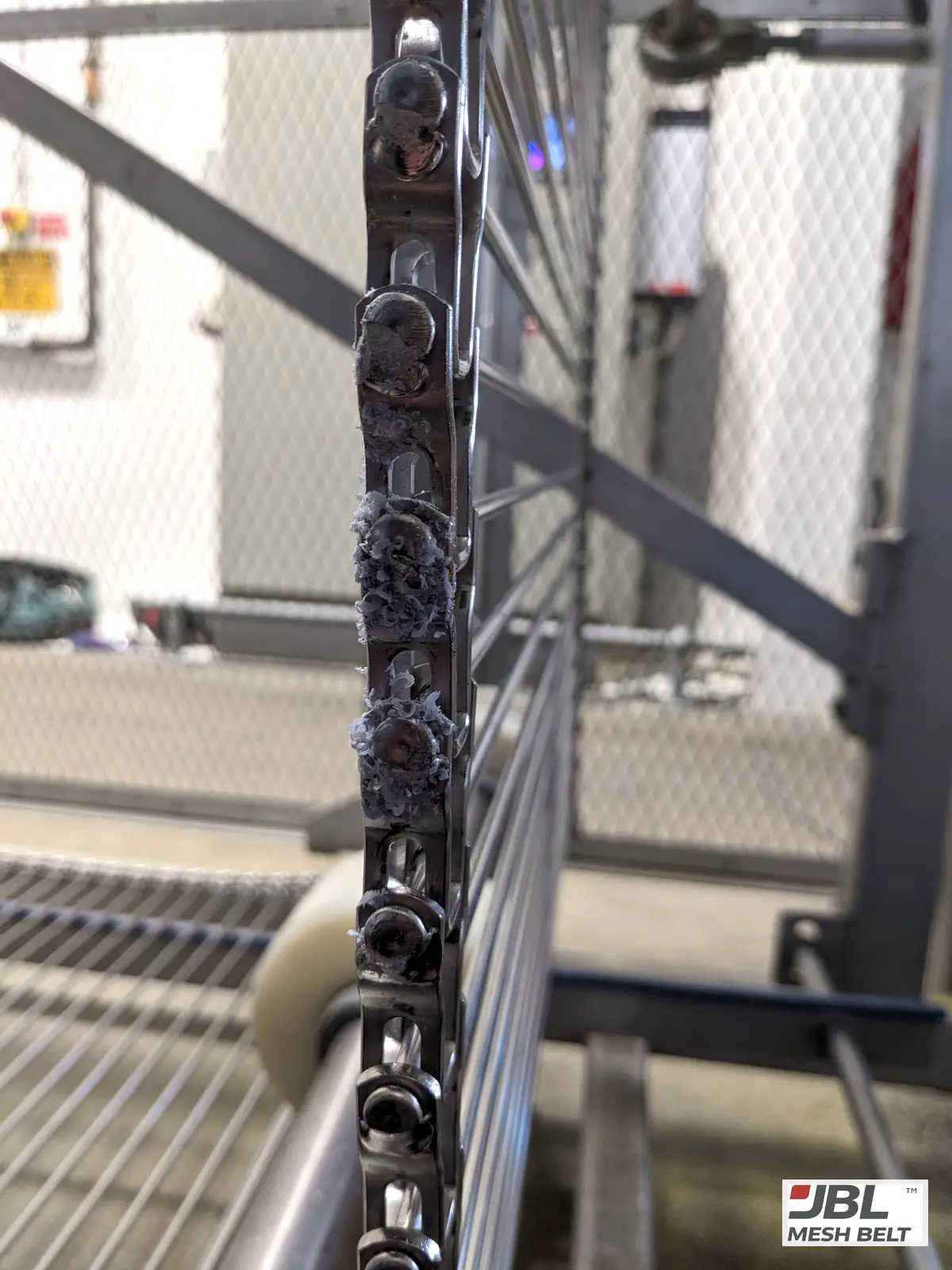
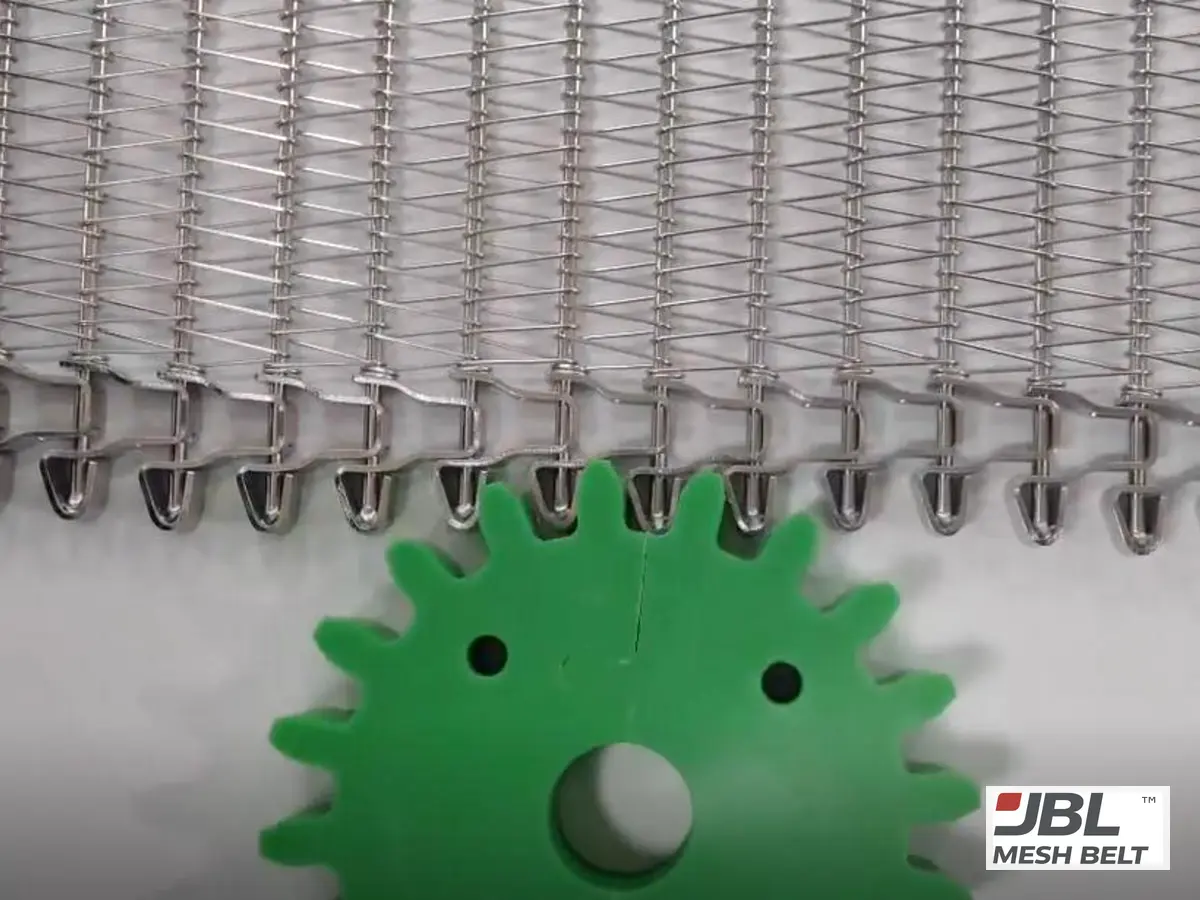
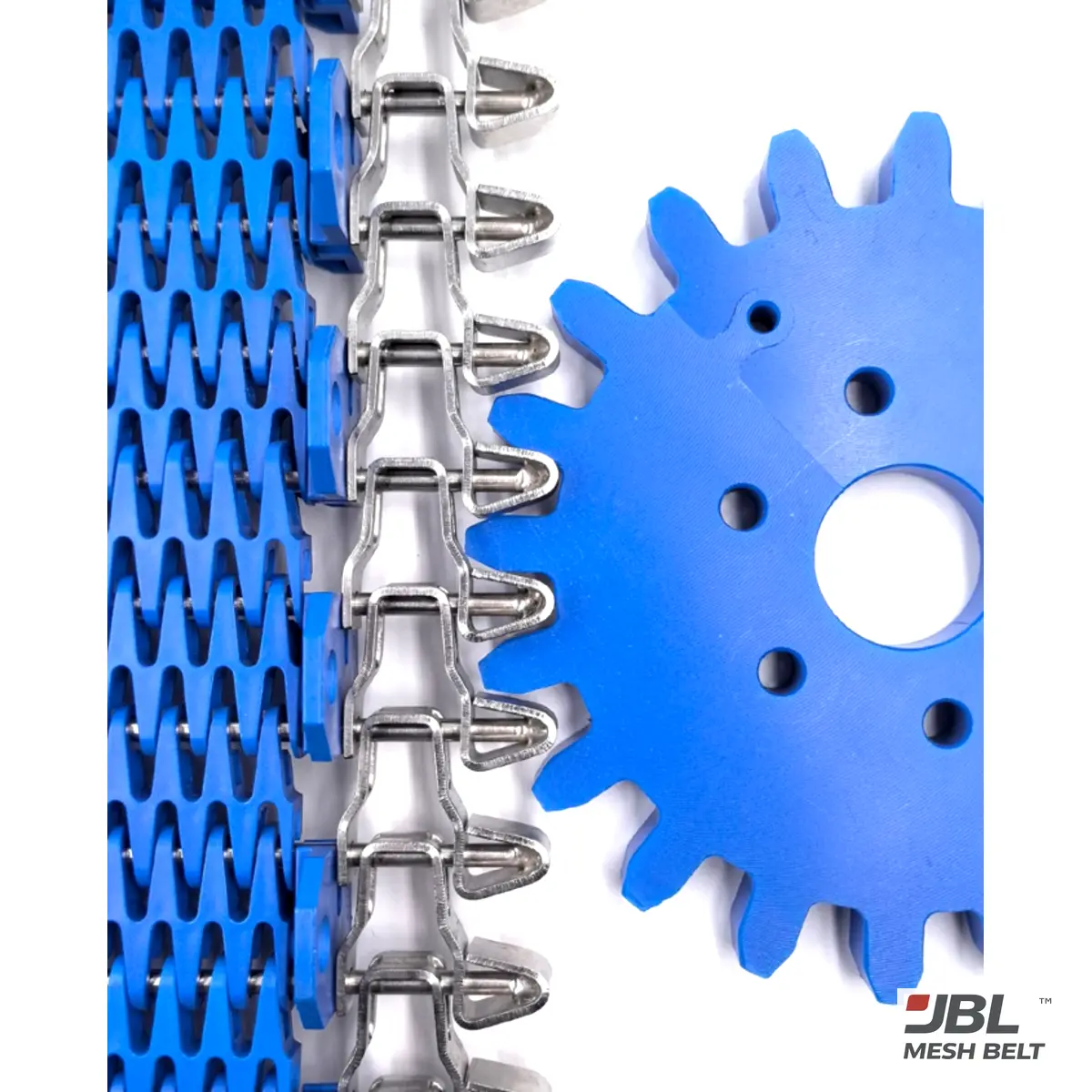
Tell me the drive type and send a sprocket photo. I need tooth count, bore, keyway and the state of the teeth. If you are not sure of the drive, see the four drive types.
6. Product, temperature and cleaning
These decide the material and finish. SUS304 suits most freezing and cooling lines; SUS316 is considered where salt, brine or strong cleaning chemicals are present. The surface can be pickled or electropolished.
03Which six values do you read on the old belt?
These values are in your old belt, even if no drawing exists. A caliper is all you need to read them.
Short answer
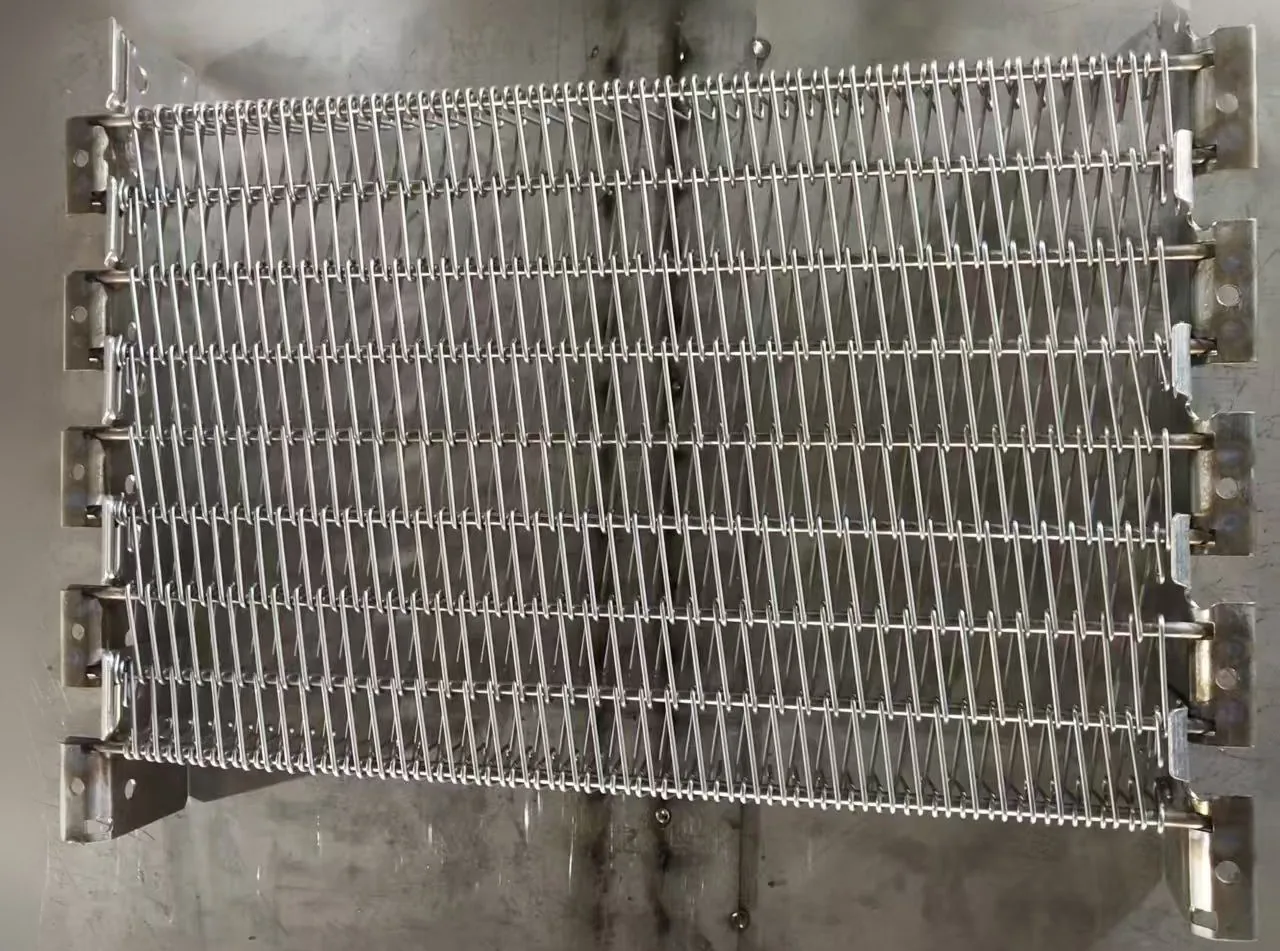
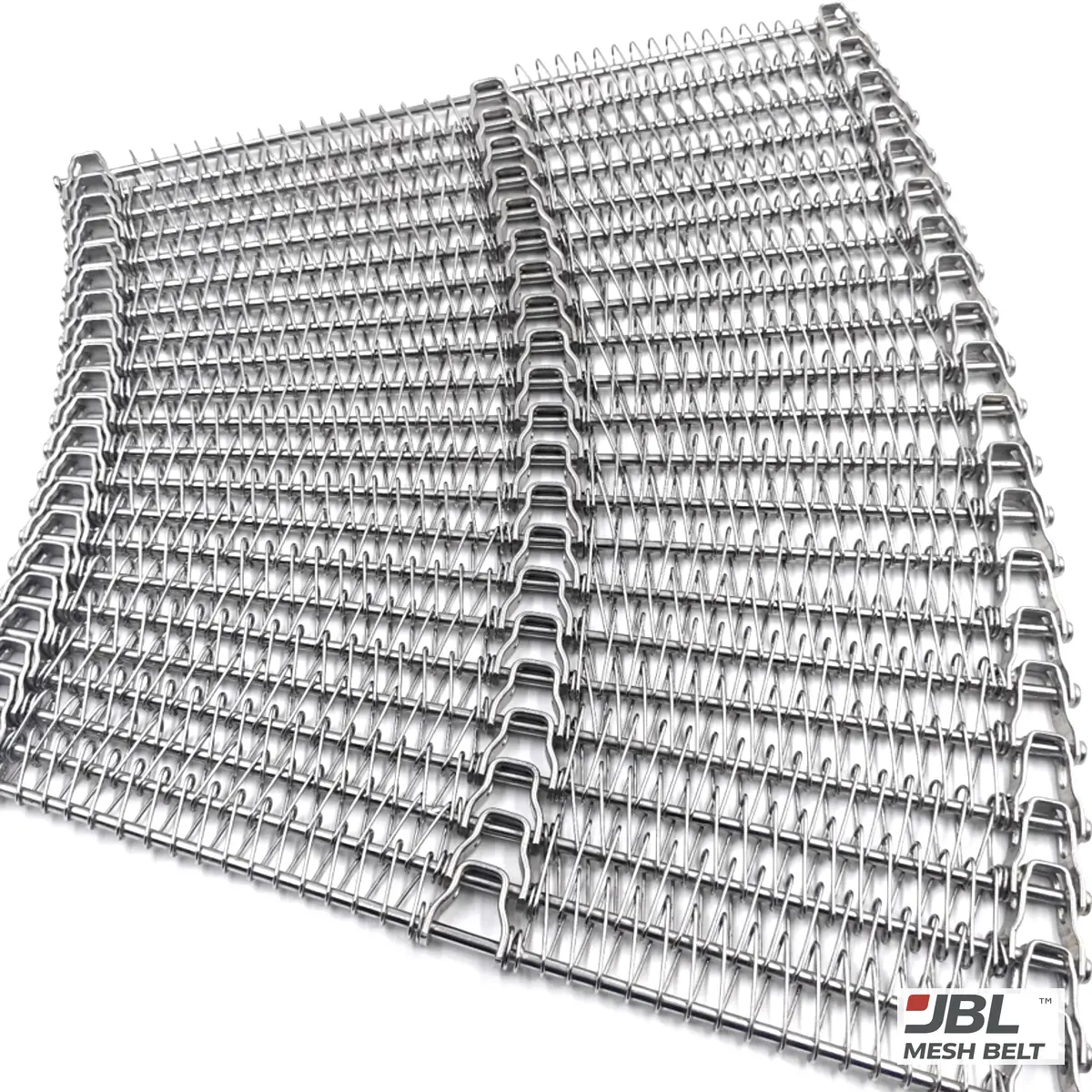
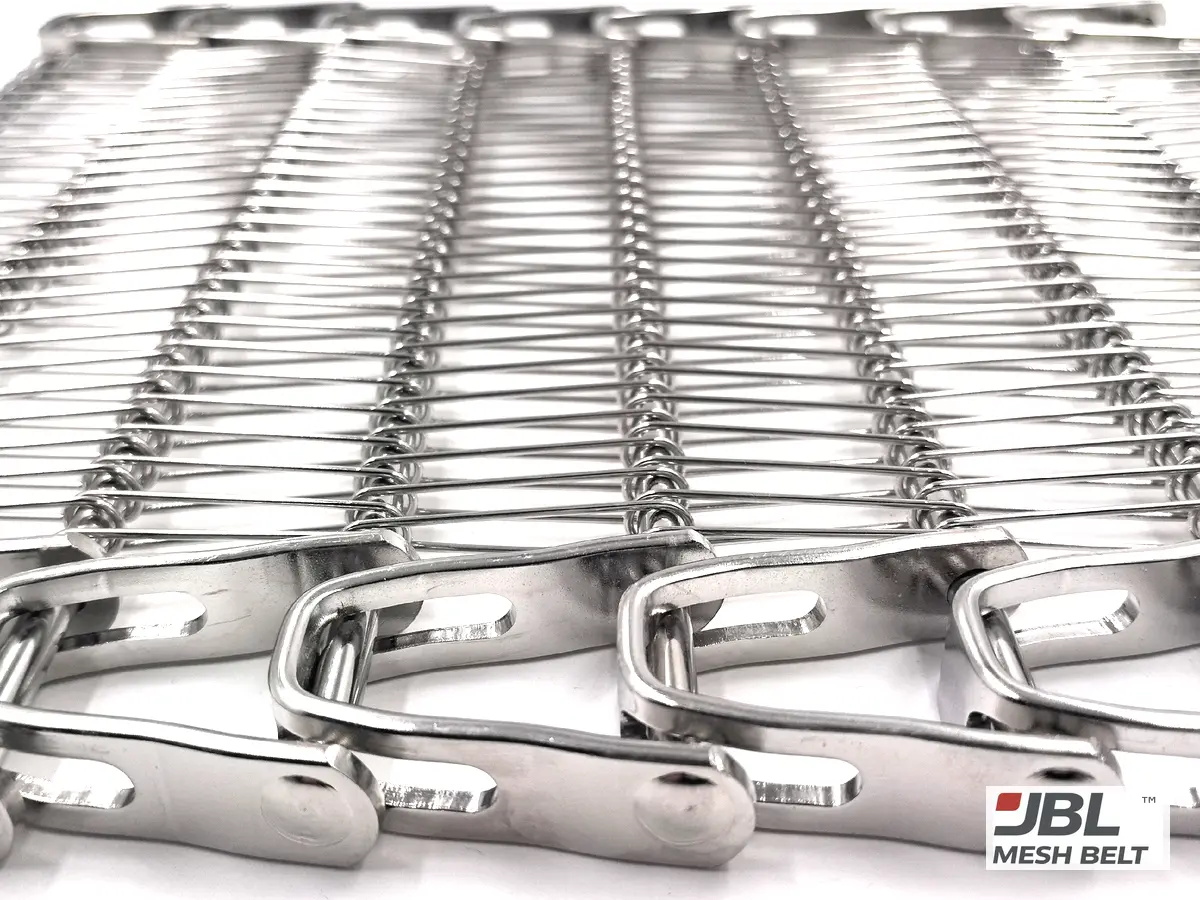
On the old belt I read: rod pitch, rod diameter, wire diameter, spiral pitch, link height and thickness, and the edge type and finish. On a small radius belt, the inner, middle and outer pitch are read separately.
| Belt value | What it decides | Reading on an original |
|---|---|---|
| 7. Rod pitch | Spacing of rods, sprocket engagement | 30.00 mm (UK); 27.41 mm (Melbourne) |
| 8. Rod diameter | Fit in links and sprocket | 4.99 mm (UK); 5.03 mm (Melbourne) |
| 9. Wire diameter | Mesh strength and weight | 1.65–1.68 mm (UK) |
| 10. Spiral pitch | Mesh openness, product support | 8.95 mm (UK) |
| 11. Link height and thickness | Contact with drum and guides | Thickness 2.70 mm (Melbourne); 2.42 mm worn (waffle line) |
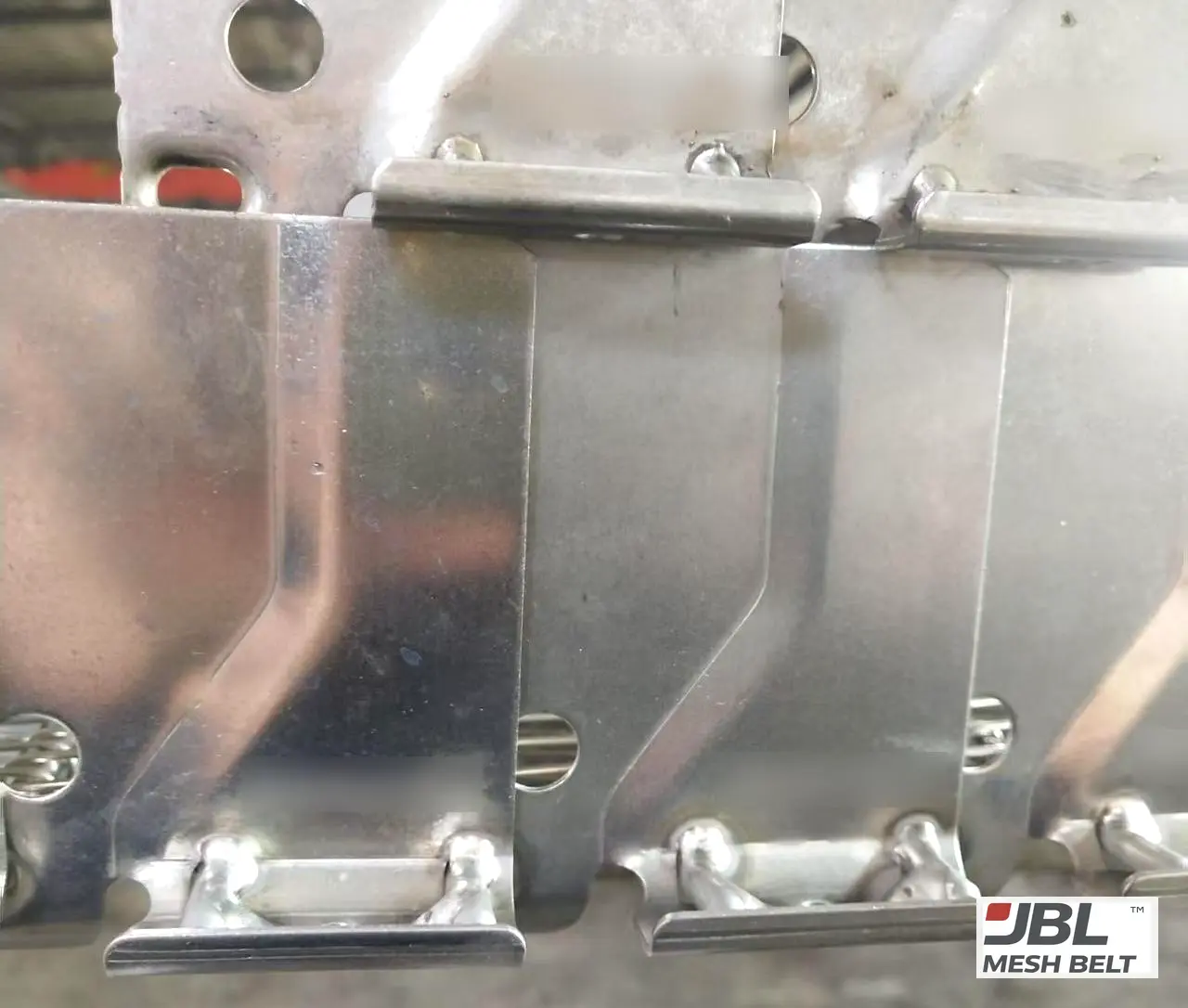
| 12. Edge type and finish | How the edge touches drum and guides | Rough welds with burrs (Melbourne) |
The UK readings above were taken on a section of the customer's original belt, together with the side plate thickness and height. From those readings we made tooling and a sample, and compared the sample with the same caliper: rod 5.01 mm, rod pitch 30.00 mm, spiral pitch 9.00 mm. The customer approved before bulk.
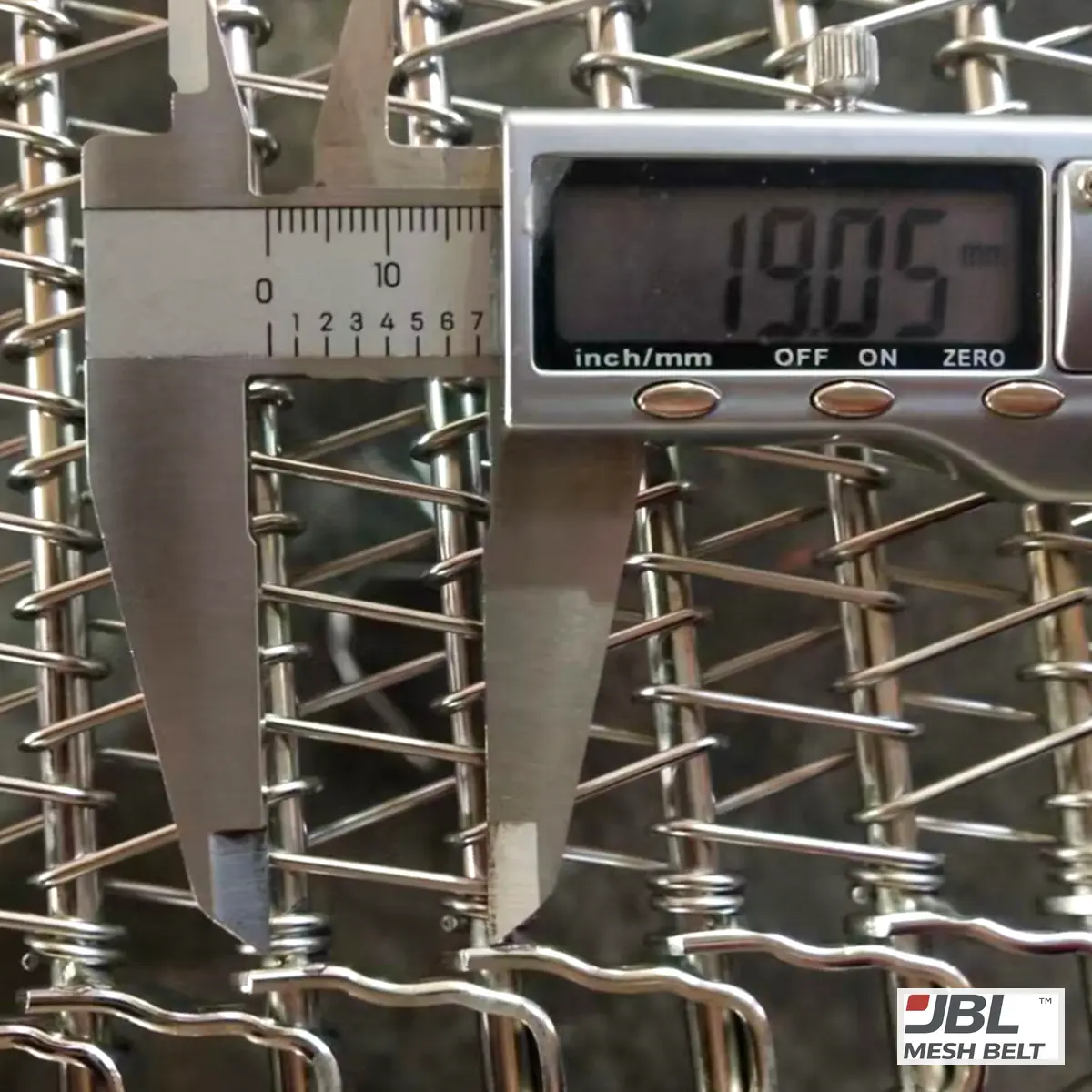
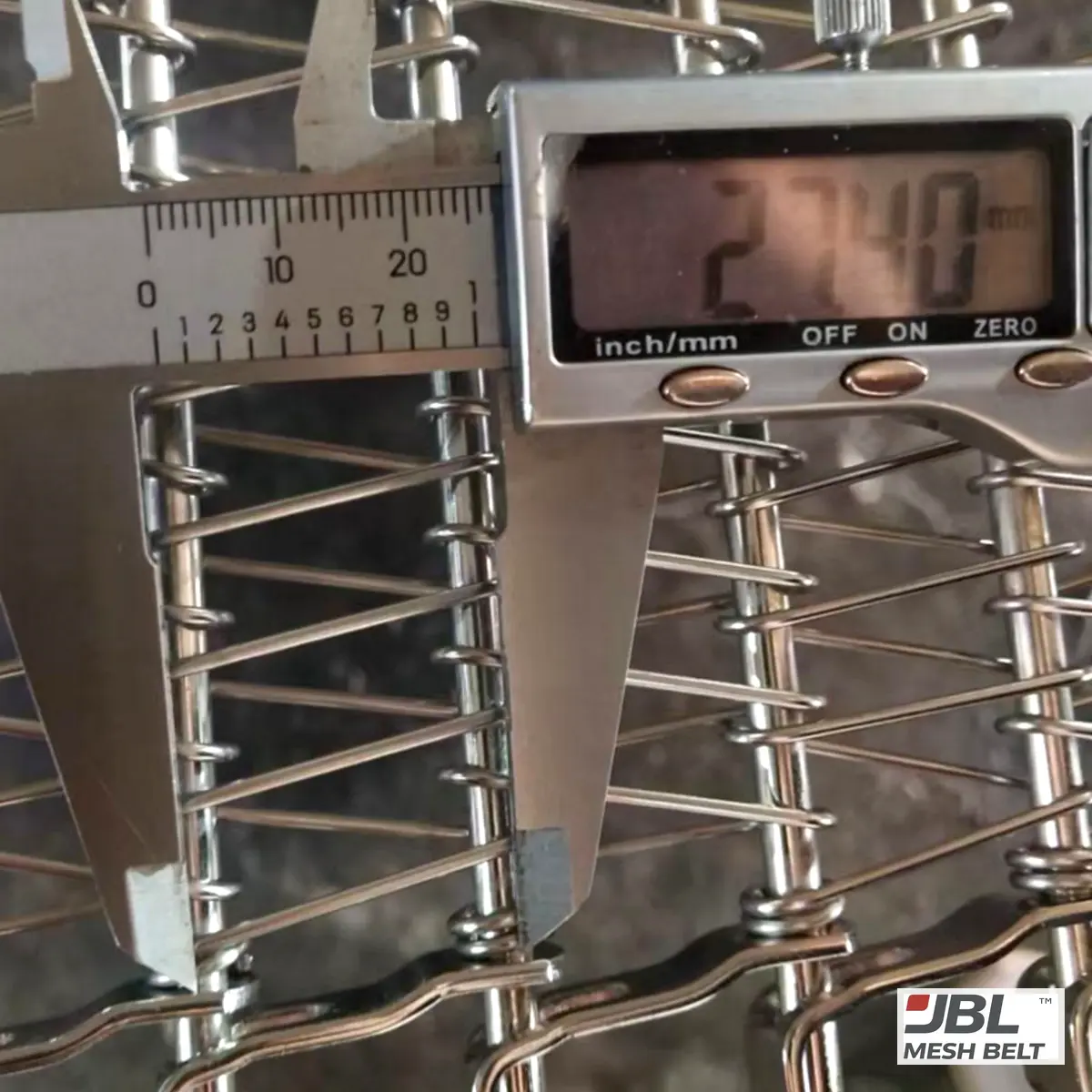
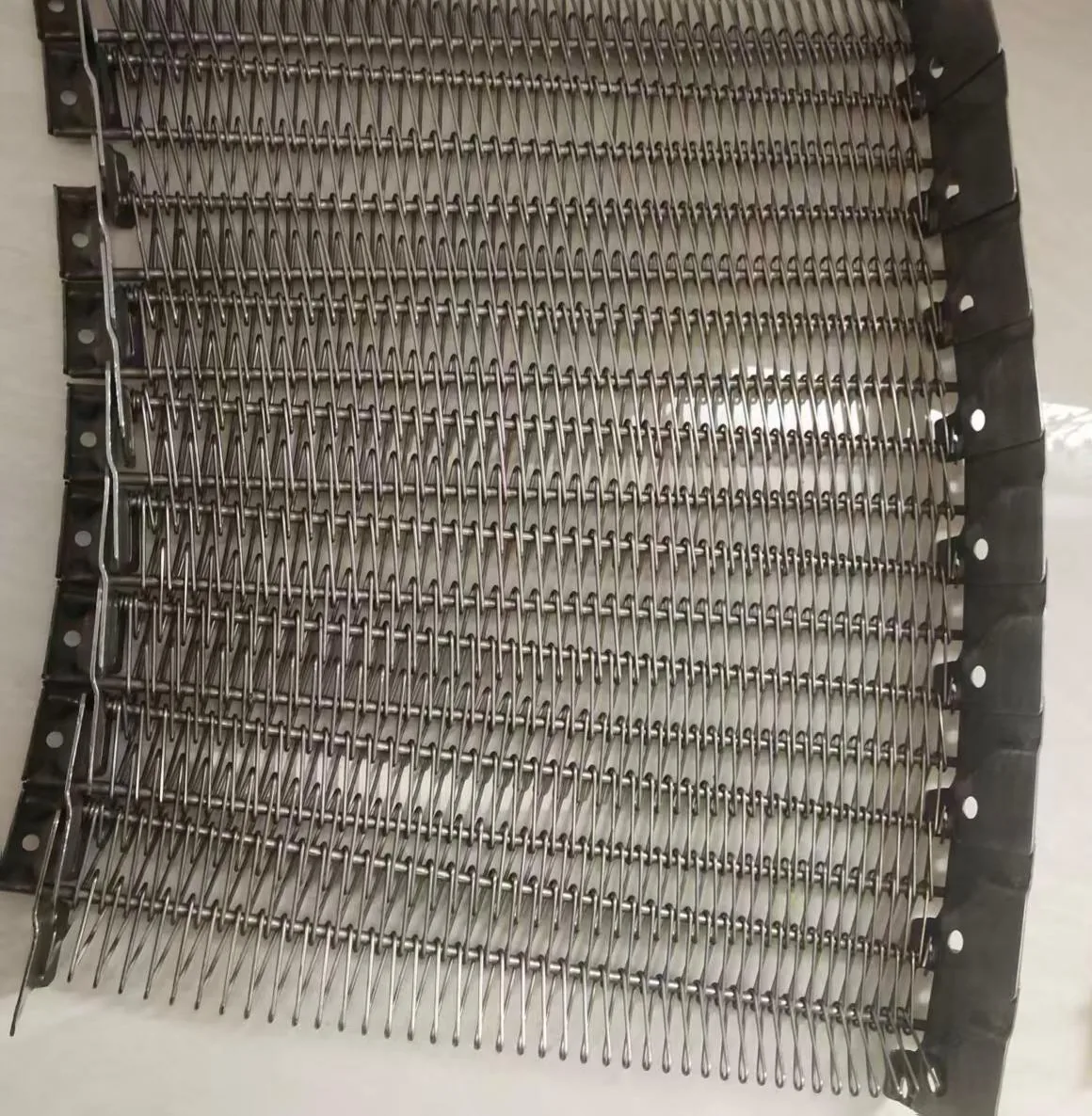
Small radius belts need extra care. They have a shorter inner pitch and a longer outer pitch, such as 19.05 × 27.4 mm or 27.4 × 38.1 mm. Read each row of links separately.
04How do you measure these values correctly?
A good reading is one I can check. A photo where the caliper display is blurred or out of frame is one I have to ask for again.
Short answer
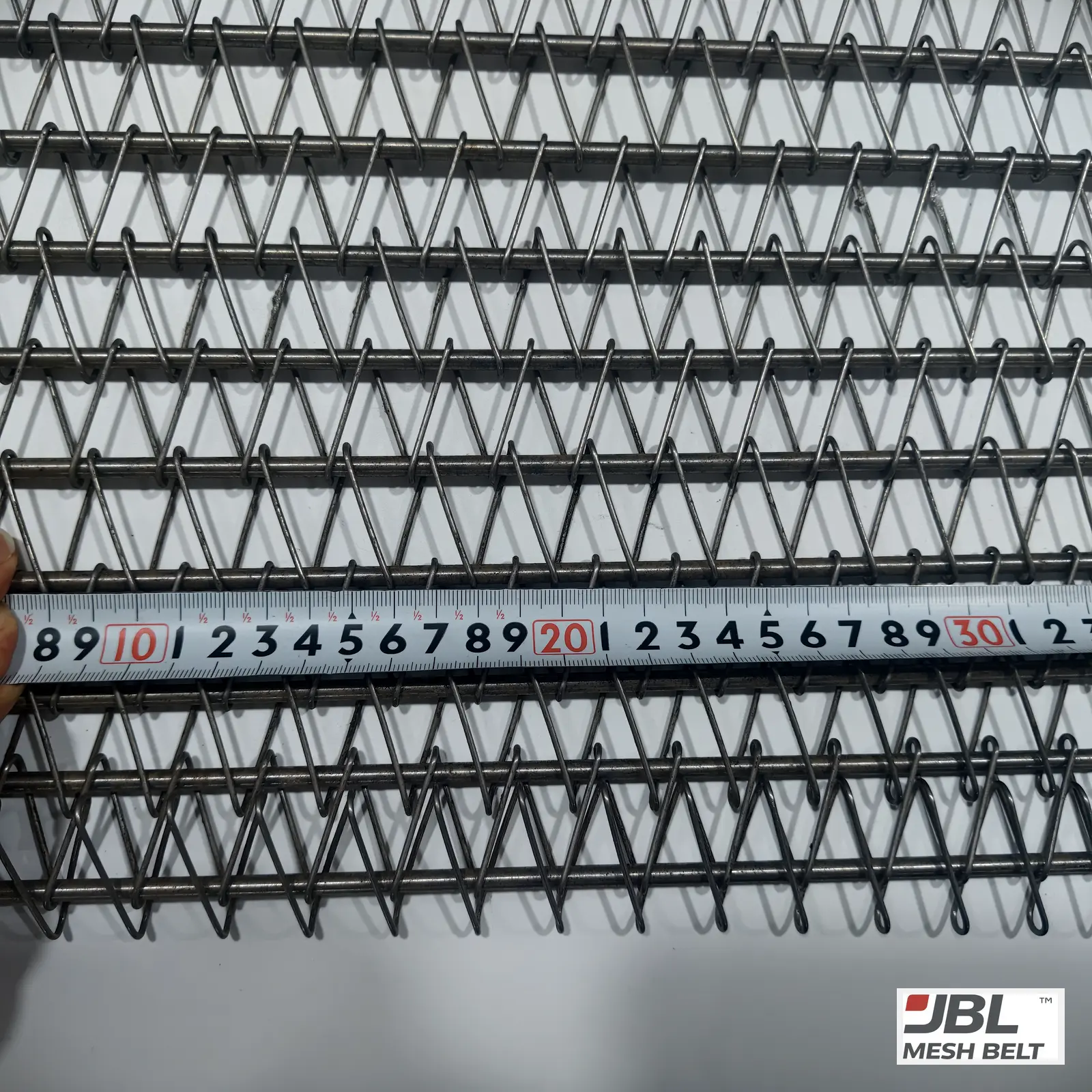
Use a digital caliper, keep the jaws square on the part, and make the display readable in the photo. Read each value in more than one place, including a less-worn area. Label each photo with what it measures, and send the whole belt and both edges too.
| Do | Avoid |
|---|---|
| Caliper display sharp and readable in the photo | Readings written down without a photo |
| Jaws square on the rod, wire or link | Jaws on an angle or on a weld bead |
| Several readings, worn and less-worn areas | One reading from the most worn spot |
| Photos of the whole belt and both edges | Close-ups only |
| Label each photo: 'rod', 'wire', 'link' | Unlabelled photos |
Pitch is easier to read over several rods than over one. Measure across a few pitches and divide, then repeat in another place. If the readings differ, the belt has stretched, and I need both numbers.
Wear changes the readings. On the waffle cooling spiral, the original link read 2.42 mm, but the new belt needed 2.71 mm. On the UK belt, the wire read between 1.65 and 1.68 mm on the same sample. I compare these readings to find the original size, as described in copying a worn belt from a sample.
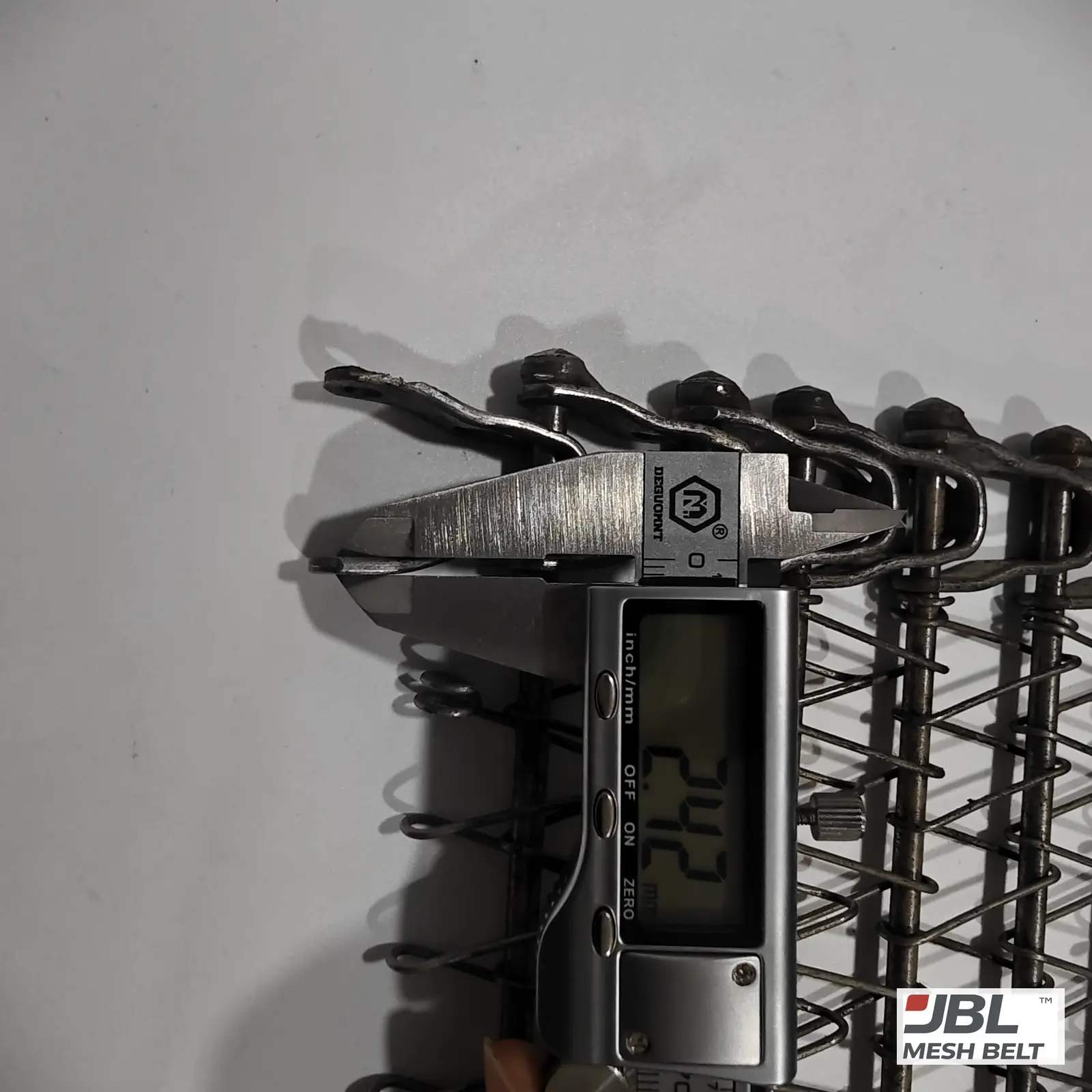
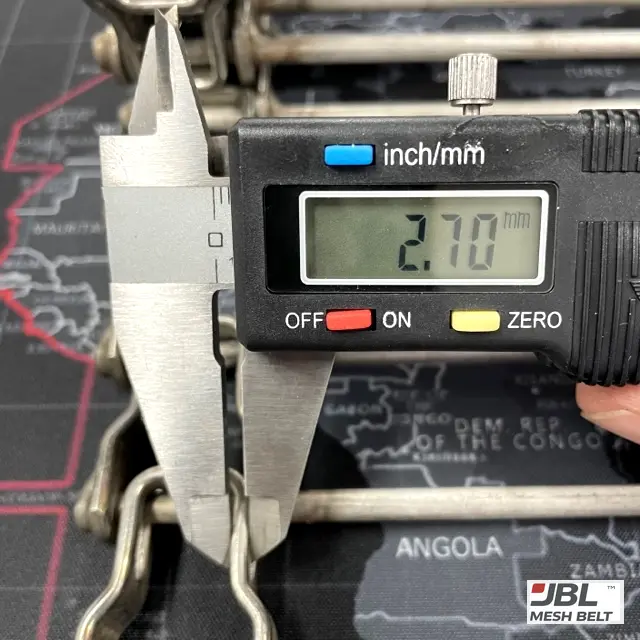
Our old belt photo and measurement guide shows the photo angles step by step.
05What if you cannot get all 12 values?
This is normal. The freezer is running, the drawing is lost, or the person who knew the details has left.
Short answer
Start with what you have. Photos with caliper readings, the belt width and the drum diameter are enough for a first review and an indicative quote. A short section of the old belt fills most gaps. A formal quote follows once the missing values are confirmed.
| What you have | What I can do |
|---|---|
| Photos with caliper readings | First review, indicative quote, list of what is missing |
| A short section of the old belt | Read every belt value myself; make a sample |
| A drawing | Check it against photos; make a trial run |
| Only requirements, no old belt | Draw the belt for your approval, then a sample |
In Melbourne and on the UK line there was no drawing. A section of the old belt gave us every belt value. In Malaysia, the customer had a drawing, and we measured the trial run against it. In Spain there was nothing to copy at all, so we drew the belts first and the customer approved the drawings before a sample was made.
- 01
Send what you have
Photos, readings, drawing, freezer model — whatever is available.
- 02
Get a list of gaps
I tell you which of the 12 values are still missing.
- 03
Fill the gaps
Usually with a short belt section or a few more photos.
- 04
Approve a sample
Measured against your original before bulk production.
Want me to check your values?
Send me what you have — even if it is only a few photos. I reply with what fits, what is missing and the next step.
When This Is Not the Right Choice
- ✕If you are ordering an identical belt from the original supplier with a part number, they may not need all twelve values again.
- ✕If your freezer has been modified, measure the freezer values again instead of copying them from old records.
- ✕If the old belt is heavily damaged, some belt values cannot be read reliably; a drawing or a less-damaged section is needed.
From My Engineering Experience
This list is the one I work from on every spiral belt enquiry. I did not invent it for this article; it grew out of the questions I had to ask again and again.
On the UK self-stacking line, six caliper readings on the customer's section replaced a drawing that did not exist. On the waffle line, a single link reading — 2.42 mm against 2.71 mm — showed how much the belt had worn. In Melbourne, the edge finish turned out to be as important as any dimension.
When a buyer sends me all twelve, I can answer with a clear view of fit. When I get two, I send back this list.
— Spring, Sales Director, JBL Mesh Belt
Evidence From Our Work
United Kingdom, 2026 — 450 m self-stacking belt from a sample →
| Step | Detail |
|---|---|
| Read on the original | Wire 1.68 mm, rod 4.99 mm, rod pitch 30.00 mm, spiral pitch 8.95 mm |
| Also read | Side plate 1.50 mm thick, 59.68 mm high |
| Sample | Rod 5.01 mm, rod pitch 30.00 mm, spiral pitch 9.00 mm |
| Result | Approved; turning and stacking tests before bulk |
Melbourne, Australia — spiral belt from a worn section →
| Step | Detail |
|---|---|
| Read on the original | Pitch 27.41 mm, rod 5.03 mm, link thickness 2.70 mm |
| Sprockets | Outside diameter 160.97 mm, bore detail 18.00 mm, pin 8.00 mm |
| Edge | Rough welds with burrs — finished smooth on the new belt |
| Result | About 400 m supplied with nylon sprockets |
FAQ
Q1What information is needed to quote a spiral freezer belt?
Drum diameter, turn ratio and direction, layout, width and length, drive and sprockets, product and temperature, plus rod pitch, rod, wire, spiral pitch, link size and edge type.
Q2Can I get a quote from photos only?
Yes, an indicative one. A formal quotation follows once the specification is confirmed.
Q3How do I measure rod pitch?
Measure across several rods with a caliper and divide, then repeat in a second place to check for stretch.
Q4What if my old belt is worn?
Measure worn and less-worn areas; I use the differences to find the original size.
Q5Do I need to send a sample?
Not always, but a short section of the old belt gives the most reliable readings and fills most gaps.
Conclusion
Six freezer values and six belt values let me say whether a spiral belt will fit before anything is made. Send what you have; I list the gaps.
Download the Spiral Freezer Belt Technical Specification (PDF)
Specification ranges and options in mm and inch. Enter your work email and the file downloads right away.
References

Your contact for this belt
Spring · Sales Director, JBL Mesh Belt · 16 years
“Your belt is worn, the OEM price is high, and there is no drawing. That is where I start.”
Send me a worn section, a few photos with a caliper in the picture, or a drawing. I tell you what fits, what is missing, and show you a sample measured against your own belt before you pay for the full length. Buyers in the UK, the USA, Australia, Brazil, South Korea, Spain and Malaysia have replaced belts this way.
- ✓Readings on your original next to readings on our sample
- ✓Nothing in bulk until you approve the sample
- ✓Turning, stacking or sprocket tests before your belt ships
- ✓A reply from me, usually within 8 hours