Replacement · 10 min read
Why Doesn't the Same Width and Pitch Make a Spiral Belt Compatible?
 Written bySpringSales Director, JBL Mesh Belt · 16 years in metal conveyor beltsProjects in United Kingdom · USA · Australia · Brazil · South Korea · Spain · MalaysiaPublished
The quote says same width, same pitch. The belt arrives, and it lifts on the turn or skips on the sprocket. Two numbers did not tell the whole story.
Short answer
Width and pitch describe only part of a spiral belt. Turn ratio, link type, rod diameter, wire and spiral pitch, link size, edge type and sprocket pitch also decide whether a belt runs on your freezer. Two belts can share width and pitch and differ in all the rest.
At a Glance
| Product | Application | Key point | Buyer type | What to send |
|---|---|---|---|---|
| Spiral and side-driven belts | Replacement on an existing freezer or cooler | Width and pitch are not enough | Buyers comparing quotes, maintenance teams | Caliper readings of rod, wire, link and edge; drum and sprocket details |
Below I go through the details that two belts with the same width and pitch can still disagree on, with readings from our projects so you can see the size of the differences.
01What decides compatibility besides width and pitch?
When I compare two quotes for the same belt, they often agree on width and pitch and say nothing about the rest. The rest is where problems hide.
Short answer
At least eight details decide whether a spiral belt runs: turn ratio, link type, rod diameter, wire diameter, spiral pitch, link height and thickness, edge type, and the pitch the sprockets need. A quote that lists only width and pitch has not checked them.
| Detail | What it controls | If it is wrong |
|---|---|---|
| Turn ratio | How tightly the belt turns on the drum | Belt lifts or rides up on the turn |
| Link type (two-row / three-row) | How far the inside edge can collapse | Belt cannot follow a tight turn |
| Rod diameter | Fit in links and sprocket teeth | Loose or binding joints |
| Wire and spiral pitch | Mesh openness and product support | Product marks or falls through |
| Link height and thickness | Contact with drum bars and guides | Rubbing, wear, tracking problems |
| Edge type | How the edge touches drum and guides | Scratches, burrs, catching |
| Sprocket pitch | Tooth engagement | Belt jumps or rides the tooth tips |
| Direction of turn | Which edge is inside | Belt runs the wrong way round |
Width tells you how much product the belt carries. Pitch tells you the spacing of the rods. Neither tells you how the belt behaves when it wraps around a drum, collapses on the inside edge and meets a sprocket.
That is why I always ask for drum diameter, turn ratio, direction and drive together with width. When those are known, the belt values make sense. When they are missing, a matching width and pitch is a guess.
The full list I ask for is in the 12 parameters before a spiral belt replacement. Here I focus on the four differences I see most often.
02How can two belts with the same pitch turn differently?
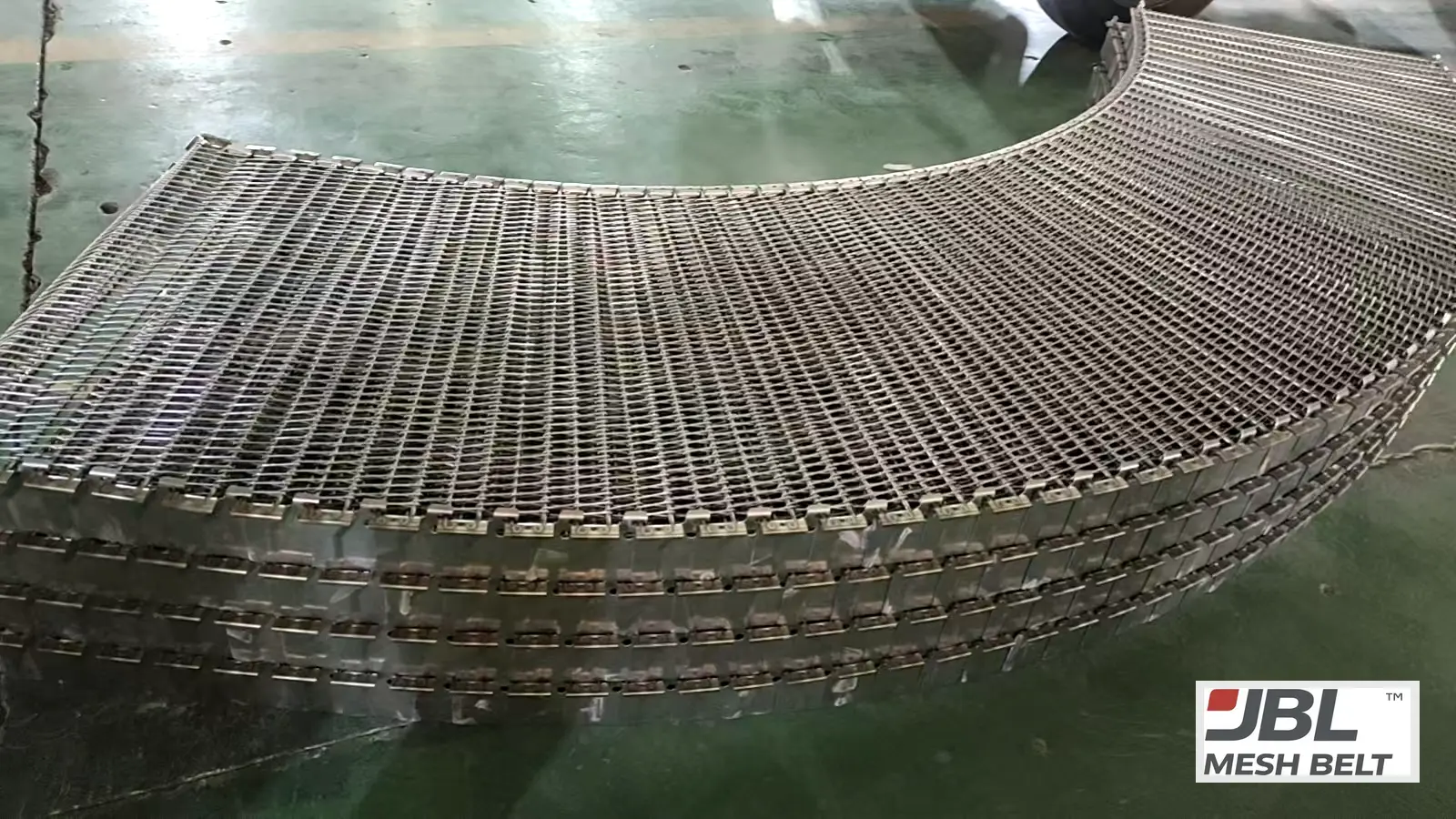
A spiral belt has to close on the inside of the turn and open on the outside. How far it can do that is built into the links.
Short answer
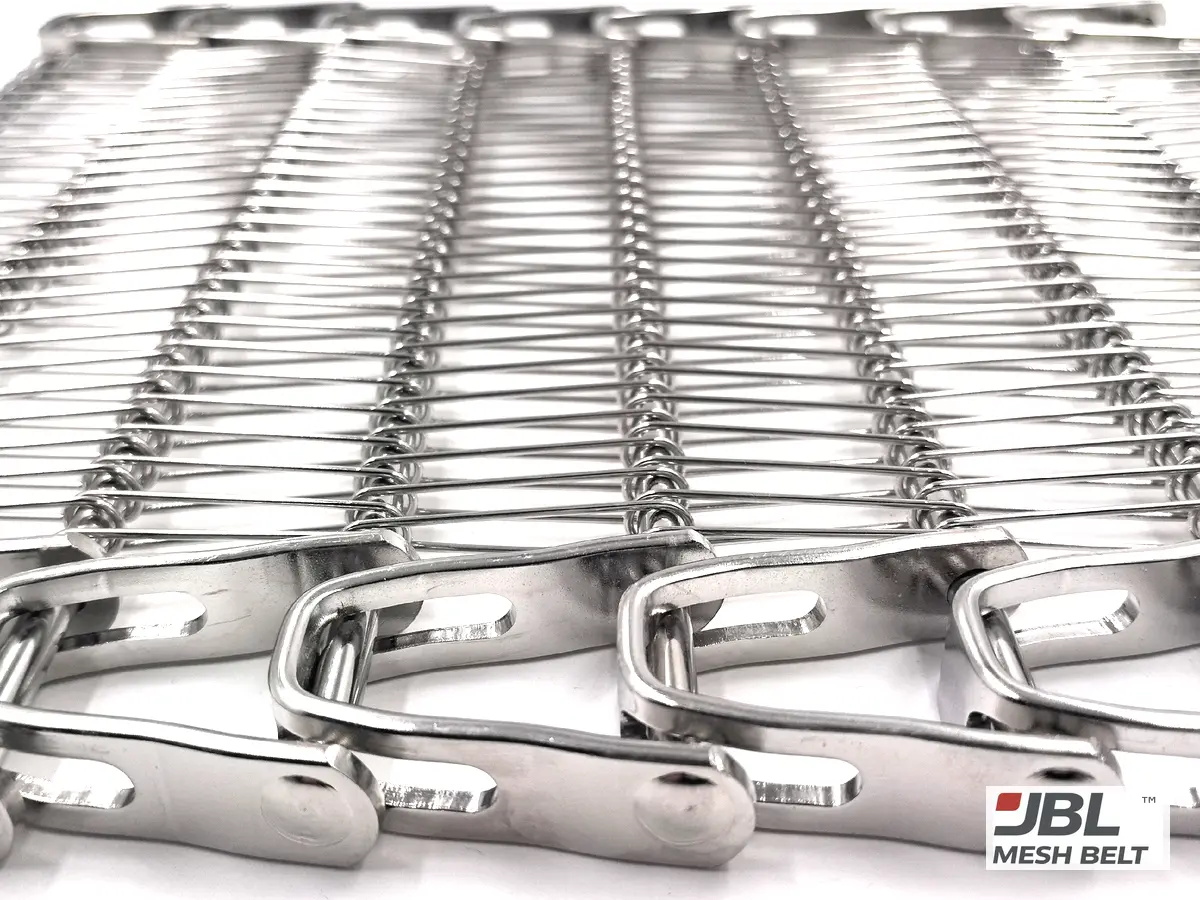
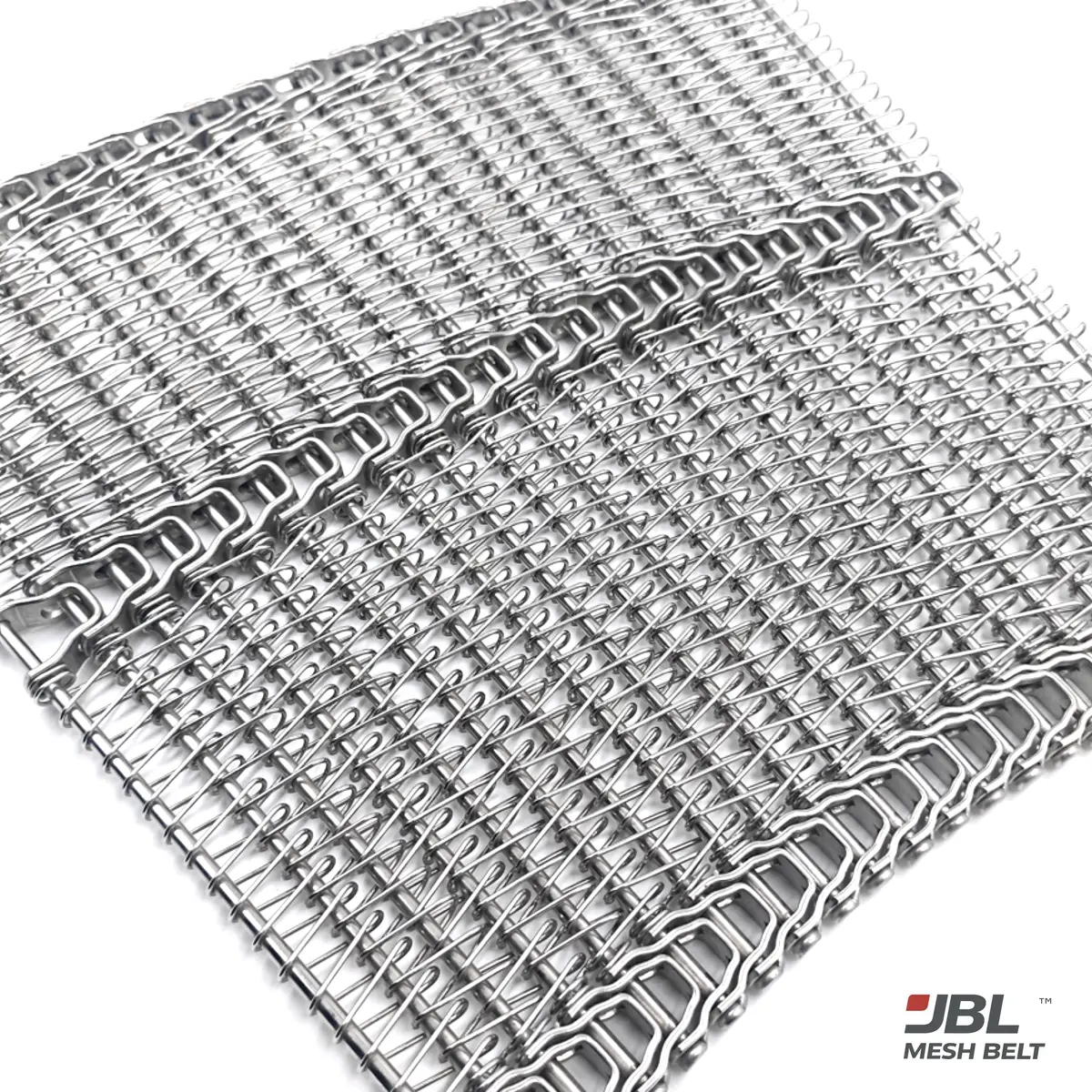
The turn ratio and the link design decide how far the inside edge can collapse. A standard two-row link belt starts around a turn ratio of 1.15. A small radius three-row link belt goes to about 1.1, with a shorter inner pitch and a longer outer pitch.
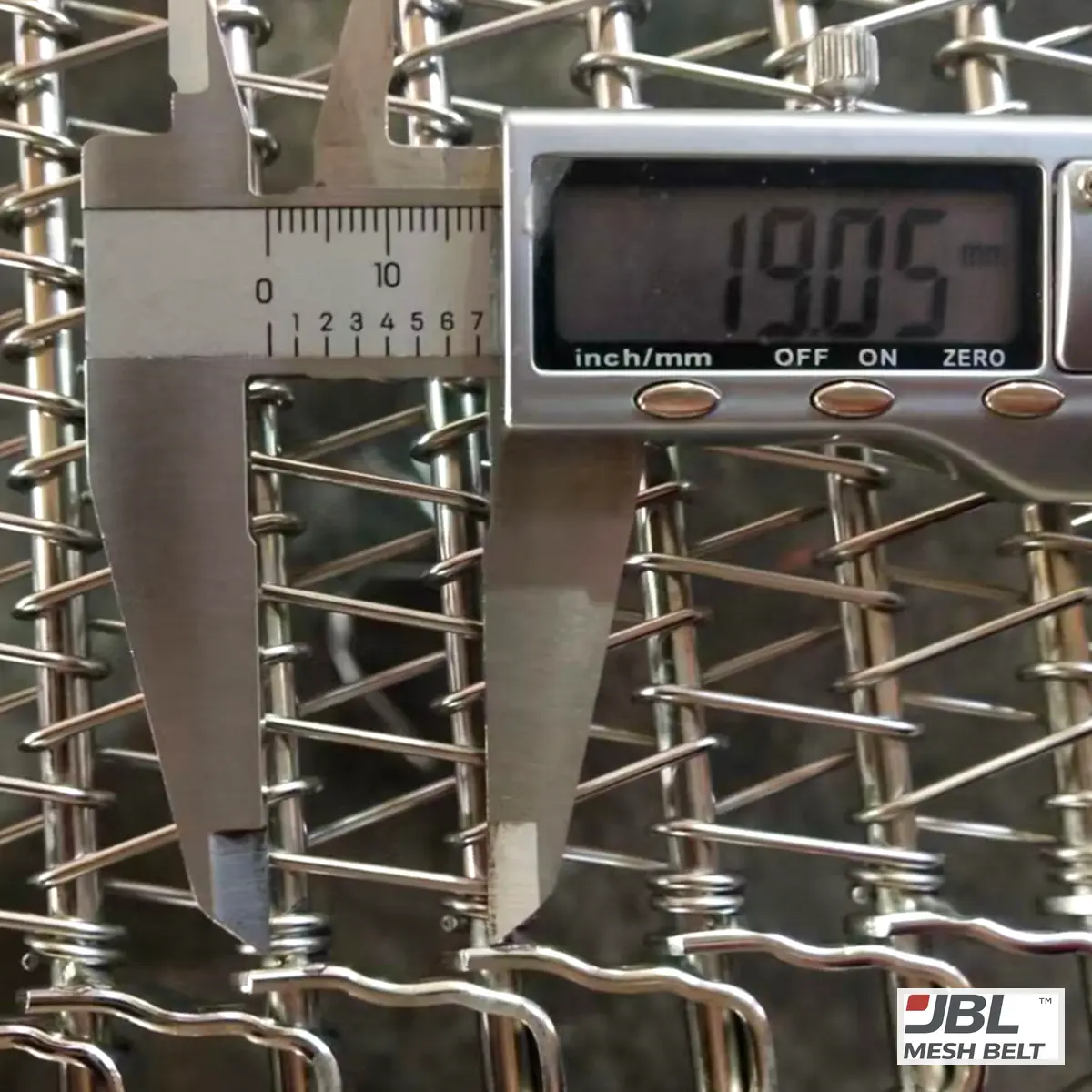
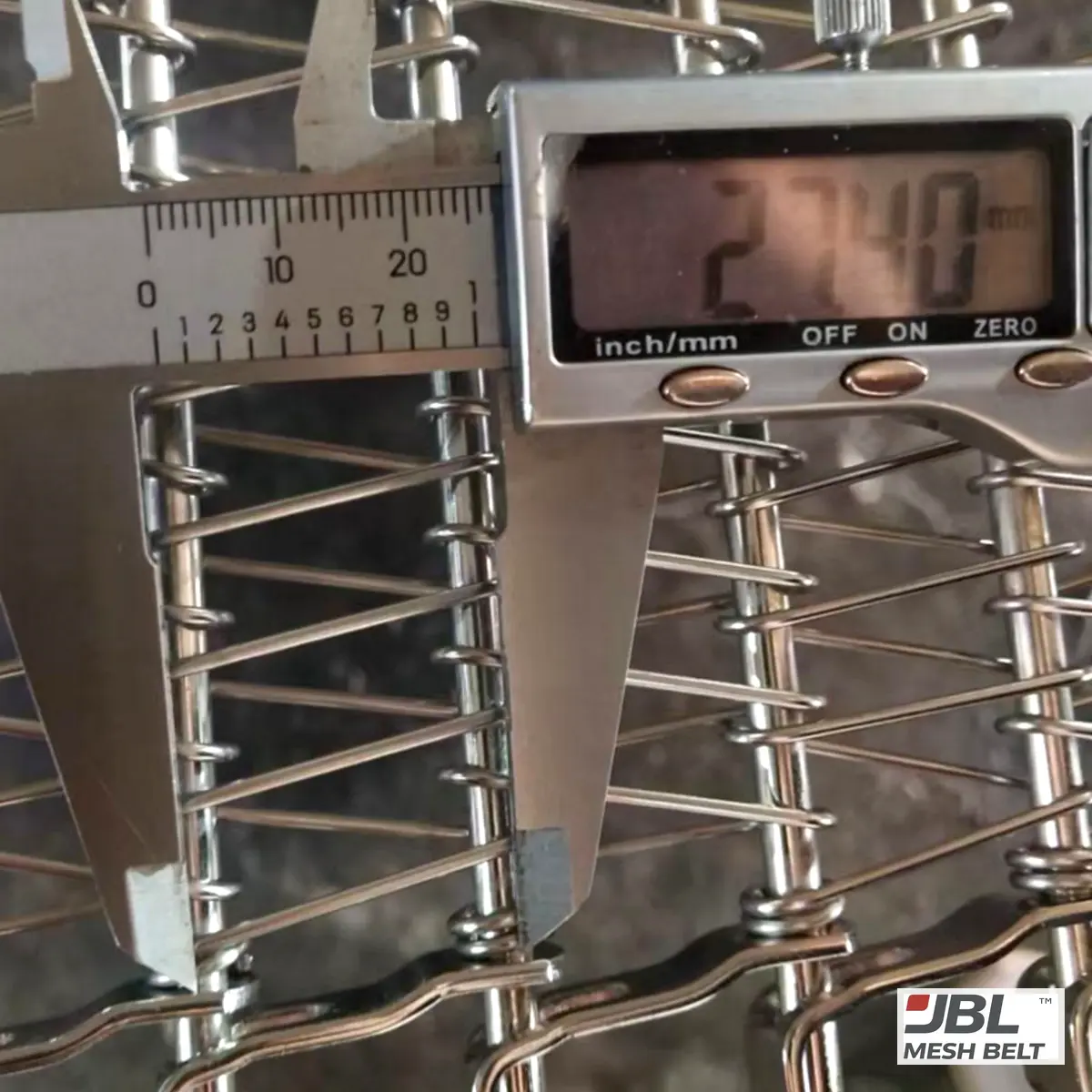
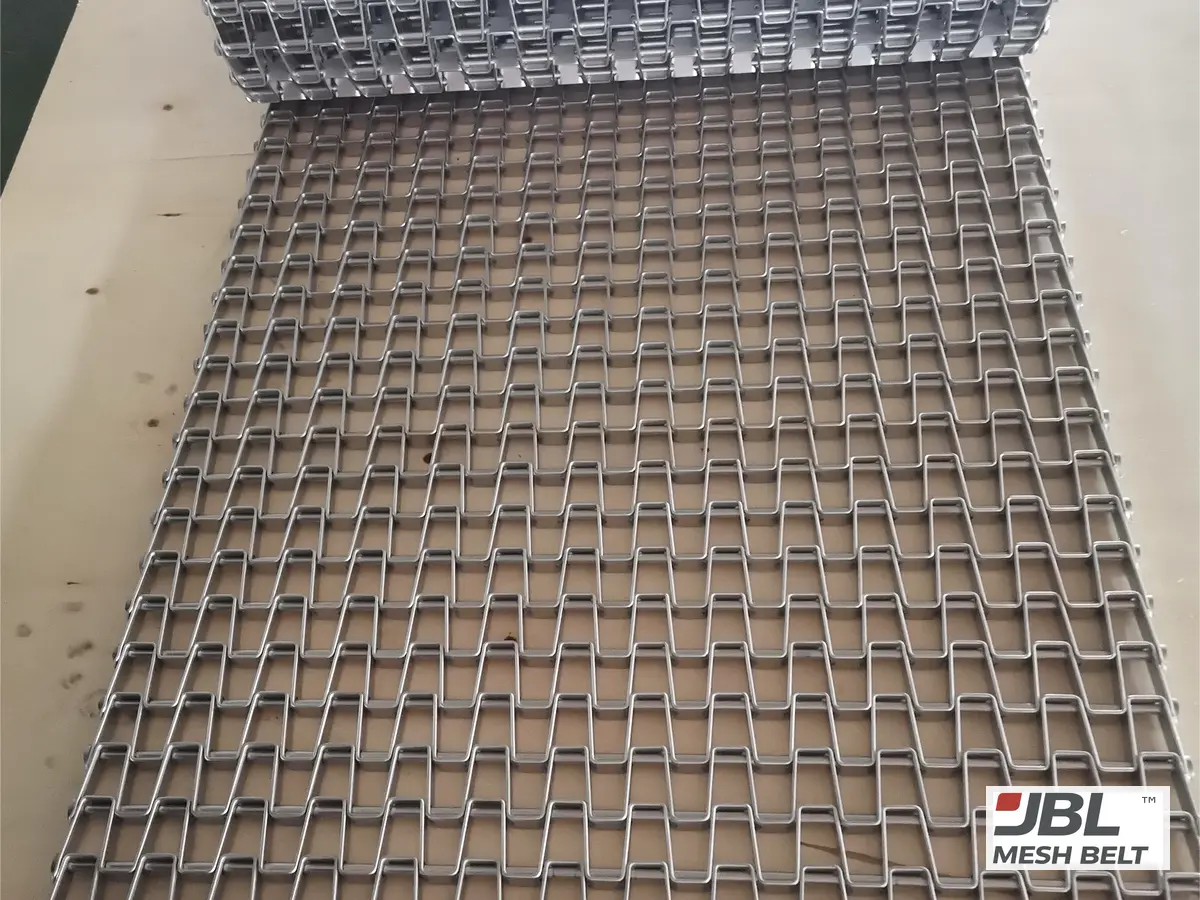
On a small radius belt, there is not one pitch but two or three. The inner pitch is short so the inside edge can close tightly. The outer pitch is longer so the outside edge can open. A buyer who reads only one pitch can order the wrong belt without knowing it.
| Belt type | Typical pitch combination | Turn ratio from |
|---|---|---|
| Standard two-row link | One rod pitch, e.g. 27.4 mm | about 1.15 |
| Small radius three-row link | 19.05 × 27.4 mm | about 1.1 |
| Small radius three-row link | 27.4 × 38.1 mm | about 1.1 |
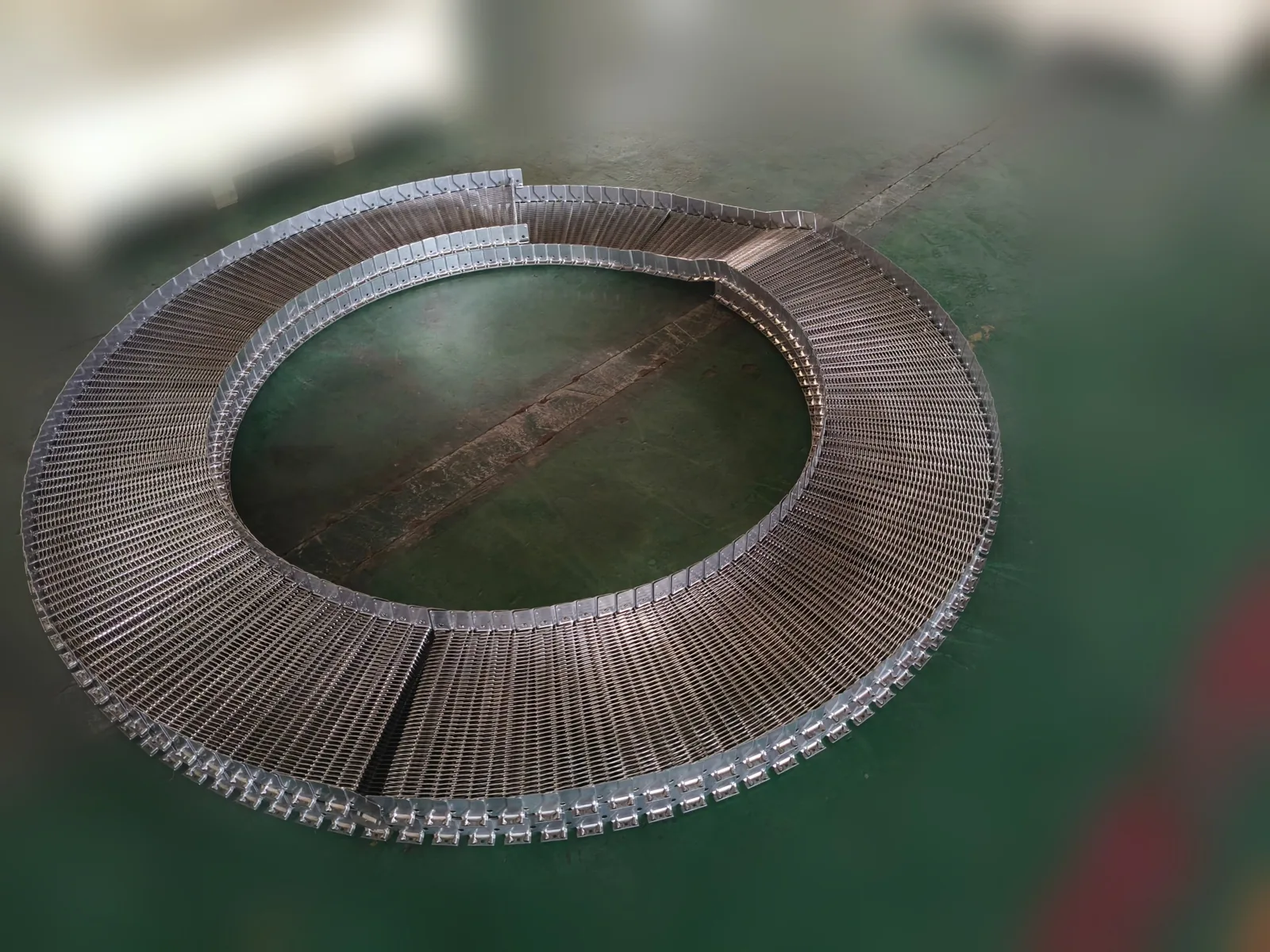
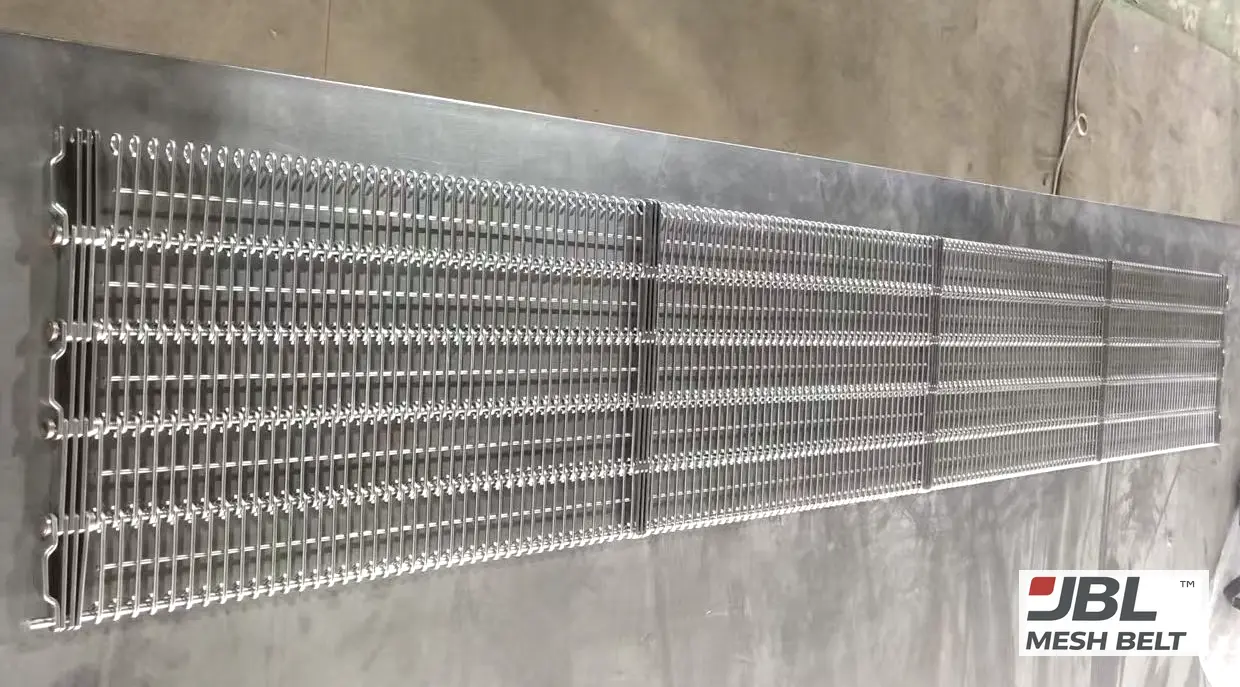
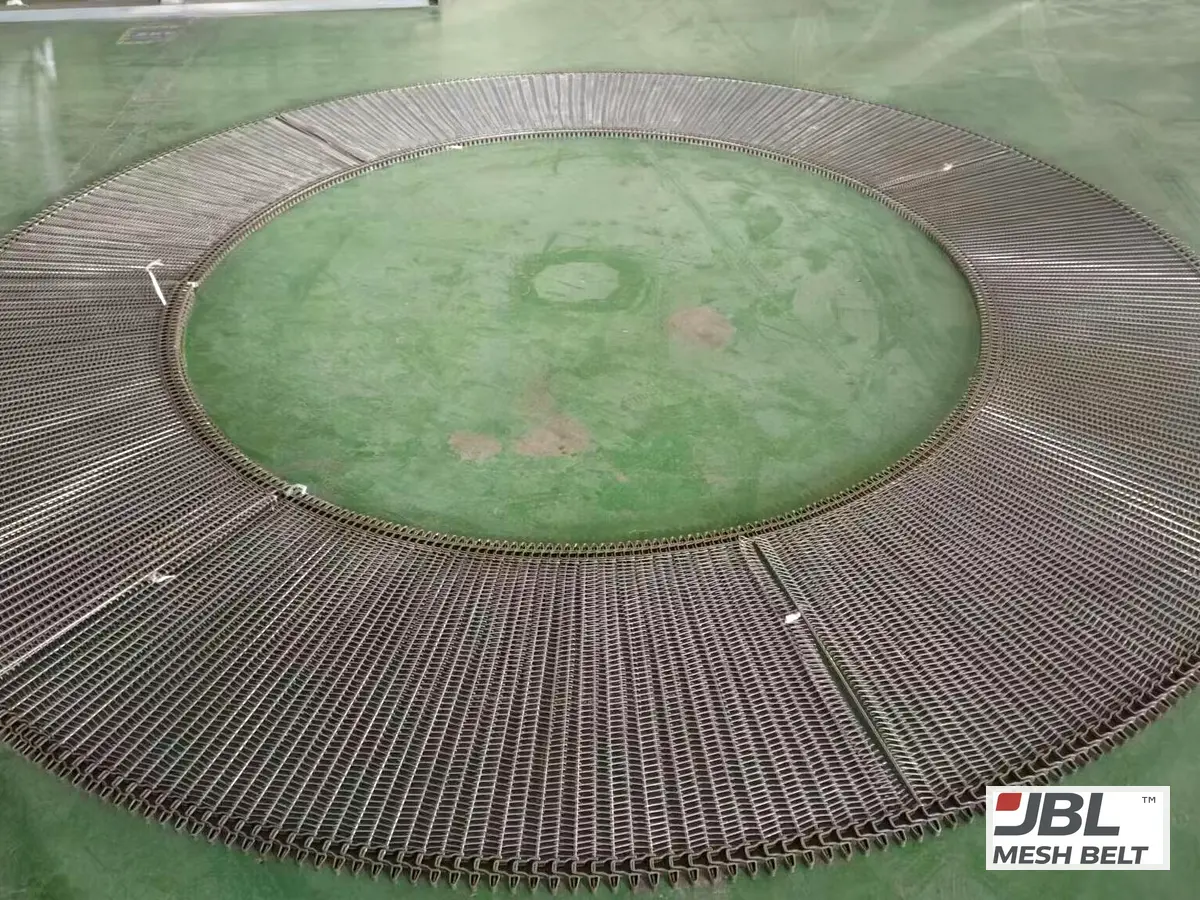
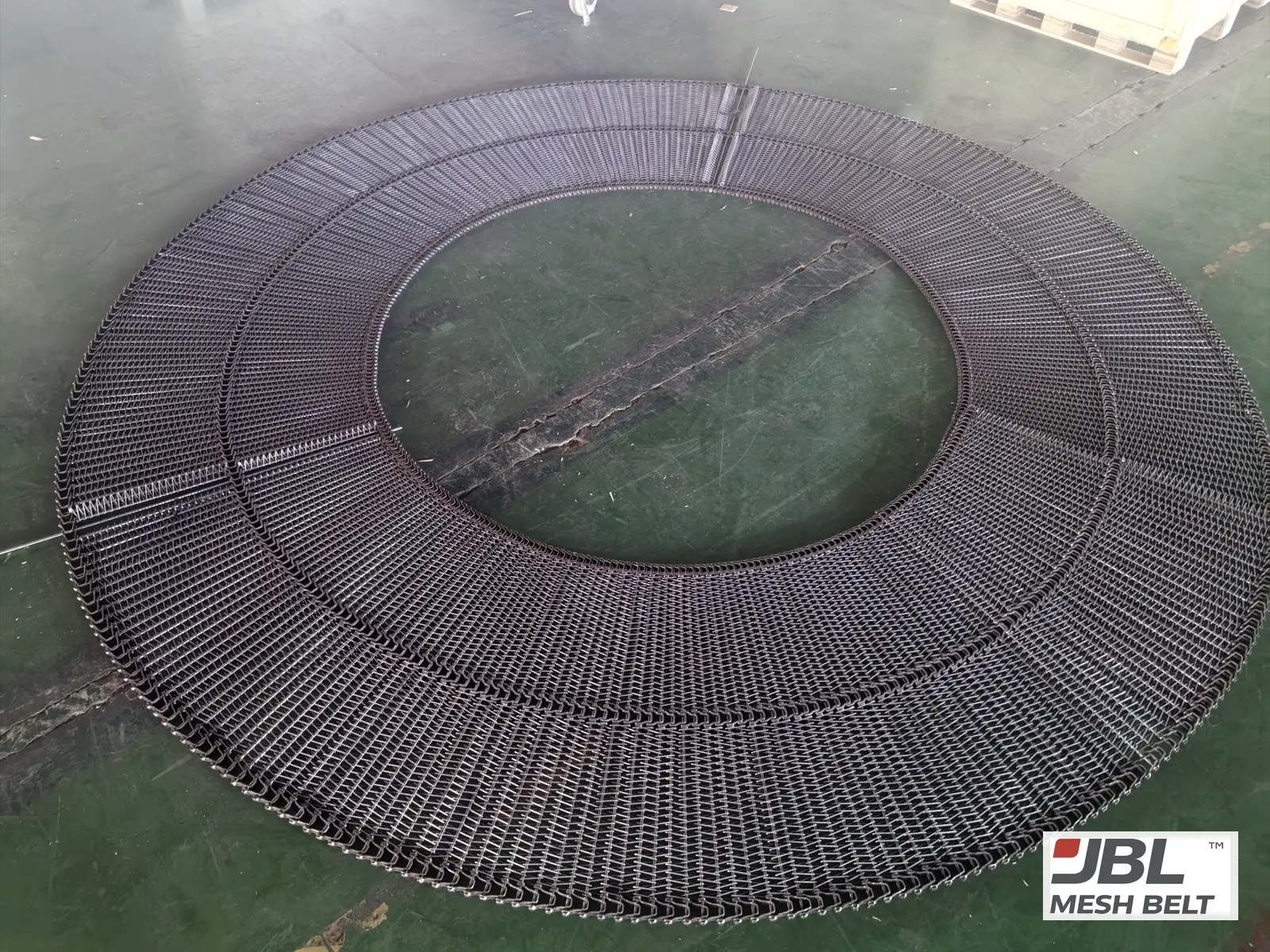
I always confirm the turn ratio against your drum and belt width before I quote. Then the belt itself is checked in a turn: in Malaysia it was laid out in a full circle to see that the mesh closes evenly on the inner edge and the links follow the radius.
03Why do 31.75 mm and 34 mm pitches look alike but not run alike?
On our side-driven belts, the two rod pitches differ by just over 2 mm. By eye, you cannot tell them apart.
Short answer
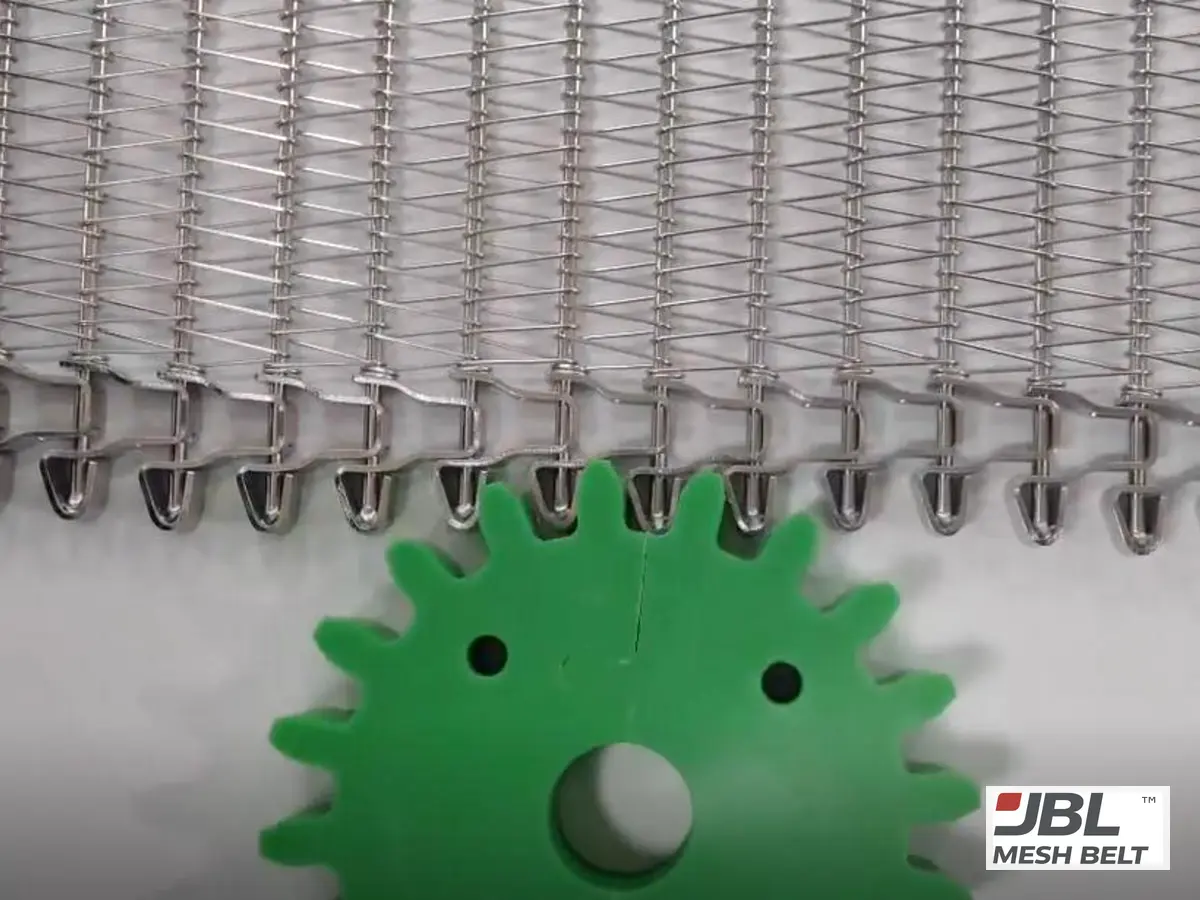
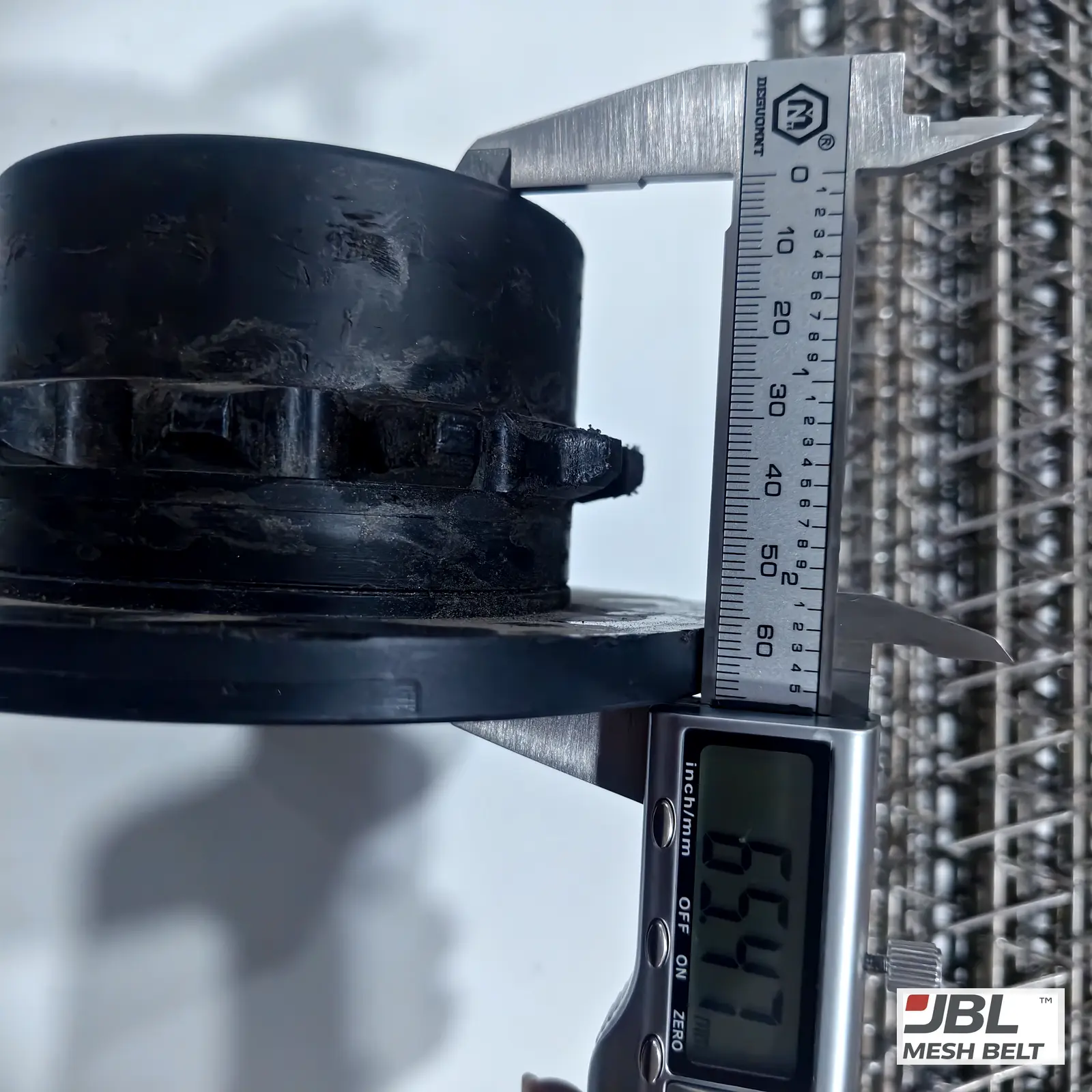
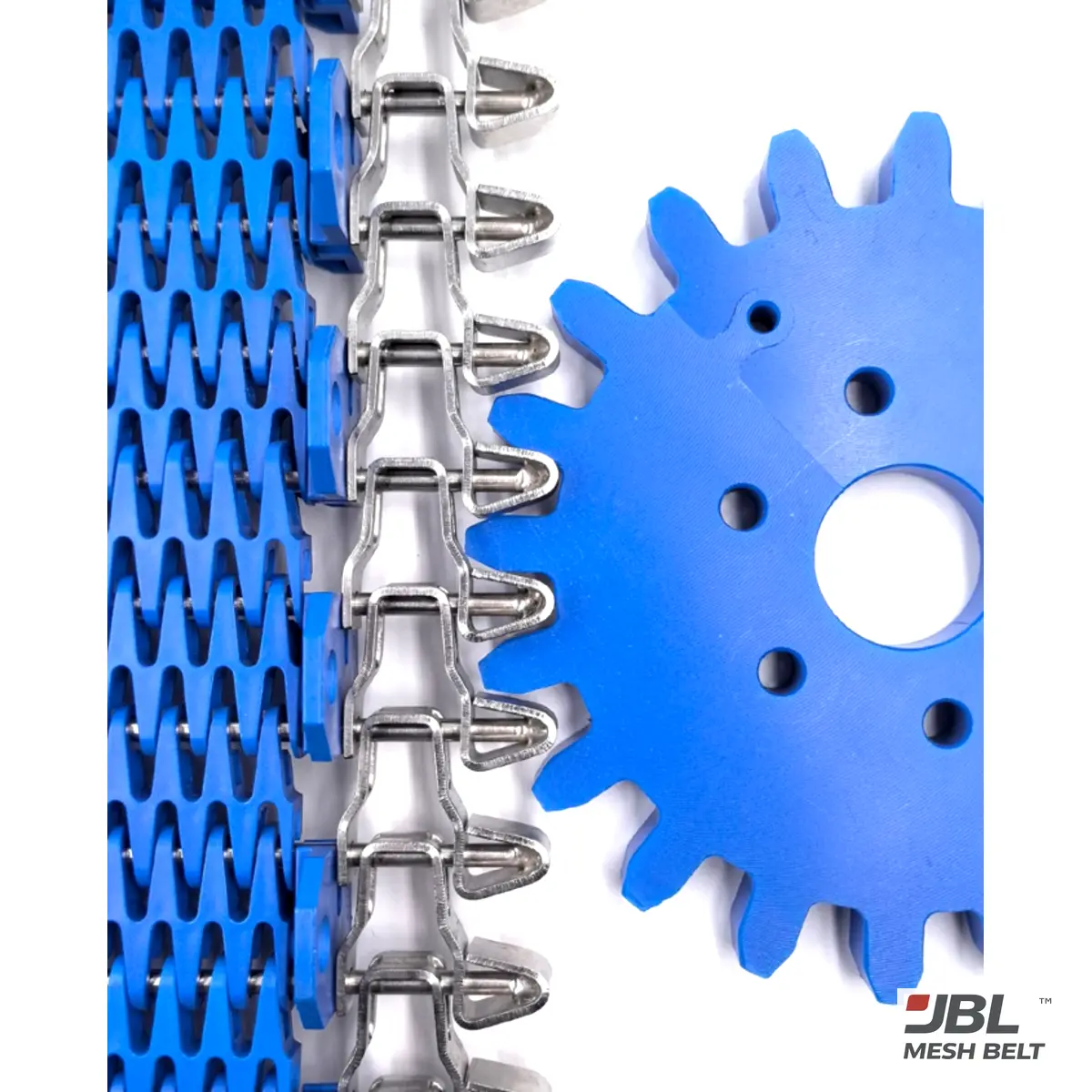
Our side-driven belts run at a 31.75 mm or 34 mm rod pitch. The sprocket teeth are cut for one of them. With the wrong pitch, the belt rides on the tooth tips, jumps or wears fast. I measure the pitch on your old belt first.
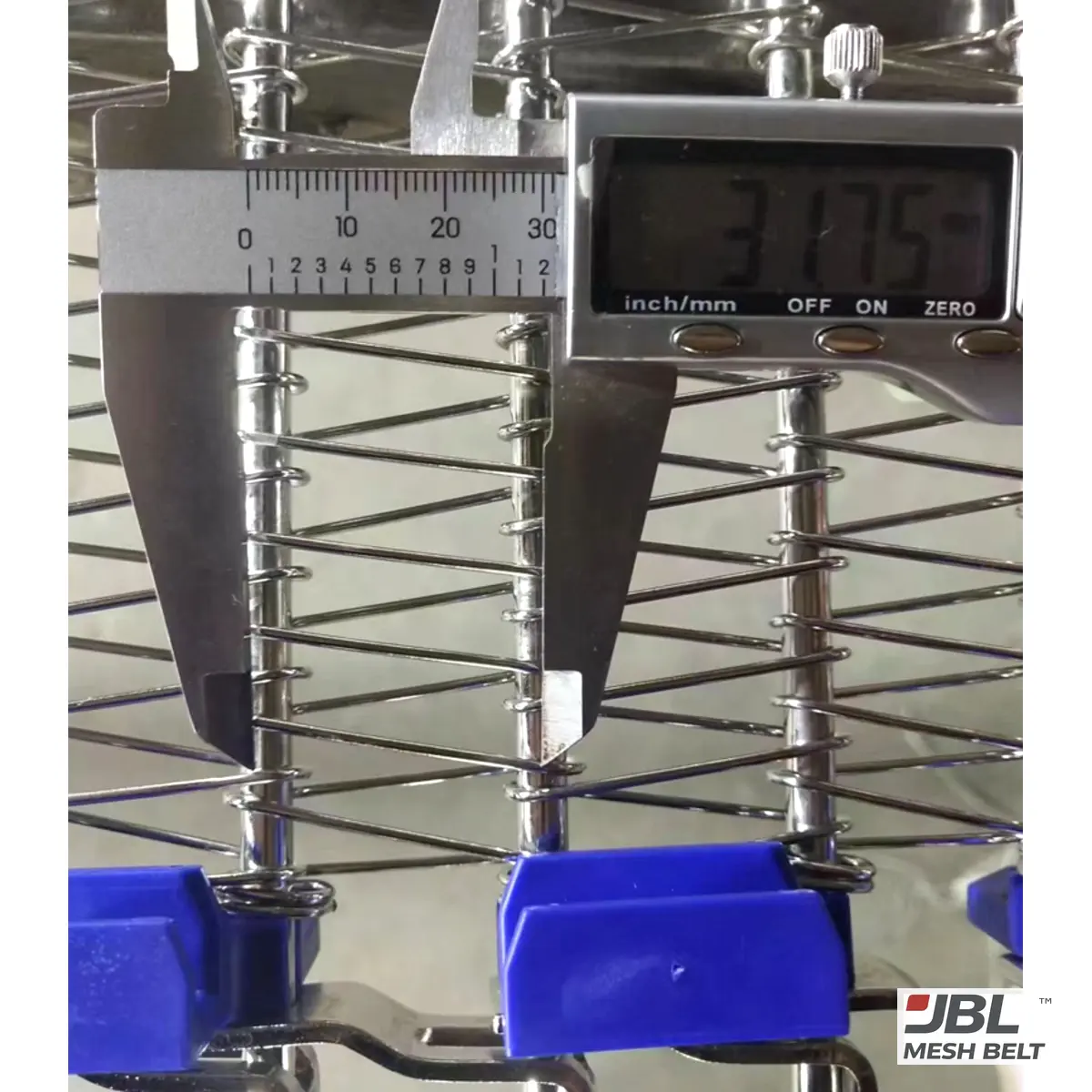
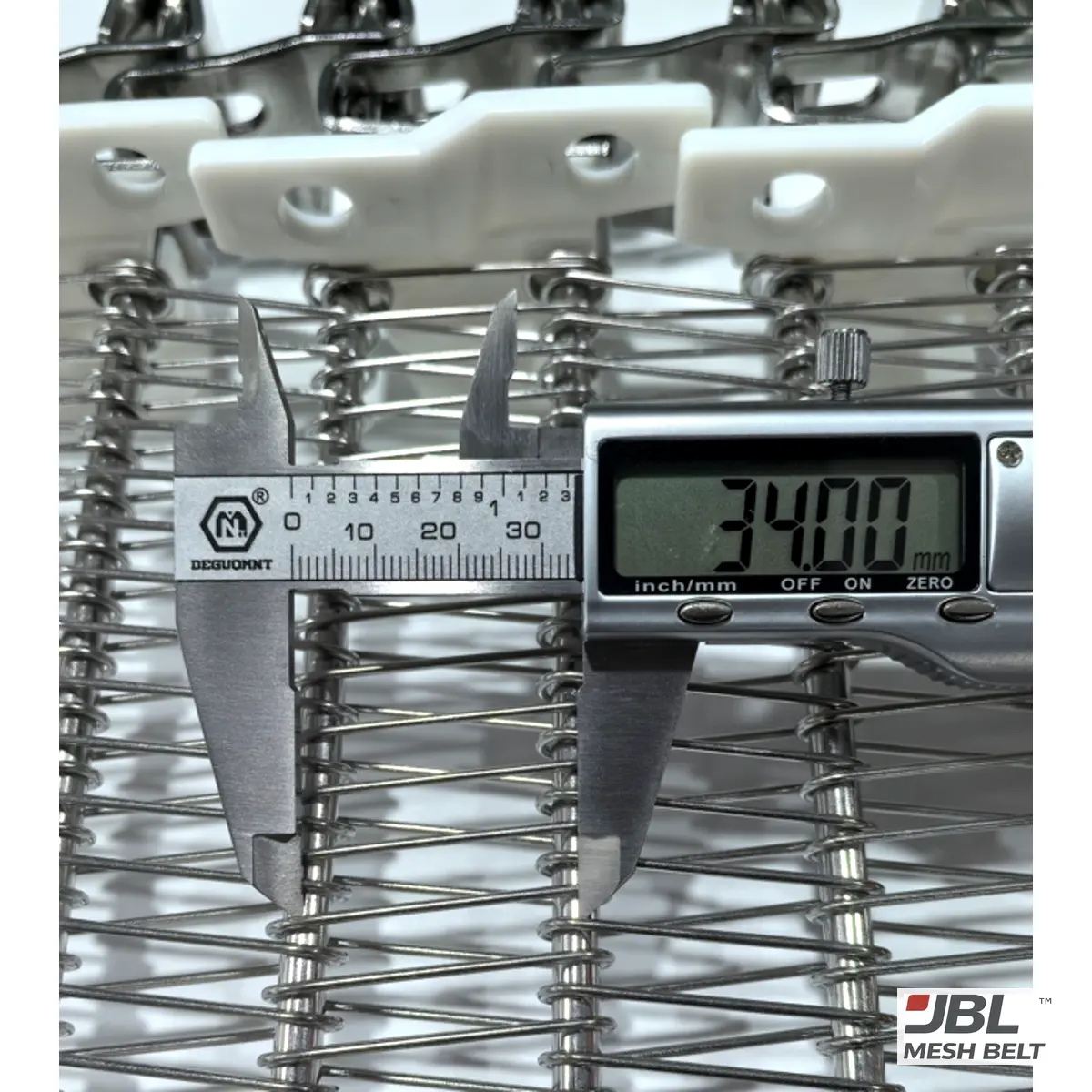
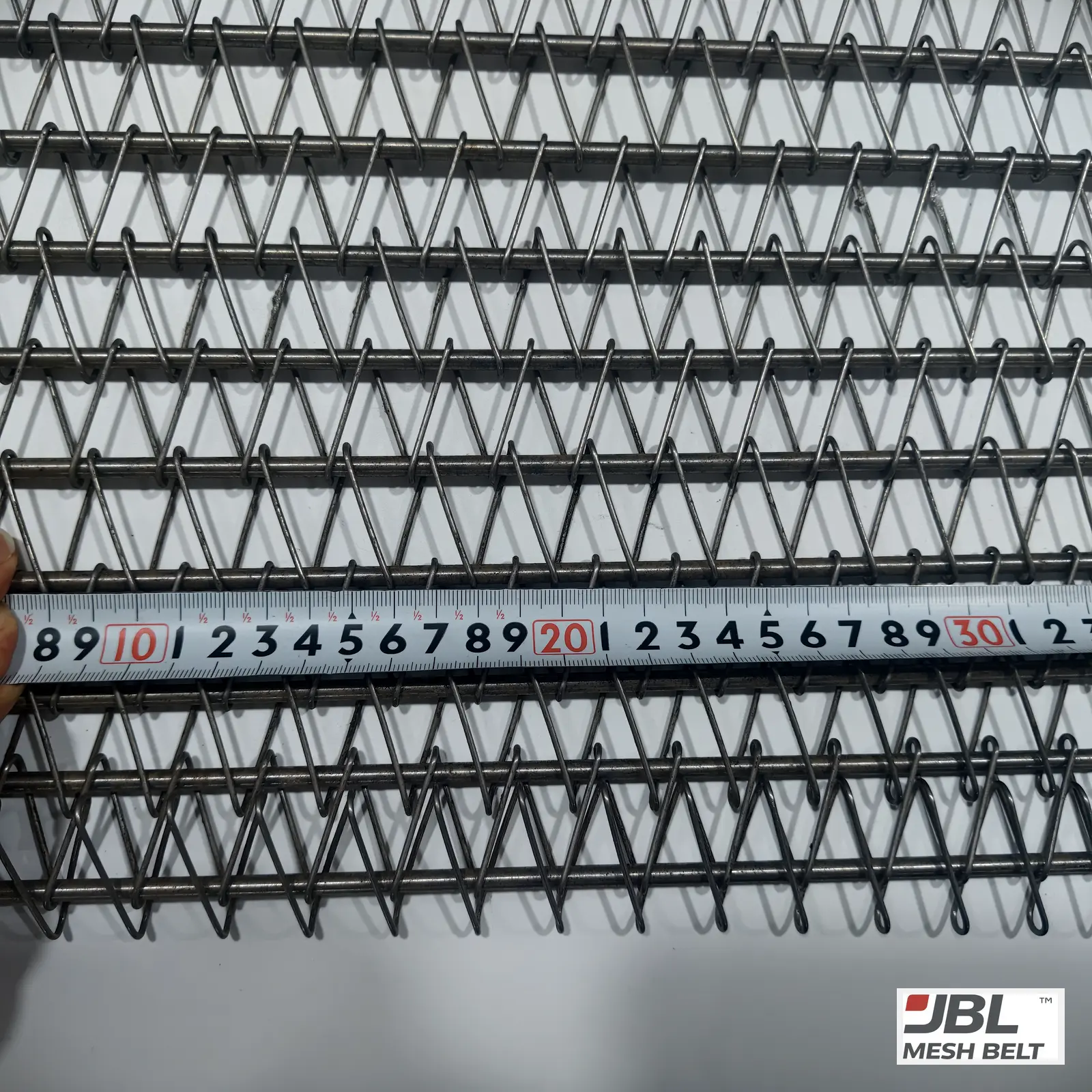
A difference of 2.25 mm per rod looks small. Over a few rods it adds up, and within a short length the belt and the sprocket are out of step. The belt climbs the teeth instead of sitting in them.
With a near match, the rods ride on the tips of the teeth instead of seating between them. A pitch that is nearly right is still wrong.
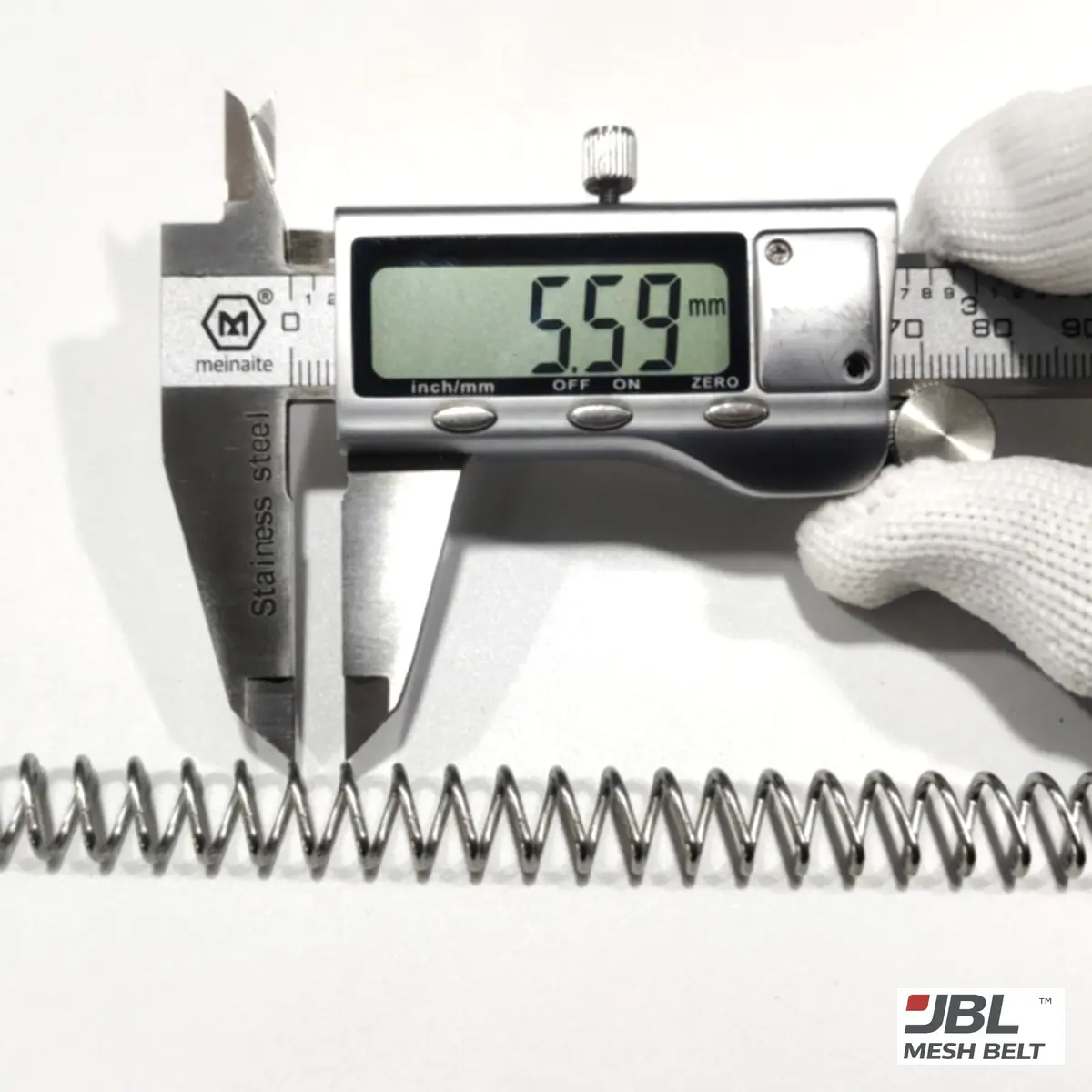
So I read the pitch with a caliper on your old belt, over several rods, and confirm it on the drawing. If you replace the sprockets as well, they are cut for that pitch and run on the belt before shipment. More in chain pitch and sprocket mismatch.
04Can wear make your old belt read like a different size?
A worn belt is still a good sample. But a worn reading copied straight into a new belt gives you a new belt that is already worn.
Short answer
Yes. Links get thinner, wire and side plates lose material, and the pitch can stretch. I compare readings from worn and less-worn areas, and with the drawing where one exists, then make the new belt to the original size — not the worn size.
| Reading | Worn original | New belt |
|---|---|---|
| Link thickness (waffle line) | 2.42 mm | 2.71 mm |
| Wire (UK self-stacking) | 1.65–1.68 mm | 1.71 mm |
| Side plate thickness (UK) | 1.44–1.50 mm | 1.50–1.52 mm |
| Rod (UK) | 4.99 mm | 5.00 mm |
Readings from the waffle line and UK case photos.
On the waffle cooling spiral, the customer's link read 2.42 mm. Copying it would have made a weaker belt. We made the trial run at 2.71 mm, linked it into the original belt, and the customer approved it from the photos.
On the UK self-stacking belt, the original wire read between 1.65 and 1.68 mm and the side plates between 1.44 and 1.50 mm. A spread like that on one sample cannot all be the design. The new belt was made at 1.71 mm wire and 1.50 mm side plate, and the rod pitch stayed at 30.00 mm on the original, the sample and the bulk belt.
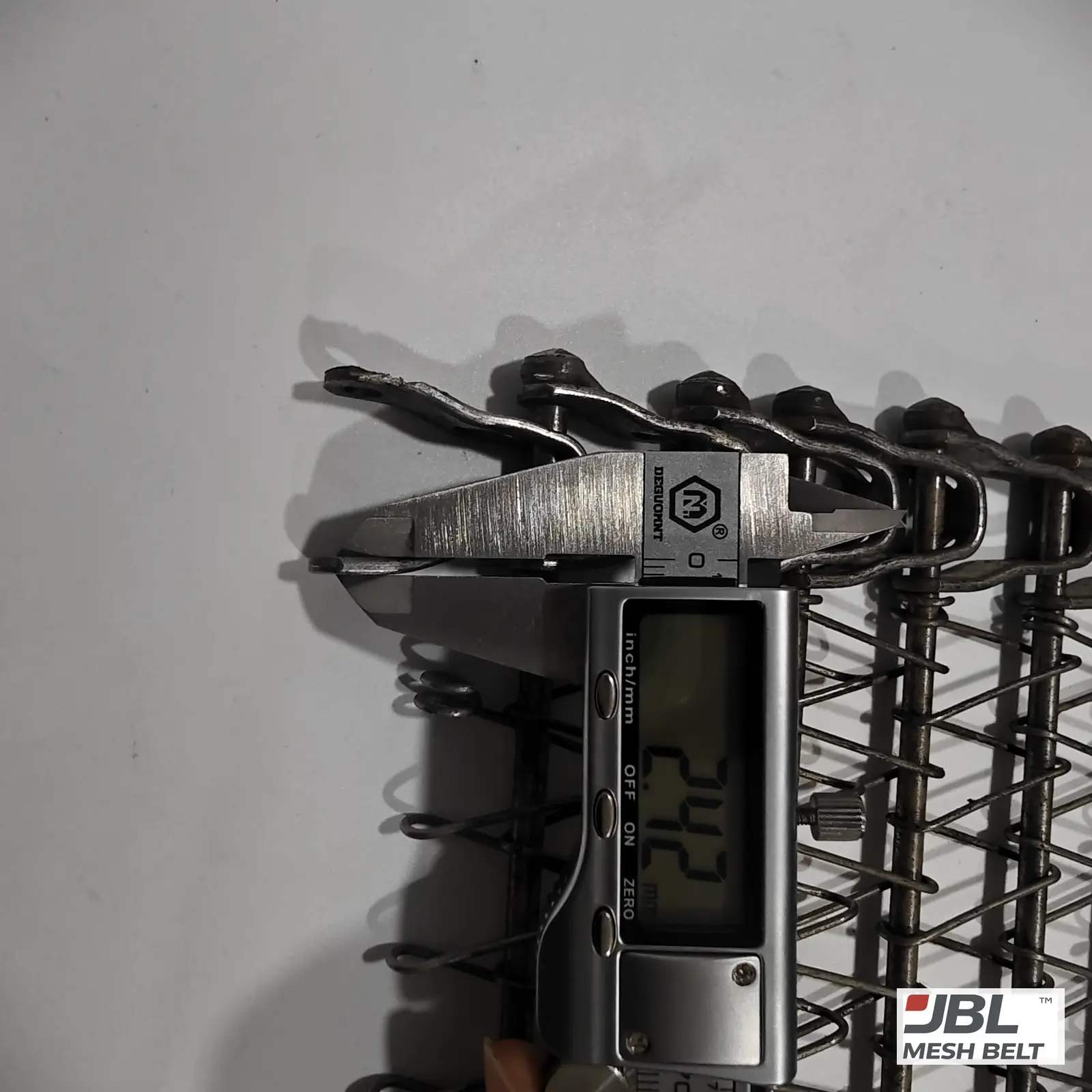
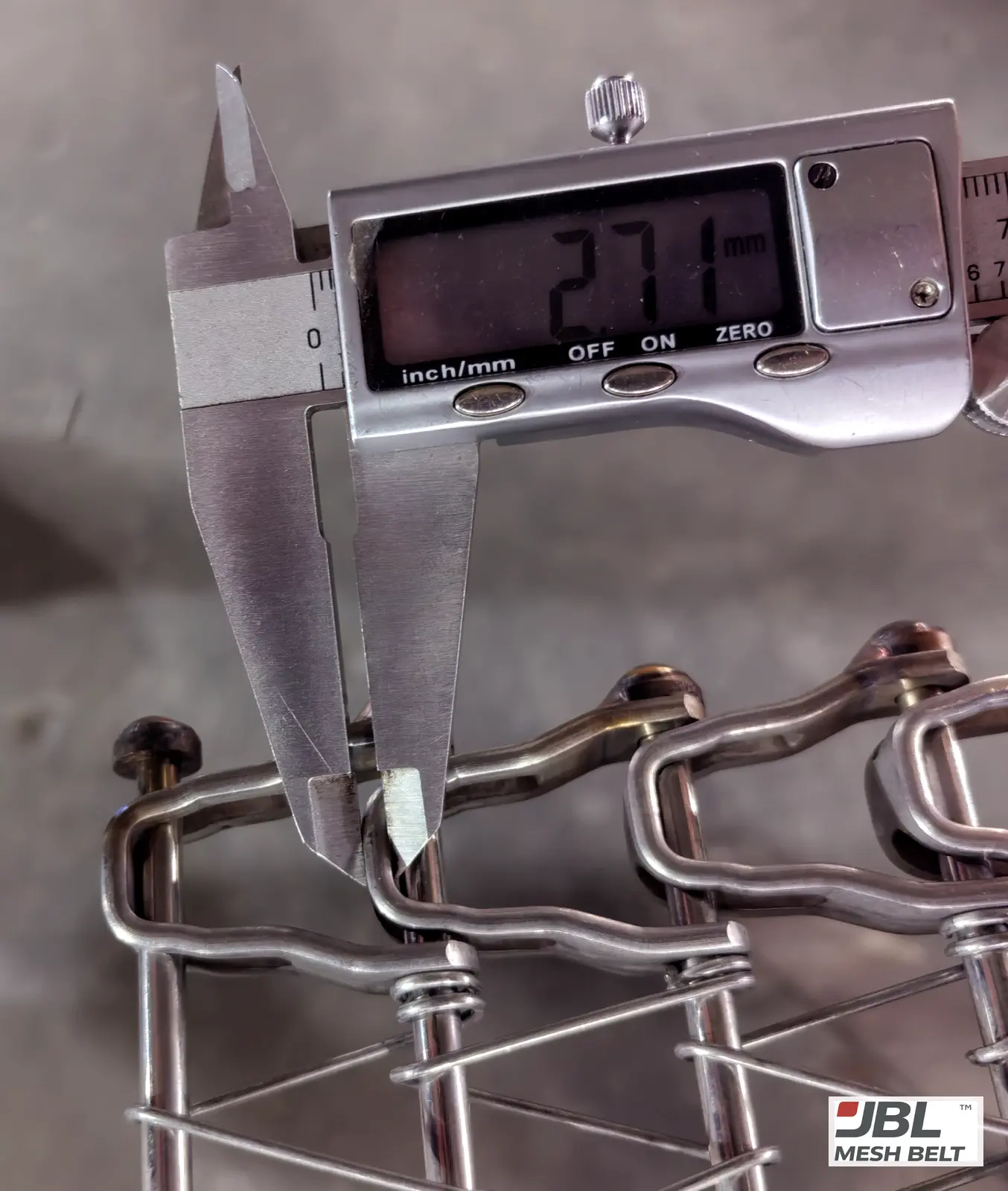
I explain the method in copying a worn belt from a sample.
05What do the edge and link details change?
The edge is the part of the belt that touches your drum, your guides and sometimes your product. It is never just a detail.
Short answer
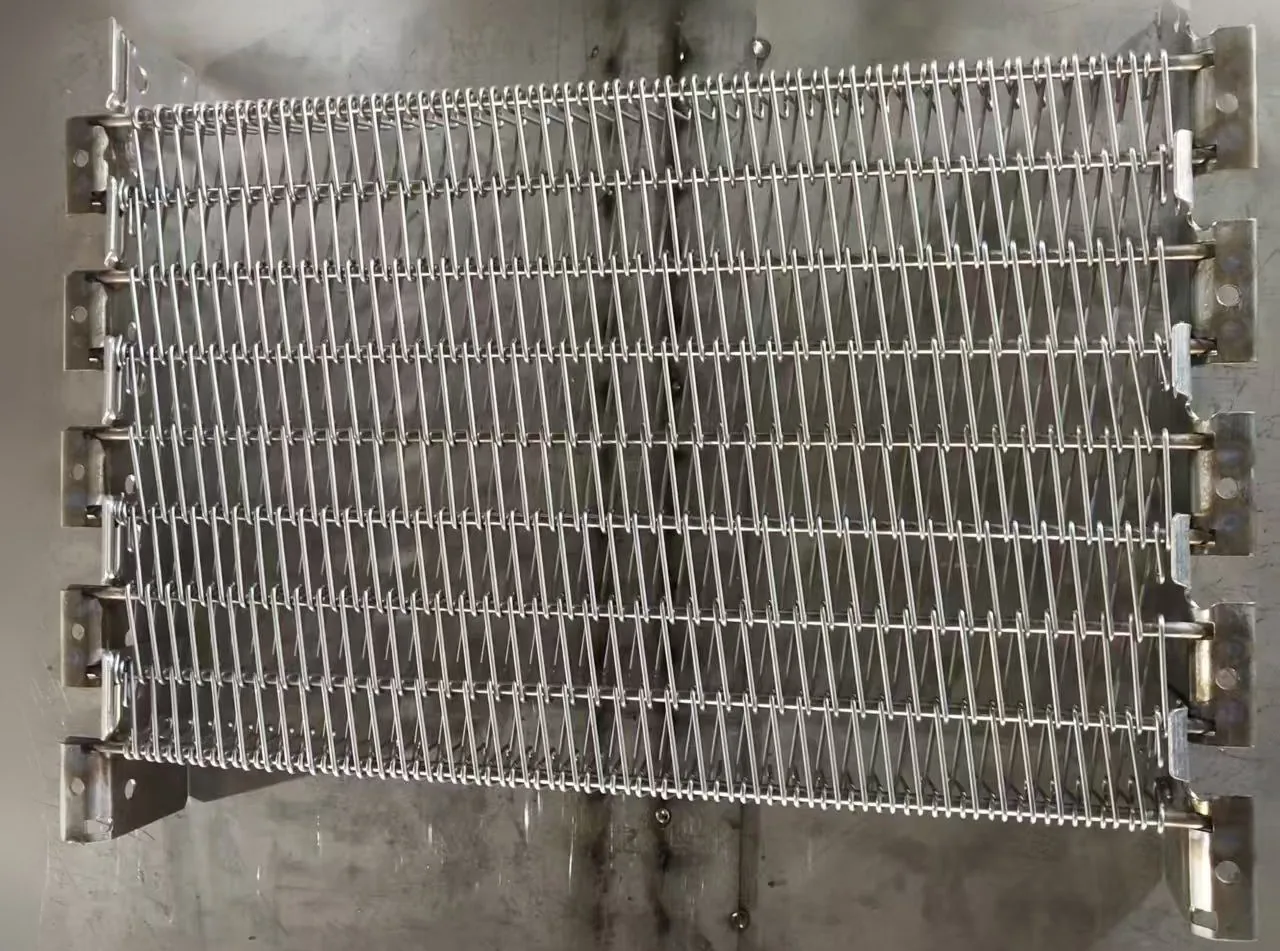
The edge type — button, flat-hat, rod or button-cap welded, or clinched — and the link height and thickness decide how the belt touches the drum bars and guides. Matching the existing edge is my starting point; improving its finish is often the fix.
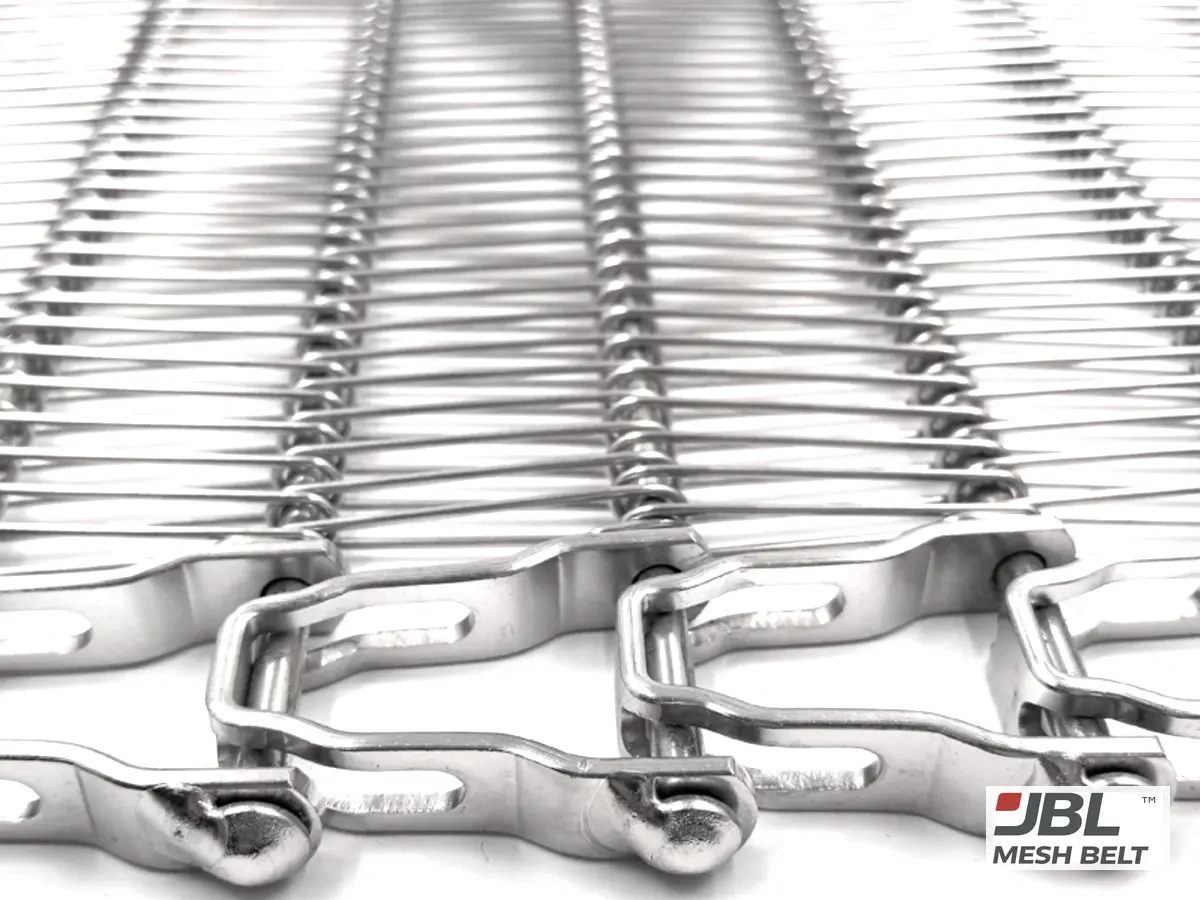
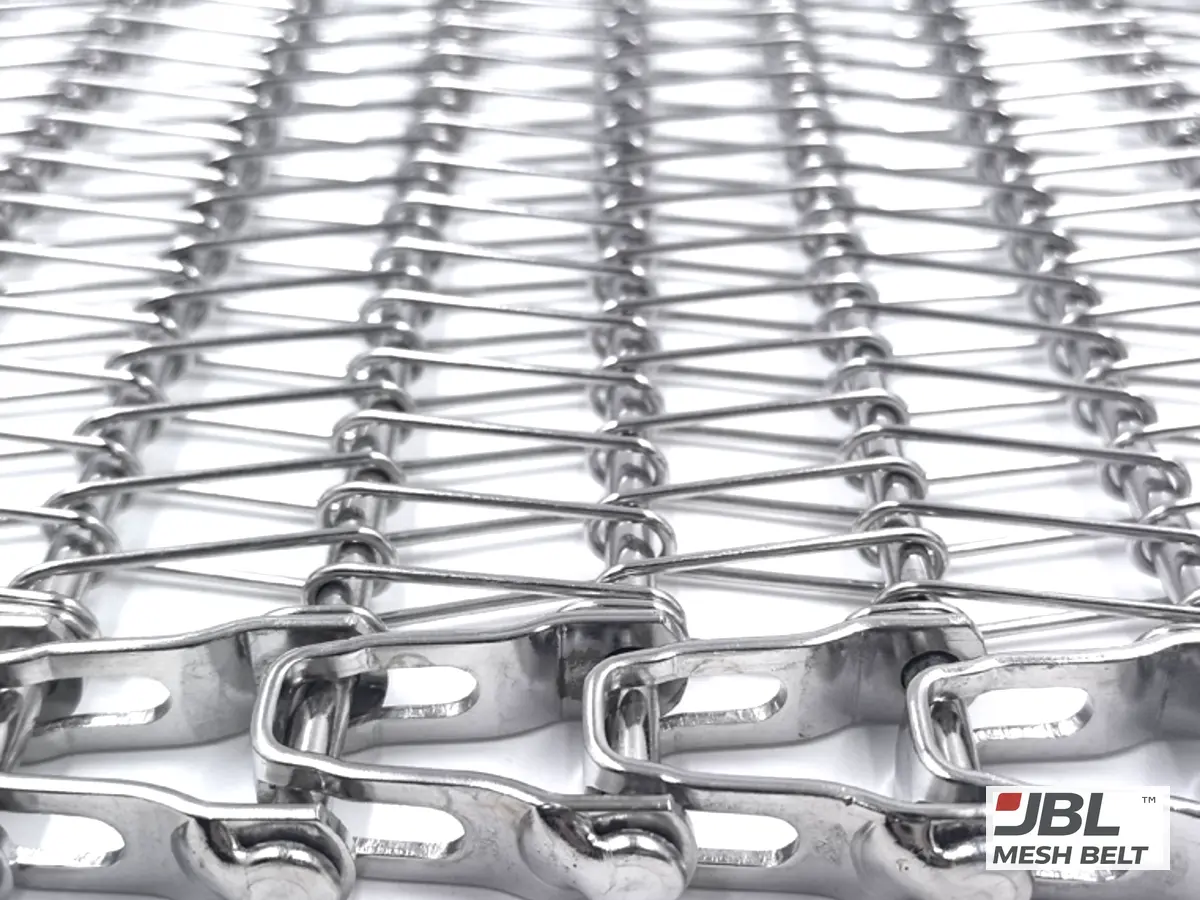
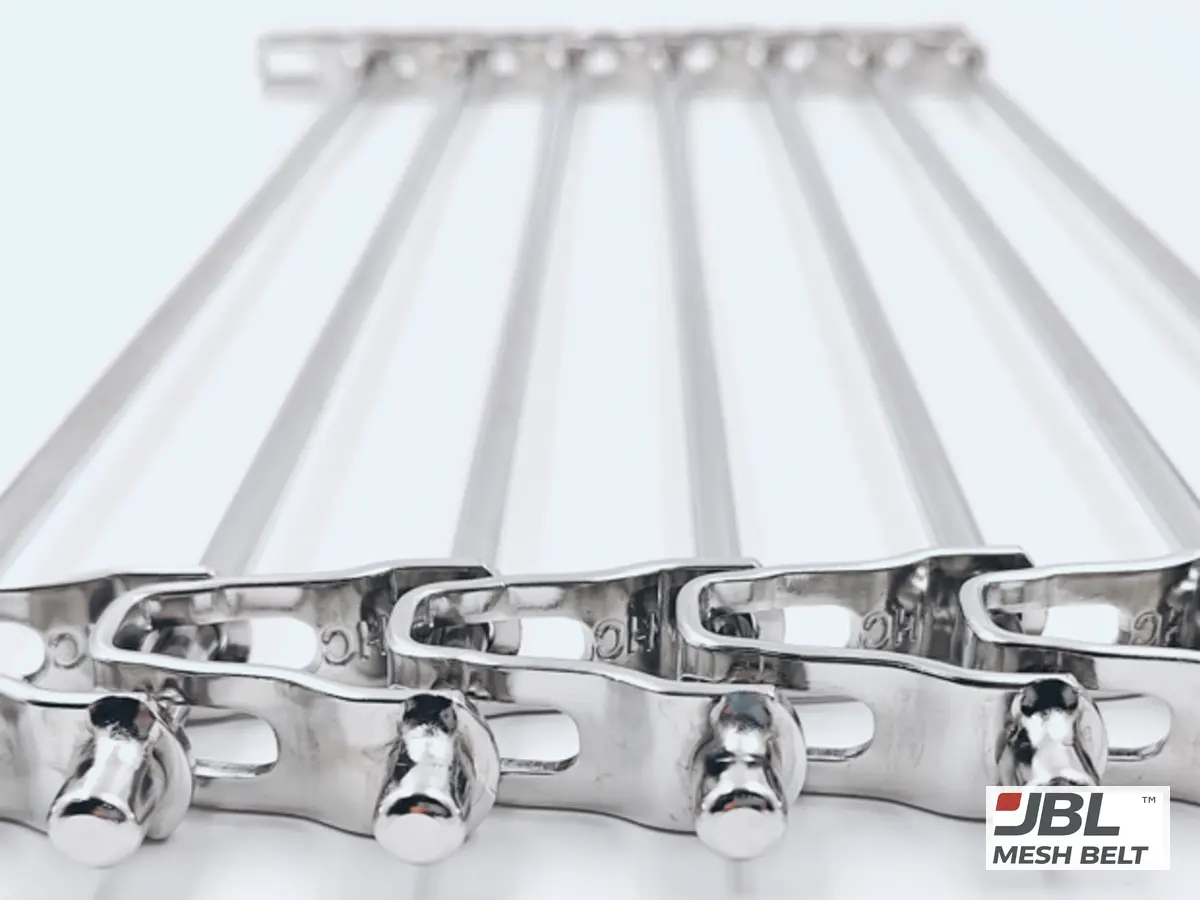
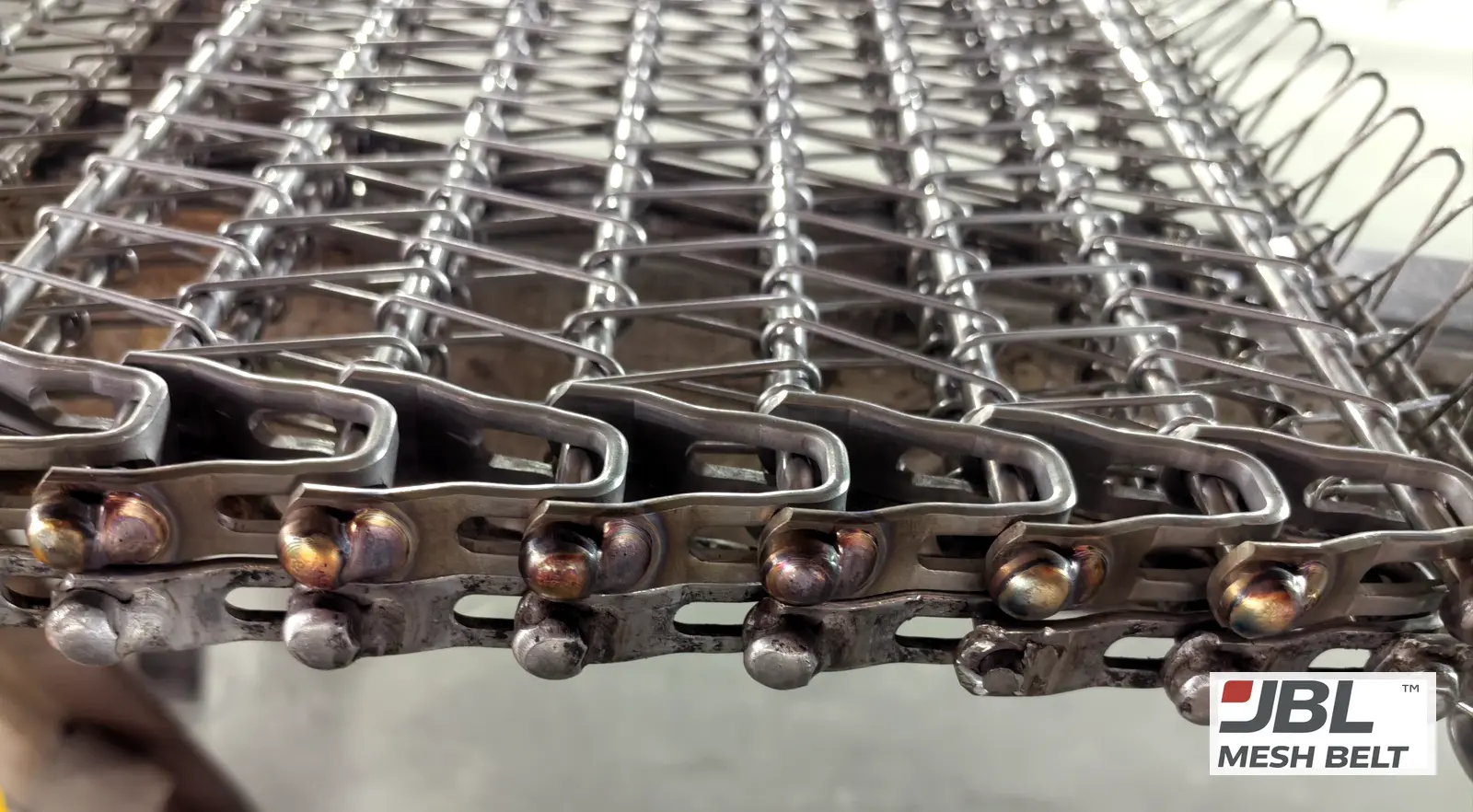
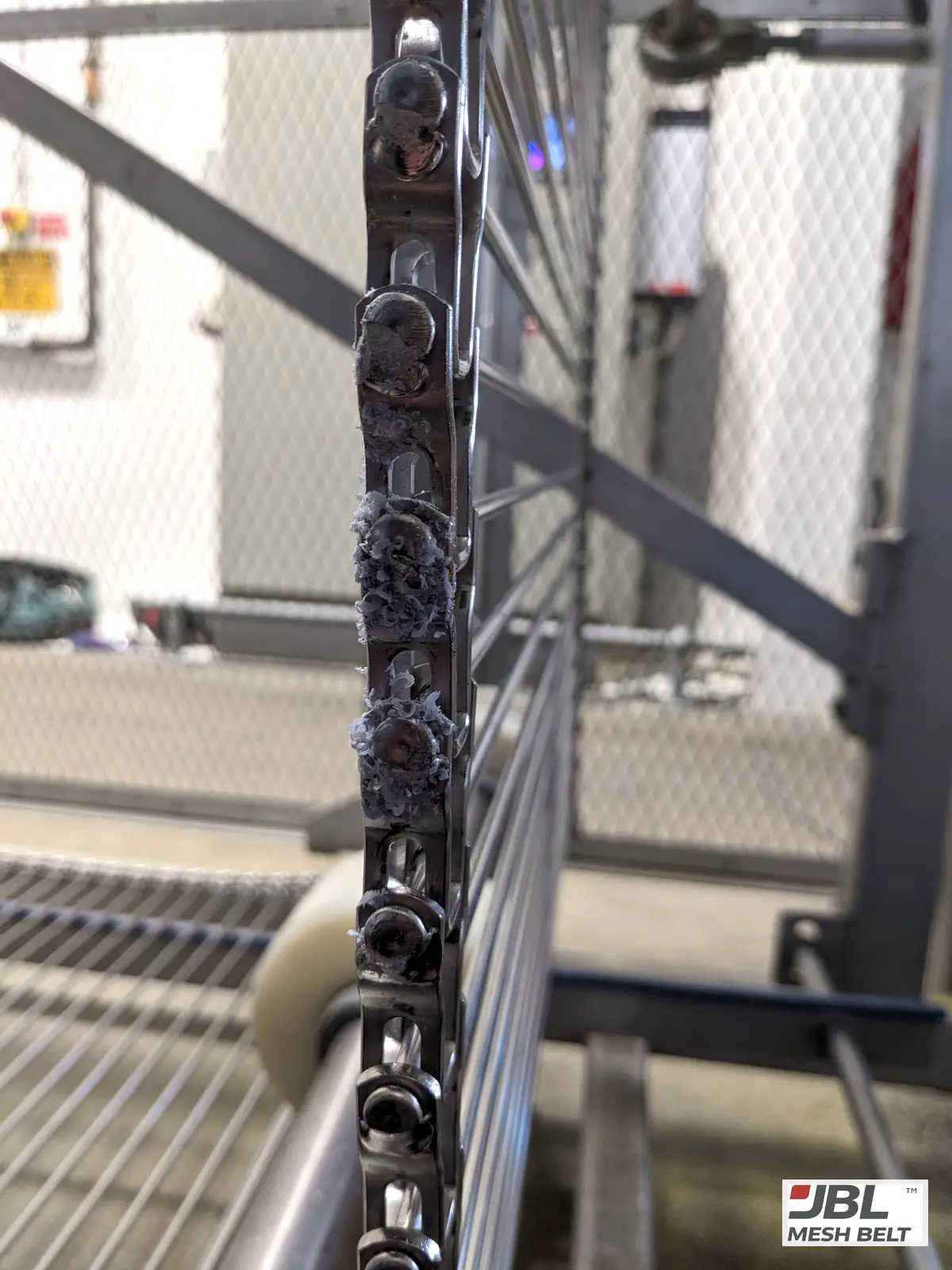
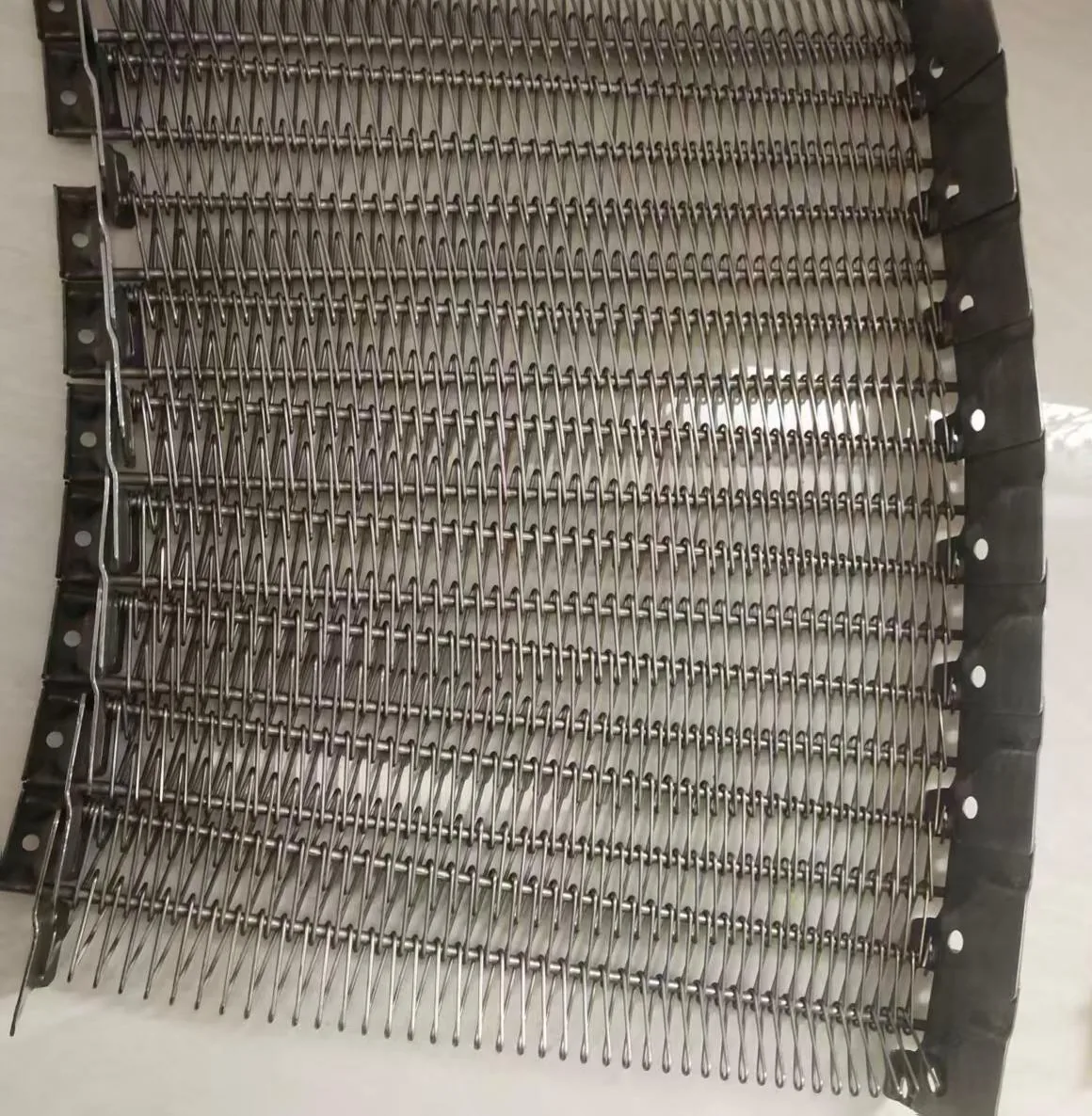
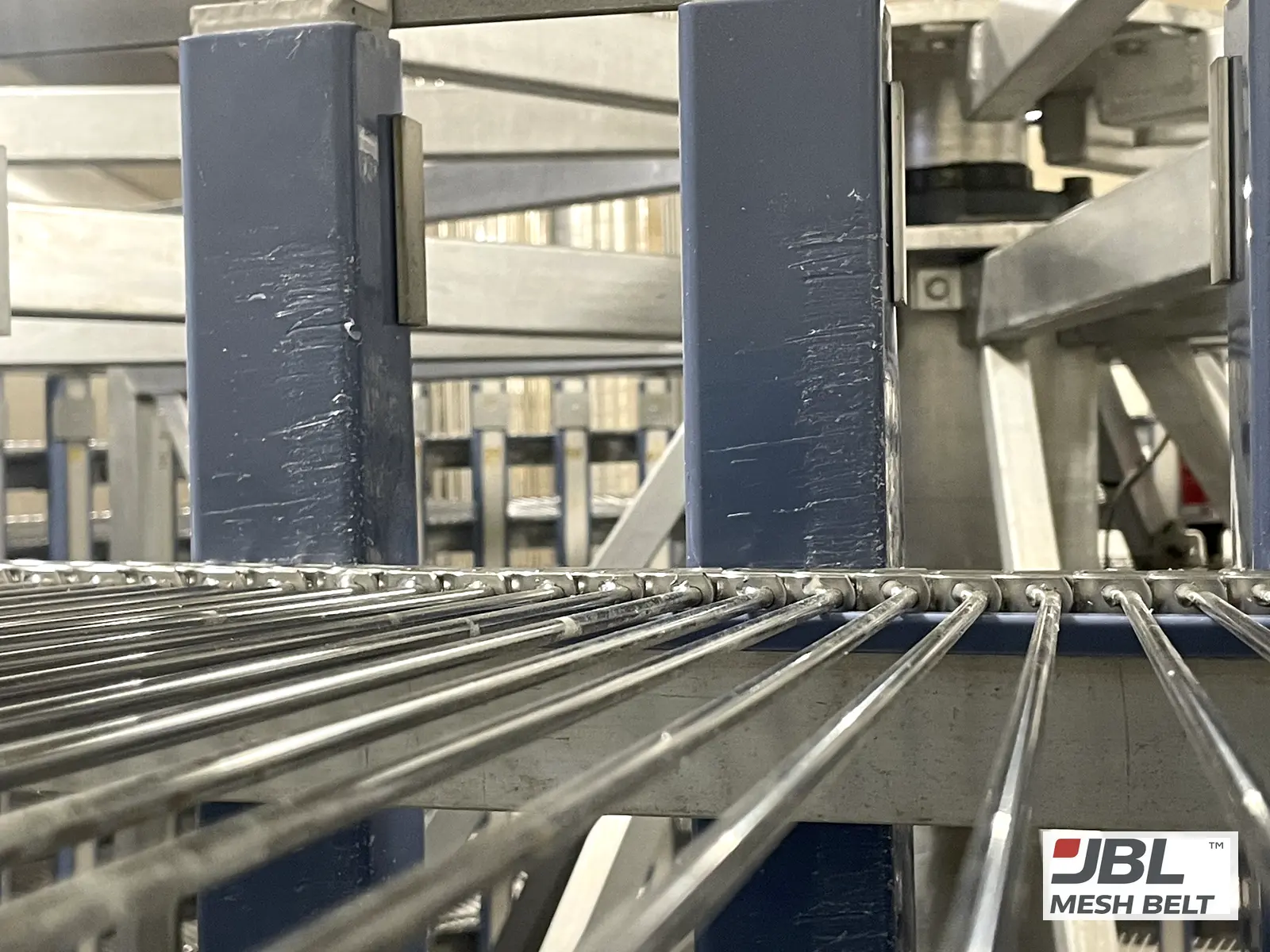
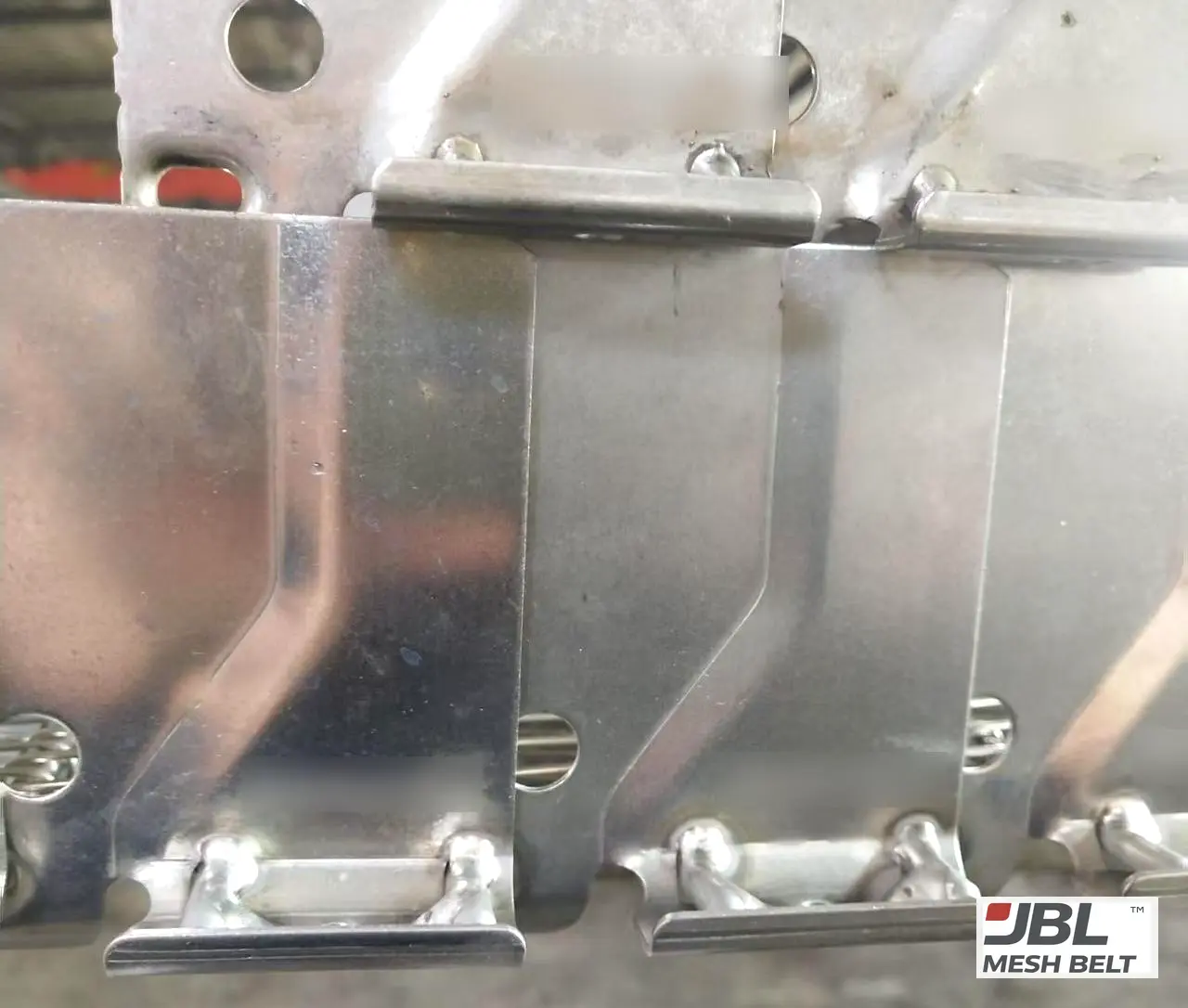
Two belts with the same width and pitch can have different edges. One is button welded, the other clinched. On a friction-drive spiral, the inner edge is pressed against the drum bars all the time, so the edge shape and weld finish decide what rubs and what slides.
In Melbourne, the original belt had rough rod-end welds with burrs. The plastic guide strips were scored. We matched the pitch, rod and link and finished the welds smooth; the new belt has a flat-head welded edge and is electropolished. Same size, better edge.
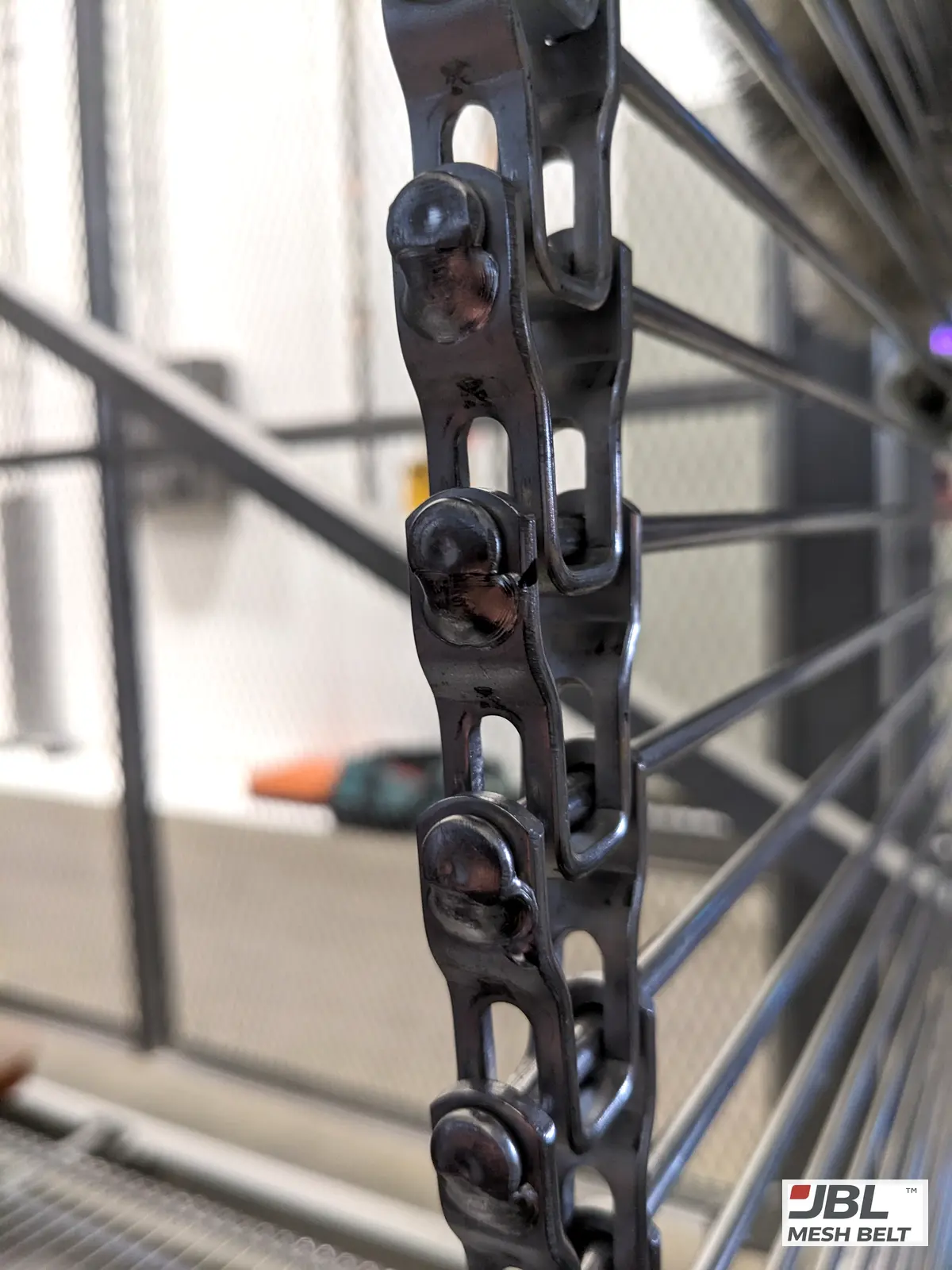
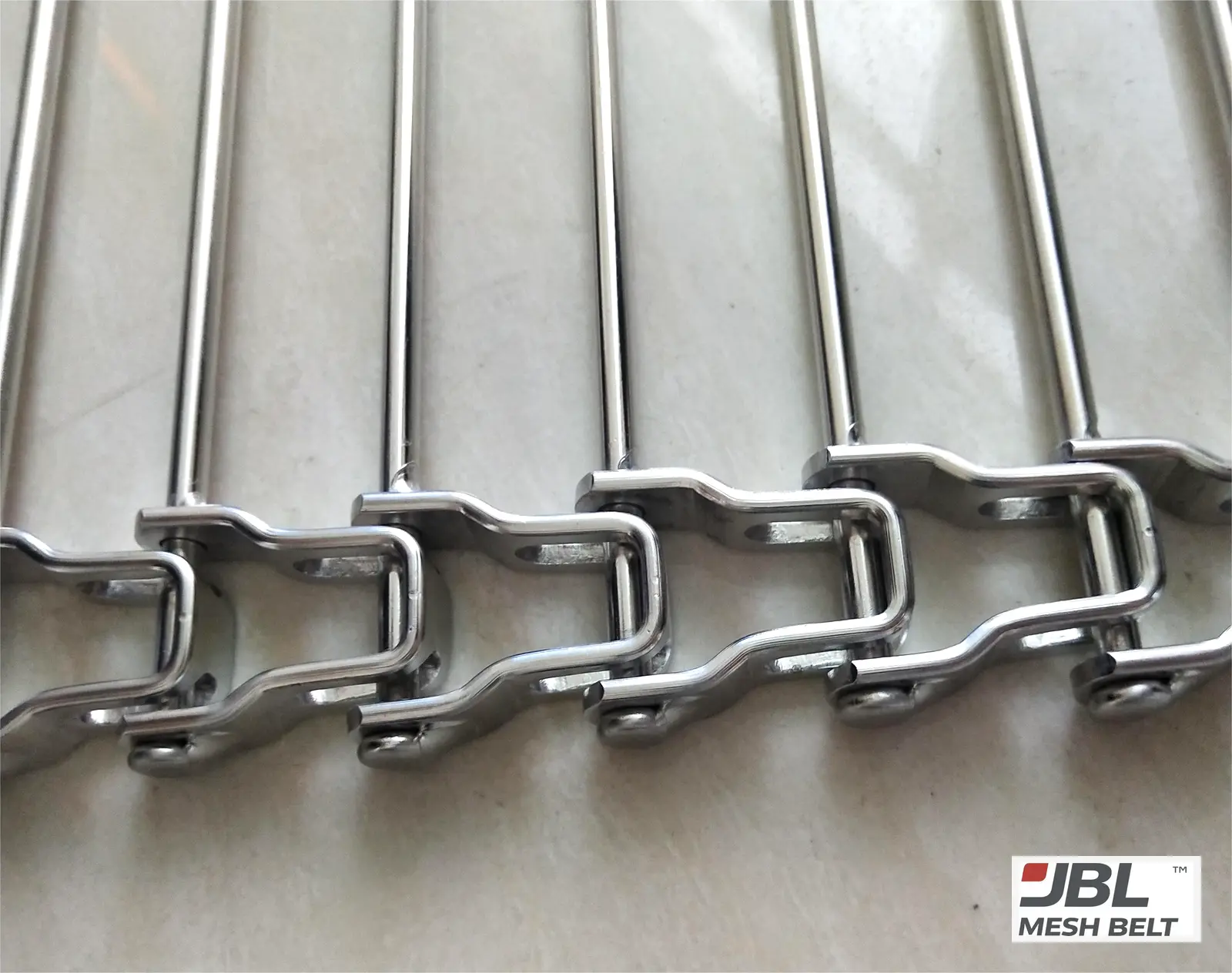
Link height and thickness matter in the same way. On the Melbourne project, link thickness read 2.70 mm on the original and 2.70 mm on the sample. If a link is taller or thicker, it can touch parts of your freezer the old one never touched.
Comparing two quotes?
Send me both specifications and photos of your old belt. I tell you which details each quote has checked and which it has not.
When This Is Not the Right Choice
- ✕If you are buying a belt for a new freezer, there is no old belt to match; the belt is designed to the freezer drawing instead.
- ✕If your current belt runs well and you have its full drawing and part number, a direct reorder may be simpler than a new comparison.
- ✕If the freezer has been modified since the last belt, measure the freezer again — the old belt may no longer be the right reference.
From My Engineering Experience
When a buyer sends me only width and pitch, I do not say no. I ask for more, because I have seen what those two numbers leave out.
On the waffle line, the worn link read 2.42 mm, and the new belt needed 2.71 mm. On the UK belt, the wire and side plates gave a range of readings on the same sample, not one value. On side-driven belts, 31.75 mm and 34 mm look the same in a photo without a caliper.
None of these differences are visible in a quote that lists width and pitch. They are visible on a caliper, on a turn test and on a sprocket. That is where I look before I say a belt is compatible.
— Spring, Sales Director, JBL Mesh Belt
Evidence From Our Work
Waffle spiral cooling, 2026 — worn belt and sprockets →
| Step | Detail |
|---|---|
| Same on paper | Rod 4.99 mm matched |
| Different in reality | Link 2.42 mm worn; new 2.71 mm |
| Proved by | Trial run linked into the original belt |
| Then | Sprockets remade and run on the bulk belt |
Malaysia, 2026 — spiral belt to a customer drawing →
| Step | Detail |
|---|---|
| Measured | Pitch 27.40 mm, rod pitch 19.05 mm, link 2.72 mm |
| Checked beyond the drawing | Full-circle turn test of the inner and outer edge |
| Edge | Welds and rod ends ground a second time |
| Result | Bulk ordered and installed in place of the original |
FAQ
Q1Is the same width and pitch enough to order a spiral belt?
No. Turn ratio, link type, rod, wire, link size, edge type and sprocket pitch must also match your freezer.
Q2What is the difference between a standard and a small radius spiral belt?
A standard belt uses two-row links and one pitch; a small radius belt uses three-row links with a shorter inner and longer outer pitch for tighter turns.
Q3Can 31.75 mm and 34 mm pitch belts use the same sprockets?
No. The sprocket teeth are cut for one pitch; the other rides on the tooth tips or jumps.
Q4My old belt is worn. Can you still use it as a sample?
Yes. I identify the wear by comparing worn and less-worn areas and make the new belt to the original size.
Q5Can you improve the edge while keeping the fit?
Yes. In Melbourne the pitch, rod and link were matched to the original while the welds were finished smooth.
Conclusion
Width and pitch start the check; they do not finish it. Turn ratio, links, rod, wire, edge and sprocket pitch decide whether your new belt runs.
Download the Small Radius Spiral Freezer Belt Technical Specification (PDF)
Specification ranges and options in mm and inch. Enter your work email and the file downloads right away.
References

Your contact for this belt
Spring · Sales Director, JBL Mesh Belt · 16 years
“Your belt is worn, the OEM price is high, and there is no drawing. That is where I start.”
Send me a worn section, a few photos with a caliper in the picture, or a drawing. I tell you what fits, what is missing, and show you a sample measured against your own belt before you pay for the full length. Buyers in the UK, the USA, Australia, Brazil, South Korea, Spain and Malaysia have replaced belts this way.
- ✓Readings on your original next to readings on our sample
- ✓Nothing in bulk until you approve the sample
- ✓Turning, stacking or sprocket tests before your belt ships
- ✓A reply from me, usually within 8 hours