Hygiene & Material · 10 min read
How Do Cleaning Conditions Affect Spiral Belt Material and Drive Component Selection?
 Written bySpringSales Director, JBL Mesh Belt · 16 years in metal conveyor beltsProjects in United Kingdom · USA · Australia · Brazil · South Korea · Spain · MalaysiaPublished
Imagine a belt that passes every dimension check, then shows rust spots and cracked plastic sprockets a year later. The cause is in the cleaning room, not the drawing.
Short answer
Cleaning and operating conditions decide material choice as much as load does. Salt, brine and chloride cleaners push stainless belts from SUS304 toward SUS316. Finish, welds and rinsing matter too. Plastic sprockets and wear parts must suit the temperature and chemicals. Send your cleaning method with the belt data.
At a Glance
| Product | Application | Key point | Buyer type | What to send |
|---|---|---|---|---|
| Spiral belts, sprockets, wear parts | Food lines with wet cleaning, seafood, meat, bakery | Environment decides material | QA, hygiene, maintenance, engineers | Cleaning method and chemicals, frequency, temperatures, product |
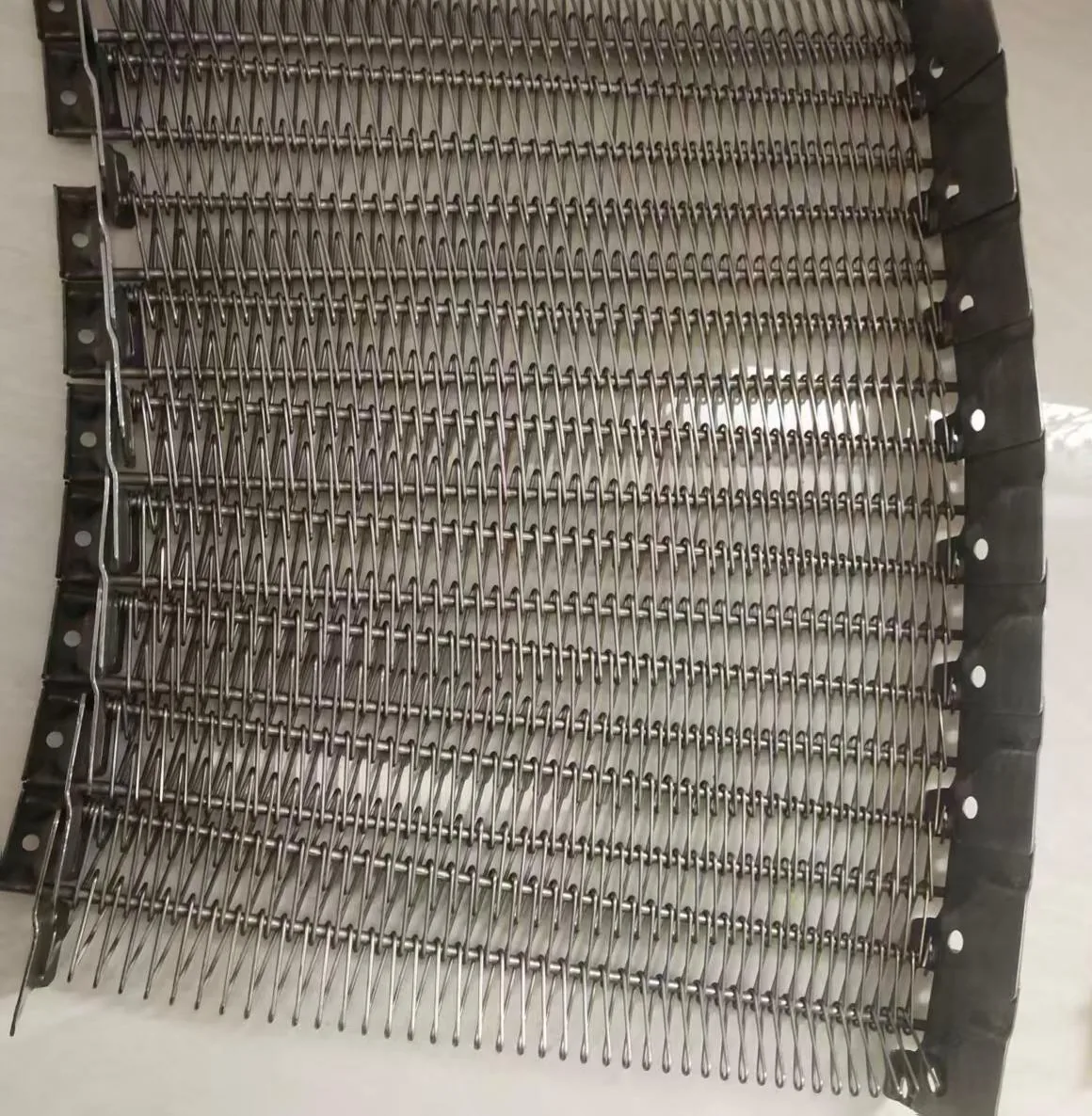
This is not a 304-versus-316 article. It is about how the conditions on your line — product, cleaning, temperature — lead to a material and finish decision for the belt and the parts around it.
01Which operating and cleaning conditions affect material choice?
Two lines can run the same belt design and need different materials. The difference is what touches the belt every day.
Short answer
The conditions that matter are: chlorides from salt, brine or cleaners; acid and alkaline cleaners; cleaning frequency and water temperature; operating temperature and humidity; fat, oil and frozen residue on the belt. Each one affects the stainless grade, the surface finish or the plastic parts.
| Condition | What it can do | What it affects |
|---|---|---|
| Chlorides (salt, brine, some cleaners) | Pitting and spot corrosion on stainless | Stainless grade, finish, rinsing |
| Acid or alkaline cleaners | Attack surfaces if strong, hot or not rinsed | Grade, finish, plastic parts |
| Frequent hot washing | Thermal cycling, chemical exposure | Plastic sprockets and strips |
| Low operating temperature | Plastics become brittle | Plastic grade |
| Humidity and condensation | Wet surfaces between cleans | Grade, drainage, finish |
| Fat, oil, frozen residue | Harder cleaning, friction changes | Finish, weld quality, drive behaviour |
When I review a belt, I ask about the product and the cleaning as early as the dimensions. A seafood line washed with brine and chloride cleaners is a very different place from a bakery cooling spiral that is brushed dry.
Stainless steel is widely used in food plants because it cleans well and resists corrosion. The World Stainless Association explains why. But stainless is a family of grades, and the environment decides which one is enough.
02When should a spiral belt move from SUS304 to SUS316?
SUS304 is the right choice for most freezing and cooling lines. The question is when it is not.
Short answer
SUS304 suits most freezing and cooling lines. SUS316 is considered where salt, brine, chloride cleaners or strong cleaning chemicals are a concern, for example in seafood processing. The decision depends on the chemicals, their concentration, temperature and how well the belt is rinsed and dried.
| Line | Usual starting point | Consider SUS316 when |
|---|---|---|
| Bakery cooling | SUS304 | Strong cleaners or salt-rich products are used |
| Meat and poultry freezing | SUS304 | Brine, marinades or chloride cleaners |
| Seafood and IQF | SUS304 or SUS316 | Salt water, brine, chloride cleaners |
| Any line | Per project | Rinsing is short or the belt stays wet |
SUS316 contains molybdenum, which improves its resistance to chloride attack. It costs more. Choosing it where SUS304 is enough wastes money; choosing SUS304 where chlorides are present can cost a belt. That is why the grade is confirmed per project, not by default.
In our published projects, 304 was the right grade each time: the UK self-stacking belt was AISI 304 stainless steel, and the Brazil, Melbourne and USA belts were SUS304. Material is recorded for each order, and mill certificate support can be provided where a buyer needs it.
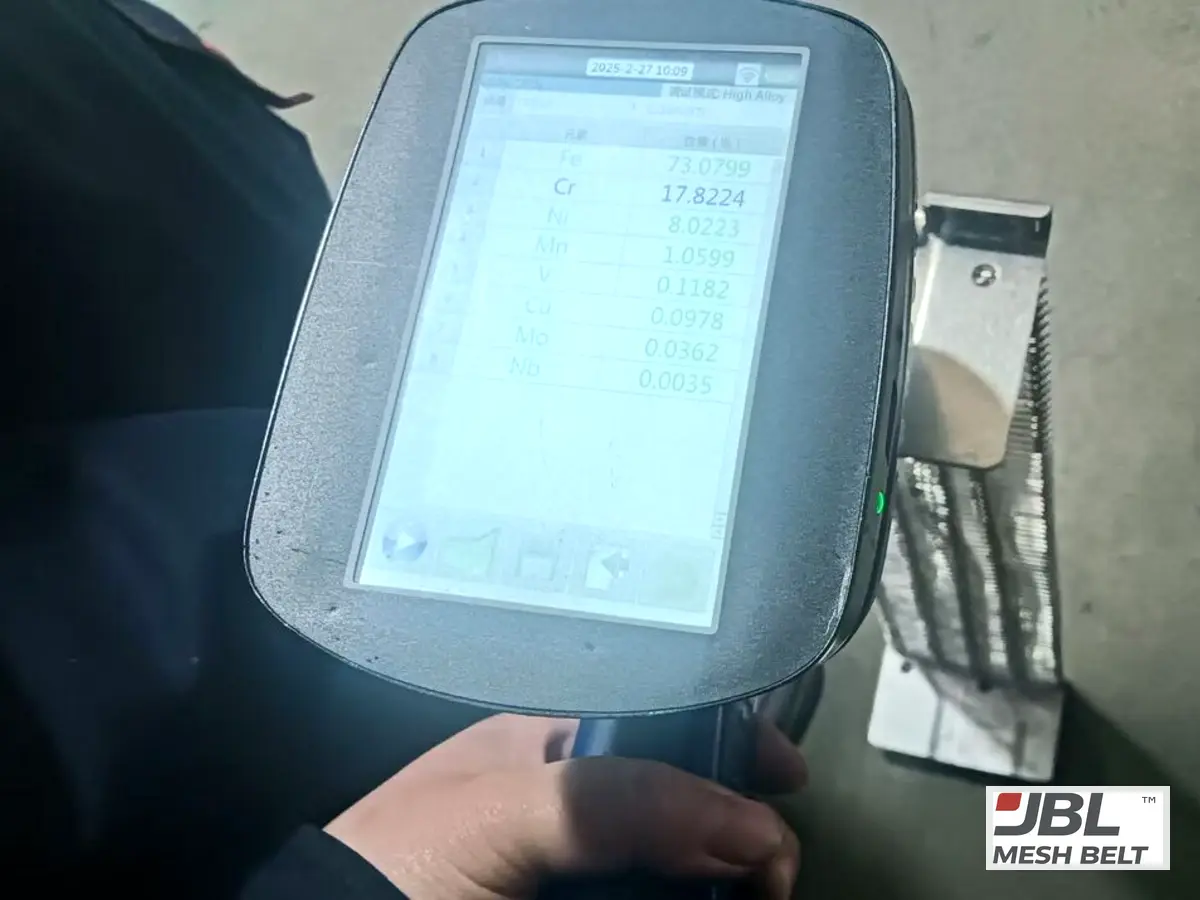
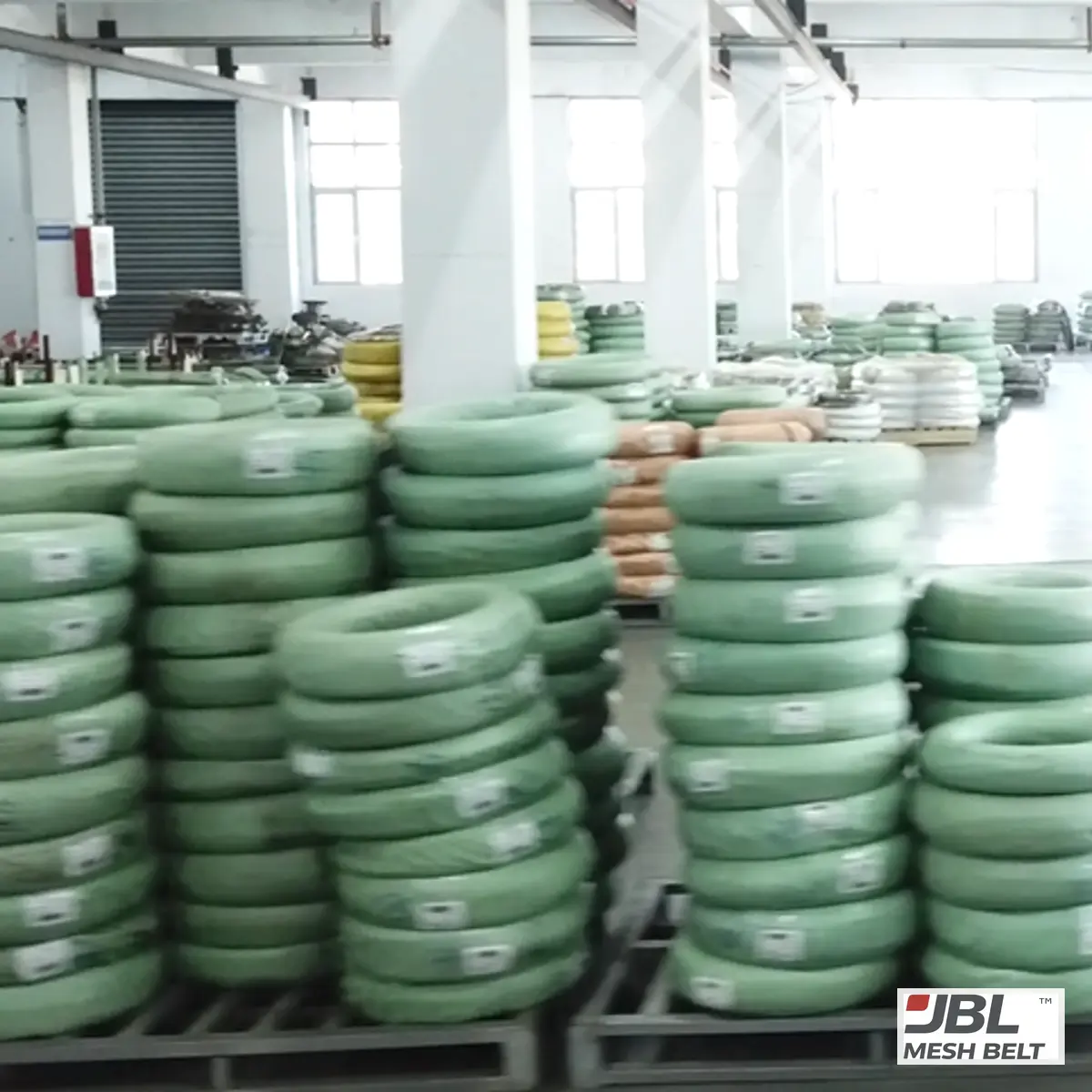
For how material is verified, see our stainless steel material verification guide.
03How do surface finish and welds affect cleaning?
A grade can be right and the belt can still be hard to clean. Surface and welds decide how much residue stays behind.
Short answer
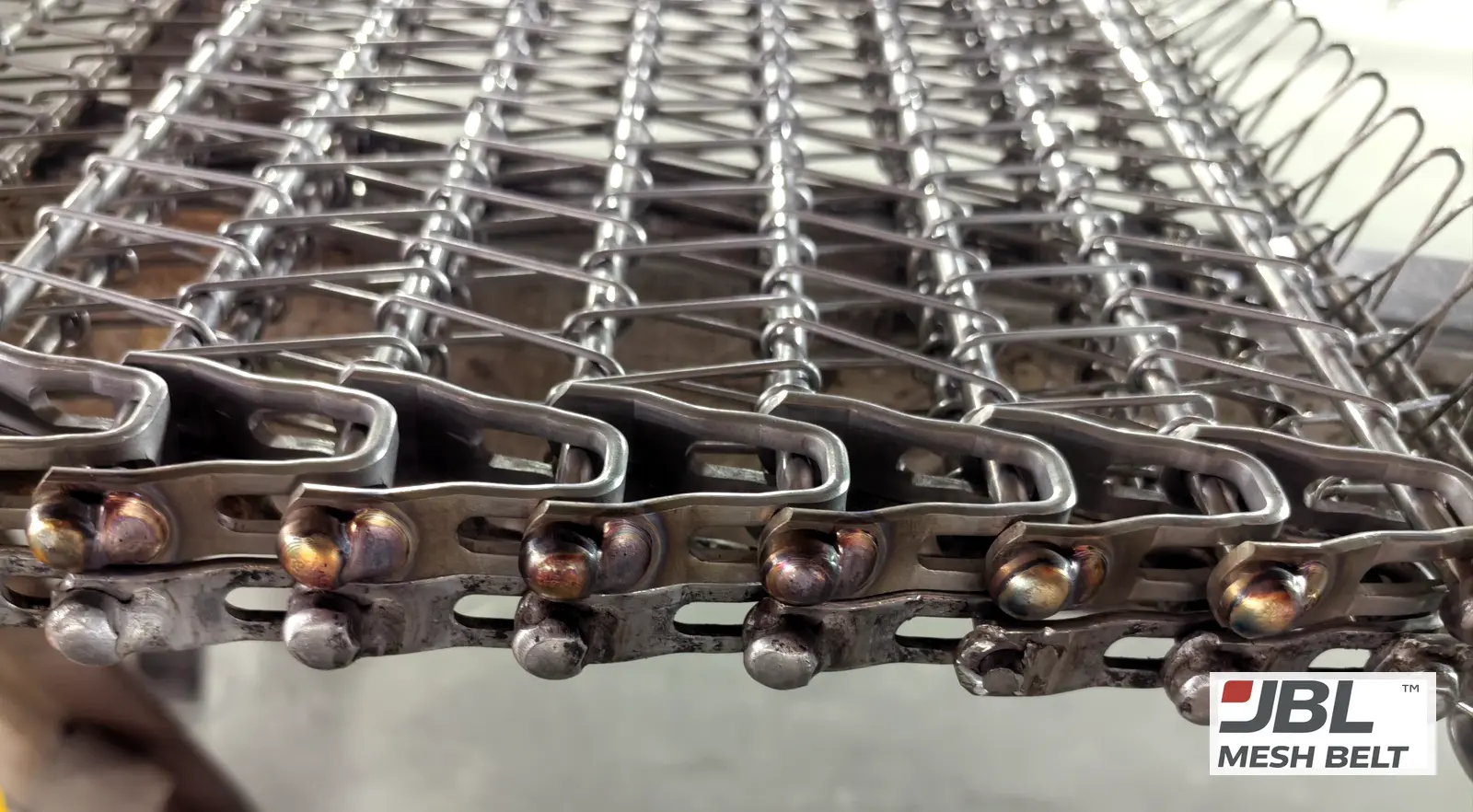
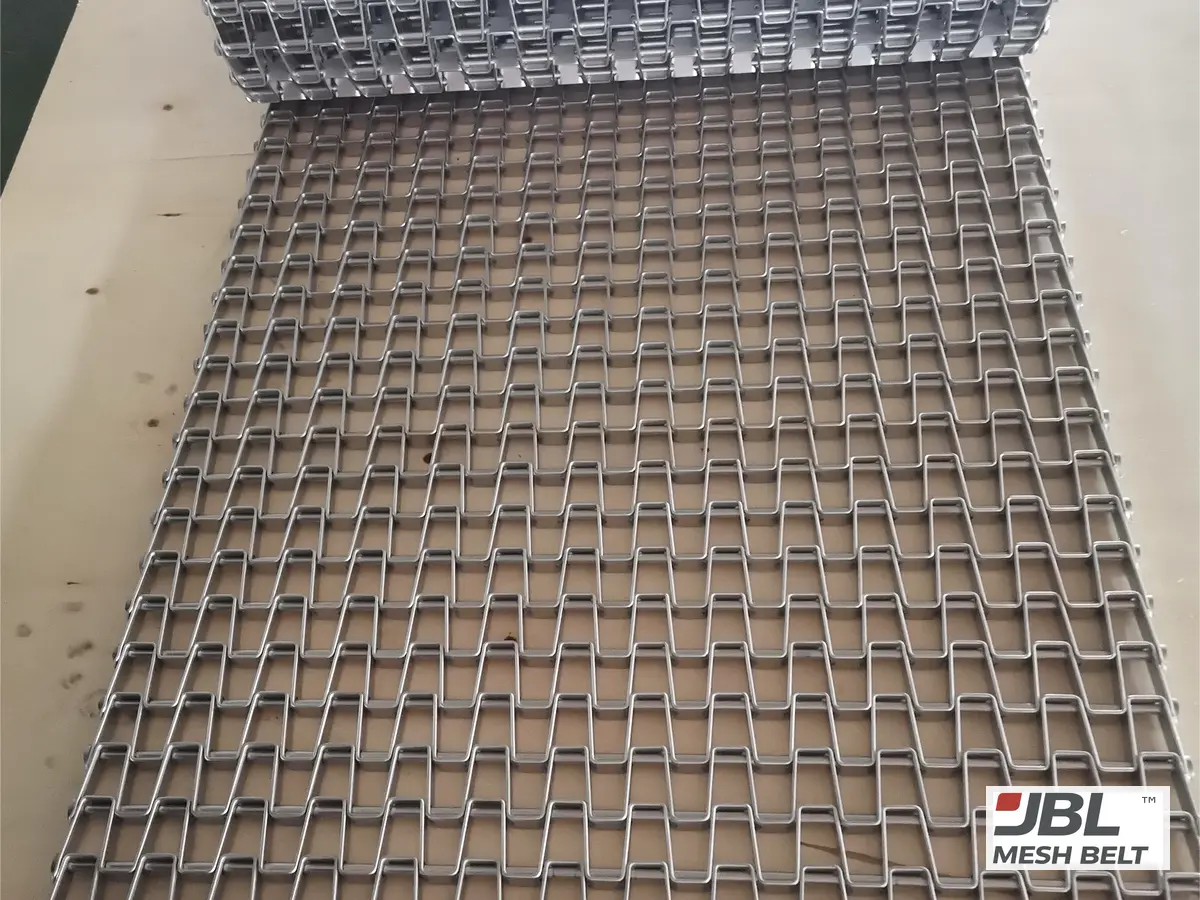
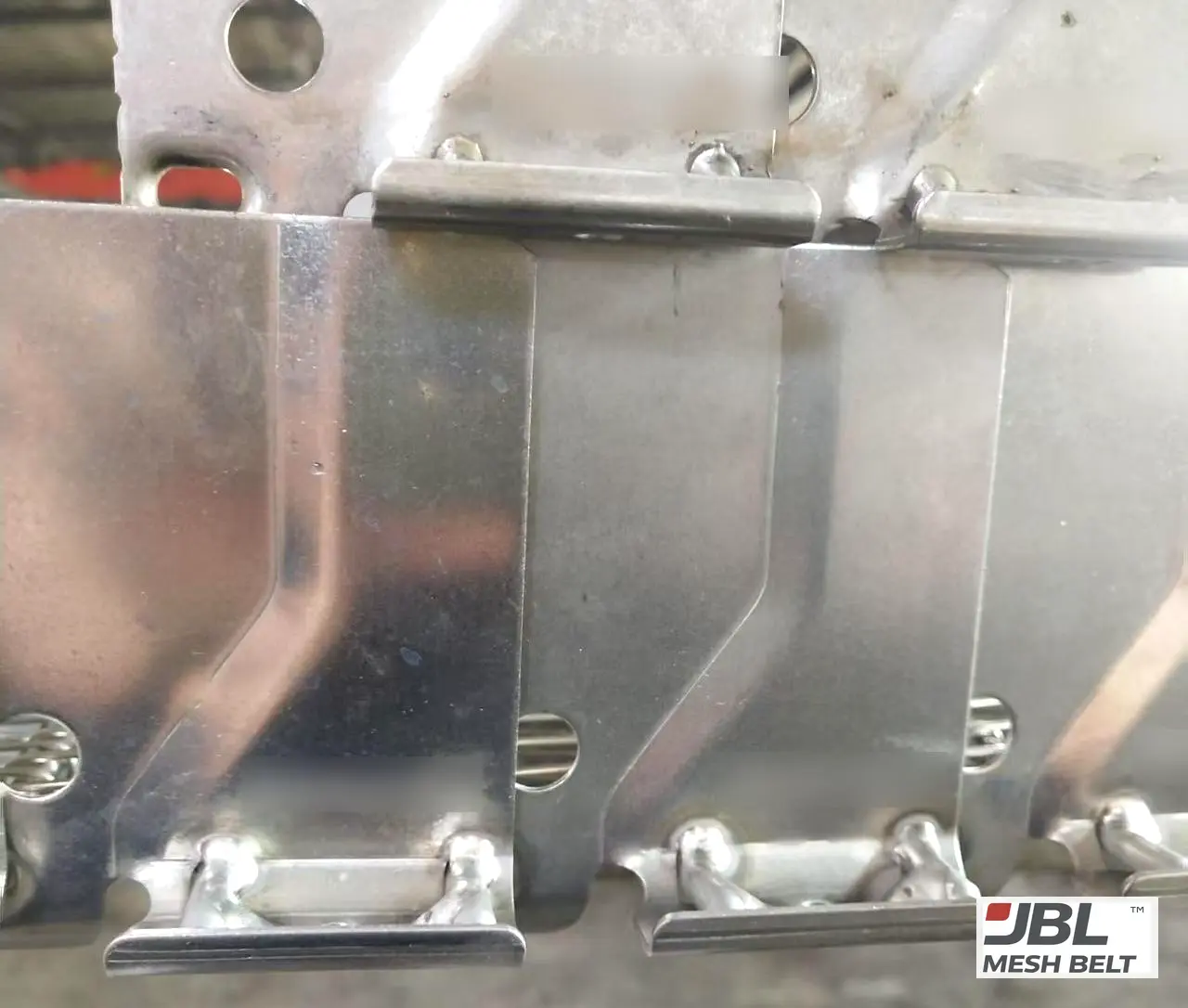
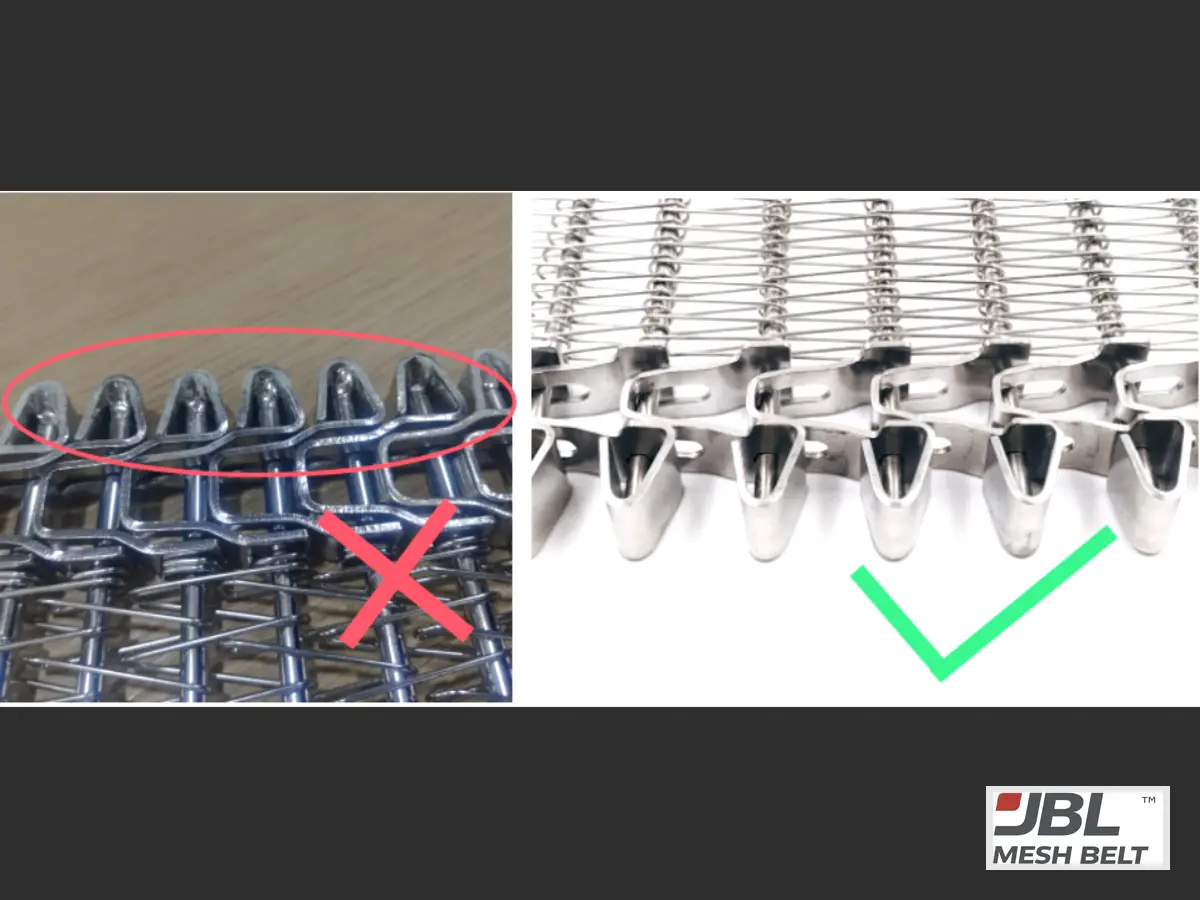
A smooth surface and smooth, burr-free welds leave fewer places for residue and corrosion to start. Pickling or electropolishing is chosen per project. Rough welds, burrs and weld spatter trap product and cleaning chemicals, and on friction drives they scratch the drum bars.
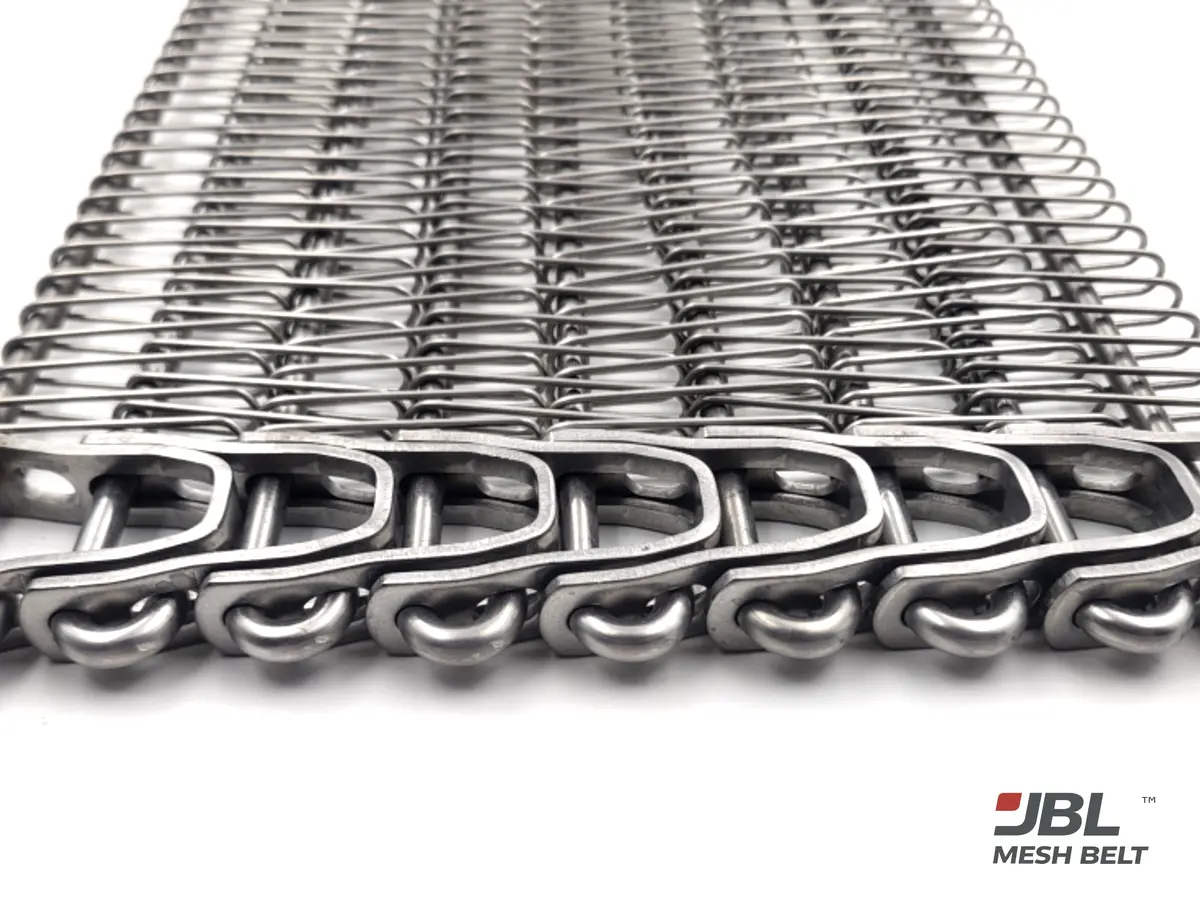
| Detail | Why it matters for cleaning |
|---|---|
| Pickled surface | Removes weld discolouration and surface contamination |
| Electropolished surface | Smoother surface, easier to clean |
| Smooth, ground welds | No crevices or burrs to trap residue |
| Even finish along the belt | No marked sections that hold dirt |
Hygienic welding is a recognised field. The European Hygienic Engineering & Design Group publishes guidance on welding stainless steel to meet hygienic requirements.
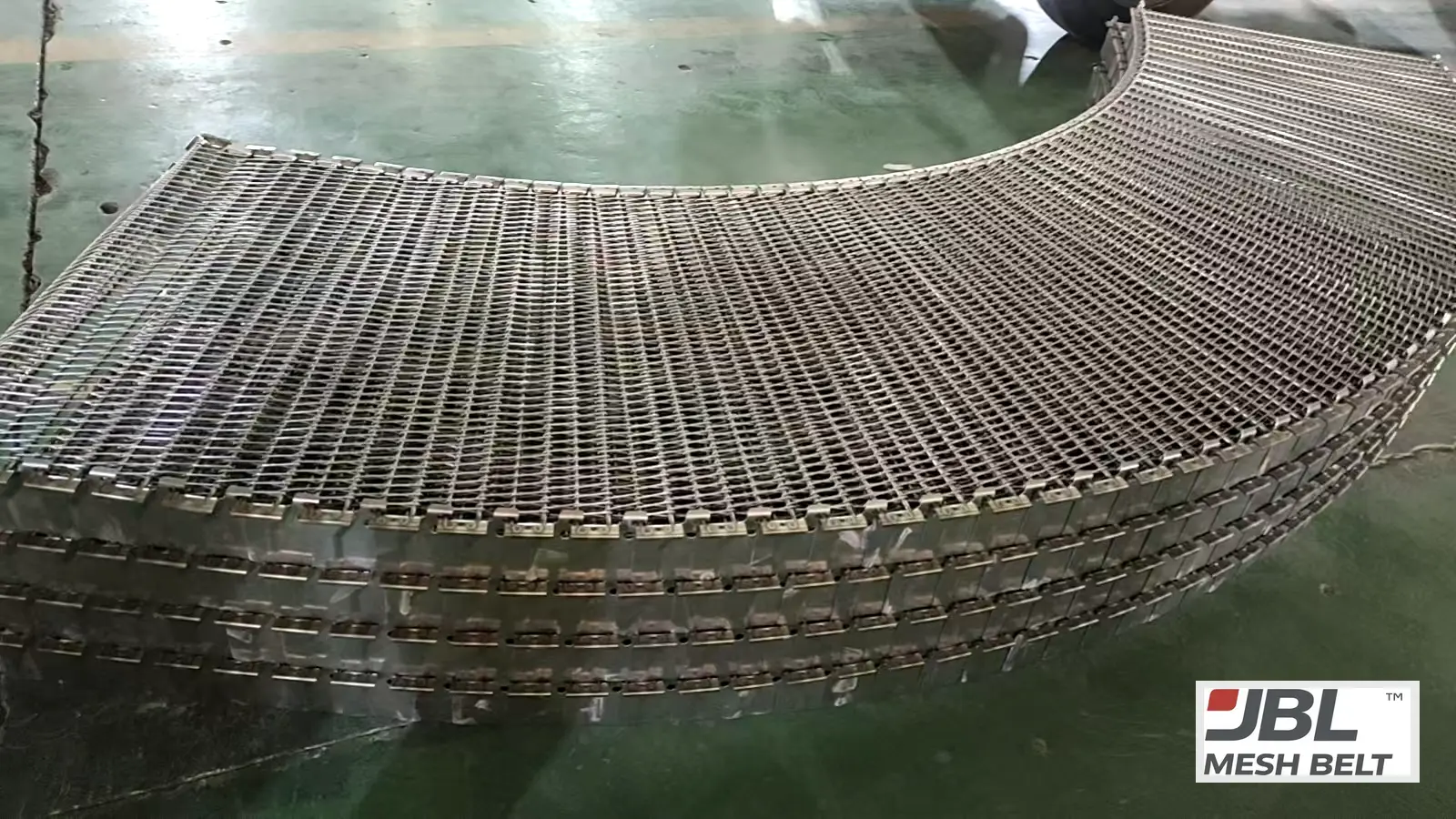
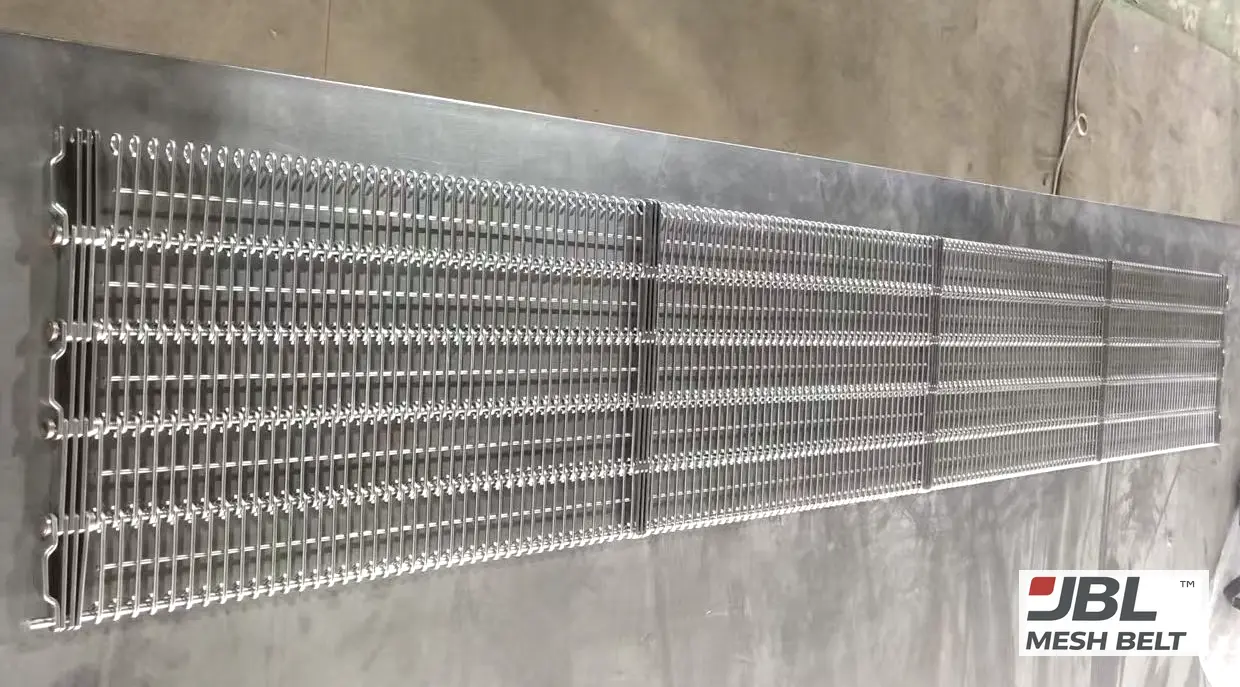
In Melbourne, the new belt's welds were finished smooth and the belt electropolished. In Malaysia, welds and rod ends were ground a second time. On our side-driven belts, uneven polishing that leaves marks along the edge is a defect we re-polish before shipment.
04How do cleaning and temperature affect plastic sprockets and wear parts?
The steel belt is only part of the system. Plastic sprockets and wear strips often fail first when conditions are wrong.
Short answer
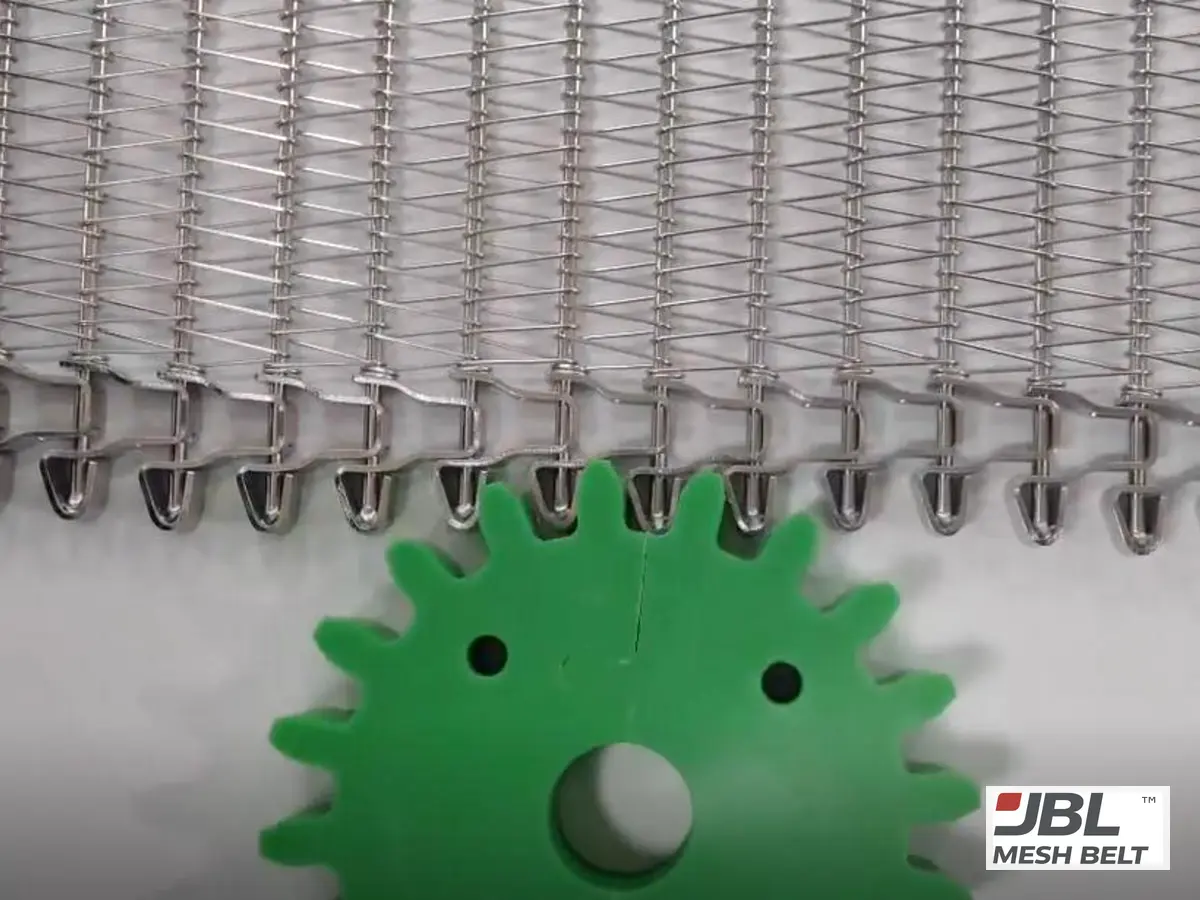
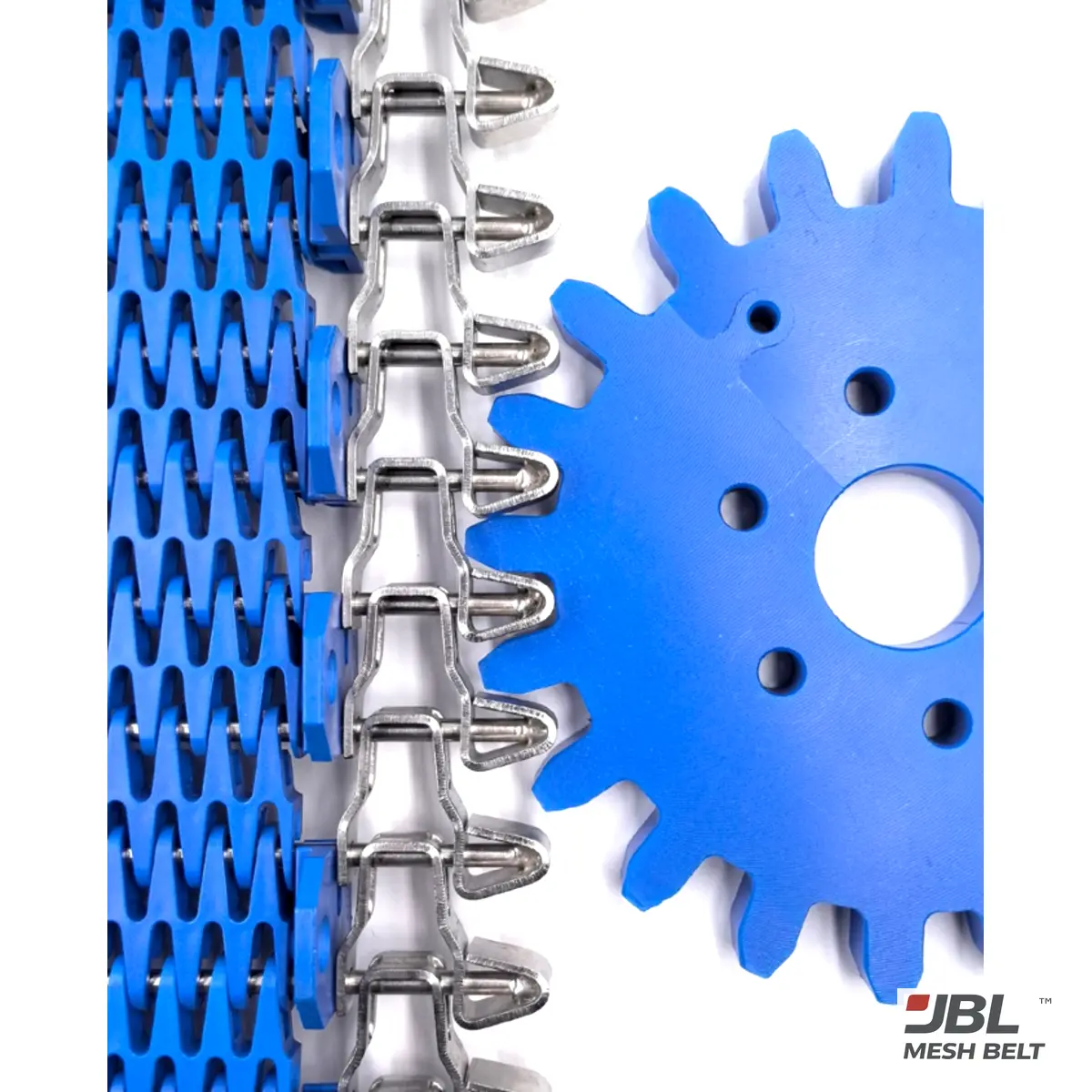
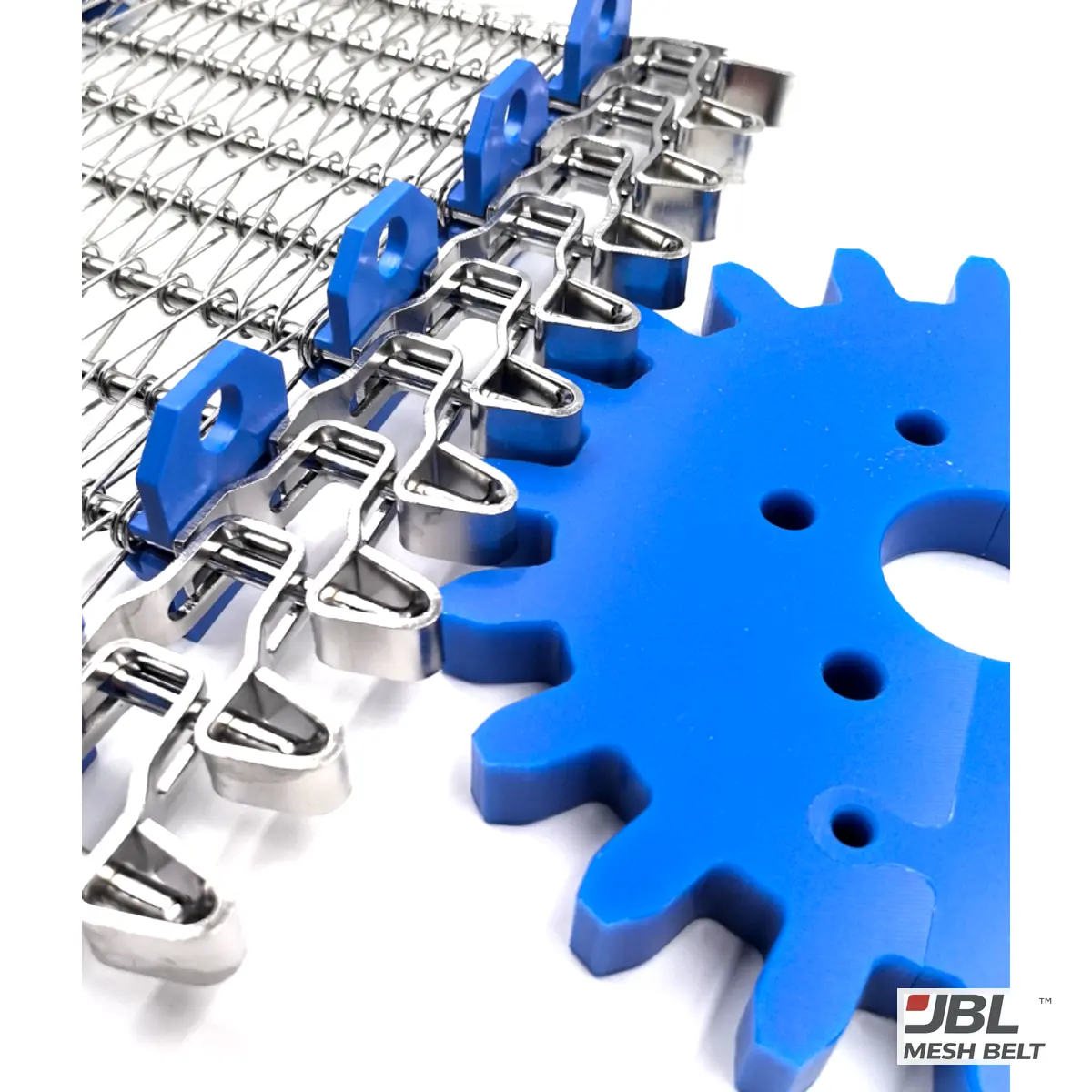
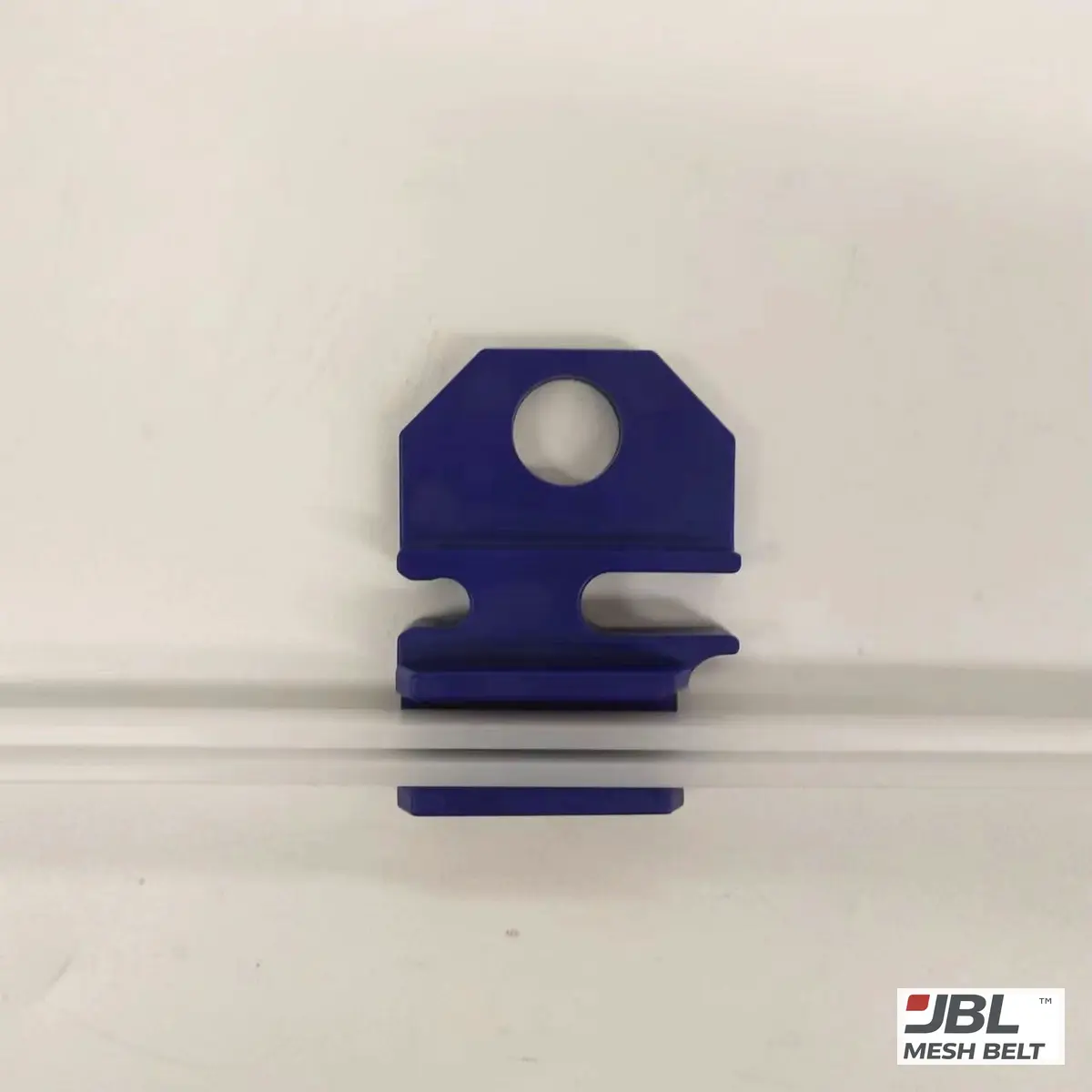
Plastic sprockets and wear parts — UHMWPE, nylon, POM — must suit both the operating temperature and the cleaning. Standard POM is not suitable for freezing; a low-temperature grade is needed. Hot washing, strong chemicals and frozen residue all affect which plastic is chosen.
| Material | Typical use | Watch for |
|---|---|---|
| SUS304 / SUS316 sprockets | Heavy and hot lines | Polished teeth to avoid black marks |
| Mild steel sprockets | Heavy and hot lines | Corrosion in wet cleaning |
| UHMWPE | Low weight, quiet running | Scratches and burrs; temperature limits |
| Nylon | Low weight, quiet running | Moisture and temperature |
| POM | Plastic surfaces and parts | Only a low-temperature grade for freezing |
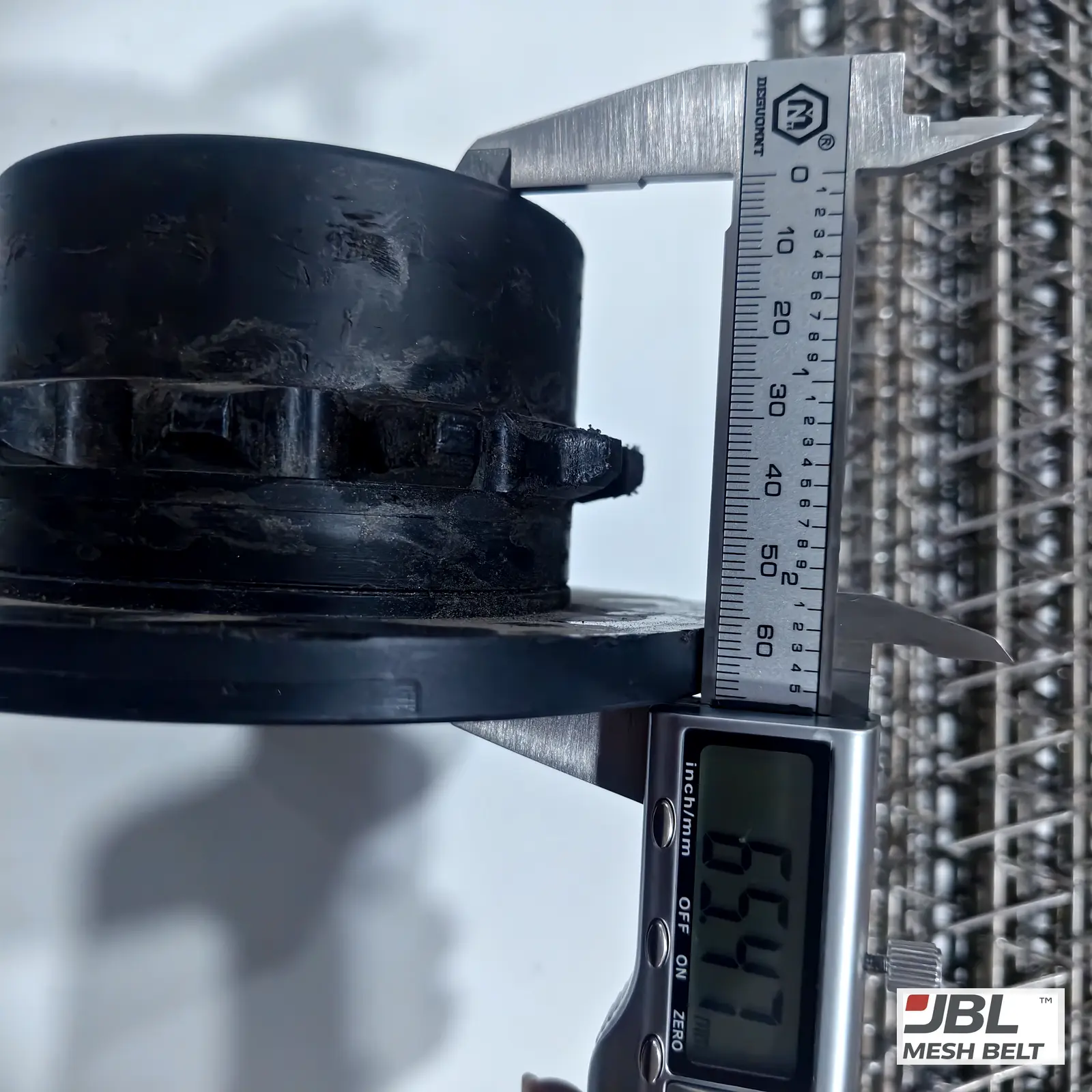
Plastic sprocket material is chosen with the belt, product and temperature. On our side-driven belts with POM mesh, POM is used only in a grade suited to the operating temperature, confirmed in writing for the project.
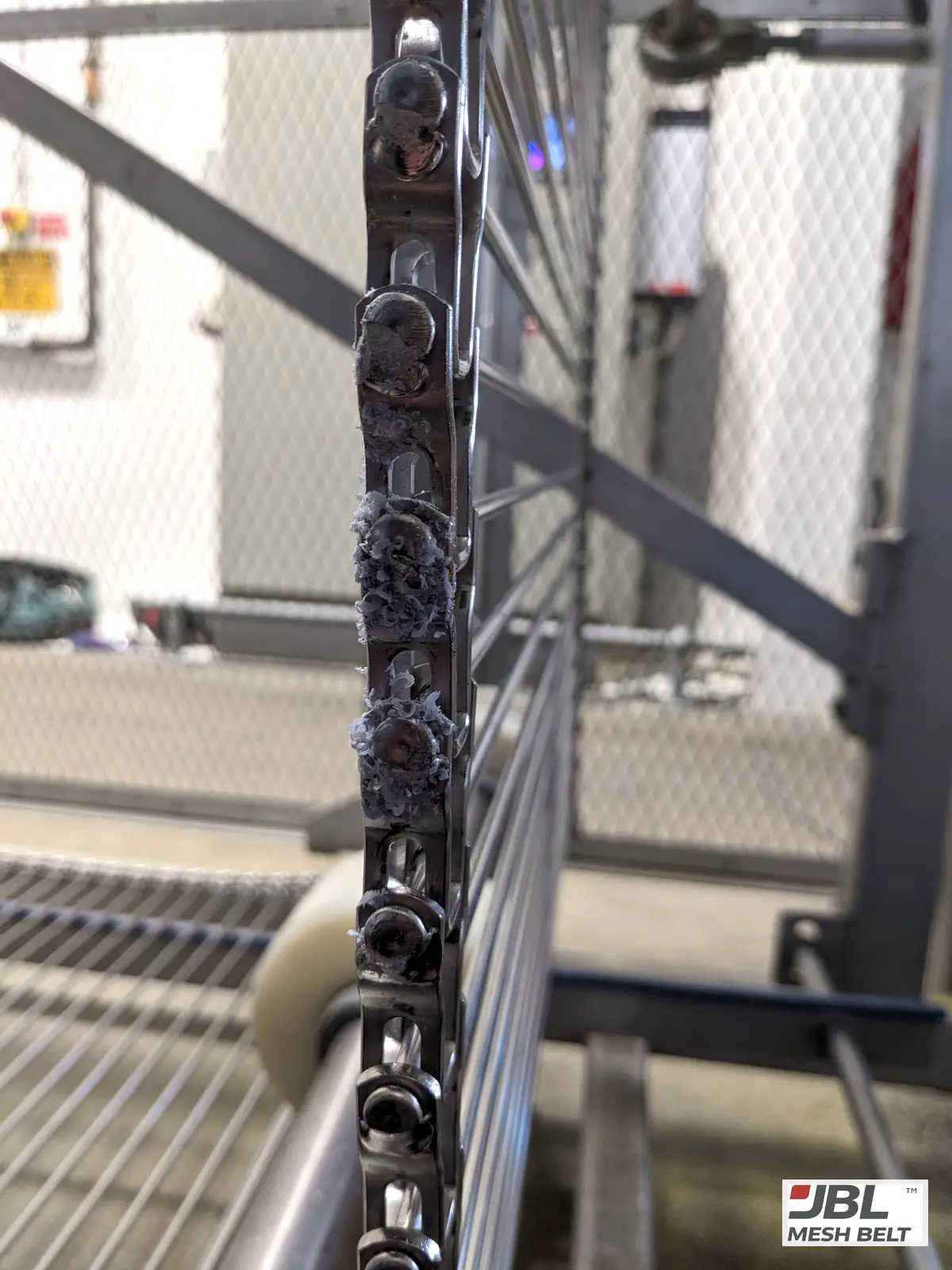
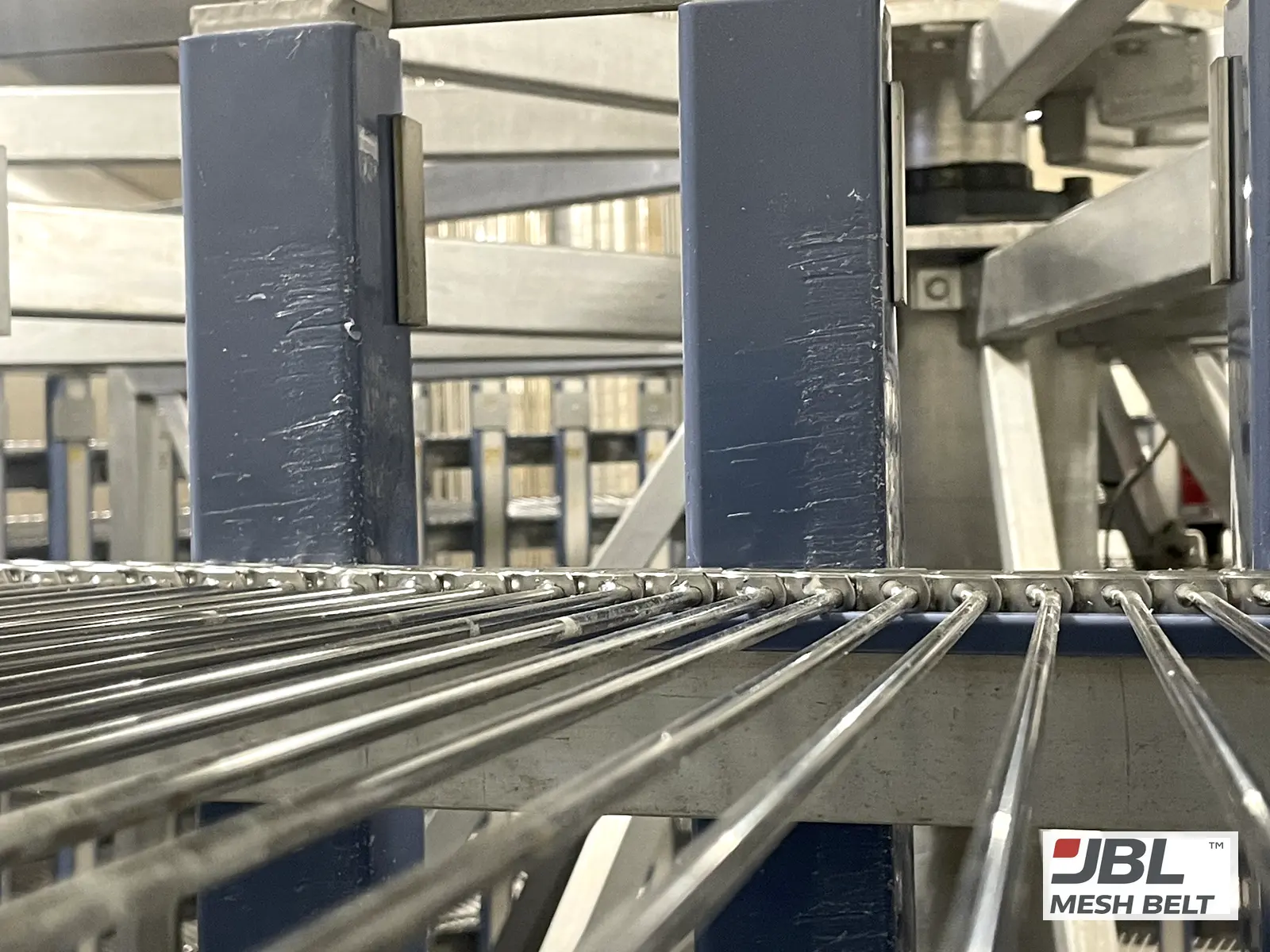
Residue matters as well. Product residue and ice build-up on the belt edge and drive parts can change how the belt and drive behave on friction and sprocket drives. A clean, dry drive area runs more predictably.
05What should you send for a material review?
I can recommend a grade and finish quickly — if I know how your line is cleaned.
Short answer
Send the product, the operating temperature range, the cleaning method and chemicals with their concentration and water temperature, how often you clean, how the belt is rinsed and dried, and any corrosion or cracking you have seen. Photos of the current belt and drive parts help.
| Information | Why I need it |
|---|---|
| Product | Salt, fat, acidity |
| Operating temperature range | Plastic grades, thermal cycling |
| Cleaning chemicals and concentration | Grade and finish |
| Cleaning frequency and water temperature | Exposure over time |
| Rinse and dry routine | How long chemicals stay on the belt |
| Signs already seen | Rust spots, pitting, cracked plastic parts |
With this, I can suggest a stainless grade, a surface finish and suitable plastic parts, and say what I am unsure about. The final choice is confirmed in writing in the specification before production.
Your cleaning chemical supplier knows their products best. If they give a compatibility statement for stainless grades or plastics, send it too. I would rather work from their data than guess.
Request a material review
Send your cleaning method, operating temperature and product environment. I reply with a recommended grade, finish and plastic parts for your line.
When This Is Not the Right Choice
- ✕If your line is dry-cleaned and handles no salt or brine, the default grade and finish are usually enough; a full review may not be needed.
- ✕If you are changing cleaning chemicals, ask the chemical supplier about compatibility first; the belt follows.
- ✕If corrosion has already started on the frame or drum, the belt material alone will not solve it.
From My Engineering Experience
When a buyer asks me for 304 or 316, I answer with a question: how do you clean the line? The answer changes the material more often than the product does.
In our projects the grade was confirmed each time — AISI 304 for the UK belt, SUS304 for Brazil, Melbourne and the USA. What differed was the finish and the welds: smooth welds and an electropolished belt in Melbourne, welds ground twice in Malaysia.
Material is not a habit. It is a decision made from your line's conditions, and it should be written into the specification.
— Spring, Sales Director, JBL Mesh Belt
Evidence From Our Work
Melbourne, Australia — smooth welds and an electropolished belt →
| Step | Detail |
|---|---|
| Material | SUS304 |
| Edge | Flat-head welded, welds finished smooth |
| Surface | Electropolished |
| Reason | Rough welds on the original scored the guide strips |
Malaysia, 2026 — welds ground twice →
| Step | Detail |
|---|---|
| Requirement | Smooth edge, no burrs |
| Done | Welds and rod ends ground a second time |
| Checked | Trial run photos, samples and full-circle turn test |
| Result | Bulk ordered and installed |
FAQ
Q1Is SUS304 enough for a spiral freezer belt?
For most freezing and cooling lines, yes. SUS316 is considered where salt, brine or chloride cleaners are present.
Q2Why does cleaning matter for belt material?
Chemicals, chlorides, water temperature and rinsing decide how the stainless surface and plastic parts behave over time.
Q3Pickled or electropolished?
Both are used; the choice is made per project for the product and cleaning conditions.
Q4Can POM be used in a freezer?
Only in a grade suited to low temperature; standard POM is not suitable for freezing.
Q5Can you provide material certificates?
Material is recorded for each order, and mill certificate support can be provided for review.
Conclusion
Choose belt grade, finish and plastic parts from how your line is cleaned and run. Write the decision into the specification.
Download the Spiral Freezer Belt Technical Specification (PDF)
Specification ranges and options in mm and inch. Enter your work email and the file downloads right away.
References
Your contact for this belt
Spring · Sales Director, JBL Mesh Belt · 16 years
“Your belt is worn, the OEM price is high, and there is no drawing. That is where I start.”
Send me a worn section, a few photos with a caliper in the picture, or a drawing. I tell you what fits, what is missing, and show you a sample measured against your own belt before you pay for the full length. Buyers in the UK, the USA, Australia, Brazil, South Korea, Spain and Malaysia have replaced belts this way.
- ✓Readings on your original next to readings on our sample
- ✓Nothing in bulk until you approve the sample
- ✓Turning, stacking or sprocket tests before your belt ships
- ✓A reply from me, usually within 8 hours