Cost · 10 min read
How Does Spiral Belt Design Affect Total Cost of Ownership?
 Written bySpringSales Director, JBL Mesh Belt · 16 years in metal conveyor beltsProjects in United Kingdom · USA · Australia · Brazil · South Korea · Spain · MalaysiaPublished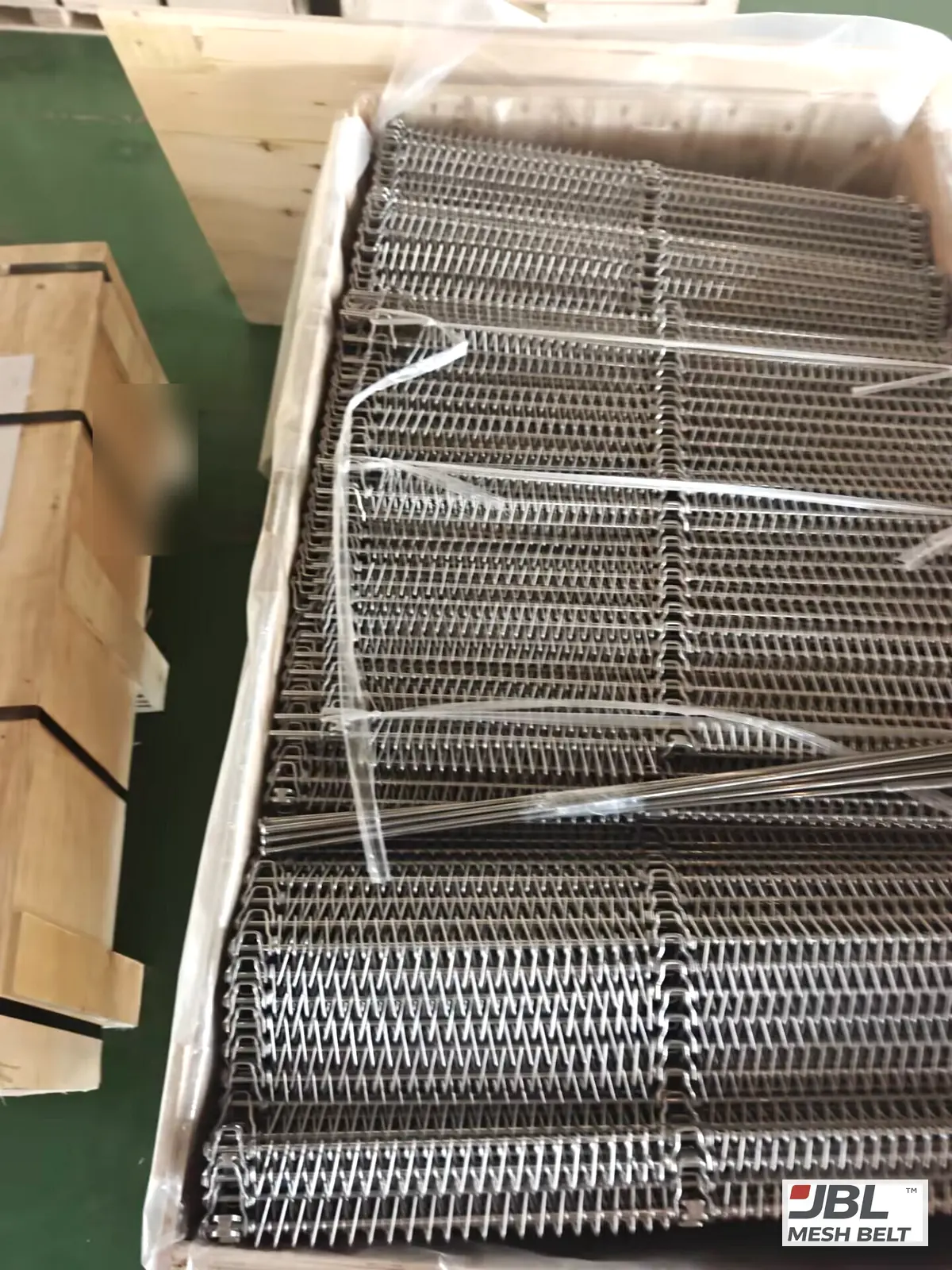
The lowest quote wins the order. Then the freezer stops for a belt that does not fit, or a sprocket that eats it. The price was only the first cost.
Short answer
A spiral belt's total cost is the purchase price plus sprockets, spares, freight, installation downtime, stops, product loss and wear on your drum and guides. Design decides most of these: the right material, a correct link size, smooth edge welds, matched sprockets and tests before shipment keep them low.
At a Glance
| Product | Application | Key point | Buyer type | What to send |
|---|---|---|---|---|
| Spiral freezer and cooling belts | Replacement and new lines | Price is one line of the total cost | Purchasing, plant managers, engineers | Old belt data, sprocket photos, your problems with the current belt |
I will not give you a cost formula with invented numbers. Instead, here are the cost items that matter, the design choices behind them, and what our projects show about lowering the risk.
01What goes into the total cost of a spiral belt?
Purchasing sees one number. The plant pays for many more, and most of them arrive after the belt is installed.
Short answer
Total cost of ownership covers the belt price, sprockets and spare parts, packing and freight, the downtime to install it, any stops and repairs while it runs, product lost to contamination or damage, wear it causes on the drum and guides, and how easily it can be re-ordered.
| Cost item | When you pay it | What drives it |
|---|---|---|
| Belt price | At purchase | Length, material, design |
| Sprockets and spares | At purchase or later | Whether worn sprockets are replaced with the belt |
| Packing and freight | At shipment | Crating, sections, spare rods |
| Installation downtime | At installation | Whether the belt fits first time |
| Stops and repairs | While running | Weld quality, fit with drum and drive |
| Product loss | While running | Contamination, product marking |
| Machine wear | Over months | Edge finish, sprocket match |
| Re-order | Next replacement | Whether the new batch matches the last |
Stainless steel suppliers have long argued that material should be judged on its whole-life cost, not on its first price. The World Stainless Association's life cycle costing guidance makes this point for stainless steel in general. A conveyor belt is a good example of why.
Most of the items in the table are not on any quote. They show up as a stopped freezer, an extra sprocket order or a complaint from your customer. That is why I ask about your current belt's problems before I quote: they tell me which costs you are already paying.
02Which design choices raise or lower that cost?
Many cost decisions are made on the drawing, long before the belt is made. Some of them are invisible on a quote.
Short answer
The choices that move total cost most are: material grade for your product and cleaning, link and wire sizes made to the original rather than to the worn belt, the edge type and weld finish, the surface finish, and whether matched sprockets are supplied and tested with the belt.
| Design choice | Lower total cost | Higher total cost |
|---|---|---|
| Material | SUS304 for most lines; SUS316 where salt, brine or strong chemicals are present | A grade that corrodes in your process |
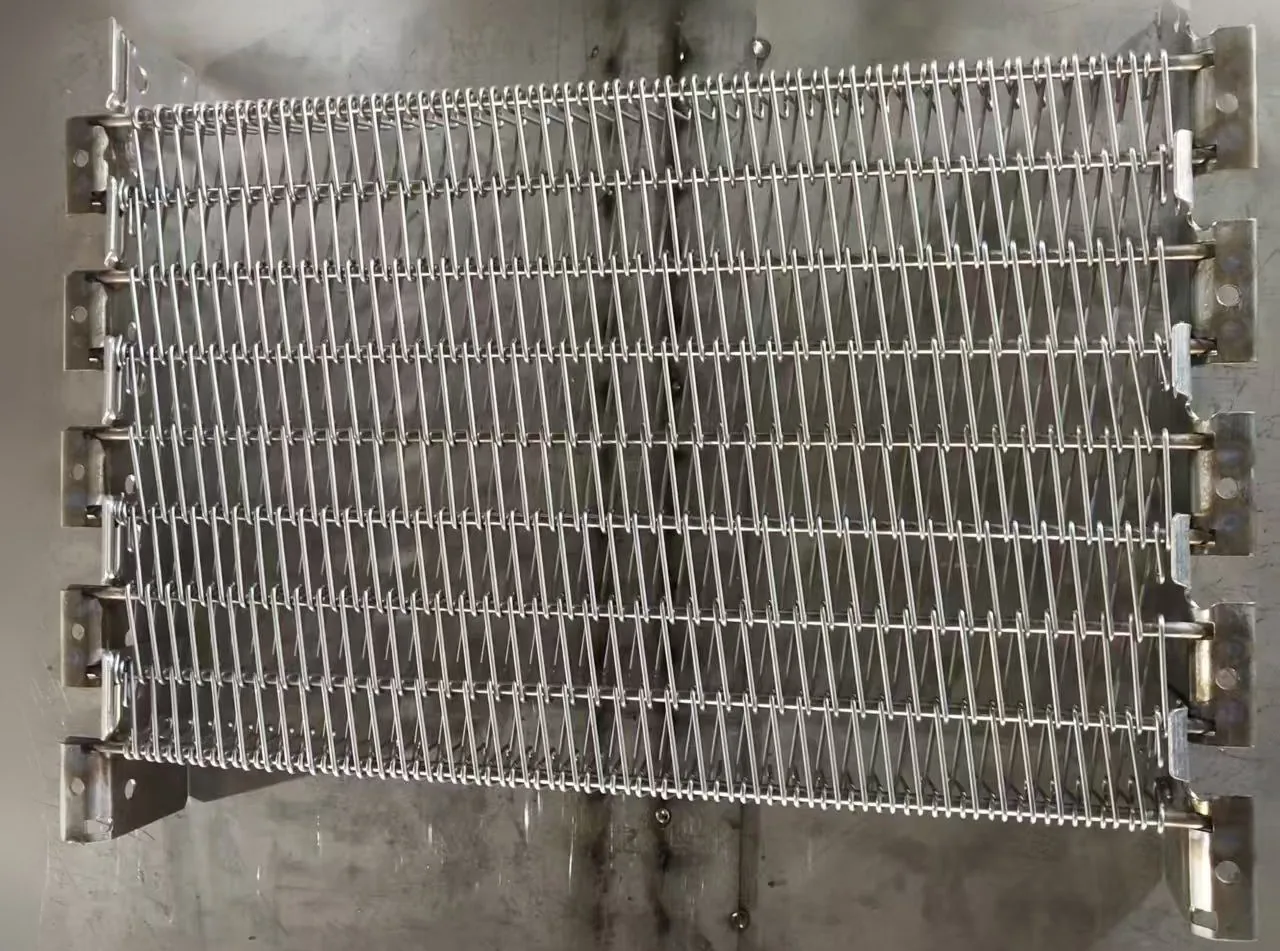
| Link and wire size | Made to the original size | Copied from a worn belt |
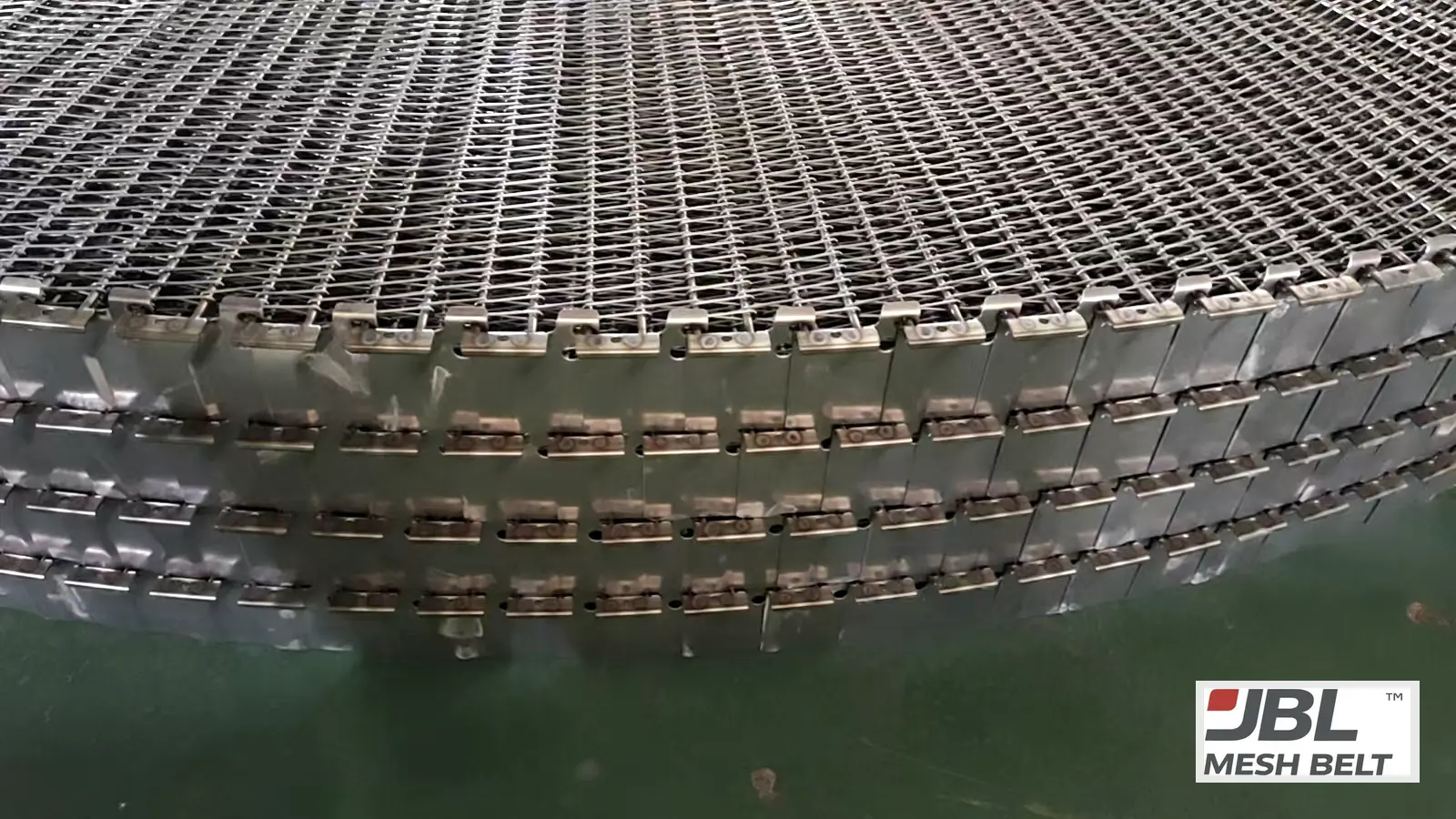
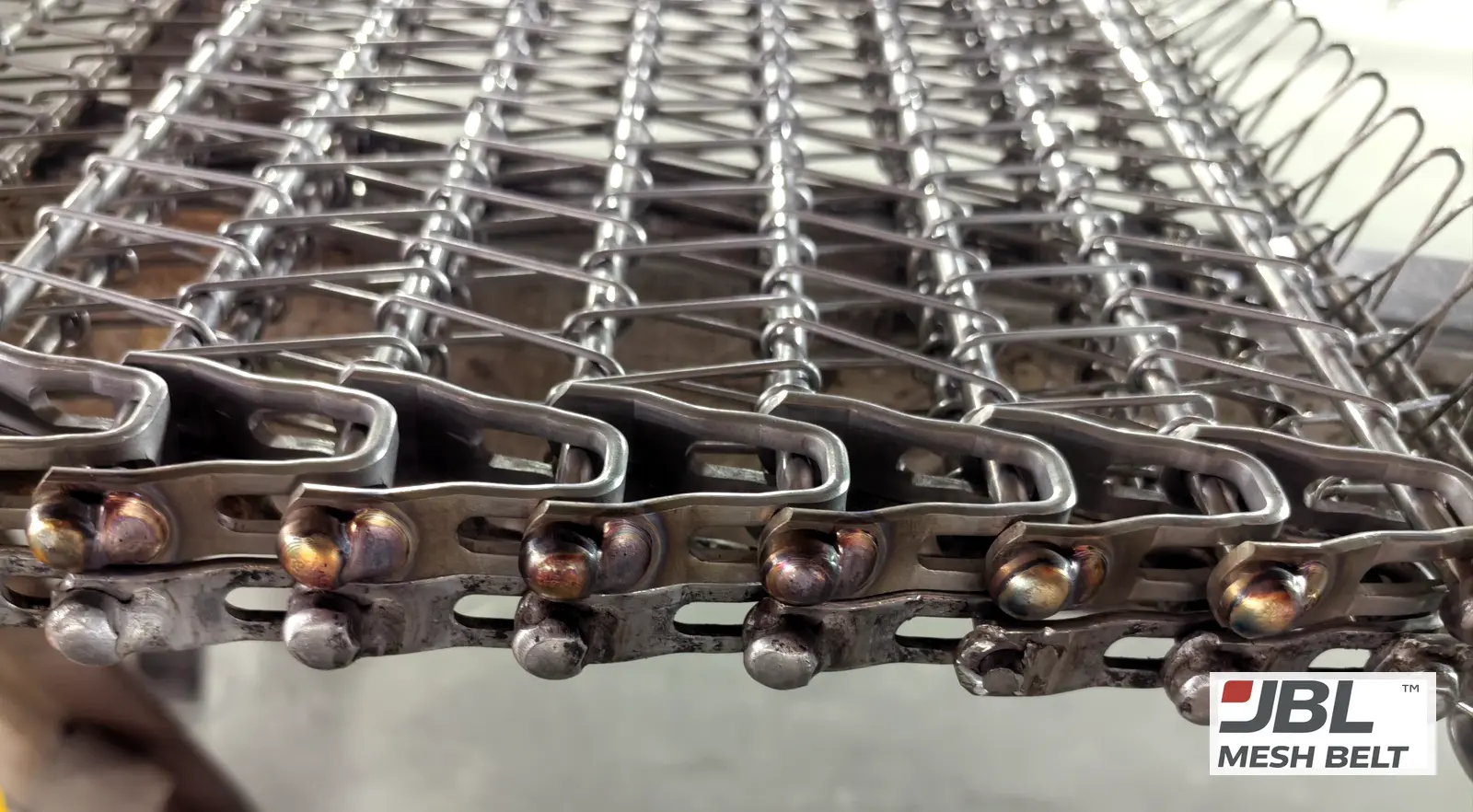
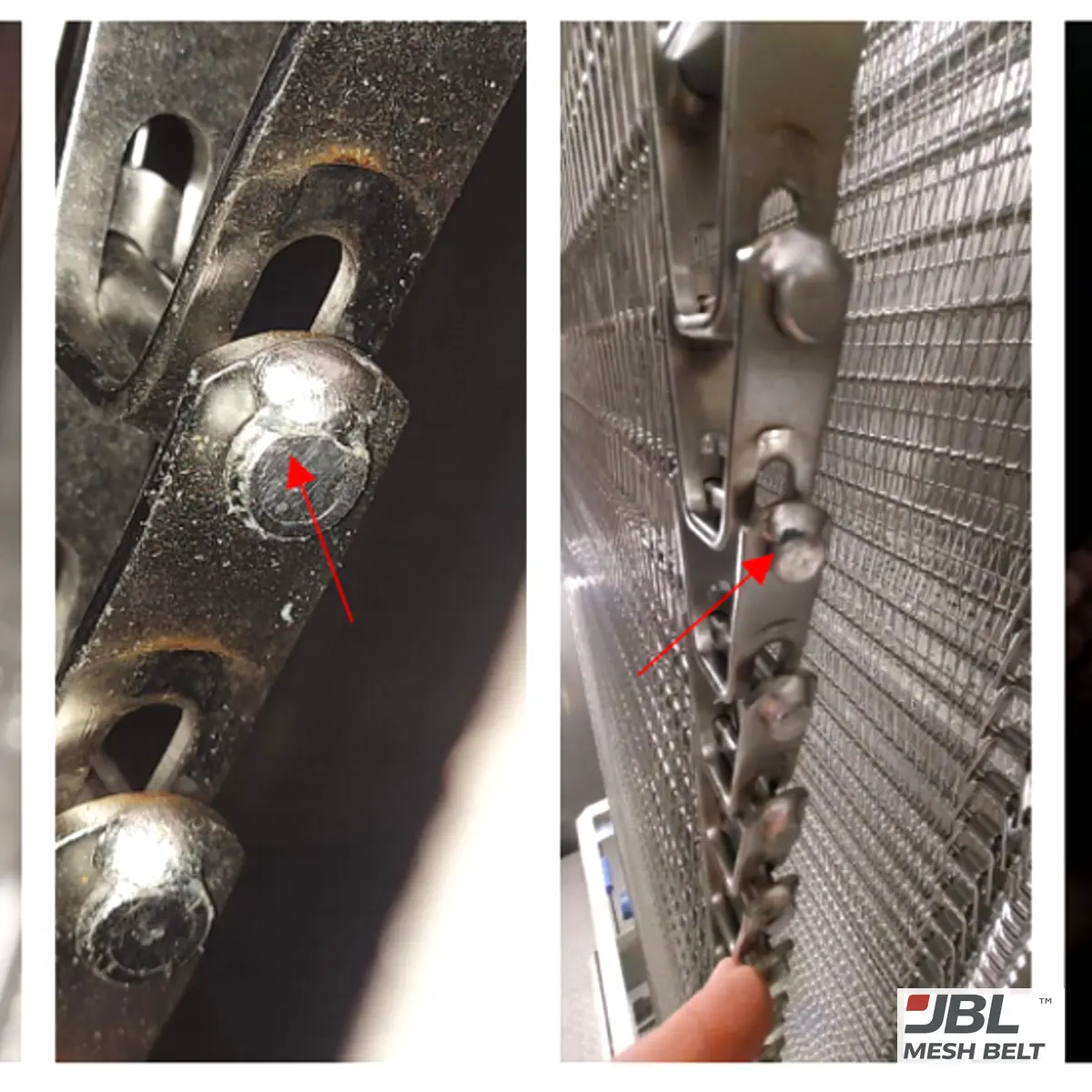
| Edge welds | Ground and checked for burrs | Rough welds that scratch drum bars and guides |
| Surface | Pickled or electropolished as specified | Unfinished surface, residue |
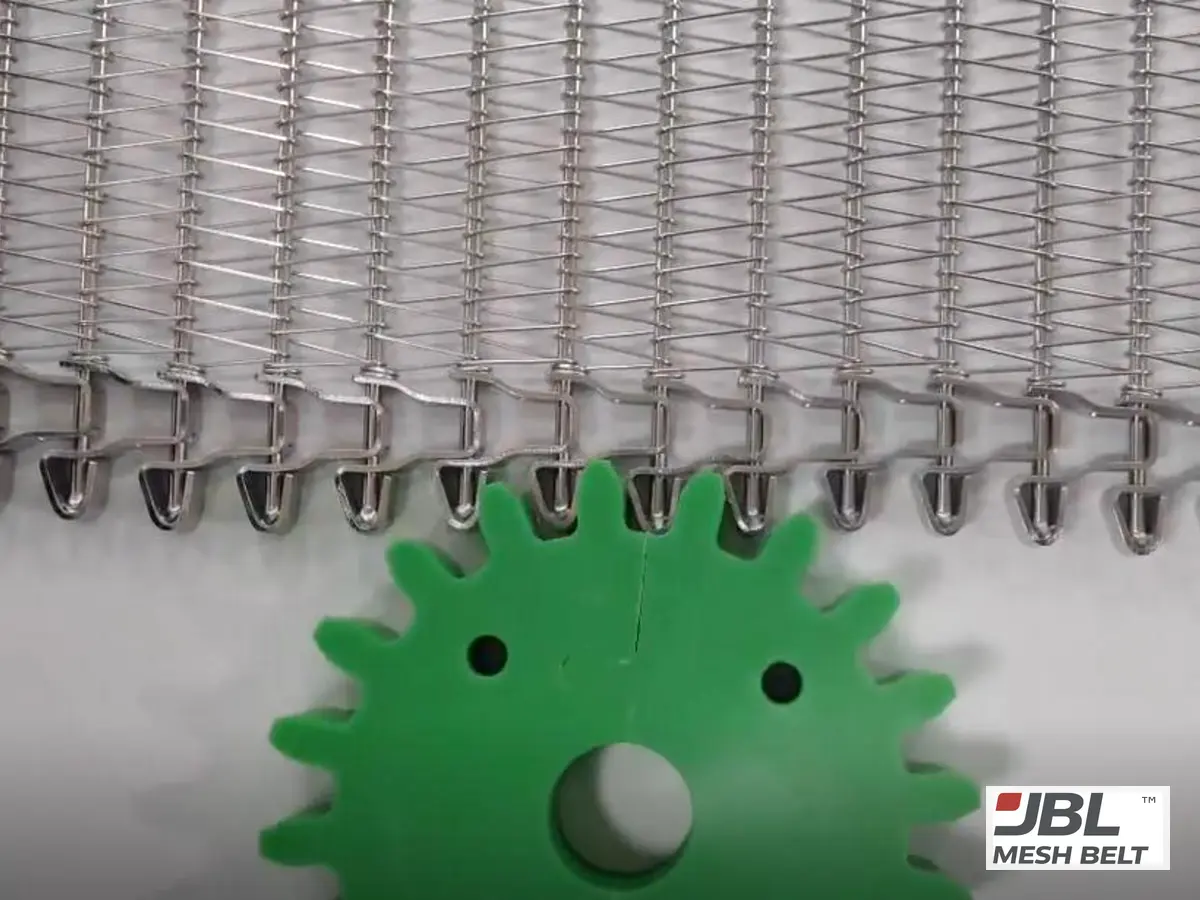
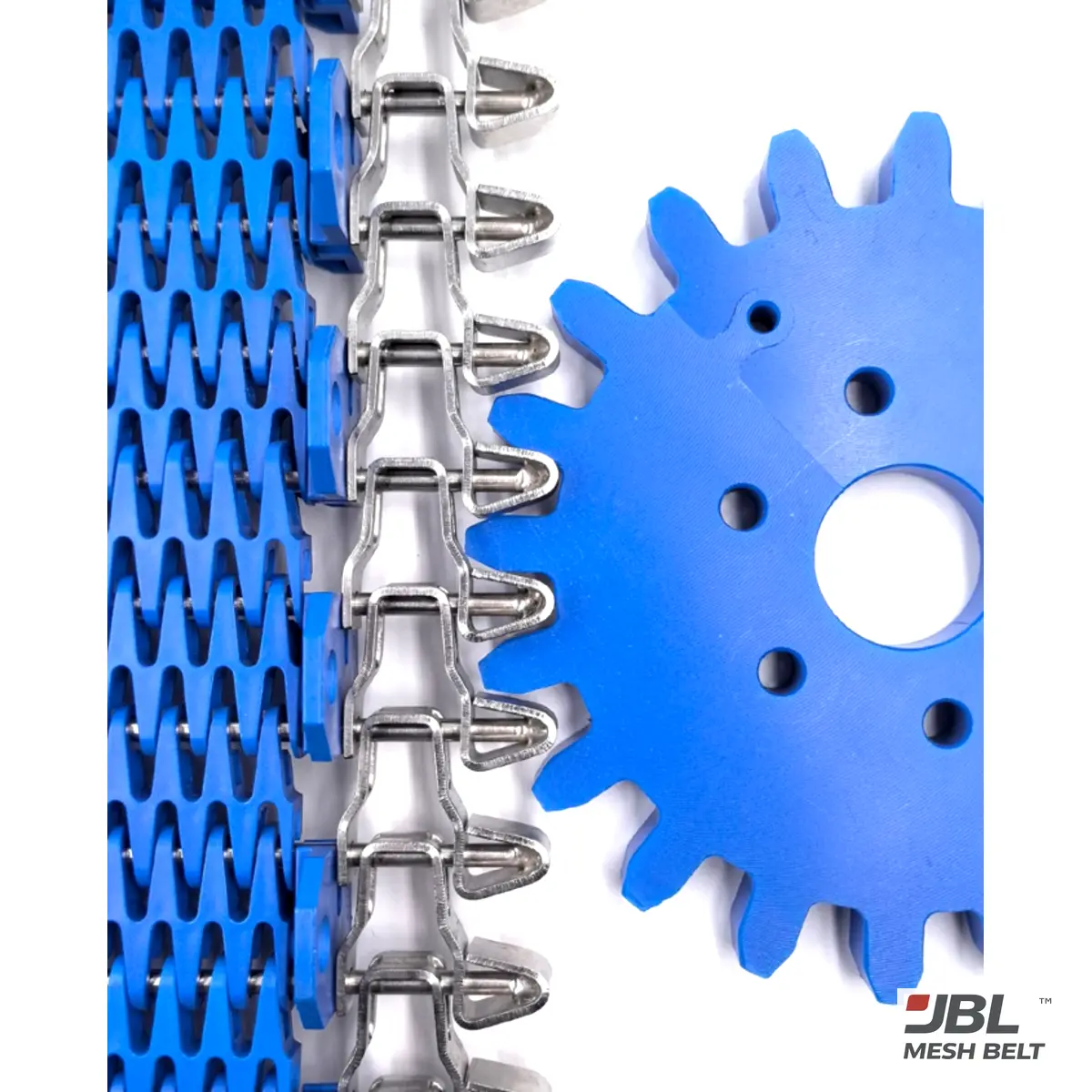
| Sprockets | Matched and run with the belt | New belt on worn teeth |
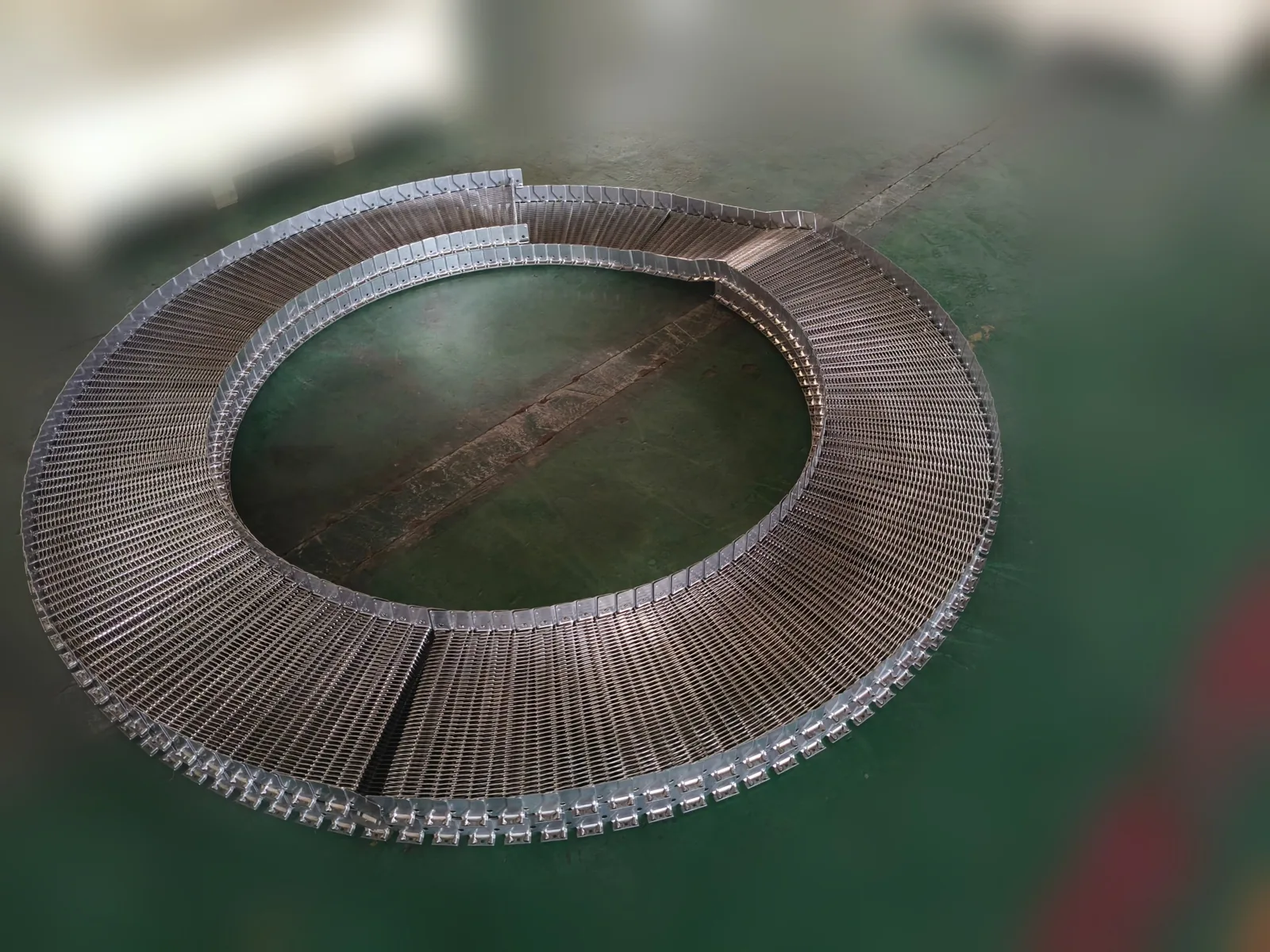
| Turn ratio | Confirmed against your drum | Assumed from width and pitch |
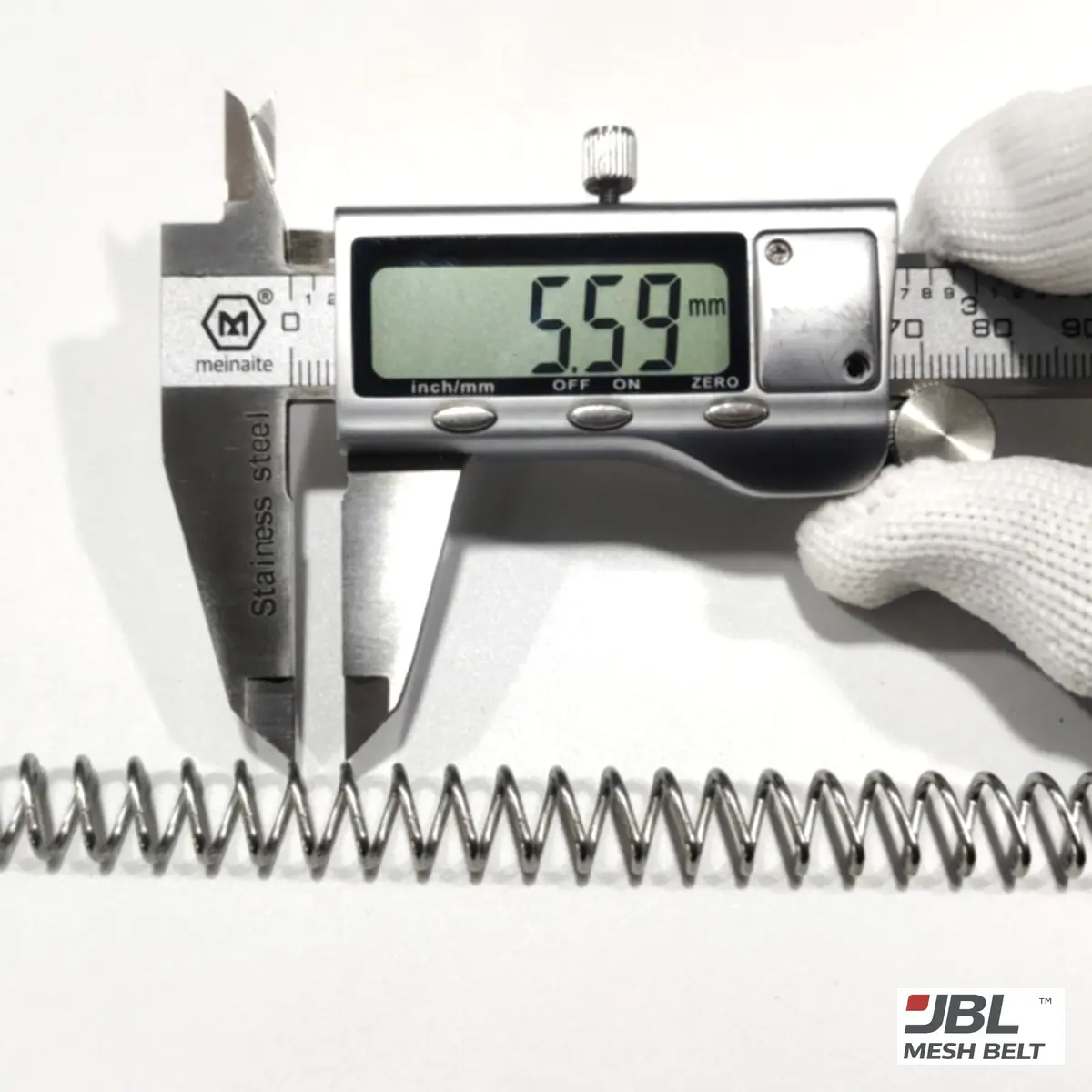
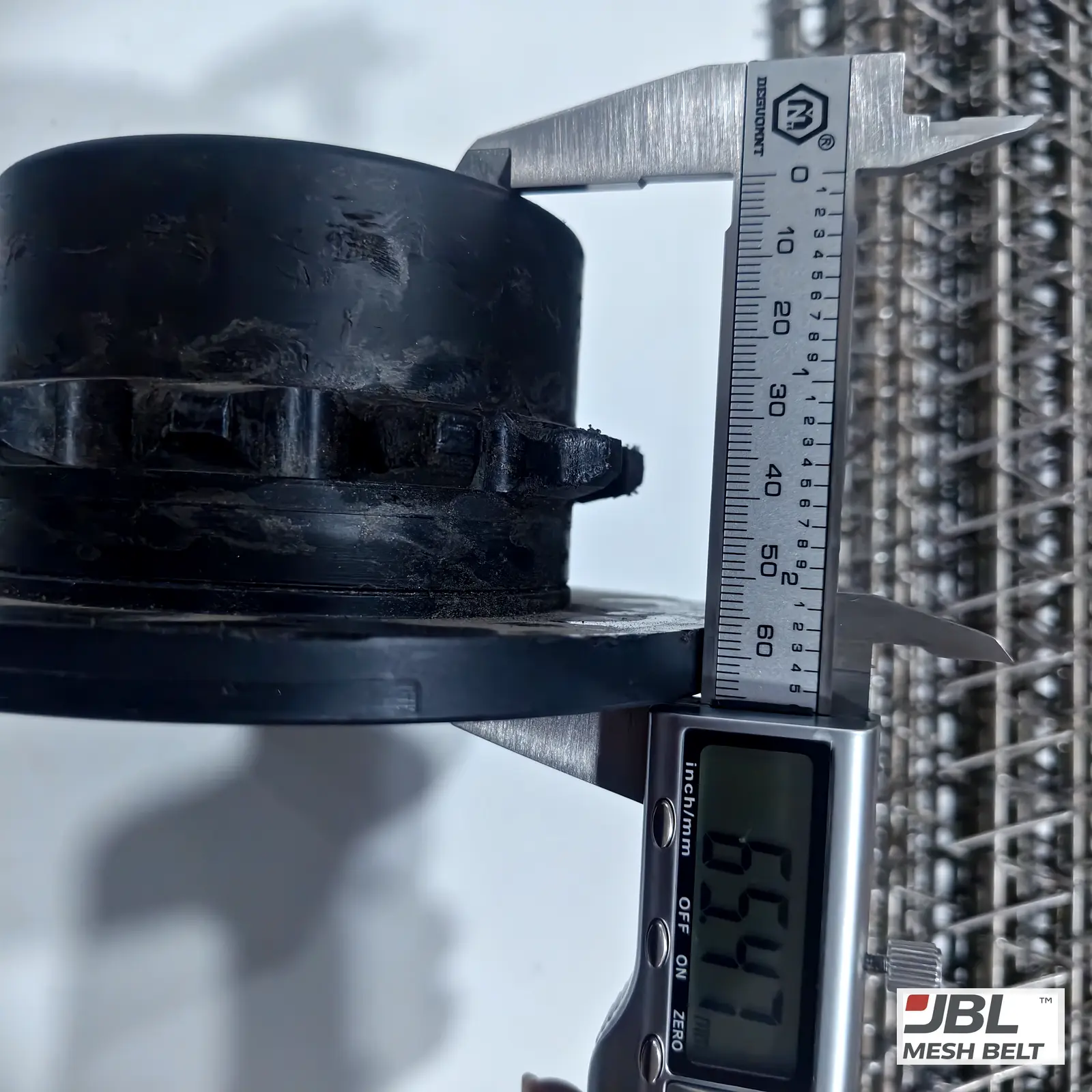
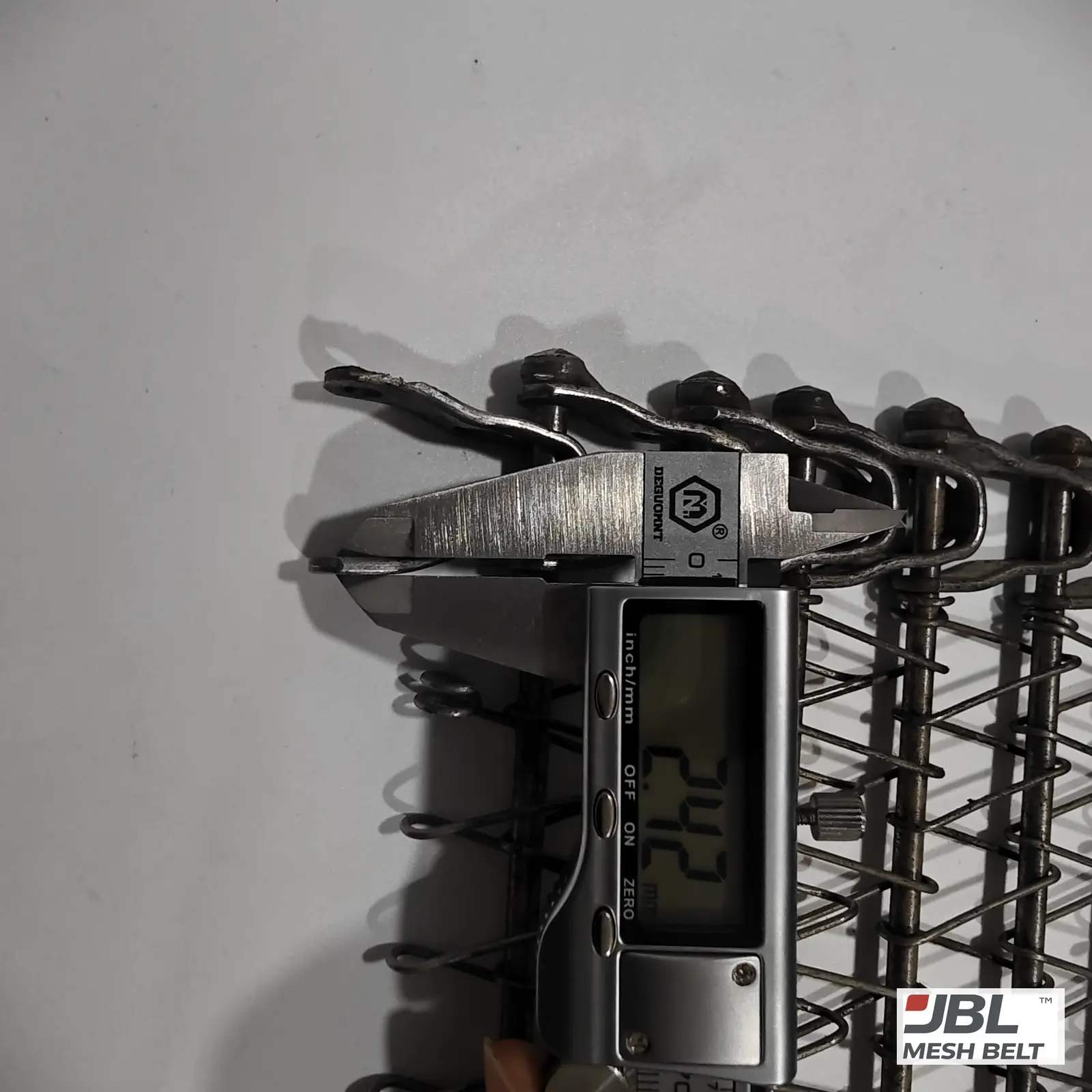
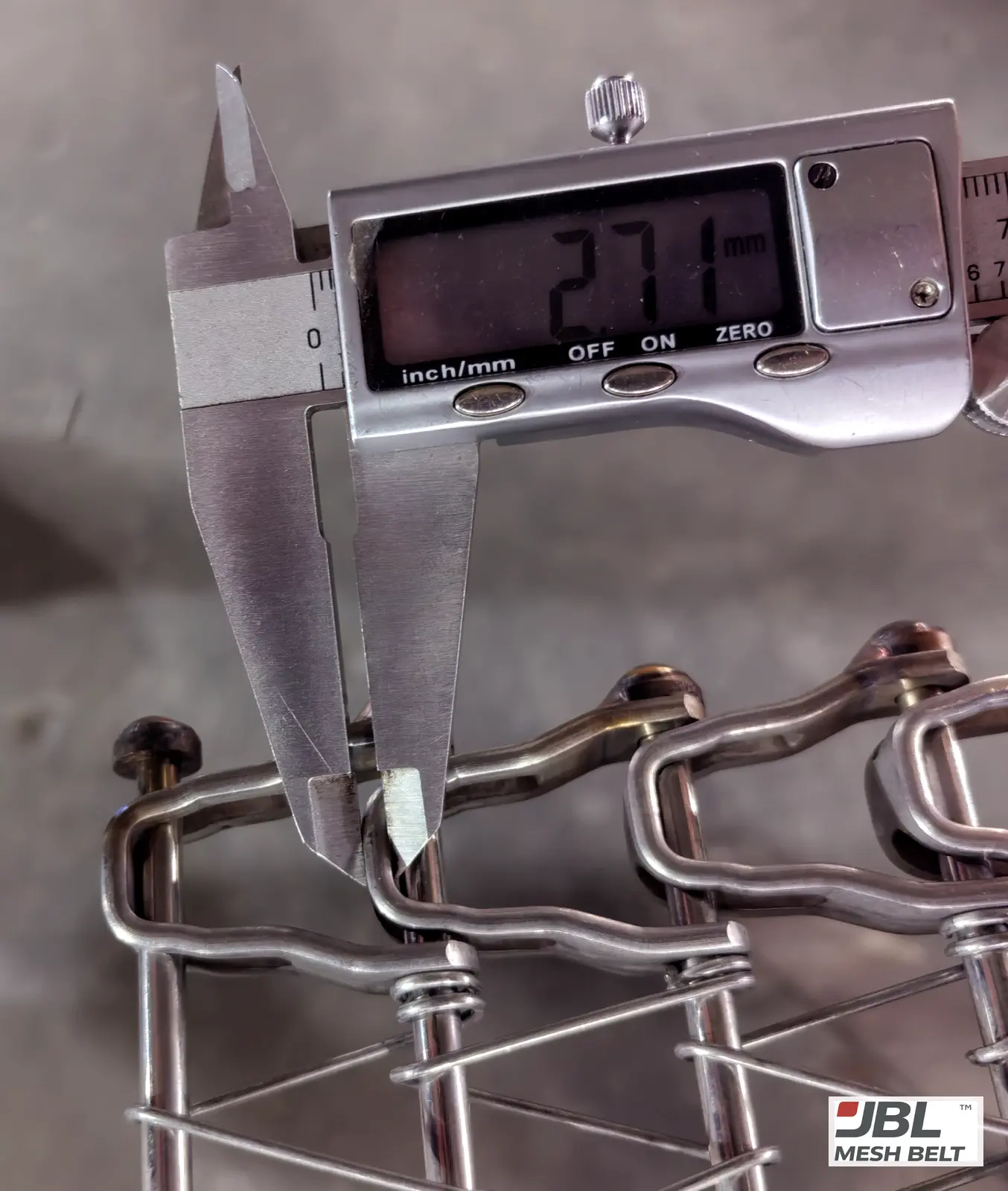
Each line in the table comes from something I have seen. On the waffle cooling spiral, the worn link read 2.42 mm and the new belt was made at 2.71 mm. A belt copied at 2.42 mm would have been cheaper to make and would have started its life already worn.
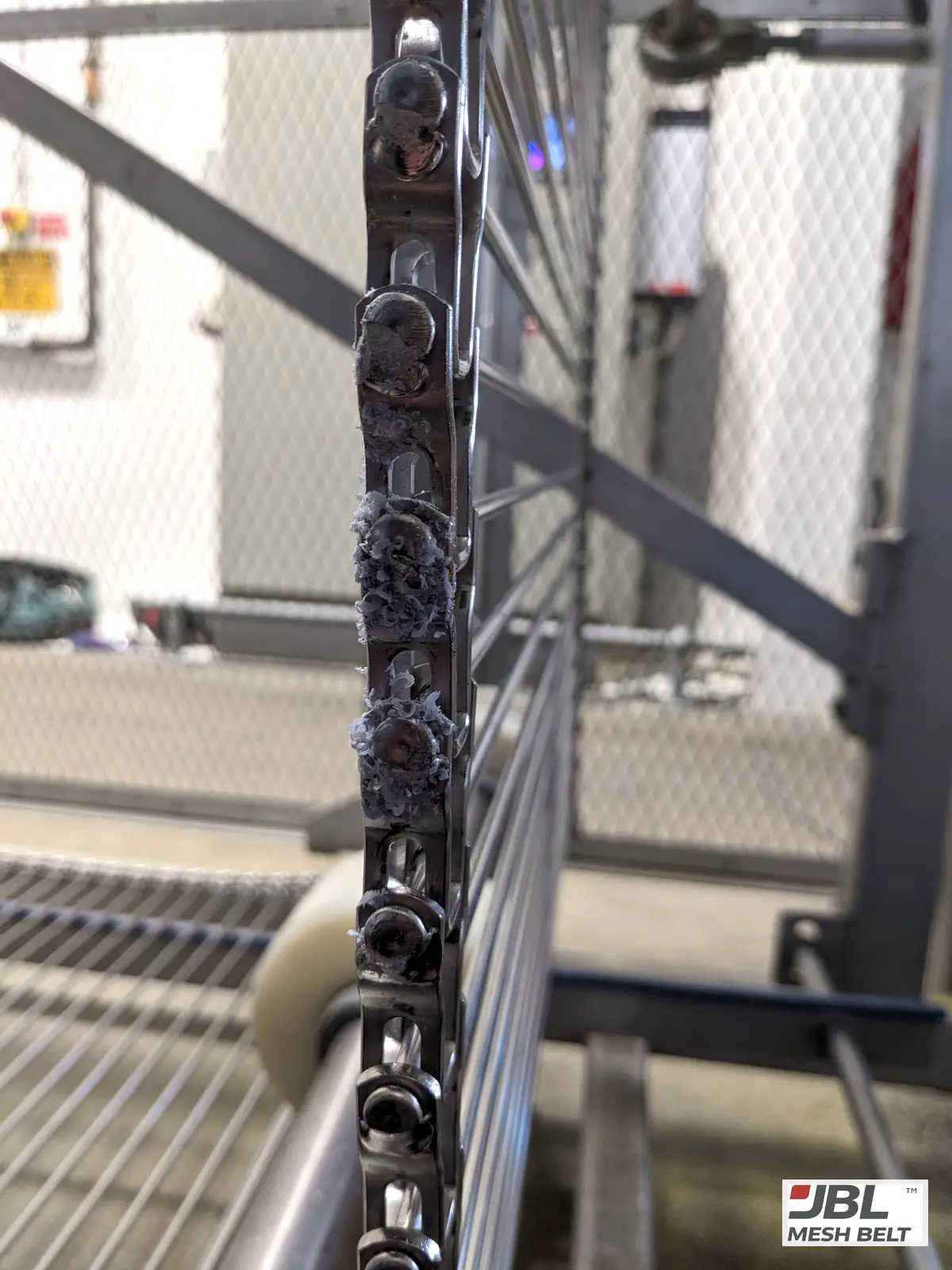
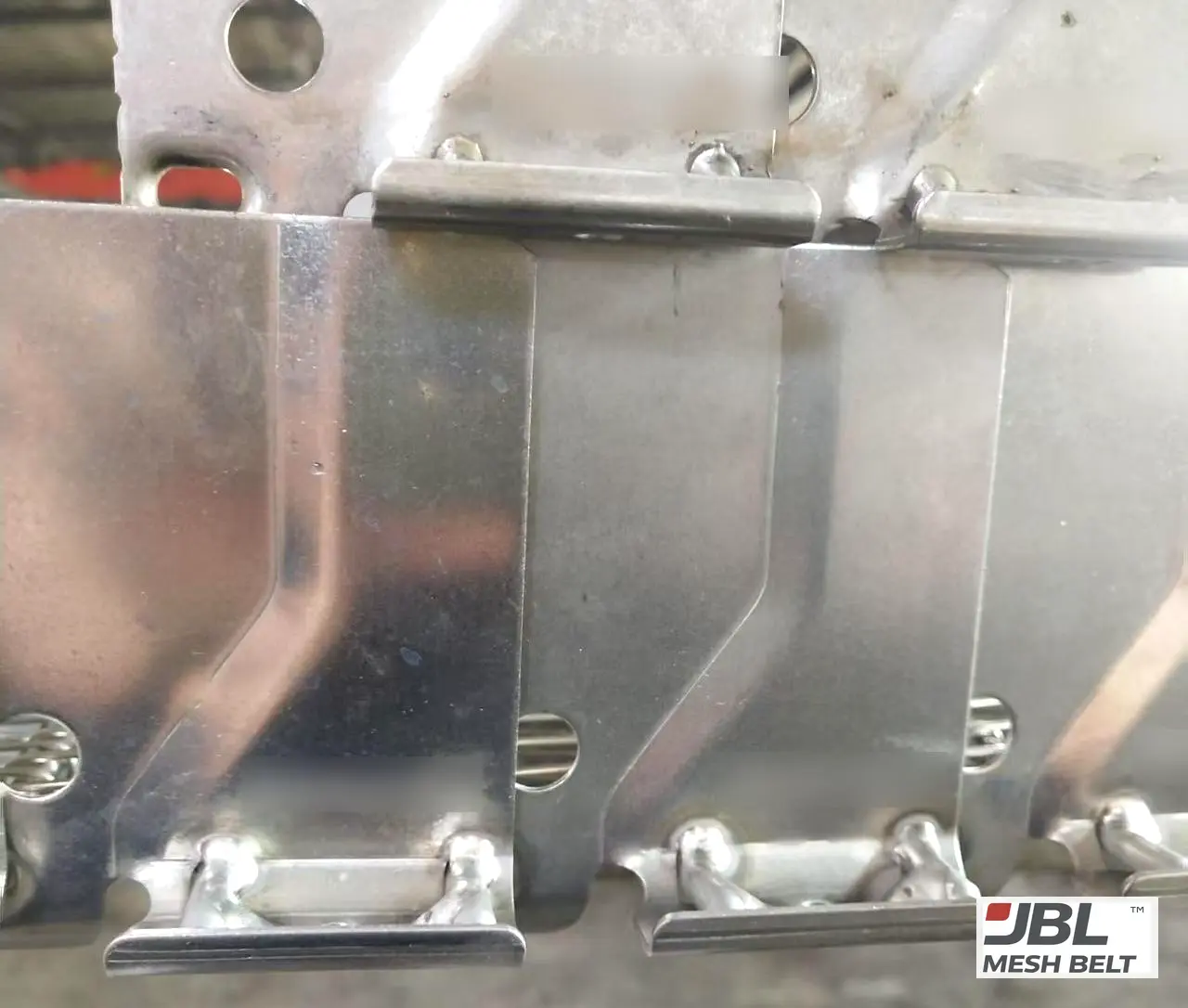
In Melbourne, the original belt's rough welds scored the plastic guide strips. That is a machine cost caused by a belt detail. The replacement matched the fit but with smooth welds.
Material is a choice too. SUS304 suits most freezing and cooling lines; SUS316 costs more but is considered where salt, brine or cleaning chemicals are a concern. Choosing the cheaper grade where the process needs the other one is not a saving.
03How can a cheaper belt end up costing more?
A low price is real money saved — until the first stop. Then the saving is measured against hours of lost production.
Short answer
A cheaper belt costs more when it does not fit first time, when it runs on worn sprockets, when its welds crack or carry burrs, or when it is copied from a worn sample. Each of these adds downtime, repairs or product loss that the price difference rarely covers.
| Shortcut | Saving on paper | Cost on the line |
|---|---|---|
| Skip the sample | Faster order | Fit problems found at installation |
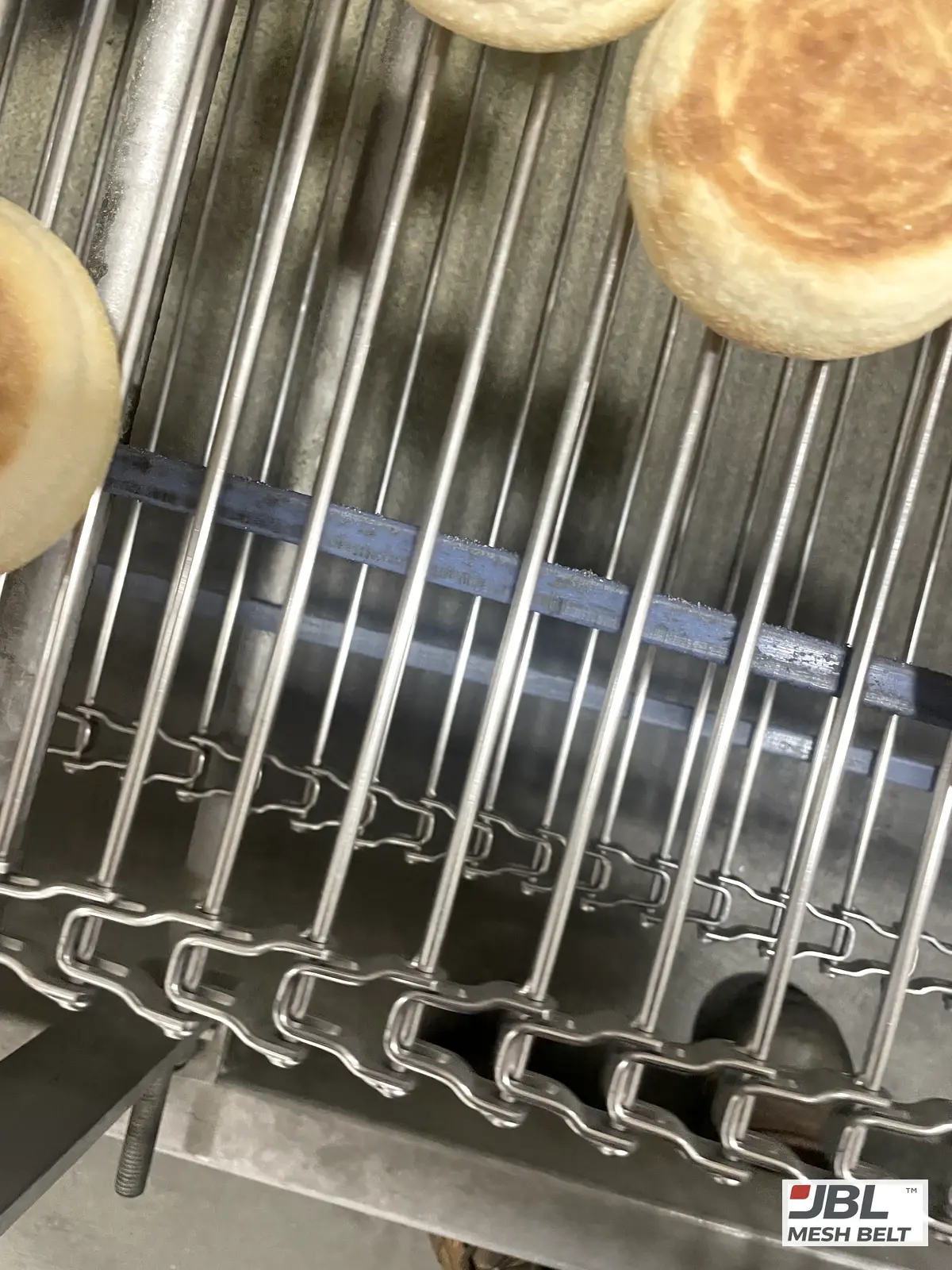
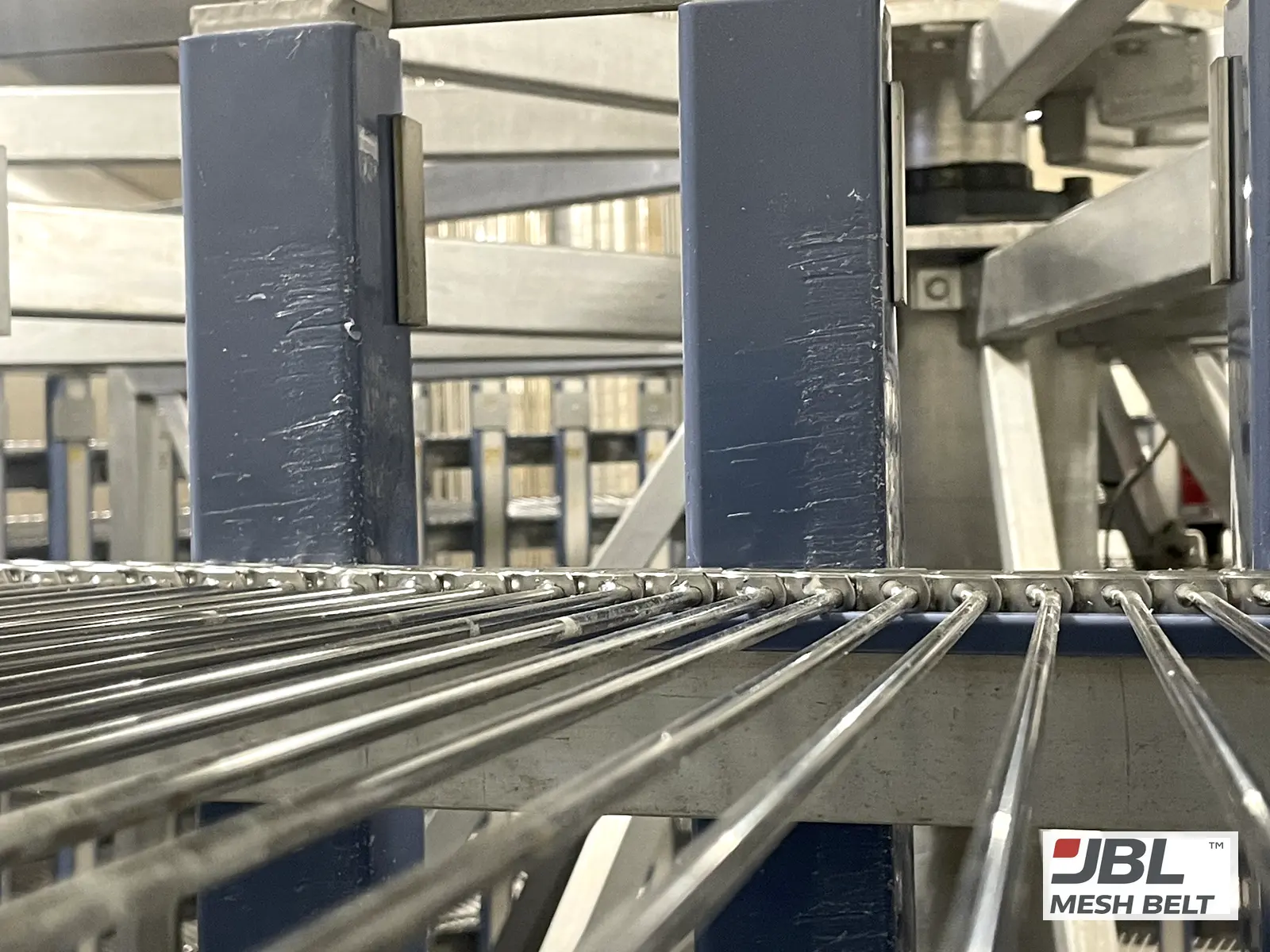
| Keep the old sprockets | No sprocket cost | New belt jumps or wears early |
| Skip weld finishing | Less labour | Scratched drum bars, contamination risk |
| Copy the worn size | Easier to measure | Weaker belt from day one |
| Skip the turn test | Earlier shipment | Belt lifts or rides up the drum |
Contamination is the most expensive line, and the hardest to see on a quote. On friction-drive spirals, burrs on inner-edge welds can scratch the drum bars and leave black residue that reaches IQF product. I explain this in weld burrs and IQF contamination.
The opposite is also true. An original equipment maker's belt is not always the lowest total cost either. In the UK and the USA, buyers came to us because the OEM replacement price was too high — and still needed a belt that fits exactly. See what to do when the OEM belt is too expensive.
04How do you lower the risk before committing to the full length?
The biggest cost is a wrong belt in full length. The cheapest protection is to prove the belt on something smaller first.
Short answer
Approve a measured sample before bulk production, and where the risk is high, run a short trial length on your own line first. Ask for a turn test and a sprocket running test before shipment, with photos and video sent before the crate is closed.
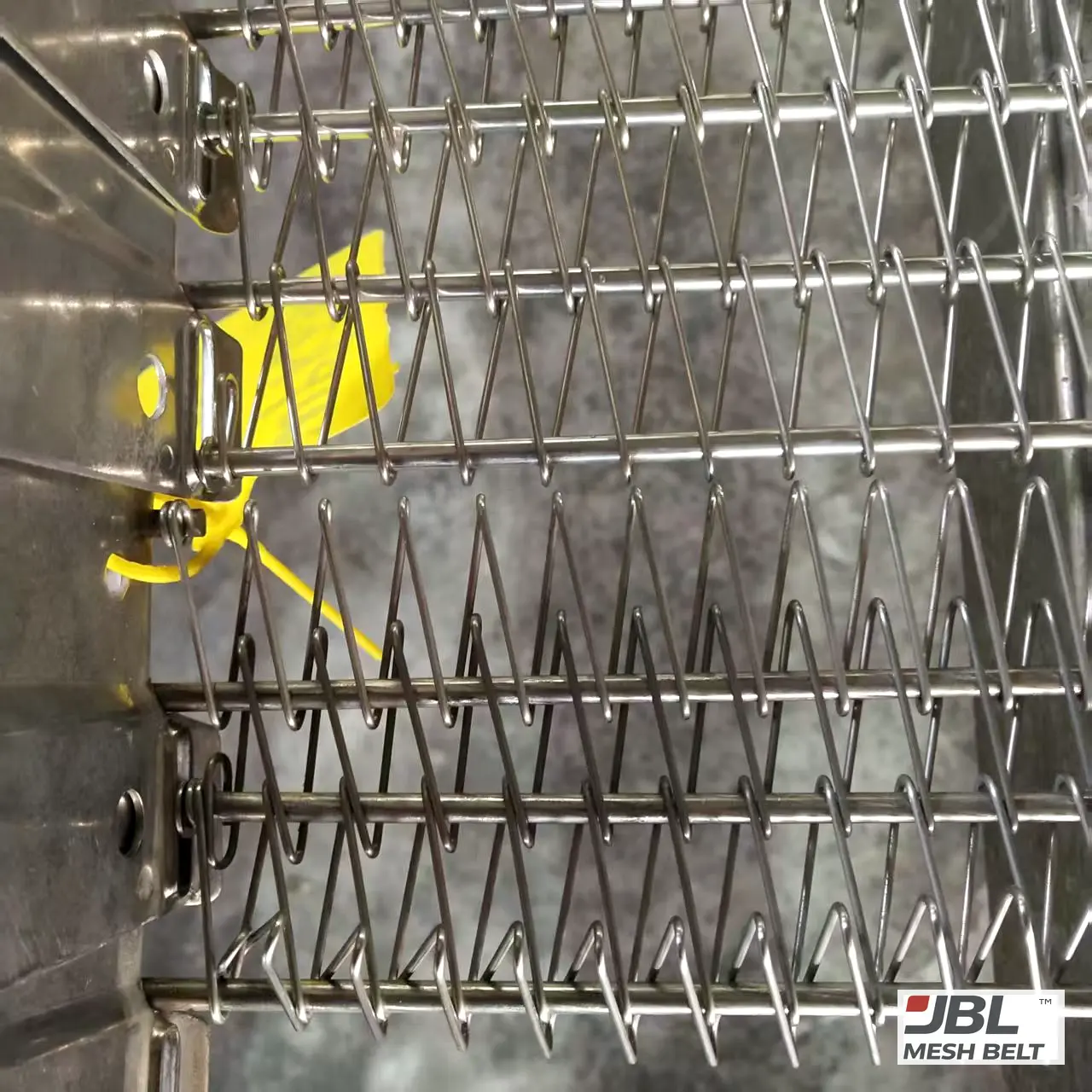
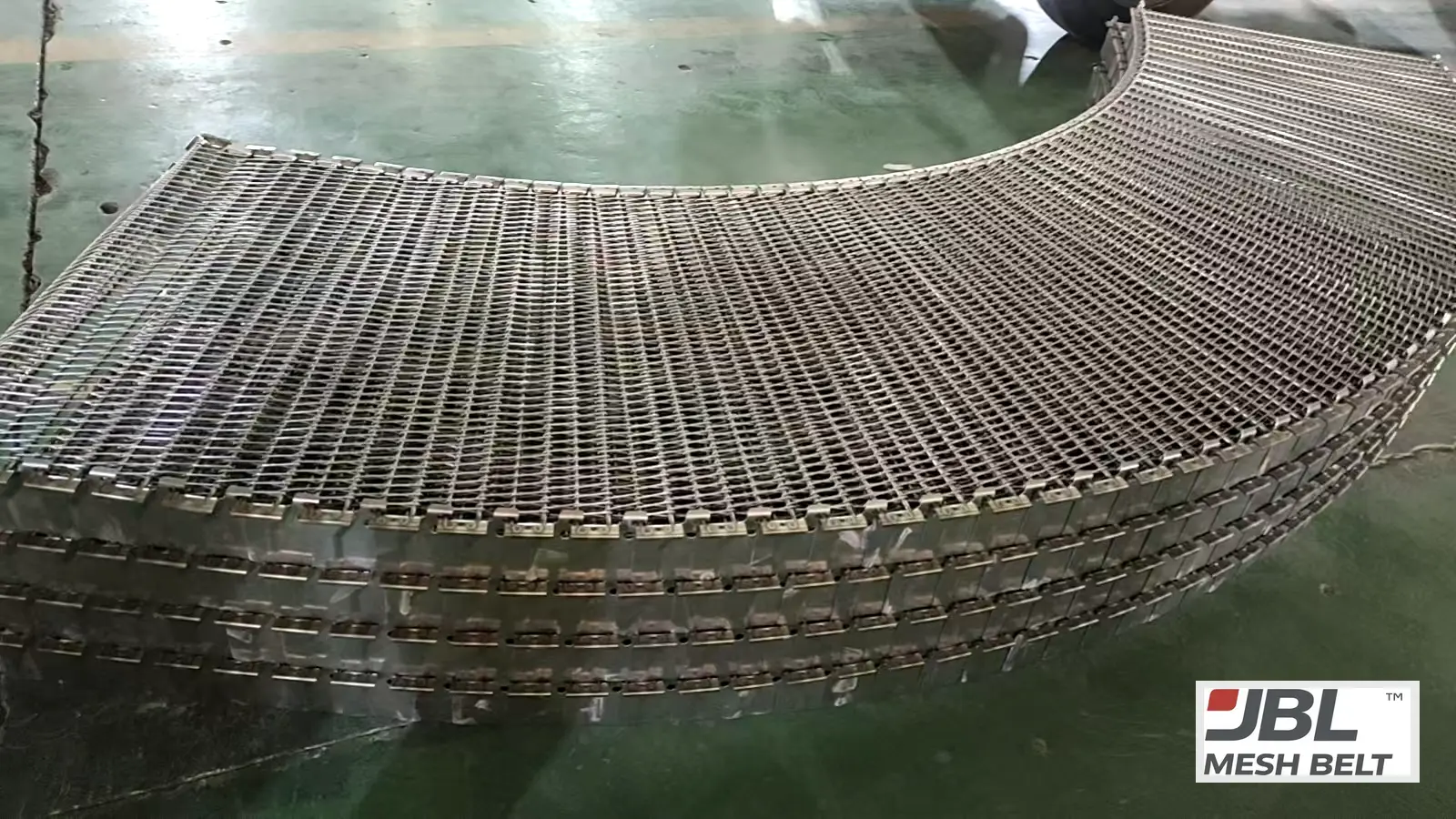
The Brazil project, a self-stacking belt, is the clearest example I have. The customer bought about 50 m of self-stacking belt and ran it on the freezer first. Only after that run did the 350 m order follow. After the first 350 m was installed, the customer ordered a second 350 m.
- 01
Sample or trial run
Measured against your original with the same caliper.
- 02
Your approval
Nothing goes into bulk before you confirm.
- 03
Trial length on your line
Where the risk is high — as in Brazil, about 50 m first.
- 04
Tests before shipment
Turn or stacking test, sprocket running test, weld review.
- 05
Photos before the crate closes
You see the belt you are paying for.
A trial length costs something. But it is a small, known cost set against the unknown cost of a full-length belt that does not run. I describe the tests in what a turning test and a stacking test should show.
05What keeps the cost low over the belt's life?
Once the belt runs well, the next cost is the next stop and the next order. Both can be planned.
Short answer
Spare rods and parts packed with the belt, recorded specifications so the next batch matches, regular checks of the drum bars and sprocket teeth, and the same measured specification for every re-order keep the cost low after installation.
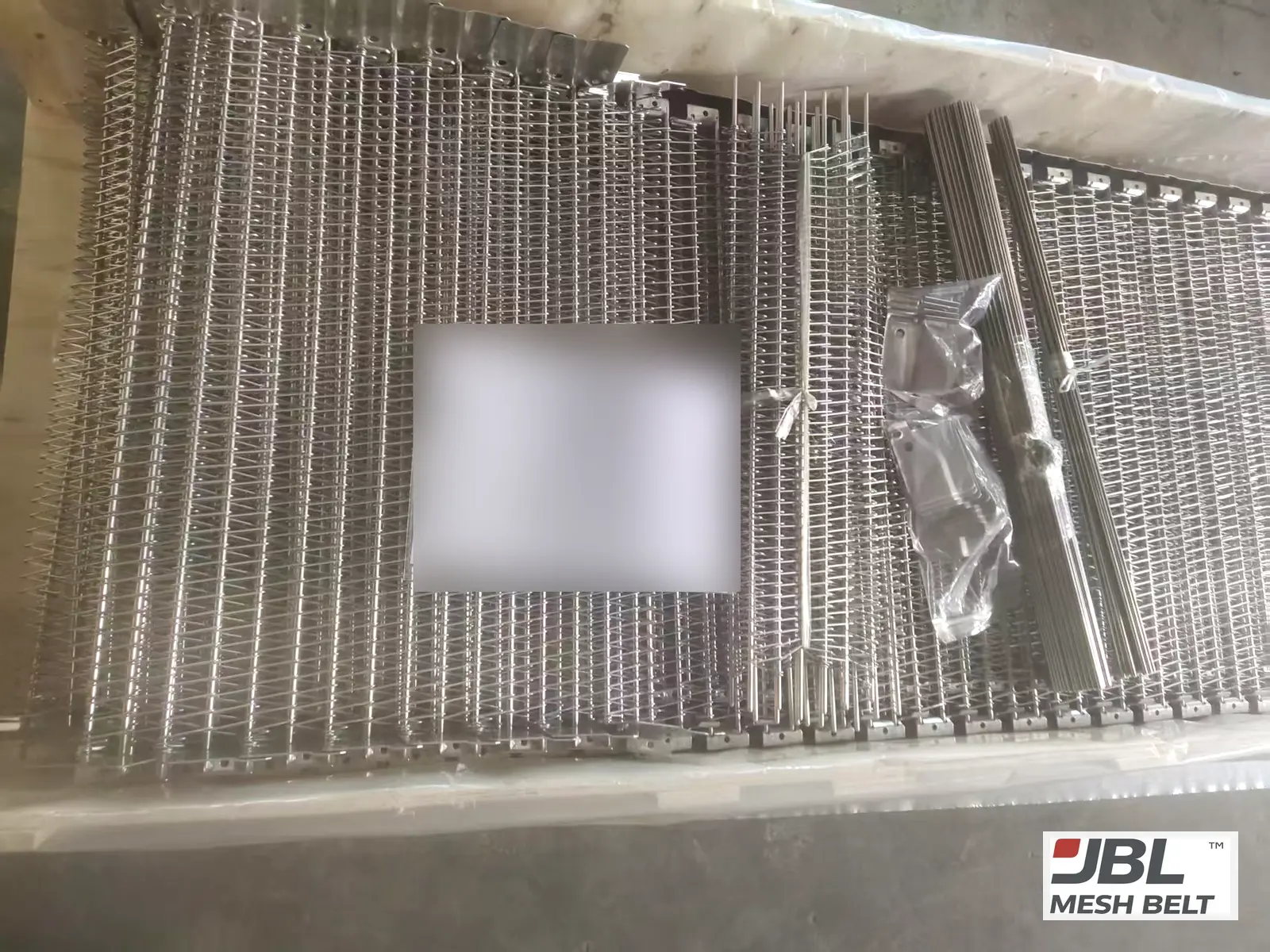
Spare rods and side plates in the crate mean a damaged section can be repaired without waiting for a shipment. In Melbourne the belt shipped with spare rods and the sprockets; in Brazil with spare rods and side plates.
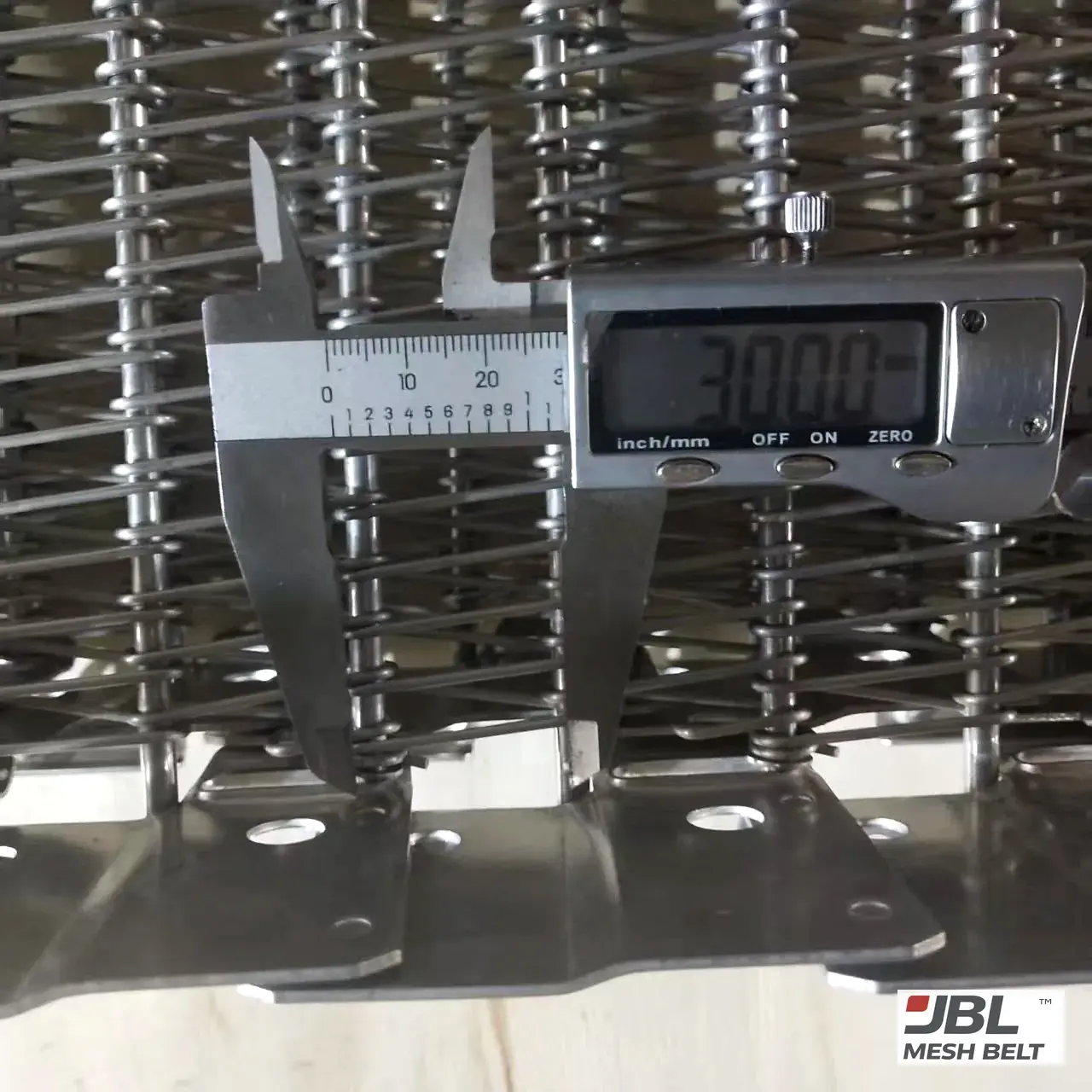
For re-orders, a recorded specification — and on our side-driven belts a retained sample — means the next belt matches this one. On the UK belt, the rod pitch read 30.00 mm on the original, the sample and the bulk belt. That consistency is what makes a re-order simple.
| After installation | Why it saves money |
|---|---|
| Check drum bars and guides for scratches | Catches edge problems before they spread |
| Check sprocket teeth for wear | Replace before they damage the belt |
| Keep spare rods on site | Repairs without waiting for freight |
| Re-order to the measured specification | The next belt fits like this one |
How long a belt lasts depends on load, temperature, cleaning, drive and maintenance. I do not promise a number. I check the factors that shorten it, and I tell you which ones I see on your line.
Comparing a low quote with a high one?
Send me both specifications and photos of your old belt and sprockets. I tell you what each quote includes and what it leaves out.
When This Is Not the Right Choice
- ✕If a line runs only for a short, fixed period, the lowest purchase price may genuinely be the best choice; total cost matters most on lines that run for years.
- ✕If your freezer is near the end of its life, a full upgrade of belt and sprockets may not pay back; repair what is needed.
- ✕If your current supplier's belt runs without problems at a fair price, there may be no reason to change.
From My Engineering Experience
Buyers often contact me because of a price: the OEM belt is too expensive. But price is only the first cost, and a cheaper belt that fails solves nothing.
In Brazil, the customer spent money on a 50 m trial before ordering 350 m, and then ordered 350 m again. On the waffle line, the customer paid for new sprockets as well as a belt. In Melbourne, the customer's main complaint was weld quality. In each case, the order was about the whole cost of the belt on the line, not only its price.
So when I quote, I try to show what is included — sample, tests, sprockets, spares — so the comparison is fair.
— Spring, Sales Director, JBL Mesh Belt
Evidence From Our Work
Brazil, 2025 — 50 m trial, then 350 m, then a repeat 350 m →
| Step | Detail |
|---|---|
| Starting point | Section of the customer's original self-stacking belt |
| Risk lowered by | New belt joined to the original; about 50 m run on the freezer |
| Tests | Stacking test on a curve before shipment |
| Result | 350 m ordered and installed; second 350 m ordered after |
United Kingdom, 2026 — OEM belt too expensive →
| Step | Detail |
|---|---|
| Problem | The original equipment maker's replacement price was high |
| Route | From the customer's sample; tooling made; sample approved |
| Consistency | Rod pitch 30.00 mm on original, sample and bulk |
| Tests | Turning and stacking tests before 450 m |
FAQ
Q1What is total cost of ownership for a conveyor belt?
The purchase price plus sprockets, spares, freight, installation downtime, stops, product loss, machine wear and re-order costs over the belt's life.
Q2Is SUS316 always worth the extra cost?
No. SUS304 suits most freezing and cooling lines; SUS316 is worth considering where salt, brine or strong cleaning chemicals are present.
Q3Should I replace the sprockets with the belt?
If the teeth are worn, yes. Worn teeth shorten the life of a new belt.
Q4How can I test a belt before ordering the full length?
Approve a measured sample, and where the risk is high, run a short trial length on your own line, as in our Brazil project.
Q5How long will the belt last?
It depends on load, temperature, cleaning, drive and maintenance. I do not promise a number; I check the factors that shorten it.
Conclusion
Judge a spiral belt by what it costs on your line, not on the quote. Design, matched sprockets and tests before shipment keep that cost low.
Download the Spiral Freezer Belt Technical Specification (PDF)
Specification ranges and options in mm and inch. Enter your work email and the file downloads right away.
References
Your contact for this belt
Spring · Sales Director, JBL Mesh Belt · 16 years
“Your belt is worn, the OEM price is high, and there is no drawing. That is where I start.”
Send me a worn section, a few photos with a caliper in the picture, or a drawing. I tell you what fits, what is missing, and show you a sample measured against your own belt before you pay for the full length. Buyers in the UK, the USA, Australia, Brazil, South Korea, Spain and Malaysia have replaced belts this way.
- ✓Readings on your original next to readings on our sample
- ✓Nothing in bulk until you approve the sample
- ✓Turning, stacking or sprocket tests before your belt ships
- ✓A reply from me, usually within 8 hours