Reverse Engineering · 10 min read
Why Don't Old Spiral Belt Dimensions Always Match the Original Design?
 Written bySpringSales Director, JBL Mesh Belt · 16 years in metal conveyor beltsProjects in United Kingdom · USA · Australia · Brazil · South Korea · Spain · MalaysiaPublished
You send your old belt and ask for an exact copy. But after years in the freezer, 'exact' may mean copying wear, stretch and old repairs too.
Short answer
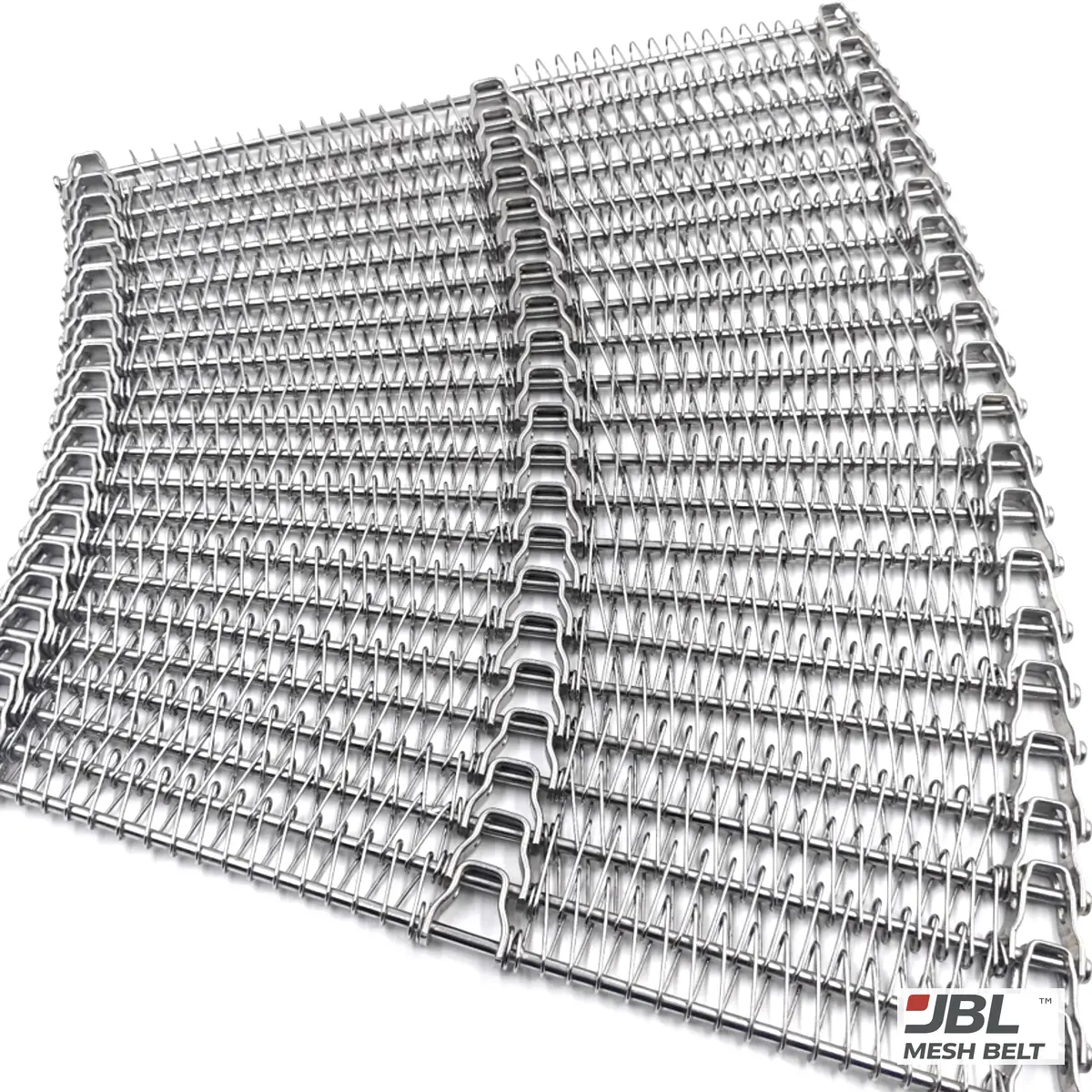
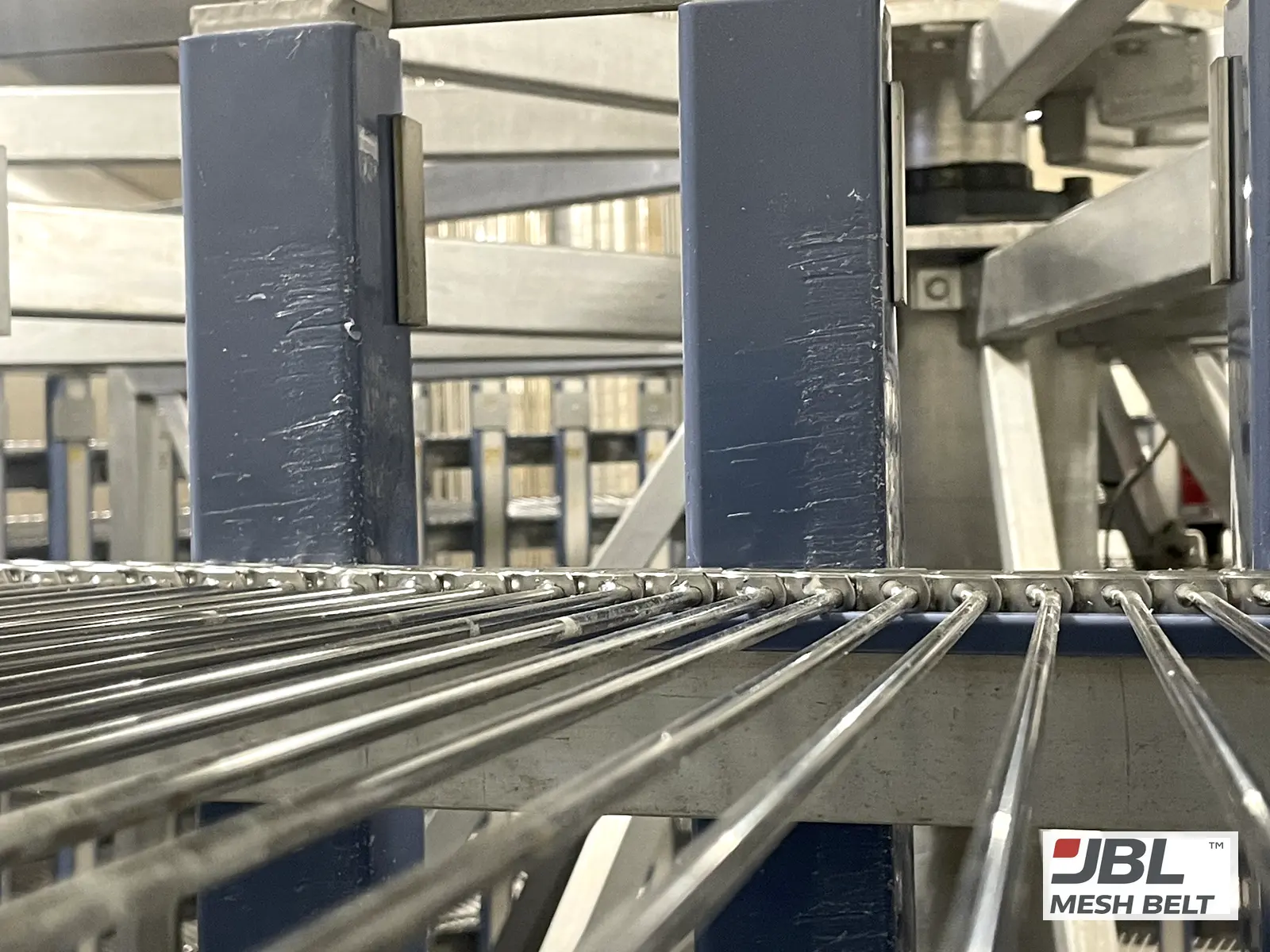
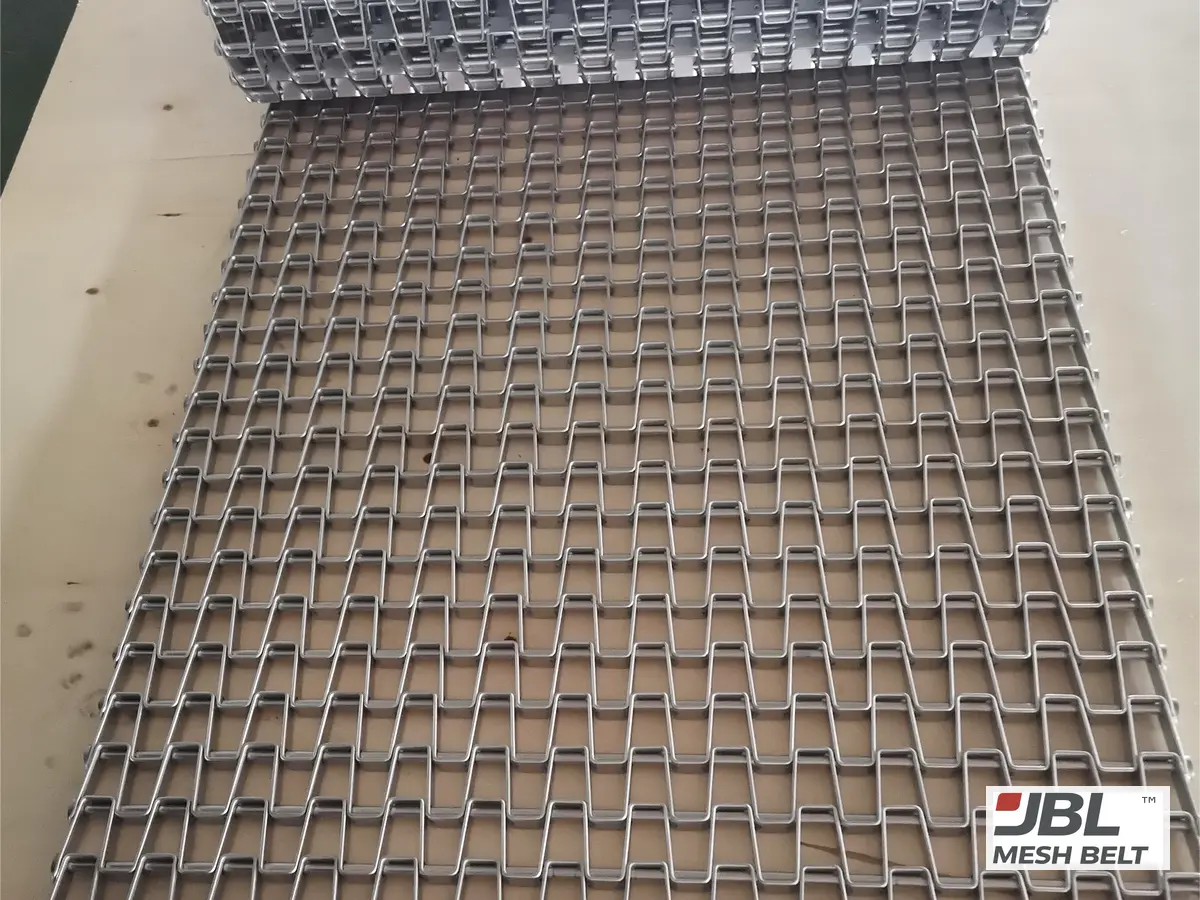
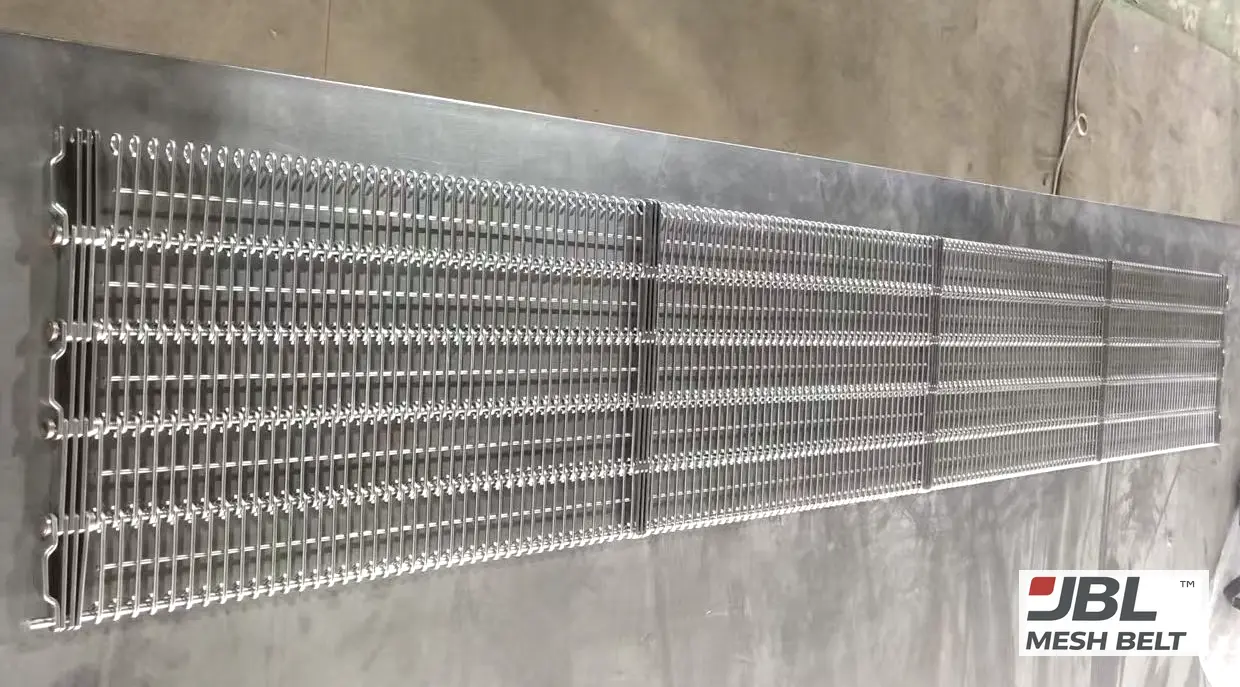
An old spiral belt has worn, stretched and sometimes been repaired, so its measured dimensions are not always the original design. Links and wire get thinner, pitch grows, edges deform. Reverse engineering should recover the original working relationship with your freezer — not reproduce every worn dimension.
At a Glance
| Product | Application | Key point | Buyer type | What to send |
|---|---|---|---|---|
| Spiral and self-stacking belts | Replacement from an old belt | Recover the design, not the wear | Maintenance, engineering, OEM buyers | Old belt photos or section, drawing if any, machine model, measured values |
Below I go through why an old belt is not a perfect master sample, which dimensions change in service, which ones I never copy as measured, and how I check them against your drawing and machine.
01Why isn't an old belt a perfect master sample?
A belt that ran for years is the best evidence you have. It is also a record of everything that happened to it.
Short answer
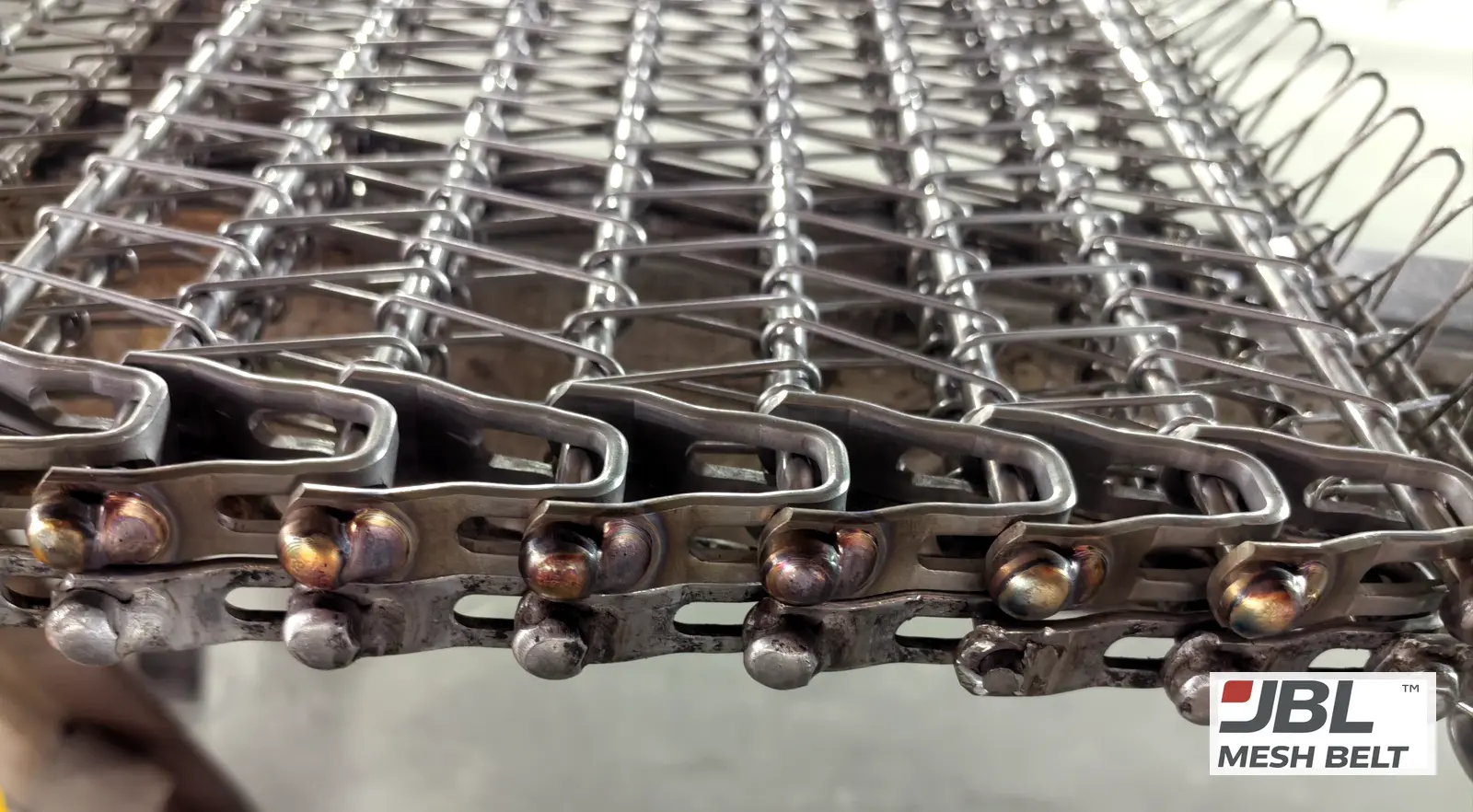
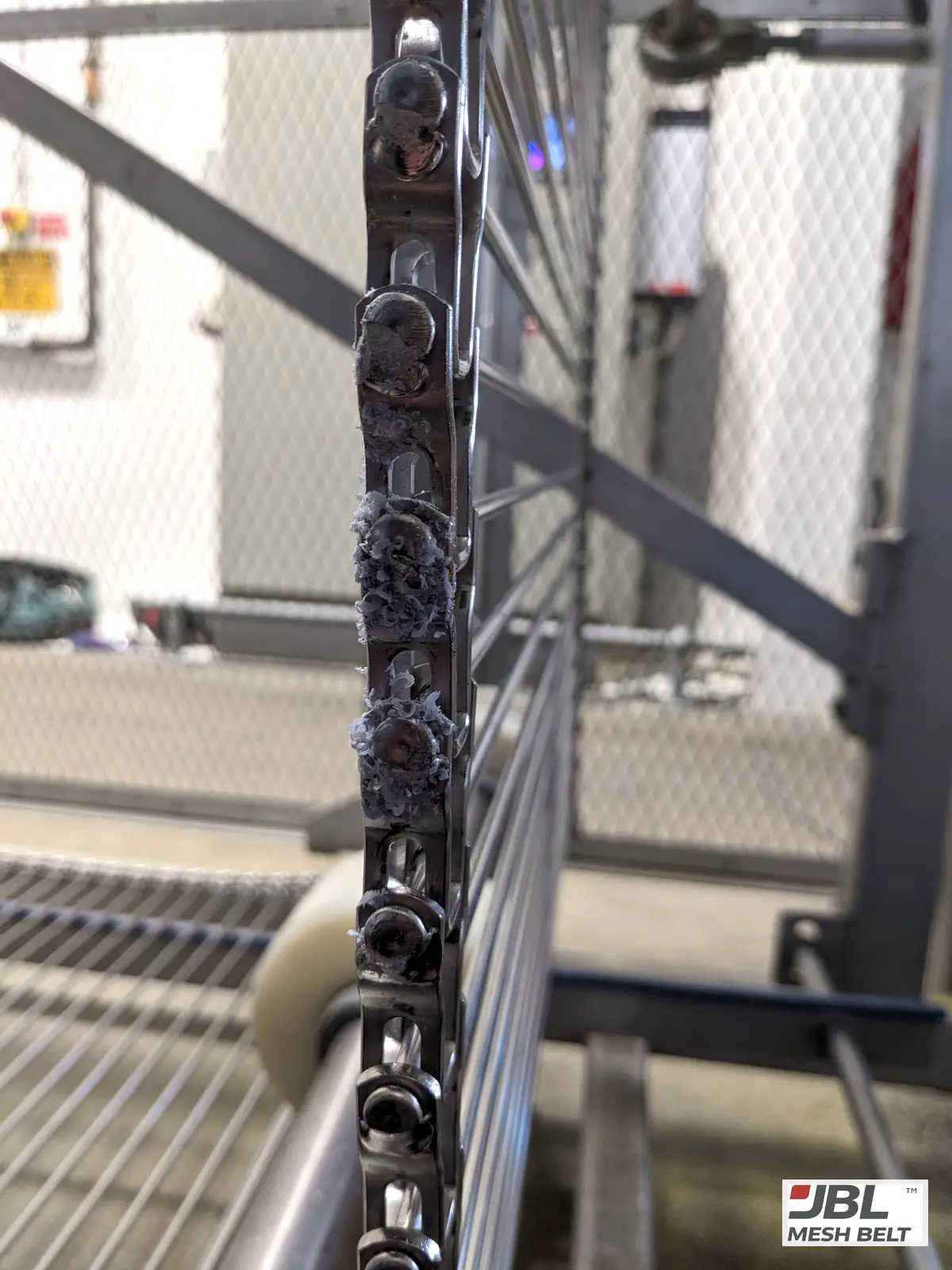
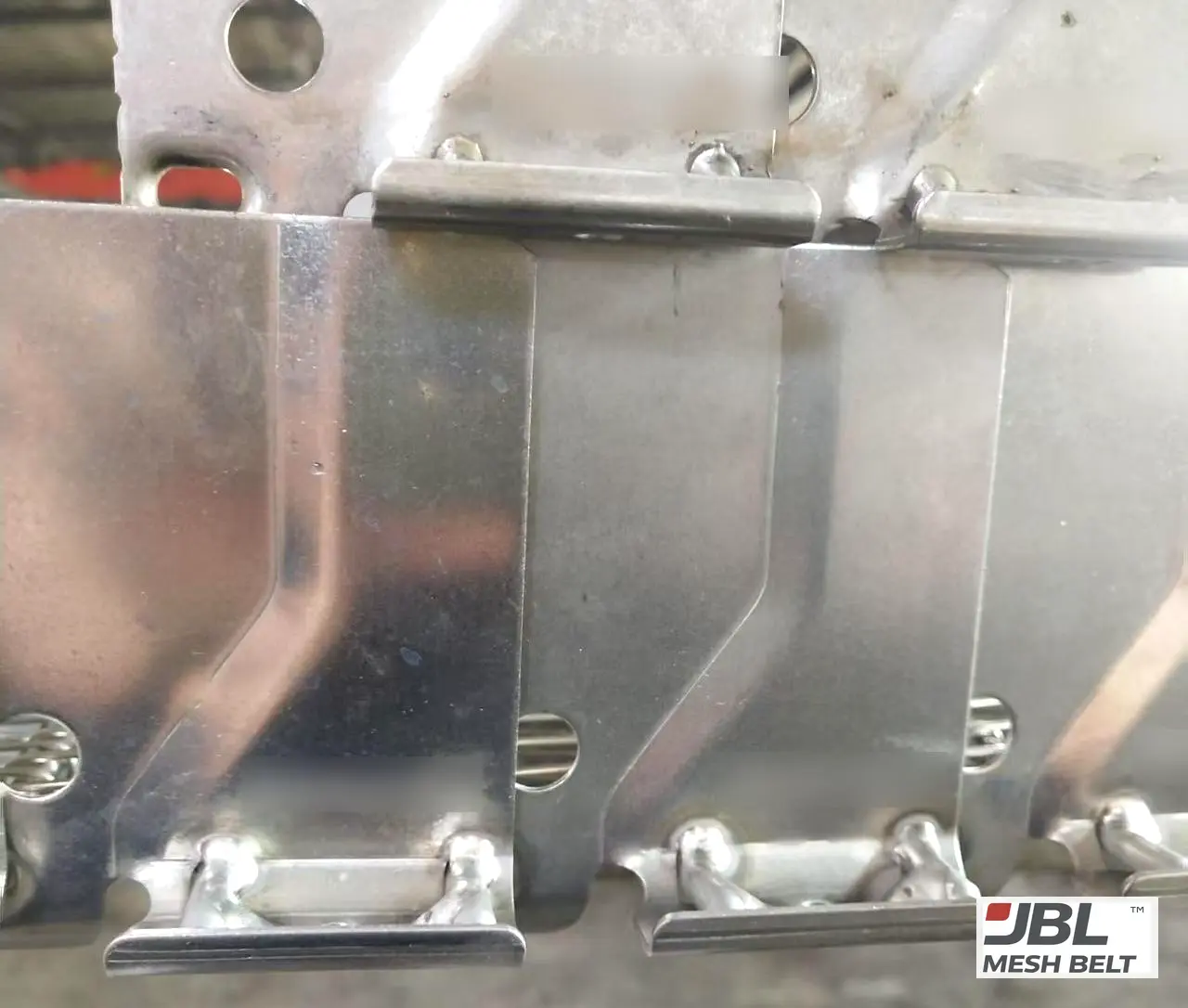
An old belt carries its service history: wear on links and wire, stretch in the pitch, bent rods, deformed edges and past repairs. Measured as it is, it gives today's condition. The original design has to be recovered by comparing readings, not read from one spot.
| What happened to the belt | What the caliper shows |
|---|---|
| Wear on links and side plates | Thinner links or plates than the design |
| Wear on spiral wire | Smaller wire diameter in contact areas |
| Elongation (stretch) | Longer pitch, often uneven along the belt |
| Rod bending | Rods no longer straight; pitch looks irregular |
| Edge deformation | Links or plates bent out of line |
| Previous repair | A section with different rods, wire or welds |
When a buyer sends me an old belt, I treat it as a witness, not as a drawing. It tells me the structure, the edge type, the materials and roughly the sizes. It also tells me how the belt has been used. Both kinds of information are useful, but they must not be mixed up.
The most important sentence in my work is this one: reverse engineering should recover the original working relationship — not blindly reproduce every worn dimension. The belt has to work with your drum, your sprockets and your guides as the original did on day one.
That does not mean I ignore the old belt. Most dimensions on a used belt are still very close to the design, such as rod diameter and rod pitch. The skill is in knowing which readings to trust and which to question. I describe the general method in copying a worn belt from a sample; here I go deeper into which dimensions change.
02Which dimensions change while a belt is running?
Not every dimension wears at the same speed. The ones in contact with metal, plastic or product change first.
Short answer
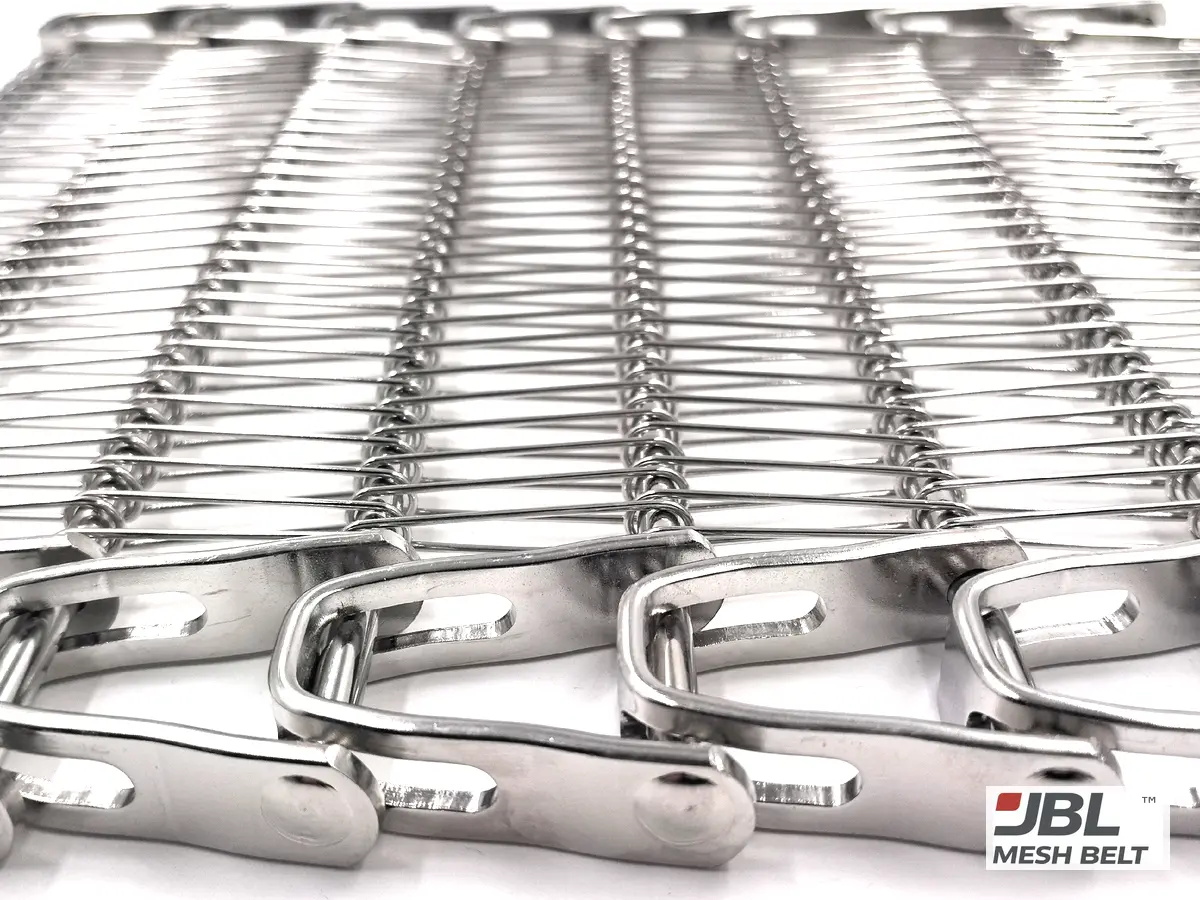
The dimensions that change most are link and side plate thickness, wire diameter in contact areas, and pitch over length. Rod diameter and rod pitch usually stay close to the design. Edge shape changes where the belt rubs drum bars, guides or sprockets.
| Reading | Old belt | New belt |
|---|---|---|
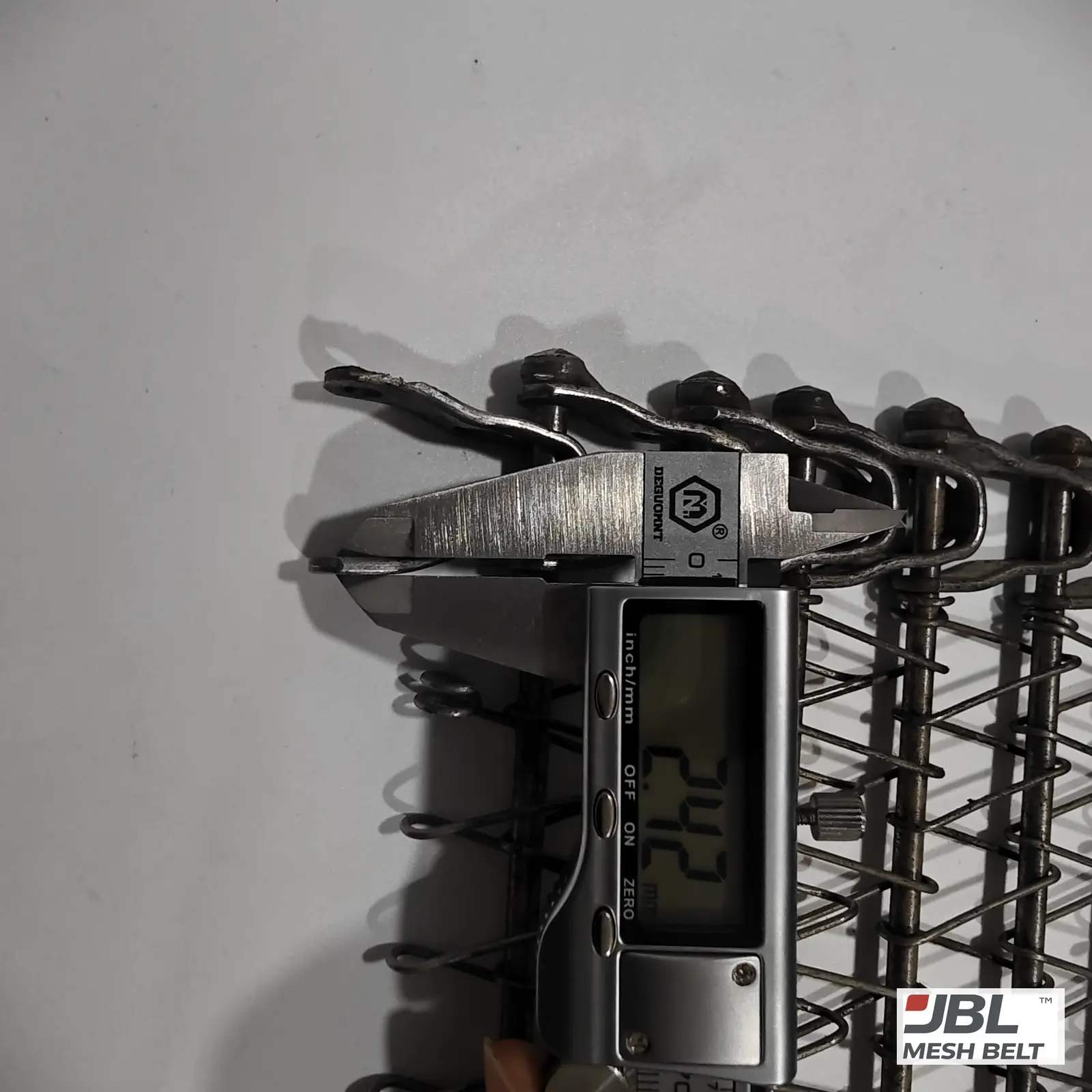
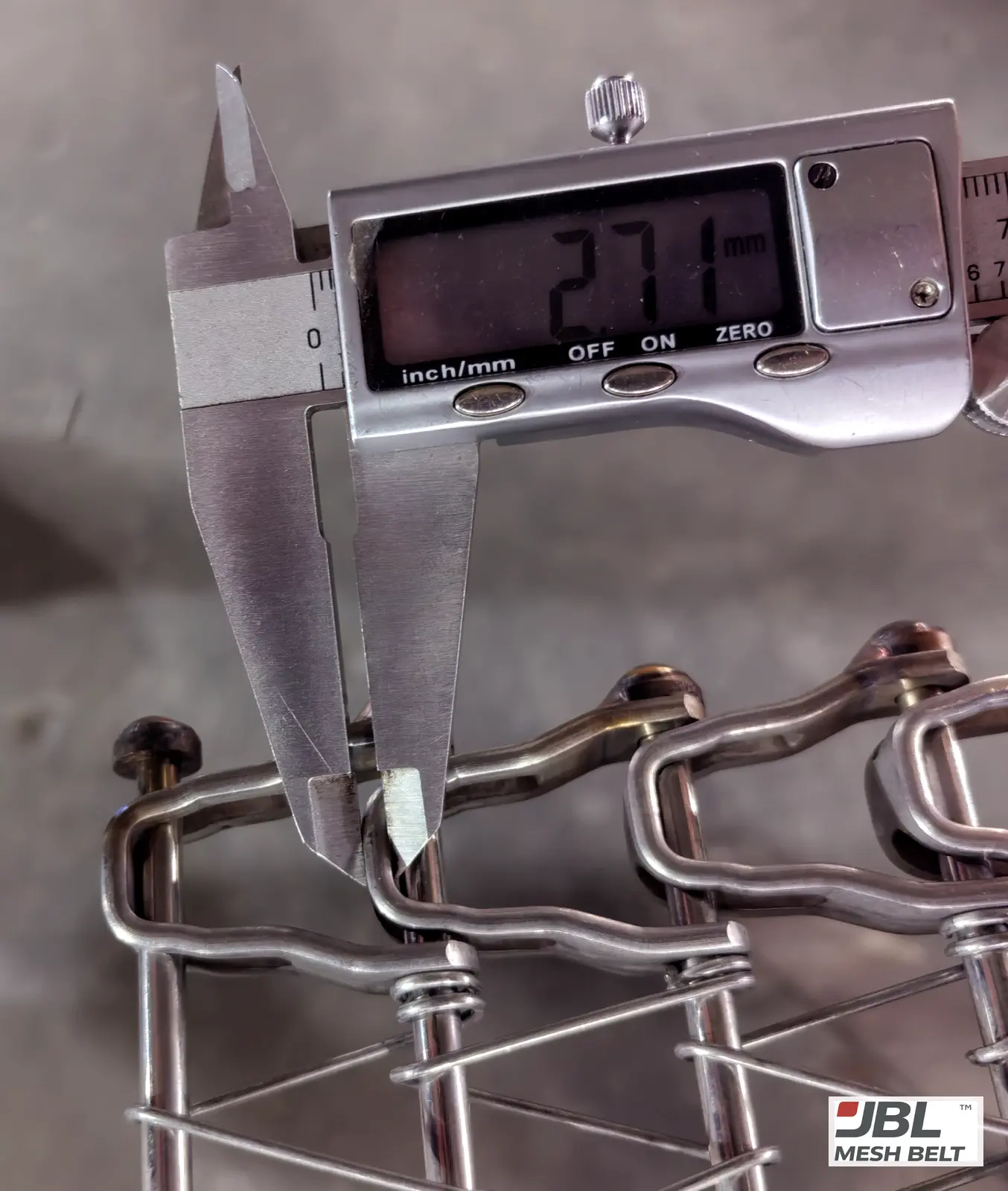
| Link thickness (waffle line) | 2.42 mm | 2.71 mm |
| Wire (UK) | 1.65–1.68 mm | 1.71 mm |
| Side plate thickness (UK) | 1.44–1.50 mm | 1.50–1.52 mm |
| Side plate height (UK) | 59.68 mm | 60.03 mm |
| Spiral pitch (UK) | 8.95 mm | 9.00 mm |
| Rod pitch (UK) | 30.00 mm | 30.00 mm |
Readings from the waffle line and UK case photos.
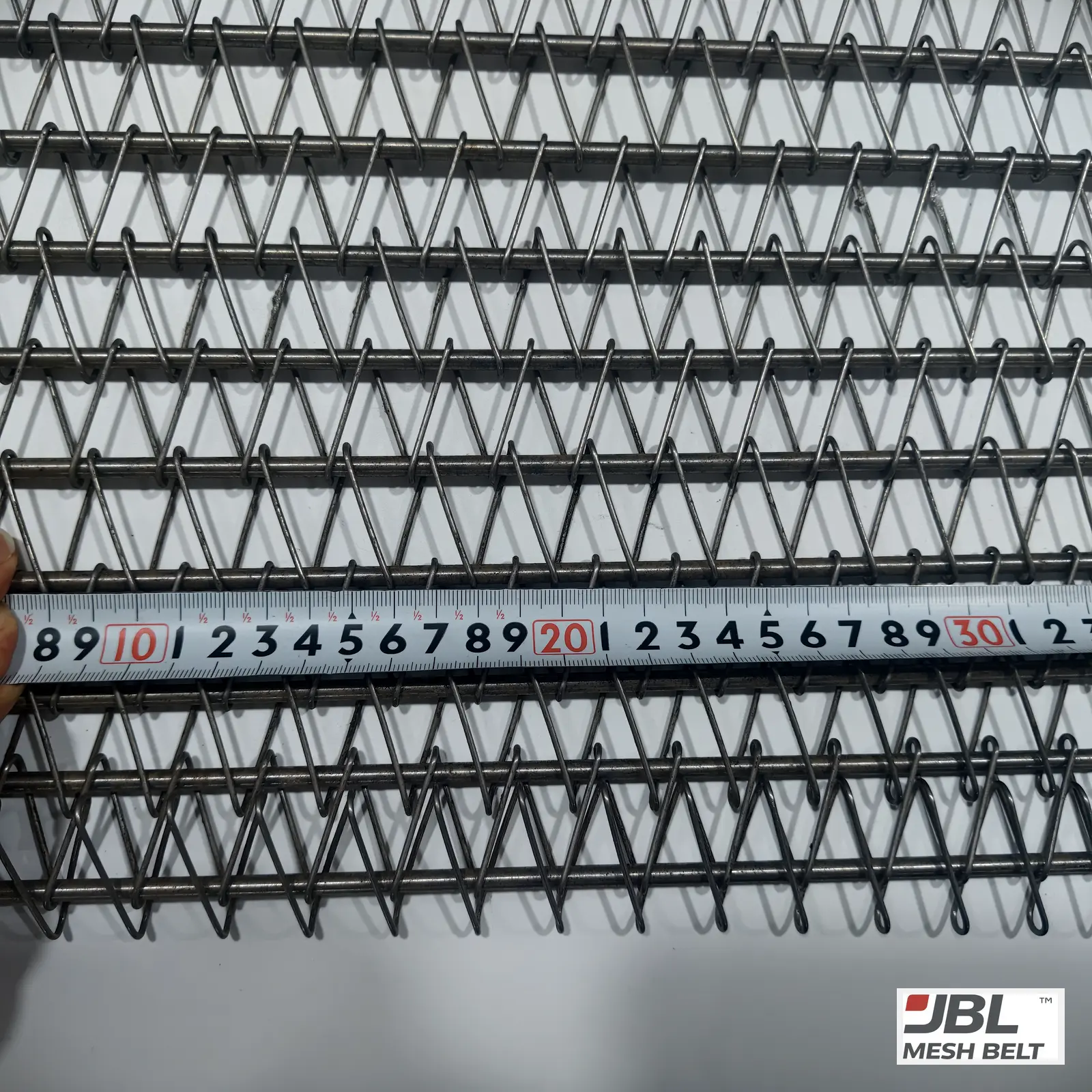
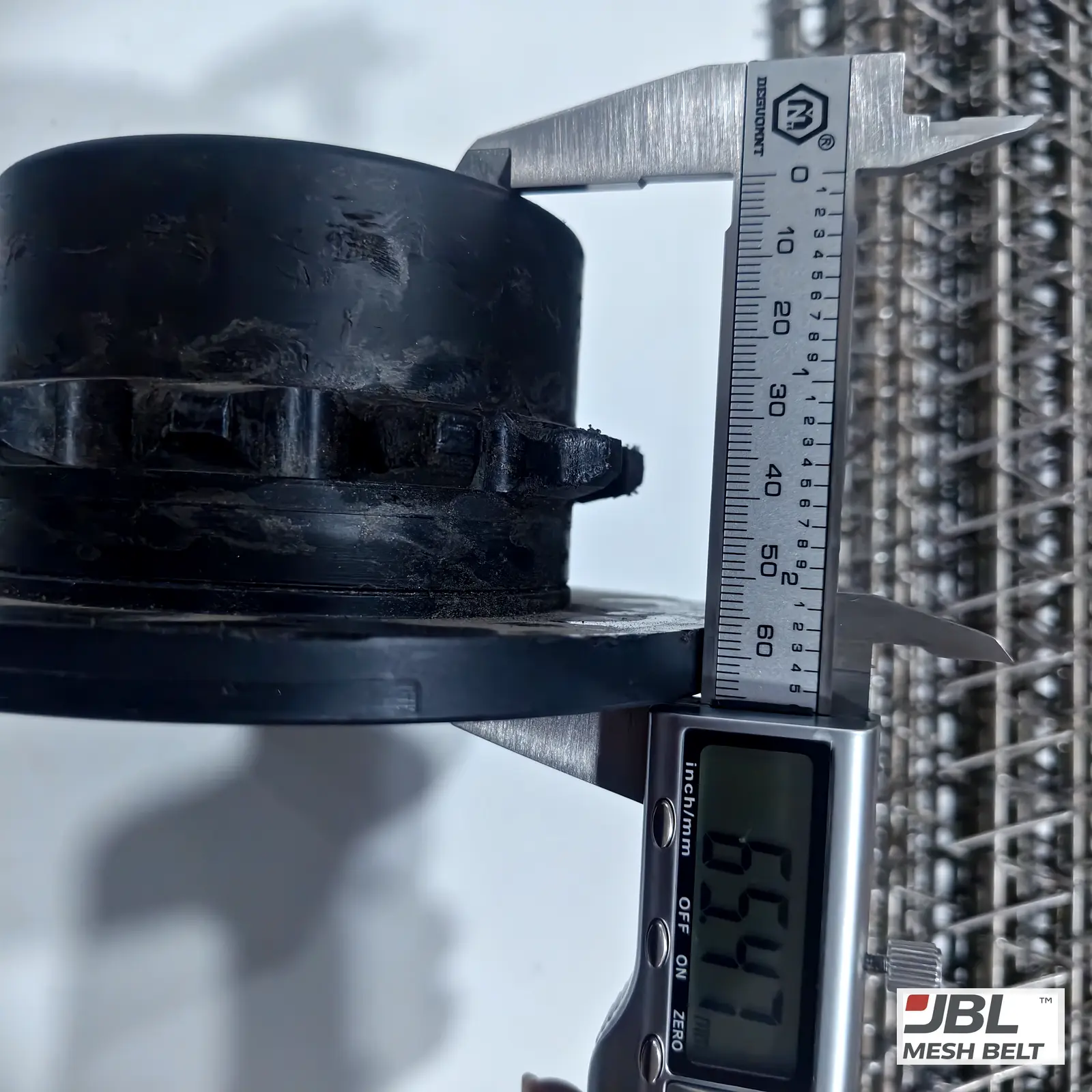
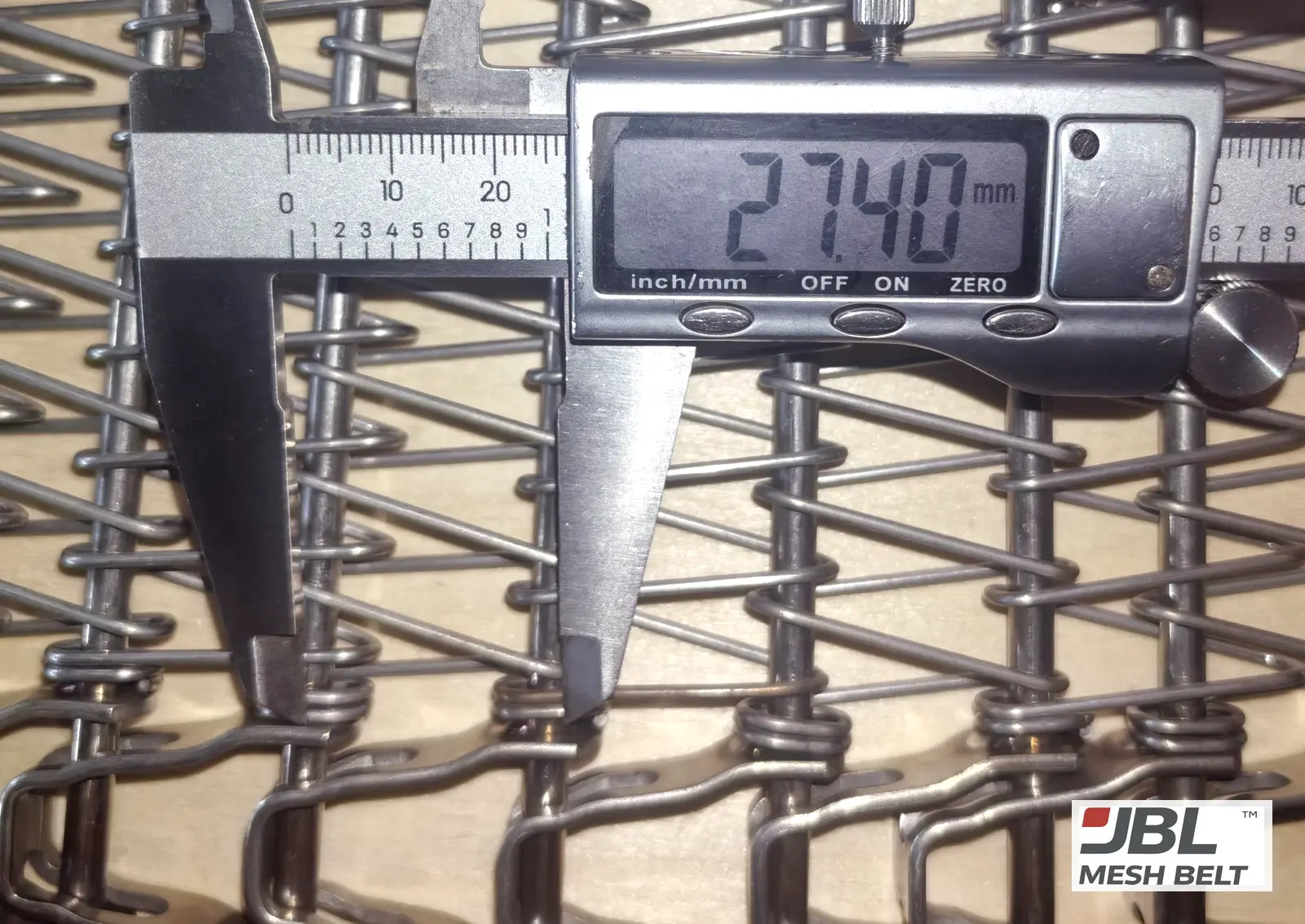
Look at the UK readings. The rod pitch read 30.00 mm on the original, the sample and the bulk belt. It did not change. But the wire read anywhere from 1.65 to 1.68 mm, and the side plates from 1.44 to 1.50 mm. A spread like that on one sample cannot all be the design, so the new belt was made to one value per dimension.
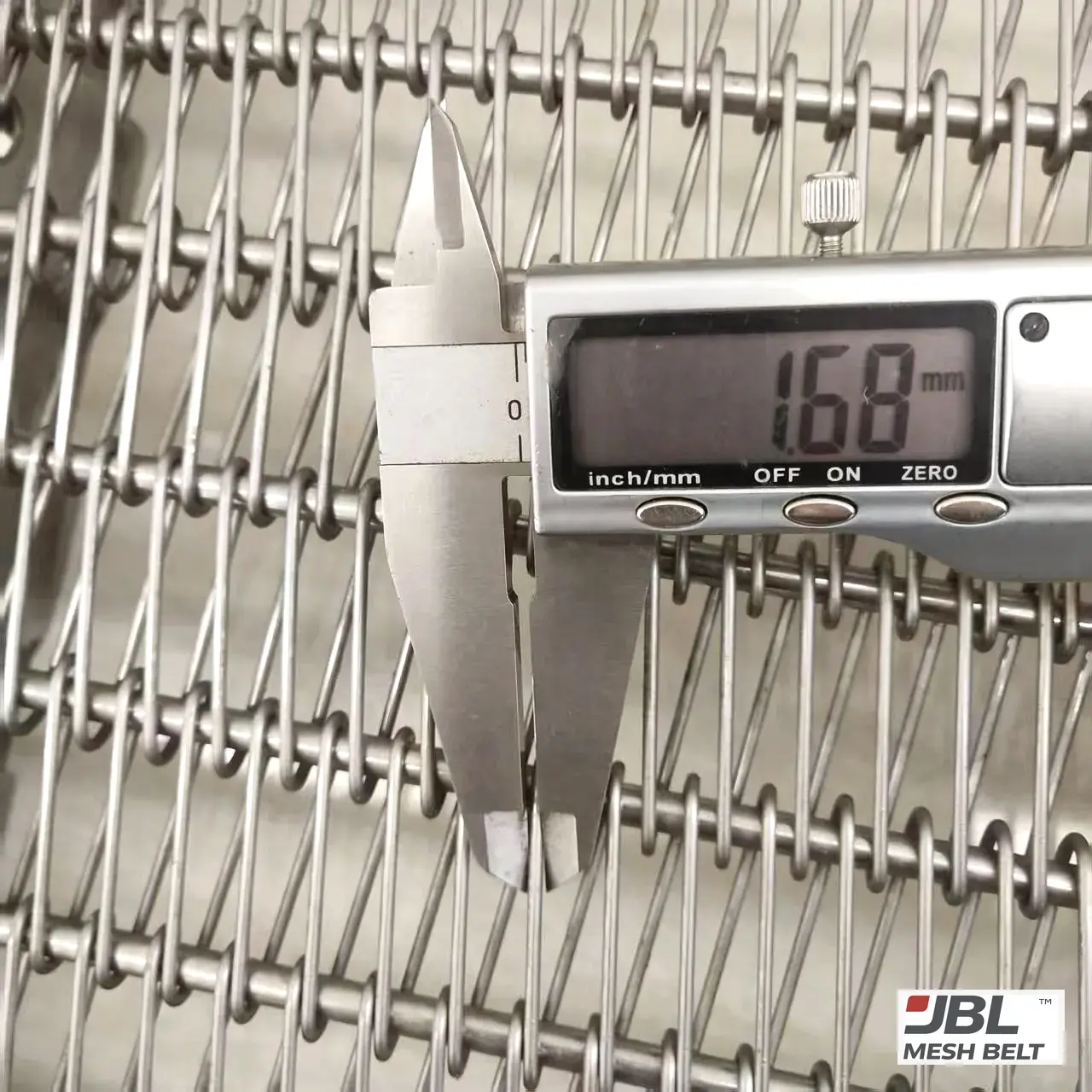
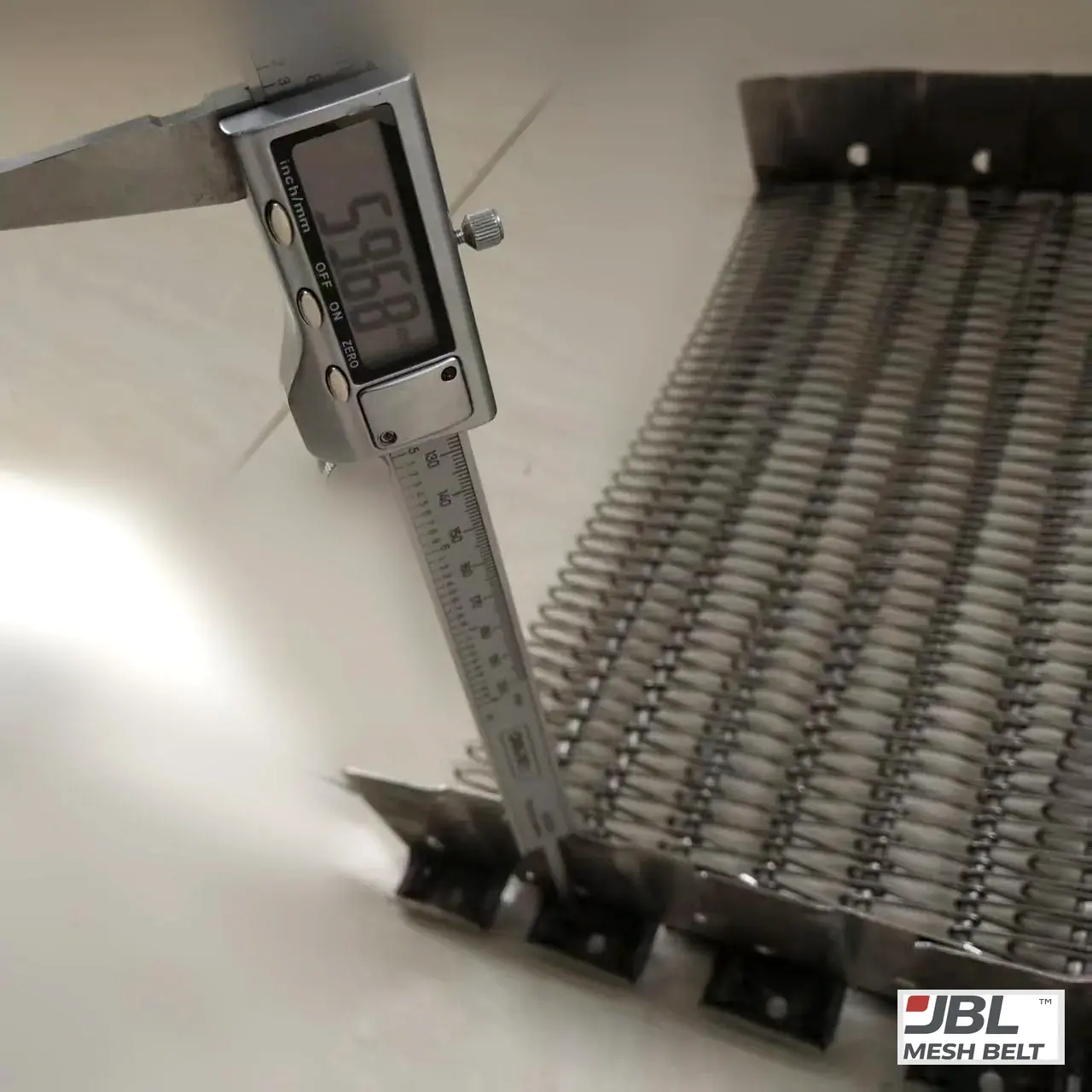
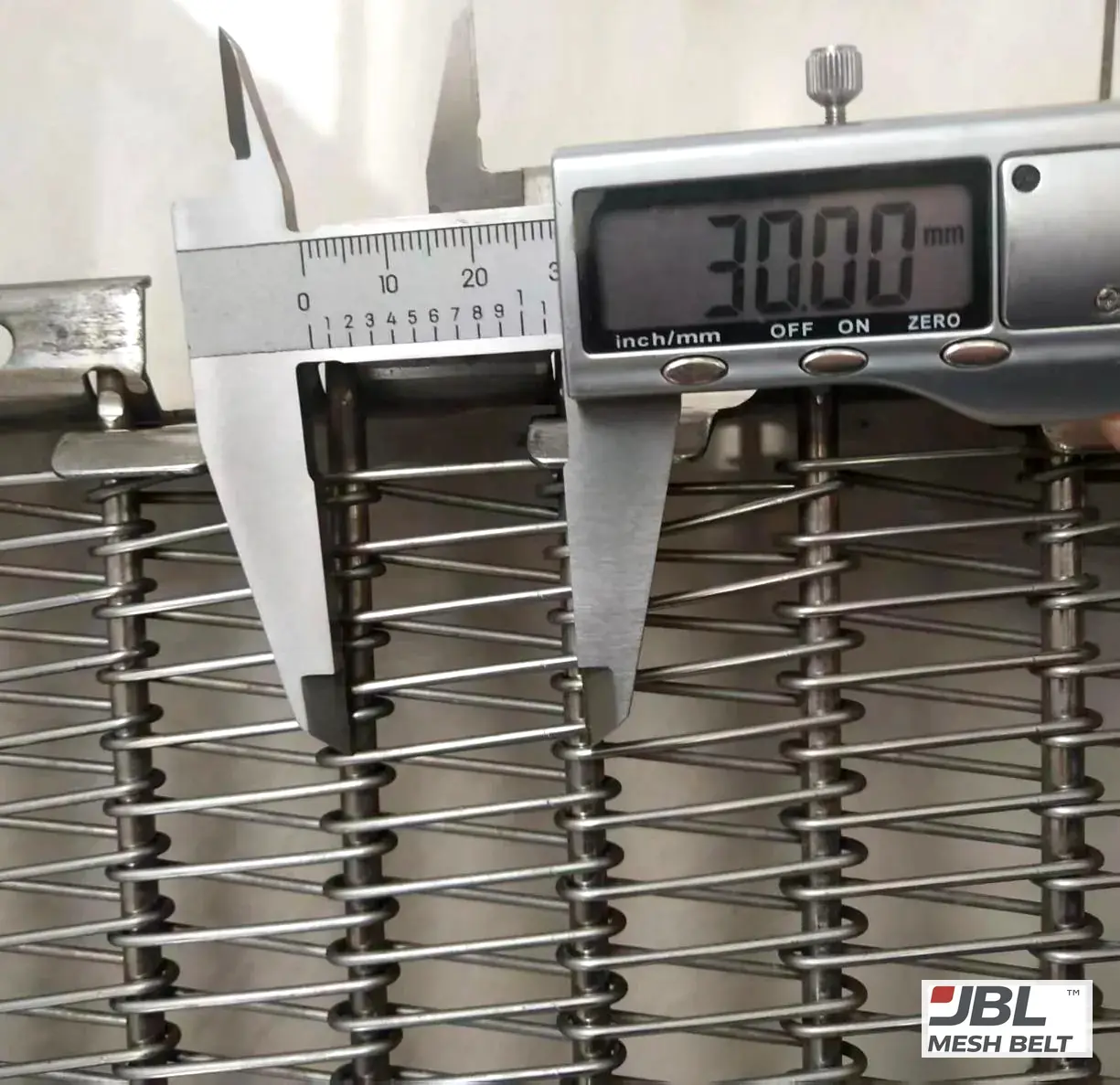
On the waffle cooling spiral, the difference was bigger: the original link read 2.42 mm, and the new belt was made at 2.71 mm. Copying 2.42 mm would have given the customer a new belt with old, thin links.
Pitch accumulation
Pitch is the one to watch over length. A small stretch per rod adds up over many rods. On a sprocket-driven belt, that is enough to change how the teeth engage. So I never read pitch from one rod; I read it over several rods, in more than one place.
03Which dimensions should never be copied blindly?
Some readings can be copied straight from a good part of the old belt. Others must always be checked against something else first.
Short answer
Never copy blindly: link and side plate thickness, wire diameter, pitch measured over length, any bent or deformed edge, and any repaired section. Each of these must be checked against less-worn areas, the drawing or the machine before it becomes the new specification.
| Dimension | Why not copy it as measured | What I check it against |
|---|---|---|
| Link / side plate thickness | Worn by contact | Less-worn areas, drawing, standard sizes |
| Wire diameter | Worn where it touches product or guides | Readings away from contact areas |
| Pitch over length | Stretch adds up | Several rods, several places, sprocket pitch |
| Edge shape | Deformed by drum bars or guides | Undamaged edge sections, drive type |
| Repaired sections | May use different parts | The rest of the belt |
| Weld finish | Rough welds may be the problem | What the line needs, not what it had |
The last line is important. In Melbourne, the original belt had rough rod-end welds with burrs that scored the guide strips. The customer did not want those copied. The new belt kept the same pitch, rod and link, with welds finished smooth. That is recovering the working relationship, not copying a defect.
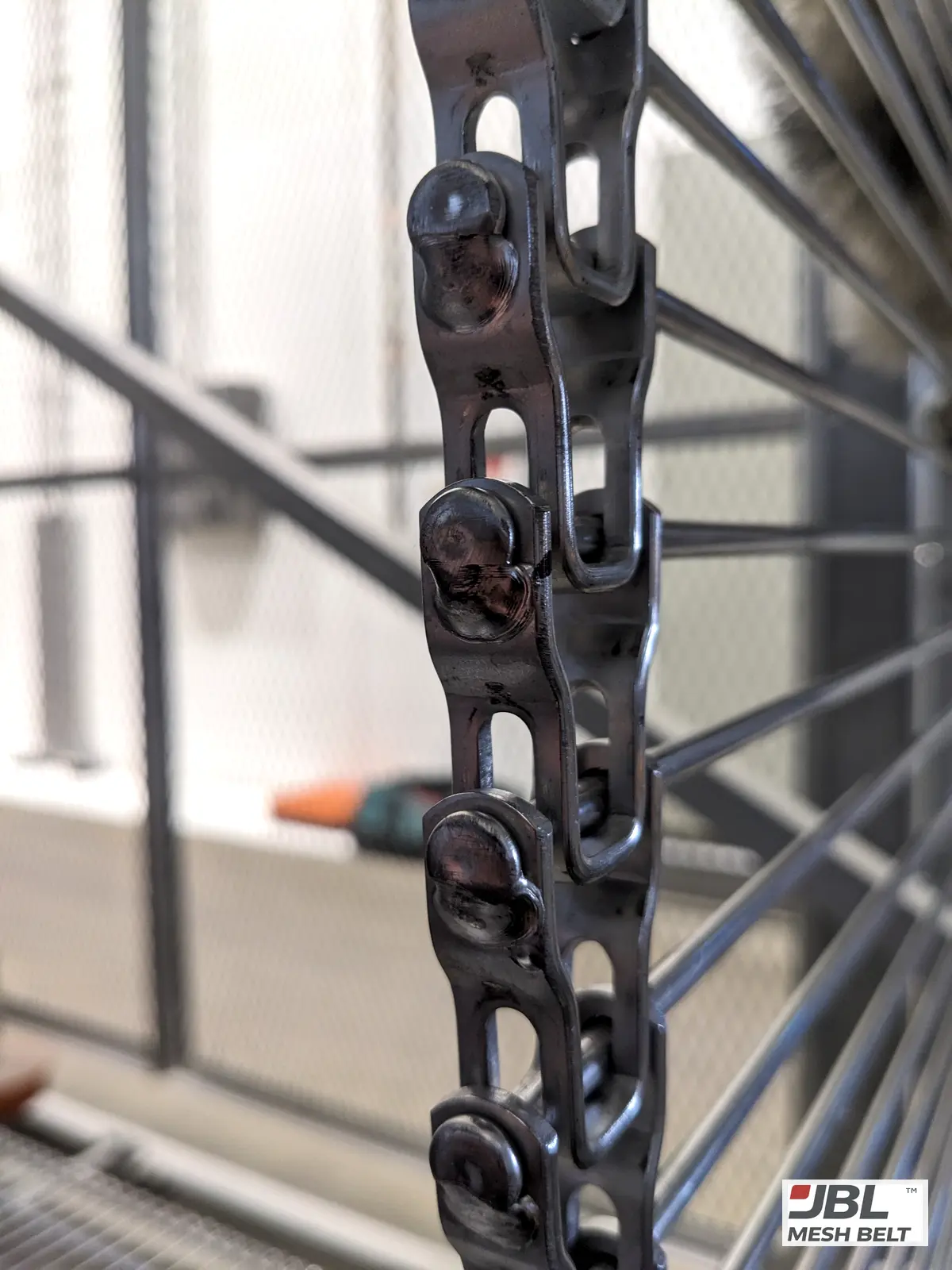
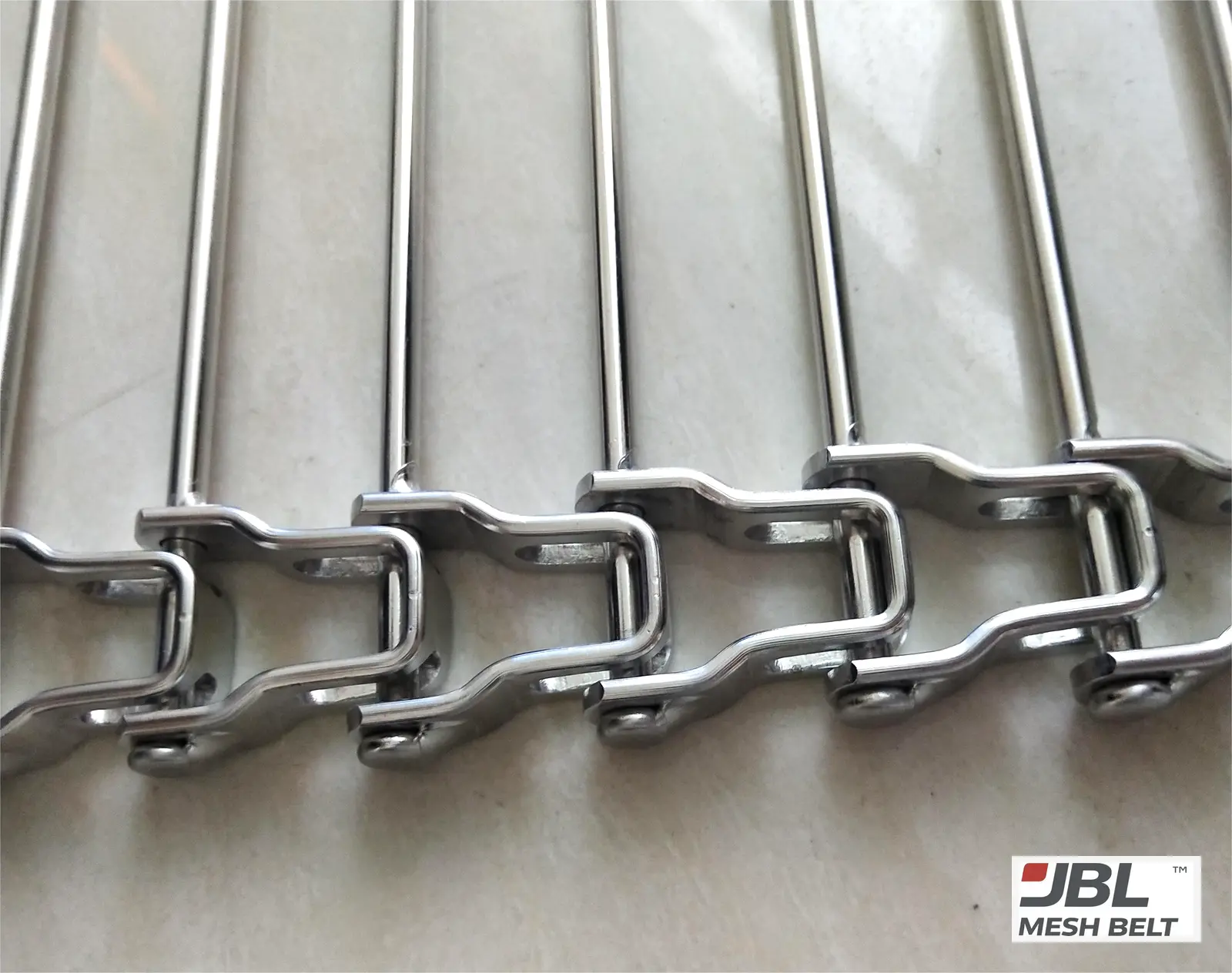
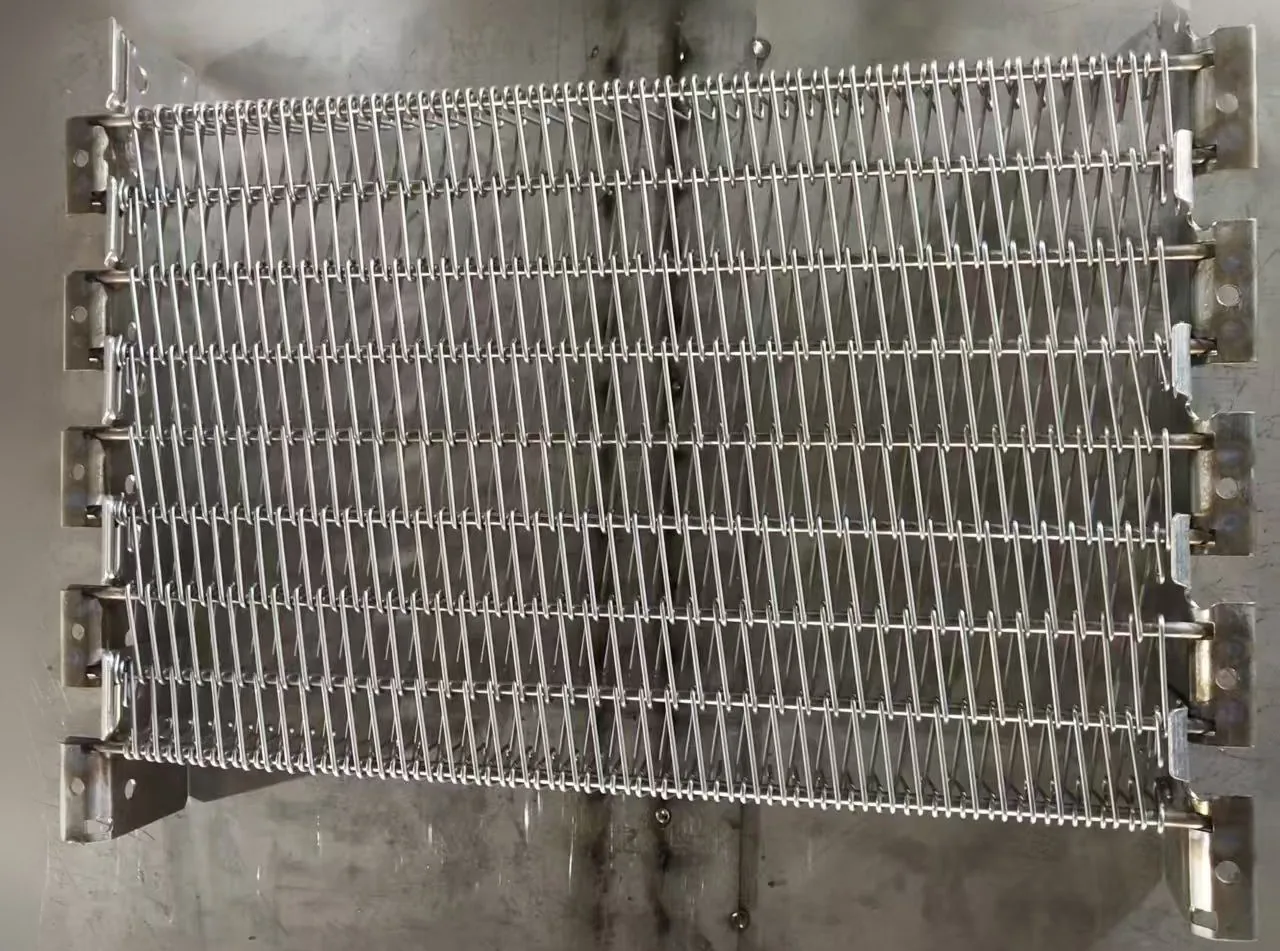
Repairs need special care. A repaired section can have different rods, a different wire or a different weld. If the sample happens to come from that section, every reading is wrong. So I ask for photos of the whole belt, not only the piece that was cut out.
04Why check the old belt against the drawing and the machine?
One source can be wrong. Three sources that agree are hard to argue with.
Short answer
The old belt shows the structure and today's sizes. The drawing shows the design sizes, if it is current. The machine — drum diameter, turn ratio, direction, sprockets — shows what the belt must work with. When all three agree, the specification is safe.
| Source | What it tells me | Its weak point |
|---|---|---|
| Old belt | Real structure, edge, material, approximate sizes | Wear, stretch, repairs |
| Drawing | Design sizes and tolerances | May be outdated or incomplete |
| Machine | Drum, turn ratio, direction, sprockets | Machine parts wear too |
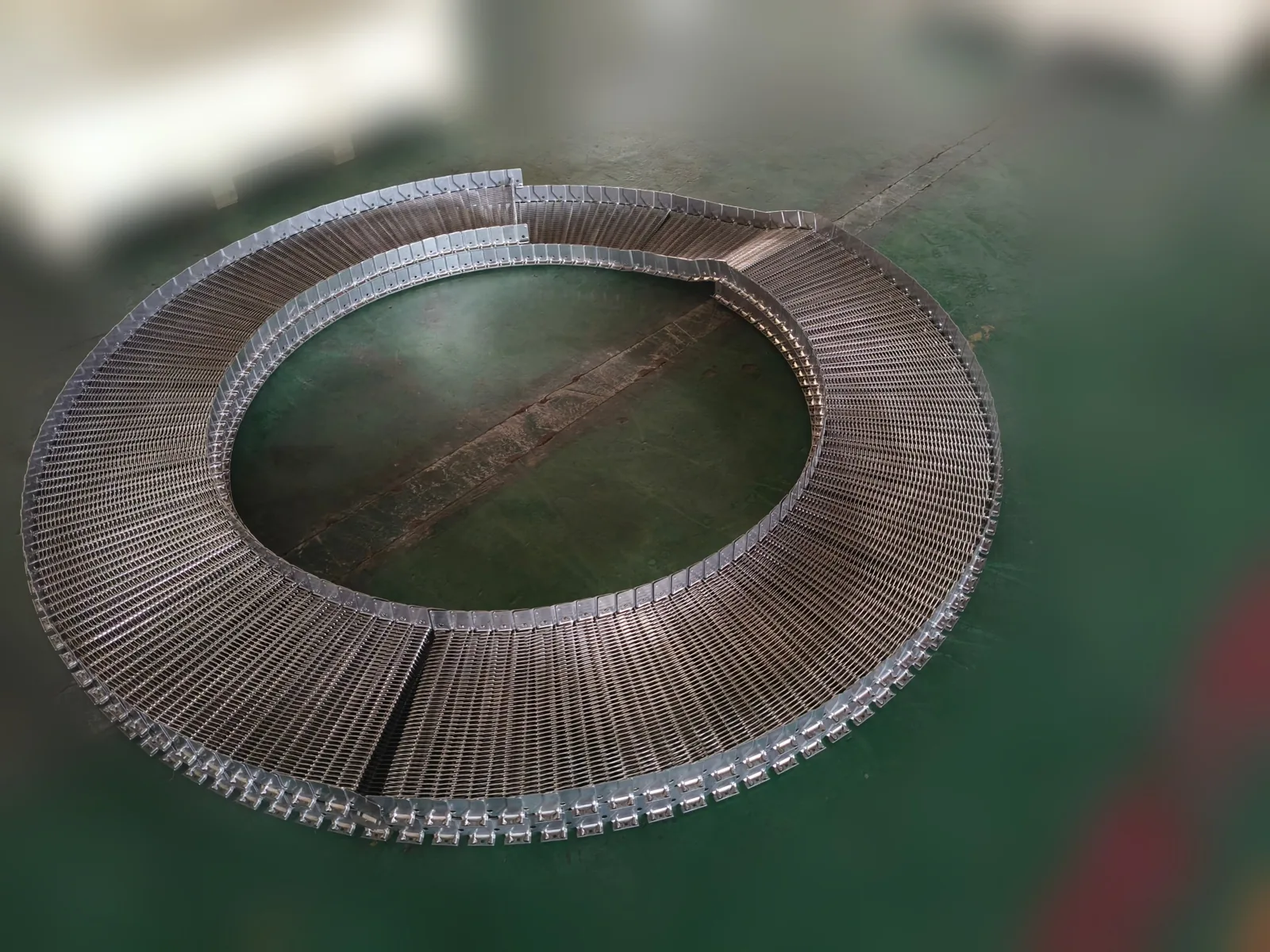
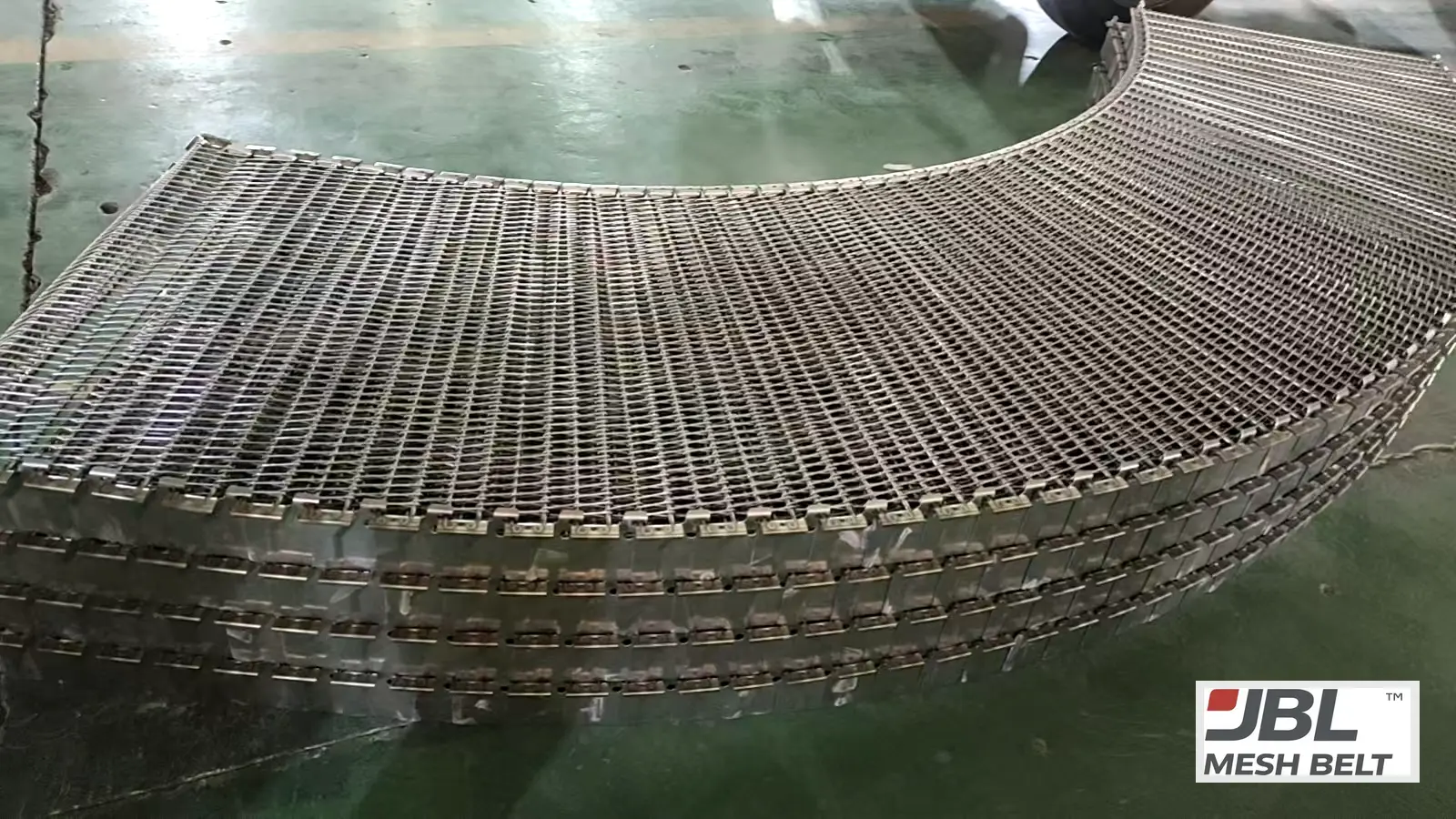
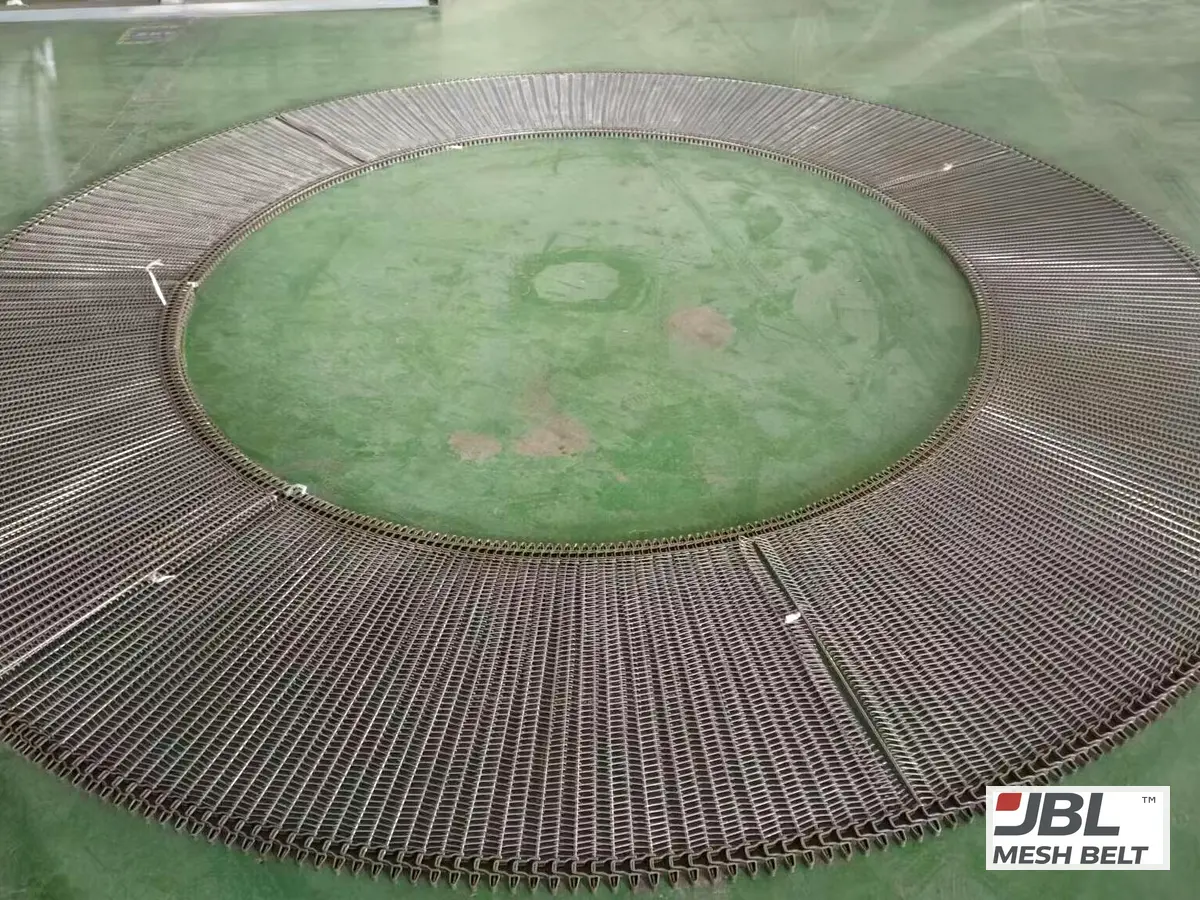
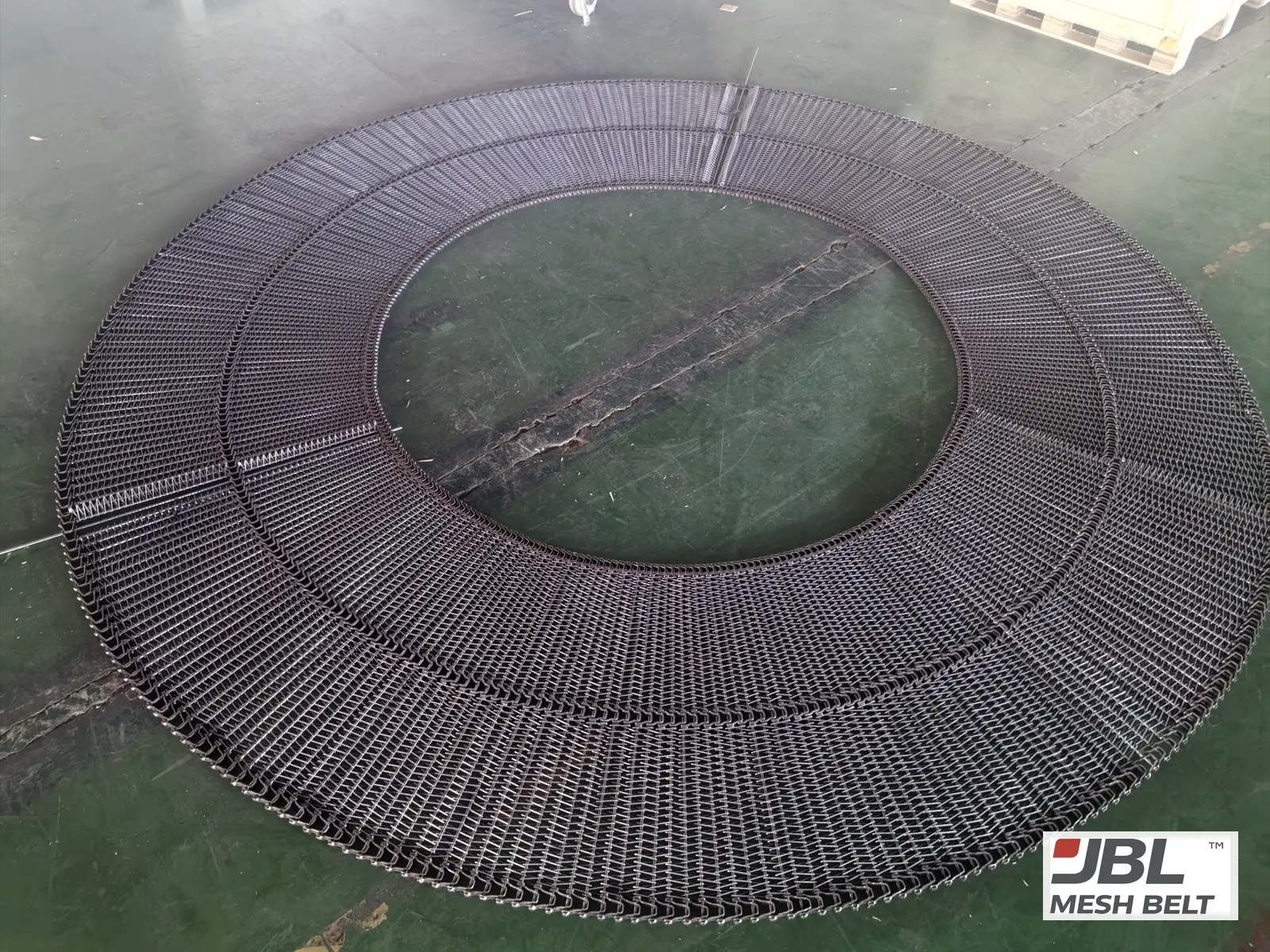
In Malaysia, the customer had a drawing. We still measured the trial run against it and sent photos, and we laid the belt out in a full circle to check the turn. The drawing gave the sizes; the turn test checked that they worked together.
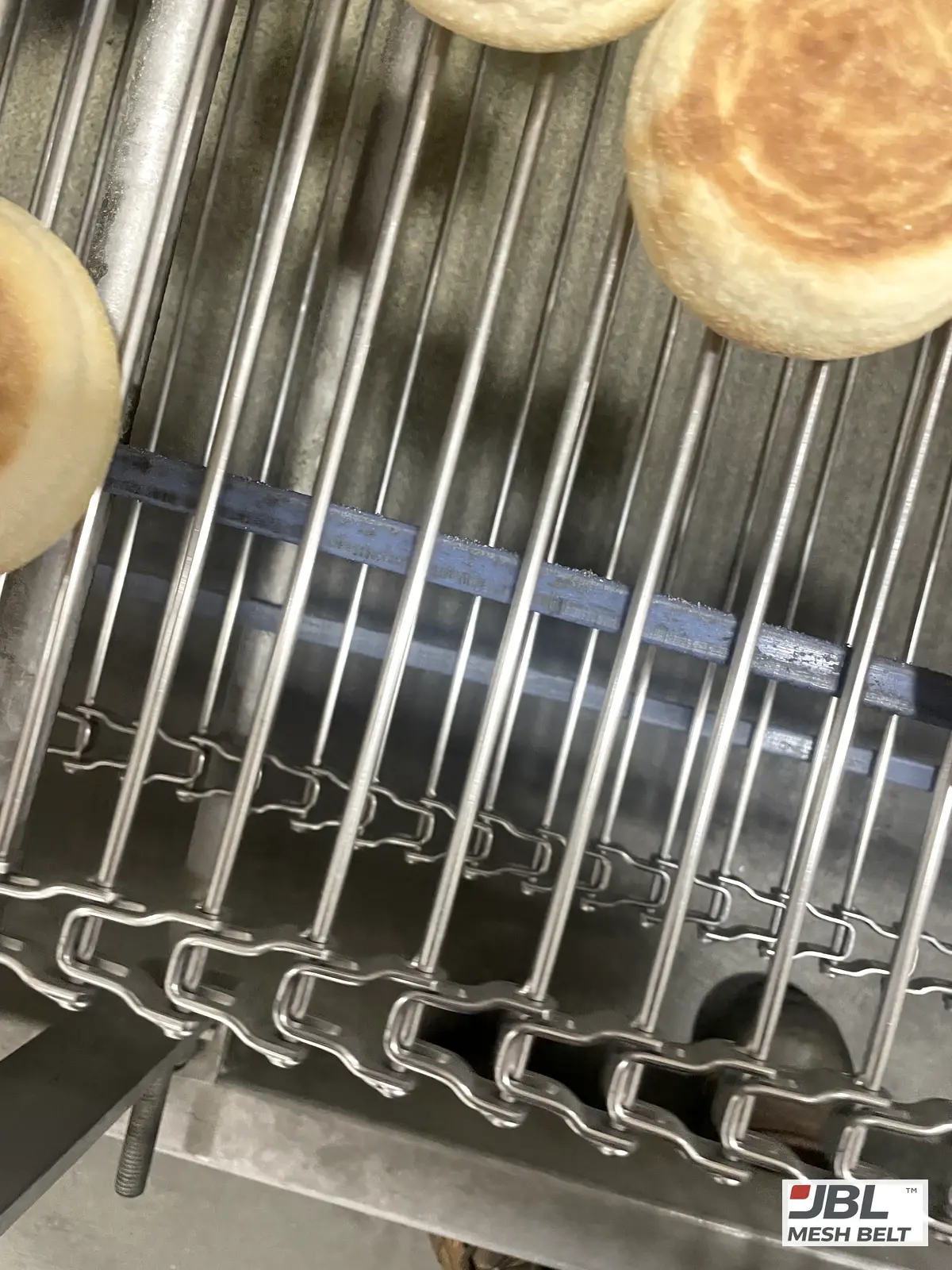
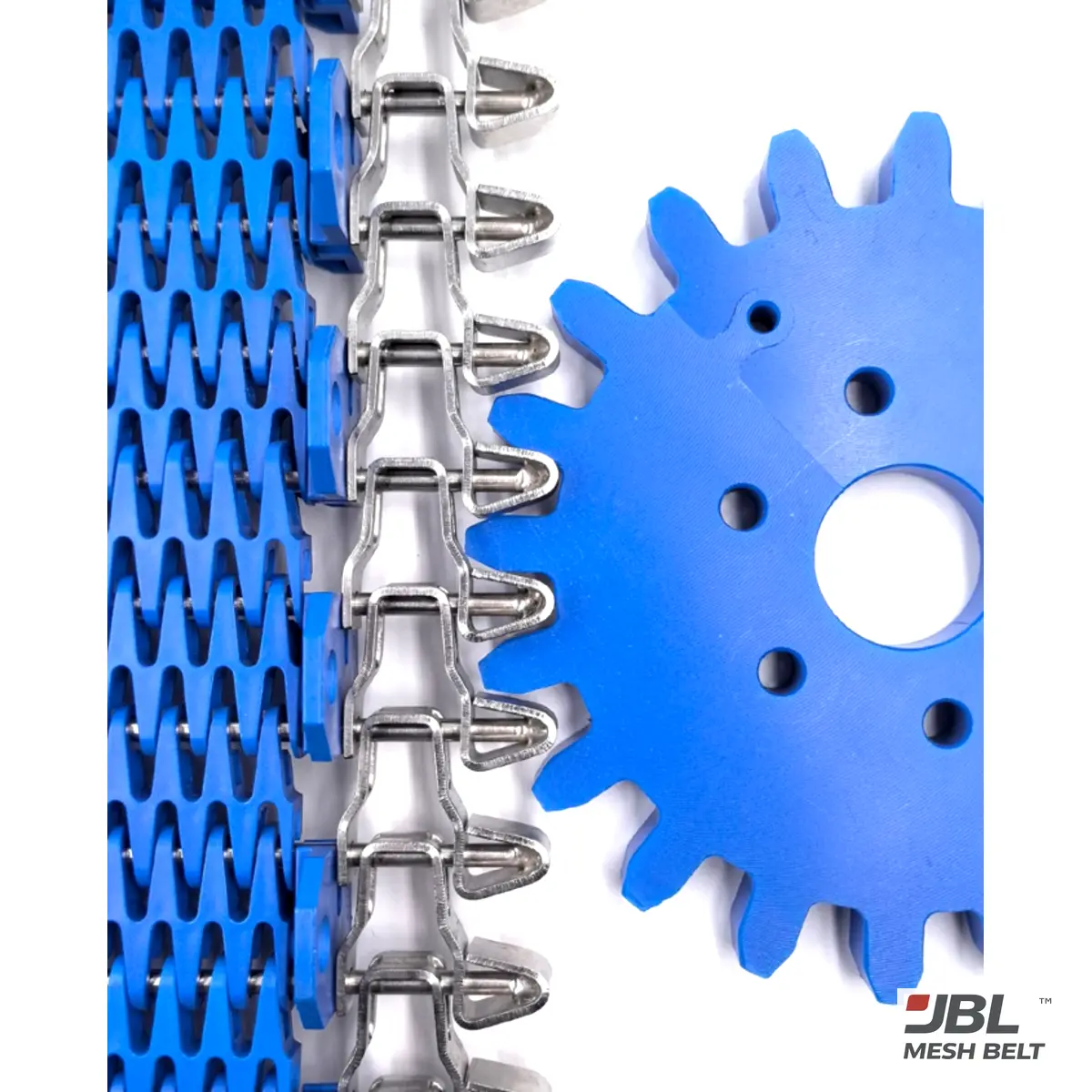
In the UK there was no drawing. The original section gave the structure, and a turning test and a stacking test confirmed the behaviour before bulk. On the waffle line there was no drawing either: the trial run was linked into the original belt, and new sprockets were run on the bulk belt.
The machine wears too. Worn sprocket teeth or grooved drum bars can make an old belt look like it fits when it does not. I cover the machine side in when replacing the belt is not enough.
05How do we review an existing belt, and when is a physical sample required?
Photos are the fastest start. But some belts cannot be specified safely from photos alone.
Short answer
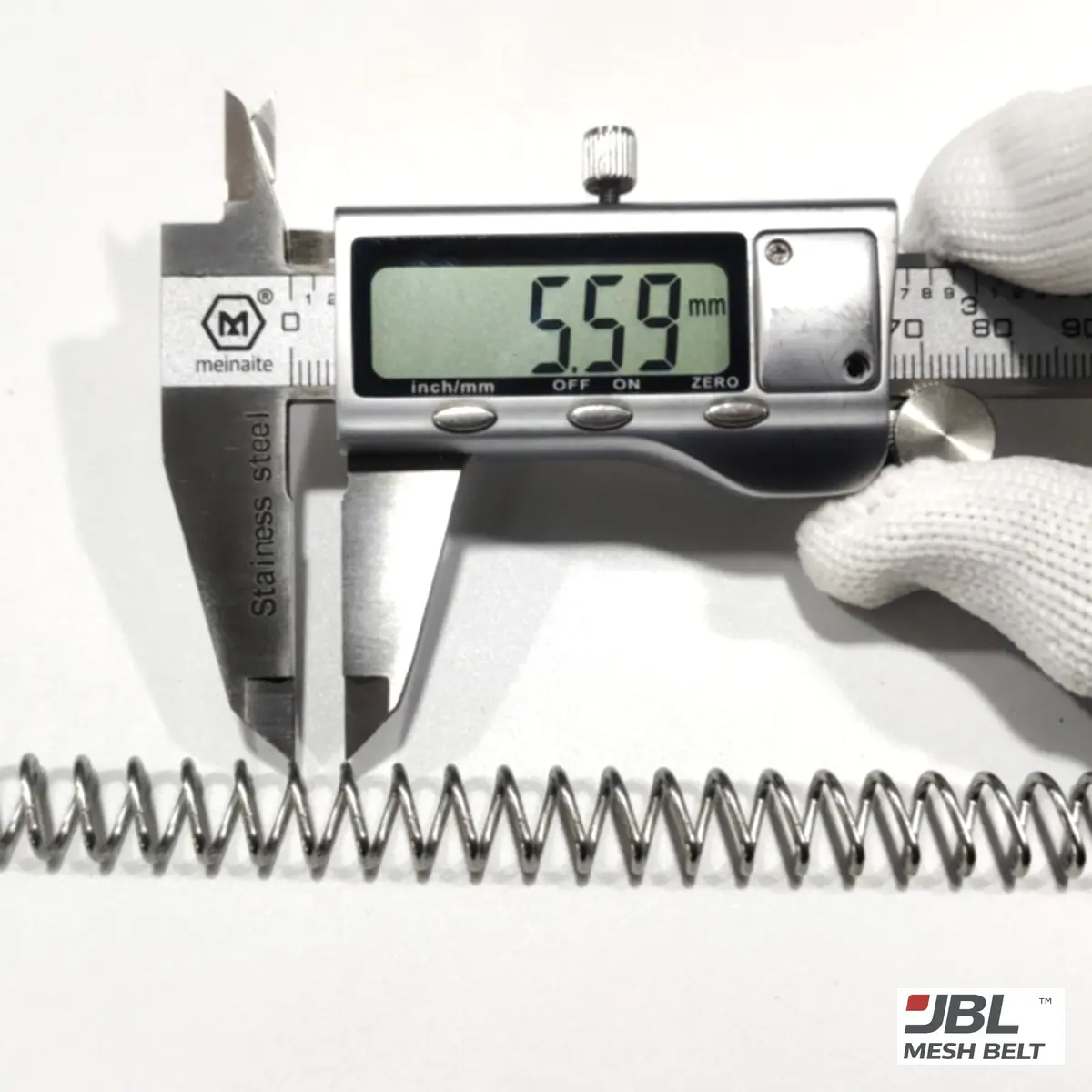
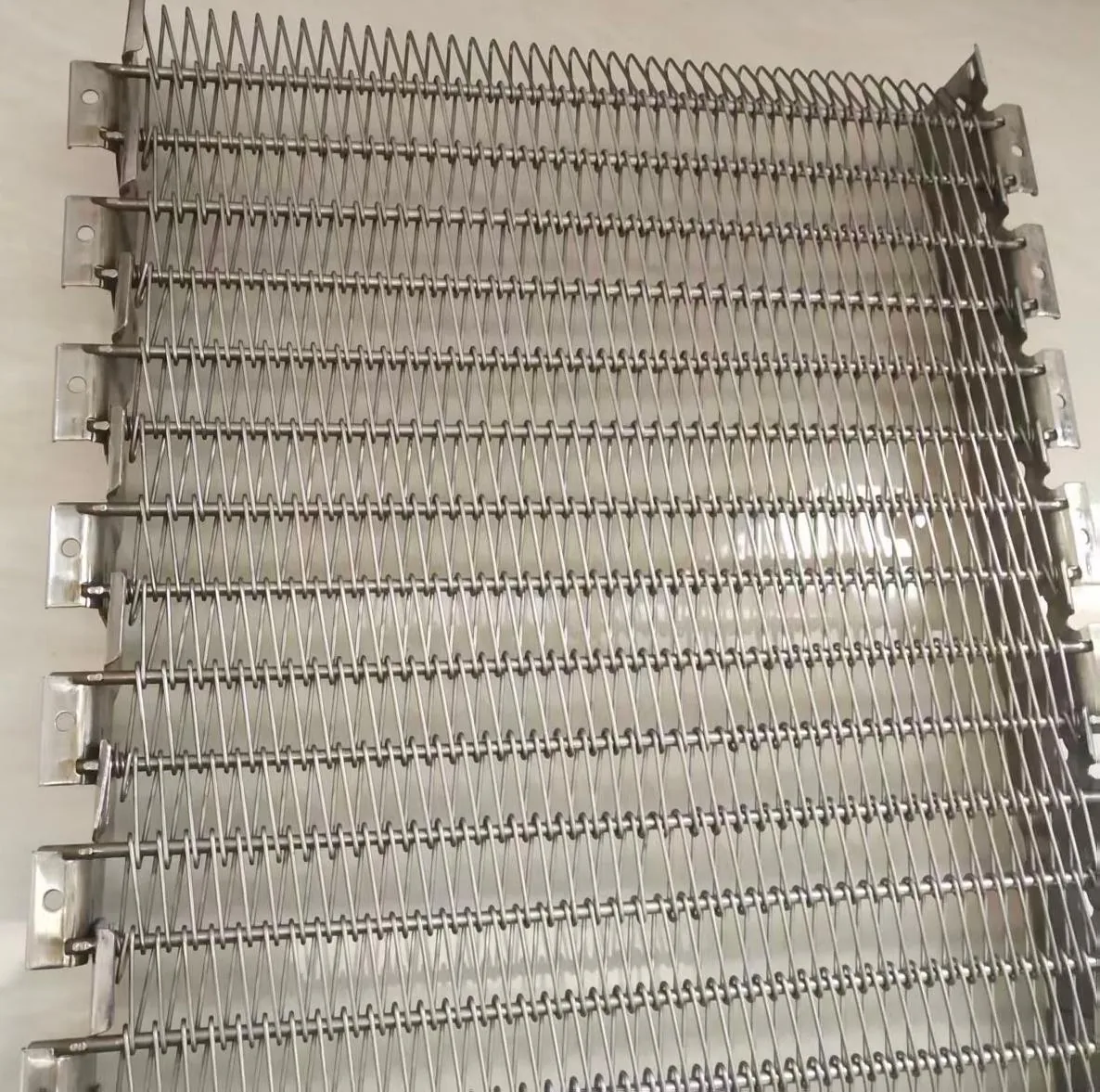
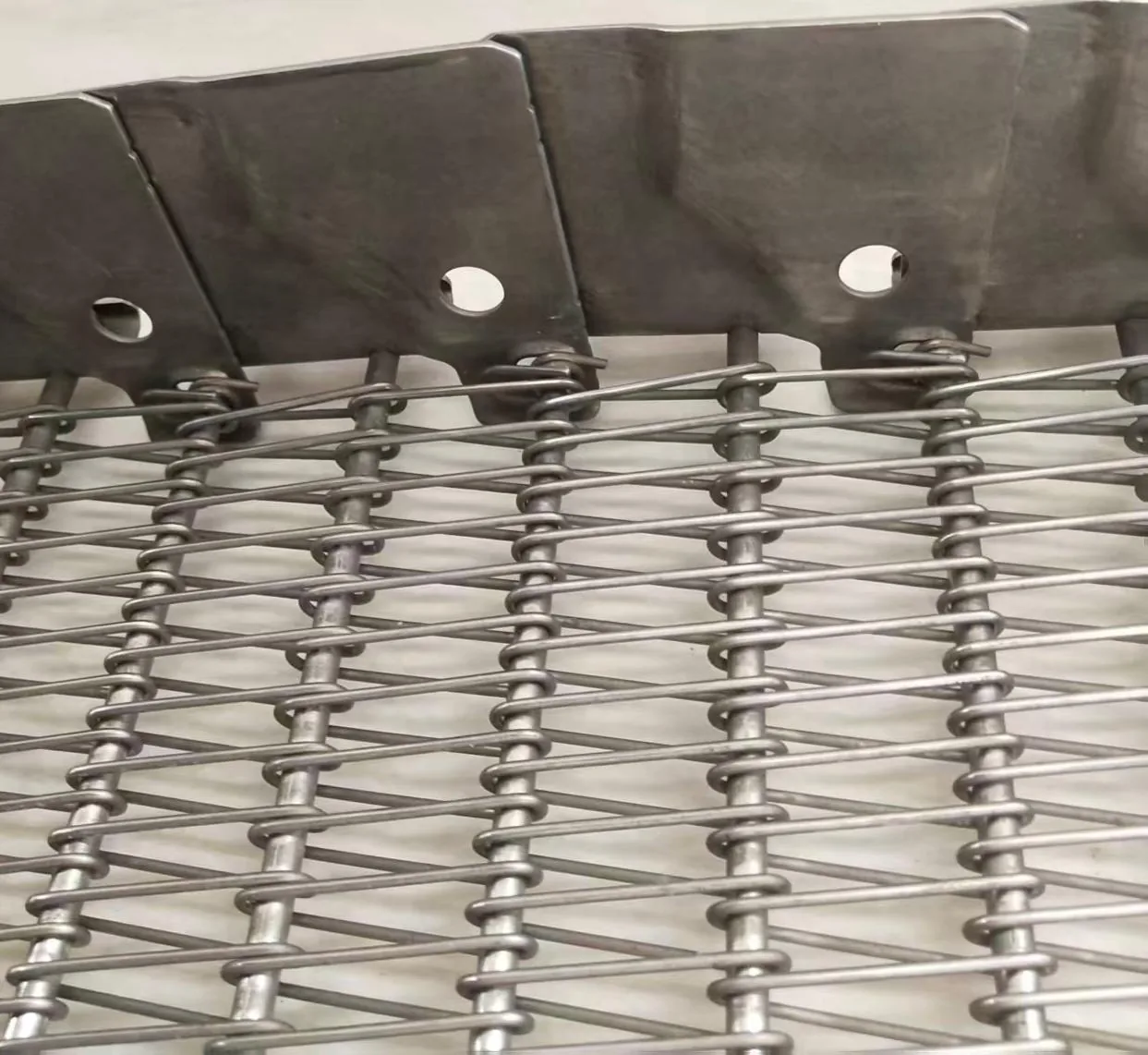
I start from photos with caliper readings, the drawing if there is one, and the machine model. I ask for a physical sample when there is no drawing, when readings spread from wear, when the edge or side plates are complex, or when the photos cannot show a detail clearly.
- 01
Collect
Old belt photos with caliper readings, drawing if any, machine model and drum details.
- 02
Read
Each dimension in several places, including less-worn areas.
- 03
Compare
Readings against each other, the drawing and the machine.
- 04
Decide
Which readings are design and which are wear; list what is still missing.
- 05
Prove
Make a sample or trial run, measure it with the same caliper, and send it for approval.
| Situation | Photos enough? | Physical sample? |
|---|---|---|
| Drawing available, belt in good condition | Often yes, for review | Helpful for approval |
| No drawing | For a first review only | Yes |
| Readings spread from wear | No | Yes |
| Self-stacking side plates or special edges | No | Yes |
Request an engineering review
Send old belt photos, your drawing if you have one, the machine model, the values you measured, and a sample if available. I tell you which readings I trust and what is missing.
When This Is Not the Right Choice
- ✕If you have the original maker's current drawing and the belt has always run well, the drawing — not the worn belt — is your reference.
- ✕If the old belt is badly damaged everywhere, readings cannot recover the design; a drawing or an undamaged section is needed.
- ✕If you want to change the design on purpose — a different product, capacity or drive — this is not a copy but a new specification.
From My Engineering Experience
Buyers often say 'just copy it'. I understand why: the old belt fits the machine, so a copy should fit too. But the old belt fits the machine as it is today, worn on both sides.
On the UK self-stacking belt, the wire read 1.65 to 1.68 mm and the side plates 1.44 to 1.50 mm on the same sample. On the waffle line, a link read 2.42 mm where the new belt needed 2.71 mm. In Melbourne, the welds were the problem, not something to copy.
So I read the old belt carefully, but I decide with the drawing and the machine next to it. The goal is the belt your line was designed for.
— Spring, Sales Director, JBL Mesh Belt
Evidence From Our Work
United Kingdom, 2026 — readings at three stages →
| Step | Detail |
|---|---|
| Old belt | Wire 1.65–1.68 mm; side plate 1.44–1.50 mm; rod pitch 30.00 mm |
| Sample | Wire 1.71 mm; side plate 1.50 mm; rod pitch 30.00 mm |
| Bulk belt | Wire 1.71 mm; side plate 1.52 mm; rod pitch 30.00 mm |
| Approval | Sample approved; turning and stacking tests before 450 m |
Waffle spiral cooling, 2026 — wear identified, not copied →
| Step | Detail |
|---|---|
| Old belt | Link 2.42 mm (worn), rod 4.99 mm |
| New belt | Link 2.71 mm on trial and bulk |
| Proof | Trial run linked into the original belt |
| Approval | From photos, before bulk production |
FAQ
Q1Should a replacement belt copy the old belt's dimensions exactly?
Not always. Worn, stretched or repaired dimensions are identified and corrected to the original design.
Q2Which dimensions change most in service?
Link and side plate thickness, wire diameter in contact areas, pitch over length, and edge shape.
Q3How do you tell wear from design?
By reading each dimension in several places, including less-worn areas, and comparing with the drawing and the machine.
Q4Do I need to send a physical sample?
Yes when there is no drawing, when readings spread from wear, or when the edge or side plates are complex.
Q5Can you improve a detail while keeping the fit?
Yes. In Melbourne the welds were finished smooth while pitch, rod and link stayed matched.
Conclusion
Read the old belt, but decide with the drawing and the machine beside it. Recover the original design, not the wear.
Download the Spiral Freezer Belt Technical Specification (PDF)
Specification ranges and options in mm and inch. Enter your work email and the file downloads right away.
References

Your contact for this belt
Spring · Sales Director, JBL Mesh Belt · 16 years
“Your belt is worn, the OEM price is high, and there is no drawing. That is where I start.”
Send me a worn section, a few photos with a caliper in the picture, or a drawing. I tell you what fits, what is missing, and show you a sample measured against your own belt before you pay for the full length. Buyers in the UK, the USA, Australia, Brazil, South Korea, Spain and Malaysia have replaced belts this way.
- ✓Readings on your original next to readings on our sample
- ✓Nothing in bulk until you approve the sample
- ✓Turning, stacking or sprocket tests before your belt ships
- ✓A reply from me, usually within 8 hours