Troubleshooting · 10 min read
Why Can a New Spiral Belt Fail on Worn Sprockets or Drive Components?
 Written bySpringSales Director, JBL Mesh Belt · 16 years in metal conveyor beltsProjects in United Kingdom · USA · Australia · Brazil · South Korea · Spain · MalaysiaPublished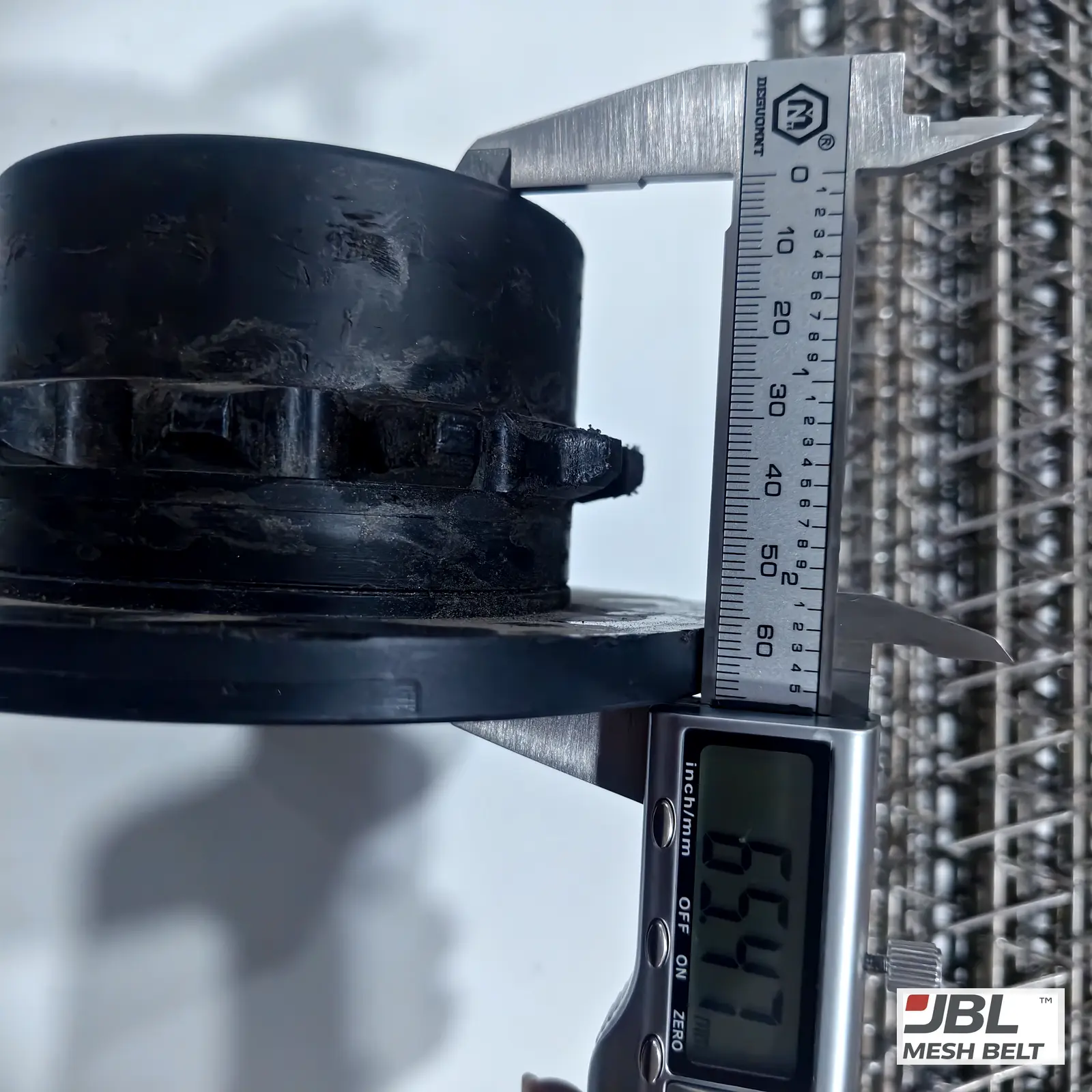
You fitted a brand-new belt to save the line. Within weeks it clicks, jumps and wears at the links. The belt is new. The sprockets are not.
Short answer
A new spiral belt has new, correct geometry; worn sprocket teeth do not. The mismatch causes poor engagement, impact loading and uneven load across the belt, which lead to tracking problems, link and rod wear and early failure. Check sprocket wear before ordering, and replace worn sprockets with the belt.
At a Glance
| Product | Application | Key point | Buyer type | What to send |
|---|---|---|---|---|
| Spiral, side-driven and chain-edge belts with sprockets | Belt replacement on an existing drive | New belt does not mean new system | Maintenance, engineers, OEMs | Belt and sprocket photos, tooth close-ups, bore and tooth count |
Below I explain how sprockets wear, why worn teeth change engagement, what poor engagement looks like on a new belt, and when the sprockets should be replaced together with it.
01How do sprockets wear?
A sprocket wears slowly, together with the belt it drives. Because both wear together, the problem stays hidden until one of them is replaced.
Short answer
Sprocket teeth wear where they push the belt. Over time they become thinner, hooked or worn on one side, and the space between teeth changes. An old belt that has stretched to match still runs. A new belt with correct pitch no longer fits the worn shape.
| Tooth wear | What it looks like | What causes it |
|---|---|---|
| Thinned teeth | Narrower teeth, wider gaps | Long running, abrasion |
| Hooked teeth | Tooth tips bent in the running direction | Load always on one face |
| One-sided wear | One face polished or cut back | Misalignment, one-way drive |
| Worn bore or keyway | Play on the shaft | Shock loads, loose fixing |
The belt and the sprocket wear as a pair. As the belt stretches, the teeth wear to follow it, and the line keeps running. That is why buyers are surprised: the old belt ran on those sprockets until the day it was removed.
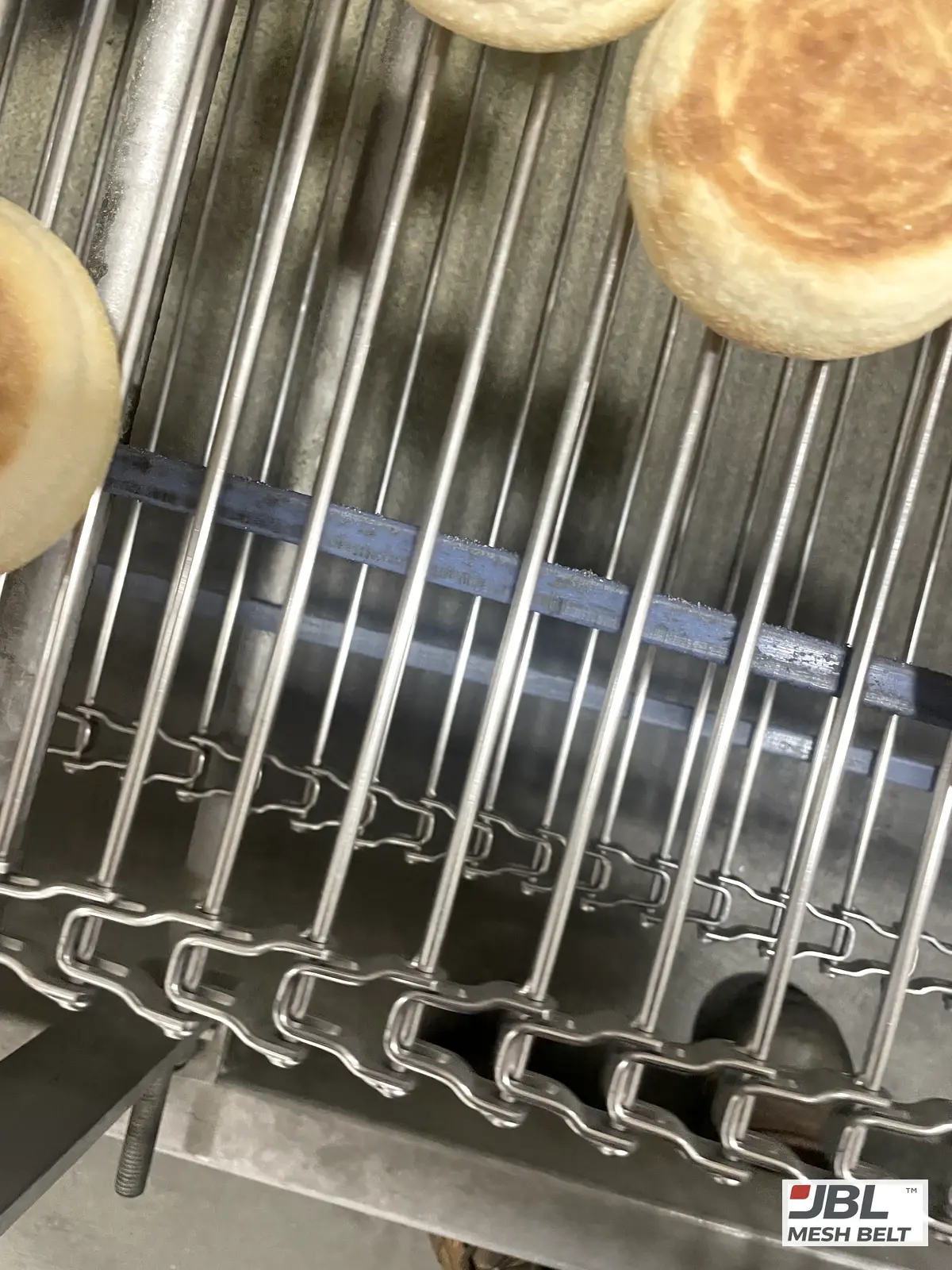
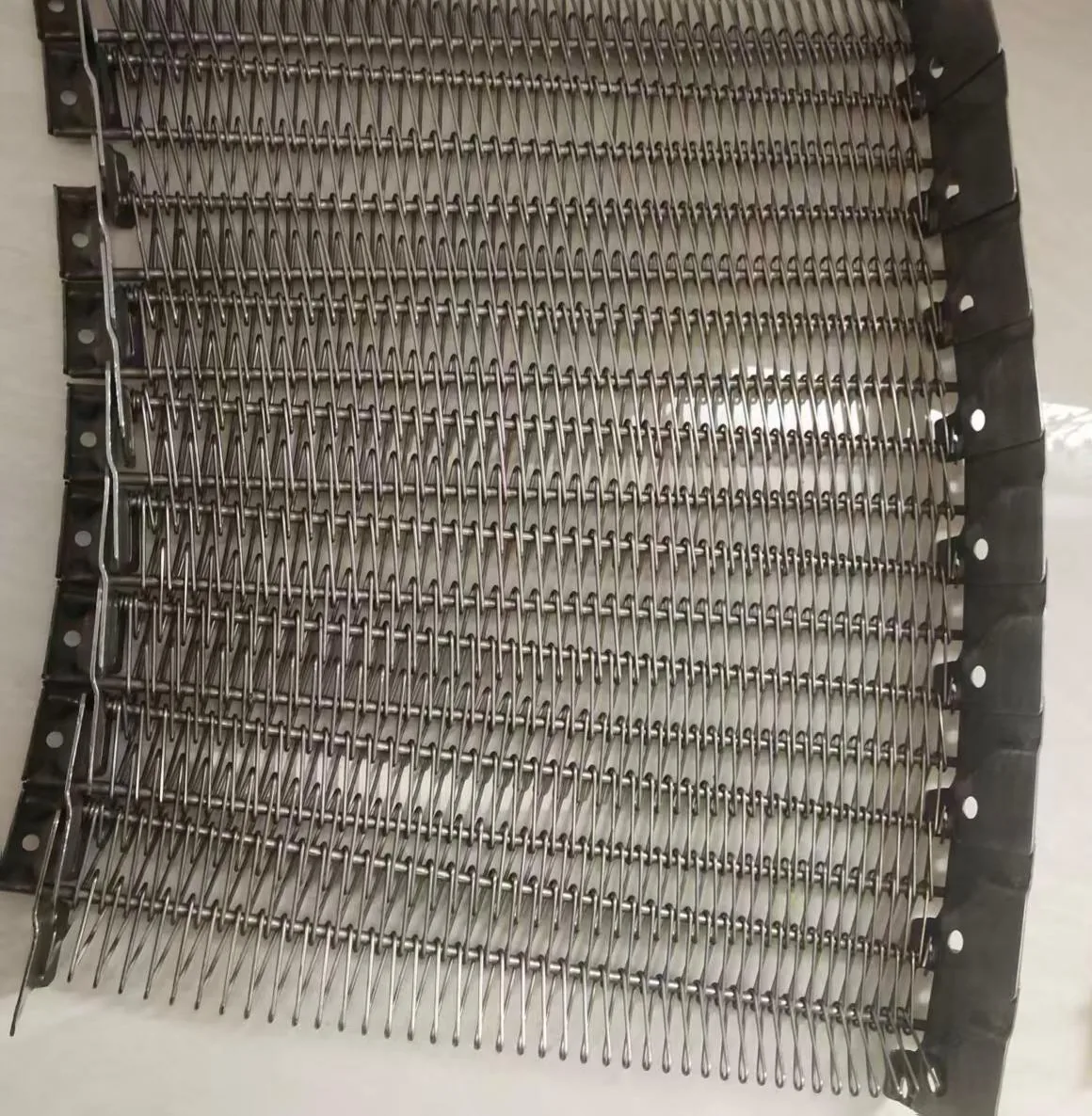
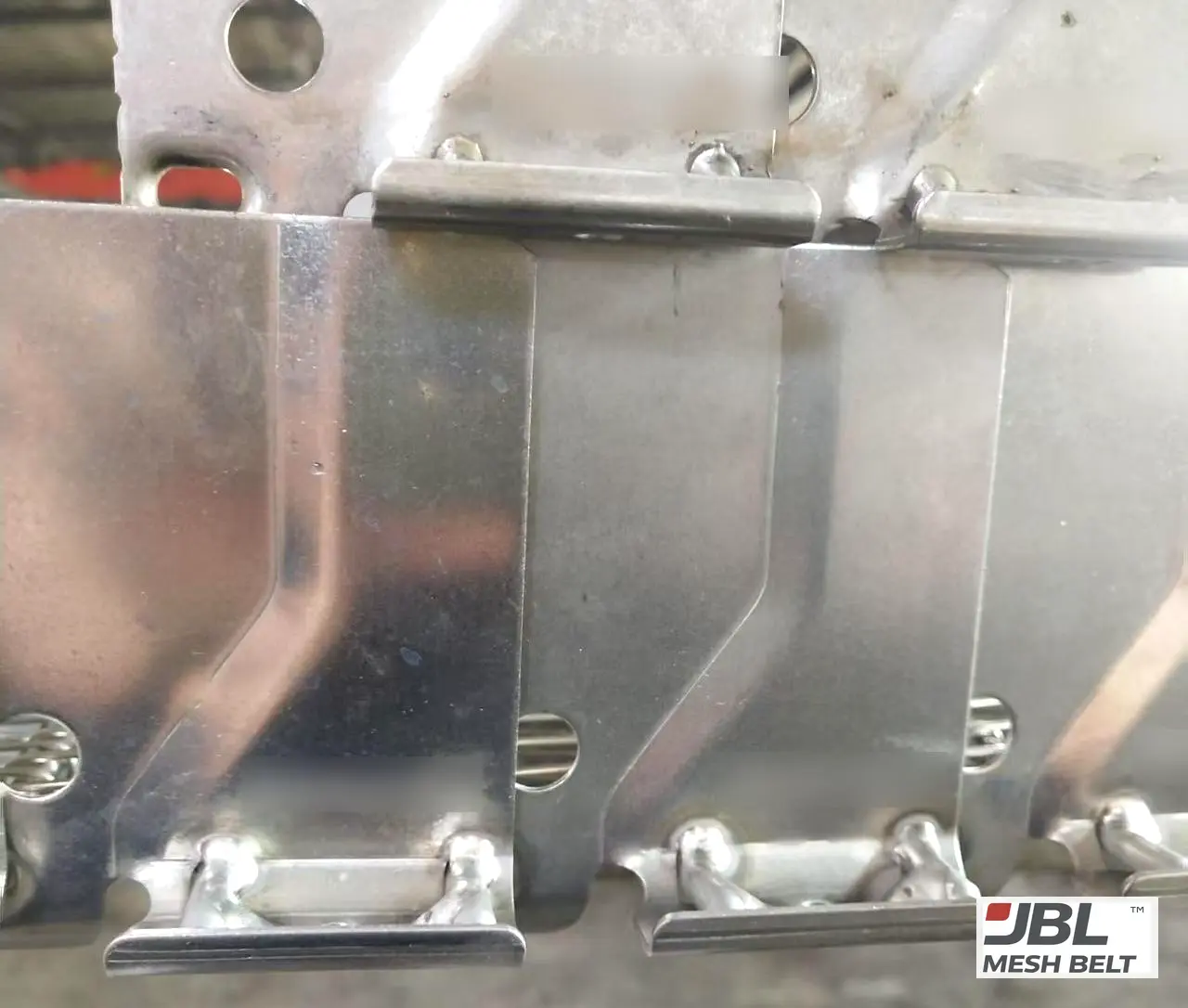
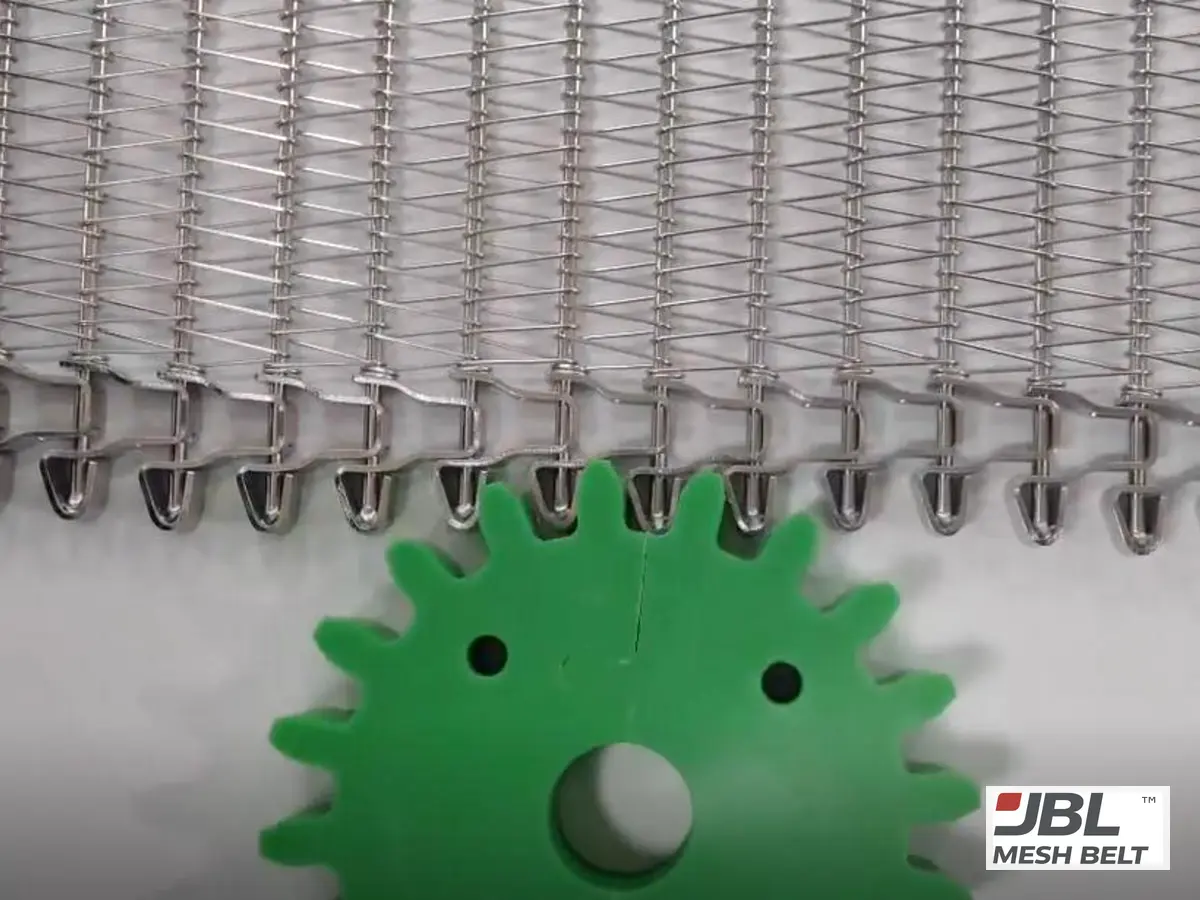
On the waffle cooling spiral, the original sprocket teeth were clearly worn. The customer sent the sprockets with the belt section. We measured width, hub, bore and tooth, made new sprockets, and replaced them together with the belt.
02Why does a worn sprocket change engagement?
Engagement is where the tooth meets the belt. When the shapes no longer agree, the force goes in the wrong place.
Short answer
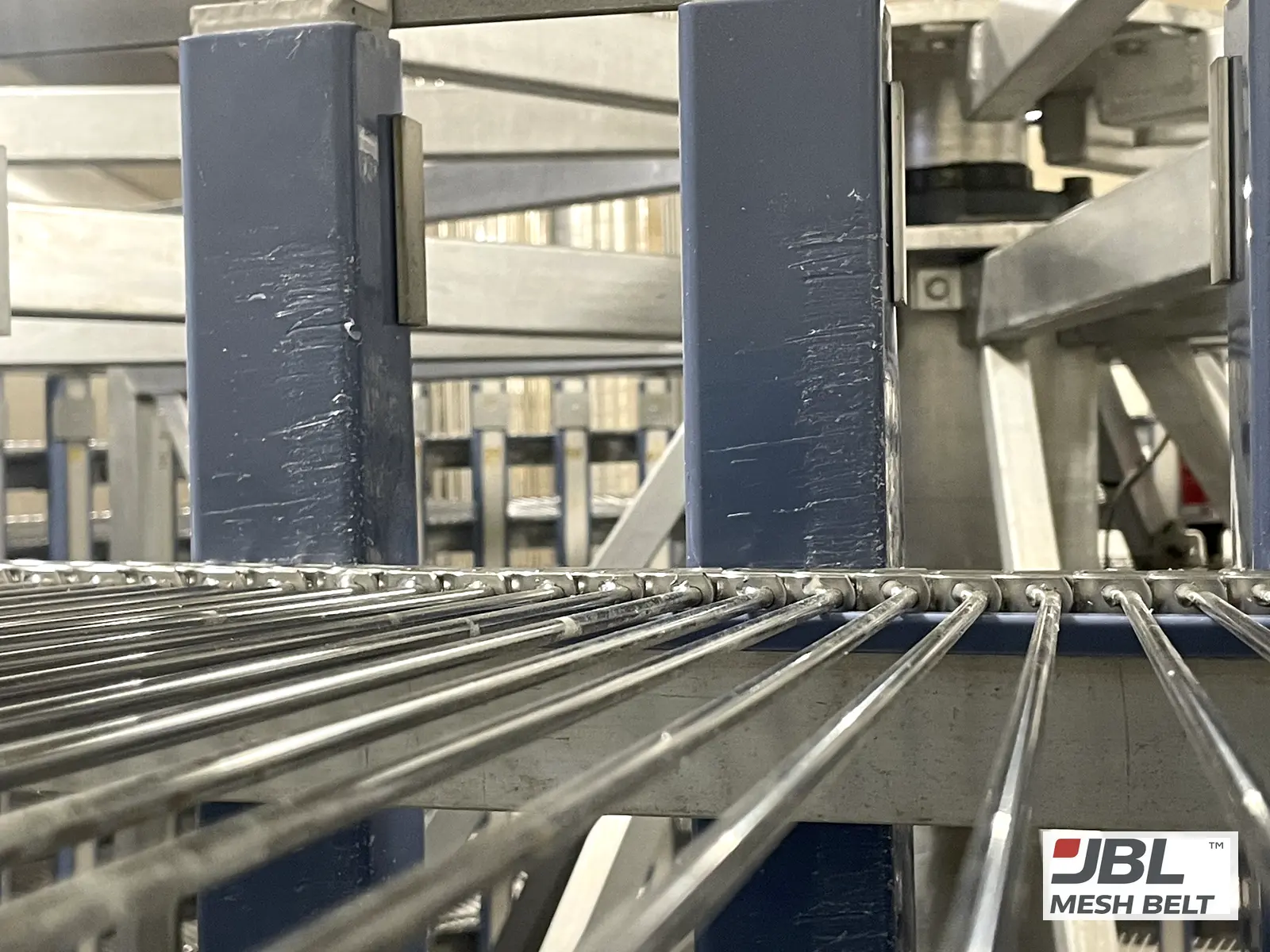
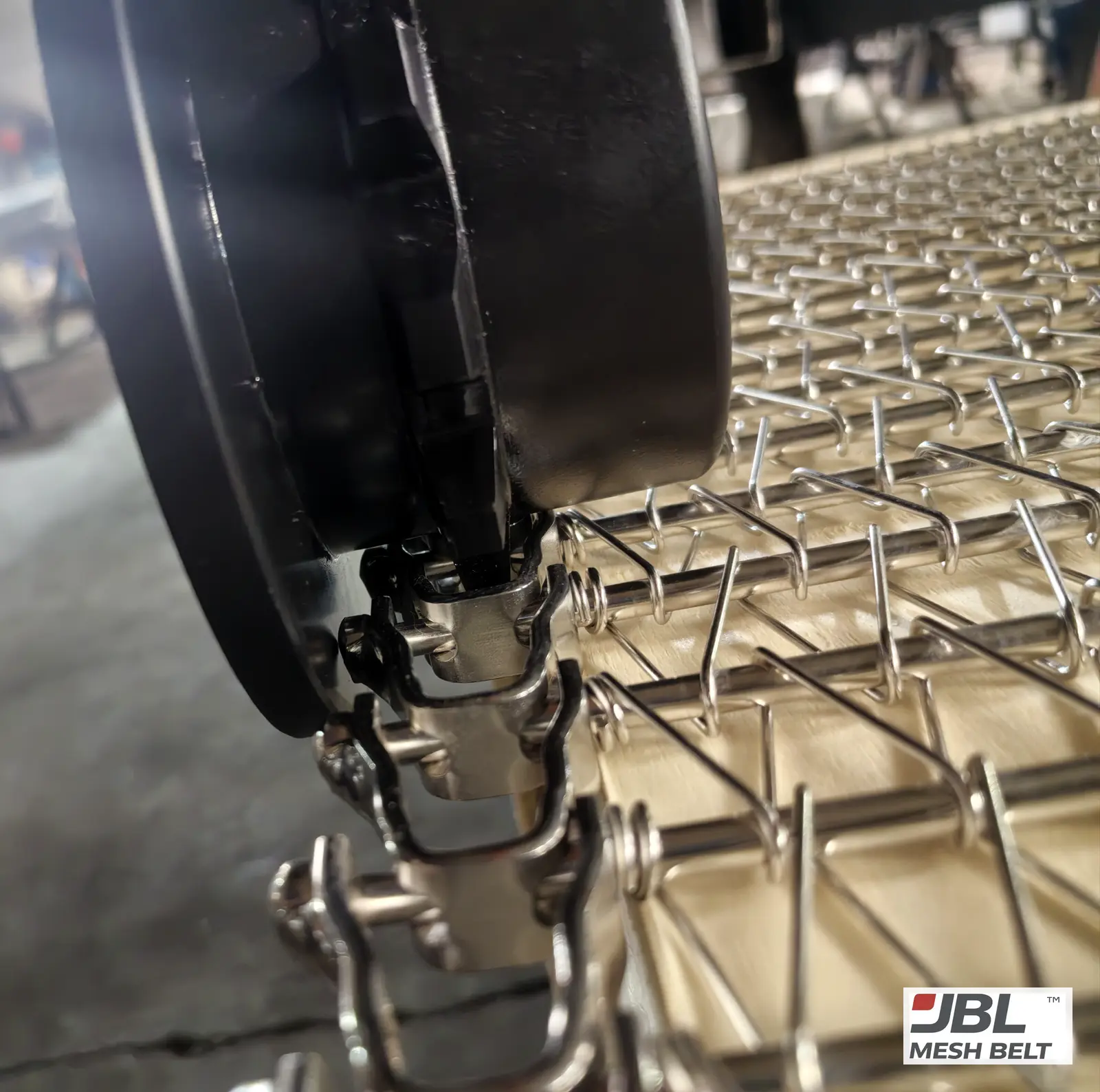
A new belt has the design pitch; a worn sprocket has teeth shaped to a stretched belt. The rods or links no longer seat fully between the teeth. They ride higher, hit the tooth faces and load only a few teeth. That is poor engagement.
- 01
New belt geometry + worn sprocket geometry
Two shapes that no longer agree.
- 02
Poor engagement
Rods or links ride on the teeth instead of seating.
- 03
Impact loading
Each tooth hits the belt instead of picking it up.
- 04
Uneven load distribution
A few teeth and a few links carry the load.
- 05
Tracking problems
The belt is pulled unevenly across its width.
- 06
Link and rod wear
Contact points wear fast.
- 07
Premature failure
The new belt wears out like an old one.
Pitch is the core of it. On side-driven belts, the two common rod pitches are 31.75 mm and 34 mm — close enough to confuse, far enough apart that a sprocket cut for one does not seat the other. A worn tooth behaves like a sprocket cut for the wrong pitch.
A pitch that is nearly right is still wrong. Our chain pitch and sprocket mismatch guide shows the same effect on chain-edge belts.
03What are the signs of poor engagement on a new belt?
Poor engagement is usually heard before it is seen. A new belt should run quietly on its sprockets.
Short answer
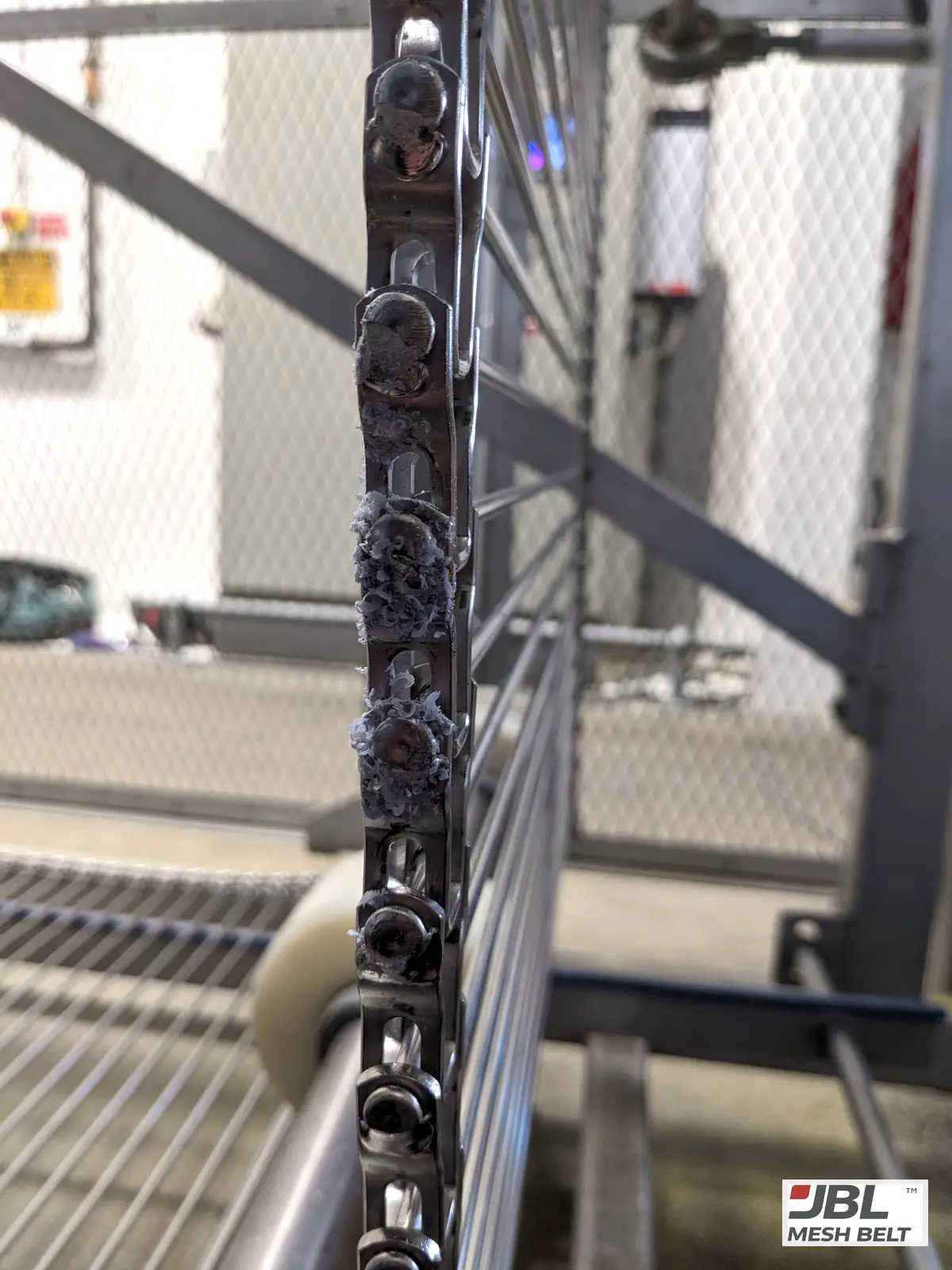
Signs of poor engagement are clicking or knocking at the sprocket, the belt jumping or climbing the teeth, shiny wear marks on rods or links at the tooth contact points, uneven tracking, and new wear on a belt that is only weeks old.
| Symptom on the new belt | What is happening | First check |
|---|---|---|
| Clicking or knocking | Teeth hitting rods instead of picking them up | Tooth shape, pitch |
| Jumping or climbing | Rods riding over the tooth tips | Hooked or thinned teeth |
| Shiny marks on rods or links | Point contact under high load | Tooth face wear |
| Tracking to one side | Uneven pull across the width | Alignment, uneven tooth wear |
| Early link or rod wear | Load on too few contact points | All of the above |
Listen at the sprocket during a slow, empty run. A steady sound is normal. A rhythmic click or knock, once per tooth or once per rod, is a warning.
Look at the belt after a few days. Bright, polished spots on rods or links where they meet the teeth show where the load is concentrated. On a new belt, these marks should not appear so early.
Some of these symptoms can also come from the belt itself, such as an uneven pitch. To separate the two, see spiral belt failure: is it the belt or the machine?.
04When should sprockets be replaced together with the belt?
Sprockets cost far less than a belt. Keeping worn ones to save money is the shortcut I advise against most often.
Short answer
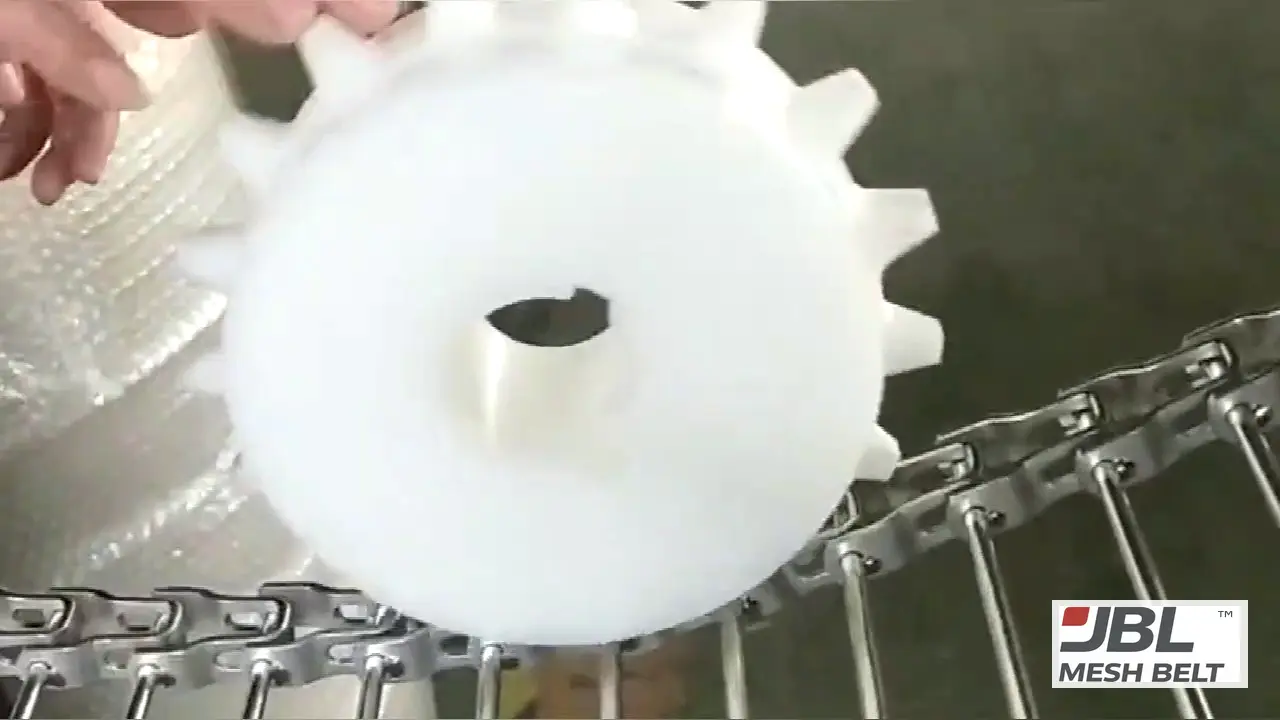
Replace sprockets with the belt when teeth are hooked, thinned or worn on one side, when the bore or keyway has play, or when the belt pitch changes. New sprockets should be made to the belt and run on it before shipment.
| Project | Sprockets | Checked before shipment |
|---|---|---|
| Waffle cooling spiral | Remade from the worn originals; keyway 10.02 mm | Run on the bulk belt |
| Melbourne bakery | Nylon; outside diameter 160.97 mm, bore detail 18.00 mm, pin 8.00 mm | Run on the new belt |
| USA flat wire belt | Full set; tooth pitch 25.40 mm, outside diameter 132.00 mm, bore 40.00 mm | Measured and supplied with the belt |
In all three projects, sprockets were part of the order. On the waffle line they were copied from the customer's worn originals. In Melbourne, nylon sprockets were measured and run on the new belt. In the USA, the customer handed over the full sprocket set after approving the belt trial.
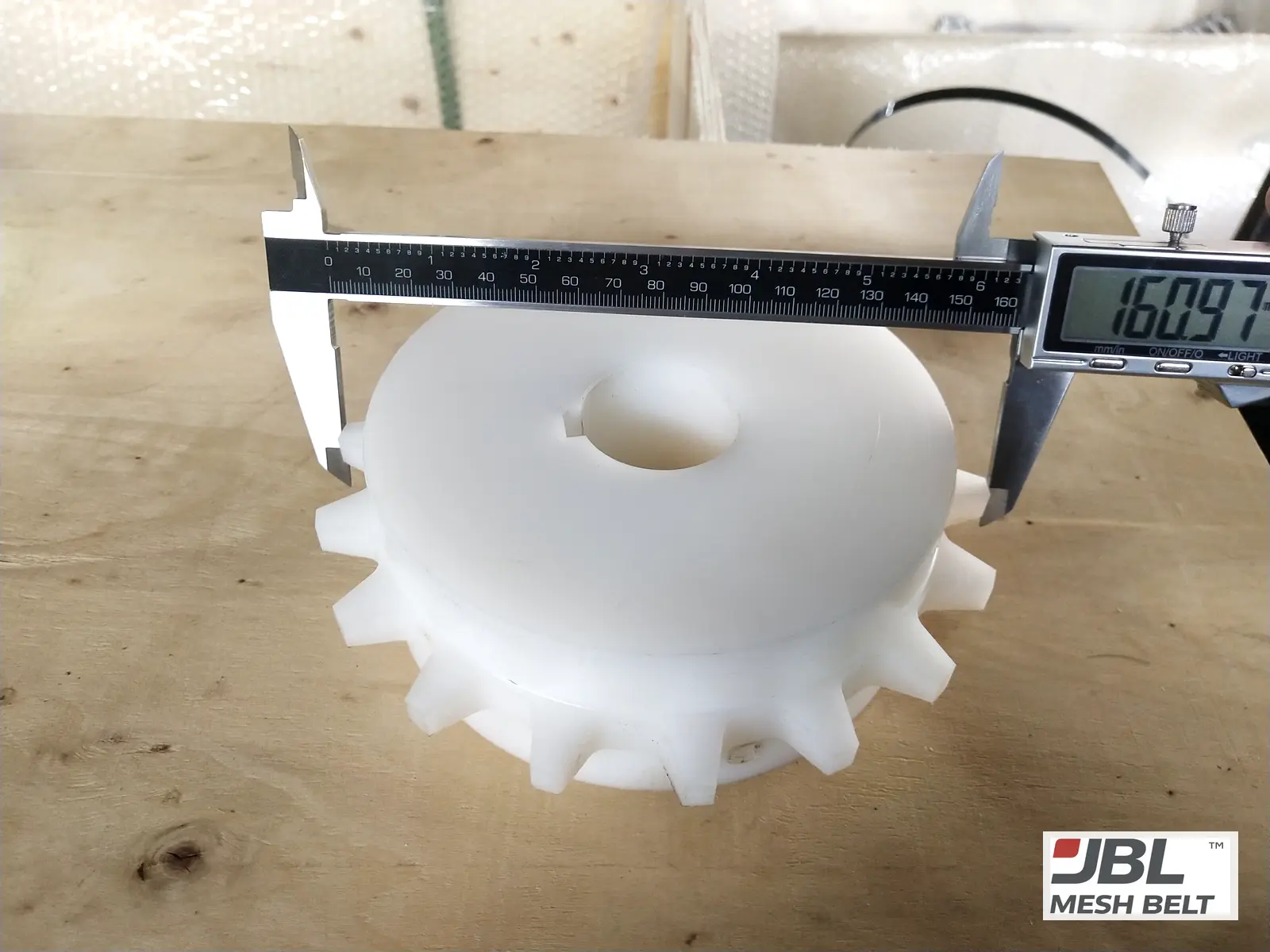
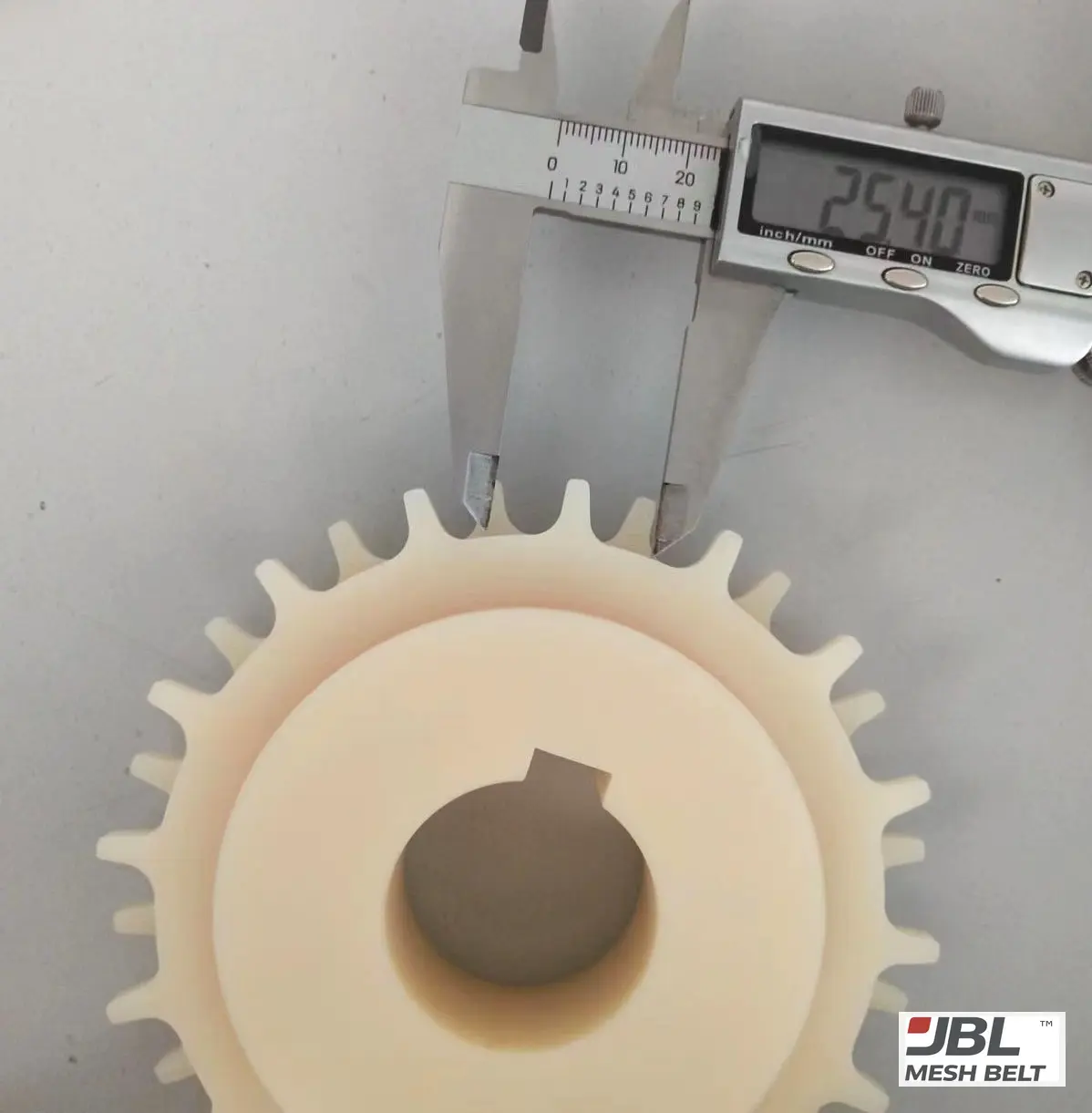
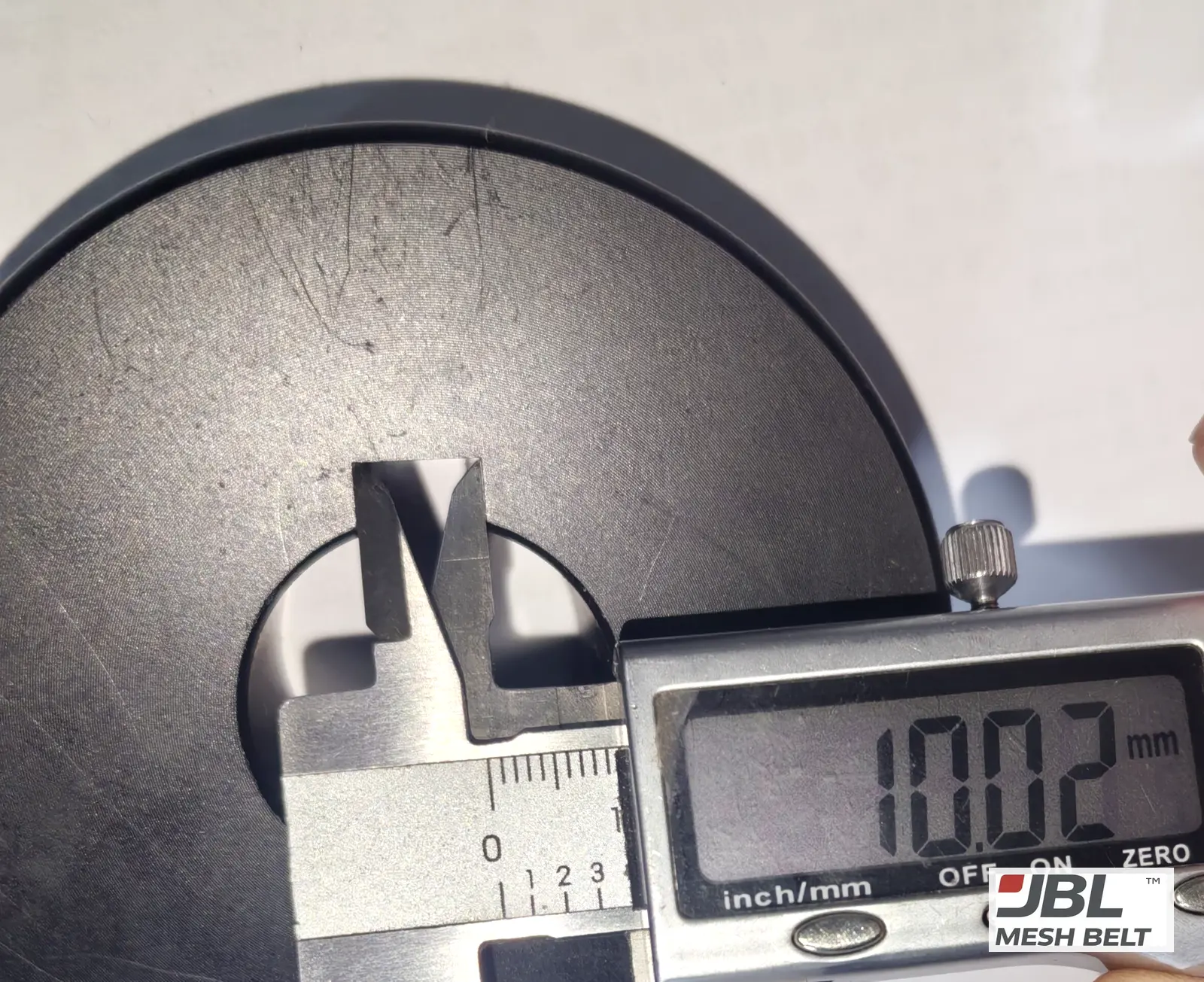
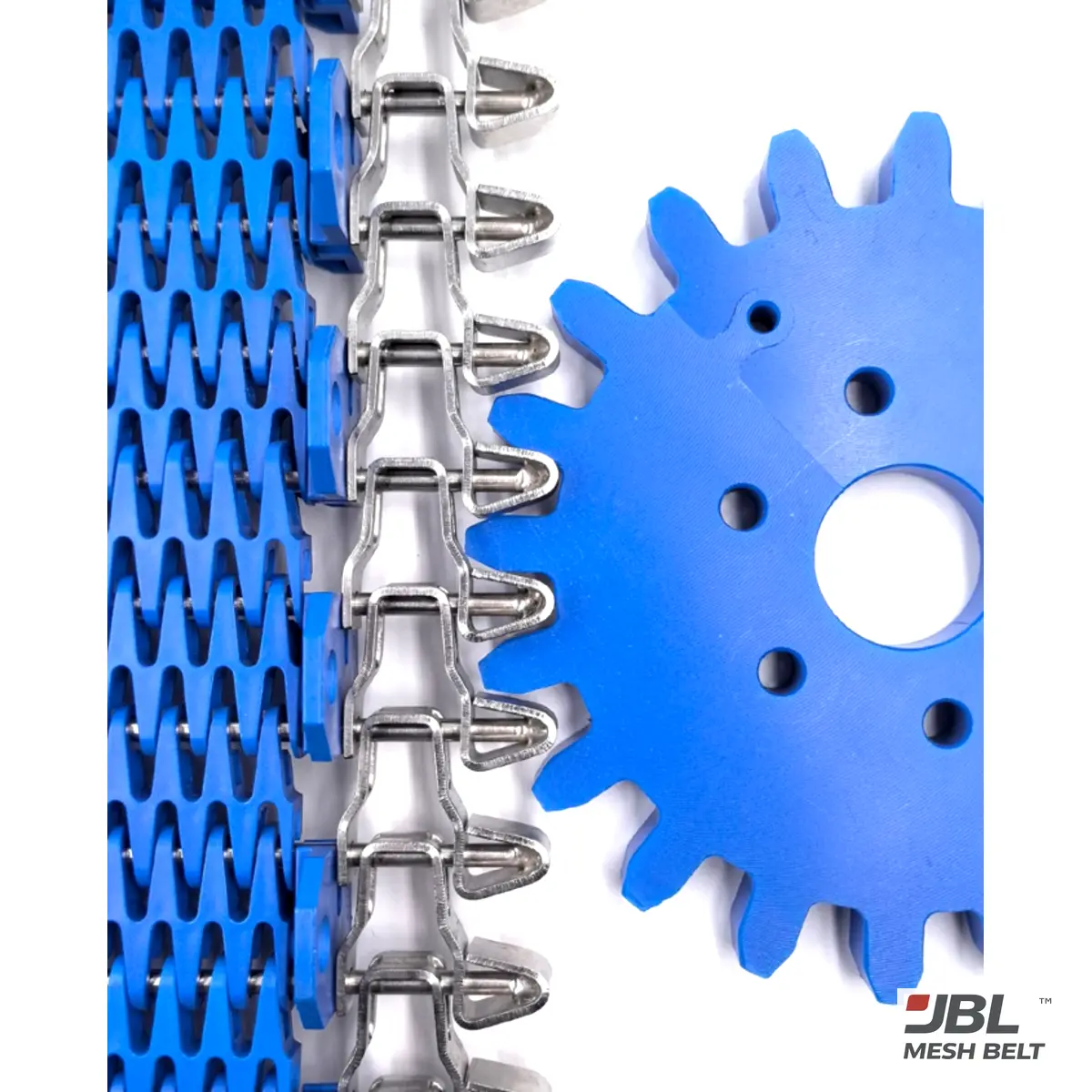
Material is part of the decision too. Sprockets can be stainless steel or plastic such as nylon or UHMWPE. Split UHMWPE sprockets fit onto the shaft without removing it, which shortens the stop when they are changed with the belt.
05Which photos and measurements should be checked before ordering?
Photos are usually enough for a first view of sprocket wear. But they must show the teeth from the right angles, with a caliper in the picture.
Short answer
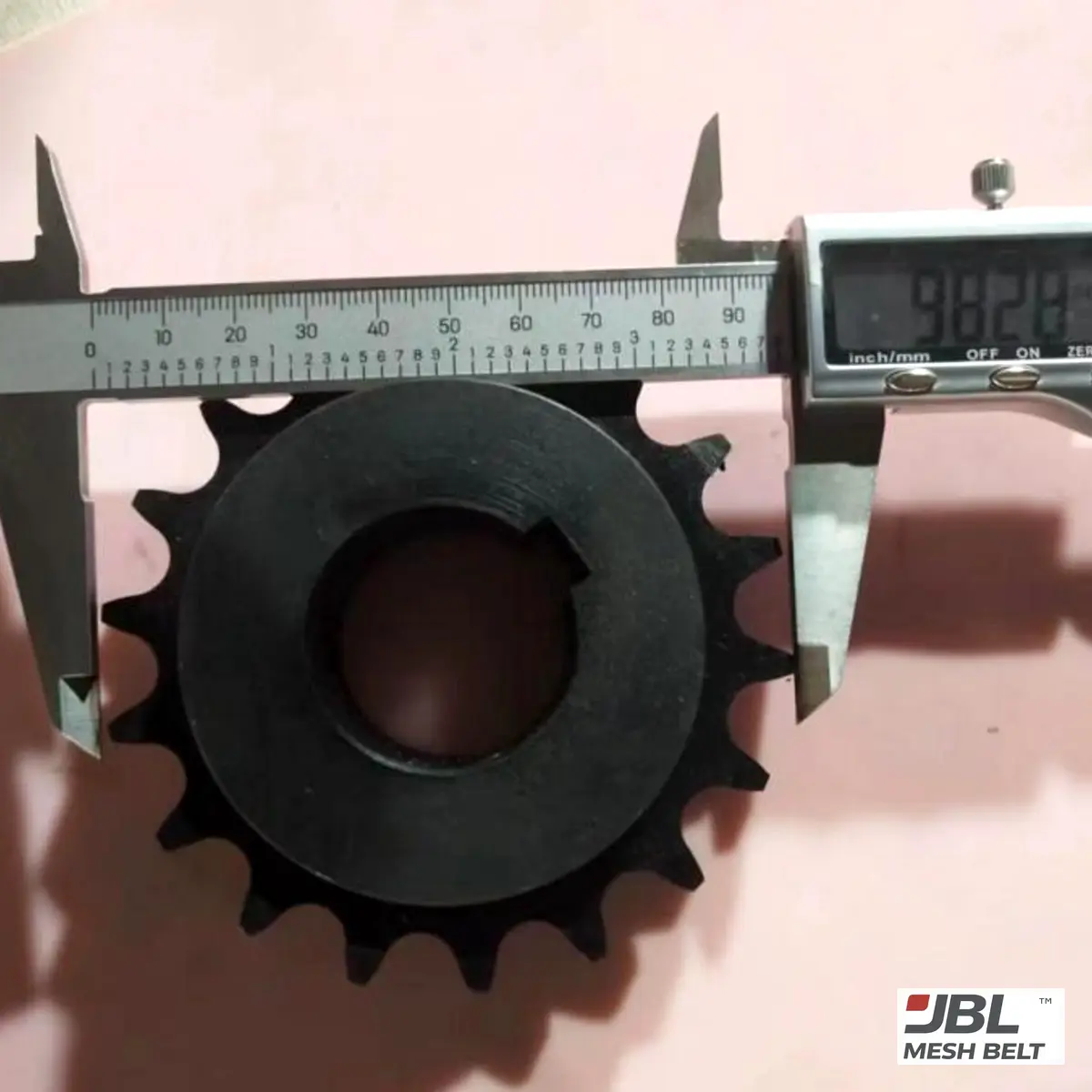
Send a photo of each sprocket face-on, close-ups of several teeth from the side, the bore and keyway with a caliper reading, the tooth count, and a photo of the belt on the sprocket. Add pitch read over several rods on the old belt.
| Photo or reading | What it tells me |
|---|---|
| Sprocket face-on | Tooth count, overall condition |
| Teeth from the side, close up | Hooking, thinning, one-sided wear |
| Bore and keyway with caliper | Fit on the shaft, play |
| Belt on the sprocket | How the rods or links seat today |
| Pitch over several rods (old belt) | How far the belt has stretched |
| Short running video | Clicking, jumping, climbing |
Send sprocket photos even if you only plan to order a belt. If the teeth are fine, you save the cost of new sprockets. If they are worn, you save the new belt.
Send belt and sprocket photos for an interface review
Photos of the sprockets, the teeth close up and the belt on the sprocket are enough for me to tell you whether the sprockets should be replaced with the belt.
When This Is Not the Right Choice
- ✕If the sprockets were replaced recently and show no wear, a new belt alone may be right; still send a photo to confirm.
- ✕If the problem is a shaft, bearing or alignment fault, new sprockets will not fix it; the machine needs repair.
- ✕If your drive has no sprockets — a friction-drive drum — the drum bars play the same role; check them instead.
From My Engineering Experience
It seems logical that sprockets which ran the old belt will run the new one. But the old belt and the old sprockets had worn into each other. They were a matched pair, just not the original one.
On the waffle line, the teeth were visibly worn, and the customer sent the sprockets with the belt. We made both new, and ran a sprocket on the bulk belt before packing. In Melbourne and the USA, sprockets were part of the order as well.
New belt does not mean new system. I would rather sell you a set of sprockets now than a second belt later.
— Spring, Sales Director, JBL Mesh Belt
Evidence From Our Work
Waffle spiral cooling, 2026 — worn sprockets replaced →
| Step | Detail |
|---|---|
| Found | Worn sprocket teeth on the original |
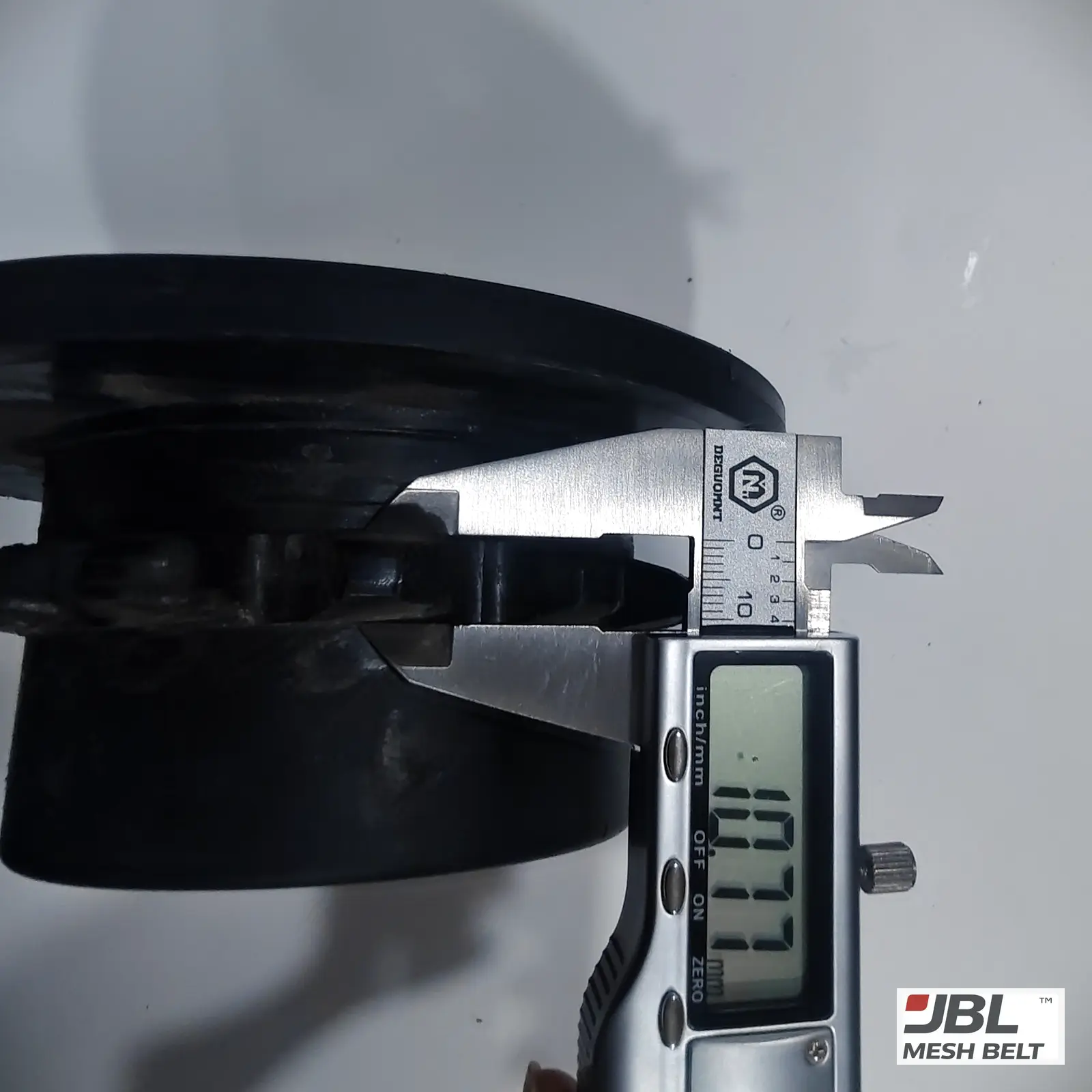
| Measured | Width 40.36 mm, hub 90.42 mm, tooth 10.77 mm |
| Supplied | New sprockets with the new belt; keyway 10.02 mm |
| Checked | Sprocket run on the bulk belt before packing |
Melbourne, Australia — nylon sprockets run on the new belt →
| Step | Detail |
|---|---|
| Supplied | Nylon sprockets with about 400 m of belt |
| Measured | Outside diameter 160.97 mm, bore detail 18.00 mm, pin 8.00 mm |
| Checked | Running test on the new belt, on video |
| Packed | Sprockets wrapped in the belt crate |
FAQ
Q1Can a new belt run on old sprockets?
Only if the teeth are not worn. Hooked, thinned or one-sided teeth do not seat a new belt properly.
Q2What are the signs of a worn sprocket?
Thinned or hooked teeth, one polished face, play in the bore, and clicking or jumping when the belt runs.
Q3Why did the old belt run fine on the same sprockets?
Because belt and sprockets wore together; the new belt has the design pitch, the old teeth do not.
Q4Can you make sprockets from my old ones?
Yes. Width, hub, bore, keyway and tooth are measured, and new sprockets are run on the new belt before shipment.
Q5Which sprocket materials do you supply?
Stainless steel or plastic such as nylon or UHMWPE, solid or split, confirmed against the drawing.
Conclusion
A new belt on worn sprockets is a new belt on an old system. Check the teeth, and replace worn sprockets with the belt.
Download the Drive Sprockets Technical Specification (PDF)
Specification ranges and options in mm and inch. Enter your work email and the file downloads right away.
References

Your contact for this belt
Spring · Sales Director, JBL Mesh Belt · 16 years
“Your belt is worn, the OEM price is high, and there is no drawing. That is where I start.”
Send me a worn section, a few photos with a caliper in the picture, or a drawing. I tell you what fits, what is missing, and show you a sample measured against your own belt before you pay for the full length. Buyers in the UK, the USA, Australia, Brazil, South Korea, Spain and Malaysia have replaced belts this way.
- ✓Readings on your original next to readings on our sample
- ✓Nothing in bulk until you approve the sample
- ✓Turning, stacking or sprocket tests before your belt ships
- ✓A reply from me, usually within 8 hours