Replacement · 10 min read
How Do You Replace an OEM Self-Stacking Belt Without the Drawing?
 Written bySpringSales Director, JBL Mesh Belt · 16 years in metal conveyor beltsProjects in United Kingdom · USA · Australia · Brazil · South Korea · Spain · MalaysiaPublished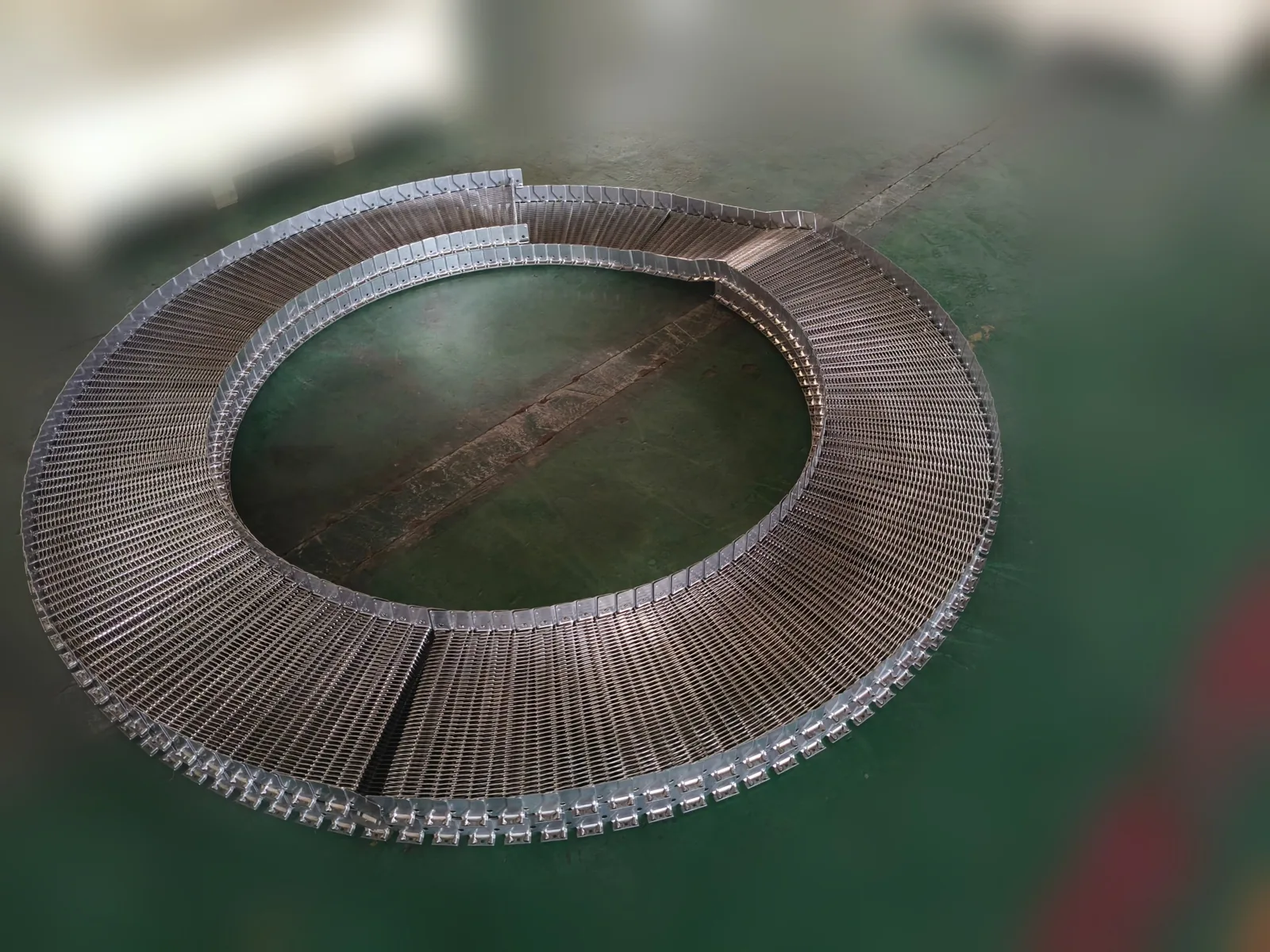
Your equipment maker quotes a high price for a new self-stacking belt. You have no drawing. A wrong copy could stop your freezer for days.
Short answer
You can replace an OEM self-stacking belt without the drawing. Send a section of the original belt. I measure the six fit dimensions, make tooling, compare a sample with your original, and run turning and stacking tests before bulk production.
At a Glance
| Product | Application | Key point | Buyer type | What to send |
|---|---|---|---|---|
| Self-stacking belt (OEM replacement) | Self-stacking spiral freezers and coolers | Six fit dimensions + turning and stacking tests | Food plants, OEMs, integrators | A belt section with both edges, or photos with a caliper reading |
I have done this many times over 16 years. Below I explain why these belts are hard to copy, what I ask you to send, what I measure, and how I prove the new belt fits before you pay for 450 m of it.
01Why is a self-stacking belt hard to replace?
A self-stacking belt is not just a conveyor. It is part of the freezer structure. A small error does not show on the bench. It shows in the stack.
Short answer
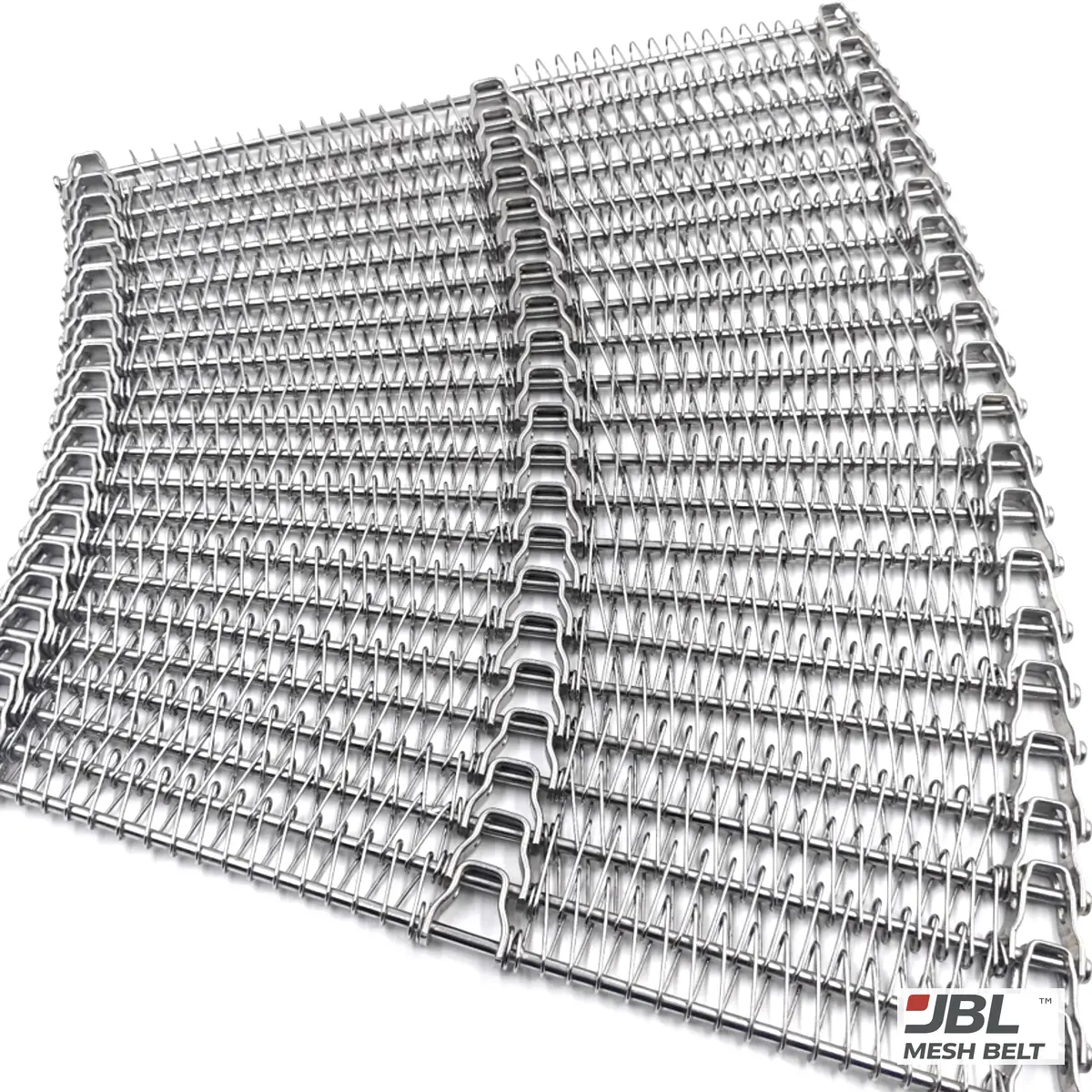
A self-stacking belt is hard to replace because each tier rests on the side plates of the tier below. The rods, pitch and side plates must match the original closely, or the stack will not sit, turn or drive correctly.
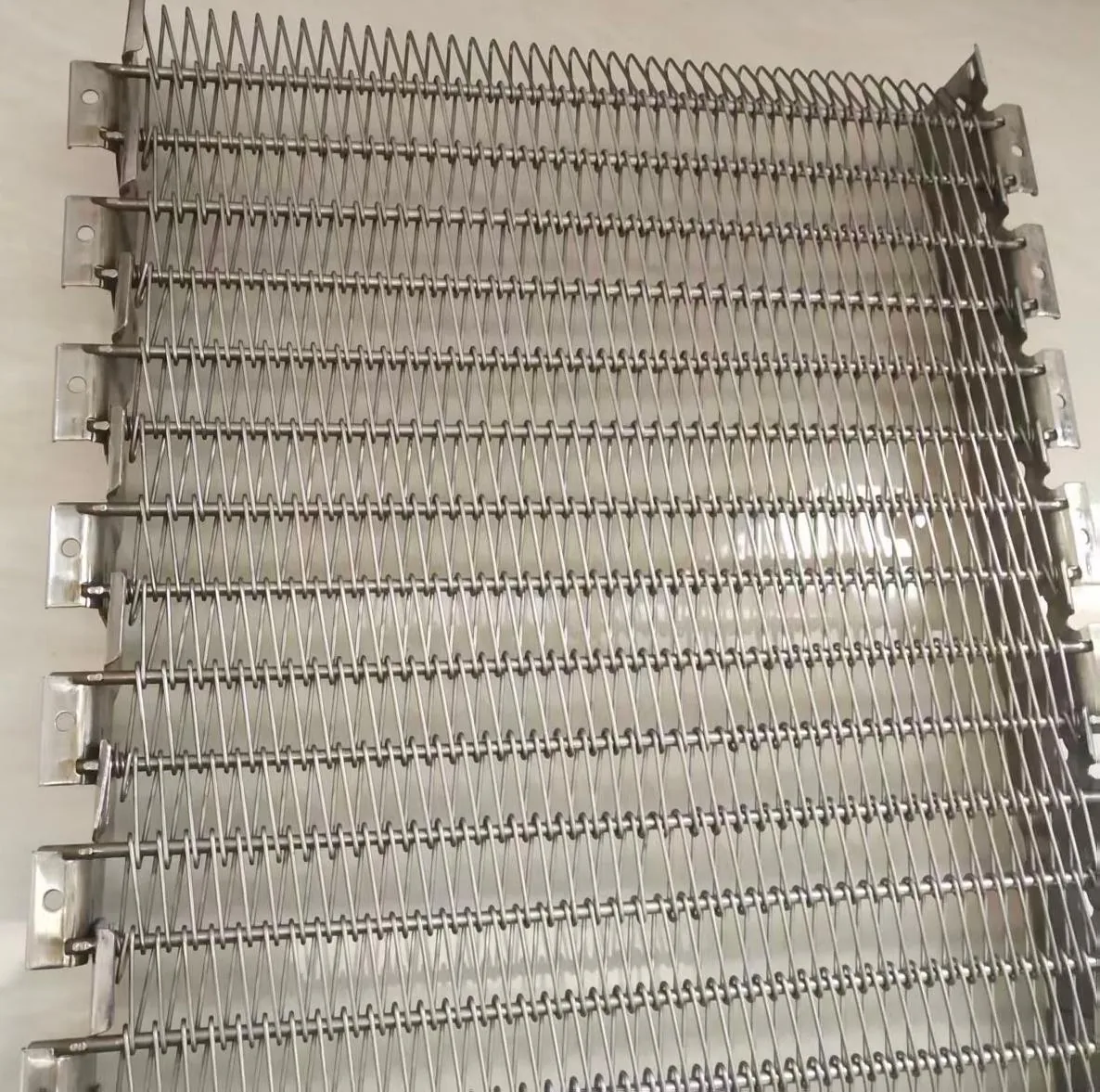
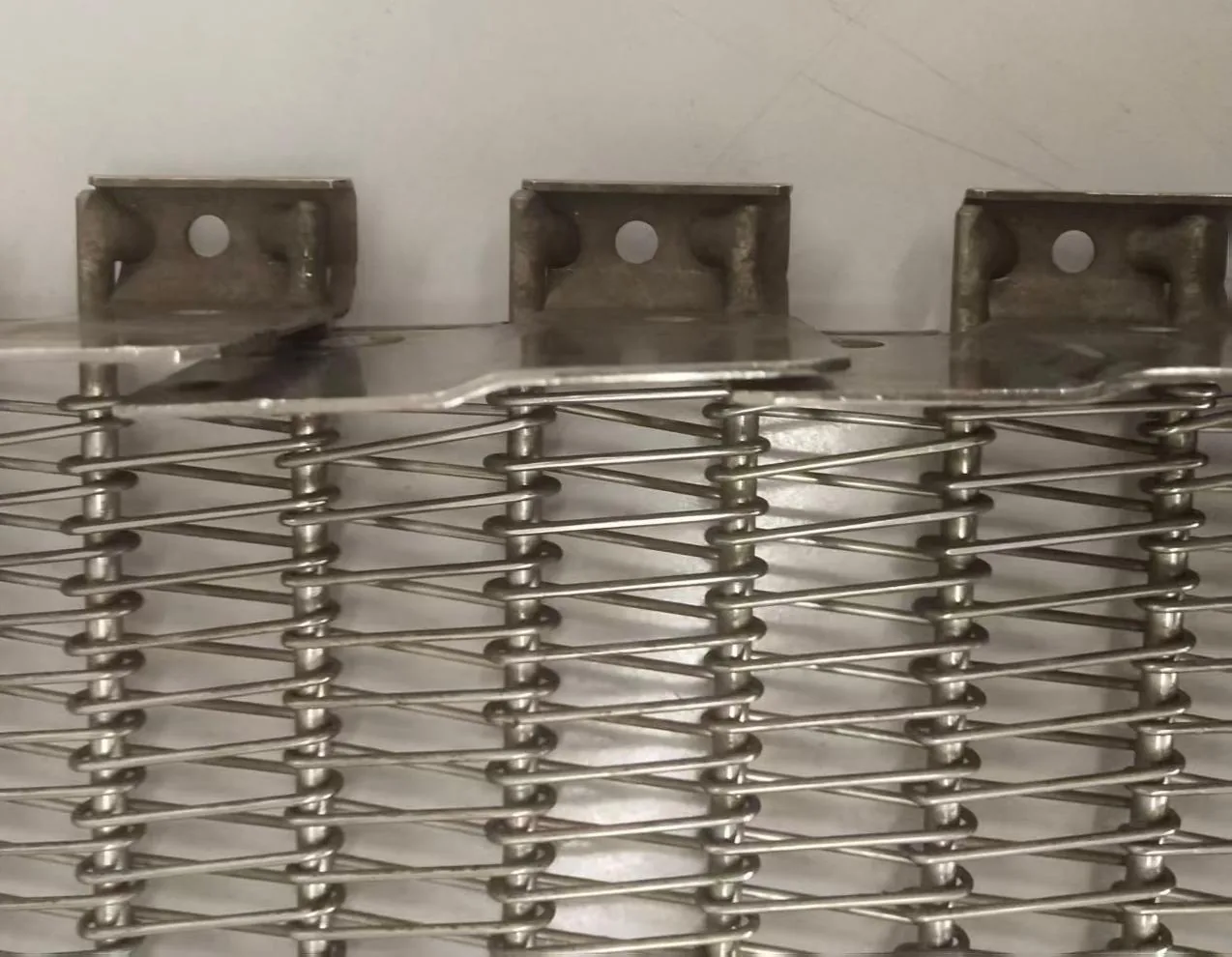
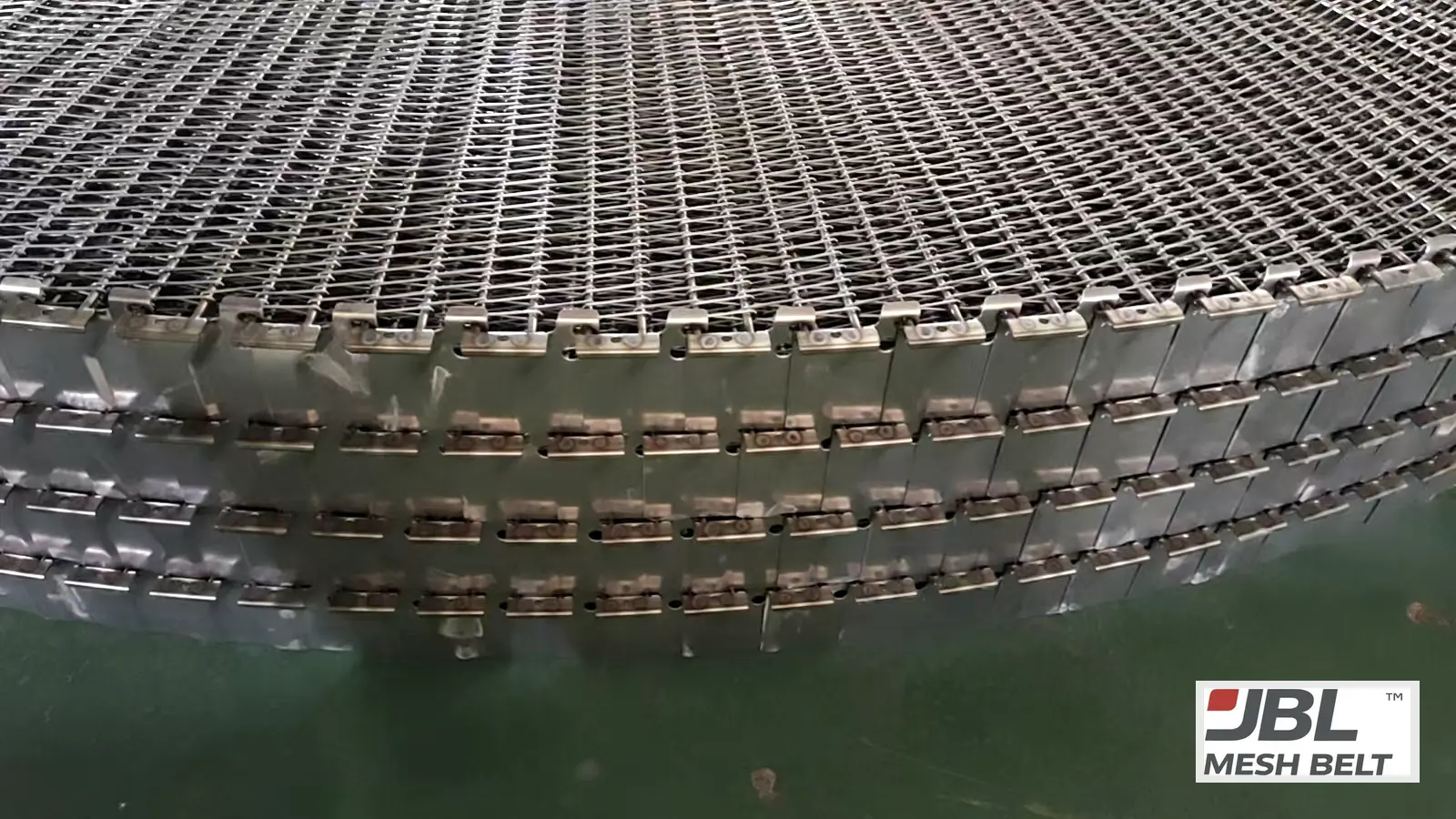
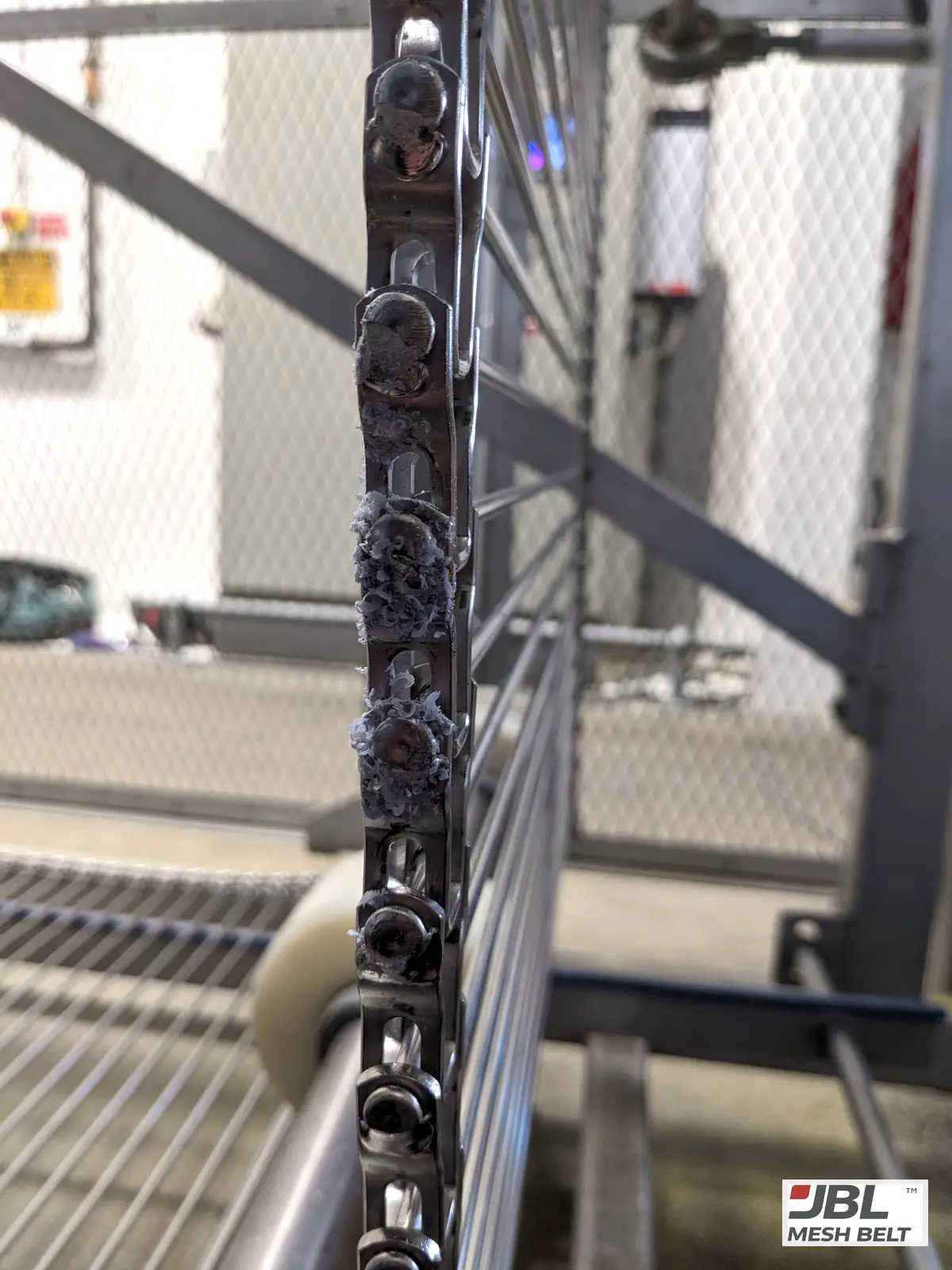
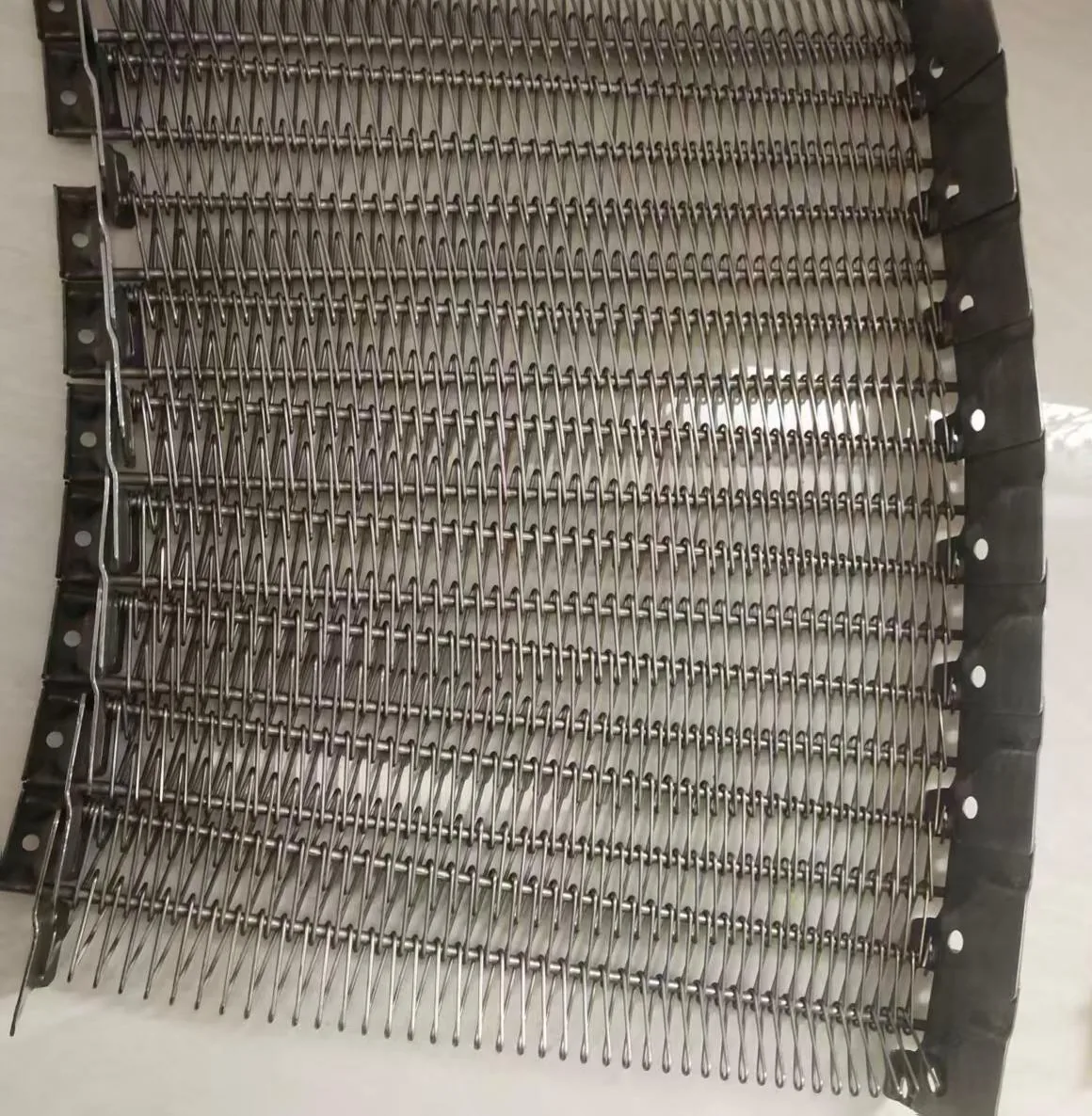
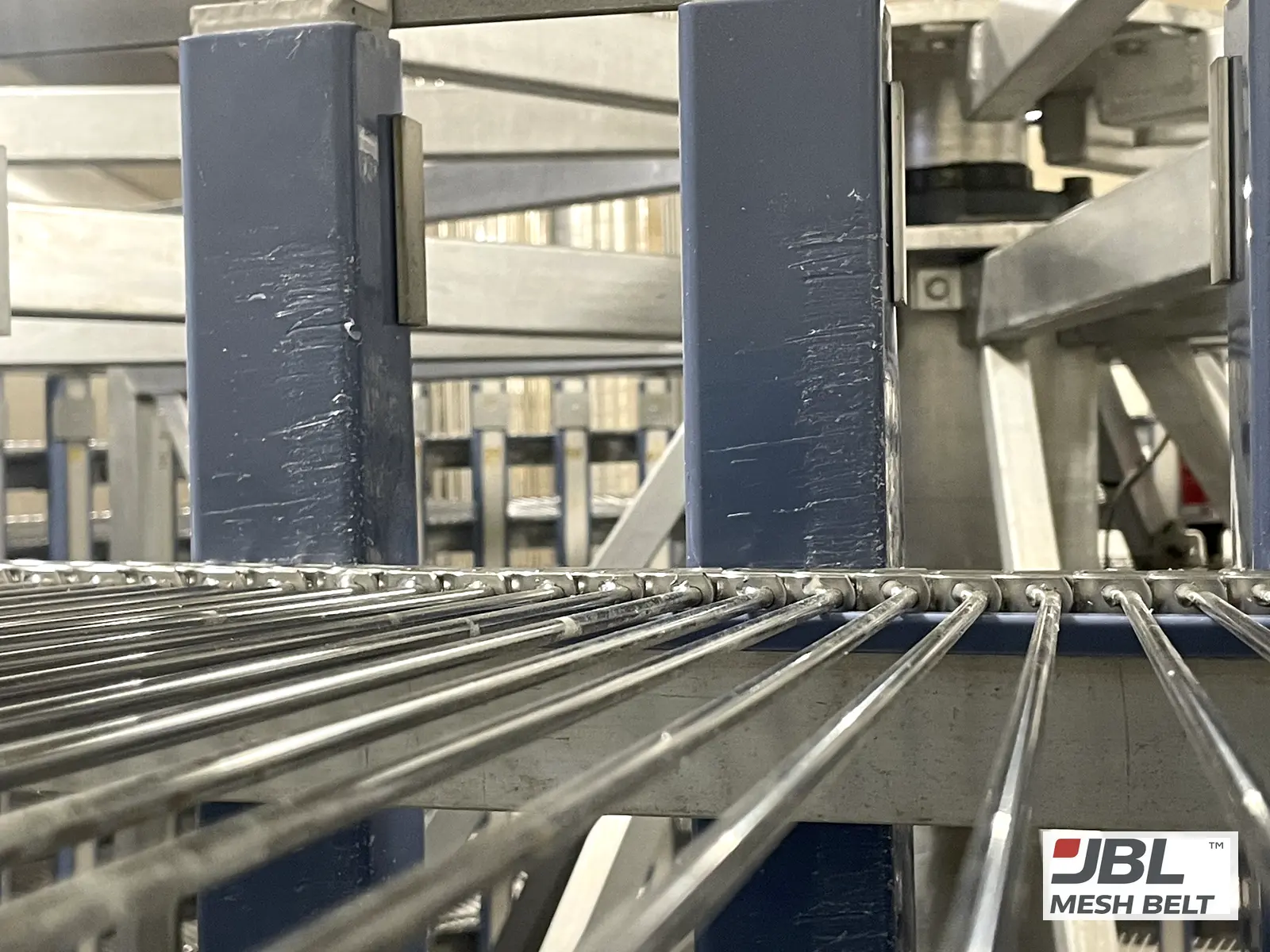
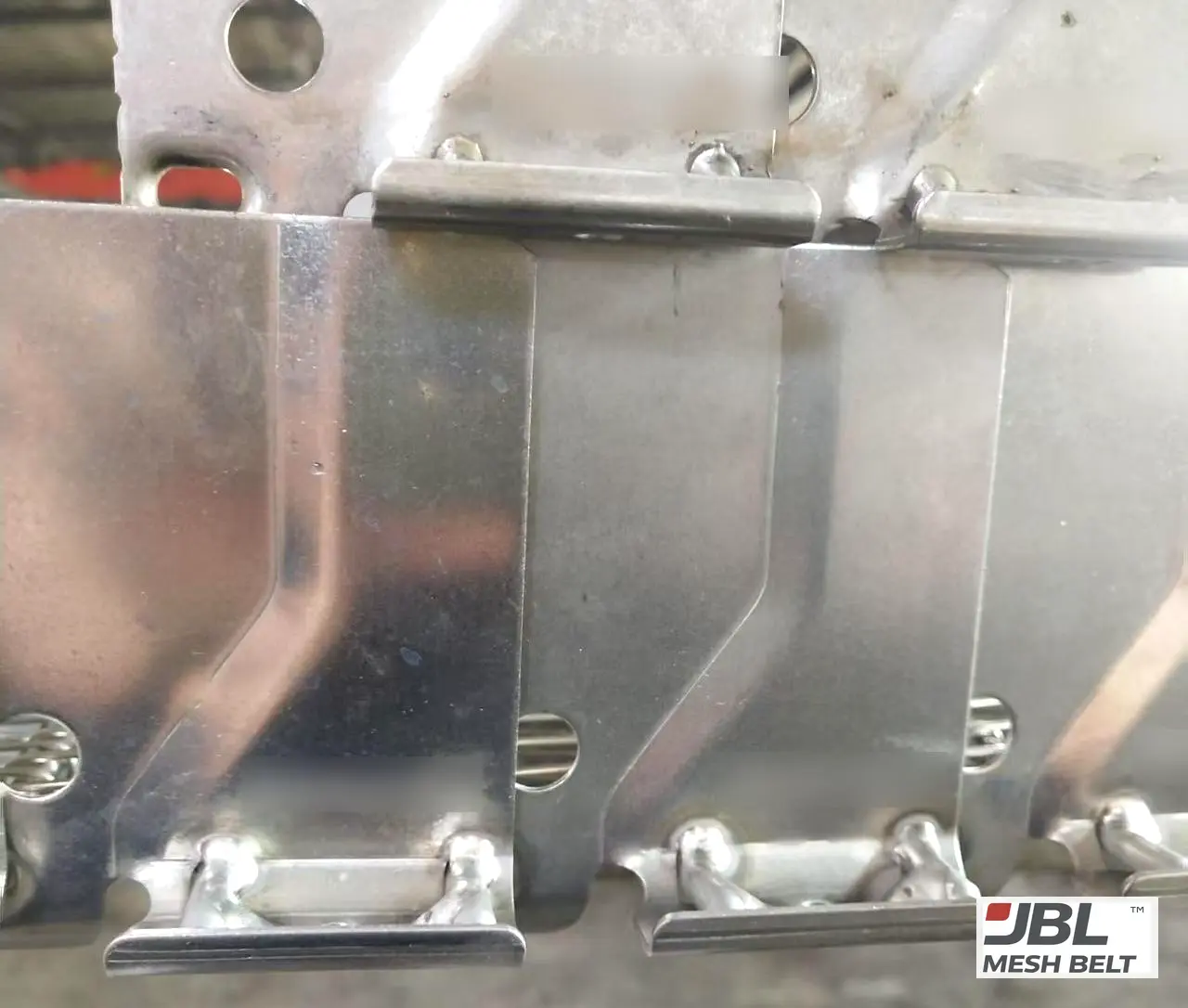
In a spiral freezer with a drum, the drum and the tier rails carry the belt. In a self-stacking freezer there is no drum and no tier rail. The belt carries itself. Each tier sits on the side plates of the tier below, and the whole stack turns as one.
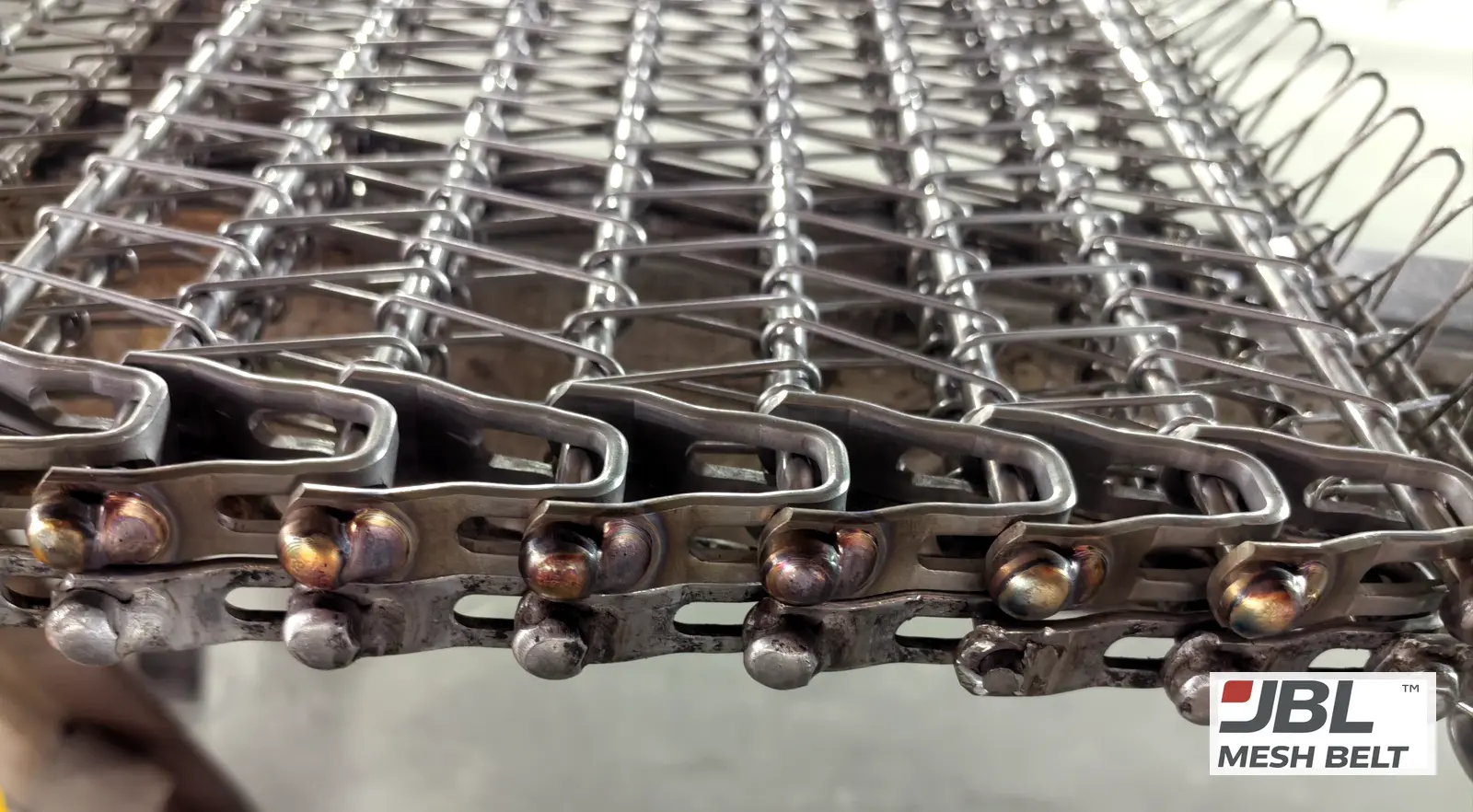
This means the side plates do structural work. Their height sets the tier height in your freezer. Their thickness sets how well they carry the load. The rod pitch decides how the belt engages the drive and how it collapses in the turn. If one of these is a little off, the belt may look perfect on the floor. But in the freezer it can climb, tilt or wear the plates.
Why the equipment maker is often the only obvious source
Most buyers do not have a belt drawing. The freezer came as one package. When the belt wears out, the equipment maker can supply a new one at its own price and lead time. In a UK project, that price is why the customer came to us. Their old belt became our drawing.
| Freezer type | What carries the belt | What the belt must match |
|---|---|---|
| Drum spiral | Drum and tier rails | Pitch, link, turn ratio, drum fit |
| Self-stacking spiral | The belt's own side plates | Pitch, rod, side plate height and thickness, stacking fit |
02What should you send if you have no drawing?
You do not need a drawing to start. You need something I can measure. The more of the real belt I see, the less I have to guess.
Short answer
Send a short section of the original belt with both edges and a few side plates. If you cannot send a sample yet, send photos of the whole belt, both edges and the side plates, with a caliper or tape reading in each picture.
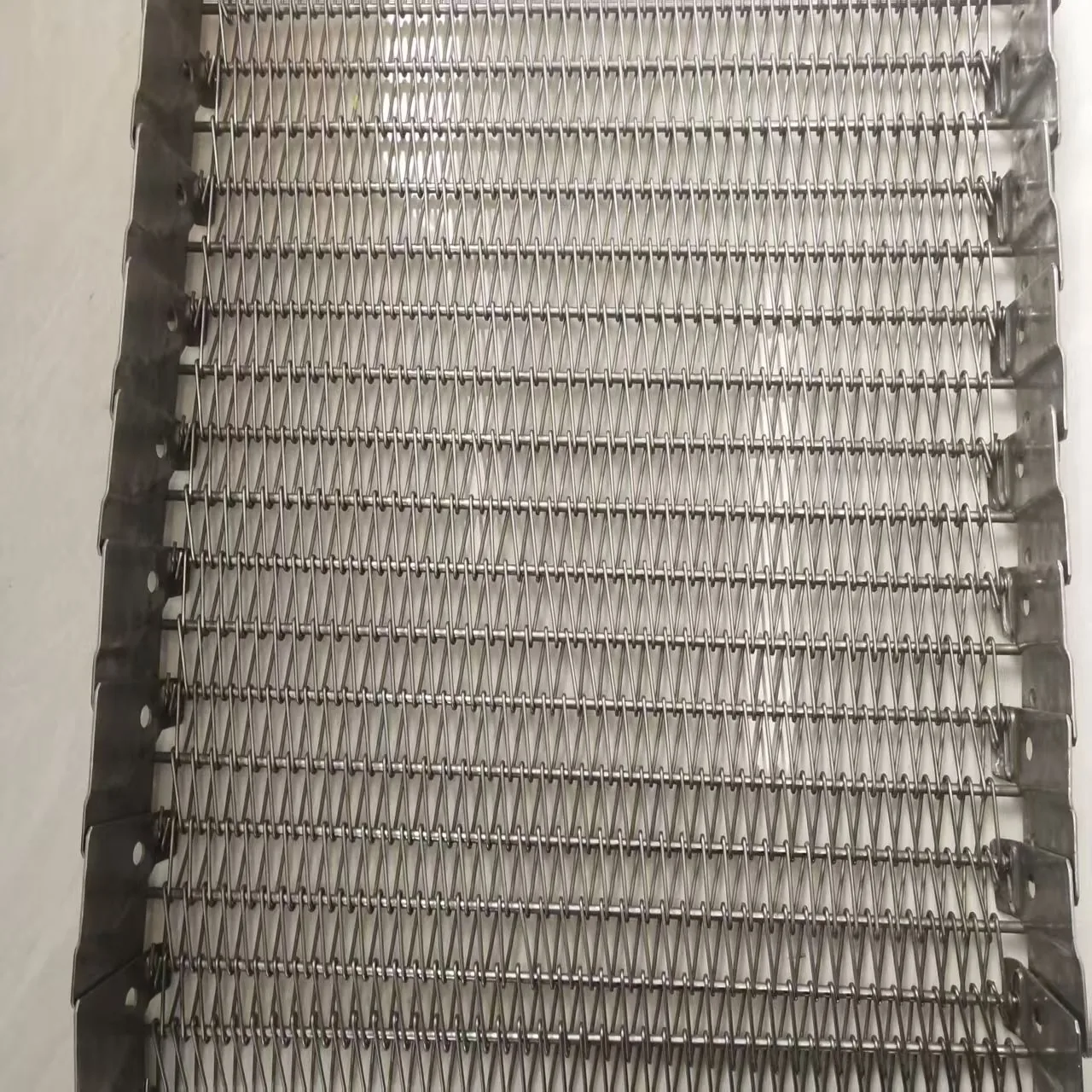
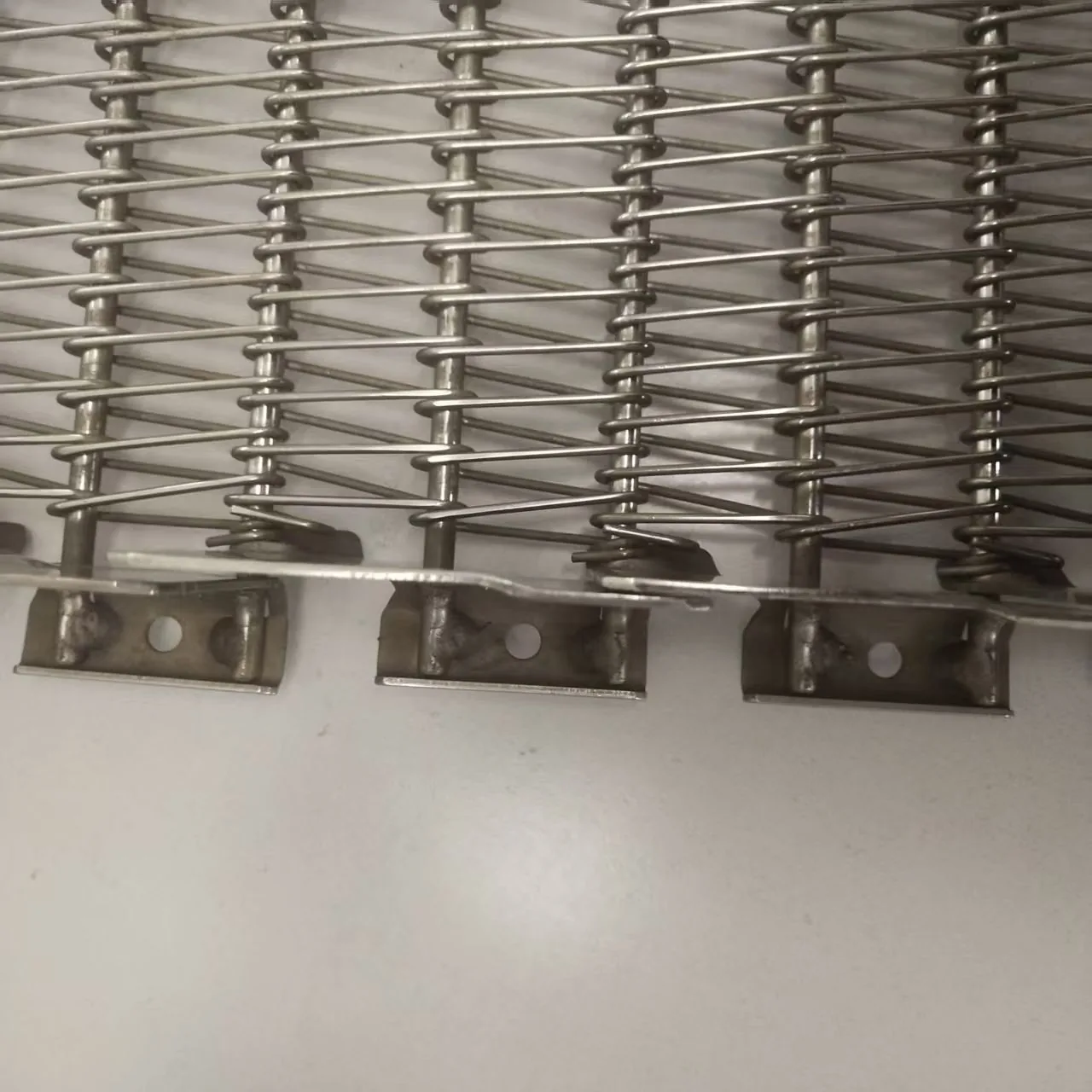
A physical sample is always my first choice. With a sample I can read every dimension with the same caliper I will later use on our sample. I can also see wear, weld shape and how the side plates are fixed. Photos are a good start for identification and a first quote. But photos alone are not enough for me to make tooling.
My checklist for the sample
- ✓A section long enough to show several rods and side plates on both edges.
- ✓A note if the belt is worn, and roughly how long it has run.
- ✓The total length you need, and the freezer type. The maker's name stays private.
- ✓Any problem with the old belt — noise, tracking, plate wear — so I can check it.
If you want to start with photos, my team wrote a short guide to photographing and measuring an old belt. It shows the six photos that identify most belts. The most common mistake I see is a photo with no tool in it. A pitch without a visible reading cannot be checked.
03Which dimensions decide whether the new belt fits?
A self-stacking belt has many details. Six of them decide fit. If those six match, the rest is finish and quality.
Short answer
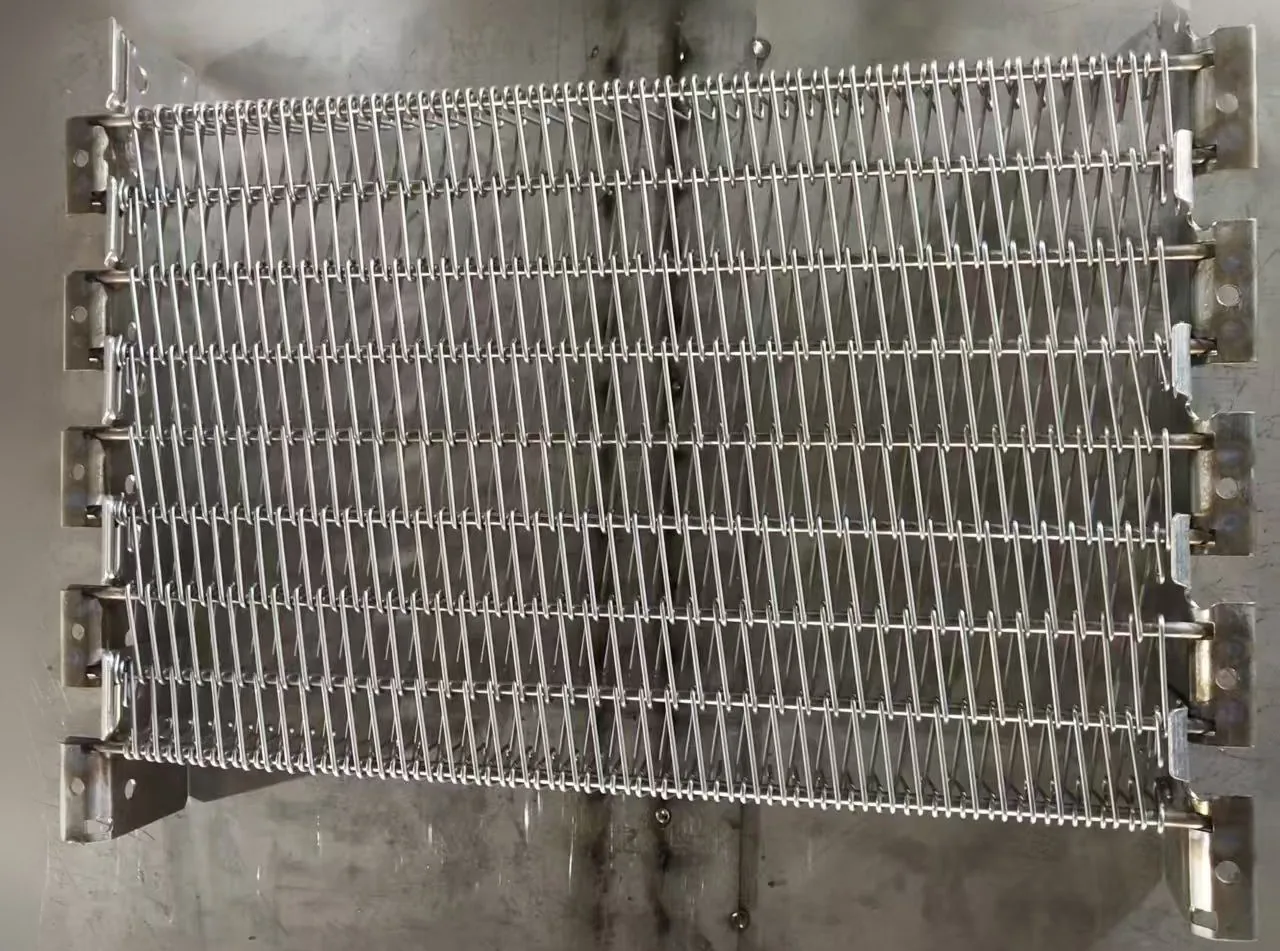
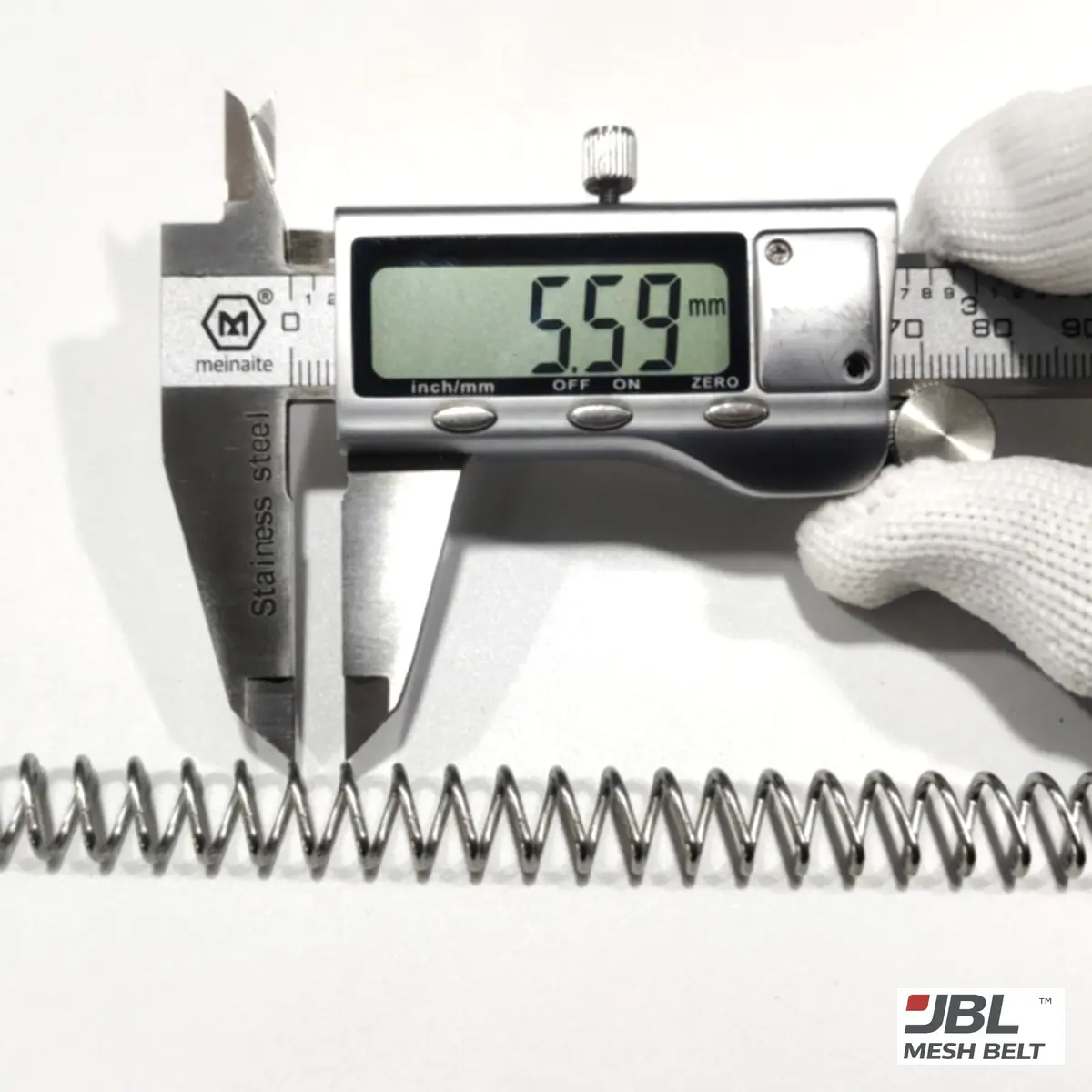
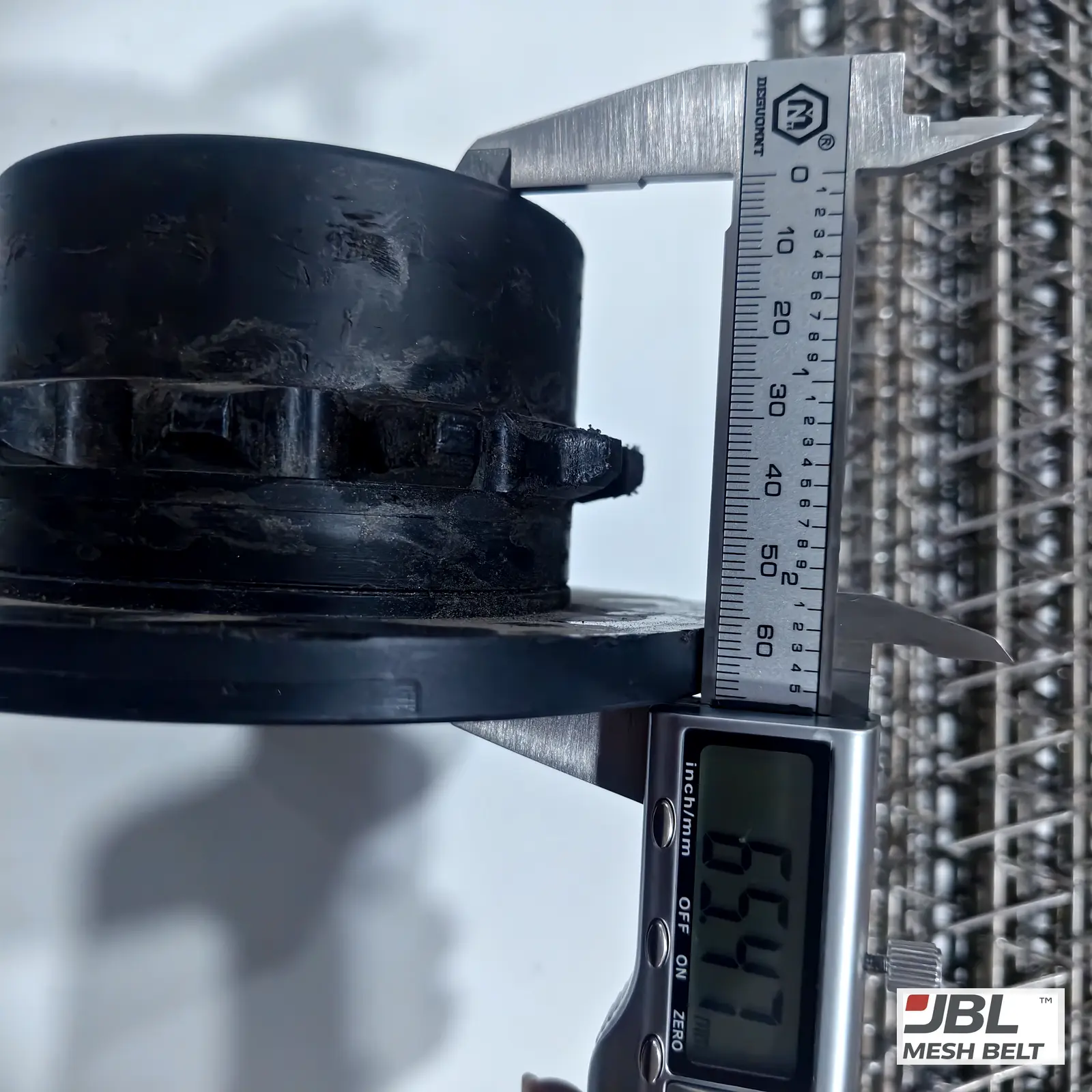
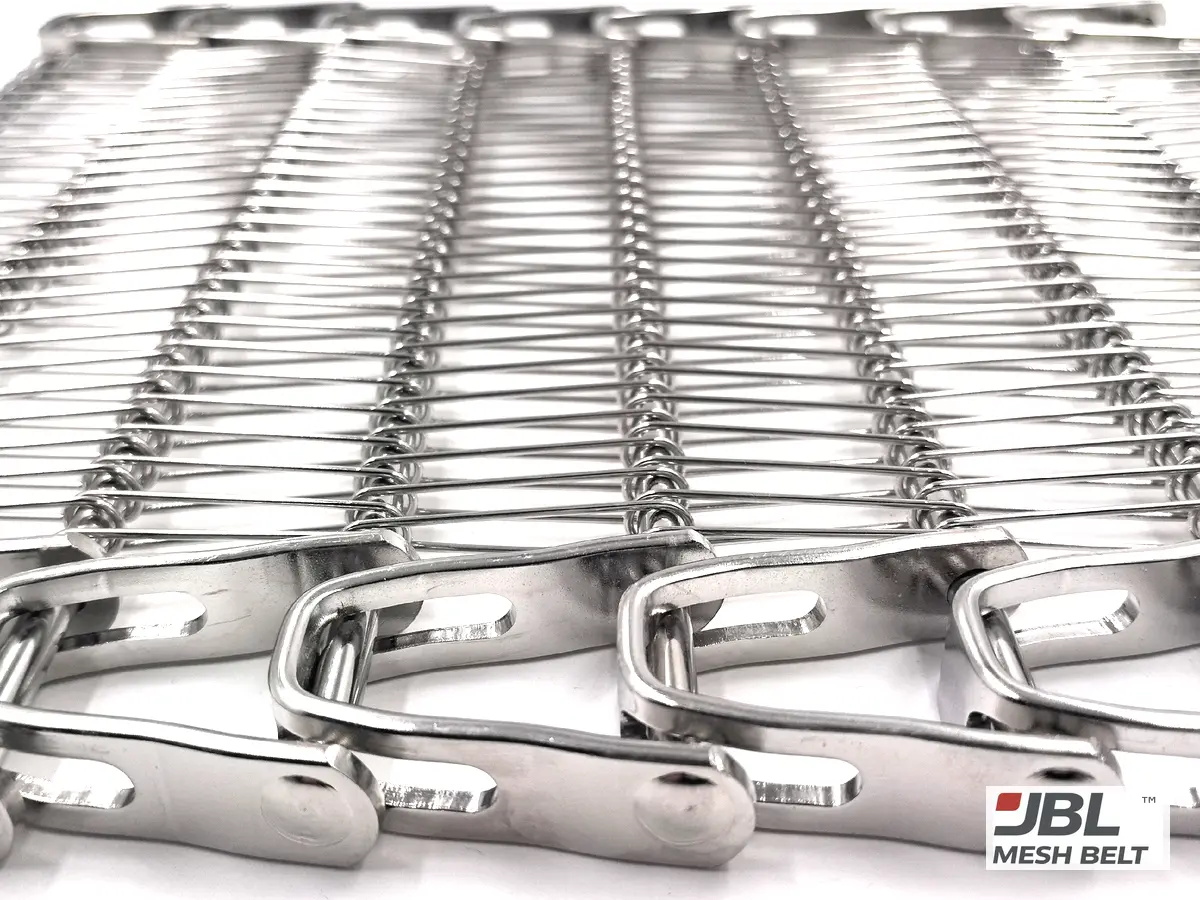
Six dimensions decide fit: rod diameter, wire diameter, rod pitch, spiral pitch, side plate thickness and side plate height. I read each one on your original with a caliper before any tooling is made.
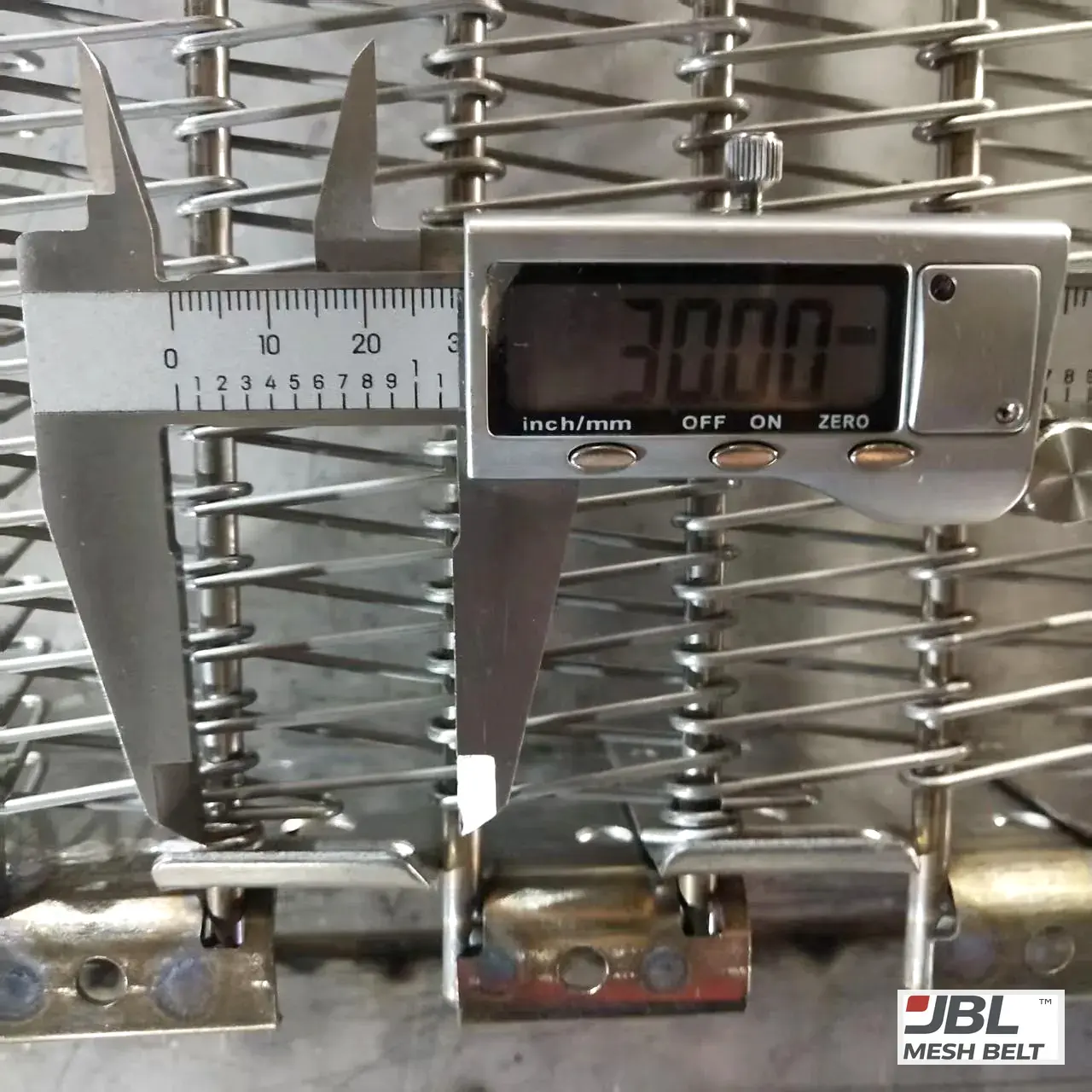
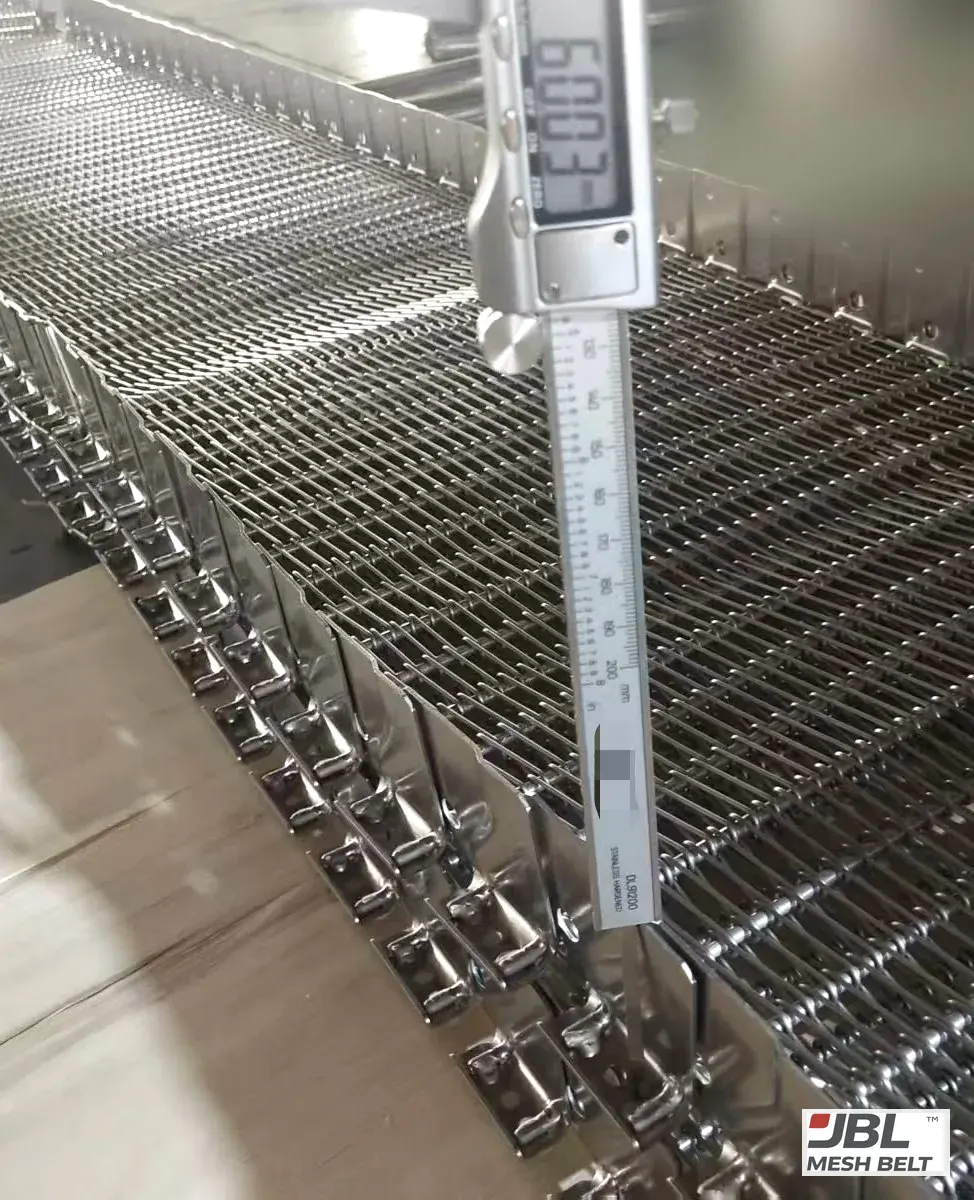
| Dimension | Why it matters | Original (UK project) |
|---|---|---|
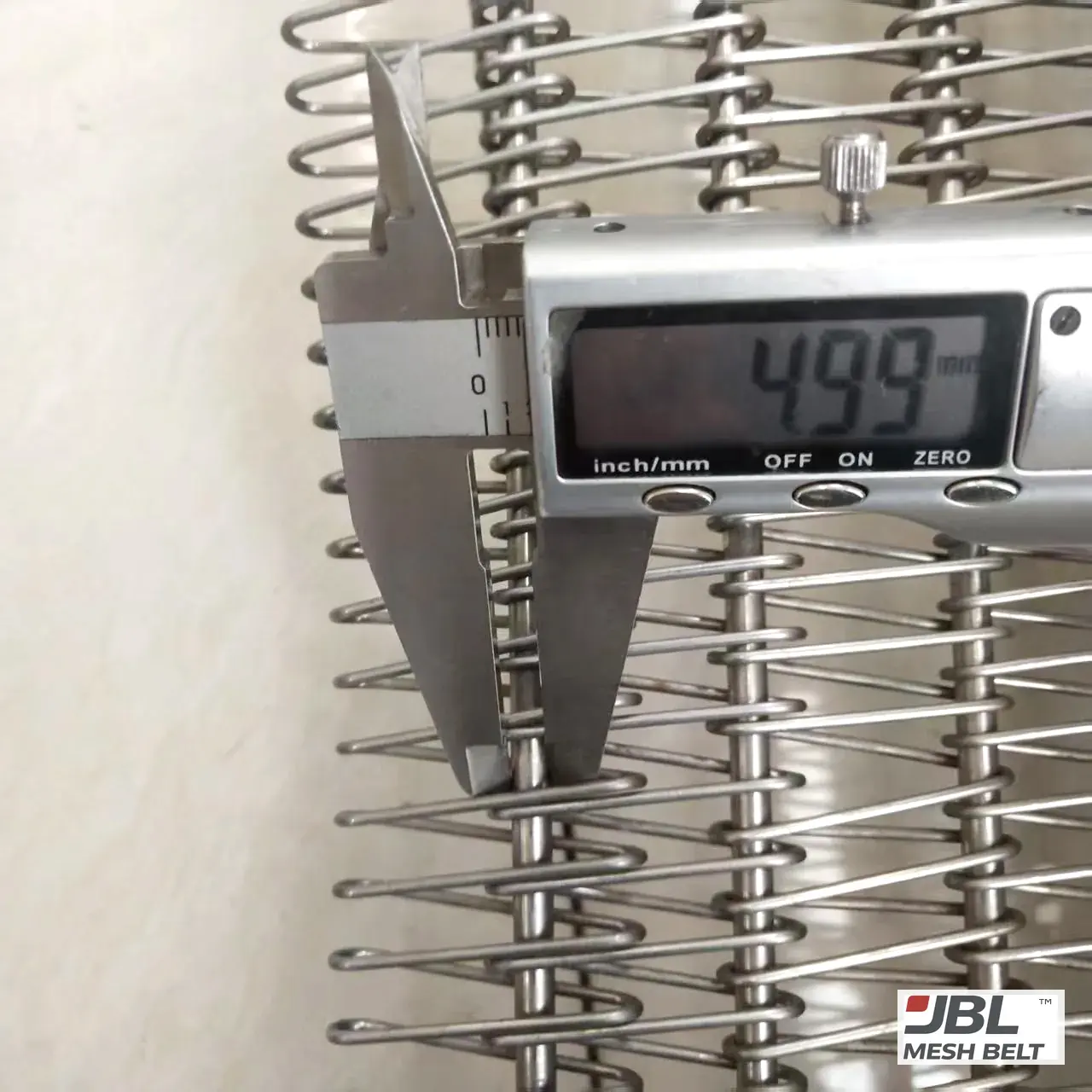
| Rod diameter | Fits the side plate holes and the drive | 4.99 mm |
| Wire diameter | Mesh strength and product support | 1.65–1.68 mm |
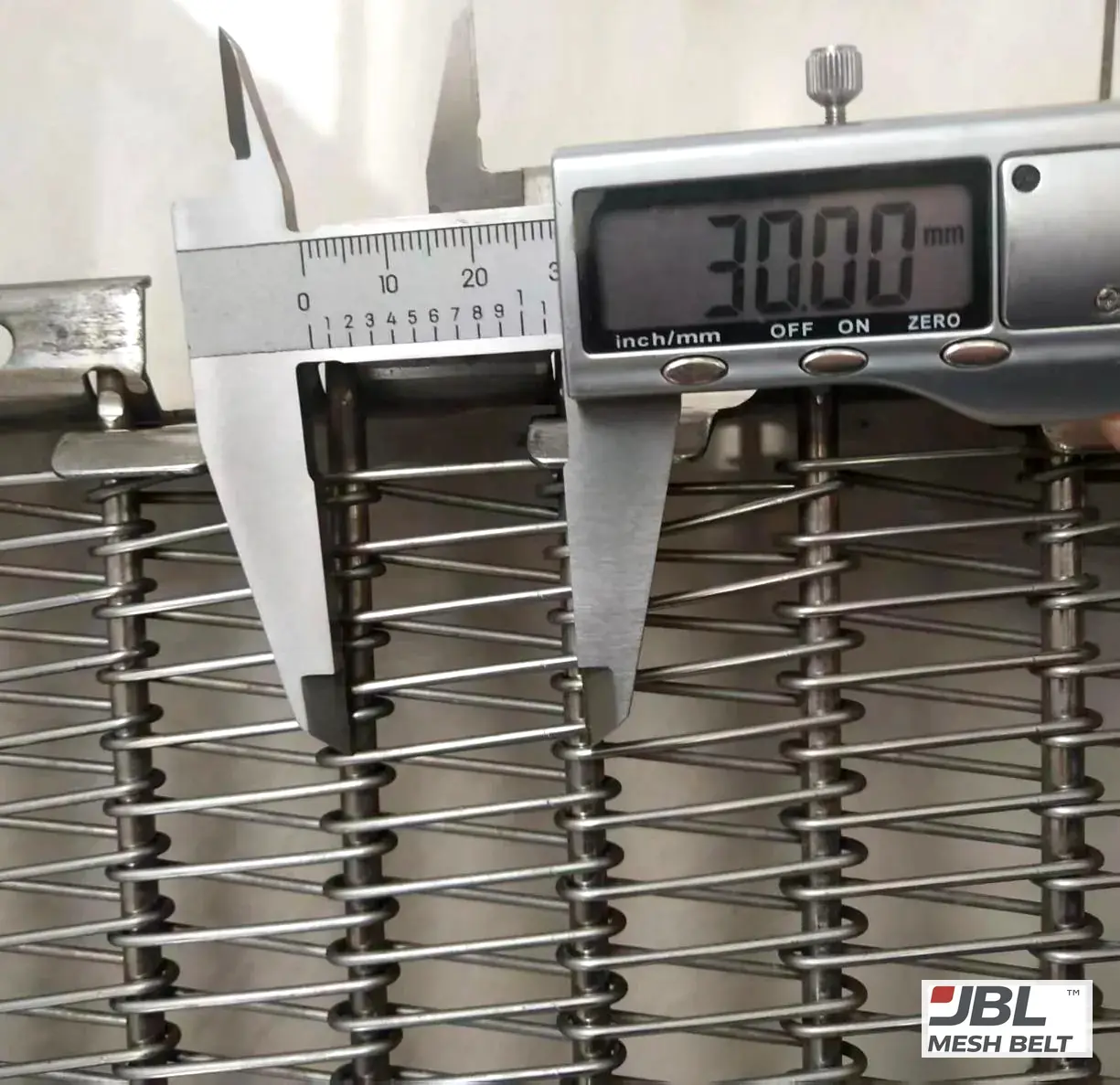
| Rod pitch | Engagement with the drive and the turn | 30.00 mm |
| Spiral pitch | Mesh opening and how the belt collapses in the turn | 8.95 mm |
| Side plate thickness | Stacking strength and plate fit | 1.44–1.50 mm |
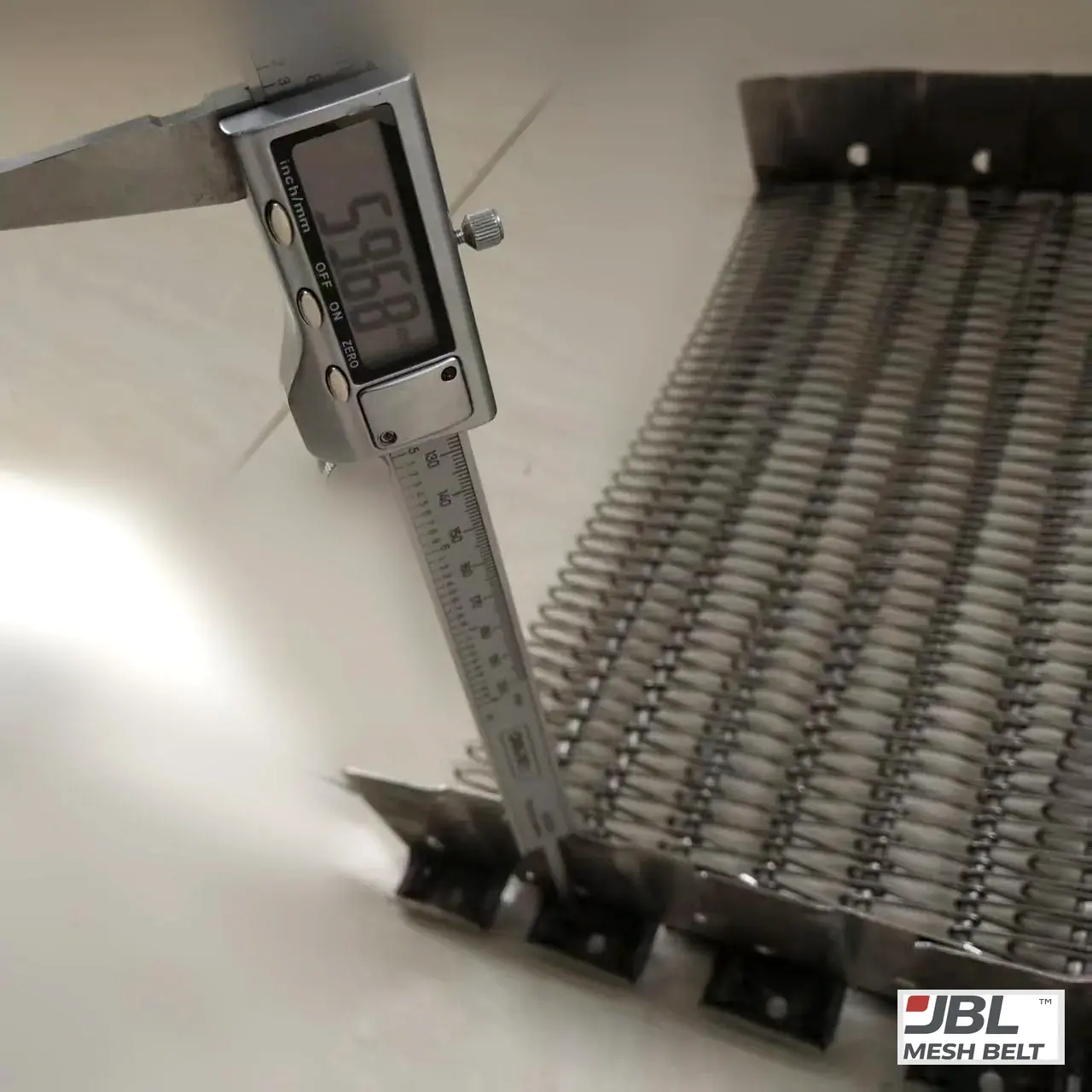
| Side plate height | Tier height inside the freezer | 59.68 mm |
Caliper readings on the customer's original belt, UK project.
Rod diameter and rod pitch come first. The rod passes through the side plates, and the pitch sets the spacing the drive sees. If the pitch is wrong by a fraction of a millimetre, the error adds up over hundreds of metres.
Spiral pitch and wire diameter decide the mesh. They change the opening for airflow and product support. They also change how the mesh closes on the inside of the turn.
Side plate height and thickness are special on a self-stacking belt. The height sets the tier spacing in your freezer. The thickness affects how the plates carry the tiers above. On the UK belt I read 59.68 mm on the original plate height.
What about the material?
The UK belt was AISI 304 stainless steel. The grade is defined in standards such as ASTM A240. The World Stainless Association explains why grades like 304 are the standard choice for food equipment. If your freezer needs a different grade, tell me your temperature and cleaning method, and I will confirm it in the quotation.
04How do you know the new belt matches the original?
A promise is not proof. You should see numbers, taken the same way, on your original and on the new belt.
Short answer
I make tooling to the measured values, produce a sample and measure it with the same caliper. You see the readings side by side and approve the sample. The bulk belt is checked the same way before packing.
| Dimension | Original | Sample | Bulk belt |
|---|---|---|---|
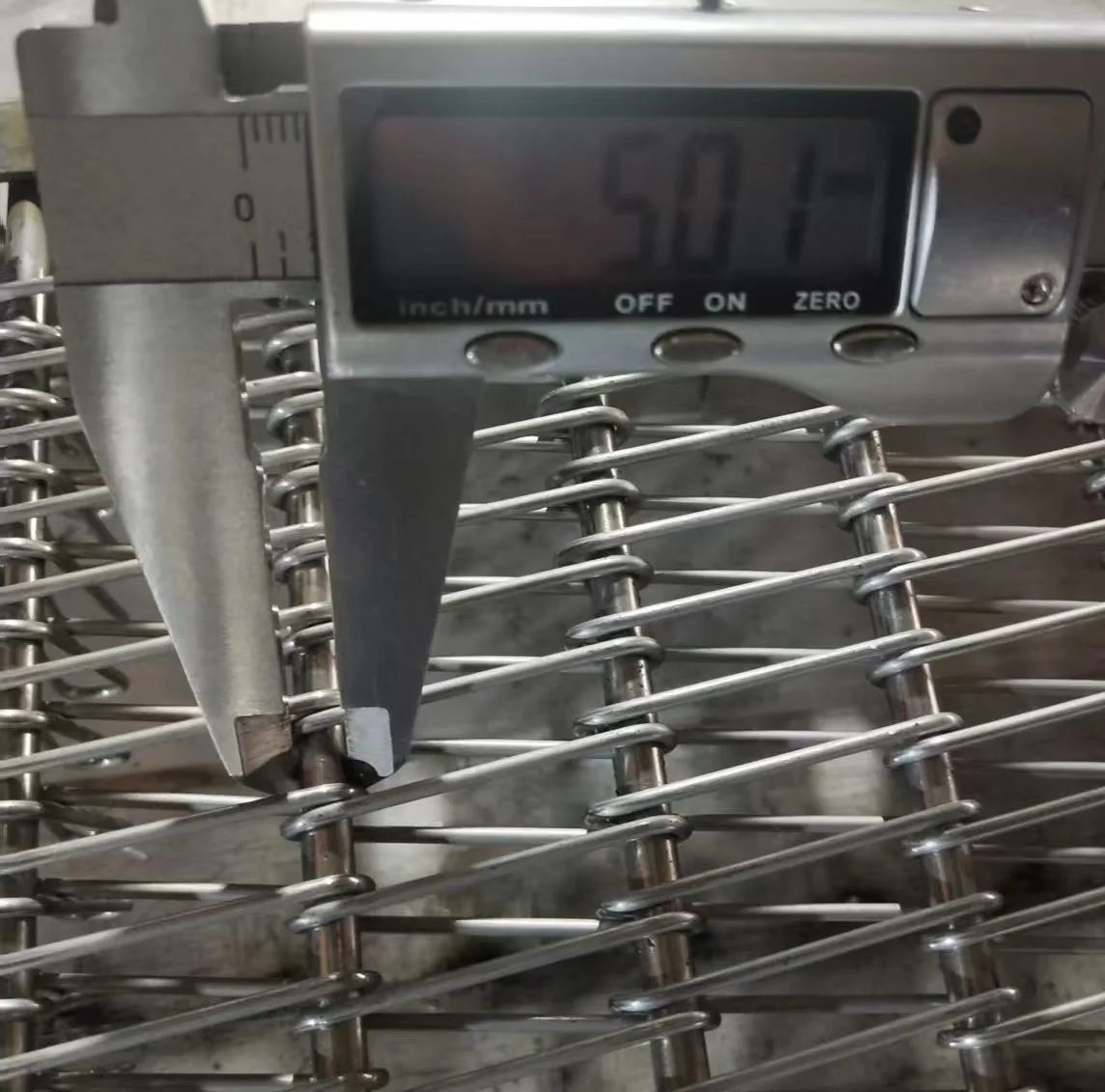
| Rod diameter | 4.99 mm | 5.01 mm | 5.00 mm |
| Wire | 1.65–1.68 mm | 1.71 mm | 1.71 mm |
| Rod pitch | 30.00 mm | 30.00 mm | 30.00 mm |
| Spiral pitch | 8.95 mm | 9.00 mm | 9.00 mm |
| Side plate thickness | 1.44–1.50 mm | 1.50 mm | 1.52 mm |
| Side plate height | 59.68 mm | — | 60.03 mm |
UK project, 450 m, AISI 304 stainless steel. Same caliper at every stage.
Three stages, one method. That is the rule I follow. I read the original. I read our sample. Then I read the bulk belt before it goes into the crate. Because the tool and the method do not change, you can compare the numbers yourself.
Look at the rod pitch line in the table: 30.00 mm on the original, the sample and the bulk belt. The rod reads 4.99 mm on the worn original, 5.01 mm on the sample and 5.00 mm on the bulk belt. Small differences like these are normal measuring tolerance on a new part.
Nothing in bulk before you approve
Bulk production starts only after you approve the sample. On a 450 m order this matters. If something needs to change, it changes on a short sample, not on the whole belt.
05Which tests should a self-stacking belt pass before shipment?
Correct dimensions do not guarantee a good stack. A belt can measure right and still bind in the turn.
Short answer
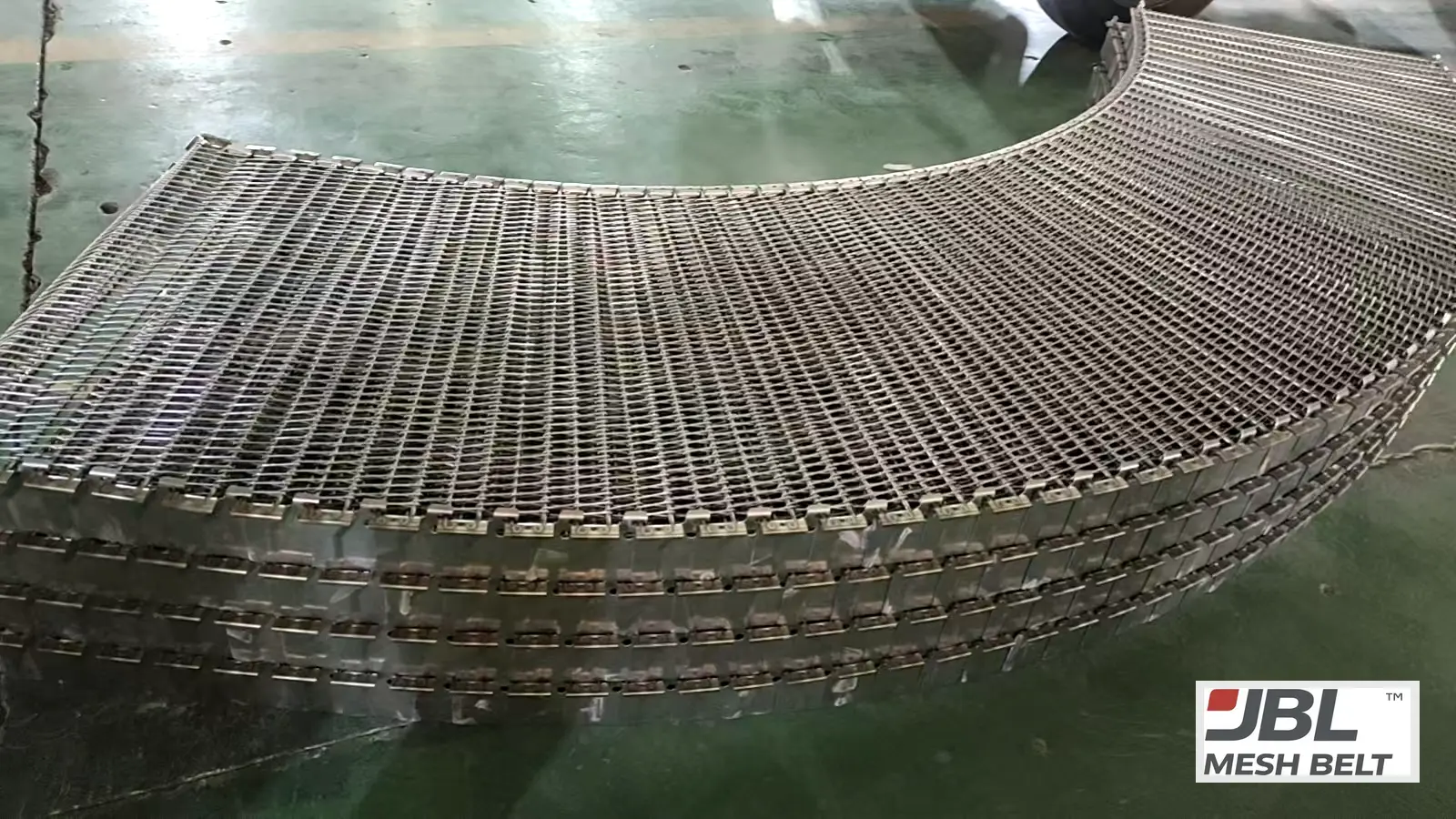
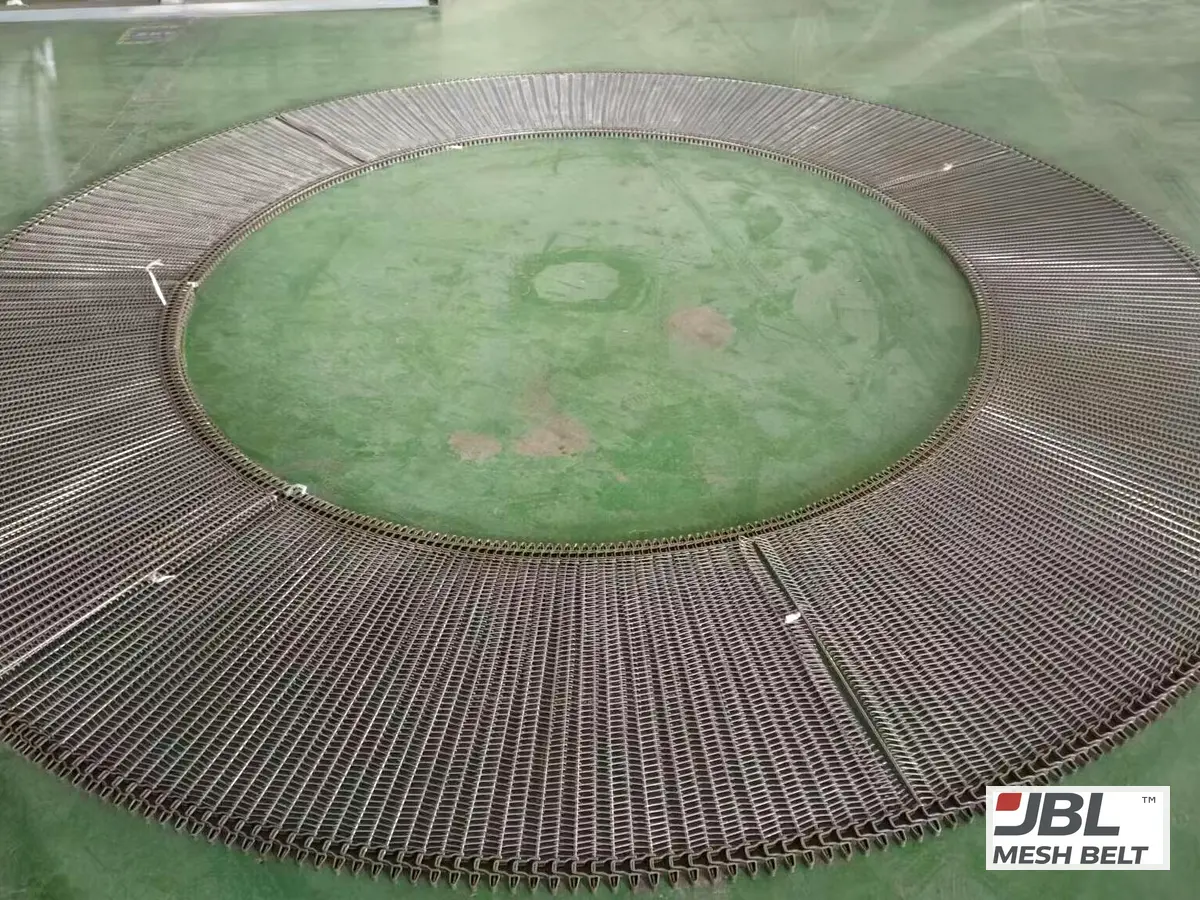
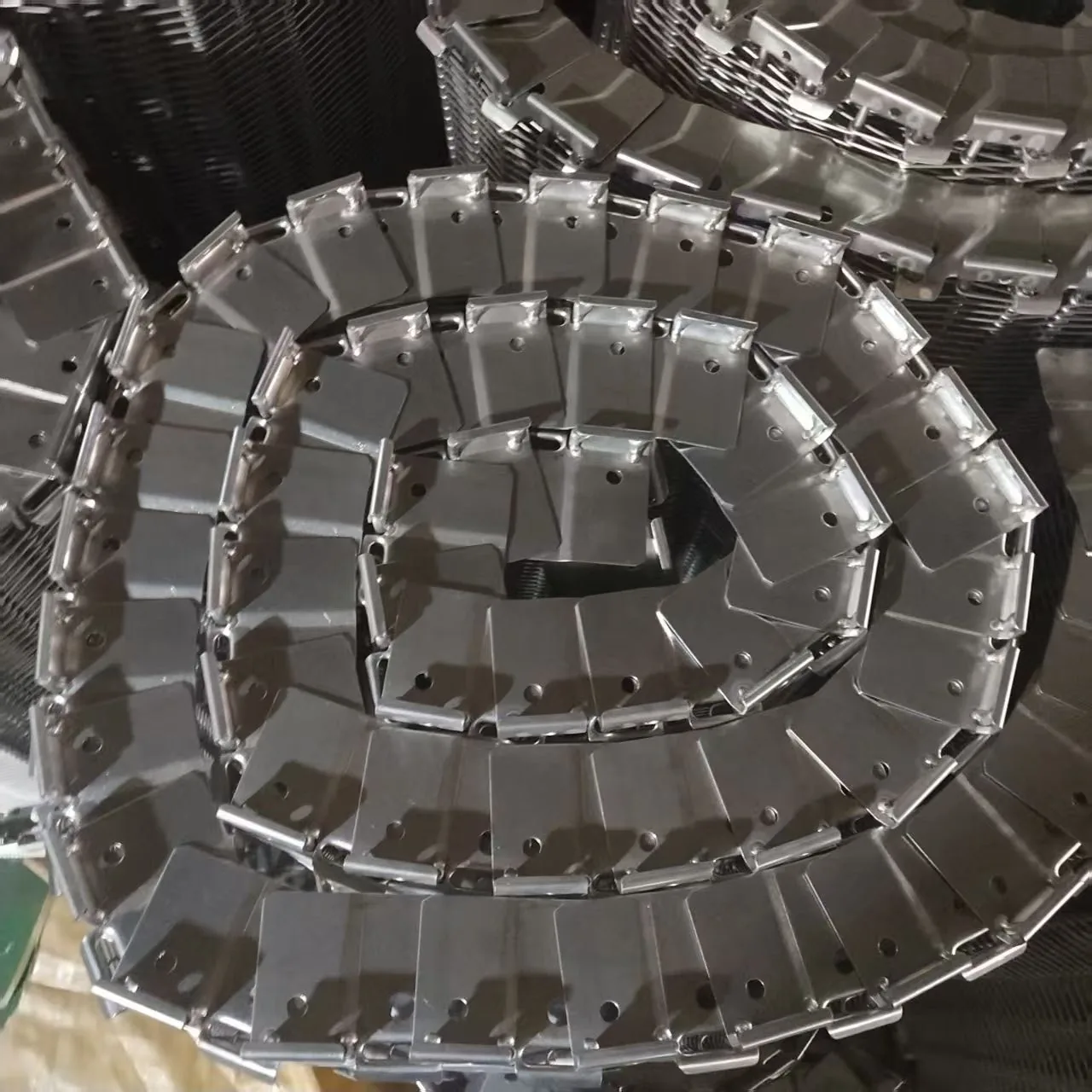
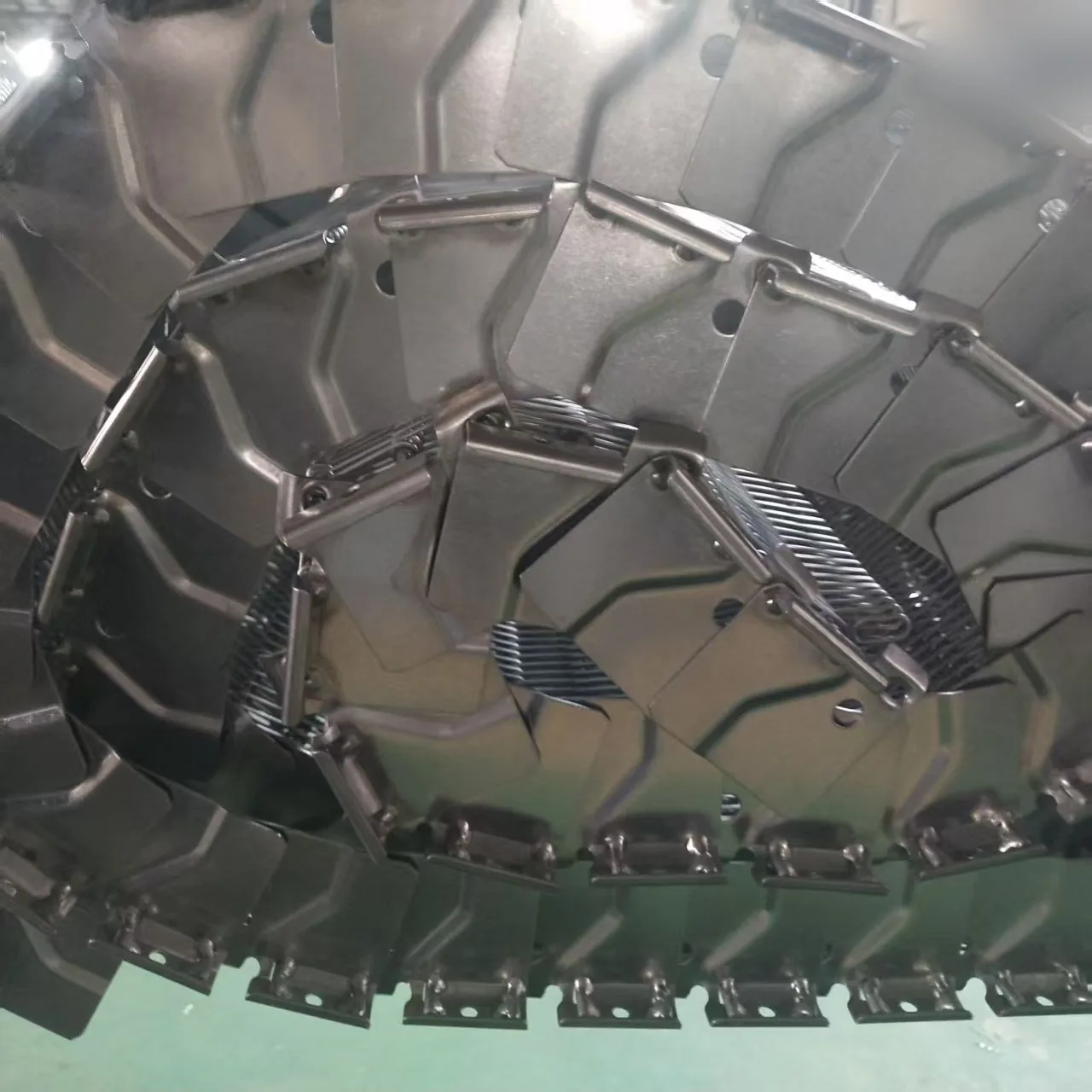
A self-stacking belt should pass a turning test and a stacking test. In the turning test I lay the belt in a full circle. In the stacking test I stack it tier on tier to check that each side plate seats on the one below.
The turning test shows how the belt behaves on the curve. On the inside edge the mesh must close evenly. On the outside edge it must open without lifting. The side plates must follow the radius. A flat check on the bench cannot show any of this.
The stacking test shows how the tiers sit on each other. I stack the belt on a curve and check that every side plate seats on the plate below. If the plates are too high, too low or bent, the stack will not sit flat.
| Check | Shows | Cannot show |
|---|---|---|
| Caliper readings | Rod, wire, pitch and side plate sizes | Behaviour in the turn or the stack |
| Turning test | Even collapse on the inner edge | How tiers seat on each other |
| Stacking test | Side plates seating tier on tier | Drive engagement in your freezer |
I explain both tests in more detail in Turning Test and Stacking Test: What to See Before a Belt Ships.
When This Is Not the Right Choice
- ✕Your freezer is still under the equipment maker's warranty, and the warranty requires original parts. Ask the maker first.
- ✕You need the belt within days and cannot send a sample or clear photos. Making tooling and approving a sample takes time.
- ✕The old belt is badly damaged and no undamaged section is left. Then I need the drawing, the freezer data or a spare section.
From My Engineering Experience
After 16 years, one thing stays true: buyers rarely worry about price first. They worry about fit. A wrong belt in a self-stacking freezer means downtime, and downtime costs more than any belt.
That is why I never ask a customer to trust a promise. I ask them to look at numbers. The same caliper on the original, the sample and the bulk belt. If the numbers match, the decision is easy.
I also ask every customer to tell me what was wrong with the old belt. A copy should match the fit, not repeat the faults. Rough welds, worn plates or noise are things I can fix while keeping every fit dimension the same.
And I always run the turning and stacking tests before bulk production. They take little time on the floor. After installation, the same problem would cost a shutdown.
— Spring, Sales Director, JBL Mesh Belt
Evidence From Our Work
United Kingdom, 2026 — 450 m OEM replacement →
| Step | Detail |
|---|---|
| Problem | The equipment maker's price for a replacement belt was high |
| Starting point | A section of the original belt — no drawing |
| Measured | Rod, wire, rod pitch, spiral pitch, side plate thickness and height |
| Sample | Tooling made; sample compared with the original and approved |
| Tests | Turning test, then stacking test, before bulk |
| Result | 450 m of AISI 304 self-stacking belt produced |
Brazil, 2025 — meat freezing →
| Step | Detail |
|---|---|
| Starting point | A section of the customer's original belt |
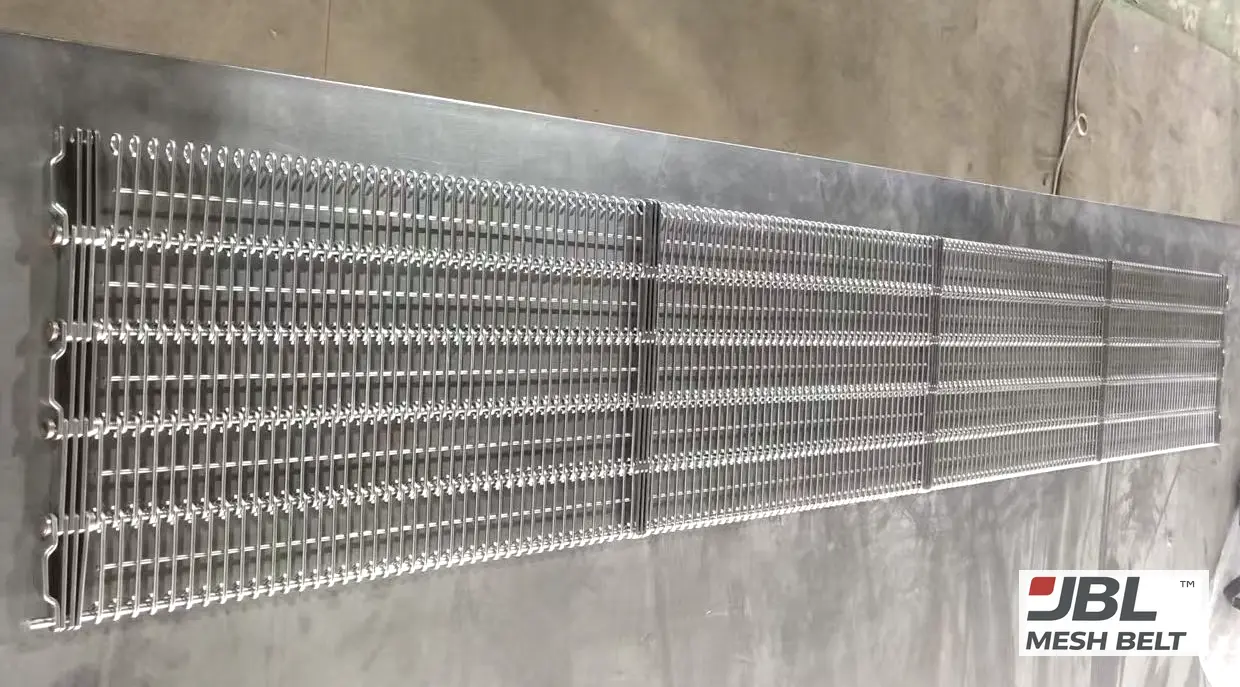
| Fit check | New belt joined to the original |
| Test | Stacking test on a curve before shipment |
| Trial | About 50 m run on the customer's freezer |
| Result | 350 m ordered, then a repeat 350 m |
FAQ
Q1Can a self-stacking belt be copied without the OEM drawing?
Yes. We measure a section of your original belt — wire, rod, pitch and side plates — make the tooling and compare a sample with your original before production.
Q2How long a sample do I need to send?
A short section with both edges and a few side plates is enough for us to read every fit dimension. Tell us if it is worn.
Q3Will I see the sample before the full order?
Yes. We measure and photograph the sample next to your original, and start production after you approve it.
Q4Can I test a short length on my freezer first?
Yes. In our Brazil project the customer ran about 50 m on the freezer before ordering 350 m.
Q5Which material do you use?
The UK belt was AISI 304 stainless steel. We confirm the grade for your temperature and cleaning in the quotation.
Q6Is the original equipment maker named?
No. We never publish customer names or original equipment brands.
Conclusion
No drawing is not a problem. A sample, six caliper readings, an approved sample and two tests give you a self-stacking belt that fits — without the OEM price.
Download the Self-Stacking Belt Technical Specification (PDF)
Specification ranges and options in mm and inch. Enter your work email and the file downloads right away.
References
Your contact for this belt
Spring · Sales Director, JBL Mesh Belt · 16 years
“Your belt is worn, the OEM price is high, and there is no drawing. That is where I start.”
Send me a worn section, a few photos with a caliper in the picture, or a drawing. I tell you what fits, what is missing, and show you a sample measured against your own belt before you pay for the full length. Buyers in the UK, the USA, Australia, Brazil, South Korea, Spain and Malaysia have replaced belts this way.
- ✓Readings on your original next to readings on our sample
- ✓Nothing in bulk until you approve the sample
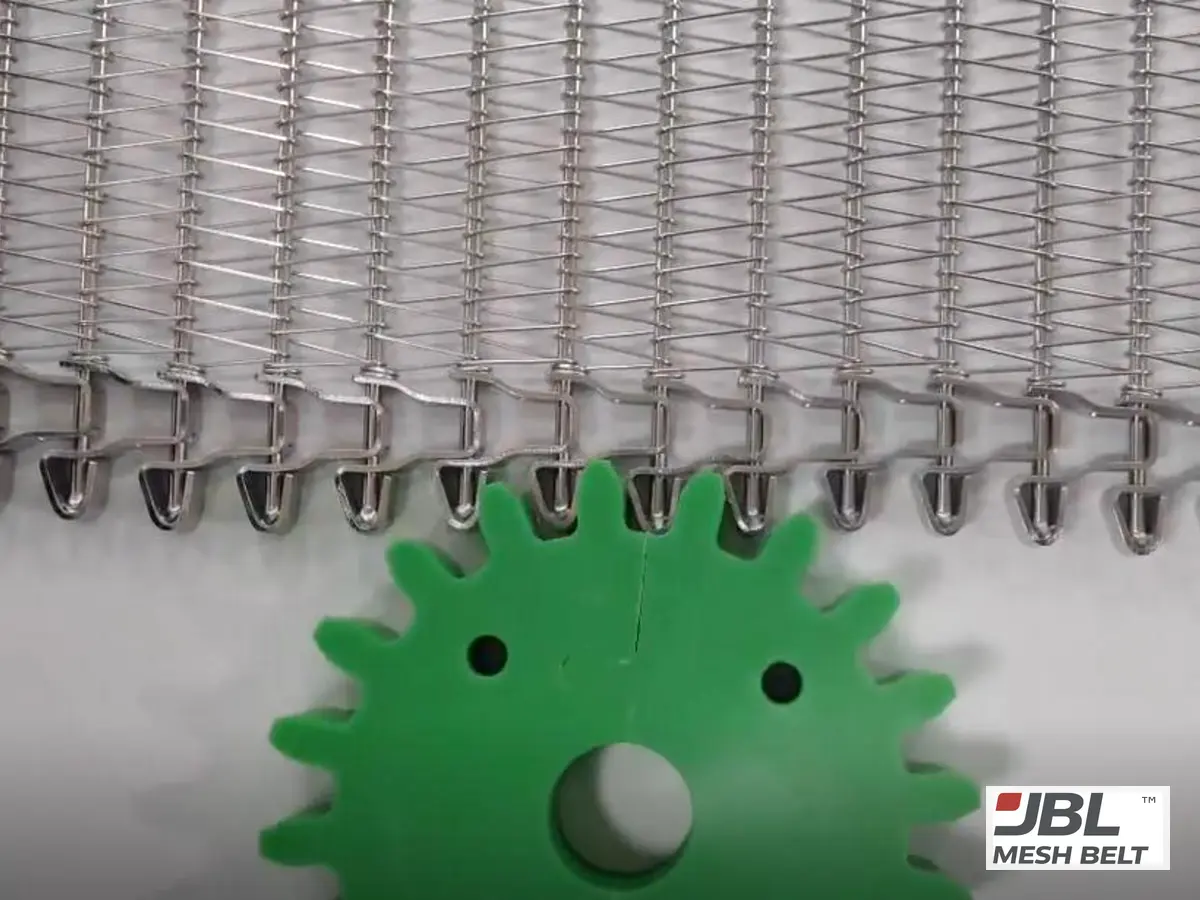
- ✓Turning, stacking or sprocket tests before your belt ships
- ✓A reply from me, usually within 8 hours