OEM Approval · 10 min read
What Should Be Included in a Spiral Belt Approval Drawing?
 Written bySpringSales Director, JBL Mesh Belt · 16 years in metal conveyor beltsProjects in United Kingdom · USA · Australia · Brazil · South Korea · Spain · MalaysiaPublished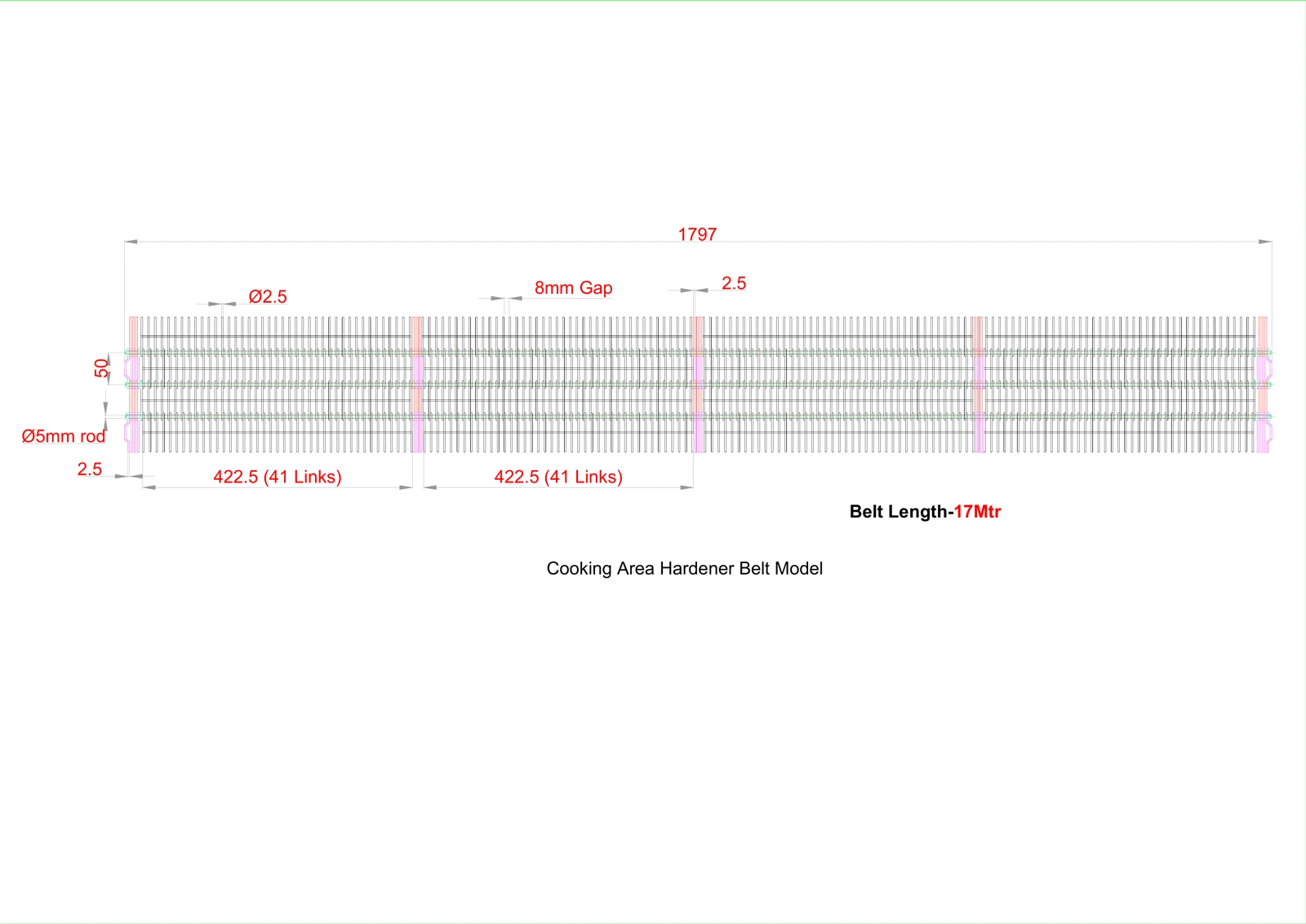
Six months later you reorder, and nobody can find which photo or email held the final dimensions. The belt that arrives is close — but not the one you approved.
Short answer
A spiral belt approval drawing should state belt type, belt and overall width, rod diameter and pitch, link pitch, wire diameter, inside radius, turn ratio, direction (CW / CCW), edge construction, drive interface, tier height for self-stacking belts, material, special tolerances, joint or splice, revision and approval date.
At a Glance
| Product | Application | Key point | Buyer type | What to send |
|---|---|---|---|---|
| Spiral, self-stacking and process belts | New orders and replacements | Approve one drawing, one revision | OEMs, purchasing, engineering, QA | Your drawing or old belt data for a drawing review |
Below are the fields an approval drawing needs, why each one matters, how revision control works, and what happens when the drawing changes after approval.
01Which fields must a spiral belt approval drawing include?
A drawing that shows the belt is not the same as a drawing that controls it. The difference is in the fields.
Short answer
At minimum: belt type, belt width and overall width, rod diameter, rod pitch, link pitch, wire diameter, inside radius and turn ratio, running direction (CW / CCW), edge construction, drive interface, tier height for self-stacking belts, material, special tolerances, joint or splice, revision and approval date.
| Field | Why it is on the drawing |
|---|---|
| Belt type | Spiral, small radius, side-driven or self-stacking |
| Belt width and overall width | Product area and fit between guides |
| Rod diameter and rod pitch | Fit in links and sprockets |
| Link pitch (inner / outer) | Turn behaviour, small radius belts |
| Wire diameter and spiral pitch | Mesh strength and product support |
| Inside radius and turn ratio | Fit to the drum |
| Running direction (CW / CCW) | Which edge is inside |
| Edge construction | How the edge meets drum, guides and product |
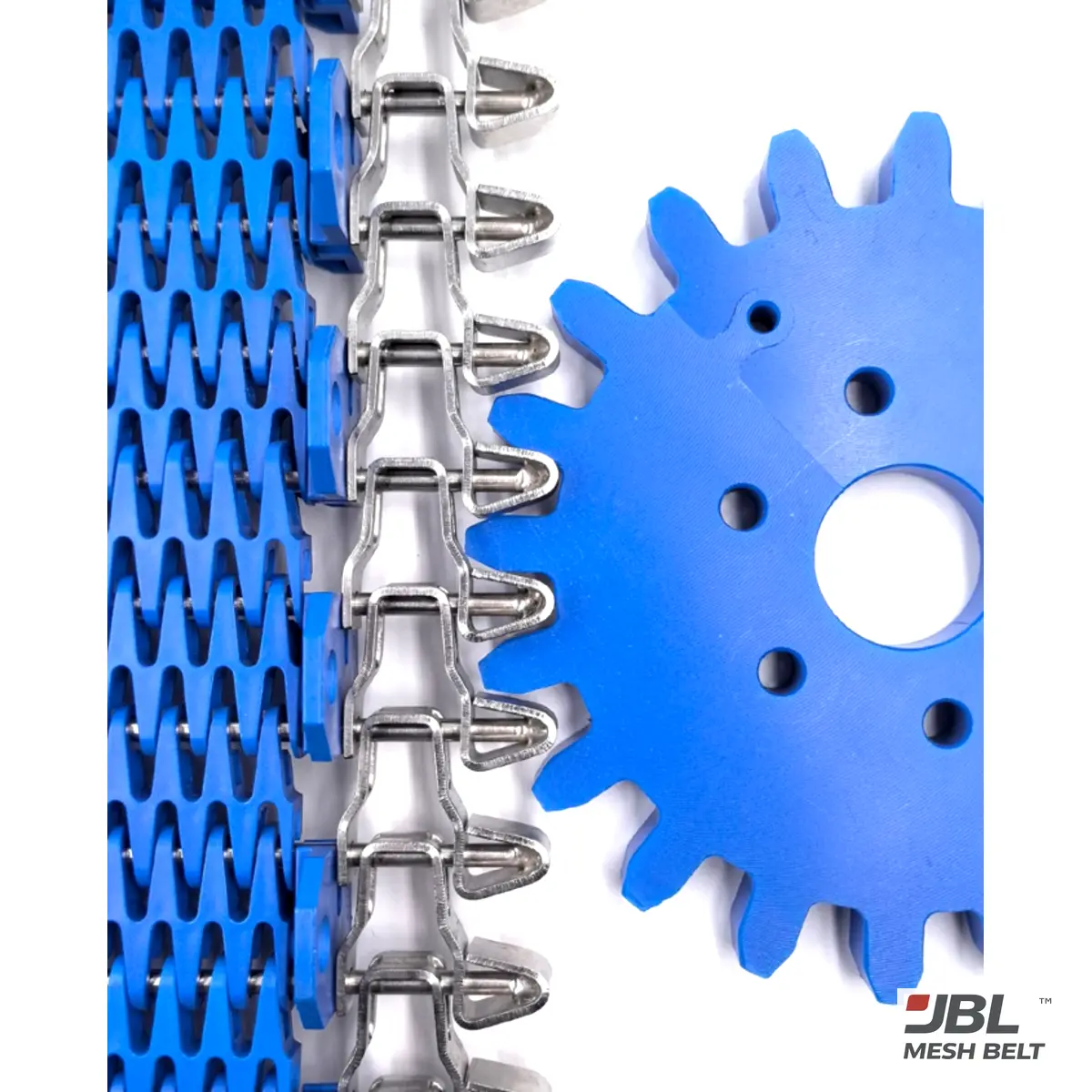
| Drive interface | Sprocket or drum engagement |
| Tier height (self-stacking) | How tiers stack |
| Material and finish | Grade, pickled or electropolished |
| Special tolerances | What must be held tighter |
| Joint / splice | How sections connect on site |
| Revision and approval date | Which version is approved |
Every field in the table answers a question that otherwise gets answered by memory. Memory is where repeat-order problems start.
Turn ratio and direction are easy to leave off a drawing. They are not dimensions of the belt itself, but they decide whether the belt fits the machine. I explain why in how turn ratio affects spiral belt load, tracking and service life.
02What does a real approval drawing look like?
In Spain there was no belt to copy. The drawings were the only shared reference, so they had to be complete.
Short answer
In our Spain project, the requirements became dimensioned drawings of every part — links, bushes, rods, washers and the joggled edge link — approved by the customer before a sample was made. The sample was then measured against the approved drawing, and bulk was checked the same way.
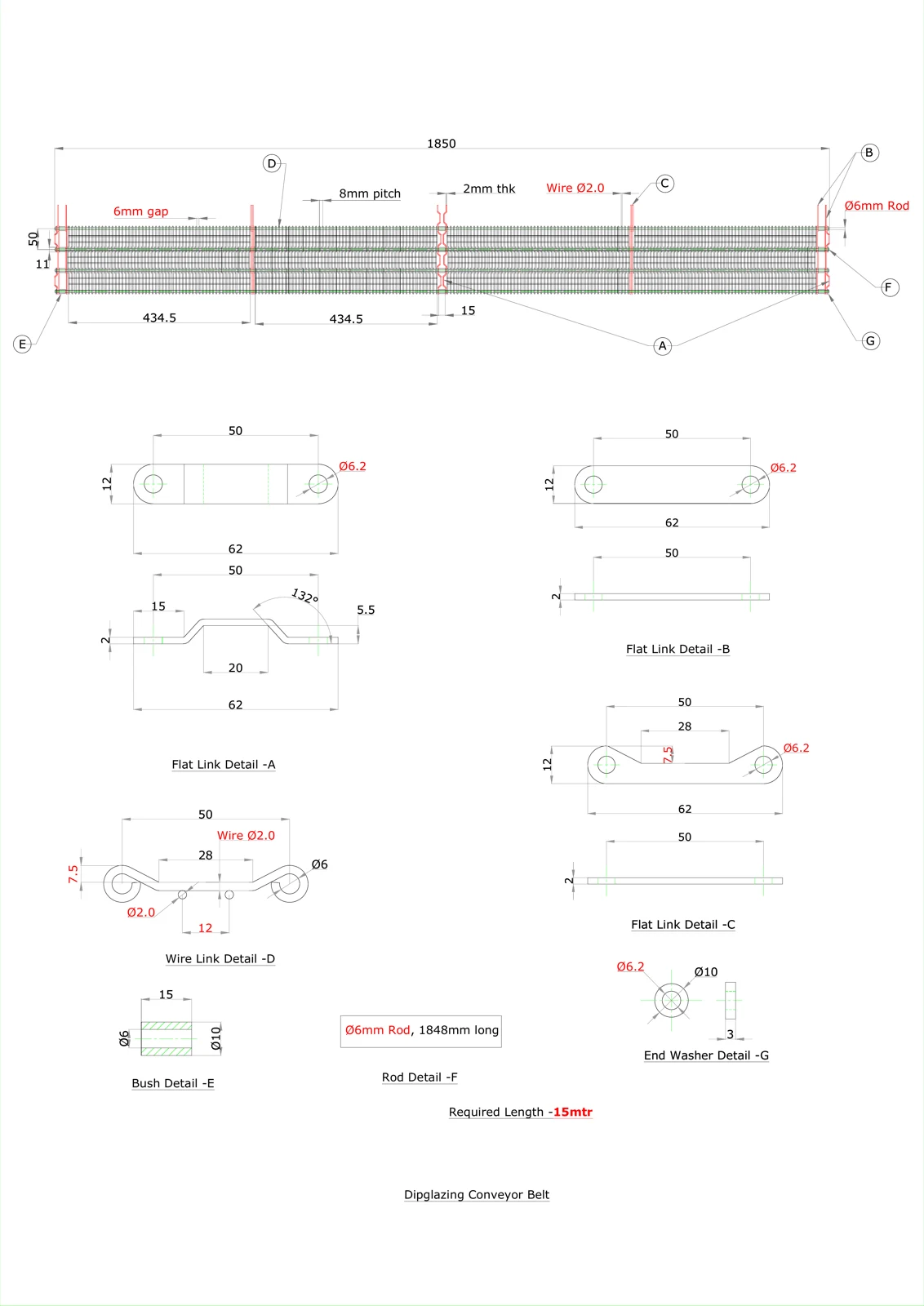
| Approved drawing | Sample measured |
|---|---|
| Link pitch 50 mm | 50.01 mm |
| Flat link width 12 mm | 12.02 / 12.07 mm |
| Flat link thickness 2.5 mm | 2.50 / 2.52 mm |
| Wire Ø2.5 mm | 2.50 / 2.51 mm |
Spain eye link belt, readings from the case photos.
That table is what an approval drawing makes possible: a clear target and a clear check. The sample was sent to Spain and checked on the customer's line, and bulk production started only after their confirmation.
When there is an old belt but no drawing, as in the UK, the approved sample itself becomes the reference: every value was matched to the customer's original, and the customer approved the sample before production.
03How should drawing revisions be controlled?
Drawings change during a project. That is normal. What matters is that everyone builds from the same revision.
Short answer
Give every change a new revision letter, note what changed and why, and re-confirm it with the buyer in writing. Only one revision is marked approved for production. Changes after approval require documented re-confirmation before production continues.
| Revision (example) | What changed | Status |
|---|---|---|
| REV A | Initial drawing for quotation | For review |
| REV B | Buyer corrected tier height | For review |
| REV C | All points confirmed | Approved for production |
Illustrative example, not a specific project.
Our order control process sets the rules: discrepancies are confirmed with the buyer, not assumed; production does not start until the drawing or sample and the specification are signed off; and changes after confirmation require documented re-confirmation before production resumes, with any lead-time or cost impact communicated first.
- ✓One approved revision — clearly marked, with the approval date.
- ✓Change notes — what changed between revisions, in plain words.
- ✓Revisions marked and explained — any change follows a controlled revision.
- ✓Superseded revisions — never used for production.
The full process is in our order control and project commitment process.
04How is the approval drawing used after production starts?
An approval drawing is not filed and forgotten. It becomes the reference every check is made against.
Short answer
The approved revision is the reference for pre-shipment inspection: the belt is measured against it, non-matching items are held instead of shipped, and the readings, photos and video are shared before dispatch. For repeat orders, the same revision is used again.
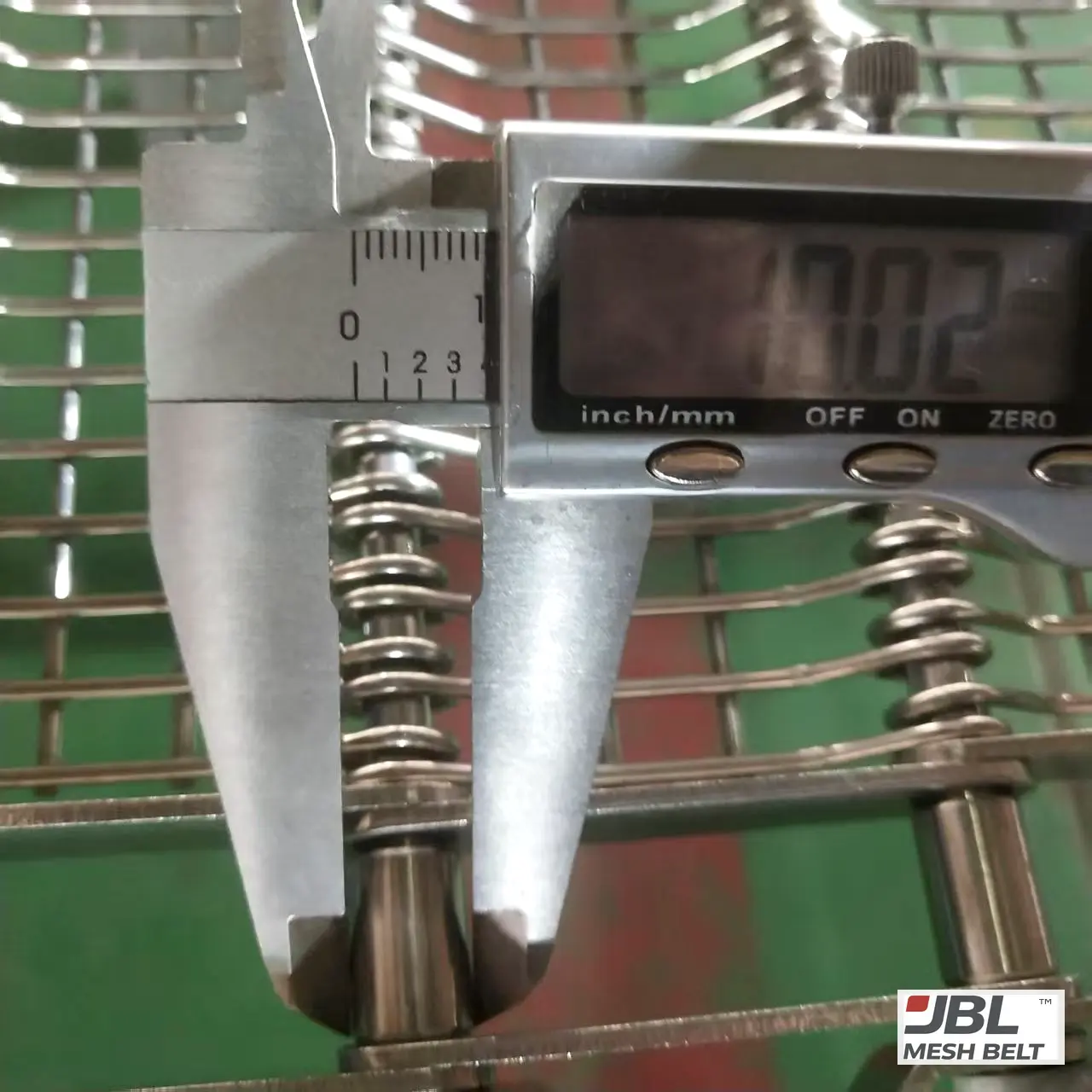
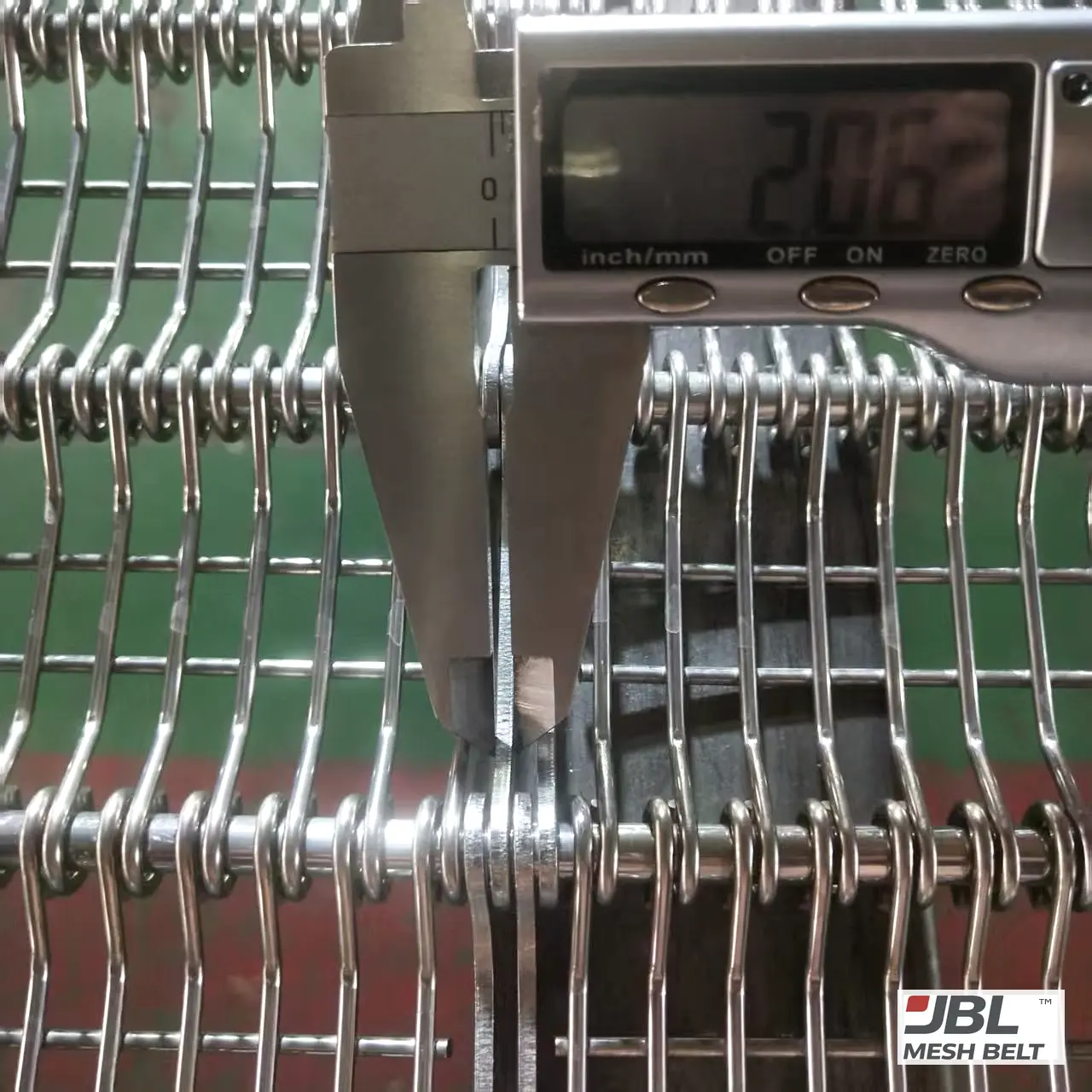
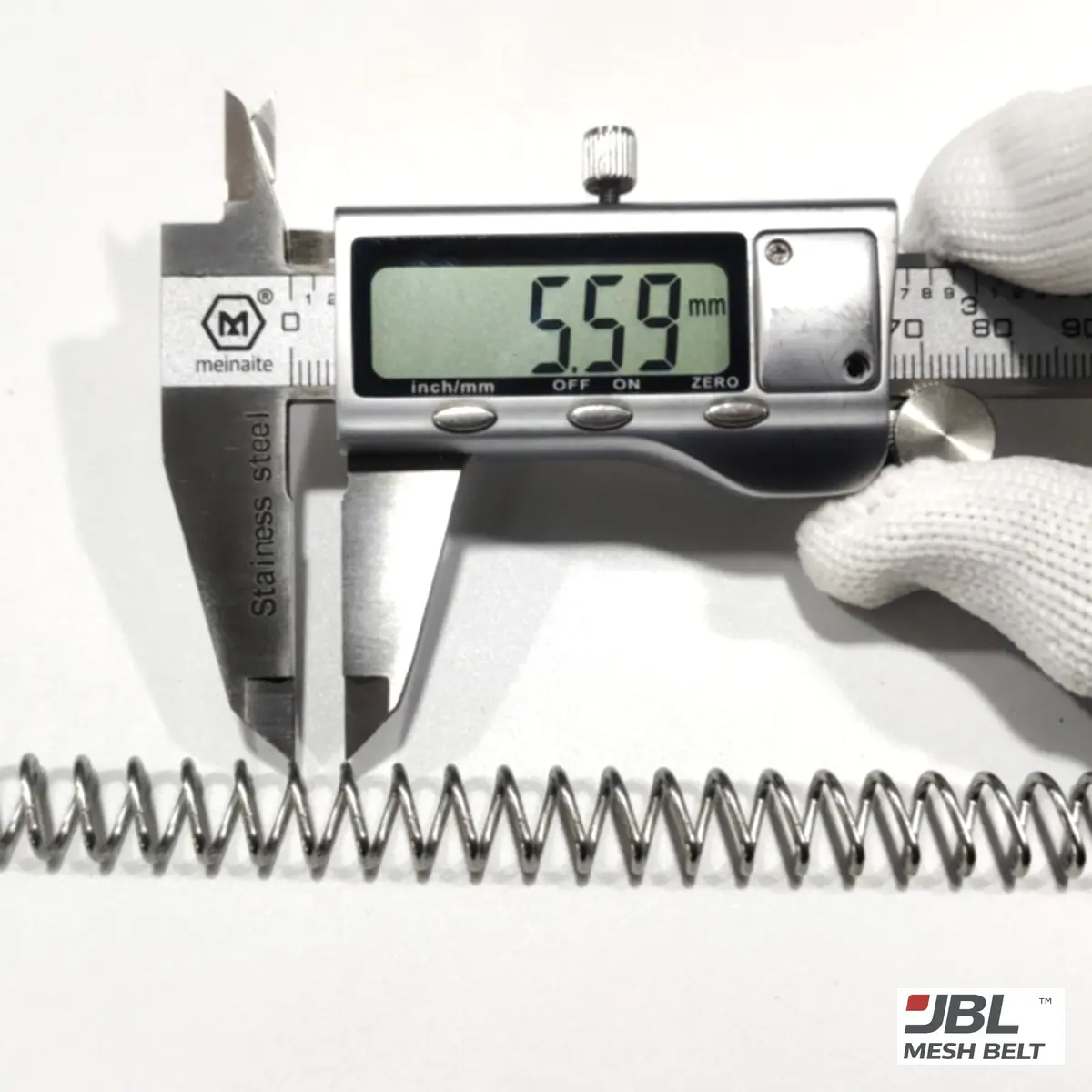
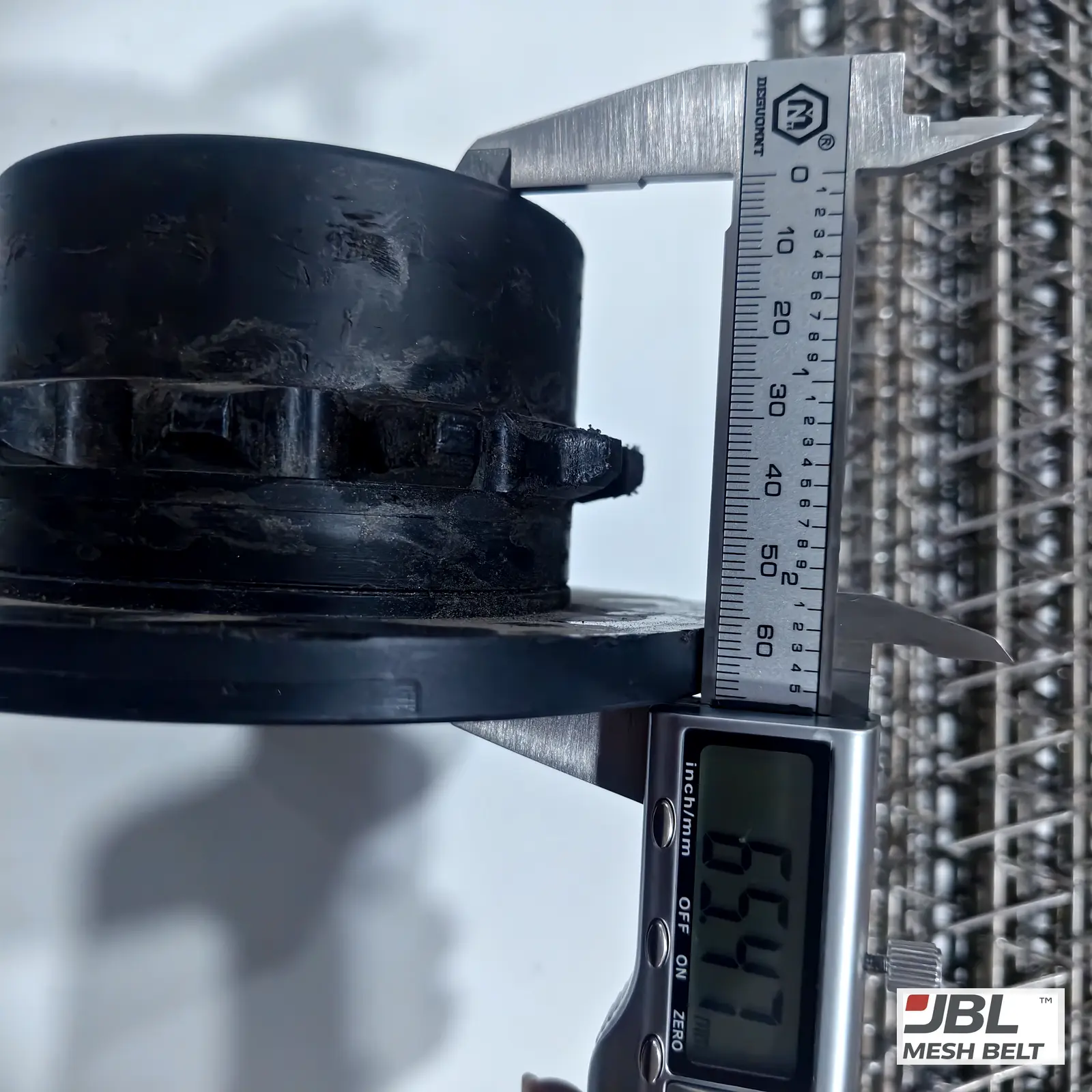
In Spain, the bulk belts were measured against the drawing before packing: rollers 10.02 and 10.03 mm, chain plates 2.05 and 2.06 mm, plate height 12.06 mm, rod 6.02 mm, wire 2.01 mm. Each reading is checkable against the drawing value.
In the UK, the reference was the approved sample. The bulk belt was checked the same way: rod 5.00 mm, rod pitch 30.00 mm, spiral pitch 9.00 mm, side plate 1.52 mm thick and 60.03 mm high.
Pre-shipment inspection compares the order with the confirmed drawing or approved sample. Non-matching items are held, not shipped.
05What should you check before you approve a drawing?
Approval is the last cheap moment to catch a mistake. After it, every mistake costs a belt.
Short answer
Before approving, check that every field is filled, that turn ratio and direction match your machine, that the drive interface matches your sprockets or drum, that tolerances are stated where they matter, and that the revision on the drawing is the one you think you are approving.
| Before you sign | Check |
|---|---|
| All fields filled | No blank or 'TBC' values |
| Turn ratio and direction | Match your drum and running direction |
| Drive interface | Matches your sprockets or drum |
| Tolerances | Stated where fit depends on them |
| Material and finish | Match your product and cleaning |
| Revision | The latest, with change notes read |
If any field is missing, ask for it to be filled before approval, not after. A blank on a drawing becomes a decision someone makes later without you.
I am happy to review drawings from other sources too. Send your current drawing and I mark what is missing or unclear before you approve anything.
Request a drawing review
Send your drawing, or your old belt data if there is no drawing. I mark missing fields and open points before production approval.
When This Is Not the Right Choice
- ✕If you are buying a standard catalogue belt for a straight conveyor, a full approval drawing may be more than you need; a confirmed specification sheet can be enough.
- ✕If the machine design is still changing, approve the drawing after the machine dimensions are fixed.
- ✕If the original maker's drawing is protected, do not send it; old belt readings can be used to build a new drawing.
From My Engineering Experience
The Spain project taught me how much a good drawing is worth. There was nothing to copy. The drawings were the only thing both sides could point to, and because they were complete, the sample and the bulk belt could be checked against them number by number.
When a repeat order goes wrong, the cause can be as simple as a missing field, an unclear revision, or a change agreed in an email that never reached the drawing.
So I treat the approved drawing as the contract for the belt. One revision, approved, dated, and used every time.
— Spring, Sales Director, JBL Mesh Belt
Evidence From Our Work
Spain, 2026 — drawings first, then sample and bulk →
| Step | Detail |
|---|---|
| Starting point | Requirements only — no sample, no drawing |
| Drawings | Every part dimensioned and approved by the customer |
| Sample | Pitch 50.01 mm against 50 mm; link 2.50–2.52 mm against 2.5 mm |
| Bulk | Measured against the drawing before packing |
United Kingdom, 2026 — approved sample as the reference →
| Step | Detail |
|---|---|
| Starting point | Customer's sample, no drawing |
| Approval | Sample approved before production |
| Bulk check | Rod 5.00 mm, rod pitch 30.00 mm, side plate 60.03 mm high |
| Tests | Turning and stacking tests before 450 m |
FAQ
Q1What should a spiral belt approval drawing include?
Belt type, widths, rod, link and wire dimensions, inside radius, turn ratio, direction, edge, drive interface, tier height for self-stacking belts, material, tolerances, splice, revision and approval date.
Q2Why put turn ratio and direction on the drawing?
They decide whether the belt fits the drum and which edge is inside.
Q3What happens if the drawing changes after approval?
The change gets a new revision and documented re-confirmation before production continues.
Q4Can you make a drawing from my old belt?
Yes. Readings from the old belt are used to build a drawing for your approval.
Q5Is the drawing used for inspection?
Yes. Pre-shipment inspection compares the belt with the approved drawing or sample, and non-matching items are held.
Conclusion
Approve one complete drawing, one revision, and use it for every check and every reorder. That is what makes a belt repeatable.
Download the Spiral Freezer Belt Technical Specification (PDF)
Specification ranges and options in mm and inch. Enter your work email and the file downloads right away.
References
Your contact for this belt
Spring · Sales Director, JBL Mesh Belt · 16 years
“Your belt is worn, the OEM price is high, and there is no drawing. That is where I start.”
Send me a worn section, a few photos with a caliper in the picture, or a drawing. I tell you what fits, what is missing, and show you a sample measured against your own belt before you pay for the full length. Buyers in the UK, the USA, Australia, Brazil, South Korea, Spain and Malaysia have replaced belts this way.
- ✓Readings on your original next to readings on our sample
- ✓Nothing in bulk until you approve the sample
- ✓Turning, stacking or sprocket tests before your belt ships
- ✓A reply from me, usually within 8 hours